<?xml version="1.0" encoding="UTF-8"?><aeoFeed>
	<item>
		<id>8022</id>
		<type>post</type>
		<mapped_entity>Articles</mapped_entity>		<url>https://feedall.com/resources/blog/resources-blog-why-manufacturers-choose-feedall/</url>
		<title>Why Manufacturers Choose Feedall for Part Feeding Automation</title>
		<h1>Why Manufacturers Choose Feedall for Part Feeding Automation</h1>
		<summary>Choosing a part feeding partner is a long-term decision. Since 1946, Feedall Automation has designed and built feeders, flex feeders, bar feeders and bin picking systems in Willoughby, Ohio, and more than 80% of its customers come back. Here are the reasons manufacturers choose Feedall, and how to pick the right system for your parts.</summary>
		<content><![CDATA[
	
		
			<h1>Why Manufacturers Choose Feedall for Part Feeding Automation</h1>
<p><em>Feedall Automation | November 17, 2026 | Brand</em></p>
<p>A part feeder sits at the very front of an automated line. If it starves the robot or jams on a bad part, nothing downstream matters. That is why the choice of a part feeding partner is not a one-time purchase. It is a relationship that has to last as long as the machine does.</p>
<p>This article explains what Feedall Automation does, what sets it apart, and how to decide which Feedall system fits your application. It anchors our brand resources and links to the <a href="https://nam11.safelinks.protection.outlook.com/?url=https%3A%2F%2Ffeedall.com%2Fresources%2Fblog%2F&amp;data=05%7C02%7Cjcocco%40feedall.com%7Cef12d2e1ecf34ef7aec308df43e4944a%7Cfd97ce8a573c49519be31639fce356d1%7C0%7C0%7C639304321145914924%7CUnknown%7CTWFpbGZsb3d8eyJFbXB0eU1hcGkiOnRydWUsIlYiOiIwLjAuMDAwMCIsIlAiOiJXaW4zMiIsIkFOIjoiTWFpbCIsIldUIjoyfQ%3D%3D%7C0%7C%7C%7C&amp;sdata=iLNwmnYb4fAHSWLd%2FSzc7kIgxJJkr6%2FTzfthTOYyqto%3D&amp;reserved=0">part feeding guides</a> we publish every week.</p>
<h2>Who Is Feedall Automation?</h2>
<p>Feedall Automation is an American manufacturer of part feeding and front-end automation equipment based in Willoughby, Ohio. Founded in 1946, Feedall designs and builds <a href="https://nam11.safelinks.protection.outlook.com/?url=https%3A%2F%2Ffeedall.com%2Fautomated-feeding-systems%2Fflexible-feeder%2F&amp;data=05%7C02%7Cjcocco%40feedall.com%7Cef12d2e1ecf34ef7aec308df43e4944a%7Cfd97ce8a573c49519be31639fce356d1%7C0%7C0%7C639304321145931910%7CUnknown%7CTWFpbGZsb3d8eyJFbXB0eU1hcGkiOnRydWUsIlYiOiIwLjAuMDAwMCIsIlAiOiJXaW4zMiIsIkFOIjoiTWFpbCIsIldUIjoyfQ%3D%3D%7C0%7C%7C%7C&amp;sdata=y%2BLFiwB3CLCDZO%2BVYNnKMM%2FdleX6pe2tyThfQCs1nTk%3D&amp;reserved=0">flex feeders</a>, <a href="https://nam11.safelinks.protection.outlook.com/?url=https%3A%2F%2Ffeedall.com%2Fautomated-feeding-systems%2Frobotic-picking%2F&amp;data=05%7C02%7Cjcocco%40feedall.com%7Cef12d2e1ecf34ef7aec308df43e4944a%7Cfd97ce8a573c49519be31639fce356d1%7C0%7C0%7C639304321145943937%7CUnknown%7CTWFpbGZsb3d8eyJFbXB0eU1hcGkiOnRydWUsIlYiOiIwLjAuMDAwMCIsIlAiOiJXaW4zMiIsIkFOIjoiTWFpbCIsIldUIjoyfQ%3D%3D%7C0%7C%7C%7C&amp;sdata=Ae8Mwwwc1hhJ5Gzt2noghHHqbqJDo4J9Rj0u%2FC0AULo%3D&amp;reserved=0">bin picking systems</a>, <a href="https://nam11.safelinks.protection.outlook.com/?url=https%3A%2F%2Ffeedall.com%2Fautomated-feeding-systems%2Fbar-feeders%2F&amp;data=05%7C02%7Cjcocco%40feedall.com%7Cef12d2e1ecf34ef7aec308df43e4944a%7Cfd97ce8a573c49519be31639fce356d1%7C0%7C0%7C639304321145955254%7CUnknown%7CTWFpbGZsb3d8eyJFbXB0eU1hcGkiOnRydWUsIlYiOiIwLjAuMDAwMCIsIlAiOiJXaW4zMiIsIkFOIjoiTWFpbCIsIldUIjoyfQ%3D%3D%7C0%7C%7C%7C&amp;sdata=FgOc4pWTvk6ex9YJYTUqsBAoD07tbE363fUEh1kr4Jg%3D&amp;reserved=0">bar feeders</a>, <a href="https://nam11.safelinks.protection.outlook.com/?url=https%3A%2F%2Ffeedall.com%2Fautomated-feeding-systems%2Fpart-feeders%2F&amp;data=05%7C02%7Cjcocco%40feedall.com%7Cef12d2e1ecf34ef7aec308df43e4944a%7Cfd97ce8a573c49519be31639fce356d1%7C0%7C0%7C639304321145965707%7CUnknown%7CTWFpbGZsb3d8eyJFbXB0eU1hcGkiOnRydWUsIlYiOiIwLjAuMDAwMCIsIlAiOiJXaW4zMiIsIkFOIjoiTWFpbCIsIldUIjoyfQ%3D%3D%7C0%7C%7C%7C&amp;sdata=do4HjUlDnyKfKmN5p4dHMpHuDE%2BqvcchsLpcpEtfwKs%3D&amp;reserved=0">part feeders</a>, <a href="https://nam11.safelinks.protection.outlook.com/?url=https%3A%2F%2Ffeedall.com%2Fautomated-feeding-systems%2Fprecision-conveyors%2F&amp;data=05%7C02%7Cjcocco%40feedall.com%7Cef12d2e1ecf34ef7aec308df43e4944a%7Cfd97ce8a573c49519be31639fce356d1%7C0%7C0%7C639304321145975591%7CUnknown%7CTWFpbGZsb3d8eyJFbXB0eU1hcGkiOnRydWUsIlYiOiIwLjAuMDAwMCIsIlAiOiJXaW4zMiIsIkFOIjoiTWFpbCIsIldUIjoyfQ%3D%3D%7C0%7C%7C%7C&amp;sdata=ZBZ4VUvFNpmyfIq7kETq5WuSyFZc1oJzSCH8phiUY2I%3D&amp;reserved=0">part conveyors</a>, machine tending equipment and custom engineered solutions that deliver parts to robots, CNC machines and assembly processes.</p>
<h2>1. Eight Decades Focused on Feeding Parts</h2>
<p>Feedall has been solving part feeding problems for more than 75 years. That focus shows up in the numbers:</p>
<ul>
<li><strong>Since 1946.</strong> Feedall has built feeding and loading equipment through every era of manufacturing automation, from mechanical feeders to vision-guided robots.</li>
<li><strong>More than 22,000 orders shipped</strong> since the company began.</li>
<li><strong>More than 80% repeat customers.</strong> Manufacturers who buy one Feedall machine tend to buy the next one too.</li>
</ul>
<p>Customers range from family-owned shops to multinationals, Fortune 500 companies, engineering firms and equipment contractors. Because Feedall serves general manufacturing rather than a single market segment, its engineers have seen a very wide range of parts, materials and cycle times.</p>
<h2>2. A Complete Range of Front-End Automation</h2>
<p>Many suppliers specialize in one feeding technology and recommend it for every job. Feedall builds the full range, so the recommendation can follow the part rather than the product catalog.</p>
<table>
<tbody>
<tr>
<td><strong>If you need to…</strong></td>
<td><strong>Feedall solution</strong></td>
<td><strong>Learn more</strong></td>
</tr>
<tr>
<td>Feed many part numbers on one robot cell with fast changeover</td>
<td>Flex feeders (Flex 612, 1018, 1624, 3042)</td>
<td><a href="https://nam11.safelinks.protection.outlook.com/?url=https%3A%2F%2Ffeedall.com%2Fautomated-feeding-systems%2Fflexible-feeder%2F&amp;data=05%7C02%7Cjcocco%40feedall.com%7Cef12d2e1ecf34ef7aec308df43e4944a%7Cfd97ce8a573c49519be31639fce356d1%7C0%7C0%7C639304321145985402%7CUnknown%7CTWFpbGZsb3d8eyJFbXB0eU1hcGkiOnRydWUsIlYiOiIwLjAuMDAwMCIsIlAiOiJXaW4zMiIsIkFOIjoiTWFpbCIsIldUIjoyfQ%3D%3D%7C0%7C%7C%7C&amp;sdata=E9yFYLIWrQ5B%2FBLC7M9taVED8vEfdIemby9OjC1%2Bq3s%3D&amp;reserved=0">Flex Feeders</a></td>
</tr>
<tr>
<td>Pick randomly piled parts straight from a bin or tote</td>
<td>Bin picking systems and software</td>
<td><a href="https://nam11.safelinks.protection.outlook.com/?url=https%3A%2F%2Ffeedall.com%2Fautomated-feeding-systems%2Frobotic-picking%2F&amp;data=05%7C02%7Cjcocco%40feedall.com%7Cef12d2e1ecf34ef7aec308df43e4944a%7Cfd97ce8a573c49519be31639fce356d1%7C0%7C0%7C639304321145995203%7CUnknown%7CTWFpbGZsb3d8eyJFbXB0eU1hcGkiOnRydWUsIlYiOiIwLjAuMDAwMCIsIlAiOiJXaW4zMiIsIkFOIjoiTWFpbCIsIldUIjoyfQ%3D%3D%7C0%7C%7C%7C&amp;sdata=CadhdgFhfOsIMU9e8zpYWgHM3gDMUeJFOYVaKBZ7BHU%3D&amp;reserved=0">Bin Picking</a></td>
</tr>
<tr>
<td>Load tubes, bars or long parts one at a time</td>
<td>Retriever bar feeders</td>
<td><a href="https://nam11.safelinks.protection.outlook.com/?url=https%3A%2F%2Ffeedall.com%2Fautomated-feeding-systems%2Fbar-feeders%2F&amp;data=05%7C02%7Cjcocco%40feedall.com%7Cef12d2e1ecf34ef7aec308df43e4944a%7Cfd97ce8a573c49519be31639fce356d1%7C0%7C0%7C639304321146005065%7CUnknown%7CTWFpbGZsb3d8eyJFbXB0eU1hcGkiOnRydWUsIlYiOiIwLjAuMDAwMCIsIlAiOiJXaW4zMiIsIkFOIjoiTWFpbCIsIldUIjoyfQ%3D%3D%7C0%7C%7C%7C&amp;sdata=IOTyDtyHQo0ij4B%2BnySBL6KWjvv4JVqo9SvbqAy57lc%3D&amp;reserved=0">Bar Feeders</a></td>
</tr>
<tr>
<td>Orient a high volume of one part at a steady rate</td>
<td>Part feeders, including vibratory and bulk feeders</td>
<td><a href="https://nam11.safelinks.protection.outlook.com/?url=https%3A%2F%2Ffeedall.com%2Fautomated-feeding-systems%2Fpart-feeders%2F&amp;data=05%7C02%7Cjcocco%40feedall.com%7Cef12d2e1ecf34ef7aec308df43e4944a%7Cfd97ce8a573c49519be31639fce356d1%7C0%7C0%7C639304321146014785%7CUnknown%7CTWFpbGZsb3d8eyJFbXB0eU1hcGkiOnRydWUsIlYiOiIwLjAuMDAwMCIsIlAiOiJXaW4zMiIsIkFOIjoiTWFpbCIsIldUIjoyfQ%3D%3D%7C0%7C%7C%7C&amp;sdata=%2B1Me%2BOqFDvlbpJS9Qp8sp1NYeVhIBeU2wRu5dTfCBjo%3D&amp;reserved=0">Part Feeders</a></td>
</tr>
<tr>
<td>Move parts precisely between operations</td>
<td>Part conveyors</td>
<td><a href="https://nam11.safelinks.protection.outlook.com/?url=https%3A%2F%2Ffeedall.com%2Fautomated-feeding-systems%2Fprecision-conveyors%2F&amp;data=05%7C02%7Cjcocco%40feedall.com%7Cef12d2e1ecf34ef7aec308df43e4944a%7Cfd97ce8a573c49519be31639fce356d1%7C0%7C0%7C639304321146024721%7CUnknown%7CTWFpbGZsb3d8eyJFbXB0eU1hcGkiOnRydWUsIlYiOiIwLjAuMDAwMCIsIlAiOiJXaW4zMiIsIkFOIjoiTWFpbCIsIldUIjoyfQ%3D%3D%7C0%7C%7C%7C&amp;sdata=9lA3NLmnB%2BUghQ%2BuhROrd6HtL8RPPAyMKhtio%2FS39Ck%3D&amp;reserved=0">Part Conveyors</a></td>
</tr>
<tr>
<td>Load and unload CNC machines</td>
<td>Machine tending equipment</td>
<td><a href="https://nam11.safelinks.protection.outlook.com/?url=https%3A%2F%2Ffeedall.com%2Fautomated-feeding-systems%2Fmachine-tending%2F&amp;data=05%7C02%7Cjcocco%40feedall.com%7Cef12d2e1ecf34ef7aec308df43e4944a%7Cfd97ce8a573c49519be31639fce356d1%7C0%7C0%7C639304321146034390%7CUnknown%7CTWFpbGZsb3d8eyJFbXB0eU1hcGkiOnRydWUsIlYiOiIwLjAuMDAwMCIsIlAiOiJXaW4zMiIsIkFOIjoiTWFpbCIsIldUIjoyfQ%3D%3D%7C0%7C%7C%7C&amp;sdata=Jl7vLgA5g9%2B278b1RP55OKI0CwyH%2FZyo2RGtt4ES6co%3D&amp;reserved=0">Machine Tending</a></td>
</tr>
<tr>
<td>Solve an application nothing standard fits</td>
<td>Engineered solutions</td>
<td><a href="https://nam11.safelinks.protection.outlook.com/?url=https%3A%2F%2Ffeedall.com%2Fautomated-feeding-systems%2Fcustom-automation-equipment%2F&amp;data=05%7C02%7Cjcocco%40feedall.com%7Cef12d2e1ecf34ef7aec308df43e4944a%7Cfd97ce8a573c49519be31639fce356d1%7C0%7C0%7C639304321146044153%7CUnknown%7CTWFpbGZsb3d8eyJFbXB0eU1hcGkiOnRydWUsIlYiOiIwLjAuMDAwMCIsIlAiOiJXaW4zMiIsIkFOIjoiTWFpbCIsIldUIjoyfQ%3D%3D%7C0%7C%7C%7C&amp;sdata=OXsg4w2bC8pC%2BlSQiF2zXw%2FHw6Fl47FQnYihHyQZo%2Fw%3D&amp;reserved=0">Engineered Solutions</a></td>
</tr>
</tbody>
</table>
<p>Feedall also supplies <a href="https://nam11.safelinks.protection.outlook.com/?url=https%3A%2F%2Ffeedall.com%2Fautomated-feeding-systems%2Fpart-kitting-sorting-technologies%2F&amp;data=05%7C02%7Cjcocco%40feedall.com%7Cef12d2e1ecf34ef7aec308df43e4944a%7Cfd97ce8a573c49519be31639fce356d1%7C0%7C0%7C639304321146053639%7CUnknown%7CTWFpbGZsb3d8eyJFbXB0eU1hcGkiOnRydWUsIlYiOiIwLjAuMDAwMCIsIlAiOiJXaW4zMiIsIkFOIjoiTWFpbCIsIldUIjoyfQ%3D%3D%7C0%7C%7C%7C&amp;sdata=%2BaJmburfeaWupQ0acMzJsVKr5b%2BEhIPdb0RAPbMIlV8%3D&amp;reserved=0">part kitting and sorting equipment</a>, <a href="https://nam11.safelinks.protection.outlook.com/?url=https%3A%2F%2Ffeedall.com%2Fautomated-feeding-systems%2Fcenterless-grinders%2F&amp;data=05%7C02%7Cjcocco%40feedall.com%7Cef12d2e1ecf34ef7aec308df43e4944a%7Cfd97ce8a573c49519be31639fce356d1%7C0%7C0%7C639304321146063480%7CUnknown%7CTWFpbGZsb3d8eyJFbXB0eU1hcGkiOnRydWUsIlYiOiIwLjAuMDAwMCIsIlAiOiJXaW4zMiIsIkFOIjoiTWFpbCIsIldUIjoyfQ%3D%3D%7C0%7C%7C%7C&amp;sdata=4xC5PKuhNEAOsY4h41oT1zla2Ruw60uIoa0m%2BWrDONE%3D&amp;reserved=0">centerless grinder automation</a> and Slide-Brush® material for gentle part handling.</p>
<h2>3. Engineering and Manufacturing Under One Roof</h2>
<p>Feedall’s engineering department designs equipment around your specific part and process, and its fabrication team averages more than 30 years of experience across a variety of work centers. Keeping design and build in-house in Willoughby means:</p>
<ul>
<li><strong>Custom without starting from scratch.</strong> Standard platforms are adapted to your part, rate and layout.</li>
<li><strong>Build to print.</strong> Feedall can quote both the manufacture of your parts and the assembly.</li>
<li><strong>Upgrades for older units.</strong> Existing Feedall machines can be refurbished and updated rather than replaced.</li>
<li><strong>One accountable team</strong> from first drawing to final run-off.</li>
</ul>
<h2>4. Feeding Built for Robots</h2>
<p>Feedall’s message is simple: “We feed and lead robots.” Robots are only as productive as the parts presented to them, and Feedall’s newer product lines are designed around robot-assisted cells.</p>
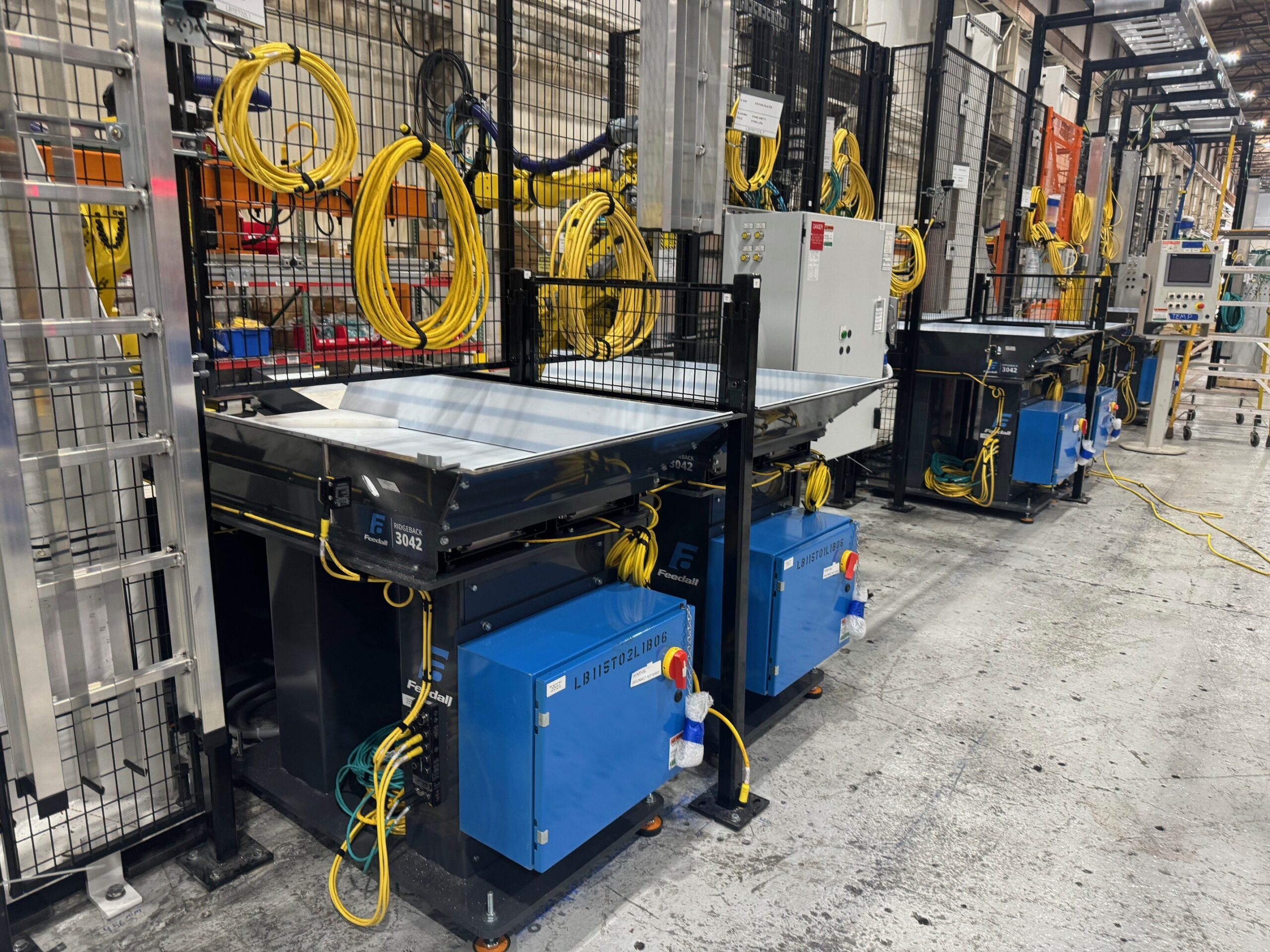
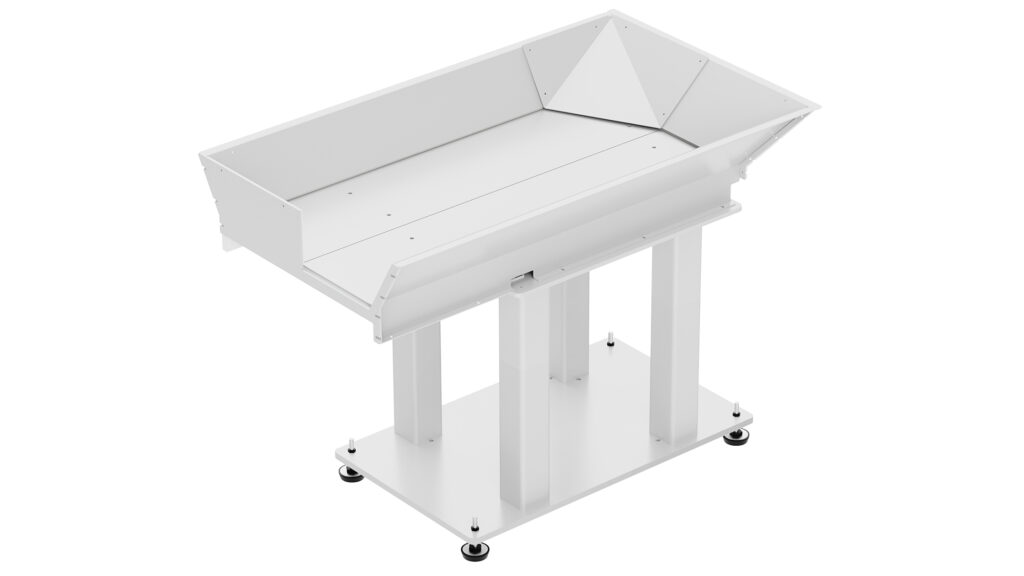
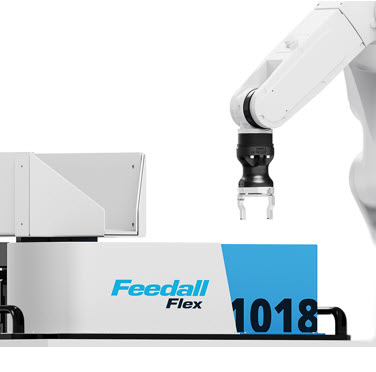
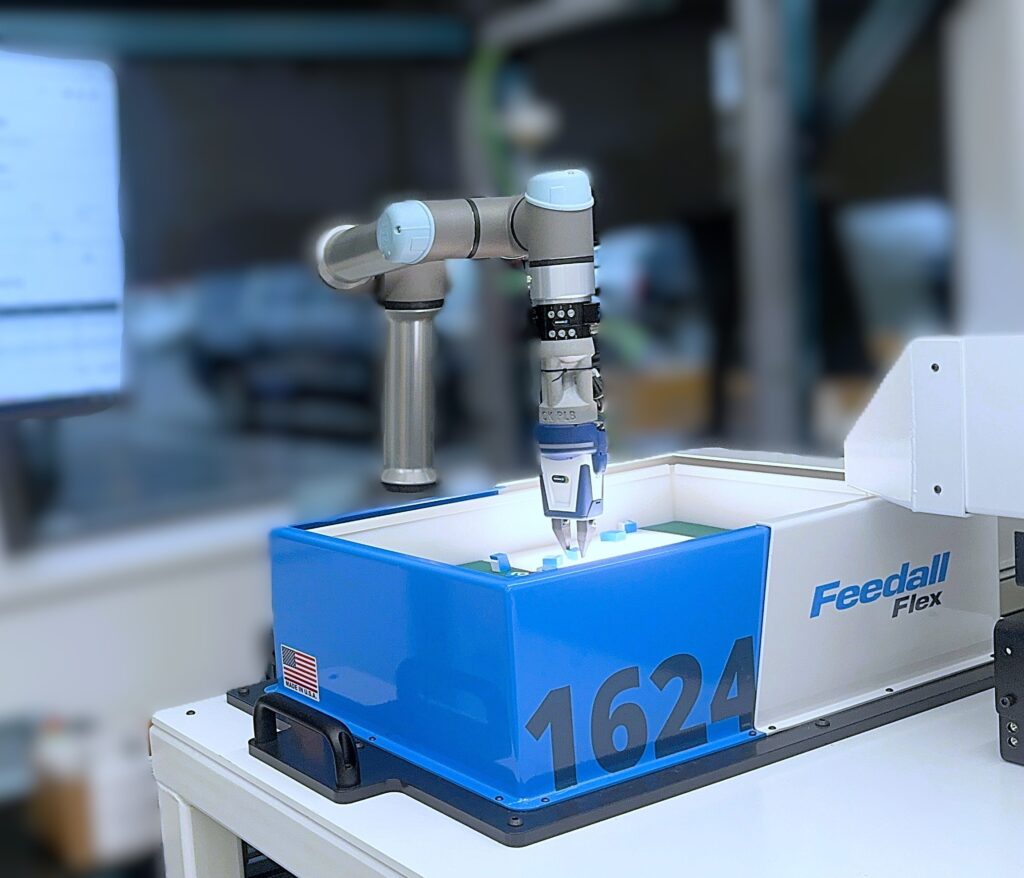
<p><strong>Flex feeders.</strong> The Feedall Flex series comes in four sizes, from the table-top <a href="https://nam11.safelinks.protection.outlook.com/?url=https%3A%2F%2Ffeedall.com%2Fautomated-feeding-systems%2Fflexible-feeder%2Fridgeback-612-small-flex-feeder%2F&amp;data=05%7C02%7Cjcocco%40feedall.com%7Cef12d2e1ecf34ef7aec308df43e4944a%7Cfd97ce8a573c49519be31639fce356d1%7C0%7C0%7C639304321146073413%7CUnknown%7CTWFpbGZsb3d8eyJFbXB0eU1hcGkiOnRydWUsIlYiOiIwLjAuMDAwMCIsIlAiOiJXaW4zMiIsIkFOIjoiTWFpbCIsIldUIjoyfQ%3D%3D%7C0%7C%7C%7C&amp;sdata=%2BbLDXdT681U70UkC3rSX9bx5hWiHvEHXpcXGJq8n6ok%3D&amp;reserved=0">Flex 612</a> with a 6 by 12 inch picking zone up to the extra-large Flex 3042. Features include integrated hoppers, backlight options and true recirculating part flow. On the Flex 612, an optional integrated sensor regulates the number of parts delivered, and no programming or 3D robot-guided vision is required to get started.</p>
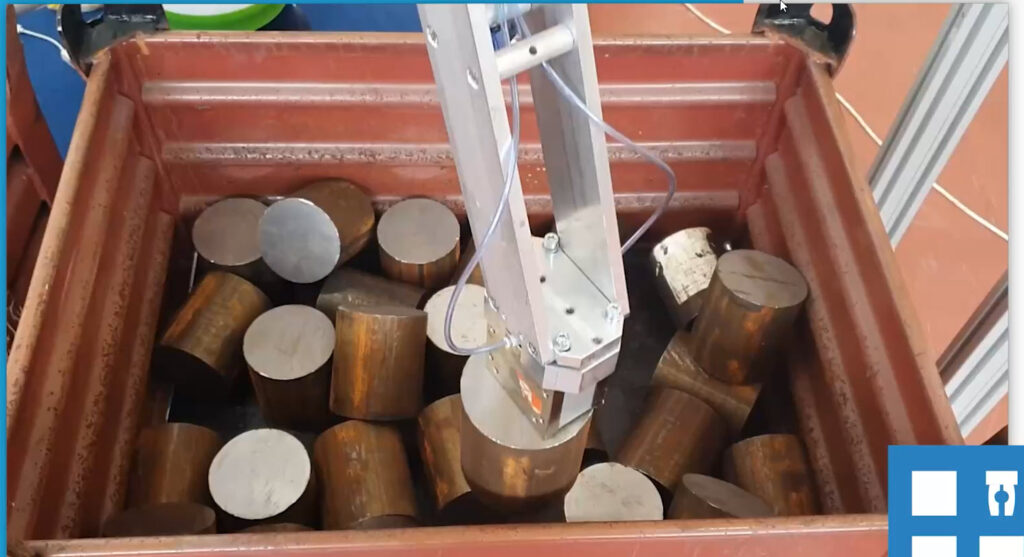
<p><strong>Bin picking.</strong> For parts that arrive in bulk, Feedall’s <a href="https://nam11.safelinks.protection.outlook.com/?url=https%3A%2F%2Ffeedall.com%2Fautomated-feeding-systems%2Frobotic-picking%2F&amp;data=05%7C02%7Cjcocco%40feedall.com%7Cef12d2e1ecf34ef7aec308df43e4944a%7Cfd97ce8a573c49519be31639fce356d1%7C0%7C0%7C639304321146083094%7CUnknown%7CTWFpbGZsb3d8eyJFbXB0eU1hcGkiOnRydWUsIlYiOiIwLjAuMDAwMCIsIlAiOiJXaW4zMiIsIkFOIjoiTWFpbCIsIldUIjoyfQ%3D%3D%7C0%7C%7C%7C&amp;sdata=I0pnqowO%2FDH%2FWP9DKEBVfVVSDj9tOHr%2BUv3bdCnOn1Y%3D&amp;reserved=0">bin picking systems</a> let robots pick directly from unstructured bins. Flex feeding and bin picking can also work together, with the feeder presenting parts the robot can pick reliably every cycle.</p>
<p><strong>Expanded robotics capability.</strong> In 2024 Feedall <a href="https://nam11.safelinks.protection.outlook.com/?url=https%3A%2F%2Ffeedall.com%2Fresources%2Fblog%2Ffeedall-acquires-roboshop-inc%2F&amp;data=05%7C02%7Cjcocco%40feedall.com%7Cef12d2e1ecf34ef7aec308df43e4944a%7Cfd97ce8a573c49519be31639fce356d1%7C0%7C0%7C639304321146092669%7CUnknown%7CTWFpbGZsb3d8eyJFbXB0eU1hcGkiOnRydWUsIlYiOiIwLjAuMDAwMCIsIlAiOiJXaW4zMiIsIkFOIjoiTWFpbCIsIldUIjoyfQ%3D%3D%7C0%7C%7C%7C&amp;sdata=79e3je2bToblTIXaURpN%2FBLpRkaHeMDzW%2BKtlY0Ng%2Fk%3D&amp;reserved=0">acquired RoboShop Inc.</a>, a robotic automation company in Syracuse, New York, adding conveyors, universal flex feeders and part feeder machines to the lineup.</p>
<h2>5. Support for the Life of the Machine</h2>
<p>Automation equipment often runs for decades. Feedall supports it that long:</p>
<ul>
<li><strong>Spare parts and maintenance for every machine back to 1946.</strong> Provide your serial number and the sales team will quote the parts.</li>
<li><strong>Field evaluation.</strong> A service visit to inspect an existing unit, discounted when parts are purchased as a result of the trip.</li>
<li><strong>Installation and training.</strong> On-site installation is offered at a discounted rate on new units, and training at Feedall’s facility is provided at no charge.</li>
<li><strong>Maintenance manuals</strong> are available for a nominal fee.</li>
</ul>
<h2>6. Quality That Protects Your Reputation and Ours</h2>
<p>A feeder that works on the test bench but fails on the plant floor costs more than its price tag. Feedall works directly with plant managers, maintenance managers and plant engineers to understand how a system will actually be run and maintained, and builds equipment for long-term performance rather than the lowest first cost. That approach is a big reason so many customers return for their next project.</p>
<h2>How to Get Started with Feedall</h2>
<ol>
<li><strong>Describe your part and application.</strong> The <a href="https://nam11.safelinks.protection.outlook.com/?url=https%3A%2F%2Ffeedall.com%2Fquick-start-guide%2F&amp;data=05%7C02%7Cjcocco%40feedall.com%7Cef12d2e1ecf34ef7aec308df43e4944a%7Cfd97ce8a573c49519be31639fce356d1%7C0%7C0%7C639304321146103351%7CUnknown%7CTWFpbGZsb3d8eyJFbXB0eU1hcGkiOnRydWUsIlYiOiIwLjAuMDAwMCIsIlAiOiJXaW4zMiIsIkFOIjoiTWFpbCIsIldUIjoyfQ%3D%3D%7C0%7C%7C%7C&amp;sdata=xSbkiIiMbT3%2BqY2use1NhFdbvfB3uh0sLJYtou71dTw%3D&amp;reserved=0">Quick Start Guide</a> asks a few questions about your part, rate and process.</li>
<li><strong>Share your parts and drawings.</strong> Material, size, weight, features and the cycle time of the downstream machine all shape the right feeding method.</li>
<li><strong>Review the recommendation.</strong> Feedall will recommend a flex feeder, part feeder, bar feeder, bin picking system or engineered solution based on your parts.</li>
<li><strong>See it run.</strong> Browse the <a href="https://nam11.safelinks.protection.outlook.com/?url=https%3A%2F%2Ffeedall.com%2Fvideo-library%2F&amp;data=05%7C02%7Cjcocco%40feedall.com%7Cef12d2e1ecf34ef7aec308df43e4944a%7Cfd97ce8a573c49519be31639fce356d1%7C0%7C0%7C639304321146113457%7CUnknown%7CTWFpbGZsb3d8eyJFbXB0eU1hcGkiOnRydWUsIlYiOiIwLjAuMDAwMCIsIlAiOiJXaW4zMiIsIkFOIjoiTWFpbCIsIldUIjoyfQ%3D%3D%7C0%7C%7C%7C&amp;sdata=yvw%2FCjt1vZD5abvE58wGa%2FU8oBBzEbIjvxCVxH5k1dk%3D&amp;reserved=0">video library</a> for Feedall equipment running real parts.</li>
</ol>
<h2>Frequently Asked Questions</h2>
<h3>What does Feedall Automation make?</h3>
<p>Feedall designs and manufactures front-end automation equipment, including flex feeders, bin picking systems, bar feeders, part feeders, part conveyors, machine tending equipment, part kitting and sorting equipment and custom engineered solutions.</p>
<h3>Where is Feedall located?</h3>
<p>Feedall Automation is located at 38379 Pelton Road, Willoughby, Ohio 44094.</p>
<h3>How long has Feedall been in business?</h3>
<p>Feedall was founded in 1946 and has shipped more than 22,000 orders since then.</p>
<h3>Can Feedall support older equipment?</h3>
<p>Yes. Feedall provides spare parts and maintenance for every machine it has built back to 1946, and older units can be refurbished and updated.</p>
<h3>Does Feedall build custom part feeding systems?</h3>
<p>Yes. Feedall’s engineering department designs equipment to meet specific application needs, and it also offers build-to-print manufacturing and assembly.</p>
<h3>Which Feedall system is right for my part?</h3>
<p>It depends on part geometry, volume, number of part numbers and the downstream process. Flex feeders suit high-mix robot cells, bin picking suits bulk parts in totes, bar feeders suit long and cylindrical parts, and part feeders suit high-volume runs of one part. Feedall can recommend the best fit once it reviews your parts.</p>
<h2>Work with a Part Feeding Partner Built to Last</h2>
<p>Since 1946, manufacturers have chosen Feedall for practical engineering, a complete range of feeding technologies and support that lasts as long as the machine. Tell us about your part and your target rate. <a href="https://nam11.safelinks.protection.outlook.com/?url=https%3A%2F%2Ffeedall.com%2Fget-a-quote%2F&amp;data=05%7C02%7Cjcocco%40feedall.com%7Cef12d2e1ecf34ef7aec308df43e4944a%7Cfd97ce8a573c49519be31639fce356d1%7C0%7C0%7C639304321146123301%7CUnknown%7CTWFpbGZsb3d8eyJFbXB0eU1hcGkiOnRydWUsIlYiOiIwLjAuMDAwMCIsIlAiOiJXaW4zMiIsIkFOIjoiTWFpbCIsIldUIjoyfQ%3D%3D%7C0%7C%7C%7C&amp;sdata=qqaudJygnNOk5wAdY%2BsfbNMpzl7TFk4Z%2BzobqvSJ1Zc%3D&amp;reserved=0">Request a quote</a>, <a href="https://nam11.safelinks.protection.outlook.com/?url=https%3A%2F%2Ffeedall.com%2Fabout-us%2Fcontact-us%2F&amp;data=05%7C02%7Cjcocco%40feedall.com%7Cef12d2e1ecf34ef7aec308df43e4944a%7Cfd97ce8a573c49519be31639fce356d1%7C0%7C0%7C639304321146132928%7CUnknown%7CTWFpbGZsb3d8eyJFbXB0eU1hcGkiOnRydWUsIlYiOiIwLjAuMDAwMCIsIlAiOiJXaW4zMiIsIkFOIjoiTWFpbCIsIldUIjoyfQ%3D%3D%7C0%7C%7C%7C&amp;sdata=rnYFk60srrZmJfXc1cEg3%2FA38%2BB2re99gw04s6f9srU%3D&amp;reserved=0">contact our team</a>, email <a href="mailto:sales@feedall.com">sales@feedall.com</a> or call 1-800-942-8101.</p>


]]></content>
		<content_plain>Why Manufacturers Choose Feedall for Part Feeding Automation Feedall Automation | November 17, 2026 | Brand A part feeder sits at the very front of an automated line. If it starves the robot or jams on a bad part, nothing downstream matters. That is why the choice of a part feeding partner is not a one-time purchase. It is a relationship that has to last as long as the machine does. This article explains what Feedall Automation does, what sets it apart, and how to decide which Feedall system fits your application. It anchors our brand resources and links to the part feeding guides we publish every week. Who Is Feedall Automation? Feedall Automation is an American manufacturer of part feeding and front-end automation equipment based in Willoughby, Ohio. Founded in 1946, Feedall designs and builds flex feeders, bin picking systems, bar feeders, part feeders, part conveyors, machine tending equipment and custom engineered solutions that deliver parts to robots, CNC machines and assembly processes. 1. Eight Decades Focused on Feeding Parts Feedall has been solving part feeding problems for more than 75 years. That focus shows up in the numbers: Since 1946. Feedall has built feeding and loading equipment through every era of manufacturing automation, from mechanical feeders to vision-guided robots. More than 22,000 orders shipped since the company began. More than 80% repeat customers. Manufacturers who buy one Feedall machine tend to buy the next one too. Customers range from family-owned shops to multinationals, Fortune 500 companies, engineering firms and equipment contractors. Because Feedall serves general manufacturing rather than a single market segment, its engineers have seen a very wide range of parts, materials and cycle times. 2. A Complete Range of Front-End Automation Many suppliers specialize in one feeding technology and recommend it for every job. Feedall builds the full range, so the recommendation can follow the part rather than the product catalog. If you need to… Feedall solution Learn more Feed many part numbers on one robot cell with fast changeover Flex feeders (Flex 612, 1018, 1624, 3042) Flex Feeders Pick randomly piled parts straight from a bin or tote Bin picking systems and software Bin Picking Load tubes, bars or long parts one at a time Retriever bar feeders Bar Feeders Orient a high volume of one part at a steady rate Part feeders, including vibratory and bulk feeders Part Feeders Move parts precisely between operations Part conveyors Part Conveyors Load and unload CNC machines Machine tending equipment Machine Tending Solve an application nothing standard fits Engineered solutions Engineered Solutions Feedall also supplies part kitting and sorting equipment, centerless grinder automation and Slide-Brush® material for gentle part handling. 3. Engineering and Manufacturing Under One Roof Feedall’s engineering department designs equipment around your specific part and process, and its fabrication team averages more than 30 years of experience across a variety of work centers. Keeping design and build in-house in Willoughby means: Custom without starting from scratch. Standard platforms are adapted to your part, rate and layout. Build to print. Feedall can quote both the manufacture of your parts and the assembly. Upgrades for older units. Existing Feedall machines can be refurbished and updated rather than replaced. One accountable team from first drawing to final run-off. 4. Feeding Built for Robots Feedall’s message is simple: “We feed and lead robots.” Robots are only as productive as the parts presented to them, and Feedall’s newer product lines are designed around robot-assisted cells. Flex feeders. The Feedall Flex series comes in four sizes, from the table-top Flex 612 with a 6 by 12 inch picking zone up to the extra-large Flex 3042. Features include integrated hoppers, backlight options and true recirculating part flow. On the Flex 612, an optional integrated sensor regulates the number of parts delivered, and no programming or 3D robot-guided vision is required to get started. Bin picking. For parts that arrive in bulk, Feedall’s bin picking systems let robots pick directly from unstructured bins. Flex feeding and bin picking can also work together, with the feeder presenting parts the robot can pick reliably every cycle. Expanded robotics capability. In 2024 Feedall acquired RoboShop Inc., a robotic automation company in Syracuse, New York, adding conveyors, universal flex feeders and part feeder machines to the lineup. 5. Support for the Life of the Machine Automation equipment often runs for decades. Feedall supports it that long: Spare parts and maintenance for every machine back to 1946. Provide your serial number and the sales team will quote the parts. Field evaluation. A service visit to inspect an existing unit, discounted when parts are purchased as a result of the trip. Installation and training. On-site installation is offered at a discounted rate on new units, and training at Feedall’s facility is provided at no charge. Maintenance manuals are available for a nominal fee. 6. Quality That Protects Your Reputation and Ours A feeder that works on the test bench but fails on the plant floor costs more than its price tag. Feedall works directly with plant managers, maintenance managers and plant engineers to understand how a system will actually be run and maintained, and builds equipment for long-term performance rather than the lowest first cost. That approach is a big reason so many customers return for their next project. How to Get Started with Feedall Describe your part and application. The Quick Start Guide asks a few questions about your part, rate and process. Share your parts and drawings. Material, size, weight, features and the cycle time of the downstream machine all shape the right feeding method. Review the recommendation. Feedall will recommend a flex feeder, part feeder, bar feeder, bin picking system or engineered solution based on your parts. See it run. Browse the video library for Feedall equipment running real parts. Frequently Asked Questions What does Feedall Automation make? Feedall designs and manufactures front-end automation equipment, including flex feeders, bin picking systems, bar feeders, part feeders, part conveyors, machine tending equipment, part kitting and sorting equipment and custom engineered solutions. Where is Feedall located? Feedall Automation is located at 38379 Pelton Road, Willoughby, Ohio 44094. How long has Feedall been in business? Feedall was founded in 1946 and has shipped more than 22,000 orders since then. Can Feedall support older equipment? Yes. Feedall provides spare parts and maintenance for every machine it has built back to 1946, and older units can be refurbished and updated. Does Feedall build custom part feeding systems? Yes. Feedall’s engineering department designs equipment to meet specific application needs, and it also offers build-to-print manufacturing and assembly. Which Feedall system is right for my part? It depends on part geometry, volume, number of part numbers and the downstream process. Flex feeders suit high-mix robot cells, bin picking suits bulk parts in totes, bar feeders suit long and cylindrical parts, and part feeders suit high-volume runs of one part. Feedall can recommend the best fit once it reviews your parts. Work with a Part Feeding Partner Built to Last Since 1946, manufacturers have chosen Feedall for practical engineering, a complete range of feeding technologies and support that lasts as long as the machine. Tell us about your part and your target rate. Request a quote, contact our team, email sales@feedall.com or call 1-800-942-8101.</content_plain>
		<image>https://feedall.com/wp-content/uploads/2026/11/3042-in-cell3-scaled.jpg</image>
		<modified>2026-11-17T08:12:02-05:00</modified>
	</item>
	<item>
		<id>8018</id>
		<type>post</type>
		<mapped_entity>Articles</mapped_entity>		<url>https://feedall.com/resources/blog/resources-blog-automatic-bar-feeder-inches-per-minute-vs-parts-per-minute/</url>
		<title>Bar Feeder Output: Inches per Minute vs Parts per Minute | Feedall</title>
		<h1>Why Measuring Automatic Bar Feeder Output in Inches per Minute Can Mislead You (and Why Parts per Minute Wins)</h1>
		<summary>An automatic bar feeder that looks fast on paper can still starve the machine it serves. Inches per minute describes how far material travels, but your process runs on parts per minute. This guide explains the difference, shows how to convert one to the other, and lists what to ask any supplier before you buy.</summary>
		<content><![CDATA[
	
		
			<h1>Why Measuring Automatic Bar Feeder Output in Inches per Minute Can Mislead You (and Why Parts per Minute Wins)</h1>
<p><em>Feedall Automation | November 10, 2026 | Part Feeding</em></p>
<p>Ask two suppliers how fast their automatic bar feeder runs and you may get two answers in two different units. One quotes feet or inches per minute. The other quotes parts per minute. Both numbers can be true, yet they answer different questions, and choosing between feeders on the wrong one is an easy way to buy a machine that does not keep up with your line.</p>
<p>This article explains what each metric measures, how to convert between them, and why parts per minute is the number that should drive your decision. It is part of our <a href="https://nam11.safelinks.protection.outlook.com/?url=https%3A%2F%2Ffeedall.com%2Fresources%2Fblog%2F&amp;data=05%7C02%7Cjcocco%40feedall.com%7C1f2166f7c0c547d09d9f08df3f3b7fd9%7Cfd97ce8a573c49519be31639fce356d1%7C0%7C0%7C639299196904061419%7CUnknown%7CTWFpbGZsb3d8eyJFbXB0eU1hcGkiOnRydWUsIlYiOiIwLjAuMDAwMCIsIlAiOiJXaW4zMiIsIkFOIjoiTWFpbCIsIldUIjoyfQ%3D%3D%7C0%7C%7C%7C&amp;sdata=yPHjCjiGzs3VfOtzdK4T0TSUZQHeLTk%2Fn4%2F4Xglnrx0%3D&amp;reserved=0">part feeding guides</a>, and it builds on our overview of <a href="https://nam11.safelinks.protection.outlook.com/?url=https%3A%2F%2Ffeedall.com%2Fautomated-feeding-systems%2Fbar-feeders%2F&amp;data=05%7C02%7Cjcocco%40feedall.com%7C1f2166f7c0c547d09d9f08df3f3b7fd9%7Cfd97ce8a573c49519be31639fce356d1%7C0%7C0%7C639299196904079277%7CUnknown%7CTWFpbGZsb3d8eyJFbXB0eU1hcGkiOnRydWUsIlYiOiIwLjAuMDAwMCIsIlAiOiJXaW4zMiIsIkFOIjoiTWFpbCIsIldUIjoyfQ%3D%3D%7C0%7C%7C%7C&amp;sdata=P5iRvY3CMpKjrZVfTOL2Jr9LGSXvGjHoi%2FOExSnM6fM%3D&amp;reserved=0">Feedall bar feeders</a>.</p>
<h2>What Does Inches per Minute Actually Measure?</h2>
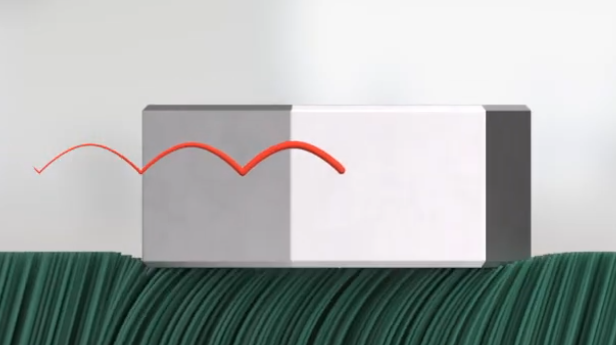
<p>Inches per minute (IPM) is a speed. It tells you how fast material moves along a conveyor, track or transfer. It is a useful figure for a conveyor or a long bar traveling through a guide, and it is the natural unit when the product is continuous or very long. It says nothing about how many individual pieces arrive at the next operation.</p>
<h2>What Does Parts per Minute Measure?</h2>
<p>Parts per minute (PPM) is throughput: the number of separated, correctly presented parts delivered to the downstream process each minute. A centerless grinder, thread roller, polisher or robot cell consumes parts one at a time, so PPM is the rate that matches how it actually works. If the machine needs 8 parts a minute, no amount of belt speed helps unless 8 parts really arrive.</p>
<h2>Why Inches per Minute Alone Misleads Buyers</h2>
<ul>
<li><strong>It ignores part length.</strong> A 12-inch part and a 36-inch part moving at the same inches per minute produce very different part counts.</li>
<li><strong>It ignores spacing.</strong> Parts on a conveyor are separated by gaps. Those gaps consume travel distance without producing output.</li>
<li><strong>It ignores singulation.</strong> A fast conveyor is of no use if the feeder cannot reliably separate and present one part at a time.</li>
<li><strong>It ignores starvation and refills.</strong> Throughput over a shift depends on how long the feeder runs between operator refills, not only on peak speed.</li>
<li><strong>It hides the process.</strong> Dwell time in a grinder, roller or heater, and the cycle of the downstream machine, set the real demand.</li>
</ul>
<h2>How to Convert Inches per Minute to Parts per Minute</h2>
<p>For parts traveling in a line, the relationship is simple:</p>
<p><strong>Parts per minute = Inches per minute ÷ (part length + gap between parts)</strong></p>
<p>The table below uses illustrative numbers only, to show how the same conveyor speed produces different output depending on the part. These are not Feedall specifications.</p>
<table>
<tbody>
<tr>
<td><strong>Example</strong></td>
<td><strong>Conveyor speed (IPM)</strong></td>
<td><strong>Part length + gap (in)</strong></td>
<td><strong>Result (PPM)</strong></td>
</tr>
<tr>
<td>Short part</td>
<td>120</td>
<td>6</td>
<td>20</td>
</tr>
<tr>
<td>Mid-length part</td>
<td>120</td>
<td>14</td>
<td>About 8.6</td>
</tr>
<tr>
<td>Long part</td>
<td>120</td>
<td>38</td>
<td>About 3.2</td>
</tr>
</tbody>
</table>
<p>Same belt speed, more than six times the difference in part count. That is why a speed figure without part length, spacing and the singulation method is incomplete.</p>
<h2>Where Parts per Minute Matters Most</h2>
<p>Bar feeders typically serve secondary operations such as centerless grinding, thread rolling, end finishing, induction heating, assembly and robot-loaded machining. Each of these consumes one part per cycle. Your cycle time, whether 7 seconds or 70, tells you the PPM you need. Work backward from that number, add a margin for refills and variation, and ask for a feeder rated and demonstrated at that rate on your parts.</p>
<h2>How Feedall Approaches Bar Feeder Output</h2>
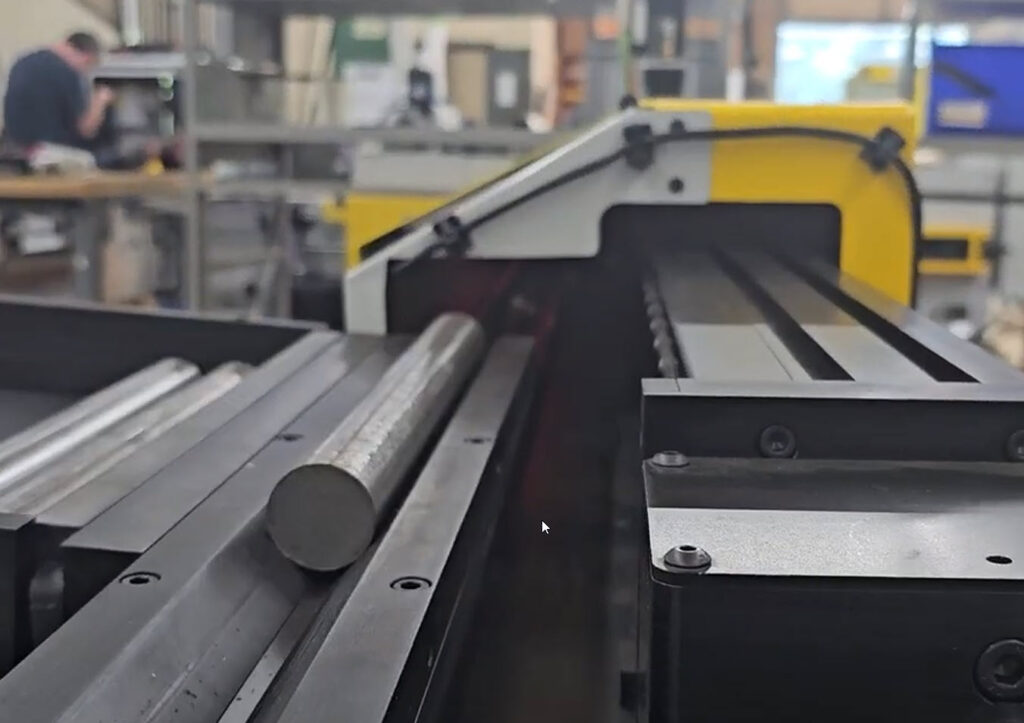
<p>Feedall’s <a href="https://nam11.safelinks.protection.outlook.com/?url=https%3A%2F%2Ffeedall.com%2Fautomated-feeding-systems%2Fbar-feeders%2Fmedium-bar-feeder-automatic-bar-feeder%2F&amp;data=05%7C02%7Cjcocco%40feedall.com%7C1f2166f7c0c547d09d9f08df3f3b7fd9%7Cfd97ce8a573c49519be31639fce356d1%7C0%7C0%7C639299196904089635%7CUnknown%7CTWFpbGZsb3d8eyJFbXB0eU1hcGkiOnRydWUsIlYiOiIwLjAuMDAwMCIsIlAiOiJXaW4zMiIsIkFOIjoiTWFpbCIsIldUIjoyfQ%3D%3D%7C0%7C%7C%7C&amp;sdata=cvN9huhGk%2B5eLgJfrp7fKJgRSzMzj2bIjfUV4vdsmXs%3D&amp;reserved=0">Retriever floor-loaded bar feeders</a> (2212, 2224 and 2236) handle tubes, cut-to-length bars and machined parts up to 12, 24 and 36 inches, with diameters in a 2 to 1 ratio. Parts are loaded into a hopper, lifted by a vertical elevator on bolt-on cleat pads machined for your part range, and discharged one at a time through a magazine to a cross conveyor, pusher, walking beam or directly into your process. A variable speed elevator drive lets the feed rate be tuned to the downstream machine. Floor loaded units run with low noise because parts are lifted individually rather than circulated.</p>
<p>For short, small-diameter parts, the <a href="https://nam11.safelinks.protection.outlook.com/?url=https%3A%2F%2Ffeedall.com%2Fautomated-feeding-systems%2Fbar-feeders%2Fsmall-bar-feeder%2F&amp;data=05%7C02%7Cjcocco%40feedall.com%7C1f2166f7c0c547d09d9f08df3f3b7fd9%7Cfd97ce8a573c49519be31639fce356d1%7C0%7C0%7C639299196904100040%7CUnknown%7CTWFpbGZsb3d8eyJFbXB0eU1hcGkiOnRydWUsIlYiOiIwLjAuMDAwMCIsIlAiOiJXaW4zMiIsIkFOIjoiTWFpbCIsIldUIjoyfQ%3D%3D%7C0%7C%7C%7C&amp;sdata=Eey9bBonwkLBokpO9%2BoHHc%2FU6eJCHFyfvxbvU%2F81%2FWY%3D&amp;reserved=0">Retriever 1750 small bar feeder</a> is magazine loaded and offers options such as dual lifters and a centering-type discharge magazine. For longer parts, see the <a href="https://nam11.safelinks.protection.outlook.com/?url=https%3A%2F%2Ffeedall.com%2Fautomated-feeding-systems%2Fbar-feeders%2Flong-bar-feeder%2F&amp;data=05%7C02%7Cjcocco%40feedall.com%7C1f2166f7c0c547d09d9f08df3f3b7fd9%7Cfd97ce8a573c49519be31639fce356d1%7C0%7C0%7C639299196904112077%7CUnknown%7CTWFpbGZsb3d8eyJFbXB0eU1hcGkiOnRydWUsIlYiOiIwLjAuMDAwMCIsIlAiOiJXaW4zMiIsIkFOIjoiTWFpbCIsIldUIjoyfQ%3D%3D%7C0%7C%7C%7C&amp;sdata=DSSQET5Bjt9K8Mo40qfGYevmTahZS6n0JY2n5OS2oDc%3D&amp;reserved=0">long bar feeder line</a>, including the 2250 for parts up to 50 inches.</p>
<p>Feedall’s <a href="https://nam11.safelinks.protection.outlook.com/?url=https%3A%2F%2Ffeedall.com%2Fvideo-library%2F&amp;data=05%7C02%7Cjcocco%40feedall.com%7C1f2166f7c0c547d09d9f08df3f3b7fd9%7Cfd97ce8a573c49519be31639fce356d1%7C0%7C0%7C639299196904132111%7CUnknown%7CTWFpbGZsb3d8eyJFbXB0eU1hcGkiOnRydWUsIlYiOiIwLjAuMDAwMCIsIlAiOiJXaW4zMiIsIkFOIjoiTWFpbCIsIldUIjoyfQ%3D%3D%7C0%7C%7C%7C&amp;sdata=fdqOeThXc4115wbhq3bd%2FbRVavzopOKT5iz2TON1AYo%3D&amp;reserved=0">video library</a> shows feeders running on real parts, with rates stated in the video titles, for example a 22 mm tube feeder shown at 8 parts per minute and bar feeders shown at 50 feet per minute. Both kinds of number appear, and both have a place. Use the first to size your process and the second to understand travel speed.</p>
<h2>Questions to Ask Any Bar Feeder Supplier</h2>
<ul>
<li>What is the output in parts per minute for my part length, diameter and material?</li>
<li>What gap or spacing between parts does that figure assume?</li>
<li>How is each part singulated and verified, and what happens with a mis-pick?</li>
<li>How long will it run unattended between refills at that rate?</li>
<li>Can you demonstrate it, or run a feeding trial, on my actual parts?</li>
<li>Does the feed rate adjust to match my downstream machine?</li>
</ul>
<h2>Frequently Asked Questions</h2>
<h3>What is the difference between inches per minute and parts per minute for a bar feeder?</h3>
<p>Inches per minute measures travel speed of material. Parts per minute measures how many separated parts the feeder delivers to your process each minute. Parts per minute is the output your process actually consumes.</p>
<h3>How do I convert inches per minute to parts per minute?</h3>
<p>Divide the inches per minute by the sum of the part length and the gap between parts. The result is an upper bound for in-line travel; real output also depends on singulation and refills.</p>
<h3>Why does part length change the output?</h3>
<p>Longer parts occupy more of the conveyor, so fewer of them pass a point each minute at the same speed.</p>
<h3>Is feet per minute the same as inches per minute?</h3>
<p>They are the same kind of speed measure. One foot per minute equals 12 inches per minute, so 50 feet per minute is 600 inches per minute.</p>
<h3>What bar feeder output should I specify?</h3>
<p>Start with the cycle time of the machine the feeder serves, convert it to parts per minute, add margin, and confirm the rate on your parts through a demonstration or feeding trial.</p>
<h3>Can Feedall adjust the feed rate?</h3>
<p>Floor-loaded Retriever models offer a variable speed elevator drive, and each feeder can be customized to the application. Contact Feedall with your parts and rate requirement.</p>
<h2>Choose the Number That Matches Your Process</h2>
<p>Feedall Automation has helped manufacturers raise production rates since 1946. Tell us your part, your cycle time and your target parts per minute, and we will recommend a bar feeder and can evaluate your parts first. <a href="https://nam11.safelinks.protection.outlook.com/?url=https%3A%2F%2Ffeedall.com%2Fget-a-quote%2F&amp;data=05%7C02%7Cjcocco%40feedall.com%7C1f2166f7c0c547d09d9f08df3f3b7fd9%7Cfd97ce8a573c49519be31639fce356d1%7C0%7C0%7C639299196904144210%7CUnknown%7CTWFpbGZsb3d8eyJFbXB0eU1hcGkiOnRydWUsIlYiOiIwLjAuMDAwMCIsIlAiOiJXaW4zMiIsIkFOIjoiTWFpbCIsIldUIjoyfQ%3D%3D%7C0%7C%7C%7C&amp;sdata=TXyMfjOVRCKJgXHWez18n37XXwlqfxwf29aWbOxip0g%3D&amp;reserved=0">Request a quote</a> or <a href="https://nam11.safelinks.protection.outlook.com/?url=https%3A%2F%2Ffeedall.com%2Fabout-us%2Fcontact-us%2F&amp;data=05%7C02%7Cjcocco%40feedall.com%7C1f2166f7c0c547d09d9f08df3f3b7fd9%7Cfd97ce8a573c49519be31639fce356d1%7C0%7C0%7C639299196904154901%7CUnknown%7CTWFpbGZsb3d8eyJFbXB0eU1hcGkiOnRydWUsIlYiOiIwLjAuMDAwMCIsIlAiOiJXaW4zMiIsIkFOIjoiTWFpbCIsIldUIjoyfQ%3D%3D%7C0%7C%7C%7C&amp;sdata=FDATHMFfMI8U7acCKSxZzWRuoJkoRrPYggQNhE7dkRw%3D&amp;reserved=0">contact our team</a>, or call 1-800-942-8101.</p>


]]></content>
		<content_plain>Why Measuring Automatic Bar Feeder Output in Inches per Minute Can Mislead You (and Why Parts per Minute Wins) Feedall Automation | November 10, 2026 | Part Feeding Ask two suppliers how fast their automatic bar feeder runs and you may get two answers in two different units. One quotes feet or inches per minute. The other quotes parts per minute. Both numbers can be true, yet they answer different questions, and choosing between feeders on the wrong one is an easy way to buy a machine that does not keep up with your line. This article explains what each metric measures, how to convert between them, and why parts per minute is the number that should drive your decision. It is part of our part feeding guides, and it builds on our overview of Feedall bar feeders. What Does Inches per Minute Actually Measure? Inches per minute (IPM) is a speed. It tells you how fast material moves along a conveyor, track or transfer. It is a useful figure for a conveyor or a long bar traveling through a guide, and it is the natural unit when the product is continuous or very long. It says nothing about how many individual pieces arrive at the next operation. What Does Parts per Minute Measure? Parts per minute (PPM) is throughput: the number of separated, correctly presented parts delivered to the downstream process each minute. A centerless grinder, thread roller, polisher or robot cell consumes parts one at a time, so PPM is the rate that matches how it actually works. If the machine needs 8 parts a minute, no amount of belt speed helps unless 8 parts really arrive. Why Inches per Minute Alone Misleads Buyers It ignores part length. A 12-inch part and a 36-inch part moving at the same inches per minute produce very different part counts. It ignores spacing. Parts on a conveyor are separated by gaps. Those gaps consume travel distance without producing output. It ignores singulation. A fast conveyor is of no use if the feeder cannot reliably separate and present one part at a time. It ignores starvation and refills. Throughput over a shift depends on how long the feeder runs between operator refills, not only on peak speed. It hides the process. Dwell time in a grinder, roller or heater, and the cycle of the downstream machine, set the real demand. How to Convert Inches per Minute to Parts per Minute For parts traveling in a line, the relationship is simple: Parts per minute = Inches per minute ÷ (part length + gap between parts) The table below uses illustrative numbers only, to show how the same conveyor speed produces different output depending on the part. These are not Feedall specifications. Example Conveyor speed (IPM) Part length + gap (in) Result (PPM) Short part 120 6 20 Mid-length part 120 14 About 8.6 Long part 120 38 About 3.2 Same belt speed, more than six times the difference in part count. That is why a speed figure without part length, spacing and the singulation method is incomplete. Where Parts per Minute Matters Most Bar feeders typically serve secondary operations such as centerless grinding, thread rolling, end finishing, induction heating, assembly and robot-loaded machining. Each of these consumes one part per cycle. Your cycle time, whether 7 seconds or 70, tells you the PPM you need. Work backward from that number, add a margin for refills and variation, and ask for a feeder rated and demonstrated at that rate on your parts. How Feedall Approaches Bar Feeder Output Feedall’s Retriever floor-loaded bar feeders (2212, 2224 and 2236) handle tubes, cut-to-length bars and machined parts up to 12, 24 and 36 inches, with diameters in a 2 to 1 ratio. Parts are loaded into a hopper, lifted by a vertical elevator on bolt-on cleat pads machined for your part range, and discharged one at a time through a magazine to a cross conveyor, pusher, walking beam or directly into your process. A variable speed elevator drive lets the feed rate be tuned to the downstream machine. Floor loaded units run with low noise because parts are lifted individually rather than circulated. For short, small-diameter parts, the Retriever 1750 small bar feeder is magazine loaded and offers options such as dual lifters and a centering-type discharge magazine. For longer parts, see the long bar feeder line, including the 2250 for parts up to 50 inches. Feedall’s video library shows feeders running on real parts, with rates stated in the video titles, for example a 22 mm tube feeder shown at 8 parts per minute and bar feeders shown at 50 feet per minute. Both kinds of number appear, and both have a place. Use the first to size your process and the second to understand travel speed. Questions to Ask Any Bar Feeder Supplier What is the output in parts per minute for my part length, diameter and material? What gap or spacing between parts does that figure assume? How is each part singulated and verified, and what happens with a mis-pick? How long will it run unattended between refills at that rate? Can you demonstrate it, or run a feeding trial, on my actual parts? Does the feed rate adjust to match my downstream machine? Frequently Asked Questions What is the difference between inches per minute and parts per minute for a bar feeder? Inches per minute measures travel speed of material. Parts per minute measures how many separated parts the feeder delivers to your process each minute. Parts per minute is the output your process actually consumes. How do I convert inches per minute to parts per minute? Divide the inches per minute by the sum of the part length and the gap between parts. The result is an upper bound for in-line travel; real output also depends on singulation and refills. Why does part length change the output? Longer parts occupy more of the conveyor, so fewer of them pass a point each minute at the same speed. Is feet per minute the same as inches per minute? They are the same kind of speed measure. One foot per minute equals 12 inches per minute, so 50 feet per minute is 600 inches per minute. What bar feeder output should I specify? Start with the cycle time of the machine the feeder serves, convert it to parts per minute, add margin, and confirm the rate on your parts through a demonstration or feeding trial. Can Feedall adjust the feed rate? Floor-loaded Retriever models offer a variable speed elevator drive, and each feeder can be customized to the application. Contact Feedall with your parts and rate requirement. Choose the Number That Matches Your Process Feedall Automation has helped manufacturers raise production rates since 1946. Tell us your part, your cycle time and your target parts per minute, and we will recommend a bar feeder and can evaluate your parts first. Request a quote or contact our team, or call 1-800-942-8101.</content_plain>
		<image>https://feedall.com/wp-content/uploads/2026/11/Steel-Bars-1.jpg</image>
		<modified>2026-11-10T10:09:09-05:00</modified>
	</item>
	<item>
		<id>8015</id>
		<type>post</type>
		<mapped_entity>Articles</mapped_entity>		<url>https://feedall.com/resources/blog/benefits-of-feedalls-random-loading-bar-feeder-feedall/</url>
		<title>Benefits of Feedall’s Random Loading Bar Feeder | Feedall</title>
		<h1>Benefits of Feedall’s Random Loading Bar Feeder</h1>
		<summary>A bar feeder that accepts bars in random order takes manual staging off your operators&apos; plate. Learn how Feedall&apos;s random loading bar feeders, the floor-loaded Retriever 2212, 2224 and 2236 series, elevate and singulate bars, tubes and cut-to-length parts, cut hand-loading and help downstream machines run longer between refills.</summary>
		<content><![CDATA[
	
		
			<h1>Benefits of Feedall’s Random Loading Bar Feeder</h1>
<p><em>Feedall Automation | November 3, 2026 | Part Feeding</em></p>
<p>A bar feeder is only as productive as the way it is loaded. If an operator has to stack, align and orient every bar by hand, the feeder keeps a machine busy but keeps a person busy too. A random loading bar feeder changes that equation: bars, tubes and cut-to-length parts are dumped into a hopper in any order, and the feeder does the work of singulating and presenting them to the next operation.</p>
<p>Feedall builds this capability into its floor-loaded <a href="https://nam11.safelinks.protection.outlook.com/?url=https%3A%2F%2Ffeedall.com%2Fautomated-feeding-systems%2Fbar-feeders%2F&amp;data=05%7C02%7Cjcocco%40feedall.com%7C53ad097b5c1947620f0108df38e4eed1%7Cfd97ce8a573c49519be31639fce356d1%7C0%7C0%7C639292228035628943%7CUnknown%7CTWFpbGZsb3d8eyJFbXB0eU1hcGkiOnRydWUsIlYiOiIwLjAuMDAwMCIsIlAiOiJXaW4zMiIsIkFOIjoiTWFpbCIsIldUIjoyfQ%3D%3D%7C0%7C%7C%7C&amp;sdata=1vUFLcCmYx%2FmKfqSy4pv8eOBcbmP8tc0ecmIdpHKsuY%3D&amp;reserved=0">Retriever bar feeders</a>. This article explains how random loading works, the benefits it delivers, and how to decide whether it fits your application.</p>
<h2>What Is a Random Loading Bar Feeder?</h2>
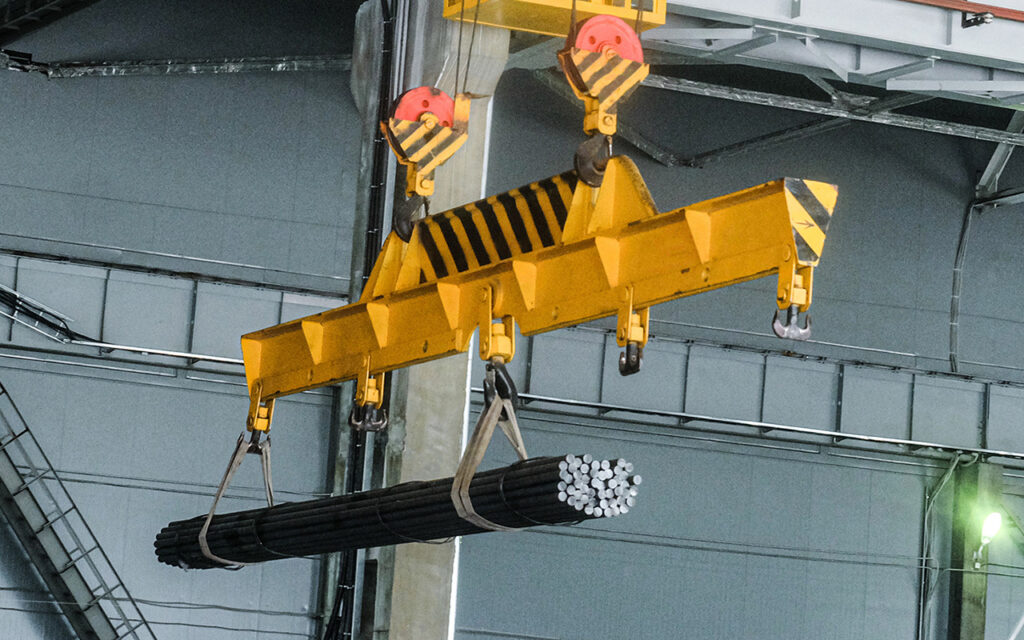
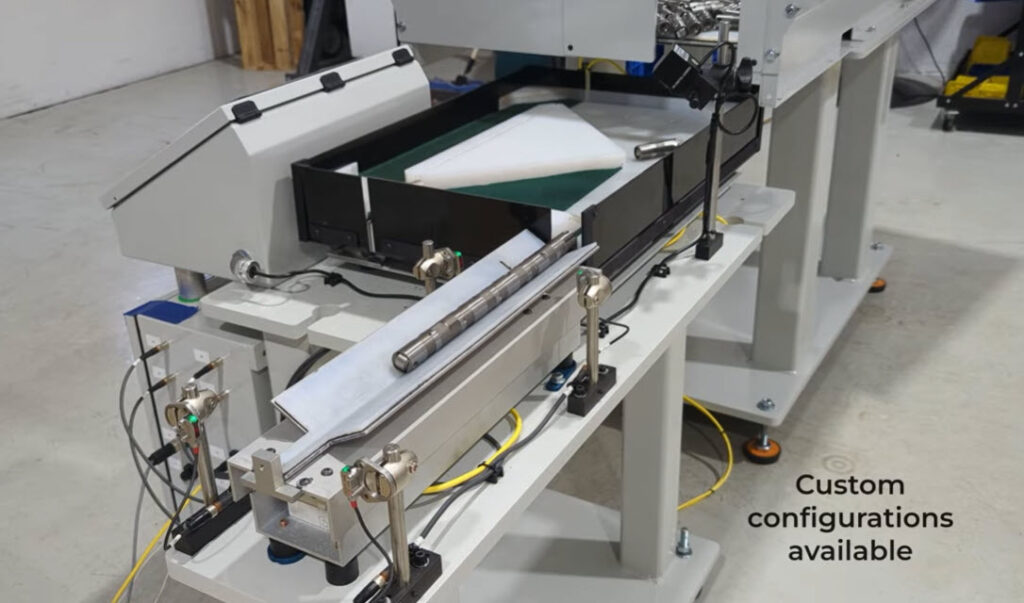
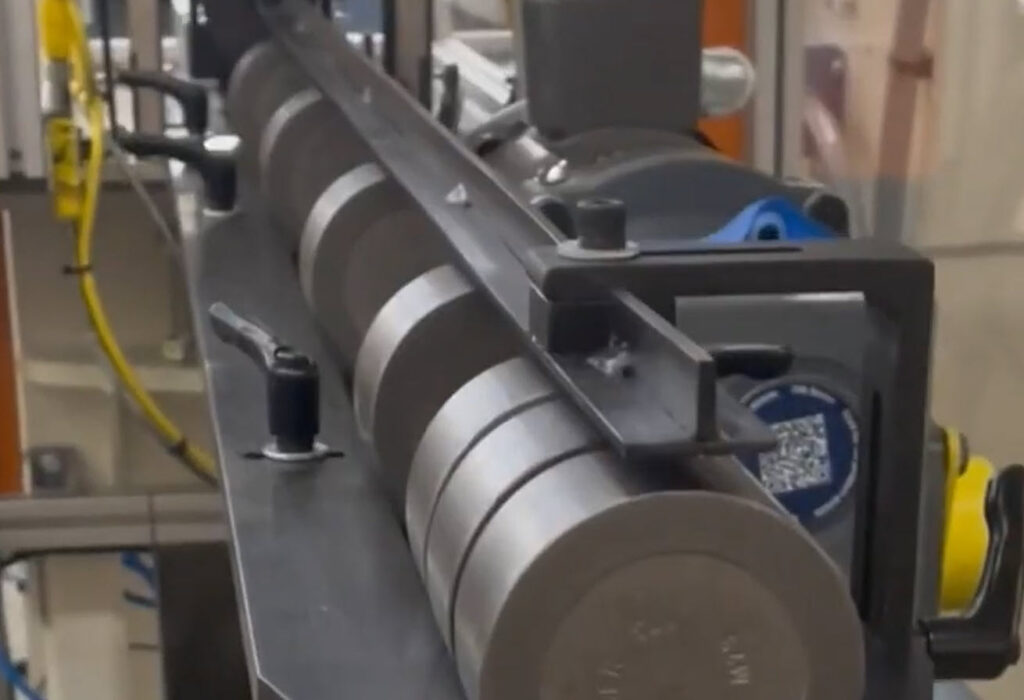
<p>A random loading bar feeder is a floor- or hopper-loaded system. Instead of requiring parts to be pre-stacked in a magazine, it lets you load parts loosely into a hopper. A vertical elevator lifts the parts on individual pads and discharges them one at a time, rolling into a magazine. From there they move to a cross conveyor, pusher, walking beam or directly into your machine or process. Because parts are elevated individually, there is zero circulation of parts in the hopper, which keeps noise low and helps protect part finish.</p>
<p>Feedall’s floor-loaded <a href="https://nam11.safelinks.protection.outlook.com/?url=https%3A%2F%2Ffeedall.com%2Fautomated-feeding-systems%2Fbar-feeders%2Fmedium-bar-feeder-automatic-bar-feeder%2F&amp;data=05%7C02%7Cjcocco%40feedall.com%7C53ad097b5c1947620f0108df38e4eed1%7Cfd97ce8a573c49519be31639fce356d1%7C0%7C0%7C639292228035646199%7CUnknown%7CTWFpbGZsb3d8eyJFbXB0eU1hcGkiOnRydWUsIlYiOiIwLjAuMDAwMCIsIlAiOiJXaW4zMiIsIkFOIjoiTWFpbCIsIldUIjoyfQ%3D%3D%7C0%7C%7C%7C&amp;sdata=P1%2B6%2BKJ2WOnpAc2f0nyIpISd2XNc5Bbqff%2FbQ%2BDO6q4%3D&amp;reserved=0">Retriever 2212, 2224 and 2236 bar feeders</a> handle tubes, cut-to-length bars and machined parts up to 12, 24 and 36 inches long respectively, with diameter ranges within a 2 to 1 ratio. For longer parts, the <a href="https://nam11.safelinks.protection.outlook.com/?url=https%3A%2F%2Ffeedall.com%2Fautomated-feeding-systems%2Fbar-feeders%2Flong-bar-feeder%2F&amp;data=05%7C02%7Cjcocco%40feedall.com%7C53ad097b5c1947620f0108df38e4eed1%7Cfd97ce8a573c49519be31639fce356d1%7C0%7C0%7C639292228035657008%7CUnknown%7CTWFpbGZsb3d8eyJFbXB0eU1hcGkiOnRydWUsIlYiOiIwLjAuMDAwMCIsIlAiOiJXaW4zMiIsIkFOIjoiTWFpbCIsIldUIjoyfQ%3D%3D%7C0%7C%7C%7C&amp;sdata=Cu2%2FE76rsuRP0Via9ZvIL31%2B8DcUV9Cf1ZjBN9CL%2B2Y%3D&amp;reserved=0">long bar feeder line</a> handles parts up to 50 inches.</p>
<h2>Key Benefits of a Random Loading Bar Feeder</h2>
<ul>
<li><strong>Less hand-loading and staging.</strong> Operators can load parts in bulk and in any order, by hand, load cart, drop-bottom container or bundle loader, instead of aligning every bar.</li>
<li><strong>Longer run times between refills.</strong> A large hopper holds a meaningful supply of parts, so machines such as centerless grinders, thread rollers and polishing machines are not waiting on an operator.</li>
<li><strong>Flexible loading options.</strong> Hand stacked/loaded, load cart, drop-bottom container and bundle loader, and with hopper modifications parts can be fed from a previous operation by conveyor.</li>
<li><strong>Gentle, quiet operation.</strong> Individual pads lift each part rather than churning the whole load.</li>
<li><strong>Built for the application.</strong> Bolt-on cleat pads are machined for each application’s part range, and a variable speed elevator drive lets you tune the feed rate. Options include a telescoping ramp to a centerless grinder, cross-feed conveyors, part transfers, qualifiers and pushers.</li>
<li><strong>Proven manufacturer support.</strong> Family-owned, U.S.-based manufacturer since 1946.</li>
</ul>
<h2>Random Loading vs. Magazine-Loaded Bar Feeders</h2>
<table>
<tbody>
<tr>
<td><strong>Factor</strong></td>
<td><strong>Floor / random loaded (Retriever 2212-2236, 2250)</strong></td>
<td><strong>Magazine loaded (Retriever 1700, 1750, 1775)</strong></td>
</tr>
<tr>
<td><strong>Loading method</strong></td>
<td>Parts loaded into a hopper in any order</td>
<td>Parts hand stacked or bundle loaded into a magazine</td>
</tr>
<tr>
<td><strong>Operator effort</strong></td>
<td>Lowest; no alignment of parts</td>
<td>Low to moderate; parts are staged in the magazine</td>
</tr>
<tr>
<td><strong>Part length</strong></td>
<td>12 to 36 in (2212-2236); up to 50 in (2250)</td>
<td>4 to 28 in (1700); 0.5 to 12 in (1750); beyond 28 in (1775)</td>
</tr>
<tr>
<td><strong>Best for</strong></td>
<td>Tubes, cut-to-length bars, machined parts with a 2 to 1 diameter range</td>
<td>Small to long bars and tubes where precise magazine staging suits the process</td>
</tr>
</tbody>
</table>
<h2>Where a Random Loading Bar Feeder Fits Best</h2>
<p>Look at a random loading feeder when you run repeat volumes of cut-to-length bars, tubes or machined parts into a grinder, roller, polisher or other secondary operation, and when hand-loading is a labor cost or a bottleneck. If your parts are very short, a magazine-loaded feeder such as the <a href="https://nam11.safelinks.protection.outlook.com/?url=https%3A%2F%2Ffeedall.com%2Fautomated-feeding-systems%2Fbar-feeders%2Fsmall-bar-feeder%2F&amp;data=05%7C02%7Cjcocco%40feedall.com%7C53ad097b5c1947620f0108df38e4eed1%7Cfd97ce8a573c49519be31639fce356d1%7C0%7C0%7C639292228035667652%7CUnknown%7CTWFpbGZsb3d8eyJFbXB0eU1hcGkiOnRydWUsIlYiOiIwLjAuMDAwMCIsIlAiOiJXaW4zMiIsIkFOIjoiTWFpbCIsIldUIjoyfQ%3D%3D%7C0%7C%7C%7C&amp;sdata=HVlyiUMMzh%2BNa8XBiYZchbGycwI6dMA5vVTUt%2BPVjwQ%3D&amp;reserved=0">Retriever 1750 small bar feeder</a> may be a better fit. A feeding trial with your real parts is the best way to confirm.</p>
<p>See how bar feeding compares with other options in our <a href="https://nam11.safelinks.protection.outlook.com/?url=https%3A%2F%2Ffeedall.com%2Fresources%2Fblog%2F&amp;data=05%7C02%7Cjcocco%40feedall.com%7C53ad097b5c1947620f0108df38e4eed1%7Cfd97ce8a573c49519be31639fce356d1%7C0%7C0%7C639292228035678989%7CUnknown%7CTWFpbGZsb3d8eyJFbXB0eU1hcGkiOnRydWUsIlYiOiIwLjAuMDAwMCIsIlAiOiJXaW4zMiIsIkFOIjoiTWFpbCIsIldUIjoyfQ%3D%3D%7C0%7C%7C%7C&amp;sdata=QT4VZjmpcO%2Fr40zAGHBJsOvLDQExZ4m6%2BsagtUAxjZM%3D&amp;reserved=0">part feeding guides</a>, explore <a href="https://nam11.safelinks.protection.outlook.com/?url=https%3A%2F%2Ffeedall.com%2Fresources%2Fblog%2Fwhen-vibratory-bowl-feeder-is-best-choice%2F&amp;data=05%7C02%7Cjcocco%40feedall.com%7C53ad097b5c1947620f0108df38e4eed1%7Cfd97ce8a573c49519be31639fce356d1%7C0%7C0%7C639292228035689551%7CUnknown%7CTWFpbGZsb3d8eyJFbXB0eU1hcGkiOnRydWUsIlYiOiIwLjAuMDAwMCIsIlAiOiJXaW4zMiIsIkFOIjoiTWFpbCIsIldUIjoyfQ%3D%3D%7C0%7C%7C%7C&amp;sdata=tF5mwKQty14LBg%2FQGwinWob2Yr4puZrP%2BmaMhxr%2BmRc%3D&amp;reserved=0">vibratory feeders</a>, or learn why <a href="https://nam11.safelinks.protection.outlook.com/?url=https%3A%2F%2Ffeedall.com%2Fresources%2Fblog%2Fwhy-flexible-parts-feeding-is-replacing-vibratory-bowl-feeders-and-when-it-shouldnt%2F&amp;data=05%7C02%7Cjcocco%40feedall.com%7C53ad097b5c1947620f0108df38e4eed1%7Cfd97ce8a573c49519be31639fce356d1%7C0%7C0%7C639292228035699600%7CUnknown%7CTWFpbGZsb3d8eyJFbXB0eU1hcGkiOnRydWUsIlYiOiIwLjAuMDAwMCIsIlAiOiJXaW4zMiIsIkFOIjoiTWFpbCIsIldUIjoyfQ%3D%3D%7C0%7C%7C%7C&amp;sdata=%2BcK3yo4i3pUd%2FtyjwW4SDK1FIy0SXKJ7%2FRbo5ZS3m14%3D&amp;reserved=0">flexible parts feeding</a> is growing in high-mix production.</p>
<h2>Frequently Asked Questions</h2>
<h3>What is a random loading bar feeder?</h3>
<p>A floor- or hopper-loaded bar feeder that accepts bars, tubes and cut-to-length parts loaded in any order. An elevator lifts parts on individual pads and discharges them one at a time.</p>
<h3>What sizes of bar feeder does Feedall offer?</h3>
<p>The Retriever line covers parts from 0.5 inch to 50 inches long, in magazine-loaded and floor-loaded models.</p>
<h3>How do I load a Feedall bar feeder?</h3>
<p>Hand stacked/loaded, load cart, drop-bottom container or bundle loader, depending on the model, plus conveyor feed from a previous operation with hopper modifications.</p>
<h3>Can a bar feeder feed a centerless grinder?</h3>
<p>Yes. Options such as a telescoping ramp from the magazine to the conveyor support centerless grinder applications.</p>
<h3>How do I know which bar feeder fits my parts?</h3>
<p>Send your part details to Feedall; our team will recommend a model and can evaluate your parts first.</p>
<h2>Get the Right Bar Feeder for Your Application</h2>
<p>Feedall Automation has helped manufacturers raise production rates since 1946. If hand-loading is slowing your line, a random loading bar feeder may be the simplest upgrade you can make. <a href="https://nam11.safelinks.protection.outlook.com/?url=https%3A%2F%2Ffeedall.com%2Fget-a-quote%2F&amp;data=05%7C02%7Cjcocco%40feedall.com%7C53ad097b5c1947620f0108df38e4eed1%7Cfd97ce8a573c49519be31639fce356d1%7C0%7C0%7C639292228035709202%7CUnknown%7CTWFpbGZsb3d8eyJFbXB0eU1hcGkiOnRydWUsIlYiOiIwLjAuMDAwMCIsIlAiOiJXaW4zMiIsIkFOIjoiTWFpbCIsIldUIjoyfQ%3D%3D%7C0%7C%7C%7C&amp;sdata=e2eah5wFRx227mZ0uC9HFDorRSabV1xM%2FG1e3JVGzVs%3D&amp;reserved=0">Request a quote</a> or <a href="https://nam11.safelinks.protection.outlook.com/?url=https%3A%2F%2Ffeedall.com%2Fabout-us%2Fcontact-us%2F&amp;data=05%7C02%7Cjcocco%40feedall.com%7C53ad097b5c1947620f0108df38e4eed1%7Cfd97ce8a573c49519be31639fce356d1%7C0%7C0%7C639292228035719072%7CUnknown%7CTWFpbGZsb3d8eyJFbXB0eU1hcGkiOnRydWUsIlYiOiIwLjAuMDAwMCIsIlAiOiJXaW4zMiIsIkFOIjoiTWFpbCIsIldUIjoyfQ%3D%3D%7C0%7C%7C%7C&amp;sdata=v9g8CCIdfZ3Hsf5tbEomgd2FeSYq6bvQYtcq4tPteMw%3D&amp;reserved=0">contact our team</a> with your parts and requirements, or call 1-800-942-8101.</p>


]]></content>
		<content_plain>Benefits of Feedall’s Random Loading Bar Feeder Feedall Automation | November 3, 2026 | Part Feeding A bar feeder is only as productive as the way it is loaded. If an operator has to stack, align and orient every bar by hand, the feeder keeps a machine busy but keeps a person busy too. A random loading bar feeder changes that equation: bars, tubes and cut-to-length parts are dumped into a hopper in any order, and the feeder does the work of singulating and presenting them to the next operation. Feedall builds this capability into its floor-loaded Retriever bar feeders. This article explains how random loading works, the benefits it delivers, and how to decide whether it fits your application. What Is a Random Loading Bar Feeder? A random loading bar feeder is a floor- or hopper-loaded system. Instead of requiring parts to be pre-stacked in a magazine, it lets you load parts loosely into a hopper. A vertical elevator lifts the parts on individual pads and discharges them one at a time, rolling into a magazine. From there they move to a cross conveyor, pusher, walking beam or directly into your machine or process. Because parts are elevated individually, there is zero circulation of parts in the hopper, which keeps noise low and helps protect part finish. Feedall’s floor-loaded Retriever 2212, 2224 and 2236 bar feeders handle tubes, cut-to-length bars and machined parts up to 12, 24 and 36 inches long respectively, with diameter ranges within a 2 to 1 ratio. For longer parts, the long bar feeder line handles parts up to 50 inches. Key Benefits of a Random Loading Bar Feeder Less hand-loading and staging. Operators can load parts in bulk and in any order, by hand, load cart, drop-bottom container or bundle loader, instead of aligning every bar. Longer run times between refills. A large hopper holds a meaningful supply of parts, so machines such as centerless grinders, thread rollers and polishing machines are not waiting on an operator. Flexible loading options. Hand stacked/loaded, load cart, drop-bottom container and bundle loader, and with hopper modifications parts can be fed from a previous operation by conveyor. Gentle, quiet operation. Individual pads lift each part rather than churning the whole load. Built for the application. Bolt-on cleat pads are machined for each application’s part range, and a variable speed elevator drive lets you tune the feed rate. Options include a telescoping ramp to a centerless grinder, cross-feed conveyors, part transfers, qualifiers and pushers. Proven manufacturer support. Family-owned, U.S.-based manufacturer since 1946. Random Loading vs. Magazine-Loaded Bar Feeders Factor Floor / random loaded (Retriever 2212-2236, 2250) Magazine loaded (Retriever 1700, 1750, 1775) Loading method Parts loaded into a hopper in any order Parts hand stacked or bundle loaded into a magazine Operator effort Lowest; no alignment of parts Low to moderate; parts are staged in the magazine Part length 12 to 36 in (2212-2236); up to 50 in (2250) 4 to 28 in (1700); 0.5 to 12 in (1750); beyond 28 in (1775) Best for Tubes, cut-to-length bars, machined parts with a 2 to 1 diameter range Small to long bars and tubes where precise magazine staging suits the process Where a Random Loading Bar Feeder Fits Best Look at a random loading feeder when you run repeat volumes of cut-to-length bars, tubes or machined parts into a grinder, roller, polisher or other secondary operation, and when hand-loading is a labor cost or a bottleneck. If your parts are very short, a magazine-loaded feeder such as the Retriever 1750 small bar feeder may be a better fit. A feeding trial with your real parts is the best way to confirm. See how bar feeding compares with other options in our part feeding guides, explore vibratory feeders, or learn why flexible parts feeding is growing in high-mix production. Frequently Asked Questions What is a random loading bar feeder? A floor- or hopper-loaded bar feeder that accepts bars, tubes and cut-to-length parts loaded in any order. An elevator lifts parts on individual pads and discharges them one at a time. What sizes of bar feeder does Feedall offer? The Retriever line covers parts from 0.5 inch to 50 inches long, in magazine-loaded and floor-loaded models. How do I load a Feedall bar feeder? Hand stacked/loaded, load cart, drop-bottom container or bundle loader, depending on the model, plus conveyor feed from a previous operation with hopper modifications. Can a bar feeder feed a centerless grinder? Yes. Options such as a telescoping ramp from the magazine to the conveyor support centerless grinder applications. How do I know which bar feeder fits my parts? Send your part details to Feedall; our team will recommend a model and can evaluate your parts first. Get the Right Bar Feeder for Your Application Feedall Automation has helped manufacturers raise production rates since 1946. If hand-loading is slowing your line, a random loading bar feeder may be the simplest upgrade you can make. Request a quote or contact our team with your parts and requirements, or call 1-800-942-8101.</content_plain>
		<image>https://feedall.com/wp-content/uploads/2026/11/Random-Steel-Bars.jpg</image>
		<modified>2026-11-02T11:26:24-05:00</modified>
	</item>
	<item>
		<id>8011</id>
		<type>post</type>
		<mapped_entity>Articles</mapped_entity>		<url>https://feedall.com/resources/blog/selecting-the-best-part-feeding-technology-feedall-automation/</url>
		<title>Selecting the Best Part Feeding Technology Feedall Automation</title>
		<h1>Selecting the Best Part Feeding Technology</h1>
		<summary>There is no single best part feeding technology, only the best fit for your parts, volumes and changeover needs. This guide compares vibratory, flexible, bar feeding and robotic bin picking, and gives you a six-factor checklist to choose with confidence.</summary>
		<content><![CDATA[
	
		
			<h1>Selecting the Best Part Feeding Technology</h1>
<p><em>Feedall Automation | October 27, 2026 | Part Feeding</em></p>
<p>Every automated assembly, machining or packaging cell has the same quiet requirement: the right part, in the right orientation, at the right time. That is the job of part feeding, and getting it wrong is one of the most common reasons automation projects miss their rates or run over budget.</p>
<p>The good news is that today’s manufacturers have more part feeding technology to choose from than ever. The challenge is that no single option wins in every situation. This guide explains the main technologies, how they compare, and a six-factor checklist you can use to select the best part feeding technology for your application.</p>
<h2>What Is Part Feeding?</h2>
<p>Part feeding is the process of taking parts in bulk, whether loose, bagged, bar stock or in bins, and presenting them in a controlled, repeatable way to a robot, machine or operator. A part feeding system singulates, orients and delivers parts at a rate that matches the downstream process. The feeder you choose sets the speed, flexibility and reliability of the entire cell, which is why it deserves attention early in the design.</p>
<h2>The Four Main Part Feeding Technologies</h2>
<h3>1. Vibratory bowl feeders and vibratory feeders</h3>
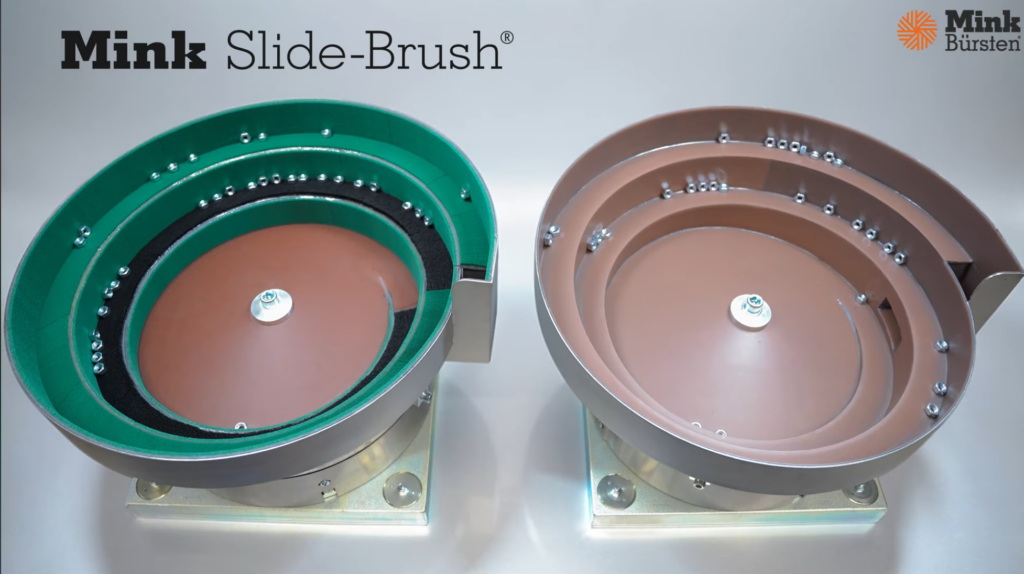
<p>Vibratory bowl feeders use controlled vibration and a custom-tooled track to orient parts and move them in single file. They remain a proven choice for very high volumes of a single part, where the tooling cost is spread across millions of cycles. Their limits are well known: the bowl tooling is dedicated to one part, changeovers take time, and delicate or tangled parts can be difficult to handle. For a deeper look, see our guide on when a vibratory bowl feeder is still the best choice.</p>
<h3>2. Flexible feeding (flex feeders)</h3>
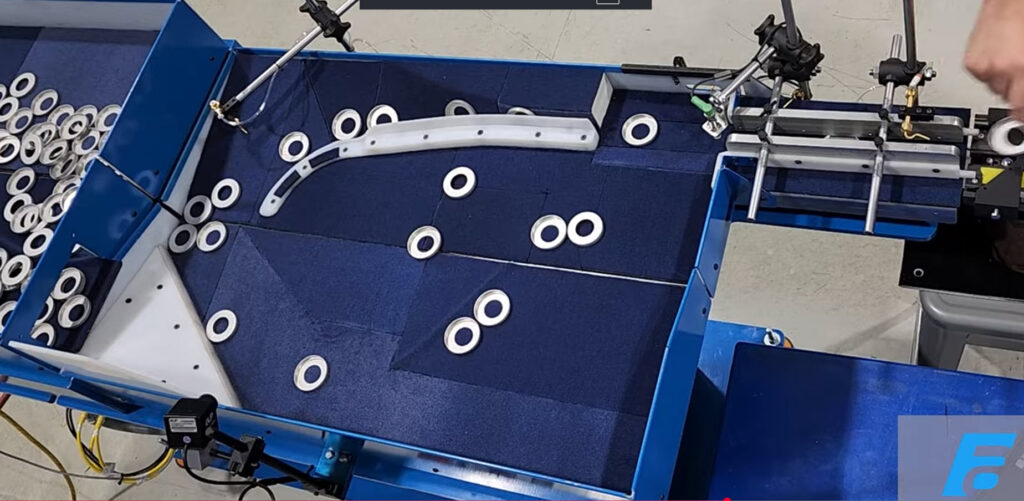
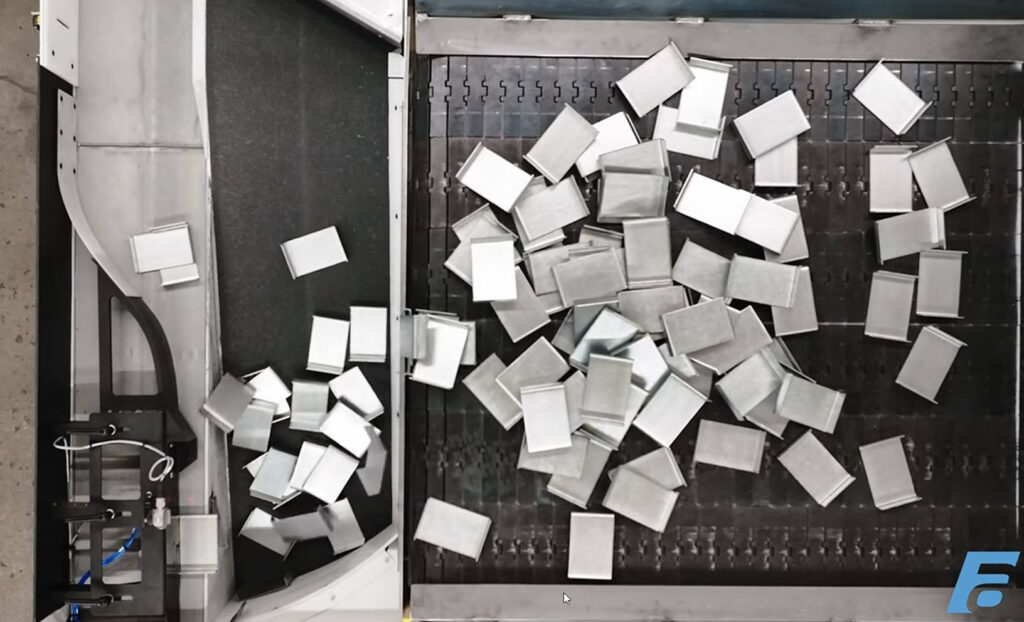
<p>Flexible feeders spread parts across a flat surface, and a vision system and robot pick each part from wherever it lands. Because the intelligence is in software rather than in custom tooling, one feeder can handle many different parts with little or no mechanical changeover. Flexible feeding is ideal for high-mix, low-to-medium volume production, short product lifecycles, and parts that are fragile or hard to orient in a bowl. Feedall’s flex feeders are built for exactly this kind of change-ready production.</p>
<h3>3. Bar feeders</h3>
<p>When the raw material is bar stock for CNC lathes and screw machines, a bar feeder supplies material to the spindle automatically. Bar feeders keep machines running through long unattended shifts, and features such as random loading reduce the manual effort of staging bars. Output is often judged on how steadily the machine is fed, which is why measuring performance in parts per minute rather than inches per minute matters.</p>
<h3>4. Robotic bin picking</h3>
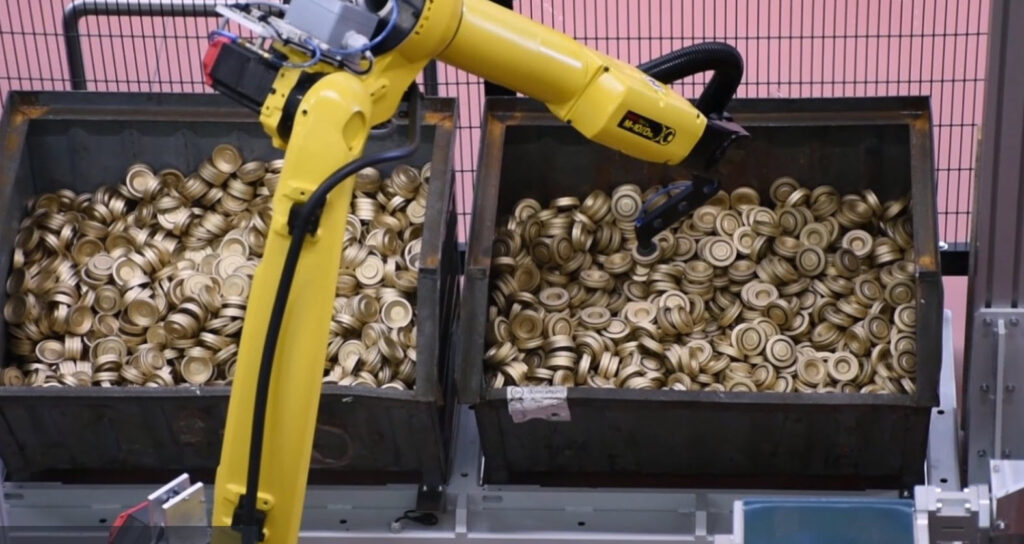
<p>Bin picking uses 3D vision and robot guidance software to pick randomly piled parts directly from a bin or tote, with no separate singulating step. It is attractive when parts arrive in bulk containers and you want to eliminate manual loading. Success depends heavily on part geometry, finish and the quality of the software, so it is worth testing your actual parts. Our articles on how bin picking software works and what to look for in a bin picking system cover the details.</p>
<h2>Part Feeding Technology Comparison</h2>
<table>
<tbody>
<tr>
<td><strong>Factor</strong></td>
<td><strong>Vibratory</strong></td>
<td><strong>Flexible feeding</strong></td>
<td><strong>Bar feeder</strong></td>
<td><strong>Bin picking</strong></td>
</tr>
<tr>
<td><strong>Best for</strong></td>
<td>One high-volume part</td>
<td>High-mix, changing parts</td>
<td>Bar stock to CNC machines</td>
<td>Bulk parts in bins or totes</td>
</tr>
<tr>
<td><strong>Changeover</strong></td>
<td>Slow; tooling per part</td>
<td>Fast; software recipe</td>
<td>Bar diameter and length setup</td>
<td>Software and gripper change</td>
</tr>
<tr>
<td><strong>Part variety</strong></td>
<td>Low</td>
<td>High</td>
<td>Bar stock only</td>
<td>Medium to high</td>
</tr>
<tr>
<td><strong>Gentle on parts</strong></td>
<td>Can scratch or tangle</td>
<td>Yes</td>
<td>Not applicable</td>
<td>Depends on gripper</td>
</tr>
<tr>
<td><strong>Requires vision</strong></td>
<td>No</td>
<td>Yes</td>
<td>No</td>
<td>Yes (3D)</td>
</tr>
<tr>
<td><strong>Typical volume</strong></td>
<td>Very high</td>
<td>Low to high</td>
<td>Continuous machining</td>
<td>Low to medium</td>
</tr>
</tbody>
</table>
<h2>A Six-Factor Checklist for Choosing a Part Feeding System</h2>
<ul>
<li><strong>1. Part variety and future mix.</strong> Document every part you need to feed today and over the next three to five years. If the list will grow or change, favor flexibility.</li>
<li><strong>2. Required feed rate.</strong> Calculate required parts per minute with margin. High rates for a single part favor vibratory feeding; moderate rates across many parts favor flexible feeding.</li>
<li><strong>3. Part geometry and condition.</strong> Fragile, cosmetic, tangling, nested or oily parts can rule out some technologies. Test real samples rather than relying on drawings.</li>
<li><strong>4. Changeover frequency.</strong> Estimate how often you switch products and how long each switch takes. Every hour of changeover is an hour of lost output.</li>
<li><strong>5. Total cost of ownership.</strong> Compare total cost over the life of the line, including tooling, redesign for new parts, downtime and maintenance, not just the purchase price.</li>
<li><strong>6. Integration and support.</strong> Confirm the feeder works with your robot, controls and vision, and consider the footprint, noise and operator skills available.</li>
</ul>
<h2>Common Mistakes to Avoid</h2>
<ul>
<li><strong>Designing only for the current part.</strong> A feeder sized for today’s single part can become a bottleneck when the product line changes.</li>
<li><strong>Skipping real-part testing.</strong> Parts from the drawing are not parts from the supplier. Always run a feeding trial with production samples.</li>
<li><strong>Choosing the feeder last.</strong> Part feeding is not an afterthought. Involve your feeding supplier during concept design, not after the robot is chosen.</li>
</ul>
<h2>When to Combine Technologies</h2>
<p>The best answer is sometimes more than one. A common pattern is pairing a flexible feeder with a robot for high-mix assembly while a vibratory feeder handles a single high-volume component in the same cell. Flexible feeding is also increasingly used alongside robotic bin picking, with the bin picker loading the feeder from bulk. A supplier who offers several technologies can recommend the right blend instead of fitting your application to the only product they sell.</p>
<h2>Frequently Asked Questions</h2>
<h3>What is the best part feeding technology?</h3>
<p>There is no single best technology. Vibratory feeders suit very high volumes of one part, flexible feeders suit high-mix production, bar feeders suit CNC machining, and bin picking suits parts supplied in bulk containers. The right choice depends on part variety, feed rate, part condition and changeover needs.</p>
<h3>What is the difference between flexible feeding and vibratory bowl feeding?</h3>
<p>A vibratory bowl feeder uses custom tooling to orient one specific part mechanically. A flexible feeder uses vision and software to handle many different parts on the same hardware, which makes changeovers much faster.</p>
<h3>How do I know if my part can be fed automatically?</h3>
<p>The most reliable way is a feeding trial with production samples. Feedall can evaluate your parts and recommend a technology before you commit to a system.</p>
<h3>Can I use more than one feeding technology in the same cell?</h3>
<p>Yes. Many cells combine technologies, such as a flexible feeder for varying parts and a vibratory feeder for a high-volume component.</p>
<h1>Selecting the Best Part Feeding Technology</h1>
<p><em>Feedall Automation  |  October 27, 2026  |  Part Feeding</em></p>
<p>Every automated assembly, machining or packaging cell has the same quiet requirement: the right part, in the right orientation, at the right time. That is the job of part feeding, and getting it wrong is one of the most common reasons automation projects miss their rates or run over budget.</p>
<p>Today’s manufacturers have more part feeding technology to choose from than ever, but no single option wins in every situation. This guide explains the main technologies, how they compare, and a six-factor checklist you can use to select the best part feeding system for your application.</p>
<h2>What Is Part Feeding?</h2>
<p>Part feeding is the process of taking parts in bulk, whether loose, bagged, bar stock or in bins, and presenting them in a controlled, repeatable way to a robot, machine or operator. A part feeding system singulates, orients and delivers parts at a rate that matches the downstream process. The feeder you choose sets the speed, flexibility and reliability of the entire cell, which is why it deserves attention early in the design. Explore Feedall’s full range of <a href="https://feedall.com/automated-feeding-systems/part-feeders/">parts feeders</a> to see how each approach fits.</p>
<h2>The Four Main Part Feeding Technologies</h2>
<h3>1. Vibratory bowl feeders and vibratory feeders</h3>
<p>Vibratory bowl feeders use controlled vibration and a custom-tooled track to orient parts and move them in single file. They remain a proven choice for very high volumes of a single part, where the tooling cost is spread across millions of cycles. Their limits are well known: the bowl tooling is dedicated to one part, changeovers take time, and delicate or tangled parts can be difficult to handle. For a deeper look, see <a href="https://feedall.com/resources/blog/when-vibratory-bowl-feeder-is-best-choice/">when a vibratory bowl feeder is still the best choice</a> and <a href="https://feedall.com/resources/blog/vibratory-feeder-applications/">which parts are best for vibratory feeders</a>.</p>
<h3>2. Flexible feeding (flex feeders)</h3>
<p>Flexible feeders spread parts across a flat surface, and a vision system and robot pick each part from wherever it lands. Because the intelligence is in software rather than in custom tooling, one feeder can handle many different parts with little or no mechanical changeover. Flexible feeding is ideal for high-mix, low-to-medium volume production, short product lifecycles, and parts that are fragile or hard to orient in a bowl. Learn <a href="https://feedall.com/resources/blog/why-flexible-parts-feeding-is-replacing-vibratory-bowl-feeders-and-when-it-shouldnt/">why flexible parts feeding is replacing vibratory bowl feeders</a>, or see how <a href="https://feedall.com/automated-feeding-systems/flexible-feeder/">Feedall flex feeders</a> compare with <a href="https://feedall.com/resources/blog/feedall-flex-feeder-vs-flexibowl/">FlexiBowl</a> and <a href="https://feedall.com/resources/blog/feedall-vs-asyril-flex-feeding-system/">Asyril</a>.</p>
<h3>3. Bar feeders</h3>
<p>When the raw material is bar stock for CNC lathes and screw machines, a <a href="https://feedall.com/automated-feeding-systems/bar-feeders/">bar feeder</a> supplies material to the spindle automatically. Bar feeders keep machines running through long unattended shifts, and features such as random loading reduce the manual effort of staging bars. Output is often judged on how steadily the machine is fed, which is why measuring performance in parts per minute rather than inches per minute matters.</p>
<h3>4. Robotic bin picking</h3>
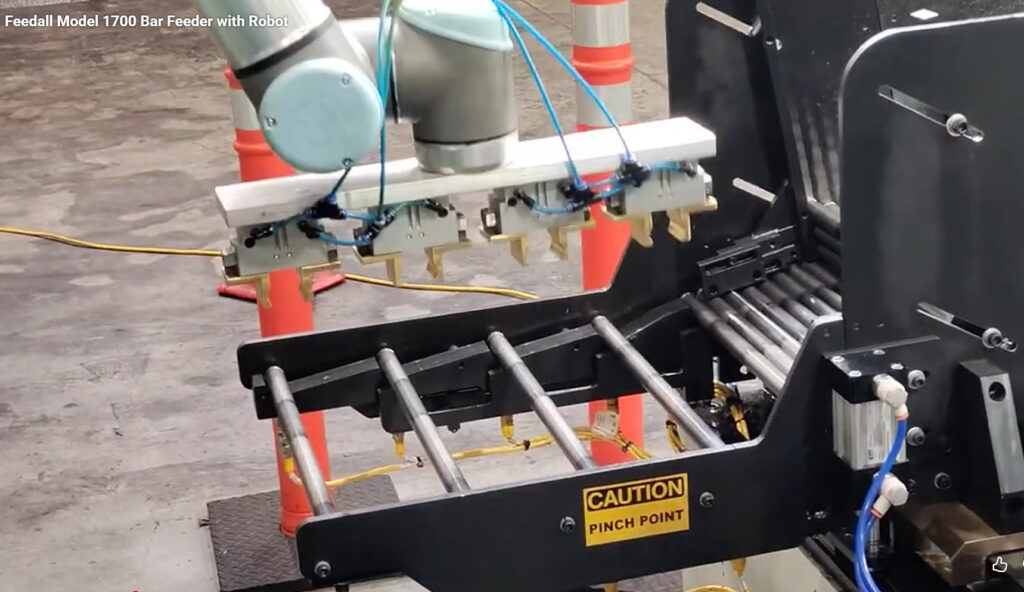
<p><a href="https://feedall.com/automated-feeding-systems/robotic-picking/">Robotic bin picking</a> uses 3D vision and <a href="https://feedall.com/robot-software-solutions/">robot guidance software</a> to pick randomly piled parts directly from a bin or tote, with no separate singulating step. It is attractive when parts arrive in bulk containers and you want to eliminate manual loading. Success depends heavily on part geometry, finish and software quality, so test your actual parts. Read <a href="https://feedall.com/resources/blog/resources-blog-when-should-you-use-robotic-bin-picking/">when you should use robotic bin picking</a> and <a href="https://feedall.com/resources/blog/what-to-look-for-when-choosing-a-bin-picking-system-feedall/">what to look for when choosing a bin picking system</a>.</p>
<h2>Part Feeding Technology Comparison</h2>
<table>
<tbody>
<tr>
<td width="125"><strong>Factor</strong></td>
<td width="125"><strong>Vibratory</strong></td>
<td width="125"><strong>Flexible feeding</strong></td>
<td width="125"><strong>Bar feeder</strong></td>
<td width="125"><strong>Bin picking</strong></td>
</tr>
<tr>
<td width="125"><strong>Best for</strong></td>
<td width="125">One high-volume part</td>
<td width="125">High-mix, changing parts</td>
<td width="125">Bar stock to CNC machines</td>
<td width="125">Bulk parts in bins or totes</td>
</tr>
<tr>
<td width="125"><strong>Changeover</strong></td>
<td width="125">Slow; tooling per part</td>
<td width="125">Fast; software recipe</td>
<td width="125">Bar diameter and length setup</td>
<td width="125">Software and gripper change</td>
</tr>
<tr>
<td width="125"><strong>Part variety</strong></td>
<td width="125">Low</td>
<td width="125">High</td>
<td width="125">Bar stock only</td>
<td width="125">Medium to high</td>
</tr>
<tr>
<td width="125"><strong>Gentle on parts</strong></td>
<td width="125">Can scratch or tangle</td>
<td width="125">Yes</td>
<td width="125">Not applicable</td>
<td width="125">Depends on gripper</td>
</tr>
<tr>
<td width="125"><strong>Requires vision</strong></td>
<td width="125">No</td>
<td width="125">Yes</td>
<td width="125">No</td>
<td width="125">Yes (3D)</td>
</tr>
<tr>
<td width="125"><strong>Typical volume</strong></td>
<td width="125">Very high</td>
<td width="125">Low to high</td>
<td width="125">Continuous machining</td>
<td width="125">Low to medium</td>
</tr>
</tbody>
</table>
<p> </p>
<h2>A Six-Factor Checklist for Choosing a Part Feeding System</h2>
<ul>
<li><strong> Part variety and future mix.</strong> Document every part you need to feed today and over the next three to five years. If the list will grow or change, favor flexibility.</li>
<li><strong> Required feed rate.</strong> Calculate required parts per minute with margin. High rates for a single part favor vibratory feeding; moderate rates across many parts favor flexible feeding.</li>
<li><strong> Part geometry and condition.</strong> Fragile, cosmetic, tangling, nested or oily parts can rule out some technologies. Test real samples rather than relying on drawings, and consider the <a href="https://feedall.com/resources/blog/choosing-the-right-feeder-surface-an-engineers-guide/">feeder surface</a> as well.</li>
<li><strong> Changeover frequency.</strong> Estimate how often you switch products and how long each switch takes. Every hour of changeover is an hour of lost output.</li>
<li><strong> Total cost of ownership.</strong> Compare total cost over the life of the line, including tooling, redesign for new parts, downtime and maintenance, not just the purchase price.</li>
<li><strong> Integration and support.</strong> Confirm the feeder works with your robot, controls and vision, and consider footprint, noise and operator skills available.</li>
</ul>
<h2>Common Mistakes to Avoid</h2>
<ul>
<li><strong>Designing only for the current part.</strong> A feeder sized for today’s single part can become a bottleneck when the product line changes.</li>
<li><strong>Skipping real-part testing.</strong> Parts from the drawing are not parts from the supplier. Always run a feeding trial with production samples; tools like <a href="https://feedall.com/resources/blog/smarter-part-feeding-simulation-3d-printing-flex-feeders/">simulation and 3D-printed prototypes</a> can speed this up.</li>
<li><strong>Choosing the feeder last.</strong> Part feeding is not an afterthought. Involve your feeding supplier during concept design, not after the robot is chosen.</li>
</ul>
<h2>When to Combine Part Feeding Technologies</h2>
<p>The best answer is sometimes more than one. A common pattern pairs a flexible feeder and robot for high-mix assembly while a vibratory feeder handles a single high-volume component in the same cell. Flexible feeding is also increasingly used alongside robotic bin picking, with the bin picker loading the feeder from bulk. A supplier who offers several technologies can recommend the right blend instead of fitting your application to the only product they sell.</p>
<h2>Frequently Asked Questions</h2>
<h3>What is the best part feeding technology?</h3>
<p>There is no single best technology. Vibratory feeders suit very high volumes of one part, flexible feeders suit high-mix production, bar feeders suit CNC machining, and bin picking suits parts supplied in bulk containers. The right choice depends on part variety, feed rate, part condition and changeover needs.</p>
<h3>What is the difference between flexible feeding and vibratory bowl feeding?</h3>
<p>A vibratory bowl feeder uses custom tooling to orient one specific part mechanically. A flexible feeder uses vision and software to handle many different parts on the same hardware, which makes changeovers much faster.</p>
<h3>How do I know if my part can be fed automatically?</h3>
<p>The most reliable way is a part feeding trial with production samples. Feedall can evaluate your parts and recommend a technology before you commit to a system.</p>
<h3>Can I use more than one feeding technology in the same cell?</h3>
<p>Yes. Many cells combine technologies, such as a flexible feeder for varying parts and a vibratory feeder for a high-volume component.</p>
<h2>Choose the Right Part Feeding Technology with Feedall</h2>
<p>Feedall Automation has helped manufacturers raise production rates since 1946. As a family-owned, U.S.-based manufacturer of part feeding, material handling and robot support equipment, we offer <a href="https://feedall.com/automated-feeding-systems/flexible-feeder/">flex feeders</a>, <a href="https://feedall.com/automated-feeding-systems/part-feeders/">parts feeders</a>, <a href="https://feedall.com/automated-feeding-systems/bar-feeders/">bar feeders</a>, <a href="https://feedall.com/automated-feeding-systems/robotic-picking/">bin picking</a> and <a href="https://feedall.com/robot-software-solutions/">robot guidance software</a>, so our recommendation is based on your application, not on a single product.</p>
<p><strong>Ready to find the best fit?</strong> <a href="https://feedall.com/get-a-quote/">Request a quote</a> or <a href="https://feedall.com/about-us/contact-us/">contact our team</a> with your parts and requirements, or call 1-800-942-8101.</p>


]]></content>
		<content_plain>Selecting the Best Part Feeding Technology Feedall Automation | October 27, 2026 | Part Feeding Every automated assembly, machining or packaging cell has the same quiet requirement: the right part, in the right orientation, at the right time. That is the job of part feeding, and getting it wrong is one of the most common reasons automation projects miss their rates or run over budget. The good news is that today’s manufacturers have more part feeding technology to choose from than ever. The challenge is that no single option wins in every situation. This guide explains the main technologies, how they compare, and a six-factor checklist you can use to select the best part feeding technology for your application. What Is Part Feeding? Part feeding is the process of taking parts in bulk, whether loose, bagged, bar stock or in bins, and presenting them in a controlled, repeatable way to a robot, machine or operator. A part feeding system singulates, orients and delivers parts at a rate that matches the downstream process. The feeder you choose sets the speed, flexibility and reliability of the entire cell, which is why it deserves attention early in the design. The Four Main Part Feeding Technologies 1. Vibratory bowl feeders and vibratory feeders Vibratory bowl feeders use controlled vibration and a custom-tooled track to orient parts and move them in single file. They remain a proven choice for very high volumes of a single part, where the tooling cost is spread across millions of cycles. Their limits are well known: the bowl tooling is dedicated to one part, changeovers take time, and delicate or tangled parts can be difficult to handle. For a deeper look, see our guide on when a vibratory bowl feeder is still the best choice. 2. Flexible feeding (flex feeders) Flexible feeders spread parts across a flat surface, and a vision system and robot pick each part from wherever it lands. Because the intelligence is in software rather than in custom tooling, one feeder can handle many different parts with little or no mechanical changeover. Flexible feeding is ideal for high-mix, low-to-medium volume production, short product lifecycles, and parts that are fragile or hard to orient in a bowl. Feedall’s flex feeders are built for exactly this kind of change-ready production. 3. Bar feeders When the raw material is bar stock for CNC lathes and screw machines, a bar feeder supplies material to the spindle automatically. Bar feeders keep machines running through long unattended shifts, and features such as random loading reduce the manual effort of staging bars. Output is often judged on how steadily the machine is fed, which is why measuring performance in parts per minute rather than inches per minute matters. 4. Robotic bin picking Bin picking uses 3D vision and robot guidance software to pick randomly piled parts directly from a bin or tote, with no separate singulating step. It is attractive when parts arrive in bulk containers and you want to eliminate manual loading. Success depends heavily on part geometry, finish and the quality of the software, so it is worth testing your actual parts. Our articles on how bin picking software works and what to look for in a bin picking system cover the details. Part Feeding Technology Comparison Factor Vibratory Flexible feeding Bar feeder Bin picking Best for One high-volume part High-mix, changing parts Bar stock to CNC machines Bulk parts in bins or totes Changeover Slow; tooling per part Fast; software recipe Bar diameter and length setup Software and gripper change Part variety Low High Bar stock only Medium to high Gentle on parts Can scratch or tangle Yes Not applicable Depends on gripper Requires vision No Yes No Yes (3D) Typical volume Very high Low to high Continuous machining Low to medium A Six-Factor Checklist for Choosing a Part Feeding System 1. Part variety and future mix. Document every part you need to feed today and over the next three to five years. If the list will grow or change, favor flexibility. 2. Required feed rate. Calculate required parts per minute with margin. High rates for a single part favor vibratory feeding; moderate rates across many parts favor flexible feeding. 3. Part geometry and condition. Fragile, cosmetic, tangling, nested or oily parts can rule out some technologies. Test real samples rather than relying on drawings. 4. Changeover frequency. Estimate how often you switch products and how long each switch takes. Every hour of changeover is an hour of lost output. 5. Total cost of ownership. Compare total cost over the life of the line, including tooling, redesign for new parts, downtime and maintenance, not just the purchase price. 6. Integration and support. Confirm the feeder works with your robot, controls and vision, and consider the footprint, noise and operator skills available. Common Mistakes to Avoid Designing only for the current part. A feeder sized for today’s single part can become a bottleneck when the product line changes. Skipping real-part testing. Parts from the drawing are not parts from the supplier. Always run a feeding trial with production samples. Choosing the feeder last. Part feeding is not an afterthought. Involve your feeding supplier during concept design, not after the robot is chosen. When to Combine Technologies The best answer is sometimes more than one. A common pattern is pairing a flexible feeder with a robot for high-mix assembly while a vibratory feeder handles a single high-volume component in the same cell. Flexible feeding is also increasingly used alongside robotic bin picking, with the bin picker loading the feeder from bulk. A supplier who offers several technologies can recommend the right blend instead of fitting your application to the only product they sell. Frequently Asked Questions What is the best part feeding technology? There is no single best technology. Vibratory feeders suit very high volumes of one part, flexible feeders suit high-mix production, bar feeders suit CNC machining, and bin picking suits parts supplied in bulk containers. The right choice depends on part variety, feed rate, part condition and changeover needs. What is the difference between flexible feeding and vibratory bowl feeding? A vibratory bowl feeder uses custom tooling to orient one specific part mechanically. A flexible feeder uses vision and software to handle many different parts on the same hardware, which makes changeovers much faster. How do I know if my part can be fed automatically? The most reliable way is a feeding trial with production samples. Feedall can evaluate your parts and recommend a technology before you commit to a system. Can I use more than one feeding technology in the same cell? Yes. Many cells combine technologies, such as a flexible feeder for varying parts and a vibratory feeder for a high-volume component. Selecting the Best Part Feeding Technology Feedall Automation  |  October 27, 2026  |  Part Feeding Every automated assembly, machining or packaging cell has the same quiet requirement: the right part, in the right orientation, at the right time. That is the job of part feeding, and getting it wrong is one of the most common reasons automation projects miss their rates or run over budget. Today’s manufacturers have more part feeding technology to choose from than ever, but no single option wins in every situation. This guide explains the main technologies, how they compare, and a six-factor checklist you can use to select the best part feeding system for your application. What Is Part Feeding? Part feeding is the process of taking parts in bulk, whether loose, bagged, bar stock or in bins, and presenting them in a controlled, repeatable way to a robot, machine or operator. A part feeding system singulates, orients and delivers parts at a rate that matches the downstream process. The feeder you choose sets the speed, flexibility and reliability of the entire cell, which is why it deserves attention early in the design. Explore Feedall’s full range of parts feeders to see how each approach fits. The Four Main Part Feeding Technologies 1. Vibratory bowl feeders and vibratory feeders Vibratory bowl feeders use controlled vibration and a custom-tooled track to orient parts and move them in single file. They remain a proven choice for very high volumes of a single part, where the tooling cost is spread across millions of cycles. Their limits are well known: the bowl tooling is dedicated to one part, changeovers take time, and delicate or tangled parts can be difficult to handle. For a deeper look, see when a vibratory bowl feeder is still the best choice and which parts are best for vibratory feeders. 2. Flexible feeding (flex feeders) Flexible feeders spread parts across a flat surface, and a vision system and robot pick each part from wherever it lands. Because the intelligence is in software rather than in custom tooling, one feeder can handle many different parts with little or no mechanical changeover. Flexible feeding is ideal for high-mix, low-to-medium volume production, short product lifecycles, and parts that are fragile or hard to orient in a bowl. Learn why flexible parts feeding is replacing vibratory bowl feeders, or see how Feedall flex feeders compare with FlexiBowl and Asyril. 3. Bar feeders When the raw material is bar stock for CNC lathes and screw machines, a bar feeder supplies material to the spindle automatically. Bar feeders keep machines running through long unattended shifts, and features such as random loading reduce the manual effort of staging bars. Output is often judged on how steadily the machine is fed, which is why measuring performance in parts per minute rather than inches per minute matters. 4. Robotic bin picking Robotic bin picking uses 3D vision and robot guidance software to pick randomly piled parts directly from a bin or tote, with no separate singulating step. It is attractive when parts arrive in bulk containers and you want to eliminate manual loading. Success depends heavily on part geometry, finish and software quality, so test your actual parts. Read when you should use robotic bin picking and what to look for when choosing a bin picking system. Part Feeding Technology Comparison Factor Vibratory Flexible feeding Bar feeder Bin picking Best for One high-volume part High-mix, changing parts Bar stock to CNC machines Bulk parts in bins or totes Changeover Slow; tooling per part Fast; software recipe Bar diameter and length setup Software and gripper change Part variety Low High Bar stock only Medium to high Gentle on parts Can scratch or tangle Yes Not applicable Depends on gripper Requires vision No Yes No Yes (3D) Typical volume Very high Low to high Continuous machining Low to medium   A Six-Factor Checklist for Choosing a Part Feeding System Part variety and future mix. Document every part you need to feed today and over the next three to five years. If the list will grow or change, favor flexibility. Required feed rate. Calculate required parts per minute with margin. High rates for a single part favor vibratory feeding; moderate rates across many parts favor flexible feeding. Part geometry and condition. Fragile, cosmetic, tangling, nested or oily parts can rule out some technologies. Test real samples rather than relying on drawings, and consider the feeder surface as well. Changeover frequency. Estimate how often you switch products and how long each switch takes. Every hour of changeover is an hour of lost output. Total cost of ownership. Compare total cost over the life of the line, including tooling, redesign for new parts, downtime and maintenance, not just the purchase price. Integration and support. Confirm the feeder works with your robot, controls and vision, and consider footprint, noise and operator skills available. Common Mistakes to Avoid Designing only for the current part. A feeder sized for today’s single part can become a bottleneck when the product line changes. Skipping real-part testing. Parts from the drawing are not parts from the supplier. Always run a feeding trial with production samples; tools like simulation and 3D-printed prototypes can speed this up. Choosing the feeder last. Part feeding is not an afterthought. Involve your feeding supplier during concept design, not after the robot is chosen. When to Combine Part Feeding Technologies The best answer is sometimes more than one. A common pattern pairs a flexible feeder and robot for high-mix assembly while a vibratory feeder handles a single high-volume component in the same cell. Flexible feeding is also increasingly used alongside robotic bin picking, with the bin picker loading the feeder from bulk. A supplier who offers several technologies can recommend the right blend instead of fitting your application to the only product they sell. Frequently Asked Questions What is the best part feeding technology? There is no single best technology. Vibratory feeders suit very high volumes of one part, flexible feeders suit high-mix production, bar feeders suit CNC machining, and bin picking suits parts supplied in bulk containers. The right choice depends on part variety, feed rate, part condition and changeover needs. What is the difference between flexible feeding and vibratory bowl feeding? A vibratory bowl feeder uses custom tooling to orient one specific part mechanically. A flexible feeder uses vision and software to handle many different parts on the same hardware, which makes changeovers much faster. How do I know if my part can be fed automatically? The most reliable way is a part feeding trial with production samples. Feedall can evaluate your parts and recommend a technology before you commit to a system. Can I use more than one feeding technology in the same cell? Yes. Many cells combine technologies, such as a flexible feeder for varying parts and a vibratory feeder for a high-volume component. Choose the Right Part Feeding Technology with Feedall Feedall Automation has helped manufacturers raise production rates since 1946. As a family-owned, U.S.-based manufacturer of part feeding, material handling and robot support equipment, we offer flex feeders, parts feeders, bar feeders, bin picking and robot guidance software, so our recommendation is based on your application, not on a single product. Ready to find the best fit? Request a quote or contact our team with your parts and requirements, or call 1-800-942-8101.</content_plain>
		<image>https://feedall.com/wp-content/uploads/2026/10/med.jpg</image>
		<modified>2026-10-27T08:07:56-04:00</modified>
	</item>
	<item>
		<id>8008</id>
		<type>post</type>
		<mapped_entity>Articles</mapped_entity>		<url>https://feedall.com/resources/blog/why-parts-feeders-matter-in-automation-projects-feedall/</url>
		<title>Why Parts Feeders Matter in Automation Projects | Feedall</title>
		<h1>Why Parts Feeders Matter in Automation Projects | Feedall</h1>
		<summary>Most automation projects start with the robot. Teams compare arms, reach, payload, and vision packages, then treat the parts feeders as a line item to sort out later. That order is backwards. A robot can only work as fast and as reliably as parts arrive in front of it, and parts feeders are what decide whether the right part shows up in the right place, in the right orientation, at the right rate, every cycle.</summary>
		<content><![CDATA[
	
		
			<p>Most automation projects start with the robot. Teams compare arms, reach, payload, and vision packages, then treat the parts feeders as a line item to sort out later. That order is backwards. A robot can only work as fast and as reliably as parts arrive in front of it, and parts feeders are what decide whether the right part shows up in the right place, in the right orientation, at the right rate, every cycle.</p>
<p>This guide explains what parts feeders actually do in an automated cell, why they influence cycle time, uptime, and cost more than most teams expect, and how to plan feeding into your project from day one instead of bolting it on at the end.</p>
<h2>What Parts Feeders Actually Do</h2>
<p>Parts feeders take components from bulk and turn them into a predictable, controlled supply for a robot, machine, or assembly station. Nearly every feeder performs some combination of four jobs: singulating parts so they arrive one at a time, orienting them so they can be picked or inserted consistently, metering them so supply matches the process rate, and presenting them at a fixed, repeatable location.</p>
<p>Different technologies handle those jobs in different ways. <a href="https://nam11.safelinks.protection.outlook.com/?url=https%3A%2F%2Ffeedall.com%2Fautomated-feeding-systems%2Fpart-feeders%2Fvibration-feeders%2F&amp;data=05%7C02%7Cjcocco%40feedall.com%7Ce72e46bf48cc40c9b28d08df2e44f410%7Cfd97ce8a573c49519be31639fce356d1%7C0%7C0%7C639280545811981969%7CUnknown%7CTWFpbGZsb3d8eyJFbXB0eU1hcGkiOnRydWUsIlYiOiIwLjAuMDAwMCIsIlAiOiJXaW4zMiIsIkFOIjoiTWFpbCIsIldUIjoyfQ%3D%3D%7C0%7C%7C%7C&amp;sdata=EAVIjm8k4i6mtnXxulZg5ziSq54vTDBlPg%2BxURK5DD4%3D&amp;reserved=0">Vibratory feeders</a> use controlled vibration and tooling to orient small parts at high speed. <a href="https://nam11.safelinks.protection.outlook.com/?url=https%3A%2F%2Ffeedall.com%2Fautomated-feeding-systems%2Fflexible-feeder%2F&amp;data=05%7C02%7Cjcocco%40feedall.com%7Ce72e46bf48cc40c9b28d08df2e44f410%7Cfd97ce8a573c49519be31639fce356d1%7C0%7C0%7C639280545812002603%7CUnknown%7CTWFpbGZsb3d8eyJFbXB0eU1hcGkiOnRydWUsIlYiOiIwLjAuMDAwMCIsIlAiOiJXaW4zMiIsIkFOIjoiTWFpbCIsIldUIjoyfQ%3D%3D%7C0%7C%7C%7C&amp;sdata=M4KRq%2Fj99kIU%2BPAI9JIv4z87veDyo5%2Fn%2BRnHt26b9js%3D&amp;reserved=0">Flex feeders</a> spread parts across a surface and use vision to guide the robot to pickable parts, so they can be reprogrammed rather than retooled. <a href="https://nam11.safelinks.protection.outlook.com/?url=https%3A%2F%2Ffeedall.com%2Fautomated-feeding-systems%2Fbar-feeders%2F&amp;data=05%7C02%7Cjcocco%40feedall.com%7Ce72e46bf48cc40c9b28d08df2e44f410%7Cfd97ce8a573c49519be31639fce356d1%7C0%7C0%7C639280545812015378%7CUnknown%7CTWFpbGZsb3d8eyJFbXB0eU1hcGkiOnRydWUsIlYiOiIwLjAuMDAwMCIsIlAiOiJXaW4zMiIsIkFOIjoiTWFpbCIsIldUIjoyfQ%3D%3D%7C0%7C%7C%7C&amp;sdata=FBr5NLUAEnHxxPb%2BXxeornPMNDiOzrwnNffULvEvrFY%3D&amp;reserved=0">Bar feeders</a> handle cylindrical stock and shafts, while bulk hoppers, elevators, and conveyors stage and move parts between steps. <a href="https://nam11.safelinks.protection.outlook.com/?url=https%3A%2F%2Ffeedall.com%2Fautomated-feeding-systems%2Frobotic-picking%2F&amp;data=05%7C02%7Cjcocco%40feedall.com%7Ce72e46bf48cc40c9b28d08df2e44f410%7Cfd97ce8a573c49519be31639fce356d1%7C0%7C0%7C639280545812026205%7CUnknown%7CTWFpbGZsb3d8eyJFbXB0eU1hcGkiOnRydWUsIlYiOiIwLjAuMDAwMCIsIlAiOiJXaW4zMiIsIkFOIjoiTWFpbCIsIldUIjoyfQ%3D%3D%7C0%7C%7C%7C&amp;sdata=iAaRs3EREnoICwxHbxCweVNmdh213E6dotvVfb7BnUA%3D&amp;reserved=0">Robotic bin picking</a> skips the feeder entirely and picks straight from a tote. Each has a place, and choosing among them is one of the most important decisions in the project.</p>
<h2>Why Parts Feeders Matter More Than Most Teams Expect</h2>
<p><strong>Feeding sets the ceiling on cycle time.</strong> If the robot can complete a move in 2 seconds but the feeder presents a part every 3 seconds, the cell runs at 3 seconds. No amount of robot tuning fixes a feeding bottleneck.</p>
<p><strong>Feeding drives uptime.</strong> Jams, misfeeds, and parts presented in the wrong orientation are among the most common reasons automated cells stop. Assembly research building on Geoffrey Boothroyd’s work has <a href="https://nam11.safelinks.protection.outlook.com/?url=https%3A%2F%2Fwww.intechopen.com%2Fchapters%2F18010&amp;data=05%7C02%7Cjcocco%40feedall.com%7Ce72e46bf48cc40c9b28d08df2e44f410%7Cfd97ce8a573c49519be31639fce356d1%7C0%7C0%7C639280545812036504%7CUnknown%7CTWFpbGZsb3d8eyJFbXB0eU1hcGkiOnRydWUsIlYiOiIwLjAuMDAwMCIsIlAiOiJXaW4zMiIsIkFOIjoiTWFpbCIsIldUIjoyfQ%3D%3D%7C0%7C%7C%7C&amp;sdata=Yo3J6lS3E6FwHdDoeyeqIFLKEBcXiaNFwFJtYnbSHk4%3D&amp;reserved=0">attributed roughly 30% of automated assembly cost and about half of work cell failures to part feeder design</a>. Whatever the exact figure in your plant, the feeder is often where reliability is won or lost.</p>
<p><strong>Feeding determines how flexible the cell is.</strong> A dedicated bowl tooled for one part is fast and dependable, but a new part number may mean new tooling. A flex feeder changes over in software. If your product mix is going to grow, the feeding choice locks in how easily the cell can follow it.</p>
<p><strong>Feeding protects part quality.</strong> Cosmetic and precision parts can be scratched, nicked, or deformed by the wrong feeder surface or handling method. Surfaces such as <a href="https://nam11.safelinks.protection.outlook.com/?url=https%3A%2F%2Ffeedall.com%2Fautomated-feeding-systems%2Fslide-brush%2F&amp;data=05%7C02%7Cjcocco%40feedall.com%7Ce72e46bf48cc40c9b28d08df2e44f410%7Cfd97ce8a573c49519be31639fce356d1%7C0%7C0%7C639280545812046742%7CUnknown%7CTWFpbGZsb3d8eyJFbXB0eU1hcGkiOnRydWUsIlYiOiIwLjAuMDAwMCIsIlAiOiJXaW4zMiIsIkFOIjoiTWFpbCIsIldUIjoyfQ%3D%3D%7C0%7C%7C%7C&amp;sdata=NoyttyKkDNdJkJeJHXPQ41MGQQthbWhl0xc2CyucaZI%3D&amp;reserved=0">Slide-Brush®</a> exist precisely to move parts gently and quietly.</p>
<p><strong>Feeding shapes total cost.</strong> The purchase price of a feeder is a small part of its lifetime cost. Downtime, changeover labor, operator intervention, and scrap add up quickly when feeding is undersized or mismatched to the part.</p>
<h2>Where Feeding Goes Wrong in Automation Projects</h2>
<p>Most feeding problems trace back to a handful of planning mistakes.</p>
<p><strong>Feeding is specified last.</strong> When the robot, fixtures, and floor layout are locked before the feeder is chosen, the feeder has to squeeze into whatever space, budget, and cycle time is left.</p>
<p><strong>Parts are never tested.</strong> Part geometry, weight, surface finish, and tangling behavior decide which feeding methods will work. Assumptions made from a drawing often fall apart with real production parts.</p>
<p><strong>The technology does not match the product mix.</strong> A dedicated feeder in a high-mix cell creates constant retooling. A vision-guided solution in a single-part, high-speed application can leave throughput on the table.</p>
<p><strong>Bulk supply is forgotten.</strong> A feeder that holds 10 minutes of parts needs someone to refill it every 10 minutes. Hoppers, elevators, and <a href="https://nam11.safelinks.protection.outlook.com/?url=https%3A%2F%2Ffeedall.com%2Fautomated-feeding-systems%2Fprecision-conveyors%2F&amp;data=05%7C02%7Cjcocco%40feedall.com%7Ce72e46bf48cc40c9b28d08df2e44f410%7Cfd97ce8a573c49519be31639fce356d1%7C0%7C0%7C639280545812056557%7CUnknown%7CTWFpbGZsb3d8eyJFbXB0eU1hcGkiOnRydWUsIlYiOiIwLjAuMDAwMCIsIlAiOiJXaW4zMiIsIkFOIjoiTWFpbCIsIldUIjoyfQ%3D%3D%7C0%7C%7C%7C&amp;sdata=6ouomd6%2B%2BW00TvowTIpqj6QTKMCDsKkxJeiPg3VhYmM%3D&amp;reserved=0">part conveyors</a> determine how long the cell can run unattended.</p>
<h2>Matching Part Feeders to Your Application</h2>
<table>
<tbody>
<tr>
<td><strong>Feeding technology</strong></td>
<td><strong>Best for</strong></td>
<td><strong>Key strength</strong></td>
<td><strong>Watch out for</strong></td>
</tr>
<tr>
<td>Vibratory bowl / linear feeders</td>
<td>High-volume, single-part runs of small parts</td>
<td>Speed and reliability</td>
<td>Tooling changes for new parts</td>
</tr>
<tr>
<td>Flex feeders</td>
<td>High-mix production, frequent changeovers</td>
<td>Reprogrammed, not retooled</td>
<td>Requires vision and robot integration</td>
</tr>
<tr>
<td>High-speed belt / escapement feeders</td>
<td>Larger or heavier parts needing oriented flow</td>
<td>Rugged, continuous presentation</td>
<td>Geometry limits on what can be oriented</td>
</tr>
<tr>
<td>Bar feeders</td>
<td>Bars, tubes, shafts, cylindrical parts</td>
<td>Long unattended run time</td>
<td>Diameter range per setup</td>
</tr>
<tr>
<td>Robotic bin picking</td>
<td>Bulk, unordered parts that can’t be pre-sorted</td>
<td>No dedicated feeding hardware</td>
<td>Slower cycles; hard-to-pick stragglers</td>
</tr>
</tbody>
</table>
<h2>How to Plan Feeding Into Your Automation Project: A Checklist</h2>
<ul>
<li>☐ Feeding requirements are defined before the robot and cell layout are finalized</li>
<li>☐ Real production parts — including worst-case samples — have been sent for evaluation</li>
<li>☐ Target cycle time includes feeder rate, not just robot move time</li>
<li>☐ Current and future part numbers are listed so the feeding method can handle growth</li>
<li>☐ Part surface and cosmetic requirements are documented</li>
<li>☐ Unattended run time is defined, with bulk storage and refill method sized to match</li>
<li>☐ Changeover frequency and acceptable changeover time are agreed on</li>
</ul>
<p>If several of these are still open, the feeding plan is the place to start, because each one changes which parts feeders will actually work.</p>
<h2>How Feedall Approaches Parts Feeders</h2>
<p>Feedall has built <a href="https://nam11.safelinks.protection.outlook.com/?url=https%3A%2F%2Ffeedall.com%2Fautomated-feeding-systems%2Fpart-feeders%2F&amp;data=05%7C02%7Cjcocco%40feedall.com%7Ce72e46bf48cc40c9b28d08df2e44f410%7Cfd97ce8a573c49519be31639fce356d1%7C0%7C0%7C639280545812066239%7CUnknown%7CTWFpbGZsb3d8eyJFbXB0eU1hcGkiOnRydWUsIlYiOiIwLjAuMDAwMCIsIlAiOiJXaW4zMiIsIkFOIjoiTWFpbCIsIldUIjoyfQ%3D%3D%7C0%7C%7C%7C&amp;sdata=l0YMrRk0rRjtphmY%2F%2FRfvpcKjp74vLTzooFe340%2FCi0%3D&amp;reserved=0">part feeders</a> for more than 75 years, and every project starts with the part rather than the product catalog. Feedall’s engineering team evaluates customer parts to determine how they behave — how they move, orient, tangle, and present — before recommending a solution.</p>
<p>Because Feedall builds across vibratory feeders, high-speed belt and escapement feeders, billet feeders, flex feeders, bar feeders, conveyors, and bin picking, the recommendation follows the application. When no standard product fits, Feedall’s <a href="https://nam11.safelinks.protection.outlook.com/?url=https%3A%2F%2Ffeedall.com%2Fautomated-feeding-systems%2Fcustom-automation-equipment%2F&amp;data=05%7C02%7Cjcocco%40feedall.com%7Ce72e46bf48cc40c9b28d08df2e44f410%7Cfd97ce8a573c49519be31639fce356d1%7C0%7C0%7C639280545812079519%7CUnknown%7CTWFpbGZsb3d8eyJFbXB0eU1hcGkiOnRydWUsIlYiOiIwLjAuMDAwMCIsIlAiOiJXaW4zMiIsIkFOIjoiTWFpbCIsIldUIjoyfQ%3D%3D%7C0%7C%7C%7C&amp;sdata=Mx4WAeueqmufYTE8j4nOUB5%2BwcNAp9ndLzCwQd4mKqY%3D&amp;reserved=0">engineered solutions</a> team designs one that does.</p>
<h2>The Bottom Line</h2>
<p>Parts feeders are not an accessory to your automation project — they set its cycle time, drive its uptime, and decide how easily it adapts to new parts. Projects that plan feeding first tend to launch faster and run longer between stops. Projects that leave it for last usually pay for that choice in downtime and rework.</p>
<p><a href="https://nam11.safelinks.protection.outlook.com/?url=https%3A%2F%2Ffeedall.com%2Fget-a-quote%2F&amp;data=05%7C02%7Cjcocco%40feedall.com%7Ce72e46bf48cc40c9b28d08df2e44f410%7Cfd97ce8a573c49519be31639fce356d1%7C0%7C0%7C639280545812090013%7CUnknown%7CTWFpbGZsb3d8eyJFbXB0eU1hcGkiOnRydWUsIlYiOiIwLjAuMDAwMCIsIlAiOiJXaW4zMiIsIkFOIjoiTWFpbCIsIldUIjoyfQ%3D%3D%7C0%7C%7C%7C&amp;sdata=9dPj4pVrQfR9X3Uo6wN0OyQbBF%2FLo2qTTUmJbkVd82o%3D&amp;reserved=0">Send Feedall your parts for a free application review</a> and find out which feeding approach fits your parts, your volume, and your production goals before you commit to the rest of the cell.</p>
<h2>FAQ</h2>
<p><strong>What is a parts feeder?</strong><br>
A parts feeder is a machine that takes components from bulk and delivers them one at a time, in a consistent orientation and location, so a robot or automated machine can pick, insert, or process them.</p>
<p><strong>Why are parts feeders important in automation?</strong><br>
Parts feeders set the maximum rate a cell can run, have a major effect on uptime, and determine how easily a cell can change over to new parts. A well-matched feeder keeps the robot productive; a mismatched one becomes the bottleneck.</p>
<p><strong>What types of part feeders are there?</strong><br>
Common types include vibratory bowl and linear feeders, flex feeders, belt and escapement feeders, bar feeders, and bulk hoppers or elevators. Robotic bin picking is an alternative that picks directly from a tote.</p>
<p><strong>When should feeding be planned in an automation project?</strong><br>
As early as possible — ideally before the robot and cell layout are finalized — because the feeder’s rate, footprint, and changeover needs affect the rest of the design.</p>
<p><strong>How do I know which parts feeder is right for my parts?</strong><br>
The most reliable way is to have real production parts evaluated. Geometry, weight, surface finish, volume, and product mix all influence which feeding technology will perform best.</p>
<h2>Continue Learning</h2>
<ul>
<li><a href="https://nam11.safelinks.protection.outlook.com/?url=https%3A%2F%2Ffeedall.com%2Fresources%2Fblog%2Fwhat-to-look-for-when-choosing-a-bin-picking-system-feedall%2F&amp;data=05%7C02%7Cjcocco%40feedall.com%7Ce72e46bf48cc40c9b28d08df2e44f410%7Cfd97ce8a573c49519be31639fce356d1%7C0%7C0%7C639280545812099951%7CUnknown%7CTWFpbGZsb3d8eyJFbXB0eU1hcGkiOnRydWUsIlYiOiIwLjAuMDAwMCIsIlAiOiJXaW4zMiIsIkFOIjoiTWFpbCIsIldUIjoyfQ%3D%3D%7C0%7C%7C%7C&amp;sdata=dF6m%2BdoSL6aQwAIg4dCezgTfgeCO5P2krPdWTEBZpb0%3D&amp;reserved=0">What to Look for When Choosing a Bin Picking System</a> — the most recent live post, for readers considering picking from bulk.</li>
<li><a href="https://nam11.safelinks.protection.outlook.com/?url=https%3A%2F%2Ffeedall.com%2Fresources%2Fblog%2Fwhen-vibratory-bowl-feeder-is-best-choice%2F&amp;data=05%7C02%7Cjcocco%40feedall.com%7Ce72e46bf48cc40c9b28d08df2e44f410%7Cfd97ce8a573c49519be31639fce356d1%7C0%7C0%7C639280545812109903%7CUnknown%7CTWFpbGZsb3d8eyJFbXB0eU1hcGkiOnRydWUsIlYiOiIwLjAuMDAwMCIsIlAiOiJXaW4zMiIsIkFOIjoiTWFpbCIsIldUIjoyfQ%3D%3D%7C0%7C%7C%7C&amp;sdata=ndkRaIr1SkCftEF9vtIit2xKhBbcrytpnixy7HKnaRo%3D&amp;reserved=0">When Is a Vibratory Bowl Feeder the Best Choice?</a> — when a traditional bowl still wins on speed and ROI.</li>
<li><a href="https://nam11.safelinks.protection.outlook.com/?url=https%3A%2F%2Ffeedall.com%2Fresources%2Fblog%2Fwhy-flexible-parts-feeding-is-replacing-vibratory-bowl-feeders-and-when-it-shouldnt%2F&amp;data=05%7C02%7Cjcocco%40feedall.com%7Ce72e46bf48cc40c9b28d08df2e44f410%7Cfd97ce8a573c49519be31639fce356d1%7C0%7C0%7C639280545812119846%7CUnknown%7CTWFpbGZsb3d8eyJFbXB0eU1hcGkiOnRydWUsIlYiOiIwLjAuMDAwMCIsIlAiOiJXaW4zMiIsIkFOIjoiTWFpbCIsIldUIjoyfQ%3D%3D%7C0%7C%7C%7C&amp;sdata=ZOxmBeRK%2BKjE09sYGCQQojEZMqgHcTGx61oMqPk62xc%3D&amp;reserved=0">Why Flexible Parts Feeding Is Replacing Vibratory Bowl Feeders</a> — the high-mix case for flex feeding.</li>
<li><a href="https://nam11.safelinks.protection.outlook.com/?url=https%3A%2F%2Ffeedall.com%2Fresources%2Fblog%2Fvibratory-feeder-applications%2F&amp;data=05%7C02%7Cjcocco%40feedall.com%7Ce72e46bf48cc40c9b28d08df2e44f410%7Cfd97ce8a573c49519be31639fce356d1%7C0%7C0%7C639280545812129354%7CUnknown%7CTWFpbGZsb3d8eyJFbXB0eU1hcGkiOnRydWUsIlYiOiIwLjAuMDAwMCIsIlAiOiJXaW4zMiIsIkFOIjoiTWFpbCIsIldUIjoyfQ%3D%3D%7C0%7C%7C%7C&amp;sdata=yLlG9EUlCrdAOpMemLrJuP%2BxoMVEBQbG6qKnx%2Fevbd8%3D&amp;reserved=0">What Parts Are Best for Vibratory Feeders?</a> — part geometries that suit vibratory feeding.</li>
</ul>


]]></content>
		<content_plain>Most automation projects start with the robot. Teams compare arms, reach, payload, and vision packages, then treat the parts feeders as a line item to sort out later. That order is backwards. A robot can only work as fast and as reliably as parts arrive in front of it, and parts feeders are what decide whether the right part shows up in the right place, in the right orientation, at the right rate, every cycle. This guide explains what parts feeders actually do in an automated cell, why they influence cycle time, uptime, and cost more than most teams expect, and how to plan feeding into your project from day one instead of bolting it on at the end. What Parts Feeders Actually Do Parts feeders take components from bulk and turn them into a predictable, controlled supply for a robot, machine, or assembly station. Nearly every feeder performs some combination of four jobs: singulating parts so they arrive one at a time, orienting them so they can be picked or inserted consistently, metering them so supply matches the process rate, and presenting them at a fixed, repeatable location. Different technologies handle those jobs in different ways. Vibratory feeders use controlled vibration and tooling to orient small parts at high speed. Flex feeders spread parts across a surface and use vision to guide the robot to pickable parts, so they can be reprogrammed rather than retooled. Bar feeders handle cylindrical stock and shafts, while bulk hoppers, elevators, and conveyors stage and move parts between steps. Robotic bin picking skips the feeder entirely and picks straight from a tote. Each has a place, and choosing among them is one of the most important decisions in the project. Why Parts Feeders Matter More Than Most Teams Expect Feeding sets the ceiling on cycle time. If the robot can complete a move in 2 seconds but the feeder presents a part every 3 seconds, the cell runs at 3 seconds. No amount of robot tuning fixes a feeding bottleneck. Feeding drives uptime. Jams, misfeeds, and parts presented in the wrong orientation are among the most common reasons automated cells stop. Assembly research building on Geoffrey Boothroyd’s work has attributed roughly 30% of automated assembly cost and about half of work cell failures to part feeder design. Whatever the exact figure in your plant, the feeder is often where reliability is won or lost. Feeding determines how flexible the cell is. A dedicated bowl tooled for one part is fast and dependable, but a new part number may mean new tooling. A flex feeder changes over in software. If your product mix is going to grow, the feeding choice locks in how easily the cell can follow it. Feeding protects part quality. Cosmetic and precision parts can be scratched, nicked, or deformed by the wrong feeder surface or handling method. Surfaces such as Slide-Brush® exist precisely to move parts gently and quietly. Feeding shapes total cost. The purchase price of a feeder is a small part of its lifetime cost. Downtime, changeover labor, operator intervention, and scrap add up quickly when feeding is undersized or mismatched to the part. Where Feeding Goes Wrong in Automation Projects Most feeding problems trace back to a handful of planning mistakes. Feeding is specified last. When the robot, fixtures, and floor layout are locked before the feeder is chosen, the feeder has to squeeze into whatever space, budget, and cycle time is left. Parts are never tested. Part geometry, weight, surface finish, and tangling behavior decide which feeding methods will work. Assumptions made from a drawing often fall apart with real production parts. The technology does not match the product mix. A dedicated feeder in a high-mix cell creates constant retooling. A vision-guided solution in a single-part, high-speed application can leave throughput on the table. Bulk supply is forgotten. A feeder that holds 10 minutes of parts needs someone to refill it every 10 minutes. Hoppers, elevators, and part conveyors determine how long the cell can run unattended. Matching Part Feeders to Your Application Feeding technology Best for Key strength Watch out for Vibratory bowl / linear feeders High-volume, single-part runs of small parts Speed and reliability Tooling changes for new parts Flex feeders High-mix production, frequent changeovers Reprogrammed, not retooled Requires vision and robot integration High-speed belt / escapement feeders Larger or heavier parts needing oriented flow Rugged, continuous presentation Geometry limits on what can be oriented Bar feeders Bars, tubes, shafts, cylindrical parts Long unattended run time Diameter range per setup Robotic bin picking Bulk, unordered parts that can’t be pre-sorted No dedicated feeding hardware Slower cycles; hard-to-pick stragglers How to Plan Feeding Into Your Automation Project: A Checklist ☐ Feeding requirements are defined before the robot and cell layout are finalized ☐ Real production parts — including worst-case samples — have been sent for evaluation ☐ Target cycle time includes feeder rate, not just robot move time ☐ Current and future part numbers are listed so the feeding method can handle growth ☐ Part surface and cosmetic requirements are documented ☐ Unattended run time is defined, with bulk storage and refill method sized to match ☐ Changeover frequency and acceptable changeover time are agreed on If several of these are still open, the feeding plan is the place to start, because each one changes which parts feeders will actually work. How Feedall Approaches Parts Feeders Feedall has built part feeders for more than 75 years, and every project starts with the part rather than the product catalog. Feedall’s engineering team evaluates customer parts to determine how they behave — how they move, orient, tangle, and present — before recommending a solution. Because Feedall builds across vibratory feeders, high-speed belt and escapement feeders, billet feeders, flex feeders, bar feeders, conveyors, and bin picking, the recommendation follows the application. When no standard product fits, Feedall’s engineered solutions team designs one that does. The Bottom Line Parts feeders are not an accessory to your automation project — they set its cycle time, drive its uptime, and decide how easily it adapts to new parts. Projects that plan feeding first tend to launch faster and run longer between stops. Projects that leave it for last usually pay for that choice in downtime and rework. Send Feedall your parts for a free application review and find out which feeding approach fits your parts, your volume, and your production goals before you commit to the rest of the cell. FAQ What is a parts feeder? A parts feeder is a machine that takes components from bulk and delivers them one at a time, in a consistent orientation and location, so a robot or automated machine can pick, insert, or process them. Why are parts feeders important in automation? Parts feeders set the maximum rate a cell can run, have a major effect on uptime, and determine how easily a cell can change over to new parts. A well-matched feeder keeps the robot productive; a mismatched one becomes the bottleneck. What types of part feeders are there? Common types include vibratory bowl and linear feeders, flex feeders, belt and escapement feeders, bar feeders, and bulk hoppers or elevators. Robotic bin picking is an alternative that picks directly from a tote. When should feeding be planned in an automation project? As early as possible — ideally before the robot and cell layout are finalized — because the feeder’s rate, footprint, and changeover needs affect the rest of the design. How do I know which parts feeder is right for my parts? The most reliable way is to have real production parts evaluated. Geometry, weight, surface finish, volume, and product mix all influence which feeding technology will perform best. Continue Learning What to Look for When Choosing a Bin Picking System — the most recent live post, for readers considering picking from bulk. When Is a Vibratory Bowl Feeder the Best Choice? — when a traditional bowl still wins on speed and ROI. Why Flexible Parts Feeding Is Replacing Vibratory Bowl Feeders — the high-mix case for flex feeding. What Parts Are Best for Vibratory Feeders? — part geometries that suit vibratory feeding.</content_plain>
		<image>https://feedall.com/wp-content/uploads/2026/10/CNC-Factory.jpg</image>
		<modified>2026-10-20T08:28:38-04:00</modified>
	</item>
	<item>
		<id>8005</id>
		<type>post</type>
		<mapped_entity>Articles</mapped_entity>		<url>https://feedall.com/resources/blog/resources-blog-flexible-feeding-robotic-bin-picking/</url>
		<title>How Flexible Feeding Is Helping Robotic Bin Picking | Feedall</title>
		<h1>How Flexible Feeding Is Helping Robotic Bin Picking | Feedall</h1>
		<summary>Robotic bin picking struggles with tangled parts, awkward grasps, and slow scan-and-plan cycles. Flexible feeding is fixing that. See three ways manufacturers are pairing flex feeders with bin picking to get faster cycles, correctly oriented parts, and bins that actually clear.</summary>
		<content><![CDATA[
	
		
			<h3 id="how-flexible-feeding-is-now-helping-robotic-bin-picking" data-lfile-container="4962276c-29fa-4787-aedc-7fe6bc18ef29" data-pm-slice="1 1 []">How Flexible Feeding Is Now Helping Robotic Bin Picking</h3>
<p>For years, robotic bin picking and flexible feeding were pitched as competing answers to the same question: how do you get a robot to pick parts that arrive in a jumbled pile? Bin picking reached into the pile with 3D vision. Flex feeding spread the pile out so a simpler camera could see it. Today, the smartest automation cells are not choosing between them. They are using flexible feeding to fix the exact problems that make robotic bin picking slow, unpredictable, and hard to justify.</p>
<p>If you have read our earlier posts on <a href="https://www.feedall.com/resources/blog/when-should-you-use-robotic-bin-picking/" target="_blank" rel="noopener noreferrer nofollow">when robotic bin picking makes sense</a> and how bin picking software works, this is the next step: what happens when you stop asking one technology to do everything.</p>
<h3 id="where-robotic-bin-picking-gets-stuck">Where Robotic Bin Picking Gets Stuck</h3>
<p><a href="https://www.feedall.com/automated-feeding-systems/robotic-picking/" target="_blank" rel="noopener noreferrer nofollow">Robotic bin picking</a> is impressive when it works. A 3D camera scans a tote, software matches what it sees against a part model, and the robot plans a collision-free path to grab a part. But anyone who has run a bin picking cell on a production floor knows where it struggles.</p>
<p>The last parts are the hardest. Well-tuned systems pull most parts quickly, then slow down on the stragglers wedged in corners, tangled together, or pinned against the bin wall. That tail end eats cycle time or needs a person to clear it.</p>
<p>The pick is rarely the final orientation. A robot grabbing a part out of a pile takes whatever grasp it can get. That grasp is often not the orientation the next station needs, so the cell adds a regrip stand, a second robot move, or both.</p>
<p>Every pick starts with a scan and a plan. Scanning a deep, cluttered bin and calculating a safe path takes time on every cycle. For many applications, that adds up to a cycle time the downstream process cannot wait for.</p>
<p>The vision stack is complex. 3D cameras, part models, grasp tuning, and collision checking all have to be set up and maintained by someone who understands them.</p>
<h3 id="what-flexible-feeding-brings-to-the-cell">What Flexible Feeding Brings to the Cell</h3>
<p>A <a href="https://www.feedall.com/automated-feeding-systems/flexible-feeder/" target="_blank" rel="noopener noreferrer nofollow">flexible feeder</a> takes bulk parts, spreads them across a flat platform, and uses vibration to separate and flip them. A 2D camera mounted above sees parts lying flat and apart, so the robot gets a clean, predictable pick every time. Parts that land the wrong way up are simply shaken again until they present correctly.</p>
<p>That is the opposite of the bin picking problem. Instead of asking vision to make sense of chaos, flex feeding removes the chaos before the camera looks. The Feedall Flex line is built around this idea, with platforms designed for part separation and presentation to standard 2D cameras.</p>
<p>The result is simpler vision, faster cycles, and near-complete picking, because no part is ever stuck at the bottom of a pile.</p>
<h3 id="three-ways-flex-feeding-and-bin-picking-work-together">Three Ways Flex Feeding and Bin Picking Work Together</h3>
<p><strong>1. Bin picking as the bulk loader, flex feeding as the presenter.</strong> A 3D-guided robot no longer has to make a perfect pick from the tote. It only has to grab a part, or a small handful, and drop it on the flex feeder. Those “good enough” picks are much faster and more forgiving than precision picks. The flex feeder then separates and orients the parts, and a second robot, or the same one, makes a fast 2D pick in the right orientation for assembly. This two-stage approach takes the hardest job off the 3D vision system.</p>
<p><strong>2. Flex feeding as the safety net for stragglers.</strong> When a bin picking cell reaches the tangled, cornered parts at the bottom of a tote, it can dump the remainder onto a flex feeder instead of fighting for each one. The feeder untangles and separates them, and production keeps moving without an operator stepping in. This directly targets the tail-end problem that drags down bin picking pick rates.</p>
<p><strong>3. A metered hopper or conveyor instead of a deep bin.</strong> For many parts, the most reliable answer is to skip the deep bin entirely. A <a href="https://www.feedall.com/automated-feeding-systems/robotic-picking/bin-picking/" target="_blank" rel="noopener noreferrer nofollow">charging conveyor or bulk hopper</a> meters parts onto the flex feeder at a controlled rate, and the robot picks from the platform. You keep the flexibility of bulk loading without the vision complexity of random bin picking.</p>
<h3 id="robotic-bin-picking-vs-flex-feeding-vs-the-hybrid-cell">Robotic Bin Picking vs. Flex Feeding vs. the Hybrid Cell</h3>
<table>
<colgroup>
<col>
<col>
<col>
<col></colgroup>
<tbody>
<tr>
<th colspan="1" rowspan="1"></th>
<th colspan="1" rowspan="1">Robotic bin picking alone</th>
<th colspan="1" rowspan="1">Flex feeding alone</th>
<th colspan="1" rowspan="1">Bin picking + flex feeding</th>
</tr>
<tr>
<td colspan="1" rowspan="1">Part input</td>
<td colspan="1" rowspan="1">Deep bins and totes</td>
<td colspan="1" rowspan="1">Bulk parts from a hopper or conveyor</td>
<td colspan="1" rowspan="1">Deep bins and totes</td>
</tr>
<tr>
<td colspan="1" rowspan="1">Vision</td>
<td colspan="1" rowspan="1">3D, complex setup</td>
<td colspan="1" rowspan="1">2D, simpler setup</td>
<td colspan="1" rowspan="1">3D for the coarse pick, 2D for the final pick</td>
</tr>
<tr>
<td colspan="1" rowspan="1">Final part orientation</td>
<td colspan="1" rowspan="1">Whatever the grasp allows; often needs regrip</td>
<td colspan="1" rowspan="1">Presented flat and correctly oriented</td>
</tr>
<tr>
<td colspan="1" rowspan="1">Bin clearing</td>
<td colspan="1" rowspan="1">Slows down on the last parts</td>
<td colspan="1" rowspan="1">Not applicable</td>
<td colspan="1" rowspan="1">Leftovers dumped to feeder and recovered</td>
</tr>
<tr>
<td colspan="1" rowspan="1">Cycle time</td>
<td colspan="1" rowspan="1">Slower (scan and plan each pick)</td>
<td colspan="1" rowspan="1">Fast</td>
<td colspan="1" rowspan="1">Fast at the final pick; bulk pick runs in parallel</td>
</tr>
<tr>
<td colspan="1" rowspan="1">Best for</td>
<td colspan="1" rowspan="1">Larger parts that must come from deep totes</td>
<td colspan="1" rowspan="1">Small to mid-size parts, high mix</td>
<td colspan="1" rowspan="1">Parts that arrive in totes but need precise, fast presentation</td>
</tr>
</tbody>
</table>
<h3 id="is-a-hybrid-cell-right-for-your-application">Is a Hybrid Cell Right for Your Application?</h3>
<ul data-kind="check">
<li data-checked="false">Parts arrive in bulk totes or bins that you cannot cost-effectively pre-sort</li>
<li data-checked="false">The next station needs parts in a specific orientation, not just picked</li>
<li data-checked="false">Your current bin picking cell stalls or needs an operator to clear the last parts</li>
<li data-checked="false">Cycle time is tighter than a scan-and-plan pick can deliver on its own</li>
<li data-checked="false">Parts are small enough to lie flat and separate on a flex feeder platform</li>
<li data-checked="false">You run several part numbers and want changeovers handled in software</li>
</ul>
<p>If you checked three or more, pairing flexible feeding with robotic bin picking is worth a serious look. If parts are large, heavy, or must stay in their tote, standalone bin picking may still be the better fit. If parts arrive loose and small, a flex feeder alone, or even a <a href="https://www.feedall.com/automated-feeding-systems/part-feeders/vibration-feeders/" target="_blank" rel="noopener noreferrer nofollow">vibratory bowl feeder</a>, may be all you need.</p>
<h3 id="how-feedall-builds-these-cells">How Feedall Builds These Cells</h3>
<p>Feedall is one of the few automation partners that builds both sides of this equation. On the bin picking side, Feedall is the exclusive US distributor of <a href="https://www.feedall.com/automated-feeding-systems/robotic-picking/robotic-picking-software/" target="_blank" rel="noopener noreferrer nofollow">Moonflower 3D bin picking software</a> from Euclid Labs. On the feeding side, the Feedall Flex line handles part separation and presentation, backed by more than 75 years of <a href="https://www.feedall.com/automated-feeding-systems/part-feeders/" target="_blank" rel="noopener noreferrer nofollow">part feeding</a> engineering.</p>
<p>That means the recommendation comes from your parts, not a product catalog. Feedall president Nick Barron has talked about this shift directly, including on an <a href="https://www.automationworld.com/factory/robotics/podcast/55403166/sick-inc-flexible-feeding-how-simplified-robotic-vision-is-changing-industrial-part-picking" target="_blank" rel="noopener noreferrer nofollow">Automation World podcast with SICK</a> on how simpler 2D vision is changing industrial part picking.</p>
<h3 id="the-bottom-line">The Bottom Line</h3>
<p>Robotic bin picking is not going away, and it does not need to. What is changing is the job it is asked to do. By letting flexible feeding handle separation, orientation, and the stubborn parts at the bottom of the bin, manufacturers get the reach of 3D bin picking with the speed and reliability of flex feeding.</p>
<p><a href="https://www.feedall.com/get-a-quote/" target="_blank" rel="noopener noreferrer nofollow">Send Feedall your parts for a free application review</a> and find out whether robotic bin picking, flex feeding, or a hybrid cell is the right fit for your line.</p>
<h2 id="faq">FAQ</h2>
<p><strong>Can flexible feeding replace robotic bin picking?</strong> Sometimes. For small to mid-size parts that can be bulk-loaded from a hopper or conveyor, a flex feeder alone often picks faster and more reliably. For larger parts that must come from deep totes, bin picking still does the bulk work, and flex feeding improves the final pick.</p>
<p><strong>What is a hybrid bin picking and flex feeding cell?</strong> A 3D-guided robot makes a quick, coarse pick from the bin and drops parts onto a flex feeder. The feeder separates and orients them, and a robot makes a fast 2D-guided pick in the exact orientation the next station needs.</p>
<p><strong>Does adding a flex feeder slow down bin picking?</strong> Usually the opposite. The bulk pick no longer has to be precise, so it runs faster, and the final 2D pick from the feeder is quick. The two stages can also run in parallel.</p>
<p><strong>How does flex feeding help with the last parts in a bin?</strong> Instead of fighting for tangled or cornered parts, the cell can dump the remainder onto the flex feeder. Vibration separates them so the robot can pick them normally, reducing the need for an operator to clear the bin.</p>
<p><strong>What camera does a flex feeder need compared with bin picking?</strong> Flex feeders typically use a standard 2D camera, since parts lie flat and separated. Random bin picking needs a 3D camera and more complex software to locate parts in a pile.</p>
<p> </p>
<h2 id="continue-learning" data-lfile-container="4962276c-29fa-4787-aedc-7fe6bc18ef29" data-pm-slice="1 3 []">Continue Learning</h2>
<ul>
<li>How Bin Picking Software Works — last week’s post on the vision, matching, and path-planning stack behind a bin picking cell.</li>
<li>What to Look for When Choosing a Bin Picking System — the Sept 29 buyer’s guide.</li>
<li><a href="https://www.feedall.com/resources/blog/when-should-you-use-robotic-bin-picking/" target="_blank" rel="noopener noreferrer nofollow">When Should You Use Robotic Bin Picking?</a> — the Sept 22 post on when bin picking pays off and when it doesn’t.</li>
<li><a href="https://www.feedall.com/resources/blog/" target="_blank" rel="noopener noreferrer nofollow">Why Flexible Parts Feeding Is Replacing Vibratory Bowl Feeders</a> — the July 28 Flexible Feeding pillar post.</li>
</ul>


]]></content>
		<content_plain>How Flexible Feeding Is Now Helping Robotic Bin Picking For years, robotic bin picking and flexible feeding were pitched as competing answers to the same question: how do you get a robot to pick parts that arrive in a jumbled pile? Bin picking reached into the pile with 3D vision. Flex feeding spread the pile out so a simpler camera could see it. Today, the smartest automation cells are not choosing between them. They are using flexible feeding to fix the exact problems that make robotic bin picking slow, unpredictable, and hard to justify. If you have read our earlier posts on when robotic bin picking makes sense and how bin picking software works, this is the next step: what happens when you stop asking one technology to do everything. Where Robotic Bin Picking Gets Stuck Robotic bin picking is impressive when it works. A 3D camera scans a tote, software matches what it sees against a part model, and the robot plans a collision-free path to grab a part. But anyone who has run a bin picking cell on a production floor knows where it struggles. The last parts are the hardest. Well-tuned systems pull most parts quickly, then slow down on the stragglers wedged in corners, tangled together, or pinned against the bin wall. That tail end eats cycle time or needs a person to clear it. The pick is rarely the final orientation. A robot grabbing a part out of a pile takes whatever grasp it can get. That grasp is often not the orientation the next station needs, so the cell adds a regrip stand, a second robot move, or both. Every pick starts with a scan and a plan. Scanning a deep, cluttered bin and calculating a safe path takes time on every cycle. For many applications, that adds up to a cycle time the downstream process cannot wait for. The vision stack is complex. 3D cameras, part models, grasp tuning, and collision checking all have to be set up and maintained by someone who understands them. What Flexible Feeding Brings to the Cell A flexible feeder takes bulk parts, spreads them across a flat platform, and uses vibration to separate and flip them. A 2D camera mounted above sees parts lying flat and apart, so the robot gets a clean, predictable pick every time. Parts that land the wrong way up are simply shaken again until they present correctly. That is the opposite of the bin picking problem. Instead of asking vision to make sense of chaos, flex feeding removes the chaos before the camera looks. The Feedall Flex line is built around this idea, with platforms designed for part separation and presentation to standard 2D cameras. The result is simpler vision, faster cycles, and near-complete picking, because no part is ever stuck at the bottom of a pile. Three Ways Flex Feeding and Bin Picking Work Together 1. Bin picking as the bulk loader, flex feeding as the presenter. A 3D-guided robot no longer has to make a perfect pick from the tote. It only has to grab a part, or a small handful, and drop it on the flex feeder. Those “good enough” picks are much faster and more forgiving than precision picks. The flex feeder then separates and orients the parts, and a second robot, or the same one, makes a fast 2D pick in the right orientation for assembly. This two-stage approach takes the hardest job off the 3D vision system. 2. Flex feeding as the safety net for stragglers. When a bin picking cell reaches the tangled, cornered parts at the bottom of a tote, it can dump the remainder onto a flex feeder instead of fighting for each one. The feeder untangles and separates them, and production keeps moving without an operator stepping in. This directly targets the tail-end problem that drags down bin picking pick rates. 3. A metered hopper or conveyor instead of a deep bin. For many parts, the most reliable answer is to skip the deep bin entirely. A charging conveyor or bulk hopper meters parts onto the flex feeder at a controlled rate, and the robot picks from the platform. You keep the flexibility of bulk loading without the vision complexity of random bin picking. Robotic Bin Picking vs. Flex Feeding vs. the Hybrid Cell Robotic bin picking alone Flex feeding alone Bin picking + flex feeding Part input Deep bins and totes Bulk parts from a hopper or conveyor Deep bins and totes Vision 3D, complex setup 2D, simpler setup 3D for the coarse pick, 2D for the final pick Final part orientation Whatever the grasp allows; often needs regrip Presented flat and correctly oriented Presented flat and correctly oriented Bin clearing Slows down on the last parts Not applicable Leftovers dumped to feeder and recovered Cycle time Slower (scan and plan each pick) Fast Fast at the final pick; bulk pick runs in parallel Best for Larger parts that must come from deep totes Small to mid-size parts, high mix Parts that arrive in totes but need precise, fast presentation Is a Hybrid Cell Right for Your Application? Parts arrive in bulk totes or bins that you cannot cost-effectively pre-sort The next station needs parts in a specific orientation, not just picked Your current bin picking cell stalls or needs an operator to clear the last parts Cycle time is tighter than a scan-and-plan pick can deliver on its own Parts are small enough to lie flat and separate on a flex feeder platform You run several part numbers and want changeovers handled in software If you checked three or more, pairing flexible feeding with robotic bin picking is worth a serious look. If parts are large, heavy, or must stay in their tote, standalone bin picking may still be the better fit. If parts arrive loose and small, a flex feeder alone, or even a vibratory bowl feeder, may be all you need. How Feedall Builds These Cells Feedall is one of the few automation partners that builds both sides of this equation. On the bin picking side, Feedall is the exclusive US distributor of Moonflower 3D bin picking software from Euclid Labs. On the feeding side, the Feedall Flex line handles part separation and presentation, backed by more than 75 years of part feeding engineering. That means the recommendation comes from your parts, not a product catalog. Feedall president Nick Barron has talked about this shift directly, including on an Automation World podcast with SICK on how simpler 2D vision is changing industrial part picking. The Bottom Line Robotic bin picking is not going away, and it does not need to. What is changing is the job it is asked to do. By letting flexible feeding handle separation, orientation, and the stubborn parts at the bottom of the bin, manufacturers get the reach of 3D bin picking with the speed and reliability of flex feeding. Send Feedall your parts for a free application review and find out whether robotic bin picking, flex feeding, or a hybrid cell is the right fit for your line. FAQ Can flexible feeding replace robotic bin picking? Sometimes. For small to mid-size parts that can be bulk-loaded from a hopper or conveyor, a flex feeder alone often picks faster and more reliably. For larger parts that must come from deep totes, bin picking still does the bulk work, and flex feeding improves the final pick. What is a hybrid bin picking and flex feeding cell? A 3D-guided robot makes a quick, coarse pick from the bin and drops parts onto a flex feeder. The feeder separates and orients them, and a robot makes a fast 2D-guided pick in the exact orientation the next station needs. Does adding a flex feeder slow down bin picking? Usually the opposite. The bulk pick no longer has to be precise, so it runs faster, and the final 2D pick from the feeder is quick. The two stages can also run in parallel. How does flex feeding help with the last parts in a bin? Instead of fighting for tangled or cornered parts, the cell can dump the remainder onto the flex feeder. Vibration separates them so the robot can pick them normally, reducing the need for an operator to clear the bin. What camera does a flex feeder need compared with bin picking? Flex feeders typically use a standard 2D camera, since parts lie flat and separated. Random bin picking needs a 3D camera and more complex software to locate parts in a pile.   Continue Learning How Bin Picking Software Works — last week’s post on the vision, matching, and path-planning stack behind a bin picking cell. What to Look for When Choosing a Bin Picking System — the Sept 29 buyer’s guide. When Should You Use Robotic Bin Picking? — the Sept 22 post on when bin picking pays off and when it doesn’t. Why Flexible Parts Feeding Is Replacing Vibratory Bowl Feeders — the July 28 Flexible Feeding pillar post.</content_plain>
		<image>https://feedall.com/wp-content/uploads/2026/10/bin-picking-with-flex.webp</image>
		<modified>2026-10-14T23:46:34-04:00</modified>
	</item>
	<item>
		<id>7998</id>
		<type>post</type>
		<mapped_entity>Articles</mapped_entity>		<url>https://feedall.com/resources/blog/how-bin-picking-software-works-feedall/</url>
		<title>How Bin Picking Software Works | Feedall</title>
		<h1>FAQ</h1>
		<summary>What actually happens between a 3D scan and a robot&apos;s grasp? This guide breaks down the bin picking software pipeline step by step — recognition, grasp planning, collision-free paths, and calibration — so you know what you&apos;re really buying.</summary>
		<content><![CDATA[
	
		
			<p>Two weeks ago we covered <a href="https://feedall.com/resources/blog/resources-blog-when-should-you-use-robotic-bin-picking/">when robotic bin picking is the right call</a>, and last week we covered <a href="https://feedall.com/resources/blog/what-to-look-for-when-choosing-a-bin-picking-system-feedall/">what to look for when choosing a bin picking system</a>. Both of those posts talk around the software without really explaining it. This week we open it up: what is bin picking software actually doing, in what order, between the moment a camera looks into a bin and the moment a robot arm closes around a part?</p>
<p>The short answer is that bin picking software is a pipeline, not a single feature. A 3D scan on its own is just a cloud of points. Turning that into a successful, collision-free pick takes several distinct steps happening in sequence, and understanding what each one does makes it much easier to evaluate a vendor’s claims instead of taking a demo video at face value.</p>
<h2>What Bin Picking Software Actually Does</h2>
<p>At a high level, bin picking software has one job: take a 3D scan of a bin full of parts in unknown positions and orientations, and turn it into a precise, safe instruction for a robot arm. That sounds simple, but a bin of parts is about as unstructured as manufacturing data gets. Parts overlap, nest inside each other, lie at odd angles, and shift every time one is removed. The software has to make sense of that chaos fast enough to keep a production cycle moving, which is why the pipeline below is built the way it is.</p>
<h2>Step 1: Scanning the Bin</h2>
<p>A 3D camera, mounted above the bin or on the robot’s wrist, captures a point cloud: a dense set of 3D coordinates describing the surface of everything in the bin. This is the raw material for every step that follows, and it is also where problems start if they are going to start at all. Reflective, transparent, dark, or highly textured parts scatter or absorb light in ways that make a clean scan harder to get, which is why camera placement and lighting conditions are worth testing with your own parts rather than trusting a vendor’s demo part.</p>
<h2>Step 2: Recognition and Localization</h2>
<p>Once the scan exists, the software has to answer two questions: which parts are present, and exactly where does each one sit in three-dimensional space, down to its precise angle. Most systems do this by matching the scan against a stored CAD model of the part, though model-free approaches that skip the CAD step are becoming more common. Feedall’s <a href="https://feedall.com/automated-feeding-systems/robotic-picking/robotic-picking-software/">Moonflower bin picking software</a>, distributed in North America through Feedall, uses fast matching algorithms that support both CAD-based and model-free localization, which matters if you are working with parts that do not have a finished CAD file ready to go.</p>
<h2>Step 3: Grasp Planning</h2>
<p>With a part identified and located, the software has to decide where on that part the gripper should actually make contact, and which part in the bin to pick first. Stacked and overlapping parts complicate this considerably: the topmost, most accessible part is not always the one with the cleanest available grasp point. Good grasp planning accounts for how parts are resting against each other, not just where a single isolated part’s geometry would suggest the ideal grip.</p>
<h2>Step 4: Collision-Free Path Planning</h2>
<p>Identifying a grasp point is not the same as safely reaching it. The software has to generate a full trajectory, from the gripper’s current position down into the bin, around the bin walls and neighboring parts, to the grasp point, and back out, checking that path for collisions the entire way. This is the step that keeps a bin picking cell from clipping the bin edge or knocking neighboring parts out of position mid-reach. Moonflower, for example, <a href="https://feedall.com/automated-feeding-systems/robotic-picking/robotic-picking-software/">checks the planned trajectory against the robot and surrounding environment</a> before it ever reaches the robot controller, and the better systems plan the next pick’s path while the current pick is still executing, which is a meaningful part of what keeps cycle times reasonable.</p>
<h2>Step 5: Calibration</h2>
<p>None of the steps above mean anything if the software’s coordinate system does not line up with the robot’s. Calibration synchronizes the camera and the robot to a shared reference frame, usually with a simple reference object such as a calibration sphere, so that a location identified in the scan translates to an exact, repeatable robot position. Calibration drift, caused by a bumped camera mount or a shifted bin position, is one of the more common reasons a bin picking cell that worked fine in testing starts mispicking on the production floor, which is worth asking any vendor how they detect and correct for.</p>
<h2>Step 6: Execution, and Doing It Again</h2>
<p>The robot executes the planned pick, and the moment it is clear of the bin, the software scans again and starts planning the next one. In a well-built system, path planning for the next pick overlaps with execution of the current one instead of waiting for it to finish, which is one of the bigger levers on overall cycle time. As the bin empties, the remaining parts shift and resettle, so this scan-plan-execute loop repeats for every single part rather than running once against a static snapshot.</p>
<h2>The Pipeline at a Glance</h2>
<p>The table below lays out each stage in the order it happens, what it is responsible for, and why it is worth asking a vendor about specifically.</p>
<table width="647">
<tbody>
<tr>
<td width="173"><strong>Pipeline Stage</strong></td>
<td width="267"><strong>What It Does</strong></td>
<td width="207"><strong>Why It Matters</strong></td>
</tr>
<tr>
<td width="173">3D scanning</td>
<td width="267">A structured-light, time-of-flight, or stereo camera captures a 3D point cloud of the parts sitting in the bin, right down to depth and orientation.</td>
<td width="207">This is the raw data everything else depends on. Reflective, transparent, or very dark parts are the hardest to scan cleanly, which is why lighting and camera placement are worth testing with your own parts.</td>
</tr>
<tr>
<td width="173">Recognition &amp; localization</td>
<td width="267">Matching software compares the scan against a CAD model (or, increasingly, a model-free approach) to identify which parts are present and exactly where each one sits in 3D space.</td>
<td width="207">A bin of mixed or tangled parts only becomes usable once the software can tell one part from another and pin down its precise position and angle.</td>
</tr>
<tr>
<td width="173">Grasp planning</td>
<td width="267">The software calculates which part to pick first and exactly where the gripper should contact it, factoring in how parts are stacked or overlapping.</td>
<td width="207">Picking the wrong part first, or grasping the right part in the wrong spot, is the most common source of a dropped or mishandled piece.</td>
</tr>
<tr>
<td width="173">Collision-free path planning</td>
<td width="267">A trajectory is generated from the gripper’s current position to the grasp point and back out of the bin, checking the whole path against the robot, the bin walls, and neighboring parts.</td>
<td width="207">Without this step the arm can clip the bin or another part mid-reach, which stalls the cell and risks damage to the robot or the parts.</td>
</tr>
<tr>
<td width="173">Calibration</td>
<td width="267">The camera and robot are synchronized to a shared coordinate frame, typically using a simple reference object, so a location in the scan maps to an exact robot position.</td>
<td width="207">Calibration drift is one of the most common causes of a bin picking cell that worked in testing but mispicks on the floor.</td>
</tr>
<tr>
<td width="173">Execution &amp; re-plan</td>
<td width="267">The robot executes the pick while the software is already scanning and planning the next one, and re-scans the bin as it empties out.</td>
<td width="207">Planning the next pick while the current one executes is what keeps cycle times in a usable range instead of stacking every step in sequence.</td>
</tr>
</tbody>
</table>
<p> </p>
<h2>Why This Matters When You Are Comparing Vendors</h2>
<p>Every vendor’s marketing page will claim fast, accurate, reliable bin picking. Understanding the pipeline gives you a way to ask sharper questions: how does their recognition step handle parts without a finished CAD model, how does their path planner behave in a cluttered bin rather than an empty one, and how is calibration drift detected and corrected once the cell is running in production. Those questions line up directly with the criteria in last week’s post on <a href="https://feedall.com/resources/blog/what-to-look-for-when-choosing-a-bin-picking-system-feedall/">what to look for when choosing a bin picking system</a>, and according to industry adoption data from <a href="https://www.automate.org/industry-insights/adoption-of-3d-bin-picking-across-industries/aph">Automate.org</a>, the gap between a vendor’s advertised performance and its real-world performance remains one of the most common reasons bin picking projects stall after a strong pilot.</p>
<h2>When Bin Picking Software Is Not the Right Answer</h2>
<p>Not every application needs this full pipeline. If parts can be pre-sorted, singulated, or presented in a consistent, known orientation, a <a href="https://feedall.com/automated-feeding-systems/flexible-feeder/">flex feeder</a> can hand a robot a part in a known position without any 3D vision at all, often at a lower cost and a faster, more predictable cycle time. Feedall has written before about <a href="https://feedall.com/resources/blog/smarter-part-feeding-simulation-3d-printing-flex-feeders/">where simulation and flexible feeding fit together</a>, and the short version is that bin picking software earns its complexity when parts genuinely arrive in random orientation and a flex feeder is not a realistic way to present them.</p>
<h2>How Feedall Approaches Bin Picking Software</h2>
<p>Feedall is the exclusive North American distributor of <a href="https://feedall.com/automated-feeding-systems/robotic-picking/robotic-picking-software/">Moonflower picking software</a>, built by Euclid Labs, and pairs it with Feedall’s own Mizar 3D camera and patented <a href="https://feedall.com/automated-feeding-systems/robotic-picking/bin-picking/">Smart Bin Technology</a> as one integrated system rather than components sourced from separate vendors. The software supports hardware-independent integration with major robot manufacturers and flexible camera placement, mounted between bin positions or directly on the robot arm, which matters when you are fitting a cell into an existing footprint. For applications where the output of a bin pick needs to be sorted or kitted downstream, Feedall’s <a href="https://feedall.com/automated-feeding-systems/part-kitting-sorting-technologies/">part kitting and sorting equipment</a> and <a href="https://feedall.com/automated-feeding-systems/machine-tending/">machine tending equipment</a> extend the same automated-feeding philosophy past the pick itself.</p>
<h2>The Bottom Line</h2>
<p>Bin picking software is not one feature, it is a sequence of six distinct jobs: scanning, recognition, grasp planning, path planning, calibration, and execution, each of which has to work well on its own and hand off cleanly to the next. Knowing that sequence turns a vendor’s generic performance claims into specific, answerable questions, and it is a good foundation before you dig into the vendor-selection criteria in last week’s post.</p>
<p><a href="https://feedall.com/get-a-quote/">Talk to a Feedall automation engineer</a> about whether bin picking software, a flex feeder, or a combination of the two is the right fit for your parts.</p>
<p> </p>
<p> </p>
<h1>FAQ</h1>
<h3>What is bin picking software?</h3>
<p>Bin picking software is the program that takes a 3D scan of parts sitting in a bin and turns it into a precise, collision-free instruction for a robot: which part to pick, exactly where to grasp it, and what path to take to reach it safely.</p>
<h3>How does bin picking software recognize parts in a jumbled bin?</h3>
<p>Most systems match the 3D scan against a stored CAD model of the part to identify it and calculate its exact position and angle. Some newer systems use model-free approaches that can localize a part without a finished CAD file.</p>
<h3>Does bin picking software need a 3D camera to work?</h3>
<p>Yes. The software’s recognition and grasp-planning steps all depend on a 3D point cloud from a structured-light, time-of-flight, or stereo camera. Without 3D depth data, the software cannot determine a part’s orientation or plan a safe approach.</p>
<h3>Can bin picking software work with any industrial robot?</h3>
<p>Many modern bin picking software packages are built to be hardware-independent and support major robot manufacturers, but compatibility should always be confirmed for your specific robot brand and controller before committing to a system.</p>
<h3>What causes a bin picking system to mispick after it was working fine in testing?</h3>
<p>Calibration drift is one of the most common causes. If the camera or bin position shifts even slightly, the software’s coordinate mapping to the robot can fall out of alignment, so it is worth asking any vendor how their system detects and corrects for drift over time.</p>
<h3>Is bin picking software always the right solution for presenting parts to a robot?</h3>
<p>No. If parts can be pre-sorted or presented in a consistent, known orientation, a flex feeder can often do the job without 3D vision at all, typically at lower cost and with a faster, more predictable cycle time.</p>
<h1>Continue Learning</h1>
<p><a href="https://feedall.com/resources/blog/what-to-look-for-when-choosing-a-bin-picking-system-feedall/">What to Look for When Choosing a Bin Picking System</a> — last week’s post on evaluating vendors once you understand how the software itself works.</p>
<p><a href="https://feedall.com/resources/blog/resources-blog-when-should-you-use-robotic-bin-picking/">When Should You Use Robotic Bin Picking?</a> — the earlier post on whether bin picking is the right call for your application in the first place.</p>
<p><a href="https://feedall.com/resources/blog/random-bin-picking-challenges-and-a-solution/">Random Bin Picking: Challenges and a Solution</a> — a deeper look at why random bin picking remains one of the hardest unsolved problems in automation.</p>
<p> </p>
<p> </p>


]]></content>
		<content_plain>Two weeks ago we covered when robotic bin picking is the right call, and last week we covered what to look for when choosing a bin picking system. Both of those posts talk around the software without really explaining it. This week we open it up: what is bin picking software actually doing, in what order, between the moment a camera looks into a bin and the moment a robot arm closes around a part? The short answer is that bin picking software is a pipeline, not a single feature. A 3D scan on its own is just a cloud of points. Turning that into a successful, collision-free pick takes several distinct steps happening in sequence, and understanding what each one does makes it much easier to evaluate a vendor’s claims instead of taking a demo video at face value. What Bin Picking Software Actually Does At a high level, bin picking software has one job: take a 3D scan of a bin full of parts in unknown positions and orientations, and turn it into a precise, safe instruction for a robot arm. That sounds simple, but a bin of parts is about as unstructured as manufacturing data gets. Parts overlap, nest inside each other, lie at odd angles, and shift every time one is removed. The software has to make sense of that chaos fast enough to keep a production cycle moving, which is why the pipeline below is built the way it is. Step 1: Scanning the Bin A 3D camera, mounted above the bin or on the robot’s wrist, captures a point cloud: a dense set of 3D coordinates describing the surface of everything in the bin. This is the raw material for every step that follows, and it is also where problems start if they are going to start at all. Reflective, transparent, dark, or highly textured parts scatter or absorb light in ways that make a clean scan harder to get, which is why camera placement and lighting conditions are worth testing with your own parts rather than trusting a vendor’s demo part. Step 2: Recognition and Localization Once the scan exists, the software has to answer two questions: which parts are present, and exactly where does each one sit in three-dimensional space, down to its precise angle. Most systems do this by matching the scan against a stored CAD model of the part, though model-free approaches that skip the CAD step are becoming more common. Feedall’s Moonflower bin picking software, distributed in North America through Feedall, uses fast matching algorithms that support both CAD-based and model-free localization, which matters if you are working with parts that do not have a finished CAD file ready to go. Step 3: Grasp Planning With a part identified and located, the software has to decide where on that part the gripper should actually make contact, and which part in the bin to pick first. Stacked and overlapping parts complicate this considerably: the topmost, most accessible part is not always the one with the cleanest available grasp point. Good grasp planning accounts for how parts are resting against each other, not just where a single isolated part’s geometry would suggest the ideal grip. Step 4: Collision-Free Path Planning Identifying a grasp point is not the same as safely reaching it. The software has to generate a full trajectory, from the gripper’s current position down into the bin, around the bin walls and neighboring parts, to the grasp point, and back out, checking that path for collisions the entire way. This is the step that keeps a bin picking cell from clipping the bin edge or knocking neighboring parts out of position mid-reach. Moonflower, for example, checks the planned trajectory against the robot and surrounding environment before it ever reaches the robot controller, and the better systems plan the next pick’s path while the current pick is still executing, which is a meaningful part of what keeps cycle times reasonable. Step 5: Calibration None of the steps above mean anything if the software’s coordinate system does not line up with the robot’s. Calibration synchronizes the camera and the robot to a shared reference frame, usually with a simple reference object such as a calibration sphere, so that a location identified in the scan translates to an exact, repeatable robot position. Calibration drift, caused by a bumped camera mount or a shifted bin position, is one of the more common reasons a bin picking cell that worked fine in testing starts mispicking on the production floor, which is worth asking any vendor how they detect and correct for. Step 6: Execution, and Doing It Again The robot executes the planned pick, and the moment it is clear of the bin, the software scans again and starts planning the next one. In a well-built system, path planning for the next pick overlaps with execution of the current one instead of waiting for it to finish, which is one of the bigger levers on overall cycle time. As the bin empties, the remaining parts shift and resettle, so this scan-plan-execute loop repeats for every single part rather than running once against a static snapshot. The Pipeline at a Glance The table below lays out each stage in the order it happens, what it is responsible for, and why it is worth asking a vendor about specifically. Pipeline Stage What It Does Why It Matters 3D scanning A structured-light, time-of-flight, or stereo camera captures a 3D point cloud of the parts sitting in the bin, right down to depth and orientation. This is the raw data everything else depends on. Reflective, transparent, or very dark parts are the hardest to scan cleanly, which is why lighting and camera placement are worth testing with your own parts. Recognition &amp; localization Matching software compares the scan against a CAD model (or, increasingly, a model-free approach) to identify which parts are present and exactly where each one sits in 3D space. A bin of mixed or tangled parts only becomes usable once the software can tell one part from another and pin down its precise position and angle. Grasp planning The software calculates which part to pick first and exactly where the gripper should contact it, factoring in how parts are stacked or overlapping. Picking the wrong part first, or grasping the right part in the wrong spot, is the most common source of a dropped or mishandled piece. Collision-free path planning A trajectory is generated from the gripper’s current position to the grasp point and back out of the bin, checking the whole path against the robot, the bin walls, and neighboring parts. Without this step the arm can clip the bin or another part mid-reach, which stalls the cell and risks damage to the robot or the parts. Calibration The camera and robot are synchronized to a shared coordinate frame, typically using a simple reference object, so a location in the scan maps to an exact robot position. Calibration drift is one of the most common causes of a bin picking cell that worked in testing but mispicks on the floor. Execution &amp; re-plan The robot executes the pick while the software is already scanning and planning the next one, and re-scans the bin as it empties out. Planning the next pick while the current one executes is what keeps cycle times in a usable range instead of stacking every step in sequence.   Why This Matters When You Are Comparing Vendors Every vendor’s marketing page will claim fast, accurate, reliable bin picking. Understanding the pipeline gives you a way to ask sharper questions: how does their recognition step handle parts without a finished CAD model, how does their path planner behave in a cluttered bin rather than an empty one, and how is calibration drift detected and corrected once the cell is running in production. Those questions line up directly with the criteria in last week’s post on what to look for when choosing a bin picking system, and according to industry adoption data from Automate.org, the gap between a vendor’s advertised performance and its real-world performance remains one of the most common reasons bin picking projects stall after a strong pilot. When Bin Picking Software Is Not the Right Answer Not every application needs this full pipeline. If parts can be pre-sorted, singulated, or presented in a consistent, known orientation, a flex feeder can hand a robot a part in a known position without any 3D vision at all, often at a lower cost and a faster, more predictable cycle time. Feedall has written before about where simulation and flexible feeding fit together, and the short version is that bin picking software earns its complexity when parts genuinely arrive in random orientation and a flex feeder is not a realistic way to present them. How Feedall Approaches Bin Picking Software Feedall is the exclusive North American distributor of Moonflower picking software, built by Euclid Labs, and pairs it with Feedall’s own Mizar 3D camera and patented Smart Bin Technology as one integrated system rather than components sourced from separate vendors. The software supports hardware-independent integration with major robot manufacturers and flexible camera placement, mounted between bin positions or directly on the robot arm, which matters when you are fitting a cell into an existing footprint. For applications where the output of a bin pick needs to be sorted or kitted downstream, Feedall’s part kitting and sorting equipment and machine tending equipment extend the same automated-feeding philosophy past the pick itself. The Bottom Line Bin picking software is not one feature, it is a sequence of six distinct jobs: scanning, recognition, grasp planning, path planning, calibration, and execution, each of which has to work well on its own and hand off cleanly to the next. Knowing that sequence turns a vendor’s generic performance claims into specific, answerable questions, and it is a good foundation before you dig into the vendor-selection criteria in last week’s post. Talk to a Feedall automation engineer about whether bin picking software, a flex feeder, or a combination of the two is the right fit for your parts.     FAQ What is bin picking software? Bin picking software is the program that takes a 3D scan of parts sitting in a bin and turns it into a precise, collision-free instruction for a robot: which part to pick, exactly where to grasp it, and what path to take to reach it safely. How does bin picking software recognize parts in a jumbled bin? Most systems match the 3D scan against a stored CAD model of the part to identify it and calculate its exact position and angle. Some newer systems use model-free approaches that can localize a part without a finished CAD file. Does bin picking software need a 3D camera to work? Yes. The software’s recognition and grasp-planning steps all depend on a 3D point cloud from a structured-light, time-of-flight, or stereo camera. Without 3D depth data, the software cannot determine a part’s orientation or plan a safe approach. Can bin picking software work with any industrial robot? Many modern bin picking software packages are built to be hardware-independent and support major robot manufacturers, but compatibility should always be confirmed for your specific robot brand and controller before committing to a system. What causes a bin picking system to mispick after it was working fine in testing? Calibration drift is one of the most common causes. If the camera or bin position shifts even slightly, the software’s coordinate mapping to the robot can fall out of alignment, so it is worth asking any vendor how their system detects and corrects for drift over time. Is bin picking software always the right solution for presenting parts to a robot? No. If parts can be pre-sorted or presented in a consistent, known orientation, a flex feeder can often do the job without 3D vision at all, typically at lower cost and with a faster, more predictable cycle time. Continue Learning What to Look for When Choosing a Bin Picking System — last week’s post on evaluating vendors once you understand how the software itself works. When Should You Use Robotic Bin Picking? — the earlier post on whether bin picking is the right call for your application in the first place. Random Bin Picking: Challenges and a Solution — a deeper look at why random bin picking remains one of the hardest unsolved problems in automation.    </content_plain>
		<image>https://feedall.com/wp-content/uploads/2026/10/Moonflower_SW-snap.png</image>
		<modified>2026-10-06T11:09:37-04:00</modified>
	</item>
	<item>
		<id>7995</id>
		<type>post</type>
		<mapped_entity>Articles</mapped_entity>		<url>https://feedall.com/resources/blog/what-to-look-for-when-choosing-a-bin-picking-system-feedall/</url>
		<title>What to Look for When Choosing a Bin Picking System | Feedall</title>
		<h1>FAQ</h1>
		<summary>Choosing a bin picking system is about more than 3D vision and a robot arm. See the criteria that actually predict success — vision technology, robot and gripper compatibility, integration approach, and total cost of ownership — before you sign a PO.</summary>
		<content><![CDATA[
	
		
			<p>Last week we covered <a href="https://feedall.com/resources/blog/resources-blog-when-should-you-use-robotic-bin-picking/">when robotic bin picking is the right call</a> in the first place. This week assumes you have already answered that question and are looking at actual systems. That is where a lot of automation projects go sideways, because bin picking systems that look identical in a demo video can perform very differently once they hit your parts, your lighting, and your production schedule.</p>
<p>A bin picking system is not one product. It is a vision system, a picking algorithm, a robot, and a gripper, working together, sourced from one vendor or stitched together from several. What to look for depends less on brand names and more on a handful of factors that actually predict whether the system will still be running smoothly a year after installation.</p>
<h2>Start With Your Parts, Not the Technology</h2>
<p>Before comparing vision hardware or software, get specific about what the system will actually be picking. Size, material, and surface finish all change which systems are realistic candidates. Small, lightweight parts favor vacuum grippers and faster cycle times. Heavy or irregular castings need more robust path planning and stronger end-of-arm tooling. Reflective, polished, or transparent surfaces remain difficult for most 3D vision systems on the market, so if your parts fall into that category, ask every vendor how their system specifically handles reflectivity rather than accepting a general answer.</p>
<h2>Vision Technology: What Is Actually Under the Hood</h2>
<p>Not all 3D vision is equal. Structured light and time-of-flight sensors were the standard for years, but stereo vision paired with AI-based matching has become the more robust and cost-effective approach for handling cluttered, randomly oriented parts in factory lighting. Ask vendors directly which approach their system uses, how it performs under your facility’s actual lighting rather than a controlled lab, and how camera placement works. Feedall’s <a href="https://feedall.com/automated-feeding-systems/robotic-picking/robotic-picking-software/">Moonflower picking software</a>, for example, supports flexible camera placement, mounted between bin locations or directly on the robot arm, which matters once you are trying to fit a cell into an existing footprint rather than designing a cell from scratch.</p>
<h2>Cycle Time Versus Accuracy</h2>
<p>Most bin picking applications run in a five to fifteen second cycle per part, and it is worth treating that range with some suspicion rather than taking a vendor’s fastest-case number at face value. A system tuned purely for speed will mispick more often, and a mispick costs more than the extra second it would have taken to verify the grasp, because it can damage the part, stall the cell, or require manual intervention. Ask for cycle time numbers based on your actual parts, not a vendor’s easiest demo part.</p>
<h2>Robot and Gripper Compatibility</h2>
<p>Before you get attached to a particular vision and software combination, confirm it actually works with the robot brands you already run or plan to run. Protocol compatibility with major robot manufacturers is not universal, and older or proprietary robot controllers can add real integration time, which matters just as much for <a href="https://feedall.com/automated-feeding-systems/machine-tending/">machine tending equipment</a> downstream of the pick as it does for the bin picking cell itself. The same applies to grippers. Vacuum grippers suit flat or smooth parts, parallel or finger grippers handle irregular shapes, and soft grippers protect delicate or easily damaged parts. A system that only supports one gripper type is a system that may not scale to your next part number.</p>
<h2>One Vendor or Several</h2>
<p>This is the single question that predicts implementation pain more than any other. Some bin picking projects are assembled from a camera vendor, a software vendor, a robot integrator, and a systems house, each responsible for their own piece and none fully responsible for the whole. When something does not work, no one owns the fix. An integrated approach, where the vision hardware, picking software, and mechanical integration come from a single accountable source, is significantly easier to implement and troubleshoot. Feedall pairs its own Smart Bin Technology and Mizar 3D camera with Moonflower picking software as <a href="https://feedall.com/automated-feeding-systems/robotic-picking/bin-picking/">one accountable bin picking system</a> rather than a collection of parts assembled after the fact.</p>
<h2>The Real Cost of Ownership</h2>
<p>The sticker price on a bin picking system is rarely the full cost. Budget for the robot, gripper, <a href="https://feedall.com/automated-feeding-systems/custom-automation-equipment/">mechanical structure and electrical integration</a>, not just the vision and software license. Integration labor is the most commonly underestimated line item in a bin picking project. Ask what happens when you add a new part number: some vendors handle it as a software update, while others require a paid retraining engagement or a new CAD submission for every SKU. That difference compounds quickly in a high-mix production environment.</p>
<h2>How Fast Can You Actually Get to Production</h2>
<p>Feature lists do not predict how quickly a system reaches stable production, and that timeline can run from a few weeks to several months depending on the vendor and the complexity of your parts. Before committing, <a href="https://feedall.com/quick-start-guide/">request a proof of concept</a> with your actual parts rather than the vendor’s easiest demo case. A vendor confident in their system will welcome that test. One that resists it is telling you something, a pattern independent buyer’s guides such as <a href="https://eurekarobotics.com/blog/bin-picking-buyers-guide">Eureka Robotics</a> have flagged as well.</p>
<h2>What to Ask, and Why It Matters</h2>
<p>The questions below are worth asking every vendor you evaluate, side by side, before you sign anything.</p>
<table width="647">
<tbody>
<tr>
<td width="200"><strong>Question to Ask</strong></td>
<td width="240"><strong>Why It Matters</strong></td>
<td width="207"><strong>Red Flag Answer</strong></td>
</tr>
<tr>
<td width="200">What vision technology do you use, and how does it perform in our lighting?</td>
<td width="240">Structured light/time-of-flight struggle with reflective, cluttered parts; stereo vision + AI matching is more robust</td>
<td width="207">“It works in every environment” with no lighting test offered</td>
</tr>
<tr>
<td width="200">What’s your real cycle time on our parts, not your demo part?</td>
<td width="240">Demo parts are chosen to look good; real cycle time on your parts can run 2-3x slower</td>
<td width="207">Refuses to test with your actual parts</td>
</tr>
<tr>
<td width="200">Which robots and grippers does the system support?</td>
<td width="240">Protocol incompatibility and single-gripper support limit scaling to future part numbers</td>
<td width="207">Vague “compatible with most robots” with no specifics</td>
</tr>
<tr>
<td width="200">Is this an integrated system, or pieced together from several vendors?</td>
<td width="240">Multi-vendor stacks create finger-pointing when something breaks</td>
<td width="207">No single point of contact for support</td>
</tr>
<tr>
<td width="200">What does it cost to add a new part number later?</td>
<td width="240">Some vendors charge for retraining or a new CAD submission per SKU — that adds up in high-mix production</td>
<td width="207">“We’ll figure that out later”</td>
</tr>
<tr>
<td width="200">Can we run a proof of concept with our own parts?</td>
<td width="240">A confident vendor demonstrates on your parts before you commit</td>
<td width="207">Only offers demos with their own parts</td>
</tr>
</tbody>
</table>
<p> </p>
<h2>Is Your Bin Picking Project Ready to Evaluate Vendors? A Quick Checklist</h2>
<p>☐  You have defined your parts by size, material, and surface finish, including any reflective or entangled parts</p>
<p>☐  You know your required cycle time based on your actual production rate, not a vendor’s best case</p>
<p>☐  You have confirmed which robot brands and gripper types the system needs to support</p>
<p>☐  You know whether the vendor offers an integrated system or expects you to coordinate multiple suppliers</p>
<p>☐  You have asked what it costs, in time and money, to add a new part number after installation</p>
<p>☐  You have requested a proof of concept with your own parts before committing</p>
<p>Checking most of these boxes before your first vendor call will save time in every conversation that follows, and it will make the differences between systems much easier to see.</p>
<h2>How Feedall Approaches These Criteria</h2>
<p>Feedall has spent more than 75 years building part feeding automation, and that same discipline shapes how the company builds and sells bin picking systems. Rather than assembling a vision camera from one supplier and software from another, Feedall pairs its own Mizar 3D camera with Moonflower picking software and Smart Bin Technology as one integrated, accountable system. For applications that need it, Feedall also builds complementary equipment, a <a href="https://feedall.com/automated-feeding-systems/robotic-picking/bin-picking/">charging conveyor</a> to meter parts at a controlled rate, or a custom bulk elevator hopper to stage parts before picking, alongside <a href="https://feedall.com/automated-feeding-systems/flexible-feeder/">flex feeders</a>, <a href="https://feedall.com/automated-feeding-systems/bar-feeders/">bar feeders</a>, and <a href="https://feedall.com/automated-feeding-systems/part-feeders/">part feeders</a> for applications where bin picking is not the right fit at all. The recommendation comes from the application, not from what is easiest to sell.</p>
<h2>The Bottom Line</h2>
<p>The vendors that look best on paper are not always the ones that perform best on your actual parts, in your actual facility, at your actual volume. Get specific about your parts before you evaluate technology, ask every vendor the same set of pointed questions about vision, compatibility, cost, and integration, and insist on a proof of concept before you commit. That process will tell you more about which system is right for you than any spec sheet.</p>
<p><a href="https://feedall.com/get-a-quote/">Talk to a Feedall automation engineer</a> about your parts and get a straight answer on what a working bin picking cell would actually cost and how long it would take to reach production.</p>
<p> </p>
<p> </p>
<h1>FAQ</h1>
<h3>What is a realistic cycle time for a bin picking system?</h3>
<p>Most applications run five to fifteen seconds per part. Be skeptical of a vendor’s fastest-case number until you’ve seen it demonstrated on your own parts, since a system tuned purely for speed can mispick more often.</p>
<h3>Do I need a different bin picking system for different part types?</h3>
<p>Not necessarily, but you should confirm upfront what it costs — in time and money — to add a new part number. Some systems handle new SKUs with a software update; others require a paid retraining engagement for each one.</p>
<h3>Should I buy the vision, software, and robot from one vendor or separately?</h3>
<p>An integrated system from a single accountable vendor is generally easier to implement and troubleshoot than a stack assembled from multiple suppliers, where responsibility for a problem can be unclear.</p>
<h3>What does a bin picking system really cost beyond the sticker price?</h3>
<p>Budget for the robot, gripper, mechanical structure, and electrical integration in addition to the vision and software license. Integration labor is the most commonly underestimated cost in a bin picking project.</p>
<h3>Can I test a bin picking system with my own parts before buying?</h3>
<p>You should ask for exactly that. A proof of concept run with your actual parts, not the vendor’s easiest demo case, is the clearest signal of how the system will perform in your facility.</p>
<h1>Continue Learning</h1>
<p><a href="https://feedall.com/resources/blog/resources-blog-when-should-you-use-robotic-bin-picking/">When Should You Use Robotic Bin Picking?</a> — last week’s post on whether bin picking is the right call before you start evaluating vendors.</p>
<p><a href="https://feedall.com/resources/blog/random-bin-picking-challenges-and-a-solution/">Random Bin Picking: Challenges and a Solution</a> — a deeper look at why random bin picking remains one of the hardest unsolved problems in automation.</p>
<p><a href="https://feedall.com/resources/blog/eye-on-the-future-bin-picking-vision-systems/">Eye on the Future: Bin Picking Vision Systems</a> — how vision hardware is evolving and why Feedall prioritizes validated performance over hype.</p>
<p> </p>
<p> </p>


]]></content>
		<content_plain>Last week we covered when robotic bin picking is the right call in the first place. This week assumes you have already answered that question and are looking at actual systems. That is where a lot of automation projects go sideways, because bin picking systems that look identical in a demo video can perform very differently once they hit your parts, your lighting, and your production schedule. A bin picking system is not one product. It is a vision system, a picking algorithm, a robot, and a gripper, working together, sourced from one vendor or stitched together from several. What to look for depends less on brand names and more on a handful of factors that actually predict whether the system will still be running smoothly a year after installation. Start With Your Parts, Not the Technology Before comparing vision hardware or software, get specific about what the system will actually be picking. Size, material, and surface finish all change which systems are realistic candidates. Small, lightweight parts favor vacuum grippers and faster cycle times. Heavy or irregular castings need more robust path planning and stronger end-of-arm tooling. Reflective, polished, or transparent surfaces remain difficult for most 3D vision systems on the market, so if your parts fall into that category, ask every vendor how their system specifically handles reflectivity rather than accepting a general answer. Vision Technology: What Is Actually Under the Hood Not all 3D vision is equal. Structured light and time-of-flight sensors were the standard for years, but stereo vision paired with AI-based matching has become the more robust and cost-effective approach for handling cluttered, randomly oriented parts in factory lighting. Ask vendors directly which approach their system uses, how it performs under your facility’s actual lighting rather than a controlled lab, and how camera placement works. Feedall’s Moonflower picking software, for example, supports flexible camera placement, mounted between bin locations or directly on the robot arm, which matters once you are trying to fit a cell into an existing footprint rather than designing a cell from scratch. Cycle Time Versus Accuracy Most bin picking applications run in a five to fifteen second cycle per part, and it is worth treating that range with some suspicion rather than taking a vendor’s fastest-case number at face value. A system tuned purely for speed will mispick more often, and a mispick costs more than the extra second it would have taken to verify the grasp, because it can damage the part, stall the cell, or require manual intervention. Ask for cycle time numbers based on your actual parts, not a vendor’s easiest demo part. Robot and Gripper Compatibility Before you get attached to a particular vision and software combination, confirm it actually works with the robot brands you already run or plan to run. Protocol compatibility with major robot manufacturers is not universal, and older or proprietary robot controllers can add real integration time, which matters just as much for machine tending equipment downstream of the pick as it does for the bin picking cell itself. The same applies to grippers. Vacuum grippers suit flat or smooth parts, parallel or finger grippers handle irregular shapes, and soft grippers protect delicate or easily damaged parts. A system that only supports one gripper type is a system that may not scale to your next part number. One Vendor or Several This is the single question that predicts implementation pain more than any other. Some bin picking projects are assembled from a camera vendor, a software vendor, a robot integrator, and a systems house, each responsible for their own piece and none fully responsible for the whole. When something does not work, no one owns the fix. An integrated approach, where the vision hardware, picking software, and mechanical integration come from a single accountable source, is significantly easier to implement and troubleshoot. Feedall pairs its own Smart Bin Technology and Mizar 3D camera with Moonflower picking software as one accountable bin picking system rather than a collection of parts assembled after the fact. The Real Cost of Ownership The sticker price on a bin picking system is rarely the full cost. Budget for the robot, gripper, mechanical structure and electrical integration, not just the vision and software license. Integration labor is the most commonly underestimated line item in a bin picking project. Ask what happens when you add a new part number: some vendors handle it as a software update, while others require a paid retraining engagement or a new CAD submission for every SKU. That difference compounds quickly in a high-mix production environment. How Fast Can You Actually Get to Production Feature lists do not predict how quickly a system reaches stable production, and that timeline can run from a few weeks to several months depending on the vendor and the complexity of your parts. Before committing, request a proof of concept with your actual parts rather than the vendor’s easiest demo case. A vendor confident in their system will welcome that test. One that resists it is telling you something, a pattern independent buyer’s guides such as Eureka Robotics have flagged as well. What to Ask, and Why It Matters The questions below are worth asking every vendor you evaluate, side by side, before you sign anything. Question to Ask Why It Matters Red Flag Answer What vision technology do you use, and how does it perform in our lighting? Structured light/time-of-flight struggle with reflective, cluttered parts; stereo vision + AI matching is more robust “It works in every environment” with no lighting test offered What’s your real cycle time on our parts, not your demo part? Demo parts are chosen to look good; real cycle time on your parts can run 2-3x slower Refuses to test with your actual parts Which robots and grippers does the system support? Protocol incompatibility and single-gripper support limit scaling to future part numbers Vague “compatible with most robots” with no specifics Is this an integrated system, or pieced together from several vendors? Multi-vendor stacks create finger-pointing when something breaks No single point of contact for support What does it cost to add a new part number later? Some vendors charge for retraining or a new CAD submission per SKU — that adds up in high-mix production “We’ll figure that out later” Can we run a proof of concept with our own parts? A confident vendor demonstrates on your parts before you commit Only offers demos with their own parts   Is Your Bin Picking Project Ready to Evaluate Vendors? A Quick Checklist ☐  You have defined your parts by size, material, and surface finish, including any reflective or entangled parts ☐  You know your required cycle time based on your actual production rate, not a vendor’s best case ☐  You have confirmed which robot brands and gripper types the system needs to support ☐  You know whether the vendor offers an integrated system or expects you to coordinate multiple suppliers ☐  You have asked what it costs, in time and money, to add a new part number after installation ☐  You have requested a proof of concept with your own parts before committing Checking most of these boxes before your first vendor call will save time in every conversation that follows, and it will make the differences between systems much easier to see. How Feedall Approaches These Criteria Feedall has spent more than 75 years building part feeding automation, and that same discipline shapes how the company builds and sells bin picking systems. Rather than assembling a vision camera from one supplier and software from another, Feedall pairs its own Mizar 3D camera with Moonflower picking software and Smart Bin Technology as one integrated, accountable system. For applications that need it, Feedall also builds complementary equipment, a charging conveyor to meter parts at a controlled rate, or a custom bulk elevator hopper to stage parts before picking, alongside flex feeders, bar feeders, and part feeders for applications where bin picking is not the right fit at all. The recommendation comes from the application, not from what is easiest to sell. The Bottom Line The vendors that look best on paper are not always the ones that perform best on your actual parts, in your actual facility, at your actual volume. Get specific about your parts before you evaluate technology, ask every vendor the same set of pointed questions about vision, compatibility, cost, and integration, and insist on a proof of concept before you commit. That process will tell you more about which system is right for you than any spec sheet. Talk to a Feedall automation engineer about your parts and get a straight answer on what a working bin picking cell would actually cost and how long it would take to reach production.     FAQ What is a realistic cycle time for a bin picking system? Most applications run five to fifteen seconds per part. Be skeptical of a vendor’s fastest-case number until you’ve seen it demonstrated on your own parts, since a system tuned purely for speed can mispick more often. Do I need a different bin picking system for different part types? Not necessarily, but you should confirm upfront what it costs — in time and money — to add a new part number. Some systems handle new SKUs with a software update; others require a paid retraining engagement for each one. Should I buy the vision, software, and robot from one vendor or separately? An integrated system from a single accountable vendor is generally easier to implement and troubleshoot than a stack assembled from multiple suppliers, where responsibility for a problem can be unclear. What does a bin picking system really cost beyond the sticker price? Budget for the robot, gripper, mechanical structure, and electrical integration in addition to the vision and software license. Integration labor is the most commonly underestimated cost in a bin picking project. Can I test a bin picking system with my own parts before buying? You should ask for exactly that. A proof of concept run with your actual parts, not the vendor’s easiest demo case, is the clearest signal of how the system will perform in your facility. Continue Learning When Should You Use Robotic Bin Picking? — last week’s post on whether bin picking is the right call before you start evaluating vendors. Random Bin Picking: Challenges and a Solution — a deeper look at why random bin picking remains one of the hardest unsolved problems in automation. Eye on the Future: Bin Picking Vision Systems — how vision hardware is evolving and why Feedall prioritizes validated performance over hype.    </content_plain>
		<image>https://feedall.com/wp-content/uploads/2026/09/Bin-Picking-System.webp</image>
		<modified>2026-09-29T10:27:44-04:00</modified>
	</item>
	<item>
		<id>7988</id>
		<type>post</type>
		<mapped_entity>Articles</mapped_entity>		<url>https://feedall.com/resources/blog/resources-blog-when-should-you-use-robotic-bin-picking/</url>
		<title>When Should You Use Robotic Bin Picking? | Feedall</title>
		<h1>FAQ</h1>
		<summary>Robotic bin picking can solve almost any messy-parts problem — or become an expensive detour. See when vision-guided picking earns its cost, when a flex or vibratory feeder is the smarter call, and how Feedall compares all three.</summary>
		<content><![CDATA[
	
		
			<p>Robotic bin picking looks like the answer to almost every messy-parts problem on a shop floor: dump a container of components, let a robot with a camera sort it out, and skip the fixturing altogether. In practice, robotic bin picking is a powerful tool for a specific set of applications, and a costly overreach for others. Knowing which situation you are in before you invest is what separates a bin picking cell that pays for itself in a year from one that never gets past a partial pick rate on the shop floor.</p>
<p>This guide breaks down what robotic bin picking actually is, the technology doing the work, and, more importantly, the conditions under which it is the right call versus when a simpler feeding solution will get you to full automation faster and cheaper.</p>
<h2>What Is Robotic Bin Picking?</h2>
<p>Robotic bin picking is the use of a robot, a 3D vision system, and picking software to locate, grasp, and remove individual parts from a <a href="https://feedall.com/automated-feeding-systems/robotic-picking/">bin picking</a> or container without manual pre-sorting. It falls into two broad categories.</p>
<p>Structured bin picking is where parts are loosely organized — separated by layer, partially nested, or placed with some consistent orientation — which narrows the amount of guesswork the vision system has to do. Random bin picking is where parts are dumped in bulk with no order at all. This is the harder problem, since parts overlap, tangle, reflect light unpredictably, and present in an effectively infinite number of orientations.</p>
<p>The vision system scans the bin, a picking algorithm matches what it sees against a known part model, and the robot’s path planner calculates a collision-free route to grasp and remove the part, then does it again, bin after bin, shift after shift.</p>
<h2>The Technology Behind It</h2>
<p>A working bin picking cell is not just a robot with a camera bolted on. It is a stack of coordinated systems, including 3D vision hardware that scans the bin and generates a depth map of what is inside, picking software that matches that scan against known part geometry and calculates a viable grasp point and trajectory, path planning and collision detection so the robot arm does not strike the bin walls or other parts on its way out, and end-of-arm tooling — vacuum, parallel, or soft grippers — matched to the part’s material, weight, and surface.</p>
<p>Feedall’s own bin picking platform pairs the Mizar 3D camera with <a href="https://feedall.com/automated-feeding-systems/robotic-picking/robotic-picking-software/">Moonflower picking software</a> to handle exactly this stack. Moonflower’s path planner includes built-in collision detection and simulation, and its camera placement is flexible — mounted between bin locations or directly on the robot arm — which matters more than it sounds like once you are trying to fit a cell into an existing footprint.</p>
<h2>When Robotic Bin Picking Makes Sense</h2>
<p>Robotic bin picking earns its cost when most of the following are true for your application.</p>
<p>High part volume with no practical way to pre-sort. If you are running enough volume that a person or a structured feeder cannot keep pace, and the parts arrive from suppliers in bulk totes rather than trays, bin picking removes a manual step that would otherwise bottleneck the line.</p>
<p>Cycle time has room to breathe. Vision-guided picking typically takes longer per part than a mechanical feeder. If your process can absorb a longer cycle time without starving downstream operations, bin picking fits. If you need very fast, sub-two-second cycle times, it usually will not keep up.</p>
<p>Parts are matte, not mirror-finished. Reflective and highly polished metal parts scatter light in ways that confuse most 3D vision systems. Matte or lightly oxidized surfaces scan far more reliably.</p>
<p>You can tolerate a partial easy-pick rate. Even well-tuned bin picking systems typically retrieve the majority of parts quickly, then slow down, or need a human backstop, for the remainder that end up in corners, deeply tangled, or stacked against the bin wall — a pattern industry evaluators such as <a href="https://howtorobot.com/expert-insight/automating-your-processes-through-bin-picking-heres-what-look">HowToRobot</a> have documented in their own reviews of bin picking deployments. If your process can route those stragglers aside without stopping the line, bin picking works. If every part must come out on the first attempt, budget for that gap.</p>
<p>Parts change frequently or come from multiple SKUs. Bin picking software can be reprogrammed for a new part model faster than a mechanical feeder bowl or track can be retooled, which matters in high-mix environments.</p>
<h2>When It Might Not Be the Right Fit</h2>
<p>Bin picking is not automatically the answer just because parts arrive unordered. A few situations where a different Feedall solution will outperform it follow below.</p>
<p>Your parts are small, uniform, and feed at high speed. For screws, washers, pins, and other small hardware run at speed, a <a href="https://feedall.com/resources/blog/when-vibratory-bowl-feeder-is-best-choice/">vibratory bowl feeder</a> or <a href="https://feedall.com/automated-feeding-systems/flexible-feeder/">flex feeder</a> will out-cycle a vision-guided robot every time, at a fraction of the per-part cost.</p>
<p>Your supplier can deliver parts pre-organized. If totes, trays, or layer-separated packaging are available at a reasonable cost, it is frequently cheaper and faster to pay for structured delivery than to solve random bin picking in-house.</p>
<p>Parts are highly entangled or heavily reflective. Wire forms, springs, and polished stampings remain some of the hardest categories for any vision system on the market today, Feedall’s included. In these cases, a mechanical <a href="https://feedall.com/automated-feeding-systems/part-feeders/vibration-feeders/">orienting or vibratory solution</a> paired with a <a href="https://feedall.com/automated-feeding-systems/robotic-picking/bin-picking/">charging conveyor</a> to meter parts is often the more reliable path.</p>
<p>You need a guaranteed complete pick rate with zero exceptions. No current vision-guided bin picking system, regardless of vendor, clears a bin without occasional human or secondary intervention. If your process genuinely cannot tolerate that, structured feeding is the safer investment.</p>
<h2>Bin Picking vs. Flex Feeding vs. Vibratory Bowl Feeding</h2>
<table width="647">
<tbody>
<tr>
<td width="127"></td>
<td width="173"><strong>Robotic Bin Picking</strong></td>
<td width="173"><strong>Flex Feeding</strong></td>
<td width="173"><strong>Vibratory Bowl Feeding</strong></td>
</tr>
<tr>
<td width="127"><strong>Best for</strong></td>
<td width="173">Bulk, unordered parts; high-mix production</td>
<td width="173">Frequent part changeovers; moderate volume</td>
<td width="173">High-volume, single-part runs</td>
</tr>
<tr>
<td width="127"><strong>Typical cycle time</strong></td>
<td width="173">Slower (vision + path planning)</td>
<td width="173">Fast</td>
<td width="173">Fastest</td>
</tr>
<tr>
<td width="127"><strong>Part variety</strong></td>
<td width="173">Handles multiple SKUs with software changes</td>
<td width="173">Very high; reprogrammed, not retooled</td>
<td width="173">Low; one bowl tooled per part</td>
</tr>
<tr>
<td width="127"><strong>Surface tolerance</strong></td>
<td width="173">Struggles with reflective/entangled parts</td>
<td width="173">Moderate</td>
<td width="173">Moderate to high</td>
</tr>
<tr>
<td width="127"><strong>Changeover time</strong></td>
<td width="173">Software update</td>
<td width="173">Minutes</td>
<td width="173">Hours (new bowl tooling)</td>
</tr>
<tr>
<td width="127"><strong>Typical pick/feed rate</strong></td>
<td width="173">~80-85% “easy,” rest need assist</td>
<td width="173">Near 100%</td>
</tr>
</tbody>
</table>
<p> </p>
<h2>Is Robotic Bin Picking Right for Your Application? A Quick Checklist</h2>
<p>☐  Parts arrive unordered, in bulk totes, with no cost-effective way to pre-sort</p>
<p>☐  Cycle time requirement is on the slower side, not sub-two-second</p>
<p>☐  Part surfaces are matte or lightly finished, not mirror-polished</p>
<p>☐  You can route occasional “hard pick” exceptions aside without stopping the line</p>
<p>☐  You run multiple part numbers through the same cell and need software-level changeover</p>
<p>☐  You’ve evaluated structured delivery from your supplier and it isn’t cost-effective</p>
<p>Checking most of these boxes is a strong signal robotic bin picking belongs in your automation plan. Checking few of them, and a flex feeder or vibratory bowl feeder is likely to get you to full automation faster and at lower cost.</p>
<h2>How Feedall Approaches Bin Picking</h2>
<p>Feedall has spent more than 75 years building <a href="https://feedall.com/automated-feeding-systems/">part feeding automation</a>, and that engineering discipline carries into how the company approaches bin picking. Rather than treating vision-guided picking as a plug-and-play fix, Feedall’s Smart Bin Technology is built to address the specific failure points that stall most bin picking projects — slow vision recognition, robotic collisions inside the bin, incomplete bin clearing, and long changeover training between part numbers.</p>
<p>For applications where full random bin picking is not the right fit — or is not necessary — Feedall pairs the same cell with a <a href="https://feedall.com/automated-feeding-systems/robotic-picking/bin-picking/">charging conveyor</a> to meter parts at a controlled rate, or a custom bulk elevator hopper to stage parts before picking. And where bin picking is not warranted at all, the same engineering team builds out <a href="https://feedall.com/automated-feeding-systems/flexible-feeder/">flex feeders</a>, <a href="https://feedall.com/automated-feeding-systems/bar-feeders/">bar feeders</a>, and <a href="https://feedall.com/automated-feeding-systems/part-feeders/">part feeders</a>, so the recommendation is based on the application, not the product line.</p>
<h2>The Bottom Line</h2>
<p>Robotic bin picking is the right investment when parts are unordered, volume is high, cycle time has flexibility, and structured delivery is not realistic. It is the wrong investment when small, uniform parts need to move fast, when reflective or entangled parts overwhelm current vision technology, or when a zero-exception pick rate is non-negotiable. The fastest way to know which category your application falls into is to walk through it with an automation partner who builds — and recommends against — bin picking in equal measure.</p>
<p><a href="https://feedall.com/get-a-quote/">Get a free application review from Feedall</a> and find out whether robotic bin picking, flex feeding, or vibratory feeding is the right fit for your parts, your volume, and your budget.</p>
<h1>FAQ</h1>
<h3>What is the difference between structured and random bin picking?</h3>
<p>Structured bin picking works with parts that have some order — separated by layer or roughly aligned — which makes vision recognition faster and more reliable. Random bin picking works with parts dumped in bulk with no order, which is more flexible but slower and more error-prone.</p>
<h3>How accurate is robotic bin picking?</h3>
<p>Well-tuned systems typically retrieve 80–85% of parts quickly and reliably. The remaining parts, often tangled, in corners, or against the bin wall, take longer or need a secondary process to clear.</p>
<h3>What is a typical cycle time for a robotic bin picking system?</h3>
<p>Cycle times vary by part complexity and vision hardware, but bin picking is generally slower per part than a mechanical feeder due to the scan-and-plan process. Applications needing sub-two-second cycles are usually better served by a flex feeder or vibratory bowl feeder.</p>
<h3>Can robotic bin picking handle multiple part types?</h3>
<p>Yes. Because the part model lives in software rather than mechanical tooling, switching part numbers is typically a software update rather than a hardware changeover, which makes bin picking well suited to high-mix production.</p>
<h3>Is robotic bin picking cheaper than a vibratory bowl feeder?</h3>
<p>Not usually for high-volume, single-part runs — a vibratory bowl feeder will out-cycle bin picking at a lower per-part cost. Bin picking earns its cost when parts are unordered, high-mix, or can’t be economically pre-sorted.</p>
<h1>Continue Learning</h1>
<p><a href="https://feedall.com/resources/blog/resources-blog-vibratory-conveyor-vs-belt-conveyor/">Vibratory Conveyor vs. Belt Conveyor: Which Is Right?</a> — last week’s post on when to choose a vibratory conveyor over a belted one.</p>
<p><a href="https://feedall.com/resources/blog/random-bin-picking-challenges-and-a-solution/">Random Bin Picking: Challenges and a Solution</a> — a deeper look at why random bin picking is one of the hardest unsolved problems in automation.</p>
<p><a href="https://feedall.com/resources/blog/eye-on-the-future-bin-picking-vision-systems/">Eye on the Future: Bin Picking Vision Systems</a> — how vision hardware is evolving and why Feedall prioritizes validated performance over hype.</p>
<p><a href="https://feedall.com/resources/blog/vibratory-feeder-applications/">What Parts Are Best for Vibratory Feeders?</a> — for readers whose parts turn out to be a better fit for feeding than picking.</p>


]]></content>
		<content_plain>Robotic bin picking looks like the answer to almost every messy-parts problem on a shop floor: dump a container of components, let a robot with a camera sort it out, and skip the fixturing altogether. In practice, robotic bin picking is a powerful tool for a specific set of applications, and a costly overreach for others. Knowing which situation you are in before you invest is what separates a bin picking cell that pays for itself in a year from one that never gets past a partial pick rate on the shop floor. This guide breaks down what robotic bin picking actually is, the technology doing the work, and, more importantly, the conditions under which it is the right call versus when a simpler feeding solution will get you to full automation faster and cheaper. What Is Robotic Bin Picking? Robotic bin picking is the use of a robot, a 3D vision system, and picking software to locate, grasp, and remove individual parts from a bin picking or container without manual pre-sorting. It falls into two broad categories. Structured bin picking is where parts are loosely organized — separated by layer, partially nested, or placed with some consistent orientation — which narrows the amount of guesswork the vision system has to do. Random bin picking is where parts are dumped in bulk with no order at all. This is the harder problem, since parts overlap, tangle, reflect light unpredictably, and present in an effectively infinite number of orientations. The vision system scans the bin, a picking algorithm matches what it sees against a known part model, and the robot’s path planner calculates a collision-free route to grasp and remove the part, then does it again, bin after bin, shift after shift. The Technology Behind It A working bin picking cell is not just a robot with a camera bolted on. It is a stack of coordinated systems, including 3D vision hardware that scans the bin and generates a depth map of what is inside, picking software that matches that scan against known part geometry and calculates a viable grasp point and trajectory, path planning and collision detection so the robot arm does not strike the bin walls or other parts on its way out, and end-of-arm tooling — vacuum, parallel, or soft grippers — matched to the part’s material, weight, and surface. Feedall’s own bin picking platform pairs the Mizar 3D camera with Moonflower picking software to handle exactly this stack. Moonflower’s path planner includes built-in collision detection and simulation, and its camera placement is flexible — mounted between bin locations or directly on the robot arm — which matters more than it sounds like once you are trying to fit a cell into an existing footprint. When Robotic Bin Picking Makes Sense Robotic bin picking earns its cost when most of the following are true for your application. High part volume with no practical way to pre-sort. If you are running enough volume that a person or a structured feeder cannot keep pace, and the parts arrive from suppliers in bulk totes rather than trays, bin picking removes a manual step that would otherwise bottleneck the line. Cycle time has room to breathe. Vision-guided picking typically takes longer per part than a mechanical feeder. If your process can absorb a longer cycle time without starving downstream operations, bin picking fits. If you need very fast, sub-two-second cycle times, it usually will not keep up. Parts are matte, not mirror-finished. Reflective and highly polished metal parts scatter light in ways that confuse most 3D vision systems. Matte or lightly oxidized surfaces scan far more reliably. You can tolerate a partial easy-pick rate. Even well-tuned bin picking systems typically retrieve the majority of parts quickly, then slow down, or need a human backstop, for the remainder that end up in corners, deeply tangled, or stacked against the bin wall — a pattern industry evaluators such as HowToRobot have documented in their own reviews of bin picking deployments. If your process can route those stragglers aside without stopping the line, bin picking works. If every part must come out on the first attempt, budget for that gap. Parts change frequently or come from multiple SKUs. Bin picking software can be reprogrammed for a new part model faster than a mechanical feeder bowl or track can be retooled, which matters in high-mix environments. When It Might Not Be the Right Fit Bin picking is not automatically the answer just because parts arrive unordered. A few situations where a different Feedall solution will outperform it follow below. Your parts are small, uniform, and feed at high speed. For screws, washers, pins, and other small hardware run at speed, a vibratory bowl feeder or flex feeder will out-cycle a vision-guided robot every time, at a fraction of the per-part cost. Your supplier can deliver parts pre-organized. If totes, trays, or layer-separated packaging are available at a reasonable cost, it is frequently cheaper and faster to pay for structured delivery than to solve random bin picking in-house. Parts are highly entangled or heavily reflective. Wire forms, springs, and polished stampings remain some of the hardest categories for any vision system on the market today, Feedall’s included. In these cases, a mechanical orienting or vibratory solution paired with a charging conveyor to meter parts is often the more reliable path. You need a guaranteed complete pick rate with zero exceptions. No current vision-guided bin picking system, regardless of vendor, clears a bin without occasional human or secondary intervention. If your process genuinely cannot tolerate that, structured feeding is the safer investment. Bin Picking vs. Flex Feeding vs. Vibratory Bowl Feeding Robotic Bin Picking Flex Feeding Vibratory Bowl Feeding Best for Bulk, unordered parts; high-mix production Frequent part changeovers; moderate volume High-volume, single-part runs Typical cycle time Slower (vision + path planning) Fast Fastest Part variety Handles multiple SKUs with software changes Very high; reprogrammed, not retooled Low; one bowl tooled per part Surface tolerance Struggles with reflective/entangled parts Moderate Moderate to high Changeover time Software update Minutes Hours (new bowl tooling) Typical pick/feed rate ~80-85% “easy,” rest need assist Near 100% Near 100%   Is Robotic Bin Picking Right for Your Application? A Quick Checklist ☐  Parts arrive unordered, in bulk totes, with no cost-effective way to pre-sort ☐  Cycle time requirement is on the slower side, not sub-two-second ☐  Part surfaces are matte or lightly finished, not mirror-polished ☐  You can route occasional “hard pick” exceptions aside without stopping the line ☐  You run multiple part numbers through the same cell and need software-level changeover ☐  You’ve evaluated structured delivery from your supplier and it isn’t cost-effective Checking most of these boxes is a strong signal robotic bin picking belongs in your automation plan. Checking few of them, and a flex feeder or vibratory bowl feeder is likely to get you to full automation faster and at lower cost. How Feedall Approaches Bin Picking Feedall has spent more than 75 years building part feeding automation, and that engineering discipline carries into how the company approaches bin picking. Rather than treating vision-guided picking as a plug-and-play fix, Feedall’s Smart Bin Technology is built to address the specific failure points that stall most bin picking projects — slow vision recognition, robotic collisions inside the bin, incomplete bin clearing, and long changeover training between part numbers. For applications where full random bin picking is not the right fit — or is not necessary — Feedall pairs the same cell with a charging conveyor to meter parts at a controlled rate, or a custom bulk elevator hopper to stage parts before picking. And where bin picking is not warranted at all, the same engineering team builds out flex feeders, bar feeders, and part feeders, so the recommendation is based on the application, not the product line. The Bottom Line Robotic bin picking is the right investment when parts are unordered, volume is high, cycle time has flexibility, and structured delivery is not realistic. It is the wrong investment when small, uniform parts need to move fast, when reflective or entangled parts overwhelm current vision technology, or when a zero-exception pick rate is non-negotiable. The fastest way to know which category your application falls into is to walk through it with an automation partner who builds — and recommends against — bin picking in equal measure. Get a free application review from Feedall and find out whether robotic bin picking, flex feeding, or vibratory feeding is the right fit for your parts, your volume, and your budget. FAQ What is the difference between structured and random bin picking? Structured bin picking works with parts that have some order — separated by layer or roughly aligned — which makes vision recognition faster and more reliable. Random bin picking works with parts dumped in bulk with no order, which is more flexible but slower and more error-prone. How accurate is robotic bin picking? Well-tuned systems typically retrieve 80–85% of parts quickly and reliably. The remaining parts, often tangled, in corners, or against the bin wall, take longer or need a secondary process to clear. What is a typical cycle time for a robotic bin picking system? Cycle times vary by part complexity and vision hardware, but bin picking is generally slower per part than a mechanical feeder due to the scan-and-plan process. Applications needing sub-two-second cycles are usually better served by a flex feeder or vibratory bowl feeder. Can robotic bin picking handle multiple part types? Yes. Because the part model lives in software rather than mechanical tooling, switching part numbers is typically a software update rather than a hardware changeover, which makes bin picking well suited to high-mix production. Is robotic bin picking cheaper than a vibratory bowl feeder? Not usually for high-volume, single-part runs — a vibratory bowl feeder will out-cycle bin picking at a lower per-part cost. Bin picking earns its cost when parts are unordered, high-mix, or can’t be economically pre-sorted. Continue Learning Vibratory Conveyor vs. Belt Conveyor: Which Is Right? — last week’s post on when to choose a vibratory conveyor over a belted one. Random Bin Picking: Challenges and a Solution — a deeper look at why random bin picking is one of the hardest unsolved problems in automation. Eye on the Future: Bin Picking Vision Systems — how vision hardware is evolving and why Feedall prioritizes validated performance over hype. What Parts Are Best for Vibratory Feeders? — for readers whose parts turn out to be a better fit for feeding than picking.</content_plain>
		<image>https://feedall.com/wp-content/uploads/2026/09/Moonflower_Billets-scaled.jpg</image>
		<modified>2026-09-22T10:24:51-04:00</modified>
	</item>
	<item>
		<id>7984</id>
		<type>post</type>
		<mapped_entity>Articles</mapped_entity>		<url>https://feedall.com/resources/blog/resources-blog-vibratory-conveyor-vs-belt-conveyor/</url>
		<title>Vibratory Conveyor vs. Belt Conveyor: Which Is Right?</title>
		<h1>When to Use Vibratory Conveyors vs. Belted Conveyors</h1>
		<summary>Vibratory and belted conveyors can both move parts through an automated process, but they do not control parts in the same way. Compare their strengths, limitations, and ideal applications before choosing a conveying method.</summary>
		<content><![CDATA[
	
		
			<h1 data-pm-slice="1 3 []">When to Use Vibratory Conveyors vs. Belted Conveyors</h1>
<p>Choosing between a vibratory conveyor and a belted conveyor is not simply a question of which system can move a part from one point to another. The better question is: <strong>How must the part behave while it moves?</strong></p>
<p>Some applications need gentle, low-profile transfer with minimal mechanical complexity. Others require positive movement at a predictable speed, precise lateral positioning, elevation changes, or operation in oily conditions. The part geometry, process environment, required orientation, throughput, and downstream equipment all affect the right choice.</p>
<p>Both technologies are proven. The goal is to select the conveyor whose motion best supports the entire automated process.</p>
<h2>What Is a Vibratory Conveyor?</h2>
<p>A vibratory conveyor uses controlled oscillation to advance parts or material across a pan or trough. The pan is suspended on springs or mounted to a supporting frame, while a drive creates the vibration that moves the load forward. Adjusting vibration frequency and amplitude helps control material flow.</p>
<p>Unlike a belt conveyor, the conveying surface does not continuously travel from one pulley to another. This gives a vibratory conveyor a simple, low-profile conveying path without end rollers. Feedall’s <a href="https://feedall.com/automated-feeding-systems/precision-conveyors/basic-vibratory-conveyors/">Pointer 1690 basic vibratory conveyor</a> can move small components, finished parts, heavier bars and billets, as well as scrap, chips, or press outfeed material.</p>
<p>The pan may also include custom surfaces, lanes, guides, tooling, backlighting, or profiles that help spread, meter, separate, or maintain part position.</p>
<h2>What Is a Belted Conveyor?</h2>
<p>A belted conveyor uses a motor-driven continuous belt or chain to carry parts across a defined path. Because the conveying surface moves at a controlled linear speed, belt conveyors provide direct, predictable transfer between machines, workstations, inspection points, and robotic cells.</p>
<p>Feedall’s <a href="https://feedall.com/automated-feeding-systems/precision-conveyors/infeed-belt-conveyors/">Pointer infeed belt conveyors</a> include flat-belt and dual-round-belt configurations. Belt, silent-chain, timing-belt, and roller-chain options make it possible to match the contact surface to the part and operating environment.</p>
<p>Belt conveyors can incorporate guides, stops, diverters, gauging gaps, driven wheels, ramps, and transfer devices—useful when parts must interact with a downstream process at defined positions.</p>
<h2>Vibratory Conveyor vs. Belt Conveyor: Key Differences</h2>
<table>
<tbody>
<tr>
<th>Decision factor</th>
<th>Vibratory conveyor</th>
<th>Belted conveyor</th>
</tr>
<tr>
<td>Conveying action</td>
<td>Controlled vibration advances parts across a pan or trough</td>
<td>A continuously moving belt or chain carries the parts</td>
</tr>
<tr>
<td>Best fit</td>
<td>Metering, spreading, low-profile transfer, bulk movement, or handling chips and scrap</td>
<td>Predictable point-to-point transfer, lateral control, pacing, and integration with process stations</td>
</tr>
<tr>
<td>Part contact</td>
<td>Parts move against a stationary pan surface</td>
<td>Parts ride on a moving conveying surface</td>
</tr>
<tr>
<td>Orientation potential</td>
<td>Custom lanes or tooling can help maintain or influence presentation</td>
<td>Guides, dual belts, fixtures, and attachments can maintain position</td>
</tr>
<tr>
<td>Layout</td>
<td>No end rollers; easy to arrange end to end and useful where height is limited</td>
<td>Requires drive and return components but supports many lengths and configurations</td>
</tr>
<tr>
<td>Process environment</td>
<td>Well suited to rugged duties and loose material</td>
<td>Belt material and construction must suit oil, coolant, chips, heat, and part edges</td>
</tr>
<tr>
<td>Maintenance focus</td>
<td>Drive tuning, springs, fasteners, pan wear, and buildup</td>
<td>Belt tracking, tension, wear, pulleys, bearings, and drive components</td>
</tr>
</tbody>
</table>
<p>The actual decision depends on how parts arrive, what the next machine expects, and what can disrupt flow.</p>
<h2>When a Vibratory Conveyor Is the Better Choice</h2>
<h3>1. You need to meter or spread bulk parts</h3>
<p>A vibratory conveyor is often effective when parts enter in a pile and need to be distributed into a thinner, more manageable layer. Controlled vibration can regulate flow toward a feeder, inspection area, robot vision zone, or downstream process.</p>
<h3>2. Conveyor height is limited</h3>
<p>The absence of end rollers allows a vibratory conveyor to maintain a low profile. That can make installation easier under presses, beside machine tools, or in existing cells where vertical space is scarce.</p>
<h3>3. The application involves chips, scrap, debris, or rough material</h3>
<p>A formed metal pan can be a practical choice for moving stamping scrap, lathe chips, grinder debris, or other material that could cut, puncture, or become embedded in a conventional belt. The pan material, drive, and supports must still be selected for the load, but eliminating a flexible belt removes one common wear item.</p>
<h3>4. Parts need gentle, non-marring movement</h3>
<p>For the right part and surface combination, a flat vibratory bed can provide controlled movement with fewer pinch points and no belt return path. Surface selection remains critical: vibration can cause cosmetic damage if delicate parts rub against one another or against an unsuitable pan.</p>
<p>Testing should confirm that amplitude, frequency, loading density, and contact surface protect the specific part.</p>
<h3>5. The conveyor must support feeding or presentation</h3>
<p>Custom tooling can turn a vibratory conveyor into part of the feeding strategy. Lanes, profiles, or a V-track can help hold cylindrical parts in a consistent position. For applications requiring more defined presentation, Feedall’s <a href="https://feedall.com/automated-feeding-systems/precision-conveyors/v-track-vibratory-conveyors/">V-track vibratory conveyors</a> combine vibratory transport with part control.</p>
<h2>When a Belted Conveyor Is the Better Choice</h2>
<h3>1. You need predictable linear speed</h3>
<p>A belt moves at a direct, controllable surface speed. That makes a belted conveyor a natural fit when process timing, accumulation, inspection, or transfer must relate closely to conveyor speed.</p>
<p>Part behavior also depends on slip, spacing, stops, and downstream demand, so belt speed alone does not guarantee throughput.</p>
<h3>2. Parts must maintain precise lateral position</h3>
<p>Dual-round-belt conveyors are particularly useful for cylindrical parts when lateral location matters. The space between the belts can help establish a repeatable centerline while allowing coolant, lubricant, and chips to fall away from the part.</p>
<h3>3. The line needs stops, indexing, inspection, or side transfers</h3>
<p>Belt conveyors readily integrate with sensors, stops, air-operated transfers, diverters, driven wheels, and gaps for inline gauging. When the conveying system must interact with each individual part at defined locations, these features can simplify cell design.</p>
<h3>4. The path includes an incline or decline</h3>
<p>With the proper belt surface, flights, cleats, and guides, a belt conveyor can transport parts on an incline. Vibratory conveying is generally strongest on horizontal or application-specific paths; elevation changes require careful analysis and may favor a belted design.</p>
<h3>5. The contact surface must be tailored to the process</h3>
<p>Different belt materials and drive surfaces can be selected for grip, cleanability, abrasion resistance, or a softer touch. Feedall’s <a href="https://feedall.com/automated-feeding-systems/precision-conveyors/">part conveyor portfolio</a> includes silent chain, polyurethane timing belts, roller chain, flat belts, dual round belts, and vibratory designs for different operating demands.</p>
<h2>Questions to Ask Before Selecting a Conveyor</h2>
<p>The most reliable conveyor selection begins with application data, not a preferred technology. Define:</p>
<ul data-spread="false">
<li>Part dimensions, weight, geometry, center of gravity, and material</li>
<li>Surface condition, including oil, coolant, sharp edges, burrs, or heat</li>
<li>Required parts per minute and the acceptable variation in delivery</li>
<li>Whether parts arrive individually, in bulk, stacked, or randomly oriented</li>
<li>Required orientation and positional tolerance at discharge</li>
<li>Available length, width, height, mounting points, and access</li>
<li>Upstream and downstream machine behavior during stops or faults</li>
<li>Accumulation, buffering, inspection, gauging, or reject requirements</li>
<li>Noise, cleaning, sanitation, and preventive-maintenance expectations</li>
<li>Current and future part variations</li>
</ul>
<p>A sample-part test is often the fastest way to expose risks such as nesting, shingling, rolling, bounce, belt slip, cosmetic marking, or unstable discharge. Testing should reflect realistic contamination, loading density, production rate, and downstream interruptions.</p>
<h2>Sometimes the Best System Uses Both</h2>
<p>Vibratory and belted conveyors are not always competing alternatives. A system may use vibration to meter bulk parts, followed by a belt to establish spacing or carry them through inspection.</p>
<p>The reverse can also work: a belt can supply a vibratory section that distributes parts for robotic picking. Feedall integrates conveyors with <a href="https://feedall.com/automated-feeding-systems/part-feeders/">part feeders</a>, <a href="https://feedall.com/automated-feeding-systems/bar-feeders/">bar feeders</a>, and other equipment to manage the path from bulk loading to production.</p>
<h2>Choose the Motion That Supports the Process</h2>
<p>Use a vibratory conveyor when the application benefits from a low-profile stationary pan, controlled metering or spreading, rugged bulk-material handling, or vibration-assisted part presentation. Use a belted conveyor when the process calls for predictable linear transport, defined lateral control, inclines, or accessories that interact with individual parts.</p>
<p>The final choice should be based on how the part behaves across the entire cell—not only on conveyor purchase price or nominal speed. A conveyor that protects orientation, prevents jams, and gives downstream equipment a dependable supply can improve the performance of the whole automation system.</p>
<p>Feedall Automation designs <a href="https://feedall.com/engineered-solutions/">engineered automation solutions</a> around the part, process, environment, and production target. If you are comparing vibratory and belted conveying for a new or existing line, <a href="https://feedall.com/contact/">contact Feedall</a> to review the application with an automation specialist.</p>
<h2>Continue Learning</h2>
<ul data-spread="false">
<li><a href="https://feedall.com/resources/blog/vibratory-feeding-systems/">Vibratory Feeding Systems: How They Work and Why They Matter in Automation</a></li>
<li><a href="https://feedall.com/automated-feeding-systems/precision-conveyors/">Explore Feedall Part Conveyors</a></li>
<li><a href="https://feedall.com/automated-feeding-systems/precision-conveyors/basic-vibratory-conveyors/">See the Pointer 1690 Basic Vibratory Conveyor</a></li>
<li><a href="https://feedall.com/automated-feeding-systems/precision-conveyors/infeed-belt-conveyors/">Compare Feedall Infeed Belt Conveyor Options</a></li>
</ul>


]]></content>
		<content_plain>When to Use Vibratory Conveyors vs. Belted Conveyors Choosing between a vibratory conveyor and a belted conveyor is not simply a question of which system can move a part from one point to another. The better question is: How must the part behave while it moves? Some applications need gentle, low-profile transfer with minimal mechanical complexity. Others require positive movement at a predictable speed, precise lateral positioning, elevation changes, or operation in oily conditions. The part geometry, process environment, required orientation, throughput, and downstream equipment all affect the right choice. Both technologies are proven. The goal is to select the conveyor whose motion best supports the entire automated process. What Is a Vibratory Conveyor? A vibratory conveyor uses controlled oscillation to advance parts or material across a pan or trough. The pan is suspended on springs or mounted to a supporting frame, while a drive creates the vibration that moves the load forward. Adjusting vibration frequency and amplitude helps control material flow. Unlike a belt conveyor, the conveying surface does not continuously travel from one pulley to another. This gives a vibratory conveyor a simple, low-profile conveying path without end rollers. Feedall’s Pointer 1690 basic vibratory conveyor can move small components, finished parts, heavier bars and billets, as well as scrap, chips, or press outfeed material. The pan may also include custom surfaces, lanes, guides, tooling, backlighting, or profiles that help spread, meter, separate, or maintain part position. What Is a Belted Conveyor? A belted conveyor uses a motor-driven continuous belt or chain to carry parts across a defined path. Because the conveying surface moves at a controlled linear speed, belt conveyors provide direct, predictable transfer between machines, workstations, inspection points, and robotic cells. Feedall’s Pointer infeed belt conveyors include flat-belt and dual-round-belt configurations. Belt, silent-chain, timing-belt, and roller-chain options make it possible to match the contact surface to the part and operating environment. Belt conveyors can incorporate guides, stops, diverters, gauging gaps, driven wheels, ramps, and transfer devices—useful when parts must interact with a downstream process at defined positions. Vibratory Conveyor vs. Belt Conveyor: Key Differences Decision factor Vibratory conveyor Belted conveyor Conveying action Controlled vibration advances parts across a pan or trough A continuously moving belt or chain carries the parts Best fit Metering, spreading, low-profile transfer, bulk movement, or handling chips and scrap Predictable point-to-point transfer, lateral control, pacing, and integration with process stations Part contact Parts move against a stationary pan surface Parts ride on a moving conveying surface Orientation potential Custom lanes or tooling can help maintain or influence presentation Guides, dual belts, fixtures, and attachments can maintain position Layout No end rollers; easy to arrange end to end and useful where height is limited Requires drive and return components but supports many lengths and configurations Process environment Well suited to rugged duties and loose material Belt material and construction must suit oil, coolant, chips, heat, and part edges Maintenance focus Drive tuning, springs, fasteners, pan wear, and buildup Belt tracking, tension, wear, pulleys, bearings, and drive components The actual decision depends on how parts arrive, what the next machine expects, and what can disrupt flow. When a Vibratory Conveyor Is the Better Choice 1. You need to meter or spread bulk parts A vibratory conveyor is often effective when parts enter in a pile and need to be distributed into a thinner, more manageable layer. Controlled vibration can regulate flow toward a feeder, inspection area, robot vision zone, or downstream process. 2. Conveyor height is limited The absence of end rollers allows a vibratory conveyor to maintain a low profile. That can make installation easier under presses, beside machine tools, or in existing cells where vertical space is scarce. 3. The application involves chips, scrap, debris, or rough material A formed metal pan can be a practical choice for moving stamping scrap, lathe chips, grinder debris, or other material that could cut, puncture, or become embedded in a conventional belt. The pan material, drive, and supports must still be selected for the load, but eliminating a flexible belt removes one common wear item. 4. Parts need gentle, non-marring movement For the right part and surface combination, a flat vibratory bed can provide controlled movement with fewer pinch points and no belt return path. Surface selection remains critical: vibration can cause cosmetic damage if delicate parts rub against one another or against an unsuitable pan. Testing should confirm that amplitude, frequency, loading density, and contact surface protect the specific part. 5. The conveyor must support feeding or presentation Custom tooling can turn a vibratory conveyor into part of the feeding strategy. Lanes, profiles, or a V-track can help hold cylindrical parts in a consistent position. For applications requiring more defined presentation, Feedall’s V-track vibratory conveyors combine vibratory transport with part control. When a Belted Conveyor Is the Better Choice 1. You need predictable linear speed A belt moves at a direct, controllable surface speed. That makes a belted conveyor a natural fit when process timing, accumulation, inspection, or transfer must relate closely to conveyor speed. Part behavior also depends on slip, spacing, stops, and downstream demand, so belt speed alone does not guarantee throughput. 2. Parts must maintain precise lateral position Dual-round-belt conveyors are particularly useful for cylindrical parts when lateral location matters. The space between the belts can help establish a repeatable centerline while allowing coolant, lubricant, and chips to fall away from the part. 3. The line needs stops, indexing, inspection, or side transfers Belt conveyors readily integrate with sensors, stops, air-operated transfers, diverters, driven wheels, and gaps for inline gauging. When the conveying system must interact with each individual part at defined locations, these features can simplify cell design. 4. The path includes an incline or decline With the proper belt surface, flights, cleats, and guides, a belt conveyor can transport parts on an incline. Vibratory conveying is generally strongest on horizontal or application-specific paths; elevation changes require careful analysis and may favor a belted design. 5. The contact surface must be tailored to the process Different belt materials and drive surfaces can be selected for grip, cleanability, abrasion resistance, or a softer touch. Feedall’s part conveyor portfolio includes silent chain, polyurethane timing belts, roller chain, flat belts, dual round belts, and vibratory designs for different operating demands. Questions to Ask Before Selecting a Conveyor The most reliable conveyor selection begins with application data, not a preferred technology. Define: Part dimensions, weight, geometry, center of gravity, and material Surface condition, including oil, coolant, sharp edges, burrs, or heat Required parts per minute and the acceptable variation in delivery Whether parts arrive individually, in bulk, stacked, or randomly oriented Required orientation and positional tolerance at discharge Available length, width, height, mounting points, and access Upstream and downstream machine behavior during stops or faults Accumulation, buffering, inspection, gauging, or reject requirements Noise, cleaning, sanitation, and preventive-maintenance expectations Current and future part variations A sample-part test is often the fastest way to expose risks such as nesting, shingling, rolling, bounce, belt slip, cosmetic marking, or unstable discharge. Testing should reflect realistic contamination, loading density, production rate, and downstream interruptions. Sometimes the Best System Uses Both Vibratory and belted conveyors are not always competing alternatives. A system may use vibration to meter bulk parts, followed by a belt to establish spacing or carry them through inspection. The reverse can also work: a belt can supply a vibratory section that distributes parts for robotic picking. Feedall integrates conveyors with part feeders, bar feeders, and other equipment to manage the path from bulk loading to production. Choose the Motion That Supports the Process Use a vibratory conveyor when the application benefits from a low-profile stationary pan, controlled metering or spreading, rugged bulk-material handling, or vibration-assisted part presentation. Use a belted conveyor when the process calls for predictable linear transport, defined lateral control, inclines, or accessories that interact with individual parts. The final choice should be based on how the part behaves across the entire cell—not only on conveyor purchase price or nominal speed. A conveyor that protects orientation, prevents jams, and gives downstream equipment a dependable supply can improve the performance of the whole automation system. Feedall Automation designs engineered automation solutions around the part, process, environment, and production target. If you are comparing vibratory and belted conveying for a new or existing line, contact Feedall to review the application with an automation specialist. Continue Learning Vibratory Feeding Systems: How They Work and Why They Matter in Automation Explore Feedall Part Conveyors See the Pointer 1690 Basic Vibratory Conveyor Compare Feedall Infeed Belt Conveyor Options</content_plain>
		<image>https://feedall.com/wp-content/uploads/2026/09/Conveyor-Pick.jpg</image>
		<modified>2026-09-15T08:38:15-04:00</modified>
	</item>
	<item>
		<id>7981</id>
		<type>post</type>
		<mapped_entity>Articles</mapped_entity>		<url>https://feedall.com/resources/blog/vibratory-feeder-applications/</url>
		<title>What Parts Are Best for Vibratory Feeders? | Feedall</title>
		<h1>What Parts and Applications Are Best for Vibratory Feeders?</h1>
		<summary>Vibratory feeders remain one of the fastest and most reliable ways to orient parts for high-volume automation. Learn which part geometries and applications are ideal for vibratory feeding—and when flexible feeding makes more sense.</summary>
		<content><![CDATA[
	
		
			<h1>What Parts and Applications Are Best for Vibratory Feeders?</h1>
<p>Vibratory feeders have been a workhorse of manufacturing automation for decades—and for good reason.</p>
<p>While newer technologies such as flexible feeders and robotic bin picking have expanded the options available to automation engineers, there are still many applications where a <strong>vibratory feeder is the simplest, fastest, and most economical solution</strong>.</p>
<p>The key is choosing the right feeding technology for the right part.</p>
<p>So, what types of parts are best suited for vibratory feeding? And when should manufacturers consider a vibratory bowl feeder instead of a flexible feeding system?</p>
<p>At Feedall Automation, we generally look at five things first:</p>
<ol start="1" data-spread="false">
<li>Part geometry</li>
<li>Required orientation</li>
<li>Production volume</li>
<li>Cycle rate</li>
<li>Product variety and expected future changes</li>
</ol>
<p>Let’s look at each.</p>
<h2>What Is a Vibratory Feeder?</h2>
<p>A vibratory feeder uses controlled vibration to move bulk parts through a feeding system while tooling progressively separates, orients, and presents those parts for the next manufacturing operation.</p>
<p>A traditional system often consists of a <strong>vibratory bowl feeder</strong>, bulk hopper, feeder bowl tooling, discharge track, and escapement.</p>
<p>The objective is straightforward:</p>
<p><strong>Take randomly loaded bulk parts and deliver them consistently in a known orientation.</strong></p>
<p>When the part and application fit the technology, vibratory feeding can accomplish this extremely quickly and reliably.</p>
<h2>1. Parts With a Distinct, Repeatable Geometry</h2>
<p>Vibratory feeders work especially well when a part has physical characteristics that can be used to mechanically determine its orientation.</p>
<p>Examples might include:</p>
<ul data-spread="false">
<li>Screws and fasteners</li>
<li>Washers</li>
<li>Pins</li>
<li>Bushings</li>
<li>Bearings</li>
<li>Clips</li>
<li>Springs</li>
<li>Caps and plugs</li>
<li>Nuts</li>
<li>Small stampings</li>
<li>Electrical components</li>
<li>Small machined components</li>
</ul>
<p>Consider a simple fastener.</p>
<p>Its head, shaft, diameter, and length provide physical features that feeder tooling can use to reject incorrectly oriented parts while allowing correctly oriented parts to continue through the system.</p>
<p>The more mechanically distinguishable the orientation, the easier it generally is to create reliable feeder tooling.</p>
<h2>2. High-Volume Applications With Limited Part Changes</h2>
<p>One of the strongest applications for vibratory feeding is <strong>high-volume production of the same component</strong>.</p>
<p>Imagine an automated assembly machine producing millions of assemblies every year using the same screw, pin, cap, or bushing.</p>
<p>If that component isn’t expected to change, there may be little benefit to investing in the additional flexibility of a vision-guided flexible feeding system.</p>
<p>A properly designed vibratory feeder can run the same component for years.</p>
<p>This makes vibratory feeding particularly attractive for:</p>
<ul data-spread="false">
<li>Automotive component production</li>
<li>Appliance manufacturing</li>
<li>Consumer products</li>
<li>Electrical component assembly</li>
<li>Hardware and fastener manufacturing</li>
<li>Medical device manufacturing</li>
<li>High-volume assembly equipment</li>
</ul>
<p>The economics become particularly attractive when tooling cost can be spread across millions of parts.</p>
<h2>3. Applications Requiring Very High Feed Rates</h2>
<p>Speed can be another major advantage.</p>
<p>Traditional vibratory feeding can deliver extremely high part rates when the component geometry and orientation requirements are favorable.</p>
<p>For example, an application requiring 100+ parts per minute may be an excellent candidate for a vibratory feeder—particularly when the same component will run continuously.</p>
<p>A robot picking individual components from a flexible feeder may introduce an unnecessary bottleneck in this type of application.</p>
<p>That leads to an important engineering principle:</p>
<p><strong>Don’t add flexibility to an application that doesn’t need flexibility.</strong></p>
<p>If the manufacturing requirement is simply to deliver one component very quickly and repeatedly, conventional vibratory feeding may be the better solution.</p>
<h2>4. Small Parts That Are Easy to Mechanically Orient</h2>
<p>Small components are another natural fit for vibratory bowl feeders.</p>
<p>Fasteners are a classic example.</p>
<p>A manufacturer may need to deliver screws into an assembly station head-first, shaft-first, or hanging from the head.</p>
<p>Mechanical tooling can often accomplish this orientation efficiently without cameras, robots, or sophisticated controls.</p>
<p>Other examples include:</p>
<table>
<tbody>
<tr>
<th>Part</th>
<th>Why Vibratory Feeding Can Work Well</th>
</tr>
<tr>
<td>Screws</td>
<td>Head and shaft create clear orientation features</td>
</tr>
<tr>
<td>Pins</td>
<td>Simple cylindrical geometry</td>
</tr>
<tr>
<td>Washers</td>
<td>Easy to singulate at high rates</td>
</tr>
<tr>
<td>Bushings</td>
<td>Consistent geometry and durable surfaces</td>
</tr>
<tr>
<td>Nuts</td>
<td>Defined geometry allows mechanical orientation</td>
</tr>
<tr>
<td>Caps</td>
<td>Distinct open/closed ends can aid orientation</td>
</tr>
<tr>
<td>Clips</td>
<td>Mechanical features can often be used for sorting</td>
</tr>
<tr>
<td>Bearings</td>
<td>Consistent geometry and high-volume applications</td>
</tr>
<tr>
<td>Small stampings</td>
<td>Features can be mechanically detected and oriented</td>
</tr>
</tbody>
</table>
<p>The exact answer, however, depends on more than simply the type of component.</p>
<p>Two parts that look nearly identical can behave very differently inside a feeder.</p>
<p>That’s why testing actual production parts remains an important part of feeder development.</p>
<h2>5. Parts That Can Tolerate Contact With Each Other</h2>
<p>Traditional vibratory feeders typically involve substantial part-to-part and part-to-tooling contact.</p>
<p>For durable metal components, this often isn’t a problem.</p>
<p>But it can become important when feeding:</p>
<ul data-spread="false">
<li>Highly cosmetic parts</li>
<li>Polished surfaces</li>
<li>Delicate components</li>
<li>Coated parts</li>
<li>Soft materials</li>
<li>Components susceptible to scratching or damage</li>
</ul>
<p>In those situations, feeder surfaces, coatings, vibration levels, and alternative feeding technologies should be evaluated carefully.</p>
<p>The question isn’t simply:</p>
<p><strong>“Can we feed the part?”</strong></p>
<p>The better question is:</p>
<p><strong>“Can we feed the part at the required rate without damaging it?”</strong></p>
<h2>When Is a Vibratory Feeder Probably NOT the Best Choice?</h2>
<p>Understanding the wrong applications is just as important.</p>
<h3>Frequent Changeovers</h3>
<p>If one production line needs to run five, ten, or twenty different components, dedicated mechanical tooling can become cumbersome.</p>
<p>Every new component may require additional tooling, change parts, setup time, and engineering.</p>
<p>A <strong>flexible feeder</strong> can become much more attractive because vision and robot programming can replace some of that dedicated mechanical tooling.</p>
<h3>Parts That Frequently Change</h3>
<p>Product designs change.</p>
<p>If the geometry of a component is likely to change during the life of the automation equipment, highly customized bowl tooling can create additional costs later.</p>
<p>Flexible feeding can make future changes easier to accommodate.</p>
<h3>Difficult or Unpredictable Geometry</h3>
<p>Some parts simply don’t behave well under vibration.</p>
<p>They may:</p>
<ul data-spread="false">
<li>Nest together</li>
<li>Interlock</li>
<li>Tangle</li>
<li>Stack</li>
<li>Overlap</li>
<li>Wedge into tooling</li>
<li>Have multiple very similar orientations</li>
</ul>
<p>These characteristics can make conventional mechanical orientation difficult.</p>
<h3>Applications Requiring Multiple Orientations</h3>
<p>Sometimes there isn’t one “correct” orientation.</p>
<p>The robot may need to identify several acceptable orientations and determine how to pick each part.</p>
<p>That’s where vision-guided flexible feeding can become particularly powerful.</p>
<h2>Vibratory Feeder vs. Flex Feeder: A Simple Decision Guide</h2>
<p>A useful way to think about the decision is this:</p>
<table>
<tbody>
<tr>
<th>Application Characteristic</th>
<th>Vibratory Feeder</th>
<th>Flex Feeder</th>
</tr>
<tr>
<td>One dedicated part</td>
<td>Excellent</td>
<td>Good</td>
</tr>
<tr>
<td>Very high production volume</td>
<td>Excellent</td>
<td>Good</td>
</tr>
<tr>
<td>High feed rate</td>
<td>Excellent</td>
<td>Application dependent</td>
</tr>
<tr>
<td>Frequent product changeovers</td>
<td>Limited</td>
<td>Excellent</td>
</tr>
<tr>
<td>Future part changes expected</td>
<td>Limited</td>
<td>Excellent</td>
</tr>
<tr>
<td>Simple mechanical orientation</td>
<td>Excellent</td>
<td>Excellent</td>
</tr>
<tr>
<td>Complex/random orientation</td>
<td>Application dependent</td>
<td>Excellent</td>
</tr>
<tr>
<td>Multiple part families</td>
<td>Limited</td>
<td>Excellent</td>
</tr>
<tr>
<td>Minimal dedicated tooling desired</td>
<td>Limited</td>
<td>Excellent</td>
</tr>
<tr>
<td>Robot already required</td>
<td>Good</td>
<td>Excellent</td>
</tr>
</tbody>
</table>
<p>Neither technology is universally better.</p>
<p><strong>The right feeder is the one that provides the required orientation, rate, reliability, flexibility, and total cost for the application.</strong></p>
<h2>Don’t Forget the Bulk-Handling System</h2>
<p>Another common mistake is focusing exclusively on the bowl.</p>
<p>The vibratory feeder is only one component of a successful parts-feeding system.</p>
<p>Production systems may also require:</p>
<ul data-spread="false">
<li>Bulk hoppers</li>
<li>Part elevators</li>
<li>Prefeeders</li>
<li>Linear tracks</li>
<li>Escapements</li>
<li>Accumulation</li>
<li>Sensors</li>
<li>Controls</li>
<li>Integration with downstream automation</li>
</ul>
<p>Bulk storage is particularly important.</p>
<p>Operators shouldn’t have to constantly refill a small bowl simply because the downstream machine consumes parts quickly.</p>
<p>A properly designed feeding system considers the entire path:</p>
<p><strong>Bulk storage → metering → orientation → accumulation → presentation → machine or robot</strong></p>
<p>That’s why Feedall evaluates the complete feeding process rather than simply selecting a bowl.</p>
<h2>Modern Vibratory Feeding Is Changing</h2>
<p>Vibratory feeding technology itself is also evolving.</p>
<p>Modern bowl feeder development can incorporate <strong>simulation, advanced design tools, and additive manufacturing</strong> to improve how tooling is developed and manufactured.</p>
<p>3D-printed tooling and feeder components can potentially reduce fabrication time while making complex geometries easier to manufacture.</p>
<p>Simulation can also help engineers understand how a component may behave before committing to final feeder tooling.</p>
<p>These technologies are making conventional vibratory feeding more capable and more predictable.</p>
<h2>The Best Feeding Technology Depends on the Application</h2>
<p>At Feedall, we manufacture multiple types of parts-feeding systems because we don’t believe every application should be forced into the same technology.</p>
<p>For a dedicated, high-volume component with predictable geometry, a <strong>vibratory feeder may still be the best solution available</strong>.</p>
<p>For a high-mix manufacturing environment, frequent product changeovers, difficult geometry, or applications where future flexibility is important, a <strong>Feedall Flex Feeder</strong> may provide significant advantages.</p>
<p>And for larger randomly oriented components, <strong>robotic bin picking</strong> may eliminate the need for traditional orientation equipment altogether.</p>
<p>The objective isn’t to choose the newest technology.</p>
<p><strong>It’s to choose the simplest feeding technology that reliably accomplishes the manufacturing requirement.</strong></p>
<h3>Need Help Selecting the Right Parts-Feeding Technology?</h3>
<p>Feedall Automation designs and manufactures vibratory feeders, Flex Feeders, conveyors, bulk feeding systems, bar feeders, orientation systems, and robotic feeding solutions.</p>
<p>Send us your part files, production rate, orientation requirements, and application details. Our engineers can help determine which feeding technology makes the most sense for your application.</p>
<h2>Continue Learning</h2>
<ul data-spread="false">
<li><strong>When a Vibratory Bowl Feeder Is Still the Best Choice</strong></li>
<li><strong>Smarter Part Feeding: How Simulation, 3D Printing &amp; Flex Feeders Are Changing Automation</strong></li>
<li><strong>Why Flexible Parts Feeding Is Replacing Vibratory Bowl Feeders</strong></li>
<li><strong>How to Choose the Right Flex Feeder</strong></li>
<li><strong>Feedall Flex Feeder vs. FlexiBowl: Capabilities That Matter</strong></li>
<li><strong>Feedall vs. Asyril: Which Flex Feeding System Fits Your Application?</strong></li>
</ul>


]]></content>
		<content_plain>What Parts and Applications Are Best for Vibratory Feeders? Vibratory feeders have been a workhorse of manufacturing automation for decades—and for good reason. While newer technologies such as flexible feeders and robotic bin picking have expanded the options available to automation engineers, there are still many applications where a vibratory feeder is the simplest, fastest, and most economical solution. The key is choosing the right feeding technology for the right part. So, what types of parts are best suited for vibratory feeding? And when should manufacturers consider a vibratory bowl feeder instead of a flexible feeding system? At Feedall Automation, we generally look at five things first: Part geometry Required orientation Production volume Cycle rate Product variety and expected future changes Let’s look at each. What Is a Vibratory Feeder? A vibratory feeder uses controlled vibration to move bulk parts through a feeding system while tooling progressively separates, orients, and presents those parts for the next manufacturing operation. A traditional system often consists of a vibratory bowl feeder, bulk hopper, feeder bowl tooling, discharge track, and escapement. The objective is straightforward: Take randomly loaded bulk parts and deliver them consistently in a known orientation. When the part and application fit the technology, vibratory feeding can accomplish this extremely quickly and reliably. 1. Parts With a Distinct, Repeatable Geometry Vibratory feeders work especially well when a part has physical characteristics that can be used to mechanically determine its orientation. Examples might include: Screws and fasteners Washers Pins Bushings Bearings Clips Springs Caps and plugs Nuts Small stampings Electrical components Small machined components Consider a simple fastener. Its head, shaft, diameter, and length provide physical features that feeder tooling can use to reject incorrectly oriented parts while allowing correctly oriented parts to continue through the system. The more mechanically distinguishable the orientation, the easier it generally is to create reliable feeder tooling. 2. High-Volume Applications With Limited Part Changes One of the strongest applications for vibratory feeding is high-volume production of the same component. Imagine an automated assembly machine producing millions of assemblies every year using the same screw, pin, cap, or bushing. If that component isn’t expected to change, there may be little benefit to investing in the additional flexibility of a vision-guided flexible feeding system. A properly designed vibratory feeder can run the same component for years. This makes vibratory feeding particularly attractive for: Automotive component production Appliance manufacturing Consumer products Electrical component assembly Hardware and fastener manufacturing Medical device manufacturing High-volume assembly equipment The economics become particularly attractive when tooling cost can be spread across millions of parts. 3. Applications Requiring Very High Feed Rates Speed can be another major advantage. Traditional vibratory feeding can deliver extremely high part rates when the component geometry and orientation requirements are favorable. For example, an application requiring 100+ parts per minute may be an excellent candidate for a vibratory feeder—particularly when the same component will run continuously. A robot picking individual components from a flexible feeder may introduce an unnecessary bottleneck in this type of application. That leads to an important engineering principle: Don’t add flexibility to an application that doesn’t need flexibility. If the manufacturing requirement is simply to deliver one component very quickly and repeatedly, conventional vibratory feeding may be the better solution. 4. Small Parts That Are Easy to Mechanically Orient Small components are another natural fit for vibratory bowl feeders. Fasteners are a classic example. A manufacturer may need to deliver screws into an assembly station head-first, shaft-first, or hanging from the head. Mechanical tooling can often accomplish this orientation efficiently without cameras, robots, or sophisticated controls. Other examples include: Part Why Vibratory Feeding Can Work Well Screws Head and shaft create clear orientation features Pins Simple cylindrical geometry Washers Easy to singulate at high rates Bushings Consistent geometry and durable surfaces Nuts Defined geometry allows mechanical orientation Caps Distinct open/closed ends can aid orientation Clips Mechanical features can often be used for sorting Bearings Consistent geometry and high-volume applications Small stampings Features can be mechanically detected and oriented The exact answer, however, depends on more than simply the type of component. Two parts that look nearly identical can behave very differently inside a feeder. That’s why testing actual production parts remains an important part of feeder development. 5. Parts That Can Tolerate Contact With Each Other Traditional vibratory feeders typically involve substantial part-to-part and part-to-tooling contact. For durable metal components, this often isn’t a problem. But it can become important when feeding: Highly cosmetic parts Polished surfaces Delicate components Coated parts Soft materials Components susceptible to scratching or damage In those situations, feeder surfaces, coatings, vibration levels, and alternative feeding technologies should be evaluated carefully. The question isn’t simply: “Can we feed the part?” The better question is: “Can we feed the part at the required rate without damaging it?” When Is a Vibratory Feeder Probably NOT the Best Choice? Understanding the wrong applications is just as important. Frequent Changeovers If one production line needs to run five, ten, or twenty different components, dedicated mechanical tooling can become cumbersome. Every new component may require additional tooling, change parts, setup time, and engineering. A flexible feeder can become much more attractive because vision and robot programming can replace some of that dedicated mechanical tooling. Parts That Frequently Change Product designs change. If the geometry of a component is likely to change during the life of the automation equipment, highly customized bowl tooling can create additional costs later. Flexible feeding can make future changes easier to accommodate. Difficult or Unpredictable Geometry Some parts simply don’t behave well under vibration. They may: Nest together Interlock Tangle Stack Overlap Wedge into tooling Have multiple very similar orientations These characteristics can make conventional mechanical orientation difficult. Applications Requiring Multiple Orientations Sometimes there isn’t one “correct” orientation. The robot may need to identify several acceptable orientations and determine how to pick each part. That’s where vision-guided flexible feeding can become particularly powerful. Vibratory Feeder vs. Flex Feeder: A Simple Decision Guide A useful way to think about the decision is this: Application Characteristic Vibratory Feeder Flex Feeder One dedicated part Excellent Good Very high production volume Excellent Good High feed rate Excellent Application dependent Frequent product changeovers Limited Excellent Future part changes expected Limited Excellent Simple mechanical orientation Excellent Excellent Complex/random orientation Application dependent Excellent Multiple part families Limited Excellent Minimal dedicated tooling desired Limited Excellent Robot already required Good Excellent Neither technology is universally better. The right feeder is the one that provides the required orientation, rate, reliability, flexibility, and total cost for the application. Don’t Forget the Bulk-Handling System Another common mistake is focusing exclusively on the bowl. The vibratory feeder is only one component of a successful parts-feeding system. Production systems may also require: Bulk hoppers Part elevators Prefeeders Linear tracks Escapements Accumulation Sensors Controls Integration with downstream automation Bulk storage is particularly important. Operators shouldn’t have to constantly refill a small bowl simply because the downstream machine consumes parts quickly. A properly designed feeding system considers the entire path: Bulk storage → metering → orientation → accumulation → presentation → machine or robot That’s why Feedall evaluates the complete feeding process rather than simply selecting a bowl. Modern Vibratory Feeding Is Changing Vibratory feeding technology itself is also evolving. Modern bowl feeder development can incorporate simulation, advanced design tools, and additive manufacturing to improve how tooling is developed and manufactured. 3D-printed tooling and feeder components can potentially reduce fabrication time while making complex geometries easier to manufacture. Simulation can also help engineers understand how a component may behave before committing to final feeder tooling. These technologies are making conventional vibratory feeding more capable and more predictable. The Best Feeding Technology Depends on the Application At Feedall, we manufacture multiple types of parts-feeding systems because we don’t believe every application should be forced into the same technology. For a dedicated, high-volume component with predictable geometry, a vibratory feeder may still be the best solution available. For a high-mix manufacturing environment, frequent product changeovers, difficult geometry, or applications where future flexibility is important, a Feedall Flex Feeder may provide significant advantages. And for larger randomly oriented components, robotic bin picking may eliminate the need for traditional orientation equipment altogether. The objective isn’t to choose the newest technology. It’s to choose the simplest feeding technology that reliably accomplishes the manufacturing requirement. Need Help Selecting the Right Parts-Feeding Technology? Feedall Automation designs and manufactures vibratory feeders, Flex Feeders, conveyors, bulk feeding systems, bar feeders, orientation systems, and robotic feeding solutions. Send us your part files, production rate, orientation requirements, and application details. Our engineers can help determine which feeding technology makes the most sense for your application. Continue Learning When a Vibratory Bowl Feeder Is Still the Best Choice Smarter Part Feeding: How Simulation, 3D Printing &amp; Flex Feeders Are Changing Automation Why Flexible Parts Feeding Is Replacing Vibratory Bowl Feeders How to Choose the Right Flex Feeder Feedall Flex Feeder vs. FlexiBowl: Capabilities That Matter Feedall vs. Asyril: Which Flex Feeding System Fits Your Application?</content_plain>
		<image>https://feedall.com/wp-content/uploads/2026/09/Plastic-Parts.jpg</image>
		<modified>2026-09-09T14:22:35-04:00</modified>
	</item>
	<item>
		<id>7978</id>
		<type>post</type>
		<mapped_entity>Articles</mapped_entity>		<url>https://feedall.com/resources/blog/smarter-part-feeding-simulation-3d-printing-flex-feeders/</url>
		<title>Smarter Part Feeding: Simulation, 3D Printing &amp; Flex Feeders</title>
		<h1>Smarter Part Feeding: How Simulation, 3D Printing &amp; Flex Feeders Are Changing Automation</h1>
		<summary>Smarter part feeding is changing automation. See how simulation, 3D-printed bowl technology, vision, and flex feeders are creating faster, more flexible, and more predictable feeding solutions.</summary>
		<content><![CDATA[
	
		
			<h1>Smarter Part Feeding: How Simulation, 3D Printing &amp; Flex Feeders Are Changing Automation</h1>
<p>For decades, industrial part feeding was largely a mechanical engineering exercise: take a part, develop tooling around it, test the feeder, make adjustments, and continue tuning until the system reliably delivered the required orientation and feed rate.</p>
<p>That process is changing.</p>
<p>Today, engineers can <strong>simulate how parts will behave before a feeder is built, manufacture increasingly complex bowl tooling using 3D printing, and use vision-guided flex feeders to reduce or eliminate dedicated mechanical orientation tooling.</strong></p>
<p>Together, these technologies are creating a new generation of smarter part feeding.</p>
<p>At Feedall Automation, we see three technologies having an especially significant impact:</p>
<p><strong>Simulation. Additive manufacturing. Flexible feeding.</strong></p>
<p>What’s particularly interesting is that these technologies aren’t necessarily replacing conventional feeding. Instead, they’re making both conventional and flexible feeding more capable—and giving manufacturers more options for selecting the right feeding architecture for each application.</p>
<h2>1. Simulation: Predict Part Behavior Before Building the Feeder</h2>
<p>One of the biggest challenges in part feeding has always been predicting how a component will behave once hundreds or thousands of those components are introduced into a feeding system.</p>
<p>Parts can:</p>
<ul data-spread="false">
<li>Nest inside one another</li>
<li>Overlap</li>
<li>Interlock</li>
<li>Stack</li>
<li>Flip unexpectedly</li>
<li>Become unstable at certain speeds</li>
<li>Jam at tooling transitions</li>
<li>Prefer an orientation different from what engineers initially expected</li>
</ul>
<p>Historically, feeder builders relied heavily on experience combined with physical testing to solve these problems.</p>
<p>That expertise remains extremely important.</p>
<p>But increasingly, engineers have another tool available: <strong>simulation.</strong></p>
<h3>From Build-and-Test to Simulate-and-Validate</h3>
<p>Modern simulation technology can create a digital representation of the feeder and evaluate how parts are likely to behave before the final equipment is manufactured.</p>
<p>RNA Automation is taking this concept particularly far with its Digital Bowl Feeder technology, combining digital twins, multiphysics simulation, AI, and 3D Geometric Deep Learning to model feeder and part behavior.</p>
<p>Instead of the traditional process:</p>
<p><strong>Design → Fabricate → Test → Modify → Test → Modify</strong></p>
<p>Feeder development can increasingly move toward:</p>
<p><strong>Part CAD → Simulate → Optimize → Manufacture → Validate</strong></p>
<p>Engineers can evaluate orientation, separation, accumulation, part movement and other feeding characteristics digitally.</p>
<p>Simulation can also help engineers identify potential trouble areas earlier in the process.</p>
<p>For example:</p>
<p><strong>Will these two components nest together?</strong></p>
<p><strong>Will the part naturally settle into the desired orientation?</strong></p>
<p><strong>Where should incorrect orientations be rejected?</strong></p>
<p><strong>Could parts accumulate at a particular transition?</strong></p>
<p><strong>What feed rate can the system realistically achieve?</strong></p>
<p>Discovering those issues before manufacturing begins can reduce physical trial and error while providing engineers with better information when designing the actual feeding system.</p>
<p>That’s a significant change for an industry that has historically depended heavily on physical prototyping and feeder-builder experience.</p>
<h2>2. 3D Printing: Changing How Bowl Feeders Are Manufactured</h2>
<p>Simulation improves how feeding systems are <strong>designed</strong>.</p>
<p>Additive manufacturing is changing how some of that tooling can be <strong>built</strong>.</p>
<p>Traditional vibratory bowl tooling is an impressive combination of engineering, fabrication, machining, welding and craftsmanship.</p>
<p>But conventional fabrication also creates limitations on the geometries that can practically be manufactured.</p>
<p>3D printing changes some of those constraints.</p>
<p>RNA, for example, can manufacture feeder tooling using both CNC machining and additive manufacturing, including applications incorporating complete 3D-printed bowl structures.</p>
<p>That creates several interesting possibilities.</p>
<h3>More Complex Feeding Geometry</h3>
<p>Additive manufacturing allows engineers to create geometries that could be extremely difficult—or simply impractical—to manufacture using traditional fabrication methods.</p>
<p>That can give feeder designers more freedom when developing:</p>
<ul data-spread="false">
<li>Sorting features</li>
<li>Part rejection features</li>
<li>Tracks</li>
<li>Transitions</li>
<li>Orientation tooling</li>
<li>Part-control surfaces</li>
</ul>
<p>Instead of designing only around what can easily be fabricated, engineers can increasingly design around <strong>how the part actually needs to move.</strong></p>
<h3>Better Reproducibility</h3>
<p>Traditional bowl feeders often contain a significant amount of hand-built tooling.</p>
<p>That craftsmanship is valuable, but it can make duplicating the exact feeder geometry more difficult.</p>
<p>Digitally manufactured components provide another approach.</p>
<p>Once a geometry has been developed and validated digitally, the same design can potentially be reproduced for another machine or manufacturing location.</p>
<p>For companies operating identical production lines across multiple plants, that repeatability can become very valuable.</p>
<h3>Faster Engineering Iterations</h3>
<p>There is another important advantage.</p>
<p>When simulation and additive manufacturing are combined, the digital engineering loop becomes much shorter.</p>
<p><strong>Simulate the part.</strong></p>
<p><strong>Optimize the geometry.</strong></p>
<p><strong>Print the tooling.</strong></p>
<p><strong>Test the actual system.</strong></p>
<p><strong>Refine the digital design if necessary.</strong></p>
<p>That’s a very different engineering workflow from building extensive conventional tooling and then physically modifying it until the desired performance is achieved.</p>
<h2>3. Flex Feeders: Changing How We Think About Part Orientation</h2>
<p>Simulation and 3D printing are making conventional feeding smarter.</p>
<p>Flexible feeding approaches the problem from another direction.</p>
<p>Instead of mechanically forcing every component into one predetermined orientation, a flex feeder attempts to <strong>separate and present parts so a vision system can identify components available for robotic picking.</strong></p>
<p>The architecture typically looks like:</p>
<p><strong>Bulk Parts → Flex Feeder → Vision → Robot → Process</strong></p>
<p>This changes the engineering problem.</p>
<p>With a conventional bowl feeder, much of the intelligence is contained in the <strong>mechanical tooling</strong>.</p>
<p>With flexible feeding, much of that intelligence moves into <strong>software, vision and robotics.</strong></p>
<p>That’s an important distinction.</p>
<h2>Why Flex Feeding Is Growing</h2>
<p>Manufacturing has changed significantly.</p>
<p>Product life cycles are getting shorter. Manufacturers are producing more variants. Automation needs to accommodate more SKUs. And companies increasingly want equipment that can be repurposed when the next product arrives.</p>
<p>That environment favors flexible automation.</p>
<p>A Feedall Flex Feeder can be particularly attractive when an application involves:</p>
<ul data-spread="false">
<li>Multiple part numbers</li>
<li>Frequent product changeovers</li>
<li>High-mix manufacturing</li>
<li>Difficult-to-orient components</li>
<li>Future products that haven’t yet been designed</li>
<li>Robotic assembly or machine tending</li>
<li>Applications where dedicated mechanical tooling creates excessive complexity</li>
</ul>
<p>Instead of completely retooling the feeder for a different component, manufacturers may be able to change the vision recipe, robot program, feeder parameters and modular feeding surface.</p>
<p>That can significantly change the lifecycle economics of the feeding system.</p>
<h2>Vision Is Becoming Part of the Feeding System</h2>
<p>One of the biggest changes we’re seeing is that <strong>vision is no longer simply an inspection device located downstream from the feeder.</strong></p>
<p>It can become part of the feeding strategy itself.</p>
<p>Feedall’s flex feeding platform incorporates our strategic partnership with <strong>SICK Sensor Intelligence</strong>, including technologies such as PLOC2D and the SIM ecosystem.</p>
<p>Vision identifies the location and orientation of individual components presented on the feeder surface and communicates that information to the robot.</p>
<p>The robot then becomes part of the orientation process.</p>
<p>Instead of requiring mechanical tooling to deliver every component in exactly the same orientation, the system can recognize multiple orientations and determine which components are available for picking.</p>
<p>That’s fundamentally different from conventional feeding.</p>
<h2>Even the Feeder Surface Is Becoming Engineered</h2>
<p>Flexible feeding doesn’t mean simply shaking parts around until the robot finds one.</p>
<p>Controlling how parts behave on the feeding surface remains extremely important.</p>
<p>Different components respond differently depending on:</p>
<ul data-spread="false">
<li>Geometry</li>
<li>Weight</li>
<li>Center of gravity</li>
<li>Material</li>
<li>Surface finish</li>
<li>Friction</li>
<li>Contact area</li>
</ul>
<p>That’s why Feedall developed <strong>modular surface kits</strong> for our Flex Feeders.</p>
<p>Through our partnership with Mink Bürsten, Feedall incorporates specialized fiber materials into customized feeder surfaces designed around the characteristics of the actual component.</p>
<p>The objective is simple:</p>
<p><strong>Don’t just move the parts. Control how they move.</strong></p>
<p>Better part separation and presentation can create more successful robot picks and ultimately faster cycle times.</p>
<p>In that respect, flexible feeding and conventional feeding share something important.</p>
<p><strong>Understanding part behavior still matters.</strong></p>
<p>The technology used to control that behavior is simply changing.</p>
<h2>Does Smarter Technology Mean Vibratory Bowls Are Going Away?</h2>
<p>Absolutely not.</p>
<p>In fact, technologies such as simulation and 3D printing may make conventional vibratory feeding <strong>more competitive</strong>, not less.</p>
<p>Consider an application producing millions of identical components every year with little expectation that the product will change.</p>
<p>A high-speed vibratory bowl feeder may still be the best solution.</p>
<p>It can offer:</p>
<ul data-spread="false">
<li>Extremely high throughput</li>
<li>Continuous part presentation</li>
<li>Multiple feeding lanes</li>
<li>Excellent repeatability</li>
<li>Simple downstream automation</li>
<li>Proven industrial reliability</li>
</ul>
<p>Now consider a manufacturer producing ten different components with regular product changes.</p>
<p>The economics can shift quickly toward flexible feeding.</p>
<p>The important question isn’t:</p>
<p><strong>“Which technology is better?”</strong></p>
<p>It’s:</p>
<p><strong>“Which technology is better for this application?”</strong></p>
<h2>The Future Is About Selecting the Right Feeding Architecture</h2>
<p>This is where we believe part feeding is headed.</p>
<p>There will continue to be applications where conventional vibratory feeding is the obvious answer.</p>
<p>There will be applications where vision-guided flexible feeding is clearly superior.</p>
<p>And increasingly, there will be applications where manufacturers need an experienced feeding partner capable of evaluating <strong>both approaches.</strong></p>
<p>That’s important because the feeding decision shouldn’t start with the equipment.</p>
<p>It should start with the application.</p>
<p>We look at:</p>
<p><strong>Part geometry. Production volume. Required feed rate. Product mix. Changeover frequency. Robot cycle time. Future product changes. Overall lifecycle cost.</strong></p>
<p>Then we determine the best way to feed the part.</p>
<h2>Smarter Part Feeding Isn’t One Technology</h2>
<p>Perhaps the biggest misconception about the future of part feeding is that one technology will eventually replace everything that came before it.</p>
<p>We don’t believe that’s where the industry is headed.</p>
<p>Instead, multiple technologies are advancing simultaneously.</p>
<p><strong>Simulation</strong> allows engineers to better understand part behavior before equipment is manufactured.</p>
<p><strong>3D printing</strong> allows increasingly sophisticated feeding geometry to move directly from digital engineering into physical tooling.</p>
<p><strong>Flex feeding</strong> allows vision, software and robotics to replace some of the dedicated mechanical orientation traditionally required.</p>
<p>Put those developments together and something interesting happens:</p>
<h3>Part feeding becomes less about the limitations of the equipment and more about selecting the best technology for the manufacturing problem.</h3>
<p>For manufacturers, that’s a very good thing.</p>
<p>At Feedall Automation, our goal isn’t simply to sell a particular type of feeder.</p>
<p>It’s to answer a much more important question:</p>
<h3>What’s the smartest way to feed your part?</h3>
<p>Whether that answer is a <strong>modern vibratory bowl feeder, Feedall Flex Feeder, bulk feeding system, vision-guided robotic solution, or a combination of technologies</strong>, the objective remains the same:</p>
<p><strong>Reliable part presentation. Higher uptime. Better automation.</strong></p>
<h2>Continue Learning</h2>
<ul data-spread="false">
<li>When a Vibratory Bowl Feeder Is Still the Best Choice</li>
<li>Why Flexible Parts Feeding Is Replacing Traditional Vibratory Bowls</li>
<li>How to Choose the Right Flex Feeder for Your Application</li>
<li>Feedall Flex Feeder vs. FlexiBowl: Capabilities That Matter</li>
<li>Feedall vs. Asyril: Which Flex Feeding System Fits Your Application?</li>
<li>Choosing the Right Feeder Surface for Robotic Part Feeding</li>
</ul>


]]></content>
		<content_plain>Smarter Part Feeding: How Simulation, 3D Printing &amp; Flex Feeders Are Changing Automation For decades, industrial part feeding was largely a mechanical engineering exercise: take a part, develop tooling around it, test the feeder, make adjustments, and continue tuning until the system reliably delivered the required orientation and feed rate. That process is changing. Today, engineers can simulate how parts will behave before a feeder is built, manufacture increasingly complex bowl tooling using 3D printing, and use vision-guided flex feeders to reduce or eliminate dedicated mechanical orientation tooling. Together, these technologies are creating a new generation of smarter part feeding. At Feedall Automation, we see three technologies having an especially significant impact: Simulation. Additive manufacturing. Flexible feeding. What’s particularly interesting is that these technologies aren’t necessarily replacing conventional feeding. Instead, they’re making both conventional and flexible feeding more capable—and giving manufacturers more options for selecting the right feeding architecture for each application. 1. Simulation: Predict Part Behavior Before Building the Feeder One of the biggest challenges in part feeding has always been predicting how a component will behave once hundreds or thousands of those components are introduced into a feeding system. Parts can: Nest inside one another Overlap Interlock Stack Flip unexpectedly Become unstable at certain speeds Jam at tooling transitions Prefer an orientation different from what engineers initially expected Historically, feeder builders relied heavily on experience combined with physical testing to solve these problems. That expertise remains extremely important. But increasingly, engineers have another tool available: simulation. From Build-and-Test to Simulate-and-Validate Modern simulation technology can create a digital representation of the feeder and evaluate how parts are likely to behave before the final equipment is manufactured. RNA Automation is taking this concept particularly far with its Digital Bowl Feeder technology, combining digital twins, multiphysics simulation, AI, and 3D Geometric Deep Learning to model feeder and part behavior. Instead of the traditional process: Design → Fabricate → Test → Modify → Test → Modify Feeder development can increasingly move toward: Part CAD → Simulate → Optimize → Manufacture → Validate Engineers can evaluate orientation, separation, accumulation, part movement and other feeding characteristics digitally. Simulation can also help engineers identify potential trouble areas earlier in the process. For example: Will these two components nest together? Will the part naturally settle into the desired orientation? Where should incorrect orientations be rejected? Could parts accumulate at a particular transition? What feed rate can the system realistically achieve? Discovering those issues before manufacturing begins can reduce physical trial and error while providing engineers with better information when designing the actual feeding system. That’s a significant change for an industry that has historically depended heavily on physical prototyping and feeder-builder experience. 2. 3D Printing: Changing How Bowl Feeders Are Manufactured Simulation improves how feeding systems are designed. Additive manufacturing is changing how some of that tooling can be built. Traditional vibratory bowl tooling is an impressive combination of engineering, fabrication, machining, welding and craftsmanship. But conventional fabrication also creates limitations on the geometries that can practically be manufactured. 3D printing changes some of those constraints. RNA, for example, can manufacture feeder tooling using both CNC machining and additive manufacturing, including applications incorporating complete 3D-printed bowl structures. That creates several interesting possibilities. More Complex Feeding Geometry Additive manufacturing allows engineers to create geometries that could be extremely difficult—or simply impractical—to manufacture using traditional fabrication methods. That can give feeder designers more freedom when developing: Sorting features Part rejection features Tracks Transitions Orientation tooling Part-control surfaces Instead of designing only around what can easily be fabricated, engineers can increasingly design around how the part actually needs to move. Better Reproducibility Traditional bowl feeders often contain a significant amount of hand-built tooling. That craftsmanship is valuable, but it can make duplicating the exact feeder geometry more difficult. Digitally manufactured components provide another approach. Once a geometry has been developed and validated digitally, the same design can potentially be reproduced for another machine or manufacturing location. For companies operating identical production lines across multiple plants, that repeatability can become very valuable. Faster Engineering Iterations There is another important advantage. When simulation and additive manufacturing are combined, the digital engineering loop becomes much shorter. Simulate the part. Optimize the geometry. Print the tooling. Test the actual system. Refine the digital design if necessary. That’s a very different engineering workflow from building extensive conventional tooling and then physically modifying it until the desired performance is achieved. 3. Flex Feeders: Changing How We Think About Part Orientation Simulation and 3D printing are making conventional feeding smarter. Flexible feeding approaches the problem from another direction. Instead of mechanically forcing every component into one predetermined orientation, a flex feeder attempts to separate and present parts so a vision system can identify components available for robotic picking. The architecture typically looks like: Bulk Parts → Flex Feeder → Vision → Robot → Process This changes the engineering problem. With a conventional bowl feeder, much of the intelligence is contained in the mechanical tooling. With flexible feeding, much of that intelligence moves into software, vision and robotics. That’s an important distinction. Why Flex Feeding Is Growing Manufacturing has changed significantly. Product life cycles are getting shorter. Manufacturers are producing more variants. Automation needs to accommodate more SKUs. And companies increasingly want equipment that can be repurposed when the next product arrives. That environment favors flexible automation. A Feedall Flex Feeder can be particularly attractive when an application involves: Multiple part numbers Frequent product changeovers High-mix manufacturing Difficult-to-orient components Future products that haven’t yet been designed Robotic assembly or machine tending Applications where dedicated mechanical tooling creates excessive complexity Instead of completely retooling the feeder for a different component, manufacturers may be able to change the vision recipe, robot program, feeder parameters and modular feeding surface. That can significantly change the lifecycle economics of the feeding system. Vision Is Becoming Part of the Feeding System One of the biggest changes we’re seeing is that vision is no longer simply an inspection device located downstream from the feeder. It can become part of the feeding strategy itself. Feedall’s flex feeding platform incorporates our strategic partnership with SICK Sensor Intelligence, including technologies such as PLOC2D and the SIM ecosystem. Vision identifies the location and orientation of individual components presented on the feeder surface and communicates that information to the robot. The robot then becomes part of the orientation process. Instead of requiring mechanical tooling to deliver every component in exactly the same orientation, the system can recognize multiple orientations and determine which components are available for picking. That’s fundamentally different from conventional feeding. Even the Feeder Surface Is Becoming Engineered Flexible feeding doesn’t mean simply shaking parts around until the robot finds one. Controlling how parts behave on the feeding surface remains extremely important. Different components respond differently depending on: Geometry Weight Center of gravity Material Surface finish Friction Contact area That’s why Feedall developed modular surface kits for our Flex Feeders. Through our partnership with Mink Bürsten, Feedall incorporates specialized fiber materials into customized feeder surfaces designed around the characteristics of the actual component. The objective is simple: Don’t just move the parts. Control how they move. Better part separation and presentation can create more successful robot picks and ultimately faster cycle times. In that respect, flexible feeding and conventional feeding share something important. Understanding part behavior still matters. The technology used to control that behavior is simply changing. Does Smarter Technology Mean Vibratory Bowls Are Going Away? Absolutely not. In fact, technologies such as simulation and 3D printing may make conventional vibratory feeding more competitive, not less. Consider an application producing millions of identical components every year with little expectation that the product will change. A high-speed vibratory bowl feeder may still be the best solution. It can offer: Extremely high throughput Continuous part presentation Multiple feeding lanes Excellent repeatability Simple downstream automation Proven industrial reliability Now consider a manufacturer producing ten different components with regular product changes. The economics can shift quickly toward flexible feeding. The important question isn’t: “Which technology is better?” It’s: “Which technology is better for this application?” The Future Is About Selecting the Right Feeding Architecture This is where we believe part feeding is headed. There will continue to be applications where conventional vibratory feeding is the obvious answer. There will be applications where vision-guided flexible feeding is clearly superior. And increasingly, there will be applications where manufacturers need an experienced feeding partner capable of evaluating both approaches. That’s important because the feeding decision shouldn’t start with the equipment. It should start with the application. We look at: Part geometry. Production volume. Required feed rate. Product mix. Changeover frequency. Robot cycle time. Future product changes. Overall lifecycle cost. Then we determine the best way to feed the part. Smarter Part Feeding Isn’t One Technology Perhaps the biggest misconception about the future of part feeding is that one technology will eventually replace everything that came before it. We don’t believe that’s where the industry is headed. Instead, multiple technologies are advancing simultaneously. Simulation allows engineers to better understand part behavior before equipment is manufactured. 3D printing allows increasingly sophisticated feeding geometry to move directly from digital engineering into physical tooling. Flex feeding allows vision, software and robotics to replace some of the dedicated mechanical orientation traditionally required. Put those developments together and something interesting happens: Part feeding becomes less about the limitations of the equipment and more about selecting the best technology for the manufacturing problem. For manufacturers, that’s a very good thing. At Feedall Automation, our goal isn’t simply to sell a particular type of feeder. It’s to answer a much more important question: What’s the smartest way to feed your part? Whether that answer is a modern vibratory bowl feeder, Feedall Flex Feeder, bulk feeding system, vision-guided robotic solution, or a combination of technologies, the objective remains the same: Reliable part presentation. Higher uptime. Better automation. Continue Learning When a Vibratory Bowl Feeder Is Still the Best Choice Why Flexible Parts Feeding Is Replacing Traditional Vibratory Bowls How to Choose the Right Flex Feeder for Your Application Feedall Flex Feeder vs. FlexiBowl: Capabilities That Matter Feedall vs. Asyril: Which Flex Feeding System Fits Your Application? Choosing the Right Feeder Surface for Robotic Part Feeding</content_plain>
		<image>https://feedall.com/wp-content/uploads/2026/09/Ploc2D-Screenshot.png</image>
		<modified>2026-09-02T07:48:19-04:00</modified>
	</item>
	<item>
		<id>7972</id>
		<type>post</type>
		<mapped_entity>Articles</mapped_entity>		<url>https://feedall.com/resources/blog/when-vibratory-bowl-feeder-is-best-choice/</url>
		<title>When Is a Vibratory Bowl Feeder the Best Choice? |</title>
		<h1>When a Vibratory Bowl Feeder Is Still the Best Choice</h1>
		<summary>Flexible feeding is changing automation, but the vibratory bowl feeder is far from obsolete. Learn when a traditional bowl feeder still provides the best combination of speed, reliability, simplicity, and ROI.</summary>
		<content><![CDATA[
	
		
			<h1>When a Vibratory Bowl Feeder Is Still the Best Choice</h1>
<p>Flexible feeding, robotic vision, and bin picking have changed the way manufacturers think about part feeding. At Feedall Automation, we have invested heavily in these technologies because they solve applications that were historically difficult—or sometimes impractical—to automate.</p>
<p>But that doesn’t mean the <strong>vibratory bowl feeder</strong> is obsolete.</p>
<p>Far from it.</p>
<p>For the right application, a well-designed vibratory bowl feeder remains one of the simplest, fastest, and most cost-effective ways to orient and deliver parts into an automated manufacturing process.</p>
<p>The key is understanding <strong>when to use one—and when another feeding technology makes more sense.</strong></p>
<h2>The Goal Isn’t to Sell a Technology. It’s to Feed the Part.</h2>
<p>At Feedall, we manufacture both conventional part feeding systems and flexible robotic feeding systems. That gives us a somewhat different perspective on the debate between vibratory and flexible feeding.</p>
<p>We don’t believe one technology should replace the other.</p>
<p>Instead, we start with the application:</p>
<p><strong>What is the most reliable and economical way to get this particular part into the required orientation, at the required rate, for the required production environment?</strong></p>
<p>Sometimes the answer is a vision-guided Flex Feeder.</p>
<p>Sometimes it’s robotic bin picking.</p>
<p>And sometimes the best answer is still a <strong>vibratory bowl feeder</strong>.</p>
<p>Here are some of the situations where vibratory feeding continues to excel.</p>
<h2>1. You’re Running One Part—or a Small Number of Parts—for a Long Time</h2>
<p>One of the biggest advantages of flexible feeding is its ability to accommodate multiple part geometries with minimal mechanical changeover.</p>
<p>But what if you don’t need that flexibility?</p>
<p>If a production line is expected to run the same component for years, dedicated tooling can be an advantage rather than a disadvantage.</p>
<p>A properly engineered vibratory bowl can continuously:</p>
<ul data-spread="false">
<li>Singulate parts</li>
<li>Orient them mechanically</li>
<li>Reject incorrectly oriented parts</li>
<li>Recirculate those parts</li>
<li>Deliver correctly oriented components to the next process</li>
</ul>
<p>Once the system is dialed in, this can happen continuously with very little intervention.</p>
<p>For <strong>high-volume, dedicated production</strong>, that simplicity is difficult to beat.</p>
<h2>2. You Need Very High Feed Rates</h2>
<p>Cycle rate is another area where conventional vibratory feeding can shine.</p>
<p>Flexible feeding typically requires several steps. Parts must be dispersed onto a feeding surface, identified by a vision system, picked by a robot, and transferred to the next operation.</p>
<p>Each step takes time.</p>
<p>A vibratory bowl feeder operates differently. Properly oriented parts can continuously flow from the bowl into an inline track, conveyor, escapement, or downstream machine.</p>
<p>For applications requiring a <strong>high and continuous parts-per-minute rate</strong>, a properly designed vibratory feeding system can therefore be an excellent solution.</p>
<p>This is particularly attractive when the part geometry naturally lends itself to mechanical orientation.</p>
<h2>3. The Part Has an Easy-to-Identify Mechanical Orientation</h2>
<p>Some parts are simply made for bowl feeding.</p>
<p>A component might have:</p>
<ul data-spread="false">
<li>A major difference in diameter from one end to another</li>
<li>A flange or shoulder</li>
<li>A distinct center of gravity</li>
<li>An obvious head-and-tail relationship</li>
<li>A geometric feature that makes mechanical orientation straightforward</li>
</ul>
<p>When those characteristics can be reliably identified through tooling, there may be little reason to introduce a camera and robot simply to determine orientation.</p>
<p>Good feeder engineering uses the <strong>natural geometry and physics of the part</strong> to accomplish as much of the work as possible.</p>
<p>If we can reliably orient a part mechanically, a vibratory bowl feeder may provide a remarkably simple solution.</p>
<h2>4. Product Changeovers Are Infrequent</h2>
<p>One of the most important questions we ask customers is:</p>
<p><strong>How often will this part change?</strong></p>
<p>If a manufacturer expects frequent product changes, flexible feeding becomes increasingly attractive because recipes and vision programs can replace significant amounts of dedicated mechanical tooling.</p>
<p>But consider a machine that produces the same component every day and is expected to continue doing so for the next five or ten years.</p>
<p>The economics change considerably.</p>
<p>Investing in dedicated tooling once may make more sense than paying for flexibility the application doesn’t actually need.</p>
<p>The expected product lifecycle should therefore be an important part of every feeding technology decision.</p>
<h2>5. You Want a Simple Automation Architecture</h2>
<p>There is real value in simplicity.</p>
<p>A conventional vibratory feeding system can often orient and present parts without requiring:</p>
<ul data-spread="false">
<li>A vision system</li>
<li>A robot</li>
<li>Robot programming</li>
<li>Vision recipes</li>
<li>Additional controls integration</li>
</ul>
<p>Fewer components can mean fewer things for the plant’s maintenance team to troubleshoot.</p>
<p>For certain production environments, particularly where a machine is expected to run one product continuously, that simplicity can be a significant advantage.</p>
<h2>6. Cost Is More Important Than Future Flexibility</h2>
<p>Automation shouldn’t include technology simply because the technology exists.</p>
<p>It needs to generate a return.</p>
<p>If a dedicated vibratory bowl can accomplish the required orientation and feed rate reliably, adding vision and robotics may increase the initial investment without generating enough additional value.</p>
<p>The equation changes when flexibility has economic value.</p>
<p>If the customer expects new products, shorter product lifecycles, frequent changeovers, or multiple SKUs on the same machine, investing more initially in flexible automation can reduce future tooling and reconfiguration costs.</p>
<p>But for a stable, high-volume application?</p>
<p>A <strong>vibratory bowl feeder may deliver the better ROI.</strong></p>
<h2>When Should You Consider Flexible Feeding Instead?</h2>
<p>There is another side to the decision.</p>
<p>As parts become more complex and production becomes more variable, traditional bowl feeding can require increasingly complicated tooling.</p>
<p>That’s when we start asking whether the application has crossed the line where flexibility becomes more valuable than dedicated mechanical orientation.</p>
<p>A <strong>Feedall Flex Feeder</strong> should generally receive stronger consideration when:</p>
<ul data-spread="false">
<li>Multiple different parts must run through the same system</li>
<li>Product changeovers occur frequently</li>
<li>New part variants are expected</li>
<li>Mechanical orientation would require complex tooling</li>
<li>Parts are delicate or susceptible to damage</li>
<li>A robot is already part of the automation cell</li>
<li>Vision inspection can provide additional process value</li>
<li>Future flexibility is strategically important</li>
</ul>
<p>This is why we don’t believe the future of part feeding is simply <strong>flexible feeding replacing vibratory feeding</strong>.</p>
<p>The future is having more technologies available and applying each one where it makes the most sense.</p>
<h2>Vibratory Bowl Feeder vs. Flex Feeder: A Simple Starting Point</h2>
<table>
<tbody>
<tr>
<th>Application Characteristic</th>
<th>Vibratory Bowl Feeder</th>
<th>Flex Feeder</th>
</tr>
<tr>
<td>High-volume dedicated part</td>
<td><strong>Excellent</strong></td>
<td>Good</td>
</tr>
<tr>
<td>Very high feed rate</td>
<td><strong>Excellent</strong></td>
<td>Application dependent</td>
</tr>
<tr>
<td>Simple part geometry</td>
<td><strong>Excellent</strong></td>
<td>Good</td>
</tr>
<tr>
<td>Multiple part geometries</td>
<td>Limited</td>
<td><strong>Excellent</strong></td>
</tr>
<tr>
<td>Frequent changeovers</td>
<td>Limited</td>
<td><strong>Excellent</strong></td>
</tr>
<tr>
<td>Future product changes</td>
<td>Limited</td>
<td><strong>Excellent</strong></td>
</tr>
<tr>
<td>Minimal controls complexity</td>
<td><strong>Excellent</strong></td>
<td>Moderate</td>
</tr>
<tr>
<td>Difficult mechanical orientation</td>
<td>Application dependent</td>
<td><strong>Excellent</strong></td>
</tr>
<tr>
<td>Robot already in the cell</td>
<td>Good</td>
<td><strong>Excellent</strong></td>
</tr>
<tr>
<td>Long-term dedicated production</td>
<td><strong>Excellent</strong></td>
<td>Good</td>
</tr>
</tbody>
</table>
<p>There isn’t a universal winner.</p>
<p><strong>The application determines the winner.</strong></p>
<h2>Feedall Has Been Building Vibratory Feeding Systems for Decades</h2>
<p>Part feeding isn’t new to Feedall.</p>
<p>Our experience in feeding and material handling goes back decades, long before vision-guided robots and flexible feeding became practical alternatives.</p>
<p>That experience matters because successful feeding requires more than selecting a piece of equipment.</p>
<p>It requires understanding:</p>
<p><strong>How does the part behave?</strong></p>
<p>How does it move? How does it nest? Where is its center of gravity? Which features can be used for orientation? What rate does the downstream machine actually require? How much accumulation is needed? What happens when production stops and restarts?</p>
<p>Those same fundamentals apply whether we’re designing a vibratory feeder, conveyor, Flex Feeder, or robotic feeding system.</p>
<h2>The Best Feeding System Is the One Designed Around the Application</h2>
<p>Manufacturing technology has a tendency to move toward extremes.</p>
<p>A new technology arrives and suddenly everything that came before it is considered obsolete.</p>
<p>We don’t see part feeding that way.</p>
<p>Flexible feeding has opened an entirely new range of automation possibilities. Vision and robotics allow manufacturers to handle part variation that would have required extensive mechanical tooling in the past.</p>
<p>But <strong>vibratory bowl feeders remain an outstanding technology for the applications they are good at.</strong></p>
<p>If you have:</p>
<p><strong>High volume + stable production + a mechanically orientable part + limited changeovers</strong>, start by looking seriously at a vibratory bowl feeder.</p>
<p>If you have:</p>
<p><strong>High mix + frequent changeovers + difficult orientation + future part variation</strong>, flexible feeding deserves serious consideration.</p>
<p>And sometimes the best automation system uses <strong>both technologies together</strong>.</p>
<p>That’s why the first question shouldn’t be:</p>
<p><em>“Do I need a vibratory bowl feeder or a Flex Feeder?”</em></p>
<p>It should be:</p>
<p><strong>“What is the best way to feed my part?”</strong></p>
<p>That’s the question Feedall has been helping manufacturers answer for decades.</p>

<hr>

<h3>Continue Learning</h3>
<p>Explore more Feedall resources on:</p>
<ul data-spread="false">
<li>Vibratory Bowl Feeders</li>
<li>Flexible Parts Feeding</li>
<li>Feedall Flex Feeders</li>
<li>Part Feeding Automation</li>
<li>Vibratory Conveyors</li>
<li>Robotic Bin Picking</li>
</ul>
<p><strong>Have a part you’re trying to feed?</strong> Send Feedall a part drawing, photo, or sample along with your required production rate. Our team can help determine whether a vibratory bowl feeder, Flex Feeder, bin picking system, or another feeding technology is the best fit for your application.</p>


]]></content>
		<content_plain>When a Vibratory Bowl Feeder Is Still the Best Choice Flexible feeding, robotic vision, and bin picking have changed the way manufacturers think about part feeding. At Feedall Automation, we have invested heavily in these technologies because they solve applications that were historically difficult—or sometimes impractical—to automate. But that doesn’t mean the vibratory bowl feeder is obsolete. Far from it. For the right application, a well-designed vibratory bowl feeder remains one of the simplest, fastest, and most cost-effective ways to orient and deliver parts into an automated manufacturing process. The key is understanding when to use one—and when another feeding technology makes more sense. The Goal Isn’t to Sell a Technology. It’s to Feed the Part. At Feedall, we manufacture both conventional part feeding systems and flexible robotic feeding systems. That gives us a somewhat different perspective on the debate between vibratory and flexible feeding. We don’t believe one technology should replace the other. Instead, we start with the application: What is the most reliable and economical way to get this particular part into the required orientation, at the required rate, for the required production environment? Sometimes the answer is a vision-guided Flex Feeder. Sometimes it’s robotic bin picking. And sometimes the best answer is still a vibratory bowl feeder. Here are some of the situations where vibratory feeding continues to excel. 1. You’re Running One Part—or a Small Number of Parts—for a Long Time One of the biggest advantages of flexible feeding is its ability to accommodate multiple part geometries with minimal mechanical changeover. But what if you don’t need that flexibility? If a production line is expected to run the same component for years, dedicated tooling can be an advantage rather than a disadvantage. A properly engineered vibratory bowl can continuously: Singulate parts Orient them mechanically Reject incorrectly oriented parts Recirculate those parts Deliver correctly oriented components to the next process Once the system is dialed in, this can happen continuously with very little intervention. For high-volume, dedicated production, that simplicity is difficult to beat. 2. You Need Very High Feed Rates Cycle rate is another area where conventional vibratory feeding can shine. Flexible feeding typically requires several steps. Parts must be dispersed onto a feeding surface, identified by a vision system, picked by a robot, and transferred to the next operation. Each step takes time. A vibratory bowl feeder operates differently. Properly oriented parts can continuously flow from the bowl into an inline track, conveyor, escapement, or downstream machine. For applications requiring a high and continuous parts-per-minute rate, a properly designed vibratory feeding system can therefore be an excellent solution. This is particularly attractive when the part geometry naturally lends itself to mechanical orientation. 3. The Part Has an Easy-to-Identify Mechanical Orientation Some parts are simply made for bowl feeding. A component might have: A major difference in diameter from one end to another A flange or shoulder A distinct center of gravity An obvious head-and-tail relationship A geometric feature that makes mechanical orientation straightforward When those characteristics can be reliably identified through tooling, there may be little reason to introduce a camera and robot simply to determine orientation. Good feeder engineering uses the natural geometry and physics of the part to accomplish as much of the work as possible. If we can reliably orient a part mechanically, a vibratory bowl feeder may provide a remarkably simple solution. 4. Product Changeovers Are Infrequent One of the most important questions we ask customers is: How often will this part change? If a manufacturer expects frequent product changes, flexible feeding becomes increasingly attractive because recipes and vision programs can replace significant amounts of dedicated mechanical tooling. But consider a machine that produces the same component every day and is expected to continue doing so for the next five or ten years. The economics change considerably. Investing in dedicated tooling once may make more sense than paying for flexibility the application doesn’t actually need. The expected product lifecycle should therefore be an important part of every feeding technology decision. 5. You Want a Simple Automation Architecture There is real value in simplicity. A conventional vibratory feeding system can often orient and present parts without requiring: A vision system A robot Robot programming Vision recipes Additional controls integration Fewer components can mean fewer things for the plant’s maintenance team to troubleshoot. For certain production environments, particularly where a machine is expected to run one product continuously, that simplicity can be a significant advantage. 6. Cost Is More Important Than Future Flexibility Automation shouldn’t include technology simply because the technology exists. It needs to generate a return. If a dedicated vibratory bowl can accomplish the required orientation and feed rate reliably, adding vision and robotics may increase the initial investment without generating enough additional value. The equation changes when flexibility has economic value. If the customer expects new products, shorter product lifecycles, frequent changeovers, or multiple SKUs on the same machine, investing more initially in flexible automation can reduce future tooling and reconfiguration costs. But for a stable, high-volume application? A vibratory bowl feeder may deliver the better ROI. When Should You Consider Flexible Feeding Instead? There is another side to the decision. As parts become more complex and production becomes more variable, traditional bowl feeding can require increasingly complicated tooling. That’s when we start asking whether the application has crossed the line where flexibility becomes more valuable than dedicated mechanical orientation. A Feedall Flex Feeder should generally receive stronger consideration when: Multiple different parts must run through the same system Product changeovers occur frequently New part variants are expected Mechanical orientation would require complex tooling Parts are delicate or susceptible to damage A robot is already part of the automation cell Vision inspection can provide additional process value Future flexibility is strategically important This is why we don’t believe the future of part feeding is simply flexible feeding replacing vibratory feeding. The future is having more technologies available and applying each one where it makes the most sense. Vibratory Bowl Feeder vs. Flex Feeder: A Simple Starting Point Application Characteristic Vibratory Bowl Feeder Flex Feeder High-volume dedicated part Excellent Good Very high feed rate Excellent Application dependent Simple part geometry Excellent Good Multiple part geometries Limited Excellent Frequent changeovers Limited Excellent Future product changes Limited Excellent Minimal controls complexity Excellent Moderate Difficult mechanical orientation Application dependent Excellent Robot already in the cell Good Excellent Long-term dedicated production Excellent Good There isn’t a universal winner. The application determines the winner. Feedall Has Been Building Vibratory Feeding Systems for Decades Part feeding isn’t new to Feedall. Our experience in feeding and material handling goes back decades, long before vision-guided robots and flexible feeding became practical alternatives. That experience matters because successful feeding requires more than selecting a piece of equipment. It requires understanding: How does the part behave? How does it move? How does it nest? Where is its center of gravity? Which features can be used for orientation? What rate does the downstream machine actually require? How much accumulation is needed? What happens when production stops and restarts? Those same fundamentals apply whether we’re designing a vibratory feeder, conveyor, Flex Feeder, or robotic feeding system. The Best Feeding System Is the One Designed Around the Application Manufacturing technology has a tendency to move toward extremes. A new technology arrives and suddenly everything that came before it is considered obsolete. We don’t see part feeding that way. Flexible feeding has opened an entirely new range of automation possibilities. Vision and robotics allow manufacturers to handle part variation that would have required extensive mechanical tooling in the past. But vibratory bowl feeders remain an outstanding technology for the applications they are good at. If you have: High volume + stable production + a mechanically orientable part + limited changeovers, start by looking seriously at a vibratory bowl feeder. If you have: High mix + frequent changeovers + difficult orientation + future part variation, flexible feeding deserves serious consideration. And sometimes the best automation system uses both technologies together. That’s why the first question shouldn’t be: “Do I need a vibratory bowl feeder or a Flex Feeder?” It should be: “What is the best way to feed my part?” That’s the question Feedall has been helping manufacturers answer for decades. Continue Learning Explore more Feedall resources on: Vibratory Bowl Feeders Flexible Parts Feeding Feedall Flex Feeders Part Feeding Automation Vibratory Conveyors Robotic Bin Picking Have a part you’re trying to feed? Send Feedall a part drawing, photo, or sample along with your required production rate. Our team can help determine whether a vibratory bowl feeder, Flex Feeder, bin picking system, or another feeding technology is the best fit for your application.</content_plain>
		<image>https://feedall.com/wp-content/uploads/2026/08/vibratory-bowl.jpg</image>
		<modified>2026-08-25T08:27:56-04:00</modified>
	</item>
	<item>
		<id>7969</id>
		<type>post</type>
		<mapped_entity>Articles</mapped_entity>		<url>https://feedall.com/resources/blog/feedall-vs-asyril-flex-feeding-system/</url>
		<title>Feedall vs Asyril: Which Flex Feeding System Is Best?</title>
		<h1>Feedall vs Asyril: Which Flex Feeding System Fits Your Application?</h1>
		<summary>Feedall doesn&apos;t simply locate randomly presented parts. Feedall engineers how the part is physically presented and controlled before using vision to guide the robot.</summary>
		<content><![CDATA[
	
		
			<h1>Feedall vs Asyril: Which Flex Feeding System Fits Your Application?</h1>
<p>Flexible feeding has become a critical technology for manufacturers looking to automate high-mix production, reduce changeover time, and get more productivity from industrial and collaborative robots.</p>
<p>Two names that often come up when manufacturers evaluate flexible feeding are <strong>Feedall Automation and Asyril</strong>.</p>
<p>Both companies offer proven technologies for presenting randomly oriented parts to vision-guided robots. But the systems approach the problem differently.</p>
<p>Asyril has built a strong platform around its Asycube flexible feeders and EYE+ vision ecosystem, particularly for small and precision components.</p>
<p>Feedall takes a broader <strong>part-presentation and robot-feeding approach</strong> built around three core technologies:</p>
<p><strong>1. Feedall Flex mechanically controls and presents the part.</strong></p>
<p><strong>2. Customized modular feeder surfaces—including innovative fiber technology from Feedall’s strategic partner Mink-Bürsten—are selected around the behavior of the actual component.</strong></p>
<p><strong>3. <a href="https://feedall.com/robot-software-solutions/guide-eye-for-flex-feeding/">Feedall Guide Eye</a>, developed through Feedall’s strategic partnership with SICK Sensor Intelligence, uses <a href="https://www.sick.com/us/en/catalog/products/systems/robot-guidance-systems/ploc2d/c/g456151?tab=overview">SICK PLOC2D</a> and SIM technology for vision, processing, and robot guidance.</strong></p>
<p>That distinction is important.</p>
<p>The Feedall philosophy isn’t simply:</p>
<p><strong>Put parts on a surface and let vision figure them out.</strong></p>
<p>It is:</p>
<p><strong>Control the part first. Then let vision guide the robot.</strong></p>
<h2>The Real Problem Isn’t the Robot</h2>
<p>Modern industrial robots are extremely repeatable.</p>
<p>But a robot can only pick a part that has been presented in a usable position.</p>
<p>In many automation projects, the hidden bottleneck isn’t the robot. It’s <strong>part presentation</strong>.</p>
<p>Parts can:</p>
<ul data-spread="false">
<li>Overlap</li>
<li>Nest</li>
<li>Roll</li>
<li>Tangle</li>
<li>Stack</li>
<li>Flip unpredictably</li>
<li>Reflect light</li>
<li>Land on the wrong face</li>
<li>Move differently because of weight or surface condition</li>
</ul>
<p>When those variables aren’t controlled, cycle times become inconsistent and robot utilization falls.</p>
<p>That is why the performance of a flexible feeding system should not be judged solely by the feeder itself.</p>
<p>The complete process includes:</p>
<p><strong>Bulk Storage → Metering → Separation → Orientation → Surface Control → Vision → Robot Guidance → Picking</strong></p>
<p>Feedall engineers around that complete process.</p>
<h2>Understanding the Asyril Approach</h2>
<p>Asyril’s flexible feeding architecture is centered around its <strong>Asycube</strong> product family.</p>
<p>Asycube feeders use three-axis vibration to move and distribute parts across the feeding surface. The platform covers a broad range of feeder sizes and is particularly well established in applications involving:</p>
<ul data-spread="false">
<li>Electronics</li>
<li>Medical components</li>
<li>Small precision components</li>
<li>Delicate parts</li>
<li>Precision assembly</li>
<li>High-mix production</li>
</ul>
<p>Asyril also offers its <strong>EYE+</strong> ecosystem for vision, feeder control, calibration, and robot communication.</p>
<p>For extremely small parts and precision assembly applications, Asyril can be an excellent solution.</p>
<p>Feedall’s differentiation becomes more significant as the application demands greater <strong>physical control over the part itself</strong>.</p>
<h2>Feedall Flex: Don’t Just Move the Part. Control It.</h2>
<p>Feedall brings decades of experience in industrial part feeding to flexible robotic automation.</p>
<p>Feedall Flex uses a <strong>recirculating vibratory feeding architecture with dedicated functional zones</strong> for loading, metering, reorientation, separation, high-contrast presentation, and robot picking.</p>
<p>The feeder cycles so the vision system can image the picking area, identify available components, and provide usable coordinates to the robot.</p>
<p>Parts that aren’t pickable simply continue circulating through the feeder where they can be separated, reoriented, or exposed differently on the next pass.</p>
<p>That creates an important distinction:</p>
<p><strong>Feedall actively manages how the part moves through the feeding process.</strong></p>
<p>The company’s published Flex positioning emphasizes part separation, orientation, face selection, and part control specifically to increase robot pickability and support predictable cycle times.</p>
<p>And one of the most important tools Feedall uses to achieve that control is the feeder surface itself.</p>
<h1>The Surface Is Part of the Feeding Technology</h1>
<p>Here’s a simple robot-feeding fact:</p>
<p><strong>Different parts behave differently on different surfaces.</strong></p>
<p>A steel shaft doesn’t behave like a plastic molded component.</p>
<p>A heavy forged part doesn’t behave like a delicate cosmetic component.</p>
<p>A cylindrical part may roll continuously on one surface while stabilizing almost immediately on another.</p>
<p>A complicated geometry may interlock with neighboring components unless the feeder surface helps create the correct movement.</p>
<p>That is why Feedall does not treat the feeder surface as an afterthought.</p>
<p>Feedall offers <strong>customized <a href="https://feedall.com/automated-feeding-systems/slide-brush/">modular surface kits</a> selected around the requirements of the actual part</strong>.</p>
<p>The current surface family includes:</p>
<ul data-spread="false">
<li><strong>Soft Brush</strong> — for gentle part movement</li>
<li><strong>Slide-Brush®</strong> — for heavy parts</li>
<li><strong>Slide-Brush® HD</strong> — for complex parts</li>
<li><strong>Thermoplastic</strong> — for abrasion protection</li>
<li><strong>Slide-Brush® FG</strong> — for food-grade requirements</li>
<li><strong>Anti-Roll</strong> — for cylindrical components</li>
</ul>
<p>Feedall’s brochure makes the design philosophy explicit: different types of parts require different feeder surfaces, so the company offers modular surface kits that can be matched to specific part requirements.</p>
<h2>Feedall + Mink-Bürsten: Engineering the Contact Between Part and Feeder</h2>
<p>This is where another important Feedall strategic relationship enters the system.</p>
<p>Feedall has a strategic partnership with <strong>Mink-Bürsten</strong>, a specialist in innovative fiber and brush technologies, and holds exclusive North American distribution for the technology used in these Feedall applications.</p>
<p>Feedall incorporates customized Mink fiber materials into its modular surface solutions to help engineer how components physically interact with the feeder.</p>
<p>That may sound like a small detail.</p>
<p>It isn’t.</p>
<p>The surface directly affects:</p>
<ul data-spread="false">
<li>Friction</li>
<li>Part acceleration</li>
<li>Sliding behavior</li>
<li>Rolling</li>
<li>Separation</li>
<li>Rotation</li>
<li>Face selection</li>
<li>Impact</li>
<li>Part protection</li>
<li>Stabilization</li>
</ul>
<p>That means the surface can influence how quickly Feedall creates the next usable robot pick.</p>
<p>Instead of expecting software to compensate for every unpredictable part condition, Feedall attacks the problem mechanically first.</p>
<p><strong>Control the part. Increase pickability. Give vision better information. Keep the robot moving.</strong></p>
<h2>Why Part Control Can Improve Cycle Time</h2>
<p>Imagine ten parts enter the picking area.</p>
<p>A vision system may be able to identify all ten geometrically.</p>
<p>But that doesn’t mean all ten are actually usable robot picks.</p>
<p>Some may be touching.</p>
<p>Some may be on the wrong face.</p>
<p>Some may be nested.</p>
<p>Some may be rolling.</p>
<p>Some may not provide enough exposed geometry for reliable EOAT engagement.</p>
<p>The objective of the flexible feeder therefore isn’t merely to create <strong>visible parts</strong>.</p>
<p>The objective is to create <strong>pickable parts</strong>.</p>
<p>Feedall’s combination of:</p>
<ul data-spread="false">
<li>Controlled recirculation</li>
<li>Separation zones</li>
<li>Reorientation</li>
<li>Customized feeder surfaces</li>
<li>High-contrast presentation</li>
<li>Vision guidance</li>
</ul>
<p>is intended to increase the percentage of parts that become useful robot picks.</p>
<p>And every additional usable pick can help reduce wasted feeder cycles and improve effective robot cycle time.</p>
<h2>Feedall’s Vision Strategy: Strategic Partnership With SICK</h2>
<p>Once Feedall has created a stable, separated, pickable component, the next question is:</p>
<p><strong>Where exactly is the part?</strong></p>
<p>For that, Feedall has formed a strategic partnership with <a href="https://www.sick.com/us/en/"><strong>SICK Sensor Intelligence</strong></a>.</p>
<p>Feedall and SICK jointly commercialize a system combining Feedall Flex feeding technology with <strong>SICK PLOC2D and <a href="https://www.sick.com/us/en/catalog/products/network-and-connection-technology/edge-computing-devices/sim10xx/c/g606046?text=sim&amp;tab=overview">SIM technology</a></strong>, branded as <strong>Feedall Guide Eye</strong>. The partnership combines mechanical feeding, intelligent vision, and robot guidance in one platform.</p>
<p>The architecture is straightforward:</p>
<p><strong>Feedall Flex</strong><br>
controls and presents the component.</p>
<p>↓</p>
<p><strong>Mink-Bürsten modular surface technology</strong><br>
helps manage how the specific part moves.</p>
<p>↓</p>
<p><strong>SICK PLOC2D</strong><br>
detects the part’s location and orientation.</p>
<p>↓</p>
<p><strong>SICK SIM</strong><br>
provides edge computing and feeder-control functionality.</p>
<p>↓</p>
<p><strong>Robot Guidance</strong><br>
delivers usable part coordinates to the robot.</p>
<p>↓</p>
<p><strong>Robot Pick</strong></p>
<p>That’s a very different philosophy from expecting vision alone to solve an uncontrolled bulk-parts problem.</p>
<h1>Feedall Guide Eye: Built Around SICK PLOC2D and SIM</h1>
<p>Feedall Guide Eye is the company’s integrated 2D robot-guidance solution developed with SICK.</p>
<p>The package includes:</p>
<ul data-spread="false">
<li>SICK PLOC2D camera</li>
<li>SICK SIM edge computing device</li>
<li>Calibration aids</li>
<li>Camera bracket</li>
<li>Required cables</li>
<li>Integrated Feedall feeder control and robot-guidance workflow</li>
</ul>
<p>PLOC2D detects the position and orientation of parts and converts those detections into real-world coordinates the robot can use.</p>
<p>The key is what happens before that image is taken.</p>
<p>Feedall has already worked to:</p>
<p><strong>separate → orient → stabilize → present</strong></p>
<p>the component.</p>
<p>That can allow an economical 2D vision system to solve applications that might otherwise require more complex vision technology.</p>
<p>Feedall still offers 3D vision for applications that genuinely require it.</p>
<p>The objective isn’t to use the most sophisticated camera available.</p>
<p><strong>It’s to solve the application with the simplest reliable architecture.</strong></p>
<h2>Feedall + SICK Is Also About Integration Time</h2>
<p>Another advantage of the Feedall/SICK partnership is reducing the amount of custom engineering required to connect the feeder, camera, controls, and robot.</p>
<p>Guide Eye is designed around:</p>
<ul data-spread="false">
<li>Feeding</li>
<li>Vision</li>
<li>Feeder control</li>
<li>Calibration</li>
<li>Coordinate generation</li>
<li>Robot communication</li>
</ul>
<p>Feedall states that Guide Eye setup can be completed in approximately <strong>20 minutes</strong>, even without extensive machine-vision experience.</p>
<p>That can matter considerably for:</p>
<ul data-spread="false">
<li>System integrators</li>
<li>Robot OEMs</li>
<li>Machine builders</li>
<li>Manufacturers deploying multiple automation cells</li>
</ul>
<p>because integration time is one of the hidden costs of robotic automation.</p>
<h1>Feedall’s Physical Range Is Also Different</h1>
<p>Feedall Flex covers a particularly broad range of industrial component sizes and weights.</p>
<table>
<tbody>
<tr>
<th>Feedall Model</th>
<th>Part Size</th>
<th>Max Individual Part Weight</th>
<th>System Payload</th>
<th>Pickable Area</th>
</tr>
<tr>
<td>Flex 612</td>
<td>2–65 mm</td>
<td>100 g</td>
<td>4 kg</td>
<td>72 in²</td>
</tr>
<tr>
<td>Flex 1018</td>
<td>2–100 mm</td>
<td>250 g</td>
<td>10 kg</td>
<td>180 in²</td>
</tr>
<tr>
<td>Flex 1624</td>
<td>5–175 mm</td>
<td>0.6 kg</td>
<td>15 kg</td>
<td>384 in²</td>
</tr>
<tr>
<td>Flex 3042</td>
<td>10–350 mm</td>
<td>1.2 kg</td>
<td>20 kg</td>
<td>1,260 in²</td>
</tr>
</tbody>
</table>
<p>That gives Feedall a particularly strong position in applications involving:</p>
<ul data-spread="false">
<li>Machined parts</li>
<li>Stampings</li>
<li>Castings</li>
<li>Shafts</li>
<li>Fittings</li>
<li>Fasteners</li>
<li>Automotive components</li>
<li>Hardware</li>
<li>CNC workpieces</li>
<li>Larger industrial components</li>
</ul>
<p>The larger the component becomes, the more important <strong>surface behavior, separation area, orientation control, and available pickable area</strong> become.</p>
<h1>Feedall vs Asyril: The Practical Comparison</h1>
<table>
<tbody>
<tr>
<td>Application Requirement</td>
<td>Feedall Flex + Guide Eye</td>
<td>Asyril Asycube + EYE+</td>
</tr>
<tr>
<td>Micro / extremely small components</td>
<td>Application dependent</td>
<td>Excellent fit</td>
</tr>
<tr>
<td>Precision electronics</td>
<td>Application dependent</td>
<td>Strong fit</td>
</tr>
<tr>
<td>Medium industrial components</td>
<td>Strong fit</td>
<td>Strong fit</td>
</tr>
<tr>
<td>Large industrial parts</td>
<td>Excellent fit</td>
<td>Application dependent</td>
</tr>
<tr>
<td>Heavy parts</td>
<td>Strong Feedall capability</td>
<td>Verify application</td>
</tr>
<tr>
<td>Part-specific feeder surfaces</td>
<td><strong>Customized modular surfaces</strong></td>
<td>More standardized feeder approach</td>
</tr>
<tr>
<td>Fiber/brush surface engineering</td>
<td><strong>Mink-Bürsten technology</strong></td>
<td>Not a core platform feature</td>
</tr>
<tr>
<td>Mechanical part control</td>
<td><strong>Major design emphasis</strong></td>
<td>Vibration-based presentation</td>
</tr>
<tr>
<td>Face selection / orientation</td>
<td><strong>Major design emphasis</strong></td>
<td>Vision + feeder motion</td>
</tr>
<tr>
<td>Large pickable area</td>
<td>Strong Feedall capability</td>
<td>Model dependent</td>
</tr>
<tr>
<td>2D robot guidance</td>
<td>SICK PLOC2D</td>
<td>EYE+</td>
</tr>
<tr>
<td>Edge processing/control</td>
<td>SICK SIM</td>
<td>EYE+ controller</td>
</tr>
<tr>
<td>Vision partnership</td>
<td><strong>Strategic partnership with SICK</strong></td>
<td>Asyril ecosystem</td>
</tr>
<tr>
<td>Robot compatibility</td>
<td>Broad multi-brand support</td>
</tr>
<tr>
<td>High-mix manufacturing</td>
<td>Strong fit</td>
<td>Strong fit</td>
</tr>
<tr>
<td>U.S. feeder engineering/manufacturing</td>
<td>Yes</td>
<td>Swiss manufacturer</td>
</tr>
<tr>
<td>Application-specific testing</td>
<td>Feedall robotics lab</td>
<td>Application dependent</td>
</tr>
</tbody>
</table>
<p>The difference is not simply that one feeder vibrates differently from another.</p>
<p>The more meaningful difference is how much of the <strong>part presentation problem</strong> the feeder manufacturer takes responsibility for.</p>
<h1>Feedall Engineers Around the Actual Part</h1>
<p>This may be the most important distinction for a manufacturer or system integrator.</p>
<p>With Feedall, the evaluation isn’t simply:</p>
<p><strong>“Which feeder size does this part fit on?”</strong></p>
<p>The questions become:</p>
<ul data-spread="false">
<li>How does the part move?</li>
<li>Does it roll?</li>
<li>Does it nest?</li>
<li>Does it tangle?</li>
<li>Which face should the robot pick?</li>
<li>Which surface produces the correct behavior?</li>
<li>How much separation area is necessary?</li>
<li>Does the part need backlighting?</li>
<li>Does the part require a detangler?</li>
<li>How should bulk parts be metered?</li>
<li>Can 2D PLOC2D guidance solve it?</li>
<li>Does the application require advanced 3D guidance?</li>
<li>What EOAT provides the most reliable pick?</li>
</ul>
<p>That’s part feeding engineering—not simply feeder selection.</p>
<p>And it explains why Feedall emphasizes application testing.</p>
<p>Feedall maintains a <strong>2,000-square-foot robotics lab</strong> where actual customer components can be tested and feeding challenges evaluated before deployment.</p>
<h1>Which Flex Feeding System Fits Your Application?</h1>
<p>For extremely small components, electronics, and precision micro-assembly applications, <strong>Asyril’s Asycube + EYE+ architecture can be an excellent choice.</strong></p>
<p>But as components become larger, heavier, more geometrically difficult, or more dependent on how they physically move across the feeder, the application becomes less about simply locating a part and more about <strong>controlling it</strong>.</p>
<p>That is where Feedall’s architecture becomes particularly compelling.</p>
<p>Feedall combines:</p>
<ul>
<li><strong>75+ years of part-feeding experience</strong></li>
<li><strong>Feedall Flex recirculating part control</strong></li>
<li><strong>customized modular surfaces incorporating Mink-Bürsten fiber technology</strong></li>
<li><strong>SICK PLOC2D vision</strong></li>
<li><strong>SICK SIM processing and feeder control</strong></li>
<li><strong>broad robot compatibility</strong></li>
</ul>
<p>into one robot-feeding platform.</p>
<p>The guiding principle is simple:</p>
<h1>Control the Part Before You Ask the Robot to Pick It</h1>
<p>The best robotic feeding cell isn’t necessarily the one with the most advanced camera.</p>
<p>It’s the one that consistently gives the robot something it can pick.</p>
<p>That’s why Feedall focuses on the complete sequence:</p>
<p><strong>Meter it.<br>
Separate it.<br>
Orient it.<br>
Control it.<br>
See it.<br>
Guide it.<br>
Pick it.</strong></p>
<p>And then do it again—fast enough to meet production.</p>
<h2>Ready to Put Your Parts to the Test?</h2>
<p>Don’t choose a flexible feeder based only on a specification sheet.</p>
<p><strong>Send Feedall your actual parts.</strong></p>
<p>Our application engineers can evaluate:</p>
<ul data-spread="false">
<li>Part geometry</li>
<li>Weight</li>
<li>Surface condition</li>
<li>Orientation requirements</li>
<li>Required cycle time</li>
<li>Feeder surface</li>
<li>Bulk storage</li>
<li>Separation requirements</li>
<li>Vision strategy</li>
<li>Robot compatibility</li>
<li>EOAT requirements</li>
</ul>
<p>We’ll help determine the appropriate Feedall Flex platform, the right modular surface configuration, and whether <strong>Guide Eye with SICK PLOC2D</strong> or a more advanced vision configuration makes the most sense.</p>
<p>Because successful robot feeding doesn’t begin with the robot.</p>
<p><strong>It begins by controlling the part.</strong></p>


]]></content>
		<content_plain>Feedall vs Asyril: Which Flex Feeding System Fits Your Application? Flexible feeding has become a critical technology for manufacturers looking to automate high-mix production, reduce changeover time, and get more productivity from industrial and collaborative robots. Two names that often come up when manufacturers evaluate flexible feeding are Feedall Automation and Asyril. Both companies offer proven technologies for presenting randomly oriented parts to vision-guided robots. But the systems approach the problem differently. Asyril has built a strong platform around its Asycube flexible feeders and EYE+ vision ecosystem, particularly for small and precision components. Feedall takes a broader part-presentation and robot-feeding approach built around three core technologies: 1. Feedall Flex mechanically controls and presents the part. 2. Customized modular feeder surfaces—including innovative fiber technology from Feedall’s strategic partner Mink-Bürsten—are selected around the behavior of the actual component. 3. Feedall Guide Eye, developed through Feedall’s strategic partnership with SICK Sensor Intelligence, uses SICK PLOC2D and SIM technology for vision, processing, and robot guidance. That distinction is important. The Feedall philosophy isn’t simply: Put parts on a surface and let vision figure them out. It is: Control the part first. Then let vision guide the robot. The Real Problem Isn’t the Robot Modern industrial robots are extremely repeatable. But a robot can only pick a part that has been presented in a usable position. In many automation projects, the hidden bottleneck isn’t the robot. It’s part presentation. Parts can: Overlap Nest Roll Tangle Stack Flip unpredictably Reflect light Land on the wrong face Move differently because of weight or surface condition When those variables aren’t controlled, cycle times become inconsistent and robot utilization falls. That is why the performance of a flexible feeding system should not be judged solely by the feeder itself. The complete process includes: Bulk Storage → Metering → Separation → Orientation → Surface Control → Vision → Robot Guidance → Picking Feedall engineers around that complete process. Understanding the Asyril Approach Asyril’s flexible feeding architecture is centered around its Asycube product family. Asycube feeders use three-axis vibration to move and distribute parts across the feeding surface. The platform covers a broad range of feeder sizes and is particularly well established in applications involving: Electronics Medical components Small precision components Delicate parts Precision assembly High-mix production Asyril also offers its EYE+ ecosystem for vision, feeder control, calibration, and robot communication. For extremely small parts and precision assembly applications, Asyril can be an excellent solution. Feedall’s differentiation becomes more significant as the application demands greater physical control over the part itself. Feedall Flex: Don’t Just Move the Part. Control It. Feedall brings decades of experience in industrial part feeding to flexible robotic automation. Feedall Flex uses a recirculating vibratory feeding architecture with dedicated functional zones for loading, metering, reorientation, separation, high-contrast presentation, and robot picking. The feeder cycles so the vision system can image the picking area, identify available components, and provide usable coordinates to the robot. Parts that aren’t pickable simply continue circulating through the feeder where they can be separated, reoriented, or exposed differently on the next pass. That creates an important distinction: Feedall actively manages how the part moves through the feeding process. The company’s published Flex positioning emphasizes part separation, orientation, face selection, and part control specifically to increase robot pickability and support predictable cycle times. And one of the most important tools Feedall uses to achieve that control is the feeder surface itself. The Surface Is Part of the Feeding Technology Here’s a simple robot-feeding fact: Different parts behave differently on different surfaces. A steel shaft doesn’t behave like a plastic molded component. A heavy forged part doesn’t behave like a delicate cosmetic component. A cylindrical part may roll continuously on one surface while stabilizing almost immediately on another. A complicated geometry may interlock with neighboring components unless the feeder surface helps create the correct movement. That is why Feedall does not treat the feeder surface as an afterthought. Feedall offers customized modular surface kits selected around the requirements of the actual part. The current surface family includes: Soft Brush — for gentle part movement Slide-Brush® — for heavy parts Slide-Brush® HD — for complex parts Thermoplastic — for abrasion protection Slide-Brush® FG — for food-grade requirements Anti-Roll — for cylindrical components Feedall’s brochure makes the design philosophy explicit: different types of parts require different feeder surfaces, so the company offers modular surface kits that can be matched to specific part requirements. Feedall + Mink-Bürsten: Engineering the Contact Between Part and Feeder This is where another important Feedall strategic relationship enters the system. Feedall has a strategic partnership with Mink-Bürsten, a specialist in innovative fiber and brush technologies, and holds exclusive North American distribution for the technology used in these Feedall applications. Feedall incorporates customized Mink fiber materials into its modular surface solutions to help engineer how components physically interact with the feeder. That may sound like a small detail. It isn’t. The surface directly affects: Friction Part acceleration Sliding behavior Rolling Separation Rotation Face selection Impact Part protection Stabilization That means the surface can influence how quickly Feedall creates the next usable robot pick. Instead of expecting software to compensate for every unpredictable part condition, Feedall attacks the problem mechanically first. Control the part. Increase pickability. Give vision better information. Keep the robot moving. Why Part Control Can Improve Cycle Time Imagine ten parts enter the picking area. A vision system may be able to identify all ten geometrically. But that doesn’t mean all ten are actually usable robot picks. Some may be touching. Some may be on the wrong face. Some may be nested. Some may be rolling. Some may not provide enough exposed geometry for reliable EOAT engagement. The objective of the flexible feeder therefore isn’t merely to create visible parts. The objective is to create pickable parts. Feedall’s combination of: Controlled recirculation Separation zones Reorientation Customized feeder surfaces High-contrast presentation Vision guidance is intended to increase the percentage of parts that become useful robot picks. And every additional usable pick can help reduce wasted feeder cycles and improve effective robot cycle time. Feedall’s Vision Strategy: Strategic Partnership With SICK Once Feedall has created a stable, separated, pickable component, the next question is: Where exactly is the part? For that, Feedall has formed a strategic partnership with SICK Sensor Intelligence. Feedall and SICK jointly commercialize a system combining Feedall Flex feeding technology with SICK PLOC2D and SIM technology, branded as Feedall Guide Eye. The partnership combines mechanical feeding, intelligent vision, and robot guidance in one platform. The architecture is straightforward: Feedall Flex controls and presents the component. ↓ Mink-Bürsten modular surface technology helps manage how the specific part moves. ↓ SICK PLOC2D detects the part’s location and orientation. ↓ SICK SIM provides edge computing and feeder-control functionality. ↓ Robot Guidance delivers usable part coordinates to the robot. ↓ Robot Pick That’s a very different philosophy from expecting vision alone to solve an uncontrolled bulk-parts problem. Feedall Guide Eye: Built Around SICK PLOC2D and SIM Feedall Guide Eye is the company’s integrated 2D robot-guidance solution developed with SICK. The package includes: SICK PLOC2D camera SICK SIM edge computing device Calibration aids Camera bracket Required cables Integrated Feedall feeder control and robot-guidance workflow PLOC2D detects the position and orientation of parts and converts those detections into real-world coordinates the robot can use. The key is what happens before that image is taken. Feedall has already worked to: separate → orient → stabilize → present the component. That can allow an economical 2D vision system to solve applications that might otherwise require more complex vision technology. Feedall still offers 3D vision for applications that genuinely require it. The objective isn’t to use the most sophisticated camera available. It’s to solve the application with the simplest reliable architecture. Feedall + SICK Is Also About Integration Time Another advantage of the Feedall/SICK partnership is reducing the amount of custom engineering required to connect the feeder, camera, controls, and robot. Guide Eye is designed around: Feeding Vision Feeder control Calibration Coordinate generation Robot communication Feedall states that Guide Eye setup can be completed in approximately 20 minutes, even without extensive machine-vision experience. That can matter considerably for: System integrators Robot OEMs Machine builders Manufacturers deploying multiple automation cells because integration time is one of the hidden costs of robotic automation. Feedall’s Physical Range Is Also Different Feedall Flex covers a particularly broad range of industrial component sizes and weights. Feedall Model Part Size Max Individual Part Weight System Payload Pickable Area Flex 612 2–65 mm 100 g 4 kg 72 in² Flex 1018 2–100 mm 250 g 10 kg 180 in² Flex 1624 5–175 mm 0.6 kg 15 kg 384 in² Flex 3042 10–350 mm 1.2 kg 20 kg 1,260 in² That gives Feedall a particularly strong position in applications involving: Machined parts Stampings Castings Shafts Fittings Fasteners Automotive components Hardware CNC workpieces Larger industrial components The larger the component becomes, the more important surface behavior, separation area, orientation control, and available pickable area become. Feedall vs Asyril: The Practical Comparison Application Requirement Feedall Flex + Guide Eye Asyril Asycube + EYE+ Micro / extremely small components Application dependent Excellent fit Precision electronics Application dependent Strong fit Medium industrial components Strong fit Strong fit Large industrial parts Excellent fit Application dependent Heavy parts Strong Feedall capability Verify application Part-specific feeder surfaces Customized modular surfaces More standardized feeder approach Fiber/brush surface engineering Mink-Bürsten technology Not a core platform feature Mechanical part control Major design emphasis Vibration-based presentation Face selection / orientation Major design emphasis Vision + feeder motion Large pickable area Strong Feedall capability Model dependent 2D robot guidance SICK PLOC2D EYE+ Edge processing/control SICK SIM EYE+ controller Vision partnership Strategic partnership with SICK Asyril ecosystem Robot compatibility Broad multi-brand support Broad multi-brand support High-mix manufacturing Strong fit Strong fit U.S. feeder engineering/manufacturing Yes Swiss manufacturer Application-specific testing Feedall robotics lab Application dependent The difference is not simply that one feeder vibrates differently from another. The more meaningful difference is how much of the part presentation problem the feeder manufacturer takes responsibility for. Feedall Engineers Around the Actual Part This may be the most important distinction for a manufacturer or system integrator. With Feedall, the evaluation isn’t simply: “Which feeder size does this part fit on?” The questions become: How does the part move? Does it roll? Does it nest? Does it tangle? Which face should the robot pick? Which surface produces the correct behavior? How much separation area is necessary? Does the part need backlighting? Does the part require a detangler? How should bulk parts be metered? Can 2D PLOC2D guidance solve it? Does the application require advanced 3D guidance? What EOAT provides the most reliable pick? That’s part feeding engineering—not simply feeder selection. And it explains why Feedall emphasizes application testing. Feedall maintains a 2,000-square-foot robotics lab where actual customer components can be tested and feeding challenges evaluated before deployment. Which Flex Feeding System Fits Your Application? For extremely small components, electronics, and precision micro-assembly applications, Asyril’s Asycube + EYE+ architecture can be an excellent choice. But as components become larger, heavier, more geometrically difficult, or more dependent on how they physically move across the feeder, the application becomes less about simply locating a part and more about controlling it. That is where Feedall’s architecture becomes particularly compelling. Feedall combines: 75+ years of part-feeding experience Feedall Flex recirculating part control customized modular surfaces incorporating Mink-Bürsten fiber technology SICK PLOC2D vision SICK SIM processing and feeder control broad robot compatibility into one robot-feeding platform. The guiding principle is simple: Control the Part Before You Ask the Robot to Pick It The best robotic feeding cell isn’t necessarily the one with the most advanced camera. It’s the one that consistently gives the robot something it can pick. That’s why Feedall focuses on the complete sequence: Meter it. Separate it. Orient it. Control it. See it. Guide it. Pick it. And then do it again—fast enough to meet production. Ready to Put Your Parts to the Test? Don’t choose a flexible feeder based only on a specification sheet. Send Feedall your actual parts. Our application engineers can evaluate: Part geometry Weight Surface condition Orientation requirements Required cycle time Feeder surface Bulk storage Separation requirements Vision strategy Robot compatibility EOAT requirements We’ll help determine the appropriate Feedall Flex platform, the right modular surface configuration, and whether Guide Eye with SICK PLOC2D or a more advanced vision configuration makes the most sense. Because successful robot feeding doesn’t begin with the robot. It begins by controlling the part.</content_plain>
		<image>https://feedall.com/wp-content/uploads/2026/08/Feedall-Asyril.jpg</image>
		<modified>2026-08-18T10:40:44-04:00</modified>
	</item>
	<item>
		<id>7966</id>
		<type>post</type>
		<mapped_entity>Articles</mapped_entity>		<url>https://feedall.com/resources/blog/feedall-flex-feeder-vs-flexibowl/</url>
		<title>Feedall Flex Feeder vs. FlexiBowl: Capabilities Compared</title>
		<h1>Feedall Flex Feeder vs. FlexiBowl: The Capabilities That Actually Matter</h1>
		<summary>Compare Feedall Flex Feeders vs. FlexiBowl and see which capabilities matter most, including part size, weight, picking area, vision integration, changeovers, and flexibility for future production.</summary>
		<content><![CDATA[
	
		
			<h1>Feedall Flex Feeder vs. FlexiBowl: The Capabilities That Actually Matter</h1>
<p>When manufacturers compare flexible feeding systems, two names that may come up are <strong>Feedall Flex Feeders</strong> and <strong>FlexiBowl®</strong>.</p>
<p>Both technologies are designed around the same fundamental manufacturing challenge: how do you automatically feed a wide variety of parts to a robot without building dedicated mechanical tooling for every component?</p>
<p>But comparing flexible feeders shouldn’t simply be a comparison of specifications or operating principles.</p>
<p>The better question is:</p>
<p><strong>What capabilities actually matter for your application?</strong></p>
<p>Part size, part weight, usable picking area, orientation requirements, changeovers, vision integration, and the ability to expand the system as production requirements change can all have a major impact on the final automation cell.</p>
<p>Here are the areas manufacturers and automation integrators should evaluate when comparing Feedall Flex Feeders with FlexiBowl.</p>
<h2>1. Start With the Parts You Actually Need to Feed</h2>
<p>Flexible feeding is valuable because one system can accommodate multiple components without requiring a dedicated feeder for every part.</p>
<p>However, “flexible” doesn’t mean every feeder handles every part equally well.</p>
<p>The physical range of the feeder matters.</p>
<p>Feedall offers multiple Flex Feeder sizes designed to cover applications ranging from very small components to substantially larger and heavier industrial parts.</p>
<p>Across the current Feedall Flex Feeder family, applications can range from parts as small as approximately <strong>2 mm up to 350 mm</strong>, depending on the feeder selected.</p>
<p>At the large end of the range, Feedall’s largest platform is rated for individual parts weighing up to approximately <strong>1,200 grams (2.64 lb)</strong> and a maximum feeder payload of approximately <strong>20 kg (44.1 lb)</strong>.</p>
<p>FlexiBowl also offers multiple feeder sizes. Its current published product range covers components up to approximately <strong>300 mm</strong>, with its largest published recommended individual component weight reaching approximately <strong>300 grams</strong>.</p>
<p>For small components, either technology may potentially fit the application.</p>
<p>As parts become larger, heavier, or more difficult to manipulate, however, feeder capability becomes increasingly important.</p>
<h3>Capability that matters:</h3>
<p>Don’t ask only, <strong>“Can this feeder handle my smallest part?”</strong></p>
<p>Ask:</p>
<p><strong>“Can this feeder handle the complete family of parts I expect this automation cell to run?”</strong></p>
<p>That question becomes particularly important when designing equipment expected to remain productive for many years.</p>
<h2>2. Part Weight Can Be Just as Important as Part Size</h2>
<p>Two parts with identical outside dimensions can behave completely differently in a flexible feeder.</p>
<p>A lightweight molded plastic component and a machined steel component may occupy roughly the same space but require very different feeding energy and part-control strategies.</p>
<p>This is an area where manufacturers handling heavier industrial components should look carefully at the specifications.</p>
<p>Feedall’s Flex Feeder family scales from small-part applications through feeders capable of handling individual components weighing approximately:</p>
<ul data-spread="false">
<li>100 g on smaller systems</li>
<li>250 g on mid-sized systems</li>
<li>600 g on larger systems</li>
<li>1,200 g on the largest platform</li>
</ul>
<p>That broader weight capability can open flexible feeding to applications involving machined components, stampings, castings, forgings, automotive components, and other parts that may fall outside the practical range of smaller flexible feeders.</p>
<p>FlexiBowl’s current published range extends from very small components through systems rated for individual parts up to approximately 300 g.</p>
<p>Neither specification automatically makes one feeder better.</p>
<p>It simply means the application envelope is different.</p>
<p>And <strong>application envelope matters more than brand name.</strong></p>
<h2>3. Picking Area Matters More Than Many Buyers Realize</h2>
<p>One of the most overlooked specifications when evaluating a flexible feeder is the <strong>usable picking area</strong>.</p>
<p>The purpose of a flex feeder isn’t merely to move parts.</p>
<p>It needs to create enough separated and correctly presented parts for the vision system to identify and the robot to pick.</p>
<p>Feedall Flex Feeders are designed around large picking surfaces.</p>
<p>Depending on model, current Feedall systems provide pickable areas ranging from approximately <strong>72 square inches to 1,260 square inches</strong>.</p>
<p>Why does that matter?</p>
<p>Because a larger usable picking area can provide more opportunities for parts to separate and become pickable.</p>
<p>This becomes especially important when dealing with:</p>
<ul data-spread="false">
<li>Large components</li>
<li>Parts that overlap easily</li>
<li>Components with difficult geometries</li>
<li>Heavy components</li>
<li>Parts requiring specific face orientation</li>
<li>Applications requiring several available robot picks</li>
</ul>
<p>A feeder may technically accommodate a component while still providing too little useful area to consistently generate enough pickable parts.</p>
<h3>Capability that matters:</h3>
<p>When evaluating a feeder, don’t look only at its outside dimensions.</p>
<p>Look at <strong>how much usable space the system gives the vision system and robot to work with.</strong></p>
<h2>4. How the Feeder Controls the Part Matters</h2>
<p>Feedall Flex Feeders and FlexiBowl use different mechanical approaches to accomplish the same basic objective: separating and presenting randomly loaded components for vision-guided robotic picking.</p>
<p>FlexiBowl uses a rotating disc combined with a programmable impulse or flipping mechanism. Parts move around the circular feeding surface while the system separates and redistributes them for vision inspection and robotic picking.</p>
<p>Feedall takes a different approach.</p>
<p>A Feedall Flex Feeder uses a controlled vibrating surface to recirculate, separate, and redistribute components across the picking zone. The feeder cycles so the vision system can identify pickable components and provide their locations to the robot.</p>
<p>That difference becomes important when dealing with components that are difficult to control.</p>
<p>Feedall’s system is specifically designed to provide part separation and orientation across the feeding surface, including applications where <strong>face selection and controlled presentation</strong> are important.</p>
<p>The question therefore isn’t simply whether a feeder can move the part.</p>
<p>It is:</p>
<p><strong>Can the feeder repeatedly create the orientation and separation conditions the robot needs?</strong></p>
<h2>5. Vision and Robotics Are Part of the Feeding System</h2>
<p>Modern flexible feeding isn’t really one machine.</p>
<p>It is a coordinated system involving:</p>
<p><strong>Bulk storage → part presentation → vision → robot → downstream process</strong></p>
<p>Both Feedall Flex Feeders and FlexiBowl are designed to operate with robotic and machine-vision systems.</p>
<p>FlexiBowl states that its platform can integrate with different vision systems and robots, and it also offers its own FlexiVision solution and communication plug-ins for a variety of industrial robots and PLCs.</p>
<p>Feedall Flex Feeders similarly use vision-guided robotic picking, with the feeder creating separated parts that can be located by the vision system and retrieved by the robot.</p>
<p>For the manufacturer, the important question isn’t simply whether a camera can be mounted above the feeder.</p>
<p>The important questions are:</p>
<ul data-spread="false">
<li>How easy is the system to integrate?</li>
<li>How predictable is the feeding cycle?</li>
<li>How easily can new components be taught?</li>
<li>How much programming is required?</li>
<li>How quickly can an integrator commission the complete cell?</li>
<li>How reliably can the system create pickable parts?</li>
</ul>
<p>The feeder, vision system, robot, and controls should ultimately behave as <strong>one automation system</strong>.</p>
<h2>6. Changeover Capability Is Where Flexible Feeding Creates ROI</h2>
<p>The strongest argument for flexible feeding isn’t necessarily feeder speed.</p>
<p>It’s <strong>production flexibility</strong>.</p>
<p>Traditional dedicated feeding equipment can be extremely effective when one component will run continuously for years.</p>
<p>But many manufacturers no longer operate that way.</p>
<p>Production increasingly involves:</p>
<ul data-spread="false">
<li>Higher product mix</li>
<li>Shorter production runs</li>
<li>More product variants</li>
<li>More frequent changeovers</li>
<li>Faster product introductions</li>
<li>Automation cells expected to run future products</li>
</ul>
<p>Both Feedall Flex Feeders and FlexiBowl address this problem by reducing reliance on dedicated mechanical tooling.</p>
<p>Instead of replacing an entire feeder when the component changes, the automation system can often be reconfigured through feeder parameters, vision recipes, robot programs, and appropriate end-of-arm tooling.</p>
<p>This can dramatically change the economics of automation.</p>
<p>Instead of asking:</p>
<p><strong>“What does this feeder cost?”</strong></p>
<p>Manufacturers should ask:</p>
<p><strong>“How many products can this automation cell run over its useful life?”</strong></p>
<p>That is often where the real ROI of flexible feeding is found.</p>
<h2>7. Future Part Families Should Influence Today’s Feeder Selection</h2>
<p>One common mistake is sizing a flexible feeder around only the part currently being automated.</p>
<p>That can undermine one of the biggest advantages of flexible automation.</p>
<p>Imagine a manufacturer currently running components between 30 and 60 mm.</p>
<p>A smaller feeder might satisfy today’s requirement.</p>
<p>But what happens when a 100 mm component is introduced next year?</p>
<p>Or a heavier steel version of the existing component?</p>
<p>Or an entirely new product family?</p>
<p>If the feeder doesn’t have enough size, payload, picking area, or part-control capability, the manufacturer may need another feeding system.</p>
<p>The better approach is to define a reasonable <strong>future operating envelope</strong>.</p>
<p>Consider:</p>
<p><strong>Current Parts + Known Future Parts + Reasonable Future Part Families</strong></p>
<p>Then select the feeding platform accordingly.</p>
<p>Flexible automation should provide room for manufacturing requirements to change.</p>
<h2>Feedall Flex Feeder vs. FlexiBowl: A Practical Comparison</h2>
<table>
<tbody>
<tr>
<th>Capability</th>
<th>Feedall Flex Feeder</th>
<th>FlexiBowl</th>
</tr>
<tr>
<td>Feeding concept</td>
<td>Controlled vibrating feeding surface</td>
<td>Rotating disc with programmable impulse/flip</td>
</tr>
<tr>
<td>Published part-size range</td>
<td>Approximately 2–350 mm across models</td>
<td>Approximately 1–300 mm across models</td>
</tr>
<tr>
<td>Published maximum individual part weight</td>
<td>Up to approximately 1,200 g</td>
<td>Up to approximately 300 g</td>
</tr>
<tr>
<td>Published maximum feeder payload</td>
<td>Up to approximately 20 kg</td>
<td>Up to approximately 7 kg</td>
</tr>
<tr>
<td>Vision-guided robotic picking</td>
<td>Yes</td>
<td>Yes</td>
</tr>
<tr>
<td>Multiple feeder sizes</td>
<td>Yes</td>
<td>Yes</td>
</tr>
<tr>
<td>Handles varied materials/surfaces</td>
<td>Yes</td>
<td>Yes</td>
</tr>
<tr>
<td>Quick product changeover strategy</td>
<td>Yes</td>
<td>Yes</td>
</tr>
<tr>
<td>Large/heavy industrial part capability</td>
<td>Major strength</td>
<td>More limited published envelope</td>
</tr>
<tr>
<td>Multi-part capabilities</td>
<td>Available on appropriate configurations</td>
<td>Available on selected models</td>
</tr>
</tbody>
</table>
<p>Specifications are important, but they should never replace testing with actual production components.</p>
<h2>So Which Flexible Feeder Is Better?</h2>
<p>There isn’t one answer for every application.</p>
<p>FlexiBowl is an established flexible feeding technology with a broad installed base and a strong range of solutions for small and medium-sized components.</p>
<p>Feedall Flex Feeders approach the same automation problem differently and offer an especially compelling capability envelope when applications involve <strong>larger components, heavier parts, large picking areas, demanding orientation requirements, or a broad family of industrial components.</strong></p>
<p>The right comparison therefore isn’t:</p>
<p><strong>Feedall vs. FlexiBowl — which brand wins?</strong></p>
<p>It’s:</p>
<p><strong>Which system gives your automation cell the capabilities it actually needs?</strong></p>
<p>That requires evaluating the real parts, production rates, required orientations, robot strategy, changeover frequency, and future product families.</p>
<h2>Test the Parts Before You Choose the Feeder</h2>
<p>The most reliable way to select a flexible feeding system is to test it using actual production parts.</p>
<p>Feedall can evaluate components and help determine the appropriate feeder size, feeding strategy, vision approach, and robotic integration requirements for the application.</p>
<p>If you’re evaluating a <strong>FlexiBowl, Feedall Flex Feeder, traditional bowl feeder, or robotic bin-picking system</strong>, don’t start with the technology.</p>
<p><strong>Start with the parts and the production requirement.</strong></p>
<p>Then choose the feeding technology that gives your automation system the greatest capability today—and the flexibility to handle what comes next.</p>
<h3>Continue Learning</h3>
<p>Explore these related Feedall resources:</p>
<ul data-spread="false">
<li><strong>Flexible Feeding Systems: The Modern Standard for Robotic Automation</strong></li>
<li><strong>How to Choose the Right Flex Feeder</strong></li>
<li><strong>Why Flexible Parts Feeding Is Replacing Vibratory Bowl Feeders</strong></li>
<li><strong>Flexible Assembly: Getting Higher ROI in High-Mix Manufacturing</strong></li>
<li><strong>Bowl Feeder vs. Flexible Feeder: Which Is Better for Modern Automation?</strong></li>
<li><strong>Vision-Guided Feeding Systems Explained</strong></li>
<li><strong>Bin Picking vs. Flexible Feeding: Which Is More Efficient?</strong></li>
</ul>


]]></content>
		<content_plain>Feedall Flex Feeder vs. FlexiBowl: The Capabilities That Actually Matter When manufacturers compare flexible feeding systems, two names that may come up are Feedall Flex Feeders and FlexiBowl®. Both technologies are designed around the same fundamental manufacturing challenge: how do you automatically feed a wide variety of parts to a robot without building dedicated mechanical tooling for every component? But comparing flexible feeders shouldn’t simply be a comparison of specifications or operating principles. The better question is: What capabilities actually matter for your application? Part size, part weight, usable picking area, orientation requirements, changeovers, vision integration, and the ability to expand the system as production requirements change can all have a major impact on the final automation cell. Here are the areas manufacturers and automation integrators should evaluate when comparing Feedall Flex Feeders with FlexiBowl. 1. Start With the Parts You Actually Need to Feed Flexible feeding is valuable because one system can accommodate multiple components without requiring a dedicated feeder for every part. However, “flexible” doesn’t mean every feeder handles every part equally well. The physical range of the feeder matters. Feedall offers multiple Flex Feeder sizes designed to cover applications ranging from very small components to substantially larger and heavier industrial parts. Across the current Feedall Flex Feeder family, applications can range from parts as small as approximately 2 mm up to 350 mm, depending on the feeder selected. At the large end of the range, Feedall’s largest platform is rated for individual parts weighing up to approximately 1,200 grams (2.64 lb) and a maximum feeder payload of approximately 20 kg (44.1 lb). FlexiBowl also offers multiple feeder sizes. Its current published product range covers components up to approximately 300 mm, with its largest published recommended individual component weight reaching approximately 300 grams. For small components, either technology may potentially fit the application. As parts become larger, heavier, or more difficult to manipulate, however, feeder capability becomes increasingly important. Capability that matters: Don’t ask only, “Can this feeder handle my smallest part?” Ask: “Can this feeder handle the complete family of parts I expect this automation cell to run?” That question becomes particularly important when designing equipment expected to remain productive for many years. 2. Part Weight Can Be Just as Important as Part Size Two parts with identical outside dimensions can behave completely differently in a flexible feeder. A lightweight molded plastic component and a machined steel component may occupy roughly the same space but require very different feeding energy and part-control strategies. This is an area where manufacturers handling heavier industrial components should look carefully at the specifications. Feedall’s Flex Feeder family scales from small-part applications through feeders capable of handling individual components weighing approximately: 100 g on smaller systems 250 g on mid-sized systems 600 g on larger systems 1,200 g on the largest platform That broader weight capability can open flexible feeding to applications involving machined components, stampings, castings, forgings, automotive components, and other parts that may fall outside the practical range of smaller flexible feeders. FlexiBowl’s current published range extends from very small components through systems rated for individual parts up to approximately 300 g. Neither specification automatically makes one feeder better. It simply means the application envelope is different. And application envelope matters more than brand name. 3. Picking Area Matters More Than Many Buyers Realize One of the most overlooked specifications when evaluating a flexible feeder is the usable picking area. The purpose of a flex feeder isn’t merely to move parts. It needs to create enough separated and correctly presented parts for the vision system to identify and the robot to pick. Feedall Flex Feeders are designed around large picking surfaces. Depending on model, current Feedall systems provide pickable areas ranging from approximately 72 square inches to 1,260 square inches. Why does that matter? Because a larger usable picking area can provide more opportunities for parts to separate and become pickable. This becomes especially important when dealing with: Large components Parts that overlap easily Components with difficult geometries Heavy components Parts requiring specific face orientation Applications requiring several available robot picks A feeder may technically accommodate a component while still providing too little useful area to consistently generate enough pickable parts. Capability that matters: When evaluating a feeder, don’t look only at its outside dimensions. Look at how much usable space the system gives the vision system and robot to work with. 4. How the Feeder Controls the Part Matters Feedall Flex Feeders and FlexiBowl use different mechanical approaches to accomplish the same basic objective: separating and presenting randomly loaded components for vision-guided robotic picking. FlexiBowl uses a rotating disc combined with a programmable impulse or flipping mechanism. Parts move around the circular feeding surface while the system separates and redistributes them for vision inspection and robotic picking. Feedall takes a different approach. A Feedall Flex Feeder uses a controlled vibrating surface to recirculate, separate, and redistribute components across the picking zone. The feeder cycles so the vision system can identify pickable components and provide their locations to the robot. That difference becomes important when dealing with components that are difficult to control. Feedall’s system is specifically designed to provide part separation and orientation across the feeding surface, including applications where face selection and controlled presentation are important. The question therefore isn’t simply whether a feeder can move the part. It is: Can the feeder repeatedly create the orientation and separation conditions the robot needs? 5. Vision and Robotics Are Part of the Feeding System Modern flexible feeding isn’t really one machine. It is a coordinated system involving: Bulk storage → part presentation → vision → robot → downstream process Both Feedall Flex Feeders and FlexiBowl are designed to operate with robotic and machine-vision systems. FlexiBowl states that its platform can integrate with different vision systems and robots, and it also offers its own FlexiVision solution and communication plug-ins for a variety of industrial robots and PLCs. Feedall Flex Feeders similarly use vision-guided robotic picking, with the feeder creating separated parts that can be located by the vision system and retrieved by the robot. For the manufacturer, the important question isn’t simply whether a camera can be mounted above the feeder. The important questions are: How easy is the system to integrate? How predictable is the feeding cycle? How easily can new components be taught? How much programming is required? How quickly can an integrator commission the complete cell? How reliably can the system create pickable parts? The feeder, vision system, robot, and controls should ultimately behave as one automation system. 6. Changeover Capability Is Where Flexible Feeding Creates ROI The strongest argument for flexible feeding isn’t necessarily feeder speed. It’s production flexibility. Traditional dedicated feeding equipment can be extremely effective when one component will run continuously for years. But many manufacturers no longer operate that way. Production increasingly involves: Higher product mix Shorter production runs More product variants More frequent changeovers Faster product introductions Automation cells expected to run future products Both Feedall Flex Feeders and FlexiBowl address this problem by reducing reliance on dedicated mechanical tooling. Instead of replacing an entire feeder when the component changes, the automation system can often be reconfigured through feeder parameters, vision recipes, robot programs, and appropriate end-of-arm tooling. This can dramatically change the economics of automation. Instead of asking: “What does this feeder cost?” Manufacturers should ask: “How many products can this automation cell run over its useful life?” That is often where the real ROI of flexible feeding is found. 7. Future Part Families Should Influence Today’s Feeder Selection One common mistake is sizing a flexible feeder around only the part currently being automated. That can undermine one of the biggest advantages of flexible automation. Imagine a manufacturer currently running components between 30 and 60 mm. A smaller feeder might satisfy today’s requirement. But what happens when a 100 mm component is introduced next year? Or a heavier steel version of the existing component? Or an entirely new product family? If the feeder doesn’t have enough size, payload, picking area, or part-control capability, the manufacturer may need another feeding system. The better approach is to define a reasonable future operating envelope. Consider: Current Parts + Known Future Parts + Reasonable Future Part Families Then select the feeding platform accordingly. Flexible automation should provide room for manufacturing requirements to change. Feedall Flex Feeder vs. FlexiBowl: A Practical Comparison Capability Feedall Flex Feeder FlexiBowl Feeding concept Controlled vibrating feeding surface Rotating disc with programmable impulse/flip Published part-size range Approximately 2–350 mm across models Approximately 1–300 mm across models Published maximum individual part weight Up to approximately 1,200 g Up to approximately 300 g Published maximum feeder payload Up to approximately 20 kg Up to approximately 7 kg Vision-guided robotic picking Yes Yes Multiple feeder sizes Yes Yes Handles varied materials/surfaces Yes Yes Quick product changeover strategy Yes Yes Large/heavy industrial part capability Major strength More limited published envelope Multi-part capabilities Available on appropriate configurations Available on selected models Specifications are important, but they should never replace testing with actual production components. So Which Flexible Feeder Is Better? There isn’t one answer for every application. FlexiBowl is an established flexible feeding technology with a broad installed base and a strong range of solutions for small and medium-sized components. Feedall Flex Feeders approach the same automation problem differently and offer an especially compelling capability envelope when applications involve larger components, heavier parts, large picking areas, demanding orientation requirements, or a broad family of industrial components. The right comparison therefore isn’t: Feedall vs. FlexiBowl — which brand wins? It’s: Which system gives your automation cell the capabilities it actually needs? That requires evaluating the real parts, production rates, required orientations, robot strategy, changeover frequency, and future product families. Test the Parts Before You Choose the Feeder The most reliable way to select a flexible feeding system is to test it using actual production parts. Feedall can evaluate components and help determine the appropriate feeder size, feeding strategy, vision approach, and robotic integration requirements for the application. If you’re evaluating a FlexiBowl, Feedall Flex Feeder, traditional bowl feeder, or robotic bin-picking system, don’t start with the technology. Start with the parts and the production requirement. Then choose the feeding technology that gives your automation system the greatest capability today—and the flexibility to handle what comes next. Continue Learning Explore these related Feedall resources: Flexible Feeding Systems: The Modern Standard for Robotic Automation How to Choose the Right Flex Feeder Why Flexible Parts Feeding Is Replacing Vibratory Bowl Feeders Flexible Assembly: Getting Higher ROI in High-Mix Manufacturing Bowl Feeder vs. Flexible Feeder: Which Is Better for Modern Automation? Vision-Guided Feeding Systems Explained Bin Picking vs. Flexible Feeding: Which Is More Efficient?</content_plain>
		<image>https://feedall.com/wp-content/uploads/2026/08/Feedall-Flex-vs-FlexiBowl.jpg</image>
		<modified>2026-08-11T12:42:34-04:00</modified>
	</item>
	<item>
		<id>7963</id>
		<type>post</type>
		<mapped_entity>Articles</mapped_entity>		<url>https://feedall.com/resources/blog/choosing-the-right-feeder-surface-an-engineers-guide/</url>
		<title>Choosing the Right Feeder Surface: An Engineer’s Guide</title>
		<h1>Choosing the Right Feeder Surface: An Engineer’s Guide</h1>
		<summary>The surface of a vibratory bowl feeder or flex feeder plays a critical role in part movement, orientation, noise reduction, and product protection—yet it&apos;s often one of the most overlooked design decisions. In this engineering guide, we compare the most common feeder surface materials, including brush, UHMW, thermoplastic, and specialty surfaces, explaining where each performs best and how the right choice can improve throughput, reduce maintenance, and extend equipment life. Whether you&apos;re designing a new feeding system or optimizing an existing one, selecting the proper feeder surface can make all the difference.</summary>
		<content><![CDATA[
	
		
			<h1 data-section-id="8vqaed" data-start="1173" data-end="1229">Choosing the Right Feeder Surface: An Engineer’s Guide</h1>
<p data-start="1231" data-end="1336">When engineers troubleshoot a vibratory feeder or flex feeder, they often focus on the obvious variables:</p>
<ul data-start="1338" data-end="1435">
<li data-section-id="t0llxf" data-start="1338" data-end="1359">Vibration amplitude</li>
<li data-section-id="1b77bik" data-start="1360" data-end="1371">Frequency</li>
<li data-section-id="am7xfh" data-start="1372" data-end="1388">Track geometry</li>
<li data-section-id="13svd8w" data-start="1389" data-end="1398">Tooling</li>
<li data-section-id="5o3vfe" data-start="1399" data-end="1415">Vision systems</li>
<li data-section-id="1e46385" data-start="1416" data-end="1435">Robot programming</li>
</ul>
<p data-start="1437" data-end="1512">Yet one of the most overlooked factors is also one of the most influential:</p>
<p data-start="1514" data-end="1544"><strong data-start="1514" data-end="1544">The feeder surface itself.</strong></p>
<p data-start="1546" data-end="1760">The wrong surface can reduce feed rates, increase noise, damage parts, and shorten equipment life. The right surface can dramatically improve conveying consistency, part orientation, and overall system performance.</p>
<p data-start="1762" data-end="1853">After nearly 80 years of designing part feeding systems, we’ve learned an important lesson:</p>
<p data-start="1855" data-end="1962"><strong data-start="1855" data-end="1962">There is no single “best” feeder surface. There is only the best surface for your specific application.</strong></p>
<hr data-start="1964" data-end="1967">
<h1 data-section-id="1mtpjuw" data-start="1969" data-end="1997">Why Feeder Surfaces Matter</h1>
<p data-start="1999" data-end="2076">Every feeder surface changes the interaction between the part and the feeder.</p>
<p data-start="2078" data-end="2103">That interaction affects:</p>
<ul data-start="2105" data-end="2224">
<li data-section-id="r2s4ju" data-start="2105" data-end="2115">Friction</li>
<li data-section-id="l2rgvq" data-start="2116" data-end="2134">Sliding behavior</li>
<li data-section-id="5mg96h" data-start="2135" data-end="2155">Rolling tendencies</li>
<li data-section-id="1vibg0q" data-start="2156" data-end="2172">Part stability</li>
<li data-section-id="f9tia8" data-start="2173" data-end="2191">Noise generation</li>
<li data-section-id="18x3rfi" data-start="2192" data-end="2212">Surface protection</li>
<li data-section-id="a9qxxr" data-start="2213" data-end="2224">Wear life</li>
</ul>
<p data-start="2226" data-end="2352">Selecting the wrong material often creates problems that engineers mistakenly attribute to bowl tooling or vibration settings.</p>
<hr data-start="2354" data-end="2357">
<h1 data-section-id="dbgx4u" data-start="2359" data-end="2375">Brush Surfaces</h1>
<p data-start="2377" data-end="2390"><strong data-start="2377" data-end="2390">Best for:</strong></p>
<ul data-start="2392" data-end="2486">
<li data-section-id="1ko3a3" data-start="2392" data-end="2408">Delicate parts</li>
<li data-section-id="117l3lw" data-start="2409" data-end="2428">Cosmetic finishes</li>
<li data-section-id="1e15ops" data-start="2429" data-end="2445">Fast conveying</li>
<li data-section-id="1yonbj" data-start="2446" data-end="2463">Noise reduction</li>
<li data-section-id="1u472zm" data-start="2464" data-end="2486">Precision components</li>
</ul>
<p data-start="2488" data-end="2684">For decades, angled brush materials such as <strong data-start="2532" data-end="2548">3M Brushlon®</strong> became the industry standard because they reduced metal-to-metal contact while allowing vibration to gently move parts along the track.</p>
<p data-start="2686" data-end="3086">Today, the <strong data-start="2697" data-end="2718">Mink Slide-Brush®</strong> continues that concept with modern materials and manufacturing. Its angled nylon fibers help guide parts through both linear and spiral tracks while reducing noise and minimizing scratches. According to Mink, the Slide-Brush® also offers improved conveying performance, high flexibility, and can reduce noise levels by up to 40%.</p>
<h3 data-section-id="1l3n95q" data-start="3088" data-end="3102">Advantages</h3>
<p data-start="3104" data-end="3134">✔ Excellent for finished parts</p>
<p data-start="3136" data-end="3158">✔ Very quiet operation</p>
<p data-start="3160" data-end="3177">✔ Gentle handling</p>
<p data-start="3179" data-end="3199">✔ Reduced scratching</p>
<p data-start="3201" data-end="3228">✔ High conveying efficiency</p>
<h3 data-section-id="chrobh" data-start="3230" data-end="3245">Limitations</h3>
<ul data-start="3247" data-end="3336">
<li data-section-id="e48co8" data-start="3247" data-end="3288">Higher initial cost than plastic liners</li>
<li data-section-id="mlshnj" data-start="3289" data-end="3336">Not ideal for extremely abrasive environments</li>
</ul>
<hr data-start="3338" data-end="3341">
<h1 data-section-id="fht02m" data-start="3343" data-end="3368">Heavy-Duty Slide-Brush®</h1>
<p data-start="3370" data-end="3383"><strong data-start="3370" data-end="3383">Best for:</strong></p>
<ul data-start="3385" data-end="3444">
<li data-section-id="mmp73d" data-start="3385" data-end="3403">Large components</li>
<li data-section-id="oe00w4" data-start="3404" data-end="3423">Heavy steel parts</li>
<li data-section-id="12t2x04" data-start="3424" data-end="3444">Complex geometries</li>
</ul>
<p data-start="3446" data-end="3524">Heavy parts require more support than traditional brush materials can provide.</p>
<p data-start="3526" data-end="3862">For these applications, Feedall offers a Heavy-Duty Slide-Brush® with larger fibers that better support heavier payloads while maintaining controlled movement. The MSB1330-K1 uses thicker 0.30 mm bristles with a 9.5 mm fiber length, making it well suited for heavier or more demanding applications.</p>
<p data-start="3864" data-end="3893">Typical applications include:</p>
<ul data-start="3895" data-end="3958">
<li data-section-id="1rb7qyv" data-start="3895" data-end="3905">Forgings</li>
<li data-section-id="yr6uce" data-start="3906" data-end="3916">Castings</li>
<li data-section-id="1iirftp" data-start="3917" data-end="3934">Large stampings</li>
<li data-section-id="sr4m6v" data-start="3935" data-end="3958">Automotive components</li>
</ul>
<hr data-start="3960" data-end="3963">
<h1 data-section-id="ozdxc4" data-start="3965" data-end="3992">Food-Grade Brush Surfaces</h1>
<p data-start="3994" data-end="4007"><strong data-start="3994" data-end="4007">Best for:</strong></p>
<ul data-start="4009" data-end="4072">
<li data-section-id="1spx560" data-start="4009" data-end="4026">Medical devices</li>
<li data-section-id="1nm8l03" data-start="4027" data-end="4054">Pharmaceutical components</li>
<li data-section-id="1pzpf6p" data-start="4055" data-end="4072">Food processing</li>
</ul>
<p data-start="4074" data-end="4178">Food-grade applications require materials that satisfy strict cleanliness and traceability requirements.</p>
<p data-start="4180" data-end="4385">The Food Grade Slide-Brush® uses food-certified PA6 bristles and is easily identifiable by its blue color, making it suitable for regulated manufacturing environments.</p>
<hr data-start="4387" data-end="4390">
<h1 data-section-id="1lma6w7" data-start="4392" data-end="4407">UHMW Surfaces</h1>
<p data-start="4409" data-end="4422"><strong data-start="4409" data-end="4422">Best for:</strong></p>
<ul data-start="4424" data-end="4479">
<li data-section-id="1ud2ma4" data-start="4424" data-end="4443">Cylindrical parts</li>
<li data-section-id="9lb7kz" data-start="4444" data-end="4461">High wear areas</li>
<li data-section-id="k5to5u" data-start="4462" data-end="4479">Rolling control</li>
</ul>
<p data-start="4481" data-end="4538">Ultra-high molecular weight polyethylene (UHMW) provides:</p>
<ul data-start="4540" data-end="4612">
<li data-section-id="1yci2f1" data-start="4540" data-end="4564">Extremely low friction</li>
<li data-section-id="1p9x35a" data-start="4565" data-end="4592">Excellent wear resistance</li>
<li data-section-id="1wdzf4p" data-start="4593" data-end="4612">Long service life</li>
</ul>
<p data-start="4614" data-end="4879">Feedall often combines UHMW with anti-roll geometries to prevent pins, shafts, and bushings from continuously rotating during conveying. The Feedall Flex brochure identifies Anti-Roll UHMW as one of its modular surface options.</p>
<hr data-start="4881" data-end="4884">
<h1 data-section-id="thh7a1" data-start="4886" data-end="4910">Thermoplastic Surfaces</h1>
<p data-start="4912" data-end="4925"><strong data-start="4912" data-end="4925">Best for:</strong></p>
<ul data-start="4927" data-end="5025">
<li data-section-id="1ec963t" data-start="4927" data-end="4947">Abrasive materials</li>
<li data-section-id="1vwlitc" data-start="4948" data-end="4972">High-volume production</li>
<li data-section-id="861ihr" data-start="4973" data-end="5025">Applications where wear resistance is the priority</li>
</ul>
<p data-start="5027" data-end="5076">Some applications simply destroy brush materials.</p>
<p data-start="5078" data-end="5229">Sharp-edged stampings, powdered metal parts, and rough castings may require a harder thermoplastic surface capable of withstanding continuous abrasion.</p>
<p data-start="5231" data-end="5380">Although these surfaces typically generate more noise than brush materials, they often deliver the lowest maintenance cost over long production runs.</p>
<hr data-start="5382" data-end="5385">
<h1 data-section-id="eqmpg0" data-start="5387" data-end="5408">Soft Brush Surfaces</h1>
<p data-start="5410" data-end="5423"><strong data-start="5410" data-end="5423">Best for:</strong></p>
<ul data-start="5425" data-end="5487">
<li data-section-id="1sci2pw" data-start="5425" data-end="5445">Plastic components</li>
<li data-section-id="1doh8ux" data-start="5446" data-end="5465">Cosmetic products</li>
<li data-section-id="9dtqhz" data-start="5466" data-end="5487">Delicate assemblies</li>
</ul>
<p data-start="5489" data-end="5532">Some products cannot tolerate hard contact.</p>
<p data-start="5534" data-end="5806">Soft Brush surfaces provide gentle movement while minimizing cosmetic damage, making them ideal for highly finished or fragile components. Feedall includes Soft Brush as one of its modular surface kit options for gentle part movement.</p>
<hr data-start="5808" data-end="5811">
<h1 data-section-id="1nsw1cf" data-start="5813" data-end="5852">Why Feedall Uses Modular Surface Kits</h1>
<p data-start="5854" data-end="5976">One of the biggest limitations of traditional vibratory bowl feeders is that the conveying surface is typically permanent.</p>
<p data-start="5978" data-end="6004">If your product changes…</p>
<p data-start="6006" data-end="6039">…your surface often should too.</p>
<p data-start="6041" data-end="6132">That’s why Feedall developed interchangeable <strong data-start="6086" data-end="6110">Modular Surface Kits</strong> for its Flex Feeders.</p>
<p data-start="6134" data-end="6229">Instead of replacing an entire feeder, customers can install a different surface optimized for:</p>
<ul data-start="6231" data-end="6328">
<li data-section-id="11xub5b" data-start="6231" data-end="6244">Heavy parts</li>
<li data-section-id="1ko3a3" data-start="6245" data-end="6261">Delicate parts</li>
<li data-section-id="1ud2ma4" data-start="6262" data-end="6281">Cylindrical parts</li>
<li data-section-id="1n3p60r" data-start="6282" data-end="6307">Food-grade applications</li>
<li data-section-id="1ec963t" data-start="6308" data-end="6328">Abrasive materials</li>
</ul>
<p data-start="6330" data-end="6622">This gives manufacturers far greater flexibility as production requirements evolve. The Feedall Flex platform offers modular kits including Slide-Brush®, Heavy Duty Slide-Brush®, Food Grade Slide-Brush®, Thermoplastic, Soft Brush, and Anti-Roll surfaces.</p>
<hr data-start="6624" data-end="6627">
<h1 data-section-id="zz9xz9" data-start="6629" data-end="6685">Five Questions to Ask Before Choosing a Feeder Surface</h1>
<p data-start="6687" data-end="6719">Before selecting a surface, ask:</p>
<h3 data-section-id="awkkvy" data-start="6721" data-end="6752">1. How heavy are the parts?</h3>
<p data-start="6754" data-end="6821">Weight affects how much support the conveying surface must provide.</p>
<h3 data-section-id="1372331" data-start="6823" data-end="6856">2. Can the part be scratched?</h3>
<p data-start="6858" data-end="6932">Finished, coated, or polished parts typically benefit from brush surfaces.</p>
<h3 data-section-id="h2uu21" data-start="6934" data-end="6960">3. Will the part roll?</h3>
<p data-start="6962" data-end="7022">Pins, shafts, and bushings often require anti-roll surfaces.</p>
<h3 data-section-id="1j6qg5n" data-start="7024" data-end="7053">4. Is abrasion a concern?</h3>
<p data-start="7055" data-end="7112">Sharp edges may favor thermoplastic over brush materials.</p>
<h3 data-section-id="1i300ub" data-start="7114" data-end="7146">5. Is flexibility important?</h3>
<p data-start="7148" data-end="7250">If your product mix changes frequently, modular surface kits can significantly reduce changeover time.</p>
<hr data-start="7252" data-end="7255">
<h1 data-section-id="13zqhgn" data-start="7257" data-end="7291">Feedall’s Engineering Philosophy</h1>
<p data-start="7293" data-end="7379">At Feedall, we don’t believe in selling a single feeder surface for every application.</p>
<p data-start="7381" data-end="7441">We believe in matching the conveying technology to the part.</p>
<p data-start="7443" data-end="7801">That philosophy is why we offer multiple modular surface options and why we partnered with Mink Bürsten to bring advanced Slide-Brush® technology exclusively to North America. Beyond supplying material, our goal is to help manufacturers optimize throughput, reduce maintenance, and improve overall feeding performance through the right engineering solution.</p>
<hr data-start="7803" data-end="7806">
<h1 data-section-id="1isauk3" data-start="7808" data-end="7827">Continue Learning</h1>
<ul data-start="7829" data-end="8311">
<li data-section-id="p7k7i6" data-start="7829" data-end="7919"><strong data-start="7831" data-end="7919">The Best Replacement for 3M Brushlon® 321B: Meet Feedall’s New Slide-Brush® Solution</strong></li>
<li data-section-id="1g6d0yw" data-start="7920" data-end="8031"><strong data-start="7922" data-end="8031">The Legacy of Brushlon®: How Feedall Is Reviving One of Manufacturing’s Greatest Part Feeding Innovations</strong></li>
<li data-section-id="anof1h" data-start="8032" data-end="8073"><strong data-start="8034" data-end="8073">How to Choose the Right Flex Feeder</strong></li>
<li data-section-id="1fce4gw" data-start="8074" data-end="8142"><strong data-start="8076" data-end="8142">Why Flexible Parts Feeding Is Replacing Vibratory Bowl Feeders</strong></li>
<li data-section-id="xiyi7v" data-start="8143" data-end="8181"><strong data-start="8145" data-end="8181">What Is a Vibratory Bowl Feeder?</strong></li>
<li data-section-id="1dl74yk" data-start="8182" data-end="8250"><strong data-start="8184" data-end="8250">When Should You Choose a Flex Feeder Instead of a Bowl Feeder?</strong></li>
<li data-section-id="1lxn6aq" data-start="8251" data-end="8311"><strong data-start="8253" data-end="8311">How Feedall Engineers Complete Robotic Feeding Systems</strong></li>
</ul>


]]></content>
		<content_plain>Choosing the Right Feeder Surface: An Engineer’s Guide When engineers troubleshoot a vibratory feeder or flex feeder, they often focus on the obvious variables: Vibration amplitude Frequency Track geometry Tooling Vision systems Robot programming Yet one of the most overlooked factors is also one of the most influential: The feeder surface itself. The wrong surface can reduce feed rates, increase noise, damage parts, and shorten equipment life. The right surface can dramatically improve conveying consistency, part orientation, and overall system performance. After nearly 80 years of designing part feeding systems, we’ve learned an important lesson: There is no single “best” feeder surface. There is only the best surface for your specific application. Why Feeder Surfaces Matter Every feeder surface changes the interaction between the part and the feeder. That interaction affects: Friction Sliding behavior Rolling tendencies Part stability Noise generation Surface protection Wear life Selecting the wrong material often creates problems that engineers mistakenly attribute to bowl tooling or vibration settings. Brush Surfaces Best for: Delicate parts Cosmetic finishes Fast conveying Noise reduction Precision components For decades, angled brush materials such as 3M Brushlon® became the industry standard because they reduced metal-to-metal contact while allowing vibration to gently move parts along the track. Today, the Mink Slide-Brush® continues that concept with modern materials and manufacturing. Its angled nylon fibers help guide parts through both linear and spiral tracks while reducing noise and minimizing scratches. According to Mink, the Slide-Brush® also offers improved conveying performance, high flexibility, and can reduce noise levels by up to 40%. Advantages ✔ Excellent for finished parts ✔ Very quiet operation ✔ Gentle handling ✔ Reduced scratching ✔ High conveying efficiency Limitations Higher initial cost than plastic liners Not ideal for extremely abrasive environments Heavy-Duty Slide-Brush® Best for: Large components Heavy steel parts Complex geometries Heavy parts require more support than traditional brush materials can provide. For these applications, Feedall offers a Heavy-Duty Slide-Brush® with larger fibers that better support heavier payloads while maintaining controlled movement. The MSB1330-K1 uses thicker 0.30 mm bristles with a 9.5 mm fiber length, making it well suited for heavier or more demanding applications. Typical applications include: Forgings Castings Large stampings Automotive components Food-Grade Brush Surfaces Best for: Medical devices Pharmaceutical components Food processing Food-grade applications require materials that satisfy strict cleanliness and traceability requirements. The Food Grade Slide-Brush® uses food-certified PA6 bristles and is easily identifiable by its blue color, making it suitable for regulated manufacturing environments. UHMW Surfaces Best for: Cylindrical parts High wear areas Rolling control Ultra-high molecular weight polyethylene (UHMW) provides: Extremely low friction Excellent wear resistance Long service life Feedall often combines UHMW with anti-roll geometries to prevent pins, shafts, and bushings from continuously rotating during conveying. The Feedall Flex brochure identifies Anti-Roll UHMW as one of its modular surface options. Thermoplastic Surfaces Best for: Abrasive materials High-volume production Applications where wear resistance is the priority Some applications simply destroy brush materials. Sharp-edged stampings, powdered metal parts, and rough castings may require a harder thermoplastic surface capable of withstanding continuous abrasion. Although these surfaces typically generate more noise than brush materials, they often deliver the lowest maintenance cost over long production runs. Soft Brush Surfaces Best for: Plastic components Cosmetic products Delicate assemblies Some products cannot tolerate hard contact. Soft Brush surfaces provide gentle movement while minimizing cosmetic damage, making them ideal for highly finished or fragile components. Feedall includes Soft Brush as one of its modular surface kit options for gentle part movement. Why Feedall Uses Modular Surface Kits One of the biggest limitations of traditional vibratory bowl feeders is that the conveying surface is typically permanent. If your product changes… …your surface often should too. That’s why Feedall developed interchangeable Modular Surface Kits for its Flex Feeders. Instead of replacing an entire feeder, customers can install a different surface optimized for: Heavy parts Delicate parts Cylindrical parts Food-grade applications Abrasive materials This gives manufacturers far greater flexibility as production requirements evolve. The Feedall Flex platform offers modular kits including Slide-Brush®, Heavy Duty Slide-Brush®, Food Grade Slide-Brush®, Thermoplastic, Soft Brush, and Anti-Roll surfaces. Five Questions to Ask Before Choosing a Feeder Surface Before selecting a surface, ask: 1. How heavy are the parts? Weight affects how much support the conveying surface must provide. 2. Can the part be scratched? Finished, coated, or polished parts typically benefit from brush surfaces. 3. Will the part roll? Pins, shafts, and bushings often require anti-roll surfaces. 4. Is abrasion a concern? Sharp edges may favor thermoplastic over brush materials. 5. Is flexibility important? If your product mix changes frequently, modular surface kits can significantly reduce changeover time. Feedall’s Engineering Philosophy At Feedall, we don’t believe in selling a single feeder surface for every application. We believe in matching the conveying technology to the part. That philosophy is why we offer multiple modular surface options and why we partnered with Mink Bürsten to bring advanced Slide-Brush® technology exclusively to North America. Beyond supplying material, our goal is to help manufacturers optimize throughput, reduce maintenance, and improve overall feeding performance through the right engineering solution. Continue Learning The Best Replacement for 3M Brushlon® 321B: Meet Feedall’s New Slide-Brush® Solution The Legacy of Brushlon®: How Feedall Is Reviving One of Manufacturing’s Greatest Part Feeding Innovations How to Choose the Right Flex Feeder Why Flexible Parts Feeding Is Replacing Vibratory Bowl Feeders What Is a Vibratory Bowl Feeder? When Should You Choose a Flex Feeder Instead of a Bowl Feeder? How Feedall Engineers Complete Robotic Feeding Systems</content_plain>
		<image>https://feedall.com/wp-content/uploads/2026/08/brushlon-on-bowl.jpg</image>
		<modified>2026-08-06T09:18:15-04:00</modified>
	</item>
	<item>
		<id>7960</id>
		<type>post</type>
		<mapped_entity>Articles</mapped_entity>		<url>https://feedall.com/resources/blog/3m-brushlon-history/</url>
		<title>The Legacy of 3M Brushlon®: How Feedall Is Reviving One of Manufacturing’s Greatest Part Feeding Innovations</title>
		<h1>The Legacy of Brushlon®: Reviving One of Manufacturing’s Greatest Feeding Innovations</h1>
		<summary>For decades, 3M Brushlon® 321B was the gold standard for vibratory bowl feeders, helping manufacturers move parts more quietly, gently, and efficiently. When the product was discontinued, the industry lost more than just a brush material—it lost a proven engineering solution. In this article, we explore the history of Brushlon®, its impact on automated part feeding, and how Feedall Automation is reviving its legacy through the exclusive North American distribution of Mink Slide-Brush®, a next-generation conveying surface designed for today&apos;s vibratory feeders and flexible feeding systems.</summary>
		<content><![CDATA[
	
		
			<h1 data-section-id="s0lpyw" data-start="1066" data-end="1153">The Legacy of Brushlon®: Reviving One of Manufacturing’s Greatest Feeding Innovations</h1>
<p data-start="1155" data-end="1252">For decades, there was one material that quietly transformed the world of automated part feeding.</p>
<p data-start="1254" data-end="1327">Most people outside of the vibratory feeder industry never knew its name.</p>
<p data-start="1329" data-end="1445">But if you built vibratory bowl feeders, linear tracks, or precision automation equipment, you almost certainly did.</p>
<p data-start="1447" data-end="1476">It was <strong data-start="1454" data-end="1476">3M Brushlon® 321B.</strong></p>
<p data-start="1478" data-end="1633">Long before flex feeders, AI vision systems, and collaborative robots became common, Brushlon changed the way manufacturers moved parts through automation.</p>
<p data-start="1635" data-end="1663">Today, that product is gone.</p>
<p data-start="1665" data-end="1738">At Feedall Automation, we believe its legacy shouldn’t disappear with it.</p>
<hr data-start="1740" data-end="1743">
<h1 data-section-id="p1uvua" data-start="1745" data-end="1781">A Product That Changed an Industry</h1>
<p data-start="1783" data-end="1909">During the 1980s and 1990s, Brushlon became the preferred conveying surface for vibratory bowl manufacturers around the world.</p>
<p data-start="1911" data-end="2051">Its angled nylon fibers allowed vibration to gently “walk” parts through feeding systems while dramatically reducing metal-to-metal contact.</p>
<p data-start="2053" data-end="2068">The result was:</p>
<ul data-start="2070" data-end="2189">
<li data-section-id="qz07zd" data-start="2070" data-end="2089">Quieter equipment</li>
<li data-section-id="g1jqu9" data-start="2090" data-end="2111">Less product damage</li>
<li data-section-id="st0pgg" data-start="2112" data-end="2134">Improved orientation</li>
<li data-section-id="19x8cth" data-start="2135" data-end="2169">Better control of delicate parts</li>
<li data-section-id="qdculy" data-start="2170" data-end="2189">Lower maintenance</li>
</ul>
<p data-start="2191" data-end="2531">Many OEMs designed entire feeding systems around Brushlon because nothing else delivered the same combination of gentle handling and reliable conveying. Even today, industry competitors acknowledge that Brushlon became the standard material for vibratory feeders before its discontinuation around 2020.</p>
<hr data-start="2533" data-end="2536">
<h1 data-section-id="miv090" data-start="2538" data-end="2559">Then It Disappeared</h1>
<p data-start="2561" data-end="2624">Around 2020, 3M quietly discontinued the Brushlon product line.</p>
<p data-start="2626" data-end="2666">No public explanation was ever provided.</p>
<p data-start="2668" data-end="2716">Manufacturers responded exactly as you’d expect.</p>
<p data-start="2718" data-end="2757">They bought every roll they could find.</p>
<p data-start="2759" data-end="2821">For several years, those inventories kept the industry moving.</p>
<p data-start="2823" data-end="2862">But eventually, they began running out.</p>
<p data-start="2864" data-end="2915">Suddenly, companies faced an uncomfortable reality:</p>
<p data-start="2917" data-end="2992">How do you replace a product that entire machine designs were built around?</p>
<hr data-start="2994" data-end="2997">
<h1 data-section-id="13276br" data-start="2999" data-end="3023">More Than Just a Brush</h1>
<p data-start="3025" data-end="3117">To someone unfamiliar with feeding systems, Brushlon looked like nothing more than a carpet.</p>
<p data-start="3119" data-end="3129">It wasn’t.</p>
<p data-start="3131" data-end="3156">Its engineering mattered.</p>
<p data-start="3158" data-end="3209">Every characteristic influenced feeder performance:</p>
<ul data-start="3211" data-end="3316">
<li data-section-id="1n86pyr" data-start="3211" data-end="3224">Fiber angle</li>
<li data-section-id="1hpmy2" data-start="3225" data-end="3240">Fiber density</li>
<li data-section-id="53z2fr" data-start="3241" data-end="3258">Fiber stiffness</li>
<li data-section-id="reg1q6" data-start="3259" data-end="3280">Backing flexibility</li>
<li data-section-id="7p84qu" data-start="3281" data-end="3298">Fiber retention</li>
<li data-section-id="syhscq" data-start="3299" data-end="3316">Wear resistance</li>
</ul>
<p data-start="3318" data-end="3457">Small changes in these characteristics could dramatically affect how parts accelerated, separated, and oriented themselves inside a feeder.</p>
<p data-start="3459" data-end="3521">That’s why finding a true replacement has proven so difficult.</p>
<hr data-start="3523" data-end="3526">
<h1 data-section-id="1mv8fgd" data-start="3528" data-end="3547">Feedall’s Mission</h1>
<p data-start="3549" data-end="3636">At Feedall, we have spent nearly 80 years helping manufacturers solve feeding problems.</p>
<p data-start="3638" data-end="3712">When Brushlon disappeared, we weren’t simply looking for another supplier.</p>
<p data-start="3714" data-end="3777">We were looking for a product worthy of carrying on its legacy.</p>
<p data-start="3779" data-end="3840">That search eventually led us to <strong data-start="3812" data-end="3828">Mink Bürsten</strong> in Germany.</p>
<hr data-start="3842" data-end="3845">
<h1 data-section-id="1eaj9vy" data-start="3847" data-end="3880">Building on the Brushlon Legacy</h1>
<p data-start="3882" data-end="3993">Rather than copying Brushlon, Mink engineered the <strong data-start="3932" data-end="3948">Slide-Brush®</strong> specifically for modern vibratory conveying.</p>
<p data-start="3995" data-end="4037">According to Mink, the Slide-Brush offers:</p>
<ul data-start="4039" data-end="4377">
<li data-section-id="lmavot" data-start="4039" data-end="4091">Uniform conveying in both spiral and linear tracks</li>
<li data-section-id="192b64w" data-start="4092" data-end="4119">Up to 40% noise reduction</li>
<li data-section-id="k88eh2" data-start="4120" data-end="4152">Improved conveying performance</li>
<li data-section-id="3g81yk" data-start="4153" data-end="4188">Soft fibers that reduce scratches</li>
<li data-section-id="1tij7ur" data-start="4189" data-end="4256">Angled fibers capable of significantly increasing conveying speed</li>
<li data-section-id="hzfqvs" data-start="4257" data-end="4377">Highly flexible backing material for easier installation and longer service life</li>
</ul>
<p data-start="4379" data-end="4432">In many respects, it doesn’t simply replace Brushlon.</p>
<p data-start="4434" data-end="4479">It builds upon what made Brushlon successful.</p>
<hr data-start="4481" data-end="4484">
<h1 data-section-id="193lk18" data-start="4486" data-end="4523">Feedall Didn’t Stop at Bowl Feeders</h1>
<p data-start="4525" data-end="4625">One reason Feedall chose Mink is because we believe the future of part feeding requires flexibility.</p>
<p data-start="4627" data-end="4759">Today, the same Slide-Brush technology is used not only in vibratory bowl feeders but also throughout the <strong data-start="4733" data-end="4749">Feedall Flex</strong> platform.</p>
<p data-start="4761" data-end="5146">Instead of permanently bonding one surface to a feeder, Feedall developed interchangeable <strong data-start="4851" data-end="4875">Modular Surface Kits</strong>, allowing customers to optimize the conveying surface for different parts and applications. Available options include Slide-Brush®, Heavy Duty Slide-Brush®, Food Grade Slide-Brush®, Soft Brush, Thermoplastic, and Anti-Roll surfaces.</p>
<p data-start="5148" data-end="5210">This gives manufacturers something Brushlon alone never could:</p>
<p data-start="5212" data-end="5258">A feeding surface tailored to the application.</p>
<hr data-start="5260" data-end="5263">
<h1 data-section-id="1hxcxb9" data-start="5265" data-end="5300">Why Manufacturing Quality Matters</h1>
<p data-start="5302" data-end="5349">Not every replacement brush is created equally.</p>
<p data-start="5351" data-end="5422">As engineers, we evaluated multiple alternatives before selecting Mink.</p>
<p data-start="5424" data-end="5463">Among the differences we observed were:</p>
<ul data-start="5465" data-end="5630">
<li data-section-id="4lhdvb" data-start="5465" data-end="5487">Higher brush density</li>
<li data-section-id="h1svz2" data-start="5488" data-end="5511">Robust rubber backing</li>
<li data-section-id="yfmz14" data-start="5512" data-end="5550">Chemically bonded fiber construction</li>
<li data-section-id="q2w0ky" data-start="5551" data-end="5590">Improved resistance to fiber pull-out</li>
<li data-section-id="1c90kts" data-start="5591" data-end="5630">More consistent manufacturing quality</li>
</ul>
<p data-start="5632" data-end="5881">These details directly affect conveying consistency, durability, and long-term performance in production environments. Feedall’s internal engineering comparison documents these observed construction differences.</p>
<hr data-start="5883" data-end="5886">
<h1 data-section-id="oc3g50" data-start="5888" data-end="5918">Reviving More Than a Product</h1>
<p data-start="5920" data-end="5967">This isn’t simply about selling brush material.</p>
<p data-start="5969" data-end="6024">It’s about preserving decades of engineering knowledge.</p>
<p data-start="6026" data-end="6136">Thousands of vibratory feeding systems around North America still depend on Brushlon-style conveying surfaces.</p>
<p data-start="6138" data-end="6324">By partnering exclusively with Mink Bürsten in North America, Feedall is helping ensure those systems continue running while giving machine builders access to a next-generation solution.</p>
<p data-start="6326" data-end="6378">Sometimes innovation isn’t about replacing the past.</p>
<p data-start="6380" data-end="6455">Sometimes it’s about preserving the best ideas—and making them even better.</p>
<hr data-start="6457" data-end="6460">
<h1 data-section-id="1isauk3" data-start="6462" data-end="6481">Continue Learning</h1>
<ul data-start="6483" data-end="6768">
<li data-section-id="szna11" data-start="6483" data-end="6527">The Best Replacement for 3M Brushlon® 321B</li>
<li data-section-id="oum6mv" data-start="6528" data-end="6561">How Vibratory Bowl Feeders Work</li>
<li data-section-id="1pprxt5" data-start="6562" data-end="6597">Choosing the Right Feeder Surface</li>
<li data-section-id="yns53m" data-start="6598" data-end="6630">Modular Surface Kits Explained</li>
<li data-section-id="is5vze" data-start="6631" data-end="6685">Feedall Flex: Flexible Feeding for Modern Automation</li>
<li data-section-id="8nfpwc" data-start="6686" data-end="6727">Vibratory Bowl Feeders vs. Flex Feeders</li>
<li data-section-id="1gmuovn" data-start="6728" data-end="6768">Common Causes of Part Feeding Problems</li>
</ul>


]]></content>
		<content_plain>The Legacy of Brushlon®: Reviving One of Manufacturing’s Greatest Feeding Innovations For decades, there was one material that quietly transformed the world of automated part feeding. Most people outside of the vibratory feeder industry never knew its name. But if you built vibratory bowl feeders, linear tracks, or precision automation equipment, you almost certainly did. It was 3M Brushlon® 321B. Long before flex feeders, AI vision systems, and collaborative robots became common, Brushlon changed the way manufacturers moved parts through automation. Today, that product is gone. At Feedall Automation, we believe its legacy shouldn’t disappear with it. A Product That Changed an Industry During the 1980s and 1990s, Brushlon became the preferred conveying surface for vibratory bowl manufacturers around the world. Its angled nylon fibers allowed vibration to gently “walk” parts through feeding systems while dramatically reducing metal-to-metal contact. The result was: Quieter equipment Less product damage Improved orientation Better control of delicate parts Lower maintenance Many OEMs designed entire feeding systems around Brushlon because nothing else delivered the same combination of gentle handling and reliable conveying. Even today, industry competitors acknowledge that Brushlon became the standard material for vibratory feeders before its discontinuation around 2020. Then It Disappeared Around 2020, 3M quietly discontinued the Brushlon product line. No public explanation was ever provided. Manufacturers responded exactly as you’d expect. They bought every roll they could find. For several years, those inventories kept the industry moving. But eventually, they began running out. Suddenly, companies faced an uncomfortable reality: How do you replace a product that entire machine designs were built around? More Than Just a Brush To someone unfamiliar with feeding systems, Brushlon looked like nothing more than a carpet. It wasn’t. Its engineering mattered. Every characteristic influenced feeder performance: Fiber angle Fiber density Fiber stiffness Backing flexibility Fiber retention Wear resistance Small changes in these characteristics could dramatically affect how parts accelerated, separated, and oriented themselves inside a feeder. That’s why finding a true replacement has proven so difficult. Feedall’s Mission At Feedall, we have spent nearly 80 years helping manufacturers solve feeding problems. When Brushlon disappeared, we weren’t simply looking for another supplier. We were looking for a product worthy of carrying on its legacy. That search eventually led us to Mink Bürsten in Germany. Building on the Brushlon Legacy Rather than copying Brushlon, Mink engineered the Slide-Brush® specifically for modern vibratory conveying. According to Mink, the Slide-Brush offers: Uniform conveying in both spiral and linear tracks Up to 40% noise reduction Improved conveying performance Soft fibers that reduce scratches Angled fibers capable of significantly increasing conveying speed Highly flexible backing material for easier installation and longer service life In many respects, it doesn’t simply replace Brushlon. It builds upon what made Brushlon successful. Feedall Didn’t Stop at Bowl Feeders One reason Feedall chose Mink is because we believe the future of part feeding requires flexibility. Today, the same Slide-Brush technology is used not only in vibratory bowl feeders but also throughout the Feedall Flex platform. Instead of permanently bonding one surface to a feeder, Feedall developed interchangeable Modular Surface Kits, allowing customers to optimize the conveying surface for different parts and applications. Available options include Slide-Brush®, Heavy Duty Slide-Brush®, Food Grade Slide-Brush®, Soft Brush, Thermoplastic, and Anti-Roll surfaces. This gives manufacturers something Brushlon alone never could: A feeding surface tailored to the application. Why Manufacturing Quality Matters Not every replacement brush is created equally. As engineers, we evaluated multiple alternatives before selecting Mink. Among the differences we observed were: Higher brush density Robust rubber backing Chemically bonded fiber construction Improved resistance to fiber pull-out More consistent manufacturing quality These details directly affect conveying consistency, durability, and long-term performance in production environments. Feedall’s internal engineering comparison documents these observed construction differences. Reviving More Than a Product This isn’t simply about selling brush material. It’s about preserving decades of engineering knowledge. Thousands of vibratory feeding systems around North America still depend on Brushlon-style conveying surfaces. By partnering exclusively with Mink Bürsten in North America, Feedall is helping ensure those systems continue running while giving machine builders access to a next-generation solution. Sometimes innovation isn’t about replacing the past. Sometimes it’s about preserving the best ideas—and making them even better. Continue Learning The Best Replacement for 3M Brushlon® 321B How Vibratory Bowl Feeders Work Choosing the Right Feeder Surface Modular Surface Kits Explained Feedall Flex: Flexible Feeding for Modern Automation Vibratory Bowl Feeders vs. Flex Feeders Common Causes of Part Feeding Problems</content_plain>
		<image>https://feedall.com/wp-content/uploads/2026/08/3M-Brushlon.jpg</image>
		<modified>2026-08-05T08:02:19-04:00</modified>
	</item>
	<item>
		<id>7958</id>
		<type>post</type>
		<mapped_entity>Articles</mapped_entity>		<url>https://feedall.com/resources/blog/the-best-replacement-for-3m-brushlon-321b-meet-feedalls-new-slide-brush-solution/</url>
		<title>The Best Replacement for 3M Brushlon® 321B: Meet Feedall’s New Slide-Brush® Solution</title>
		<h1>The Best Replacement for 3M Brushlon® 321B Is Here</h1>
		<summary>3M&apos;s discontinuation of Brushlon® 321B left vibratory bowl manufacturers and automation integrators searching for a reliable replacement. Feedall Automation now offers the exclusive North American distribution of Mink Slide-Brush®—a true drop-in replacement engineered for vibratory bowl feeders and Feedall Flex systems. Learn how this next-generation brush material delivers quieter operation, gentle part handling, improved conveying performance, and modular surface options for today&apos;s automated manufacturing.</summary>
		<content><![CDATA[
	
		
			<h1 data-section-id="1e5sq3v" data-start="1945" data-end="1997">The Best Replacement for 3M Brushlon® 321B Is Here</h1>
<p data-start="1999" data-end="2235">For decades, <strong data-start="2012" data-end="2033">3M Brushlon® 321B</strong> was considered the gold standard surface material for vibratory bowl feeders. Its angled nylon fibers provided excellent part movement while reducing noise and preventing damage to delicate components.</p>
<p data-start="2237" data-end="2261">Then production stopped.</p>
<p data-start="2263" data-end="2434">As existing inventories disappeared, bowl manufacturers and automation integrators found themselves searching for an alternative that actually performed like the original.</p>
<p data-start="2436" data-end="2553">Today, Feedall Automation is proud to offer what many manufacturers have been waiting for—a true drop-in replacement.</p>
<p data-start="2555" data-end="2981">Through our exclusive North American partnership with <strong data-start="2609" data-end="2625">Mink Bürsten</strong>, Feedall now supplies the <strong data-start="2652" data-end="2673">Mink Slide-Brush®</strong>, engineered specifically as a replacement for Brushlon® 321B. The brochure identifies it as a replacement for the discontinued 3M material and highlights benefits including uniform conveying, noise reduction, improved productivity, and soft bristles that protect parts.</p>
<hr data-start="2983" data-end="2986">
<h1 data-section-id="ftnise" data-start="2988" data-end="3019">Why Was Brushlon® So Popular?</h1>
<p data-start="3021" data-end="3103">Brushlon became the preferred material because it solved several problems at once:</p>
<ul data-start="3105" data-end="3249">
<li data-section-id="krpb1w" data-start="3105" data-end="3145">Gentle handling of delicate components</li>
<li data-section-id="lg5c1j" data-start="3146" data-end="3178">Reduced metal-to-metal contact</li>
<li data-section-id="dcxi5k" data-start="3179" data-end="3202">Lower operating noise</li>
<li data-section-id="51m664" data-start="3203" data-end="3229">Consistent part movement</li>
<li data-section-id="1wdzf4p" data-start="3230" data-end="3249">Long service life</li>
</ul>
<p data-start="3251" data-end="3415">Whether feeding screws, bearings, stampings, plastic components or medical parts, Brushlon became a standard material across thousands of vibratory feeding systems.</p>
<p data-start="3417" data-end="3565">Unfortunately, after 3M discontinued production, the industry relied on remaining inventories that have now become increasingly difficult to source.</p>
<hr data-start="3567" data-end="3570">
<h1 data-section-id="o9nmw8" data-start="3572" data-end="3607">Introducing the Mink Slide-Brush®</h1>
<p data-start="3609" data-end="3773">Rather than searching for remaining inventory or accepting lower-quality substitutes, Feedall partnered with one of Europe’s leading industrial brush manufacturers.</p>
<p data-start="3775" data-end="3862"><strong data-start="3775" data-end="3791">Mink Bürsten</strong> developed the <strong data-start="3806" data-end="3822">Slide-Brush®</strong> specifically to replace Brushlon® 321B.</p>
<p data-start="3864" data-end="3906">According to Mink, the Slide-Brush offers:</p>
<ul data-start="3908" data-end="4269">
<li data-section-id="15wi19p" data-start="3908" data-end="3960">Uniform conveying in both linear and spiral tracks</li>
<li data-section-id="qdjck0" data-start="3961" data-end="3992">Up to <strong data-start="3969" data-end="3992">40% noise reduction</strong></li>
<li data-section-id="13e6pd3" data-start="3993" data-end="4047">Soft fibers that reduce scratches and product damage</li>
<li data-section-id="iz49g2" data-start="4048" data-end="4088">High flexibility for easy installation</li>
<li data-section-id="k88eh2" data-start="4089" data-end="4121">Improved conveying performance</li>
<li data-section-id="1smsn17" data-start="4122" data-end="4269">Angled fibers capable of producing up to <strong data-start="4165" data-end="4204">three times faster conveying speeds</strong> under the right conditions</li>
</ul>
<hr data-start="4271" data-end="4274">
<h1 data-section-id="ufhfui" data-start="4276" data-end="4318">More Than Just a Vibratory Bowl Material</h1>
<p data-start="4320" data-end="4432">One reason Feedall selected Mink is because we use these same materials inside our own <strong data-start="4407" data-end="4431">Feedall Flex Feeders</strong>.</p>
<p data-start="4434" data-end="4586">Instead of a one-size-fits-all surface, Feedall Flex uses interchangeable <strong data-start="4508" data-end="4532">Modular Surface Kits</strong> that optimize part movement based on the application.</p>
<p data-start="4588" data-end="4614">Available options include:</p>
<ul data-start="4616" data-end="4746">
<li data-section-id="e6hh9e" data-start="4616" data-end="4630">Slide-Brush®</li>
<li data-section-id="dd0b9s" data-start="4631" data-end="4656">Heavy-Duty Slide-Brush®</li>
<li data-section-id="1fafr2t" data-start="4657" data-end="4682">Food Grade Slide-Brush®</li>
<li data-section-id="1bovws8" data-start="4683" data-end="4695">Soft Brush</li>
<li data-section-id="18zuar0" data-start="4696" data-end="4716">Anti-Roll surfaces</li>
<li data-section-id="1p0oity" data-start="4717" data-end="4746">Thermoplastic wear surfaces</li>
</ul>
<p data-start="4748" data-end="5064">These modular kits allow customers to quickly optimize feeder performance without replacing the entire feeder. The Feedall Flex brochure identifies Slide-Brush®, HD, Food Grade, Soft Brush, Thermoplastic, and Anti-Roll as available modular surface kits for different part types.</p>
<hr data-start="5066" data-end="5069">
<h1 data-section-id="14auezp" data-start="5071" data-end="5092">Why Quality Matters</h1>
<p data-start="5094" data-end="5150">Not every Brushlon replacement is manufactured the same.</p>
<p data-start="5152" data-end="5243">During Feedall’s evaluation of available alternatives, we found significant differences in:</p>
<ul data-start="5245" data-end="5389">
<li data-section-id="axuogk" data-start="5245" data-end="5266">Brush fiber density</li>
<li data-section-id="n35bcl" data-start="5267" data-end="5298">Backing material construction</li>
<li data-section-id="7p84qu" data-start="5299" data-end="5316">Fiber retention</li>
<li data-section-id="qqynmy" data-start="5317" data-end="5348">Overall manufacturing quality</li>
<li data-section-id="fagfr6" data-start="5349" data-end="5389">Durability under production conditions</li>
</ul>
<p data-start="5391" data-end="5504">These factors directly affect part movement, service life, and long-term reliability inside production equipment.</p>
<p data-start="5506" data-end="5654">For manufacturers running 24/7 automation, seemingly small differences in brush construction can have a meaningful impact on uptime and maintenance.</p>
<hr data-start="5656" data-end="5659">
<h1 data-section-id="fjghqb" data-start="5661" data-end="5700">Exclusive North American Distribution</h1>
<p data-start="5702" data-end="5808">Feedall Automation is the <strong data-start="5728" data-end="5768">exclusive North American distributor</strong> for the Mink Slide-Brush® product line.</p>
<p data-start="5810" data-end="5864">We currently offer multiple configurations, including:</p>


<table data-start="5866" data-end="6246">
<thead data-start="5866" data-end="5899">
<tr data-start="5866" data-end="5899">
<th data-start="5866" data-end="5876" data-col-size="sm">Product</th>
<th data-start="5876" data-end="5899" data-col-size="md">Typical Application</th>
</tr>
</thead>
<tbody data-start="5934" data-end="6246">
<tr data-start="5934" data-end="6028">
<td data-start="5934" data-end="5950" data-col-size="sm"><strong data-start="5936" data-end="5949">MSB615-K1</strong></td>
<td data-col-size="md" data-start="5950" data-end="6028">Standard Slide-Brush for heavy parts</td>
</tr>
<tr data-start="6029" data-end="6135">
<td data-start="6029" data-end="6046" data-col-size="sm"><strong data-start="6031" data-end="6045">MSB1330-K1</strong></td>
<td data-col-size="md" data-start="6046" data-end="6135">Heavy-Duty Slide-Brush for complex applications</td>
</tr>
<tr data-start="6136" data-end="6246">
<td data-start="6136" data-end="6155" data-col-size="sm"><strong data-start="6138" data-end="6154">MSB615-K1-FC</strong></td>
<td data-start="6155" data-end="6246" data-col-size="md">Food-grade version for FDA-sensitive applications</td>
</tr>
</tbody>
</table>


<p data-start="6248" data-end="6422">Whether you’re replacing worn Brushlon inside an existing vibratory bowl or designing a new feeding system, Feedall can help identify the right material for your application.</p>
<hr data-start="6424" data-end="6427">
<h1 data-section-id="1g45xx8" data-start="6429" data-end="6443">Why Feedall?</h1>
<p data-start="6445" data-end="6518">For nearly 80 years, Feedall has specialized exclusively in part feeding.</p>
<p data-start="6520" data-end="6538">Today, we provide:</p>
<ul data-start="6540" data-end="6713">
<li data-section-id="wna5d2" data-start="6540" data-end="6564">Vibratory bowl feeders</li>
<li data-section-id="yhdw7t" data-start="6565" data-end="6579">Flex feeders</li>
<li data-section-id="18yrx1m" data-start="6580" data-end="6601">Bin picking systems</li>
<li data-section-id="1sszm3i" data-start="6602" data-end="6618">Part elevators</li>
<li data-section-id="5iieb6" data-start="6619" data-end="6644">Robotic feeding systems</li>
<li data-section-id="1i7lhf" data-start="6645" data-end="6679">Feed track replacement materials</li>
<li data-section-id="1hs0ejn" data-start="6680" data-end="6713">Engineering support and testing</li>
</ul>
<p data-start="6715" data-end="6862">Our goal isn’t simply to sell brush material—it’s to help manufacturers achieve higher throughput, lower maintenance, and more reliable automation.</p>
<hr data-start="6864" data-end="6867">
<h1 data-section-id="1isauk3" data-start="6869" data-end="6888">Continue Learning</h1>
<p data-start="6890" data-end="6932">You may also find these resources helpful:</p>
<ul data-start="6934" data-end="7340">
<li data-section-id="anof1h" data-start="6934" data-end="6975"><strong data-start="6936" data-end="6975">How to Choose the Right Flex Feeder</strong></li>
<li data-section-id="1fce4gw" data-start="6976" data-end="7044"><strong data-start="6978" data-end="7044">Why Flexible Parts Feeding Is Replacing Vibratory Bowl Feeders</strong></li>
<li data-section-id="12k5tgh" data-start="7045" data-end="7103"><strong data-start="7047" data-end="7103">Feedall Flex vs. FlexiBowl: Capabilities That Matter</strong></li>
<li data-section-id="yf3uwl" data-start="7104" data-end="7151"><strong data-start="7106" data-end="7151">What Makes a Great Vibratory Bowl Feeder?</strong></li>
<li data-section-id="g3azcs" data-start="7152" data-end="7219"><strong data-start="7154" data-end="7219">When Should You Upgrade an Existing Vibratory Feeding System?</strong></li>
<li data-section-id="g6qmm4" data-start="7220" data-end="7281"><strong data-start="7222" data-end="7281">Understanding Modular Surface Kits for Flexible Feeding</strong></li>
<li data-section-id="19x205k" data-start="7282" data-end="7340"><strong data-start="7284" data-end="7340">How Feedall Engineers Complete Robot Feeding Systems</strong></li>
</ul>
<hr data-start="7342" data-end="7345">
<h1 data-section-id="fsb6xx" data-start="7347" data-end="7359">Conclusion</h1>
<p data-start="7361" data-end="7565">The discontinuation of 3M Brushlon® created a significant challenge across the automation industry. Fortunately, manufacturers no longer need to rely on shrinking inventories or compromise on performance.</p>
<p data-start="7567" data-end="7783">With the <strong data-start="7576" data-end="7597">Mink Slide-Brush®</strong>, Feedall offers a proven replacement designed specifically for vibratory feeding applications—and backed by the engineering expertise of a company that builds feeding systems every day.</p>
<p data-start="7785" data-end="7977">If you’re looking for a Brushlon replacement or evaluating materials for your next vibratory bowl or flex feeder, contact Feedall. We’ll help you select the right surface for your application.</p>


]]></content>
		<content_plain>The Best Replacement for 3M Brushlon® 321B Is Here For decades, 3M Brushlon® 321B was considered the gold standard surface material for vibratory bowl feeders. Its angled nylon fibers provided excellent part movement while reducing noise and preventing damage to delicate components. Then production stopped. As existing inventories disappeared, bowl manufacturers and automation integrators found themselves searching for an alternative that actually performed like the original. Today, Feedall Automation is proud to offer what many manufacturers have been waiting for—a true drop-in replacement. Through our exclusive North American partnership with Mink Bürsten, Feedall now supplies the Mink Slide-Brush®, engineered specifically as a replacement for Brushlon® 321B. The brochure identifies it as a replacement for the discontinued 3M material and highlights benefits including uniform conveying, noise reduction, improved productivity, and soft bristles that protect parts. Why Was Brushlon® So Popular? Brushlon became the preferred material because it solved several problems at once: Gentle handling of delicate components Reduced metal-to-metal contact Lower operating noise Consistent part movement Long service life Whether feeding screws, bearings, stampings, plastic components or medical parts, Brushlon became a standard material across thousands of vibratory feeding systems. Unfortunately, after 3M discontinued production, the industry relied on remaining inventories that have now become increasingly difficult to source. Introducing the Mink Slide-Brush® Rather than searching for remaining inventory or accepting lower-quality substitutes, Feedall partnered with one of Europe’s leading industrial brush manufacturers. Mink Bürsten developed the Slide-Brush® specifically to replace Brushlon® 321B. According to Mink, the Slide-Brush offers: Uniform conveying in both linear and spiral tracks Up to 40% noise reduction Soft fibers that reduce scratches and product damage High flexibility for easy installation Improved conveying performance Angled fibers capable of producing up to three times faster conveying speeds under the right conditions More Than Just a Vibratory Bowl Material One reason Feedall selected Mink is because we use these same materials inside our own Feedall Flex Feeders. Instead of a one-size-fits-all surface, Feedall Flex uses interchangeable Modular Surface Kits that optimize part movement based on the application. Available options include: Slide-Brush® Heavy-Duty Slide-Brush® Food Grade Slide-Brush® Soft Brush Anti-Roll surfaces Thermoplastic wear surfaces These modular kits allow customers to quickly optimize feeder performance without replacing the entire feeder. The Feedall Flex brochure identifies Slide-Brush®, HD, Food Grade, Soft Brush, Thermoplastic, and Anti-Roll as available modular surface kits for different part types. Why Quality Matters Not every Brushlon replacement is manufactured the same. During Feedall’s evaluation of available alternatives, we found significant differences in: Brush fiber density Backing material construction Fiber retention Overall manufacturing quality Durability under production conditions These factors directly affect part movement, service life, and long-term reliability inside production equipment. For manufacturers running 24/7 automation, seemingly small differences in brush construction can have a meaningful impact on uptime and maintenance. Exclusive North American Distribution Feedall Automation is the exclusive North American distributor for the Mink Slide-Brush® product line. We currently offer multiple configurations, including: Product Typical Application MSB615-K1 Standard Slide-Brush for heavy parts MSB1330-K1 Heavy-Duty Slide-Brush for complex applications MSB615-K1-FC Food-grade version for FDA-sensitive applications Whether you’re replacing worn Brushlon inside an existing vibratory bowl or designing a new feeding system, Feedall can help identify the right material for your application. Why Feedall? For nearly 80 years, Feedall has specialized exclusively in part feeding. Today, we provide: Vibratory bowl feeders Flex feeders Bin picking systems Part elevators Robotic feeding systems Feed track replacement materials Engineering support and testing Our goal isn’t simply to sell brush material—it’s to help manufacturers achieve higher throughput, lower maintenance, and more reliable automation. Continue Learning You may also find these resources helpful: How to Choose the Right Flex Feeder Why Flexible Parts Feeding Is Replacing Vibratory Bowl Feeders Feedall Flex vs. FlexiBowl: Capabilities That Matter What Makes a Great Vibratory Bowl Feeder? When Should You Upgrade an Existing Vibratory Feeding System? Understanding Modular Surface Kits for Flexible Feeding How Feedall Engineers Complete Robot Feeding Systems Conclusion The discontinuation of 3M Brushlon® created a significant challenge across the automation industry. Fortunately, manufacturers no longer need to rely on shrinking inventories or compromise on performance. With the Mink Slide-Brush®, Feedall offers a proven replacement designed specifically for vibratory feeding applications—and backed by the engineering expertise of a company that builds feeding systems every day. If you’re looking for a Brushlon replacement or evaluating materials for your next vibratory bowl or flex feeder, contact Feedall. We’ll help you select the right surface for your application.</content_plain>
		<image>https://feedall.com/wp-content/uploads/2026/03/Mink-Linear.png</image>
		<modified>2026-08-04T08:28:16-04:00</modified>
	</item>
	<item>
		<id>7956</id>
		<type>post</type>
		<mapped_entity>Articles</mapped_entity>		<url>https://feedall.com/resources/blog/why-flexible-parts-feeding-is-replacing-vibratory-bowl-feeders-and-when-it-shouldnt/</url>
		<title>Why Flexible Parts Feeding Is Replacing Vibratory Bowl Feeders—And When It Shouldn’t</title>
		<h1>Why Flexible Parts Feeding Is Replacing Vibratory Bowl Feeders</h1>
		<summary>Manufacturers are increasingly replacing traditional vibratory bowl feeders with flexible parts feeding systems to meet the demands of high-mix, low-volume production. Discover how flexible feeding reduces changeover time, lowers lifecycle costs, improves ROI, and works seamlessly with modern robotics and machine vision—while also learning when a vibratory bowl feeder is still the right choice.</summary>
		<content><![CDATA[
	
		
			<hr data-start="441" data-end="444">
<h1 data-section-id="1q05oq6" data-start="446" data-end="510">Why Flexible Parts Feeding Is Replacing Vibratory Bowl Feeders</h1>
<p data-start="512" data-end="701">For more than 70 years, vibratory bowl feeders have been the workhorse of automated assembly lines. They are fast, reliable, and incredibly effective—when producing the same part for years.</p>
<p data-start="703" data-end="733">But manufacturing has changed.</p>
<p data-start="735" data-end="1003">Today’s manufacturers are producing hundreds of SKUs instead of dozens. Product life cycles are shorter. Customers expect faster delivery, greater customization, and lower inventory. As a result, automation systems must be just as flexible as the factories they serve.</p>
<p data-start="1005" data-end="1121">That is why more manufacturers are replacing traditional vibratory bowl feeders with flexible parts feeding systems.</p>
<p data-start="1123" data-end="1415">This isn’t because vibratory bowls have become obsolete—they absolutely still have an important role in automation. Rather, manufacturers are recognizing that flexible feeding provides a better solution for many modern applications where changeovers, versatility, and scalability matter most.</p>
<p data-start="1417" data-end="1459">Let’s look at why this shift is happening.</p>
<hr data-start="1461" data-end="1464">
<h2 data-section-id="i2qp8n" data-start="1466" data-end="1523">Manufacturing Has Shifted from High Volume to High Mix</h2>
<p data-start="1525" data-end="1605">Historically, many assembly lines ran a single product for months or even years.</p>
<p data-start="1607" data-end="1688">In that environment, designing a custom vibratory bowl feeder made perfect sense.</p>
<p data-start="1690" data-end="1724">Today manufacturers often produce:</p>
<ul data-start="1726" data-end="1865">
<li data-section-id="il1ofl" data-start="1726" data-end="1752">Hundreds of part numbers</li>
<li data-section-id="x10iji" data-start="1753" data-end="1779">Small production batches</li>
<li data-section-id="13drstq" data-start="1780" data-end="1810">Frequent engineering changes</li>
<li data-section-id="5yqgir" data-start="1811" data-end="1838">Multiple product families</li>
<li data-section-id="4rx6l5" data-start="1839" data-end="1865">Seasonal production runs</li>
</ul>
<p data-start="1867" data-end="1970">Instead of optimizing for maximum throughput on one part, manufacturers must optimize for adaptability.</p>
<p data-start="1972" data-end="2018">That is exactly where flexible feeding excels.</p>
<hr data-start="2020" data-end="2023">
<h2 data-section-id="ey0jj" data-start="2025" data-end="2069">The Hidden Cost of Dedicated Bowl Feeders</h2>
<p data-start="2071" data-end="2131">Many companies focus only on the purchase price of a feeder.</p>
<p data-start="2133" data-end="2170">The larger expense often comes later.</p>
<p data-start="2172" data-end="2208">Each new product typically requires:</p>
<ul data-start="2210" data-end="2347">
<li data-section-id="zejh9f" data-start="2210" data-end="2222">A new bowl</li>
<li data-section-id="i7ncvg" data-start="2223" data-end="2236">New tooling</li>
<li data-section-id="t5885w" data-start="2237" data-end="2254">New escapements</li>
<li data-section-id="154w2c6" data-start="2255" data-end="2280">New track modifications</li>
<li data-section-id="o05e3s" data-start="2281" data-end="2305">Additional engineering</li>
<li data-section-id="13kpz29" data-start="2306" data-end="2325">Installation time</li>
<li data-section-id="8nf564" data-start="2326" data-end="2347">Production downtime</li>
</ul>
<p data-start="2349" data-end="2435">For manufacturers producing dozens or hundreds of parts, those costs multiply quickly.</p>
<p data-start="2437" data-end="2569">A flexible feeder can often run many different parts on the same platform with only a recipe change and minimal tooling adjustments.</p>
<p data-start="2571" data-end="2633">The savings over the life of the equipment can be substantial.</p>
<hr data-start="2635" data-end="2638">
<h2 data-section-id="1xg4yyf" data-start="2640" data-end="2695">Faster Changeovers Mean Higher Equipment Utilization</h2>
<p data-start="2697" data-end="2766">One of the biggest advantages of flexible feeding is changeover time.</p>
<p data-start="2768" data-end="2812">Traditional bowl feeders frequently require:</p>
<ul data-start="2814" data-end="2908">
<li data-section-id="1z0eta7" data-start="2814" data-end="2838">Mechanical adjustments</li>
<li data-section-id="1tc0ke0" data-start="2839" data-end="2860">Air pressure tuning</li>
<li data-section-id="z8hk55" data-start="2861" data-end="2880">Track replacement</li>
<li data-section-id="1t57n4o" data-start="2881" data-end="2893">Bowl swaps</li>
<li data-section-id="1ubqm51" data-start="2894" data-end="2908">Manual setup</li>
</ul>
<p data-start="2910" data-end="2956"><a href="https://feedall.com/automated-feeding-systems/flexible-feeder/">Flexible feeders</a> typically allow operators to:</p>
<ul data-start="2958" data-end="3077">
<li data-section-id="1oks323" data-start="2958" data-end="2977">Load a new recipe</li>
<li data-section-id="15hlpaw" data-start="2978" data-end="3021">Adjust vibration parameters automatically</li>
<li data-section-id="bz2gjz" data-start="3022" data-end="3046">Change vision settings</li>
<li data-section-id="1l1t53c" data-start="3047" data-end="3077">Resume production in minutes</li>
</ul>
<p data-start="3079" data-end="3256">For manufacturers running multiple shifts and dozens of part numbers, reducing changeovers from hours to minutes can dramatically increase overall equipment effectiveness (OEE).</p>
<hr data-start="3258" data-end="3261">
<h2 data-section-id="3ah87v" data-start="3263" data-end="3307">Vision-Guided Robotics Changes Everything</h2>
<p data-start="3309" data-end="3384">Modern flexible feeders work hand-in-hand with machine vision and robotics.</p>
<p data-start="3386" data-end="3473">Rather than mechanically orienting every part before presentation, today’s systems use:</p>
<ul data-start="3475" data-end="3567">
<li data-section-id="jnaeii" data-start="3475" data-end="3486"><a href="https://feedall.com/robot-software-solutions/guide-eye-for-flex-feeding/">2D vision</a></li>
<li data-section-id="1f40c0r" data-start="3487" data-end="3518">AI-assisted vision algorithms</li>
<li data-section-id="1jf5fve" data-start="3519" data-end="3535">Robot guidance</li>
<li data-section-id="156ahuj" data-start="3536" data-end="3567">Intelligent part localization</li>
</ul>
<p data-start="3569" data-end="3712">Instead of forcing every part into one precise orientation mechanically, the robot simply identifies the correct pick position and orientation.</p>
<p data-start="3714" data-end="3791">This dramatically reduces mechanical complexity while increasing flexibility.</p>
<p data-start="3793" data-end="3883">As machine vision continues to improve, flexible feeding systems become even more capable.</p>
<hr data-start="3885" data-end="3888">
<h2 data-section-id="l39o4w" data-start="3890" data-end="3928">Flexible Feeders Reduce Future Risk</h2>
<p data-start="3930" data-end="3980">One of the biggest questions manufacturers ask is:</p>
<blockquote data-start="3982" data-end="4029">
<p data-start="3984" data-end="4029">“What happens if the part changes next year?”</p>
</blockquote>
<p data-start="4031" data-end="4135">With dedicated bowls, even a small design change can require expensive rework—or an entirely new feeder.</p>
<p data-start="4137" data-end="4198">With flexible feeding, many product revisions simply require:</p>
<ul data-start="4200" data-end="4273">
<li data-section-id="a4cm17" data-start="4200" data-end="4220">New vision recipes</li>
<li data-section-id="1h79c72" data-start="4221" data-end="4245">Updated robot programs</li>
<li data-section-id="1xyu0kb" data-start="4246" data-end="4273">Minor tooling adjustments</li>
</ul>
<p data-start="4275" data-end="4363">This protects automation investments and reduces the cost of future engineering changes.</p>
<hr data-start="4365" data-end="4368">
<h2 data-section-id="tjrm8z" data-start="4370" data-end="4399">Less Mechanical Complexity</h2>
<p data-start="4401" data-end="4445">Traditional vibratory systems often require:</p>
<ul data-start="4447" data-end="4550">
<li data-section-id="1xr59lw" data-start="4447" data-end="4464">Multiple tracks</li>
<li data-section-id="231kiw" data-start="4465" data-end="4478">Escapements</li>
<li data-section-id="ho3x4z" data-start="4479" data-end="4494">Air cylinders</li>
<li data-section-id="1wb9rfn" data-start="4495" data-end="4525">Mechanical orienting devices</li>
<li data-section-id="zih3ct" data-start="4526" data-end="4550">Dedicated bowl tooling</li>
</ul>
<p data-start="4552" data-end="4611">Flexible feeding systems eliminate much of that complexity.</p>
<p data-start="4613" data-end="4653">Fewer moving components often result in:</p>
<ul data-start="4655" data-end="4760">
<li data-section-id="issvzw" data-start="4655" data-end="4675">Easier maintenance</li>
<li data-section-id="1ckox7r" data-start="4676" data-end="4700">Faster troubleshooting</li>
<li data-section-id="r7jo5z" data-start="4701" data-end="4732">Reduced spare parts inventory</li>
<li data-section-id="6rcg0k" data-start="4733" data-end="4760">Simpler operator training</li>
</ul>
<hr data-start="4762" data-end="4765">
<h2 data-section-id="x3s82y" data-start="4767" data-end="4806">Better for New Product Introductions</h2>
<p data-start="4808" data-end="4890">Many manufacturers hesitate to automate because product designs continue evolving.</p>
<p data-start="4892" data-end="4935">Flexible feeding changes that conversation.</p>
<p data-start="4937" data-end="5093">Instead of waiting until every design is finalized, manufacturers can automate earlier because the feeding system is far more adaptable to future revisions.</p>
<p data-start="5095" data-end="5197">This helps companies bring new products to market faster while protecting their automation investment.</p>
<hr data-start="5199" data-end="5202">
<h2 data-section-id="1g25k1p" data-start="5204" data-end="5251">When Vibratory Bowl Feeders Still Make Sense</h2>
<p data-start="5253" data-end="5363">Despite the growth of flexible feeding, vibratory bowl feeders remain the best solution for many applications.</p>
<p data-start="5365" data-end="5402">Dedicated bowls are still ideal when:</p>
<ul data-start="5404" data-end="5601">
<li data-section-id="1fgmfgv" data-start="5404" data-end="5426">Production runs 24/7</li>
<li data-section-id="1t5i8zn" data-start="5427" data-end="5464">One part is produced for many years</li>
<li data-section-id="1yh15ah" data-start="5465" data-end="5505">Extremely high feed rates are required</li>
<li data-section-id="1tflnji" data-start="5506" data-end="5558">Parts have already been optimized for bowl feeding</li>
<li data-section-id="wjvwim" data-start="5559" data-end="5601">Maximum throughput outweighs flexibility</li>
</ul>
<p data-start="5603" data-end="5709">The key is selecting the right technology for the application—not forcing every project into one solution.</p>
<hr data-start="5711" data-end="5714">
<h2 data-section-id="chdky2" data-start="5716" data-end="5750">The Best Manufacturers Use Both</h2>
<p data-start="5752" data-end="5820">Increasingly, manufacturers are deploying hybrid feeding strategies.</p>
<p data-start="5822" data-end="5831">They use:</p>
<ul data-start="5833" data-end="6022">
<li data-section-id="108gi3b" data-start="5833" data-end="5898"><strong data-start="5835" data-end="5855">Flexible feeders</strong> for high-mix, frequently changing products</li>
<li data-section-id="98ygou" data-start="5899" data-end="5963"><strong data-start="5901" data-end="5927">Vibratory bowl feeders</strong> for long-running, high-volume parts</li>
<li data-section-id="tt1ok4" data-start="5964" data-end="6022"><a href="https://feedall.com/automated-feeding-systems/robotic-picking/robotic-picking-software/?"><strong data-start="5966" data-end="5981">Bin picking</strong></a> for larger or highly variable components</li>
</ul>
<p data-start="6024" data-end="6116">This approach provides the best combination of speed, flexibility, and return on investment.</p>
<p data-start="6118" data-end="6275">Rather than replacing one technology with another, manufacturers are building automation ecosystems where each feeding method is used where it performs best.</p>
<hr data-start="6277" data-end="6280">
<h2 data-section-id="wpoq74" data-start="6282" data-end="6322">Choosing the Right Feeding Technology</h2>
<p data-start="6324" data-end="6377">When <a href="https://feedall.com/resources/blog/how-to-choose-the-right-flex-feeder-feedall/">evaluating feeding systems</a>, ask these questions:</p>
<ul data-start="6379" data-end="6617">
<li data-section-id="tylbyh" data-start="6379" data-end="6432">How many different part numbers will this cell run?</li>
<li data-section-id="gdg3do" data-start="6433" data-end="6468">How often will changeovers occur?</li>
<li data-section-id="1oei4wn" data-start="6469" data-end="6506">Is product design likely to change?</li>
<li data-section-id="14nuo03" data-start="6507" data-end="6545">How important is future flexibility?</li>
<li data-section-id="o51s6x" data-start="6546" data-end="6617">What is the total lifecycle cost—not just the initial purchase price?</li>
</ul>
<p data-start="6619" data-end="6720">The answers often reveal that flexibility provides greater long-term value than a dedicated solution.</p>
<hr data-start="6722" data-end="6725">
<h2 data-section-id="1iqmhpb" data-start="6727" data-end="6782">Why Feedall Believes in Application-Driven Solutions</h2>
<p data-start="6784" data-end="6880">At Feedall Automation, we’ve spent decades helping manufacturers solve parts feeding challenges.</p>
<p data-start="6882" data-end="6932">That experience has taught us an important lesson:</p>
<p data-start="6934" data-end="7006">There is no single feeding technology that’s best for every application.</p>
<p data-start="7008" data-end="7082">Sometimes a traditional vibratory bowl feeder is exactly the right choice.</p>
<p data-start="7084" data-end="7205">Other times, a flexible feeder provides dramatically lower lifecycle costs, faster changeovers, and greater adaptability.</p>
<p data-start="7207" data-end="7371">Our goal isn’t to sell a specific technology—it’s to help manufacturers choose the solution that delivers the best long-term performance for their production goals.</p>
<p data-start="7373" data-end="7555">Whether that’s vibratory feeding, flexible feeding, or bin picking, selecting the right approach starts with understanding your parts, your process, and your future production needs.</p>


]]></content>
		<content_plain>Why Flexible Parts Feeding Is Replacing Vibratory Bowl Feeders For more than 70 years, vibratory bowl feeders have been the workhorse of automated assembly lines. They are fast, reliable, and incredibly effective—when producing the same part for years. But manufacturing has changed. Today’s manufacturers are producing hundreds of SKUs instead of dozens. Product life cycles are shorter. Customers expect faster delivery, greater customization, and lower inventory. As a result, automation systems must be just as flexible as the factories they serve. That is why more manufacturers are replacing traditional vibratory bowl feeders with flexible parts feeding systems. This isn’t because vibratory bowls have become obsolete—they absolutely still have an important role in automation. Rather, manufacturers are recognizing that flexible feeding provides a better solution for many modern applications where changeovers, versatility, and scalability matter most. Let’s look at why this shift is happening. Manufacturing Has Shifted from High Volume to High Mix Historically, many assembly lines ran a single product for months or even years. In that environment, designing a custom vibratory bowl feeder made perfect sense. Today manufacturers often produce: Hundreds of part numbers Small production batches Frequent engineering changes Multiple product families Seasonal production runs Instead of optimizing for maximum throughput on one part, manufacturers must optimize for adaptability. That is exactly where flexible feeding excels. The Hidden Cost of Dedicated Bowl Feeders Many companies focus only on the purchase price of a feeder. The larger expense often comes later. Each new product typically requires: A new bowl New tooling New escapements New track modifications Additional engineering Installation time Production downtime For manufacturers producing dozens or hundreds of parts, those costs multiply quickly. A flexible feeder can often run many different parts on the same platform with only a recipe change and minimal tooling adjustments. The savings over the life of the equipment can be substantial. Faster Changeovers Mean Higher Equipment Utilization One of the biggest advantages of flexible feeding is changeover time. Traditional bowl feeders frequently require: Mechanical adjustments Air pressure tuning Track replacement Bowl swaps Manual setup Flexible feeders typically allow operators to: Load a new recipe Adjust vibration parameters automatically Change vision settings Resume production in minutes For manufacturers running multiple shifts and dozens of part numbers, reducing changeovers from hours to minutes can dramatically increase overall equipment effectiveness (OEE). Vision-Guided Robotics Changes Everything Modern flexible feeders work hand-in-hand with machine vision and robotics. Rather than mechanically orienting every part before presentation, today’s systems use: 2D vision AI-assisted vision algorithms Robot guidance Intelligent part localization Instead of forcing every part into one precise orientation mechanically, the robot simply identifies the correct pick position and orientation. This dramatically reduces mechanical complexity while increasing flexibility. As machine vision continues to improve, flexible feeding systems become even more capable. Flexible Feeders Reduce Future Risk One of the biggest questions manufacturers ask is: “What happens if the part changes next year?” With dedicated bowls, even a small design change can require expensive rework—or an entirely new feeder. With flexible feeding, many product revisions simply require: New vision recipes Updated robot programs Minor tooling adjustments This protects automation investments and reduces the cost of future engineering changes. Less Mechanical Complexity Traditional vibratory systems often require: Multiple tracks Escapements Air cylinders Mechanical orienting devices Dedicated bowl tooling Flexible feeding systems eliminate much of that complexity. Fewer moving components often result in: Easier maintenance Faster troubleshooting Reduced spare parts inventory Simpler operator training Better for New Product Introductions Many manufacturers hesitate to automate because product designs continue evolving. Flexible feeding changes that conversation. Instead of waiting until every design is finalized, manufacturers can automate earlier because the feeding system is far more adaptable to future revisions. This helps companies bring new products to market faster while protecting their automation investment. When Vibratory Bowl Feeders Still Make Sense Despite the growth of flexible feeding, vibratory bowl feeders remain the best solution for many applications. Dedicated bowls are still ideal when: Production runs 24/7 One part is produced for many years Extremely high feed rates are required Parts have already been optimized for bowl feeding Maximum throughput outweighs flexibility The key is selecting the right technology for the application—not forcing every project into one solution. The Best Manufacturers Use Both Increasingly, manufacturers are deploying hybrid feeding strategies. They use: Flexible feeders for high-mix, frequently changing products Vibratory bowl feeders for long-running, high-volume parts Bin picking for larger or highly variable components This approach provides the best combination of speed, flexibility, and return on investment. Rather than replacing one technology with another, manufacturers are building automation ecosystems where each feeding method is used where it performs best. Choosing the Right Feeding Technology When evaluating feeding systems, ask these questions: How many different part numbers will this cell run? How often will changeovers occur? Is product design likely to change? How important is future flexibility? What is the total lifecycle cost—not just the initial purchase price? The answers often reveal that flexibility provides greater long-term value than a dedicated solution. Why Feedall Believes in Application-Driven Solutions At Feedall Automation, we’ve spent decades helping manufacturers solve parts feeding challenges. That experience has taught us an important lesson: There is no single feeding technology that’s best for every application. Sometimes a traditional vibratory bowl feeder is exactly the right choice. Other times, a flexible feeder provides dramatically lower lifecycle costs, faster changeovers, and greater adaptability. Our goal isn’t to sell a specific technology—it’s to help manufacturers choose the solution that delivers the best long-term performance for their production goals. Whether that’s vibratory feeding, flexible feeding, or bin picking, selecting the right approach starts with understanding your parts, your process, and your future production needs.</content_plain>
		<image>https://feedall.com/wp-content/uploads/2026/05/Part-Metering.jpg</image>
		<modified>2026-07-28T13:47:18-04:00</modified>
	</item>
	<item>
		<id>7953</id>
		<type>post</type>
		<mapped_entity>Articles</mapped_entity>		<url>https://feedall.com/resources/blog/higher-roi-flexible-assembly-line-high-mix-manufacturing/</url>
		<title>Getting a Higher ROI with a Flexible Assembly Line for High-Mix Manufacturing | Feedall Automation</title>
		<h1>Getting a Higher ROI with a Flexible Assembly Line for High-Mix Manufacturing</h1>
		<summary>Learn how flexible assembly lines improve ROI through modular automation, robotic assembly, flexible feeding, and rapid changeovers for high-mix manufacturing.</summary>
		<content><![CDATA[
	
		
			<h1>Getting a Higher ROI with a Flexible Assembly Line for High-Mix Manufacturing</h1>
<p><strong>Focused Key Phrase:</strong> Flexible Assembly Line for High-Mix Manufacturing</p>
<h2>Why Manufacturers Are Rethinking Traditional Assembly Lines</h2>
<p>Manufacturing has changed dramatically over the past decade. Customers expect greater product customization, shorter lead times, and faster innovation cycles. Instead of producing one product in massive quantities, manufacturers are increasingly building dozens—or even hundreds—of product variations in smaller batch sizes.</p>
<p>The problem? Traditional dedicated assembly lines were never designed for this environment.</p>
<p>Many manufacturers continue investing in fixed automation that delivers excellent throughput on a single product but struggles when product mix changes. Every new SKU often requires new tooling, engineering changes, downtime, and operator training. As product variety grows, the return on investment (ROI) from dedicated automation begins to decline.</p>
<p>This is why manufacturers across automotive, medical, consumer products, electronics, and industrial equipment are investing in <strong>flexible assembly lines</strong> designed specifically for <strong>high-mix, low-volume (HMLV)</strong> production.</p>
<p>A properly designed flexible assembly system doesn’t just reduce changeover time—it can significantly improve ROI across the entire manufacturing operation.</p>

<hr>

<h2>What Is a Flexible Assembly Line?</h2>
<p>A flexible assembly line uses modular automation that can quickly adapt to different products without requiring extensive mechanical changes.</p>
<p>Rather than designing automation around a single product, flexible systems use configurable technologies such as:</p>
<ul data-spread="false">
<li>Flex feeding systems</li>
<li>Robotic assembly</li>
<li>Vision-guided robotics</li>
<li>Quick-change fixtures</li>
<li>Intelligent conveyors</li>
<li>Automated inspection</li>
<li>Recipe-based machine controls</li>
<li>Modular workstations</li>
</ul>
<p>Instead of rebuilding the production line every time a new product is introduced, manufacturers simply select the appropriate production recipe, swap minimal tooling if necessary, and begin running the next product.</p>

<hr>

<h2>Where Traditional Automation Loses ROI</h2>
<p>Dedicated automation often appears less expensive when evaluating a single product.</p>
<p>However, many manufacturers overlook the lifetime costs associated with supporting multiple products.</p>
<p>These hidden costs include:</p>
<ul data-spread="false">
<li>Engineering redesign for every new SKU</li>
<li>New vibratory bowl feeders</li>
<li>New escapements</li>
<li>New fixtures</li>
<li>Additional spare parts inventory</li>
<li>Extended changeovers</li>
<li>Production downtime</li>
<li>Operator retraining</li>
<li>Lower equipment utilization</li>
</ul>
<p>As product variety increases, these costs compound quickly.</p>
<p>The result is expensive automation that sits idle while operators make mechanical adjustments.</p>

<hr>

<h2>How Flexible Assembly Improves ROI</h2>
<h3>1. One Line Produces Multiple Products</h3>
<p>Instead of purchasing separate assembly lines for each product family, manufacturers can build multiple products on a single flexible platform.</p>
<p>Benefits include:</p>
<ul data-spread="false">
<li>Higher equipment utilization</li>
<li>Lower capital investment</li>
<li>Reduced factory footprint</li>
<li>Easier scheduling</li>
<li>Improved labor efficiency</li>
</ul>
<p>The more products that share one line, the greater the ROI.</p>

<hr>

<h3>2. Faster Product Changeovers</h3>
<p>One of the largest hidden costs in manufacturing is changeover time.</p>
<p>Traditional assembly systems may require:</p>
<ul data-spread="false">
<li>Manual adjustments</li>
<li>Tool changes</li>
<li>Feeder replacement</li>
<li>Programming changes</li>
<li>Quality verification</li>
</ul>
<p>Flexible systems minimize these activities.</p>
<p>Many modern assembly lines can switch products in just a few minutes using stored production recipes and modular tooling.</p>
<p>Every minute saved is additional production capacity.</p>

<hr>

<h3>3. Lower Tooling Costs</h3>
<p>Dedicated automation typically requires unique tooling for every product.</p>
<p>Flexible systems dramatically reduce tooling requirements by using:</p>
<ul data-spread="false">
<li>Universal grippers</li>
<li>Vision guidance</li>
<li>Flexible feeders</li>
<li>Adjustable fixtures</li>
<li>Servo positioning</li>
</ul>
<p>Instead of purchasing new tooling with every engineering revision, manufacturers often reuse existing hardware.</p>

<hr>

<h3>4. Increased Overall Equipment Effectiveness (OEE)</h3>
<p>High-mix manufacturers often experience lower OEE because production frequently stops for setup changes.</p>
<p>Flexible automation improves:</p>
<ul data-spread="false">
<li>Availability through reduced downtime</li>
<li>Performance through optimized automation</li>
<li>Quality through repeatable robotic processes</li>
</ul>
<p>Improving OEE often delivers one of the highest financial returns of any automation investment.</p>

<hr>

<h3>5. Faster New Product Introduction (NPI)</h3>
<p>Launching new products should not require building an entirely new assembly line.</p>
<p>Flexible manufacturing allows companies to:</p>
<ul data-spread="false">
<li>Validate prototypes faster</li>
<li>Introduce engineering revisions quickly</li>
<li>Launch pilot production</li>
<li>Scale production as demand increases</li>
</ul>
<p>This agility can become a significant competitive advantage.</p>

<hr>

<h2>Why Flexible Feeding Plays a Critical Role</h2>
<p>Many manufacturers focus only on robots when designing flexible assembly.</p>
<p>However, the robot can only assemble parts that arrive in a consistent, repeatable orientation.</p>
<p>That makes part feeding one of the most important components of the entire assembly process.</p>
<p>Traditional vibratory bowl feeders often require:</p>
<ul data-spread="false">
<li>Dedicated tooling</li>
<li>Custom bowls</li>
<li>Mechanical tuning</li>
<li>Long lead times</li>
<li>New bowls for product revisions</li>
</ul>
<p>Flexible feeding changes this equation.</p>
<p>Using vision-guided flex feeders, manufacturers can often feed multiple product families using the same system with little or no mechanical change.</p>
<p>This supports true <strong>multi-feed manufacturing</strong>, allowing one production line to handle numerous SKUs while dramatically reducing tooling costs and changeover time.</p>
<p>For manufacturers transitioning to high-mix production, flexible feeding is often the first—and most impactful—step toward a flexible assembly line.</p>

<hr>

<h2>Industries Seeing the Greatest ROI</h2>
<p>Flexible assembly delivers value across nearly every manufacturing sector, including:</p>
<h3>Automotive</h3>
<p>Vehicle platforms continue expanding while option packages multiply.</p>
<p>Flexible assembly allows manufacturers to build multiple variants without dedicated production lines.</p>
<h3>Medical Devices</h3>
<p>Medical manufacturers often produce dozens of similar products under strict quality requirements.</p>
<p>Flexible automation supports fast validation while maintaining traceability.</p>
<h3>Electronics</h3>
<p>Short product life cycles require automation that adapts quickly to new models.</p>
<h3>Consumer Products</h3>
<p>Seasonal demand and frequent product updates make flexible production especially valuable.</p>
<h3>Industrial Equipment</h3>
<p>OEMs increasingly offer customized products built from common assemblies.</p>
<p>Flexible assembly supports this strategy without increasing manufacturing complexity.</p>

<hr>

<h2>Questions to Ask Before Investing</h2>
<p>Before purchasing new automation, manufacturers should ask:</p>
<ul data-spread="false">
<li>How many product variations will this line support?</li>
<li>What is the expected product roadmap over the next five years?</li>
<li>How long do changeovers currently take?</li>
<li>How much tooling will future products require?</li>
<li>Can existing automation be reused?</li>
<li>What is the cost of downtime during product transitions?</li>
</ul>
<p>These questions often reveal that flexibility—not maximum speed—is the true driver of long-term ROI.</p>

<hr>

<h2>The Future Belongs to Flexible Manufacturing</h2>
<p>Manufacturing is moving toward greater customization, shorter product life cycles, and more frequent engineering changes.</p>
<p>Companies that continue investing solely in dedicated automation may find themselves rebuilding production systems every few years.</p>
<p>Flexible assembly lines offer a different approach.</p>
<p>By combining robotics, vision systems, modular automation, and flexible feeding technology, manufacturers can:</p>
<ul data-spread="false">
<li>Increase equipment utilization</li>
<li>Reduce changeover time</li>
<li>Launch products faster</li>
<li>Lower tooling costs</li>
<li>Improve overall ROI</li>
<li>Future-proof manufacturing investments</li>
</ul>
<p>For manufacturers embracing Industry 4.0 and smart manufacturing, flexibility is no longer a luxury—it is becoming a competitive necessity.</p>

<hr>

<h2>Why Feedall Builds Automation for High-Mix Manufacturing</h2>
<p>At Feedall Automation, we help manufacturers design assembly systems that are built for today’s production environment—not yesterday’s.</p>
<p>Our solutions combine:</p>
<ul data-spread="false">
<li>Flexible feeding systems</li>
<li>Vision-guided robotics</li>
<li>Robotic assembly</li>
<li>Bin picking</li>
<li>Custom automation</li>
<li>Material handling</li>
<li>Part orientation</li>
<li>Intelligent integration</li>
</ul>
<p>Whether you’re replacing dedicated vibratory systems or designing an entirely new assembly line, our engineers help you maximize ROI while creating automation that can adapt as your business grows.</p>
<p>If your production mix keeps changing, your automation should be able to change with it.</p>


]]></content>
		<content_plain>Getting a Higher ROI with a Flexible Assembly Line for High-Mix Manufacturing Focused Key Phrase: Flexible Assembly Line for High-Mix Manufacturing Why Manufacturers Are Rethinking Traditional Assembly Lines Manufacturing has changed dramatically over the past decade. Customers expect greater product customization, shorter lead times, and faster innovation cycles. Instead of producing one product in massive quantities, manufacturers are increasingly building dozens—or even hundreds—of product variations in smaller batch sizes. The problem? Traditional dedicated assembly lines were never designed for this environment. Many manufacturers continue investing in fixed automation that delivers excellent throughput on a single product but struggles when product mix changes. Every new SKU often requires new tooling, engineering changes, downtime, and operator training. As product variety grows, the return on investment (ROI) from dedicated automation begins to decline. This is why manufacturers across automotive, medical, consumer products, electronics, and industrial equipment are investing in flexible assembly lines designed specifically for high-mix, low-volume (HMLV) production. A properly designed flexible assembly system doesn’t just reduce changeover time—it can significantly improve ROI across the entire manufacturing operation. What Is a Flexible Assembly Line? A flexible assembly line uses modular automation that can quickly adapt to different products without requiring extensive mechanical changes. Rather than designing automation around a single product, flexible systems use configurable technologies such as: Flex feeding systems Robotic assembly Vision-guided robotics Quick-change fixtures Intelligent conveyors Automated inspection Recipe-based machine controls Modular workstations Instead of rebuilding the production line every time a new product is introduced, manufacturers simply select the appropriate production recipe, swap minimal tooling if necessary, and begin running the next product. Where Traditional Automation Loses ROI Dedicated automation often appears less expensive when evaluating a single product. However, many manufacturers overlook the lifetime costs associated with supporting multiple products. These hidden costs include: Engineering redesign for every new SKU New vibratory bowl feeders New escapements New fixtures Additional spare parts inventory Extended changeovers Production downtime Operator retraining Lower equipment utilization As product variety increases, these costs compound quickly. The result is expensive automation that sits idle while operators make mechanical adjustments. How Flexible Assembly Improves ROI 1. One Line Produces Multiple Products Instead of purchasing separate assembly lines for each product family, manufacturers can build multiple products on a single flexible platform. Benefits include: Higher equipment utilization Lower capital investment Reduced factory footprint Easier scheduling Improved labor efficiency The more products that share one line, the greater the ROI. 2. Faster Product Changeovers One of the largest hidden costs in manufacturing is changeover time. Traditional assembly systems may require: Manual adjustments Tool changes Feeder replacement Programming changes Quality verification Flexible systems minimize these activities. Many modern assembly lines can switch products in just a few minutes using stored production recipes and modular tooling. Every minute saved is additional production capacity. 3. Lower Tooling Costs Dedicated automation typically requires unique tooling for every product. Flexible systems dramatically reduce tooling requirements by using: Universal grippers Vision guidance Flexible feeders Adjustable fixtures Servo positioning Instead of purchasing new tooling with every engineering revision, manufacturers often reuse existing hardware. 4. Increased Overall Equipment Effectiveness (OEE) High-mix manufacturers often experience lower OEE because production frequently stops for setup changes. Flexible automation improves: Availability through reduced downtime Performance through optimized automation Quality through repeatable robotic processes Improving OEE often delivers one of the highest financial returns of any automation investment. 5. Faster New Product Introduction (NPI) Launching new products should not require building an entirely new assembly line. Flexible manufacturing allows companies to: Validate prototypes faster Introduce engineering revisions quickly Launch pilot production Scale production as demand increases This agility can become a significant competitive advantage. Why Flexible Feeding Plays a Critical Role Many manufacturers focus only on robots when designing flexible assembly. However, the robot can only assemble parts that arrive in a consistent, repeatable orientation. That makes part feeding one of the most important components of the entire assembly process. Traditional vibratory bowl feeders often require: Dedicated tooling Custom bowls Mechanical tuning Long lead times New bowls for product revisions Flexible feeding changes this equation. Using vision-guided flex feeders, manufacturers can often feed multiple product families using the same system with little or no mechanical change. This supports true multi-feed manufacturing, allowing one production line to handle numerous SKUs while dramatically reducing tooling costs and changeover time. For manufacturers transitioning to high-mix production, flexible feeding is often the first—and most impactful—step toward a flexible assembly line. Industries Seeing the Greatest ROI Flexible assembly delivers value across nearly every manufacturing sector, including: Automotive Vehicle platforms continue expanding while option packages multiply. Flexible assembly allows manufacturers to build multiple variants without dedicated production lines. Medical Devices Medical manufacturers often produce dozens of similar products under strict quality requirements. Flexible automation supports fast validation while maintaining traceability. Electronics Short product life cycles require automation that adapts quickly to new models. Consumer Products Seasonal demand and frequent product updates make flexible production especially valuable. Industrial Equipment OEMs increasingly offer customized products built from common assemblies. Flexible assembly supports this strategy without increasing manufacturing complexity. Questions to Ask Before Investing Before purchasing new automation, manufacturers should ask: How many product variations will this line support? What is the expected product roadmap over the next five years? How long do changeovers currently take? How much tooling will future products require? Can existing automation be reused? What is the cost of downtime during product transitions? These questions often reveal that flexibility—not maximum speed—is the true driver of long-term ROI. The Future Belongs to Flexible Manufacturing Manufacturing is moving toward greater customization, shorter product life cycles, and more frequent engineering changes. Companies that continue investing solely in dedicated automation may find themselves rebuilding production systems every few years. Flexible assembly lines offer a different approach. By combining robotics, vision systems, modular automation, and flexible feeding technology, manufacturers can: Increase equipment utilization Reduce changeover time Launch products faster Lower tooling costs Improve overall ROI Future-proof manufacturing investments For manufacturers embracing Industry 4.0 and smart manufacturing, flexibility is no longer a luxury—it is becoming a competitive necessity. Why Feedall Builds Automation for High-Mix Manufacturing At Feedall Automation, we help manufacturers design assembly systems that are built for today’s production environment—not yesterday’s. Our solutions combine: Flexible feeding systems Vision-guided robotics Robotic assembly Bin picking Custom automation Material handling Part orientation Intelligent integration Whether you’re replacing dedicated vibratory systems or designing an entirely new assembly line, our engineers help you maximize ROI while creating automation that can adapt as your business grows. If your production mix keeps changing, your automation should be able to change with it.</content_plain>
		<image>https://feedall.com/wp-content/uploads/2026/07/FLex-Feeder-Pick.png</image>
		<modified>2026-07-21T15:29:05-04:00</modified>
	</item>
	<item>
		<id>7950</id>
		<type>post</type>
		<mapped_entity>Articles</mapped_entity>		<url>https://feedall.com/resources/blog/how-to-choose-the-right-flex-feeder-feedall/</url>
		<title>How to Choose the Right Flex Feeder | Feedall</title>
		<h1>How to Choose the Right Flex Feeder</h1>
		<summary>Choosing the right flex feeder can dramatically improve automation performance. Learn how to compare throughput, vision systems, changeover capabilities, and ROI to select the best flex feeder for your manufacturing application.</summary>
		<content><![CDATA[
	
		
			<h1 data-section-id="17sis6j" data-start="183" data-end="220">How to Choose the Right Flex Feeder</h1>
<p data-start="222" data-end="596">Manufacturers are under more pressure than ever to produce a wider variety of products while maintaining shorter lead times, higher quality standards, and lower operating costs. Traditional vibratory bowl feeders still have their place, but many manufacturers are turning to the <strong data-start="501" data-end="516">flex feeder</strong> because it provides the flexibility needed for today’s production environments.</p>
<p data-start="598" data-end="659">The challenge is that not all flex feeders are created equal.</p>
<p data-start="661" data-end="889">Whether you’re automating a new assembly line, adding robotics, or replacing a vibratory bowl feeder, selecting the right flex feeder can have a significant impact on productivity, changeover time, and long-term operating costs.</p>
<p data-start="891" data-end="1050">In this guide, we’ll explain the most important factors to consider when choosing a flex feeder and how to determine which solution best fits your application.</p>
<hr data-start="1052" data-end="1055">
<h2 data-section-id="1268oyx" data-start="1057" data-end="1082">What Is a Flex Feeder?</h2>
<p data-start="1084" data-end="1332">A <strong data-start="1086" data-end="1101">flex feeder</strong> is an automated part presentation system that randomly distributes parts across a programmable surface, allowing a robot equipped with vision guidance to identify, pick, and present individual components for downstream automation.</p>
<p data-start="1334" data-end="1484">Unlike dedicated bowl feeders that require custom tooling for each part, a flex feeder can often run multiple parts with little or no tooling changes.</p>
<p data-start="1486" data-end="1520">This makes flex feeders ideal for:</p>
<ul data-start="1522" data-end="1692">
<li data-section-id="1urayzb" data-start="1522" data-end="1546">High-mix manufacturing</li>
<li data-section-id="bhpm5e" data-start="1547" data-end="1581">Low-to-medium production volumes</li>
<li data-section-id="14i0csy" data-start="1582" data-end="1612">Frequent product changeovers</li>
<li data-section-id="jnagm0" data-start="1613" data-end="1631">Robotic assembly</li>
<li data-section-id="1il18c6" data-start="1632" data-end="1649">Machine tending</li>
<li data-section-id="9ytwfc" data-start="1650" data-end="1672">Packaging automation</li>
<li data-section-id="s29m42" data-start="1673" data-end="1692">Vision inspection</li>
</ul>
<hr data-start="1694" data-end="1697">
<h1 data-section-id="x3ex9q" data-start="1699" data-end="1725">1. Start with Your Parts</h1>
<p data-start="1727" data-end="1762">The first question should never be:</p>
<blockquote data-start="1764" data-end="1799">
<p data-start="1766" data-end="1799">“Which flex feeder should I buy?”</p>
</blockquote>
<p data-start="1801" data-end="1813">Instead ask:</p>
<blockquote data-start="1815" data-end="1854">
<p data-start="1817" data-end="1854"><strong data-start="1817" data-end="1854">“What parts am I trying to feed?”</strong></p>
</blockquote>
<p data-start="1856" data-end="1918">Every application begins with the characteristics of the part.</p>
<p data-start="1920" data-end="1929">Consider:</p>
<ul data-start="1931" data-end="2044">
<li data-section-id="1ti56be" data-start="1931" data-end="1942">Part size</li>
<li data-section-id="8rusg8" data-start="1943" data-end="1951">Weight</li>
<li data-section-id="v2almr" data-start="1952" data-end="1962">Material</li>
<li data-section-id="15baeha" data-start="1963" data-end="1979">Surface finish</li>
<li data-section-id="jmv2zn" data-start="1980" data-end="1998">Shape complexity</li>
<li data-section-id="1y0506w" data-start="1999" data-end="2009">Symmetry</li>
<li data-section-id="1vm090b" data-start="2010" data-end="2021">Fragility</li>
<li data-section-id="pt2w8n" data-start="2022" data-end="2044">Required orientation</li>
</ul>
<p data-start="2046" data-end="2055">Examples:</p>
<p data-start="2057" data-end="2087"><strong data-start="2057" data-end="2087">Small precision components</strong></p>
<ul data-start="2089" data-end="2142">
<li data-section-id="1ybnni2" data-start="2089" data-end="2112">Electronic connectors</li>
<li data-section-id="1spx560" data-start="2113" data-end="2130">Medical devices</li>
<li data-section-id="1d264zr" data-start="2131" data-end="2142">Fasteners</li>
</ul>
<p data-start="2144" data-end="2207">These often require precise singulation and consistent spacing.</p>
<p data-start="2209" data-end="2241"><strong data-start="2209" data-end="2241">Larger industrial components</strong></p>
<ul data-start="2243" data-end="2282">
<li data-section-id="yr6uce" data-start="2243" data-end="2253">Castings</li>
<li data-section-id="hn7ke8" data-start="2254" data-end="2265">Stampings</li>
<li data-section-id="ejb9il" data-start="2266" data-end="2282">Machined parts</li>
</ul>
<p data-start="2284" data-end="2376">These require a feeder capable of moving heavier components without sacrificing reliability.</p>
<hr data-start="2378" data-end="2381">
<h1 data-section-id="cotds5" data-start="2383" data-end="2422">2. Determine Your Required Throughput</h1>
<p data-start="2424" data-end="2518">One of the biggest misconceptions is that flex feeders are always slower than vibratory bowls.</p>
<p data-start="2520" data-end="2543">That simply isn’t true.</p>
<p data-start="2545" data-end="2726">Today’s flex feeders regularly support robotic applications exceeding <strong data-start="2615" data-end="2641">30–60 picks per minute</strong>, while specialized systems can achieve even higher throughput depending on the part.</p>
<p data-start="2728" data-end="2741">Ask yourself:</p>
<ul data-start="2743" data-end="2848">
<li data-section-id="19mp656" data-start="2743" data-end="2762">Parts per minute?</li>
<li data-section-id="1gmy9p2" data-start="2763" data-end="2782">Robot cycle time?</li>
<li data-section-id="8kkb27" data-start="2783" data-end="2814">Is the feeder the bottleneck?</li>
<li data-section-id="z8vo1p" data-start="2815" data-end="2848">Future production requirements?</li>
</ul>
<p data-start="2850" data-end="2944">A properly designed system should meet today’s production goals while leaving room for growth.</p>
<hr data-start="2946" data-end="2949">
<h1 data-section-id="1eoe3oc" data-start="2951" data-end="2981">3. Consider Part Changeovers</h1>
<p data-start="2983" data-end="3057">One of the biggest advantages of a flex feeder is reduced changeover time.</p>
<p data-start="3059" data-end="3082">If your operation runs:</p>
<ul data-start="3084" data-end="3168">
<li data-section-id="1h3ygg6" data-start="3084" data-end="3099">Multiple SKUs</li>
<li data-section-id="1e6h883" data-start="3100" data-end="3123">Short production runs</li>
<li data-section-id="1629hyw" data-start="3124" data-end="3143">Seasonal products</li>
<li data-section-id="1mi7apm" data-start="3144" data-end="3168">Contract manufacturing</li>
</ul>
<p data-start="3170" data-end="3237">…then changeover speed becomes one of the largest drivers of ROI.</p>
<p data-start="3239" data-end="3278">Traditional bowl feeders often require:</p>
<ul data-start="3280" data-end="3347">
<li data-section-id="kpr7sh" data-start="3280" data-end="3291">New bowls</li>
<li data-section-id="wy0gdk" data-start="3292" data-end="3304">New tracks</li>
<li data-section-id="1z0eta7" data-start="3305" data-end="3329">Mechanical adjustments</li>
<li data-section-id="1xvl3ol" data-start="3330" data-end="3347">Tooling changes</li>
</ul>
<p data-start="3349" data-end="3399">A flex feeder can often switch recipes in minutes.</p>
<p data-start="3401" data-end="3551">This capability enables true <strong data-start="3430" data-end="3444">Multi-Feed</strong> manufacturing, where one feeder supports multiple products instead of dedicating one feeder to every part.</p>
<hr data-start="3553" data-end="3556">
<h1 data-section-id="p1aun1" data-start="3558" data-end="3590">4. Evaluate Vision Integration</h1>
<p data-start="3592" data-end="3643">Modern flex feeders rely heavily on machine vision.</p>
<p data-start="3645" data-end="3678">The vision system should provide:</p>
<ul data-start="3680" data-end="3805">
<li data-section-id="ccf560" data-start="3680" data-end="3705">Reliable part detection</li>
<li data-section-id="pmz85g" data-start="3706" data-end="3729">Fast image processing</li>
<li data-section-id="8v8xex" data-start="3730" data-end="3764">Multiple orientation recognition</li>
<li data-section-id="bif3e4" data-start="3765" data-end="3786">Robot communication</li>
<li data-section-id="73oacs" data-start="3787" data-end="3805">Easy calibration</li>
</ul>
<p data-start="3807" data-end="3900">Look for systems designed around industrial vision platforms rather than aftermarket add-ons.</p>
<p data-start="3902" data-end="3948">A tightly integrated vision solution improves:</p>
<ul data-start="3950" data-end="4024">
<li data-section-id="1xaimsa" data-start="3950" data-end="3964">Pick success</li>
<li data-section-id="wgdw06" data-start="3965" data-end="3984">Robot utilization</li>
<li data-section-id="1gqi92d" data-start="3985" data-end="4024">Overall equipment effectiveness (OEE)</li>
</ul>
<hr data-start="4026" data-end="4029">
<h1 data-section-id="18u02y4" data-start="4031" data-end="4066">5. Match the Feeder to Your Robot</h1>
<p data-start="4068" data-end="4136">Your robot and your feeder should function as one integrated system.</p>
<p data-start="4138" data-end="4164">Verify compatibility with:</p>
<ul data-start="4166" data-end="4255">
<li data-section-id="171j9yv" data-start="4166" data-end="4173">FANUC</li>
<li data-section-id="1o4fe1" data-start="4174" data-end="4179">ABB</li>
<li data-section-id="1xkbvg2" data-start="4180" data-end="4198">Universal Robots</li>
<li data-section-id="171xq4v" data-start="4199" data-end="4206">Epson</li>
<li data-section-id="4sw6vz" data-start="4207" data-end="4216">Yaskawa</li>
<li data-section-id="1j3ut8c" data-start="4217" data-end="4223">KUKA</li>
<li data-section-id="adyxs4" data-start="4224" data-end="4234">Kawasaki</li>
<li data-section-id="163geef" data-start="4235" data-end="4247">Mitsubishi</li>
<li data-section-id="16ukuyh" data-start="4248" data-end="4255">Omron</li>
</ul>
<p data-start="4257" data-end="4385">Look for suppliers that provide complete robot integration rather than requiring multiple vendors to solve communication issues.</p>
<hr data-start="4387" data-end="4390">
<h1 data-section-id="oqmkt8" data-start="4392" data-end="4429">6. Think Beyond Today’s Application</h1>
<p data-start="4431" data-end="4501">Many manufacturers purchase automation to solve one immediate problem.</p>
<p data-start="4503" data-end="4559">Six months later they’re trying to feed another product.</p>
<p data-start="4561" data-end="4565">Ask:</p>
<ul data-start="4567" data-end="4707">
<li data-section-id="1tf3nrc" data-start="4567" data-end="4610">Will this feeder support future products?</li>
<li data-section-id="we9nge" data-start="4611" data-end="4645">Can additional recipes be added?</li>
<li data-section-id="erzm4m" data-start="4646" data-end="4689">Can software updates expand capabilities?</li>
<li data-section-id="13wtf1j" data-start="4690" data-end="4707">Is it scalable?</li>
</ul>
<p data-start="4709" data-end="4766">Buying flexibility today reduces future capital spending.</p>
<hr data-start="4768" data-end="4771">
<h1 data-section-id="10jnjx" data-start="4773" data-end="4816">7. Don’t Ignore Part Presentation Quality</h1>
<p data-start="4818" data-end="4853">The goal isn’t simply moving parts.</p>
<p data-start="4855" data-end="4893">The goal is presenting parts that are:</p>
<ul data-start="4895" data-end="4940">
<li data-section-id="rtvs2x" data-start="4895" data-end="4906">Separated</li>
<li data-section-id="qhua06" data-start="4907" data-end="4916">Visible</li>
<li data-section-id="zme13n" data-start="4917" data-end="4927">Pickable</li>
<li data-section-id="q4iaj9" data-start="4928" data-end="4940">Repeatable</li>
</ul>
<p data-start="4942" data-end="4980">A well-designed flex feeder minimizes:</p>
<ul data-start="4982" data-end="5043">
<li data-section-id="1rgc370" data-start="4982" data-end="4996">Part overlap</li>
<li data-section-id="13dtrza" data-start="4997" data-end="5007">Stacking</li>
<li data-section-id="u7ccdd" data-start="5008" data-end="5020">Dead zones</li>
<li data-section-id="161tro7" data-start="5021" data-end="5043">Robot searching time</li>
</ul>
<p data-start="5045" data-end="5107">Better part presentation leads directly to faster cycle times.</p>
<hr data-start="5109" data-end="5112">
<h1 data-section-id="14c26qb" data-start="5114" data-end="5152">8. Noise Matters More Than You Think</h1>
<p data-start="5154" data-end="5220">Traditional vibratory bowls generate constant vibration and noise.</p>
<p data-start="5222" data-end="5336">Flex feeders typically operate much quieter because they use programmable motion rather than continuous vibration.</p>
<p data-start="5338" data-end="5355">Benefits include:</p>
<ul data-start="5357" data-end="5513">
<li data-section-id="1n9bz08" data-start="5357" data-end="5384">Improved operator comfort</li>
<li data-section-id="oolbh7" data-start="5385" data-end="5431">Better communication on the production floor</li>
<li data-section-id="1mbpxp7" data-start="5432" data-end="5459">Reduced workplace fatigue</li>
<li data-section-id="ancajp" data-start="5460" data-end="5513">Easier integration into collaborative robotic cells</li>
</ul>
<hr data-start="5515" data-end="5518">
<h1 data-section-id="rj3md5" data-start="5520" data-end="5557">9. Consider Total Cost of Ownership</h1>
<p data-start="5559" data-end="5611">The purchase price is only one part of the equation.</p>
<p data-start="5613" data-end="5622">Evaluate:</p>
<ul data-start="5624" data-end="5732">
<li data-section-id="1n1iboy" data-start="5624" data-end="5642">Changeover labor</li>
<li data-section-id="1sln9g9" data-start="5643" data-end="5656">Spare parts</li>
<li data-section-id="whuiwl" data-start="5657" data-end="5670">Maintenance</li>
<li data-section-id="1hwef3p" data-start="5671" data-end="5687">Future tooling</li>
<li data-section-id="1l4cdfz" data-start="5688" data-end="5698">Downtime</li>
<li data-section-id="17fjk41" data-start="5699" data-end="5712">Programming</li>
<li data-section-id="19aw1s8" data-start="5713" data-end="5732">Operator training</li>
</ul>
<p data-start="5734" data-end="5881">Over the life of the equipment, a flexible system often delivers a substantially lower total cost than maintaining multiple dedicated bowl feeders.</p>
<hr data-start="5883" data-end="5886">
<h1 data-section-id="17wq7b0" data-start="5888" data-end="5930">10. Choose a Supplier—Not Just a Machine</h1>
<p data-start="5932" data-end="5984">A flex feeder is part of a larger automation system.</p>
<p data-start="5986" data-end="6016">Choose a supplier that offers:</p>
<ul data-start="6018" data-end="6172">
<li data-section-id="11oqn3f" data-start="6018" data-end="6043">Application engineering</li>
<li data-section-id="ttsvyd" data-start="6044" data-end="6065">Feasibility testing</li>
<li data-section-id="1htnr1d" data-start="6066" data-end="6079">CAD support</li>
<li data-section-id="p7qd6a" data-start="6080" data-end="6099">Robot integration</li>
<li data-section-id="9ujql9" data-start="6100" data-end="6118">Vision expertise</li>
<li data-section-id="1ub8ima" data-start="6119" data-end="6142">On-site commissioning</li>
<li data-section-id="1sefohp" data-start="6143" data-end="6172">Long-term technical support</li>
</ul>
<p data-start="6174" data-end="6249">The best suppliers become automation partners—not simply equipment vendors.</p>
<hr data-start="6251" data-end="6254">
<h1 data-section-id="hcne4t" data-start="6256" data-end="6302">Questions to Ask Before Buying a Flex Feeder</h1>
<p data-start="6304" data-end="6351">Before selecting a solution, ask your supplier:</p>
<ul data-start="6353" data-end="6738">
<li data-section-id="1jhorw6" data-start="6353" data-end="6393">What part sizes can the feeder handle?</li>
<li data-section-id="kxeida" data-start="6394" data-end="6459">What throughput has been demonstrated for similar applications?</li>
<li data-section-id="1n0nj3j" data-start="6460" data-end="6508">Can the feeder support multiple part families?</li>
<li data-section-id="lssfm6" data-start="6509" data-end="6547">How long do recipe changeovers take?</li>
<li data-section-id="u07lpa" data-start="6548" data-end="6581">What vision system is included?</li>
<li data-section-id="bh2fj9" data-start="6582" data-end="6611">Which robots are supported?</li>
<li data-section-id="1kr4c7k" data-start="6612" data-end="6640">What training is provided?</li>
<li data-section-id="14i57" data-start="6641" data-end="6688">What service is available after installation?</li>
<li data-section-id="yfntyy" data-start="6689" data-end="6738">Can I see a proof-of-concept before purchasing?</li>
</ul>
<p data-start="6740" data-end="6861">The answers will often reveal the difference between an off-the-shelf product and a fully engineered automation solution.</p>
<hr data-start="6863" data-end="6866">
<h1 data-section-id="l349d7" data-start="6868" data-end="6915">Why Manufacturers Choose Feedall Flex Feeders</h1>
<p data-start="6917" data-end="7048">Feedall has spent decades solving complex part-feeding challenges, from traditional feeding systems to advanced robotic automation.</p>
<p data-start="7050" data-end="7116">Our latest generation of <strong data-start="7075" data-end="7091">Flex Feeders</strong> was designed to deliver:</p>
<ul data-start="7118" data-end="7369">
<li data-section-id="u170l4" data-start="7118" data-end="7154">Fast, repeatable part presentation</li>
<li data-section-id="1v1s7gd" data-start="7155" data-end="7200">Quick changeovers for multi-part production</li>
<li data-section-id="630gik" data-start="7201" data-end="7231">Integrated industrial vision</li>
<li data-section-id="vvfo75" data-start="7232" data-end="7249">Quiet operation</li>
<li data-section-id="d27bli" data-start="7250" data-end="7268">High reliability</li>
<li data-section-id="wdtke0" data-start="7269" data-end="7315">Compatibility with leading industrial robots</li>
<li data-section-id="11jag34" data-start="7316" data-end="7369">Engineering support from concept through production</li>
</ul>
<p data-start="7371" data-end="7527">Whether you’re replacing a vibratory bowl feeder or designing a new robotic workcell, Feedall can help you identify the right solution for your application.</p>
<hr data-start="7529" data-end="7532">
<h1 data-section-id="fsb6xx" data-start="7534" data-end="7546">Conclusion</h1>
<p data-start="7548" data-end="7700">Choosing the right <strong data-start="7567" data-end="7582">flex feeder</strong> isn’t about selecting the newest technology—it’s about selecting the right technology for your manufacturing process.</p>
<p data-start="7702" data-end="7927">By evaluating your parts, production requirements, vision system, robot integration, and long-term flexibility, you can invest in a solution that improves productivity today while adapting to tomorrow’s manufacturing demands.</p>
<p data-start="7929" data-end="8125">If you’re considering flexible feeding for your next automation project, working with an experienced application engineering team can help ensure you achieve the highest return on your investment.</p>


]]></content>
		<content_plain>How to Choose the Right Flex Feeder Manufacturers are under more pressure than ever to produce a wider variety of products while maintaining shorter lead times, higher quality standards, and lower operating costs. Traditional vibratory bowl feeders still have their place, but many manufacturers are turning to the flex feeder because it provides the flexibility needed for today’s production environments. The challenge is that not all flex feeders are created equal. Whether you’re automating a new assembly line, adding robotics, or replacing a vibratory bowl feeder, selecting the right flex feeder can have a significant impact on productivity, changeover time, and long-term operating costs. In this guide, we’ll explain the most important factors to consider when choosing a flex feeder and how to determine which solution best fits your application. What Is a Flex Feeder? A flex feeder is an automated part presentation system that randomly distributes parts across a programmable surface, allowing a robot equipped with vision guidance to identify, pick, and present individual components for downstream automation. Unlike dedicated bowl feeders that require custom tooling for each part, a flex feeder can often run multiple parts with little or no tooling changes. This makes flex feeders ideal for: High-mix manufacturing Low-to-medium production volumes Frequent product changeovers Robotic assembly Machine tending Packaging automation Vision inspection 1. Start with Your Parts The first question should never be: “Which flex feeder should I buy?” Instead ask: “What parts am I trying to feed?” Every application begins with the characteristics of the part. Consider: Part size Weight Material Surface finish Shape complexity Symmetry Fragility Required orientation Examples: Small precision components Electronic connectors Medical devices Fasteners These often require precise singulation and consistent spacing. Larger industrial components Castings Stampings Machined parts These require a feeder capable of moving heavier components without sacrificing reliability. 2. Determine Your Required Throughput One of the biggest misconceptions is that flex feeders are always slower than vibratory bowls. That simply isn’t true. Today’s flex feeders regularly support robotic applications exceeding 30–60 picks per minute, while specialized systems can achieve even higher throughput depending on the part. Ask yourself: Parts per minute? Robot cycle time? Is the feeder the bottleneck? Future production requirements? A properly designed system should meet today’s production goals while leaving room for growth. 3. Consider Part Changeovers One of the biggest advantages of a flex feeder is reduced changeover time. If your operation runs: Multiple SKUs Short production runs Seasonal products Contract manufacturing …then changeover speed becomes one of the largest drivers of ROI. Traditional bowl feeders often require: New bowls New tracks Mechanical adjustments Tooling changes A flex feeder can often switch recipes in minutes. This capability enables true Multi-Feed manufacturing, where one feeder supports multiple products instead of dedicating one feeder to every part. 4. Evaluate Vision Integration Modern flex feeders rely heavily on machine vision. The vision system should provide: Reliable part detection Fast image processing Multiple orientation recognition Robot communication Easy calibration Look for systems designed around industrial vision platforms rather than aftermarket add-ons. A tightly integrated vision solution improves: Pick success Robot utilization Overall equipment effectiveness (OEE) 5. Match the Feeder to Your Robot Your robot and your feeder should function as one integrated system. Verify compatibility with: FANUC ABB Universal Robots Epson Yaskawa KUKA Kawasaki Mitsubishi Omron Look for suppliers that provide complete robot integration rather than requiring multiple vendors to solve communication issues. 6. Think Beyond Today’s Application Many manufacturers purchase automation to solve one immediate problem. Six months later they’re trying to feed another product. Ask: Will this feeder support future products? Can additional recipes be added? Can software updates expand capabilities? Is it scalable? Buying flexibility today reduces future capital spending. 7. Don’t Ignore Part Presentation Quality The goal isn’t simply moving parts. The goal is presenting parts that are: Separated Visible Pickable Repeatable A well-designed flex feeder minimizes: Part overlap Stacking Dead zones Robot searching time Better part presentation leads directly to faster cycle times. 8. Noise Matters More Than You Think Traditional vibratory bowls generate constant vibration and noise. Flex feeders typically operate much quieter because they use programmable motion rather than continuous vibration. Benefits include: Improved operator comfort Better communication on the production floor Reduced workplace fatigue Easier integration into collaborative robotic cells 9. Consider Total Cost of Ownership The purchase price is only one part of the equation. Evaluate: Changeover labor Spare parts Maintenance Future tooling Downtime Programming Operator training Over the life of the equipment, a flexible system often delivers a substantially lower total cost than maintaining multiple dedicated bowl feeders. 10. Choose a Supplier—Not Just a Machine A flex feeder is part of a larger automation system. Choose a supplier that offers: Application engineering Feasibility testing CAD support Robot integration Vision expertise On-site commissioning Long-term technical support The best suppliers become automation partners—not simply equipment vendors. Questions to Ask Before Buying a Flex Feeder Before selecting a solution, ask your supplier: What part sizes can the feeder handle? What throughput has been demonstrated for similar applications? Can the feeder support multiple part families? How long do recipe changeovers take? What vision system is included? Which robots are supported? What training is provided? What service is available after installation? Can I see a proof-of-concept before purchasing? The answers will often reveal the difference between an off-the-shelf product and a fully engineered automation solution. Why Manufacturers Choose Feedall Flex Feeders Feedall has spent decades solving complex part-feeding challenges, from traditional feeding systems to advanced robotic automation. Our latest generation of Flex Feeders was designed to deliver: Fast, repeatable part presentation Quick changeovers for multi-part production Integrated industrial vision Quiet operation High reliability Compatibility with leading industrial robots Engineering support from concept through production Whether you’re replacing a vibratory bowl feeder or designing a new robotic workcell, Feedall can help you identify the right solution for your application. Conclusion Choosing the right flex feeder isn’t about selecting the newest technology—it’s about selecting the right technology for your manufacturing process. By evaluating your parts, production requirements, vision system, robot integration, and long-term flexibility, you can invest in a solution that improves productivity today while adapting to tomorrow’s manufacturing demands. If you’re considering flexible feeding for your next automation project, working with an experienced application engineering team can help ensure you achieve the highest return on your investment.</content_plain>
		<image>https://feedall.com/wp-content/uploads/2026/07/flex3.jpg</image>
		<modified>2026-07-14T08:23:32-04:00</modified>
	</item>
	<item>
		<id>7947</id>
		<type>post</type>
		<mapped_entity>Articles</mapped_entity>		<url>https://feedall.com/resources/blog/reducing-changeover-time-automated-feeding-systems/</url>
		<title>Reducing Changeover Time in Automated Feeding Systems | Feedall</title>
		<h1>Reducing Changeover Time in Automated Feeding Systems: The Competitive Advantage of Multi-Feed Manufacturing</h1>
		<summary>Today&apos;s manufacturers can&apos;t afford long changeovers. Discover how flex feeding technology dramatically reduces setup time while enabling efficient Multi-Feed production for high-mix, multi-SKU manufacturing.</summary>
		<content><![CDATA[
	
		
			<h1>Reducing Changeover Time in Automated Feeding Systems: The Competitive Advantage of Multi-Feed Manufacturing</h1>
<p>Manufacturers have traditionally measured automation success by one simple metric: <strong>production speed</strong>.</p>
<p>How many parts per minute?</p>
<p>How many assemblies per hour?</p>
<p>While throughput will always be important, today’s manufacturers are discovering that another metric often has an even greater impact on profitability:</p>
<p><strong>Changeover time.</strong></p>
<p>As product variety increases, lot sizes shrink, and customer expectations continue to evolve, reducing changeover time in automated feeding systems has become one of the most effective ways to improve manufacturing productivity.</p>
<p>The feeding system is often the difference between a production line that keeps moving—and one that spends valuable hours waiting for the next setup.</p>
<h2>The Hidden Cost of Long Changeovers</h2>
<p>Every minute a production line sits idle costs money.</p>
<p>During a product changeover, manufacturers frequently lose valuable production time while operators:</p>
<ul data-spread="false">
<li>Replace bowls and tooling</li>
<li>Install new tracks</li>
<li>Adjust escapements</li>
<li>Verify part orientation</li>
<li>Test the feeder</li>
<li>Fine-tune mechanical settings</li>
</ul>
<p>Even experienced technicians can spend <strong>30 minutes to several hours</strong> completing a single feeder changeover.</p>
<p>Multiply that across several changeovers each week, and the lost production time quickly becomes one of the largest hidden costs in an automated assembly operation.</p>
<p>Reducing changeover time in automated feeding systems is no longer simply an operational improvement—it’s becoming a competitive advantage.</p>
<h2>Reducing Changeover Time Enables Multi-Feed Manufacturing</h2>
<p>Modern manufacturing looks very different than it did twenty years ago.</p>
<p>Customers now expect:</p>
<ul data-spread="false">
<li>More product variations</li>
<li>Increased customization</li>
<li>Smaller production runs</li>
<li>Faster delivery</li>
<li>Shorter product life cycles</li>
</ul>
<p>This shift has created the need for what Feedall refers to as <strong>Multi-Feed manufacturing</strong>—using a single automated feeding platform to reliably feed multiple part numbers without dedicated mechanical tooling.</p>
<p>Unlike traditional automation built around one specific component, Multi-Feed manufacturing emphasizes flexibility and adaptability.</p>
<p>The challenge is that many legacy feeding systems were never designed for this level of flexibility.</p>
<h2>Why Traditional Feeding Systems Create Bottlenecks</h2>
<p>Vibratory bowl feeders remain an excellent solution for many dedicated, high-volume applications.</p>
<p>When properly tooled, they can deliver exceptional throughput for years.</p>
<p>However, that performance comes with one significant tradeoff.</p>
<p>Every new component often requires:</p>
<ul data-spread="false">
<li>Dedicated bowl tooling</li>
<li>New tracks</li>
<li>Different escapements</li>
<li>Mechanical adjustments</li>
<li>Production testing</li>
</ul>
<p>The feeder effectively becomes dedicated to a single part.</p>
<p>For manufacturers running the same product around the clock, this approach works extremely well.</p>
<p>For manufacturers producing dozens—or even hundreds—of different SKUs, those changeovers become increasingly expensive.</p>
<h2>How Flex Feeding Reduces Changeover Time</h2>
<p>Flex feeding approaches automation differently.</p>
<p>Instead of relying on dedicated mechanical tooling, flex feeders use programmable motion combined with machine vision to present randomly loaded parts in pickable orientations.</p>
<p>When changing products, operators typically:</p>
<ul data-spread="false">
<li>Load a new recipe</li>
<li>Update vision parameters</li>
<li>Verify robot pick locations</li>
<li>Resume production</li>
</ul>
<p>The feeder hardware remains exactly the same.</p>
<p>No bowl replacement.</p>
<p>No tooling changes.</p>
<p>No track modifications.</p>
<p>No lengthy mechanical adjustments.</p>
<p>This dramatically reduces changeover time while allowing a single feeder to support true Multi-Feed manufacturing.</p>
<h2>More Uptime Means Higher Profitability</h2>
<p>Reducing changeover time delivers benefits far beyond operator convenience.</p>
<p>Every minute saved during setup becomes additional productive machine time.</p>
<p>Manufacturers typically gain:</p>
<ul data-spread="false">
<li>Increased equipment utilization</li>
<li>Higher Overall Equipment Effectiveness (OEE)</li>
<li>Reduced labor costs</li>
<li>Fewer setup errors</li>
<li>Faster response to customer demand</li>
<li>Better return on automation investments</li>
</ul>
<p>Instead of automation sitting idle during product changes, manufacturers keep production moving.</p>
<h2>Supporting Lean Manufacturing</h2>
<p>Lean manufacturing focuses on eliminating waste.</p>
<p>Long changeovers introduce several forms of waste:</p>
<ul data-spread="false">
<li>Waiting</li>
<li>Excess inventory</li>
<li>Additional labor</li>
<li>Lost production</li>
<li>Inefficient scheduling</li>
</ul>
<p>Reducing changeover time allows manufacturers to:</p>
<ul data-spread="false">
<li>Produce smaller batch sizes</li>
<li>Reduce work-in-process inventory</li>
<li>Respond faster to customer demand</li>
<li>Improve scheduling flexibility</li>
</ul>
<p>These improvements closely align with Single-Minute Exchange of Die (SMED) principles, where reducing setup time creates immediate gains in manufacturing efficiency.</p>
<h2>Why Multi-Feed Manufacturing Is Becoming Essential</h2>
<p>High-mix manufacturers rarely have the luxury of producing one part indefinitely.</p>
<p>Automotive suppliers.</p>
<p>Medical device manufacturers.</p>
<p>Electronics producers.</p>
<p>Industrial equipment companies.</p>
<p>Many process dozens—or even hundreds—of different components every month.</p>
<p>Rather than investing in dedicated feeding equipment for every product, Multi-Feed manufacturing allows a single flex feeder to automate numerous part families with only software recipe changes.</p>
<p>This flexibility becomes especially valuable when introducing new products, accommodating engineering revisions, or responding to changing customer demand.</p>
<h2>Engineering Resources Matter Too</h2>
<p>The true cost of changeovers extends beyond production downtime.</p>
<p>Engineering teams frequently spend significant time designing, modifying, and maintaining dedicated feeder tooling.</p>
<p>Every new component may require:</p>
<ul data-spread="false">
<li>New bowl tooling</li>
<li>New tracks</li>
<li>New escapements</li>
<li>Mechanical redesign</li>
<li>Validation testing</li>
</ul>
<p>Flex feeding shifts much of this effort from hardware to software.</p>
<p>Recipes can be created, optimized, and refined without redesigning mechanical tooling for every new part.</p>
<p>That allows engineering teams to focus on innovation instead of maintenance.</p>
<h2>Looking Beyond Initial Equipment Cost</h2>
<p>When evaluating automated feeding systems, many purchasing decisions focus only on the purchase price.</p>
<p>A more complete evaluation should consider:</p>
<ul data-spread="false">
<li>Changeover downtime</li>
<li>Engineering labor</li>
<li>Tooling costs</li>
<li>Maintenance requirements</li>
<li>Future product introductions</li>
<li>Production flexibility</li>
</ul>
<p>Over the life of an automation system, reducing changeover time often produces savings that far exceed the original equipment investment.</p>
<h2>The Future of Automated Feeding Systems</h2>
<p>Flex feeding is not intended to replace every vibratory feeder.</p>
<p>Dedicated bowl feeders continue to excel in applications requiring maximum throughput of a single component over long production runs.</p>
<p>However, manufacturers operating in today’s high-mix environment increasingly value flexibility as much as speed.</p>
<p>The question is no longer:</p>
<p><strong>“How fast can this feeder run?”</strong></p>
<p>The better question is:</p>
<p><strong>“How quickly can I run my next product?”</strong></p>
<p>That shift is driving the adoption of Multi-Feed manufacturing throughout modern automation.</p>
<h2>Final Thoughts</h2>
<p>Reducing changeover time in automated feeding systems is one of the fastest ways manufacturers can improve productivity, increase equipment utilization, and remain competitive in today’s rapidly changing marketplace.</p>
<p>Flex feeding enables true <strong>Multi-Feed manufacturing</strong>, allowing a single automated feeding system to support multiple SKUs with minimal downtime, fewer mechanical changes, and greater operational flexibility.</p>
<p>For manufacturers focused on shorter production runs, increasing product variety, and faster response times, reducing changeover time is no longer simply an efficiency improvement—it’s a strategic advantage.</p>
<p>At Feedall, we believe automation should adapt to your production—not force your production to adapt to the automation.</p>
<p>Because in modern manufacturing, flexibility isn’t just another feature.</p>
<p><strong>It’s the competitive advantage.</strong></p>


]]></content>
		<content_plain>Reducing Changeover Time in Automated Feeding Systems: The Competitive Advantage of Multi-Feed Manufacturing Manufacturers have traditionally measured automation success by one simple metric: production speed. How many parts per minute? How many assemblies per hour? While throughput will always be important, today’s manufacturers are discovering that another metric often has an even greater impact on profitability: Changeover time. As product variety increases, lot sizes shrink, and customer expectations continue to evolve, reducing changeover time in automated feeding systems has become one of the most effective ways to improve manufacturing productivity. The feeding system is often the difference between a production line that keeps moving—and one that spends valuable hours waiting for the next setup. The Hidden Cost of Long Changeovers Every minute a production line sits idle costs money. During a product changeover, manufacturers frequently lose valuable production time while operators: Replace bowls and tooling Install new tracks Adjust escapements Verify part orientation Test the feeder Fine-tune mechanical settings Even experienced technicians can spend 30 minutes to several hours completing a single feeder changeover. Multiply that across several changeovers each week, and the lost production time quickly becomes one of the largest hidden costs in an automated assembly operation. Reducing changeover time in automated feeding systems is no longer simply an operational improvement—it’s becoming a competitive advantage. Reducing Changeover Time Enables Multi-Feed Manufacturing Modern manufacturing looks very different than it did twenty years ago. Customers now expect: More product variations Increased customization Smaller production runs Faster delivery Shorter product life cycles This shift has created the need for what Feedall refers to as Multi-Feed manufacturing—using a single automated feeding platform to reliably feed multiple part numbers without dedicated mechanical tooling. Unlike traditional automation built around one specific component, Multi-Feed manufacturing emphasizes flexibility and adaptability. The challenge is that many legacy feeding systems were never designed for this level of flexibility. Why Traditional Feeding Systems Create Bottlenecks Vibratory bowl feeders remain an excellent solution for many dedicated, high-volume applications. When properly tooled, they can deliver exceptional throughput for years. However, that performance comes with one significant tradeoff. Every new component often requires: Dedicated bowl tooling New tracks Different escapements Mechanical adjustments Production testing The feeder effectively becomes dedicated to a single part. For manufacturers running the same product around the clock, this approach works extremely well. For manufacturers producing dozens—or even hundreds—of different SKUs, those changeovers become increasingly expensive. How Flex Feeding Reduces Changeover Time Flex feeding approaches automation differently. Instead of relying on dedicated mechanical tooling, flex feeders use programmable motion combined with machine vision to present randomly loaded parts in pickable orientations. When changing products, operators typically: Load a new recipe Update vision parameters Verify robot pick locations Resume production The feeder hardware remains exactly the same. No bowl replacement. No tooling changes. No track modifications. No lengthy mechanical adjustments. This dramatically reduces changeover time while allowing a single feeder to support true Multi-Feed manufacturing. More Uptime Means Higher Profitability Reducing changeover time delivers benefits far beyond operator convenience. Every minute saved during setup becomes additional productive machine time. Manufacturers typically gain: Increased equipment utilization Higher Overall Equipment Effectiveness (OEE) Reduced labor costs Fewer setup errors Faster response to customer demand Better return on automation investments Instead of automation sitting idle during product changes, manufacturers keep production moving. Supporting Lean Manufacturing Lean manufacturing focuses on eliminating waste. Long changeovers introduce several forms of waste: Waiting Excess inventory Additional labor Lost production Inefficient scheduling Reducing changeover time allows manufacturers to: Produce smaller batch sizes Reduce work-in-process inventory Respond faster to customer demand Improve scheduling flexibility These improvements closely align with Single-Minute Exchange of Die (SMED) principles, where reducing setup time creates immediate gains in manufacturing efficiency. Why Multi-Feed Manufacturing Is Becoming Essential High-mix manufacturers rarely have the luxury of producing one part indefinitely. Automotive suppliers. Medical device manufacturers. Electronics producers. Industrial equipment companies. Many process dozens—or even hundreds—of different components every month. Rather than investing in dedicated feeding equipment for every product, Multi-Feed manufacturing allows a single flex feeder to automate numerous part families with only software recipe changes. This flexibility becomes especially valuable when introducing new products, accommodating engineering revisions, or responding to changing customer demand. Engineering Resources Matter Too The true cost of changeovers extends beyond production downtime. Engineering teams frequently spend significant time designing, modifying, and maintaining dedicated feeder tooling. Every new component may require: New bowl tooling New tracks New escapements Mechanical redesign Validation testing Flex feeding shifts much of this effort from hardware to software. Recipes can be created, optimized, and refined without redesigning mechanical tooling for every new part. That allows engineering teams to focus on innovation instead of maintenance. Looking Beyond Initial Equipment Cost When evaluating automated feeding systems, many purchasing decisions focus only on the purchase price. A more complete evaluation should consider: Changeover downtime Engineering labor Tooling costs Maintenance requirements Future product introductions Production flexibility Over the life of an automation system, reducing changeover time often produces savings that far exceed the original equipment investment. The Future of Automated Feeding Systems Flex feeding is not intended to replace every vibratory feeder. Dedicated bowl feeders continue to excel in applications requiring maximum throughput of a single component over long production runs. However, manufacturers operating in today’s high-mix environment increasingly value flexibility as much as speed. The question is no longer: “How fast can this feeder run?” The better question is: “How quickly can I run my next product?” That shift is driving the adoption of Multi-Feed manufacturing throughout modern automation. Final Thoughts Reducing changeover time in automated feeding systems is one of the fastest ways manufacturers can improve productivity, increase equipment utilization, and remain competitive in today’s rapidly changing marketplace. Flex feeding enables true Multi-Feed manufacturing, allowing a single automated feeding system to support multiple SKUs with minimal downtime, fewer mechanical changes, and greater operational flexibility. For manufacturers focused on shorter production runs, increasing product variety, and faster response times, reducing changeover time is no longer simply an efficiency improvement—it’s a strategic advantage. At Feedall, we believe automation should adapt to your production—not force your production to adapt to the automation. Because in modern manufacturing, flexibility isn’t just another feature. It’s the competitive advantage.</content_plain>
		<image>https://feedall.com/wp-content/uploads/2026/07/MultiFeed.jpg</image>
		<modified>2026-07-07T09:14:56-04:00</modified>
	</item>
	<item>
		<id>7942</id>
		<type>post</type>
		<mapped_entity>Articles</mapped_entity>		<url>https://feedall.com/resources/blog/what-is-multi-feed-the-future-of-flexible-feeding-systems/</url>
		<title>What Is Multi-Feed? The Future of Flexible Feeding Systems</title>
		<h1>Multi-Feed: The Next Evolution in Flexible Feeding</h1>
		<summary>Multi-Feed is changing how manufacturers think about automation. Unlike traditional bowl feeders with dedicated tooling, flexible feeding systems can feed multiple part numbers from one platform using software recipes and machine vision. Discover how Multi-Feed reduces changeovers, lowers capital costs, and helps manufacturers automate today&apos;s high-mix, multi-SKU production environments.</summary>
		<content><![CDATA[
	
		
			<h1 data-section-id="9mb7gt" data-start="516" data-end="568">Multi-Feed: The Next Evolution in Flexible Feeding</h1>
<h2 data-section-id="tdcxh0" data-start="570" data-end="655">Manufacturers Don’t Need More Feeders. They Need Feeders That Can Feed More Parts.</h2>
<p data-start="657" data-end="717">Manufacturing has changed dramatically over the past decade.</p>
<p data-start="719" data-end="885">Customers expect shorter lead times. Product variations continue to grow. Batch sizes are getting smaller, and engineering revisions happen more frequently than ever.</p>
<p data-start="887" data-end="949">The result is a common challenge across nearly every industry:</p>
<p data-start="951" data-end="1024"><strong data-start="951" data-end="1024">How do you automate production when you’re constantly changing parts?</strong></p>
<p data-start="1026" data-end="1073">The answer isn’t another dedicated bowl feeder.</p>
<p data-start="1075" data-end="1095">It’s <strong data-start="1080" data-end="1095">Multi-Feed.</strong></p>
<p data-start="1097" data-end="1416">Multi-Feed is one of the biggest advantages of modern <strong data-start="1151" data-end="1179">flexible feeding systems</strong> because it allows a single feeder to run multiple different part numbers without dedicated tooling. For manufacturers producing multiple SKUs, that flexibility can significantly reduce capital costs, setup time, and production downtime.</p>
<hr data-start="1418" data-end="1421">
<h2 data-section-id="a9wwz0" data-start="1423" data-end="1445">What Is Multi-Feed?</h2>
<p data-start="1447" data-end="1595">Multi-Feed is the ability for a single flexible feeder to reliably present <strong data-start="1522" data-end="1550">multiple different parts</strong> for robotic picking using the same hardware.</p>
<p data-start="1597" data-end="1674">Instead of designing a feeder around one specific component, Multi-Feed uses:</p>
<ul data-start="1676" data-end="1779">
<li data-section-id="95f028" data-start="1676" data-end="1698">Controlled vibration</li>
<li data-section-id="c7z8nv" data-start="1699" data-end="1726">Intelligent part movement</li>
<li data-section-id="aymt3d" data-start="1727" data-end="1743">Machine vision</li>
<li data-section-id="1jf5fve" data-start="1744" data-end="1760">Robot guidance</li>
<li data-section-id="1dhbews" data-start="1761" data-end="1779">Software recipes</li>
</ul>
<p data-start="1781" data-end="1846">to feed an entire family of parts from one standardized platform.</p>
<p data-start="1848" data-end="1966">Rather than changing mechanical tooling, operators simply select a different recipe and begin feeding a new component.</p>
<p data-start="1968" data-end="2036">That’s something traditional bowl feeders were never designed to do.</p>
<hr data-start="2038" data-end="2041">
<h2 data-section-id="jcuv1z" data-start="2043" data-end="2092">Why Traditional Bowl Feeders Cannot Multi-Feed</h2>
<p data-start="2094" data-end="2190">Vibratory bowl feeders remain an outstanding solution for long production runs of a single part.</p>
<p data-start="2192" data-end="2256">The reason they’re so reliable is also their biggest limitation.</p>
<p data-start="2258" data-end="2329">Each bowl feeder is mechanically tooled specifically for one component.</p>
<p data-start="2331" data-end="2351">The bowl geometry…</p>
<p data-start="2353" data-end="2365">The track…</p>
<p data-start="2367" data-end="2384">The escapement…</p>
<p data-start="2386" data-end="2433">Every feature is designed around a single part.</p>
<p data-start="2435" data-end="2499">When that part changes, the tooling often has to change as well.</p>
<p data-start="2501" data-end="2512">That means:</p>
<ul data-start="2514" data-end="2612">
<li data-section-id="kpr7sh" data-start="2514" data-end="2525">New bowls</li>
<li data-section-id="wy0gdk" data-start="2526" data-end="2538">New tracks</li>
<li data-section-id="t5885w" data-start="2539" data-end="2556">New escapements</li>
<li data-section-id="y0741w" data-start="2557" data-end="2575">Engineering time</li>
<li data-section-id="1g82sxp" data-start="2576" data-end="2589">Setup labor</li>
<li data-section-id="2edgez" data-start="2590" data-end="2612">Additional inventory</li>
</ul>
<p data-start="2614" data-end="2700">For manufacturers running dozens of SKUs, dedicated tooling quickly becomes expensive.</p>
<hr data-start="2702" data-end="2705">
<h2 data-section-id="1ohesdp" data-start="2707" data-end="2732">Why Multi-Feed Matters</h2>
<p data-start="2734" data-end="2767">Imagine a manufacturer producing:</p>
<ul data-start="2769" data-end="2910">
<li data-section-id="1ii1spo" data-start="2769" data-end="2802">Six sizes of hydraulic fittings</li>
<li data-section-id="17j2n85" data-start="2803" data-end="2839">Four versions of a stamped bracket</li>
<li data-section-id="182t8ph" data-start="2840" data-end="2867">Eight different fasteners</li>
<li data-section-id="1qtyq8n" data-start="2868" data-end="2910">Multiple left- and right-hand components</li>
</ul>
<p data-start="2912" data-end="2983">A traditional approach might require several dedicated feeding systems.</p>
<p data-start="2985" data-end="3130">With Multi-Feed, one flexible feeder can often handle the entire product family through software recipe changes rather than hardware replacement.</p>
<p data-start="3132" data-end="3143">That means:</p>
<ul data-start="3145" data-end="3271">
<li data-section-id="19hqesk" data-start="3145" data-end="3165">Faster changeovers</li>
<li data-section-id="1mghbd7" data-start="3166" data-end="3182">Less equipment</li>
<li data-section-id="10migq3" data-start="3183" data-end="3204">Lower tooling costs</li>
<li data-section-id="3icyc1" data-start="3205" data-end="3235">Higher equipment utilization</li>
<li data-section-id="gx12br" data-start="3236" data-end="3271">Greater manufacturing flexibility</li>
</ul>
<hr data-start="3273" data-end="3276">
<h2 data-section-id="1ynlyis" data-start="3278" data-end="3329">The Perfect Solution for Multi-SKU Manufacturing</h2>
<p data-start="3331" data-end="3434">The rise of Multi-SKU manufacturing has made flexibility one of the most valuable assets in automation.</p>
<p data-start="3436" data-end="3475">Manufacturers today frequently produce:</p>
<ul data-start="3477" data-end="3598">
<li data-section-id="5g3zg9" data-start="3477" data-end="3505">Customer-specific products</li>
<li data-section-id="z12k9j" data-start="3506" data-end="3533">Multiple product variants</li>
<li data-section-id="uq0y6" data-start="3534" data-end="3557">Small production runs</li>
<li data-section-id="qzvvrl" data-start="3558" data-end="3573">Service parts</li>
<li data-section-id="1hfpwh6" data-start="3574" data-end="3598">Replacement components</li>
</ul>
<p data-start="3600" data-end="3757">Instead of buying another feeder every time a new product launches, manufacturers can leverage Multi-Feed to maximize the utilization of existing automation.</p>
<p data-start="3759" data-end="3836">As product variety increases, so does the value of a flexible feeding system.</p>
<hr data-start="3838" data-end="3841">
<h2 data-section-id="1sqmpoy" data-start="3843" data-end="3873">Five Benefits of Multi-Feed</h2>
<h3 data-section-id="1bkz38" data-start="3875" data-end="3904">1. Reduce Changeover Time</h3>
<p data-start="3906" data-end="3997">Changing from one product to another often requires nothing more than loading a new recipe.</p>
<p data-start="3999" data-end="4089">Instead of hours of mechanical adjustments, changeovers can often be completed in minutes.</p>
<hr data-start="4091" data-end="4094">
<h3 data-section-id="154r856" data-start="4096" data-end="4127">2. Lower Capital Investment</h3>
<p data-start="4129" data-end="4280">Rather than purchasing multiple dedicated feeders, manufacturers can automate entire product families using one standardized flexible feeding platform.</p>
<hr data-start="4282" data-end="4285">
<h3 data-section-id="10gqf5u" data-start="4287" data-end="4321">3. Eliminate Dedicated Tooling</h3>
<p data-start="4323" data-end="4421">Every dedicated bowl represents additional inventory, maintenance, storage, and replacement costs.</p>
<p data-start="4423" data-end="4467">Multi-Feed dramatically reduces that burden.</p>
<hr data-start="4469" data-end="4472">
<h3 data-section-id="1aao1t7" data-start="4474" data-end="4509">4. Adapt to Engineering Changes</h3>
<p data-start="4511" data-end="4536">Product revisions happen.</p>
<p data-start="4538" data-end="4686">Flexible feeders allow manufacturers to accommodate many design changes through software and vision updates instead of replacing mechanical tooling.</p>
<hr data-start="4688" data-end="4691">
<h3 data-section-id="1cnwwxr" data-start="4693" data-end="4728">5. Future-Proof Your Automation</h3>
<p data-start="4730" data-end="4806">No manufacturer knows what products they’ll be building five years from now.</p>
<p data-start="4808" data-end="4934">Investing in Multi-Feed gives manufacturers confidence that today’s automation can support tomorrow’s production requirements.</p>
<hr data-start="4936" data-end="4939">
<h2 data-section-id="1jpge1" data-start="4941" data-end="4982">Multi-Feed Supports Lean Manufacturing</h2>
<p data-start="4984" data-end="5037">Lean manufacturing is built around eliminating waste.</p>
<p data-start="5039" data-end="5063">Multi-Feed helps reduce:</p>
<ul data-start="5065" data-end="5180">
<li data-section-id="19woi4b" data-start="5065" data-end="5093">Waiting during changeovers</li>
<li data-section-id="1vt5u75" data-start="5094" data-end="5120">Excess tooling inventory</li>
<li data-section-id="uxtvjs" data-start="5121" data-end="5144">Equipment duplication</li>
<li data-section-id="13sh5mc" data-start="5145" data-end="5158">Floor space</li>
<li data-section-id="86red6" data-start="5159" data-end="5180">Operator setup time</li>
</ul>
<p data-start="5182" data-end="5277">By improving equipment utilization, manufacturers can produce more products using fewer assets.</p>
<hr data-start="5279" data-end="5282">
<h2 data-section-id="1omgzon" data-start="5284" data-end="5332">Why Feedall Believes Multi-Feed Is the Future</h2>
<p data-start="5334" data-end="5406">At Feedall, we’ve spent decades solving complex part feeding challenges.</p>
<p data-start="5408" data-end="5597">As manufacturing continues moving toward higher product variety and shorter production runs, we believe Multi-Feed will become one of the defining advantages of flexible feeding technology.</p>
<p data-start="5599" data-end="5714">Our standard Flex Feeders are designed to help manufacturers automate more parts—not just automate one part better.</p>
<p data-start="5716" data-end="5795">Because the future of automation isn’t about building another dedicated feeder.</p>
<p data-start="5797" data-end="5850">It’s about building one feeder that can do much more.</p>
<hr data-start="5852" data-end="5855">
<h2 data-section-id="114wazr" data-start="5857" data-end="5874">Final Thoughts</h2>
<p data-start="5876" data-end="5955">Manufacturers no longer compete by producing a single product more efficiently.</p>
<p data-start="5957" data-end="6008">They compete by adapting faster than everyone else.</p>
<p data-start="6010" data-end="6175">Multi-Feed gives manufacturers the flexibility to automate multiple SKUs, respond quickly to customer demand, and maximize the return on every automation investment.</p>
<p data-start="6177" data-end="6341">If your production schedule includes frequent product changes, engineering revisions, or growing product families, it may be time to think beyond dedicated tooling.</p>
<p data-start="6343" data-end="6382">It may be time to think <strong data-start="6367" data-end="6381">Multi-Feed</strong>.</p>


]]></content>
		<content_plain>Multi-Feed: The Next Evolution in Flexible Feeding Manufacturers Don’t Need More Feeders. They Need Feeders That Can Feed More Parts. Manufacturing has changed dramatically over the past decade. Customers expect shorter lead times. Product variations continue to grow. Batch sizes are getting smaller, and engineering revisions happen more frequently than ever. The result is a common challenge across nearly every industry: How do you automate production when you’re constantly changing parts? The answer isn’t another dedicated bowl feeder. It’s Multi-Feed. Multi-Feed is one of the biggest advantages of modern flexible feeding systems because it allows a single feeder to run multiple different part numbers without dedicated tooling. For manufacturers producing multiple SKUs, that flexibility can significantly reduce capital costs, setup time, and production downtime. What Is Multi-Feed? Multi-Feed is the ability for a single flexible feeder to reliably present multiple different parts for robotic picking using the same hardware. Instead of designing a feeder around one specific component, Multi-Feed uses: Controlled vibration Intelligent part movement Machine vision Robot guidance Software recipes to feed an entire family of parts from one standardized platform. Rather than changing mechanical tooling, operators simply select a different recipe and begin feeding a new component. That’s something traditional bowl feeders were never designed to do. Why Traditional Bowl Feeders Cannot Multi-Feed Vibratory bowl feeders remain an outstanding solution for long production runs of a single part. The reason they’re so reliable is also their biggest limitation. Each bowl feeder is mechanically tooled specifically for one component. The bowl geometry… The track… The escapement… Every feature is designed around a single part. When that part changes, the tooling often has to change as well. That means: New bowls New tracks New escapements Engineering time Setup labor Additional inventory For manufacturers running dozens of SKUs, dedicated tooling quickly becomes expensive. Why Multi-Feed Matters Imagine a manufacturer producing: Six sizes of hydraulic fittings Four versions of a stamped bracket Eight different fasteners Multiple left- and right-hand components A traditional approach might require several dedicated feeding systems. With Multi-Feed, one flexible feeder can often handle the entire product family through software recipe changes rather than hardware replacement. That means: Faster changeovers Less equipment Lower tooling costs Higher equipment utilization Greater manufacturing flexibility The Perfect Solution for Multi-SKU Manufacturing The rise of Multi-SKU manufacturing has made flexibility one of the most valuable assets in automation. Manufacturers today frequently produce: Customer-specific products Multiple product variants Small production runs Service parts Replacement components Instead of buying another feeder every time a new product launches, manufacturers can leverage Multi-Feed to maximize the utilization of existing automation. As product variety increases, so does the value of a flexible feeding system. Five Benefits of Multi-Feed 1. Reduce Changeover Time Changing from one product to another often requires nothing more than loading a new recipe. Instead of hours of mechanical adjustments, changeovers can often be completed in minutes. 2. Lower Capital Investment Rather than purchasing multiple dedicated feeders, manufacturers can automate entire product families using one standardized flexible feeding platform. 3. Eliminate Dedicated Tooling Every dedicated bowl represents additional inventory, maintenance, storage, and replacement costs. Multi-Feed dramatically reduces that burden. 4. Adapt to Engineering Changes Product revisions happen. Flexible feeders allow manufacturers to accommodate many design changes through software and vision updates instead of replacing mechanical tooling. 5. Future-Proof Your Automation No manufacturer knows what products they’ll be building five years from now. Investing in Multi-Feed gives manufacturers confidence that today’s automation can support tomorrow’s production requirements. Multi-Feed Supports Lean Manufacturing Lean manufacturing is built around eliminating waste. Multi-Feed helps reduce: Waiting during changeovers Excess tooling inventory Equipment duplication Floor space Operator setup time By improving equipment utilization, manufacturers can produce more products using fewer assets. Why Feedall Believes Multi-Feed Is the Future At Feedall, we’ve spent decades solving complex part feeding challenges. As manufacturing continues moving toward higher product variety and shorter production runs, we believe Multi-Feed will become one of the defining advantages of flexible feeding technology. Our standard Flex Feeders are designed to help manufacturers automate more parts—not just automate one part better. Because the future of automation isn’t about building another dedicated feeder. It’s about building one feeder that can do much more. Final Thoughts Manufacturers no longer compete by producing a single product more efficiently. They compete by adapting faster than everyone else. Multi-Feed gives manufacturers the flexibility to automate multiple SKUs, respond quickly to customer demand, and maximize the return on every automation investment. If your production schedule includes frequent product changes, engineering revisions, or growing product families, it may be time to think beyond dedicated tooling. It may be time to think Multi-Feed.</content_plain>
		<image>https://feedall.com/wp-content/uploads/2026/07/Multi-feed.jpg</image>
		<modified>2026-07-02T08:20:13-04:00</modified>
	</item>
	<item>
		<id>7936</id>
		<type>post</type>
		<mapped_entity>Articles</mapped_entity>		<url>https://feedall.com/resources/blog/future-of-part-feeders-flexibility-competitive-advantage/</url>
		<title>Future of Part Feeders: Why Flexibility Is the Competitive Advantage</title>
		<h1>Future of Part Feeders: Why Flexibility Is the Competitive Advantage</h1>
		<summary>Flexible feeding systems are reshaping modern automation by helping manufacturers adapt to changing products, shorter production runs, and evolving customer demands. Discover why flexibility is becoming the ultimate competitive advantage in part feeding.</summary>
		<content><![CDATA[
	
		
			<h1>Future of Part Feeders: Why Flexibility Is the Competitive Advantage</h1>
<p><strong>Primary Keyword:</strong> parts feeders of the future<br>
<strong>Meta Title:</strong> Future of Part Feeders: Why Flexibility Is the Competitive Advantage<br>
<strong>Meta Description:</strong> Discover why flexible feeding systems are becoming the foundation of modern automation and how manufacturers are gaining a competitive advantage through adaptability, faster changeovers, and smarter production.</p>
<h2>The Manufacturing Landscape Is Changing</h2>
<p>For decades, manufacturers optimized production around long runs of identical parts. Dedicated automation, including traditional vibratory bowl feeders, delivered exceptional efficiency when products rarely changed.</p>
<p>Today, that environment looks very different.</p>
<p>Manufacturers are facing shorter product lifecycles, increasing SKU counts, labor shortages, and growing pressure to respond quickly to customer demand. Production lines that once ran the same component for months may now switch between multiple products in a single shift.</p>
<p>As a result, the conversation around automation is changing. The question is no longer simply, “How fast can a feeder run?” Instead, manufacturers are asking, “How quickly can our automation adapt?”</p>
<p>The answer is driving the future of part feeders—and flexibility has become the defining competitive advantage.</p>
<h2>Why Traditional Feeding Systems Face New Challenges</h2>
<p>Conventional feeding systems remain highly effective for dedicated, high-volume applications. However, they are often engineered around a specific part geometry and orientation.</p>
<p>When products change, manufacturers may encounter:</p>
<ul data-spread="false">
<li>Extensive tooling modifications</li>
<li>New bowl designs</li>
<li>Longer setup times</li>
<li>Additional engineering costs</li>
<li>Production downtime during changeovers</li>
</ul>
<p>These limitations become increasingly costly as production environments become more dynamic.</p>
<p>Manufacturers that rely heavily on dedicated feeding equipment may find themselves struggling to keep pace with market demands that require greater agility.</p>
<h2>The Rise of Flexible Feeding Systems</h2>
<p>Flexible feeding systems are designed specifically to address these challenges.</p>
<p>Unlike traditional feeders that rely on custom tooling, flexible feeders use programmable motion, integrated vision systems, and robotic guidance to present and orient a wide variety of parts without extensive mechanical modifications.</p>
<p>This approach allows manufacturers to automate multiple products using a single feeding platform.</p>
<p>The result is a feeding solution that can evolve alongside production requirements rather than becoming obsolete when product designs change.</p>
<h3>Key Benefits of Flexible Feeding Systems</h3>
<h4>1. Faster Changeovers</h4>
<p>One of the most significant advantages of flexible feeding is reduced changeover time.</p>
<p>Instead of replacing bowls, tracks, and tooling, operators can often switch products through software adjustments and recipe changes.</p>
<p>Benefits include:</p>
<ul data-spread="false">
<li>Reduced downtime</li>
<li>Faster production transitions</li>
<li>Improved equipment utilization</li>
<li>Greater scheduling flexibility</li>
</ul>
<p>For manufacturers producing multiple product variations, these savings can be substantial.</p>
<h4>2. Support for High-Mix Manufacturing</h4>
<p>High-mix, low-volume manufacturing is becoming increasingly common across industries including:</p>
<ul data-spread="false">
<li>Medical devices</li>
<li>Electronics</li>
<li>Consumer products</li>
<li>Automotive components</li>
<li>Aerospace assemblies</li>
</ul>
<p>Flexible feeding systems allow manufacturers to run multiple part types through a single automation cell, making them ideal for facilities managing diverse product portfolios.</p>
<h4>3. Improved Scalability</h4>
<p>Production requirements rarely remain static.</p>
<p>A feeding system selected today must often support future products, evolving customer demands, and changing production volumes.</p>
<p>Flexible feeding technology provides scalability by allowing manufacturers to:</p>
<ul data-spread="false">
<li>Introduce new parts faster</li>
<li>Adapt to product redesigns</li>
<li>Support future automation initiatives</li>
<li>Extend equipment lifespan</li>
</ul>
<p>Instead of replacing feeding equipment every time requirements change, manufacturers can continue leveraging existing automation investments.</p>
<h4>4. Better Integration with Robotics</h4>
<p>Modern automation increasingly relies on robotics and vision-guided systems.</p>
<p>Flexible feeders are specifically designed to work alongside:</p>
<ul data-spread="false">
<li>Collaborative robots (cobots)</li>
<li>Industrial robots</li>
<li>Vision inspection systems</li>
<li>Smart manufacturing platforms</li>
</ul>
<p>This integration creates a more intelligent and adaptable production environment where automation can respond dynamically to changing conditions.</p>
<h2>The Competitive Advantage of Flexibility</h2>
<p>The future of manufacturing belongs to companies that can adapt quickly.</p>
<p>When market conditions shift, customer requirements change, or new products launch, manufacturers need automation systems that support agility rather than restrict it.</p>
<p>Flexible feeding systems create competitive advantages by enabling:</p>
<h3>Faster Time-to-Market</h3>
<p>New products can move into production faster when feeding systems require minimal retooling.</p>
<h3>Lower Total Cost of Ownership</h3>
<p>While flexible systems may require a larger initial investment than some dedicated solutions, they often reduce long-term costs associated with engineering changes, tooling replacement, and downtime.</p>
<h3>Increased Production Capacity</h3>
<p>Reduced setup times mean more productive hours and better equipment utilization.</p>
<h3>Greater Manufacturing Resilience</h3>
<p>Facilities equipped with adaptable automation can respond more effectively to supply chain disruptions, customer changes, and evolving market opportunities.</p>
<h2>Where Traditional Feeders Still Make Sense</h2>
<p>The future of part feeders does not mean traditional systems are disappearing.</p>
<p>For applications involving:</p>
<ul data-spread="false">
<li>Extremely high volumes</li>
<li>Stable product designs</li>
<li>Long production runs</li>
<li>Minimal changeover requirements</li>
</ul>
<p>Vibratory bowl feeders and dedicated feeding systems can still provide excellent performance.</p>
<p>The key is selecting the right feeding strategy for your production environment.</p>
<p>Many manufacturers are adopting hybrid approaches that combine traditional feeding solutions with flexible feeding technologies depending on application requirements.</p>
<h2>What the Future Looks Like</h2>
<p>Several trends are shaping the next generation of feeding technology:</p>
<h3>Increased Use of Vision Systems</h3>
<p>Advanced cameras and AI-driven inspection systems continue to improve part identification and orientation capabilities.</p>
<h3>Greater Software Control</h3>
<p>Recipe-based operation and digital configuration are reducing reliance on mechanical adjustments.</p>
<h3>More Connected Automation</h3>
<p>Feeding systems are becoming integrated components of Industry 4.0 environments, sharing data across production systems.</p>
<h3>Expanded Robotic Integration</h3>
<p>Robots and feeders are increasingly designed as unified systems rather than separate pieces of equipment.</p>
<p>Together, these developments are moving manufacturing toward more adaptable, intelligent automation.</p>
<h2>Choosing the Right Feeding Strategy</h2>
<p>When evaluating feeding solutions, manufacturers should consider:</p>
<ul data-spread="false">
<li>Product variety</li>
<li>Changeover frequency</li>
<li>Future product plans</li>
<li>Production volume requirements</li>
<li>Automation goals</li>
<li>Long-term scalability</li>
</ul>
<p>The best feeding solution is not necessarily the fastest system today—it is the system that continues delivering value as production requirements evolve.</p>
<h2>Conclusion</h2>
<p>The future of part feeders is defined by adaptability.</p>
<p>As manufacturers face increasing product complexity, shorter production runs, and growing demands for agility, flexibility is becoming one of the most valuable capabilities in modern automation.</p>
<p>Flexible feeding systems help manufacturers reduce changeover time, support multi-SKU production, improve scalability, and integrate more effectively with robotic automation.</p>
<p>While traditional feeding systems remain important for many applications, the companies that gain a lasting competitive advantage will be those that invest in automation capable of evolving alongside their business.</p>
<p>At Feedall, we help manufacturers evaluate and implement feeding solutions that support both current production needs and future growth. Whether you’re exploring flexible feeding systems, vibratory feeders, or a hybrid automation strategy, choosing the right solution today can create a significant competitive advantage tomorrow.</p>
<p><strong>Ready to future-proof your automation? Contact Feedall to discuss the best feeding solution for your operation.</strong></p>


]]></content>
		<content_plain>Future of Part Feeders: Why Flexibility Is the Competitive Advantage Primary Keyword: parts feeders of the future Meta Title: Future of Part Feeders: Why Flexibility Is the Competitive Advantage Meta Description: Discover why flexible feeding systems are becoming the foundation of modern automation and how manufacturers are gaining a competitive advantage through adaptability, faster changeovers, and smarter production. The Manufacturing Landscape Is Changing For decades, manufacturers optimized production around long runs of identical parts. Dedicated automation, including traditional vibratory bowl feeders, delivered exceptional efficiency when products rarely changed. Today, that environment looks very different. Manufacturers are facing shorter product lifecycles, increasing SKU counts, labor shortages, and growing pressure to respond quickly to customer demand. Production lines that once ran the same component for months may now switch between multiple products in a single shift. As a result, the conversation around automation is changing. The question is no longer simply, “How fast can a feeder run?” Instead, manufacturers are asking, “How quickly can our automation adapt?” The answer is driving the future of part feeders—and flexibility has become the defining competitive advantage. Why Traditional Feeding Systems Face New Challenges Conventional feeding systems remain highly effective for dedicated, high-volume applications. However, they are often engineered around a specific part geometry and orientation. When products change, manufacturers may encounter: Extensive tooling modifications New bowl designs Longer setup times Additional engineering costs Production downtime during changeovers These limitations become increasingly costly as production environments become more dynamic. Manufacturers that rely heavily on dedicated feeding equipment may find themselves struggling to keep pace with market demands that require greater agility. The Rise of Flexible Feeding Systems Flexible feeding systems are designed specifically to address these challenges. Unlike traditional feeders that rely on custom tooling, flexible feeders use programmable motion, integrated vision systems, and robotic guidance to present and orient a wide variety of parts without extensive mechanical modifications. This approach allows manufacturers to automate multiple products using a single feeding platform. The result is a feeding solution that can evolve alongside production requirements rather than becoming obsolete when product designs change. Key Benefits of Flexible Feeding Systems 1. Faster Changeovers One of the most significant advantages of flexible feeding is reduced changeover time. Instead of replacing bowls, tracks, and tooling, operators can often switch products through software adjustments and recipe changes. Benefits include: Reduced downtime Faster production transitions Improved equipment utilization Greater scheduling flexibility For manufacturers producing multiple product variations, these savings can be substantial. 2. Support for High-Mix Manufacturing High-mix, low-volume manufacturing is becoming increasingly common across industries including: Medical devices Electronics Consumer products Automotive components Aerospace assemblies Flexible feeding systems allow manufacturers to run multiple part types through a single automation cell, making them ideal for facilities managing diverse product portfolios. 3. Improved Scalability Production requirements rarely remain static. A feeding system selected today must often support future products, evolving customer demands, and changing production volumes. Flexible feeding technology provides scalability by allowing manufacturers to: Introduce new parts faster Adapt to product redesigns Support future automation initiatives Extend equipment lifespan Instead of replacing feeding equipment every time requirements change, manufacturers can continue leveraging existing automation investments. 4. Better Integration with Robotics Modern automation increasingly relies on robotics and vision-guided systems. Flexible feeders are specifically designed to work alongside: Collaborative robots (cobots) Industrial robots Vision inspection systems Smart manufacturing platforms This integration creates a more intelligent and adaptable production environment where automation can respond dynamically to changing conditions. The Competitive Advantage of Flexibility The future of manufacturing belongs to companies that can adapt quickly. When market conditions shift, customer requirements change, or new products launch, manufacturers need automation systems that support agility rather than restrict it. Flexible feeding systems create competitive advantages by enabling: Faster Time-to-Market New products can move into production faster when feeding systems require minimal retooling. Lower Total Cost of Ownership While flexible systems may require a larger initial investment than some dedicated solutions, they often reduce long-term costs associated with engineering changes, tooling replacement, and downtime. Increased Production Capacity Reduced setup times mean more productive hours and better equipment utilization. Greater Manufacturing Resilience Facilities equipped with adaptable automation can respond more effectively to supply chain disruptions, customer changes, and evolving market opportunities. Where Traditional Feeders Still Make Sense The future of part feeders does not mean traditional systems are disappearing. For applications involving: Extremely high volumes Stable product designs Long production runs Minimal changeover requirements Vibratory bowl feeders and dedicated feeding systems can still provide excellent performance. The key is selecting the right feeding strategy for your production environment. Many manufacturers are adopting hybrid approaches that combine traditional feeding solutions with flexible feeding technologies depending on application requirements. What the Future Looks Like Several trends are shaping the next generation of feeding technology: Increased Use of Vision Systems Advanced cameras and AI-driven inspection systems continue to improve part identification and orientation capabilities. Greater Software Control Recipe-based operation and digital configuration are reducing reliance on mechanical adjustments. More Connected Automation Feeding systems are becoming integrated components of Industry 4.0 environments, sharing data across production systems. Expanded Robotic Integration Robots and feeders are increasingly designed as unified systems rather than separate pieces of equipment. Together, these developments are moving manufacturing toward more adaptable, intelligent automation. Choosing the Right Feeding Strategy When evaluating feeding solutions, manufacturers should consider: Product variety Changeover frequency Future product plans Production volume requirements Automation goals Long-term scalability The best feeding solution is not necessarily the fastest system today—it is the system that continues delivering value as production requirements evolve. Conclusion The future of part feeders is defined by adaptability. As manufacturers face increasing product complexity, shorter production runs, and growing demands for agility, flexibility is becoming one of the most valuable capabilities in modern automation. Flexible feeding systems help manufacturers reduce changeover time, support multi-SKU production, improve scalability, and integrate more effectively with robotic automation. While traditional feeding systems remain important for many applications, the companies that gain a lasting competitive advantage will be those that invest in automation capable of evolving alongside their business. At Feedall, we help manufacturers evaluate and implement feeding solutions that support both current production needs and future growth. Whether you’re exploring flexible feeding systems, vibratory feeders, or a hybrid automation strategy, choosing the right solution today can create a significant competitive advantage tomorrow. Ready to future-proof your automation? Contact Feedall to discuss the best feeding solution for your operation.</content_plain>
		<image>https://feedall.com/wp-content/uploads/2026/06/Six-Flex-Feeders.jpg</image>
		<modified>2026-06-16T10:51:10-04:00</modified>
	</item>
	<item>
		<id>7807</id>
		<type>page</type>
		<mapped_entity>WebPages</mapped_entity>		<url>https://feedall.com/quick-start-guide/</url>
		<title>Quick Start Guide New</title>
		<h1>Quick Start Guide New</h1>
		<summary>Find the specific automation equipment solution and part feeding implementation ideally suited for your application with Feedall’s quick start guide. </summary>
		<content><![CDATA[<section id="quick-start-guide" data-vc-full-width="true" data-vc-full-width-temp="true" data-vc-full-width-init="false">
	
		
			<h2>Discover Which Feedall Automation Solution You Need</h2>
<p>Feedall’s quick start guide offers you a chance to enter a few key details and then rapidly identify potential automation equipment to solve the challenges of your application. Simply tell us what you’re looking for and we’ll suggest a solution.</p>


<span><span></span></span><span><span></span></span>
<noscript>
	Notice: JavaScript is required for this content.</noscript>


        <!-- That data is being printed as a workaround to page builders reordering the order of the scripts loaded-->


</section>
	
		
			<h3>We Feed Robots, and We’re Here to Help</h3>
<p>Whatever your application and whatever your production goals may be, our expert team is ready to assist. Reach out to us to discuss your project further. You can also mine <a href="/resources/">our resources section</a> for more case studies, downloads, and more. If you already know which automation solution you need, get started quickly and <a href="/about-us/contact/">request a quote here</a>.</p>


]]></content>
		<content_plain>Discover Which Feedall Automation Solution You Need Feedall’s quick start guide offers you a chance to enter a few key details and then rapidly identify potential automation equipment to solve the challenges of your application. Simply tell us what you’re looking for and we’ll suggest a solution. Notice: JavaScript is required for this content. We Feed Robots, and We’re Here to Help Whatever your application and whatever your production goals may be, our expert team is ready to assist. Reach out to us to discuss your project further. You can also mine our resources section for more case studies, downloads, and more. If you already know which automation solution you need, get started quickly and request a quote here.</content_plain>
		<image></image>
		<modified>2026-06-15T15:08:56-04:00</modified>
	</item>
	<item>
		<id>7686</id>
		<type>post</type>
		<mapped_entity>Articles</mapped_entity>		<url>https://feedall.com/resources/blog/vibratory-bowl-feeder-guide/</url>
		<title>Vibratory Bowl Feeder Guide: How They Work and When to Use One</title>
		<h1>Vibratory Bowl Feeder Guide: How They Work and When to Use One</h1>
		<summary>Vibratory bowl feeders are one of the most widely used solutions for automated part handling in manufacturing. In this guide, we&apos;ll explain how vibratory bowl feeders work, their key advantages and limitations, and when they are the best choice for high-volume production environments.</summary>
		<content><![CDATA[
	
		
			<h1>Vibratory Bowl Feeder Guide: How They Work and When to Use One</h1>
<p>Manufacturers have relied on vibratory bowl feeders for decades to automate part handling and streamline production. Despite the rise of <a href="https://feedall.com/automated-feeding-systems/flexible-feeder/">flexible feeding</a> technologies and advanced robotic systems, vibratory bowl feeders remain one of the most widely used solutions for high-speed part orientation and presentation.</p>
<p>When properly designed and applied, a vibratory bowl feeder can deliver exceptional throughput, consistent part orientation, and reliable performance for years. However, they are not the ideal solution for every application.</p>
<p>In this guide, we’ll explain how vibratory bowl feeders work, their advantages and limitations, and when manufacturers should choose them over alternative feeding technologies.</p>
<h2>What Is a Vibratory Bowl Feeder?</h2>
<p>A vibratory bowl feeder is an automated feeding system designed to orient and deliver parts in a consistent position for downstream manufacturing processes.</p>
<p>The system uses controlled vibration to move bulk parts from a storage bowl along a spiral track. As parts travel up the track, tooling features orient them into the desired position while rejecting incorrectly positioned parts back into the bowl.</p>
<p>By the time parts reach the discharge point, they are presented uniformly and ready for assembly, inspection, packaging, machining, or robotic handling.</p>
<p>Vibratory bowl feeders are commonly used in industries such as:</p>
<ul data-spread="false">
<li>Automotive manufacturing</li>
<li>Medical device production</li>
<li>Electronics assembly</li>
<li>Consumer products</li>
<li>Aerospace manufacturing</li>
<li>Fastener production</li>
<li>Packaging operations</li>
</ul>
<p>Their ability to handle large quantities of small components makes them a foundational technology in industrial automation.</p>
<h2>How Does a Vibratory Bowl Feeder Work?</h2>
<p>At its core, a vibratory bowl feeder uses vibration to create controlled movement.</p>
<p>The system consists of several key components:</p>
<h3>1. The Bowl</h3>
<p>The bowl serves as the storage container for bulk parts.</p>
<p>Components are loaded into the bowl manually or through an automatic refill system. The bowl includes a spiral track that guides parts upward toward the exit.</p>
<h3>2. The Drive Unit</h3>
<p>The drive unit generates vibration through electromagnetic coils and springs.</p>
<p>These vibrations create tiny directional movements that cause parts to advance along the track. While the movement may appear simple, the vibration frequency and amplitude are carefully controlled to achieve smooth, predictable part flow.</p>
<h3>3. The Tooling</h3>
<p>Tooling is what transforms a bowl feeder from a simple transport device into an orientation system.</p>
<p>Along the track, custom tooling features:</p>
<ul data-spread="false">
<li>Separate parts</li>
<li>Remove overlaps</li>
<li>Reject incorrectly oriented components</li>
<li>Guide correctly oriented parts forward</li>
</ul>
<p>Every tooling design is specific to the geometry of the part being fed.</p>
<h3>4. The Controller</h3>
<p>Modern vibratory feeders use electronic controllers to regulate vibration levels.</p>
<p>The controller allows operators to:</p>
<ul data-spread="false">
<li>Adjust feed rates</li>
<li>Improve stability</li>
<li>Optimize throughput</li>
<li>Reduce jams</li>
<li>Match downstream process requirements</li>
</ul>
<h3>5. The Exit Track</h3>
<p>Once <a href="https://feedall.com/resources/blog/product-orientation-machines-improving-feeding-accuracy-for-automated-manufacturing/">parts are correctly oriented</a>, they move onto a linear feeder or discharge track.</p>
<p>The track delivers parts to:</p>
<ul data-spread="false">
<li>Assembly stations</li>
<li>Robotic pick points</li>
<li>Inspection systems</li>
<li>Packaging equipment</li>
<li>Machining centers</li>
</ul>
<p>The result is a continuous stream of consistently oriented components.</p>
<h2>Benefits of Vibratory Bowl Feeders</h2>
<p>Vibratory bowl feeders remain popular because they provide several important advantages.</p>
<h3>High Throughput</h3>
<p>One of the biggest benefits is speed.</p>
<p>Well-designed bowl feeders can process hundreds of parts per minute, making them ideal for high-volume production environments.</p>
<p>For manufacturers producing millions of identical parts annually, bowl feeders often deliver unmatched efficiency.</p>
<h3>Reliable Part Orientation</h3>
<p>Because the tooling is specifically engineered around a component’s geometry, bowl feeders can achieve extremely high orientation accuracy.</p>
<p>This consistency reduces downstream errors and improves overall production quality.</p>
<h3>Proven Technology</h3>
<p>Vibratory bowl feeders have been used for decades.</p>
<p>The technology is well understood, highly refined, and supported by extensive engineering expertise throughout the automation industry.</p>
<h3>Long Service Life</h3>
<p>When properly maintained, bowl feeding systems can remain in operation for many years.</p>
<p>Many manufacturers continue using bowl feeders that have been running reliably for decades with periodic refurbishment and tooling updates.</p>
<h3>Low Operating Costs</h3>
<p>After installation, operating expenses are generally low.</p>
<p>The systems require minimal energy, limited operator involvement, and relatively simple maintenance procedures.</p>
<h2>Limitations of Vibratory Bowl Feeders</h2>
<p>While bowl feeders offer many benefits, they also have important limitations that manufacturers should consider.</p>
<h3>Dedicated to One Part</h3>
<p>Traditional bowl feeders are designed around a specific component.</p>
<p>If part dimensions, shapes, or product designs change significantly, the feeder often requires:</p>
<ul data-spread="false">
<li>Retooling</li>
<li>Modification</li>
<li>Complete replacement</li>
</ul>
<p>This can become costly in high-mix manufacturing environments.</p>
<h3>Longer Engineering Lead Times</h3>
<p>Custom tooling development requires design, testing, and validation.</p>
<p>New bowl feeder projects often involve longer lead times than flexible feeding systems that rely on software and vision-guided robotics.</p>
<h3>Changeovers Can Be Difficult</h3>
<p>Manufacturers producing multiple products frequently may struggle with bowl feeder changeovers.</p>
<p>Unlike flexible feeding technologies, switching between part types often requires mechanical adjustments or entirely separate feeder systems.</p>
<h3>Complex Parts Can Be Challenging</h3>
<p>Parts with unusual geometries, delicate surfaces, or highly variable shapes may be difficult to orient consistently within a vibratory bowl.</p>
<p>In these situations, flexible feeders often provide a better solution.</p>
<h3>Noise and Vibration</h3>
<p>Although modern systems are significantly quieter than older designs, vibratory feeders still generate noise and mechanical vibration that may require mitigation in certain environments.</p>
<h2>When Should You Use a Vibratory Bowl Feeder?</h2>
<p>Vibratory bowl feeders are typically the best choice when:</p>
<h3>Production Volumes Are High</h3>
<p>If you’re producing large quantities of the same component, a bowl feeder can provide outstanding return on investment.</p>
<p>The higher the production volume, the easier it becomes to justify custom tooling costs.</p>
<h3>Part Designs Are Stable</h3>
<p>Bowl feeders work best when part geometry remains unchanged for extended periods.</p>
<p>Manufacturers running long product life cycles often benefit from the consistency and reliability of dedicated feeding systems.</p>
<h3>Fast Cycle Times Are Required</h3>
<p>Applications requiring extremely high feed rates often favor vibratory bowl feeders.</p>
<p>Many assembly operations depend on the rapid and continuous flow of components that bowl feeders provide.</p>
<h3>Orientation Requirements Are Strict</h3>
<p>When components must arrive in a precise position every time, bowl feeders deliver highly repeatable results.</p>
<p>This is particularly important in medical, automotive, and electronics manufacturing.</p>
<h2>When a Flexible Feeder May Be Better</h2>
<p>Modern manufacturers increasingly face shorter product life cycles and growing SKU counts.</p>
<p>In these environments, flexible feeding systems often offer significant advantages.</p>
<p>Flexible feeders use programmable motion, machine vision, and robotics to handle multiple part types without custom tooling.</p>
<p>They are particularly valuable when:</p>
<ul data-spread="false">
<li>Product mixes change frequently</li>
<li>New components are introduced regularly</li>
<li>Changeover speed matters</li>
<li>Future flexibility is a priority</li>
<li>Production volumes are moderate rather than extremely high</li>
</ul>
<p>For many manufacturers, the decision is no longer bowl feeder versus no automation—it is bowl feeder versus flexible feeding.</p>
<h2>Choosing the Right Feeding Solution</h2>
<p><a href="https://feedall.com/quick-start-guide/">Selecting the right feeding system</a> depends on several factors:</p>
<ul data-spread="false">
<li>Production volume</li>
<li>Part geometry</li>
<li>Orientation complexity</li>
<li>Number of SKUs</li>
<li>Future product plans</li>
<li>Changeover frequency</li>
<li>Available floor space</li>
<li>Budget considerations</li>
</ul>
<p>While vibratory bowl feeders remain one of the most effective solutions for dedicated high-volume applications, flexible feeding systems continue gaining popularity for manufacturers seeking greater adaptability.</p>
<p>The best approach is to evaluate both current requirements and future production goals before making a decision.</p>
<h2>Conclusion</h2>
<p>Vibratory bowl feeders continue to play a critical role in industrial automation because they deliver reliable, high-speed part orientation for dedicated production environments.</p>
<p>Their proven performance, high throughput, and exceptional orientation accuracy make them an excellent choice for manufacturers producing large quantities of identical components.</p>
<p>However, as manufacturing becomes more flexible and product variations increase, many companies are also exploring flexible feeding technologies that can adapt to changing production needs.</p>
<p>Understanding the strengths and limitations of vibratory bowl feeders allows manufacturers to select the feeding solution that delivers the greatest long-term value, productivity, and return on investment.</p>


]]></content>
		<content_plain>Vibratory Bowl Feeder Guide: How They Work and When to Use One Manufacturers have relied on vibratory bowl feeders for decades to automate part handling and streamline production. Despite the rise of flexible feeding technologies and advanced robotic systems, vibratory bowl feeders remain one of the most widely used solutions for high-speed part orientation and presentation. When properly designed and applied, a vibratory bowl feeder can deliver exceptional throughput, consistent part orientation, and reliable performance for years. However, they are not the ideal solution for every application. In this guide, we’ll explain how vibratory bowl feeders work, their advantages and limitations, and when manufacturers should choose them over alternative feeding technologies. What Is a Vibratory Bowl Feeder? A vibratory bowl feeder is an automated feeding system designed to orient and deliver parts in a consistent position for downstream manufacturing processes. The system uses controlled vibration to move bulk parts from a storage bowl along a spiral track. As parts travel up the track, tooling features orient them into the desired position while rejecting incorrectly positioned parts back into the bowl. By the time parts reach the discharge point, they are presented uniformly and ready for assembly, inspection, packaging, machining, or robotic handling. Vibratory bowl feeders are commonly used in industries such as: Automotive manufacturing Medical device production Electronics assembly Consumer products Aerospace manufacturing Fastener production Packaging operations Their ability to handle large quantities of small components makes them a foundational technology in industrial automation. How Does a Vibratory Bowl Feeder Work? At its core, a vibratory bowl feeder uses vibration to create controlled movement. The system consists of several key components: 1. The Bowl The bowl serves as the storage container for bulk parts. Components are loaded into the bowl manually or through an automatic refill system. The bowl includes a spiral track that guides parts upward toward the exit. 2. The Drive Unit The drive unit generates vibration through electromagnetic coils and springs. These vibrations create tiny directional movements that cause parts to advance along the track. While the movement may appear simple, the vibration frequency and amplitude are carefully controlled to achieve smooth, predictable part flow. 3. The Tooling Tooling is what transforms a bowl feeder from a simple transport device into an orientation system. Along the track, custom tooling features: Separate parts Remove overlaps Reject incorrectly oriented components Guide correctly oriented parts forward Every tooling design is specific to the geometry of the part being fed. 4. The Controller Modern vibratory feeders use electronic controllers to regulate vibration levels. The controller allows operators to: Adjust feed rates Improve stability Optimize throughput Reduce jams Match downstream process requirements 5. The Exit Track Once parts are correctly oriented, they move onto a linear feeder or discharge track. The track delivers parts to: Assembly stations Robotic pick points Inspection systems Packaging equipment Machining centers The result is a continuous stream of consistently oriented components. Benefits of Vibratory Bowl Feeders Vibratory bowl feeders remain popular because they provide several important advantages. High Throughput One of the biggest benefits is speed. Well-designed bowl feeders can process hundreds of parts per minute, making them ideal for high-volume production environments. For manufacturers producing millions of identical parts annually, bowl feeders often deliver unmatched efficiency. Reliable Part Orientation Because the tooling is specifically engineered around a component’s geometry, bowl feeders can achieve extremely high orientation accuracy. This consistency reduces downstream errors and improves overall production quality. Proven Technology Vibratory bowl feeders have been used for decades. The technology is well understood, highly refined, and supported by extensive engineering expertise throughout the automation industry. Long Service Life When properly maintained, bowl feeding systems can remain in operation for many years. Many manufacturers continue using bowl feeders that have been running reliably for decades with periodic refurbishment and tooling updates. Low Operating Costs After installation, operating expenses are generally low. The systems require minimal energy, limited operator involvement, and relatively simple maintenance procedures. Limitations of Vibratory Bowl Feeders While bowl feeders offer many benefits, they also have important limitations that manufacturers should consider. Dedicated to One Part Traditional bowl feeders are designed around a specific component. If part dimensions, shapes, or product designs change significantly, the feeder often requires: Retooling Modification Complete replacement This can become costly in high-mix manufacturing environments. Longer Engineering Lead Times Custom tooling development requires design, testing, and validation. New bowl feeder projects often involve longer lead times than flexible feeding systems that rely on software and vision-guided robotics. Changeovers Can Be Difficult Manufacturers producing multiple products frequently may struggle with bowl feeder changeovers. Unlike flexible feeding technologies, switching between part types often requires mechanical adjustments or entirely separate feeder systems. Complex Parts Can Be Challenging Parts with unusual geometries, delicate surfaces, or highly variable shapes may be difficult to orient consistently within a vibratory bowl. In these situations, flexible feeders often provide a better solution. Noise and Vibration Although modern systems are significantly quieter than older designs, vibratory feeders still generate noise and mechanical vibration that may require mitigation in certain environments. When Should You Use a Vibratory Bowl Feeder? Vibratory bowl feeders are typically the best choice when: Production Volumes Are High If you’re producing large quantities of the same component, a bowl feeder can provide outstanding return on investment. The higher the production volume, the easier it becomes to justify custom tooling costs. Part Designs Are Stable Bowl feeders work best when part geometry remains unchanged for extended periods. Manufacturers running long product life cycles often benefit from the consistency and reliability of dedicated feeding systems. Fast Cycle Times Are Required Applications requiring extremely high feed rates often favor vibratory bowl feeders. Many assembly operations depend on the rapid and continuous flow of components that bowl feeders provide. Orientation Requirements Are Strict When components must arrive in a precise position every time, bowl feeders deliver highly repeatable results. This is particularly important in medical, automotive, and electronics manufacturing. When a Flexible Feeder May Be Better Modern manufacturers increasingly face shorter product life cycles and growing SKU counts. In these environments, flexible feeding systems often offer significant advantages. Flexible feeders use programmable motion, machine vision, and robotics to handle multiple part types without custom tooling. They are particularly valuable when: Product mixes change frequently New components are introduced regularly Changeover speed matters Future flexibility is a priority Production volumes are moderate rather than extremely high For many manufacturers, the decision is no longer bowl feeder versus no automation—it is bowl feeder versus flexible feeding. Choosing the Right Feeding Solution Selecting the right feeding system depends on several factors: Production volume Part geometry Orientation complexity Number of SKUs Future product plans Changeover frequency Available floor space Budget considerations While vibratory bowl feeders remain one of the most effective solutions for dedicated high-volume applications, flexible feeding systems continue gaining popularity for manufacturers seeking greater adaptability. The best approach is to evaluate both current requirements and future production goals before making a decision. Conclusion Vibratory bowl feeders continue to play a critical role in industrial automation because they deliver reliable, high-speed part orientation for dedicated production environments. Their proven performance, high throughput, and exceptional orientation accuracy make them an excellent choice for manufacturers producing large quantities of identical components. However, as manufacturing becomes more flexible and product variations increase, many companies are also exploring flexible feeding technologies that can adapt to changing production needs. Understanding the strengths and limitations of vibratory bowl feeders allows manufacturers to select the feeding solution that delivers the greatest long-term value, productivity, and return on investment.</content_plain>
		<image>https://feedall.com/wp-content/uploads/2026/06/Vibratory-Bowl-Feeders.jpg</image>
		<modified>2026-06-09T10:04:22-04:00</modified>
	</item>
	<item>
		<id>7674</id>
		<type>post</type>
		<mapped_entity>Articles</mapped_entity>		<url>https://feedall.com/resources/blog/product-orientation-machines-improving-feeding-accuracy-for-automated-manufacturing/</url>
		<title>Product Orientation Machines: Improving Feeding Accuracy for Automated Manufacturing</title>
		<h1>Product Orientation Machines: Improving Feeding Accuracy</h1>
		<summary>Product orientation improves feeding accuracy by automatically aligning and positioning parts before they enter downstream manufacturing processes. By ensuring consistent part presentation, these systems help reduce jams, minimize downtime, increase throughput, and improve product quality. </summary>
		<content><![CDATA[
	
		
			<h1 data-start="1120" data-end="1178" data-section-id="11g0nnb">Product Orientation Machines: Improving Feeding Accuracy</h1>
<p data-start="1180" data-end="1486">In modern automated manufacturing, precision matters. Every component moving through a production line must arrive at the right place, in the correct orientation, and at the proper time. Even a small misalignment can lead to production delays, quality issues, equipment jams, and increased operating costs.</p>
<p data-start="1488" data-end="1556">This is where <strong data-start="1502" data-end="1534">product orientation machines</strong> play a critical role.</p>
<p data-start="1558" data-end="1889">Product orientation machines are designed to consistently align and position parts before they enter downstream assembly, inspection, packaging, or processing equipment. By ensuring that each component is correctly oriented, manufacturers can significantly improve feeding accuracy, increase throughput, and reduce costly downtime.</p>
<h2 data-section-id="1umjxpp" data-start="1891" data-end="1932">What Are Product Orientation Machines?</h2>
<p data-start="1934" data-end="2093">A product orientation machine is a system that automatically aligns parts into a specific position before they are transferred to the next stage of production.</p>
<p data-start="2095" data-end="2383">Parts often enter a feeding system in random orientations. Without proper orientation, automated equipment may struggle to grip, assemble, inspect, or package components accurately. Orientation machines eliminate this variability by presenting parts in a predictable, repeatable position.</p>
<p data-start="2385" data-end="2428">These systems are commonly integrated with:</p>
<ul data-start="2430" data-end="2588">
<li data-section-id="wna5d2" data-start="2430" data-end="2454">Vibratory bowl feeders</li>
<li data-section-id="1xovacp" data-start="2455" data-end="2481">Flexible feeding systems</li>
<li data-section-id="ks4s2z" data-start="2482" data-end="2500">Conveyor systems</li>
<li data-section-id="tttdm6" data-start="2501" data-end="2538">Robotic pick-and-place applications</li>
<li data-section-id="cd4vdw" data-start="2539" data-end="2566">Vision inspection systems</li>
<li data-section-id="gxxvnd" data-start="2567" data-end="2588">Packaging machinery</li>
</ul>
<p data-start="2590" data-end="2686">The result is a streamlined production process with fewer interruptions and greater consistency.</p>
<h2 data-section-id="d2sbmc" data-start="2688" data-end="2719">Why Feeding Accuracy Matters</h2>
<p data-start="2721" data-end="2849">Feeding accuracy directly impacts manufacturing performance. When parts arrive incorrectly positioned, several issues can occur:</p>
<ul data-start="2851" data-end="2974">
<li data-section-id="lcqbjn" data-start="2851" data-end="2873">Production stoppages</li>
<li data-section-id="12emot3" data-start="2874" data-end="2890">Equipment jams</li>
<li data-section-id="21cq96" data-start="2891" data-end="2914">Increased scrap rates</li>
<li data-section-id="1dqm325" data-start="2915" data-end="2932">Assembly errors</li>
<li data-section-id="hobagz" data-start="2933" data-end="2953">Longer cycle times</li>
<li data-section-id="968ypn" data-start="2954" data-end="2974">Higher labor costs</li>
</ul>
<p data-start="2976" data-end="3202">As manufacturers continue to automate operations, feeding accuracy becomes increasingly important. Robots, vision systems, and automated assembly equipment depend on predictable part presentation to achieve maximum efficiency.</p>
<p data-start="3204" data-end="3334">A properly designed orientation system ensures that parts are consistently delivered exactly as downstream equipment expects them.</p>
<h2 data-section-id="15rxta7" data-start="3336" data-end="3376">How Product Orientation Machines Work</h2>
<p data-start="3378" data-end="3494">Orientation systems use various mechanical, vibratory, pneumatic, and vision-based technologies to align components.</p>
<p data-start="3496" data-end="3543">The specific method depends on factors such as:</p>
<ul data-start="3545" data-end="3673">
<li data-section-id="1qsu1wl" data-start="3545" data-end="3560">Part geometry</li>
<li data-section-id="16dckgd" data-start="3561" data-end="3587">Material characteristics</li>
<li data-section-id="19zms68" data-start="3588" data-end="3619">Production speed requirements</li>
<li data-section-id="1m3zy40" data-start="3620" data-end="3646">Environmental conditions</li>
<li data-section-id="1f2dz09" data-start="3647" data-end="3673">Required accuracy levels</li>
</ul>
<p data-start="3675" data-end="3713">Common orientation techniques include:</p>
<h3 data-section-id="eca4fw" data-start="3715" data-end="3750">Mechanical Orientation Features</h3>
<p data-start="3752" data-end="3932">Many systems use specially designed tooling, tracks, or guide rails that physically reject improperly positioned parts while allowing correctly oriented components to pass through.</p>
<p data-start="3934" data-end="4009">This method is highly effective for parts with distinct geometric features.</p>
<h3 data-section-id="70kcl4" data-start="4011" data-end="4044">Vibratory Orientation Systems</h3>
<p data-start="4046" data-end="4260">Vibratory feeders often incorporate orientation tooling directly into the feeder track. As parts travel through the system, incorrect orientations are identified and redirected back into the bowl for recirculation.</p>
<p data-start="4262" data-end="4343">This approach provides continuous orientation with minimal operator intervention.</p>
<h3 data-section-id="3g9c87" data-start="4345" data-end="4374">Vision-Guided Orientation</h3>
<p data-start="4376" data-end="4478">For complex or delicate components, machine vision systems can identify part orientation in real time.</p>
<p data-start="4480" data-end="4585">Robots or automated handling equipment then reposition components as needed before assembly or packaging.</p>
<p data-start="4587" data-end="4713">Vision-guided orientation is particularly valuable when parts have multiple acceptable positions or highly complex geometries.</p>
<h3 data-section-id="qt1b9z" data-start="4715" data-end="4746">Flexible Feeding Technology</h3>
<p data-start="4748" data-end="4929">Modern flexible feeding systems combine vision technology, intelligent controls, and robotic handling to orient a wide variety of parts without extensive mechanical tooling changes.</p>
<p data-start="4931" data-end="5033">This approach is ideal for manufacturers managing multiple product variations or frequent changeovers.</p>
<h2 data-section-id="12ueuac" data-start="5035" data-end="5082">Key Benefits of Product Orientation Machines</h2>
<h3 data-section-id="cx68vb" data-start="5084" data-end="5113">Improved Feeding Accuracy</h3>
<p data-start="5115" data-end="5224">The primary benefit is ensuring that parts arrive at downstream equipment in the correct position every time.</p>
<p data-start="5226" data-end="5310">Consistent orientation reduces variability and improves overall process reliability.</p>
<h3 data-section-id="1hjurol" data-start="5312" data-end="5332">Reduced Downtime</h3>
<p data-start="5334" data-end="5401">Misoriented parts are a common cause of machine stoppages and jams.</p>
<p data-start="5403" data-end="5533">By eliminating orientation errors, manufacturers can significantly reduce unplanned downtime and maintain higher production rates.</p>
<h3 data-section-id="mkq898" data-start="5535" data-end="5559">Increased Throughput</h3>
<p data-start="5561" data-end="5660">When parts flow smoothly through the production line, cycle times improve and throughput increases.</p>
<p data-start="5662" data-end="5781">Operators spend less time clearing jams or correcting feeding issues, allowing equipment to operate at peak efficiency.</p>
<h3 data-section-id="1nyn1da" data-start="5783" data-end="5811">Enhanced Product Quality</h3>
<p data-start="5813" data-end="5922">Accurate orientation helps ensure that assembly, inspection, and packaging processes are performed correctly.</p>
<p data-start="5924" data-end="6004">This reduces defects, minimizes rework, and supports consistent product quality.</p>
<h3 data-section-id="1bmdzyz" data-start="6006" data-end="6034">Lower Labor Requirements</h3>
<p data-start="6036" data-end="6112">Manual sorting and positioning are labor-intensive and prone to human error.</p>
<p data-start="6114" data-end="6229">Automated orientation systems reduce the need for manual intervention while improving consistency and productivity.</p>
<h3 data-section-id="zer6jy" data-start="6231" data-end="6264">Greater Equipment Reliability</h3>
<p data-start="6266" data-end="6358">Downstream automation equipment performs best when supplied with correctly positioned parts.</p>
<p data-start="6360" data-end="6468">Orientation machines help protect machinery from unnecessary wear caused by misfeeds and repeated stoppages.</p>
<h2 data-section-id="qqvcje" data-start="6470" data-end="6530">Industries That Benefit from Product Orientation Machines</h2>
<p data-start="6532" data-end="6605">Product orientation technology is widely used across numerous industries.</p>
<h3 data-section-id="1izzv39" data-start="6607" data-end="6635">Automotive Manufacturing</h3>
<p data-start="6637" data-end="6750">Automotive assembly operations rely on precise orientation of fasteners, clips, connectors, and other components.</p>
<p data-start="6752" data-end="6843">Accurate feeding helps maintain production speed while supporting strict quality standards.</p>
<h3 data-section-id="o74bw5" data-start="6845" data-end="6877">Medical Device Manufacturing</h3>
<p data-start="6879" data-end="6950">Medical products often require extremely precise handling and assembly.</p>
<p data-start="6952" data-end="7061">Orientation systems help ensure compliance with regulatory requirements while minimizing contamination risks.</p>
<h3 data-section-id="1sdbslz" data-start="7063" data-end="7092">Electronics Manufacturing</h3>
<p data-start="7094" data-end="7197">Electronic components frequently have unique geometries that require exact positioning before assembly.</p>
<p data-start="7199" data-end="7285">Orientation machines help support high-speed production and precise robotic placement.</p>
<h3 data-section-id="usl13c" data-start="7287" data-end="7305">Consumer Goods</h3>
<p data-start="7307" data-end="7426">Packaging lines benefit from correctly oriented products entering filling, labeling, sealing, and inspection equipment.</p>
<p data-start="7428" data-end="7497">Orientation systems improve packaging consistency and reduce rejects.</p>
<h3 data-section-id="1mywdq3" data-start="7499" data-end="7526">Aerospace Manufacturing</h3>
<p data-start="7528" data-end="7648">Complex aerospace components require accurate positioning to support assembly precision and quality assurance processes.</p>
<h2 data-section-id="xi9d7k" data-start="7650" data-end="7700">Choosing the Right Product Orientation Solution</h2>
<p data-start="7702" data-end="7797">Selecting the right orientation machine requires careful evaluation of production requirements.</p>
<p data-start="7799" data-end="7832">Important considerations include:</p>
<h3 data-section-id="s22m8v" data-start="7834" data-end="7858">Part Characteristics</h3>
<p data-start="7860" data-end="7975">Understanding part shape, size, weight, and material properties is critical when designing an orientation solution.</p>
<h3 data-section-id="1mr2g8y" data-start="7977" data-end="7997">Production Speed</h3>
<p data-start="7999" data-end="8112">Higher throughput requirements may demand specialized orientation mechanisms or advanced automation technologies.</p>
<h3 data-section-id="1gssdfm" data-start="8114" data-end="8135">Flexibility Needs</h3>
<p data-start="8137" data-end="8267">Manufacturers producing multiple product variants may benefit from flexible feeding systems that accommodate frequent changeovers.</p>
<h3 data-section-id="wacql0" data-start="8269" data-end="8297">Integration Requirements</h3>
<p data-start="8299" data-end="8416">Orientation systems should seamlessly integrate with existing feeding, assembly, inspection, and packaging equipment.</p>
<h3 data-section-id="vdxjp8" data-start="8418" data-end="8440">Future Scalability</h3>
<p data-start="8442" data-end="8547">A well-designed solution should support future production growth and evolving manufacturing requirements.</p>
<h2 data-section-id="1czedkb" data-start="8549" data-end="8596">The Future of Product Orientation Technology</h2>
<p data-start="8598" data-end="8739">Advancements in robotics, machine vision, artificial intelligence, and flexible automation are transforming product orientation capabilities.</p>
<p data-start="8741" data-end="9047">Modern systems are becoming increasingly adaptable, allowing manufacturers to process a broader range of components with less custom tooling. Smart orientation solutions can automatically detect variations, adjust positioning strategies, and communicate with other equipment throughout the production line.</p>
<p data-start="9049" data-end="9238">As manufacturing continues moving toward Industry 4.0 and smart factory initiatives, product orientation machines will remain a critical component of efficient automated production systems.</p>
<h2 data-section-id="8dtpi" data-start="9240" data-end="9253">Conclusion</h2>
<p data-start="9255" data-end="9556">Product orientation machines play a vital role in improving feeding accuracy and overall manufacturing efficiency. By ensuring that parts arrive correctly positioned for downstream operations, these systems help reduce downtime, increase throughput, improve product quality, and lower operating costs.</p>
<p data-start="9558" data-end="9832">Whether integrated with vibratory bowl feeders, flexible feeding systems, robotic cells, or vision-guided automation, orientation technology provides manufacturers with the reliability and consistency needed to remain competitive in today’s demanding production environment.</p>
<p data-start="9834" data-end="10049">For organizations looking to maximize automation performance, investing in a properly engineered product orientation solution is one of the most effective ways to improve feeding accuracy and production reliability.</p>


]]></content>
		<content_plain>Product Orientation Machines: Improving Feeding Accuracy In modern automated manufacturing, precision matters. Every component moving through a production line must arrive at the right place, in the correct orientation, and at the proper time. Even a small misalignment can lead to production delays, quality issues, equipment jams, and increased operating costs. This is where product orientation machines play a critical role. Product orientation machines are designed to consistently align and position parts before they enter downstream assembly, inspection, packaging, or processing equipment. By ensuring that each component is correctly oriented, manufacturers can significantly improve feeding accuracy, increase throughput, and reduce costly downtime. What Are Product Orientation Machines? A product orientation machine is a system that automatically aligns parts into a specific position before they are transferred to the next stage of production. Parts often enter a feeding system in random orientations. Without proper orientation, automated equipment may struggle to grip, assemble, inspect, or package components accurately. Orientation machines eliminate this variability by presenting parts in a predictable, repeatable position. These systems are commonly integrated with: Vibratory bowl feeders Flexible feeding systems Conveyor systems Robotic pick-and-place applications Vision inspection systems Packaging machinery The result is a streamlined production process with fewer interruptions and greater consistency. Why Feeding Accuracy Matters Feeding accuracy directly impacts manufacturing performance. When parts arrive incorrectly positioned, several issues can occur: Production stoppages Equipment jams Increased scrap rates Assembly errors Longer cycle times Higher labor costs As manufacturers continue to automate operations, feeding accuracy becomes increasingly important. Robots, vision systems, and automated assembly equipment depend on predictable part presentation to achieve maximum efficiency. A properly designed orientation system ensures that parts are consistently delivered exactly as downstream equipment expects them. How Product Orientation Machines Work Orientation systems use various mechanical, vibratory, pneumatic, and vision-based technologies to align components. The specific method depends on factors such as: Part geometry Material characteristics Production speed requirements Environmental conditions Required accuracy levels Common orientation techniques include: Mechanical Orientation Features Many systems use specially designed tooling, tracks, or guide rails that physically reject improperly positioned parts while allowing correctly oriented components to pass through. This method is highly effective for parts with distinct geometric features. Vibratory Orientation Systems Vibratory feeders often incorporate orientation tooling directly into the feeder track. As parts travel through the system, incorrect orientations are identified and redirected back into the bowl for recirculation. This approach provides continuous orientation with minimal operator intervention. Vision-Guided Orientation For complex or delicate components, machine vision systems can identify part orientation in real time. Robots or automated handling equipment then reposition components as needed before assembly or packaging. Vision-guided orientation is particularly valuable when parts have multiple acceptable positions or highly complex geometries. Flexible Feeding Technology Modern flexible feeding systems combine vision technology, intelligent controls, and robotic handling to orient a wide variety of parts without extensive mechanical tooling changes. This approach is ideal for manufacturers managing multiple product variations or frequent changeovers. Key Benefits of Product Orientation Machines Improved Feeding Accuracy The primary benefit is ensuring that parts arrive at downstream equipment in the correct position every time. Consistent orientation reduces variability and improves overall process reliability. Reduced Downtime Misoriented parts are a common cause of machine stoppages and jams. By eliminating orientation errors, manufacturers can significantly reduce unplanned downtime and maintain higher production rates. Increased Throughput When parts flow smoothly through the production line, cycle times improve and throughput increases. Operators spend less time clearing jams or correcting feeding issues, allowing equipment to operate at peak efficiency. Enhanced Product Quality Accurate orientation helps ensure that assembly, inspection, and packaging processes are performed correctly. This reduces defects, minimizes rework, and supports consistent product quality. Lower Labor Requirements Manual sorting and positioning are labor-intensive and prone to human error. Automated orientation systems reduce the need for manual intervention while improving consistency and productivity. Greater Equipment Reliability Downstream automation equipment performs best when supplied with correctly positioned parts. Orientation machines help protect machinery from unnecessary wear caused by misfeeds and repeated stoppages. Industries That Benefit from Product Orientation Machines Product orientation technology is widely used across numerous industries. Automotive Manufacturing Automotive assembly operations rely on precise orientation of fasteners, clips, connectors, and other components. Accurate feeding helps maintain production speed while supporting strict quality standards. Medical Device Manufacturing Medical products often require extremely precise handling and assembly. Orientation systems help ensure compliance with regulatory requirements while minimizing contamination risks. Electronics Manufacturing Electronic components frequently have unique geometries that require exact positioning before assembly. Orientation machines help support high-speed production and precise robotic placement. Consumer Goods Packaging lines benefit from correctly oriented products entering filling, labeling, sealing, and inspection equipment. Orientation systems improve packaging consistency and reduce rejects. Aerospace Manufacturing Complex aerospace components require accurate positioning to support assembly precision and quality assurance processes. Choosing the Right Product Orientation Solution Selecting the right orientation machine requires careful evaluation of production requirements. Important considerations include: Part Characteristics Understanding part shape, size, weight, and material properties is critical when designing an orientation solution. Production Speed Higher throughput requirements may demand specialized orientation mechanisms or advanced automation technologies. Flexibility Needs Manufacturers producing multiple product variants may benefit from flexible feeding systems that accommodate frequent changeovers. Integration Requirements Orientation systems should seamlessly integrate with existing feeding, assembly, inspection, and packaging equipment. Future Scalability A well-designed solution should support future production growth and evolving manufacturing requirements. The Future of Product Orientation Technology Advancements in robotics, machine vision, artificial intelligence, and flexible automation are transforming product orientation capabilities. Modern systems are becoming increasingly adaptable, allowing manufacturers to process a broader range of components with less custom tooling. Smart orientation solutions can automatically detect variations, adjust positioning strategies, and communicate with other equipment throughout the production line. As manufacturing continues moving toward Industry 4.0 and smart factory initiatives, product orientation machines will remain a critical component of efficient automated production systems. Conclusion Product orientation machines play a vital role in improving feeding accuracy and overall manufacturing efficiency. By ensuring that parts arrive correctly positioned for downstream operations, these systems help reduce downtime, increase throughput, improve product quality, and lower operating costs. Whether integrated with vibratory bowl feeders, flexible feeding systems, robotic cells, or vision-guided automation, orientation technology provides manufacturers with the reliability and consistency needed to remain competitive in today’s demanding production environment. For organizations looking to maximize automation performance, investing in a properly engineered product orientation solution is one of the most effective ways to improve feeding accuracy and production reliability.</content_plain>
		<image>https://feedall.com/wp-content/uploads/2026/06/part-orientation.jpg</image>
		<modified>2026-06-02T08:18:46-04:00</modified>
	</item>
	<item>
		<id>7666</id>
		<type>post</type>
		<mapped_entity>Articles</mapped_entity>		<url>https://feedall.com/resources/blog/automatic-bar-feeders-in-modern-manufacturing/</url>
		<title>Automatic Bar Feeders in Modern Manufacturing</title>
		<h1>Automatic Bar Feeders in Modern Manufacturing</h1>
		<summary>Automatic bar feeders help manufacturers increase CNC productivity, reduce downtime, and support efficient automated production in modern machining environments.</summary>
		<content><![CDATA[
	
		
			<h1>Automatic Bar Feeders in Modern Manufacturing</h1>
<p>Manufacturers are under constant pressure to increase output, reduce labor dependency, improve consistency, and minimize machine downtime. In CNC machining environments, one of the most effective ways to achieve these goals is through automation at the point of material handling. Automatic bar feeders have become a critical component in modern machining operations because they streamline the delivery of raw material into CNC lathes and turning centers with minimal operator involvement.</p>
<p>As production demands continue to rise and labor shortages remain a challenge across the manufacturing sector, automatic bar feeders are helping machine shops and OEMs maintain productivity while improving operational efficiency. Whether used in high-volume production facilities or precision machining environments, these systems support faster cycle times, reduced setup interruptions, and extended unattended operation.</p>
<p>In this article, we’ll explore what automatic bar feeders are, how they work, their benefits, and why they play such an important role in modern manufacturing automation.</p>
<h2>What Are Automatic Bar Feeders?</h2>
<p>Automatic bar feeders are material handling systems designed to feed metal bar stock into CNC lathes and turning machines automatically. Rather than requiring an operator to manually load each bar into the machine, the feeder continuously advances new material into the spindle as needed.</p>
<p>These systems are commonly used in industries such as:</p>
<ul data-spread="false">
<li>Automotive manufacturing</li>
<li>Aerospace machining</li>
<li>Medical device production</li>
<li>Electronics manufacturing</li>
<li>Fastener and hardware production</li>
<li>General precision machining</li>
</ul>
<p>Automatic bar feeders can handle a wide range of materials including steel, aluminum, brass, stainless steel, titanium, and specialty alloys. They are available in multiple configurations to support different bar diameters, lengths, machine capacities, and production requirements.</p>
<p>By automating the loading process, manufacturers can dramatically improve spindle utilization and reduce non-cutting downtime.</p>
<h2>How Automatic Bar Feeders Work</h2>
<p>At a basic level, an automatic bar feeder stores multiple bars of raw material and feeds them one at a time into a CNC machine. Once a bar is depleted, the feeder automatically advances the next bar into position.</p>
<p>The process generally follows these steps:</p>
<ol start="1" data-spread="false">
<li>Bar stock is loaded into the feeder magazine.</li>
<li>The feeder aligns the bar with the spindle.</li>
<li>The system pushes the material into the CNC machine during operation.</li>
<li>As machining progresses, the feeder continuously advances the bar.</li>
<li>When the bar is fully consumed, the next bar automatically loads.</li>
</ol>
<p>Modern bar feeders use servo-driven controls, sensors, and synchronization technology to ensure accurate material positioning and smooth feeding performance.</p>
<p>Many systems also integrate directly with CNC controls to coordinate spindle speed, feed rate, and material advancement. This synchronization helps reduce vibration, maintain precision, and improve machining consistency.</p>
<h2>Key Benefits of Automatic Bar Feeders</h2>
<h3>Increased Productivity</h3>
<p>One of the biggest advantages of automatic bar feeders is their ability to maximize machine uptime.</p>
<p>Manual loading requires operators to stop production repeatedly to load new material. Automatic feeders eliminate much of this interruption by continuously supplying bar stock to the machine.</p>
<p>This leads to:</p>
<ul data-spread="false">
<li>Higher spindle utilization</li>
<li>Longer unattended run times</li>
<li>Faster throughput</li>
<li>Increased daily production capacity</li>
</ul>
<p>In many operations, automatic bar feeders enable lights-out manufacturing, allowing CNC machines to continue running during breaks, overnight shifts, or low-supervision periods.</p>
<h2>Reduced Labor Dependency</h2>
<p>Manufacturing labor shortages continue to impact machining operations worldwide. Skilled machinists are increasingly difficult to find, and companies are seeking ways to automate repetitive tasks.</p>
<p>Automatic bar feeders reduce the need for constant operator involvement in material handling. Instead of spending time manually loading stock, operators can focus on:</p>
<ul data-spread="false">
<li>Machine setup</li>
<li>Quality control</li>
<li>Process optimization</li>
<li>Maintenance</li>
<li>Programming</li>
</ul>
<p>This improves labor efficiency while allowing manufacturers to get more value from their skilled workforce.</p>
<h2>Improved Consistency and Accuracy</h2>
<p>Manual material loading introduces variability into the machining process. Misalignment, inconsistent loading pressure, or improper positioning can affect part quality.</p>
<p>Automatic bar feeders improve consistency by ensuring:</p>
<ul data-spread="false">
<li>Precise bar alignment</li>
<li>Controlled feeding speed</li>
<li>Repeatable positioning</li>
<li>Stable material support</li>
</ul>
<p>Advanced systems also minimize vibration during high-speed turning operations, helping improve surface finishes and dimensional accuracy.</p>
<p>For manufacturers producing precision components, consistency is essential for maintaining quality standards and reducing scrap rates.</p>
<h2>Enhanced Machine Utilization</h2>
<p>CNC machines represent a major capital investment. Every minute spent idle reduces return on investment.</p>
<p>Automatic bar feeders help manufacturers maximize the value of their equipment by reducing non-productive time associated with material loading.</p>
<p>Instead of stopping the machine after every completed bar, production continues automatically. This increases overall equipment effectiveness (OEE) and allows manufacturers to produce more parts without adding additional machines.</p>
<h2>Support for Lights-Out Manufacturing</h2>
<p>Lights-out manufacturing refers to fully automated production environments that can operate with minimal or no human supervision.</p>
<p>Automatic bar feeders are a foundational technology for this type of manufacturing because they ensure a continuous supply of raw material during unattended operation.</p>
<p>When paired with:</p>
<ul data-spread="false">
<li>CNC automation</li>
<li>Robotic part handling</li>
<li>Vision systems</li>
<li>Automated inspection</li>
<li>Conveyor systems</li>
</ul>
<p>bar feeders help create highly efficient machining cells capable of extended autonomous operation.</p>
<p>This capability is becoming increasingly important as manufacturers seek ways to increase output without dramatically increasing labor costs.</p>
<h2>Types of Automatic Bar Feeders</h2>
<p>Different machining applications require different feeder configurations. Some of the most common types include:</p>
<h3>Magazine Bar Feeders</h3>
<p>Magazine feeders store multiple bars in a loading rack or magazine. These systems automatically advance new bars as previous ones are consumed.</p>
<p>They are commonly used for:</p>
<ul data-spread="false">
<li>High-volume production</li>
<li>Long unattended runs</li>
<li>Multi-shift operation</li>
</ul>
<h3>Short Bar Feeders</h3>
<p>Short bar feeders are designed for compact machining environments and shorter material lengths.</p>
<p>Advantages include:</p>
<ul data-spread="false">
<li>Reduced floor space requirements</li>
<li>Faster setup changes</li>
<li>Lower material costs</li>
<li>Easier handling</li>
</ul>
<p>These systems are popular in shops with limited space or frequent part changeovers.</p>
<h3>Hydrostatic Bar Feeders</h3>
<p>Hydrostatic feeders use oil-filled support channels to reduce vibration during high-speed machining.</p>
<p>These systems are ideal for:</p>
<ul data-spread="false">
<li>Precision turning</li>
<li>Small diameter stock</li>
<li>High-speed applications</li>
<li>Tight tolerance machining</li>
</ul>
<p>By minimizing bar whip and vibration, hydrostatic feeders improve surface finish quality and extend tool life.</p>
<h2>Automatic Bar Feeders and Industry 4.0</h2>
<p>As manufacturing continues to evolve toward smart factories and connected automation systems, automatic bar feeders are becoming increasingly integrated into Industry 4.0 environments.</p>
<p>Modern feeders often include:</p>
<ul data-spread="false">
<li>Digital control interfaces</li>
<li>Machine connectivity</li>
<li>Production monitoring</li>
<li>Alarm notifications</li>
<li>Diagnostic systems</li>
<li>Data tracking capabilities</li>
</ul>
<p>These features allow manufacturers to monitor performance, reduce downtime, and optimize machining operations using real-time production data.</p>
<p>Predictive maintenance capabilities can also help identify wear issues before they cause machine stoppages.</p>
<h2>Choosing the Right Automatic Bar Feeder</h2>
<p>Selecting the right bar feeder depends on several operational factors.</p>
<p>Manufacturers should evaluate:</p>
<h3>Material Type</h3>
<p>Different materials behave differently during feeding and machining. The feeder must support the specific material characteristics and diameters required.</p>
<h3>Bar Diameter and Length</h3>
<p>Feeder capacity must match the dimensions of the stock being used.</p>
<h3>Production Volume</h3>
<p>High-volume operations may require large-capacity magazine systems, while smaller shops may benefit from compact feeders.</p>
<h3>Machine Compatibility</h3>
<p>The feeder must integrate properly with the CNC lathe or turning center.</p>
<h3>Automation Goals</h3>
<p>Manufacturers pursuing lights-out production or advanced automation should prioritize feeders with connectivity and monitoring capabilities.</p>
<p>Working with an experienced automation partner can help ensure the selected system aligns with both current and future production requirements.</p>
<h2>The Future of Automated Material Feeding</h2>
<p>Automation will continue to play a major role in the future of machining and manufacturing.</p>
<p>As CNC systems become more intelligent and factories adopt higher levels of automation, automatic bar feeders will remain essential for maximizing efficiency and machine performance.</p>
<p>Future advancements may include:</p>
<ul data-spread="false">
<li>AI-driven production optimization</li>
<li>Advanced sensor technology</li>
<li>Improved machine communication</li>
<li>Enhanced predictive maintenance</li>
<li>Greater flexibility for mixed production runs</li>
</ul>
<p>Manufacturers that invest in automated feeding solutions today are positioning themselves for long-term competitiveness in increasingly demanding markets.</p>
<h2>Why Feedall Supports Manufacturing Automation</h2>
<p>At Feedall, we understand that efficient material handling is critical to modern manufacturing success. Automated feeding solutions help manufacturers reduce downtime, improve consistency, and increase production efficiency across a wide range of machining applications.</p>
<p>From automated feeding systems to integrated automation solutions, Feedall supports manufacturers looking to improve throughput and streamline production workflows.</p>
<p>As manufacturing continues evolving toward smarter and more connected operations, reliable automation technologies like automatic bar feeders will remain a key part of efficient production strategies.</p>
<h2>Final Thoughts</h2>
<p>Automatic bar feeders have become an essential technology in modern CNC machining environments. By automating the delivery of raw material into turning centers and lathes, these systems help manufacturers increase productivity, reduce labor dependency, improve quality, and support lights-out manufacturing.</p>
<p>Whether used in high-volume production or precision machining applications, automatic bar feeders provide measurable improvements in machine utilization and operational efficiency.</p>
<p>As manufacturing automation continues advancing, companies that adopt intelligent material handling solutions will be better positioned to remain competitive, scalable, and efficient in the years ahead.</p>


]]></content>
		<content_plain>Automatic Bar Feeders in Modern Manufacturing Manufacturers are under constant pressure to increase output, reduce labor dependency, improve consistency, and minimize machine downtime. In CNC machining environments, one of the most effective ways to achieve these goals is through automation at the point of material handling. Automatic bar feeders have become a critical component in modern machining operations because they streamline the delivery of raw material into CNC lathes and turning centers with minimal operator involvement. As production demands continue to rise and labor shortages remain a challenge across the manufacturing sector, automatic bar feeders are helping machine shops and OEMs maintain productivity while improving operational efficiency. Whether used in high-volume production facilities or precision machining environments, these systems support faster cycle times, reduced setup interruptions, and extended unattended operation. In this article, we’ll explore what automatic bar feeders are, how they work, their benefits, and why they play such an important role in modern manufacturing automation. What Are Automatic Bar Feeders? Automatic bar feeders are material handling systems designed to feed metal bar stock into CNC lathes and turning machines automatically. Rather than requiring an operator to manually load each bar into the machine, the feeder continuously advances new material into the spindle as needed. These systems are commonly used in industries such as: Automotive manufacturing Aerospace machining Medical device production Electronics manufacturing Fastener and hardware production General precision machining Automatic bar feeders can handle a wide range of materials including steel, aluminum, brass, stainless steel, titanium, and specialty alloys. They are available in multiple configurations to support different bar diameters, lengths, machine capacities, and production requirements. By automating the loading process, manufacturers can dramatically improve spindle utilization and reduce non-cutting downtime. How Automatic Bar Feeders Work At a basic level, an automatic bar feeder stores multiple bars of raw material and feeds them one at a time into a CNC machine. Once a bar is depleted, the feeder automatically advances the next bar into position. The process generally follows these steps: Bar stock is loaded into the feeder magazine. The feeder aligns the bar with the spindle. The system pushes the material into the CNC machine during operation. As machining progresses, the feeder continuously advances the bar. When the bar is fully consumed, the next bar automatically loads. Modern bar feeders use servo-driven controls, sensors, and synchronization technology to ensure accurate material positioning and smooth feeding performance. Many systems also integrate directly with CNC controls to coordinate spindle speed, feed rate, and material advancement. This synchronization helps reduce vibration, maintain precision, and improve machining consistency. Key Benefits of Automatic Bar Feeders Increased Productivity One of the biggest advantages of automatic bar feeders is their ability to maximize machine uptime. Manual loading requires operators to stop production repeatedly to load new material. Automatic feeders eliminate much of this interruption by continuously supplying bar stock to the machine. This leads to: Higher spindle utilization Longer unattended run times Faster throughput Increased daily production capacity In many operations, automatic bar feeders enable lights-out manufacturing, allowing CNC machines to continue running during breaks, overnight shifts, or low-supervision periods. Reduced Labor Dependency Manufacturing labor shortages continue to impact machining operations worldwide. Skilled machinists are increasingly difficult to find, and companies are seeking ways to automate repetitive tasks. Automatic bar feeders reduce the need for constant operator involvement in material handling. Instead of spending time manually loading stock, operators can focus on: Machine setup Quality control Process optimization Maintenance Programming This improves labor efficiency while allowing manufacturers to get more value from their skilled workforce. Improved Consistency and Accuracy Manual material loading introduces variability into the machining process. Misalignment, inconsistent loading pressure, or improper positioning can affect part quality. Automatic bar feeders improve consistency by ensuring: Precise bar alignment Controlled feeding speed Repeatable positioning Stable material support Advanced systems also minimize vibration during high-speed turning operations, helping improve surface finishes and dimensional accuracy. For manufacturers producing precision components, consistency is essential for maintaining quality standards and reducing scrap rates. Enhanced Machine Utilization CNC machines represent a major capital investment. Every minute spent idle reduces return on investment. Automatic bar feeders help manufacturers maximize the value of their equipment by reducing non-productive time associated with material loading. Instead of stopping the machine after every completed bar, production continues automatically. This increases overall equipment effectiveness (OEE) and allows manufacturers to produce more parts without adding additional machines. Support for Lights-Out Manufacturing Lights-out manufacturing refers to fully automated production environments that can operate with minimal or no human supervision. Automatic bar feeders are a foundational technology for this type of manufacturing because they ensure a continuous supply of raw material during unattended operation. When paired with: CNC automation Robotic part handling Vision systems Automated inspection Conveyor systems bar feeders help create highly efficient machining cells capable of extended autonomous operation. This capability is becoming increasingly important as manufacturers seek ways to increase output without dramatically increasing labor costs. Types of Automatic Bar Feeders Different machining applications require different feeder configurations. Some of the most common types include: Magazine Bar Feeders Magazine feeders store multiple bars in a loading rack or magazine. These systems automatically advance new bars as previous ones are consumed. They are commonly used for: High-volume production Long unattended runs Multi-shift operation Short Bar Feeders Short bar feeders are designed for compact machining environments and shorter material lengths. Advantages include: Reduced floor space requirements Faster setup changes Lower material costs Easier handling These systems are popular in shops with limited space or frequent part changeovers. Hydrostatic Bar Feeders Hydrostatic feeders use oil-filled support channels to reduce vibration during high-speed machining. These systems are ideal for: Precision turning Small diameter stock High-speed applications Tight tolerance machining By minimizing bar whip and vibration, hydrostatic feeders improve surface finish quality and extend tool life. Automatic Bar Feeders and Industry 4.0 As manufacturing continues to evolve toward smart factories and connected automation systems, automatic bar feeders are becoming increasingly integrated into Industry 4.0 environments. Modern feeders often include: Digital control interfaces Machine connectivity Production monitoring Alarm notifications Diagnostic systems Data tracking capabilities These features allow manufacturers to monitor performance, reduce downtime, and optimize machining operations using real-time production data. Predictive maintenance capabilities can also help identify wear issues before they cause machine stoppages. Choosing the Right Automatic Bar Feeder Selecting the right bar feeder depends on several operational factors. Manufacturers should evaluate: Material Type Different materials behave differently during feeding and machining. The feeder must support the specific material characteristics and diameters required. Bar Diameter and Length Feeder capacity must match the dimensions of the stock being used. Production Volume High-volume operations may require large-capacity magazine systems, while smaller shops may benefit from compact feeders. Machine Compatibility The feeder must integrate properly with the CNC lathe or turning center. Automation Goals Manufacturers pursuing lights-out production or advanced automation should prioritize feeders with connectivity and monitoring capabilities. Working with an experienced automation partner can help ensure the selected system aligns with both current and future production requirements. The Future of Automated Material Feeding Automation will continue to play a major role in the future of machining and manufacturing. As CNC systems become more intelligent and factories adopt higher levels of automation, automatic bar feeders will remain essential for maximizing efficiency and machine performance. Future advancements may include: AI-driven production optimization Advanced sensor technology Improved machine communication Enhanced predictive maintenance Greater flexibility for mixed production runs Manufacturers that invest in automated feeding solutions today are positioning themselves for long-term competitiveness in increasingly demanding markets. Why Feedall Supports Manufacturing Automation At Feedall, we understand that efficient material handling is critical to modern manufacturing success. Automated feeding solutions help manufacturers reduce downtime, improve consistency, and increase production efficiency across a wide range of machining applications. From automated feeding systems to integrated automation solutions, Feedall supports manufacturers looking to improve throughput and streamline production workflows. As manufacturing continues evolving toward smarter and more connected operations, reliable automation technologies like automatic bar feeders will remain a key part of efficient production strategies. Final Thoughts Automatic bar feeders have become an essential technology in modern CNC machining environments. By automating the delivery of raw material into turning centers and lathes, these systems help manufacturers increase productivity, reduce labor dependency, improve quality, and support lights-out manufacturing. Whether used in high-volume production or precision machining applications, automatic bar feeders provide measurable improvements in machine utilization and operational efficiency. As manufacturing automation continues advancing, companies that adopt intelligent material handling solutions will be better positioned to remain competitive, scalable, and efficient in the years ahead.</content_plain>
		<image>https://feedall.com/wp-content/uploads/2026/05/parts-and-service-hero-scaled.jpg</image>
		<modified>2026-05-26T08:30:35-04:00</modified>
	</item>
	<item>
		<id>7616</id>
		<type>post</type>
		<mapped_entity>Articles</mapped_entity>		<url>https://feedall.com/resources/blog/bowl-feeders-industrial-applications-guide/</url>
		<title>Bowl Feeders: Complete Guide to Industrial Applications &amp; Automation</title>
		<h1>Bowl Feeders: Complete Guide to Industrial Applications</h1>
		<summary>Bowl feeders are essential components in modern industrial automation systems, helping manufacturers improve efficiency, reduce labor costs, and maintain consistent part orientation. This guide explores how bowl feeders work, the different types available, and their applications across automotive, medical, electronics, and packaging industries.</summary>
		<content><![CDATA[
	
		
			<h1 data-section-id="1qbexje" data-start="0" data-end="57">Bowl Feeders: Complete Guide to Industrial Applications</h1>
<p data-start="59" data-end="451">In today’s fast-paced manufacturing world, automation is essential for maintaining efficiency, accuracy, and productivity. One of the most important components in automated assembly and packaging systems is the <strong data-start="270" data-end="285">bowl feeder</strong>. These systems are designed to sort, orient, and feed parts consistently into production lines, helping manufacturers reduce labor costs while increasing throughput.</p>
<p data-start="453" data-end="764">From automotive assembly to medical device manufacturing, bowl feeders have become a critical technology across countless industries. In this guide, we’ll explain how bowl feeders work, the different types available, their industrial applications, and what manufacturers should consider when selecting a system.</p>
<hr data-start="766" data-end="769">
<h2 data-section-id="tnfc88" data-start="771" data-end="796">What Is a Bowl Feeder?</h2>
<p data-start="798" data-end="1073">A bowl feeder is an automated feeding device that uses vibration to move and orient parts into a specific position for downstream manufacturing equipment. Bowl feeders are commonly integrated with assembly machines, robotic systems, packaging lines, and inspection equipment.</p>
<p data-start="1075" data-end="1108">The system typically consists of:</p>
<ul data-start="1110" data-end="1199">
<li data-section-id="1e4hext" data-start="1110" data-end="1128">A vibratory bowl</li>
<li data-section-id="lufjw6" data-start="1129" data-end="1148">A base drive unit</li>
<li data-section-id="yk1b6" data-start="1149" data-end="1176">Tooling and track systems</li>
<li data-section-id="1798y0i" data-start="1177" data-end="1199">Sensors and controls</li>
</ul>
<p data-start="1201" data-end="1364">As parts vibrate inside the bowl, they travel upward along a spiral track where tooling mechanisms sort and orient them into the correct position before discharge.</p>
<hr data-start="1366" data-end="1369">
<h2 data-section-id="c0qbvo" data-start="1371" data-end="1395">How Bowl Feeders Work</h2>
<p data-start="1397" data-end="1483">The operating principle behind bowl feeders is relatively simple yet highly effective.</p>
<ol data-start="1485" data-end="1737">
<li data-section-id="zs6puq" data-start="1485" data-end="1524">Bulk parts are loaded into the bowl.</li>
<li data-section-id="18o0zlm" data-start="1525" data-end="1574">A vibratory drive creates controlled movement.</li>
<li data-section-id="nbdu8d" data-start="1575" data-end="1617">Parts move upward along the bowl track.</li>
<li data-section-id="p2k1ia" data-start="1618" data-end="1667">Tooling eliminates incorrectly oriented parts.</li>
<li data-section-id="1nfhqeh" data-start="1668" data-end="1737">Correctly positioned parts exit the feeder for automated handling.</li>
</ol>
<p data-start="1739" data-end="1872">The vibration frequency and amplitude can be adjusted depending on the material, size, shape, and weight of the components being fed.</p>
<hr data-start="1874" data-end="1877">
<h2 data-section-id="148ul3u" data-start="1879" data-end="1910">Common Types of Bowl Feeders</h2>
<p data-start="1912" data-end="2040">Different applications require different bowl feeder technologies. Here are the most common types used in industrial automation.</p>
<h3 data-section-id="1xwmaq0" data-start="2042" data-end="2068">Vibratory Bowl Feeders</h3>
<p data-start="2070" data-end="2204">These are the most widely used bowl feeders in manufacturing. They use electromagnetic vibration to move and orient parts efficiently.</p>
<p data-start="2206" data-end="2232">Common industries include:</p>
<ul data-start="2233" data-end="2288">
<li data-section-id="37lyyz" data-start="2233" data-end="2245">Automotive</li>
<li data-section-id="1hzzzll" data-start="2246" data-end="2259">Electronics</li>
<li data-section-id="1fcz7ly" data-start="2260" data-end="2276">Consumer goods</li>
<li data-section-id="1jvsno7" data-start="2277" data-end="2288">Packaging</li>
</ul>
<h3 data-section-id="99ylew" data-start="2290" data-end="2318">Centrifugal Bowl Feeders</h3>
<p data-start="2320" data-end="2445">Centrifugal feeders use rotating motion rather than vibration. They are ideal for high-speed applications and delicate parts.</p>
<p data-start="2447" data-end="2466">Advantages include:</p>
<ul data-start="2467" data-end="2529">
<li data-section-id="1blc4j4" data-start="2467" data-end="2487">Lower noise levels</li>
<li data-section-id="1952v3k" data-start="2488" data-end="2509">Reduced part damage</li>
<li data-section-id="18ve7mq" data-start="2510" data-end="2529">Higher feed rates</li>
</ul>
<h3 data-section-id="1jwczr" data-start="2531" data-end="2559">Flexible Feeding Systems</h3>
<p data-start="2561" data-end="2709">Modern <a href="https://feedall.com/automated-feeding-systems/flexible-feeder/">flexible feeding systems</a> combine robotics, <a href="https://feedall.com/robot-software-solutions/guide-eye-for-flex-feeding/">vision systems</a>, and programmable automation to handle multiple part types with minimal changeover.</p>
<p data-start="2711" data-end="2755">These systems are growing in popularity for:</p>
<ul data-start="2756" data-end="2827">
<li data-section-id="w6t6ub" data-start="2756" data-end="2779">Medical manufacturing</li>
<li data-section-id="1qmolaf" data-start="2780" data-end="2802">Electronics assembly</li>
<li data-section-id="8e7mlh" data-start="2803" data-end="2827">Small-batch production</li>
</ul>
<hr data-start="2829" data-end="2832">
<h2 data-section-id="82xak2" data-start="2834" data-end="2876">Industrial Applications of Bowl Feeders</h2>
<p data-start="2878" data-end="2987">Bowl feeders are used across nearly every manufacturing sector where consistent part orientation is required.</p>
<h2 data-section-id="snl9ng" data-start="2989" data-end="3011">Automotive Industry</h2>
<p data-start="3013" data-end="3071">Automotive manufacturers rely heavily on bowl feeders for:</p>
<ul data-start="3072" data-end="3136">
<li data-section-id="1d264zr" data-start="3072" data-end="3083">Fasteners</li>
<li data-section-id="16xdffx" data-start="3084" data-end="3091">Clips</li>
<li data-section-id="1awk08f" data-start="3092" data-end="3102">Bearings</li>
<li data-section-id="1caep12" data-start="3103" data-end="3126">Electrical connectors</li>
<li data-section-id="13kqrkb" data-start="3127" data-end="3136">O-rings</li>
</ul>
<p data-start="3138" data-end="3230">Automated feeding systems help maintain production speed while improving assembly precision.</p>
<h2 data-section-id="hl6kly" data-start="3232" data-end="3263">Medical Device Manufacturing</h2>
<p data-start="3265" data-end="3370">Medical applications require extremely high accuracy and cleanliness standards. Bowl feeders help orient:</p>
<ul data-start="3371" data-end="3433">
<li data-section-id="3vx4hy" data-start="3371" data-end="3381">Syringes</li>
<li data-section-id="1j418h5" data-start="3382" data-end="3388">Caps</li>
<li data-section-id="wbo5s0" data-start="3389" data-end="3410">Surgical components</li>
<li data-section-id="1n5ejhz" data-start="3411" data-end="3433">Plastic molded parts</li>
</ul>
<p data-start="3435" data-end="3508">Stainless steel bowl feeders are commonly used in cleanroom environments.</p>
<h2 data-section-id="x0rxqs" data-start="3510" data-end="3538">Electronics Manufacturing</h2>
<p data-start="3540" data-end="3622">Electronics assembly demands precise handling of small, lightweight parts such as:</p>
<ul data-start="3623" data-end="3674">
<li data-section-id="1mj7ko" data-start="3623" data-end="3635">Connectors</li>
<li data-section-id="1j49pe4" data-start="3636" data-end="3642">Pins</li>
<li data-section-id="1xw40uk" data-start="3643" data-end="3653">Switches</li>
<li data-section-id="hy16v" data-start="3654" data-end="3674">Circuit components</li>
</ul>
<p data-start="3676" data-end="3752">Custom tooling allows accurate orientation without damaging sensitive parts.</p>
<h2 data-section-id="iae91z" data-start="3754" data-end="3788">Packaging and Consumer Products</h2>
<p data-start="3790" data-end="3835">Packaging systems often use bowl feeders for:</p>
<ul data-start="3836" data-end="3908">
<li data-section-id="iiktxp" data-start="3836" data-end="3849">Bottle caps</li>
<li data-section-id="cy53be" data-start="3850" data-end="3860">Closures</li>
<li data-section-id="1xppijh" data-start="3861" data-end="3882">Cosmetic components</li>
<li data-section-id="qi8y3w" data-start="3883" data-end="3908">Household product parts</li>
</ul>
<p data-start="3910" data-end="3987">Reliable feeding helps improve packaging line efficiency and reduce downtime.</p>
<hr data-start="3989" data-end="3992">
<h2 data-section-id="nl4f2" data-start="3994" data-end="4027">Benefits of Using Bowl Feeders</h2>
<p data-start="4029" data-end="4117">Manufacturers invest in bowl feeder systems because they offer several major advantages.</p>
<h3 data-section-id="p7j49i" data-start="4119" data-end="4145">Increased Productivity</h3>
<p data-start="4147" data-end="4241">Automated feeding eliminates manual part handling and significantly improves production speed.</p>
<h3 data-section-id="ls2v9j" data-start="4243" data-end="4274">Consistent Part Orientation</h3>
<p data-start="4276" data-end="4363">Proper orientation reduces assembly errors and improves downstream automation accuracy.</p>
<h3 data-section-id="5xiqyw" data-start="4365" data-end="4388">Reduced Labor Costs</h3>
<p data-start="4390" data-end="4463">Bowl feeders reduce the need for manual sorting and placement operations.</p>
<h3 data-section-id="1phnp0y" data-start="4465" data-end="4493">Improved Quality Control</h3>
<p data-start="4495" data-end="4566">Automation helps ensure repeatable processes and minimizes human error.</p>
<h3 data-section-id="1cm924z" data-start="4568" data-end="4607">Integration with Automation Systems</h3>
<p data-start="4609" data-end="4659">Modern bowl feeders can integrate seamlessly with:</p>
<ul data-start="4660" data-end="4732">
<li data-section-id="g0eet1" data-start="4660" data-end="4670">Robotics</li>
<li data-section-id="cd4vdw" data-start="4671" data-end="4698">Vision inspection systems</li>
<li data-section-id="r1764j" data-start="4699" data-end="4713">PLC controls</li>
<li data-section-id="ks4s2z" data-start="4714" data-end="4732">Conveyor systems</li>
</ul>
<hr data-start="4734" data-end="4737">
<h2 data-section-id="18rojud" data-start="4739" data-end="4790">Factors to Consider When Selecting a Bowl Feeder</h2>
<p data-start="4792" data-end="4871">Choosing the right bowl feeder depends on several application-specific factors.</p>
<h3 data-section-id="y1zuqt" data-start="4873" data-end="4899">Part Size and Geometry</h3>
<p data-start="4901" data-end="4989">Complex or delicate components may require custom tooling or specialized feeder designs.</p>
<h3 data-section-id="1w0vym" data-start="4991" data-end="5024">Production Speed Requirements</h3>
<p data-start="5026" data-end="5100">High-speed assembly lines may benefit from centrifugal feeding technology.</p>
<h3 data-section-id="19coa51" data-start="5102" data-end="5119">Material Type</h3>
<p data-start="5121" data-end="5211">Metal, plastic, rubber, and lightweight components all behave differently under vibration.</p>
<h3 data-section-id="scs0no" data-start="5213" data-end="5235">Noise Requirements</h3>
<p data-start="5237" data-end="5316">Some facilities prioritize quieter systems for operator comfort and compliance.</p>
<h3 data-section-id="1q4zqnn" data-start="5318" data-end="5344">Changeover Flexibility</h3>
<p data-start="5346" data-end="5434">Manufacturers producing multiple part types may benefit from flexible feeding solutions.</p>
<hr data-start="5436" data-end="5439">
<h2 data-section-id="2hrlt4" data-start="5441" data-end="5485">Top Bowl Feeder Companies in the Industry</h2>
<p data-start="5487" data-end="5645">Several manufacturers are recognized for producing high-quality bowl feeder systems and automated feeding solutions. Some of the most respected names include:</p>
<ul data-start="5647" data-end="5915">
<li data-section-id="y7l4r8" data-start="5647" data-end="5671"><strong data-start="5649" data-end="5671">Service Engineering</strong></li>
<li data-section-id="56at2z" data-start="5672" data-end="5695"><strong data-start="5674" data-end="5695">Fortville Feeders</strong></li>
<li data-section-id="xikx62" data-start="5696" data-end="5716"><strong data-start="5698" data-end="5716">RNA Automation</strong></li>
<li data-section-id="g8e5tr" data-start="5717" data-end="5745"><strong data-start="5719" data-end="5745">Hoosier Feeder Company</strong></li>
<li data-section-id="mgj2c6" data-start="5746" data-end="5771"><strong data-start="5748" data-end="5771">Performance Feeders</strong></li>
<li data-section-id="p02mii" data-start="5772" data-end="5788"><strong data-start="5774" data-end="5788">Vibromatic</strong></li>
<li data-section-id="s7sz4a" data-start="5789" data-end="5823"><strong data-start="5826" data-end="5859">Automation Devices Inc. (ADI)</strong></li>
<li data-section-id="yap3gk" data-start="5860" data-end="5893"><strong data-start="5896" data-end="5915">Afag Automation</strong></li>
</ul>
<p data-start="5917" data-end="6038">These companies provide custom feeding solutions for a wide range of industrial applications and production environments.</p>
<hr data-start="6040" data-end="6043">
<h2 data-section-id="14xg2hb" data-start="6589" data-end="6632">Future Trends in Bowl Feeding Technology</h2>
<p data-start="6634" data-end="6727">The future of bowl feeders is being shaped by advances in automation and smart manufacturing.</p>
<p data-start="6729" data-end="6753">Emerging trends include:</p>
<ul data-start="6754" data-end="6901">
<li data-section-id="67ccyv" data-start="6754" data-end="6784">AI-driven inspection systems</li>
<li data-section-id="1lev52g" data-start="6785" data-end="6817"><a href="https://feedall.com/robot-software-solutions/guide-eye-for-flex-feeding/">Vision-guided flexible feeding</a></li>
<li data-section-id="om6e65" data-start="6818" data-end="6845">Industry 4.0 connectivity</li>
<li data-section-id="f0aw2a" data-start="6846" data-end="6870">Predictive maintenance</li>
<li data-section-id="1dp6sxa" data-start="6871" data-end="6901">Servo-driven feeding systems</li>
</ul>
<p data-start="6903" data-end="7052">Manufacturers are increasingly looking for adaptable automation solutions that support faster product changeovers and greater production flexibility.</p>
<h2 data-section-id="1c2y5pw" data-start="2280" data-end="2314">What is a bowl feeder used for?</h2>
<p data-start="2315" data-end="2423">A bowl feeder is used to automatically sort, orient, and feed parts into manufacturing and assembly systems.</p>
<h2 data-section-id="1v2zrnu" data-start="2425" data-end="2466">How does a vibratory bowl feeder work?</h2>
<p data-start="2467" data-end="2611">A vibratory bowl feeder uses controlled vibration to move parts along a spiral track where tooling orients components into the correct position.</p>
<h2 data-section-id="18rrbxb" data-start="2613" data-end="2649">What industries use bowl feeders?</h2>
<p data-start="2650" data-end="2772">Industries including automotive, medical devices, electronics, packaging, and consumer products commonly use bowl feeders.</p>
<h2 data-section-id="y84bcl" data-start="2774" data-end="2847">What is the difference between vibratory and centrifugal bowl feeders?</h2>
<p data-start="2848" data-end="2984">Vibratory feeders use electromagnetic vibration, while centrifugal feeders use rotational motion for higher-speed and quieter operation.</p>
<h2 data-section-id="1ygo72i" data-start="2986" data-end="3030">Can bowl feeders integrate with robotics?</h2>
<p data-start="3031" data-end="3159">Yes. Modern bowl feeders integrate with robotics, PLC systems, vision inspection systems, and conveyors for complete automation.</p>
<hr data-start="7054" data-end="7057">
<h2 data-section-id="8dtpi" data-start="7059" data-end="7072">Conclusion</h2>
<p data-start="7074" data-end="7380">Bowl feeders play a critical role in modern industrial automation by improving efficiency, accuracy, and consistency across manufacturing operations. From automotive assembly lines to medical device production, these systems help manufacturers streamline operations while reducing labor costs and downtime.</p>
<p data-start="7382" data-end="7520">As automation technology continues to evolve, bowl feeders will remain a foundational component of high-performance manufacturing systems.</p>


]]></content>
		<content_plain>Bowl Feeders: Complete Guide to Industrial Applications In today’s fast-paced manufacturing world, automation is essential for maintaining efficiency, accuracy, and productivity. One of the most important components in automated assembly and packaging systems is the bowl feeder. These systems are designed to sort, orient, and feed parts consistently into production lines, helping manufacturers reduce labor costs while increasing throughput. From automotive assembly to medical device manufacturing, bowl feeders have become a critical technology across countless industries. In this guide, we’ll explain how bowl feeders work, the different types available, their industrial applications, and what manufacturers should consider when selecting a system. What Is a Bowl Feeder? A bowl feeder is an automated feeding device that uses vibration to move and orient parts into a specific position for downstream manufacturing equipment. Bowl feeders are commonly integrated with assembly machines, robotic systems, packaging lines, and inspection equipment. The system typically consists of: A vibratory bowl A base drive unit Tooling and track systems Sensors and controls As parts vibrate inside the bowl, they travel upward along a spiral track where tooling mechanisms sort and orient them into the correct position before discharge. How Bowl Feeders Work The operating principle behind bowl feeders is relatively simple yet highly effective. Bulk parts are loaded into the bowl. A vibratory drive creates controlled movement. Parts move upward along the bowl track. Tooling eliminates incorrectly oriented parts. Correctly positioned parts exit the feeder for automated handling. The vibration frequency and amplitude can be adjusted depending on the material, size, shape, and weight of the components being fed. Common Types of Bowl Feeders Different applications require different bowl feeder technologies. Here are the most common types used in industrial automation. Vibratory Bowl Feeders These are the most widely used bowl feeders in manufacturing. They use electromagnetic vibration to move and orient parts efficiently. Common industries include: Automotive Electronics Consumer goods Packaging Centrifugal Bowl Feeders Centrifugal feeders use rotating motion rather than vibration. They are ideal for high-speed applications and delicate parts. Advantages include: Lower noise levels Reduced part damage Higher feed rates Flexible Feeding Systems Modern flexible feeding systems combine robotics, vision systems, and programmable automation to handle multiple part types with minimal changeover. These systems are growing in popularity for: Medical manufacturing Electronics assembly Small-batch production Industrial Applications of Bowl Feeders Bowl feeders are used across nearly every manufacturing sector where consistent part orientation is required. Automotive Industry Automotive manufacturers rely heavily on bowl feeders for: Fasteners Clips Bearings Electrical connectors O-rings Automated feeding systems help maintain production speed while improving assembly precision. Medical Device Manufacturing Medical applications require extremely high accuracy and cleanliness standards. Bowl feeders help orient: Syringes Caps Surgical components Plastic molded parts Stainless steel bowl feeders are commonly used in cleanroom environments. Electronics Manufacturing Electronics assembly demands precise handling of small, lightweight parts such as: Connectors Pins Switches Circuit components Custom tooling allows accurate orientation without damaging sensitive parts. Packaging and Consumer Products Packaging systems often use bowl feeders for: Bottle caps Closures Cosmetic components Household product parts Reliable feeding helps improve packaging line efficiency and reduce downtime. Benefits of Using Bowl Feeders Manufacturers invest in bowl feeder systems because they offer several major advantages. Increased Productivity Automated feeding eliminates manual part handling and significantly improves production speed. Consistent Part Orientation Proper orientation reduces assembly errors and improves downstream automation accuracy. Reduced Labor Costs Bowl feeders reduce the need for manual sorting and placement operations. Improved Quality Control Automation helps ensure repeatable processes and minimizes human error. Integration with Automation Systems Modern bowl feeders can integrate seamlessly with: Robotics Vision inspection systems PLC controls Conveyor systems Factors to Consider When Selecting a Bowl Feeder Choosing the right bowl feeder depends on several application-specific factors. Part Size and Geometry Complex or delicate components may require custom tooling or specialized feeder designs. Production Speed Requirements High-speed assembly lines may benefit from centrifugal feeding technology. Material Type Metal, plastic, rubber, and lightweight components all behave differently under vibration. Noise Requirements Some facilities prioritize quieter systems for operator comfort and compliance. Changeover Flexibility Manufacturers producing multiple part types may benefit from flexible feeding solutions. Top Bowl Feeder Companies in the Industry Several manufacturers are recognized for producing high-quality bowl feeder systems and automated feeding solutions. Some of the most respected names include: Service Engineering Fortville Feeders RNA Automation Hoosier Feeder Company Performance Feeders Vibromatic Automation Devices Inc. (ADI) Afag Automation These companies provide custom feeding solutions for a wide range of industrial applications and production environments. Future Trends in Bowl Feeding Technology The future of bowl feeders is being shaped by advances in automation and smart manufacturing. Emerging trends include: AI-driven inspection systems Vision-guided flexible feeding Industry 4.0 connectivity Predictive maintenance Servo-driven feeding systems Manufacturers are increasingly looking for adaptable automation solutions that support faster product changeovers and greater production flexibility. What is a bowl feeder used for? A bowl feeder is used to automatically sort, orient, and feed parts into manufacturing and assembly systems. How does a vibratory bowl feeder work? A vibratory bowl feeder uses controlled vibration to move parts along a spiral track where tooling orients components into the correct position. What industries use bowl feeders? Industries including automotive, medical devices, electronics, packaging, and consumer products commonly use bowl feeders. What is the difference between vibratory and centrifugal bowl feeders? Vibratory feeders use electromagnetic vibration, while centrifugal feeders use rotational motion for higher-speed and quieter operation. Can bowl feeders integrate with robotics? Yes. Modern bowl feeders integrate with robotics, PLC systems, vision inspection systems, and conveyors for complete automation. Conclusion Bowl feeders play a critical role in modern industrial automation by improving efficiency, accuracy, and consistency across manufacturing operations. From automotive assembly lines to medical device production, these systems help manufacturers streamline operations while reducing labor costs and downtime. As automation technology continues to evolve, bowl feeders will remain a foundational component of high-performance manufacturing systems.</content_plain>
		<image>https://feedall.com/wp-content/uploads/2026/05/iStock-1405591343.jpg</image>
		<modified>2026-05-19T08:19:37-04:00</modified>
	</item>
	<item>
		<id>7642</id>
		<type>page</type>
		<mapped_entity>WebPages</mapped_entity>		<url>https://feedall.com/feedall-flex-feeder/</url>
		<title>Feedall Flex Feeder</title>
		<h1>Introducing Feedall Flex Feeders</h1>
		<summary></summary>
		<content><![CDATA[<section data-vc-full-width="true" data-vc-full-width-temp="true" data-vc-full-width-init="false">


			<h1>Introducing Feedall Flex Feeders</h1>
<p>Here to shake up <em>the flex feeder world.</em></p>
<p>Made in the USA, our feeders integrate seamlessly into your operation to help you streamline and maximize production.</p>
		
	
<span></span><a href="#benefits" title="" target="_self"></a></section><section id="benefits" data-vc-full-width="true" data-vc-full-width-temp="true" data-vc-full-width-init="false">
	
		
		<figure>
			<img loading="lazy" decoding="async" width="980" height="722" src="https://feedall.com/wp-content/uploads/2026/05/07e52c5ac62be65bd689b290360f616888134efc-1-scaled-1-1024x754.png" alt="" title="07e52c5ac62be65bd689b290360f616888134efc-1-scaled" srcset="https://feedall.com/wp-content/uploads/2026/05/07e52c5ac62be65bd689b290360f616888134efc-1-scaled-1-1024x754.png 1024w, https://feedall.com/wp-content/uploads/2026/05/07e52c5ac62be65bd689b290360f616888134efc-1-scaled-1-300x221.png 300w, https://feedall.com/wp-content/uploads/2026/05/07e52c5ac62be65bd689b290360f616888134efc-1-scaled-1-768x566.png 768w, https://feedall.com/wp-content/uploads/2026/05/07e52c5ac62be65bd689b290360f616888134efc-1-scaled-1-1536x1132.png 1536w, https://feedall.com/wp-content/uploads/2026/05/07e52c5ac62be65bd689b290360f616888134efc-1-scaled-1-2048x1509.png 2048w, https://feedall.com/wp-content/uploads/2026/05/07e52c5ac62be65bd689b290360f616888134efc-1-scaled-1-100x74.png 100w" sizes="auto, (max-width: 980px) 100vw, 980px">
		</figure>


			<h2>Why Feedall Flex Feeders:</h2>


    1
    
        <h3>Handles the <strong>heaviest parts</strong></h3>
        <p>They’re made to manage larger parts and heavier payloads.</p>


    2
    
        <h3>Provides superior <strong>control and consistency</strong></h3>
        <p>With better separation and orientation, you get more pickability for predictable cycle times and feed rates.</p>


    3
    
        <h3>Built with the <strong>largest pickable area</strong></h3>
        <p>A larger pickable area means more productivity.</p>


    4
    
        <h3>Made in the <strong>USA</strong></h3>
        <p>Avoid overseas shipping times and tariff pricing.</p>


</section><section data-vc-full-width="true" data-vc-full-width-temp="true" data-vc-full-width-init="false">
	
		
			<h2>Real world feeding for really hungry robots.</h2>


			<p>From fast-paced assembly operations to CNC Tending, check out real-world proof that our flex feeders get the feeding-job done. (You’re welcome, robots.)</p>


			<iframe loading="lazy" title="AutoKit - Flexible Part Feeders for Kitting" width="500" height="281" src="https://www.youtube.com/embed/8Oha0m2o-0w?feature=oembed" frameborder="0" allow="accelerometer; autoplay; clipboard-write; encrypted-media; gyroscope; picture-in-picture; web-share" referrerpolicy="strict-origin-when-cross-origin" allowfullscreen></iframe>


			<iframe loading="lazy" title="Orienting Stamped Metal Parts" width="500" height="281" src="https://www.youtube.com/embed/JqkWQFa9wAw?feature=oembed" frameborder="0" allow="accelerometer; autoplay; clipboard-write; encrypted-media; gyroscope; picture-in-picture; web-share" referrerpolicy="strict-origin-when-cross-origin" allowfullscreen></iframe>


			<iframe loading="lazy" title="Feedall Flex CNC Tending" width="500" height="281" src="https://www.youtube.com/embed/LxqKht_6Ehw?feature=oembed" frameborder="0" allow="accelerometer; autoplay; clipboard-write; encrypted-media; gyroscope; picture-in-picture; web-share" referrerpolicy="strict-origin-when-cross-origin" allowfullscreen></iframe>
		
	
</section><section data-vc-full-width="true" data-vc-full-width-temp="true" data-vc-full-width-init="false">
	
		
			<video autoplay loop muted playsinline id="myVideoBg">
  <source src="https://feedall.com/wp-content/uploads/2026/05/FEED26_WebsiteLoop_033126.1.mp4" type="video/mp4">
</source></video>


			<h2>Request a demo</h2>
<p>Think your robots are ready for a parts buffet? (Trust us, they are.) Talk with a Feedall automation specialist today.</p>


</section><section data-vc-full-width="true" data-vc-full-width-temp="true" data-vc-full-width-init="false">
	
		
			<h2>Downloads</h2>


			<p>Download our in-depth brochures and individual product sheets to learn more about our variety of Flex Feeder sizes and accessories.</p>


			<h4>Brochure</h4>


		<figure>
			<a href="https://feedall.com/wp-content/uploads/2026/03/FEED26_10822-2_Sales-Brochure_0303-Final-SP-preview.pdf" target="_blank"><img loading="lazy" decoding="async" width="227" height="300" src="https://feedall.com/wp-content/uploads/2026/03/Sales-Brochure-227x300.jpg" alt="" title="Sales Brochure" srcset="https://feedall.com/wp-content/uploads/2026/03/Sales-Brochure-227x300.jpg 227w, https://feedall.com/wp-content/uploads/2026/03/Sales-Brochure-76x100.jpg 76w, https://feedall.com/wp-content/uploads/2026/03/Sales-Brochure.jpg 474w" sizes="auto, (max-width: 227px) 100vw, 227px"></a>
		</figure>
	
<a href="https://feedall.com/wp-content/uploads/2026/03/FEED26_10822-2_Sales-Brochure_0303-Final-SP-preview.pdf" title="" target="_blank">Download</a>


			<h4>612 Datasheet</h4>


		<figure>
			<a href="https://feedall.com/wp-content/uploads/2026/02/FEED26_10747-02_Creative-Deliverables-Data-Sheets-612_0126-hi.pdf" target="_blank"><img loading="lazy" decoding="async" width="232" height="300" src="https://feedall.com/wp-content/uploads/2026/05/Feedall-Flex-612-1-scaled-1-232x300.jpg" alt="" title="Feedall-Flex-612-1-scaled" srcset="https://feedall.com/wp-content/uploads/2026/05/Feedall-Flex-612-1-scaled-1-232x300.jpg 232w, https://feedall.com/wp-content/uploads/2026/05/Feedall-Flex-612-1-scaled-1-791x1024.jpg 791w, https://feedall.com/wp-content/uploads/2026/05/Feedall-Flex-612-1-scaled-1-768x994.jpg 768w, https://feedall.com/wp-content/uploads/2026/05/Feedall-Flex-612-1-scaled-1-1187x1536.jpg 1187w, https://feedall.com/wp-content/uploads/2026/05/Feedall-Flex-612-1-scaled-1-1582x2048.jpg 1582w, https://feedall.com/wp-content/uploads/2026/05/Feedall-Flex-612-1-scaled-1-77x100.jpg 77w, https://feedall.com/wp-content/uploads/2026/05/Feedall-Flex-612-1-scaled-1.jpg 1978w" sizes="auto, (max-width: 232px) 100vw, 232px"></a>
		</figure>
	
<a href="https://feedall.com/wp-content/uploads/2026/02/FEED26_10747-02_Creative-Deliverables-Data-Sheets-612_0126-hi.pdf" title="" target="_blank">Download</a>


			<h4>1018 Datasheet</h4>


		<figure>
			<a href="https://feedall.com/wp-content/uploads/2026/02/FEED26_10747-02_Creative-Deliverables-Data-Sheets-1018_0126-hi.pdf" target="_blank"><img loading="lazy" decoding="async" width="232" height="300" src="https://feedall.com/wp-content/uploads/2026/05/Feedall-Flex-1018-1-scaled-1-232x300.jpg" alt="" title="Feedall-Flex-1018-1-scaled" srcset="https://feedall.com/wp-content/uploads/2026/05/Feedall-Flex-1018-1-scaled-1-232x300.jpg 232w, https://feedall.com/wp-content/uploads/2026/05/Feedall-Flex-1018-1-scaled-1-791x1024.jpg 791w, https://feedall.com/wp-content/uploads/2026/05/Feedall-Flex-1018-1-scaled-1-768x994.jpg 768w, https://feedall.com/wp-content/uploads/2026/05/Feedall-Flex-1018-1-scaled-1-1187x1536.jpg 1187w, https://feedall.com/wp-content/uploads/2026/05/Feedall-Flex-1018-1-scaled-1-1582x2048.jpg 1582w, https://feedall.com/wp-content/uploads/2026/05/Feedall-Flex-1018-1-scaled-1-77x100.jpg 77w, https://feedall.com/wp-content/uploads/2026/05/Feedall-Flex-1018-1-scaled-1.jpg 1978w" sizes="auto, (max-width: 232px) 100vw, 232px"></a>
		</figure>
	
<a href="https://feedall.com/wp-content/uploads/2026/02/FEED26_10747-02_Creative-Deliverables-Data-Sheets-1018_0126-hi.pdf" title="" target="_blank">Download</a>


			<h4>1624 Datasheet</h4>


		<figure>
			<a href="https://feedall.com/wp-content/uploads/2026/02/FEED26_10747-02_Creative-Deliverables-Data-Sheets-1624_0126-hi.pdf" target="_blank"><img loading="lazy" decoding="async" width="232" height="300" src="https://feedall.com/wp-content/uploads/2026/05/Feedall-Flex-1624-1-scaled-1-232x300.jpg" alt="" title="Feedall-Flex-1624-1-scaled" srcset="https://feedall.com/wp-content/uploads/2026/05/Feedall-Flex-1624-1-scaled-1-232x300.jpg 232w, https://feedall.com/wp-content/uploads/2026/05/Feedall-Flex-1624-1-scaled-1-791x1024.jpg 791w, https://feedall.com/wp-content/uploads/2026/05/Feedall-Flex-1624-1-scaled-1-768x994.jpg 768w, https://feedall.com/wp-content/uploads/2026/05/Feedall-Flex-1624-1-scaled-1-1187x1536.jpg 1187w, https://feedall.com/wp-content/uploads/2026/05/Feedall-Flex-1624-1-scaled-1-1582x2048.jpg 1582w, https://feedall.com/wp-content/uploads/2026/05/Feedall-Flex-1624-1-scaled-1-77x100.jpg 77w, https://feedall.com/wp-content/uploads/2026/05/Feedall-Flex-1624-1-scaled-1.jpg 1978w" sizes="auto, (max-width: 232px) 100vw, 232px"></a>
		</figure>
	
<a href="https://feedall.com/wp-content/uploads/2026/02/FEED26_10747-02_Creative-Deliverables-Data-Sheets-1624_0126-hi.pdf" title="" target="_blank">Download</a>
</section>
]]></content>
		<content_plain>Introducing Feedall Flex Feeders Here to shake up the flex feeder world. Made in the USA, our feeders integrate seamlessly into your operation to help you streamline and maximize production. Why Feedall Flex Feeders: 1 Handles the heaviest parts They’re made to manage larger parts and heavier payloads. 2 Provides superior control and consistency With better separation and orientation, you get more pickability for predictable cycle times and feed rates. 3 Built with the largest pickable area A larger pickable area means more productivity. 4 Made in the USA Avoid overseas shipping times and tariff pricing. Real world feeding for really hungry robots. From fast-paced assembly operations to CNC Tending, check out real-world proof that our flex feeders get the feeding-job done. (You’re welcome, robots.) Request a demo Think your robots are ready for a parts buffet? (Trust us, they are.) Talk with a Feedall automation specialist today. Downloads Download our in-depth brochures and individual product sheets to learn more about our variety of Flex Feeder sizes and accessories. Brochure Download 612 Datasheet Download 1018 Datasheet Download 1624 Datasheet Download</content_plain>
		<image></image>
		<modified>2026-06-02T10:20:09-04:00</modified>
	</item>
	<item>
		<id>7585</id>
		<type>post</type>
		<mapped_entity>Articles</mapped_entity>		<url>https://feedall.com/resources/blog/vision-guided-feeding-systems-explained/</url>
		<title>Vision-Guided Feeding Systems Explained | Feedall Automation</title>
		<h1>Vision-Guided Feeding Systems Explained</h1>
		<summary>Vision-guided feeding systems combine machine vision, robotics, and flexible feeding technology to automate part handling with greater speed, accuracy, and flexibility. Unlike traditional fixed feeding systems, vision-guided automation allows manufacturers to handle multiple part types, reduce changeover time, and improve production efficiency. </summary>
		<content><![CDATA[
	
		
			<h1>Vision-Guided Feeding Systems Explained</h1>
<p>Modern manufacturing demands more flexibility, speed, and precision than ever before. Traditional automation systems still play an important role in high-volume production, but many manufacturers are now producing more product variations, smaller batch sizes, and increasingly complex parts. As a result, automated feeding systems must evolve beyond fixed tooling and rigid mechanical orientation.</p>
<p>That’s where vision-guided feeding systems come in.</p>
<p>Vision-guided feeding systems combine intelligent machine vision technology with robotic automation and <a href="https://feedall.com/automated-feeding-systems/flexible-feeder/">flexible feeding</a> platforms to locate, identify, and orient parts automatically. Instead of relying solely on mechanical tooling to orient components, these systems use cameras, software, and robotics to dynamically guide parts into the correct position for assembly, packaging, inspection, or machining.</p>
<p>For manufacturers looking to improve flexibility while reducing downtime and labor dependency, vision-guided feeding systems are becoming one of the most valuable automation investments available.</p>
<p>In this article, we’ll explain how vision-guided feeding systems work, their key components, their advantages over traditional feeding systems, and the industries where they provide the greatest value.</p>

<hr>

<h1>What Is a Vision-Guided Feeding System?</h1>
<p>A vision-guided feeding system is an automated part feeding solution that uses cameras and <a href="https://feedall.com/robot-software-solutions/guide-eye-for-flex-feeding/">machine vision software</a> to identify the location and orientation of parts before a robot picks them.</p>
<p>Unlike traditional vibratory bowl feeders that mechanically orient parts into a single fixed position, vision-guided systems allow parts to move more freely while the camera system determines how the robot should interact with them.</p>
<p>The system typically consists of:</p>
<ul data-spread="false">
<li>A flexible feeder or conveyor platform</li>
<li>An industrial camera or vision system</li>
<li>Vision processing software</li>
<li>A robotic pick-and-place system</li>
<li>Intelligent controls and integration software</li>
</ul>
<p>Together, these components create a highly adaptable feeding system capable of handling multiple part types with minimal mechanical changeover.</p>

<hr>

<h1>How Vision-Guided Feeding Systems Work</h1>
<p>Although system designs vary depending on the application, most vision-guided feeding systems follow the same basic process.</p>
<h2>1. Parts Enter the Feeding System</h2>
<p>Bulk parts are loaded into a hopper, bin, or flexible feeder. The system distributes the components across a feeding surface where parts become separated enough for machine vision to identify them.</p>
<p>This process is especially important for complex geometries or mixed-orientation parts that would otherwise require custom mechanical tooling.</p>
<h2>2. The Vision System Captures an Image</h2>
<p>Industrial cameras positioned above the feeding surface capture high-resolution images of the parts.</p>
<p>Machine vision software analyzes:</p>
<ul data-spread="false">
<li>Part location</li>
<li>Orientation</li>
<li>Shape</li>
<li>Edge profiles</li>
<li>Surface characteristics</li>
<li>Pick accessibility</li>
</ul>
<p>Advanced systems can also detect defective or improperly positioned parts before robotic handling occurs.</p>
<h2>3. The Robot Receives Pick Coordinates</h2>
<p>Once the software identifies a valid part, it calculates the exact X, Y, and rotational coordinates needed for robotic picking.</p>
<p>These coordinates are transmitted directly to the robot controller.</p>
<p>The robot then adjusts its movement path dynamically rather than following a fixed mechanical sequence.</p>
<h2>4. Robotic Picking and Placement Occurs</h2>
<p>The robot picks the identified part using a gripper, vacuum tool, or specialized end-of-arm tooling.</p>
<p>The part is then transferred to:</p>
<ul data-spread="false">
<li>Assembly stations</li>
<li>Packaging equipment</li>
<li>CNC machines</li>
<li>Inspection systems</li>
<li>Secondary processing operations</li>
</ul>
<p>The cycle repeats continuously with minimal operator involvement.</p>

<hr>

<h1>Key Components of a Vision-Guided Feeding System</h1>
<p>Successful vision-guided automation depends on several integrated technologies working together.</p>
<h2>Flexible Feeding Platform</h2>
<p>Flexible feeders are commonly used in vision-guided systems because they allow parts to spread across a surface without requiring fixed mechanical orientation.</p>
<p>These feeders use controlled vibration, indexing, or motion to separate and present parts for imaging.</p>
<p>Flexible feeding platforms are ideal for:</p>
<ul data-spread="false">
<li>Multiple part families</li>
<li>Frequent changeovers</li>
<li>Delicate components</li>
<li>Complex geometries</li>
<li>Mixed-production environments</li>
</ul>
<h2>Industrial Vision Cameras</h2>
<p>Industrial-grade cameras capture precise images used for robotic guidance.</p>
<p>Depending on the application, systems may use:</p>
<ul data-spread="false">
<li>2D vision</li>
<li>3D vision</li>
<li>Smart cameras</li>
<li>High-speed cameras</li>
<li>Structured light imaging</li>
</ul>
<p>Camera selection depends on:</p>
<ul data-spread="false">
<li>Part size</li>
<li>Surface reflectivity</li>
<li>Speed requirements</li>
<li>Precision tolerance</li>
<li>Environmental conditions</li>
</ul>
<h2>Vision Software</h2>
<p>Machine vision software processes captured images and determines the correct robotic actions.</p>
<p>Modern vision software can:</p>
<ul data-spread="false">
<li>Identify multiple part types</li>
<li>Distinguish overlapping components</li>
<li>Detect orientation errors</li>
<li>Filter defective parts</li>
<li>Optimize pick locations</li>
<li>Improve robotic efficiency</li>
</ul>
<p>AI-enhanced vision systems are also becoming more common in advanced manufacturing environments.</p>
<h2>Robotic Integration</h2>
<p>Robots provide the motion control required to pick and place parts accurately.</p>
<p>Vision-guided systems often integrate with:</p>
<ul data-spread="false">
<li>SCARA robots</li>
<li>Six-axis robots</li>
<li>Delta robots</li>
<li>Collaborative robots (cobots)</li>
</ul>
<p>The choice depends on speed, reach, payload, and precision requirements.</p>

<hr>

<h1>Advantages of Vision-Guided Feeding Systems</h1>
<p>Vision-guided feeding systems offer several major advantages compared to traditional fixed feeding methods.</p>
<h2>Increased Flexibility</h2>
<p>One of the biggest benefits is the ability to handle multiple part types without major mechanical retooling.</p>
<p>Manufacturers can switch products faster and reduce downtime associated with changeovers.</p>
<p>This flexibility is especially valuable in:</p>
<ul data-spread="false">
<li>High-mix manufacturing</li>
<li>Contract manufacturing</li>
<li>Consumer products</li>
<li>Medical device production</li>
<li>Electronics assembly</li>
</ul>
<h2>Reduced Tooling Requirements</h2>
<p>Traditional bowl feeders often require dedicated tooling and custom track designs for every individual part.</p>
<p>Vision-guided systems reduce dependency on complex mechanical orientation tooling because the robot adjusts dynamically using camera feedback.</p>
<p>This can significantly reduce:</p>
<ul data-spread="false">
<li>Engineering costs</li>
<li>Lead times</li>
<li>Maintenance requirements</li>
<li>Mechanical wear</li>
</ul>
<h2>Improved Automation Scalability</h2>
<p>Vision-guided systems are easier to scale and modify as production requirements evolve.</p>
<p>Manufacturers can add:</p>
<ul data-spread="false">
<li>Additional robots</li>
<li>New part recipes</li>
<li>Software updates</li>
<li>Expanded inspection capabilities</li>
</ul>
<p>without completely redesigning the feeding system.</p>
<h2>Better Handling of Complex Parts</h2>
<p>Irregular, delicate, reflective, or asymmetrical parts are often difficult to orient mechanically.</p>
<p>Machine vision allows robots to identify usable pick positions even when parts appear randomly distributed.</p>
<p>This improves handling reliability for components that would otherwise require expensive custom automation.</p>
<h2>Enhanced Quality Control</h2>
<p>Vision systems can simultaneously inspect parts during feeding.</p>
<p>This enables manufacturers to identify:</p>
<ul data-spread="false">
<li>Missing features</li>
<li>Damaged components</li>
<li>Orientation defects</li>
<li>Surface issues</li>
<li>Incorrect parts</li>
</ul>
<p>before downstream operations occur.</p>

<hr>

<h1>Vision-Guided Feeding vs Traditional Bowl Feeding</h1>
<p>Traditional vibratory bowl feeders remain highly effective for certain applications, especially when manufacturers process high volumes of identical parts.</p>
<p>However, vision-guided systems offer significant advantages in flexible production environments.</p>
<table>
<tbody>
<tr>
<th>Feature</th>
<th>Traditional Bowl Feeding</th>
<th>Vision-Guided Feeding</th>
</tr>
<tr>
<td>Part Flexibility</td>
<td>Low</td>
<td>High</td>
</tr>
<tr>
<td>Changeover Time</td>
<td>Longer</td>
<td>Faster</td>
</tr>
<tr>
<td>Tooling Requirements</td>
<td>High</td>
<td>Lower</td>
</tr>
<tr>
<td>Multi-Part Capability</td>
<td>Limited</td>
<td>Excellent</td>
</tr>
<tr>
<td>Scalability</td>
<td>Moderate</td>
<td>High</td>
</tr>
<tr>
<td>Complex Part Handling</td>
<td>Difficult</td>
<td>Strong</td>
</tr>
<tr>
<td>Software Adaptability</td>
<td>Limited</td>
<td>Advanced</td>
</tr>
</tbody>
</table>
<p>In many modern automation cells, manufacturers combine vibratory feeding technology with machine vision to achieve the best balance between throughput and flexibility.</p>

<hr>

<h1>Industries Using Vision-Guided Feeding Systems</h1>
<p>Vision-guided automation is widely used across multiple industries.</p>
<h2>Automotive Manufacturing</h2>
<p>Automotive suppliers use vision-guided feeding systems for:</p>
<ul data-spread="false">
<li>Fastener feeding</li>
<li>Connector assembly</li>
<li>Sensor handling</li>
<li>Electrical component placement</li>
<li>Precision robotic assembly</li>
</ul>
<h2>Medical Device Manufacturing</h2>
<p>Medical manufacturers benefit from vision-guided automation because of strict quality requirements and small component sizes.</p>
<p>Applications include:</p>
<ul data-spread="false">
<li>Surgical device assembly</li>
<li>Syringe component feeding</li>
<li>Implant manufacturing</li>
<li>Pharmaceutical packaging</li>
</ul>
<h2>Electronics Assembly</h2>
<p>Electronics production often requires extremely precise robotic handling.</p>
<p>Vision-guided systems help automate:</p>
<ul data-spread="false">
<li>PCB assembly</li>
<li>Connector insertion</li>
<li>Semiconductor handling</li>
<li>Small component orientation</li>
</ul>
<h2>Consumer Products</h2>
<p>Consumer goods manufacturers use flexible vision-guided systems to support rapid product changes and seasonal production demands.</p>
<p>Applications include:</p>
<ul data-spread="false">
<li>Packaging automation</li>
<li>Cosmetic product assembly</li>
<li>Appliance component feeding</li>
<li>Small-part sorting</li>
</ul>

<hr>

<h1>When Should Manufacturers Upgrade to Vision-Guided Feeding?</h1>
<p>A vision-guided feeding system may be the right solution when manufacturers experience:</p>
<ul data-spread="false">
<li>Frequent product changeovers</li>
<li>Rising labor costs</li>
<li>Increased SKU counts</li>
<li>Difficulty orienting parts mechanically</li>
<li>Excessive bowl feeder tooling costs</li>
<li>Downtime from manual feeding</li>
<li>Quality issues caused by inconsistent part presentation</li>
</ul>
<p>Manufacturers moving toward Industry 4.0 initiatives also benefit from the data visibility and intelligent automation capabilities these systems provide.</p>

<hr>

<h1>The Future of Vision-Guided Automation</h1>
<p>As machine vision technology continues to advance, vision-guided feeding systems are becoming faster, smarter, and more capable.</p>
<p>Emerging trends include:</p>
<ul data-spread="false">
<li>AI-driven vision processing</li>
<li>Real-time adaptive robotics</li>
<li>Smarter defect detection</li>
<li>Digital twin simulation</li>
<li>Integrated production analytics</li>
<li>Collaborative robotic feeding cells</li>
</ul>
<p>These innovations will continue improving manufacturing flexibility while reducing operational complexity.</p>
<p>For manufacturers competing in increasingly dynamic production environments, vision-guided automation is quickly becoming a strategic advantage rather than an optional upgrade.</p>

<hr>

<h1>Why Feedall Supports Vision-Guided Feeding Solutions</h1>
<p>At Feedall, we help manufacturers implement feeding systems designed for long-term flexibility, reliability, and automation performance.</p>
<p>Our solutions support:</p>
<ul data-spread="false">
<li><a href="https://feedall.com/automated-feeding-systems/flexible-feeder/">Flexible feeding systems</a></li>
<li>Vibratory feeding systems</li>
<li>Robotic integration</li>
<li>Vision-guided automation</li>
<li>Custom automation solutions</li>
</ul>
<p>Whether your application requires high-speed precision handling or flexible multi-part feeding, our team can help design a system that improves throughput, reduces downtime, and supports future production growth.</p>

<hr>

<h1>Final Thoughts</h1>
<p>Vision-guided feeding systems are transforming how manufacturers approach automation.</p>
<p>By combining machine vision, robotics, and flexible feeding technology, these systems provide a smarter way to handle increasingly complex manufacturing demands.</p>
<p>Compared to traditional fixed feeding methods, vision-guided systems offer greater flexibility, faster changeovers, improved quality control, and better long-term scalability.</p>
<p>As manufacturing continues evolving toward smarter automation and high-mix production, vision-guided feeding systems will play an increasingly important role in helping companies stay competitive.</p>
<p>If your operation is exploring more flexible automation solutions, Feedall can help you evaluate the right feeding strategy for your application.</p>
<p>Need a flexible automation solution for your production line? <a href="https://feedall.com/about-us/contact-us/#contact-block">Contact Feedall</a> to learn how vision-guided feeding systems can improve throughput, reduce downtime, and support smarter manufacturing.</p>


]]></content>
		<content_plain>Vision-Guided Feeding Systems Explained Modern manufacturing demands more flexibility, speed, and precision than ever before. Traditional automation systems still play an important role in high-volume production, but many manufacturers are now producing more product variations, smaller batch sizes, and increasingly complex parts. As a result, automated feeding systems must evolve beyond fixed tooling and rigid mechanical orientation. That’s where vision-guided feeding systems come in. Vision-guided feeding systems combine intelligent machine vision technology with robotic automation and flexible feeding platforms to locate, identify, and orient parts automatically. Instead of relying solely on mechanical tooling to orient components, these systems use cameras, software, and robotics to dynamically guide parts into the correct position for assembly, packaging, inspection, or machining. For manufacturers looking to improve flexibility while reducing downtime and labor dependency, vision-guided feeding systems are becoming one of the most valuable automation investments available. In this article, we’ll explain how vision-guided feeding systems work, their key components, their advantages over traditional feeding systems, and the industries where they provide the greatest value. What Is a Vision-Guided Feeding System? A vision-guided feeding system is an automated part feeding solution that uses cameras and machine vision software to identify the location and orientation of parts before a robot picks them. Unlike traditional vibratory bowl feeders that mechanically orient parts into a single fixed position, vision-guided systems allow parts to move more freely while the camera system determines how the robot should interact with them. The system typically consists of: A flexible feeder or conveyor platform An industrial camera or vision system Vision processing software A robotic pick-and-place system Intelligent controls and integration software Together, these components create a highly adaptable feeding system capable of handling multiple part types with minimal mechanical changeover. How Vision-Guided Feeding Systems Work Although system designs vary depending on the application, most vision-guided feeding systems follow the same basic process. 1. Parts Enter the Feeding System Bulk parts are loaded into a hopper, bin, or flexible feeder. The system distributes the components across a feeding surface where parts become separated enough for machine vision to identify them. This process is especially important for complex geometries or mixed-orientation parts that would otherwise require custom mechanical tooling. 2. The Vision System Captures an Image Industrial cameras positioned above the feeding surface capture high-resolution images of the parts. Machine vision software analyzes: Part location Orientation Shape Edge profiles Surface characteristics Pick accessibility Advanced systems can also detect defective or improperly positioned parts before robotic handling occurs. 3. The Robot Receives Pick Coordinates Once the software identifies a valid part, it calculates the exact X, Y, and rotational coordinates needed for robotic picking. These coordinates are transmitted directly to the robot controller. The robot then adjusts its movement path dynamically rather than following a fixed mechanical sequence. 4. Robotic Picking and Placement Occurs The robot picks the identified part using a gripper, vacuum tool, or specialized end-of-arm tooling. The part is then transferred to: Assembly stations Packaging equipment CNC machines Inspection systems Secondary processing operations The cycle repeats continuously with minimal operator involvement. Key Components of a Vision-Guided Feeding System Successful vision-guided automation depends on several integrated technologies working together. Flexible Feeding Platform Flexible feeders are commonly used in vision-guided systems because they allow parts to spread across a surface without requiring fixed mechanical orientation. These feeders use controlled vibration, indexing, or motion to separate and present parts for imaging. Flexible feeding platforms are ideal for: Multiple part families Frequent changeovers Delicate components Complex geometries Mixed-production environments Industrial Vision Cameras Industrial-grade cameras capture precise images used for robotic guidance. Depending on the application, systems may use: 2D vision 3D vision Smart cameras High-speed cameras Structured light imaging Camera selection depends on: Part size Surface reflectivity Speed requirements Precision tolerance Environmental conditions Vision Software Machine vision software processes captured images and determines the correct robotic actions. Modern vision software can: Identify multiple part types Distinguish overlapping components Detect orientation errors Filter defective parts Optimize pick locations Improve robotic efficiency AI-enhanced vision systems are also becoming more common in advanced manufacturing environments. Robotic Integration Robots provide the motion control required to pick and place parts accurately. Vision-guided systems often integrate with: SCARA robots Six-axis robots Delta robots Collaborative robots (cobots) The choice depends on speed, reach, payload, and precision requirements. Advantages of Vision-Guided Feeding Systems Vision-guided feeding systems offer several major advantages compared to traditional fixed feeding methods. Increased Flexibility One of the biggest benefits is the ability to handle multiple part types without major mechanical retooling. Manufacturers can switch products faster and reduce downtime associated with changeovers. This flexibility is especially valuable in: High-mix manufacturing Contract manufacturing Consumer products Medical device production Electronics assembly Reduced Tooling Requirements Traditional bowl feeders often require dedicated tooling and custom track designs for every individual part. Vision-guided systems reduce dependency on complex mechanical orientation tooling because the robot adjusts dynamically using camera feedback. This can significantly reduce: Engineering costs Lead times Maintenance requirements Mechanical wear Improved Automation Scalability Vision-guided systems are easier to scale and modify as production requirements evolve. Manufacturers can add: Additional robots New part recipes Software updates Expanded inspection capabilities without completely redesigning the feeding system. Better Handling of Complex Parts Irregular, delicate, reflective, or asymmetrical parts are often difficult to orient mechanically. Machine vision allows robots to identify usable pick positions even when parts appear randomly distributed. This improves handling reliability for components that would otherwise require expensive custom automation. Enhanced Quality Control Vision systems can simultaneously inspect parts during feeding. This enables manufacturers to identify: Missing features Damaged components Orientation defects Surface issues Incorrect parts before downstream operations occur. Vision-Guided Feeding vs Traditional Bowl Feeding Traditional vibratory bowl feeders remain highly effective for certain applications, especially when manufacturers process high volumes of identical parts. However, vision-guided systems offer significant advantages in flexible production environments. Feature Traditional Bowl Feeding Vision-Guided Feeding Part Flexibility Low High Changeover Time Longer Faster Tooling Requirements High Lower Multi-Part Capability Limited Excellent Scalability Moderate High Complex Part Handling Difficult Strong Software Adaptability Limited Advanced In many modern automation cells, manufacturers combine vibratory feeding technology with machine vision to achieve the best balance between throughput and flexibility. Industries Using Vision-Guided Feeding Systems Vision-guided automation is widely used across multiple industries. Automotive Manufacturing Automotive suppliers use vision-guided feeding systems for: Fastener feeding Connector assembly Sensor handling Electrical component placement Precision robotic assembly Medical Device Manufacturing Medical manufacturers benefit from vision-guided automation because of strict quality requirements and small component sizes. Applications include: Surgical device assembly Syringe component feeding Implant manufacturing Pharmaceutical packaging Electronics Assembly Electronics production often requires extremely precise robotic handling. Vision-guided systems help automate: PCB assembly Connector insertion Semiconductor handling Small component orientation Consumer Products Consumer goods manufacturers use flexible vision-guided systems to support rapid product changes and seasonal production demands. Applications include: Packaging automation Cosmetic product assembly Appliance component feeding Small-part sorting When Should Manufacturers Upgrade to Vision-Guided Feeding? A vision-guided feeding system may be the right solution when manufacturers experience: Frequent product changeovers Rising labor costs Increased SKU counts Difficulty orienting parts mechanically Excessive bowl feeder tooling costs Downtime from manual feeding Quality issues caused by inconsistent part presentation Manufacturers moving toward Industry 4.0 initiatives also benefit from the data visibility and intelligent automation capabilities these systems provide. The Future of Vision-Guided Automation As machine vision technology continues to advance, vision-guided feeding systems are becoming faster, smarter, and more capable. Emerging trends include: AI-driven vision processing Real-time adaptive robotics Smarter defect detection Digital twin simulation Integrated production analytics Collaborative robotic feeding cells These innovations will continue improving manufacturing flexibility while reducing operational complexity. For manufacturers competing in increasingly dynamic production environments, vision-guided automation is quickly becoming a strategic advantage rather than an optional upgrade. Why Feedall Supports Vision-Guided Feeding Solutions At Feedall, we help manufacturers implement feeding systems designed for long-term flexibility, reliability, and automation performance. Our solutions support: Flexible feeding systems Vibratory feeding systems Robotic integration Vision-guided automation Custom automation solutions Whether your application requires high-speed precision handling or flexible multi-part feeding, our team can help design a system that improves throughput, reduces downtime, and supports future production growth. Final Thoughts Vision-guided feeding systems are transforming how manufacturers approach automation. By combining machine vision, robotics, and flexible feeding technology, these systems provide a smarter way to handle increasingly complex manufacturing demands. Compared to traditional fixed feeding methods, vision-guided systems offer greater flexibility, faster changeovers, improved quality control, and better long-term scalability. As manufacturing continues evolving toward smarter automation and high-mix production, vision-guided feeding systems will play an increasingly important role in helping companies stay competitive. If your operation is exploring more flexible automation solutions, Feedall can help you evaluate the right feeding strategy for your application. Need a flexible automation solution for your production line? Contact Feedall to learn how vision-guided feeding systems can improve throughput, reduce downtime, and support smarter manufacturing.</content_plain>
		<image>https://feedall.com/wp-content/uploads/2026/05/Vision-Guided-Feeding.jpg</image>
		<modified>2026-05-12T10:50:45-04:00</modified>
	</item>
	<item>
		<id>7559</id>
		<type>post</type>
		<mapped_entity>Articles</mapped_entity>		<url>https://feedall.com/resources/blog/bin-picking-vs-flexible-feeding-efficiency/</url>
		<title>Bin Picking vs Flexible Feeding: Which Automation Method Is More Efficient?</title>
		<h1>Bin Picking vs Flexible Feeding: Which Automation Method Is More Efficient?</h1>
		<summary>Bin picking automation and flexible feeding systems both streamline part handling, but which is more efficient? This guide compares speed, reliability, and ROI to help you choose the right solution for your operation.</summary>
		<content><![CDATA[
	
		
			<h3 data-section-id="86093" data-start="5131" data-end="5223"><span role="text"><strong data-start="5135" data-end="5223">Bin Picking vs Flexible Feeding: Which Automation Strategy Delivers Real Efficiency?</strong></span></h3>
<p data-start="5225" data-end="5498">Automation is no longer optional in manufacturing—it’s a competitive necessity. As labor shortages persist and production demands increase, companies are turning to advanced solutions like <strong data-start="5414" data-end="5440">bin picking automation</strong> and <strong data-start="5445" data-end="5472">flexible feeder systems</strong> to streamline operations.</p>
<p data-start="5500" data-end="5548">But choosing between them isn’t straightforward.</p>
<p data-start="5550" data-end="5748">Both technologies aim to solve the same problem—automating part handling—but they approach it from completely different angles. Understanding their differences is key to making the right investment.</p>
<hr data-start="5750" data-end="5753">
<h3 data-section-id="hmliaf" data-start="5755" data-end="5796"><span role="text"><strong data-start="5759" data-end="5796">Understanding the Core Difference</strong></span></h3>
<p data-start="5798" data-end="5841">At a high level, the distinction is simple:</p>
<ul data-start="5843" data-end="5971">
<li data-section-id="1ponw5i" data-start="5843" data-end="5908"><strong data-start="5845" data-end="5871">Bin picking automation</strong> retrieves parts from a random pile</li>
<li data-section-id="1b7ptba" data-start="5909" data-end="5971"><strong data-start="5911" data-end="5939">Flexible feeding systems</strong> organize parts before picking</li>
</ul>
<p data-start="5973" data-end="6062">This difference has a major impact on efficiency, reliability, and long-term performance.</p>
<hr data-start="6064" data-end="6067">
<h3 data-section-id="1n2f7ub" data-start="6069" data-end="6121"><span role="text"><strong data-start="6073" data-end="6121">How Bin Picking Automation Works in Practice</strong></span></h3>
<p data-start="6123" data-end="6163">A bin picking system typically includes:</p>
<ul data-start="6164" data-end="6246">
<li data-section-id="1m2d0m1" data-start="6164" data-end="6181">A robotic arm</li>
<li data-section-id="gv9ffj" data-start="6182" data-end="6204">A 3D vision system</li>
<li data-section-id="1wwarvr" data-start="6205" data-end="6246">AI or rule-based recognition software</li>
</ul>
<p data-start="6248" data-end="6370">The robot scans a bin of randomly placed parts, identifies viable pick points, and attempts to extract one item at a time.</p>
<p data-start="6372" data-end="6429">While this sounds efficient, real-world challenges arise:</p>
<ul data-start="6430" data-end="6554">
<li data-section-id="18b3uhf" data-start="6430" data-end="6470">Parts overlap or obstruct each other</li>
<li data-section-id="1vhp9vg" data-start="6471" data-end="6517">Lighting conditions affect vision accuracy</li>
<li data-section-id="x23lw3" data-start="6518" data-end="6554">Some parts are difficult to grip</li>
</ul>
<p data-start="6556" data-end="6632">Each of these factors can slow down cycle time or reduce pick success rates.</p>
<hr data-start="6634" data-end="6637">
<h3 data-section-id="13gumqy" data-start="6639" data-end="6691"><span role="text"><strong data-start="6643" data-end="6691">How Flexible Feeding Systems Improve Control</strong></span></h3>
<p data-start="6693" data-end="6766">Flexible feeder systems take a different approach by removing randomness.</p>
<p data-start="6768" data-end="6778">Parts are:</p>
<ol data-start="6779" data-end="6926">
<li data-section-id="72u8o9" data-start="6779" data-end="6815">Loaded onto a vibrating surface</li>
<li data-section-id="1nxrw2q" data-start="6816" data-end="6851">Spread out into a single layer</li>
<li data-section-id="1m8n60m" data-start="6852" data-end="6886">Identified by a vision system</li>
<li data-section-id="c6jyqd" data-start="6887" data-end="6926">Picked in a controlled orientation</li>
</ol>
<p data-start="6928" data-end="6986">This structured process dramatically improves consistency.</p>
<p data-start="6988" data-end="7103">Instead of searching for parts, the robot simply executes known movements—reducing complexity and increasing speed.</p>
<hr data-start="7105" data-end="7108">
<h3 data-section-id="1fa1gf4" data-start="7110" data-end="7155"><span role="text"><strong data-start="7114" data-end="7155">Breaking Down Efficiency Beyond Speed</strong></span></h3>
<p data-start="7157" data-end="7254">Many manufacturers initially focus on cycle time—but true efficiency includes several dimensions:</p>
<h4 data-start="7256" data-end="7274"><span role="text"><strong data-start="7261" data-end="7274">1. Uptime</strong></span></h4>
<p data-start="7275" data-end="7399">Flexible feeding systems typically achieve higher uptime because they avoid common bin picking issues like mispicks or jams.</p>
<h4 data-start="7401" data-end="7424"><span role="text"><strong data-start="7406" data-end="7424">2. Error Rates</strong></span></h4>
<p data-start="7425" data-end="7523">Bin picking systems are more prone to failed picks, especially with irregular or reflective parts.</p>
<h4 data-start="7525" data-end="7561"><span role="text"><strong data-start="7530" data-end="7561">3. Maintenance Requirements</strong></span></h4>
<p data-start="7562" data-end="7649">Complex vision systems in bin picking setups often require more tuning and maintenance.</p>
<h4 data-start="7651" data-end="7674"><span role="text"><strong data-start="7656" data-end="7674">4. Scalability</strong></span></h4>
<p data-start="7675" data-end="7793">Flexible feeding systems adapt more easily to new part types, making them better suited for evolving production lines.</p>
<hr data-start="7795" data-end="7798">
<h3 data-section-id="1prrx20" data-start="7800" data-end="7826"><span role="text"><strong data-start="7804" data-end="7826">Industry Use Cases</strong></span></h3>
<h4 data-start="7828" data-end="7861"><span role="text"><strong data-start="7833" data-end="7861">Where Bin Picking Excels</strong></span></h4>
<ul data-start="7862" data-end="7956">
<li data-section-id="1n133kn" data-start="7862" data-end="7887">Automotive components</li>
<li data-section-id="t8evs4" data-start="7888" data-end="7920">Cast or machined metal parts</li>
<li data-section-id="8x0q2h" data-start="7921" data-end="7956">Low-mix, low-speed environments</li>
</ul>
<h4 data-start="7958" data-end="7994"><span role="text"><strong data-start="7963" data-end="7994">Where Flexible Feeding Wins</strong></span></h4>
<ul data-start="7995" data-end="8100">
<li data-section-id="6map01" data-start="7995" data-end="8031">Electronics and small components</li>
<li data-section-id="divgez" data-start="8032" data-end="8064">Medical device manufacturing</li>
<li data-section-id="1jgd8vw" data-start="8065" data-end="8100">High-mix, high-speed production</li>
</ul>
<hr data-start="8102" data-end="8105">
<h3 data-section-id="56bh45" data-start="8107" data-end="8154"><span role="text"><strong data-start="8111" data-end="8154">Cost vs Value: A Critical Consideration</strong></span></h3>
<p data-start="8156" data-end="8263">While bin picking automation may seem appealing for eliminating preprocessing, the hidden costs can add up:</p>
<ul data-start="8264" data-end="8339">
<li data-section-id="1gmumvy" data-start="8264" data-end="8291">Longer integration time</li>
<li data-section-id="1ook2hs" data-start="8292" data-end="8316">Higher failure rates</li>
<li data-section-id="ngltov" data-start="8317" data-end="8339">Increased downtime</li>
</ul>
<p data-start="8341" data-end="8416">Flexible feeder systems often provide a faster return on investment due to:</p>
<ul data-start="8417" data-end="8494">
<li data-section-id="1fxgg7" data-start="8417" data-end="8444">Predictable performance</li>
<li data-section-id="fiw9fj" data-start="8445" data-end="8467">Easier integration</li>
<li data-section-id="104y6xc" data-start="8468" data-end="8494">Lower operational risk</li>
</ul>
<hr data-start="8496" data-end="8499">
<h3 data-section-id="odmso0" data-start="8501" data-end="8549"><span role="text"><strong data-start="8505" data-end="8549">Integration with Robotic Feeding Systems</strong></span></h3>
<p data-start="8551" data-end="8634">Modern manufacturing relies heavily on <strong data-start="8590" data-end="8609">robotic feeding</strong> for seamless automation.</p>
<p data-start="8636" data-end="8769">Flexible feeding systems integrate naturally into these environments, providing consistent part presentation that robots can rely on.</p>
<p data-start="8771" data-end="8858">Bin picking systems, by contrast, require more advanced programming and error handling.</p>
<hr data-start="8860" data-end="8863">
<h3 data-section-id="bh0gkh" data-start="8865" data-end="8900"><span role="text"><strong data-start="8869" data-end="8900">Future Trends in Automation</strong></span></h3>
<p data-start="8902" data-end="8986">As AI and vision technology improve, bin picking automation will continue to evolve.</p>
<p data-start="8988" data-end="9128">However, the demand for speed, reliability, and flexibility is pushing more manufacturers toward structured solutions like flexible feeding.</p>
<p data-start="9130" data-end="9237">The trend is clear: <strong data-start="9150" data-end="9236">controlled processes outperform unpredictable ones in high-efficiency environments</strong>.</p>
<hr data-start="9239" data-end="9242">
<h3 data-section-id="1u957ut" data-start="9244" data-end="9262"><span role="text"><strong data-start="9248" data-end="9262">Conclusion</strong></span></h3>
<p data-start="9264" data-end="9427">Choosing between bin picking automation and flexible feeding systems isn’t about which technology is better—it’s about which one aligns with your production needs.</p>
<p data-start="9429" data-end="9561">If your priority is handling large, randomly oriented parts with minimal preprocessing, bin picking automation may be the right fit.</p>
<p data-start="9563" data-end="9697">But if you’re aiming for maximum efficiency, consistency, and scalability, flexible feeding systems are typically the superior choice.</p>
<p data-start="9699" data-end="9855">In today’s fast-paced manufacturing landscape, the most efficient solution is the one that delivers <strong data-start="9799" data-end="9854">reliable, repeatable performance—day in and day out</strong>.</p>


]]></content>
		<content_plain>Bin Picking vs Flexible Feeding: Which Automation Strategy Delivers Real Efficiency? Automation is no longer optional in manufacturing—it’s a competitive necessity. As labor shortages persist and production demands increase, companies are turning to advanced solutions like bin picking automation and flexible feeder systems to streamline operations. But choosing between them isn’t straightforward. Both technologies aim to solve the same problem—automating part handling—but they approach it from completely different angles. Understanding their differences is key to making the right investment. Understanding the Core Difference At a high level, the distinction is simple: Bin picking automation retrieves parts from a random pile Flexible feeding systems organize parts before picking This difference has a major impact on efficiency, reliability, and long-term performance. How Bin Picking Automation Works in Practice A bin picking system typically includes: A robotic arm A 3D vision system AI or rule-based recognition software The robot scans a bin of randomly placed parts, identifies viable pick points, and attempts to extract one item at a time. While this sounds efficient, real-world challenges arise: Parts overlap or obstruct each other Lighting conditions affect vision accuracy Some parts are difficult to grip Each of these factors can slow down cycle time or reduce pick success rates. How Flexible Feeding Systems Improve Control Flexible feeder systems take a different approach by removing randomness. Parts are: Loaded onto a vibrating surface Spread out into a single layer Identified by a vision system Picked in a controlled orientation This structured process dramatically improves consistency. Instead of searching for parts, the robot simply executes known movements—reducing complexity and increasing speed. Breaking Down Efficiency Beyond Speed Many manufacturers initially focus on cycle time—but true efficiency includes several dimensions: 1. Uptime Flexible feeding systems typically achieve higher uptime because they avoid common bin picking issues like mispicks or jams. 2. Error Rates Bin picking systems are more prone to failed picks, especially with irregular or reflective parts. 3. Maintenance Requirements Complex vision systems in bin picking setups often require more tuning and maintenance. 4. Scalability Flexible feeding systems adapt more easily to new part types, making them better suited for evolving production lines. Industry Use Cases Where Bin Picking Excels Automotive components Cast or machined metal parts Low-mix, low-speed environments Where Flexible Feeding Wins Electronics and small components Medical device manufacturing High-mix, high-speed production Cost vs Value: A Critical Consideration While bin picking automation may seem appealing for eliminating preprocessing, the hidden costs can add up: Longer integration time Higher failure rates Increased downtime Flexible feeder systems often provide a faster return on investment due to: Predictable performance Easier integration Lower operational risk Integration with Robotic Feeding Systems Modern manufacturing relies heavily on robotic feeding for seamless automation. Flexible feeding systems integrate naturally into these environments, providing consistent part presentation that robots can rely on. Bin picking systems, by contrast, require more advanced programming and error handling. Future Trends in Automation As AI and vision technology improve, bin picking automation will continue to evolve. However, the demand for speed, reliability, and flexibility is pushing more manufacturers toward structured solutions like flexible feeding. The trend is clear: controlled processes outperform unpredictable ones in high-efficiency environments. Conclusion Choosing between bin picking automation and flexible feeding systems isn’t about which technology is better—it’s about which one aligns with your production needs. If your priority is handling large, randomly oriented parts with minimal preprocessing, bin picking automation may be the right fit. But if you’re aiming for maximum efficiency, consistency, and scalability, flexible feeding systems are typically the superior choice. In today’s fast-paced manufacturing landscape, the most efficient solution is the one that delivers reliable, repeatable performance—day in and day out.</content_plain>
		<image>https://feedall.com/wp-content/uploads/2026/05/Bin-Picking-scaled.jpg</image>
		<modified>2026-05-05T09:59:43-04:00</modified>
	</item>
	<item>
		<id>7549</id>
		<type>post</type>
		<mapped_entity>Articles</mapped_entity>		<url>https://feedall.com/resources/blog/robotic-part-feeding-flexible-automation-cells/</url>
		<title>Robotic Part Feeding: How to Design Flexible Automation Cells for Modern Manufacturing</title>
		<h1>Robotic Part Feeding: How to Design Flexible Automation Cells for Modern Manufacturing</h1>
		<summary>Robotic part feeding is transforming modern manufacturing by enabling flexible automation cells that adapt to changing production needs. Learn how integrating robots, vision systems, and flexible feeders can reduce downtime, improve efficiency, and handle multiple part types with ease.</summary>
		<content><![CDATA[
	
		
			<h2 data-section-id="icnd5s" data-start="5243" data-end="5311">Robotic Part Feeding: The Foundation of Flexible Automation Cells</h2>
<p data-start="5313" data-end="5633">Manufacturing is undergoing a fundamental transformation. Where once efficiency was defined by long production runs and dedicated machinery, today’s success depends on adaptability. High-mix, low-volume production has become the norm, and manufacturers are under pressure to respond quickly to changing customer demands.</p>
<p data-start="5635" data-end="5749">At the center of this shift is <strong data-start="5666" data-end="5690">robotic part feeding</strong>—a technology that enables truly flexible automation cells.</p>
<h2 data-section-id="1nmpw3l" data-start="5751" data-end="5800">The Limitations of Traditional Feeding Systems</h2>
<p data-start="5802" data-end="5979">For decades, vibratory bowl feeders and linear feeding systems dominated part handling. These systems are highly effective—but only when producing a single part at high volumes.</p>
<p data-start="5981" data-end="6005">The problem arises when:</p>
<ul data-start="6006" data-end="6138">
<li data-section-id="26eo1n" data-start="6006" data-end="6043">Product designs change frequently</li>
<li data-section-id="8yhn30" data-start="6044" data-end="6087">Multiple SKUs must run on the same line</li>
<li data-section-id="quwnov" data-start="6088" data-end="6138">Lead times for new tooling become unacceptable</li>
</ul>
<p data-start="6140" data-end="6270">Each new part requires a new bowl, tooling, and setup process. This rigidity leads to increased costs, downtime, and inefficiency.</p>
<h2 data-section-id="nxblcm" data-start="6272" data-end="6301">Enter Robotic Part Feeding</h2>
<p data-start="6303" data-end="6374">Robotic part feeding replaces mechanical orientation with intelligence.</p>
<p data-start="6376" data-end="6569">Instead of forcing parts into a specific orientation, flexible feeders present parts randomly. A vision system identifies each part’s position and orientation, and a robot picks it accordingly.</p>
<p data-start="6571" data-end="6675">This shift—from mechanical precision to digital adaptability—is what makes flexible automation possible.</p>
<h2 data-section-id="e516tt" data-start="6677" data-end="6718">Engineering a Flexible Automation Cell</h2>
<p data-start="6720" data-end="6826">Designing a robotic feeding system is not just about adding a robot. It requires a systems-level approach.</p>
<h3 data-section-id="1rmcwl2" data-start="6828" data-end="6851">System Architecture</h3>
<p data-start="6853" data-end="6886">A typical flexible cell includes:</p>
<ul data-start="6887" data-end="7106">
<li data-section-id="1yrj9mq" data-start="6887" data-end="6918">Bulk supply (bin or hopper)</li>
<li data-section-id="1sk8ts4" data-start="6919" data-end="6976"><a href="https://feedall.com/automated-feeding-systems/flexible-feeder/">Flexible feeder</a> (e.g., step feeder or conveyor plate)</li>
<li data-section-id="kz2ese" data-start="6977" data-end="7013"><a href="https://feedall.com/robot-software-solutions/guide-eye-for-flex-feeding/">Vision system</a> (2D or 3D cameras)</li>
<li data-section-id="1jagl0q" data-start="7014" data-end="7041">Robot (6-axis or SCARA)</li>
<li data-section-id="1j5aglk" data-start="7042" data-end="7064"><a href="https://feedall.com/automated-feeding-systems/custom-automation-equipment/end-of-arm-tooling/">End-of-arm tooling</a></li>
<li data-section-id="1vequ6o" data-start="7065" data-end="7106">Integration with downstream equipment</li>
</ul>
<p data-start="7108" data-end="7180">Each component must be selected and configured with flexibility in mind.</p>
<h3 data-section-id="thdg8r" data-start="7182" data-end="7214">Vision System as the “Brain”</h3>
<p data-start="7216" data-end="7289">The vision system is arguably the most critical component. It determines:</p>
<ul data-start="7290" data-end="7398">
<li data-section-id="1ld4su" data-start="7290" data-end="7320">Whether a part is pickable</li>
<li data-section-id="1p9yp6x" data-start="7321" data-end="7359">Its exact position and orientation</li>
<li data-section-id="1jq6y17" data-start="7360" data-end="7398">Whether it meets quality standards</li>
</ul>
<p data-start="7400" data-end="7482">Advanced systems use AI-driven algorithms to improve detection accuracy over time.</p>
<h3 data-section-id="f9q6n" data-start="7484" data-end="7513">Gripper Design Challenges</h3>
<p data-start="7515" data-end="7607">One of the biggest challenges in flexible systems is gripper design. Engineers must balance:</p>
<ul data-start="7608" data-end="7710">
<li data-section-id="1nt98yc" data-start="7608" data-end="7649">Versatility (handling multiple parts)</li>
<li data-section-id="1y1b9w" data-start="7650" data-end="7681">Precision (secure gripping)</li>
<li data-section-id="vdzkk8" data-start="7682" data-end="7710">Speed (fast cycle times)</li>
</ul>
<p data-start="7712" data-end="7804">Solutions often include modular grippers, vacuum systems, or adaptive gripping technologies.</p>
<h2 data-section-id="1p0pfdm" data-start="7806" data-end="7845">Balancing Flexibility and Throughput</h2>
<p data-start="7847" data-end="8062">A common misconception is that flexible systems are inherently slower. While it’s true that robotic feeding may not always match the speed of dedicated systems, modern advancements have significantly closed the gap.</p>
<p data-start="8064" data-end="8096">Optimization strategies include:</p>
<ul data-start="8097" data-end="8218">
<li data-section-id="frfnl1" data-start="8097" data-end="8142">Parallel processing (multiple pick zones)</li>
<li data-section-id="heqmir" data-start="8143" data-end="8175">High-speed vision processing</li>
<li data-section-id="1mix5fj" data-start="8176" data-end="8218">Efficient part presentation techniques</li>
</ul>
<p data-start="8220" data-end="8299">The result is a system that offers both flexibility and competitive throughput.</p>
<h2 data-section-id="82wg6j" data-start="8301" data-end="8323">Cost Considerations</h2>
<p data-start="8325" data-end="8429">While robotic systems may have higher upfront costs, they often deliver a stronger ROI over time due to:</p>
<ul data-start="8430" data-end="8524">
<li data-section-id="12ijxzr" data-start="8430" data-end="8458">Reduced tooling expenses</li>
<li data-section-id="1kpo69t" data-start="8459" data-end="8480">Lower labor costs</li>
<li data-section-id="wwf884" data-start="8481" data-end="8503">Faster changeovers</li>
<li data-section-id="1k5hec8" data-start="8504" data-end="8524">Increased uptime</li>
</ul>
<p data-start="8526" data-end="8623">When evaluating cost, it’s essential to consider the total lifecycle—not just initial investment.</p>
<h2 data-section-id="4r6ih6" data-start="8625" data-end="8660">Industry Trends Driving Adoption</h2>
<p data-start="8662" data-end="8731">Several trends are accelerating the adoption of robotic part feeding:</p>
<h3 data-section-id="xdsdmf" data-start="8733" data-end="8755">Mass Customization</h3>
<p data-start="8756" data-end="8843">Consumers expect personalized products, forcing manufacturers to handle more variation.</p>
<h3 data-section-id="61wbxy" data-start="8845" data-end="8864">Labor Shortages</h3>
<p data-start="8865" data-end="8950">Automation helps fill gaps in skilled labor and reduces reliance on manual processes.</p>
<h3 data-section-id="14qmxn1" data-start="8952" data-end="8978">Digital Transformation</h3>
<p data-start="8979" data-end="9051">Smart factories rely on data-driven systems that can adapt in real time.</p>
<h3 data-section-id="1drierx" data-start="9053" data-end="9083">Shorter Product Lifecycles</h3>
<p data-start="9084" data-end="9155">Products are updated more frequently, making rigid automation obsolete.</p>
<h2 data-section-id="vc4kbj" data-start="9157" data-end="9189">Implementation Best Practices</h2>
<p data-start="9191" data-end="9244">To successfully deploy a robotic part feeding system:</p>
<ul data-start="9246" data-end="9466">
<li data-section-id="rgo33n" data-start="9246" data-end="9292">Start with a detailed application analysis</li>
<li data-section-id="1bbdulk" data-start="9293" data-end="9332">Test parts in real-world conditions</li>
<li data-section-id="8db8m3" data-start="9333" data-end="9366">Design for future scalability</li>
<li data-section-id="1i5wgaa" data-start="9367" data-end="9413">Work with experienced integration partners</li>
<li data-section-id="1fqoidj" data-start="9414" data-end="9466">Prioritize user-friendly controls and interfaces</li>
</ul>
<h2 data-section-id="8dtpi" data-start="9468" data-end="9481">Conclusion</h2>
<p data-start="9483" data-end="9605">Robotic part feeding is more than a technological upgrade—it’s a strategic shift in how manufacturers approach automation.</p>
<p data-start="9607" data-end="9682">By enabling flexible automation cells, this technology allows companies to:</p>
<ul data-start="9683" data-end="9789">
<li data-section-id="jrgvus" data-start="9683" data-end="9719">Respond faster to market changes</li>
<li data-section-id="xe7sxy" data-start="9720" data-end="9757">Reduce operational inefficiencies</li>
<li data-section-id="5zo6ac" data-start="9758" data-end="9789">Maintain a competitive edge</li>
</ul>
<p data-start="9791" data-end="9904">As manufacturing continues to evolve, those who invest in flexibility today will be best positioned for tomorrow.</p>


]]></content>
		<content_plain>Robotic Part Feeding: The Foundation of Flexible Automation Cells Manufacturing is undergoing a fundamental transformation. Where once efficiency was defined by long production runs and dedicated machinery, today’s success depends on adaptability. High-mix, low-volume production has become the norm, and manufacturers are under pressure to respond quickly to changing customer demands. At the center of this shift is robotic part feeding—a technology that enables truly flexible automation cells. The Limitations of Traditional Feeding Systems For decades, vibratory bowl feeders and linear feeding systems dominated part handling. These systems are highly effective—but only when producing a single part at high volumes. The problem arises when: Product designs change frequently Multiple SKUs must run on the same line Lead times for new tooling become unacceptable Each new part requires a new bowl, tooling, and setup process. This rigidity leads to increased costs, downtime, and inefficiency. Enter Robotic Part Feeding Robotic part feeding replaces mechanical orientation with intelligence. Instead of forcing parts into a specific orientation, flexible feeders present parts randomly. A vision system identifies each part’s position and orientation, and a robot picks it accordingly. This shift—from mechanical precision to digital adaptability—is what makes flexible automation possible. Engineering a Flexible Automation Cell Designing a robotic feeding system is not just about adding a robot. It requires a systems-level approach. System Architecture A typical flexible cell includes: Bulk supply (bin or hopper) Flexible feeder (e.g., step feeder or conveyor plate) Vision system (2D or 3D cameras) Robot (6-axis or SCARA) End-of-arm tooling Integration with downstream equipment Each component must be selected and configured with flexibility in mind. Vision System as the “Brain” The vision system is arguably the most critical component. It determines: Whether a part is pickable Its exact position and orientation Whether it meets quality standards Advanced systems use AI-driven algorithms to improve detection accuracy over time. Gripper Design Challenges One of the biggest challenges in flexible systems is gripper design. Engineers must balance: Versatility (handling multiple parts) Precision (secure gripping) Speed (fast cycle times) Solutions often include modular grippers, vacuum systems, or adaptive gripping technologies. Balancing Flexibility and Throughput A common misconception is that flexible systems are inherently slower. While it’s true that robotic feeding may not always match the speed of dedicated systems, modern advancements have significantly closed the gap. Optimization strategies include: Parallel processing (multiple pick zones) High-speed vision processing Efficient part presentation techniques The result is a system that offers both flexibility and competitive throughput. Cost Considerations While robotic systems may have higher upfront costs, they often deliver a stronger ROI over time due to: Reduced tooling expenses Lower labor costs Faster changeovers Increased uptime When evaluating cost, it’s essential to consider the total lifecycle—not just initial investment. Industry Trends Driving Adoption Several trends are accelerating the adoption of robotic part feeding: Mass Customization Consumers expect personalized products, forcing manufacturers to handle more variation. Labor Shortages Automation helps fill gaps in skilled labor and reduces reliance on manual processes. Digital Transformation Smart factories rely on data-driven systems that can adapt in real time. Shorter Product Lifecycles Products are updated more frequently, making rigid automation obsolete. Implementation Best Practices To successfully deploy a robotic part feeding system: Start with a detailed application analysis Test parts in real-world conditions Design for future scalability Work with experienced integration partners Prioritize user-friendly controls and interfaces Conclusion Robotic part feeding is more than a technological upgrade—it’s a strategic shift in how manufacturers approach automation. By enabling flexible automation cells, this technology allows companies to: Respond faster to market changes Reduce operational inefficiencies Maintain a competitive edge As manufacturing continues to evolve, those who invest in flexibility today will be best positioned for tomorrow.</content_plain>
		<image>https://feedall.com/wp-content/uploads/2026/04/Robotic-Cell-scaled.jpg</image>
		<modified>2026-04-28T10:40:25-04:00</modified>
	</item>
	<item>
		<id>7534</id>
		<type>post</type>
		<mapped_entity>Articles</mapped_entity>		<url>https://feedall.com/resources/blog/bowl-feeder-vs-flexible-feeder-modern-automation/</url>
		<title>Bowl Feeder vs Flexible Feeder: Which Is Better for Modern Automation?</title>
		<h1>Bowl Feeder vs Flexible Feeder: Which Is Better for Modern Automation?</h1>
		<summary>Choosing between a bowl feeder and a flexible feeder can make or break your automation efficiency. This guide breaks down the key differences, pros, and use cases to help you decide which system is best for your production needs.</summary>
		<content><![CDATA[
	
		
			<h2 data-section-id="h3zn9h" data-start="4365" data-end="4456"><span role="text"><strong data-start="4368" data-end="4456">Bowl Feeder vs Flexible Feeder: Choosing the Right Solution for Modern Manufacturing</strong></span></h2>
<p data-start="4458" data-end="4829">Automation has reshaped manufacturing, placing new demands on flexibility, efficiency, and scalability. One of the most critical components in any automated system is the part feeding solution. When comparing <strong data-start="4667" data-end="4701">bowl feeder vs flexible feeder</strong> systems, manufacturers must carefully evaluate their operational needs to determine which technology delivers the best results.</p>
<p data-start="4831" data-end="5000">While both systems serve the same fundamental purpose—delivering correctly oriented parts to a production line—their approaches and ideal use cases differ significantly.</p>
<hr data-start="5002" data-end="5005">
<h2 data-section-id="1eubbuz" data-start="5007" data-end="5067"><span role="text"><strong data-start="5010" data-end="5067">Understanding Bowl Feeders: The Traditional Workhorse</strong></span></h2>
<p data-start="5069" data-end="5253">Bowl feeders have been a staple in manufacturing for decades. These systems rely on vibration to move parts along a spiral track, orienting them in a consistent manner before delivery.</p>
<h3 data-section-id="10nm5hl" data-start="5255" data-end="5288"><span role="text"><strong data-start="5259" data-end="5288">Strengths of Bowl Feeders</strong></span></h3>
<p data-start="5290" data-end="5477">The biggest advantage of bowl feeders is their speed and reliability. Once properly tooled and calibrated, they can deliver a continuous stream of correctly oriented parts at high speeds.</p>
<p data-start="5479" data-end="5498">They are ideal for:</p>
<ul data-start="5499" data-end="5607">
<li data-section-id="3lmw2z" data-start="5499" data-end="5527">Automotive manufacturing</li>
<li data-section-id="ehrayv" data-start="5528" data-end="5552">Electronics assembly</li>
<li data-section-id="1vz6qum" data-start="5553" data-end="5607">Medical device production (high-volume components)</li>
</ul>
<h3 data-section-id="1hq1xac" data-start="5609" data-end="5644"><span role="text"><strong data-start="5613" data-end="5644">Limitations of Bowl Feeders</strong></span></h3>
<p data-start="5646" data-end="5732">Despite their strengths, bowl feeders come with a major drawback: lack of flexibility.</p>
<p data-start="5734" data-end="5844">Each bowl feeder is custom-designed for a specific part. If your production requirements change, you may need:</p>
<ul data-start="5845" data-end="5928">
<li data-section-id="fr53ak" data-start="5845" data-end="5860">New tooling</li>
<li data-section-id="3ydv9b" data-start="5861" data-end="5886">A completely new bowl</li>
<li data-section-id="pst9kk" data-start="5887" data-end="5928">Extended downtime for reconfiguration</li>
</ul>
<p data-start="5930" data-end="5996">This makes them less suitable for dynamic production environments.</p>
<hr data-start="5998" data-end="6001">
<h2 data-section-id="1mh2i11" data-start="6003" data-end="6050"><span role="text"><strong data-start="6006" data-end="6050">Flexible Feeders: The Modern Alternative</strong></span></h2>
<p data-start="6052" data-end="6234">Flexible feeders represent a shift toward adaptable automation. These systems combine vibration with vision technology and robotics to identify and pick parts in random orientations.</p>
<h3 data-section-id="1q3m1br" data-start="6236" data-end="6257"><span role="text"><strong data-start="6240" data-end="6257">How They Work</strong></span></h3>
<p data-start="6259" data-end="6447">Parts are placed on a flat surface where controlled vibration spreads them out. A vision system scans the parts and identifies pickable positions. A robot then selects and places the part.</p>
<h3 data-section-id="c9p8dg" data-start="6449" data-end="6487"><span role="text"><strong data-start="6453" data-end="6487">Advantages of Flexible Feeders</strong></span></h3>
<p data-start="6489" data-end="6559">Flexible feeders excel in environments where adaptability is critical.</p>
<p data-start="6561" data-end="6582">Key benefits include:</p>
<ul data-start="6583" data-end="6714">
<li data-section-id="1eircfq" data-start="6583" data-end="6628">Rapid changeovers between different parts</li>
<li data-section-id="s5oth2" data-start="6629" data-end="6664">Reduced need for custom tooling</li>
<li data-section-id="tyd6i8" data-start="6665" data-end="6714">Compatibility with a wide range of components</li>
</ul>
<p data-start="6716" data-end="6766">They are particularly valuable in industries with:</p>
<ul data-start="6767" data-end="6853">
<li data-section-id="1bdbddg" data-start="6767" data-end="6796">Short product life cycles</li>
<li data-section-id="ud66bp" data-start="6797" data-end="6824">Frequent design changes</li>
<li data-section-id="13f4qkj" data-start="6825" data-end="6853">High product variability</li>
</ul>
<hr data-start="6855" data-end="6858">
<h2 data-section-id="1l7491j" data-start="6860" data-end="6890"><span role="text"><strong data-start="6863" data-end="6890">Head-to-Head Comparison</strong></span></h2>
<h3 data-section-id="1dmt9g9" data-start="6892" data-end="6920"><span role="text"><strong data-start="6896" data-end="6920">Speed vs Flexibility</strong></span></h3>
<p data-start="6922" data-end="6949">This is the core trade-off.</p>
<ul data-start="6951" data-end="7062">
<li data-section-id="te3dwo" data-start="6951" data-end="7000">Bowl feeders dominate in speed and throughput</li>
<li data-section-id="1euzdaa" data-start="7001" data-end="7062">Flexible feeders dominate in adaptability and versatility</li>
</ul>
<h3 data-section-id="1vza8p1" data-start="7064" data-end="7095"><span role="text"><strong data-start="7068" data-end="7095">Total Cost of Ownership</strong></span></h3>
<p data-start="7097" data-end="7168">While bowl feeders may appear cheaper initially, costs can add up with:</p>
<ul data-start="7169" data-end="7219">
<li data-section-id="1dqwajr" data-start="7169" data-end="7182">Retooling</li>
<li data-section-id="1gcqmxb" data-start="7183" data-end="7195">Downtime</li>
<li data-section-id="vdnn37" data-start="7196" data-end="7219">Limited scalability</li>
</ul>
<p data-start="7221" data-end="7343">Flexible feeders, although more expensive upfront, often deliver better long-term ROI in variable production environments.</p>
<h3 data-section-id="1c2u6c3" data-start="7345" data-end="7388"><span role="text"><strong data-start="7349" data-end="7388">Integration with Automation Systems</strong></span></h3>
<p data-start="7390" data-end="7483">Flexible feeders are designed with modern automation in mind. They integrate seamlessly with:</p>
<ul data-start="7484" data-end="7546">
<li data-section-id="lguysr" data-start="7484" data-end="7500">Robotic arms</li>
<li data-section-id="1tlgzfe" data-start="7501" data-end="7519">Vision systems</li>
<li data-section-id="hzexre" data-start="7520" data-end="7546">Smart factory software</li>
</ul>
<p data-start="7548" data-end="7624">Bowl feeders, while effective, are less adaptable to these advanced systems.</p>
<hr data-start="7626" data-end="7629">
<h2 data-section-id="1hurhzv" data-start="7631" data-end="7670"><span role="text"><strong data-start="7634" data-end="7670">When Hybrid Solutions Make Sense</strong></span></h2>
<p data-start="7672" data-end="7865">Some manufacturers are adopting hybrid approaches—using bowl feeders for high-volume parts and flexible feeders for variable components. This allows them to balance efficiency with flexibility.</p>
<hr data-start="7867" data-end="7870">
<h2 data-section-id="1g0ldp1" data-start="7872" data-end="7912"><span role="text"><strong data-start="7875" data-end="7912">Industry Trends Driving the Shift</strong></span></h2>
<p data-start="7914" data-end="7979">Several trends are accelerating the adoption of flexible feeders:</p>
<ul data-start="7981" data-end="8210">
<li data-section-id="1bqipv2" data-start="7981" data-end="8058"><strong data-start="7983" data-end="8006">Mass customization:</strong> More product variations require adaptable systems</li>
<li data-section-id="57itcj" data-start="8059" data-end="8131"><strong data-start="8061" data-end="8081">Labor shortages:</strong> Automation reduces reliance on manual processes</li>
<li data-section-id="1ebxr0g" data-start="8132" data-end="8210"><strong data-start="8134" data-end="8151">Industry 4.0:</strong> Connected systems demand flexible, data-driven solutions</li>
</ul>
<hr data-start="8212" data-end="8215">
<h2 data-section-id="12b78yk" data-start="8217" data-end="8253"><span role="text"><strong data-start="8220" data-end="8253">Real-World Decision Framework</strong></span></h2>
<p data-start="8255" data-end="8318">When deciding between a bowl feeder and a flexible feeder, ask:</p>
<ol data-start="8320" data-end="8480">
<li data-section-id="1lxkvrs" data-start="8320" data-end="8354">How often do we change parts?</li>
<li data-section-id="1lqtkff" data-start="8355" data-end="8397">What production volumes are required?</li>
<li data-section-id="13ul1qs" data-start="8398" data-end="8432">How important is scalability?</li>
<li data-section-id="15ly3kl" data-start="8433" data-end="8480">What is our long-term automation strategy?</li>
</ol>
<p data-start="8482" data-end="8535">The answers will guide you toward the right solution.</p>
<hr data-start="8537" data-end="8540">
<h2 data-section-id="erfqjc" data-start="8542" data-end="8593"><span role="text"><strong data-start="8545" data-end="8593">Conclusion: The Right Tool for the Right Job</strong></span></h2>
<p data-start="8595" data-end="8740">The debate between <strong data-start="8614" data-end="8648">bowl feeder vs flexible feeder</strong> isn’t about which is universally better—it’s about which is better for your specific needs.</p>
<ul data-start="8742" data-end="8890">
<li data-section-id="1vv3af1" data-start="8742" data-end="8814">Bowl feeders remain unmatched for high-speed, single-part production</li>
<li data-section-id="ic7l4l" data-start="8815" data-end="8890">Flexible feeders are redefining what’s possible in adaptable automation</li>
</ul>
<p data-start="8892" data-end="9035">In 2026 and beyond, manufacturers who align their feeding systems with their production strategy will gain a significant competitive advantage.</p>


]]></content>
		<content_plain>Bowl Feeder vs Flexible Feeder: Choosing the Right Solution for Modern Manufacturing Automation has reshaped manufacturing, placing new demands on flexibility, efficiency, and scalability. One of the most critical components in any automated system is the part feeding solution. When comparing bowl feeder vs flexible feeder systems, manufacturers must carefully evaluate their operational needs to determine which technology delivers the best results. While both systems serve the same fundamental purpose—delivering correctly oriented parts to a production line—their approaches and ideal use cases differ significantly. Understanding Bowl Feeders: The Traditional Workhorse Bowl feeders have been a staple in manufacturing for decades. These systems rely on vibration to move parts along a spiral track, orienting them in a consistent manner before delivery. Strengths of Bowl Feeders The biggest advantage of bowl feeders is their speed and reliability. Once properly tooled and calibrated, they can deliver a continuous stream of correctly oriented parts at high speeds. They are ideal for: Automotive manufacturing Electronics assembly Medical device production (high-volume components) Limitations of Bowl Feeders Despite their strengths, bowl feeders come with a major drawback: lack of flexibility. Each bowl feeder is custom-designed for a specific part. If your production requirements change, you may need: New tooling A completely new bowl Extended downtime for reconfiguration This makes them less suitable for dynamic production environments. Flexible Feeders: The Modern Alternative Flexible feeders represent a shift toward adaptable automation. These systems combine vibration with vision technology and robotics to identify and pick parts in random orientations. How They Work Parts are placed on a flat surface where controlled vibration spreads them out. A vision system scans the parts and identifies pickable positions. A robot then selects and places the part. Advantages of Flexible Feeders Flexible feeders excel in environments where adaptability is critical. Key benefits include: Rapid changeovers between different parts Reduced need for custom tooling Compatibility with a wide range of components They are particularly valuable in industries with: Short product life cycles Frequent design changes High product variability Head-to-Head Comparison Speed vs Flexibility This is the core trade-off. Bowl feeders dominate in speed and throughput Flexible feeders dominate in adaptability and versatility Total Cost of Ownership While bowl feeders may appear cheaper initially, costs can add up with: Retooling Downtime Limited scalability Flexible feeders, although more expensive upfront, often deliver better long-term ROI in variable production environments. Integration with Automation Systems Flexible feeders are designed with modern automation in mind. They integrate seamlessly with: Robotic arms Vision systems Smart factory software Bowl feeders, while effective, are less adaptable to these advanced systems. When Hybrid Solutions Make Sense Some manufacturers are adopting hybrid approaches—using bowl feeders for high-volume parts and flexible feeders for variable components. This allows them to balance efficiency with flexibility. Industry Trends Driving the Shift Several trends are accelerating the adoption of flexible feeders: Mass customization: More product variations require adaptable systems Labor shortages: Automation reduces reliance on manual processes Industry 4.0: Connected systems demand flexible, data-driven solutions Real-World Decision Framework When deciding between a bowl feeder and a flexible feeder, ask: How often do we change parts? What production volumes are required? How important is scalability? What is our long-term automation strategy? The answers will guide you toward the right solution. Conclusion: The Right Tool for the Right Job The debate between bowl feeder vs flexible feeder isn’t about which is universally better—it’s about which is better for your specific needs. Bowl feeders remain unmatched for high-speed, single-part production Flexible feeders are redefining what’s possible in adaptable automation In 2026 and beyond, manufacturers who align their feeding systems with their production strategy will gain a significant competitive advantage.</content_plain>
		<image>https://feedall.com/wp-content/uploads/2026/04/iStock-2073205537.jpg</image>
		<modified>2026-04-21T05:59:47-04:00</modified>
	</item>
	<item>
		<id>7521</id>
		<type>post</type>
		<mapped_entity>Articles</mapped_entity>		<url>https://feedall.com/resources/blog/vibratory-feeding-systems/</url>
		<title>Vibratory Feeding Systems: How They Work and Why They Matter in Automation</title>
		<h1>Vibratory Feeding Systems: How They Work and Why They Matter in Automation</h1>
		<summary>Vibratory feeding systems are essential for efficient automated manufacturing. Learn how they work, their key components, and how they improve throughput, consistency, and reliability on production lines.</summary>
		<content><![CDATA[
	
		
			<h2 data-section-id="72xq5d" data-start="5420" data-end="5496">Vibratory Feeding Systems: The Backbone of Modern Automated Manufacturing</h2>
<p data-start="5498" data-end="5837">In the world of industrial automation, success often depends on the smallest details—how parts move, how they’re oriented, and how consistently they reach the next stage of production. While robotics and vision systems get most of the attention, <strong data-start="5744" data-end="5773">vibratory feeding systems</strong> are the unsung heroes that make high-speed automation possible.</p>
<p data-start="5839" data-end="5999">Without a reliable method for feeding and orienting parts, even the most advanced production line will struggle with inefficiency, downtime, and quality issues.</p>
<p data-start="6001" data-end="6163">This article explores how vibratory feeding systems work, their key components, advantages, and how to determine if they’re the right solution for your operation.</p>
<hr data-start="6165" data-end="6168">
<h2 data-section-id="w3k80b" data-start="6170" data-end="6212">Understanding Vibratory Feeding Systems</h2>
<p data-start="6214" data-end="6397">At a high level, vibratory feeding systems are designed to <strong data-start="6273" data-end="6322">control the movement and orientation of parts</strong> using vibration. But their real value lies in precision and repeatability.</p>
<p data-start="6399" data-end="6469">Instead of relying on manual labor or random part flow, these systems:</p>
<ul data-start="6470" data-end="6595">
<li data-section-id="mrlpld" data-start="6470" data-end="6511">Align parts in a consistent orientation</li>
<li data-section-id="1xuxubp" data-start="6512" data-end="6547">Deliver them at a controlled rate</li>
<li data-section-id="1838j" data-start="6548" data-end="6595">Integrate seamlessly with automated equipment</li>
</ul>
<p data-start="6597" data-end="6676">This makes them essential for industries where accuracy and speed are critical.</p>
<hr data-start="6678" data-end="6681">
<h2 data-section-id="15v3rr8" data-start="6683" data-end="6721">The Science Behind Vibratory Motion</h2>
<p data-start="6723" data-end="6807">The motion used in vibratory feeding systems isn’t random—it’s carefully engineered.</p>
<p data-start="6809" data-end="6983">The system generates vibration through an electromagnetic drive, which produces rapid oscillations. These oscillations create a forward motion that moves parts along a track.</p>
<p data-start="6985" data-end="7033">What makes this effective is the combination of:</p>
<ul data-start="7034" data-end="7126">
<li data-section-id="1gizyry" data-start="7034" data-end="7080"><strong data-start="7036" data-end="7055">Vertical motion</strong> (lifting parts slightly)</li>
<li data-section-id="aal0mq" data-start="7081" data-end="7126"><strong data-start="7083" data-end="7104">Horizontal motion</strong> (moving them forward)</li>
</ul>
<p data-start="7128" data-end="7249">This controlled movement allows parts to “hop” along the track in a predictable way, ensuring smooth and consistent flow.</p>
<hr data-start="7251" data-end="7254">
<h2 data-section-id="ejzwfo" data-start="7256" data-end="7284">Core Components in Detail</h2>
<h3 data-section-id="1hmvlqg" data-start="7286" data-end="7314">Vibratory Bowl Feeders</h3>
<p data-start="7315" data-end="7438">These are the heart of most systems. Bowl feeders use spiral tracks and custom tooling to orient parts as they move upward.</p>
<p data-start="7440" data-end="7459">They are ideal for:</p>
<ul data-start="7460" data-end="7561">
<li data-section-id="15r8cg1" data-start="7460" data-end="7496">Small to medium-sized components</li>
<li data-section-id="1l6nrut" data-start="7497" data-end="7524">High-speed applications</li>
<li data-section-id="1a2q5qq" data-start="7525" data-end="7561">Complex orientation requirements</li>
</ul>
<hr data-start="7563" data-end="7566">
<h3 data-section-id="1g386dl" data-start="7568" data-end="7588">Inline Feeders</h3>
<p data-start="7589" data-end="7698">Once parts exit the bowl, inline feeders maintain spacing and orientation as they move toward the next stage.</p>
<hr data-start="7700" data-end="7703">
<h3 data-section-id="cm61fg" data-start="7705" data-end="7724">Drive Systems</h3>
<p data-start="7725" data-end="7860">The drive system controls vibration intensity and frequency, allowing operators to fine-tune performance based on part characteristics.</p>
<hr data-start="7862" data-end="7865">
<h3 data-section-id="1b38dpk" data-start="7867" data-end="7898">Tooling and Customization</h3>
<p data-start="7899" data-end="7958">Every vibratory system is custom-designed. Tooling ensures:</p>
<ul data-start="7959" data-end="8060">
<li data-section-id="7uivqq" data-start="7959" data-end="8002">Incorrectly oriented parts are rejected</li>
<li data-section-id="o5xs11" data-start="8003" data-end="8032">Parts are spaced properly</li>
<li data-section-id="1sb8m2d" data-start="8033" data-end="8060">Flow remains consistent</li>
</ul>
<hr data-start="8062" data-end="8065">
<h2 data-section-id="1tde2ri" data-start="8067" data-end="8109">Advantages of Vibratory Feeding Systems</h2>
<h3 data-section-id="afd0hu" data-start="8111" data-end="8132">High Throughput</h3>
<p data-start="8133" data-end="8205">These systems can handle large volumes of parts quickly and efficiently.</p>
<h3 data-section-id="lnq5xy" data-start="8207" data-end="8224">Reliability</h3>
<p data-start="8225" data-end="8324">With fewer moving parts than traditional mechanical systems, vibratory feeders are highly reliable.</p>
<h3 data-section-id="1n96fu8" data-start="8326" data-end="8341">Precision</h3>
<p data-start="8342" data-end="8397">Custom tooling ensures parts are consistently oriented.</p>
<h3 data-section-id="1mi57h6" data-start="8399" data-end="8420">Cost Efficiency</h3>
<p data-start="8421" data-end="8487">Reduced labor and increased uptime lead to long-term cost savings.</p>
<hr data-start="8489" data-end="8492">
<h2 data-section-id="81va0p" data-start="8494" data-end="8531">Integration with Automated Systems</h2>
<p data-start="8533" data-end="8640">Modern manufacturing relies on fully integrated solutions. Vibratory feeding systems are often paired with:</p>
<ul data-start="8641" data-end="8727">
<li data-section-id="17nae29" data-start="8641" data-end="8675">Robotic pick-and-place systems</li>
<li data-section-id="14i310k" data-start="8676" data-end="8705">Vision inspection systems</li>
<li data-section-id="5p2k1s" data-start="8706" data-end="8727">Assembly machines</li>
</ul>
<p data-start="8729" data-end="8810">This integration creates a seamless workflow from part feeding to final assembly.</p>
<hr data-start="8812" data-end="8815">
<h2 data-section-id="1xtzser" data-start="8817" data-end="8868">Comparing Vibratory and Flexible Feeding Systems</h2>
<p data-start="8870" data-end="9066">Flexible feeding systems are gaining popularity, especially for complex or variable parts. However, vibratory feeding systems still dominate in many applications due to their speed and efficiency.</p>
<p data-start="9068" data-end="9098">Choose vibratory systems when:</p>
<ul data-start="9099" data-end="9184">
<li data-section-id="2wyauy" data-start="9099" data-end="9123">Parts are consistent</li>
<li data-section-id="l8ujy6" data-start="9124" data-end="9145">Speed is critical</li>
<li data-section-id="gsrf2q" data-start="9146" data-end="9184">Orientation requirements are fixed</li>
</ul>
<p data-start="9186" data-end="9215">Choose flexible systems when:</p>
<ul data-start="9216" data-end="9268">
<li data-section-id="f2d8v" data-start="9216" data-end="9241">Parts vary frequently</li>
<li data-section-id="rixu3s" data-start="9242" data-end="9268">Changeovers are common</li>
</ul>
<hr data-start="9270" data-end="9273">
<h2 data-section-id="195oae1" data-start="9275" data-end="9317">Common Challenges and How to Avoid Them</h2>
<p data-start="9319" data-end="9395">While highly effective, vibratory feeding systems must be properly designed.</p>
<p data-start="9397" data-end="9419">Common issues include:</p>
<ul data-start="9420" data-end="9477">
<li data-section-id="1jx3no4" data-start="9420" data-end="9436">Part jamming</li>
<li data-section-id="1aia4pp" data-start="9437" data-end="9458">Inconsistent flow</li>
<li data-section-id="1gxtze0" data-start="9459" data-end="9477">Excessive wear</li>
</ul>
<p data-start="9479" data-end="9508">These can be avoided through:</p>
<ul data-start="9509" data-end="9577">
<li data-section-id="11ombkl" data-start="9509" data-end="9533">Proper system design</li>
<li data-section-id="ceejjx" data-start="9534" data-end="9553">Quality tooling</li>
<li data-section-id="102zb2n" data-start="9554" data-end="9577">Regular maintenance</li>
</ul>
<hr data-start="9579" data-end="9582">
<h2 data-section-id="fpdsmk" data-start="9584" data-end="9618">The Future of Vibratory Feeding</h2>
<p data-start="9620" data-end="9814">As automation continues to evolve, vibratory feeding systems are becoming smarter and more adaptable. Advances in controls and integration are making it easier than ever to optimize performance.</p>
<p data-start="9816" data-end="9928">Manufacturers who invest in the right feeding technology today are positioning themselves for long-term success.</p>
<hr data-start="9930" data-end="9933">
<h2 data-section-id="8dtpi" data-start="9935" data-end="9948">Conclusion</h2>
<p data-start="9950" data-end="10192">Vibratory feeding systems may not always be the most visible part of an automated line, but they are among the most important. By ensuring consistent, accurate part delivery, they enable everything else in the process to function efficiently.</p>
<p data-start="10194" data-end="10374">For manufacturers looking to improve productivity, reduce downtime, and scale operations, vibratory feeding systems remain one of the most proven and effective solutions available.</p>


]]></content>
		<content_plain>Vibratory Feeding Systems: The Backbone of Modern Automated Manufacturing In the world of industrial automation, success often depends on the smallest details—how parts move, how they’re oriented, and how consistently they reach the next stage of production. While robotics and vision systems get most of the attention, vibratory feeding systems are the unsung heroes that make high-speed automation possible. Without a reliable method for feeding and orienting parts, even the most advanced production line will struggle with inefficiency, downtime, and quality issues. This article explores how vibratory feeding systems work, their key components, advantages, and how to determine if they’re the right solution for your operation. Understanding Vibratory Feeding Systems At a high level, vibratory feeding systems are designed to control the movement and orientation of parts using vibration. But their real value lies in precision and repeatability. Instead of relying on manual labor or random part flow, these systems: Align parts in a consistent orientation Deliver them at a controlled rate Integrate seamlessly with automated equipment This makes them essential for industries where accuracy and speed are critical. The Science Behind Vibratory Motion The motion used in vibratory feeding systems isn’t random—it’s carefully engineered. The system generates vibration through an electromagnetic drive, which produces rapid oscillations. These oscillations create a forward motion that moves parts along a track. What makes this effective is the combination of: Vertical motion (lifting parts slightly) Horizontal motion (moving them forward) This controlled movement allows parts to “hop” along the track in a predictable way, ensuring smooth and consistent flow. Core Components in Detail Vibratory Bowl Feeders These are the heart of most systems. Bowl feeders use spiral tracks and custom tooling to orient parts as they move upward. They are ideal for: Small to medium-sized components High-speed applications Complex orientation requirements Inline Feeders Once parts exit the bowl, inline feeders maintain spacing and orientation as they move toward the next stage. Drive Systems The drive system controls vibration intensity and frequency, allowing operators to fine-tune performance based on part characteristics. Tooling and Customization Every vibratory system is custom-designed. Tooling ensures: Incorrectly oriented parts are rejected Parts are spaced properly Flow remains consistent Advantages of Vibratory Feeding Systems High Throughput These systems can handle large volumes of parts quickly and efficiently. Reliability With fewer moving parts than traditional mechanical systems, vibratory feeders are highly reliable. Precision Custom tooling ensures parts are consistently oriented. Cost Efficiency Reduced labor and increased uptime lead to long-term cost savings. Integration with Automated Systems Modern manufacturing relies on fully integrated solutions. Vibratory feeding systems are often paired with: Robotic pick-and-place systems Vision inspection systems Assembly machines This integration creates a seamless workflow from part feeding to final assembly. Comparing Vibratory and Flexible Feeding Systems Flexible feeding systems are gaining popularity, especially for complex or variable parts. However, vibratory feeding systems still dominate in many applications due to their speed and efficiency. Choose vibratory systems when: Parts are consistent Speed is critical Orientation requirements are fixed Choose flexible systems when: Parts vary frequently Changeovers are common Common Challenges and How to Avoid Them While highly effective, vibratory feeding systems must be properly designed. Common issues include: Part jamming Inconsistent flow Excessive wear These can be avoided through: Proper system design Quality tooling Regular maintenance The Future of Vibratory Feeding As automation continues to evolve, vibratory feeding systems are becoming smarter and more adaptable. Advances in controls and integration are making it easier than ever to optimize performance. Manufacturers who invest in the right feeding technology today are positioning themselves for long-term success. Conclusion Vibratory feeding systems may not always be the most visible part of an automated line, but they are among the most important. By ensuring consistent, accurate part delivery, they enable everything else in the process to function efficiently. For manufacturers looking to improve productivity, reduce downtime, and scale operations, vibratory feeding systems remain one of the most proven and effective solutions available.</content_plain>
		<image>https://feedall.com/wp-content/uploads/2026/04/flex-2.jpg</image>
		<modified>2026-04-14T08:11:54-04:00</modified>
	</item>
	<item>
		<id>7512</id>
		<type>post</type>
		<mapped_entity>Articles</mapped_entity>		<url>https://feedall.com/resources/blog/flex-feeding-explained/</url>
		<title>Flex Feeding Explained: Flexible Feeder Systems for Smarter Automation</title>
		<h1>Flex Feeding Explained: Flexible Feeder Systems for Smarter Automation</h1>
		<summary>Flex feeding explained: discover how flexible feeder systems improve automation efficiency, reduce changeovers, and future-proof your production.</summary>
		<content><![CDATA[
	
		
			<h2 data-section-id="16ycq5s" data-start="555" data-end="632"><span role="text"><strong data-start="558" data-end="632">Flex Feeding Explained: Flexible Feeder Systems for Smarter Automation</strong></span></h2>
<p data-start="634" data-end="881">In today’s manufacturing environment, flexibility is no longer a luxury—it’s a requirement. Product variation, shorter production runs, and increasing labor challenges have forced manufacturers to rethink how parts are fed into automation systems.</p>
<p data-start="883" data-end="922">That’s where <a href="https://feedall.com/automated-feeding-systems/flexible-feeder/"><strong data-start="896" data-end="912">flex feeding</strong></a> comes in.</p>
<p data-start="924" data-end="1140">Flex feeding—short for flexible feeding—is rapidly becoming the go-to solution for companies looking to future-proof their automation investments. But what exactly is it, how does it work, and when should you use it?</p>
<p data-start="1142" data-end="1162">Let’s break it down.</p>
<hr data-start="1164" data-end="1167">
<h2 data-section-id="1g38wjj" data-start="1169" data-end="1197"><span role="text"><strong data-start="1172" data-end="1197">What Is Flex Feeding?</strong></span></h2>
<p data-start="1199" data-end="1275">Flex feeding is an automated part feeding method that uses a combination of:</p>
<ul data-start="1277" data-end="1383">
<li data-section-id="1pbgsv8" data-start="1277" data-end="1340">A <strong data-start="1281" data-end="1340">flexible feeder (typically a vibration-driven platform)</strong></li>
<li data-section-id="1b8zd96" data-start="1341" data-end="1361"><strong data-start="1343" data-end="1361">Vision systems</strong></li>
<li data-section-id="132h6jb" data-start="1362" data-end="1383"><strong data-start="1364" data-end="1383">Robotic picking</strong></li>
</ul>
<p data-start="1385" data-end="1452">to orient and deliver parts without the need for dedicated tooling.</p>
<p data-start="1454" data-end="1600">Unlike traditional feeding systems—like vibratory bowl feeders—flex feeding is designed to handle <strong data-start="1552" data-end="1599">multiple part types with minimal changeover</strong>.</p>
<h3 data-section-id="gmhxt4" data-start="1602" data-end="1622">In simple terms:</h3>
<p data-start="1623" data-end="1711">Instead of forcing parts into a specific orientation using custom tooling, flex feeding:</p>
<ol data-start="1712" data-end="1849">
<li data-section-id="jvphiv" data-start="1712" data-end="1747">Spreads parts across a surface</li>
<li data-section-id="zjcuzc" data-start="1748" data-end="1802">Uses cameras to identify position and orientation</li>
<li data-section-id="mjoo6i" data-start="1803" data-end="1849">Directs a robot to pick the correct parts</li>
</ol>
<hr data-start="1851" data-end="1854">
<h2 data-section-id="rsuwv6" data-start="1856" data-end="1895"><span role="text"><strong data-start="1859" data-end="1895">How Flexible Feeder Systems Work</strong></span></h2>
<p data-start="1897" data-end="1957">A typical flex feeding system operates in a continuous loop:</p>
<h3 data-section-id="uisybx" data-start="1959" data-end="1986"><span role="text"><strong data-start="1963" data-end="1986">1. Bulk Part Supply</strong></span></h3>
<p data-start="1987" data-end="2048">Parts are delivered into the system via a hopper or conveyor.</p>
<h3 data-section-id="9jnk8n" data-start="2050" data-end="2078"><span role="text"><strong data-start="2054" data-end="2078">2. Part Distribution</strong></span></h3>
<p data-start="2079" data-end="2150">The flexible feeder gently vibrates to spread parts across its surface.</p>
<h3 data-section-id="1joumjl" data-start="2152" data-end="2180"><span role="text"><strong data-start="2156" data-end="2180">3. Vision Inspection</strong></span></h3>
<p data-start="2181" data-end="2223">A camera captures an image and identifies:</p>
<ul data-start="2224" data-end="2296">
<li data-section-id="nge9du" data-start="2224" data-end="2241">Part location</li>
<li data-section-id="627im6" data-start="2242" data-end="2257">Orientation</li>
<li data-section-id="104cjd1" data-start="2258" data-end="2296">Pickable vs non-pickable positions</li>
</ul>
<h3 data-section-id="5j7kmb" data-start="2298" data-end="2324"><span role="text"><strong data-start="2302" data-end="2324">4. Robotic Picking</strong></span></h3>
<p data-start="2325" data-end="2393">A robot receives coordinates and picks the correctly oriented parts.</p>
<h3 data-section-id="cmmmz9" data-start="2395" data-end="2419"><span role="text"><strong data-start="2399" data-end="2419">5. Recirculation</strong></span></h3>
<p data-start="2420" data-end="2472">Unusable parts are redistributed for the next cycle.</p>
<p data-start="2474" data-end="2590">This process happens quickly and continuously, enabling high throughput without the rigidity of traditional systems.</p>
<hr data-start="2592" data-end="2595">
<h2 data-section-id="12n4pl8" data-start="2597" data-end="2642"><span role="text"><strong data-start="2600" data-end="2642">Why Flex Feeding Is Gaining Popularity</strong></span></h2>
<p data-start="2644" data-end="2725">Flex feeding isn’t just a trend—it’s a response to real manufacturing challenges.</p>
<h3 data-section-id="100k54o" data-start="2727" data-end="2769"><span role="text"><strong data-start="2731" data-end="2769">1. High Mix, Low Volume Production</strong></span></h3>
<p data-start="2770" data-end="2806">Modern manufacturing often involves:</p>
<ul data-start="2807" data-end="2870">
<li data-section-id="1u6czmk" data-start="2807" data-end="2835">Frequent product changes</li>
<li data-section-id="i79hg7" data-start="2836" data-end="2852">Shorter runs</li>
<li data-section-id="hjmxxi" data-start="2853" data-end="2870">Multiple SKUs</li>
</ul>
<p data-start="2872" data-end="2963">Traditional systems struggle here because they require <strong data-start="2927" data-end="2962">dedicated tooling for each part</strong>.</p>
<p data-start="2965" data-end="3005">Flex feeding eliminates that constraint.</p>
<hr data-start="3007" data-end="3010">
<h3 data-section-id="11rbnwj" data-start="3012" data-end="3046"><span role="text"><strong data-start="3016" data-end="3046">2. Reduced Changeover Time</strong></span></h3>
<p data-start="3047" data-end="3077">With a flexible feeder system:</p>
<ul data-start="3078" data-end="3200">
<li data-section-id="lql0xj" data-start="3078" data-end="3148">Switching parts often requires only <strong data-start="3116" data-end="3134">recipe changes</strong> in software</li>
<li data-section-id="fs2125" data-start="3149" data-end="3200">Minimal or no mechanical adjustments are needed</li>
</ul>
<p data-start="3202" data-end="3237">This dramatically reduces downtime.</p>
<hr data-start="3239" data-end="3242">
<h3 data-section-id="1olm8eh" data-start="3244" data-end="3276"><span role="text"><strong data-start="3248" data-end="3276">3. Lower Long-Term Costs</strong></span></h3>
<p data-start="3277" data-end="3341">While flex feeding systems can have a higher upfront cost, they:</p>
<ul data-start="3342" data-end="3429">
<li data-section-id="1wanea1" data-start="3342" data-end="3372">Eliminate tooling expenses</li>
<li data-section-id="1h2ub5w" data-start="3373" data-end="3400">Reduce engineering time</li>
<li data-section-id="5yx12m" data-start="3401" data-end="3429">Adapt to future products</li>
</ul>
<p data-start="3431" data-end="3497">Over time, they often deliver a <strong data-start="3463" data-end="3496">lower total cost of ownership</strong>.</p>
<hr data-start="3499" data-end="3502">
<h3 data-section-id="14bgjj4" data-start="3504" data-end="3546"><span role="text"><strong data-start="3508" data-end="3546">4. Improved Automation Flexibility</strong></span></h3>
<p data-start="3547" data-end="3587">Flex feeding integrates seamlessly with:</p>
<ul data-start="3588" data-end="3648">
<li data-section-id="oxp2gj" data-start="3588" data-end="3605">Robotic cells</li>
<li data-section-id="1tlgzfe" data-start="3606" data-end="3624">Vision systems</li>
<li data-section-id="10sfpk9" data-start="3625" data-end="3648">Assembly automation</li>
</ul>
<p data-start="3650" data-end="3716">This makes it ideal for scalable, modular production environments.</p>
<hr data-start="3718" data-end="3721">
<h2 data-section-id="13yi7a2" data-start="3723" data-end="3773"><span role="text"><strong data-start="3726" data-end="3773">Flex Feeding vs Traditional Feeding Systems</strong></span></h2>
<p data-start="3775" data-end="3864">Understanding when to use flex feeding starts with comparing it to traditional solutions.</p>
<h3 data-section-id="1kxhhs8" data-start="3866" data-end="3896"><span role="text"><strong data-start="3870" data-end="3896">Vibratory Bowl Feeders</strong></span></h3>
<p data-start="3897" data-end="3910"><strong data-start="3897" data-end="3910">Best for:</strong></p>
<ul data-start="3911" data-end="3975">
<li data-section-id="w15fho" data-start="3911" data-end="3950">High-volume, single-part production</li>
<li data-section-id="zlmk8j" data-start="3951" data-end="3975">Stable product lines</li>
</ul>
<p data-start="3977" data-end="3993"><strong data-start="3977" data-end="3993">Limitations:</strong></p>
<ul data-start="3994" data-end="4077">
<li data-section-id="9r1icd" data-start="3994" data-end="4021">Requires custom tooling</li>
<li data-section-id="f4u1xk" data-start="4022" data-end="4041">Long lead times</li>
<li data-section-id="p1aqje" data-start="4042" data-end="4077">Difficult to adapt to new parts</li>
</ul>
<hr data-start="4079" data-end="4082">
<h3 data-section-id="1q2tig5" data-start="4084" data-end="4112"><span role="text"><strong data-start="4088" data-end="4112">Flex Feeding Systems</strong></span></h3>
<p data-start="4113" data-end="4126"><strong data-start="4113" data-end="4126">Best for:</strong></p>
<ul data-start="4127" data-end="4203">
<li data-section-id="lau6hw" data-start="4127" data-end="4150">Multiple part types</li>
<li data-section-id="1lxbc3d" data-start="4151" data-end="4175">Frequent changeovers</li>
<li data-section-id="zxwdln" data-start="4176" data-end="4203">Future-proof automation</li>
</ul>
<p data-start="4205" data-end="4220"><strong data-start="4205" data-end="4220">Advantages:</strong></p>
<ul data-start="4221" data-end="4287">
<li data-section-id="1anfd4j" data-start="4221" data-end="4240">Minimal tooling</li>
<li data-section-id="14d7pfq" data-start="4241" data-end="4262">Faster deployment</li>
<li data-section-id="b0zh8h" data-start="4263" data-end="4287">Easy reconfiguration</li>
</ul>
<hr data-start="4289" data-end="4292">
<h3 data-section-id="8nwihw" data-start="4294" data-end="4314"><span role="text"><strong data-start="4298" data-end="4314">Key Takeaway</strong></span></h3>
<p data-start="4315" data-end="4458">If your production is <strong data-start="4337" data-end="4347">static</strong>, traditional systems still work well.<br data-start="4385" data-end="4388">If your production is <strong data-start="4410" data-end="4421">dynamic</strong>, flex feeding is the smarter choice.</p>
<hr data-start="4460" data-end="4463">
<h2 data-section-id="1ybnj82" data-start="4465" data-end="4505"><span role="text"><strong data-start="4468" data-end="4505">When Should You Use Flex Feeding?</strong></span></h2>
<p data-start="4507" data-end="4595">Flex feeding is not always the right solution—but in the right scenario, it’s unmatched.</p>
<h3 data-section-id="1l80lnh" data-start="4597" data-end="4621"><span role="text"><strong data-start="4601" data-end="4621">Ideal Use Cases:</strong></span></h3>
<h4 data-start="4623" data-end="4657"><span role="text"><strong data-start="4628" data-end="4657">1. Multiple Part Variants</strong></span></h4>
<p data-start="4658" data-end="4755">If you’re handling several similar parts, flex feeding allows you to switch between them quickly.</p>
<h4 data-start="4757" data-end="4793"><span role="text"><strong data-start="4762" data-end="4793">2. Frequent Product Changes</strong></span></h4>
<p data-start="4794" data-end="4848">Perfect for manufacturers with evolving product lines.</p>
<h4 data-start="4850" data-end="4883"><span role="text"><strong data-start="4855" data-end="4883">3. Complex Part Geometry</strong></span></h4>
<p data-start="4884" data-end="4966">Vision-guided picking handles irregular shapes better than mechanical orientation.</p>
<h4 data-start="4968" data-end="4995"><span role="text"><strong data-start="4973" data-end="4995">4. Labor Shortages</strong></span></h4>
<p data-start="4996" data-end="5055">Automating part feeding reduces reliance on manual loading.</p>
<hr data-start="5057" data-end="5060">
<h3 data-section-id="1o0p42y" data-start="5062" data-end="5098"><span role="text"><strong data-start="5066" data-end="5098">When NOT to Use Flex Feeding</strong></span></h3>
<p data-start="5100" data-end="5133">Flex feeding may not be ideal if:</p>
<ul data-start="5134" data-end="5285">
<li data-section-id="kytacx" data-start="5134" data-end="5189">You run <strong data-start="5144" data-end="5187">extremely high volumes of a single part</strong></li>
<li data-section-id="1swk3da" data-start="5190" data-end="5234">Your parts are <strong data-start="5207" data-end="5232">simple and consistent</strong></li>
<li data-section-id="7r42q9" data-start="5235" data-end="5285">You already have optimized bowl feeder tooling</li>
</ul>
<p data-start="5287" data-end="5356">In these cases, traditional systems can still be more cost-effective.</p>
<hr data-start="5358" data-end="5361">
<h2 data-section-id="4pak0m" data-start="5363" data-end="5409"><span role="text"><strong data-start="5366" data-end="5409">Key Components of a Flex Feeding System</strong></span></h2>
<p data-start="5411" data-end="5488">To fully understand flex feeding, it helps to break down its core components.</p>
<h3 data-section-id="sriy0p" data-start="5490" data-end="5522"><span role="text"><strong data-start="5494" data-end="5522">Flexible Feeder Platform</strong></span></h3>
<ul data-start="5523" data-end="5604">
<li data-section-id="1t4gx0h" data-start="5523" data-end="5571">Uses vibration or motion to distribute parts</li>
<li data-section-id="1gn9hzy" data-start="5572" data-end="5604">Designed for gentle handling</li>
</ul>
<h3 data-section-id="1409wg7" data-start="5606" data-end="5627"><span role="text"><strong data-start="5610" data-end="5627">Vision System</strong></span></h3>
<ul data-start="5628" data-end="5704">
<li data-section-id="1a1ttg9" data-start="5628" data-end="5672">Identifies part position and orientation</li>
<li data-section-id="ahlrj0" data-start="5673" data-end="5704">Determines pick feasibility</li>
</ul>
<h3 data-section-id="12m6sea" data-start="5706" data-end="5719"><span role="text"><strong data-start="5710" data-end="5719">Robot</strong></span></h3>
<ul data-start="5720" data-end="5790">
<li data-section-id="on7ndv" data-start="5720" data-end="5758">Executes pick-and-place operations</li>
<li data-section-id="gpqxge" data-start="5759" data-end="5790">Integrates with vision data</li>
</ul>
<h3 data-section-id="1r3y60e" data-start="5792" data-end="5816"><span role="text"><strong data-start="5796" data-end="5816">Control Software</strong></span></h3>
<ul data-start="5817" data-end="5886">
<li data-section-id="1ue6ex0" data-start="5817" data-end="5847">Coordinates all components</li>
<li data-section-id="jne76t" data-start="5848" data-end="5886">Stores recipes for different parts</li>
</ul>
<hr data-start="5888" data-end="5891">
<h2 data-section-id="1349i93" data-start="5893" data-end="5936"><span role="text"><strong data-start="5896" data-end="5936">Common Industries Using Flex Feeding</strong></span></h2>
<p data-start="5938" data-end="6025">Flex feeding is widely adopted across industries that demand flexibility and precision:</p>
<ul data-start="6027" data-end="6235">
<li data-section-id="1xykmb3" data-start="6027" data-end="6090"><strong data-start="6029" data-end="6048">Medical devices</strong> – high mix, strict quality requirements</li>
<li data-section-id="1qthc1e" data-start="6091" data-end="6139"><strong data-start="6093" data-end="6108">Electronics</strong> – small, delicate components</li>
<li data-section-id="15ew9z7" data-start="6140" data-end="6189"><strong data-start="6142" data-end="6156">Automotive</strong> – increasing product variation</li>
<li data-section-id="pk2d1v" data-start="6190" data-end="6235"><strong data-start="6192" data-end="6210">Consumer goods</strong> – rapid product cycles</li>
</ul>
<hr data-start="6237" data-end="6240">
<h2 data-section-id="bcw84x" data-start="6242" data-end="6290"><span role="text"><strong data-start="6245" data-end="6290">Flex Feeding and the Future of Automation</strong></span></h2>
<p data-start="6292" data-end="6323">Manufacturing is moving toward:</p>
<ul data-start="6324" data-end="6409">
<li data-section-id="1ed88d1" data-start="6324" data-end="6343"><strong data-start="6326" data-end="6343">Customization</strong></li>
<li data-section-id="mc5rc3" data-start="6344" data-end="6376"><strong data-start="6346" data-end="6376">Shorter product lifecycles</strong></li>
<li data-section-id="1tkgcbz" data-start="6377" data-end="6409"><strong data-start="6379" data-end="6409">Smarter automation systems</strong></li>
</ul>
<p data-start="6411" data-end="6459">Flex feeding aligns perfectly with these trends.</p>
<p data-start="6461" data-end="6643">Instead of building rigid systems that quickly become obsolete, manufacturers are investing in <strong data-start="6556" data-end="6590">adaptable automation platforms</strong>—and flex feeding is a critical piece of that puzzle.</p>
<hr data-start="6645" data-end="6648">
<h2 data-section-id="1cka6bq" data-start="6650" data-end="6702"><span role="text"><strong data-start="6653" data-end="6702">How to Choose the Right Flex Feeding Solution</strong></span></h2>
<p data-start="6704" data-end="6754">Not all flexible feeder systems are created equal.</p>
<p data-start="6756" data-end="6790">When evaluating options, consider:</p>
<h3 data-section-id="12nro4g" data-start="6792" data-end="6823"><span role="text"><strong data-start="6796" data-end="6823">1. Part Characteristics</strong></span></h3>
<ul data-start="6824" data-end="6855">
<li data-section-id="63w3ql" data-start="6824" data-end="6832">Size</li>
<li data-section-id="1s1nd2f" data-start="6833" data-end="6842">Shape</li>
<li data-section-id="hp283n" data-start="6843" data-end="6855">Material</li>
</ul>
<h3 data-section-id="17otgd8" data-start="6857" data-end="6891"><span role="text"><strong data-start="6861" data-end="6891">2. Throughput Requirements</strong></span></h3>
<ul data-start="6892" data-end="6926">
<li data-section-id="8dczpp" data-start="6892" data-end="6906">Cycle time</li>
<li data-section-id="aaf1a6" data-start="6907" data-end="6926">Required output</li>
</ul>
<h3 data-section-id="1yjj3fg" data-start="6928" data-end="6956"><span role="text"><strong data-start="6932" data-end="6956">3. Integration Needs</strong></span></h3>
<ul data-start="6957" data-end="7011">
<li data-section-id="18d7ouk" data-start="6957" data-end="6976">Existing robots</li>
<li data-section-id="1tlgzfe" data-start="6977" data-end="6995">Vision systems</li>
<li data-section-id="1iuxkl8" data-start="6996" data-end="7011">Line layout</li>
</ul>
<h3 data-section-id="rufjur" data-start="7013" data-end="7035"><span role="text"><strong data-start="7017" data-end="7035">4. Scalability</strong></span></h3>
<ul data-start="7036" data-end="7088">
<li data-section-id="w3up7j" data-start="7036" data-end="7064">Future product expansion</li>
<li data-section-id="1waw6i7" data-start="7065" data-end="7088">System adaptability</li>
</ul>
<hr data-start="7090" data-end="7093">
<h2 data-section-id="1bvdivw" data-start="7095" data-end="7124"><span role="text"><strong data-start="7098" data-end="7124">Why Work with Feedall?</strong></span></h2>
<p data-start="7126" data-end="7233">At Feedall, we specialize in designing <strong data-start="7165" data-end="7198">custom flex feeding solutions</strong> tailored to your production needs.</p>
<p data-start="7235" data-end="7260">Our systems are built to:</p>
<ul data-start="7261" data-end="7340">
<li data-section-id="l50fnd" data-start="7261" data-end="7284">Maximize efficiency</li>
<li data-section-id="osyv93" data-start="7285" data-end="7306">Minimize downtime</li>
<li data-section-id="1kwz14v" data-start="7307" data-end="7340">Adapt to your future products</li>
</ul>
<p data-start="7342" data-end="7481">Whether you’re upgrading from traditional feeders or building a new automation cell, we help you implement the right strategy from day one.</p>
<p data-start="7483" data-end="7569">👉 <a href="https://feedall.com/about-us/contact-us/"><strong data-start="7486" data-end="7511">Contact Feedall today</strong></a> to explore how flex feeding can transform your operation.</p>


]]></content>
		<content_plain>Flex Feeding Explained: Flexible Feeder Systems for Smarter Automation In today’s manufacturing environment, flexibility is no longer a luxury—it’s a requirement. Product variation, shorter production runs, and increasing labor challenges have forced manufacturers to rethink how parts are fed into automation systems. That’s where flex feeding comes in. Flex feeding—short for flexible feeding—is rapidly becoming the go-to solution for companies looking to future-proof their automation investments. But what exactly is it, how does it work, and when should you use it? Let’s break it down. What Is Flex Feeding? Flex feeding is an automated part feeding method that uses a combination of: A flexible feeder (typically a vibration-driven platform) Vision systems Robotic picking to orient and deliver parts without the need for dedicated tooling. Unlike traditional feeding systems—like vibratory bowl feeders—flex feeding is designed to handle multiple part types with minimal changeover. In simple terms: Instead of forcing parts into a specific orientation using custom tooling, flex feeding: Spreads parts across a surface Uses cameras to identify position and orientation Directs a robot to pick the correct parts How Flexible Feeder Systems Work A typical flex feeding system operates in a continuous loop: 1. Bulk Part Supply Parts are delivered into the system via a hopper or conveyor. 2. Part Distribution The flexible feeder gently vibrates to spread parts across its surface. 3. Vision Inspection A camera captures an image and identifies: Part location Orientation Pickable vs non-pickable positions 4. Robotic Picking A robot receives coordinates and picks the correctly oriented parts. 5. Recirculation Unusable parts are redistributed for the next cycle. This process happens quickly and continuously, enabling high throughput without the rigidity of traditional systems. Why Flex Feeding Is Gaining Popularity Flex feeding isn’t just a trend—it’s a response to real manufacturing challenges. 1. High Mix, Low Volume Production Modern manufacturing often involves: Frequent product changes Shorter runs Multiple SKUs Traditional systems struggle here because they require dedicated tooling for each part. Flex feeding eliminates that constraint. 2. Reduced Changeover Time With a flexible feeder system: Switching parts often requires only recipe changes in software Minimal or no mechanical adjustments are needed This dramatically reduces downtime. 3. Lower Long-Term Costs While flex feeding systems can have a higher upfront cost, they: Eliminate tooling expenses Reduce engineering time Adapt to future products Over time, they often deliver a lower total cost of ownership. 4. Improved Automation Flexibility Flex feeding integrates seamlessly with: Robotic cells Vision systems Assembly automation This makes it ideal for scalable, modular production environments. Flex Feeding vs Traditional Feeding Systems Understanding when to use flex feeding starts with comparing it to traditional solutions. Vibratory Bowl Feeders Best for: High-volume, single-part production Stable product lines Limitations: Requires custom tooling Long lead times Difficult to adapt to new parts Flex Feeding Systems Best for: Multiple part types Frequent changeovers Future-proof automation Advantages: Minimal tooling Faster deployment Easy reconfiguration Key Takeaway If your production is static, traditional systems still work well.If your production is dynamic, flex feeding is the smarter choice. When Should You Use Flex Feeding? Flex feeding is not always the right solution—but in the right scenario, it’s unmatched. Ideal Use Cases: 1. Multiple Part Variants If you’re handling several similar parts, flex feeding allows you to switch between them quickly. 2. Frequent Product Changes Perfect for manufacturers with evolving product lines. 3. Complex Part Geometry Vision-guided picking handles irregular shapes better than mechanical orientation. 4. Labor Shortages Automating part feeding reduces reliance on manual loading. When NOT to Use Flex Feeding Flex feeding may not be ideal if: You run extremely high volumes of a single part Your parts are simple and consistent You already have optimized bowl feeder tooling In these cases, traditional systems can still be more cost-effective. Key Components of a Flex Feeding System To fully understand flex feeding, it helps to break down its core components. Flexible Feeder Platform Uses vibration or motion to distribute parts Designed for gentle handling Vision System Identifies part position and orientation Determines pick feasibility Robot Executes pick-and-place operations Integrates with vision data Control Software Coordinates all components Stores recipes for different parts Common Industries Using Flex Feeding Flex feeding is widely adopted across industries that demand flexibility and precision: Medical devices – high mix, strict quality requirements Electronics – small, delicate components Automotive – increasing product variation Consumer goods – rapid product cycles Flex Feeding and the Future of Automation Manufacturing is moving toward: Customization Shorter product lifecycles Smarter automation systems Flex feeding aligns perfectly with these trends. Instead of building rigid systems that quickly become obsolete, manufacturers are investing in adaptable automation platforms—and flex feeding is a critical piece of that puzzle. How to Choose the Right Flex Feeding Solution Not all flexible feeder systems are created equal. When evaluating options, consider: 1. Part Characteristics Size Shape Material 2. Throughput Requirements Cycle time Required output 3. Integration Needs Existing robots Vision systems Line layout 4. Scalability Future product expansion System adaptability Why Work with Feedall? At Feedall, we specialize in designing custom flex feeding solutions tailored to your production needs. Our systems are built to: Maximize efficiency Minimize downtime Adapt to your future products Whether you’re upgrading from traditional feeders or building a new automation cell, we help you implement the right strategy from day one. 👉 Contact Feedall today to explore how flex feeding can transform your operation.</content_plain>
		<image>https://feedall.com/wp-content/uploads/2026/02/gallery-picture3.jpg</image>
		<modified>2026-04-07T12:18:50-04:00</modified>
	</item>
	<item>
		<id>7494</id>
		<type>post</type>
		<mapped_entity>Articles</mapped_entity>		<url>https://feedall.com/resources/blog/flexible-assembly-systems-vision-guided-robotics-for-modern-automation/</url>
		<title>Flexible Assembly Systems: Vision-Guided Robotics for Modern Automation</title>
		<h1>Flexible Assembly Systems: Integrating Vision and Robotics for Smarter Automation</h1>
		<summary>As manufacturing continues to evolve toward high-mix, low-volume production, traditional rigid automation is quickly becoming a bottleneck. Companies need systems that can adapt, scale, and handle variation without constant retooling.</summary>
		<content><![CDATA[
	
		
			<h1><strong>Flexible Assembly Systems: Integrating Vision and Robotics for Smarter Automation</strong></h1>
<p> </p>
<h2><strong>Introduction</strong></h2>
<p>As manufacturing continues to evolve toward high-mix, low-volume production, traditional rigid automation is quickly becoming a bottleneck. Companies need systems that can adapt, scale, and handle variation without constant retooling.</p>
<p>That’s where <strong>flexible assembly systems</strong> come in.</p>
<p>By combining <strong><a href="https://feedall.com/robot-software-solutions/guide-eye-for-flex-feeding/">vision systems</a>, robotics, and intelligent part feeding</strong>, flexible assembly allows manufacturers to automate complex processes that were once considered too variable or unpredictable.</p>
<p>In this article, we’ll break down what flexible assembly systems are, how they work, and why they’re becoming essential for modern automation strategies.</p>
<h2><strong>What Is a Flexible Assembly System?</strong></h2>
<p>A <strong>flexible assembly system</strong> is an automated setup designed to handle multiple part types, configurations, or processes without requiring extensive mechanical changeover.</p>
<p>Instead of relying on fixed tooling, these systems use:</p>
<ul>
<li>Vision-guided robotics</li>
<li>Adaptive part feeding</li>
<li>Software-driven adjustments</li>
</ul>
<p>This allows a single system to assemble different products—or variations of the same product—with minimal downtime.</p>
<h2><strong>Core Components of a Flexible Assembly System</strong></h2>
<ol>
<li><a href="https://feedall.com/robot-software-solutions/guide-eye-for-flex-feeding/"><strong> Vision Systems</strong></a></li>
</ol>
<p>Vision systems act as the “eyes” of the operation. They:</p>
<ul>
<li>Identify part orientation</li>
<li>Detect part presence and quality</li>
<li>Guide robotic movement in real time</li>
</ul>
<p>Modern vision systems use high-resolution cameras and AI-driven software to make fast, accurate decisions—even with randomly oriented parts.</p>
<ol start="2">
<li><strong> Industrial Robots</strong></li>
</ol>
<p>Robots provide the motion and precision needed for assembly tasks such as:</p>
<ul>
<li>Picking and placing components</li>
<li>Fastening or inserting parts</li>
<li>Performing repetitive assembly steps</li>
</ul>
<p>When paired with vision systems, robots can adjust dynamically instead of following fixed paths.</p>
<ol start="3">
<li><a href="https://feedall.com/automated-feeding-systems/flexible-feeder/"><strong> Flexible Feeding Systems</strong></a></li>
</ol>
<p>A flexible assembly system is only as good as its ability to present parts correctly.</p>
<p>That’s why <strong>Flexible feeder systems</strong> (conceptually speaking) are critical—they:</p>
<ul>
<li>Handle multiple part geometries</li>
<li>Eliminate the need for dedicated bowl tooling</li>
<li>Work seamlessly with vision-guided robots</li>
</ul>
<p>Unlike traditional systems, flexible feeders allow manufacturers to switch between parts without mechanical reconfiguration.</p>
<ol start="4">
<li><strong> Control Software &amp; Integration</strong></li>
</ol>
<p>Software ties everything together:</p>
<ul>
<li>Coordinates robot motion and vision input</li>
<li>Adjusts parameters for different SKUs</li>
<li>Enables quick changeovers</li>
</ul>
<p>Advanced systems can even store multiple “recipes” for different products, making transitions nearly instantaneous.</p>
<h2><strong>How Flexible Assembly Systems Work</strong></h2>
<p>A typical workflow looks like this:</p>
<ol>
<li>Parts are introduced via a flexible feeder or bulk feeding system</li>
<li>Vision systems identify part position and orientation</li>
<li>Robots pick and place components based on real-time data</li>
<li>Assembly operations are completed</li>
<li>Quality checks verify accuracy</li>
</ol>
<p>This closed-loop system ensures consistent performance—even when inputs vary.</p>
<h2><strong>Benefits of Flexible Assembly Systems</strong></h2>
<ol>
<li><strong> Reduced Changeover Time</strong></li>
</ol>
<p>Traditional assembly lines require:</p>
<ul>
<li>Tooling swaps</li>
<li>Manual adjustments</li>
<li>Downtime between runs</li>
</ul>
<p>Flexible systems eliminate most of that. Switching products can be as simple as selecting a new program.</p>
<ol start="2">
<li><strong> Increased Production Agility</strong></li>
</ol>
<p>Manufacturers can:</p>
<ul>
<li>Run smaller batch sizes profitably</li>
<li>Respond quickly to demand changes</li>
<li>Introduce new products faster</li>
</ul>
<p>This is especially valuable in industries like:</p>
<ul>
<li>Medical devices</li>
<li>Electronics</li>
<li>Automotive components</li>
</ul>
<ol start="3">
<li><strong> Lower Long-Term Costs</strong></li>
</ol>
<p>While the upfront investment may be higher, flexible systems reduce:</p>
<ul>
<li>Tooling costs</li>
<li>Labor requirements</li>
<li>Downtime losses</li>
</ul>
<p>Over time, this leads to a significantly lower total cost of ownership.</p>
<ol start="4">
<li><strong> Improved Quality and Consistency</strong></li>
</ol>
<p>Vision-guided systems ensure:</p>
<ul>
<li>Correct part orientation</li>
<li>Accurate placement</li>
<li>Real-time defect detection</li>
</ul>
<p>This reduces scrap and improves overall product quality.</p>
<h2><strong>Flexible Assembly vs Traditional Automation</strong></h2>
<table>
<thead>
<tr>
<td><strong>Feature</strong></td>
<td><strong>Traditional Automation</strong></td>
<td><strong>Flexible Assembly</strong></td>
</tr>
</thead>
<tbody>
<tr>
<td>Tooling</td>
<td>Fixed</td>
<td>Minimal or none</td>
</tr>
<tr>
<td>Changeover</td>
<td>Time-consuming</td>
<td>Fast, software-driven</td>
</tr>
<tr>
<td>Part Variation</td>
<td>Limited</td>
<td>High</td>
</tr>
<tr>
<td>Scalability</td>
<td>Low</td>
<td>High</td>
</tr>
<tr>
<td>ROI (long-term)</td>
<td>Moderate</td>
<td>High</td>
</tr>
</tbody>
</table>
<h2><strong>When Should You Use a Flexible Assembly System?</strong></h2>
<p>Flexible assembly is ideal when:</p>
<p><strong>You Have Multiple Part Variations</strong></p>
<p>If your product line includes variations in size, shape, or configuration, flexibility is essential.</p>
<p><strong>You Need Frequent Changeovers</strong></p>
<p>High-mix production environments benefit the most from quick transitions.</p>
<p><strong>You’re Struggling With Labor Shortages</strong></p>
<p>Automation reduces reliance on manual assembly while maintaining output.</p>
<p><strong>You Want to Future-Proof Your Operation</strong></p>
<p>Flexible systems allow you to adapt as your business grows or changes.</p>
<p><strong>The Role of Vision in Flexible Assembly</strong></p>
<p>Vision systems are what make flexible assembly truly “flexible.”</p>
<p>Without vision:</p>
<ul>
<li>Parts must be precisely pre-oriented</li>
<li>Robots follow fixed paths</li>
<li>Variation causes errors</li>
</ul>
<p>With vision:</p>
<ul>
<li>Parts can be randomly presented</li>
<li>Robots adjust in real time</li>
<li>Systems become far more adaptable</li>
</ul>
<p>This is why vision-guided automation is a cornerstone of modern manufacturing.</p>
<h2><strong>Integrating Flexible Feeding and Robotics</strong></h2>
<p>One of the most powerful combinations in automation is:<br>
<strong>Flexible feeding + vision + robotics</strong></p>
<p>This integration allows:</p>
<ul>
<li>Random bulk parts to be sorted and picked</li>
<li>Robots to operate without fixed tooling</li>
<li>Entire assembly processes to adapt dynamically</li>
</ul>
<p>If you’re exploring <strong>robotic feeding solutions</strong>, this combination is often the most efficient path forward.</p>
<h2><strong>Common Applications of Flexible Assembly Systems</strong></h2>
<p>Flexible assembly is widely used in:</p>
<h3><strong>Medical Device Manufacturing</strong></h3>
<ul>
<li>Small, precise components</li>
<li>Frequent product changes</li>
<li>Strict quality requirements</li>
</ul>
<h3><strong>Electronics Assembly</strong></h3>
<ul>
<li>High variability</li>
<li>Delicate parts</li>
<li>Fast production cycles</li>
</ul>
<h3><strong>Automotive Components</strong></h3>
<ul>
<li>Multiple SKUs</li>
<li>Complex assemblies</li>
<li>Demand for scalability</li>
</ul>
<h3><strong>Consumer Products</strong></h3>
<ul>
<li>Rapid product turnover</li>
<li>Customization</li>
<li>Seasonal demand shifts</li>
</ul>
<h2><strong>Challenges to Consider</strong></h2>
<p>While flexible assembly systems offer major advantages, there are a few considerations:</p>
<h2><strong>Initial Investment</strong></h2>
<p>These systems require a higher upfront cost compared to simple automation setups.</p>
<h2><strong>System Integration Complexity</strong></h2>
<p>Proper integration of vision, robotics, and feeding systems is critical for success.</p>
<h2><strong>Programming and Setup</strong></h2>
<p>Advanced systems require skilled setup and programming to maximize performance.</p>
<h2><strong>How to Get Started with Flexible Assembly</strong></h2>
<p>If you’re considering a flexible assembly system, start with:</p>
<ol>
<li><strong>Evaluating your product mix</strong></li>
<li><strong>Identifying bottlenecks in current processes</strong></li>
<li><strong>Determining required throughput and flexibility</strong></li>
<li><strong>Partnering with an experienced automation provider</strong></li>
</ol>
<p>The right partner will help design a system tailored to your specific needs.</p>
<h2><strong>Conclusion</strong></h2>
<p>Flexible assembly systems represent the future of manufacturing automation.</p>
<p>By integrating <strong>vision systems, robotics, and adaptive feeding technologies</strong>, manufacturers can:</p>
<ul>
<li>Increase efficiency</li>
<li>Reduce downtime</li>
<li>Improve product quality</li>
<li>Stay competitive in a rapidly changing market</li>
</ul>
<p>If your operation demands adaptability and scalability, flexible assembly isn’t just an option—it’s a strategic advantage.</p>


]]></content>
		<content_plain>Flexible Assembly Systems: Integrating Vision and Robotics for Smarter Automation   Introduction As manufacturing continues to evolve toward high-mix, low-volume production, traditional rigid automation is quickly becoming a bottleneck. Companies need systems that can adapt, scale, and handle variation without constant retooling. That’s where flexible assembly systems come in. By combining vision systems, robotics, and intelligent part feeding, flexible assembly allows manufacturers to automate complex processes that were once considered too variable or unpredictable. In this article, we’ll break down what flexible assembly systems are, how they work, and why they’re becoming essential for modern automation strategies. What Is a Flexible Assembly System? A flexible assembly system is an automated setup designed to handle multiple part types, configurations, or processes without requiring extensive mechanical changeover. Instead of relying on fixed tooling, these systems use: Vision-guided robotics Adaptive part feeding Software-driven adjustments This allows a single system to assemble different products—or variations of the same product—with minimal downtime. Core Components of a Flexible Assembly System Vision Systems Vision systems act as the “eyes” of the operation. They: Identify part orientation Detect part presence and quality Guide robotic movement in real time Modern vision systems use high-resolution cameras and AI-driven software to make fast, accurate decisions—even with randomly oriented parts. Industrial Robots Robots provide the motion and precision needed for assembly tasks such as: Picking and placing components Fastening or inserting parts Performing repetitive assembly steps When paired with vision systems, robots can adjust dynamically instead of following fixed paths. Flexible Feeding Systems A flexible assembly system is only as good as its ability to present parts correctly. That’s why Flexible feeder systems (conceptually speaking) are critical—they: Handle multiple part geometries Eliminate the need for dedicated bowl tooling Work seamlessly with vision-guided robots Unlike traditional systems, flexible feeders allow manufacturers to switch between parts without mechanical reconfiguration. Control Software &amp; Integration Software ties everything together: Coordinates robot motion and vision input Adjusts parameters for different SKUs Enables quick changeovers Advanced systems can even store multiple “recipes” for different products, making transitions nearly instantaneous. How Flexible Assembly Systems Work A typical workflow looks like this: Parts are introduced via a flexible feeder or bulk feeding system Vision systems identify part position and orientation Robots pick and place components based on real-time data Assembly operations are completed Quality checks verify accuracy This closed-loop system ensures consistent performance—even when inputs vary. Benefits of Flexible Assembly Systems Reduced Changeover Time Traditional assembly lines require: Tooling swaps Manual adjustments Downtime between runs Flexible systems eliminate most of that. Switching products can be as simple as selecting a new program. Increased Production Agility Manufacturers can: Run smaller batch sizes profitably Respond quickly to demand changes Introduce new products faster This is especially valuable in industries like: Medical devices Electronics Automotive components Lower Long-Term Costs While the upfront investment may be higher, flexible systems reduce: Tooling costs Labor requirements Downtime losses Over time, this leads to a significantly lower total cost of ownership. Improved Quality and Consistency Vision-guided systems ensure: Correct part orientation Accurate placement Real-time defect detection This reduces scrap and improves overall product quality. Flexible Assembly vs Traditional Automation Feature Traditional Automation Flexible Assembly Tooling Fixed Minimal or none Changeover Time-consuming Fast, software-driven Part Variation Limited High Scalability Low High ROI (long-term) Moderate High When Should You Use a Flexible Assembly System? Flexible assembly is ideal when: You Have Multiple Part Variations If your product line includes variations in size, shape, or configuration, flexibility is essential. You Need Frequent Changeovers High-mix production environments benefit the most from quick transitions. You’re Struggling With Labor Shortages Automation reduces reliance on manual assembly while maintaining output. You Want to Future-Proof Your Operation Flexible systems allow you to adapt as your business grows or changes. The Role of Vision in Flexible Assembly Vision systems are what make flexible assembly truly “flexible.” Without vision: Parts must be precisely pre-oriented Robots follow fixed paths Variation causes errors With vision: Parts can be randomly presented Robots adjust in real time Systems become far more adaptable This is why vision-guided automation is a cornerstone of modern manufacturing. Integrating Flexible Feeding and Robotics One of the most powerful combinations in automation is: Flexible feeding + vision + robotics This integration allows: Random bulk parts to be sorted and picked Robots to operate without fixed tooling Entire assembly processes to adapt dynamically If you’re exploring robotic feeding solutions, this combination is often the most efficient path forward. Common Applications of Flexible Assembly Systems Flexible assembly is widely used in: Medical Device Manufacturing Small, precise components Frequent product changes Strict quality requirements Electronics Assembly High variability Delicate parts Fast production cycles Automotive Components Multiple SKUs Complex assemblies Demand for scalability Consumer Products Rapid product turnover Customization Seasonal demand shifts Challenges to Consider While flexible assembly systems offer major advantages, there are a few considerations: Initial Investment These systems require a higher upfront cost compared to simple automation setups. System Integration Complexity Proper integration of vision, robotics, and feeding systems is critical for success. Programming and Setup Advanced systems require skilled setup and programming to maximize performance. How to Get Started with Flexible Assembly If you’re considering a flexible assembly system, start with: Evaluating your product mix Identifying bottlenecks in current processes Determining required throughput and flexibility Partnering with an experienced automation provider The right partner will help design a system tailored to your specific needs. Conclusion Flexible assembly systems represent the future of manufacturing automation. By integrating vision systems, robotics, and adaptive feeding technologies, manufacturers can: Increase efficiency Reduce downtime Improve product quality Stay competitive in a rapidly changing market If your operation demands adaptability and scalability, flexible assembly isn’t just an option—it’s a strategic advantage.</content_plain>
		<image>https://feedall.com/wp-content/uploads/2026/03/Flexible-Assembly2.jpg</image>
		<modified>2026-03-31T17:00:50-04:00</modified>
	</item>
	<item>
		<id>7478</id>
		<type>post</type>
		<mapped_entity>Articles</mapped_entity>		<url>https://feedall.com/resources/blog/flexible-feeding-vs-bowl-feeding-which-is-more-future-proof-for-automation/</url>
		<title>Flexible Feeding vs Bowl Feeding: Which Is More Future-Proof for Automation?</title>
		<h1>Flexible Feeding vs Bowl Feeding: Which Is More Future-Proof for Automation?</h1>
		<summary>Flexible feeding vs bowl feeding is one of the most important decisions manufacturers face when designing modern automation systems.</summary>
		<content><![CDATA[
	
		
			<h1 data-section-id="ol3ohr" data-start="138" data-end="216">Flexible Feeding vs Bowl Feeding: Which Is More Future-Proof for Automation?</h1>
<h2 data-section-id="13ax1s5" data-start="218" data-end="233">Introduction</h2>
<p data-start="235" data-end="541">When evaluating automation strategies, one of the most critical decisions manufacturers face is choosing between <a href="https://feedall.com/automated-feeding-systems/flexible-feeder/">flexible feeding</a> vs bowl feeding. This choice directly impacts system adaptability, production efficiency, long-term costs, and how well your operation can evolve with changing product demands.</p>
<p data-start="543" data-end="869">As industries shift toward high-mix, low-volume production and increased robotics integration, feeding technology is no longer just a supporting component—it’s a strategic investment. The right feeding solution can determine whether your automation system thrives over time or becomes a bottleneck that requires costly rework.</p>
<p data-start="871" data-end="1039">In this guide, we’ll break down how flexible feeding and bowl feeding compare, where each excels, and which option is better positioned for the future of manufacturing.</p>
<hr data-start="1041" data-end="1044">
<h2 data-section-id="t4bdy5" data-start="1046" data-end="1074">What Is Flexible Feeding?</h2>
<p data-start="1076" data-end="1180"><a href="https://feedall.com/automated-feeding-systems/flexible-feeder/">Flexible feeding systems</a> are designed for adaptability. They typically consist of three main components:</p>
<ul data-start="1182" data-end="1373">
<li data-section-id="jkn2ez" data-start="1182" data-end="1246">A vibratory surface or platform that presents parts randomly</li>
<li data-section-id="1pwun1w" data-start="1247" data-end="1312">A vision system that identifies part orientation and location</li>
<li data-section-id="z24bw5" data-start="1313" data-end="1373">A robot that picks and places parts based on visual data</li>
</ul>
<p data-start="1375" data-end="1591">Unlike traditional systems, flexible feeders don’t rely on custom mechanical tooling to orient parts. Instead, they use software and vision-guided robotics to handle a wide variety of components on the same platform.</p>
<h3 data-section-id="nijsiz" data-start="1593" data-end="1629">Key Benefits of Flexible Feeding</h3>
<p data-start="1631" data-end="1812"><strong data-start="1631" data-end="1655">1. Rapid Changeovers</strong><br data-start="1655" data-end="1658">Flexible feeding systems can switch between parts with minimal downtime. In many cases, changeovers are as simple as loading a new recipe in the software.</p>
<p data-start="1814" data-end="2001"><strong data-start="1814" data-end="1842">2. Reduced Tooling Costs</strong><br data-start="1842" data-end="1845">Because they don’t require dedicated tooling for each part, flexible feeders eliminate the need for costly custom bowls, tracks, and mechanical adjustments.</p>
<p data-start="2003" data-end="2163"><strong data-start="2003" data-end="2039">3. Seamless Robotics Integration</strong><br data-start="2039" data-end="2042">Flexible feeding is inherently designed to work with robotic systems, making it ideal for modern automation environments.</p>
<p data-start="2165" data-end="2286"><strong data-start="2165" data-end="2190">4. Future Scalability</strong><br data-start="2190" data-end="2193">As product lines evolve, flexible feeders can adapt without requiring major system redesigns.</p>
<hr data-start="2288" data-end="2291">
<h2 data-section-id="c08tsu" data-start="2293" data-end="2317">What Is Bowl Feeding?</h2>
<p data-start="2319" data-end="2503">Vibratory bowl feeders have been a staple in manufacturing for decades. They use vibration and precisely engineered tooling to orient and feed parts in a consistent, repeatable manner.</p>
<p data-start="2505" data-end="2690">Each bowl feeder is typically designed for a single part or a very narrow range of similar parts. The tooling ensures that components are correctly oriented before they exit the system.</p>
<h3 data-section-id="1d1qavc" data-start="2692" data-end="2724">Key Benefits of Bowl Feeding</h3>
<p data-start="2726" data-end="2852"><strong data-start="2726" data-end="2750">1. High-Speed Output</strong><br data-start="2750" data-end="2753">Bowl feeders excel in high-volume production environments where speed and consistency are critical.</p>
<p data-start="2854" data-end="2981"><strong data-start="2854" data-end="2879">2. Proven Reliability</strong><br data-start="2879" data-end="2882">With decades of use across industries, bowl feeding is a well-understood and dependable technology.</p>
<p data-start="2983" data-end="3116"><strong data-start="2983" data-end="3011">3. Precision Orientation</strong><br data-start="3011" data-end="3014">Custom tooling ensures parts are delivered in the exact orientation required for downstream processes.</p>
<hr data-start="3118" data-end="3121">
<h2 data-section-id="1o8ymve" data-start="3123" data-end="3175">Flexible Feeding vs Bowl Feeding: Key Differences</h2>
<h3 data-section-id="1aafxec" data-start="3177" data-end="3211">1. Changeovers and Flexibility</h3>
<p data-start="3213" data-end="3334">One of the most significant differences between flexible feeding and bowl feeding is how each system handles changeovers.</p>
<ul data-start="3336" data-end="3731">
<li data-section-id="1xp5ee6" data-start="3336" data-end="3540"><strong data-start="3338" data-end="3359">Flexible Feeding:</strong><br data-start="3359" data-end="3362">Designed for quick transitions, flexible feeders can handle multiple part types with minimal adjustments. Changeovers are often software-driven, reducing downtime dramatically.</li>
<li data-section-id="sud7dx" data-start="3542" data-end="3731"><strong data-start="3544" data-end="3561">Bowl Feeding:</strong><br data-start="3561" data-end="3564">Changeovers typically require mechanical retooling, including swapping bowls, tracks, and tooling components. This process can be time-consuming and labor-intensive.</li>
</ul>
<p data-start="3733" data-end="3862"><strong data-start="3733" data-end="3749">Bottom Line:</strong><br data-start="3749" data-end="3752">If your production involves frequent product changes or short runs, flexible feeding offers a clear advantage.</p>
<hr data-start="3864" data-end="3867">
<h3 data-section-id="16yexnd" data-start="3869" data-end="3896">2. Robotics Integration</h3>
<p data-start="3898" data-end="4004">Automation today is increasingly centered around robotics, and feeding systems must align with this shift.</p>
<ul data-start="4006" data-end="4312">
<li data-section-id="alm12z" data-start="4006" data-end="4168"><strong data-start="4008" data-end="4029">Flexible Feeding:</strong><br data-start="4029" data-end="4032">Built specifically for robotic integration, these systems rely on vision-guided robots to pick parts directly from the feeder surface.</li>
<li data-section-id="fbrzeb" data-start="4170" data-end="4312"><strong data-start="4172" data-end="4189">Bowl Feeding:</strong><br data-start="4189" data-end="4192">While bowl feeders can be integrated with robots, they are traditionally used in dedicated, linear automation systems.</li>
</ul>
<p data-start="4314" data-end="4420"><strong data-start="4314" data-end="4330">Bottom Line:</strong><br data-start="4330" data-end="4333">Flexible feeding is better suited for robotic work cells and Industry 4.0 environments.</p>
<hr data-start="4422" data-end="4425">
<h3 data-section-id="1uyw4m" data-start="4427" data-end="4447">3. Long-Term ROI</h3>
<p data-start="4449" data-end="4577">Initial cost is only part of the equation. Long-term return on investment depends on adaptability, maintenance, and scalability.</p>
<ul data-start="4579" data-end="4925">
<li data-section-id="jot8j5" data-start="4579" data-end="4771"><strong data-start="4581" data-end="4602">Flexible Feeding:</strong><br data-start="4602" data-end="4605">Higher upfront investment, but lower long-term costs due to reduced tooling, faster changeovers, and the ability to handle new products without additional hardware.</li>
<li data-section-id="1l4h5yb" data-start="4773" data-end="4925"><strong data-start="4775" data-end="4792">Bowl Feeding:</strong><br data-start="4792" data-end="4795">Lower initial cost for single-part applications, but higher cumulative costs if multiple parts or frequent changes are required.</li>
</ul>
<p data-start="4927" data-end="5028"><strong data-start="4927" data-end="4943">Bottom Line:</strong><br data-start="4943" data-end="4946">Flexible feeding typically delivers better ROI in dynamic production environments.</p>
<hr data-start="5030" data-end="5033">
<h3 data-section-id="9efi55" data-start="5035" data-end="5073">4. Production Volume and Stability</h3>
<p data-start="5075" data-end="5150">Production requirements play a major role in determining the best solution.</p>
<ul data-start="5152" data-end="5367">
<li data-section-id="hhsehb" data-start="5152" data-end="5252"><strong data-start="5154" data-end="5175">Flexible Feeding:</strong><br data-start="5175" data-end="5178">Ideal for low-to-medium volume production with high product variability.</li>
<li data-section-id="itoyn9" data-start="5254" data-end="5367"><strong data-start="5256" data-end="5273">Bowl Feeding:</strong><br data-start="5273" data-end="5276">Best suited for high-volume, stable production runs where the part design rarely changes.</li>
</ul>
<p data-start="5369" data-end="5460"><strong data-start="5369" data-end="5385">Bottom Line:</strong><br data-start="5385" data-end="5388">Bowl feeding still dominates in highly stable, high-output environments.</p>
<hr data-start="5462" data-end="5465">
<h3 data-section-id="6x2er3" data-start="5467" data-end="5500">5. Maintenance and Complexity</h3>
<ul data-start="5502" data-end="5752">
<li data-section-id="13yzqqx" data-start="5502" data-end="5623"><strong data-start="5504" data-end="5525">Flexible Feeding:</strong><br data-start="5525" data-end="5528">Requires expertise in vision systems and robotics but eliminates many mechanical wear points.</li>
<li data-section-id="1p3uphi" data-start="5625" data-end="5752"><strong data-start="5627" data-end="5644">Bowl Feeding:</strong><br data-start="5644" data-end="5647">Mechanical systems require ongoing maintenance, especially for tooling that experiences wear over time.</li>
</ul>
<p data-start="5754" data-end="5874"><strong data-start="5754" data-end="5770">Bottom Line:</strong><br data-start="5770" data-end="5773">Flexible systems shift complexity toward software, while bowl feeders rely more on mechanical upkeep.</p>
<hr data-start="5876" data-end="5879">
<h2 data-section-id="slieb8" data-start="5881" data-end="5919">When Bowl Feeding Still Makes Sense</h2>
<p data-start="5921" data-end="6030">Despite the growing popularity of flexible feeding, bowl feeders remain the best choice in certain scenarios.</p>
<h3 data-section-id="1tj2rk8" data-start="6032" data-end="6068">Ideal Use Cases for Bowl Feeding</h3>
<ul data-start="6070" data-end="6324">
<li data-section-id="1pcbuog" data-start="6070" data-end="6123"><strong data-start="6072" data-end="6121">High-volume production with minimal variation</strong></li>
<li data-section-id="es8gvb" data-start="6124" data-end="6185"><strong data-start="6126" data-end="6183">Single-part applications with long product lifecycles</strong></li>
<li data-section-id="ieab06" data-start="6186" data-end="6246"><strong data-start="6188" data-end="6244">Environments where maximum speed is the top priority</strong></li>
<li data-section-id="waya8p" data-start="6247" data-end="6324"><strong data-start="6249" data-end="6324">Situations where simplicity and proven reliability outweigh flexibility</strong></li>
</ul>
<p data-start="6326" data-end="6436">In these cases, the efficiency and speed of a well-designed bowl feeder can outperform more adaptable systems.</p>
<hr data-start="6438" data-end="6441">
<h2 data-section-id="170om72" data-start="6443" data-end="6488">When Flexible Feeding Is the Better Choice</h2>
<p data-start="6490" data-end="6576">Flexible feeding shines in modern manufacturing environments where change is constant.</p>
<h3 data-section-id="13zfr1n" data-start="6578" data-end="6618">Ideal Use Cases for Flexible Feeding</h3>
<ul data-start="6620" data-end="6847">
<li data-section-id="shqovd" data-start="6620" data-end="6659"><strong data-start="6622" data-end="6657">High-mix, low-volume production</strong></li>
<li data-section-id="1hrydhu" data-start="6660" data-end="6696"><strong data-start="6662" data-end="6694">Frequent product changeovers</strong></li>
<li data-section-id="ub5rg" data-start="6697" data-end="6729"><strong data-start="6699" data-end="6727">Robotic automation cells</strong></li>
<li data-section-id="hanp88" data-start="6730" data-end="6785"><strong data-start="6732" data-end="6783">Companies planning for future product expansion</strong></li>
<li data-section-id="1cxttcu" data-start="6786" data-end="6847"><strong data-start="6788" data-end="6847">Operations looking to reduce tooling costs and downtime</strong></li>
</ul>
<p data-start="6849" data-end="6949">As product lifecycles shorten and customization increases, these scenarios are becoming more common.</p>
<hr data-start="6951" data-end="6954">
<h2 data-section-id="lyols6" data-start="6956" data-end="7008">The Future of Automation: Why Flexibility Matters</h2>
<p data-start="7010" data-end="7176">Manufacturing is undergoing a fundamental shift. Traditional mass production is giving way to more agile, responsive systems that can adapt quickly to market demands.</p>
<p data-start="7178" data-end="7217">Several trends are driving this change:</p>
<ul data-start="7219" data-end="7385">
<li data-section-id="k5rjum" data-start="7219" data-end="7254">Increased product customization</li>
<li data-section-id="1hyiisj" data-start="7255" data-end="7285">Shorter product lifecycles</li>
<li data-section-id="1e6vm0" data-start="7286" data-end="7333">Labor shortages driving automation adoption</li>
<li data-section-id="d5jn7o" data-start="7334" data-end="7385">Greater reliance on robotics and vision systems</li>
</ul>
<p data-start="7387" data-end="7459">In this environment, flexibility is no longer a luxury—it’s a necessity.</p>
<p data-start="7461" data-end="7548">Flexible feeding systems align directly with these trends by enabling manufacturers to:</p>
<ul data-start="7550" data-end="7749">
<li data-section-id="ijia4p" data-start="7550" data-end="7597">Respond quickly to new product requirements</li>
<li data-section-id="1omfv6w" data-start="7598" data-end="7638">Minimize downtime during transitions</li>
<li data-section-id="12mk9lj" data-start="7639" data-end="7686">Scale operations without major reinvestment</li>
<li data-section-id="1of29a6" data-start="7687" data-end="7749">Integrate seamlessly with advanced automation technologies</li>
</ul>
<hr data-start="7751" data-end="7754">
<h2 data-section-id="1gfr4m5" data-start="7756" data-end="7798">Conclusion: Which Is More Future-Proof?</h2>
<p data-start="7800" data-end="7904">When comparing flexible feeding vs bowl feeding, the answer ultimately depends on your production needs.</p>
<ul data-start="7906" data-end="8176">
<li data-section-id="1fg9uhr" data-start="7906" data-end="8035">If your operation is <strong data-start="7929" data-end="7976">high-volume, stable, and unlikely to change</strong>, bowl feeding remains a powerful and efficient solution.</li>
<li data-section-id="1ou486g" data-start="8036" data-end="8176">If your operation requires <strong data-start="8065" data-end="8125">adaptability, fast changeovers, and robotics integration</strong>, flexible feeding is the more future-proof choice.</li>
</ul>
<p data-start="8178" data-end="8335">For most modern manufacturers, the trend is clear: flexibility, scalability, and automation readiness are becoming the defining factors of long-term success.</p>
<p data-start="8337" data-end="8456">Choosing the right feeding system isn’t just about solving today’s challenges—it’s about preparing for what comes next. <a href="https://feedall.com/about-us/contact-us/">Contact Feedall</a> for more information.</p>


]]></content>
		<content_plain>Flexible Feeding vs Bowl Feeding: Which Is More Future-Proof for Automation? Introduction When evaluating automation strategies, one of the most critical decisions manufacturers face is choosing between flexible feeding vs bowl feeding. This choice directly impacts system adaptability, production efficiency, long-term costs, and how well your operation can evolve with changing product demands. As industries shift toward high-mix, low-volume production and increased robotics integration, feeding technology is no longer just a supporting component—it’s a strategic investment. The right feeding solution can determine whether your automation system thrives over time or becomes a bottleneck that requires costly rework. In this guide, we’ll break down how flexible feeding and bowl feeding compare, where each excels, and which option is better positioned for the future of manufacturing. What Is Flexible Feeding? Flexible feeding systems are designed for adaptability. They typically consist of three main components: A vibratory surface or platform that presents parts randomly A vision system that identifies part orientation and location A robot that picks and places parts based on visual data Unlike traditional systems, flexible feeders don’t rely on custom mechanical tooling to orient parts. Instead, they use software and vision-guided robotics to handle a wide variety of components on the same platform. Key Benefits of Flexible Feeding 1. Rapid ChangeoversFlexible feeding systems can switch between parts with minimal downtime. In many cases, changeovers are as simple as loading a new recipe in the software. 2. Reduced Tooling CostsBecause they don’t require dedicated tooling for each part, flexible feeders eliminate the need for costly custom bowls, tracks, and mechanical adjustments. 3. Seamless Robotics IntegrationFlexible feeding is inherently designed to work with robotic systems, making it ideal for modern automation environments. 4. Future ScalabilityAs product lines evolve, flexible feeders can adapt without requiring major system redesigns. What Is Bowl Feeding? Vibratory bowl feeders have been a staple in manufacturing for decades. They use vibration and precisely engineered tooling to orient and feed parts in a consistent, repeatable manner. Each bowl feeder is typically designed for a single part or a very narrow range of similar parts. The tooling ensures that components are correctly oriented before they exit the system. Key Benefits of Bowl Feeding 1. High-Speed OutputBowl feeders excel in high-volume production environments where speed and consistency are critical. 2. Proven ReliabilityWith decades of use across industries, bowl feeding is a well-understood and dependable technology. 3. Precision OrientationCustom tooling ensures parts are delivered in the exact orientation required for downstream processes. Flexible Feeding vs Bowl Feeding: Key Differences 1. Changeovers and Flexibility One of the most significant differences between flexible feeding and bowl feeding is how each system handles changeovers. Flexible Feeding:Designed for quick transitions, flexible feeders can handle multiple part types with minimal adjustments. Changeovers are often software-driven, reducing downtime dramatically. Bowl Feeding:Changeovers typically require mechanical retooling, including swapping bowls, tracks, and tooling components. This process can be time-consuming and labor-intensive. Bottom Line:If your production involves frequent product changes or short runs, flexible feeding offers a clear advantage. 2. Robotics Integration Automation today is increasingly centered around robotics, and feeding systems must align with this shift. Flexible Feeding:Built specifically for robotic integration, these systems rely on vision-guided robots to pick parts directly from the feeder surface. Bowl Feeding:While bowl feeders can be integrated with robots, they are traditionally used in dedicated, linear automation systems. Bottom Line:Flexible feeding is better suited for robotic work cells and Industry 4.0 environments. 3. Long-Term ROI Initial cost is only part of the equation. Long-term return on investment depends on adaptability, maintenance, and scalability. Flexible Feeding:Higher upfront investment, but lower long-term costs due to reduced tooling, faster changeovers, and the ability to handle new products without additional hardware. Bowl Feeding:Lower initial cost for single-part applications, but higher cumulative costs if multiple parts or frequent changes are required. Bottom Line:Flexible feeding typically delivers better ROI in dynamic production environments. 4. Production Volume and Stability Production requirements play a major role in determining the best solution. Flexible Feeding:Ideal for low-to-medium volume production with high product variability. Bowl Feeding:Best suited for high-volume, stable production runs where the part design rarely changes. Bottom Line:Bowl feeding still dominates in highly stable, high-output environments. 5. Maintenance and Complexity Flexible Feeding:Requires expertise in vision systems and robotics but eliminates many mechanical wear points. Bowl Feeding:Mechanical systems require ongoing maintenance, especially for tooling that experiences wear over time. Bottom Line:Flexible systems shift complexity toward software, while bowl feeders rely more on mechanical upkeep. When Bowl Feeding Still Makes Sense Despite the growing popularity of flexible feeding, bowl feeders remain the best choice in certain scenarios. Ideal Use Cases for Bowl Feeding High-volume production with minimal variation Single-part applications with long product lifecycles Environments where maximum speed is the top priority Situations where simplicity and proven reliability outweigh flexibility In these cases, the efficiency and speed of a well-designed bowl feeder can outperform more adaptable systems. When Flexible Feeding Is the Better Choice Flexible feeding shines in modern manufacturing environments where change is constant. Ideal Use Cases for Flexible Feeding High-mix, low-volume production Frequent product changeovers Robotic automation cells Companies planning for future product expansion Operations looking to reduce tooling costs and downtime As product lifecycles shorten and customization increases, these scenarios are becoming more common. The Future of Automation: Why Flexibility Matters Manufacturing is undergoing a fundamental shift. Traditional mass production is giving way to more agile, responsive systems that can adapt quickly to market demands. Several trends are driving this change: Increased product customization Shorter product lifecycles Labor shortages driving automation adoption Greater reliance on robotics and vision systems In this environment, flexibility is no longer a luxury—it’s a necessity. Flexible feeding systems align directly with these trends by enabling manufacturers to: Respond quickly to new product requirements Minimize downtime during transitions Scale operations without major reinvestment Integrate seamlessly with advanced automation technologies Conclusion: Which Is More Future-Proof? When comparing flexible feeding vs bowl feeding, the answer ultimately depends on your production needs. If your operation is high-volume, stable, and unlikely to change, bowl feeding remains a powerful and efficient solution. If your operation requires adaptability, fast changeovers, and robotics integration, flexible feeding is the more future-proof choice. For most modern manufacturers, the trend is clear: flexibility, scalability, and automation readiness are becoming the defining factors of long-term success. Choosing the right feeding system isn’t just about solving today’s challenges—it’s about preparing for what comes next. Contact Feedall for more information.</content_plain>
		<image>https://feedall.com/wp-content/uploads/2026/03/Flexible-vs-bowl-feeding-comparison.png</image>
		<modified>2026-03-24T10:33:40-04:00</modified>
	</item>
	<item>
		<id>7450</id>
		<type>post</type>
		<mapped_entity>Articles</mapped_entity>		<url>https://feedall.com/resources/blog/flexible-feeding-systems-the-modern-standard-for-robotic-automation/</url>
		<title>Flexible Feeding Systems: The Modern Standard for Robotic Automation</title>
		<h1>Introduction</h1>
		<summary>In today’s fast-moving manufacturing environment, flexibility is no longer optional—it is a competitive requirement. As product lifecycles shrink and customization increases, manufacturers are under pressure to adapt quickly without sacrificing efficiency or precision. This is where the flexible feeding system has emerged as a game-changing solution.</summary>
		<content><![CDATA[
	
		
			<h1>Introduction</h1>
<p>In today’s fast-moving manufacturing environment, flexibility is no longer optional—it is a competitive requirement. As product lifecycles shrink and customization increases, manufacturers are under pressure to adapt quickly without sacrificing efficiency or precision. This is where the flexible feeding system has emerged as a game-changing solution.</p>
<p>Unlike traditional feeding methods that rely on fixed tooling and rigid setups, flexible feeding systems use a combination of vibration, vision technology, and robotics to deliver parts dynamically. This modern approach allows manufacturers to handle multiple part types, reduce downtime, and future-proof their automation investments.</p>
<h2>What Is a Flexible Feeding System?</h2>
<p>A flexible feeding system is an automated solution designed to present parts for robotic picking without the need for dedicated mechanical orientation. Instead of forcing parts into a specific position through tooling, the system identifies pickable parts using advanced vision systems.</p>
<p>A typical flexible feeding system includes:<br>
– A flexible feeder surface that uses controlled vibration<br>
– A vision system (camera and lighting) to detect part position and orientation<br>
– A robot for pick-and-place operations<br>
– Integrated software to coordinate the process</p>
<p>This combination allows for intelligent, adaptable part feeding that works across a wide range of components.</p>
<h2>How Flexible Feeding Works</h2>
<p>Flexible feeding systems operate through a continuous cycle designed for efficiency and repeatability:</p>
<p>1. Bulk parts are loaded onto the feeder surface.<br>
2. The feeder vibrates to spread parts into a randomized but visible layout.<br>
3. The vision system scans the surface and identifies pickable parts.<br>
4. The robot selects a part based on positional data.<br>
5. The process repeats in a continuous loop.</p>
<p>What makes this process powerful is its adaptability. If a part is not in a pickable orientation, the system simply continues vibrating and scanning until a suitable position is found.</p>
<h2>Why Flexible Feeding Is Replacing Traditional Feeding</h2>
<h3>Faster Changeovers</h3>
<p>One of the biggest advantages of a flexible feeding system is the ability to switch between part types with minimal effort. Traditional bowl feeders often require custom tooling and mechanical adjustments, which can take hours or even days. In contrast, flexible systems can often be reprogrammed in minutes.</p>
<h3>Robotics-First Design</h3>
<p>Flexible feeding systems are built specifically for robotic automation. Rather than adapting legacy equipment to modern robots, these systems are designed from the ground up to integrate seamlessly with robotic cells, improving efficiency and reducing complexity.</p>
<h3>Lower Long-Term Tooling Costs</h3>
<p>Traditional feeding systems often require custom tooling for each part. As product designs evolve, this leads to ongoing costs and delays. Flexible feeding eliminates most of this tooling, reducing long-term expenses and improving ROI.</p>
<h3>Improved Scalability</h3>
<p>As production needs grow or change, flexible feeding systems can scale more easily than traditional systems. New parts can be introduced without major hardware changes, making it easier to expand operations.</p>
<h3>Flexible Feeding vs. Bowl Feeding</h3>
<p>While flexible feeding systems offer clear advantages, traditional bowl feeders still have a place in manufacturing. Bowl feeders are highly efficient for high-volume, single-part production where changeovers are rare.</p>
<p>However, for manufacturers dealing with multiple SKUs, frequent design updates, or shorter production runs, flexible feeding systems provide a more adaptable and cost-effective solution.</p>
<p>The key difference lies in flexibility versus specialization:<br>
– Bowl feeders excel in dedicated, high-volume environments.<br>
– Flexible feeding systems excel in dynamic, multi-product environments.</p>
<h2>Common Applications</h2>
<p>Flexible feeding systems are used across a wide range of industries, including:</p>
<h3>Automotive</h3>
<p>Handling clips, fasteners, connectors, and small assemblies.</p>
<h3>Electronics</h3>
<p>Feeding delicate components such as connectors, housings, and micro-parts.</p>
<h3>Medical Devices</h3>
<p>Managing precision components that require careful handling and traceability.</p>
<h3>Packaging</h3>
<p>Presenting caps, closures, and custom packaging components.</p>
<h3>Consumer Products</h3>
<p>Supporting high-mix production of small parts and assemblies.</p>
<h2>How to Choose the Right Flexible Feeding System</h2>
<p>Selecting the right system requires careful evaluation of several factors:</p>
<h3>Part Geometry</h3>
<p>Complex shapes, reflective surfaces, or transparent materials may require advanced vision capabilities.</p>
<h3>Production Rate</h3>
<p>Throughput requirements will determine feeder size, vibration patterns, and robot speed.</p>
<h3>Changeover Needs</h3>
<p>If frequent changeovers are expected, software flexibility and ease of programming become critical.</p>
<h3>Vision Requirements</h3>
<p>Lighting, camera resolution, and software capabilities must match the complexity of the parts.</p>
<h3>Robot Selection</h3>
<p>Choosing the right robot (SCARA, delta, or articulated) impacts system performance and footprint.</p>
<h2>FAQ</h2>
<p>What types of parts work best with flexible feeding systems?</p>
<p>Flexible feeding systems are ideal for small-to-medium parts that can be picked using vacuum or mechanical grippers. Parts with simple geometries tend to be easier, but advanced systems can handle more complex shapes as well.</p>
<p>Do flexible feeding systems require vision?</p>
<p>Yes. Vision is a core component of flexible feeding. It allows the system to identify part position and orientation without mechanical tooling.</p>
<p>Are flexible feeding systems suitable for high-volume production?</p>
<p>They can be, but the best use case is high-mix, medium-to-high volume production where flexibility is essential.</p>
<p>How long does it take to implement a flexible feeding system?</p>
<p>Implementation time varies depending on complexity, but many systems can be deployed faster than traditional custom tooling solutions.</p>
<h2>Final Thoughts</h2>
<p>A flexible feeding system represents a shift toward smarter, more adaptable automation. By combining vision, robotics, and intelligent software, manufacturers can reduce downtime, lower costs, and respond quickly to changing production demands.</p>
<p>For companies looking to stay competitive in an increasingly dynamic market, flexible feeding is not just an upgrade—it is a strategic investment in the future of manufacturing.</p>
<p>Feedall specializes in designing and integrating flexible feeding solutions tailored to modern production environments. Whether you are automating a new line or upgrading an existing process, the right system can transform your efficiency and scalability.</p>


]]></content>
		<content_plain>Introduction In today’s fast-moving manufacturing environment, flexibility is no longer optional—it is a competitive requirement. As product lifecycles shrink and customization increases, manufacturers are under pressure to adapt quickly without sacrificing efficiency or precision. This is where the flexible feeding system has emerged as a game-changing solution. Unlike traditional feeding methods that rely on fixed tooling and rigid setups, flexible feeding systems use a combination of vibration, vision technology, and robotics to deliver parts dynamically. This modern approach allows manufacturers to handle multiple part types, reduce downtime, and future-proof their automation investments. What Is a Flexible Feeding System? A flexible feeding system is an automated solution designed to present parts for robotic picking without the need for dedicated mechanical orientation. Instead of forcing parts into a specific position through tooling, the system identifies pickable parts using advanced vision systems. A typical flexible feeding system includes: – A flexible feeder surface that uses controlled vibration – A vision system (camera and lighting) to detect part position and orientation – A robot for pick-and-place operations – Integrated software to coordinate the process This combination allows for intelligent, adaptable part feeding that works across a wide range of components. How Flexible Feeding Works Flexible feeding systems operate through a continuous cycle designed for efficiency and repeatability: 1. Bulk parts are loaded onto the feeder surface. 2. The feeder vibrates to spread parts into a randomized but visible layout. 3. The vision system scans the surface and identifies pickable parts. 4. The robot selects a part based on positional data. 5. The process repeats in a continuous loop. What makes this process powerful is its adaptability. If a part is not in a pickable orientation, the system simply continues vibrating and scanning until a suitable position is found. Why Flexible Feeding Is Replacing Traditional Feeding Faster Changeovers One of the biggest advantages of a flexible feeding system is the ability to switch between part types with minimal effort. Traditional bowl feeders often require custom tooling and mechanical adjustments, which can take hours or even days. In contrast, flexible systems can often be reprogrammed in minutes. Robotics-First Design Flexible feeding systems are built specifically for robotic automation. Rather than adapting legacy equipment to modern robots, these systems are designed from the ground up to integrate seamlessly with robotic cells, improving efficiency and reducing complexity. Lower Long-Term Tooling Costs Traditional feeding systems often require custom tooling for each part. As product designs evolve, this leads to ongoing costs and delays. Flexible feeding eliminates most of this tooling, reducing long-term expenses and improving ROI. Improved Scalability As production needs grow or change, flexible feeding systems can scale more easily than traditional systems. New parts can be introduced without major hardware changes, making it easier to expand operations. Flexible Feeding vs. Bowl Feeding While flexible feeding systems offer clear advantages, traditional bowl feeders still have a place in manufacturing. Bowl feeders are highly efficient for high-volume, single-part production where changeovers are rare. However, for manufacturers dealing with multiple SKUs, frequent design updates, or shorter production runs, flexible feeding systems provide a more adaptable and cost-effective solution. The key difference lies in flexibility versus specialization: – Bowl feeders excel in dedicated, high-volume environments. – Flexible feeding systems excel in dynamic, multi-product environments. Common Applications Flexible feeding systems are used across a wide range of industries, including: Automotive Handling clips, fasteners, connectors, and small assemblies. Electronics Feeding delicate components such as connectors, housings, and micro-parts. Medical Devices Managing precision components that require careful handling and traceability. Packaging Presenting caps, closures, and custom packaging components. Consumer Products Supporting high-mix production of small parts and assemblies. How to Choose the Right Flexible Feeding System Selecting the right system requires careful evaluation of several factors: Part Geometry Complex shapes, reflective surfaces, or transparent materials may require advanced vision capabilities. Production Rate Throughput requirements will determine feeder size, vibration patterns, and robot speed. Changeover Needs If frequent changeovers are expected, software flexibility and ease of programming become critical. Vision Requirements Lighting, camera resolution, and software capabilities must match the complexity of the parts. Robot Selection Choosing the right robot (SCARA, delta, or articulated) impacts system performance and footprint. FAQ What types of parts work best with flexible feeding systems? Flexible feeding systems are ideal for small-to-medium parts that can be picked using vacuum or mechanical grippers. Parts with simple geometries tend to be easier, but advanced systems can handle more complex shapes as well. Do flexible feeding systems require vision? Yes. Vision is a core component of flexible feeding. It allows the system to identify part position and orientation without mechanical tooling. Are flexible feeding systems suitable for high-volume production? They can be, but the best use case is high-mix, medium-to-high volume production where flexibility is essential. How long does it take to implement a flexible feeding system? Implementation time varies depending on complexity, but many systems can be deployed faster than traditional custom tooling solutions. Final Thoughts A flexible feeding system represents a shift toward smarter, more adaptable automation. By combining vision, robotics, and intelligent software, manufacturers can reduce downtime, lower costs, and respond quickly to changing production demands. For companies looking to stay competitive in an increasingly dynamic market, flexible feeding is not just an upgrade—it is a strategic investment in the future of manufacturing. Feedall specializes in designing and integrating flexible feeding solutions tailored to modern production environments. Whether you are automating a new line or upgrading an existing process, the right system can transform your efficiency and scalability.</content_plain>
		<image>https://feedall.com/wp-content/uploads/2026/02/Flex-Feeders-Main.jpg</image>
		<modified>2026-03-17T14:39:42-04:00</modified>
	</item>
	<item>
		<id>7328</id>
		<type>post</type>
		<mapped_entity>Articles</mapped_entity>		<url>https://feedall.com/resources/blog/part-feeders-types-benefits-and-how-to-choose-the-right-system/</url>
		<title>Part Feeders: Types, Benefits, and How to Choose the Right System</title>
		<h1>Part Feeders: The Complete Guide to Industrial Part Feeding Systems for Automation</h1>
		<summary>In today’s competitive manufacturing environment, efficiency is everything. Robotic systems, high-speed assembly lines, and automated inspection cells all depend on one critical component: part feeders.</summary>
		<content><![CDATA[
	
		
			<h1 data-start="314" data-end="398">Part Feeders: The Complete Guide to Industrial Part Feeding Systems for Automation</h1>
<p data-start="400" data-end="606">In today’s competitive manufacturing environment, efficiency is everything. Robotic systems, high-speed assembly lines, and automated inspection cells all depend on one critical component: <strong data-start="589" data-end="605">part feeders</strong>.</p>
<p data-start="608" data-end="863">Without reliable part feeding systems, even the most advanced automation equipment cannot operate at peak performance. Inconsistent part orientation, manual handling, and misfeeds can create costly bottlenecks that reduce throughput and increase downtime.</p>
<p data-start="865" data-end="1060">Modern <strong data-start="872" data-end="899">industrial part feeders</strong> solve these challenges by separating, orienting, and delivering parts with precision and consistency — making them the backbone of automated production systems.</p>
<hr data-start="1062" data-end="1065">
<h2 data-start="1067" data-end="1092">What Are Part Feeders?</h2>
<p data-start="1094" data-end="1255"><strong data-start="1094" data-end="1110">Part feeders</strong> are automated devices that move bulk components into a controlled, repeatable position so they can be processed by downstream equipment such as:</p>
<ul data-start="1257" data-end="1390">
<li data-start="1257" data-end="1291">
<p data-start="1259" data-end="1291">Robotic pick-and-place systems</p>
</li>
<li data-start="1292" data-end="1313">
<p data-start="1294" data-end="1313">Assembly machines</p>
</li>
<li data-start="1314" data-end="1337">
<p data-start="1316" data-end="1337">Packaging equipment</p>
</li>
<li data-start="1338" data-end="1361">
<p data-start="1340" data-end="1361">Inspection stations</p>
</li>
<li data-start="1362" data-end="1390">
<p data-start="1364" data-end="1390">CNC or machining centers</p>
</li>
</ul>
<p data-start="1392" data-end="1526">The primary goal of a part feeder is simple: ensure that parts arrive at the right place, in the right orientation, at the right time.</p>
<p data-start="1528" data-end="1685">Automated part feeders eliminate the variability and inefficiency of manual loading, creating smoother production flow and higher overall system reliability.</p>
<hr data-start="1687" data-end="1690">
<h2 data-start="1692" data-end="1749">Why Part Feeders Are Critical in Industrial Automation</h2>
<p data-start="1751" data-end="1935">Manufacturers investing in automation expect increased speed, accuracy, and consistency. However, automation performance is limited by how efficiently parts are supplied to the system.</p>
<h3 data-start="1937" data-end="1964">1. Increased Throughput</h3>
<p data-start="1966" data-end="2092">Reliable part feeders deliver components at consistent cycle rates, reducing idle time for robotic arms or assembly equipment.</p>
<h3 data-start="2094" data-end="2120">2. Reduced Labor Costs</h3>
<p data-start="2122" data-end="2297">Manual part placement introduces variability and labor dependency. Automated feeding systems reduce repetitive tasks and allow skilled operators to focus on higher-value work.</p>
<h3 data-start="2299" data-end="2336">3. Improved Quality and Precision</h3>
<p data-start="2338" data-end="2429">Consistent part orientation reduces mispicks, incorrect assemblies, and downstream defects.</p>
<h3 data-start="2431" data-end="2466">4. Seamless Robotic Integration</h3>
<p data-start="2468" data-end="2610">Modern part feeders are engineered specifically for robotic automation, supporting vision-guided picking and smart manufacturing environments.</p>
<p data-start="2612" data-end="2714">In short, effective parts feeding systems directly impact productivity, cost control, and scalability.</p>
<hr data-start="2716" data-end="2719">
<h2 data-start="2721" data-end="2756">Types of Industrial Part Feeders</h2>
<p data-start="2758" data-end="2913">Choosing the right part feeder depends on part geometry, production volume, flexibility requirements, and integration needs. The most common types include:</p>
<hr data-start="2915" data-end="2918">
<h3 data-start="2920" data-end="2946">Vibratory Bowl Feeders</h3>
<p data-start="2948" data-end="3162">Vibratory bowl feeders are one of the most widely used industrial part feeders. They use controlled vibration to move parts along a spiral track where custom tooling or orientation features position them correctly.</p>
<p data-start="3164" data-end="3184"><strong data-start="3164" data-end="3184">Best suited for:</strong></p>
<ul data-start="3185" data-end="3275">
<li data-start="3185" data-end="3209">
<p data-start="3187" data-end="3209">High-volume production</p>
</li>
<li data-start="3210" data-end="3246">
<p data-start="3212" data-end="3246">Dedicated single-part applications</p>
</li>
<li data-start="3247" data-end="3275">
<p data-start="3249" data-end="3275">Small to medium components</p>
</li>
</ul>
<p data-start="3277" data-end="3292"><strong data-start="3277" data-end="3292">Advantages:</strong></p>
<ul data-start="3293" data-end="3353">
<li data-start="3293" data-end="3310">
<p data-start="3295" data-end="3310">High feed rates</p>
</li>
<li data-start="3311" data-end="3333">
<p data-start="3313" data-end="3333">Reliable orientation</p>
</li>
<li data-start="3334" data-end="3353">
<p data-start="3336" data-end="3353">Proven technology</p>
</li>
</ul>
<p data-start="3355" data-end="3514"><strong data-start="3355" data-end="3373">Consideration:</strong><br data-start="3373" data-end="3376">Traditional bowl feeders typically require custom tooling for each part, making them less flexible for multi-part production environments.</p>
<hr data-start="3516" data-end="3519">
<h3 data-start="3521" data-end="3561">Flexible Part Feeders (Flex Feeders)</h3>
<p data-start="3563" data-end="3779">Flexible feeders are designed for adaptability. Instead of hard tooling, they use vibration plates combined with vision systems to randomly present parts. A camera identifies pickable parts, and a robot selects them.</p>
<p data-start="3781" data-end="3824">These automated part feeders are ideal for:</p>
<ul data-start="3826" data-end="3932">
<li data-start="3826" data-end="3849">
<p data-start="3828" data-end="3849">Multiple part types</p>
</li>
<li data-start="3850" data-end="3874">
<p data-start="3852" data-end="3874">Frequent changeovers</p>
</li>
<li data-start="3875" data-end="3906">
<p data-start="3877" data-end="3906">Vision-guided robotic cells</p>
</li>
<li data-start="3907" data-end="3932">
<p data-start="3909" data-end="3932">Short production runs</p>
</li>
</ul>
<p data-start="3934" data-end="4107">Flexible part feeders eliminate the need for custom tracks or tooling, making them an excellent choice for manufacturers seeking scalable, future-proof automation solutions.</p>
<p data-start="4109" data-end="4231">As product lines evolve, flexible feeding systems allow manufacturers to adapt without replacing the entire feeding setup.</p>
<hr data-start="4233" data-end="4236">
<h3 data-start="4238" data-end="4261">Centrifugal Feeders</h3>
<p data-start="4263" data-end="4429">Centrifugal part feeders use spinning discs to orient parts quickly and quietly. They are commonly selected when high speeds are required with lower vibration levels.</p>
<p data-start="4431" data-end="4451"><strong data-start="4431" data-end="4451">Best suited for:</strong></p>
<ul data-start="4452" data-end="4535">
<li data-start="4452" data-end="4473">
<p data-start="4454" data-end="4473">Lightweight parts</p>
</li>
<li data-start="4474" data-end="4506">
<p data-start="4476" data-end="4506">Noise-sensitive environments</p>
</li>
<li data-start="4507" data-end="4535">
<p data-start="4509" data-end="4535">Faster production speeds</p>
</li>
</ul>
<p data-start="4537" data-end="4670">Each feeding technology has its place. The key is aligning the feeding system with your production requirements and automation goals.</p>
<hr data-start="4672" data-end="4675">
<h2 data-start="4677" data-end="4727">How Part Feeders Integrate with Robotic Systems</h2>
<p data-start="4729" data-end="4853">One of the biggest advancements in industrial automation is the integration of part feeders with robotic and vision systems.</p>
<p data-start="4855" data-end="4882">In modern automation cells:</p>
<ol data-start="4884" data-end="5088">
<li data-start="4884" data-end="4926">
<p data-start="4887" data-end="4926">The feeder spreads and separates parts.</p>
</li>
<li data-start="4927" data-end="4982">
<p data-start="4930" data-end="4982">A vision system identifies orientation and location.</p>
</li>
<li data-start="4983" data-end="5021">
<p data-start="4986" data-end="5021">The robot receives positional data.</p>
</li>
<li data-start="5022" data-end="5088">
<p data-start="5025" data-end="5088">The robot picks and places the part for assembly or processing.</p>
</li>
</ol>
<p data-start="5090" data-end="5224">This combination of <strong data-start="5110" data-end="5158">robotic automation and flexible part feeders</strong> increases system efficiency while reducing mechanical complexity.</p>
<p data-start="5226" data-end="5312">Manufacturers increasingly prefer robotic part feeding solutions because they provide:</p>
<ul data-start="5314" data-end="5419">
<li data-start="5314" data-end="5337">
<p data-start="5316" data-end="5337">Greater flexibility</p>
</li>
<li data-start="5338" data-end="5360">
<p data-start="5340" data-end="5360">Faster changeovers</p>
</li>
<li data-start="5361" data-end="5385">
<p data-start="5363" data-end="5385">Improved scalability</p>
</li>
<li data-start="5386" data-end="5419">
<p data-start="5388" data-end="5419">Lower long-term tooling costs</p>
</li>
</ul>
<hr data-start="5421" data-end="5424">
<h2 data-start="5426" data-end="5479">Key Factors to Consider When Choosing Part Feeders</h2>
<p data-start="5481" data-end="5563">Selecting the right industrial part feeder requires evaluating multiple variables:</p>
<h3 data-start="5565" data-end="5589">Part Characteristics</h3>
<ul data-start="5590" data-end="5652">
<li data-start="5590" data-end="5598">
<p data-start="5592" data-end="5598">Size</p>
</li>
<li data-start="5599" data-end="5609">
<p data-start="5601" data-end="5609">Weight</p>
</li>
<li data-start="5610" data-end="5619">
<p data-start="5612" data-end="5619">Shape</p>
</li>
<li data-start="5620" data-end="5638">
<p data-start="5622" data-end="5638">Surface finish</p>
</li>
<li data-start="5639" data-end="5652">
<p data-start="5641" data-end="5652">Fragility</p>
</li>
</ul>
<h3 data-start="5654" data-end="5681">Production Requirements</h3>
<ul data-start="5682" data-end="5770">
<li data-start="5682" data-end="5705">
<p data-start="5684" data-end="5705">Required cycle time</p>
</li>
<li data-start="5706" data-end="5729">
<p data-start="5708" data-end="5729">Daily output volume</p>
</li>
<li data-start="5730" data-end="5754">
<p data-start="5732" data-end="5754">Changeover frequency</p>
</li>
<li data-start="5755" data-end="5770">
<p data-start="5757" data-end="5770">Product mix</p>
</li>
</ul>
<h3 data-start="5772" data-end="5793">Integration Needs</h3>
<ul data-start="5794" data-end="5901">
<li data-start="5794" data-end="5819">
<p data-start="5796" data-end="5819">Robotic compatibility</p>
</li>
<li data-start="5820" data-end="5850">
<p data-start="5822" data-end="5850">Vision system requirements</p>
</li>
<li data-start="5851" data-end="5876">
<p data-start="5853" data-end="5876">Available floor space</p>
</li>
<li data-start="5877" data-end="5901">
<p data-start="5879" data-end="5901">Noise considerations</p>
</li>
</ul>
<p data-start="5903" data-end="6021">For dedicated, high-volume production of a single component, a vibratory bowl feeder may offer the highest efficiency.</p>
<p data-start="6023" data-end="6151">For manufacturers handling multiple SKUs or evolving product lines, flexible part feeders often provide greater long-term value.</p>
<hr data-start="6153" data-end="6156">
<h2 data-start="6158" data-end="6207">Applications of Part Feeders Across Industries</h2>
<p data-start="6209" data-end="6289">Part feeders are used in nearly every automated manufacturing sector, including:</p>
<ul data-start="6291" data-end="6465">
<li data-start="6291" data-end="6314">
<p data-start="6293" data-end="6314">Automotive assembly</p>
</li>
<li data-start="6315" data-end="6344">
<p data-start="6317" data-end="6344">Electronics manufacturing</p>
</li>
<li data-start="6345" data-end="6374">
<p data-start="6347" data-end="6374">Medical device production</p>
</li>
<li data-start="6375" data-end="6402">
<p data-start="6377" data-end="6402">Consumer packaged goods</p>
</li>
<li data-start="6403" data-end="6427">
<p data-start="6405" data-end="6427">Aerospace components</p>
</li>
<li data-start="6428" data-end="6465">
<p data-start="6430" data-end="6465">Industrial hardware manufacturing</p>
</li>
</ul>
<p data-start="6467" data-end="6580">Any operation requiring consistent, repeatable part presentation can benefit from automated part feeding systems.</p>
<hr data-start="6582" data-end="6585">
<h2 data-start="6587" data-end="6624">The Future of Part Feeding Systems</h2>
<p data-start="6626" data-end="6731">As Industry 4.0 continues to shape manufacturing, part feeders are becoming more advanced and integrated.</p>
<p data-start="6733" data-end="6757">Emerging trends include:</p>
<ul data-start="6759" data-end="6965">
<li data-start="6759" data-end="6808">
<p data-start="6761" data-end="6808">Greater use of vision-guided flexible feeders</p>
</li>
<li data-start="6809" data-end="6861">
<p data-start="6811" data-end="6861">Improved vibration control for quieter operation</p>
</li>
<li data-start="6862" data-end="6917">
<p data-start="6864" data-end="6917">Increased adaptability for mixed-product production</p>
</li>
<li data-start="6918" data-end="6965">
<p data-start="6920" data-end="6965">Data integration for predictive maintenance</p>
</li>
</ul>
<p data-start="6967" data-end="7164">Flexible feeding technology, in particular, is helping manufacturers future-proof their automation investments by reducing dependency on hard tooling and allowing easier adaptation to new products.</p>
<hr data-start="7166" data-end="7169">
<h2 data-start="7171" data-end="7214">Why Feedall for Industrial Part Feeders?</h2>
<p data-start="7216" data-end="7363">Choosing the right part feeder is not just about selecting equipment — it’s about partnering with a company that understands automation challenges.</p>
<p data-start="7365" data-end="7409">Feedall designs part feeding solutions that:</p>
<ul data-start="7411" data-end="7545">
<li data-start="7411" data-end="7433">
<p data-start="7413" data-end="7433">Improve throughput</p>
</li>
<li data-start="7434" data-end="7453">
<p data-start="7436" data-end="7453">Reduce downtime</p>
</li>
<li data-start="7454" data-end="7499">
<p data-start="7456" data-end="7499">Integrate seamlessly with robotic systems</p>
</li>
<li data-start="7500" data-end="7545">
<p data-start="7502" data-end="7545">Adapt to evolving production requirements</p>
</li>
</ul>
<p data-start="7547" data-end="7692">With decades of expertise in feeding technology, Feedall provides reliable, high-performance systems built for demanding industrial environments.</p>
<p data-start="7694" data-end="7855">Whether your application requires high-speed vibratory feeding or flexible robotic part feeding, Feedall delivers solutions engineered for long-term performance.</p>
<hr data-start="7857" data-end="7860">
<h2 data-start="7862" data-end="7910">Frequently Asked Questions About Part Feeders</h2>
<h3 data-start="7912" data-end="7947">What are part feeders used for?</h3>
<p data-start="7948" data-end="8098">Part feeders are used to separate, orient, and deliver components consistently for automated assembly, packaging, inspection, or robotic applications.</p>
<h3 data-start="8100" data-end="8171">What is the difference between vibratory and flexible part feeders?</h3>
<p data-start="8172" data-end="8363">Vibratory feeders use custom tooling to orient a specific part at high speeds, while flexible feeders use vibration and vision systems to handle multiple part types without dedicated tooling.</p>
<h3 data-start="8365" data-end="8409">Are part feeders compatible with robots?</h3>
<p data-start="8410" data-end="8548">Yes. Many modern industrial part feeders are specifically designed for robotic integration, particularly vision-guided automation systems.</p>
<h3 data-start="8550" data-end="8591">How do I choose the best part feeder?</h3>
<p data-start="8592" data-end="8788">The best solution depends on part geometry, production speed, changeover requirements, and integration needs. Consulting with an experienced automation provider ensures optimal system performance.</p>
<hr data-start="8790" data-end="8793">
<h2 data-start="8795" data-end="8856">Improve Your Automation with the Right Part Feeding System</h2>
<p data-start="8858" data-end="9112">Reliable part feeders are the foundation of efficient industrial automation. From high-speed production lines to flexible robotic cells, the right feeding solution can dramatically improve productivity, reduce labor costs, and enhance system reliability.</p>
<p data-start="9114" data-end="9265">If you’re evaluating automated part feeders or planning a new automation project, Feedall can help you determine the ideal system for your application.</p>
<p data-start="9267" data-end="9356"><strong data-start="9267" data-end="9356">Contact Feedall today to discuss your part feeding requirements and automation goals.</strong></p>


]]></content>
		<content_plain>Part Feeders: The Complete Guide to Industrial Part Feeding Systems for Automation In today’s competitive manufacturing environment, efficiency is everything. Robotic systems, high-speed assembly lines, and automated inspection cells all depend on one critical component: part feeders. Without reliable part feeding systems, even the most advanced automation equipment cannot operate at peak performance. Inconsistent part orientation, manual handling, and misfeeds can create costly bottlenecks that reduce throughput and increase downtime. Modern industrial part feeders solve these challenges by separating, orienting, and delivering parts with precision and consistency — making them the backbone of automated production systems. What Are Part Feeders? Part feeders are automated devices that move bulk components into a controlled, repeatable position so they can be processed by downstream equipment such as: Robotic pick-and-place systems Assembly machines Packaging equipment Inspection stations CNC or machining centers The primary goal of a part feeder is simple: ensure that parts arrive at the right place, in the right orientation, at the right time. Automated part feeders eliminate the variability and inefficiency of manual loading, creating smoother production flow and higher overall system reliability. Why Part Feeders Are Critical in Industrial Automation Manufacturers investing in automation expect increased speed, accuracy, and consistency. However, automation performance is limited by how efficiently parts are supplied to the system. 1. Increased Throughput Reliable part feeders deliver components at consistent cycle rates, reducing idle time for robotic arms or assembly equipment. 2. Reduced Labor Costs Manual part placement introduces variability and labor dependency. Automated feeding systems reduce repetitive tasks and allow skilled operators to focus on higher-value work. 3. Improved Quality and Precision Consistent part orientation reduces mispicks, incorrect assemblies, and downstream defects. 4. Seamless Robotic Integration Modern part feeders are engineered specifically for robotic automation, supporting vision-guided picking and smart manufacturing environments. In short, effective parts feeding systems directly impact productivity, cost control, and scalability. Types of Industrial Part Feeders Choosing the right part feeder depends on part geometry, production volume, flexibility requirements, and integration needs. The most common types include: Vibratory Bowl Feeders Vibratory bowl feeders are one of the most widely used industrial part feeders. They use controlled vibration to move parts along a spiral track where custom tooling or orientation features position them correctly. Best suited for: High-volume production Dedicated single-part applications Small to medium components Advantages: High feed rates Reliable orientation Proven technology Consideration:Traditional bowl feeders typically require custom tooling for each part, making them less flexible for multi-part production environments. Flexible Part Feeders (Flex Feeders) Flexible feeders are designed for adaptability. Instead of hard tooling, they use vibration plates combined with vision systems to randomly present parts. A camera identifies pickable parts, and a robot selects them. These automated part feeders are ideal for: Multiple part types Frequent changeovers Vision-guided robotic cells Short production runs Flexible part feeders eliminate the need for custom tracks or tooling, making them an excellent choice for manufacturers seeking scalable, future-proof automation solutions. As product lines evolve, flexible feeding systems allow manufacturers to adapt without replacing the entire feeding setup. Centrifugal Feeders Centrifugal part feeders use spinning discs to orient parts quickly and quietly. They are commonly selected when high speeds are required with lower vibration levels. Best suited for: Lightweight parts Noise-sensitive environments Faster production speeds Each feeding technology has its place. The key is aligning the feeding system with your production requirements and automation goals. How Part Feeders Integrate with Robotic Systems One of the biggest advancements in industrial automation is the integration of part feeders with robotic and vision systems. In modern automation cells: The feeder spreads and separates parts. A vision system identifies orientation and location. The robot receives positional data. The robot picks and places the part for assembly or processing. This combination of robotic automation and flexible part feeders increases system efficiency while reducing mechanical complexity. Manufacturers increasingly prefer robotic part feeding solutions because they provide: Greater flexibility Faster changeovers Improved scalability Lower long-term tooling costs Key Factors to Consider When Choosing Part Feeders Selecting the right industrial part feeder requires evaluating multiple variables: Part Characteristics Size Weight Shape Surface finish Fragility Production Requirements Required cycle time Daily output volume Changeover frequency Product mix Integration Needs Robotic compatibility Vision system requirements Available floor space Noise considerations For dedicated, high-volume production of a single component, a vibratory bowl feeder may offer the highest efficiency. For manufacturers handling multiple SKUs or evolving product lines, flexible part feeders often provide greater long-term value. Applications of Part Feeders Across Industries Part feeders are used in nearly every automated manufacturing sector, including: Automotive assembly Electronics manufacturing Medical device production Consumer packaged goods Aerospace components Industrial hardware manufacturing Any operation requiring consistent, repeatable part presentation can benefit from automated part feeding systems. The Future of Part Feeding Systems As Industry 4.0 continues to shape manufacturing, part feeders are becoming more advanced and integrated. Emerging trends include: Greater use of vision-guided flexible feeders Improved vibration control for quieter operation Increased adaptability for mixed-product production Data integration for predictive maintenance Flexible feeding technology, in particular, is helping manufacturers future-proof their automation investments by reducing dependency on hard tooling and allowing easier adaptation to new products. Why Feedall for Industrial Part Feeders? Choosing the right part feeder is not just about selecting equipment — it’s about partnering with a company that understands automation challenges. Feedall designs part feeding solutions that: Improve throughput Reduce downtime Integrate seamlessly with robotic systems Adapt to evolving production requirements With decades of expertise in feeding technology, Feedall provides reliable, high-performance systems built for demanding industrial environments. Whether your application requires high-speed vibratory feeding or flexible robotic part feeding, Feedall delivers solutions engineered for long-term performance. Frequently Asked Questions About Part Feeders What are part feeders used for? Part feeders are used to separate, orient, and deliver components consistently for automated assembly, packaging, inspection, or robotic applications. What is the difference between vibratory and flexible part feeders? Vibratory feeders use custom tooling to orient a specific part at high speeds, while flexible feeders use vibration and vision systems to handle multiple part types without dedicated tooling. Are part feeders compatible with robots? Yes. Many modern industrial part feeders are specifically designed for robotic integration, particularly vision-guided automation systems. How do I choose the best part feeder? The best solution depends on part geometry, production speed, changeover requirements, and integration needs. Consulting with an experienced automation provider ensures optimal system performance. Improve Your Automation with the Right Part Feeding System Reliable part feeders are the foundation of efficient industrial automation. From high-speed production lines to flexible robotic cells, the right feeding solution can dramatically improve productivity, reduce labor costs, and enhance system reliability. If you’re evaluating automated part feeders or planning a new automation project, Feedall can help you determine the ideal system for your application. Contact Feedall today to discuss your part feeding requirements and automation goals.</content_plain>
		<image>https://feedall.com/wp-content/uploads/2026/02/iStock-2221881265-scaled.jpg</image>
		<modified>2026-03-09T08:14:44-04:00</modified>
	</item>
	<item>
		<id>7426</id>
		<type>post</type>
		<mapped_entity>Articles</mapped_entity>		<url>https://feedall.com/resources/blog/vibratory-conveyor-vs-vibratory-bowl-feeder/</url>
		<title>Vibratory Conveyor vs Vibratory Bowl Feeder: Key Differences in Automation</title>
		<h1>Vibratory Conveyor vs Vibratory Bowl Feeder: Key Differences in Automation</h1>
		<summary>When comparing vibratory conveyor vs vibratory bowl feeder, it’s important to understand that while both systems use vibration to move parts, they serve very different roles in automation. Choosing the wrong solution can result in inefficiencies, poor part presentation, or unnecessary system complexity.</summary>
		<content><![CDATA[
	
		
			<article dir="auto" tabindex="-1" data-turn-id="request-WEB:c25b054a-0031-4541-8a28-1d4850f1c5f3-0" data-testid="conversation-turn-2" data-scroll-anchor="false" data-turn="assistant">


<h1 data-start="1121" data-end="1197">Vibratory Conveyor vs Vibratory Bowl Feeder: Key Differences in Automation</h1>
<h2 data-start="1199" data-end="1214">Introduction</h2>
<p data-start="1216" data-end="1524">When comparing <strong data-start="1231" data-end="1278">vibratory conveyor vs vibratory bowl feeder</strong>, it’s important to understand that while both systems use vibration to move parts, they serve very different roles in automation. Choosing the wrong solution can result in inefficiencies, poor part presentation, or unnecessary system complexity.</p>
<p data-start="1526" data-end="1781">In modern manufacturing environments—whether automotive, medical device, consumer goods, or electronics—part handling precision is critical. Vibratory bowl feeders and vibratory conveyors are both essential technologies, but they solve different problems.</p>
<p data-start="1783" data-end="1923">This article breaks down how each system works, their core differences, and how to determine which solution best fits your automation needs.</p>
<hr data-start="1925" data-end="1928">
<h2 data-start="1930" data-end="1965">What Is a Vibratory Bowl Feeder?</h2>
<p data-start="1967" data-end="2154">A <strong data-start="1969" data-end="1994">vibratory bowl feeder</strong> is a specialized part feeding system designed to <strong data-start="2044" data-end="2109">orient and present parts in a consistent, repeatable position</strong> for downstream automation processes such as:</p>
<ul data-start="2156" data-end="2244">
<li data-start="2156" data-end="2180">
<p data-start="2158" data-end="2180">Robotic pick-and-place</p>
</li>
<li data-start="2181" data-end="2202">
<p data-start="2183" data-end="2202">Assembly operations</p>
</li>
<li data-start="2203" data-end="2222">
<p data-start="2205" data-end="2222">Packaging systems</p>
</li>
<li data-start="2223" data-end="2244">
<p data-start="2225" data-end="2244">Inspection stations</p>
</li>
</ul>
<h3 data-start="2246" data-end="2262">How It Works</h3>
<p data-start="2264" data-end="2300">A vibratory bowl feeder consists of:</p>
<ul data-start="2302" data-end="2479">
<li data-start="2302" data-end="2334">
<p data-start="2304" data-end="2334">A bowl mounted on a base drive</p>
</li>
<li data-start="2335" data-end="2367">
<p data-start="2337" data-end="2367">A spiral track inside the bowl</p>
</li>
<li data-start="2368" data-end="2418">
<p data-start="2370" data-end="2418">Tooling features along the track to orient parts</p>
</li>
<li data-start="2419" data-end="2479">
<p data-start="2421" data-end="2479">A vibration drive that moves parts upward along the spiral</p>
</li>
</ul>
<p data-start="2481" data-end="2672">As vibration is applied, parts move up the track. Along the way, mechanical tooling removes incorrectly oriented parts, allowing only properly aligned components to reach the discharge point.</p>
<h3 data-start="2674" data-end="2697">Key Characteristics</h3>
<ul data-start="2699" data-end="2853">
<li data-start="2699" data-end="2729">
<p data-start="2701" data-end="2729">Designed for <strong data-start="2714" data-end="2729">orientation</strong></p>
</li>
<li data-start="2730" data-end="2774">
<p data-start="2732" data-end="2774">Custom tooled for specific part geometries</p>
</li>
<li data-start="2775" data-end="2806">
<p data-start="2777" data-end="2806">High-speed feeding capability</p>
</li>
<li data-start="2807" data-end="2853">
<p data-start="2809" data-end="2853">Ideal for repeatable, high-volume production</p>
</li>
</ul>
<p data-start="2855" data-end="2980">Vibratory bowl feeders are commonly integrated into complete <strong data-start="2916" data-end="2940">part feeding systems</strong> where orientation accuracy is critical.</p>
<hr data-start="2982" data-end="2985">
<h2 data-start="2987" data-end="3019">What Is a Vibratory Conveyor?</h2>
<p data-start="3021" data-end="3160">A <strong data-start="3023" data-end="3045">vibratory conveyor</strong> is designed primarily to <strong data-start="3071" data-end="3136">transfer bulk materials or parts from one location to another</strong> without orienting them.</p>
<h3 data-start="3162" data-end="3178">How It Works</h3>
<p data-start="3180" data-end="3230">Instead of a spiral bowl, vibratory conveyors use:</p>
<ul data-start="3232" data-end="3379">
<li data-start="3232" data-end="3275">
<p data-start="3234" data-end="3275">A flat or trough-shaped conveying surface</p>
</li>
<li data-start="3276" data-end="3320">
<p data-start="3278" data-end="3320">Linear vibration to move materials forward</p>
</li>
<li data-start="3321" data-end="3379">
<p data-start="3323" data-end="3379">Controlled amplitude and frequency for consistent motion</p>
</li>
</ul>
<p data-start="3381" data-end="3492">The vibration causes parts to move in small controlled hops, propelling them forward along the conveyor trough.</p>
<h3 data-start="3494" data-end="3517">Key Characteristics</h3>
<ul data-start="3519" data-end="3695">
<li data-start="3519" data-end="3559">
<p data-start="3521" data-end="3559">Designed for <strong data-start="3534" data-end="3559">movement and transfer</strong></p>
</li>
<li data-start="3560" data-end="3581">
<p data-start="3562" data-end="3581">No part orientation</p>
</li>
<li data-start="3582" data-end="3616">
<p data-start="3584" data-end="3616">Ideal for bulk material handling</p>
</li>
<li data-start="3617" data-end="3656">
<p data-start="3619" data-end="3656">Can handle fragile or irregular parts</p>
</li>
<li data-start="3657" data-end="3695">
<p data-start="3659" data-end="3695">Often used between production stages</p>
</li>
</ul>
<p data-start="3697" data-end="3741">Vibratory conveyors are frequently used for:</p>
<ul data-start="3743" data-end="3890">
<li data-start="3743" data-end="3779">
<p data-start="3745" data-end="3779">Moving parts from molding machines</p>
</li>
<li data-start="3780" data-end="3813">
<p data-start="3782" data-end="3813">Transferring stamped components</p>
</li>
<li data-start="3814" data-end="3852">
<p data-start="3816" data-end="3852">Feeding parts into accumulation bins</p>
</li>
<li data-start="3853" data-end="3890">
<p data-start="3855" data-end="3890">Product cooling or drying processes</p>
</li>
</ul>
<hr data-start="3892" data-end="3895">
<h1 data-start="3897" data-end="3959">Vibratory Conveyor vs Vibratory Bowl Feeder: Key Differences</h1>
<p data-start="3961" data-end="4082">Understanding the difference between <strong data-start="3998" data-end="4045">vibratory conveyor vs vibratory bowl feeder</strong> comes down to three primary factors:</p>
<hr data-start="4084" data-end="4087">
<h2 data-start="4089" data-end="4118">1. Orientation vs Transfer</h2>
<p data-start="4120" data-end="4145"><strong data-start="4120" data-end="4145">Vibratory Bowl Feeder</strong></p>
<ul data-start="4146" data-end="4241">
<li data-start="4146" data-end="4186">
<p data-start="4148" data-end="4186">Orients parts into a specific position</p>
</li>
<li data-start="4187" data-end="4241">
<p data-start="4189" data-end="4241">Delivers parts ready for assembly or robotic pick-up</p>
</li>
</ul>
<p data-start="4243" data-end="4265"><strong data-start="4243" data-end="4265">Vibratory Conveyor</strong></p>
<ul data-start="4266" data-end="4323">
<li data-start="4266" data-end="4287">
<p data-start="4268" data-end="4287">Moves parts in bulk</p>
</li>
<li data-start="4288" data-end="4323">
<p data-start="4290" data-end="4323">Does not control part orientation</p>
</li>
</ul>
<p data-start="4325" data-end="4494">If your automation requires consistent part presentation, a bowl feeder is necessary. If you simply need to move parts between stations, a conveyor is likely sufficient.</p>
<hr data-start="4496" data-end="4499">
<h2 data-start="4501" data-end="4524">2. Application Focus</h2>
<p data-start="4526" data-end="4542"><strong data-start="4526" data-end="4542">Bowl Feeders</strong></p>
<ul data-start="4543" data-end="4631">
<li data-start="4543" data-end="4559">
<p data-start="4545" data-end="4559">Assembly lines</p>
</li>
<li data-start="4560" data-end="4582">
<p data-start="4562" data-end="4582">Robotics integration</p>
</li>
<li data-start="4583" data-end="4609">
<p data-start="4585" data-end="4609">Precision part placement</p>
</li>
<li data-start="4610" data-end="4631">
<p data-start="4612" data-end="4631">Automated packaging</p>
</li>
</ul>
<p data-start="4633" data-end="4656"><strong data-start="4633" data-end="4656">Vibratory Conveyors</strong></p>
<ul data-start="4657" data-end="4759">
<li data-start="4657" data-end="4676">
<p data-start="4659" data-end="4676">Material handling</p>
</li>
<li data-start="4677" data-end="4706">
<p data-start="4679" data-end="4706">Process-to-process transfer</p>
</li>
<li data-start="4707" data-end="4733">
<p data-start="4709" data-end="4733">Sorting and accumulation</p>
</li>
<li data-start="4734" data-end="4759">
<p data-start="4736" data-end="4759">Cooling or drying lines</p>
</li>
</ul>
<hr data-start="4761" data-end="4764">
<h2 data-start="4766" data-end="4791">3. Customization Level</h2>
<p data-start="4793" data-end="4897">Bowl feeders require <strong data-start="4814" data-end="4832">custom tooling</strong> based on part shape, size, weight, and orientation requirements.</p>
<p data-start="4899" data-end="5013">Vibratory conveyors are generally less complex and can often handle multiple part types with minimal modification.</p>
<hr data-start="5015" data-end="5018">
<h2 data-start="5020" data-end="5045">4. Speed and Precision</h2>
<p data-start="5047" data-end="5068">Bowl feeders provide:</p>
<ul data-start="5070" data-end="5137">
<li data-start="5070" data-end="5091">
<p data-start="5072" data-end="5091">High feeding speeds</p>
</li>
<li data-start="5092" data-end="5114">
<p data-start="5094" data-end="5114">Precise part spacing</p>
</li>
<li data-start="5115" data-end="5137">
<p data-start="5117" data-end="5137">Controlled discharge</p>
</li>
</ul>
<p data-start="5139" data-end="5157">Conveyors provide:</p>
<ul data-start="5159" data-end="5241">
<li data-start="5159" data-end="5181">
<p data-start="5161" data-end="5181">Steady bulk movement</p>
</li>
<li data-start="5182" data-end="5211">
<p data-start="5184" data-end="5211">Lower orientation precision</p>
</li>
<li data-start="5212" data-end="5241">
<p data-start="5214" data-end="5241">Flexible throughput control</p>
</li>
</ul>
<hr data-start="5243" data-end="5246">
<h2 data-start="5248" data-end="5272">5. System Integration</h2>
<p data-start="5274" data-end="5347">In many advanced automation systems, both technologies are used together.</p>
<p data-start="5349" data-end="5361">For example:</p>
<ol data-start="5363" data-end="5527">
<li data-start="5363" data-end="5425">
<p data-start="5366" data-end="5425">A vibratory conveyor transfers parts from a stamping press.</p>
</li>
<li data-start="5426" data-end="5469">
<p data-start="5429" data-end="5469">Parts move into a vibratory bowl feeder.</p>
</li>
<li data-start="5470" data-end="5527">
<p data-start="5473" data-end="5527">The bowl feeder orients and presents parts to a robot.</p>
</li>
</ol>
<p data-start="5529" data-end="5587">This combined approach maximizes efficiency and precision.</p>
<hr data-start="5589" data-end="5592">
<h2 data-start="5594" data-end="5635">When to Choose a Vibratory Bowl Feeder</h2>
<p data-start="5637" data-end="5663">Choose a bowl feeder when:</p>
<ul data-start="5665" data-end="5904">
<li data-start="5665" data-end="5716">
<p data-start="5667" data-end="5716">Parts must be presented in a specific orientation</p>
</li>
<li data-start="5717" data-end="5755">
<p data-start="5719" data-end="5755">You need high-speed assembly feeding</p>
</li>
<li data-start="5756" data-end="5800">
<p data-start="5758" data-end="5800">Robotics require consistent pick positions</p>
</li>
<li data-start="5801" data-end="5843">
<p data-start="5803" data-end="5843">Precision and repeatability are critical</p>
</li>
<li data-start="5844" data-end="5904">
<p data-start="5846" data-end="5904">You are integrating into a fully automated assembly system</p>
</li>
</ul>
<p data-start="5906" data-end="5958">Industries that frequently use bowl feeders include:</p>
<ul data-start="5960" data-end="6048">
<li data-start="5960" data-end="5972">
<p data-start="5962" data-end="5972">Automotive</p>
</li>
<li data-start="5973" data-end="6003">
<p data-start="5975" data-end="6003">Medical device manufacturing</p>
</li>
<li data-start="6004" data-end="6026">
<p data-start="6006" data-end="6026">Consumer electronics</p>
</li>
<li data-start="6027" data-end="6048">
<p data-start="6029" data-end="6048">Fastener production</p>
</li>
</ul>
<hr data-start="6050" data-end="6053">
<h2 data-start="6055" data-end="6093">When to Choose a Vibratory Conveyor</h2>
<p data-start="6095" data-end="6128">Choose a vibratory conveyor when:</p>
<ul data-start="6130" data-end="6330">
<li data-start="6130" data-end="6159">
<p data-start="6132" data-end="6159">You need to move bulk parts</p>
</li>
<li data-start="6160" data-end="6189">
<p data-start="6162" data-end="6189">Orientation is not required</p>
</li>
<li data-start="6190" data-end="6239">
<p data-start="6192" data-end="6239">You need gentle handling of delicate components</p>
</li>
<li data-start="6240" data-end="6290">
<p data-start="6242" data-end="6290">You are transferring materials between processes</p>
</li>
<li data-start="6291" data-end="6330">
<p data-start="6293" data-end="6330">You require accumulation or buffering</p>
</li>
</ul>
<p data-start="6332" data-end="6386">Industries commonly using vibratory conveyors include:</p>
<ul data-start="6388" data-end="6470">
<li data-start="6388" data-end="6405">
<p data-start="6390" data-end="6405">Food processing</p>
</li>
<li data-start="6406" data-end="6417">
<p data-start="6408" data-end="6417">Packaging</p>
</li>
<li data-start="6418" data-end="6429">
<p data-start="6420" data-end="6429">Foundries</p>
</li>
<li data-start="6430" data-end="6448">
<p data-start="6432" data-end="6448">Plastics molding</p>
</li>
<li data-start="6449" data-end="6470">
<p data-start="6451" data-end="6470">Material processing</p>
</li>
</ul>
<hr data-start="6472" data-end="6475">
<h2 data-start="6477" data-end="6499">Cost Considerations</h2>
<p data-start="6501" data-end="6551">While pricing varies significantly by application:</p>
<ul data-start="6553" data-end="6755">
<li data-start="6553" data-end="6665">
<p data-start="6555" data-end="6665"><strong data-start="6555" data-end="6581">Vibratory bowl feeders</strong> tend to have higher upfront costs due to custom tooling and integration complexity.</p>
</li>
<li data-start="6666" data-end="6755">
<p data-start="6668" data-end="6755"><strong data-start="6668" data-end="6691">Vibratory conveyors</strong> are often more cost-effective for simple transfer applications.</p>
</li>
</ul>
<p data-start="6757" data-end="6885">However, using a conveyor where orientation is required may result in downstream inefficiencies, increasing overall system cost.</p>
<p data-start="6887" data-end="6966">Selecting the correct technology at the design stage prevents costly retrofits.</p>
<hr data-start="6968" data-end="6971">
<h2 data-start="6973" data-end="7021">Automation Trends Impacting Both Technologies</h2>
<p data-start="7023" data-end="7060">Modern automation is shifting toward:</p>
<ul data-start="7062" data-end="7161">
<li data-start="7062" data-end="7087">
<p data-start="7064" data-end="7087">Flexible feeder systems</p>
</li>
<li data-start="7088" data-end="7112">
<p data-start="7090" data-end="7112">Vision-guided robotics</p>
</li>
<li data-start="7113" data-end="7135">
<p data-start="7115" data-end="7135">Quick-change tooling</p>
</li>
<li data-start="7136" data-end="7161">
<p data-start="7138" data-end="7161">Modular feeding systems</p>
</li>
</ul>
<p data-start="7163" data-end="7366">While traditional vibratory bowl feeders remain highly effective for dedicated, high-volume production, flexible feeder systems are gaining popularity for manufacturers requiring multi-part adaptability.</p>
<p data-start="7368" data-end="7507">Still, in high-speed single-part production, vibratory bowl feeders remain one of the most reliable and cost-effective solutions available.</p>
<hr data-start="7509" data-end="7512">
<h2 data-start="7514" data-end="7549">Frequently Asked Questions (FAQ)</h2>
<h3 data-start="7551" data-end="7637">What is the main difference between a vibratory conveyor vs vibratory bowl feeder?</h3>
<p data-start="7639" data-end="7820">The main difference is function: a vibratory bowl feeder orients parts into a consistent position, while a vibratory conveyor simply transfers parts without controlling orientation.</p>
<hr data-start="7822" data-end="7825">
<h3 data-start="7827" data-end="7878">Can a vibratory conveyor replace a bowl feeder?</h3>
<p data-start="7880" data-end="8000">No. If orientation is required for assembly or robotic pick-up, a vibratory conveyor alone cannot perform that function.</p>
<hr data-start="8002" data-end="8005">
<h3 data-start="8007" data-end="8051">Are vibratory bowl feeders customizable?</h3>
<p data-start="8053" data-end="8164">Yes. Bowl feeders are custom engineered based on part geometry, material, weight, and orientation requirements.</p>
<hr data-start="8166" data-end="8169">
<h3 data-start="8171" data-end="8211">Do vibratory conveyors damage parts?</h3>
<p data-start="8213" data-end="8358">Vibratory conveyors are designed to provide controlled motion and can be tuned for gentle handling, making them suitable for delicate components.</p>
<hr data-start="8360" data-end="8363">
<h3 data-start="8365" data-end="8403">Can both systems be used together?</h3>
<p data-start="8405" data-end="8517">Yes. Many automated systems combine vibratory conveyors for transfer and vibratory bowl feeders for orientation.</p>
<hr data-start="8519" data-end="8522">
<h2 data-start="8524" data-end="8537">Conclusion</h2>
<p data-start="8539" data-end="8683">Understanding the difference between <strong data-start="8576" data-end="8623">vibratory conveyor vs vibratory bowl feeder</strong> is essential when designing an efficient automation system.</p>
<ul data-start="8685" data-end="8888">
<li data-start="8685" data-end="8790">
<p data-start="8687" data-end="8790">If you need <strong data-start="8699" data-end="8757">precision orientation and consistent part presentation</strong>, choose a vibratory bowl feeder.</p>
</li>
<li data-start="8791" data-end="8888">
<p data-start="8793" data-end="8888">If you need <strong data-start="8805" data-end="8843">bulk movement and process transfer</strong>, a vibratory conveyor is the right solution.</p>
</li>
</ul>
<p data-start="8890" data-end="9058">Both technologies play critical roles in modern automation, and selecting the right system ensures improved efficiency, reduced downtime, and optimized production flow.</p>
<p data-start="9060" data-end="9212" data-is-last-node="" data-is-only-node="">If you’re evaluating part feeding solutions or designing a new automation system, <strong data-start="9142" data-end="9161">contact Feedall</strong> to discuss the best solution for your application.</p>


</article>
<article dir="auto" tabindex="-1" data-turn-id="e043bde3-1307-4242-954c-0f1a17912a45" data-testid="conversation-turn-3" data-scroll-anchor="false" data-turn="user">


</article>


]]></content>
		<content_plain>Vibratory Conveyor vs Vibratory Bowl Feeder: Key Differences in Automation Introduction When comparing vibratory conveyor vs vibratory bowl feeder, it’s important to understand that while both systems use vibration to move parts, they serve very different roles in automation. Choosing the wrong solution can result in inefficiencies, poor part presentation, or unnecessary system complexity. In modern manufacturing environments—whether automotive, medical device, consumer goods, or electronics—part handling precision is critical. Vibratory bowl feeders and vibratory conveyors are both essential technologies, but they solve different problems. This article breaks down how each system works, their core differences, and how to determine which solution best fits your automation needs. What Is a Vibratory Bowl Feeder? A vibratory bowl feeder is a specialized part feeding system designed to orient and present parts in a consistent, repeatable position for downstream automation processes such as: Robotic pick-and-place Assembly operations Packaging systems Inspection stations How It Works A vibratory bowl feeder consists of: A bowl mounted on a base drive A spiral track inside the bowl Tooling features along the track to orient parts A vibration drive that moves parts upward along the spiral As vibration is applied, parts move up the track. Along the way, mechanical tooling removes incorrectly oriented parts, allowing only properly aligned components to reach the discharge point. Key Characteristics Designed for orientation Custom tooled for specific part geometries High-speed feeding capability Ideal for repeatable, high-volume production Vibratory bowl feeders are commonly integrated into complete part feeding systems where orientation accuracy is critical. What Is a Vibratory Conveyor? A vibratory conveyor is designed primarily to transfer bulk materials or parts from one location to another without orienting them. How It Works Instead of a spiral bowl, vibratory conveyors use: A flat or trough-shaped conveying surface Linear vibration to move materials forward Controlled amplitude and frequency for consistent motion The vibration causes parts to move in small controlled hops, propelling them forward along the conveyor trough. Key Characteristics Designed for movement and transfer No part orientation Ideal for bulk material handling Can handle fragile or irregular parts Often used between production stages Vibratory conveyors are frequently used for: Moving parts from molding machines Transferring stamped components Feeding parts into accumulation bins Product cooling or drying processes Vibratory Conveyor vs Vibratory Bowl Feeder: Key Differences Understanding the difference between vibratory conveyor vs vibratory bowl feeder comes down to three primary factors: 1. Orientation vs Transfer Vibratory Bowl Feeder Orients parts into a specific position Delivers parts ready for assembly or robotic pick-up Vibratory Conveyor Moves parts in bulk Does not control part orientation If your automation requires consistent part presentation, a bowl feeder is necessary. If you simply need to move parts between stations, a conveyor is likely sufficient. 2. Application Focus Bowl Feeders Assembly lines Robotics integration Precision part placement Automated packaging Vibratory Conveyors Material handling Process-to-process transfer Sorting and accumulation Cooling or drying lines 3. Customization Level Bowl feeders require custom tooling based on part shape, size, weight, and orientation requirements. Vibratory conveyors are generally less complex and can often handle multiple part types with minimal modification. 4. Speed and Precision Bowl feeders provide: High feeding speeds Precise part spacing Controlled discharge Conveyors provide: Steady bulk movement Lower orientation precision Flexible throughput control 5. System Integration In many advanced automation systems, both technologies are used together. For example: A vibratory conveyor transfers parts from a stamping press. Parts move into a vibratory bowl feeder. The bowl feeder orients and presents parts to a robot. This combined approach maximizes efficiency and precision. When to Choose a Vibratory Bowl Feeder Choose a bowl feeder when: Parts must be presented in a specific orientation You need high-speed assembly feeding Robotics require consistent pick positions Precision and repeatability are critical You are integrating into a fully automated assembly system Industries that frequently use bowl feeders include: Automotive Medical device manufacturing Consumer electronics Fastener production When to Choose a Vibratory Conveyor Choose a vibratory conveyor when: You need to move bulk parts Orientation is not required You need gentle handling of delicate components You are transferring materials between processes You require accumulation or buffering Industries commonly using vibratory conveyors include: Food processing Packaging Foundries Plastics molding Material processing Cost Considerations While pricing varies significantly by application: Vibratory bowl feeders tend to have higher upfront costs due to custom tooling and integration complexity. Vibratory conveyors are often more cost-effective for simple transfer applications. However, using a conveyor where orientation is required may result in downstream inefficiencies, increasing overall system cost. Selecting the correct technology at the design stage prevents costly retrofits. Automation Trends Impacting Both Technologies Modern automation is shifting toward: Flexible feeder systems Vision-guided robotics Quick-change tooling Modular feeding systems While traditional vibratory bowl feeders remain highly effective for dedicated, high-volume production, flexible feeder systems are gaining popularity for manufacturers requiring multi-part adaptability. Still, in high-speed single-part production, vibratory bowl feeders remain one of the most reliable and cost-effective solutions available. Frequently Asked Questions (FAQ) What is the main difference between a vibratory conveyor vs vibratory bowl feeder? The main difference is function: a vibratory bowl feeder orients parts into a consistent position, while a vibratory conveyor simply transfers parts without controlling orientation. Can a vibratory conveyor replace a bowl feeder? No. If orientation is required for assembly or robotic pick-up, a vibratory conveyor alone cannot perform that function. Are vibratory bowl feeders customizable? Yes. Bowl feeders are custom engineered based on part geometry, material, weight, and orientation requirements. Do vibratory conveyors damage parts? Vibratory conveyors are designed to provide controlled motion and can be tuned for gentle handling, making them suitable for delicate components. Can both systems be used together? Yes. Many automated systems combine vibratory conveyors for transfer and vibratory bowl feeders for orientation. Conclusion Understanding the difference between vibratory conveyor vs vibratory bowl feeder is essential when designing an efficient automation system. If you need precision orientation and consistent part presentation, choose a vibratory bowl feeder. If you need bulk movement and process transfer, a vibratory conveyor is the right solution. Both technologies play critical roles in modern automation, and selecting the right system ensures improved efficiency, reduced downtime, and optimized production flow. If you’re evaluating part feeding solutions or designing a new automation system, contact Feedall to discuss the best solution for your application.</content_plain>
		<image>https://feedall.com/wp-content/uploads/2026/02/iStock-1328307791.jpg</image>
		<modified>2026-03-03T08:28:47-05:00</modified>
	</item>
	<item>
		<id>7398</id>
		<type>post</type>
		<mapped_entity>Articles</mapped_entity>		<url>https://feedall.com/resources/blog/bulk-feeders-what-they-are-and-when-to-use-them-in-industrial-automation/</url>
		<title>Bulk Feeders: What They Are and When to Use Them in Industrial Automation</title>
		<h1>Bulk Feeders: What They Are and When to Use Them in Industrial Automation</h1>
		<summary>If you’re exploring ways to improve throughput, reduce manual labor, and stabilize your automation process, there’s a good chance you’ll encounter one of the most foundational technologies in manufacturing: bulk feeders.</summary>
		<content><![CDATA[
	
		
			<h1><strong>Bulk Feeders: What They Are and When to Use Them in Industrial Automation</strong></h1>
<p>If you’re exploring ways to improve throughput, reduce manual labor, and stabilize your automation process, there’s a good chance you’ll encounter one of the most foundational technologies in manufacturing: bulk feeders.</p>
<p>Bulk feeding systems are used across industrial automation to take a large quantity of loose parts—often in a bin, hopper, or tote—and deliver those parts in a steady, controlled flow to the next stage of the process.</p>
<p>Whether the downstream operation is assembly, inspection, packaging, or robotic pick-and-place, bulk feeders help ensure that production equipment is never “starved” for parts.</p>
<p>In this guide, we’ll break down what bulk feeders are, how they work, where they fit best, and how to choose the right solution for your application.</p>
<h2><strong>What Are Bulk Feeders?</strong></h2>
<p>Bulk feeders are automation systems designed to move and supply parts from a bulk source into a controlled stream.</p>
<p>Unlike orientation-specific systems (like a vibratory bowl feeder), bulk feeders are primarily focused on:</p>
<ul>
<li>Consistent supply</li>
<li>Controlled flow</li>
<li>Buffering and surge capacity</li>
<li>Reducing manual loading</li>
</ul>
<p>Bulk feeding is often the first step in an automated feeding line, followed by orientation equipment such as:</p>
<ul>
<li>Vibratory bowl feeders</li>
<li>Centrifugal feeders</li>
<li>Flexible feeder systems</li>
<li>Escapements and tracks</li>
</ul>
<h2><strong>How Bulk Feeders Work</strong></h2>
<p>Bulk feeders typically start with a container that holds a large volume of parts, such as:</p>
<ul>
<li>A hopper</li>
<li>A bin</li>
<li>A tote</li>
<li>A floor-level bulk container</li>
</ul>
<p>The system then uses mechanical motion to move parts upward and out of the bulk mass.</p>
<p>Common bulk feeding methods include:</p>
<ul>
<li>Vibratory elevation</li>
<li>Belt elevation</li>
<li>Cleated belt conveyors</li>
<li>Rotary systems</li>
<li>Step feeders (for certain part types)</li>
</ul>
<p>Once parts are elevated, they are discharged into the next part of the automation cell—often onto a conveyor, into a bowl feeder, or onto a flexible feeding surface.</p>
<h2><strong>Why Bulk Feeders Matter in Automation</strong></h2>
<p>Many manufacturers focus heavily on robotics, vision systems, or assembly tooling—but bulk feeding is what keeps everything running.</p>
<p>Bulk feeders help prevent common automation problems such as:</p>
<ul>
<li>Production stoppages due to empty feed lines</li>
<li>Inconsistent part supply</li>
<li>Operators constantly refilling smaller feeders</li>
<li>Unstable cycle times</li>
</ul>
<p>When a bulk feeder is properly sized and integrated, it creates a stable supply of parts and reduces labor requirements.</p>
<h2><strong>Key Benefits of Bulk Feeders</strong></h2>
<h3><strong>1) Higher Throughput and Less Downtime</strong></h3>
<p>Bulk feeders reduce the frequency of manual refilling. That means fewer interruptions and a more consistent flow of parts into the automation process.</p>
<h3><strong>2) Reduced Operator Labor</strong></h3>
<p>Instead of operators continuously loading parts by hand, bulk feeding allows operators to load a larger quantity less frequently.</p>
<h3><strong>3) Improved Line Stability</strong></h3>
<p>A steady supply of parts reduces variability in cycle time and improves overall equipment effectiveness (OEE).</p>
<h3><strong>4) Better Scalability</strong></h3>
<p>As production volume increases, bulk feeders can often be upgraded or resized without redesigning the entire automation system.</p>
<h2><strong>Common Applications for Bulk Feeders</strong></h2>
<p>Bulk feeders are used in a wide range of industries and applications, including:</p>
<ul>
<li>Automotive component assembly</li>
<li>Electronics manufacturing</li>
<li>Medical device production</li>
<li>Consumer products</li>
<li>Packaging and closures</li>
<li>Industrial hardware and fasteners</li>
</ul>
<p>Bulk feeding is especially useful when parts are:</p>
<ul>
<li>Small to medium sized</li>
<li>Produced in high volume</li>
<li>Delivered in large quantities from upstream processes</li>
<li>Needed continuously in downstream automation</li>
</ul>
<h2><strong>Bulk Feeders vs Bowl Feeders: What’s the Difference?</strong></h2>
<p>This is a common point of confusion.</p>
<p>A bulk feeder focuses on supplying parts in volume and maintaining a steady flow.</p>
<p>A vibratory bowl feeder focuses on orienting parts into a precise position for assembly or processing.</p>
<p>In many systems, bulk feeders and bowl feeders work together:</p>
<ol>
<li>Bulk feeder supplies parts continuously.</li>
<li>Bowl feeder or flexible feeder orients and presents parts.</li>
<li>The automation system processes the part.</li>
</ol>
<h2><strong>Bulk Feeders vs Flexible Feeders</strong></h2>
<p>Bulk feeding and flexible feeding are not direct substitutes—they solve different problems.</p>
<p>A flexible feeder system is designed to:</p>
<ul>
<li>Spread parts across a surface</li>
<li>Use vision to identify pickable parts</li>
<li>Feed a robot</li>
</ul>
<p>Bulk feeders are designed to:</p>
<ul>
<li>Keep parts supplied continuously</li>
<li>Reduce operator loading</li>
<li>Provide buffer capacity</li>
</ul>
<p>Many robotic cells use both: a bulk feeder supplying a flexible feeder, which supplies a robot.</p>
<h2><strong>How to Choose the Right Bulk Feeder</strong></h2>
<p>The best bulk feeding solution depends on:</p>
<h3><strong>Part Characteristics</strong></h3>
<ul>
<li>Size and weight</li>
<li>Shape (and whether parts tangle or nest)</li>
<li>Material type (plastic, metal, rubber)</li>
<li>Surface finish (oily parts behave differently)</li>
</ul>
<h3><strong>Production Requirements</strong></h3>
<ul>
<li>Required feed rate</li>
<li>Run time between refills</li>
<li>Floor space and height limitations</li>
<li>Noise and environmental constraints</li>
</ul>
<h3><strong>Integration Requirements</strong></h3>
<ul>
<li>Discharge height</li>
<li>Sensors and controls</li>
<li>PLC communication</li>
<li>Compatibility with bowl feeders or flexible feeders</li>
</ul>
<p>The key is to design the bulk feeder as part of the entire feeding system—not as an isolated component.</p>
<h2><strong>Frequently Asked Questions</strong></h2>
<h3><strong>What is a bulk feeder used for?</strong></h3>
<p>A bulk feeder is used to supply parts from a large mass of components into a controlled stream for automated assembly, inspection, packaging, or robotic feeding systems.</p>
<h3><strong>Do bulk feeders orient parts?</strong></h3>
<p>Usually no. Bulk feeders supply parts in volume. Orientation typically happens in a bowl feeder, centrifugal feeder, or flexible feeder system.</p>
<h3><strong>Can bulk feeders work with robots?</strong></h3>
<p>Yes. Bulk feeders are commonly used upstream of flexible feeders or conveyors that supply vision-guided robotic pick-and-place systems.</p>
<h2><strong>Final Thoughts: Bulk Feeders Keep Automation Moving</strong></h2>
<p>Bulk feeders are one of the most important—but often overlooked—components of industrial automation.</p>
<p>If your production system depends on steady part supply, a properly designed bulk feeder can:</p>
<ul>
<li>Reduce downtime</li>
<li>Increase throughput</li>
<li>Lower labor costs</li>
<li>Improve overall line stability</li>
</ul>
<p>If you’re evaluating part feeding solutions for your automation system, Feedall can help you design the right feeding strategy—from bulk supply to final part presentation.</p>
<p>Contact Feedall today to discuss your application and automation goals.</p>


]]></content>
		<content_plain>Bulk Feeders: What They Are and When to Use Them in Industrial Automation If you’re exploring ways to improve throughput, reduce manual labor, and stabilize your automation process, there’s a good chance you’ll encounter one of the most foundational technologies in manufacturing: bulk feeders. Bulk feeding systems are used across industrial automation to take a large quantity of loose parts—often in a bin, hopper, or tote—and deliver those parts in a steady, controlled flow to the next stage of the process. Whether the downstream operation is assembly, inspection, packaging, or robotic pick-and-place, bulk feeders help ensure that production equipment is never “starved” for parts. In this guide, we’ll break down what bulk feeders are, how they work, where they fit best, and how to choose the right solution for your application. What Are Bulk Feeders? Bulk feeders are automation systems designed to move and supply parts from a bulk source into a controlled stream. Unlike orientation-specific systems (like a vibratory bowl feeder), bulk feeders are primarily focused on: Consistent supply Controlled flow Buffering and surge capacity Reducing manual loading Bulk feeding is often the first step in an automated feeding line, followed by orientation equipment such as: Vibratory bowl feeders Centrifugal feeders Flexible feeder systems Escapements and tracks How Bulk Feeders Work Bulk feeders typically start with a container that holds a large volume of parts, such as: A hopper A bin A tote A floor-level bulk container The system then uses mechanical motion to move parts upward and out of the bulk mass. Common bulk feeding methods include: Vibratory elevation Belt elevation Cleated belt conveyors Rotary systems Step feeders (for certain part types) Once parts are elevated, they are discharged into the next part of the automation cell—often onto a conveyor, into a bowl feeder, or onto a flexible feeding surface. Why Bulk Feeders Matter in Automation Many manufacturers focus heavily on robotics, vision systems, or assembly tooling—but bulk feeding is what keeps everything running. Bulk feeders help prevent common automation problems such as: Production stoppages due to empty feed lines Inconsistent part supply Operators constantly refilling smaller feeders Unstable cycle times When a bulk feeder is properly sized and integrated, it creates a stable supply of parts and reduces labor requirements. Key Benefits of Bulk Feeders 1) Higher Throughput and Less Downtime Bulk feeders reduce the frequency of manual refilling. That means fewer interruptions and a more consistent flow of parts into the automation process. 2) Reduced Operator Labor Instead of operators continuously loading parts by hand, bulk feeding allows operators to load a larger quantity less frequently. 3) Improved Line Stability A steady supply of parts reduces variability in cycle time and improves overall equipment effectiveness (OEE). 4) Better Scalability As production volume increases, bulk feeders can often be upgraded or resized without redesigning the entire automation system. Common Applications for Bulk Feeders Bulk feeders are used in a wide range of industries and applications, including: Automotive component assembly Electronics manufacturing Medical device production Consumer products Packaging and closures Industrial hardware and fasteners Bulk feeding is especially useful when parts are: Small to medium sized Produced in high volume Delivered in large quantities from upstream processes Needed continuously in downstream automation Bulk Feeders vs Bowl Feeders: What’s the Difference? This is a common point of confusion. A bulk feeder focuses on supplying parts in volume and maintaining a steady flow. A vibratory bowl feeder focuses on orienting parts into a precise position for assembly or processing. In many systems, bulk feeders and bowl feeders work together: Bulk feeder supplies parts continuously. Bowl feeder or flexible feeder orients and presents parts. The automation system processes the part. Bulk Feeders vs Flexible Feeders Bulk feeding and flexible feeding are not direct substitutes—they solve different problems. A flexible feeder system is designed to: Spread parts across a surface Use vision to identify pickable parts Feed a robot Bulk feeders are designed to: Keep parts supplied continuously Reduce operator loading Provide buffer capacity Many robotic cells use both: a bulk feeder supplying a flexible feeder, which supplies a robot. How to Choose the Right Bulk Feeder The best bulk feeding solution depends on: Part Characteristics Size and weight Shape (and whether parts tangle or nest) Material type (plastic, metal, rubber) Surface finish (oily parts behave differently) Production Requirements Required feed rate Run time between refills Floor space and height limitations Noise and environmental constraints Integration Requirements Discharge height Sensors and controls PLC communication Compatibility with bowl feeders or flexible feeders The key is to design the bulk feeder as part of the entire feeding system—not as an isolated component. Frequently Asked Questions What is a bulk feeder used for? A bulk feeder is used to supply parts from a large mass of components into a controlled stream for automated assembly, inspection, packaging, or robotic feeding systems. Do bulk feeders orient parts? Usually no. Bulk feeders supply parts in volume. Orientation typically happens in a bowl feeder, centrifugal feeder, or flexible feeder system. Can bulk feeders work with robots? Yes. Bulk feeders are commonly used upstream of flexible feeders or conveyors that supply vision-guided robotic pick-and-place systems. Final Thoughts: Bulk Feeders Keep Automation Moving Bulk feeders are one of the most important—but often overlooked—components of industrial automation. If your production system depends on steady part supply, a properly designed bulk feeder can: Reduce downtime Increase throughput Lower labor costs Improve overall line stability If you’re evaluating part feeding solutions for your automation system, Feedall can help you design the right feeding strategy—from bulk supply to final part presentation. Contact Feedall today to discuss your application and automation goals.</content_plain>
		<image>https://feedall.com/wp-content/uploads/2026/02/iStock-1204121342-1.jpg</image>
		<modified>2026-02-24T08:22:36-05:00</modified>
	</item>
	<item>
		<id>7361</id>
		<type>post</type>
		<mapped_entity>Articles</mapped_entity>		<url>https://feedall.com/resources/blog/industrial-part-feeding-systems-types-applications-and-automation-strategy/</url>
		<title>Industrial Part Feeding Systems: Types, Applications, and Automation Strategy</title>
		<h1>Industrial Part Feeding Systems: Types, Applications, and Automation Strategy</h1>
		<summary>Industrial part feeding systems improve automation by delivering parts consistently. Learn feeder types, applications, and how to choose the right feeding strategy.</summary>
		<content><![CDATA[
	
		
			<h1 data-section-id="12ayoad" data-start="470" data-end="549">Industrial Part Feeding Systems: Types, Applications, and Automation Strategy</h1>
<p data-start="551" data-end="639">Industrial automation is only as reliable as the way parts are delivered to the process.</p>
<p data-start="641" data-end="847">Even the most advanced robotics, vision systems, and assembly equipment cannot perform at their best if parts arrive inconsistently — or if operators must manually load components to keep production moving.</p>
<p data-start="849" data-end="1094">That is why <strong data-start="861" data-end="885">part feeding systems</strong> are one of the most important foundations of modern manufacturing. Whether you’re running a high-speed dedicated assembly line or building a flexible robotic cell, the right feeding strategy directly impacts:</p>
<ul data-start="1096" data-end="1175">
<li data-section-id="1165gg2" data-start="1096" data-end="1110">
<p data-start="1098" data-end="1110">Throughput</p>
</li>
<li data-section-id="1m9ktso" data-start="1111" data-end="1121">
<p data-start="1113" data-end="1121">Uptime</p>
</li>
<li data-section-id="1d7nhdu" data-start="1122" data-end="1137">
<p data-start="1124" data-end="1137">Labor costs</p>
</li>
<li data-section-id="zvghth" data-start="1138" data-end="1157">
<p data-start="1140" data-end="1157">Changeover time</p>
</li>
<li data-section-id="11gmzcl" data-start="1158" data-end="1175">
<p data-start="1160" data-end="1175">Long-term ROI</p>
</li>
</ul>
<p data-start="1177" data-end="1341">In this guide, we’ll break down what part feeding systems are, the most common feeder types, and how to determine the best solution for your automation environment.</p>
<hr data-start="1343" data-end="1346">
<h2 data-section-id="1u1c7k5" data-start="1348" data-end="1381">What Are Part Feeding Systems?</h2>
<p data-start="1383" data-end="1549"><strong data-start="1383" data-end="1407">Part feeding systems</strong> are automation solutions designed to take parts from bulk supply and deliver them in a consistent, repeatable manner to downstream equipment.</p>
<p data-start="1551" data-end="1626">A well-designed feeding system typically performs three critical functions:</p>
<ol data-start="1628" data-end="1848">
<li data-section-id="a64ag6" data-start="1628" data-end="1692">
<p data-start="1631" data-end="1692">Supplies parts continuously (preventing machine starvation)</p>
</li>
<li data-section-id="153tjn8" data-start="1693" data-end="1759">
<p data-start="1696" data-end="1759">Separates parts from bulk supply (reducing tangling and jams)</p>
</li>
<li data-section-id="ajrjy8" data-start="1760" data-end="1848">
<p data-start="1763" data-end="1848">Presents parts in a usable orientation (for assembly, inspection, or robotic picking)</p>
</li>
</ol>
<p data-start="1850" data-end="1934">Without stable feeding, even the most advanced automation system becomes unreliable.</p>
<hr data-start="1936" data-end="1939">
<h2 data-section-id="18wyrcz" data-start="1941" data-end="1989">Why Part Feeding Systems Matter in Automation</h2>
<p data-start="1991" data-end="2089">In real-world production environments, feeding is often where automation projects succeed or fail.</p>
<h3 data-section-id="ndqmtv" data-start="2091" data-end="2108">1. Throughput</h3>
<p data-start="2110" data-end="2225">If parts are not delivered fast enough, robots and machines sit idle. Feeding directly determines production speed.</p>
<h3 data-section-id="x2iutm" data-start="2227" data-end="2240">2. Uptime</h3>
<p data-start="2242" data-end="2342">Feeding-related jams and misfeeds are among the most common causes of downtime in automated systems.</p>
<h3 data-section-id="1xvh9n4" data-start="2344" data-end="2366">3. Labor Reduction</h3>
<p data-start="2368" data-end="2487">Manual loading introduces variability and ongoing labor cost. Automated part feeding systems eliminate this dependency.</p>
<h3 data-section-id="37d7li" data-start="2489" data-end="2511">4. Quality Control</h3>
<p data-start="2513" data-end="2617">Inconsistent part orientation increases the risk of mispicks, improper assembly, and downstream defects.</p>
<p data-start="2619" data-end="2699">A properly engineered part feeding system stabilizes the entire automation cell.</p>
<hr data-start="2701" data-end="2704">
<h2 data-section-id="14swvle" data-start="2706" data-end="2765">The Most Common Types of Industrial Part Feeding Systems</h2>
<p data-start="2767" data-end="2845">There is no single “best” feeder — only the right feeder for your application.</p>
<h3 data-section-id="mfinlj" data-start="2847" data-end="2876">1. Vibratory Bowl Feeders</h3>
<p data-start="2878" data-end="3044">Vibratory bowl feeders use controlled vibration to move parts along a spiral track. Tooling along the track orients parts into a repeatable position before discharge.</p>
<p data-start="3046" data-end="3059"><strong data-start="3046" data-end="3059">Best for:</strong></p>
<ul data-start="3060" data-end="3163">
<li data-section-id="1vwlitc" data-start="3060" data-end="3084">
<p data-start="3062" data-end="3084">High-volume production</p>
</li>
<li data-section-id="9bcesd" data-start="3085" data-end="3103">
<p data-start="3087" data-end="3103">Single part type</p>
</li>
<li data-section-id="17flxp6" data-start="3104" data-end="3134">
<p data-start="3106" data-end="3134">Stable, long production runs</p>
</li>
<li data-section-id="1hb9yel" data-start="3135" data-end="3163">
<p data-start="3137" data-end="3163">Small to medium components</p>
</li>
</ul>
<p data-start="3165" data-end="3179"><strong data-start="3165" data-end="3179">Strengths:</strong></p>
<ul data-start="3180" data-end="3252">
<li data-section-id="pudx6d" data-start="3180" data-end="3197">
<p data-start="3182" data-end="3197">High feed rates</p>
</li>
<li data-section-id="g0gs3s" data-start="3198" data-end="3218">
<p data-start="3200" data-end="3218">Proven reliability</p>
</li>
<li data-section-id="ubqvzg" data-start="3219" data-end="3252">
<p data-start="3221" data-end="3252">Excellent orientation precision</p>
</li>
</ul>
<p data-start="3254" data-end="3270"><strong data-start="3254" data-end="3270">Limitations:</strong></p>
<ul data-start="3271" data-end="3353">
<li data-section-id="ysupd6" data-start="3271" data-end="3296">
<p data-start="3273" data-end="3296">Custom tooling required</p>
</li>
<li data-section-id="1b1qncz" data-start="3297" data-end="3317">
<p data-start="3299" data-end="3317">Slower changeovers</p>
</li>
<li data-section-id="1yrbqin" data-start="3318" data-end="3353">
<p data-start="3320" data-end="3353">Not ideal for high-mix production</p>
</li>
</ul>
<hr data-start="3355" data-end="3358">
<h3 data-section-id="1q7f323" data-start="3360" data-end="3391">2. Flexible Feeding Systems</h3>
<p data-start="3393" data-end="3537">Flexible feeding systems (also called flex feeding) use vibration, vision systems, and robotics to identify and pick parts without hard tooling.</p>
<p data-start="3539" data-end="3585">Instead of mechanically orienting parts, they:</p>
<ul data-start="3586" data-end="3696">
<li data-section-id="1ulwjli" data-start="3586" data-end="3617">
<p data-start="3588" data-end="3617">Spread parts across a surface</p>
</li>
<li data-section-id="zdgj65" data-start="3618" data-end="3661">
<p data-start="3620" data-end="3661">Use cameras to locate pickable components</p>
</li>
<li data-section-id="1r1b0b1" data-start="3662" data-end="3696">
<p data-start="3664" data-end="3696">Guide a robot for pick-and-place</p>
</li>
</ul>
<p data-start="3698" data-end="3711"><strong data-start="3698" data-end="3711">Best for:</strong></p>
<ul data-start="3712" data-end="3808">
<li data-section-id="1bykuhw" data-start="3712" data-end="3733">
<p data-start="3714" data-end="3733">Multiple part types</p>
</li>
<li data-section-id="1urayzb" data-start="3734" data-end="3758">
<p data-start="3736" data-end="3758">High-mix manufacturing</p>
</li>
<li data-section-id="1a2sga4" data-start="3759" data-end="3785">
<p data-start="3761" data-end="3785">Robotic automation cells</p>
</li>
<li data-section-id="7qzse1" data-start="3786" data-end="3808">
<p data-start="3788" data-end="3808">Frequent changeovers</p>
</li>
</ul>
<p data-start="3810" data-end="3910">Flexible feeding has become the preferred strategy for manufacturers seeking long-term adaptability.</p>
<hr data-start="3912" data-end="3915">
<h3 data-section-id="7hsfwj" data-start="3917" data-end="3943">3. Centrifugal Feeders</h3>
<p data-start="3945" data-end="4033">Centrifugal feeders use spinning discs to orient parts at high speed with reduced noise.</p>
<p data-start="4035" data-end="4048"><strong data-start="4035" data-end="4048">Best for:</strong></p>
<ul data-start="4049" data-end="4129">
<li data-section-id="1xbn9ey" data-start="4049" data-end="4073">
<p data-start="4051" data-end="4073">Lightweight components</p>
</li>
<li data-section-id="etr4sa" data-start="4074" data-end="4098">
<p data-start="4076" data-end="4098">High-speed orientation</p>
</li>
<li data-section-id="lteu1d" data-start="4099" data-end="4129">
<p data-start="4101" data-end="4129">Noise-sensitive environments</p>
</li>
</ul>
<hr data-start="4131" data-end="4134">
<h3 data-section-id="1btcrhw" data-start="4136" data-end="4181">4. Vibratory Conveyors and Linear Feeders</h3>
<p data-start="4183" data-end="4249">These systems transfer parts between stages and provide buffering.</p>
<p data-start="4251" data-end="4274">They are commonly used:</p>
<ul data-start="4275" data-end="4372">
<li data-section-id="wbwxv2" data-start="4275" data-end="4319">
<p data-start="4277" data-end="4319">Between bowl feeders and assembly stations</p>
</li>
<li data-section-id="1f477wr" data-start="4320" data-end="4341">
<p data-start="4322" data-end="4341">To maintain spacing</p>
</li>
<li data-section-id="6voyel" data-start="4342" data-end="4372">
<p data-start="4344" data-end="4372">For controlled part movement</p>
</li>
</ul>
<hr data-start="4374" data-end="4377">
<h3 data-section-id="u8yrb7" data-start="4379" data-end="4410">5. Bulk Feeders and Hoppers</h3>
<p data-start="4412" data-end="4488">Bulk feeding systems supply large volumes of parts to orientation equipment.</p>
<p data-start="4490" data-end="4495">They:</p>
<ul data-start="4496" data-end="4575">
<li data-section-id="fwd79m" data-start="4496" data-end="4521">
<p data-start="4498" data-end="4521">Reduce manual refilling</p>
</li>
<li data-section-id="4fothe" data-start="4522" data-end="4550">
<p data-start="4524" data-end="4550">Maintain consistent supply</p>
</li>
<li data-section-id="15iop4p" data-start="4551" data-end="4575">
<p data-start="4553" data-end="4575">Improve line stability</p>
</li>
</ul>
<p data-start="4577" data-end="4653">Bulk feeders are often paired with bowl feeders or flexible feeding systems.</p>
<hr data-start="4655" data-end="4658">
<h2 data-section-id="oknrh6" data-start="4660" data-end="4706">How to Choose the Right Part Feeding System</h2>
<p data-start="4708" data-end="4805">Selecting the right system requires evaluating both part characteristics and production strategy.</p>
<h3 data-section-id="1k4kyej" data-start="4807" data-end="4824">Part Geometry</h3>
<ul data-start="4826" data-end="4946">
<li data-section-id="eeijvk" data-start="4826" data-end="4857">
<p data-start="4828" data-end="4857">Does the part nest or tangle?</p>
</li>
<li data-section-id="5j9gwg" data-start="4858" data-end="4884">
<p data-start="4860" data-end="4884">Is orientation critical?</p>
</li>
<li data-section-id="cjsi72" data-start="4885" data-end="4925">
<p data-start="4887" data-end="4925">Is the surface reflective or delicate?</p>
</li>
<li data-section-id="tuifwe" data-start="4926" data-end="4946">
<p data-start="4928" data-end="4946">Is it symmetrical?</p>
</li>
</ul>
<h3 data-section-id="n8y9zh" data-start="4948" data-end="4969">Production Volume</h3>
<ul data-start="4971" data-end="5089">
<li data-section-id="ht7nnp" data-start="4971" data-end="5023">
<p data-start="4973" data-end="5023">High-volume, single SKU → Bowl feeding often wins.</p>
</li>
<li data-section-id="1d2vn1c" data-start="5024" data-end="5089">
<p data-start="5026" data-end="5089">Multi-SKU, changing parts → Flexible feeding is usually better.</p>
</li>
</ul>
<h3 data-section-id="hp6cne" data-start="5091" data-end="5115">Changeover Frequency</h3>
<p data-start="5117" data-end="5172">Frequent changeovers make hard tooling less attractive.</p>
<h3 data-section-id="1uygx45" data-start="5174" data-end="5198">Robotics Integration</h3>
<p data-start="5200" data-end="5305">If robotics are central to the automation cell, flexible feeding systems often integrate more seamlessly.</p>
<h3 data-section-id="11mfusw" data-start="5307" data-end="5332">Long-Term Scalability</h3>
<p data-start="5334" data-end="5437">The lowest upfront cost is not always the best long-term investment. Consider future product evolution.</p>
<hr data-start="5439" data-end="5442">
<h2 data-section-id="vhhver" data-start="5444" data-end="5486">Modern Strategy: Hybrid Feeding Systems</h2>
<p data-start="5488" data-end="5532">Many manufacturers now combine technologies:</p>
<ul data-start="5534" data-end="5657">
<li data-section-id="sofg6z" data-start="5534" data-end="5583">
<p data-start="5536" data-end="5583">Bowl feeders for dedicated, high-volume parts</p>
</li>
<li data-section-id="wmiaig" data-start="5584" data-end="5622">
<p data-start="5586" data-end="5622">Flexible feeders for evolving SKUs</p>
</li>
<li data-section-id="1gpxt7f" data-start="5623" data-end="5657">
<p data-start="5625" data-end="5657">Bulk feeders for stable supply</p>
</li>
</ul>
<p data-start="5659" data-end="5716">This hybrid strategy balances throughput and flexibility.</p>
<hr data-start="5718" data-end="5721">
<h2 data-section-id="1mzkhrf" data-start="5723" data-end="5769">Common Applications of Part Feeding Systems</h2>
<p data-start="5771" data-end="5839">Part feeding systems are used across nearly every industrial sector:</p>
<ul data-start="5841" data-end="5993">
<li data-section-id="3lmw2z" data-start="5841" data-end="5869">
<p data-start="5843" data-end="5869">Automotive manufacturing</p>
</li>
<li data-section-id="ehrayv" data-start="5870" data-end="5894">
<p data-start="5872" data-end="5894">Electronics assembly</p>
</li>
<li data-section-id="16czzdk" data-start="5895" data-end="5924">
<p data-start="5897" data-end="5924">Medical device production</p>
</li>
<li data-section-id="cih6oe" data-start="5925" data-end="5946">
<p data-start="5927" data-end="5946">Consumer products</p>
</li>
<li data-section-id="hb1535" data-start="5947" data-end="5968">
<p data-start="5949" data-end="5968">Packaging systems</p>
</li>
<li data-section-id="24q5l5" data-start="5969" data-end="5993">
<p data-start="5971" data-end="5993">Aerospace components</p>
</li>
</ul>
<p data-start="5995" data-end="6095">Any operation requiring consistent, repeatable part presentation can benefit from optimized feeding.</p>
<hr data-start="6097" data-end="6100">
<h2 data-section-id="1r8frcv" data-start="6102" data-end="6131">Frequently Asked Questions</h2>
<h3 data-section-id="1w31gxi" data-start="6133" data-end="6182">What is the purpose of a part feeding system?</h3>
<p data-start="6184" data-end="6329">A part feeding system supplies, separates, and presents parts consistently so automated equipment can operate efficiently without manual loading.</p>
<hr data-start="6331" data-end="6334">
<h3 data-section-id="1gohwhx" data-start="6336" data-end="6407">What is the difference between a bowl feeder and a flexible feeder?</h3>
<p data-start="6409" data-end="6586">A bowl feeder uses mechanical tooling to orient one part type at high speed.<br data-start="6485" data-end="6488">A flexible feeder uses vibration and vision to handle multiple part types with faster changeovers.</p>
<hr data-start="6588" data-end="6591">
<h3 data-section-id="1vqxqvu" data-start="6593" data-end="6646">Can part feeding systems integrate with robotics?</h3>
<p data-start="6648" data-end="6775">Yes. Modern part feeding systems are often designed specifically for robotic automation, especially flexible feeding solutions.</p>
<hr data-start="6777" data-end="6780">
<h2 data-section-id="xsfqkx" data-start="6782" data-end="6831">Final Thoughts: Automation Starts with Feeding</h2>
<p data-start="6833" data-end="6907">Industrial automation does not start with robots — it starts with feeding.</p>
<p data-start="6909" data-end="6960">A properly engineered part feeding system improves:</p>
<ul data-start="6962" data-end="7046">
<li data-section-id="1165gg2" data-start="6962" data-end="6976">
<p data-start="6964" data-end="6976">Throughput</p>
</li>
<li data-section-id="1m9ktso" data-start="6977" data-end="6987">
<p data-start="6979" data-end="6987">Uptime</p>
</li>
<li data-section-id="1ops4zx" data-start="6988" data-end="7008">
<p data-start="6990" data-end="7008">Labor efficiency</p>
</li>
<li data-section-id="uf5nu6" data-start="7009" data-end="7028">
<p data-start="7011" data-end="7028">Product quality</p>
</li>
<li data-section-id="11gmzcl" data-start="7029" data-end="7046">
<p data-start="7031" data-end="7046">Long-term ROI</p>
</li>
</ul>
<p data-start="7048" data-end="7205">Whether you require vibratory feeding, flexible feeding, or a hybrid solution, designing the right feeding strategy is the foundation of reliable automation.</p>
<p data-start="7207" data-end="7349">If you’re planning an automation project, Feedall can help you determine the optimal feeding system for your application and production goals.</p>


]]></content>
		<content_plain>Industrial Part Feeding Systems: Types, Applications, and Automation Strategy Industrial automation is only as reliable as the way parts are delivered to the process. Even the most advanced robotics, vision systems, and assembly equipment cannot perform at their best if parts arrive inconsistently — or if operators must manually load components to keep production moving. That is why part feeding systems are one of the most important foundations of modern manufacturing. Whether you’re running a high-speed dedicated assembly line or building a flexible robotic cell, the right feeding strategy directly impacts: Throughput Uptime Labor costs Changeover time Long-term ROI In this guide, we’ll break down what part feeding systems are, the most common feeder types, and how to determine the best solution for your automation environment. What Are Part Feeding Systems? Part feeding systems are automation solutions designed to take parts from bulk supply and deliver them in a consistent, repeatable manner to downstream equipment. A well-designed feeding system typically performs three critical functions: Supplies parts continuously (preventing machine starvation) Separates parts from bulk supply (reducing tangling and jams) Presents parts in a usable orientation (for assembly, inspection, or robotic picking) Without stable feeding, even the most advanced automation system becomes unreliable. Why Part Feeding Systems Matter in Automation In real-world production environments, feeding is often where automation projects succeed or fail. 1. Throughput If parts are not delivered fast enough, robots and machines sit idle. Feeding directly determines production speed. 2. Uptime Feeding-related jams and misfeeds are among the most common causes of downtime in automated systems. 3. Labor Reduction Manual loading introduces variability and ongoing labor cost. Automated part feeding systems eliminate this dependency. 4. Quality Control Inconsistent part orientation increases the risk of mispicks, improper assembly, and downstream defects. A properly engineered part feeding system stabilizes the entire automation cell. The Most Common Types of Industrial Part Feeding Systems There is no single “best” feeder — only the right feeder for your application. 1. Vibratory Bowl Feeders Vibratory bowl feeders use controlled vibration to move parts along a spiral track. Tooling along the track orients parts into a repeatable position before discharge. Best for: High-volume production Single part type Stable, long production runs Small to medium components Strengths: High feed rates Proven reliability Excellent orientation precision Limitations: Custom tooling required Slower changeovers Not ideal for high-mix production 2. Flexible Feeding Systems Flexible feeding systems (also called flex feeding) use vibration, vision systems, and robotics to identify and pick parts without hard tooling. Instead of mechanically orienting parts, they: Spread parts across a surface Use cameras to locate pickable components Guide a robot for pick-and-place Best for: Multiple part types High-mix manufacturing Robotic automation cells Frequent changeovers Flexible feeding has become the preferred strategy for manufacturers seeking long-term adaptability. 3. Centrifugal Feeders Centrifugal feeders use spinning discs to orient parts at high speed with reduced noise. Best for: Lightweight components High-speed orientation Noise-sensitive environments 4. Vibratory Conveyors and Linear Feeders These systems transfer parts between stages and provide buffering. They are commonly used: Between bowl feeders and assembly stations To maintain spacing For controlled part movement 5. Bulk Feeders and Hoppers Bulk feeding systems supply large volumes of parts to orientation equipment. They: Reduce manual refilling Maintain consistent supply Improve line stability Bulk feeders are often paired with bowl feeders or flexible feeding systems. How to Choose the Right Part Feeding System Selecting the right system requires evaluating both part characteristics and production strategy. Part Geometry Does the part nest or tangle? Is orientation critical? Is the surface reflective or delicate? Is it symmetrical? Production Volume High-volume, single SKU → Bowl feeding often wins. Multi-SKU, changing parts → Flexible feeding is usually better. Changeover Frequency Frequent changeovers make hard tooling less attractive. Robotics Integration If robotics are central to the automation cell, flexible feeding systems often integrate more seamlessly. Long-Term Scalability The lowest upfront cost is not always the best long-term investment. Consider future product evolution. Modern Strategy: Hybrid Feeding Systems Many manufacturers now combine technologies: Bowl feeders for dedicated, high-volume parts Flexible feeders for evolving SKUs Bulk feeders for stable supply This hybrid strategy balances throughput and flexibility. Common Applications of Part Feeding Systems Part feeding systems are used across nearly every industrial sector: Automotive manufacturing Electronics assembly Medical device production Consumer products Packaging systems Aerospace components Any operation requiring consistent, repeatable part presentation can benefit from optimized feeding. Frequently Asked Questions What is the purpose of a part feeding system? A part feeding system supplies, separates, and presents parts consistently so automated equipment can operate efficiently without manual loading. What is the difference between a bowl feeder and a flexible feeder? A bowl feeder uses mechanical tooling to orient one part type at high speed.A flexible feeder uses vibration and vision to handle multiple part types with faster changeovers. Can part feeding systems integrate with robotics? Yes. Modern part feeding systems are often designed specifically for robotic automation, especially flexible feeding solutions. Final Thoughts: Automation Starts with Feeding Industrial automation does not start with robots — it starts with feeding. A properly engineered part feeding system improves: Throughput Uptime Labor efficiency Product quality Long-term ROI Whether you require vibratory feeding, flexible feeding, or a hybrid solution, designing the right feeding strategy is the foundation of reliable automation. If you’re planning an automation project, Feedall can help you determine the optimal feeding system for your application and production goals.</content_plain>
		<image>https://feedall.com/wp-content/uploads/2026/02/Part-Feeding-Systems-scaled.png</image>
		<modified>2026-02-18T11:45:49-05:00</modified>
	</item>
	<item>
		<id>7317</id>
		<type>post</type>
		<mapped_entity>Articles</mapped_entity>		<url>https://feedall.com/resources/blog/eoat-turning-robots-into-productive-manufacturing-assets/</url>
		<title>EOAT: Turning Robots into Productive Manufacturing Assets</title>
		<h1>EOAT: Turning Robots into Productive Manufacturing Assets</h1>
		<summary>Robotic end effectors, also known as End-of-Arm Tooling (EOAT), are what allow robots to grip, move, assemble, inspect, and process parts reliably and efficiently.</summary>
		<content><![CDATA[
	
		
			<p><strong>EOAT: Turning Robots into Productive Manufacturing Assets</strong></p>
<p>Industrial robots are reshaping modern manufacturing—but a robot arm alone doesn’t create value. The real work happens at the end of the arm. Robotic end effectors, also known as End-of-Arm Tooling (EOAT), are what allow robots to grip, move, assemble, inspect, and process parts reliably and efficiently.</p>
<p>At Feedall, EOAT is not an afterthought—it’s a core part of every feeding solution we deliver. By engineering the right EOAT from the start, we help manufacturers achieve faster cycles, higher uptime, and consistent performance on the factory floor.</p>
<p><strong>Why the Right EOAT Makes All the Difference</strong></p>
<p>No two automation applications are the same. Part geometry, weight, surface finish, orientation, and production variability all impact how reliably a robot can pick and place parts. A poorly designed EOAT can limit throughput, increase downtime, and drive up scrap—no matter how advanced the robot itself may be.</p>
<p>Feedall’s advantage is our deep expertise in part evaluation. Because we analyze parts as our core competency, we design EOAT solutions that are purpose-built for your application—maximizing reliability, repeatability, and return on investment.</p>
<p>With a properly engineered EOAT, manufacturers gain:</p>
<ul>
<li>Faster cycle times and increased throughput</li>
<li>Consistent, repeatable part handling</li>
<li>Reduced scrap, rework, and unplanned downtime</li>
<li>Improved operator safety and ergonomics</li>
<li>Greater flexibility for future product changeovers</li>
</ul>
<p><strong>EOAT Solutions Designed for Real-World Production</strong></p>
<p><strong>Robotic Grippers</strong></p>
<p>Grippers are the most common EOAT solution and are ideal for material handling, assembly, palletizing, and machine tending. Feedall integrates pneumatic, electric, and servo-driven grippers in parallel, angular, three-finger, and adaptive designs—ensuring secure part control and dependable performance across a wide range of applications.</p>
<p><strong>Vacuum End Effectors</strong></p>
<p>Vacuum EOAT uses suction cups or foam tooling to handle flat, lightweight, or porous parts. These systems are especially effective in packaging, palletizing, sheet handling, and logistics operations where speed, flexibility, and gentle handling are critical.</p>
<p><strong>Custom End-of-Arm Tooling</strong></p>
<p>Off-the-shelf tooling doesn’t always solve real production challenges. That’s why Feedall specializes in custom EOAT solutions. We design and build end-of-arm tooling to accommodate complex geometries, part variation, tight tolerances, and multi-function requirements—delivering reliable performance where standard tooling falls short.</p>
<p><strong>Built to Perform. Designed to Deliver Results.</strong></p>
<p>When EOAT is engineered correctly, robots become powerful, dependable production tools. Feedall’s integrated approach to part feeding and end-of-arm tooling ensures your automation system performs as intended—today and as your production needs evolve.</p>
<p><strong>Looking to improve pick reliability, reduce downtime, or increase throughput?</strong> Feedall’s EOAT expertise can help turn your robotic system into a competitive advantage.</p>


]]></content>
		<content_plain>EOAT: Turning Robots into Productive Manufacturing Assets Industrial robots are reshaping modern manufacturing—but a robot arm alone doesn’t create value. The real work happens at the end of the arm. Robotic end effectors, also known as End-of-Arm Tooling (EOAT), are what allow robots to grip, move, assemble, inspect, and process parts reliably and efficiently. At Feedall, EOAT is not an afterthought—it’s a core part of every feeding solution we deliver. By engineering the right EOAT from the start, we help manufacturers achieve faster cycles, higher uptime, and consistent performance on the factory floor. Why the Right EOAT Makes All the Difference No two automation applications are the same. Part geometry, weight, surface finish, orientation, and production variability all impact how reliably a robot can pick and place parts. A poorly designed EOAT can limit throughput, increase downtime, and drive up scrap—no matter how advanced the robot itself may be. Feedall’s advantage is our deep expertise in part evaluation. Because we analyze parts as our core competency, we design EOAT solutions that are purpose-built for your application—maximizing reliability, repeatability, and return on investment. With a properly engineered EOAT, manufacturers gain: Faster cycle times and increased throughput Consistent, repeatable part handling Reduced scrap, rework, and unplanned downtime Improved operator safety and ergonomics Greater flexibility for future product changeovers EOAT Solutions Designed for Real-World Production Robotic Grippers Grippers are the most common EOAT solution and are ideal for material handling, assembly, palletizing, and machine tending. Feedall integrates pneumatic, electric, and servo-driven grippers in parallel, angular, three-finger, and adaptive designs—ensuring secure part control and dependable performance across a wide range of applications. Vacuum End Effectors Vacuum EOAT uses suction cups or foam tooling to handle flat, lightweight, or porous parts. These systems are especially effective in packaging, palletizing, sheet handling, and logistics operations where speed, flexibility, and gentle handling are critical. Custom End-of-Arm Tooling Off-the-shelf tooling doesn’t always solve real production challenges. That’s why Feedall specializes in custom EOAT solutions. We design and build end-of-arm tooling to accommodate complex geometries, part variation, tight tolerances, and multi-function requirements—delivering reliable performance where standard tooling falls short. Built to Perform. Designed to Deliver Results. When EOAT is engineered correctly, robots become powerful, dependable production tools. Feedall’s integrated approach to part feeding and end-of-arm tooling ensures your automation system performs as intended—today and as your production needs evolve. Looking to improve pick reliability, reduce downtime, or increase throughput? Feedall’s EOAT expertise can help turn your robotic system into a competitive advantage.</content_plain>
		<image>https://feedall.com/wp-content/uploads/2026/02/EOAT-Feedall-Gripp-scaled.jpg</image>
		<modified>2026-02-16T13:36:53-05:00</modified>
	</item>
	<item>
		<id>7233</id>
		<type>products</type>
		<mapped_entity>Products</mapped_entity>		<url>https://feedall.com/automated-feeding-systems/custom-automation-equipment/end-of-arm-tooling/</url>
		<title>End-of-Arm Tooling</title>
		<h1>End-of-Arm Tooling</h1>
		<summary>Feedall provides a complete line of custom robotic end-of-arm tooling solutions for the application needs.</summary>
		<content><![CDATA[


			<h3><span lang="EN-US" xml:lang="EN-US" data-contrast="auto"><span>Tooling designed by the experts in part handling</span></span></h3>
<p><span data-contrast="auto">The best vision solution on the market cannot compensate for poor tool design. For every part-handling application, we put the same care and attention to detail into our end-of-arm tool design as we do into the tooling on our feeders. Our team of experts in part handling will work with your team to design, test, and implement a tool that makes the most sense for your process, including:</span><span data-ccp-props="{}"> </span></p>
<ul>
<li aria-setsize="-1" data-leveltext="o" data-font="Courier New" data-listid="2" data-list-defn-props="{" new data-aria-posinset="1" data-aria-level="2"><span data-contrast="auto">High part mix tooling sets </span><span data-ccp-props="{}"> </span></li>
</ul>
<ul>
<li aria-setsize="-1" data-leveltext="o" data-font="Courier New" data-listid="2" data-list-defn-props="{" new data-aria-posinset="2" data-aria-level="2"><span data-contrast="auto">Multi-pick processes </span><span data-ccp-props="{}"> </span></li>
</ul>
<ul>
<li aria-setsize="-1" data-leveltext="o" data-font="Courier New" data-listid="2" data-list-defn-props="{" new data-aria-posinset="3" data-aria-level="2"><span data-contrast="auto">Multi-stage part extraction </span><span data-ccp-props="{}"> </span></li>
</ul>
<ul>
<li aria-setsize="-1" data-leveltext="o" data-font="Courier New" data-listid="2" data-list-defn-props="{" new data-aria-posinset="4" data-aria-level="2"><span data-contrast="auto">Design for 3D bin picking </span><span data-ccp-props="{}"> </span></li>
</ul>


		<figure>
			<img loading="lazy" decoding="async" width="2560" height="1920" src="https://feedall.com/wp-content/uploads/2026/11/3042-in-cell3-scaled.jpg" alt="" title="3042 in cell3" srcset="https://feedall.com/wp-content/uploads/2026/11/3042-in-cell3-scaled.jpg 2560w, https://feedall.com/wp-content/uploads/2026/11/3042-in-cell3-300x225.jpg 300w, https://feedall.com/wp-content/uploads/2026/11/3042-in-cell3-1024x768.jpg 1024w, https://feedall.com/wp-content/uploads/2026/11/3042-in-cell3-768x576.jpg 768w, https://feedall.com/wp-content/uploads/2026/11/3042-in-cell3-1536x1152.jpg 1536w, https://feedall.com/wp-content/uploads/2026/11/3042-in-cell3-2048x1536.jpg 2048w, https://feedall.com/wp-content/uploads/2026/11/3042-in-cell3-280x210.jpg 280w, https://feedall.com/wp-content/uploads/2026/11/3042-in-cell3-100x75.jpg 100w" sizes="auto, (max-width: 2560px) 100vw, 2560px">
		</figure>


			<ul>
<li><a href="#overview">Overview</a></li>
<li><a href="#loading-options">Loading Options</a></li>
<li><a href="#videos">Videos</a></li>
<li><a href="#case-studies">Case Studies</a></li>
<li><a href="#downloads">Downloads</a></li>
<li><a href="#contact-block">Contact</a></li>
</ul>


			<h2 data-start="171" data-end="231">EOAT: Turning Robots into Productive Manufacturing Assets</h2>
<p data-start="233" data-end="538">Industrial robots are reshaping modern manufacturing—but a robot arm alone doesn’t create value. The real work happens at the end of the arm. Robotic end effectors, also known as End-of-Arm Tooling (EOAT), are what allow robots to grip, move, assemble, inspect, and process parts reliably and efficiently.</p>
<p data-start="540" data-end="789">At Feedall, EOAT is not an afterthought—it’s a core part of every feeding solution we deliver. By engineering the right EOAT from the start, we help manufacturers achieve faster cycles, higher uptime, and consistent performance on the factory floor.</p>
<h2 data-start="791" data-end="837">Why the Right EOAT Makes All the Difference</h2>
<p data-start="839" data-end="1151">No two automation applications are the same. Part geometry, weight, surface finish, orientation, and production variability all impact how reliably a robot can pick and place parts. A poorly designed EOAT can limit throughput, increase downtime, and drive up scrap—no matter how advanced the robot itself may be.</p>
<p data-start="1153" data-end="1397">Feedall’s advantage is our deep expertise in part evaluation. Because we analyze parts as our core competency, we design EOAT solutions that are purpose-built for your application—maximizing reliability, repeatability, and return on investment.</p>
<p data-start="1399" data-end="1451">With a properly engineered EOAT, manufacturers gain:</p>
<ul data-start="1452" data-end="1689">
<li data-start="1452" data-end="1499">
<p data-start="1454" data-end="1499">Faster cycle times and increased throughput</p>
</li>
<li data-start="1500" data-end="1540">
<p data-start="1502" data-end="1540">Consistent, repeatable part handling</p>
</li>
<li data-start="1541" data-end="1590">
<p data-start="1543" data-end="1590">Reduced scrap, rework, and unplanned downtime</p>
</li>
<li data-start="1591" data-end="1634">
<p data-start="1593" data-end="1634">Improved operator safety and ergonomics</p>
</li>
<li data-start="1635" data-end="1689">
<p data-start="1637" data-end="1689">Greater flexibility for future product changeovers</p>
</li>
</ul>
<h2 data-start="1691" data-end="1743">EOAT Solutions Designed for Real-World Production</h2>
<h3 data-start="1745" data-end="1765">Robotic Grippers</h3>
<p data-start="1767" data-end="2106">Grippers are the most common EOAT solution and are ideal for material handling, assembly, palletizing, and machine tending. Feedall integrates pneumatic, electric, and servo-driven grippers in parallel, angular, three-finger, and adaptive designs—ensuring secure part control and dependable performance across a wide range of applications.</p>
<h3 data-start="2108" data-end="2132">Vacuum End Effectors</h3>
<p data-start="2134" data-end="2392">Vacuum EOAT uses suction cups or foam tooling to handle flat, lightweight, or porous parts. These systems are especially effective in packaging, palletizing, sheet handling, and logistics operations where speed, flexibility, and gentle handling are critical.</p>
<h3 data-start="2394" data-end="2423">Custom End-of-Arm Tooling</h3>
<p data-start="2425" data-end="2760">Off-the-shelf tooling doesn’t always solve real production challenges. That’s why Feedall specializes in custom EOAT solutions. We design and build end-of-arm tooling to accommodate complex geometries, part variation, tight tolerances, and multi-function requirements—delivering reliable performance where standard tooling falls short.</p>
<h2 data-start="2762" data-end="2811">Built to Perform. Designed to Deliver Results.</h2>
<p data-start="2813" data-end="3064">When EOAT is engineered correctly, robots become powerful, dependable production tools. Feedall’s integrated approach to part feeding and end-of-arm tooling ensures your automation system performs as intended—today and as your production needs evolve.</p>
<p data-start="3066" data-end="3236"><strong data-start="3066" data-end="3147">Looking to improve pick reliability, reduce downtime, or increase throughput?</strong> Feedall’s EOAT expertise can help turn your robotic system into a competitive advantage.</p>


<span><span></span></span><span><span></span></span>


			<h2>Loading Options</h2>


<span><span></span></span><span><span></span></span>


			<h2>Videos</h2>


			No videos currently available for this product.


<span><span></span></span><span><span></span></span>


			<h2>Case Studies</h2>


			No case studies currently available for this product.


<span><span></span></span><span><span></span></span>


			<h2>Downloads</h2>


			No downloads currently available for this product.


<span><span></span></span><span><span></span></span>


			<h3>More Feeding Systems</h3><ul id="menu-products-menu"><li id="menu-item-4462"><a href="https://feedall.com/automated-feeding-systems/flexible-feeder/">Flex Feeders</a></li>
<li id="menu-item-6462"><a href="https://feedall.com/automated-feeding-systems/robotic-picking/">Bin Picking</a></li>
<li id="menu-item-4463"><a href="https://feedall.com/automated-feeding-systems/bar-feeders/">Bar Feeders</a></li>
<li id="menu-item-7093"><a href="https://feedall.com/automated-feeding-systems/part-feeders/">Part Feeders</a></li>
<li id="menu-item-6463"><a href="https://feedall.com/automated-feeding-systems/part-kitting-sorting-technologies/">Part Kitting &amp; Sorting Equipment</a></li>
<li id="menu-item-4466"><a href="https://feedall.com/automated-feeding-systems/machine-tending/">Machine Tending Equipment</a></li>
<li id="menu-item-6461"><a href="https://feedall.com/automated-feeding-systems/slide-brush/">Slide-Brush® Material</a></li>
<li id="menu-item-4467"><a href="https://feedall.com/automated-feeding-systems/custom-automation-equipment/">Engineered Solutions</a></li>
<li id="menu-item-4464"><a href="https://feedall.com/automated-feeding-systems/precision-conveyors/">Part Conveyors</a></li>
<li id="menu-item-4465"><a href="https://feedall.com/automated-feeding-systems/centerless-grinders/">Centerless Grinders Automation</a></li>
</ul>
	<h3>
		We Feed and Lead Robots
	</h3>
	<p>
		Ready to add industrial automation solutions? Reach out to our team to get a quote today.

	</p>
	<a href="/get-a-quote/">Get a Quote</a>


]]></content>
		<content_plain>Tooling designed by the experts in part handling The best vision solution on the market cannot compensate for poor tool design. For every part-handling application, we put the same care and attention to detail into our end-of-arm tool design as we do into the tooling on our feeders. Our team of experts in part handling will work with your team to design, test, and implement a tool that makes the most sense for your process, including:  High part mix tooling sets   Multi-pick processes   Multi-stage part extraction   Design for 3D bin picking   Overview Loading Options Videos Case Studies Downloads Contact EOAT: Turning Robots into Productive Manufacturing Assets Industrial robots are reshaping modern manufacturing—but a robot arm alone doesn’t create value. The real work happens at the end of the arm. Robotic end effectors, also known as End-of-Arm Tooling (EOAT), are what allow robots to grip, move, assemble, inspect, and process parts reliably and efficiently. At Feedall, EOAT is not an afterthought—it’s a core part of every feeding solution we deliver. By engineering the right EOAT from the start, we help manufacturers achieve faster cycles, higher uptime, and consistent performance on the factory floor. Why the Right EOAT Makes All the Difference No two automation applications are the same. Part geometry, weight, surface finish, orientation, and production variability all impact how reliably a robot can pick and place parts. A poorly designed EOAT can limit throughput, increase downtime, and drive up scrap—no matter how advanced the robot itself may be. Feedall’s advantage is our deep expertise in part evaluation. Because we analyze parts as our core competency, we design EOAT solutions that are purpose-built for your application—maximizing reliability, repeatability, and return on investment. With a properly engineered EOAT, manufacturers gain: Faster cycle times and increased throughput Consistent, repeatable part handling Reduced scrap, rework, and unplanned downtime Improved operator safety and ergonomics Greater flexibility for future product changeovers EOAT Solutions Designed for Real-World Production Robotic Grippers Grippers are the most common EOAT solution and are ideal for material handling, assembly, palletizing, and machine tending. Feedall integrates pneumatic, electric, and servo-driven grippers in parallel, angular, three-finger, and adaptive designs—ensuring secure part control and dependable performance across a wide range of applications. Vacuum End Effectors Vacuum EOAT uses suction cups or foam tooling to handle flat, lightweight, or porous parts. These systems are especially effective in packaging, palletizing, sheet handling, and logistics operations where speed, flexibility, and gentle handling are critical. Custom End-of-Arm Tooling Off-the-shelf tooling doesn’t always solve real production challenges. That’s why Feedall specializes in custom EOAT solutions. We design and build end-of-arm tooling to accommodate complex geometries, part variation, tight tolerances, and multi-function requirements—delivering reliable performance where standard tooling falls short. Built to Perform. Designed to Deliver Results. When EOAT is engineered correctly, robots become powerful, dependable production tools. Feedall’s integrated approach to part feeding and end-of-arm tooling ensures your automation system performs as intended—today and as your production needs evolve. Looking to improve pick reliability, reduce downtime, or increase throughput? Feedall’s EOAT expertise can help turn your robotic system into a competitive advantage. Loading Options Videos No videos currently available for this product. Case Studies No case studies currently available for this product. Downloads No downloads currently available for this product. More Feeding SystemsFlex Feeders Bin Picking Bar Feeders Part Feeders Part Kitting &amp; Sorting Equipment Machine Tending Equipment Slide-Brush® Material Engineered Solutions Part Conveyors Centerless Grinders Automation We Feed and Lead Robots Ready to add industrial automation solutions? Reach out to our team to get a quote today. Get a Quote</content_plain>
		<image>https://feedall.com/wp-content/uploads/2026/02/FF_Robot_Tooltip_Close_Up.jpg</image>
		<modified>2026-02-03T16:13:27-05:00</modified>
	</item>
	<item>
		<id>7092</id>
		<type>software</type>
		<mapped_entity>Software</mapped_entity>		<url>https://feedall.com/robot-software-solutions/moonflower-bin-picking/</url>
		<title>Moonflower Bin Picking</title>
		<h1>Moonflower Bin Picking</h1>
		<summary></summary>
		<content><![CDATA[]]></content>
		<content_plain></content_plain>
		<image>https://feedall.com/wp-content/uploads/2025/07/picking.jpg</image>
		<modified>2026-01-27T18:19:23-05:00</modified>
	</item>
	<item>
		<id>7087</id>
		<type>software</type>
		<mapped_entity>Software</mapped_entity>		<url>https://feedall.com/robot-software-solutions/guide-eye-for-flex-feeding/</url>
		<title>Guide Eye for Flex Feeding</title>
		<h1>Guide Eye for Flex Feeding</h1>
		<summary></summary>
		<content><![CDATA[
	
		
			<h3><span lang="EN-US" xml:lang="EN-US" data-contrast="auto"><span>Plug and play 2D robot guidance</span></span></h3>
<p><span data-contrast="auto">Integrating flex feeding to your process shouldn’t require becoming a flex feeding expert – that’s why we’ve partnered with SICK to elevate your experience. Sequencing and control have been tested and refined to allow your engineers to focus on the bigger task at hand. Our team of part feeding experts </span><span data-ccp-props="{}"> </span></p>
<ul>
<li aria-setsize="-1" data-leveltext="o" data-font="Courier New" data-listid="1" data-list-defn-props="{" new data-aria-posinset="1" data-aria-level="2"><span data-contrast="auto">Feeder, hopper, and backlight control pre-programmed </span><span data-ccp-props="{}"> </span></li>
</ul>
<ul>
<li aria-setsize="-1" data-leveltext="o" data-font="Courier New" data-listid="1" data-list-defn-props="{" new data-aria-posinset="2" data-aria-level="2"><span data-contrast="auto">Automatic part metering with configurable settings </span><span data-ccp-props="{}"> </span></li>
</ul>
<ul>
<li aria-setsize="-1" data-leveltext="o" data-font="Courier New" data-listid="1" data-list-defn-props="{" new data-aria-posinset="3" data-aria-level="2"><span data-contrast="auto">Easy to use web interface </span><span data-ccp-props="{}"> </span></li>
</ul>


		<figure>
			<img loading="lazy" decoding="async" width="2560" height="1920" src="https://feedall.com/wp-content/uploads/2026/11/3042-in-cell3-scaled.jpg" alt="" title="3042 in cell3" srcset="https://feedall.com/wp-content/uploads/2026/11/3042-in-cell3-scaled.jpg 2560w, https://feedall.com/wp-content/uploads/2026/11/3042-in-cell3-300x225.jpg 300w, https://feedall.com/wp-content/uploads/2026/11/3042-in-cell3-1024x768.jpg 1024w, https://feedall.com/wp-content/uploads/2026/11/3042-in-cell3-768x576.jpg 768w, https://feedall.com/wp-content/uploads/2026/11/3042-in-cell3-1536x1152.jpg 1536w, https://feedall.com/wp-content/uploads/2026/11/3042-in-cell3-2048x1536.jpg 2048w, https://feedall.com/wp-content/uploads/2026/11/3042-in-cell3-280x210.jpg 280w, https://feedall.com/wp-content/uploads/2026/11/3042-in-cell3-100x75.jpg 100w" sizes="auto, (max-width: 2560px) 100vw, 2560px">
		</figure>


			<ul>
<li><a href="#overview">Overview</a></li>
<li><a href="#loading-options">Loading Options</a></li>
<li><a href="#videos">Videos</a></li>
<li><a href="#case-studies">Case Studies</a></li>
<li><a href="#downloads">Downloads</a></li>
<li><a href="#contact-block">Contact</a></li>
</ul>


			<h2>Overview</h2>
<p>Powered by SICK PLOC2D, Guide-Eye is a compact, high-quality imager that provides a fast, cost-effective way to automate pick-and-place applications in any environment.</p>
<h3>WHAT’S INCLUDED:</h3>
<p>Feedall’s Guide Eye 2D vision software package is compatible with all industrial robots and allows for rapid setup of feeding cells.</p>
<p>It includes:</p>
<p>• SICK PLOC2D Camera<br>
• SICK SIM Edge computing device<br>
• Calibration aids<br>
• Camera bracket<br>
• All necessary cables</p>
<h3>Even with no machine experience, setting up Guide Eye takes approximately 20 minutes.</h3>
<ol>
<li>
<h4>SET UP THE SYSTEM</h4>
<p>Bring your system online through the user account and adjust the focus and brightness of the camera</p></li>
<li>
<h4>CALIBRATE THE CAMERA</h4>
<p>Simply select the calibration target from the list and capture a<br>
minimum of six images</p></li>
<li>
<h4>ALIGN THE ROBOT</h4>
<p>Achieve precise camera-to-robot coordination through our alignment workflow</p></li>
<li>
<h4>CREATE A NEW JOB</h4>
<p>Set up a new job (or multiple jobs) on the work plane and select a part reference point to accurately position the robot</p></li>
<li>
<h4>ASSIGN THE FEEDER SETTINGS</h4>
<p>Set the control drive according to the specifications listed on the startup worksheet</p></li>
<li>
<h4>RUN PRODUCTION</h4>
<p>With real-world coordinates for each detected part, you’ll have performance verification and accurate, reliable picking</p></li>
</ol>


<span><span></span></span><span><span></span></span>


<span><span></span></span><span><span></span></span>


			<h2>Videos</h2>


			<a href="https://feedall.com/video-library/feedall-flex-webinar/" target="_blank"><img decoding="async" src="/wp-content/uploads/2024/03/video-player-icon.svg"><img loading="lazy" decoding="async" width="1962" height="918" src="https://feedall.com/wp-content/uploads/2026/06/Feedall-Flex-Webinar.jpg" alt="" srcset="https://feedall.com/wp-content/uploads/2026/06/Feedall-Flex-Webinar.jpg 1962w, https://feedall.com/wp-content/uploads/2026/06/Feedall-Flex-Webinar-300x140.jpg 300w, https://feedall.com/wp-content/uploads/2026/06/Feedall-Flex-Webinar-1024x479.jpg 1024w, https://feedall.com/wp-content/uploads/2026/06/Feedall-Flex-Webinar-768x359.jpg 768w, https://feedall.com/wp-content/uploads/2026/06/Feedall-Flex-Webinar-1536x719.jpg 1536w, https://feedall.com/wp-content/uploads/2026/06/Feedall-Flex-Webinar-100x47.jpg 100w" sizes="auto, (max-width: 1962px) 100vw, 1962px"></a><span><a href="https://feedall.com/video-library/feedall-flex-webinar/">Feedall Flex Webinar</a></span>
          
      <a href="https://feedall.com/video-library/euclid-labs-bin-picking-random-small-parts/" target="_blank"><img decoding="async" src="/wp-content/uploads/2024/03/video-player-icon.svg"><img loading="lazy" decoding="async" width="1573" height="836" src="https://feedall.com/wp-content/uploads/2025/08/EuclidLabsBinPicking5.jpg" alt="" srcset="https://feedall.com/wp-content/uploads/2025/08/EuclidLabsBinPicking5.jpg 1573w, https://feedall.com/wp-content/uploads/2025/08/EuclidLabsBinPicking5-300x159.jpg 300w, https://feedall.com/wp-content/uploads/2025/08/EuclidLabsBinPicking5-1024x544.jpg 1024w, https://feedall.com/wp-content/uploads/2025/08/EuclidLabsBinPicking5-768x408.jpg 768w, https://feedall.com/wp-content/uploads/2025/08/EuclidLabsBinPicking5-1536x816.jpg 1536w, https://feedall.com/wp-content/uploads/2025/08/EuclidLabsBinPicking5-100x53.jpg 100w" sizes="auto, (max-width: 1573px) 100vw, 1573px"></a><span><a href="https://feedall.com/video-library/euclid-labs-bin-picking-random-small-parts/">Bin Picking – Unstructured Small Parts</a></span>
          
      <a href="https://feedall.com/video-library/euclid-labs-bin-picking-external-axis-demo/" target="_blank"><img decoding="async" src="/wp-content/uploads/2024/03/video-player-icon.svg"><img loading="lazy" decoding="async" width="1193" height="595" src="https://feedall.com/wp-content/uploads/2025/08/EuclidLabsBinPicking6.jpg" alt="" srcset="https://feedall.com/wp-content/uploads/2025/08/EuclidLabsBinPicking6.jpg 1193w, https://feedall.com/wp-content/uploads/2025/08/EuclidLabsBinPicking6-300x150.jpg 300w, https://feedall.com/wp-content/uploads/2025/08/EuclidLabsBinPicking6-1024x511.jpg 1024w, https://feedall.com/wp-content/uploads/2025/08/EuclidLabsBinPicking6-768x383.jpg 768w, https://feedall.com/wp-content/uploads/2025/08/EuclidLabsBinPicking6-100x50.jpg 100w" sizes="auto, (max-width: 1193px) 100vw, 1193px"></a><span><a href="https://feedall.com/video-library/euclid-labs-bin-picking-external-axis-demo/">Bin Picking</a></span>
          
      <a href="https://feedall.com/video-library/euclid-labs-bin-picking-large-billets/" target="_blank"><img decoding="async" src="/wp-content/uploads/2024/03/video-player-icon.svg"><img loading="lazy" decoding="async" width="1443" height="882" src="https://feedall.com/wp-content/uploads/2025/08/EuclidLabsBinPicking4.jpg" alt="" srcset="https://feedall.com/wp-content/uploads/2025/08/EuclidLabsBinPicking4.jpg 1443w, https://feedall.com/wp-content/uploads/2025/08/EuclidLabsBinPicking4-300x183.jpg 300w, https://feedall.com/wp-content/uploads/2025/08/EuclidLabsBinPicking4-1024x626.jpg 1024w, https://feedall.com/wp-content/uploads/2025/08/EuclidLabsBinPicking4-768x469.jpg 768w, https://feedall.com/wp-content/uploads/2025/08/EuclidLabsBinPicking4-100x61.jpg 100w" sizes="auto, (max-width: 1443px) 100vw, 1443px"></a><span><a href="https://feedall.com/video-library/euclid-labs-bin-picking-large-billets/">Bin Picking – Large Billets</a></span>
          
      <a href="https://feedall.com/video-library/autokit-flexible-part-feeders-for-kitting/" target="_blank"><img decoding="async" src="/wp-content/uploads/2024/03/video-player-icon.svg"><img loading="lazy" decoding="async" width="900" height="518" src="https://feedall.com/wp-content/uploads/2025/07/AutoKit-Flexible-Part-Feeders-for-Kitting.jpg" alt="" srcset="https://feedall.com/wp-content/uploads/2025/07/AutoKit-Flexible-Part-Feeders-for-Kitting.jpg 900w, https://feedall.com/wp-content/uploads/2025/07/AutoKit-Flexible-Part-Feeders-for-Kitting-300x173.jpg 300w, https://feedall.com/wp-content/uploads/2025/07/AutoKit-Flexible-Part-Feeders-for-Kitting-768x442.jpg 768w, https://feedall.com/wp-content/uploads/2025/07/AutoKit-Flexible-Part-Feeders-for-Kitting-100x58.jpg 100w" sizes="auto, (max-width: 900px) 100vw, 900px"></a><span><a href="https://feedall.com/video-library/autokit-flexible-part-feeders-for-kitting/">Flexible Feeders for Part Sorting &amp; Kitting</a></span>
          
      <a href="https://feedall.com/video-library/feedall-flex-feeder-1018/" target="_blank"><img decoding="async" src="/wp-content/uploads/2024/03/video-player-icon.svg"><img loading="lazy" decoding="async" width="900" height="531" src="https://feedall.com/wp-content/uploads/2024/04/Feedall-Flex-Feeder-1018.jpg" alt="Feedall Flex Feeder 1018" srcset="https://feedall.com/wp-content/uploads/2024/04/Feedall-Flex-Feeder-1018.jpg 900w, https://feedall.com/wp-content/uploads/2024/04/Feedall-Flex-Feeder-1018-300x177.jpg 300w, https://feedall.com/wp-content/uploads/2024/04/Feedall-Flex-Feeder-1018-768x453.jpg 768w, https://feedall.com/wp-content/uploads/2024/04/Feedall-Flex-Feeder-1018-100x59.jpg 100w" sizes="auto, (max-width: 900px) 100vw, 900px"></a><span><a href="https://feedall.com/video-library/feedall-flex-feeder-1018/">Flex Feeder (Legacy)</a></span>
          
      <a href="https://feedall.com/video-library/high-precision-part-presentation-for-gantry-pickoff/" target="_blank"><img decoding="async" src="/wp-content/uploads/2024/03/video-player-icon.svg"><img loading="lazy" decoding="async" width="900" height="531" src="https://feedall.com/wp-content/uploads/2024/04/High-Precision-Part-Presentation-for-Gantry-Pickoff.jpg" alt="High Precision Part Presentation for Gantry Pickoff" srcset="https://feedall.com/wp-content/uploads/2024/04/High-Precision-Part-Presentation-for-Gantry-Pickoff.jpg 900w, https://feedall.com/wp-content/uploads/2024/04/High-Precision-Part-Presentation-for-Gantry-Pickoff-300x177.jpg 300w, https://feedall.com/wp-content/uploads/2024/04/High-Precision-Part-Presentation-for-Gantry-Pickoff-768x453.jpg 768w, https://feedall.com/wp-content/uploads/2024/04/High-Precision-Part-Presentation-for-Gantry-Pickoff-100x59.jpg 100w" sizes="auto, (max-width: 900px) 100vw, 900px"></a><span><a href="https://feedall.com/video-library/high-precision-part-presentation-for-gantry-pickoff/">High Precision Part Presentation for Gantry Pickoff</a></span>


<span><span></span></span><span><span></span></span>


			<h2>Case Studies</h2>


			No case studies currently available for this product.


<span><span></span></span><span><span></span></span>


			<h2>Downloads</h2>


			<ul><li><a href="https://feedall.com/wp-content/uploads/2026/03/FEED26_10822-2_Sales-Brochure_0303-Final-SP-preview.pdf" target="_blank">Feedall Flex Brochure</a>
        </li></ul>


	<h3>
		We Feed and Lead Robots
	</h3>
	<p>
		Ready to add industrial automation solutions? Reach out to our team to get a quote today.

	</p>
	<a href="/get-a-quote/">Get a Quote</a>


]]></content>
		<content_plain>Plug and play 2D robot guidance Integrating flex feeding to your process shouldn’t require becoming a flex feeding expert – that’s why we’ve partnered with SICK to elevate your experience. Sequencing and control have been tested and refined to allow your engineers to focus on the bigger task at hand. Our team of part feeding experts   Feeder, hopper, and backlight control pre-programmed   Automatic part metering with configurable settings   Easy to use web interface   Overview Loading Options Videos Case Studies Downloads Contact Overview Powered by SICK PLOC2D, Guide-Eye is a compact, high-quality imager that provides a fast, cost-effective way to automate pick-and-place applications in any environment. WHAT’S INCLUDED: Feedall’s Guide Eye 2D vision software package is compatible with all industrial robots and allows for rapid setup of feeding cells. It includes: • SICK PLOC2D Camera • SICK SIM Edge computing device • Calibration aids • Camera bracket • All necessary cables Even with no machine experience, setting up Guide Eye takes approximately 20 minutes. SET UP THE SYSTEM Bring your system online through the user account and adjust the focus and brightness of the camera CALIBRATE THE CAMERA Simply select the calibration target from the list and capture a minimum of six images ALIGN THE ROBOT Achieve precise camera-to-robot coordination through our alignment workflow CREATE A NEW JOB Set up a new job (or multiple jobs) on the work plane and select a part reference point to accurately position the robot ASSIGN THE FEEDER SETTINGS Set the control drive according to the specifications listed on the startup worksheet RUN PRODUCTION With real-world coordinates for each detected part, you’ll have performance verification and accurate, reliable picking Videos Feedall Flex Webinar Bin Picking – Unstructured Small Parts Bin Picking Bin Picking – Large Billets Flexible Feeders for Part Sorting &amp; Kitting Flex Feeder (Legacy) High Precision Part Presentation for Gantry Pickoff Case Studies No case studies currently available for this product. Downloads Feedall Flex Brochure We Feed and Lead Robots Ready to add industrial automation solutions? Reach out to our team to get a quote today. Get a Quote</content_plain>
		<image>https://feedall.com/wp-content/uploads/2026/01/13.webp</image>
		<modified>2026-02-03T16:27:48-05:00</modified>
	</item>
	<item>
		<id>7074</id>
		<type>page</type>
		<mapped_entity>WebPages</mapped_entity>		<url>https://feedall.com/robot-software-solutions/</url>
		<title>Software</title>
		<h1>Software</h1>
		<summary></summary>
		<content><![CDATA[
	
		
			<h2><strong>Factories need more automation.</strong></h2>
<p>Feedall, powered by our partners Euclid Labs and SICK, develops advanced software and sensor solutions that make it easier and more effective to deploy robotic applications.</p>
<p data-start="340" data-end="635">We specialize in software that increases production flexibility and efficiency. Our portfolio includes powerful 2D and 3D vision systems designed to automatically extract actionable information from point clouds, CAD files, and user interactions—enabling robots to work smarter and adapt faster.</p>
<p>Explore our range of software solutions and systems below, or c<a href="/about-us/contact/">ontact our team to further discuss your application requirements</a>. You can also search for potential automation solutions with our <a href="/quick-start-guide/">Quick Start Guide</a>; just answer a few questions about your part and application to see what’s viable.</p>
<p>Already know which automation solution you want? <a href="/about-us/contact/">Get a quote today</a>.</p>


			<h2 style="text-align: center;">Software</h2>


		<article>
				
					
						<a href="https://feedall.com/robot-software-solutions/moonflower-bin-picking/">
							                         <img loading="lazy" decoding="async" width="980" height="819" src="https://feedall.com/wp-content/uploads/2025/07/picking-1024x856.jpg" alt="robotic picking" srcset="https://feedall.com/wp-content/uploads/2025/07/picking-1024x856.jpg 1024w, https://feedall.com/wp-content/uploads/2025/07/picking-300x251.jpg 300w, https://feedall.com/wp-content/uploads/2025/07/picking-768x642.jpg 768w, https://feedall.com/wp-content/uploads/2025/07/picking-100x84.jpg 100w, https://feedall.com/wp-content/uploads/2025/07/picking.jpg 1072w" sizes="auto, (max-width: 980px) 100vw, 980px">                    						</a>


							<a href="https://feedall.com/robot-software-solutions/moonflower-bin-picking/">
								<h3>Moonflower Bin Picking</h3>
							</a>


			</article>


		<article>
				
					
						<a href="https://feedall.com/robot-software-solutions/guide-eye-for-flex-feeding/">
							                         <img loading="lazy" decoding="async" width="980" height="980" src="https://feedall.com/wp-content/uploads/2026/01/13-1024x1024.webp" alt="Guide Eye" srcset="https://feedall.com/wp-content/uploads/2026/01/13-1024x1024.webp 1024w, https://feedall.com/wp-content/uploads/2026/01/13-300x300.webp 300w, https://feedall.com/wp-content/uploads/2026/01/13-150x150.webp 150w, https://feedall.com/wp-content/uploads/2026/01/13-768x768.webp 768w, https://feedall.com/wp-content/uploads/2026/01/13-1536x1536.webp 1536w, https://feedall.com/wp-content/uploads/2026/01/13-100x100.webp 100w, https://feedall.com/wp-content/uploads/2026/01/13.webp 1600w" sizes="auto, (max-width: 980px) 100vw, 980px">                    						</a>


							<a href="https://feedall.com/robot-software-solutions/guide-eye-for-flex-feeding/">
								<h3>Guide Eye for Flex Feeding</h3>
							</a>


			</article>


]]></content>
		<content_plain>Factories need more automation. Feedall, powered by our partners Euclid Labs and SICK, develops advanced software and sensor solutions that make it easier and more effective to deploy robotic applications. We specialize in software that increases production flexibility and efficiency. Our portfolio includes powerful 2D and 3D vision systems designed to automatically extract actionable information from point clouds, CAD files, and user interactions—enabling robots to work smarter and adapt faster. Explore our range of software solutions and systems below, or contact our team to further discuss your application requirements. You can also search for potential automation solutions with our Quick Start Guide; just answer a few questions about your part and application to see what’s viable. Already know which automation solution you want? Get a quote today. Software Moonflower Bin Picking Guide Eye for Flex Feeding</content_plain>
		<image></image>
		<modified>2026-02-01T14:50:03-05:00</modified>
	</item>
	<item>
		<id>6538</id>
		<type>products</type>
		<mapped_entity>Products</mapped_entity>		<url>https://feedall.com/automated-feeding-systems/robotic-picking/mizar-3d-bin-picking-camera/</url>
		<title>Mizar 3D Camera</title>
		<h1>Mizar 3D Camera</h1>
		<summary>Robotic part picking and manipulation often involves shiny metallic items. It is essential that the vision system can extract complete and accurate data on these parts with a minimum of reflection artifacts.</summary>
		<content><![CDATA[


			<p>Robotic part picking and manipulation often involves shiny metallic items. It is essential that the vision system can extract complete and accurate data on these parts with a minimum of reflection artifacts.</p>
<p>With the best dynamic range in the industry, Mizar cameras can cope with the most challenging objects found in manufacturing.</p>


		<figure>
			<img loading="lazy" decoding="async" width="2560" height="1920" src="https://feedall.com/wp-content/uploads/2026/11/3042-in-cell3-scaled.jpg" alt="" title="3042 in cell3" srcset="https://feedall.com/wp-content/uploads/2026/11/3042-in-cell3-scaled.jpg 2560w, https://feedall.com/wp-content/uploads/2026/11/3042-in-cell3-300x225.jpg 300w, https://feedall.com/wp-content/uploads/2026/11/3042-in-cell3-1024x768.jpg 1024w, https://feedall.com/wp-content/uploads/2026/11/3042-in-cell3-768x576.jpg 768w, https://feedall.com/wp-content/uploads/2026/11/3042-in-cell3-1536x1152.jpg 1536w, https://feedall.com/wp-content/uploads/2026/11/3042-in-cell3-2048x1536.jpg 2048w, https://feedall.com/wp-content/uploads/2026/11/3042-in-cell3-280x210.jpg 280w, https://feedall.com/wp-content/uploads/2026/11/3042-in-cell3-100x75.jpg 100w" sizes="auto, (max-width: 2560px) 100vw, 2560px">
		</figure>


			<ul>
<li><a href="#overview">Overview</a></li>
<li><a href="#loading-options">Loading Options</a></li>
<li><a href="#videos">Videos</a></li>
<li><a href="#case-studies">Case Studies</a></li>
<li><a href="#downloads">Downloads</a></li>
<li><a href="#contact-block">Contact</a></li>
</ul>


			<h2>Overview</h2>
<p>Mizar, an advanced 3D camera developed by Euclid Labs. Designed to excel in the most challenging environments, Mizar enables precise part detection even in the most challenging conditions, including oiled surfaces with bright reflections or boxes with plastic bags and reflective walls. Manufactured for the industrial environment, Mizar sets a new standard for reliability and performance, ensuring optimal results in diverse and challenging scenarios. Installed specifically for tasks such as machine tending, assembly, robotic bin picking, and the precise localization of ordered objects.</p>
<p><strong>Best for</strong></p>
<ul>
<li>shiny objects</li>
<li>IP65 to adapt to a harsh environment</li>
<li>Easy to mount and connect</li>
<li>Fast thanks to its 4 laser lines</li>
<li>Multiple models to meet all demands available</li>
</ul>


<span><span></span></span><span><span></span></span>


			<h2>Loading Options</h2>


<span><span></span></span><span><span></span></span>


			<h2>Videos</h2>


			<a href="https://feedall.com/video-library/euclid-labs-bin-picking-random-small-parts/" target="_blank"><img decoding="async" src="/wp-content/uploads/2024/03/video-player-icon.svg"><img loading="lazy" decoding="async" width="1573" height="836" src="https://feedall.com/wp-content/uploads/2025/08/EuclidLabsBinPicking5.jpg" alt="" srcset="https://feedall.com/wp-content/uploads/2025/08/EuclidLabsBinPicking5.jpg 1573w, https://feedall.com/wp-content/uploads/2025/08/EuclidLabsBinPicking5-300x159.jpg 300w, https://feedall.com/wp-content/uploads/2025/08/EuclidLabsBinPicking5-1024x544.jpg 1024w, https://feedall.com/wp-content/uploads/2025/08/EuclidLabsBinPicking5-768x408.jpg 768w, https://feedall.com/wp-content/uploads/2025/08/EuclidLabsBinPicking5-1536x816.jpg 1536w, https://feedall.com/wp-content/uploads/2025/08/EuclidLabsBinPicking5-100x53.jpg 100w" sizes="auto, (max-width: 1573px) 100vw, 1573px"></a><span><a href="https://feedall.com/video-library/euclid-labs-bin-picking-random-small-parts/">Bin Picking – Unstructured Small Parts</a></span>
          
      <a href="https://feedall.com/video-library/euclid-labs-bin-picking-external-axis-demo/" target="_blank"><img decoding="async" src="/wp-content/uploads/2024/03/video-player-icon.svg"><img loading="lazy" decoding="async" width="1193" height="595" src="https://feedall.com/wp-content/uploads/2025/08/EuclidLabsBinPicking6.jpg" alt="" srcset="https://feedall.com/wp-content/uploads/2025/08/EuclidLabsBinPicking6.jpg 1193w, https://feedall.com/wp-content/uploads/2025/08/EuclidLabsBinPicking6-300x150.jpg 300w, https://feedall.com/wp-content/uploads/2025/08/EuclidLabsBinPicking6-1024x511.jpg 1024w, https://feedall.com/wp-content/uploads/2025/08/EuclidLabsBinPicking6-768x383.jpg 768w, https://feedall.com/wp-content/uploads/2025/08/EuclidLabsBinPicking6-100x50.jpg 100w" sizes="auto, (max-width: 1193px) 100vw, 1193px"></a><span><a href="https://feedall.com/video-library/euclid-labs-bin-picking-external-axis-demo/">Bin Picking</a></span>
          
      <a href="https://feedall.com/video-library/euclid-labs-bin-picking-large-billets/" target="_blank"><img decoding="async" src="/wp-content/uploads/2024/03/video-player-icon.svg"><img loading="lazy" decoding="async" width="1443" height="882" src="https://feedall.com/wp-content/uploads/2025/08/EuclidLabsBinPicking4.jpg" alt="" srcset="https://feedall.com/wp-content/uploads/2025/08/EuclidLabsBinPicking4.jpg 1443w, https://feedall.com/wp-content/uploads/2025/08/EuclidLabsBinPicking4-300x183.jpg 300w, https://feedall.com/wp-content/uploads/2025/08/EuclidLabsBinPicking4-1024x626.jpg 1024w, https://feedall.com/wp-content/uploads/2025/08/EuclidLabsBinPicking4-768x469.jpg 768w, https://feedall.com/wp-content/uploads/2025/08/EuclidLabsBinPicking4-100x61.jpg 100w" sizes="auto, (max-width: 1443px) 100vw, 1443px"></a><span><a href="https://feedall.com/video-library/euclid-labs-bin-picking-large-billets/">Bin Picking – Large Billets</a></span>
          
      <a href="https://feedall.com/video-library/euclid-labs-bin-picking-stamped-parts/" target="_blank"><img decoding="async" src="/wp-content/uploads/2024/03/video-player-icon.svg"><img loading="lazy" decoding="async" width="1725" height="845" src="https://feedall.com/wp-content/uploads/2025/08/EuclidLabsBinPicking3.jpg" alt="" srcset="https://feedall.com/wp-content/uploads/2025/08/EuclidLabsBinPicking3.jpg 1725w, https://feedall.com/wp-content/uploads/2025/08/EuclidLabsBinPicking3-300x147.jpg 300w, https://feedall.com/wp-content/uploads/2025/08/EuclidLabsBinPicking3-1024x502.jpg 1024w, https://feedall.com/wp-content/uploads/2025/08/EuclidLabsBinPicking3-768x376.jpg 768w, https://feedall.com/wp-content/uploads/2025/08/EuclidLabsBinPicking3-1536x752.jpg 1536w, https://feedall.com/wp-content/uploads/2025/08/EuclidLabsBinPicking3-100x49.jpg 100w" sizes="auto, (max-width: 1725px) 100vw, 1725px"></a><span><a href="https://feedall.com/video-library/euclid-labs-bin-picking-stamped-parts/">Bin Picking – Stamped Parts</a></span>
          
      <a href="https://feedall.com/video-library/euclid-labs-bin-picking-metal-plates/" target="_blank"><img decoding="async" src="/wp-content/uploads/2024/03/video-player-icon.svg"><img loading="lazy" decoding="async" width="1209" height="678" src="https://feedall.com/wp-content/uploads/2025/08/EuclidLabsBinPicking2.jpg" alt="" srcset="https://feedall.com/wp-content/uploads/2025/08/EuclidLabsBinPicking2.jpg 1209w, https://feedall.com/wp-content/uploads/2025/08/EuclidLabsBinPicking2-300x168.jpg 300w, https://feedall.com/wp-content/uploads/2025/08/EuclidLabsBinPicking2-1024x574.jpg 1024w, https://feedall.com/wp-content/uploads/2025/08/EuclidLabsBinPicking2-768x431.jpg 768w, https://feedall.com/wp-content/uploads/2025/08/EuclidLabsBinPicking2-100x56.jpg 100w" sizes="auto, (max-width: 1209px) 100vw, 1209px"></a><span><a href="https://feedall.com/video-library/euclid-labs-bin-picking-metal-plates/">Bin Picking – Metal Plates</a></span>
          
      <a href="https://feedall.com/video-library/euclid-labs-bin-picking-billets/" target="_blank"><img decoding="async" src="/wp-content/uploads/2024/03/video-player-icon.svg"><img loading="lazy" decoding="async" width="1493" height="812" src="https://feedall.com/wp-content/uploads/2025/08/EuclidLabsBinPicking1.jpg" alt="" srcset="https://feedall.com/wp-content/uploads/2025/08/EuclidLabsBinPicking1.jpg 1493w, https://feedall.com/wp-content/uploads/2025/08/EuclidLabsBinPicking1-300x163.jpg 300w, https://feedall.com/wp-content/uploads/2025/08/EuclidLabsBinPicking1-1024x557.jpg 1024w, https://feedall.com/wp-content/uploads/2025/08/EuclidLabsBinPicking1-768x418.jpg 768w, https://feedall.com/wp-content/uploads/2025/08/EuclidLabsBinPicking1-100x54.jpg 100w" sizes="auto, (max-width: 1493px) 100vw, 1493px"></a><span><a href="https://feedall.com/video-library/euclid-labs-bin-picking-billets/">Bin Picking – Billets</a></span>


<span><span></span></span><span><span></span></span>


			<h2>Case Studies</h2>


			No case studies currently available for this product.


<span><span></span></span><span><span></span></span>


			<h2>Downloads</h2>


			<ul><li><a href="https://feedall.com/wp-content/uploads/2025/07/ENG-WEB_MIZAR_brochure.pdf" target="_blank">Mizar 3D Bin Picking Camera</a>
        </li></ul>


<span><span></span></span><span><span></span></span>


			<h3>More Feeding Systems</h3><ul id="menu-products-menu-1"><li><a href="https://feedall.com/automated-feeding-systems/flexible-feeder/">Flex Feeders</a></li>
<li><a href="https://feedall.com/automated-feeding-systems/robotic-picking/">Bin Picking</a></li>
<li><a href="https://feedall.com/automated-feeding-systems/bar-feeders/">Bar Feeders</a></li>
<li><a href="https://feedall.com/automated-feeding-systems/part-feeders/">Part Feeders</a></li>
<li><a href="https://feedall.com/automated-feeding-systems/part-kitting-sorting-technologies/">Part Kitting &amp; Sorting Equipment</a></li>
<li><a href="https://feedall.com/automated-feeding-systems/machine-tending/">Machine Tending Equipment</a></li>
<li><a href="https://feedall.com/automated-feeding-systems/slide-brush/">Slide-Brush® Material</a></li>
<li><a href="https://feedall.com/automated-feeding-systems/custom-automation-equipment/">Engineered Solutions</a></li>
<li><a href="https://feedall.com/automated-feeding-systems/precision-conveyors/">Part Conveyors</a></li>
<li><a href="https://feedall.com/automated-feeding-systems/centerless-grinders/">Centerless Grinders Automation</a></li>
</ul>
	<h3>
		We Feed and Lead Robots
	</h3>
	<p>
		Ready to add industrial automation solutions? Reach out to our team to get a quote today.

	</p>
	<a href="/get-a-quote/">Get a Quote</a>


]]></content>
		<content_plain>Robotic part picking and manipulation often involves shiny metallic items. It is essential that the vision system can extract complete and accurate data on these parts with a minimum of reflection artifacts. With the best dynamic range in the industry, Mizar cameras can cope with the most challenging objects found in manufacturing. Overview Loading Options Videos Case Studies Downloads Contact Overview Mizar, an advanced 3D camera developed by Euclid Labs. Designed to excel in the most challenging environments, Mizar enables precise part detection even in the most challenging conditions, including oiled surfaces with bright reflections or boxes with plastic bags and reflective walls. Manufactured for the industrial environment, Mizar sets a new standard for reliability and performance, ensuring optimal results in diverse and challenging scenarios. Installed specifically for tasks such as machine tending, assembly, robotic bin picking, and the precise localization of ordered objects. Best for shiny objects IP65 to adapt to a harsh environment Easy to mount and connect Fast thanks to its 4 laser lines Multiple models to meet all demands available Loading Options Videos Bin Picking – Unstructured Small Parts Bin Picking Bin Picking – Large Billets Bin Picking – Stamped Parts Bin Picking – Metal Plates Bin Picking – Billets Case Studies No case studies currently available for this product. Downloads Mizar 3D Bin Picking Camera More Feeding SystemsFlex Feeders Bin Picking Bar Feeders Part Feeders Part Kitting &amp; Sorting Equipment Machine Tending Equipment Slide-Brush® Material Engineered Solutions Part Conveyors Centerless Grinders Automation We Feed and Lead Robots Ready to add industrial automation solutions? Reach out to our team to get a quote today. Get a Quote</content_plain>
		<image>https://feedall.com/wp-content/uploads/2025/07/MIZAR_model-1.png</image>
		<modified>2026-05-22T11:53:20-04:00</modified>
	</item>
	<item>
		<id>6470</id>
		<type>products</type>
		<mapped_entity>Products</mapped_entity>		<url>https://feedall.com/automated-feeding-systems/machine-tending/ridgeback-series/</url>
		<title>Feedall Flex Series</title>
		<h1>Feedall Flex Series</h1>
		<summary>These easy-to-train flex feeders are used to feed a wide variety of different part shapes and sizes in robotic picking and production cells.</summary>
		<content><![CDATA[]]></content>
		<content_plain></content_plain>
		<image>https://feedall.com/wp-content/uploads/2026/02/Flex-Feeders-Main.jpg</image>
		<modified>2026-02-03T16:57:07-05:00</modified>
	</item>
	<item>
		<id>6469</id>
		<type>products</type>
		<mapped_entity>Products</mapped_entity>		<url>https://feedall.com/automated-feeding-systems/%products_category%/aussie-series/</url>
		<title>Aussie Series</title>
		<h1>Aussie Series</h1>
		<summary>Our smartest and most precise part feeders, this line of linear vibratory feeders presents parts to robots without needing a 2D or 3D camera.</summary>
		<content><![CDATA[]]></content>
		<content_plain></content_plain>
		<image>https://feedall.com/wp-content/uploads/2024/04/vibration-feeders.jpg</image>
		<modified>2026-02-01T13:42:35-05:00</modified>
	</item>
	<item>
		<id>6456</id>
		<type>products</type>
		<mapped_entity>Products</mapped_entity>		<url>https://feedall.com/automated-feeding-systems/part-kitting-sorting-technologies/automated-kitting/</url>
		<title>Automated Kitting</title>
		<h1>Automated Kitting</h1>
		<summary>Automated kitting to fit every kind of part! Feedall has a variety of systems that are proficient in sorting, bundling, kitting, and bagging all shapes and sizes.</summary>
		<content><![CDATA[


			<h3>Automated Kitting to Fit Every Kind of Part</h3>
<p>Feedall has a variety of systems that are proficient in sorting, bundling, kitting, and bagging all shapes and sizes. Our systems, packages, and kit components are accurate and delivered on time to fulfill the needs of your projects. Turn automated kitting into reality with Feedall and our AutoKit capabilities.</p>


		<figure>
			<img loading="lazy" decoding="async" width="2560" height="1920" src="https://feedall.com/wp-content/uploads/2026/11/3042-in-cell3-scaled.jpg" alt="" title="3042 in cell3" srcset="https://feedall.com/wp-content/uploads/2026/11/3042-in-cell3-scaled.jpg 2560w, https://feedall.com/wp-content/uploads/2026/11/3042-in-cell3-300x225.jpg 300w, https://feedall.com/wp-content/uploads/2026/11/3042-in-cell3-1024x768.jpg 1024w, https://feedall.com/wp-content/uploads/2026/11/3042-in-cell3-768x576.jpg 768w, https://feedall.com/wp-content/uploads/2026/11/3042-in-cell3-1536x1152.jpg 1536w, https://feedall.com/wp-content/uploads/2026/11/3042-in-cell3-2048x1536.jpg 2048w, https://feedall.com/wp-content/uploads/2026/11/3042-in-cell3-280x210.jpg 280w, https://feedall.com/wp-content/uploads/2026/11/3042-in-cell3-100x75.jpg 100w" sizes="auto, (max-width: 2560px) 100vw, 2560px">
		</figure>


			<ul>
<li><a href="#overview">Overview</a></li>
<li><a href="#loading-options">Loading Options</a></li>
<li><a href="#videos">Videos</a></li>
<li><a href="#case-studies">Case Studies</a></li>
<li><a href="#downloads">Downloads</a></li>
<li><a href="#contact-block">Contact</a></li>
</ul>


			<h2>Overview</h2>
<p>Feedall’s AutoKit solutions can be as simple or complex as you need. They reliably automate manual sorting, categorizing, separating, dividing, and distribution tasks for greater efficiency in your distribution center operations and establish flexibility for growth. Designed to meet growing order demand, increased shipping accuracy, and more frequent shipments, various options are available — empowering automated kitting capabilities.</p>
<p>Both robotic and conveyor sorting are ideal for separating products from in-feed conveyor lines to shipping lanes, palletizing operations, and packing stations. Feedall can perform a system analysis to determine the most appropriate technology for the job. Considering your facility floor plan, product specifications, and year-over-year growth, our experts can identify if a portable automated system or a permanent AutoKit system for high-speed applications is more appropriate. Either solution can scale and integrate with larger order fulfillment systems and software solutions.</p>
<p>Find more details about AutoKit and automated kitting below, or <a href="/get-a-quote/">connect with our team of automation experts today</a> for more information.</p>


<span><span></span></span><span><span></span></span>


			<h2>Loading Options</h2>


		<a href="https://feedall.com/?loading=0-5-cu-ft-hopper" title="0.5 CU FT Hopper"></a><img decoding="async" src="https://feedall.com/wp-content/uploads/2026/02/FF_5_CU_Updated_Hero-1-1024x576.jpg" alt="Feedall's smallest vibratory hopper. An optional integrated sensor requests and regulates the exact number of parts delivered to Flex Feeders." loading="lazy"><h4 style="text-align: left">0.5 CU FT Hopper</h4><p style="text-align: left"></p><p>Feedall’s smallest vibratory hopper. An optional integrated sensor requests and regulates the exact number of parts delivered to Flex Feeders. </p>
<a a href="https://feedall.com/?loading=0-5-cu-ft-hopper" title="Read more">Read more</a><a href="https://feedall.com/?loading=1-0-cu-ft-hopper" title="1.0 CU FT Hopper"></a><img decoding="async" src="https://feedall.com/wp-content/uploads/2026/02/1-CU-Hero-1-1024x576.jpg" alt="Feedall's medium vibratory hopper. An optional integrated sensor requests and regulates the exact number of parts delivered to Flex Feeders." loading="lazy"><h4 style="text-align: left">1.0 CU FT Hopper</h4><p style="text-align: left"></p><p>Feedall’s medium vibratory hopper. An optional integrated sensor requests and regulates the exact number of parts delivered to Flex Feeders. </p>
<a a href="https://feedall.com/?loading=1-0-cu-ft-hopper" title="Read more">Read more</a><a href="https://feedall.com/?loading=2-0-cu-ft-hopper" title="2.0 CU FT Hopper"></a><img decoding="async" src="https://feedall.com/wp-content/uploads/2026/02/2-CU-Hero-1-1024x576.jpg" alt="Feedall's large vibratory hopper. An optional integrated sensor requests and regulates the exact number of parts delivered to Flex Feeders." loading="lazy"><h4 style="text-align: left">2.0 CU FT Hopper</h4><p style="text-align: left"></p><p>Feedall’s large vibratory hopper. An optional integrated sensor requests and regulates the exact number of parts delivered to Flex Feeders. </p>
<a a href="https://feedall.com/?loading=2-0-cu-ft-hopper" title="Read more">Read more</a><a href="https://feedall.com/?loading=basic-vibratory-hopper" title="4.0 CU FT Hopper"></a><img decoding="async" src="https://feedall.com/wp-content/uploads/2026/02/4-CU-Hero-1-1024x576.jpg" alt="Feedall's extra-large vibratory hopper. An optional integrated sensor requests and regulates the exact number of parts delivered to Flex Feeders." loading="lazy"><h4 style="text-align: left">4.0 CU FT Hopper</h4><p style="text-align: left"></p><p>Feedall’s extra-large vibratory hopper. An optional integrated sensor requests and regulates the exact number of parts delivered to Flex Feeders. </p>
<a a href="https://feedall.com/?loading=basic-vibratory-hopper" title="Read more">Read more</a>
	
<span><span></span></span><span><span></span></span>


			<h2>Videos</h2>


			<a href="https://feedall.com/video-library/mink-slide-brush-industrial-brush-for-vibratory-feeders/" target="_blank"><img decoding="async" src="/wp-content/uploads/2024/03/video-player-icon.svg"><img loading="lazy" decoding="async" width="1954" height="1095" src="https://feedall.com/wp-content/uploads/2026/03/Mink-Bowls.png" alt="" srcset="https://feedall.com/wp-content/uploads/2026/03/Mink-Bowls.png 1954w, https://feedall.com/wp-content/uploads/2026/03/Mink-Bowls-300x168.png 300w, https://feedall.com/wp-content/uploads/2026/03/Mink-Bowls-1024x574.png 1024w, https://feedall.com/wp-content/uploads/2026/03/Mink-Bowls-768x430.png 768w, https://feedall.com/wp-content/uploads/2026/03/Mink-Bowls-1536x861.png 1536w, https://feedall.com/wp-content/uploads/2026/03/Mink-Bowls-100x56.png 100w" sizes="auto, (max-width: 1954px) 100vw, 1954px"></a><span><a href="https://feedall.com/video-library/mink-slide-brush-industrial-brush-for-vibratory-feeders/">Mink Slide-Brush for Vibratory Feeders</a></span>
          
      <a href="https://feedall.com/video-library/mink-slide-brush-linear-conveyance/" target="_blank"><img decoding="async" src="/wp-content/uploads/2024/03/video-player-icon.svg"><img loading="lazy" decoding="async" width="616" height="345" src="https://feedall.com/wp-content/uploads/2026/03/Mink-Linear.png" alt="" srcset="https://feedall.com/wp-content/uploads/2026/03/Mink-Linear.png 616w, https://feedall.com/wp-content/uploads/2026/03/Mink-Linear-300x168.png 300w, https://feedall.com/wp-content/uploads/2026/03/Mink-Linear-100x56.png 100w" sizes="auto, (max-width: 616px) 100vw, 616px"></a><span><a href="https://feedall.com/video-library/mink-slide-brush-linear-conveyance/">Mink Slide-Brush for Linear Conveyance</a></span>
          
      <a href="https://feedall.com/video-library/autokit-flexible-part-feeders-for-kitting/" target="_blank"><img decoding="async" src="/wp-content/uploads/2024/03/video-player-icon.svg"><img loading="lazy" decoding="async" width="900" height="518" src="https://feedall.com/wp-content/uploads/2025/07/AutoKit-Flexible-Part-Feeders-for-Kitting.jpg" alt="" srcset="https://feedall.com/wp-content/uploads/2025/07/AutoKit-Flexible-Part-Feeders-for-Kitting.jpg 900w, https://feedall.com/wp-content/uploads/2025/07/AutoKit-Flexible-Part-Feeders-for-Kitting-300x173.jpg 300w, https://feedall.com/wp-content/uploads/2025/07/AutoKit-Flexible-Part-Feeders-for-Kitting-768x442.jpg 768w, https://feedall.com/wp-content/uploads/2025/07/AutoKit-Flexible-Part-Feeders-for-Kitting-100x58.jpg 100w" sizes="auto, (max-width: 900px) 100vw, 900px"></a><span><a href="https://feedall.com/video-library/autokit-flexible-part-feeders-for-kitting/">Flexible Feeders for Part Sorting &amp; Kitting</a></span>
          
      <a href="https://feedall.com/video-library/part-feeder-with-bagger/" target="_blank"><img decoding="async" src="/wp-content/uploads/2024/03/video-player-icon.svg"><img loading="lazy" decoding="async" width="900" height="520" src="https://feedall.com/wp-content/uploads/2024/04/Part-Feeder-with-Bagger-.jpg" alt="Part Feeder with Bagger" srcset="https://feedall.com/wp-content/uploads/2024/04/Part-Feeder-with-Bagger-.jpg 900w, https://feedall.com/wp-content/uploads/2024/04/Part-Feeder-with-Bagger--300x173.jpg 300w, https://feedall.com/wp-content/uploads/2024/04/Part-Feeder-with-Bagger--768x444.jpg 768w, https://feedall.com/wp-content/uploads/2024/04/Part-Feeder-with-Bagger--100x58.jpg 100w" sizes="auto, (max-width: 900px) 100vw, 900px"></a><span><a href="https://feedall.com/video-library/part-feeder-with-bagger/">Part Feeder with Integrated Bagger</a></span>
          
      <a href="https://feedall.com/video-library/automated-bagger-feeding-system/" target="_blank"><img decoding="async" src="/wp-content/uploads/2024/03/video-player-icon.svg"><img loading="lazy" decoding="async" width="1300" height="916" src="https://feedall.com/wp-content/uploads/2024/04/Tape-Bagger.jpg" alt="" srcset="https://feedall.com/wp-content/uploads/2024/04/Tape-Bagger.jpg 1300w, https://feedall.com/wp-content/uploads/2024/04/Tape-Bagger-300x211.jpg 300w, https://feedall.com/wp-content/uploads/2024/04/Tape-Bagger-1024x722.jpg 1024w, https://feedall.com/wp-content/uploads/2024/04/Tape-Bagger-768x541.jpg 768w, https://feedall.com/wp-content/uploads/2024/04/Tape-Bagger-100x70.jpg 100w" sizes="auto, (max-width: 1300px) 100vw, 1300px"></a><span><a href="https://feedall.com/video-library/automated-bagger-feeding-system/">Automated Bagger Feeding System</a></span>


<span><span></span></span><span><span></span></span>


			<h2>Case Studies</h2>


			No case studies currently available for this product.


<span><span></span></span><span><span></span></span>


			<h2>Downloads</h2>


			No downloads currently available for this product.


<span><span></span></span><span><span></span></span>


			<h3>More Feeding Systems</h3><ul id="menu-products-menu-2"><li><a href="https://feedall.com/automated-feeding-systems/flexible-feeder/">Flex Feeders</a></li>
<li><a href="https://feedall.com/automated-feeding-systems/robotic-picking/">Bin Picking</a></li>
<li><a href="https://feedall.com/automated-feeding-systems/bar-feeders/">Bar Feeders</a></li>
<li><a href="https://feedall.com/automated-feeding-systems/part-feeders/">Part Feeders</a></li>
<li><a href="https://feedall.com/automated-feeding-systems/part-kitting-sorting-technologies/">Part Kitting &amp; Sorting Equipment</a></li>
<li><a href="https://feedall.com/automated-feeding-systems/machine-tending/">Machine Tending Equipment</a></li>
<li><a href="https://feedall.com/automated-feeding-systems/slide-brush/">Slide-Brush® Material</a></li>
<li><a href="https://feedall.com/automated-feeding-systems/custom-automation-equipment/">Engineered Solutions</a></li>
<li><a href="https://feedall.com/automated-feeding-systems/precision-conveyors/">Part Conveyors</a></li>
<li><a href="https://feedall.com/automated-feeding-systems/centerless-grinders/">Centerless Grinders Automation</a></li>
</ul>
	<h3>
		We Feed and Lead Robots
	</h3>
	<p>
		Ready to add industrial automation solutions? Reach out to our team to get a quote today.

	</p>
	<a href="/get-a-quote/">Get a Quote</a>


]]></content>
		<content_plain>Automated Kitting to Fit Every Kind of Part Feedall has a variety of systems that are proficient in sorting, bundling, kitting, and bagging all shapes and sizes. Our systems, packages, and kit components are accurate and delivered on time to fulfill the needs of your projects. Turn automated kitting into reality with Feedall and our AutoKit capabilities. Overview Loading Options Videos Case Studies Downloads Contact Overview Feedall’s AutoKit solutions can be as simple or complex as you need. They reliably automate manual sorting, categorizing, separating, dividing, and distribution tasks for greater efficiency in your distribution center operations and establish flexibility for growth. Designed to meet growing order demand, increased shipping accuracy, and more frequent shipments, various options are available — empowering automated kitting capabilities. Both robotic and conveyor sorting are ideal for separating products from in-feed conveyor lines to shipping lanes, palletizing operations, and packing stations. Feedall can perform a system analysis to determine the most appropriate technology for the job. Considering your facility floor plan, product specifications, and year-over-year growth, our experts can identify if a portable automated system or a permanent AutoKit system for high-speed applications is more appropriate. Either solution can scale and integrate with larger order fulfillment systems and software solutions. Find more details about AutoKit and automated kitting below, or connect with our team of automation experts today for more information. Loading Options 0.5 CU FT HopperFeedall’s smallest vibratory hopper. An optional integrated sensor requests and regulates the exact number of parts delivered to Flex Feeders. Read more1.0 CU FT HopperFeedall’s medium vibratory hopper. An optional integrated sensor requests and regulates the exact number of parts delivered to Flex Feeders. Read more2.0 CU FT HopperFeedall’s large vibratory hopper. An optional integrated sensor requests and regulates the exact number of parts delivered to Flex Feeders. Read more4.0 CU FT HopperFeedall’s extra-large vibratory hopper. An optional integrated sensor requests and regulates the exact number of parts delivered to Flex Feeders. Read more Videos Mink Slide-Brush for Vibratory Feeders Mink Slide-Brush for Linear Conveyance Flexible Feeders for Part Sorting &amp; Kitting Part Feeder with Integrated Bagger Automated Bagger Feeding System Case Studies No case studies currently available for this product. Downloads No downloads currently available for this product. More Feeding SystemsFlex Feeders Bin Picking Bar Feeders Part Feeders Part Kitting &amp; Sorting Equipment Machine Tending Equipment Slide-Brush® Material Engineered Solutions Part Conveyors Centerless Grinders Automation We Feed and Lead Robots Ready to add industrial automation solutions? Reach out to our team to get a quote today. Get a Quote</content_plain>
		<image>https://feedall.com/wp-content/uploads/2025/07/AutoKit-1.jpg</image>
		<modified>2026-02-19T14:30:39-05:00</modified>
	</item>
	<item>
		<id>6452</id>
		<type>products</type>
		<mapped_entity>Products</mapped_entity>		<url>https://feedall.com/automated-feeding-systems/slide-brush/custom-industrial-brush/</url>
		<title>Custom Industrial Brush</title>
		<h1>Custom Industrial Brush</h1>
		<summary>The Mink Slide-Brush® MSB1330-K1, distributed by Feedall, is a custom industrial brush specially developed to optimize the transport of larger parts via vibratory conveyors.</summary>
		<content><![CDATA[


			<h3>Custom Industrial Brush for Improved Large Part Movement: The Mink Slide-Brush®</h3>
<p>The MSB1330-K1 version of Mink Slide-Brush® is a custom industrial brush specially developed to optimize the transport of larger parts through linear and spiral vibrations. Integrate the Mink Slide-Brush as a successful replacement for the Brushlon 321B, which is no longer in production. This thicker brush features a black color for easy recognition and is capable of handling larger and heavier parts than other versions.</p>


		<figure>
			<img loading="lazy" decoding="async" width="2560" height="1920" src="https://feedall.com/wp-content/uploads/2026/11/3042-in-cell3-scaled.jpg" alt="" title="3042 in cell3" srcset="https://feedall.com/wp-content/uploads/2026/11/3042-in-cell3-scaled.jpg 2560w, https://feedall.com/wp-content/uploads/2026/11/3042-in-cell3-300x225.jpg 300w, https://feedall.com/wp-content/uploads/2026/11/3042-in-cell3-1024x768.jpg 1024w, https://feedall.com/wp-content/uploads/2026/11/3042-in-cell3-768x576.jpg 768w, https://feedall.com/wp-content/uploads/2026/11/3042-in-cell3-1536x1152.jpg 1536w, https://feedall.com/wp-content/uploads/2026/11/3042-in-cell3-2048x1536.jpg 2048w, https://feedall.com/wp-content/uploads/2026/11/3042-in-cell3-280x210.jpg 280w, https://feedall.com/wp-content/uploads/2026/11/3042-in-cell3-100x75.jpg 100w" sizes="auto, (max-width: 2560px) 100vw, 2560px">
		</figure>


			<ul>
<li><a href="#overview">Overview</a></li>
<li><a href="#loading-options">Loading Options</a></li>
<li><a href="#videos">Videos</a></li>
<li><a href="#case-studies">Case Studies</a></li>
<li><a href="#downloads">Downloads</a></li>
<li><a href="#contact-block">Contact</a></li>
</ul>


			<h2>Overview</h2>
<p>With its unique design and flexible bristles, the Mink Slide-Brush® for vibratory conveyors offers a solution for smooth parts transport. Parts such as screws or nuts are conveyed to their final position by vibrations via the bristle tips. Inclined bristles increase the conveying capacity and speed by a factor of three and reduce operating costs. Benefit from maximum adaptability in your system, durability, and an impressive noise reduction of up to 40%. Optimize your production environment with this custom industrial brush for larger and heavier parts!</p>
<p><strong>Conventional applications:</strong> Carrying and Gliding</p>
<h3>The Advantages of Mink’s Custom Industrial Brush</h3>
<ul>
<li>Uniform conveying of the parts in different inclined directions</li>
<li>No damage to the conveyed goods thanks to soft bristles</li>
<li>Noise reduction of up to 40%</li>
<li>High stability</li>
<li>Improved conveying capacity increases productivity</li>
<li>Triple conveying speed, due to the inclined position of the bristles</li>
<li>Highly flexible base material</li>
<li>Black bristle color to distinguish easily</li>
<li>2x bristle diameter and more than double bristle length</li>
<li>More robust bristle measurements to move heavier/larger parts</li>
</ul>


<span><span></span></span><span><span></span></span>


			<h3>Product Data</h3>


			<table>
<thead>
<tr>
<th colspan="2">Product data: Mink Slide-Brush</th>
</tr>
</thead>
<tbody>
<tr>
<td>Body Material</td>
<td>Polyurethane</td>
</tr>
<tr>
<td>Body Color</td>
<td>Dark gray</td>
</tr>
<tr>
<td>Bristle Material</td>
<td>Polyamide 6 (PA6)</td>
</tr>
<tr>
<td>Bristle Color</td>
<td>Black</td>
</tr>
<tr>
<td>Bristle Diameter</td>
<td>0,30</td>
</tr>
<tr>
<td>Bristle diameter (FH)</td>
<td>~9,50</td>
</tr>
<tr>
<td>Angle</td>
<td>15°</td>
</tr>
<tr>
<td>Plate Size</td>
<td>400 x 400</td>
</tr>
</tbody>
</table>


<span><span></span></span><span><span></span></span>


			<h2>Loading Options</h2>


<span><span></span></span><span><span></span></span>


			<h2>Videos</h2>


			<a href="https://feedall.com/video-library/soft-feeding-cam-lifters/" target="_blank"><img decoding="async" src="/wp-content/uploads/2024/03/video-player-icon.svg"><img loading="lazy" decoding="async" width="1086" height="640" src="https://feedall.com/wp-content/uploads/2026/05/Soft-Feeding-Cam-Lifters.jpg" alt="" srcset="https://feedall.com/wp-content/uploads/2026/05/Soft-Feeding-Cam-Lifters.jpg 1086w, https://feedall.com/wp-content/uploads/2026/05/Soft-Feeding-Cam-Lifters-300x177.jpg 300w, https://feedall.com/wp-content/uploads/2026/05/Soft-Feeding-Cam-Lifters-1024x603.jpg 1024w, https://feedall.com/wp-content/uploads/2026/05/Soft-Feeding-Cam-Lifters-768x453.jpg 768w, https://feedall.com/wp-content/uploads/2026/05/Soft-Feeding-Cam-Lifters-100x59.jpg 100w" sizes="auto, (max-width: 1086px) 100vw, 1086px"></a><span><a href="https://feedall.com/video-library/soft-feeding-cam-lifters/">Soft Feeding for Cam Lifters</a></span>
          
      <a href="https://feedall.com/video-library/new-flex-feeder-picking-rings/" target="_blank"><img decoding="async" src="/wp-content/uploads/2024/03/video-player-icon.svg"><img loading="lazy" decoding="async" width="1676" height="962" src="https://feedall.com/wp-content/uploads/2026/05/Flex-Feeder-Easy-to-Pick-Rings.jpg" alt="" srcset="https://feedall.com/wp-content/uploads/2026/05/Flex-Feeder-Easy-to-Pick-Rings.jpg 1676w, https://feedall.com/wp-content/uploads/2026/05/Flex-Feeder-Easy-to-Pick-Rings-300x172.jpg 300w, https://feedall.com/wp-content/uploads/2026/05/Flex-Feeder-Easy-to-Pick-Rings-1024x588.jpg 1024w, https://feedall.com/wp-content/uploads/2026/05/Flex-Feeder-Easy-to-Pick-Rings-768x441.jpg 768w, https://feedall.com/wp-content/uploads/2026/05/Flex-Feeder-Easy-to-Pick-Rings-1536x882.jpg 1536w, https://feedall.com/wp-content/uploads/2026/05/Flex-Feeder-Easy-to-Pick-Rings-100x57.jpg 100w" sizes="auto, (max-width: 1676px) 100vw, 1676px"></a><span><a href="https://feedall.com/video-library/new-flex-feeder-picking-rings/">Flex Feeder – Picking Rings</a></span>
          
      <a href="https://feedall.com/video-library/flex-feeding-explained/" target="_blank"><img decoding="async" src="/wp-content/uploads/2024/03/video-player-icon.svg"><img loading="lazy" decoding="async" width="2310" height="1980" src="https://feedall.com/wp-content/uploads/2026/05/flex3.jpg" alt="" srcset="https://feedall.com/wp-content/uploads/2026/05/flex3.jpg 2310w, https://feedall.com/wp-content/uploads/2026/05/flex3-300x257.jpg 300w, https://feedall.com/wp-content/uploads/2026/05/flex3-1024x878.jpg 1024w, https://feedall.com/wp-content/uploads/2026/05/flex3-768x658.jpg 768w, https://feedall.com/wp-content/uploads/2026/05/flex3-1536x1317.jpg 1536w, https://feedall.com/wp-content/uploads/2026/05/flex3-2048x1755.jpg 2048w, https://feedall.com/wp-content/uploads/2026/05/flex3-100x86.jpg 100w" sizes="auto, (max-width: 2310px) 100vw, 2310px"></a><span><a href="https://feedall.com/video-library/flex-feeding-explained/">Flex Feeding Overview Video</a></span>
          
      <a href="https://feedall.com/video-library/mink-slide-brush-industrial-brush-for-vibratory-feeders/" target="_blank"><img decoding="async" src="/wp-content/uploads/2024/03/video-player-icon.svg"><img loading="lazy" decoding="async" width="1954" height="1095" src="https://feedall.com/wp-content/uploads/2026/03/Mink-Bowls.png" alt="" srcset="https://feedall.com/wp-content/uploads/2026/03/Mink-Bowls.png 1954w, https://feedall.com/wp-content/uploads/2026/03/Mink-Bowls-300x168.png 300w, https://feedall.com/wp-content/uploads/2026/03/Mink-Bowls-1024x574.png 1024w, https://feedall.com/wp-content/uploads/2026/03/Mink-Bowls-768x430.png 768w, https://feedall.com/wp-content/uploads/2026/03/Mink-Bowls-1536x861.png 1536w, https://feedall.com/wp-content/uploads/2026/03/Mink-Bowls-100x56.png 100w" sizes="auto, (max-width: 1954px) 100vw, 1954px"></a><span><a href="https://feedall.com/video-library/mink-slide-brush-industrial-brush-for-vibratory-feeders/">Mink Slide-Brush for Vibratory Feeders</a></span>
          
      <a href="https://feedall.com/video-library/mink-slide-brush-linear-conveyance/" target="_blank"><img decoding="async" src="/wp-content/uploads/2024/03/video-player-icon.svg"><img loading="lazy" decoding="async" width="616" height="345" src="https://feedall.com/wp-content/uploads/2026/03/Mink-Linear.png" alt="" srcset="https://feedall.com/wp-content/uploads/2026/03/Mink-Linear.png 616w, https://feedall.com/wp-content/uploads/2026/03/Mink-Linear-300x168.png 300w, https://feedall.com/wp-content/uploads/2026/03/Mink-Linear-100x56.png 100w" sizes="auto, (max-width: 616px) 100vw, 616px"></a><span><a href="https://feedall.com/video-library/mink-slide-brush-linear-conveyance/">Mink Slide-Brush for Linear Conveyance</a></span>
          
      <a href="https://feedall.com/video-library/v-track/" target="_blank"><img decoding="async" src="/wp-content/uploads/2024/03/video-player-icon.svg"><img loading="lazy" decoding="async" width="900" height="562" src="https://feedall.com/wp-content/uploads/2024/05/V-Track.jpg" alt="V Track" srcset="https://feedall.com/wp-content/uploads/2024/05/V-Track.jpg 900w, https://feedall.com/wp-content/uploads/2024/05/V-Track-300x187.jpg 300w, https://feedall.com/wp-content/uploads/2024/05/V-Track-768x480.jpg 768w, https://feedall.com/wp-content/uploads/2024/05/V-Track-100x62.jpg 100w" sizes="auto, (max-width: 900px) 100vw, 900px"></a><span><a href="https://feedall.com/video-library/v-track/">Vibratory Conveyor – V Track</a></span>
          
      <a href="https://feedall.com/video-library/flat-and-tooled-vibratory-conveyors/" target="_blank"><img decoding="async" src="/wp-content/uploads/2024/03/video-player-icon.svg"><img loading="lazy" decoding="async" width="900" height="551" src="https://feedall.com/wp-content/uploads/2024/05/Flat-and-Tooled-Vibratory-Conveyors.jpg" alt="Flat and Tooled Vibratory Conveyors" srcset="https://feedall.com/wp-content/uploads/2024/05/Flat-and-Tooled-Vibratory-Conveyors.jpg 900w, https://feedall.com/wp-content/uploads/2024/05/Flat-and-Tooled-Vibratory-Conveyors-300x184.jpg 300w, https://feedall.com/wp-content/uploads/2024/05/Flat-and-Tooled-Vibratory-Conveyors-768x470.jpg 768w, https://feedall.com/wp-content/uploads/2024/05/Flat-and-Tooled-Vibratory-Conveyors-100x61.jpg 100w" sizes="auto, (max-width: 900px) 100vw, 900px"></a><span><a href="https://feedall.com/video-library/flat-and-tooled-vibratory-conveyors/">Tooled Vibratory Conveyors</a></span>


<span><span></span></span><span><span></span></span>


			<h2>Case Studies</h2>


			No case studies currently available for this product.


<span><span></span></span><span><span></span></span>


			<h2>Downloads</h2>


			<ul><li><a href="https://feedall.com/wp-content/uploads/2025/07/Mink-Buersten-MSB1330-K1.pdf" target="_blank">Mink-Buersten-MSB1330-K1</a>
        </li><li><a href="https://feedall.com/wp-content/uploads/2025/07/Mink-Slide-Brush-Brochure.pdf" target="_blank">Mink Slide-Brush Brochure</a>
        </li></ul>


<span><span></span></span><span><span></span></span>


			<h3>More Feeding Systems</h3><ul id="menu-products-menu-3"><li><a href="https://feedall.com/automated-feeding-systems/flexible-feeder/">Flex Feeders</a></li>
<li><a href="https://feedall.com/automated-feeding-systems/robotic-picking/">Bin Picking</a></li>
<li><a href="https://feedall.com/automated-feeding-systems/bar-feeders/">Bar Feeders</a></li>
<li><a href="https://feedall.com/automated-feeding-systems/part-feeders/">Part Feeders</a></li>
<li><a href="https://feedall.com/automated-feeding-systems/part-kitting-sorting-technologies/">Part Kitting &amp; Sorting Equipment</a></li>
<li><a href="https://feedall.com/automated-feeding-systems/machine-tending/">Machine Tending Equipment</a></li>
<li><a href="https://feedall.com/automated-feeding-systems/slide-brush/">Slide-Brush® Material</a></li>
<li><a href="https://feedall.com/automated-feeding-systems/custom-automation-equipment/">Engineered Solutions</a></li>
<li><a href="https://feedall.com/automated-feeding-systems/precision-conveyors/">Part Conveyors</a></li>
<li><a href="https://feedall.com/automated-feeding-systems/centerless-grinders/">Centerless Grinders Automation</a></li>
</ul>
	<h3>
		We Feed and Lead Robots
	</h3>
	<p>
		Ready to add industrial automation solutions? Reach out to our team to get a quote today.

	</p>
	<a href="/get-a-quote/">Get a Quote</a>


]]></content>
		<content_plain>Custom Industrial Brush for Improved Large Part Movement: The Mink Slide-Brush® The MSB1330-K1 version of Mink Slide-Brush® is a custom industrial brush specially developed to optimize the transport of larger parts through linear and spiral vibrations. Integrate the Mink Slide-Brush as a successful replacement for the Brushlon 321B, which is no longer in production. This thicker brush features a black color for easy recognition and is capable of handling larger and heavier parts than other versions. Overview Loading Options Videos Case Studies Downloads Contact Overview With its unique design and flexible bristles, the Mink Slide-Brush® for vibratory conveyors offers a solution for smooth parts transport. Parts such as screws or nuts are conveyed to their final position by vibrations via the bristle tips. Inclined bristles increase the conveying capacity and speed by a factor of three and reduce operating costs. Benefit from maximum adaptability in your system, durability, and an impressive noise reduction of up to 40%. Optimize your production environment with this custom industrial brush for larger and heavier parts! Conventional applications: Carrying and Gliding The Advantages of Mink’s Custom Industrial Brush Uniform conveying of the parts in different inclined directions No damage to the conveyed goods thanks to soft bristles Noise reduction of up to 40% High stability Improved conveying capacity increases productivity Triple conveying speed, due to the inclined position of the bristles Highly flexible base material Black bristle color to distinguish easily 2x bristle diameter and more than double bristle length More robust bristle measurements to move heavier/larger parts Product Data Product data: Mink Slide-Brush Body Material Polyurethane Body Color Dark gray Bristle Material Polyamide 6 (PA6) Bristle Color Black Bristle Diameter 0,30 Bristle diameter (FH) ~9,50 Angle 15° Plate Size 400 x 400 Loading Options Videos Soft Feeding for Cam Lifters Flex Feeder – Picking Rings Flex Feeding Overview Video Mink Slide-Brush for Vibratory Feeders Mink Slide-Brush for Linear Conveyance Vibratory Conveyor – V Track Tooled Vibratory Conveyors Case Studies No case studies currently available for this product. Downloads Mink-Buersten-MSB1330-K1 Mink Slide-Brush Brochure More Feeding SystemsFlex Feeders Bin Picking Bar Feeders Part Feeders Part Kitting &amp; Sorting Equipment Machine Tending Equipment Slide-Brush® Material Engineered Solutions Part Conveyors Centerless Grinders Automation We Feed and Lead Robots Ready to add industrial automation solutions? Reach out to our team to get a quote today. Get a Quote</content_plain>
		<image>https://feedall.com/wp-content/uploads/2025/07/DSC03891-Edit_ds_gruen-scaled.jpg</image>
		<modified>2026-05-22T11:56:22-04:00</modified>
	</item>
	<item>
		<id>6448</id>
		<type>products</type>
		<mapped_entity>Products</mapped_entity>		<url>https://feedall.com/automated-feeding-systems/slide-brush/food-grade-brush/</url>
		<title>Food Grade Brush</title>
		<h1>Food Grade Brush</h1>
		<summary>The Mink Slide-Brush® MSB615-K1-FC, distributed by Feedall, is a food grade brush specially developed to optimize the transport of small parts via vibratory conveyors.</summary>
		<content><![CDATA[


			<h3>Food Grade Brush for Superior Small Part Transport: The Mink Slide-Brush®</h3>
<p>The MSB615-K1-FC version of Mink Slide-Brush® is a food grade brush specially developed to optimize the transport of parts, such as nuts and bolts, utilizing linear and spiral vibrations. Integrate the Mink Slide-Brush as a successful replacement for the Brushlon 321B, which is no longer in production. This food grade brush is blue color for easy recognition and the bristles are made from Polyamide 6-food certified material.</p>


		<figure>
			<img loading="lazy" decoding="async" width="2560" height="1920" src="https://feedall.com/wp-content/uploads/2026/11/3042-in-cell3-scaled.jpg" alt="" title="3042 in cell3" srcset="https://feedall.com/wp-content/uploads/2026/11/3042-in-cell3-scaled.jpg 2560w, https://feedall.com/wp-content/uploads/2026/11/3042-in-cell3-300x225.jpg 300w, https://feedall.com/wp-content/uploads/2026/11/3042-in-cell3-1024x768.jpg 1024w, https://feedall.com/wp-content/uploads/2026/11/3042-in-cell3-768x576.jpg 768w, https://feedall.com/wp-content/uploads/2026/11/3042-in-cell3-1536x1152.jpg 1536w, https://feedall.com/wp-content/uploads/2026/11/3042-in-cell3-2048x1536.jpg 2048w, https://feedall.com/wp-content/uploads/2026/11/3042-in-cell3-280x210.jpg 280w, https://feedall.com/wp-content/uploads/2026/11/3042-in-cell3-100x75.jpg 100w" sizes="auto, (max-width: 2560px) 100vw, 2560px">
		</figure>


			<ul>
<li><a href="#overview">Overview</a></li>
<li><a href="#loading-options">Loading Options</a></li>
<li><a href="#videos">Videos</a></li>
<li><a href="#case-studies">Case Studies</a></li>
<li><a href="#downloads">Downloads</a></li>
<li><a href="#contact-block">Contact</a></li>
</ul>


			<h2>Overview</h2>
<p>With its unique design and flexible bristles, the Mink Slide-Brush® for vibratory conveyors offers a solution for smooth parts transport. Small parts such as screws or nuts are conveyed to their final position by vibrations via the bristle tips. Inclined bristles increase the conveying capacity and speed by a factor of three and reduce operating costs. Benefit from maximum adaptability in your system, durability, and an impressive noise reduction of up to 40%. Optimize your production environment with this food grade brush for specialized applications!</p>
<p><strong>Conventional applications</strong>: Carrying and Gliding</p>
<h3>The Advantages of Mink’s Food Grade Brush</h3>
<ul>
<li>Uniform conveying of the parts in different inclined directions</li>
<li>No damage to the conveyed goods thanks to soft bristles</li>
<li>Noise reduction of up to 40%</li>
<li>High stability</li>
<li>Improved conveying capacity increases productivity</li>
<li>Triple conveying speed, due to the inclined position of the bristles</li>
<li>Highly flexible base material</li>
<li>Food grade bristle material</li>
<li>Blue bristle color for visibility</li>
</ul>


<span><span></span></span><span><span></span></span>


			<h3>Product Data</h3>


			<table>
<thead>
<tr>
<th colspan="2">Product data: Mink Slide-Brush</th>
</tr>
</thead>
<tbody>
<tr>
<td>Body Material</td>
<td>Polyurethane</td>
</tr>
<tr>
<td>Body Color</td>
<td>Dark gray</td>
</tr>
<tr>
<td>Bristle Material</td>
<td>Polyamide 6 Food Certified (PA6)</td>
</tr>
<tr>
<td>Bristle Color</td>
<td>Blue</td>
</tr>
<tr>
<td>Bristle Diameter</td>
<td>0,15</td>
</tr>
<tr>
<td>Bristle diameter (FH)</td>
<td>~4</td>
</tr>
<tr>
<td>Angle</td>
<td>15°</td>
</tr>
<tr>
<td>Plate Size</td>
<td>400 x 400</td>
</tr>
</tbody>
</table>


<span><span></span></span><span><span></span></span>


			<h2>Loading Options</h2>


<span><span></span></span><span><span></span></span>


			<h2>Videos</h2>


			<a href="https://feedall.com/video-library/soft-feeding-cam-lifters/" target="_blank"><img decoding="async" src="/wp-content/uploads/2024/03/video-player-icon.svg"><img loading="lazy" decoding="async" width="1086" height="640" src="https://feedall.com/wp-content/uploads/2026/05/Soft-Feeding-Cam-Lifters.jpg" alt="" srcset="https://feedall.com/wp-content/uploads/2026/05/Soft-Feeding-Cam-Lifters.jpg 1086w, https://feedall.com/wp-content/uploads/2026/05/Soft-Feeding-Cam-Lifters-300x177.jpg 300w, https://feedall.com/wp-content/uploads/2026/05/Soft-Feeding-Cam-Lifters-1024x603.jpg 1024w, https://feedall.com/wp-content/uploads/2026/05/Soft-Feeding-Cam-Lifters-768x453.jpg 768w, https://feedall.com/wp-content/uploads/2026/05/Soft-Feeding-Cam-Lifters-100x59.jpg 100w" sizes="auto, (max-width: 1086px) 100vw, 1086px"></a><span><a href="https://feedall.com/video-library/soft-feeding-cam-lifters/">Soft Feeding for Cam Lifters</a></span>
          
      <a href="https://feedall.com/video-library/new-flex-feeder-picking-rings/" target="_blank"><img decoding="async" src="/wp-content/uploads/2024/03/video-player-icon.svg"><img loading="lazy" decoding="async" width="1676" height="962" src="https://feedall.com/wp-content/uploads/2026/05/Flex-Feeder-Easy-to-Pick-Rings.jpg" alt="" srcset="https://feedall.com/wp-content/uploads/2026/05/Flex-Feeder-Easy-to-Pick-Rings.jpg 1676w, https://feedall.com/wp-content/uploads/2026/05/Flex-Feeder-Easy-to-Pick-Rings-300x172.jpg 300w, https://feedall.com/wp-content/uploads/2026/05/Flex-Feeder-Easy-to-Pick-Rings-1024x588.jpg 1024w, https://feedall.com/wp-content/uploads/2026/05/Flex-Feeder-Easy-to-Pick-Rings-768x441.jpg 768w, https://feedall.com/wp-content/uploads/2026/05/Flex-Feeder-Easy-to-Pick-Rings-1536x882.jpg 1536w, https://feedall.com/wp-content/uploads/2026/05/Flex-Feeder-Easy-to-Pick-Rings-100x57.jpg 100w" sizes="auto, (max-width: 1676px) 100vw, 1676px"></a><span><a href="https://feedall.com/video-library/new-flex-feeder-picking-rings/">Flex Feeder – Picking Rings</a></span>
          
      <a href="https://feedall.com/video-library/flex-feeding-explained/" target="_blank"><img decoding="async" src="/wp-content/uploads/2024/03/video-player-icon.svg"><img loading="lazy" decoding="async" width="2310" height="1980" src="https://feedall.com/wp-content/uploads/2026/05/flex3.jpg" alt="" srcset="https://feedall.com/wp-content/uploads/2026/05/flex3.jpg 2310w, https://feedall.com/wp-content/uploads/2026/05/flex3-300x257.jpg 300w, https://feedall.com/wp-content/uploads/2026/05/flex3-1024x878.jpg 1024w, https://feedall.com/wp-content/uploads/2026/05/flex3-768x658.jpg 768w, https://feedall.com/wp-content/uploads/2026/05/flex3-1536x1317.jpg 1536w, https://feedall.com/wp-content/uploads/2026/05/flex3-2048x1755.jpg 2048w, https://feedall.com/wp-content/uploads/2026/05/flex3-100x86.jpg 100w" sizes="auto, (max-width: 2310px) 100vw, 2310px"></a><span><a href="https://feedall.com/video-library/flex-feeding-explained/">Flex Feeding Overview Video</a></span>
          
      <a href="https://feedall.com/video-library/mink-slide-brush-industrial-brush-for-vibratory-feeders/" target="_blank"><img decoding="async" src="/wp-content/uploads/2024/03/video-player-icon.svg"><img loading="lazy" decoding="async" width="1954" height="1095" src="https://feedall.com/wp-content/uploads/2026/03/Mink-Bowls.png" alt="" srcset="https://feedall.com/wp-content/uploads/2026/03/Mink-Bowls.png 1954w, https://feedall.com/wp-content/uploads/2026/03/Mink-Bowls-300x168.png 300w, https://feedall.com/wp-content/uploads/2026/03/Mink-Bowls-1024x574.png 1024w, https://feedall.com/wp-content/uploads/2026/03/Mink-Bowls-768x430.png 768w, https://feedall.com/wp-content/uploads/2026/03/Mink-Bowls-1536x861.png 1536w, https://feedall.com/wp-content/uploads/2026/03/Mink-Bowls-100x56.png 100w" sizes="auto, (max-width: 1954px) 100vw, 1954px"></a><span><a href="https://feedall.com/video-library/mink-slide-brush-industrial-brush-for-vibratory-feeders/">Mink Slide-Brush for Vibratory Feeders</a></span>
          
      <a href="https://feedall.com/video-library/mink-slide-brush-linear-conveyance/" target="_blank"><img decoding="async" src="/wp-content/uploads/2024/03/video-player-icon.svg"><img loading="lazy" decoding="async" width="616" height="345" src="https://feedall.com/wp-content/uploads/2026/03/Mink-Linear.png" alt="" srcset="https://feedall.com/wp-content/uploads/2026/03/Mink-Linear.png 616w, https://feedall.com/wp-content/uploads/2026/03/Mink-Linear-300x168.png 300w, https://feedall.com/wp-content/uploads/2026/03/Mink-Linear-100x56.png 100w" sizes="auto, (max-width: 616px) 100vw, 616px"></a><span><a href="https://feedall.com/video-library/mink-slide-brush-linear-conveyance/">Mink Slide-Brush for Linear Conveyance</a></span>
          
      <a href="https://feedall.com/video-library/v-track/" target="_blank"><img decoding="async" src="/wp-content/uploads/2024/03/video-player-icon.svg"><img loading="lazy" decoding="async" width="900" height="562" src="https://feedall.com/wp-content/uploads/2024/05/V-Track.jpg" alt="V Track" srcset="https://feedall.com/wp-content/uploads/2024/05/V-Track.jpg 900w, https://feedall.com/wp-content/uploads/2024/05/V-Track-300x187.jpg 300w, https://feedall.com/wp-content/uploads/2024/05/V-Track-768x480.jpg 768w, https://feedall.com/wp-content/uploads/2024/05/V-Track-100x62.jpg 100w" sizes="auto, (max-width: 900px) 100vw, 900px"></a><span><a href="https://feedall.com/video-library/v-track/">Vibratory Conveyor – V Track</a></span>
          
      <a href="https://feedall.com/video-library/flat-and-tooled-vibratory-conveyors/" target="_blank"><img decoding="async" src="/wp-content/uploads/2024/03/video-player-icon.svg"><img loading="lazy" decoding="async" width="900" height="551" src="https://feedall.com/wp-content/uploads/2024/05/Flat-and-Tooled-Vibratory-Conveyors.jpg" alt="Flat and Tooled Vibratory Conveyors" srcset="https://feedall.com/wp-content/uploads/2024/05/Flat-and-Tooled-Vibratory-Conveyors.jpg 900w, https://feedall.com/wp-content/uploads/2024/05/Flat-and-Tooled-Vibratory-Conveyors-300x184.jpg 300w, https://feedall.com/wp-content/uploads/2024/05/Flat-and-Tooled-Vibratory-Conveyors-768x470.jpg 768w, https://feedall.com/wp-content/uploads/2024/05/Flat-and-Tooled-Vibratory-Conveyors-100x61.jpg 100w" sizes="auto, (max-width: 900px) 100vw, 900px"></a><span><a href="https://feedall.com/video-library/flat-and-tooled-vibratory-conveyors/">Tooled Vibratory Conveyors</a></span>


<span><span></span></span><span><span></span></span>


			<h2>Case Studies</h2>


			No case studies currently available for this product.


<span><span></span></span><span><span></span></span>


			<h2>Downloads</h2>


			<ul><li><a href="https://feedall.com/wp-content/uploads/2025/07/Mink-Buersten-MSB615-K1-FC.pdf" target="_blank">Mink-Buersten-MSB615-K1-FC</a>
        </li><li><a href="https://feedall.com/wp-content/uploads/2025/07/Mink-Slide-Brush-Brochure.pdf" target="_blank">Mink Slide-Brush Brochure</a>
        </li></ul>


<span><span></span></span><span><span></span></span>


			<h3>More Feeding Systems</h3><ul id="menu-products-menu-4"><li><a href="https://feedall.com/automated-feeding-systems/flexible-feeder/">Flex Feeders</a></li>
<li><a href="https://feedall.com/automated-feeding-systems/robotic-picking/">Bin Picking</a></li>
<li><a href="https://feedall.com/automated-feeding-systems/bar-feeders/">Bar Feeders</a></li>
<li><a href="https://feedall.com/automated-feeding-systems/part-feeders/">Part Feeders</a></li>
<li><a href="https://feedall.com/automated-feeding-systems/part-kitting-sorting-technologies/">Part Kitting &amp; Sorting Equipment</a></li>
<li><a href="https://feedall.com/automated-feeding-systems/machine-tending/">Machine Tending Equipment</a></li>
<li><a href="https://feedall.com/automated-feeding-systems/slide-brush/">Slide-Brush® Material</a></li>
<li><a href="https://feedall.com/automated-feeding-systems/custom-automation-equipment/">Engineered Solutions</a></li>
<li><a href="https://feedall.com/automated-feeding-systems/precision-conveyors/">Part Conveyors</a></li>
<li><a href="https://feedall.com/automated-feeding-systems/centerless-grinders/">Centerless Grinders Automation</a></li>
</ul>
	<h3>
		We Feed and Lead Robots
	</h3>
	<p>
		Ready to add industrial automation solutions? Reach out to our team to get a quote today.

	</p>
	<a href="/get-a-quote/">Get a Quote</a>


]]></content>
		<content_plain>Food Grade Brush for Superior Small Part Transport: The Mink Slide-Brush® The MSB615-K1-FC version of Mink Slide-Brush® is a food grade brush specially developed to optimize the transport of parts, such as nuts and bolts, utilizing linear and spiral vibrations. Integrate the Mink Slide-Brush as a successful replacement for the Brushlon 321B, which is no longer in production. This food grade brush is blue color for easy recognition and the bristles are made from Polyamide 6-food certified material. Overview Loading Options Videos Case Studies Downloads Contact Overview With its unique design and flexible bristles, the Mink Slide-Brush® for vibratory conveyors offers a solution for smooth parts transport. Small parts such as screws or nuts are conveyed to their final position by vibrations via the bristle tips. Inclined bristles increase the conveying capacity and speed by a factor of three and reduce operating costs. Benefit from maximum adaptability in your system, durability, and an impressive noise reduction of up to 40%. Optimize your production environment with this food grade brush for specialized applications! Conventional applications: Carrying and Gliding The Advantages of Mink’s Food Grade Brush Uniform conveying of the parts in different inclined directions No damage to the conveyed goods thanks to soft bristles Noise reduction of up to 40% High stability Improved conveying capacity increases productivity Triple conveying speed, due to the inclined position of the bristles Highly flexible base material Food grade bristle material Blue bristle color for visibility Product Data Product data: Mink Slide-Brush Body Material Polyurethane Body Color Dark gray Bristle Material Polyamide 6 Food Certified (PA6) Bristle Color Blue Bristle Diameter 0,15 Bristle diameter (FH) ~4 Angle 15° Plate Size 400 x 400 Loading Options Videos Soft Feeding for Cam Lifters Flex Feeder – Picking Rings Flex Feeding Overview Video Mink Slide-Brush for Vibratory Feeders Mink Slide-Brush for Linear Conveyance Vibratory Conveyor – V Track Tooled Vibratory Conveyors Case Studies No case studies currently available for this product. Downloads Mink-Buersten-MSB615-K1-FC Mink Slide-Brush Brochure More Feeding SystemsFlex Feeders Bin Picking Bar Feeders Part Feeders Part Kitting &amp; Sorting Equipment Machine Tending Equipment Slide-Brush® Material Engineered Solutions Part Conveyors Centerless Grinders Automation We Feed and Lead Robots Ready to add industrial automation solutions? Reach out to our team to get a quote today. Get a Quote</content_plain>
		<image>https://feedall.com/wp-content/uploads/2025/07/Slide-Brush_Prospekt.png</image>
		<modified>2026-05-22T11:56:57-04:00</modified>
	</item>
	<item>
		<id>6440</id>
		<type>products</type>
		<mapped_entity>Products</mapped_entity>		<url>https://feedall.com/automated-feeding-systems/slide-brush/industrial-brush/</url>
		<title>Industrial Brush</title>
		<h1>Industrial Brush</h1>
		<summary>The Mink Slide-Brush®, distributed by Feedall, is a green industrial brush specially developed to optimize the transport of small parts via vibratory conveyors.</summary>
		<content><![CDATA[


			<h3>Industrial Brush for Efficient Material Transport: The Mink Slide-Brush®</h3>
<p>The Mink Slide-Brush® is a green industrial brush specially developed to optimize the transport of small parts, such as nuts and bolts, utilizing linear and spiral vibrations. Integrate the Mink Slide-Brush as a successful replacement for the Brushlon 321B, which is no longer in production.</p>


		<figure>
			<img loading="lazy" decoding="async" width="2560" height="1920" src="https://feedall.com/wp-content/uploads/2026/11/3042-in-cell3-scaled.jpg" alt="" title="3042 in cell3" srcset="https://feedall.com/wp-content/uploads/2026/11/3042-in-cell3-scaled.jpg 2560w, https://feedall.com/wp-content/uploads/2026/11/3042-in-cell3-300x225.jpg 300w, https://feedall.com/wp-content/uploads/2026/11/3042-in-cell3-1024x768.jpg 1024w, https://feedall.com/wp-content/uploads/2026/11/3042-in-cell3-768x576.jpg 768w, https://feedall.com/wp-content/uploads/2026/11/3042-in-cell3-1536x1152.jpg 1536w, https://feedall.com/wp-content/uploads/2026/11/3042-in-cell3-2048x1536.jpg 2048w, https://feedall.com/wp-content/uploads/2026/11/3042-in-cell3-280x210.jpg 280w, https://feedall.com/wp-content/uploads/2026/11/3042-in-cell3-100x75.jpg 100w" sizes="auto, (max-width: 2560px) 100vw, 2560px">
		</figure>


			<ul>
<li><a href="#overview">Overview</a></li>
<li><a href="#loading-options">Loading Options</a></li>
<li><a href="#videos">Videos</a></li>
<li><a href="#case-studies">Case Studies</a></li>
<li><a href="#downloads">Downloads</a></li>
<li><a href="#contact-block">Contact</a></li>
</ul>


			<h2>Overview</h2>
<p>With its unique design and flexible bristles, the Mink Slide-Brush® for vibratory conveyors offers a solution for smooth parts transport. Small parts such as screws or nuts are conveyed to their final position by vibrations via the bristle tips. Inclined bristles increase the conveying capacity and speed by a factor of three and reduce operating costs. Benefit from maximum adaptability in your system, durability, and an impressive noise reduction of up to 40%. Optimize your production environment with this industrial brush!</p>
<p><strong>Conventional applications:</strong> Carrying and Gliding</p>
<h3>The Advantages of Mink’s Industrial Brush</h3>
<ul>
<li>Uniform conveying of the parts in different inclined directions</li>
<li>No damage to the conveyed goods thanks to soft bristles</li>
<li>Noise reduction of up to 40%</li>
<li>High stability</li>
<li>Improved conveying capacity increases productivity</li>
<li>Triple conveying speed, due to the inclined position of the bristles</li>
<li>Highly flexible base material</li>
</ul>


<span><span></span></span><span><span></span></span>


			<h3>Product Data</h3>


			<table>
<thead>
<tr>
<th colspan="2">Product data: Mink Slide-Brush</th>
</tr>
</thead>
<tbody>
<tr>
<td>Body Material</td>
<td>Polyurethane</td>
</tr>
<tr>
<td>Body Color</td>
<td>Dark gray</td>
</tr>
<tr>
<td>Bristle Material</td>
<td>Polyamide 6 (PA6)</td>
</tr>
<tr>
<td>Bristle Color</td>
<td>Green</td>
</tr>
<tr>
<td>Bristle Diameter</td>
<td>0,15</td>
</tr>
<tr>
<td>Bristle diameter (FH)</td>
<td>~4</td>
</tr>
<tr>
<td>Angle</td>
<td>15°</td>
</tr>
<tr>
<td>Plate Size</td>
<td>400 x 400</td>
</tr>
</tbody>
</table>


<span><span></span></span><span><span></span></span>


			<h2>Loading Options</h2>


<span><span></span></span><span><span></span></span>


			<h2>Videos</h2>


			<a href="https://feedall.com/video-library/soft-feeding-cam-lifters/" target="_blank"><img decoding="async" src="/wp-content/uploads/2024/03/video-player-icon.svg"><img loading="lazy" decoding="async" width="1086" height="640" src="https://feedall.com/wp-content/uploads/2026/05/Soft-Feeding-Cam-Lifters.jpg" alt="" srcset="https://feedall.com/wp-content/uploads/2026/05/Soft-Feeding-Cam-Lifters.jpg 1086w, https://feedall.com/wp-content/uploads/2026/05/Soft-Feeding-Cam-Lifters-300x177.jpg 300w, https://feedall.com/wp-content/uploads/2026/05/Soft-Feeding-Cam-Lifters-1024x603.jpg 1024w, https://feedall.com/wp-content/uploads/2026/05/Soft-Feeding-Cam-Lifters-768x453.jpg 768w, https://feedall.com/wp-content/uploads/2026/05/Soft-Feeding-Cam-Lifters-100x59.jpg 100w" sizes="auto, (max-width: 1086px) 100vw, 1086px"></a><span><a href="https://feedall.com/video-library/soft-feeding-cam-lifters/">Soft Feeding for Cam Lifters</a></span>
          
      <a href="https://feedall.com/video-library/new-flex-feeder-picking-rings/" target="_blank"><img decoding="async" src="/wp-content/uploads/2024/03/video-player-icon.svg"><img loading="lazy" decoding="async" width="1676" height="962" src="https://feedall.com/wp-content/uploads/2026/05/Flex-Feeder-Easy-to-Pick-Rings.jpg" alt="" srcset="https://feedall.com/wp-content/uploads/2026/05/Flex-Feeder-Easy-to-Pick-Rings.jpg 1676w, https://feedall.com/wp-content/uploads/2026/05/Flex-Feeder-Easy-to-Pick-Rings-300x172.jpg 300w, https://feedall.com/wp-content/uploads/2026/05/Flex-Feeder-Easy-to-Pick-Rings-1024x588.jpg 1024w, https://feedall.com/wp-content/uploads/2026/05/Flex-Feeder-Easy-to-Pick-Rings-768x441.jpg 768w, https://feedall.com/wp-content/uploads/2026/05/Flex-Feeder-Easy-to-Pick-Rings-1536x882.jpg 1536w, https://feedall.com/wp-content/uploads/2026/05/Flex-Feeder-Easy-to-Pick-Rings-100x57.jpg 100w" sizes="auto, (max-width: 1676px) 100vw, 1676px"></a><span><a href="https://feedall.com/video-library/new-flex-feeder-picking-rings/">Flex Feeder – Picking Rings</a></span>
          
      <a href="https://feedall.com/video-library/flex-feeding-explained/" target="_blank"><img decoding="async" src="/wp-content/uploads/2024/03/video-player-icon.svg"><img loading="lazy" decoding="async" width="2310" height="1980" src="https://feedall.com/wp-content/uploads/2026/05/flex3.jpg" alt="" srcset="https://feedall.com/wp-content/uploads/2026/05/flex3.jpg 2310w, https://feedall.com/wp-content/uploads/2026/05/flex3-300x257.jpg 300w, https://feedall.com/wp-content/uploads/2026/05/flex3-1024x878.jpg 1024w, https://feedall.com/wp-content/uploads/2026/05/flex3-768x658.jpg 768w, https://feedall.com/wp-content/uploads/2026/05/flex3-1536x1317.jpg 1536w, https://feedall.com/wp-content/uploads/2026/05/flex3-2048x1755.jpg 2048w, https://feedall.com/wp-content/uploads/2026/05/flex3-100x86.jpg 100w" sizes="auto, (max-width: 2310px) 100vw, 2310px"></a><span><a href="https://feedall.com/video-library/flex-feeding-explained/">Flex Feeding Overview Video</a></span>
          
      <a href="https://feedall.com/video-library/mink-slide-brush-industrial-brush-for-vibratory-feeders/" target="_blank"><img decoding="async" src="/wp-content/uploads/2024/03/video-player-icon.svg"><img loading="lazy" decoding="async" width="1954" height="1095" src="https://feedall.com/wp-content/uploads/2026/03/Mink-Bowls.png" alt="" srcset="https://feedall.com/wp-content/uploads/2026/03/Mink-Bowls.png 1954w, https://feedall.com/wp-content/uploads/2026/03/Mink-Bowls-300x168.png 300w, https://feedall.com/wp-content/uploads/2026/03/Mink-Bowls-1024x574.png 1024w, https://feedall.com/wp-content/uploads/2026/03/Mink-Bowls-768x430.png 768w, https://feedall.com/wp-content/uploads/2026/03/Mink-Bowls-1536x861.png 1536w, https://feedall.com/wp-content/uploads/2026/03/Mink-Bowls-100x56.png 100w" sizes="auto, (max-width: 1954px) 100vw, 1954px"></a><span><a href="https://feedall.com/video-library/mink-slide-brush-industrial-brush-for-vibratory-feeders/">Mink Slide-Brush for Vibratory Feeders</a></span>
          
      <a href="https://feedall.com/video-library/mink-slide-brush-linear-conveyance/" target="_blank"><img decoding="async" src="/wp-content/uploads/2024/03/video-player-icon.svg"><img loading="lazy" decoding="async" width="616" height="345" src="https://feedall.com/wp-content/uploads/2026/03/Mink-Linear.png" alt="" srcset="https://feedall.com/wp-content/uploads/2026/03/Mink-Linear.png 616w, https://feedall.com/wp-content/uploads/2026/03/Mink-Linear-300x168.png 300w, https://feedall.com/wp-content/uploads/2026/03/Mink-Linear-100x56.png 100w" sizes="auto, (max-width: 616px) 100vw, 616px"></a><span><a href="https://feedall.com/video-library/mink-slide-brush-linear-conveyance/">Mink Slide-Brush for Linear Conveyance</a></span>
          
      <a href="https://feedall.com/video-library/v-track/" target="_blank"><img decoding="async" src="/wp-content/uploads/2024/03/video-player-icon.svg"><img loading="lazy" decoding="async" width="900" height="562" src="https://feedall.com/wp-content/uploads/2024/05/V-Track.jpg" alt="V Track" srcset="https://feedall.com/wp-content/uploads/2024/05/V-Track.jpg 900w, https://feedall.com/wp-content/uploads/2024/05/V-Track-300x187.jpg 300w, https://feedall.com/wp-content/uploads/2024/05/V-Track-768x480.jpg 768w, https://feedall.com/wp-content/uploads/2024/05/V-Track-100x62.jpg 100w" sizes="auto, (max-width: 900px) 100vw, 900px"></a><span><a href="https://feedall.com/video-library/v-track/">Vibratory Conveyor – V Track</a></span>
          
      <a href="https://feedall.com/video-library/flat-and-tooled-vibratory-conveyors/" target="_blank"><img decoding="async" src="/wp-content/uploads/2024/03/video-player-icon.svg"><img loading="lazy" decoding="async" width="900" height="551" src="https://feedall.com/wp-content/uploads/2024/05/Flat-and-Tooled-Vibratory-Conveyors.jpg" alt="Flat and Tooled Vibratory Conveyors" srcset="https://feedall.com/wp-content/uploads/2024/05/Flat-and-Tooled-Vibratory-Conveyors.jpg 900w, https://feedall.com/wp-content/uploads/2024/05/Flat-and-Tooled-Vibratory-Conveyors-300x184.jpg 300w, https://feedall.com/wp-content/uploads/2024/05/Flat-and-Tooled-Vibratory-Conveyors-768x470.jpg 768w, https://feedall.com/wp-content/uploads/2024/05/Flat-and-Tooled-Vibratory-Conveyors-100x61.jpg 100w" sizes="auto, (max-width: 900px) 100vw, 900px"></a><span><a href="https://feedall.com/video-library/flat-and-tooled-vibratory-conveyors/">Tooled Vibratory Conveyors</a></span>


<span><span></span></span><span><span></span></span>


			<h2>Case Studies</h2>


			No case studies currently available for this product.


<span><span></span></span><span><span></span></span>


			<h2>Downloads</h2>


			<ul><li><a href="https://feedall.com/wp-content/uploads/2025/07/Mink-Buersten-MSB615-K1.pdf" target="_blank">Mink-Buersten-MSB615-K1</a>
        </li><li><a href="https://feedall.com/wp-content/uploads/2025/07/Mink-Slide-Brush-Brochure.pdf" target="_blank">Mink Slide-Brush Brochure</a>
        </li></ul>


<span><span></span></span><span><span></span></span>


			<h3>More Feeding Systems</h3><ul id="menu-products-menu-5"><li><a href="https://feedall.com/automated-feeding-systems/flexible-feeder/">Flex Feeders</a></li>
<li><a href="https://feedall.com/automated-feeding-systems/robotic-picking/">Bin Picking</a></li>
<li><a href="https://feedall.com/automated-feeding-systems/bar-feeders/">Bar Feeders</a></li>
<li><a href="https://feedall.com/automated-feeding-systems/part-feeders/">Part Feeders</a></li>
<li><a href="https://feedall.com/automated-feeding-systems/part-kitting-sorting-technologies/">Part Kitting &amp; Sorting Equipment</a></li>
<li><a href="https://feedall.com/automated-feeding-systems/machine-tending/">Machine Tending Equipment</a></li>
<li><a href="https://feedall.com/automated-feeding-systems/slide-brush/">Slide-Brush® Material</a></li>
<li><a href="https://feedall.com/automated-feeding-systems/custom-automation-equipment/">Engineered Solutions</a></li>
<li><a href="https://feedall.com/automated-feeding-systems/precision-conveyors/">Part Conveyors</a></li>
<li><a href="https://feedall.com/automated-feeding-systems/centerless-grinders/">Centerless Grinders Automation</a></li>
</ul>
	<h3>
		We Feed and Lead Robots
	</h3>
	<p>
		Ready to add industrial automation solutions? Reach out to our team to get a quote today.

	</p>
	<a href="/get-a-quote/">Get a Quote</a>


]]></content>
		<content_plain>Industrial Brush for Efficient Material Transport: The Mink Slide-Brush® The Mink Slide-Brush® is a green industrial brush specially developed to optimize the transport of small parts, such as nuts and bolts, utilizing linear and spiral vibrations. Integrate the Mink Slide-Brush as a successful replacement for the Brushlon 321B, which is no longer in production. Overview Loading Options Videos Case Studies Downloads Contact Overview With its unique design and flexible bristles, the Mink Slide-Brush® for vibratory conveyors offers a solution for smooth parts transport. Small parts such as screws or nuts are conveyed to their final position by vibrations via the bristle tips. Inclined bristles increase the conveying capacity and speed by a factor of three and reduce operating costs. Benefit from maximum adaptability in your system, durability, and an impressive noise reduction of up to 40%. Optimize your production environment with this industrial brush! Conventional applications: Carrying and Gliding The Advantages of Mink’s Industrial Brush Uniform conveying of the parts in different inclined directions No damage to the conveyed goods thanks to soft bristles Noise reduction of up to 40% High stability Improved conveying capacity increases productivity Triple conveying speed, due to the inclined position of the bristles Highly flexible base material Product Data Product data: Mink Slide-Brush Body Material Polyurethane Body Color Dark gray Bristle Material Polyamide 6 (PA6) Bristle Color Green Bristle Diameter 0,15 Bristle diameter (FH) ~4 Angle 15° Plate Size 400 x 400 Loading Options Videos Soft Feeding for Cam Lifters Flex Feeder – Picking Rings Flex Feeding Overview Video Mink Slide-Brush for Vibratory Feeders Mink Slide-Brush for Linear Conveyance Vibratory Conveyor – V Track Tooled Vibratory Conveyors Case Studies No case studies currently available for this product. Downloads Mink-Buersten-MSB615-K1 Mink Slide-Brush Brochure More Feeding SystemsFlex Feeders Bin Picking Bar Feeders Part Feeders Part Kitting &amp; Sorting Equipment Machine Tending Equipment Slide-Brush® Material Engineered Solutions Part Conveyors Centerless Grinders Automation We Feed and Lead Robots Ready to add industrial automation solutions? Reach out to our team to get a quote today. Get a Quote</content_plain>
		<image>https://feedall.com/wp-content/uploads/2025/07/SlideBrush.jpg</image>
		<modified>2026-05-22T11:57:25-04:00</modified>
	</item>
	<item>
		<id>6435</id>
		<type>products</type>
		<mapped_entity>Products</mapped_entity>		<url>https://feedall.com/automated-feeding-systems/robotic-picking/robotic-picking-software/</url>
		<title>Robotic Picking Software</title>
		<h1>Robotic Picking Software</h1>
		<summary>Moonflower is an advanced random bin robotic picking software solution developed by Euclid Labs. Learn more about it here. </summary>
		<content><![CDATA[


			<h3>Robotic Picking Software Powered by 3D Localization</h3>
<p>Bin Picking, known as “presa da cassone” in Italian or “Griff in die Kiste” in German, is a process for picking objects from a bin and loading machines using robots and 3D vision systems. Robotic picking software is a crucial component of any bin picking system.</p>
<p>Moonflower is our advanced random bin robotic picking software solution. It is used for product 3D localization inside a bin. Products are localized using 3D data provided by one of the supported scanners. Fast and robust matching algorithms are exploited to find an object’s 3D position and orientation starting from its CAD model or even without a model. Moonflower then generates a picking trajectory for reaching the product. It integrates with the robot program to efficiently solve complex localization and picking problems with high flexibility.</p>
<p>The picking trajectory is computed starting from the pose of the localized product, checking for collisions between the robot and the surrounding environment. Moreover, when the shape and distribution of products inside the bin are very complex, an automatic extraction strategy can be defined for a product model. This allows the robot to exit the bin with the grasped part more efficiently.</p>


		<figure>
			<img loading="lazy" decoding="async" width="2560" height="1920" src="https://feedall.com/wp-content/uploads/2026/11/3042-in-cell3-scaled.jpg" alt="" title="3042 in cell3" srcset="https://feedall.com/wp-content/uploads/2026/11/3042-in-cell3-scaled.jpg 2560w, https://feedall.com/wp-content/uploads/2026/11/3042-in-cell3-300x225.jpg 300w, https://feedall.com/wp-content/uploads/2026/11/3042-in-cell3-1024x768.jpg 1024w, https://feedall.com/wp-content/uploads/2026/11/3042-in-cell3-768x576.jpg 768w, https://feedall.com/wp-content/uploads/2026/11/3042-in-cell3-1536x1152.jpg 1536w, https://feedall.com/wp-content/uploads/2026/11/3042-in-cell3-2048x1536.jpg 2048w, https://feedall.com/wp-content/uploads/2026/11/3042-in-cell3-280x210.jpg 280w, https://feedall.com/wp-content/uploads/2026/11/3042-in-cell3-100x75.jpg 100w" sizes="auto, (max-width: 2560px) 100vw, 2560px">
		</figure>


			<ul>
<li><a href="#overview">Overview</a></li>
<li><a href="#loading-options">Loading Options</a></li>
<li><a href="#videos">Videos</a></li>
<li><a href="#case-studies">Case Studies</a></li>
<li><a href="#downloads">Downloads</a></li>
<li><a href="#contact-block">Contact</a></li>
</ul>


			<h2>Overview</h2>
<p>Moonflower was developed by Euclid Labs and Feedall is proud to be the exclusive distributor for this offering in North America. This robotic picking software offers several advantages:</p>
<ul>
<li><strong>Flexible 3D Camera placement</strong>: Moonflower allows a dynamic placement of the 3D camera, providing flexibility by enabling vision system movement between different bin positions or fixed to a robot arm based on the specific application needs.</li>
<li><strong>Hardware independence</strong>: Our software is designed to be hardware-independent, seamlessly supporting major robot manufacturers and vision systems suppliers. This versatility ensures compatibility and ease of integration with a wide range of robotic systems and vision equipment.</li>
<li><strong>Multiple picking positions</strong>: Moonflower facilitates the definition of multiple picking positions, allowing for efficiently handling various items within the bin. This capability is particularly useful when objects must be picked from different locations.</li>
<li><strong>Path Planner with integrated simulation</strong>: The software incorporates a path planner that simulates each robot’s picking trajectory. This feature allows users to visualize and optimize the robotic arm’s movements, ensuring efficient and collision-free paths during picking.</li>
<li><strong>Collision avoidance calculation</strong>: Moonflower includes a collision avoidance calculation for each trajectory, enhancing the safety and reliability of the robotic picking operation. This feature helps prevent collisions between the robotic arm and surrounding objects, minimizing the risk of damage and improving overall system performance.</li>
<li><strong>User-Friendly Interface</strong>: Moonflower boasts a user-friendly interface, making it accessible and easy for operators and technicians to use. The intuitive design streamlines the setup process and provides a straightforward platform for configuring, monitoring, and managing the bin-picking tasks.</li>
<li>Pl<strong>ugin system for customizing the Bin Picking process</strong>: This system allows for the customization of a bin picking process using plugins, which are small additional software modules. Plugins enable users to tailor the robotic picking software’s functionalities to their needs, modifying aspects such as data management, object selection criteria, or robot trajectories. In this way, the system provides flexibility and adaptability in industrial automation for container picking.</li>
</ul>
<p>In summary, Moonflower stands out for its versatility, efficiency, and user-friendly features, making it a robust solution for a wide range of bin-picking applications.</p>


<span><span></span></span><span><span></span></span>


			<h2>Loading Options</h2>


<span><span></span></span><span><span></span></span>


			<h2>Videos</h2>


			<a href="https://feedall.com/video-library/euclid-labs-bin-picking-random-small-parts/" target="_blank"><img decoding="async" src="/wp-content/uploads/2024/03/video-player-icon.svg"><img loading="lazy" decoding="async" width="1573" height="836" src="https://feedall.com/wp-content/uploads/2025/08/EuclidLabsBinPicking5.jpg" alt="" srcset="https://feedall.com/wp-content/uploads/2025/08/EuclidLabsBinPicking5.jpg 1573w, https://feedall.com/wp-content/uploads/2025/08/EuclidLabsBinPicking5-300x159.jpg 300w, https://feedall.com/wp-content/uploads/2025/08/EuclidLabsBinPicking5-1024x544.jpg 1024w, https://feedall.com/wp-content/uploads/2025/08/EuclidLabsBinPicking5-768x408.jpg 768w, https://feedall.com/wp-content/uploads/2025/08/EuclidLabsBinPicking5-1536x816.jpg 1536w, https://feedall.com/wp-content/uploads/2025/08/EuclidLabsBinPicking5-100x53.jpg 100w" sizes="auto, (max-width: 1573px) 100vw, 1573px"></a><span><a href="https://feedall.com/video-library/euclid-labs-bin-picking-random-small-parts/">Bin Picking – Unstructured Small Parts</a></span>
          
      <a href="https://feedall.com/video-library/euclid-labs-bin-picking-external-axis-demo/" target="_blank"><img decoding="async" src="/wp-content/uploads/2024/03/video-player-icon.svg"><img loading="lazy" decoding="async" width="1193" height="595" src="https://feedall.com/wp-content/uploads/2025/08/EuclidLabsBinPicking6.jpg" alt="" srcset="https://feedall.com/wp-content/uploads/2025/08/EuclidLabsBinPicking6.jpg 1193w, https://feedall.com/wp-content/uploads/2025/08/EuclidLabsBinPicking6-300x150.jpg 300w, https://feedall.com/wp-content/uploads/2025/08/EuclidLabsBinPicking6-1024x511.jpg 1024w, https://feedall.com/wp-content/uploads/2025/08/EuclidLabsBinPicking6-768x383.jpg 768w, https://feedall.com/wp-content/uploads/2025/08/EuclidLabsBinPicking6-100x50.jpg 100w" sizes="auto, (max-width: 1193px) 100vw, 1193px"></a><span><a href="https://feedall.com/video-library/euclid-labs-bin-picking-external-axis-demo/">Bin Picking</a></span>
          
      <a href="https://feedall.com/video-library/euclid-labs-bin-picking-large-billets/" target="_blank"><img decoding="async" src="/wp-content/uploads/2024/03/video-player-icon.svg"><img loading="lazy" decoding="async" width="1443" height="882" src="https://feedall.com/wp-content/uploads/2025/08/EuclidLabsBinPicking4.jpg" alt="" srcset="https://feedall.com/wp-content/uploads/2025/08/EuclidLabsBinPicking4.jpg 1443w, https://feedall.com/wp-content/uploads/2025/08/EuclidLabsBinPicking4-300x183.jpg 300w, https://feedall.com/wp-content/uploads/2025/08/EuclidLabsBinPicking4-1024x626.jpg 1024w, https://feedall.com/wp-content/uploads/2025/08/EuclidLabsBinPicking4-768x469.jpg 768w, https://feedall.com/wp-content/uploads/2025/08/EuclidLabsBinPicking4-100x61.jpg 100w" sizes="auto, (max-width: 1443px) 100vw, 1443px"></a><span><a href="https://feedall.com/video-library/euclid-labs-bin-picking-large-billets/">Bin Picking – Large Billets</a></span>
          
      <a href="https://feedall.com/video-library/euclid-labs-bin-picking-stamped-parts/" target="_blank"><img decoding="async" src="/wp-content/uploads/2024/03/video-player-icon.svg"><img loading="lazy" decoding="async" width="1725" height="845" src="https://feedall.com/wp-content/uploads/2025/08/EuclidLabsBinPicking3.jpg" alt="" srcset="https://feedall.com/wp-content/uploads/2025/08/EuclidLabsBinPicking3.jpg 1725w, https://feedall.com/wp-content/uploads/2025/08/EuclidLabsBinPicking3-300x147.jpg 300w, https://feedall.com/wp-content/uploads/2025/08/EuclidLabsBinPicking3-1024x502.jpg 1024w, https://feedall.com/wp-content/uploads/2025/08/EuclidLabsBinPicking3-768x376.jpg 768w, https://feedall.com/wp-content/uploads/2025/08/EuclidLabsBinPicking3-1536x752.jpg 1536w, https://feedall.com/wp-content/uploads/2025/08/EuclidLabsBinPicking3-100x49.jpg 100w" sizes="auto, (max-width: 1725px) 100vw, 1725px"></a><span><a href="https://feedall.com/video-library/euclid-labs-bin-picking-stamped-parts/">Bin Picking – Stamped Parts</a></span>
          
      <a href="https://feedall.com/video-library/euclid-labs-bin-picking-metal-plates/" target="_blank"><img decoding="async" src="/wp-content/uploads/2024/03/video-player-icon.svg"><img loading="lazy" decoding="async" width="1209" height="678" src="https://feedall.com/wp-content/uploads/2025/08/EuclidLabsBinPicking2.jpg" alt="" srcset="https://feedall.com/wp-content/uploads/2025/08/EuclidLabsBinPicking2.jpg 1209w, https://feedall.com/wp-content/uploads/2025/08/EuclidLabsBinPicking2-300x168.jpg 300w, https://feedall.com/wp-content/uploads/2025/08/EuclidLabsBinPicking2-1024x574.jpg 1024w, https://feedall.com/wp-content/uploads/2025/08/EuclidLabsBinPicking2-768x431.jpg 768w, https://feedall.com/wp-content/uploads/2025/08/EuclidLabsBinPicking2-100x56.jpg 100w" sizes="auto, (max-width: 1209px) 100vw, 1209px"></a><span><a href="https://feedall.com/video-library/euclid-labs-bin-picking-metal-plates/">Bin Picking – Metal Plates</a></span>
          
      <a href="https://feedall.com/video-library/euclid-labs-bin-picking-billets/" target="_blank"><img decoding="async" src="/wp-content/uploads/2024/03/video-player-icon.svg"><img loading="lazy" decoding="async" width="1493" height="812" src="https://feedall.com/wp-content/uploads/2025/08/EuclidLabsBinPicking1.jpg" alt="" srcset="https://feedall.com/wp-content/uploads/2025/08/EuclidLabsBinPicking1.jpg 1493w, https://feedall.com/wp-content/uploads/2025/08/EuclidLabsBinPicking1-300x163.jpg 300w, https://feedall.com/wp-content/uploads/2025/08/EuclidLabsBinPicking1-1024x557.jpg 1024w, https://feedall.com/wp-content/uploads/2025/08/EuclidLabsBinPicking1-768x418.jpg 768w, https://feedall.com/wp-content/uploads/2025/08/EuclidLabsBinPicking1-100x54.jpg 100w" sizes="auto, (max-width: 1493px) 100vw, 1493px"></a><span><a href="https://feedall.com/video-library/euclid-labs-bin-picking-billets/">Bin Picking – Billets</a></span>


<span><span></span></span><span><span></span></span>


			<h2>Case Studies</h2>


			No case studies currently available for this product.


<span><span></span></span><span><span></span></span>


			<h2>Downloads</h2>


			<ul><li><a href="https://feedall.com/wp-content/uploads/2025/07/Bin-Picking-Pocket-Reference.pdf" target="_blank">Bin Picking Pocket Reference</a>
        </li><li><a href="https://feedall.com/wp-content/uploads/2025/07/Moonflower-Brochure.pdf" target="_blank">Moonflower Brochure</a>
        </li></ul>


<span><span></span></span><span><span></span></span>


			<h3>More Feeding Systems</h3><ul id="menu-products-menu-6"><li><a href="https://feedall.com/automated-feeding-systems/flexible-feeder/">Flex Feeders</a></li>
<li><a href="https://feedall.com/automated-feeding-systems/robotic-picking/">Bin Picking</a></li>
<li><a href="https://feedall.com/automated-feeding-systems/bar-feeders/">Bar Feeders</a></li>
<li><a href="https://feedall.com/automated-feeding-systems/part-feeders/">Part Feeders</a></li>
<li><a href="https://feedall.com/automated-feeding-systems/part-kitting-sorting-technologies/">Part Kitting &amp; Sorting Equipment</a></li>
<li><a href="https://feedall.com/automated-feeding-systems/machine-tending/">Machine Tending Equipment</a></li>
<li><a href="https://feedall.com/automated-feeding-systems/slide-brush/">Slide-Brush® Material</a></li>
<li><a href="https://feedall.com/automated-feeding-systems/custom-automation-equipment/">Engineered Solutions</a></li>
<li><a href="https://feedall.com/automated-feeding-systems/precision-conveyors/">Part Conveyors</a></li>
<li><a href="https://feedall.com/automated-feeding-systems/centerless-grinders/">Centerless Grinders Automation</a></li>
</ul>
	<h3>
		We Feed and Lead Robots
	</h3>
	<p>
		Ready to add industrial automation solutions? Reach out to our team to get a quote today.

	</p>
	<a href="/get-a-quote/">Get a Quote</a>


]]></content>
		<content_plain>Robotic Picking Software Powered by 3D Localization Bin Picking, known as “presa da cassone” in Italian or “Griff in die Kiste” in German, is a process for picking objects from a bin and loading machines using robots and 3D vision systems. Robotic picking software is a crucial component of any bin picking system. Moonflower is our advanced random bin robotic picking software solution. It is used for product 3D localization inside a bin. Products are localized using 3D data provided by one of the supported scanners. Fast and robust matching algorithms are exploited to find an object’s 3D position and orientation starting from its CAD model or even without a model. Moonflower then generates a picking trajectory for reaching the product. It integrates with the robot program to efficiently solve complex localization and picking problems with high flexibility. The picking trajectory is computed starting from the pose of the localized product, checking for collisions between the robot and the surrounding environment. Moreover, when the shape and distribution of products inside the bin are very complex, an automatic extraction strategy can be defined for a product model. This allows the robot to exit the bin with the grasped part more efficiently. Overview Loading Options Videos Case Studies Downloads Contact Overview Moonflower was developed by Euclid Labs and Feedall is proud to be the exclusive distributor for this offering in North America. This robotic picking software offers several advantages: Flexible 3D Camera placement: Moonflower allows a dynamic placement of the 3D camera, providing flexibility by enabling vision system movement between different bin positions or fixed to a robot arm based on the specific application needs. Hardware independence: Our software is designed to be hardware-independent, seamlessly supporting major robot manufacturers and vision systems suppliers. This versatility ensures compatibility and ease of integration with a wide range of robotic systems and vision equipment. Multiple picking positions: Moonflower facilitates the definition of multiple picking positions, allowing for efficiently handling various items within the bin. This capability is particularly useful when objects must be picked from different locations. Path Planner with integrated simulation: The software incorporates a path planner that simulates each robot’s picking trajectory. This feature allows users to visualize and optimize the robotic arm’s movements, ensuring efficient and collision-free paths during picking. Collision avoidance calculation: Moonflower includes a collision avoidance calculation for each trajectory, enhancing the safety and reliability of the robotic picking operation. This feature helps prevent collisions between the robotic arm and surrounding objects, minimizing the risk of damage and improving overall system performance. User-Friendly Interface: Moonflower boasts a user-friendly interface, making it accessible and easy for operators and technicians to use. The intuitive design streamlines the setup process and provides a straightforward platform for configuring, monitoring, and managing the bin-picking tasks. Plugin system for customizing the Bin Picking process: This system allows for the customization of a bin picking process using plugins, which are small additional software modules. Plugins enable users to tailor the robotic picking software’s functionalities to their needs, modifying aspects such as data management, object selection criteria, or robot trajectories. In this way, the system provides flexibility and adaptability in industrial automation for container picking. In summary, Moonflower stands out for its versatility, efficiency, and user-friendly features, making it a robust solution for a wide range of bin-picking applications. Loading Options Videos Bin Picking – Unstructured Small Parts Bin Picking Bin Picking – Large Billets Bin Picking – Stamped Parts Bin Picking – Metal Plates Bin Picking – Billets Case Studies No case studies currently available for this product. Downloads Bin Picking Pocket Reference Moonflower Brochure More Feeding SystemsFlex Feeders Bin Picking Bar Feeders Part Feeders Part Kitting &amp; Sorting Equipment Machine Tending Equipment Slide-Brush® Material Engineered Solutions Part Conveyors Centerless Grinders Automation We Feed and Lead Robots Ready to add industrial automation solutions? Reach out to our team to get a quote today. Get a Quote</content_plain>
		<image>https://feedall.com/wp-content/uploads/2025/07/picking.jpg</image>
		<modified>2025-07-14T16:09:06-04:00</modified>
	</item>
	<item>
		<id>6427</id>
		<type>page</type>
		<mapped_entity>WebPages</mapped_entity>		<url>https://feedall.com/terms-of-service/</url>
		<title>Terms of Service</title>
		<h1>Terms of Service</h1>
		<summary></summary>
		<content><![CDATA[
	
		
		<figure>
			<a href="https://feedall.com/wp-content/uploads/2025/11/Feedall-Terms-and-Conditions.pdf" target="_self"><img loading="lazy" decoding="async" width="150" height="150" src="https://feedall.com/wp-content/uploads/2025/10/dow-150x150.jpg" alt="" title="dow"></a>
		</figure>


			<h2 style="text-align: center;"><a href="https://feedall.com/wp-content/uploads/2025/11/Feedall-Terms-and-Conditions.pdf">STANDARD TERMS &amp; CONDITIONS OF SALE</a></h2>
<h2 style="text-align: center;"></h2>


		<figure>
			<a href="https://feedall.com/wp-content/uploads/2025/10/Feedall-Warranty-Policy.pdf" target="_self"><img loading="lazy" decoding="async" width="150" height="150" src="https://feedall.com/wp-content/uploads/2025/10/dow-150x150.jpg" alt="" title="dow"></a>
		</figure>


			<h2 style="text-align: center;"><a href="https://feedall.com/wp-content/uploads/2025/10/Feedall-Warranty-Policy.pdf">WARRANTY POLICY</a></h2>


]]></content>
		<content_plain>STANDARD TERMS &amp; CONDITIONS OF SALE WARRANTY POLICY</content_plain>
		<image></image>
		<modified>2025-12-20T23:39:37-05:00</modified>
	</item>
	<item>
		<id>5628</id>
		<type>post</type>
		<mapped_entity>Articles</mapped_entity>		<url>https://feedall.com/resources/blog/feedall-acquires-roboshop-inc/</url>
		<title>Feedall Automation Acquires RoboShop Inc.</title>
		<h1>Feedall Automation Acquires RoboShop Inc.</h1>
		<summary>Feedall Automation has acquired RoboShop Inc. Learn more
about what this means for the future of Feedall and its automation equipment.</summary>
		<content><![CDATA[<h2>Acquisition Provides a Leap Forward in Robotic Automation</h2>
<h3>Acquisition Provides a Leap Forward in Robotic Automation</h3>
<p>Feedall Automation is excited to announce its recent acquisition of RoboShop Inc., a forward-thinking company in robotic automation based in Syracuse, New York. This strategic move combines the strengths of both companies, positioning Feedall to deliver more advanced and comprehensive automation solutions for current and future clientele.</p>
<h3>A Perfect Synergy</h3>
<p>Feedall has long been distinguished in designing and manufacturing automation equipment, specializing in material handling, parts feeding, and assisting robotic cells, and is known for its commitment to quality, reliability, and innovation. With the addition of RoboShop Inc.’s expertise in conveyors, universal flex feeders and part feeder machines, we are excited to broaden our technological capabilities and provide even more extensive solutions to our clients.<br>
RoboShop Inc. has built a strong reputation for producing high-performance equipment that caters to a diverse range of industries. Their innovative products are designed to improve efficiency, streamline operations, and reduce labor costs—goals that align perfectly with Feedall’s mission.</p>
<h3>Benefits for Our Clients</h3>
<p>The acquisition of RoboShop Inc. brings several key benefits to our clients:</p>
<ol>
<li><strong>Expanded Product Line:</strong> By integrating RoboShop’s conveyors, universal flex feeder and part feeder machines into our product lineup, Feedall Automation can offer a wider range of automated solutions tailored to various project or industry needs.</li>
<li><strong>Enhanced Innovation:</strong> Combining RoboShop’s innovative technologies with Feedall’s existing systems will enable us to develop next-generation automation solutions that are smarter, more efficient, and adaptable to evolving operational requirements unique for every client.</li>
<li><strong>Improved Service:</strong> Our clients can expect enhanced service and support as we leverage the combined expertise and resources of both companies to meet their needs more effectively.</li>
</ol>
<h3>Looking Ahead</h3>
<p>As we move forward with this exciting integration, Feedall remains committed to driving innovation and providing exceptional value to our clients. The acquisition of RoboShop Inc. positions us to set new standards in the automated industry and reinforces our dedication to delivering top-tier solutions.</p>
<p>We look forward to the new opportunities this acquisition brings and to continuing our journey of growth and innovation with the support of our valued clients and partners. <a href="/resources/">Stay tuned for more updates</a> as we embark on this exciting new chapter together.</p>
<p>You can find a <a href="/automated-feeding-systems/">complete overview of our product offerings and services on our website</a>. For more information, <a href="/about-us/contact-us/">please contact our customer service team</a>.</p>
<h2>About Feedall Automation</h2>
<p>Since 1946, Feedall Automation has operated as the leading, family-owned, U.S-based manufacturer of industrial automation equipment. We drive higher productivity for your critical applications and robot-assisted cells with superior quality equipment and extensive experience in engineering, operations and manufacturing best practices.</p>
<p> </p>
<p> </p>
]]></content>
		<content_plain>Acquisition Provides a Leap Forward in Robotic Automation Acquisition Provides a Leap Forward in Robotic Automation Feedall Automation is excited to announce its recent acquisition of RoboShop Inc., a forward-thinking company in robotic automation based in Syracuse, New York. This strategic move combines the strengths of both companies, positioning Feedall to deliver more advanced and comprehensive automation solutions for current and future clientele. A Perfect Synergy Feedall has long been distinguished in designing and manufacturing automation equipment, specializing in material handling, parts feeding, and assisting robotic cells, and is known for its commitment to quality, reliability, and innovation. With the addition of RoboShop Inc.’s expertise in conveyors, universal flex feeders and part feeder machines, we are excited to broaden our technological capabilities and provide even more extensive solutions to our clients. RoboShop Inc. has built a strong reputation for producing high-performance equipment that caters to a diverse range of industries. Their innovative products are designed to improve efficiency, streamline operations, and reduce labor costs—goals that align perfectly with Feedall’s mission. Benefits for Our Clients The acquisition of RoboShop Inc. brings several key benefits to our clients: Expanded Product Line: By integrating RoboShop’s conveyors, universal flex feeder and part feeder machines into our product lineup, Feedall Automation can offer a wider range of automated solutions tailored to various project or industry needs. Enhanced Innovation: Combining RoboShop’s innovative technologies with Feedall’s existing systems will enable us to develop next-generation automation solutions that are smarter, more efficient, and adaptable to evolving operational requirements unique for every client. Improved Service: Our clients can expect enhanced service and support as we leverage the combined expertise and resources of both companies to meet their needs more effectively. Looking Ahead As we move forward with this exciting integration, Feedall remains committed to driving innovation and providing exceptional value to our clients. The acquisition of RoboShop Inc. positions us to set new standards in the automated industry and reinforces our dedication to delivering top-tier solutions. We look forward to the new opportunities this acquisition brings and to continuing our journey of growth and innovation with the support of our valued clients and partners. Stay tuned for more updates as we embark on this exciting new chapter together. You can find a complete overview of our product offerings and services on our website. For more information, please contact our customer service team. About Feedall Automation Since 1946, Feedall Automation has operated as the leading, family-owned, U.S-based manufacturer of industrial automation equipment. We drive higher productivity for your critical applications and robot-assisted cells with superior quality equipment and extensive experience in engineering, operations and manufacturing best practices.    </content_plain>
		<image>https://feedall.com/wp-content/uploads/2024/05/roboshop.png</image>
		<modified>2024-05-31T11:55:00-04:00</modified>
	</item>
	<item>
		<id>5398</id>
		<type>page</type>
		<mapped_entity>WebPages</mapped_entity>		<url>https://feedall.com/get-a-quote/get-a-quote-continued/get-a-quote-thank-you/</url>
		<title>Thank You</title>
		<h1>Thank You</h1>
		<summary></summary>
		<content><![CDATA[
	
		
			<h2>Thank you for your interest!</h2>
<p>A Feedall representative will reach out to you directly within 48 hours to discuss how we can help with this project.</p>


			<p><strong>Feedall Automation<br>
</strong>38379 Pelton Road<br>
Willoughby, Ohio 44094</p>


<span><span></span></span><span><span></span></span>
<a href="/" title="" target="_self">Return Home</a>

]]></content>
		<content_plain>Thank you for your interest! A Feedall representative will reach out to you directly within 48 hours to discuss how we can help with this project. Feedall Automation 38379 Pelton Road Willoughby, Ohio 44094 Return Home</content_plain>
		<image></image>
		<modified>2026-11-17T09:20:56-05:00</modified>
	</item>
	<item>
		<id>5384</id>
		<type>page</type>
		<mapped_entity>WebPages</mapped_entity>		<url>https://feedall.com/get-a-quote/get-a-quote-continued/</url>
		<title>Get a Quote (Continued)</title>
		<h1>Get a Quote (Continued)</h1>
		<summary></summary>
		<content><![CDATA[
	
		
			<h2>Level Up Your Automation Capabilities with Feedall</h2>
<p>Thank you for your interest in Feedall Automation! Please fill out the form and our team will reach out to you directly within 48 hours to discuss how we can help with this project. If you require immediate assistance, please call us at (800) 942-8101).</p>
<hr>
<p><strong>Feedall Automation<br>
</strong>38379 Pelton Road<br>
Willoughby, Ohio 44094</p>


]]></content>
		<content_plain>Level Up Your Automation Capabilities with Feedall Thank you for your interest in Feedall Automation! Please fill out the form and our team will reach out to you directly within 48 hours to discuss how we can help with this project. If you require immediate assistance, please call us at (800) 942-8101). Feedall Automation 38379 Pelton Road Willoughby, Ohio 44094</content_plain>
		<image></image>
		<modified>2026-11-17T09:21:28-05:00</modified>
	</item>
	<item>
		<id>4409</id>
		<type>products</type>
		<mapped_entity>Products</mapped_entity>		<url>https://feedall.com/automated-feeding-systems/robotic-picking/bin-picking/</url>
		<title>Bin Picking</title>
		<h1>Bin Picking</h1>
		<summary>Robotic bin picking presents a host of challenges. Feedall has developed a solution that alleviates some of the issues.</summary>
		<content><![CDATA[


			<h3>Improve Random Bin Picking with Smart Bin Technology</h3>
<p>At Feedall Automation, our business is simple: We feed robots. We’ve developed a long list of automation equipment that efficiently presents parts to better optimize robotic cells used in manufacturing facilities. But we haven’t stopped working to solve a persistent, remaining problem for further robot implementation: random bin picking.</p>


		<figure>
			<img loading="lazy" decoding="async" width="2560" height="1920" src="https://feedall.com/wp-content/uploads/2026/11/3042-in-cell3-scaled.jpg" alt="" title="3042 in cell3" srcset="https://feedall.com/wp-content/uploads/2026/11/3042-in-cell3-scaled.jpg 2560w, https://feedall.com/wp-content/uploads/2026/11/3042-in-cell3-300x225.jpg 300w, https://feedall.com/wp-content/uploads/2026/11/3042-in-cell3-1024x768.jpg 1024w, https://feedall.com/wp-content/uploads/2026/11/3042-in-cell3-768x576.jpg 768w, https://feedall.com/wp-content/uploads/2026/11/3042-in-cell3-1536x1152.jpg 1536w, https://feedall.com/wp-content/uploads/2026/11/3042-in-cell3-2048x1536.jpg 2048w, https://feedall.com/wp-content/uploads/2026/11/3042-in-cell3-280x210.jpg 280w, https://feedall.com/wp-content/uploads/2026/11/3042-in-cell3-100x75.jpg 100w" sizes="auto, (max-width: 2560px) 100vw, 2560px">
		</figure>


			<ul>
<li><a href="#overview">Overview</a></li>
<li><a href="#loading-options">Loading Options</a></li>
<li><a href="#videos">Videos</a></li>
<li><a href="#case-studies">Case Studies</a></li>
<li><a href="#downloads">Downloads</a></li>
<li><a href="#contact-block">Contact</a></li>
</ul>


			<h2>Overview</h2>
<p>Since 1946, Feedall Automation has provided the most advanced line parts feeding systems available. We’re applying this experience to developing solutions for the random bin picking dilemma, approaching the issue from a new side of the equation.</p>
<p>Here, bulk parts—rods, billets, bolts, nuts, etc.—are moved from a holding area (bin, tote, etc.) to the next stage of production by a robotic device. The challenge for the robotic picking system is to deliver order out of the chaos in such an environment. Picking randomly positioned parts from a bin and placing them precisely into a machine is a simple task for a human, but fully automating the task with robotics and machine vision has been elusive.</p>
<p>Robots must be able to grasp parts in an infinite number of orientations and reach deep into the corners of the bin — all while avoiding collisions with the bin, other parts, or the work cell itself. Random bin picking is further complicated by the existence of complex, asymmetrical, and easily entangled parts, and poor lighting conditions typical to production environments.</p>
<p>Feedall has developed <strong>Smart Bin Technology</strong> which, when partnered with the appropriate vision and robotic system, addresses many of the issues facing random bin picking. This patented parts handling technology alleviates many traditional bin picking challenges, including:</p>
<ul>
<li>Long cycle times</li>
<li>Speed of vision recognition</li>
<li>Random part recognition</li>
<li>Upfront cost of 3D vision</li>
<li>Robotic collision issues</li>
<li>Inability to clear bin</li>
<li>Long workpiece recognition training</li>
<li>Structured vs. random part positioning</li>
</ul>
<p>With the introduction of the Smart Bin Technology, we seek to maintain our reputation of leading the industrial part feeding market. <a href="/about-us/contact/">Please connect with our team</a> to learn more about this custom automation solution and how it can impact your manufacturing operations and further efficiency to bin picking processes.</p>
<p>Whether it’s through our Smart Bin Technology or any of our other automation equipment solutions our team has the expertise to improve your processes with the best fits in equipment, software, and technology for your specific application.</p>


<span><span></span></span><span><span></span></span>


			<h2>Loading Options</h2>


		<a href="https://feedall.com/?loading=charging-conveyor" title="Charging Conveyor"></a><img decoding="async" src="https://feedall.com/wp-content/uploads/2024/04/charging-conveyor.jpg" alt="charging conveyor" loading="lazy"><h4 style="text-align: left">Charging Conveyor</h4><p style="text-align: left"></p><p>Feedall’s charging conveyors are designed to slowly meter parts into various feed systems. Optional integrated sensors to keep part flow consistent.</p>
<a a href="https://feedall.com/?loading=charging-conveyor" title="Read more">Read more</a><a href="https://feedall.com/?loading=bulk-loader" title="Bulk Elevator Hopper"></a><img decoding="async" src="https://feedall.com/wp-content/uploads/2026/02/Bulk-Elevator-Hopper.jpg" alt="Our custom-built hopper elevators and bulk feeders provide exemplary parts handling automation. Various sizes and styles are available." loading="lazy"><h4 style="text-align: left">Bulk Elevator Hopper</h4><p style="text-align: left"></p><p>Our custom-built hopper elevators and bulk feeders provide exemplary parts handling automation. Various sizes and styles are available.</p>
<a a href="https://feedall.com/?loading=bulk-loader" title="Read more">Read more</a>
	
<span><span></span></span><span><span></span></span>


			<h2>Videos</h2>


			No videos currently available for this product.


<span><span></span></span><span><span></span></span>


			<h2>Case Studies</h2>


			No case studies currently available for this product.


<span><span></span></span><span><span></span></span>


			<h2>Downloads</h2>


			No downloads currently available for this product.


<span><span></span></span><span><span></span></span>


			<h3>More Feeding Systems</h3><ul id="menu-products-menu-7"><li><a href="https://feedall.com/automated-feeding-systems/flexible-feeder/">Flex Feeders</a></li>
<li><a href="https://feedall.com/automated-feeding-systems/robotic-picking/">Bin Picking</a></li>
<li><a href="https://feedall.com/automated-feeding-systems/bar-feeders/">Bar Feeders</a></li>
<li><a href="https://feedall.com/automated-feeding-systems/part-feeders/">Part Feeders</a></li>
<li><a href="https://feedall.com/automated-feeding-systems/part-kitting-sorting-technologies/">Part Kitting &amp; Sorting Equipment</a></li>
<li><a href="https://feedall.com/automated-feeding-systems/machine-tending/">Machine Tending Equipment</a></li>
<li><a href="https://feedall.com/automated-feeding-systems/slide-brush/">Slide-Brush® Material</a></li>
<li><a href="https://feedall.com/automated-feeding-systems/custom-automation-equipment/">Engineered Solutions</a></li>
<li><a href="https://feedall.com/automated-feeding-systems/precision-conveyors/">Part Conveyors</a></li>
<li><a href="https://feedall.com/automated-feeding-systems/centerless-grinders/">Centerless Grinders Automation</a></li>
</ul>
	<h3>
		We Feed and Lead Robots
	</h3>
	<p>
		Ready to add industrial automation solutions? Reach out to our team to get a quote today.

	</p>
	<a href="/get-a-quote/">Get a Quote</a>


]]></content>
		<content_plain>Improve Random Bin Picking with Smart Bin Technology At Feedall Automation, our business is simple: We feed robots. We’ve developed a long list of automation equipment that efficiently presents parts to better optimize robotic cells used in manufacturing facilities. But we haven’t stopped working to solve a persistent, remaining problem for further robot implementation: random bin picking. Overview Loading Options Videos Case Studies Downloads Contact Overview Since 1946, Feedall Automation has provided the most advanced line parts feeding systems available. We’re applying this experience to developing solutions for the random bin picking dilemma, approaching the issue from a new side of the equation. Here, bulk parts—rods, billets, bolts, nuts, etc.—are moved from a holding area (bin, tote, etc.) to the next stage of production by a robotic device. The challenge for the robotic picking system is to deliver order out of the chaos in such an environment. Picking randomly positioned parts from a bin and placing them precisely into a machine is a simple task for a human, but fully automating the task with robotics and machine vision has been elusive. Robots must be able to grasp parts in an infinite number of orientations and reach deep into the corners of the bin — all while avoiding collisions with the bin, other parts, or the work cell itself. Random bin picking is further complicated by the existence of complex, asymmetrical, and easily entangled parts, and poor lighting conditions typical to production environments. Feedall has developed Smart Bin Technology which, when partnered with the appropriate vision and robotic system, addresses many of the issues facing random bin picking. This patented parts handling technology alleviates many traditional bin picking challenges, including: Long cycle times Speed of vision recognition Random part recognition Upfront cost of 3D vision Robotic collision issues Inability to clear bin Long workpiece recognition training Structured vs. random part positioning With the introduction of the Smart Bin Technology, we seek to maintain our reputation of leading the industrial part feeding market. Please connect with our team to learn more about this custom automation solution and how it can impact your manufacturing operations and further efficiency to bin picking processes. Whether it’s through our Smart Bin Technology or any of our other automation equipment solutions our team has the expertise to improve your processes with the best fits in equipment, software, and technology for your specific application. Loading Options Charging ConveyorFeedall’s charging conveyors are designed to slowly meter parts into various feed systems. Optional integrated sensors to keep part flow consistent. Read moreBulk Elevator HopperOur custom-built hopper elevators and bulk feeders provide exemplary parts handling automation. Various sizes and styles are available. Read more Videos No videos currently available for this product. Case Studies No case studies currently available for this product. Downloads No downloads currently available for this product. More Feeding SystemsFlex Feeders Bin Picking Bar Feeders Part Feeders Part Kitting &amp; Sorting Equipment Machine Tending Equipment Slide-Brush® Material Engineered Solutions Part Conveyors Centerless Grinders Automation We Feed and Lead Robots Ready to add industrial automation solutions? Reach out to our team to get a quote today. Get a Quote</content_plain>
		<image>https://feedall.com/wp-content/uploads/2024/04/bin-picking.jpg</image>
		<modified>2026-02-01T14:21:22-05:00</modified>
	</item>
	<item>
		<id>4407</id>
		<type>products</type>
		<mapped_entity>Products</mapped_entity>		<url>https://feedall.com/automated-feeding-systems/machine-tending/stacker-table-cnc-loading/</url>
		<title>Stacker Table</title>
		<h1>Stacker Table</h1>
		<summary>This stacker table model efficiently organizes semi-finished parts to be fed into CNC machines, and can neatly stack finished parts. </summary>
		<content><![CDATA[


			<h3>Optimize CNC Loading With Versatile Stacker Tables</h3>
<p>Stacker tables streamline and optimize CNC loading, adding a smoother, more systematic approach to feeding parts into CNC machining stations such as milling, lathing, grinding, and more. In addition, our <strong>Corso 1950 stacker table</strong> can be used to neatly organize and stack finished parts, facilitating easy part movement to the next stage of production or inspection.</p>
<p>Stacker tables are especially beneficial in high-volume production environments where a continuous feed of parts and materials into CNC machines is required. They assist in maintaining a steady flow of workpieces via CNC loading, reducing idle time and maximizing machine utilization.</p>


		<figure>
			<img loading="lazy" decoding="async" width="2560" height="1920" src="https://feedall.com/wp-content/uploads/2026/11/3042-in-cell3-scaled.jpg" alt="" title="3042 in cell3" srcset="https://feedall.com/wp-content/uploads/2026/11/3042-in-cell3-scaled.jpg 2560w, https://feedall.com/wp-content/uploads/2026/11/3042-in-cell3-300x225.jpg 300w, https://feedall.com/wp-content/uploads/2026/11/3042-in-cell3-1024x768.jpg 1024w, https://feedall.com/wp-content/uploads/2026/11/3042-in-cell3-768x576.jpg 768w, https://feedall.com/wp-content/uploads/2026/11/3042-in-cell3-1536x1152.jpg 1536w, https://feedall.com/wp-content/uploads/2026/11/3042-in-cell3-2048x1536.jpg 2048w, https://feedall.com/wp-content/uploads/2026/11/3042-in-cell3-280x210.jpg 280w, https://feedall.com/wp-content/uploads/2026/11/3042-in-cell3-100x75.jpg 100w" sizes="auto, (max-width: 2560px) 100vw, 2560px">
		</figure>


			<ul>
<li><a href="#overview">Overview</a></li>
<li><a href="#loading-options">Loading Options</a></li>
<li><a href="#videos">Videos</a></li>
<li><a href="#case-studies">Case Studies</a></li>
<li><a href="#downloads">Downloads</a></li>
<li><a href="#contact-block">Contact</a></li>
</ul>


			<h2>Overview</h2>
<p><strong>Corso 1955 stacker tables</strong> elevate production through enchanted CNC loading. Automating this process reduces reliance on manual labor and minimizes human error in loading. They increase throughput by minimizing downtime and ensuring the constant feed of workpieces for CNC machining.</p>
<p>To maximize the benefits, the integration of stacker tables into CNC machining workflows should be carefully planned and tailored to the specific requirements of the production process. This is where Feedall Automation excels. We collaborate with you to discover the exact requirements of your application, then draw upon more than 75 years of industrial automation experience to design the unit that best meets those needs.</p>
<p>For instance, this might involve configuring stacker tables to align with the output flow of CNC machines. When implemented effectively, these systems can significantly enhance the efficiency, safety, and productivity of CNC machining operations. An incredible array of tooling options, additional features, and our expertise in design give you the playbook for a truly unique stacker table unit that optimizes your CNC loading operations to the fullest.</p>


<span><span></span></span><span><span></span></span>


			<h2>Loading Options</h2>


		<a href="https://feedall.com/?loading=hand-stacked-loaded" title="Hand Stacked/Loaded"></a><img decoding="async" src="https://feedall.com/wp-content/uploads/2024/04/Hand-StackedLoaded.jpg" alt="Hand Stacked:Loaded" loading="lazy"><h4 style="text-align: left">Hand Stacked/Loaded</h4><p style="text-align: left"></p><p>Hand-stacking parts into feeder magazines enables long, unattended run times for the feeders. </p>
<a a href="https://feedall.com/?loading=hand-stacked-loaded" title="Read more">Read more</a>
	
<span><span></span></span><span><span></span></span>


			<h2>Videos</h2>


			No videos currently available for this product.


<span><span></span></span><span><span></span></span>


			<h2>Case Studies</h2>


			No case studies currently available for this product.


<span><span></span></span><span><span></span></span>


			<h2>Downloads</h2>


			No downloads currently available for this product.


<span><span></span></span><span><span></span></span>


			<h3>More Feeding Systems</h3><ul id="menu-products-menu-8"><li><a href="https://feedall.com/automated-feeding-systems/flexible-feeder/">Flex Feeders</a></li>
<li><a href="https://feedall.com/automated-feeding-systems/robotic-picking/">Bin Picking</a></li>
<li><a href="https://feedall.com/automated-feeding-systems/bar-feeders/">Bar Feeders</a></li>
<li><a href="https://feedall.com/automated-feeding-systems/part-feeders/">Part Feeders</a></li>
<li><a href="https://feedall.com/automated-feeding-systems/part-kitting-sorting-technologies/">Part Kitting &amp; Sorting Equipment</a></li>
<li><a href="https://feedall.com/automated-feeding-systems/machine-tending/">Machine Tending Equipment</a></li>
<li><a href="https://feedall.com/automated-feeding-systems/slide-brush/">Slide-Brush® Material</a></li>
<li><a href="https://feedall.com/automated-feeding-systems/custom-automation-equipment/">Engineered Solutions</a></li>
<li><a href="https://feedall.com/automated-feeding-systems/precision-conveyors/">Part Conveyors</a></li>
<li><a href="https://feedall.com/automated-feeding-systems/centerless-grinders/">Centerless Grinders Automation</a></li>
</ul>
	<h3>
		We Feed and Lead Robots
	</h3>
	<p>
		Ready to add industrial automation solutions? Reach out to our team to get a quote today.

	</p>
	<a href="/get-a-quote/">Get a Quote</a>


]]></content>
		<content_plain>Optimize CNC Loading With Versatile Stacker Tables Stacker tables streamline and optimize CNC loading, adding a smoother, more systematic approach to feeding parts into CNC machining stations such as milling, lathing, grinding, and more. In addition, our Corso 1950 stacker table can be used to neatly organize and stack finished parts, facilitating easy part movement to the next stage of production or inspection. Stacker tables are especially beneficial in high-volume production environments where a continuous feed of parts and materials into CNC machines is required. They assist in maintaining a steady flow of workpieces via CNC loading, reducing idle time and maximizing machine utilization. Overview Loading Options Videos Case Studies Downloads Contact Overview Corso 1955 stacker tables elevate production through enchanted CNC loading. Automating this process reduces reliance on manual labor and minimizes human error in loading. They increase throughput by minimizing downtime and ensuring the constant feed of workpieces for CNC machining. To maximize the benefits, the integration of stacker tables into CNC machining workflows should be carefully planned and tailored to the specific requirements of the production process. This is where Feedall Automation excels. We collaborate with you to discover the exact requirements of your application, then draw upon more than 75 years of industrial automation experience to design the unit that best meets those needs. For instance, this might involve configuring stacker tables to align with the output flow of CNC machines. When implemented effectively, these systems can significantly enhance the efficiency, safety, and productivity of CNC machining operations. An incredible array of tooling options, additional features, and our expertise in design give you the playbook for a truly unique stacker table unit that optimizes your CNC loading operations to the fullest. Loading Options Hand Stacked/LoadedHand-stacking parts into feeder magazines enables long, unattended run times for the feeders. Read more Videos No videos currently available for this product. Case Studies No case studies currently available for this product. Downloads No downloads currently available for this product. More Feeding SystemsFlex Feeders Bin Picking Bar Feeders Part Feeders Part Kitting &amp; Sorting Equipment Machine Tending Equipment Slide-Brush® Material Engineered Solutions Part Conveyors Centerless Grinders Automation We Feed and Lead Robots Ready to add industrial automation solutions? Reach out to our team to get a quote today. Get a Quote</content_plain>
		<image>https://feedall.com/wp-content/uploads/2024/04/cnc-loading.jpg</image>
		<modified>2026-02-19T14:31:06-05:00</modified>
	</item>
	<item>
		<id>4410</id>
		<type>products</type>
		<mapped_entity>Products</mapped_entity>		<url>https://feedall.com/automated-feeding-systems/custom-automation-equipment/custom-escapements/</url>
		<title>Custom Escapements</title>
		<h1>Custom Escapements</h1>
		<summary>Feedall provides a complete line of escapement solutions for handing parts off from one operation to another.  </summary>
		<content><![CDATA[


			<h3>Turn to Custom Part Escapements for Improved Part Orientation</h3>
<p>Custom part escapements in industrial automation are specialized mechanisms designed to precisely control the release of individual parts from a feeder into the next phase of a manufacturing process. These devices are crucial for operations where specific orientation, timing, and placement of parts are necessary for subsequent automated actions, such as assembly, inspection, further processing, presenting parts for robot-assisted CNC machining, and more.</p>


		<figure>
			<img loading="lazy" decoding="async" width="2560" height="1920" src="https://feedall.com/wp-content/uploads/2026/11/3042-in-cell3-scaled.jpg" alt="" title="3042 in cell3" srcset="https://feedall.com/wp-content/uploads/2026/11/3042-in-cell3-scaled.jpg 2560w, https://feedall.com/wp-content/uploads/2026/11/3042-in-cell3-300x225.jpg 300w, https://feedall.com/wp-content/uploads/2026/11/3042-in-cell3-1024x768.jpg 1024w, https://feedall.com/wp-content/uploads/2026/11/3042-in-cell3-768x576.jpg 768w, https://feedall.com/wp-content/uploads/2026/11/3042-in-cell3-1536x1152.jpg 1536w, https://feedall.com/wp-content/uploads/2026/11/3042-in-cell3-2048x1536.jpg 2048w, https://feedall.com/wp-content/uploads/2026/11/3042-in-cell3-280x210.jpg 280w, https://feedall.com/wp-content/uploads/2026/11/3042-in-cell3-100x75.jpg 100w" sizes="auto, (max-width: 2560px) 100vw, 2560px">
		</figure>


			<ul>
<li><a href="#overview">Overview</a></li>
<li><a href="#videos">Videos</a></li>
<li><a href="#case-studies">Case Studies</a></li>
<li><a href="#downloads">Downloads</a></li>
<li><a href="#contact-block">Contact</a></li>
</ul>


			<h2>Overview</h2>
<p>Feedall Automation has an extensive list of custom escapements with options for virtually every piece of automation equipment we offer. It’s important to discuss your specific needs and requirements with our team of automation experts to learn which escapements will fit your needs most appropriately.</p>
<p>Our custom escarpments assist with part orientation to enable precision control in releasing parts one at a time from a bulk supply, are flexible enough to handle different parts and use cases, and easy to integrate with other automation components, such as <a href="/automated-feeding-systems/precision-conveyors/">conveyors</a>, <a href="/automated-feeding-systems/machine-tending/">machine tending solutions</a>, and more. Below, we’ve detailed a few of our solutions in this area.</p>
<h4>Part Gauges and Inspection Machinery</h4>
<p>Feedall provides a complete line of solutions for part gauges and inspection machinery—including laser and Marposs gauges— by working with experts in dimensional gauging. We work closely together with our customers to design tailor-made applications according to their needs and requirements with integrated automatic production lines. We complement these solutions with made-to-order conveyor solutions.</p>
<h4>Part Pick and Place Automation</h4>
<p>At Feedall, we recognize that one of the biggest applications for all of our feeding and conveyor equipment is presenting parts for part pick and place automation. We work closely together with our customers (both end-users and system integrators) to design tailor-made applications according to their needs and requirements for full system automated production lines. We custom manufacture all tooling for the proper EOAT (End of Arm Tooling) robotic tooling to grab any part configuration and improve part orientation seamlessly. If you are working with an application that needs to feed a robot, please reach out to us to understand how our equipment and tooling can help in your automation part pick and place unit needs.</p>
<h4>Part Singulation</h4>
<p>In order for gantry systems and robotic arms to grab a part, it must have part-to-part separation. This “singulation” of parts is something that Feedall has mastered over its 75 plus years. Unique customized automation designs are sometimes required to escape a part for an accurate pick off. These part singulation designs are even more critical when the feed rate requirement is more than 30 parts per minute.</p>


<span><span></span></span><span><span></span></span>


			<h2>Videos</h2>


			No videos currently available for this product.


<span><span></span></span><span><span></span></span>


			<h2>Case Studies</h2>


			No case studies currently available for this product.


<span><span></span></span><span><span></span></span>


			<h2>Downloads</h2>


			No downloads currently available for this product.


<span><span></span></span><span><span></span></span>


			<h3>More Feeding Systems</h3><ul id="menu-products-menu-9"><li><a href="https://feedall.com/automated-feeding-systems/flexible-feeder/">Flex Feeders</a></li>
<li><a href="https://feedall.com/automated-feeding-systems/robotic-picking/">Bin Picking</a></li>
<li><a href="https://feedall.com/automated-feeding-systems/bar-feeders/">Bar Feeders</a></li>
<li><a href="https://feedall.com/automated-feeding-systems/part-feeders/">Part Feeders</a></li>
<li><a href="https://feedall.com/automated-feeding-systems/part-kitting-sorting-technologies/">Part Kitting &amp; Sorting Equipment</a></li>
<li><a href="https://feedall.com/automated-feeding-systems/machine-tending/">Machine Tending Equipment</a></li>
<li><a href="https://feedall.com/automated-feeding-systems/slide-brush/">Slide-Brush® Material</a></li>
<li><a href="https://feedall.com/automated-feeding-systems/custom-automation-equipment/">Engineered Solutions</a></li>
<li><a href="https://feedall.com/automated-feeding-systems/precision-conveyors/">Part Conveyors</a></li>
<li><a href="https://feedall.com/automated-feeding-systems/centerless-grinders/">Centerless Grinders Automation</a></li>
</ul>
	<h3>
		We Feed and Lead Robots
	</h3>
	<p>
		Ready to add industrial automation solutions? Reach out to our team to get a quote today.

	</p>
	<a href="/get-a-quote/">Get a Quote</a>


]]></content>
		<content_plain>Turn to Custom Part Escapements for Improved Part Orientation Custom part escapements in industrial automation are specialized mechanisms designed to precisely control the release of individual parts from a feeder into the next phase of a manufacturing process. These devices are crucial for operations where specific orientation, timing, and placement of parts are necessary for subsequent automated actions, such as assembly, inspection, further processing, presenting parts for robot-assisted CNC machining, and more. Overview Videos Case Studies Downloads Contact Overview Feedall Automation has an extensive list of custom escapements with options for virtually every piece of automation equipment we offer. It’s important to discuss your specific needs and requirements with our team of automation experts to learn which escapements will fit your needs most appropriately. Our custom escarpments assist with part orientation to enable precision control in releasing parts one at a time from a bulk supply, are flexible enough to handle different parts and use cases, and easy to integrate with other automation components, such as conveyors, machine tending solutions, and more. Below, we’ve detailed a few of our solutions in this area. Part Gauges and Inspection Machinery Feedall provides a complete line of solutions for part gauges and inspection machinery—including laser and Marposs gauges— by working with experts in dimensional gauging. We work closely together with our customers to design tailor-made applications according to their needs and requirements with integrated automatic production lines. We complement these solutions with made-to-order conveyor solutions. Part Pick and Place Automation At Feedall, we recognize that one of the biggest applications for all of our feeding and conveyor equipment is presenting parts for part pick and place automation. We work closely together with our customers (both end-users and system integrators) to design tailor-made applications according to their needs and requirements for full system automated production lines. We custom manufacture all tooling for the proper EOAT (End of Arm Tooling) robotic tooling to grab any part configuration and improve part orientation seamlessly. If you are working with an application that needs to feed a robot, please reach out to us to understand how our equipment and tooling can help in your automation part pick and place unit needs. Part Singulation In order for gantry systems and robotic arms to grab a part, it must have part-to-part separation. This “singulation” of parts is something that Feedall has mastered over its 75 plus years. Unique customized automation designs are sometimes required to escape a part for an accurate pick off. These part singulation designs are even more critical when the feed rate requirement is more than 30 parts per minute. Videos No videos currently available for this product. Case Studies No case studies currently available for this product. Downloads No downloads currently available for this product. More Feeding SystemsFlex Feeders Bin Picking Bar Feeders Part Feeders Part Kitting &amp; Sorting Equipment Machine Tending Equipment Slide-Brush® Material Engineered Solutions Part Conveyors Centerless Grinders Automation We Feed and Lead Robots Ready to add industrial automation solutions? Reach out to our team to get a quote today. Get a Quote</content_plain>
		<image>https://feedall.com/wp-content/uploads/2024/04/part-orientation-1.jpg</image>
		<modified>2026-01-27T18:46:28-05:00</modified>
	</item>
	<item>
		<id>4408</id>
		<type>products</type>
		<mapped_entity>Products</mapped_entity>		<url>https://feedall.com/automated-feeding-systems/machine-tending/load-tables-and-trays-accumulation-tables/</url>
		<title>Load Tables and Trays</title>
		<h1>Load Tables and Trays</h1>
		<summary>These load and accumulation tables route and hold parts for machine tending generating hours of unattended runtime. </summary>
		<content><![CDATA[


			<h3>Set Up Hours of Automation with Load Trays and Accumulation Tables</h3>
<p>The Feedall line of accumulation tables, load tables, and load trays is collectively represented by the <strong>Corso 1925 model</strong>. This automation equipment is designed to collect, hold, and feed products between different production stages, with a primary function of managing the flow of parts—acting as a buffer to handle discrepancies in production speeds between sections of a production line.</p>
<p>These tables temporarily store products in a non-specific orientation, allowing for a continuous flow of items even if downstream processes are slower or momentarily stopped. They are essential to balancing line flow and are companion components to critical CNC machining cells that rely on a steady stream of parts for efficiency.</p>


		<figure>
			<img loading="lazy" decoding="async" width="2560" height="1920" src="https://feedall.com/wp-content/uploads/2026/11/3042-in-cell3-scaled.jpg" alt="" title="3042 in cell3" srcset="https://feedall.com/wp-content/uploads/2026/11/3042-in-cell3-scaled.jpg 2560w, https://feedall.com/wp-content/uploads/2026/11/3042-in-cell3-300x225.jpg 300w, https://feedall.com/wp-content/uploads/2026/11/3042-in-cell3-1024x768.jpg 1024w, https://feedall.com/wp-content/uploads/2026/11/3042-in-cell3-768x576.jpg 768w, https://feedall.com/wp-content/uploads/2026/11/3042-in-cell3-1536x1152.jpg 1536w, https://feedall.com/wp-content/uploads/2026/11/3042-in-cell3-2048x1536.jpg 2048w, https://feedall.com/wp-content/uploads/2026/11/3042-in-cell3-280x210.jpg 280w, https://feedall.com/wp-content/uploads/2026/11/3042-in-cell3-100x75.jpg 100w" sizes="auto, (max-width: 2560px) 100vw, 2560px">
		</figure>


			<ul>
<li><a href="#overview">Overview</a></li>
<li><a href="#loading-options">Loading Options</a></li>
<li><a href="#videos">Videos</a></li>
<li><a href="#case-studies">Case Studies</a></li>
<li><a href="#downloads">Downloads</a></li>
<li><a href="#contact-block">Contact</a></li>
</ul>


			<h2>Overview</h2>
<p><strong>The Corso 1925</strong> provides a cost-effective tool to keep parts supplied for CNC machine loading or conveyors, and serves well in buffer applications between machines to maximize uptime. It helps prevent bottlenecks and ensures that upstream processes can continue operating efficiently without interruption.</p>
<p>The flexibility provided by accumulation tables and load trays to design creative solutions is also enchanted by Feedall’s customization options and expertise across a wide range of automation equipment.</p>
<p>We work with you on the table layout and design, making sure they are created with your CNC machine cells and available floor space in mind. For example, we can provide large dimension accumulation tables that can hold hundreds of pounds of parts providing hours of uninterrupted workpieces for the machine tending robots. We can also design highly customized load trays specific to certain parts that hold workpieces securely in place, ideal for transporting and precisely presenting complex parts for CNC machining.</p>
<p>The Corso 1925 is easily adjusted for various part sizes and ideal for systems that have variable feed rates between two operations, and can buffer up 1-2 hours of parts leaving downstream operations to continue working at a fixed feed rate. For more details, <a href="/about-us/contact/">please contact our team of automation experts</a>.</p>


<span><span></span></span><span><span></span></span>


			<h2>Loading Options</h2>


		<a href="https://feedall.com/?loading=hand-stacked-loaded" title="Hand Stacked/Loaded"></a><img decoding="async" src="https://feedall.com/wp-content/uploads/2024/04/Hand-StackedLoaded.jpg" alt="Hand Stacked:Loaded" loading="lazy"><h4 style="text-align: left">Hand Stacked/Loaded</h4><p style="text-align: left"></p><p>Hand-stacking parts into feeder magazines enables long, unattended run times for the feeders. </p>
<a a href="https://feedall.com/?loading=hand-stacked-loaded" title="Read more">Read more</a>
	
<span><span></span></span><span><span></span></span>


			<h2>Videos</h2>


			<a href="https://feedall.com/video-library/feedall-rod-feeder-2/" target="_blank"><img decoding="async" src="/wp-content/uploads/2024/03/video-player-icon.svg"><img loading="lazy" decoding="async" width="900" height="554" src="https://feedall.com/wp-content/uploads/2024/04/Feedall-Rod-Feeder-2.jpg" alt="Feedall Rod Feeder 2" srcset="https://feedall.com/wp-content/uploads/2024/04/Feedall-Rod-Feeder-2.jpg 900w, https://feedall.com/wp-content/uploads/2024/04/Feedall-Rod-Feeder-2-300x185.jpg 300w, https://feedall.com/wp-content/uploads/2024/04/Feedall-Rod-Feeder-2-768x473.jpg 768w, https://feedall.com/wp-content/uploads/2024/04/Feedall-Rod-Feeder-2-100x62.jpg 100w" sizes="auto, (max-width: 900px) 100vw, 900px"></a><span><a href="https://feedall.com/video-library/feedall-rod-feeder-2/">Long Rod Feeder</a></span>
          
      <a href="https://feedall.com/video-library/rod-feeder/" target="_blank"><img decoding="async" src="/wp-content/uploads/2024/03/video-player-icon.svg"><img loading="lazy" decoding="async" width="900" height="521" src="https://feedall.com/wp-content/uploads/2024/04/Rod-Feeder.jpg" alt="Rod Feeder" srcset="https://feedall.com/wp-content/uploads/2024/04/Rod-Feeder.jpg 900w, https://feedall.com/wp-content/uploads/2024/04/Rod-Feeder-300x174.jpg 300w, https://feedall.com/wp-content/uploads/2024/04/Rod-Feeder-768x445.jpg 768w, https://feedall.com/wp-content/uploads/2024/04/Rod-Feeder-100x58.jpg 100w" sizes="auto, (max-width: 900px) 100vw, 900px"></a><span><a href="https://feedall.com/video-library/rod-feeder/">Skinny Rod Feeder</a></span>
          
      <a href="https://feedall.com/video-library/steering-rack-automation-line/" target="_blank"><img decoding="async" src="/wp-content/uploads/2024/03/video-player-icon.svg"><img loading="lazy" decoding="async" width="900" height="498" src="https://feedall.com/wp-content/uploads/2024/04/Steering-Rack-Automation-Line-.jpg" alt="Steering Rack Automation Line" srcset="https://feedall.com/wp-content/uploads/2024/04/Steering-Rack-Automation-Line-.jpg 900w, https://feedall.com/wp-content/uploads/2024/04/Steering-Rack-Automation-Line--300x166.jpg 300w, https://feedall.com/wp-content/uploads/2024/04/Steering-Rack-Automation-Line--768x425.jpg 768w, https://feedall.com/wp-content/uploads/2024/04/Steering-Rack-Automation-Line--100x55.jpg 100w" sizes="auto, (max-width: 900px) 100vw, 900px"></a><span><a href="https://feedall.com/video-library/steering-rack-automation-line/">Steering Rack Automation Line</a></span>


<span><span></span></span><span><span></span></span>


			<h2>Case Studies</h2>


			No case studies currently available for this product.


<span><span></span></span><span><span></span></span>


			<h2>Downloads</h2>


			No downloads currently available for this product.


<span><span></span></span><span><span></span></span>


			<h3>More Feeding Systems</h3><ul id="menu-products-menu-10"><li><a href="https://feedall.com/automated-feeding-systems/flexible-feeder/">Flex Feeders</a></li>
<li><a href="https://feedall.com/automated-feeding-systems/robotic-picking/">Bin Picking</a></li>
<li><a href="https://feedall.com/automated-feeding-systems/bar-feeders/">Bar Feeders</a></li>
<li><a href="https://feedall.com/automated-feeding-systems/part-feeders/">Part Feeders</a></li>
<li><a href="https://feedall.com/automated-feeding-systems/part-kitting-sorting-technologies/">Part Kitting &amp; Sorting Equipment</a></li>
<li><a href="https://feedall.com/automated-feeding-systems/machine-tending/">Machine Tending Equipment</a></li>
<li><a href="https://feedall.com/automated-feeding-systems/slide-brush/">Slide-Brush® Material</a></li>
<li><a href="https://feedall.com/automated-feeding-systems/custom-automation-equipment/">Engineered Solutions</a></li>
<li><a href="https://feedall.com/automated-feeding-systems/precision-conveyors/">Part Conveyors</a></li>
<li><a href="https://feedall.com/automated-feeding-systems/centerless-grinders/">Centerless Grinders Automation</a></li>
</ul>
	<h3>
		We Feed and Lead Robots
	</h3>
	<p>
		Ready to add industrial automation solutions? Reach out to our team to get a quote today.

	</p>
	<a href="/get-a-quote/">Get a Quote</a>


]]></content>
		<content_plain>Set Up Hours of Automation with Load Trays and Accumulation Tables The Feedall line of accumulation tables, load tables, and load trays is collectively represented by the Corso 1925 model. This automation equipment is designed to collect, hold, and feed products between different production stages, with a primary function of managing the flow of parts—acting as a buffer to handle discrepancies in production speeds between sections of a production line. These tables temporarily store products in a non-specific orientation, allowing for a continuous flow of items even if downstream processes are slower or momentarily stopped. They are essential to balancing line flow and are companion components to critical CNC machining cells that rely on a steady stream of parts for efficiency. Overview Loading Options Videos Case Studies Downloads Contact Overview The Corso 1925 provides a cost-effective tool to keep parts supplied for CNC machine loading or conveyors, and serves well in buffer applications between machines to maximize uptime. It helps prevent bottlenecks and ensures that upstream processes can continue operating efficiently without interruption. The flexibility provided by accumulation tables and load trays to design creative solutions is also enchanted by Feedall’s customization options and expertise across a wide range of automation equipment. We work with you on the table layout and design, making sure they are created with your CNC machine cells and available floor space in mind. For example, we can provide large dimension accumulation tables that can hold hundreds of pounds of parts providing hours of uninterrupted workpieces for the machine tending robots. We can also design highly customized load trays specific to certain parts that hold workpieces securely in place, ideal for transporting and precisely presenting complex parts for CNC machining. The Corso 1925 is easily adjusted for various part sizes and ideal for systems that have variable feed rates between two operations, and can buffer up 1-2 hours of parts leaving downstream operations to continue working at a fixed feed rate. For more details, please contact our team of automation experts. Loading Options Hand Stacked/LoadedHand-stacking parts into feeder magazines enables long, unattended run times for the feeders. Read more Videos Long Rod Feeder Skinny Rod Feeder Steering Rack Automation Line Case Studies No case studies currently available for this product. Downloads No downloads currently available for this product. More Feeding SystemsFlex Feeders Bin Picking Bar Feeders Part Feeders Part Kitting &amp; Sorting Equipment Machine Tending Equipment Slide-Brush® Material Engineered Solutions Part Conveyors Centerless Grinders Automation We Feed and Lead Robots Ready to add industrial automation solutions? Reach out to our team to get a quote today. Get a Quote</content_plain>
		<image>https://feedall.com/wp-content/uploads/2024/04/accumulation-tables.jpg</image>
		<modified>2026-02-01T14:31:29-05:00</modified>
	</item>
	<item>
		<id>4442</id>
		<type>products</type>
		<mapped_entity>Products</mapped_entity>		<url>https://feedall.com/automated-feeding-systems/bar-feeders/magazine-loaded-bar-feeders/</url>
		<title>Magazine Loaded Bar Feeders</title>
		<h1>Magazine Loaded Bar Feeders</h1>
		<summary>Our standard magazine-style automatic bar feeders are optimized to work with critical secondary operations including robotic pick and place.</summary>
		<content><![CDATA[


			<h3>Feedall Proves Unparalleled Magazine Bar Feeder Excellence</h3>
<p>Feedall Automation has a long history of providing bar feeders of the highest quality, with each capable of customization options that allow it to seamlessly integrate in your production line and address your unique application needs due to its flexible design. The Retriever 1700 is our standard magazine bar feeder that minimizes the required handloading of tubes, bars and similar shaped parts into secondary operations. Easily adaptable, it can be tailored to suit a wide variety of applications — from robot loading cells to a long-list of manufacturing processes.</p>
<p>Every Retriever unit is built to last and comes with a long list of optional features to create the ideal bar feeder set up for your facility — and the most widely capable feeder available.</p>


		<figure>
			<img loading="lazy" decoding="async" width="2560" height="1920" src="https://feedall.com/wp-content/uploads/2026/11/3042-in-cell3-scaled.jpg" alt="" title="3042 in cell3" srcset="https://feedall.com/wp-content/uploads/2026/11/3042-in-cell3-scaled.jpg 2560w, https://feedall.com/wp-content/uploads/2026/11/3042-in-cell3-300x225.jpg 300w, https://feedall.com/wp-content/uploads/2026/11/3042-in-cell3-1024x768.jpg 1024w, https://feedall.com/wp-content/uploads/2026/11/3042-in-cell3-768x576.jpg 768w, https://feedall.com/wp-content/uploads/2026/11/3042-in-cell3-1536x1152.jpg 1536w, https://feedall.com/wp-content/uploads/2026/11/3042-in-cell3-2048x1536.jpg 2048w, https://feedall.com/wp-content/uploads/2026/11/3042-in-cell3-280x210.jpg 280w, https://feedall.com/wp-content/uploads/2026/11/3042-in-cell3-100x75.jpg 100w" sizes="auto, (max-width: 2560px) 100vw, 2560px">
		</figure>


			<ul>
<li><a href="#overview">Overview</a></li>
<li><a href="#loading-options">Loading Options</a></li>
<li><a href="#videos">Videos</a></li>
<li><a href="#case-studies">Case Studies</a></li>
<li><a href="#downloads">Downloads</a></li>
<li><a href="#contact-block">Contact</a></li>
</ul>


			<h2>Overview</h2>
<p>The <strong>Retriever 1700</strong> is our standard magazine-loaded bar feeder and handles a range of part sizes ranging in diameters from ¼ inches to 2 inches and from 4 inches to 28 inches in length. This standard unit was built specifically to serve up parts for secondary operations. Each part is singled out to an exit ramp, conveyor or V-nest to provide exact part orientation and location for robotic pick and place operations. Heavy duty magazines for robotic pick and place can handle larger part sizes (up to 4 inches in diameter and 12 feet in length).</p>
<p>Every Feedall bar feeder can be outfitted with a host of additional options and features. For instance, the Retriever 1700 has heavy duty magazine options, bench-top mounting capability, and attached conveyors systems. Other features include:</p>
<ul>
<li>Track and guide extensions</li>
<li>Dual lifters</li>
<li>Center supports for longer parts</li>
<li>Dual cam shafts for better part flow</li>
<li>Caster track for grinder wheel wear compensation</li>
<li>Drip pans to return coolant back to machine</li>
<li>36 inches – 144 inches length capacity</li>
<li>Centering type discharge magazine</li>
</ul>


<span><span></span></span><span><span></span></span>


			<h2>Loading Options</h2>


		<a href="https://feedall.com/?loading=hand-stacked-loaded" title="Hand Stacked/Loaded"></a><img decoding="async" src="https://feedall.com/wp-content/uploads/2024/04/Hand-StackedLoaded.jpg" alt="Hand Stacked:Loaded" loading="lazy"><h4 style="text-align: left">Hand Stacked/Loaded</h4><p style="text-align: left"></p><p>Hand-stacking parts into feeder magazines enables long, unattended run times for the feeders. </p>
<a a href="https://feedall.com/?loading=hand-stacked-loaded" title="Read more">Read more</a><a href="https://feedall.com/?loading=bundle-loader" title="Bundle Loader"></a><img decoding="async" src="https://feedall.com/wp-content/uploads/2024/04/Bundle-Loader-1024x640.jpg" alt="Bundle Loader" loading="lazy"><h4 style="text-align: left">Bundle Loader</h4><p style="text-align: left"></p><p>A custom-designed bundle loader transfers material bars that are bundled by a crane or other lifting device. </p>
<a a href="https://feedall.com/?loading=bundle-loader" title="Read more">Read more</a>
	
<span><span></span></span><span><span></span></span>


			<h2>Videos</h2>


			<a href="https://feedall.com/video-library/feedall-rod-feeder-2/" target="_blank"><img decoding="async" src="/wp-content/uploads/2024/03/video-player-icon.svg"><img loading="lazy" decoding="async" width="900" height="554" src="https://feedall.com/wp-content/uploads/2024/04/Feedall-Rod-Feeder-2.jpg" alt="Feedall Rod Feeder 2" srcset="https://feedall.com/wp-content/uploads/2024/04/Feedall-Rod-Feeder-2.jpg 900w, https://feedall.com/wp-content/uploads/2024/04/Feedall-Rod-Feeder-2-300x185.jpg 300w, https://feedall.com/wp-content/uploads/2024/04/Feedall-Rod-Feeder-2-768x473.jpg 768w, https://feedall.com/wp-content/uploads/2024/04/Feedall-Rod-Feeder-2-100x62.jpg 100w" sizes="auto, (max-width: 900px) 100vw, 900px"></a><span><a href="https://feedall.com/video-library/feedall-rod-feeder-2/">Long Rod Feeder</a></span>
          
      <a href="https://feedall.com/video-library/servo-driven-bar-loader/" target="_blank"><img decoding="async" src="/wp-content/uploads/2024/03/video-player-icon.svg"><img loading="lazy" decoding="async" width="1352" height="954" src="https://feedall.com/wp-content/uploads/2024/04/Servo-Bar-Feeder.jpg" alt="" srcset="https://feedall.com/wp-content/uploads/2024/04/Servo-Bar-Feeder.jpg 1352w, https://feedall.com/wp-content/uploads/2024/04/Servo-Bar-Feeder-300x212.jpg 300w, https://feedall.com/wp-content/uploads/2024/04/Servo-Bar-Feeder-1024x723.jpg 1024w, https://feedall.com/wp-content/uploads/2024/04/Servo-Bar-Feeder-768x542.jpg 768w, https://feedall.com/wp-content/uploads/2024/04/Servo-Bar-Feeder-100x71.jpg 100w" sizes="auto, (max-width: 1352px) 100vw, 1352px"></a><span><a href="https://feedall.com/video-library/servo-driven-bar-loader/">Bar Loader – Servo Driven</a></span>
          
      <a href="https://feedall.com/video-library/feedall-long-bar-feeder/" target="_blank"><img decoding="async" src="/wp-content/uploads/2024/03/video-player-icon.svg"><img loading="lazy" decoding="async" width="900" height="579" src="https://feedall.com/wp-content/uploads/2024/04/Feedall-Long-Bar-Feeder.jpg" alt="Feedall Long Bar Feeder" srcset="https://feedall.com/wp-content/uploads/2024/04/Feedall-Long-Bar-Feeder.jpg 900w, https://feedall.com/wp-content/uploads/2024/04/Feedall-Long-Bar-Feeder-300x193.jpg 300w, https://feedall.com/wp-content/uploads/2024/04/Feedall-Long-Bar-Feeder-768x494.jpg 768w, https://feedall.com/wp-content/uploads/2024/04/Feedall-Long-Bar-Feeder-100x64.jpg 100w" sizes="auto, (max-width: 900px) 100vw, 900px"></a><span><a href="https://feedall.com/video-library/feedall-long-bar-feeder/">Drop Bottom Bar Feeder</a></span>
          
      <a href="https://feedall.com/video-library/elevating-hopper-feeder-3/" target="_blank"><img decoding="async" src="/wp-content/uploads/2024/03/video-player-icon.svg"><img loading="lazy" decoding="async" width="900" height="495" src="https://feedall.com/wp-content/uploads/2024/04/Elevating-Hopper-Feeder-2.jpg" alt="Elevating Hopper Feeder" srcset="https://feedall.com/wp-content/uploads/2024/04/Elevating-Hopper-Feeder-2.jpg 900w, https://feedall.com/wp-content/uploads/2024/04/Elevating-Hopper-Feeder-2-300x165.jpg 300w, https://feedall.com/wp-content/uploads/2024/04/Elevating-Hopper-Feeder-2-768x422.jpg 768w, https://feedall.com/wp-content/uploads/2024/04/Elevating-Hopper-Feeder-2-100x55.jpg 100w" sizes="auto, (max-width: 900px) 100vw, 900px"></a><span><a href="https://feedall.com/video-library/elevating-hopper-feeder-3/">High Capacity Bar Feeder</a></span>
          
      <a href="https://feedall.com/video-library/100-138-feedall-model-2214-bar-feeder/" target="_blank"><img decoding="async" src="/wp-content/uploads/2024/03/video-player-icon.svg"><img loading="lazy" decoding="async" width="900" height="592" src="https://feedall.com/wp-content/uploads/2024/04/1-00-1-38-Feedall-Model-2214-Bar-Feeder.jpg" alt="Feedall Model 2214 Bar Feeder" srcset="https://feedall.com/wp-content/uploads/2024/04/1-00-1-38-Feedall-Model-2214-Bar-Feeder.jpg 900w, https://feedall.com/wp-content/uploads/2024/04/1-00-1-38-Feedall-Model-2214-Bar-Feeder-300x197.jpg 300w, https://feedall.com/wp-content/uploads/2024/04/1-00-1-38-Feedall-Model-2214-Bar-Feeder-768x505.jpg 768w, https://feedall.com/wp-content/uploads/2024/04/1-00-1-38-Feedall-Model-2214-Bar-Feeder-100x66.jpg 100w" sizes="auto, (max-width: 900px) 100vw, 900px"></a><span><a href="https://feedall.com/video-library/100-138-feedall-model-2214-bar-feeder/">Shaft Feeder with Loading Conveyor</a></span>
          
      <a href="https://feedall.com/video-library/bar-feeder-22mm-dia-tubes-8ppm/" target="_blank"><img decoding="async" src="/wp-content/uploads/2024/03/video-player-icon.svg"><img loading="lazy" decoding="async" width="900" height="575" src="https://feedall.com/wp-content/uploads/2024/04/Bar-Feeder-22mm-Dia.-Tubes-@-8ppm.jpg" alt="Bar Feeder - 22mm Dia. Tubes @ 8ppm" srcset="https://feedall.com/wp-content/uploads/2024/04/Bar-Feeder-22mm-Dia.-Tubes-@-8ppm.jpg 900w, https://feedall.com/wp-content/uploads/2024/04/Bar-Feeder-22mm-Dia.-Tubes-@-8ppm-300x192.jpg 300w, https://feedall.com/wp-content/uploads/2024/04/Bar-Feeder-22mm-Dia.-Tubes-@-8ppm-768x491.jpg 768w, https://feedall.com/wp-content/uploads/2024/04/Bar-Feeder-22mm-Dia.-Tubes-@-8ppm-100x64.jpg 100w" sizes="auto, (max-width: 900px) 100vw, 900px"></a><span><a href="https://feedall.com/video-library/bar-feeder-22mm-dia-tubes-8ppm/">Bar Feeder – 22mm Dia. Tubes</a></span>
          
      <a href="https://feedall.com/video-library/bar-feeder-0-8-dia-bars-at-50-ft-per-min/" target="_blank"><img decoding="async" src="/wp-content/uploads/2024/03/video-player-icon.svg"><img loading="lazy" decoding="async" width="900" height="521" src="https://feedall.com/wp-content/uploads/2024/04/Bar-Feeder-0.822-Dia.-bars-at-50-ft-per-min.jpg" alt="Bar Feeder - 0.8 Dia. bars at 50 ft per min" srcset="https://feedall.com/wp-content/uploads/2024/04/Bar-Feeder-0.822-Dia.-bars-at-50-ft-per-min.jpg 900w, https://feedall.com/wp-content/uploads/2024/04/Bar-Feeder-0.822-Dia.-bars-at-50-ft-per-min-300x174.jpg 300w, https://feedall.com/wp-content/uploads/2024/04/Bar-Feeder-0.822-Dia.-bars-at-50-ft-per-min-768x445.jpg 768w, https://feedall.com/wp-content/uploads/2024/04/Bar-Feeder-0.822-Dia.-bars-at-50-ft-per-min-100x58.jpg 100w" sizes="auto, (max-width: 900px) 100vw, 900px"></a><span><a href="https://feedall.com/video-library/bar-feeder-0-8-dia-bars-at-50-ft-per-min/">Bar Feeder – 0.8″ Dia. bars at 50 ft per min</a></span>
          
      <a href="https://feedall.com/video-library/bar-feeder-2-dia-bars-at-50-ft-per-min/" target="_blank"><img decoding="async" src="/wp-content/uploads/2024/03/video-player-icon.svg"><img loading="lazy" decoding="async" width="900" height="556" src="https://feedall.com/wp-content/uploads/2024/04/Bar-Feeder-222-Dia.-bars-at-50-ft-per-min.jpg" alt="Bar Feeder - 2 Dia. bars at 50 ft per min" srcset="https://feedall.com/wp-content/uploads/2024/04/Bar-Feeder-222-Dia.-bars-at-50-ft-per-min.jpg 900w, https://feedall.com/wp-content/uploads/2024/04/Bar-Feeder-222-Dia.-bars-at-50-ft-per-min-300x185.jpg 300w, https://feedall.com/wp-content/uploads/2024/04/Bar-Feeder-222-Dia.-bars-at-50-ft-per-min-768x474.jpg 768w, https://feedall.com/wp-content/uploads/2024/04/Bar-Feeder-222-Dia.-bars-at-50-ft-per-min-100x62.jpg 100w" sizes="auto, (max-width: 900px) 100vw, 900px"></a><span><a href="https://feedall.com/video-library/bar-feeder-2-dia-bars-at-50-ft-per-min/">Bar Feeder – 2″ Dia. bars at 50 ft per min</a></span>
          
      <a href="https://feedall.com/video-library/feedall-1700-magazine-loader/" target="_blank"><img decoding="async" src="/wp-content/uploads/2024/03/video-player-icon.svg"><img loading="lazy" decoding="async" width="900" height="539" src="https://feedall.com/wp-content/uploads/2024/04/Feedall-1700-Magazine-Loader.jpg" alt="Feedall 1700 Magazine Loader" srcset="https://feedall.com/wp-content/uploads/2024/04/Feedall-1700-Magazine-Loader.jpg 900w, https://feedall.com/wp-content/uploads/2024/04/Feedall-1700-Magazine-Loader-300x180.jpg 300w, https://feedall.com/wp-content/uploads/2024/04/Feedall-1700-Magazine-Loader-768x460.jpg 768w, https://feedall.com/wp-content/uploads/2024/04/Feedall-1700-Magazine-Loader-100x60.jpg 100w" sizes="auto, (max-width: 900px) 100vw, 900px"></a><span><a href="https://feedall.com/video-library/feedall-1700-magazine-loader/">Magazine Bar Loader for Gantry Press</a></span>
          
      <a href="https://feedall.com/video-library/model-1700-with-collaborative-robot/" target="_blank"><img decoding="async" src="/wp-content/uploads/2024/03/video-player-icon.svg"><img loading="lazy" decoding="async" width="900" height="490" src="https://feedall.com/wp-content/uploads/2024/04/Model-1700-with-Collaborative-Robot.jpg" alt="Model 1700 with Collaborative Robot" srcset="https://feedall.com/wp-content/uploads/2024/04/Model-1700-with-Collaborative-Robot.jpg 900w, https://feedall.com/wp-content/uploads/2024/04/Model-1700-with-Collaborative-Robot-300x163.jpg 300w, https://feedall.com/wp-content/uploads/2024/04/Model-1700-with-Collaborative-Robot-768x418.jpg 768w, https://feedall.com/wp-content/uploads/2024/04/Model-1700-with-Collaborative-Robot-100x54.jpg 100w" sizes="auto, (max-width: 900px) 100vw, 900px"></a><span><a href="https://feedall.com/video-library/model-1700-with-collaborative-robot/">Bar Loader with Collaborative Robot</a></span>
          
      <a href="https://feedall.com/video-library/feedall-model-1700-bar-feeder-with-robot/" target="_blank"><img decoding="async" src="/wp-content/uploads/2024/03/video-player-icon.svg"><img loading="lazy" decoding="async" width="1718" height="994" src="https://feedall.com/wp-content/uploads/2024/04/Bar-feeder-with-Cobot.jpg" alt="" srcset="https://feedall.com/wp-content/uploads/2024/04/Bar-feeder-with-Cobot.jpg 1718w, https://feedall.com/wp-content/uploads/2024/04/Bar-feeder-with-Cobot-300x174.jpg 300w, https://feedall.com/wp-content/uploads/2024/04/Bar-feeder-with-Cobot-1024x592.jpg 1024w, https://feedall.com/wp-content/uploads/2024/04/Bar-feeder-with-Cobot-768x444.jpg 768w, https://feedall.com/wp-content/uploads/2024/04/Bar-feeder-with-Cobot-1536x889.jpg 1536w, https://feedall.com/wp-content/uploads/2024/04/Bar-feeder-with-Cobot-100x58.jpg 100w" sizes="auto, (max-width: 1718px) 100vw, 1718px"></a><span><a href="https://feedall.com/video-library/feedall-model-1700-bar-feeder-with-robot/">Bar Feeder Presenting 4 parts for Robot Pickoff</a></span>
          
      <a href="https://feedall.com/video-library/magazine-fed-collaborative-robot/" target="_blank"><img decoding="async" src="/wp-content/uploads/2024/03/video-player-icon.svg"><img loading="lazy" decoding="async" width="900" height="529" src="https://feedall.com/wp-content/uploads/2024/04/Magazine-Fed-Collaborative-Robot-.jpg" alt="Magazine-Fed Collaborative Robot" srcset="https://feedall.com/wp-content/uploads/2024/04/Magazine-Fed-Collaborative-Robot-.jpg 900w, https://feedall.com/wp-content/uploads/2024/04/Magazine-Fed-Collaborative-Robot--300x176.jpg 300w, https://feedall.com/wp-content/uploads/2024/04/Magazine-Fed-Collaborative-Robot--768x451.jpg 768w, https://feedall.com/wp-content/uploads/2024/04/Magazine-Fed-Collaborative-Robot--100x59.jpg 100w" sizes="auto, (max-width: 900px) 100vw, 900px"></a><span><a href="https://feedall.com/video-library/magazine-fed-collaborative-robot/">Magazine-Fed Collaborative Robot</a></span>


<span><span></span></span><span><span></span></span>


			<h2>Case Studies</h2>


			<a href="https://feedall.com/resources/case-studies/18019/"><img loading="lazy" decoding="async" width="1000" height="1000" src="https://feedall.com/wp-content/uploads/2018/09/2500-to-feed-Steel-Tubes-1.jpg" alt="2500-to-feed-Steel-Tubes" srcset="https://feedall.com/wp-content/uploads/2018/09/2500-to-feed-Steel-Tubes-1.jpg 1000w, https://feedall.com/wp-content/uploads/2018/09/2500-to-feed-Steel-Tubes-1-300x300.jpg 300w, https://feedall.com/wp-content/uploads/2018/09/2500-to-feed-Steel-Tubes-1-150x150.jpg 150w, https://feedall.com/wp-content/uploads/2018/09/2500-to-feed-Steel-Tubes-1-768x768.jpg 768w" sizes="auto, (max-width: 1000px) 100vw, 1000px"></a><span><a href="https://feedall.com/resources/case-studies/18019/">18019</a></span>
            
        <a href="https://feedall.com/resources/case-studies/17263/"><img loading="lazy" decoding="async" width="1000" height="600" src="https://feedall.com/wp-content/uploads/2018/09/1700-to-feed-Steel-Bars-2-1-1.jpg" alt="1700-to-feed-Steel-Bars-2-1" srcset="https://feedall.com/wp-content/uploads/2018/09/1700-to-feed-Steel-Bars-2-1-1.jpg 1000w, https://feedall.com/wp-content/uploads/2018/09/1700-to-feed-Steel-Bars-2-1-1-300x180.jpg 300w, https://feedall.com/wp-content/uploads/2018/09/1700-to-feed-Steel-Bars-2-1-1-768x461.jpg 768w" sizes="auto, (max-width: 1000px) 100vw, 1000px"></a><span><a href="https://feedall.com/resources/case-studies/17263/">17263</a></span>
            
        <a href="https://feedall.com/resources/case-studies/17280/"><img loading="lazy" decoding="async" width="1000" height="700" src="https://feedall.com/wp-content/uploads/2018/09/1700-B-to-feed-Steel-Bars-1.jpg" alt="1700-B-to-feed-Steel-Bars" srcset="https://feedall.com/wp-content/uploads/2018/09/1700-B-to-feed-Steel-Bars-1.jpg 1000w, https://feedall.com/wp-content/uploads/2018/09/1700-B-to-feed-Steel-Bars-1-300x210.jpg 300w, https://feedall.com/wp-content/uploads/2018/09/1700-B-to-feed-Steel-Bars-1-768x538.jpg 768w" sizes="auto, (max-width: 1000px) 100vw, 1000px"></a><span><a href="https://feedall.com/resources/case-studies/17280/">17280</a></span>
            
        <a href="https://feedall.com/resources/case-studies/17307/"><img loading="lazy" decoding="async" width="1000" height="650" src="https://feedall.com/wp-content/uploads/2018/09/1700-B-to-feed-Steering-Racks-1.jpg" alt="1700-B-to-feed-Steering-Racks" srcset="https://feedall.com/wp-content/uploads/2018/09/1700-B-to-feed-Steering-Racks-1.jpg 1000w, https://feedall.com/wp-content/uploads/2018/09/1700-B-to-feed-Steering-Racks-1-300x195.jpg 300w, https://feedall.com/wp-content/uploads/2018/09/1700-B-to-feed-Steering-Racks-1-768x499.jpg 768w" sizes="auto, (max-width: 1000px) 100vw, 1000px"></a><span><a href="https://feedall.com/resources/case-studies/17307/">17307</a></span>
            
        <a href="https://feedall.com/resources/case-studies/17367/"><img loading="lazy" decoding="async" width="1000" height="800" src="https://feedall.com/wp-content/uploads/2018/09/1700-D-to-feed-Shock-Absorber-Piston-Rods-1.jpg" alt="1700-D-to-feed-Shock-Absorber-Piston-Rods" srcset="https://feedall.com/wp-content/uploads/2018/09/1700-D-to-feed-Shock-Absorber-Piston-Rods-1.jpg 1000w, https://feedall.com/wp-content/uploads/2018/09/1700-D-to-feed-Shock-Absorber-Piston-Rods-1-300x240.jpg 300w, https://feedall.com/wp-content/uploads/2018/09/1700-D-to-feed-Shock-Absorber-Piston-Rods-1-768x614.jpg 768w" sizes="auto, (max-width: 1000px) 100vw, 1000px"></a><span><a href="https://feedall.com/resources/case-studies/17367/">17367</a></span>
            
        <a href="https://feedall.com/resources/case-studies/17717/"><img loading="lazy" decoding="async" width="1000" height="800" src="https://feedall.com/wp-content/uploads/2018/09/1700-D-to-feed-Steel-Shafts-1.jpg" alt="1700-D-to-feed-Steel-Shafts" srcset="https://feedall.com/wp-content/uploads/2018/09/1700-D-to-feed-Steel-Shafts-1.jpg 1000w, https://feedall.com/wp-content/uploads/2018/09/1700-D-to-feed-Steel-Shafts-1-300x240.jpg 300w, https://feedall.com/wp-content/uploads/2018/09/1700-D-to-feed-Steel-Shafts-1-768x614.jpg 768w" sizes="auto, (max-width: 1000px) 100vw, 1000px"></a><span><a href="https://feedall.com/resources/case-studies/17717/">17717</a></span>
            
        <a href="https://feedall.com/resources/case-studies/16775/"><img loading="lazy" decoding="async" width="1000" height="600" src="https://feedall.com/wp-content/uploads/2018/09/1700-to-feed-Steel-Billets-1.jpg" alt="1700-to-feed-Steel-Billets" srcset="https://feedall.com/wp-content/uploads/2018/09/1700-to-feed-Steel-Billets-1.jpg 1000w, https://feedall.com/wp-content/uploads/2018/09/1700-to-feed-Steel-Billets-1-300x180.jpg 300w, https://feedall.com/wp-content/uploads/2018/09/1700-to-feed-Steel-Billets-1-768x461.jpg 768w" sizes="auto, (max-width: 1000px) 100vw, 1000px"></a><span><a href="https://feedall.com/resources/case-studies/16775/">16775</a></span>
            
        <a href="https://feedall.com/resources/case-studies/16936/"><img loading="lazy" decoding="async" width="1000" height="700" src="https://feedall.com/wp-content/uploads/2018/09/1700-to-feed-Steel-Bars-2-2.jpg" alt="1700-to-feed-Steel-Bars-2" srcset="https://feedall.com/wp-content/uploads/2018/09/1700-to-feed-Steel-Bars-2-2.jpg 1000w, https://feedall.com/wp-content/uploads/2018/09/1700-to-feed-Steel-Bars-2-2-300x210.jpg 300w, https://feedall.com/wp-content/uploads/2018/09/1700-to-feed-Steel-Bars-2-2-768x538.jpg 768w" sizes="auto, (max-width: 1000px) 100vw, 1000px"></a><span><a href="https://feedall.com/resources/case-studies/16936/">16936</a></span>
            
        <a href="https://feedall.com/resources/case-studies/15879/"><img loading="lazy" decoding="async" width="1000" height="650" src="https://feedall.com/wp-content/uploads/2018/09/1700-to-feed-Motor-Shafts-1-1.jpg" alt="1700-to-feed-Motor-Shafts-1" srcset="https://feedall.com/wp-content/uploads/2018/09/1700-to-feed-Motor-Shafts-1-1.jpg 1000w, https://feedall.com/wp-content/uploads/2018/09/1700-to-feed-Motor-Shafts-1-1-300x195.jpg 300w, https://feedall.com/wp-content/uploads/2018/09/1700-to-feed-Motor-Shafts-1-1-768x499.jpg 768w" sizes="auto, (max-width: 1000px) 100vw, 1000px"></a><span><a href="https://feedall.com/resources/case-studies/15879/">15879</a></span>


<span><span></span></span><span><span></span></span>


			<h2>Downloads</h2>


			No downloads currently available for this product.


<span><span></span></span><span><span></span></span>


			<h3 style="text-align: center;">3D CAD Model</h3>
<p style="text-align: center;">Model opens in a new window.<br>
Best viewed on desktop.</p>


			<a container-id="stl_cont_1" target="_blank" href="https://feedall.com/resources/blog/stl_file/1700-series/">View 3D Model</a>


		<figure>
			<img loading="lazy" decoding="async" width="900" height="900" src="https://feedall.com/wp-content/uploads/2024/04/5085.jpg" alt="" title="5085" srcset="https://feedall.com/wp-content/uploads/2024/04/5085.jpg 900w, https://feedall.com/wp-content/uploads/2024/04/5085-300x300.jpg 300w, https://feedall.com/wp-content/uploads/2024/04/5085-150x150.jpg 150w, https://feedall.com/wp-content/uploads/2024/04/5085-768x768.jpg 768w, https://feedall.com/wp-content/uploads/2024/04/5085-100x100.jpg 100w" sizes="auto, (max-width: 900px) 100vw, 900px">
		</figure>
	
<span><span></span></span><span><span></span></span>


			<h3>More Feeding Systems</h3><ul id="menu-products-menu-11"><li><a href="https://feedall.com/automated-feeding-systems/flexible-feeder/">Flex Feeders</a></li>
<li><a href="https://feedall.com/automated-feeding-systems/robotic-picking/">Bin Picking</a></li>
<li><a href="https://feedall.com/automated-feeding-systems/bar-feeders/">Bar Feeders</a></li>
<li><a href="https://feedall.com/automated-feeding-systems/part-feeders/">Part Feeders</a></li>
<li><a href="https://feedall.com/automated-feeding-systems/part-kitting-sorting-technologies/">Part Kitting &amp; Sorting Equipment</a></li>
<li><a href="https://feedall.com/automated-feeding-systems/machine-tending/">Machine Tending Equipment</a></li>
<li><a href="https://feedall.com/automated-feeding-systems/slide-brush/">Slide-Brush® Material</a></li>
<li><a href="https://feedall.com/automated-feeding-systems/custom-automation-equipment/">Engineered Solutions</a></li>
<li><a href="https://feedall.com/automated-feeding-systems/precision-conveyors/">Part Conveyors</a></li>
<li><a href="https://feedall.com/automated-feeding-systems/centerless-grinders/">Centerless Grinders Automation</a></li>
</ul>
	<h3>
		We Feed and Lead Robots
	</h3>
	<p>
		Ready to add industrial automation solutions? Reach out to our team to get a quote today.

	</p>
	<a href="/get-a-quote/">Get a Quote</a>


]]></content>
		<content_plain>Feedall Proves Unparalleled Magazine Bar Feeder Excellence Feedall Automation has a long history of providing bar feeders of the highest quality, with each capable of customization options that allow it to seamlessly integrate in your production line and address your unique application needs due to its flexible design. The Retriever 1700 is our standard magazine bar feeder that minimizes the required handloading of tubes, bars and similar shaped parts into secondary operations. Easily adaptable, it can be tailored to suit a wide variety of applications — from robot loading cells to a long-list of manufacturing processes. Every Retriever unit is built to last and comes with a long list of optional features to create the ideal bar feeder set up for your facility — and the most widely capable feeder available. Overview Loading Options Videos Case Studies Downloads Contact Overview The Retriever 1700 is our standard magazine-loaded bar feeder and handles a range of part sizes ranging in diameters from ¼ inches to 2 inches and from 4 inches to 28 inches in length. This standard unit was built specifically to serve up parts for secondary operations. Each part is singled out to an exit ramp, conveyor or V-nest to provide exact part orientation and location for robotic pick and place operations. Heavy duty magazines for robotic pick and place can handle larger part sizes (up to 4 inches in diameter and 12 feet in length). Every Feedall bar feeder can be outfitted with a host of additional options and features. For instance, the Retriever 1700 has heavy duty magazine options, bench-top mounting capability, and attached conveyors systems. Other features include: Track and guide extensions Dual lifters Center supports for longer parts Dual cam shafts for better part flow Caster track for grinder wheel wear compensation Drip pans to return coolant back to machine 36 inches – 144 inches length capacity Centering type discharge magazine Loading Options Hand Stacked/LoadedHand-stacking parts into feeder magazines enables long, unattended run times for the feeders. Read moreBundle LoaderA custom-designed bundle loader transfers material bars that are bundled by a crane or other lifting device. Read more Videos Long Rod Feeder Bar Loader – Servo Driven Drop Bottom Bar Feeder High Capacity Bar Feeder Shaft Feeder with Loading Conveyor Bar Feeder – 22mm Dia. Tubes Bar Feeder – 0.8″ Dia. bars at 50 ft per min Bar Feeder – 2″ Dia. bars at 50 ft per min Magazine Bar Loader for Gantry Press Bar Loader with Collaborative Robot Bar Feeder Presenting 4 parts for Robot Pickoff Magazine-Fed Collaborative Robot Case Studies 18019 17263 17280 17307 17367 17717 16775 16936 15879 Downloads No downloads currently available for this product. 3D CAD Model Model opens in a new window. Best viewed on desktop. View 3D Model More Feeding SystemsFlex Feeders Bin Picking Bar Feeders Part Feeders Part Kitting &amp; Sorting Equipment Machine Tending Equipment Slide-Brush® Material Engineered Solutions Part Conveyors Centerless Grinders Automation We Feed and Lead Robots Ready to add industrial automation solutions? Reach out to our team to get a quote today. Get a Quote</content_plain>
		<image>https://feedall.com/wp-content/uploads/2024/04/2.3-1700.jpg</image>
		<modified>2026-05-22T13:54:18-04:00</modified>
	</item>
	<item>
		<id>4124</id>
		<type>products</type>
		<mapped_entity>Products</mapped_entity>		<url>https://feedall.com/automated-feeding-systems/part-feeders/vibration-feeders/</url>
		<title>Basic Linear Vibratory Feeders</title>
		<h1>Basic Linear Vibratory Feeders</h1>
		<summary>This linear vibratory feeder is designed for smaller parts.</summary>
		<content><![CDATA[


      <h5>Vibratory Escapement Feeders</h5>
        <h4>612X, 1018X, 1624X, 3042X</h4>


			<h3>Vibration Feeders Deliver Intelligent Design &amp; Precision</h3>
<p>Feedall Automation’s line of Aussie vibration feeders uses a table that vibrates to move parts from a mass of bulk parts toward an exit point. Through the use of weartrack design and vibration patterns, parts are oriented and singulated for release through the exit to provide a continuous feed of parts. Focused on smaller parts, linear vibratory feeders can handle a wide variety of shapes and materials. They provide a cost-effective piece of automation equipment commonly used in many applications, such as feeding parts to robotic assembly cells, or packaging equipment.</p>


		<figure>
			<img loading="lazy" decoding="async" width="900" height="900" src="https://feedall.com/wp-content/uploads/2024/04/1624.jpg" alt="1624x" title="1624" srcset="https://feedall.com/wp-content/uploads/2024/04/1624.jpg 900w, https://feedall.com/wp-content/uploads/2024/04/1624-300x300.jpg 300w, https://feedall.com/wp-content/uploads/2024/04/1624-150x150.jpg 150w, https://feedall.com/wp-content/uploads/2024/04/1624-768x768.jpg 768w, https://feedall.com/wp-content/uploads/2024/04/1624-100x100.jpg 100w" sizes="auto, (max-width: 900px) 100vw, 900px">
		</figure>


			<ul>
<li><a href="#overview">Overview</a></li>
<li><a href="#loading-options">Loading Options</a></li>
<li><a href="#videos">Videos</a></li>
<li><a href="#case-studies">Case Studies</a></li>
<li><a href="#downloads">Downloads</a></li>
<li><a href="#contact-block">Contact</a></li>
</ul>


			<h2>Overview</h2>
<p>Our Aussie vibration feeders provide a strong alternative to vibratory bowl feeders, with the flatbed design providing a more gentle, non-marring approach to moving and orienting parts. In addition to protecting parts better, they also produce less noise and have a smaller power profile in comparison.</p>
<p>Due to these inherent strengths, our linear vibratory feeders are capable of handling parts of many shapes including disks, wheels and circle-shaped parts to small pins and tubes to parts with more complex geometries. An assortment of custom filtering add-ons and escapements are also available, adding improved part orientation capabilities to better suit robot product cells down the line without the need for a 2D or 3D camera system.</p>
<p>Our Aussie vibration feeders come in five model numbers, each related to the footprint they require on a factory floor:</p>
<ul>
<li><strong>612X</strong> — Our smallest vibration feeder (6 inches wide by 12 inches long)</li>
<li><strong>1018X</strong> — Our medium-sized model</li>
<li><strong>1624X</strong> — The large version of our linear vibratory feeder</li>
<li><strong>3042X</strong> — Our largest footprint vibration feeder</li>
<li><strong>9000</strong> — Have a very specific requirement? Get a custom size model</li>
</ul>


<span><span></span></span><span><span></span></span>


			<h2>Loading Options</h2>


		<a href="https://feedall.com/?loading=0-5-cu-ft-hopper" title="0.5 CU FT Hopper"></a><img decoding="async" src="https://feedall.com/wp-content/uploads/2026/02/FF_5_CU_Updated_Hero-1-1024x576.jpg" alt="Feedall's smallest vibratory hopper. An optional integrated sensor requests and regulates the exact number of parts delivered to Flex Feeders." loading="lazy"><h4 style="text-align: left">0.5 CU FT Hopper</h4><p style="text-align: left"></p><p>Feedall’s smallest vibratory hopper. An optional integrated sensor requests and regulates the exact number of parts delivered to Flex Feeders. </p>
<a a href="https://feedall.com/?loading=0-5-cu-ft-hopper" title="Read more">Read more</a><a href="https://feedall.com/?loading=1-0-cu-ft-hopper" title="1.0 CU FT Hopper"></a><img decoding="async" src="https://feedall.com/wp-content/uploads/2026/02/1-CU-Hero-1-1024x576.jpg" alt="Feedall's medium vibratory hopper. An optional integrated sensor requests and regulates the exact number of parts delivered to Flex Feeders." loading="lazy"><h4 style="text-align: left">1.0 CU FT Hopper</h4><p style="text-align: left"></p><p>Feedall’s medium vibratory hopper. An optional integrated sensor requests and regulates the exact number of parts delivered to Flex Feeders. </p>
<a a href="https://feedall.com/?loading=1-0-cu-ft-hopper" title="Read more">Read more</a><a href="https://feedall.com/?loading=2-0-cu-ft-hopper" title="2.0 CU FT Hopper"></a><img decoding="async" src="https://feedall.com/wp-content/uploads/2026/02/2-CU-Hero-1-1024x576.jpg" alt="Feedall's large vibratory hopper. An optional integrated sensor requests and regulates the exact number of parts delivered to Flex Feeders." loading="lazy"><h4 style="text-align: left">2.0 CU FT Hopper</h4><p style="text-align: left"></p><p>Feedall’s large vibratory hopper. An optional integrated sensor requests and regulates the exact number of parts delivered to Flex Feeders. </p>
<a a href="https://feedall.com/?loading=2-0-cu-ft-hopper" title="Read more">Read more</a><a href="https://feedall.com/?loading=basic-vibratory-hopper" title="4.0 CU FT Hopper"></a><img decoding="async" src="https://feedall.com/wp-content/uploads/2026/02/4-CU-Hero-1-1024x576.jpg" alt="Feedall's extra-large vibratory hopper. An optional integrated sensor requests and regulates the exact number of parts delivered to Flex Feeders." loading="lazy"><h4 style="text-align: left">4.0 CU FT Hopper</h4><p style="text-align: left"></p><p>Feedall’s extra-large vibratory hopper. An optional integrated sensor requests and regulates the exact number of parts delivered to Flex Feeders. </p>
<a a href="https://feedall.com/?loading=basic-vibratory-hopper" title="Read more">Read more</a><a href="https://feedall.com/?loading=long-vibratory-hopper" title="In-Feed Vibratory Hopper"></a><img decoding="async" src="https://feedall.com/wp-content/uploads/2024/04/In-Feed-Vibratory-Hopper.jpg" alt="In-Feed Vibratory Hopper" loading="lazy"><h4 style="text-align: left">In-Feed Vibratory Hopper</h4><p style="text-align: left"></p><p>Feedall has designed a long-infeed Vibratory Hopper for longer runtimes or longer distances. This smart hopper allows more significant quantities of parts to be precisely metered to feeder systems. </p>
<a a href="https://feedall.com/?loading=long-vibratory-hopper" title="Read more">Read more</a>
	
<span><span></span></span><span><span></span></span>


			<h2>Videos</h2>


			<a href="https://feedall.com/video-library/quite-feeding-gears-non-bowl/" target="_blank"><img decoding="async" src="/wp-content/uploads/2024/03/video-player-icon.svg"><img loading="lazy" decoding="async" width="420" height="484" src="https://feedall.com/wp-content/uploads/2026/05/Grear-Feeder.jpg" alt="" srcset="https://feedall.com/wp-content/uploads/2026/05/Grear-Feeder.jpg 420w, https://feedall.com/wp-content/uploads/2026/05/Grear-Feeder-260x300.jpg 260w, https://feedall.com/wp-content/uploads/2026/05/Grear-Feeder-87x100.jpg 87w" sizes="auto, (max-width: 420px) 100vw, 420px"></a><span><a href="https://feedall.com/video-library/quite-feeding-gears-non-bowl/">Low Decibel (dB) &amp; Soft Feeding</a></span>
          
      <a href="https://feedall.com/video-library/vibratory-part-metering-and-seperation/" target="_blank"><img decoding="async" src="/wp-content/uploads/2024/03/video-player-icon.svg"><img loading="lazy" decoding="async" width="2016" height="1204" src="https://feedall.com/wp-content/uploads/2026/05/Part-Metering.jpg" alt="" srcset="https://feedall.com/wp-content/uploads/2026/05/Part-Metering.jpg 2016w, https://feedall.com/wp-content/uploads/2026/05/Part-Metering-300x179.jpg 300w, https://feedall.com/wp-content/uploads/2026/05/Part-Metering-1024x612.jpg 1024w, https://feedall.com/wp-content/uploads/2026/05/Part-Metering-768x459.jpg 768w, https://feedall.com/wp-content/uploads/2026/05/Part-Metering-1536x917.jpg 1536w, https://feedall.com/wp-content/uploads/2026/05/Part-Metering-100x60.jpg 100w" sizes="auto, (max-width: 2016px) 100vw, 2016px"></a><span><a href="https://feedall.com/video-library/vibratory-part-metering-and-seperation/">Vibratory Part Metering and Seperation</a></span>
          
      <a href="https://feedall.com/video-library/soft-feeding-cam-lifters/" target="_blank"><img decoding="async" src="/wp-content/uploads/2024/03/video-player-icon.svg"><img loading="lazy" decoding="async" width="1086" height="640" src="https://feedall.com/wp-content/uploads/2026/05/Soft-Feeding-Cam-Lifters.jpg" alt="" srcset="https://feedall.com/wp-content/uploads/2026/05/Soft-Feeding-Cam-Lifters.jpg 1086w, https://feedall.com/wp-content/uploads/2026/05/Soft-Feeding-Cam-Lifters-300x177.jpg 300w, https://feedall.com/wp-content/uploads/2026/05/Soft-Feeding-Cam-Lifters-1024x603.jpg 1024w, https://feedall.com/wp-content/uploads/2026/05/Soft-Feeding-Cam-Lifters-768x453.jpg 768w, https://feedall.com/wp-content/uploads/2026/05/Soft-Feeding-Cam-Lifters-100x59.jpg 100w" sizes="auto, (max-width: 1086px) 100vw, 1086px"></a><span><a href="https://feedall.com/video-library/soft-feeding-cam-lifters/">Soft Feeding for Cam Lifters</a></span>
          
      <a href="https://feedall.com/video-library/150-ppm-dual-lane-non-bowl-feeder/" target="_blank"><img decoding="async" src="/wp-content/uploads/2024/03/video-player-icon.svg"><img loading="lazy" decoding="async" width="1140" height="600" src="https://feedall.com/wp-content/uploads/2026/05/Dual-Land-High-Speed-Feeder.jpg" alt="" srcset="https://feedall.com/wp-content/uploads/2026/05/Dual-Land-High-Speed-Feeder.jpg 1140w, https://feedall.com/wp-content/uploads/2026/05/Dual-Land-High-Speed-Feeder-300x158.jpg 300w, https://feedall.com/wp-content/uploads/2026/05/Dual-Land-High-Speed-Feeder-1024x539.jpg 1024w, https://feedall.com/wp-content/uploads/2026/05/Dual-Land-High-Speed-Feeder-768x404.jpg 768w, https://feedall.com/wp-content/uploads/2026/05/Dual-Land-High-Speed-Feeder-100x53.jpg 100w" sizes="auto, (max-width: 1140px) 100vw, 1140px"></a><span><a href="https://feedall.com/video-library/150-ppm-dual-lane-non-bowl-feeder/">150 Parts Per Minute (Non-Bowl Feeder)</a></span>
          
      <a href="https://feedall.com/video-library/face-selected-stamped-ring/" target="_blank"><img decoding="async" src="/wp-content/uploads/2024/03/video-player-icon.svg"><img loading="lazy" decoding="async" width="1848" height="904" src="https://feedall.com/wp-content/uploads/2026/05/Face-Select-Feeding-Stamped-Part.jpg" alt="" srcset="https://feedall.com/wp-content/uploads/2026/05/Face-Select-Feeding-Stamped-Part.jpg 1848w, https://feedall.com/wp-content/uploads/2026/05/Face-Select-Feeding-Stamped-Part-300x147.jpg 300w, https://feedall.com/wp-content/uploads/2026/05/Face-Select-Feeding-Stamped-Part-1024x501.jpg 1024w, https://feedall.com/wp-content/uploads/2026/05/Face-Select-Feeding-Stamped-Part-768x376.jpg 768w, https://feedall.com/wp-content/uploads/2026/05/Face-Select-Feeding-Stamped-Part-1536x751.jpg 1536w, https://feedall.com/wp-content/uploads/2026/05/Face-Select-Feeding-Stamped-Part-100x49.jpg 100w" sizes="auto, (max-width: 1848px) 100vw, 1848px"></a><span><a href="https://feedall.com/video-library/face-selected-stamped-ring/">Face Selected Stamped Ring</a></span>
          
      <a href="https://feedall.com/video-library/mink-slide-brush-industrial-brush-for-vibratory-feeders/" target="_blank"><img decoding="async" src="/wp-content/uploads/2024/03/video-player-icon.svg"><img loading="lazy" decoding="async" width="1954" height="1095" src="https://feedall.com/wp-content/uploads/2026/03/Mink-Bowls.png" alt="" srcset="https://feedall.com/wp-content/uploads/2026/03/Mink-Bowls.png 1954w, https://feedall.com/wp-content/uploads/2026/03/Mink-Bowls-300x168.png 300w, https://feedall.com/wp-content/uploads/2026/03/Mink-Bowls-1024x574.png 1024w, https://feedall.com/wp-content/uploads/2026/03/Mink-Bowls-768x430.png 768w, https://feedall.com/wp-content/uploads/2026/03/Mink-Bowls-1536x861.png 1536w, https://feedall.com/wp-content/uploads/2026/03/Mink-Bowls-100x56.png 100w" sizes="auto, (max-width: 1954px) 100vw, 1954px"></a><span><a href="https://feedall.com/video-library/mink-slide-brush-industrial-brush-for-vibratory-feeders/">Mink Slide-Brush for Vibratory Feeders</a></span>
          
      <a href="https://feedall.com/video-library/mink-slide-brush-linear-conveyance/" target="_blank"><img decoding="async" src="/wp-content/uploads/2024/03/video-player-icon.svg"><img loading="lazy" decoding="async" width="616" height="345" src="https://feedall.com/wp-content/uploads/2026/03/Mink-Linear.png" alt="" srcset="https://feedall.com/wp-content/uploads/2026/03/Mink-Linear.png 616w, https://feedall.com/wp-content/uploads/2026/03/Mink-Linear-300x168.png 300w, https://feedall.com/wp-content/uploads/2026/03/Mink-Linear-100x56.png 100w" sizes="auto, (max-width: 616px) 100vw, 616px"></a><span><a href="https://feedall.com/video-library/mink-slide-brush-linear-conveyance/">Mink Slide-Brush for Linear Conveyance</a></span>
          
      <a href="https://feedall.com/video-library/autokit-flexible-part-feeders-for-kitting/" target="_blank"><img decoding="async" src="/wp-content/uploads/2024/03/video-player-icon.svg"><img loading="lazy" decoding="async" width="900" height="518" src="https://feedall.com/wp-content/uploads/2025/07/AutoKit-Flexible-Part-Feeders-for-Kitting.jpg" alt="" srcset="https://feedall.com/wp-content/uploads/2025/07/AutoKit-Flexible-Part-Feeders-for-Kitting.jpg 900w, https://feedall.com/wp-content/uploads/2025/07/AutoKit-Flexible-Part-Feeders-for-Kitting-300x173.jpg 300w, https://feedall.com/wp-content/uploads/2025/07/AutoKit-Flexible-Part-Feeders-for-Kitting-768x442.jpg 768w, https://feedall.com/wp-content/uploads/2025/07/AutoKit-Flexible-Part-Feeders-for-Kitting-100x58.jpg 100w" sizes="auto, (max-width: 900px) 100vw, 900px"></a><span><a href="https://feedall.com/video-library/autokit-flexible-part-feeders-for-kitting/">Flexible Feeders for Part Sorting &amp; Kitting</a></span>
          
      <a href="https://feedall.com/video-library/large-custom-flex-feeders/" target="_blank"><img decoding="async" src="/wp-content/uploads/2024/03/video-player-icon.svg"><img loading="lazy" decoding="async" width="918" height="638" src="https://feedall.com/wp-content/uploads/2024/05/Flex-Feeders-xl.jpg" alt="" srcset="https://feedall.com/wp-content/uploads/2024/05/Flex-Feeders-xl.jpg 918w, https://feedall.com/wp-content/uploads/2024/05/Flex-Feeders-xl-300x208.jpg 300w, https://feedall.com/wp-content/uploads/2024/05/Flex-Feeders-xl-768x534.jpg 768w, https://feedall.com/wp-content/uploads/2024/05/Flex-Feeders-xl-100x69.jpg 100w" sizes="auto, (max-width: 918px) 100vw, 918px"></a><span><a href="https://feedall.com/video-library/large-custom-flex-feeders/">Custom Flex Feeders</a></span>
          
      <a href="https://feedall.com/video-library/feedall-large-flex-feeder/" target="_blank"><img decoding="async" src="/wp-content/uploads/2024/03/video-player-icon.svg"><img loading="lazy" decoding="async" width="900" height="542" src="https://feedall.com/wp-content/uploads/2024/04/Feedall-Large-Flex-Feeder.jpg" alt="Feedall Large Flex Feeder" srcset="https://feedall.com/wp-content/uploads/2024/04/Feedall-Large-Flex-Feeder.jpg 900w, https://feedall.com/wp-content/uploads/2024/04/Feedall-Large-Flex-Feeder-300x181.jpg 300w, https://feedall.com/wp-content/uploads/2024/04/Feedall-Large-Flex-Feeder-768x463.jpg 768w, https://feedall.com/wp-content/uploads/2024/04/Feedall-Large-Flex-Feeder-100x60.jpg 100w" sizes="auto, (max-width: 900px) 100vw, 900px"></a><span><a href="https://feedall.com/video-library/feedall-large-flex-feeder/">Custom Feeder (Legacy)</a></span>
          
      <a href="https://feedall.com/video-library/feedall-flex-feeder-1624x/" target="_blank"><img decoding="async" src="/wp-content/uploads/2024/03/video-player-icon.svg"><img loading="lazy" decoding="async" width="900" height="542" src="https://feedall.com/wp-content/uploads/2024/04/Feedall-Flex-Feeder-1624x.jpg" alt="Feedall Flex Feeder 1624x" srcset="https://feedall.com/wp-content/uploads/2024/04/Feedall-Flex-Feeder-1624x.jpg 900w, https://feedall.com/wp-content/uploads/2024/04/Feedall-Flex-Feeder-1624x-300x181.jpg 300w, https://feedall.com/wp-content/uploads/2024/04/Feedall-Flex-Feeder-1624x-768x463.jpg 768w, https://feedall.com/wp-content/uploads/2024/04/Feedall-Flex-Feeder-1624x-100x60.jpg 100w" sizes="auto, (max-width: 900px) 100vw, 900px"></a><span><a href="https://feedall.com/video-library/feedall-flex-feeder-1624x/">Custom Feeder (Legacy)</a></span>


<span><span></span></span><span><span></span></span>


			<h2>Case Studies</h2>


			No case studies currently available for this product.


<span><span></span></span><span><span></span></span>


			<h2>Downloads</h2>


			No downloads currently available for this product.


<span><span></span></span><span><span></span></span>


			<h3>More Feeding Systems</h3><ul id="menu-products-menu-12"><li><a href="https://feedall.com/automated-feeding-systems/flexible-feeder/">Flex Feeders</a></li>
<li><a href="https://feedall.com/automated-feeding-systems/robotic-picking/">Bin Picking</a></li>
<li><a href="https://feedall.com/automated-feeding-systems/bar-feeders/">Bar Feeders</a></li>
<li><a href="https://feedall.com/automated-feeding-systems/part-feeders/">Part Feeders</a></li>
<li><a href="https://feedall.com/automated-feeding-systems/part-kitting-sorting-technologies/">Part Kitting &amp; Sorting Equipment</a></li>
<li><a href="https://feedall.com/automated-feeding-systems/machine-tending/">Machine Tending Equipment</a></li>
<li><a href="https://feedall.com/automated-feeding-systems/slide-brush/">Slide-Brush® Material</a></li>
<li><a href="https://feedall.com/automated-feeding-systems/custom-automation-equipment/">Engineered Solutions</a></li>
<li><a href="https://feedall.com/automated-feeding-systems/precision-conveyors/">Part Conveyors</a></li>
<li><a href="https://feedall.com/automated-feeding-systems/centerless-grinders/">Centerless Grinders Automation</a></li>
</ul>
	<h3>
		We Feed and Lead Robots
	</h3>
	<p>
		Ready to add industrial automation solutions? Reach out to our team to get a quote today.

	</p>
	<a href="/get-a-quote/">Get a Quote</a>


]]></content>
		<content_plain>Vibratory Escapement Feeders 612X, 1018X, 1624X, 3042X Vibration Feeders Deliver Intelligent Design &amp; Precision Feedall Automation’s line of Aussie vibration feeders uses a table that vibrates to move parts from a mass of bulk parts toward an exit point. Through the use of weartrack design and vibration patterns, parts are oriented and singulated for release through the exit to provide a continuous feed of parts. Focused on smaller parts, linear vibratory feeders can handle a wide variety of shapes and materials. They provide a cost-effective piece of automation equipment commonly used in many applications, such as feeding parts to robotic assembly cells, or packaging equipment. Overview Loading Options Videos Case Studies Downloads Contact Overview Our Aussie vibration feeders provide a strong alternative to vibratory bowl feeders, with the flatbed design providing a more gentle, non-marring approach to moving and orienting parts. In addition to protecting parts better, they also produce less noise and have a smaller power profile in comparison. Due to these inherent strengths, our linear vibratory feeders are capable of handling parts of many shapes including disks, wheels and circle-shaped parts to small pins and tubes to parts with more complex geometries. An assortment of custom filtering add-ons and escapements are also available, adding improved part orientation capabilities to better suit robot product cells down the line without the need for a 2D or 3D camera system. Our Aussie vibration feeders come in five model numbers, each related to the footprint they require on a factory floor: 612X — Our smallest vibration feeder (6 inches wide by 12 inches long) 1018X — Our medium-sized model 1624X — The large version of our linear vibratory feeder 3042X — Our largest footprint vibration feeder 9000 — Have a very specific requirement? Get a custom size model Loading Options 0.5 CU FT HopperFeedall’s smallest vibratory hopper. An optional integrated sensor requests and regulates the exact number of parts delivered to Flex Feeders. Read more1.0 CU FT HopperFeedall’s medium vibratory hopper. An optional integrated sensor requests and regulates the exact number of parts delivered to Flex Feeders. Read more2.0 CU FT HopperFeedall’s large vibratory hopper. An optional integrated sensor requests and regulates the exact number of parts delivered to Flex Feeders. Read more4.0 CU FT HopperFeedall’s extra-large vibratory hopper. An optional integrated sensor requests and regulates the exact number of parts delivered to Flex Feeders. Read moreIn-Feed Vibratory HopperFeedall has designed a long-infeed Vibratory Hopper for longer runtimes or longer distances. This smart hopper allows more significant quantities of parts to be precisely metered to feeder systems. Read more Videos Low Decibel (dB) &amp; Soft Feeding Vibratory Part Metering and Seperation Soft Feeding for Cam Lifters 150 Parts Per Minute (Non-Bowl Feeder) Face Selected Stamped Ring Mink Slide-Brush for Vibratory Feeders Mink Slide-Brush for Linear Conveyance Flexible Feeders for Part Sorting &amp; Kitting Custom Flex Feeders Custom Feeder (Legacy) Custom Feeder (Legacy) Case Studies No case studies currently available for this product. Downloads No downloads currently available for this product. More Feeding SystemsFlex Feeders Bin Picking Bar Feeders Part Feeders Part Kitting &amp; Sorting Equipment Machine Tending Equipment Slide-Brush® Material Engineered Solutions Part Conveyors Centerless Grinders Automation We Feed and Lead Robots Ready to add industrial automation solutions? Reach out to our team to get a quote today. Get a Quote</content_plain>
		<image>https://feedall.com/wp-content/uploads/2024/04/1624.jpg</image>
		<modified>2026-05-22T13:57:39-04:00</modified>
	</item>
	<item>
		<id>4401</id>
		<type>products</type>
		<mapped_entity>Products</mapped_entity>		<url>https://feedall.com/automated-feeding-systems/bar-feeders/small-bar-feeder/</url>
		<title>Magazine Loaded Small Bar Feeder</title>
		<h1>Magazine Loaded Small Bar Feeder</h1>
		<summary>This magazine-loaded bar feeder efficiently presents small diameter or short length parts to key applications. </summary>
		<content><![CDATA[


			<h3>Need the Best Bar Feeder? Start with Feedall</h3>
<p>With the Retriever, Feedall Automation offers a bar feeder of the highest quality that can be tailored seamlessly to your specific application and use case due to its flexible design. Our magazine-loaded units minimize the required handloading of bars and tubes into secondary operations, and can be adapted to service a wide variety of applications — from robot loading cells to a long-list of manufacturing processes.</p>
<p>Every Retriever unit is built to last and comes with a long list of optional features to create the ideal bar feeder set up for your facility — and the most widely capable feeder available.</p>


		<figure>
			<img loading="lazy" decoding="async" width="2560" height="1920" src="https://feedall.com/wp-content/uploads/2026/11/3042-in-cell3-scaled.jpg" alt="" title="3042 in cell3" srcset="https://feedall.com/wp-content/uploads/2026/11/3042-in-cell3-scaled.jpg 2560w, https://feedall.com/wp-content/uploads/2026/11/3042-in-cell3-300x225.jpg 300w, https://feedall.com/wp-content/uploads/2026/11/3042-in-cell3-1024x768.jpg 1024w, https://feedall.com/wp-content/uploads/2026/11/3042-in-cell3-768x576.jpg 768w, https://feedall.com/wp-content/uploads/2026/11/3042-in-cell3-1536x1152.jpg 1536w, https://feedall.com/wp-content/uploads/2026/11/3042-in-cell3-2048x1536.jpg 2048w, https://feedall.com/wp-content/uploads/2026/11/3042-in-cell3-280x210.jpg 280w, https://feedall.com/wp-content/uploads/2026/11/3042-in-cell3-100x75.jpg 100w" sizes="auto, (max-width: 2560px) 100vw, 2560px">
		</figure>


			<ul>
<li><a href="#overview">Overview</a></li>
<li><a href="#loading-options">Loading Options</a></li>
<li><a href="#videos">Videos</a></li>
<li><a href="#case-studies">Case Studies</a></li>
<li><a href="#downloads">Downloads</a></li>
<li><a href="#contact-block">Contact</a></li>
</ul>


			<h2>Overview</h2>
<p><strong>The Retriever 1750</strong> is designed to act as a magazine-loaded bar feeder for small diameter and short length parts. With strong part feed rates these feeders make sure centerless grinders, thread rollers, polishing machines, and other special processing operations are consistently and efficiently filled with parts in the queue. Each part is singled out on an exit ramp, conveyor, or V-nest to provide precise part orientation and location for robotic pick and place operations.</p>
<p>Every Feedall bar feeder can be outfitted with a host of additional options and features. Some of these many features include:</p>
<ul>
<li>Track and guide extensions</li>
<li>Dual lifters</li>
<li>Center supports for longer parts</li>
<li>Dual cam shafts for better part flow</li>
<li>Caster track for grinder wheel wear compensation</li>
<li>Drip pans to return coolant back to machine</li>
<li>36 inches – 144 inches length capacity</li>
<li>Centering type discharge magazine</li>
</ul>


<span><span></span></span><span><span></span></span>


			<h2>Loading Options</h2>


		<a href="https://feedall.com/?loading=hand-stacked-loaded" title="Hand Stacked/Loaded"></a><img decoding="async" src="https://feedall.com/wp-content/uploads/2024/04/Hand-StackedLoaded.jpg" alt="Hand Stacked:Loaded" loading="lazy"><h4 style="text-align: left">Hand Stacked/Loaded</h4><p style="text-align: left"></p><p>Hand-stacking parts into feeder magazines enables long, unattended run times for the feeders. </p>
<a a href="https://feedall.com/?loading=hand-stacked-loaded" title="Read more">Read more</a>
	
<span><span></span></span><span><span></span></span>


			<h2>Videos</h2>


			<a href="https://feedall.com/video-library/feedall-rod-feeder-2/" target="_blank"><img decoding="async" src="/wp-content/uploads/2024/03/video-player-icon.svg"><img loading="lazy" decoding="async" width="900" height="554" src="https://feedall.com/wp-content/uploads/2024/04/Feedall-Rod-Feeder-2.jpg" alt="Feedall Rod Feeder 2" srcset="https://feedall.com/wp-content/uploads/2024/04/Feedall-Rod-Feeder-2.jpg 900w, https://feedall.com/wp-content/uploads/2024/04/Feedall-Rod-Feeder-2-300x185.jpg 300w, https://feedall.com/wp-content/uploads/2024/04/Feedall-Rod-Feeder-2-768x473.jpg 768w, https://feedall.com/wp-content/uploads/2024/04/Feedall-Rod-Feeder-2-100x62.jpg 100w" sizes="auto, (max-width: 900px) 100vw, 900px"></a><span><a href="https://feedall.com/video-library/feedall-rod-feeder-2/">Long Rod Feeder</a></span>
          
      <a href="https://feedall.com/video-library/servo-driven-bar-loader/" target="_blank"><img decoding="async" src="/wp-content/uploads/2024/03/video-player-icon.svg"><img loading="lazy" decoding="async" width="1352" height="954" src="https://feedall.com/wp-content/uploads/2024/04/Servo-Bar-Feeder.jpg" alt="" srcset="https://feedall.com/wp-content/uploads/2024/04/Servo-Bar-Feeder.jpg 1352w, https://feedall.com/wp-content/uploads/2024/04/Servo-Bar-Feeder-300x212.jpg 300w, https://feedall.com/wp-content/uploads/2024/04/Servo-Bar-Feeder-1024x723.jpg 1024w, https://feedall.com/wp-content/uploads/2024/04/Servo-Bar-Feeder-768x542.jpg 768w, https://feedall.com/wp-content/uploads/2024/04/Servo-Bar-Feeder-100x71.jpg 100w" sizes="auto, (max-width: 1352px) 100vw, 1352px"></a><span><a href="https://feedall.com/video-library/servo-driven-bar-loader/">Bar Loader – Servo Driven</a></span>
          
      <a href="https://feedall.com/video-library/feedall-long-bar-feeder/" target="_blank"><img decoding="async" src="/wp-content/uploads/2024/03/video-player-icon.svg"><img loading="lazy" decoding="async" width="900" height="579" src="https://feedall.com/wp-content/uploads/2024/04/Feedall-Long-Bar-Feeder.jpg" alt="Feedall Long Bar Feeder" srcset="https://feedall.com/wp-content/uploads/2024/04/Feedall-Long-Bar-Feeder.jpg 900w, https://feedall.com/wp-content/uploads/2024/04/Feedall-Long-Bar-Feeder-300x193.jpg 300w, https://feedall.com/wp-content/uploads/2024/04/Feedall-Long-Bar-Feeder-768x494.jpg 768w, https://feedall.com/wp-content/uploads/2024/04/Feedall-Long-Bar-Feeder-100x64.jpg 100w" sizes="auto, (max-width: 900px) 100vw, 900px"></a><span><a href="https://feedall.com/video-library/feedall-long-bar-feeder/">Drop Bottom Bar Feeder</a></span>
          
      <a href="https://feedall.com/video-library/elevating-hopper-feeder-3/" target="_blank"><img decoding="async" src="/wp-content/uploads/2024/03/video-player-icon.svg"><img loading="lazy" decoding="async" width="900" height="495" src="https://feedall.com/wp-content/uploads/2024/04/Elevating-Hopper-Feeder-2.jpg" alt="Elevating Hopper Feeder" srcset="https://feedall.com/wp-content/uploads/2024/04/Elevating-Hopper-Feeder-2.jpg 900w, https://feedall.com/wp-content/uploads/2024/04/Elevating-Hopper-Feeder-2-300x165.jpg 300w, https://feedall.com/wp-content/uploads/2024/04/Elevating-Hopper-Feeder-2-768x422.jpg 768w, https://feedall.com/wp-content/uploads/2024/04/Elevating-Hopper-Feeder-2-100x55.jpg 100w" sizes="auto, (max-width: 900px) 100vw, 900px"></a><span><a href="https://feedall.com/video-library/elevating-hopper-feeder-3/">High Capacity Bar Feeder</a></span>
          
      <a href="https://feedall.com/video-library/100-138-feedall-model-2214-bar-feeder/" target="_blank"><img decoding="async" src="/wp-content/uploads/2024/03/video-player-icon.svg"><img loading="lazy" decoding="async" width="900" height="592" src="https://feedall.com/wp-content/uploads/2024/04/1-00-1-38-Feedall-Model-2214-Bar-Feeder.jpg" alt="Feedall Model 2214 Bar Feeder" srcset="https://feedall.com/wp-content/uploads/2024/04/1-00-1-38-Feedall-Model-2214-Bar-Feeder.jpg 900w, https://feedall.com/wp-content/uploads/2024/04/1-00-1-38-Feedall-Model-2214-Bar-Feeder-300x197.jpg 300w, https://feedall.com/wp-content/uploads/2024/04/1-00-1-38-Feedall-Model-2214-Bar-Feeder-768x505.jpg 768w, https://feedall.com/wp-content/uploads/2024/04/1-00-1-38-Feedall-Model-2214-Bar-Feeder-100x66.jpg 100w" sizes="auto, (max-width: 900px) 100vw, 900px"></a><span><a href="https://feedall.com/video-library/100-138-feedall-model-2214-bar-feeder/">Shaft Feeder with Loading Conveyor</a></span>
          
      <a href="https://feedall.com/video-library/bar-feeder-22mm-dia-tubes-8ppm/" target="_blank"><img decoding="async" src="/wp-content/uploads/2024/03/video-player-icon.svg"><img loading="lazy" decoding="async" width="900" height="575" src="https://feedall.com/wp-content/uploads/2024/04/Bar-Feeder-22mm-Dia.-Tubes-@-8ppm.jpg" alt="Bar Feeder - 22mm Dia. Tubes @ 8ppm" srcset="https://feedall.com/wp-content/uploads/2024/04/Bar-Feeder-22mm-Dia.-Tubes-@-8ppm.jpg 900w, https://feedall.com/wp-content/uploads/2024/04/Bar-Feeder-22mm-Dia.-Tubes-@-8ppm-300x192.jpg 300w, https://feedall.com/wp-content/uploads/2024/04/Bar-Feeder-22mm-Dia.-Tubes-@-8ppm-768x491.jpg 768w, https://feedall.com/wp-content/uploads/2024/04/Bar-Feeder-22mm-Dia.-Tubes-@-8ppm-100x64.jpg 100w" sizes="auto, (max-width: 900px) 100vw, 900px"></a><span><a href="https://feedall.com/video-library/bar-feeder-22mm-dia-tubes-8ppm/">Bar Feeder – 22mm Dia. Tubes</a></span>
          
      <a href="https://feedall.com/video-library/bar-feeder-0-8-dia-bars-at-50-ft-per-min/" target="_blank"><img decoding="async" src="/wp-content/uploads/2024/03/video-player-icon.svg"><img loading="lazy" decoding="async" width="900" height="521" src="https://feedall.com/wp-content/uploads/2024/04/Bar-Feeder-0.822-Dia.-bars-at-50-ft-per-min.jpg" alt="Bar Feeder - 0.8 Dia. bars at 50 ft per min" srcset="https://feedall.com/wp-content/uploads/2024/04/Bar-Feeder-0.822-Dia.-bars-at-50-ft-per-min.jpg 900w, https://feedall.com/wp-content/uploads/2024/04/Bar-Feeder-0.822-Dia.-bars-at-50-ft-per-min-300x174.jpg 300w, https://feedall.com/wp-content/uploads/2024/04/Bar-Feeder-0.822-Dia.-bars-at-50-ft-per-min-768x445.jpg 768w, https://feedall.com/wp-content/uploads/2024/04/Bar-Feeder-0.822-Dia.-bars-at-50-ft-per-min-100x58.jpg 100w" sizes="auto, (max-width: 900px) 100vw, 900px"></a><span><a href="https://feedall.com/video-library/bar-feeder-0-8-dia-bars-at-50-ft-per-min/">Bar Feeder – 0.8″ Dia. bars at 50 ft per min</a></span>
          
      <a href="https://feedall.com/video-library/bar-feeder-2-dia-bars-at-50-ft-per-min/" target="_blank"><img decoding="async" src="/wp-content/uploads/2024/03/video-player-icon.svg"><img loading="lazy" decoding="async" width="900" height="556" src="https://feedall.com/wp-content/uploads/2024/04/Bar-Feeder-222-Dia.-bars-at-50-ft-per-min.jpg" alt="Bar Feeder - 2 Dia. bars at 50 ft per min" srcset="https://feedall.com/wp-content/uploads/2024/04/Bar-Feeder-222-Dia.-bars-at-50-ft-per-min.jpg 900w, https://feedall.com/wp-content/uploads/2024/04/Bar-Feeder-222-Dia.-bars-at-50-ft-per-min-300x185.jpg 300w, https://feedall.com/wp-content/uploads/2024/04/Bar-Feeder-222-Dia.-bars-at-50-ft-per-min-768x474.jpg 768w, https://feedall.com/wp-content/uploads/2024/04/Bar-Feeder-222-Dia.-bars-at-50-ft-per-min-100x62.jpg 100w" sizes="auto, (max-width: 900px) 100vw, 900px"></a><span><a href="https://feedall.com/video-library/bar-feeder-2-dia-bars-at-50-ft-per-min/">Bar Feeder – 2″ Dia. bars at 50 ft per min</a></span>
          
      <a href="https://feedall.com/video-library/feedall-1700-magazine-loader/" target="_blank"><img decoding="async" src="/wp-content/uploads/2024/03/video-player-icon.svg"><img loading="lazy" decoding="async" width="900" height="539" src="https://feedall.com/wp-content/uploads/2024/04/Feedall-1700-Magazine-Loader.jpg" alt="Feedall 1700 Magazine Loader" srcset="https://feedall.com/wp-content/uploads/2024/04/Feedall-1700-Magazine-Loader.jpg 900w, https://feedall.com/wp-content/uploads/2024/04/Feedall-1700-Magazine-Loader-300x180.jpg 300w, https://feedall.com/wp-content/uploads/2024/04/Feedall-1700-Magazine-Loader-768x460.jpg 768w, https://feedall.com/wp-content/uploads/2024/04/Feedall-1700-Magazine-Loader-100x60.jpg 100w" sizes="auto, (max-width: 900px) 100vw, 900px"></a><span><a href="https://feedall.com/video-library/feedall-1700-magazine-loader/">Magazine Bar Loader for Gantry Press</a></span>
          
      <a href="https://feedall.com/video-library/model-1700-with-collaborative-robot/" target="_blank"><img decoding="async" src="/wp-content/uploads/2024/03/video-player-icon.svg"><img loading="lazy" decoding="async" width="900" height="490" src="https://feedall.com/wp-content/uploads/2024/04/Model-1700-with-Collaborative-Robot.jpg" alt="Model 1700 with Collaborative Robot" srcset="https://feedall.com/wp-content/uploads/2024/04/Model-1700-with-Collaborative-Robot.jpg 900w, https://feedall.com/wp-content/uploads/2024/04/Model-1700-with-Collaborative-Robot-300x163.jpg 300w, https://feedall.com/wp-content/uploads/2024/04/Model-1700-with-Collaborative-Robot-768x418.jpg 768w, https://feedall.com/wp-content/uploads/2024/04/Model-1700-with-Collaborative-Robot-100x54.jpg 100w" sizes="auto, (max-width: 900px) 100vw, 900px"></a><span><a href="https://feedall.com/video-library/model-1700-with-collaborative-robot/">Bar Loader with Collaborative Robot</a></span>
          
      <a href="https://feedall.com/video-library/feedall-model-1700-bar-feeder-with-robot/" target="_blank"><img decoding="async" src="/wp-content/uploads/2024/03/video-player-icon.svg"><img loading="lazy" decoding="async" width="1718" height="994" src="https://feedall.com/wp-content/uploads/2024/04/Bar-feeder-with-Cobot.jpg" alt="" srcset="https://feedall.com/wp-content/uploads/2024/04/Bar-feeder-with-Cobot.jpg 1718w, https://feedall.com/wp-content/uploads/2024/04/Bar-feeder-with-Cobot-300x174.jpg 300w, https://feedall.com/wp-content/uploads/2024/04/Bar-feeder-with-Cobot-1024x592.jpg 1024w, https://feedall.com/wp-content/uploads/2024/04/Bar-feeder-with-Cobot-768x444.jpg 768w, https://feedall.com/wp-content/uploads/2024/04/Bar-feeder-with-Cobot-1536x889.jpg 1536w, https://feedall.com/wp-content/uploads/2024/04/Bar-feeder-with-Cobot-100x58.jpg 100w" sizes="auto, (max-width: 1718px) 100vw, 1718px"></a><span><a href="https://feedall.com/video-library/feedall-model-1700-bar-feeder-with-robot/">Bar Feeder Presenting 4 parts for Robot Pickoff</a></span>
          
      <a href="https://feedall.com/video-library/magazine-fed-collaborative-robot/" target="_blank"><img decoding="async" src="/wp-content/uploads/2024/03/video-player-icon.svg"><img loading="lazy" decoding="async" width="900" height="529" src="https://feedall.com/wp-content/uploads/2024/04/Magazine-Fed-Collaborative-Robot-.jpg" alt="Magazine-Fed Collaborative Robot" srcset="https://feedall.com/wp-content/uploads/2024/04/Magazine-Fed-Collaborative-Robot-.jpg 900w, https://feedall.com/wp-content/uploads/2024/04/Magazine-Fed-Collaborative-Robot--300x176.jpg 300w, https://feedall.com/wp-content/uploads/2024/04/Magazine-Fed-Collaborative-Robot--768x451.jpg 768w, https://feedall.com/wp-content/uploads/2024/04/Magazine-Fed-Collaborative-Robot--100x59.jpg 100w" sizes="auto, (max-width: 900px) 100vw, 900px"></a><span><a href="https://feedall.com/video-library/magazine-fed-collaborative-robot/">Magazine-Fed Collaborative Robot</a></span>


<span><span></span></span><span><span></span></span>


			<h2>Case Studies</h2>


			<a href="https://feedall.com/resources/case-studies/17435/"><img loading="lazy" decoding="async" width="1000" height="600" src="https://feedall.com/wp-content/uploads/2018/09/1750-to-feed-Nut-Wrench-Tubes-1.jpg" alt="1750-to-feed-Nut-Wrench-Tubes" srcset="https://feedall.com/wp-content/uploads/2018/09/1750-to-feed-Nut-Wrench-Tubes-1.jpg 1000w, https://feedall.com/wp-content/uploads/2018/09/1750-to-feed-Nut-Wrench-Tubes-1-300x180.jpg 300w, https://feedall.com/wp-content/uploads/2018/09/1750-to-feed-Nut-Wrench-Tubes-1-768x461.jpg 768w" sizes="auto, (max-width: 1000px) 100vw, 1000px"></a><span><a href="https://feedall.com/resources/case-studies/17435/">17435</a></span>


<span><span></span></span><span><span></span></span>


			<h2>Downloads</h2>


			No downloads currently available for this product.


<span><span></span></span><span><span></span></span>


			<h3>More Feeding Systems</h3><ul id="menu-products-menu-13"><li><a href="https://feedall.com/automated-feeding-systems/flexible-feeder/">Flex Feeders</a></li>
<li><a href="https://feedall.com/automated-feeding-systems/robotic-picking/">Bin Picking</a></li>
<li><a href="https://feedall.com/automated-feeding-systems/bar-feeders/">Bar Feeders</a></li>
<li><a href="https://feedall.com/automated-feeding-systems/part-feeders/">Part Feeders</a></li>
<li><a href="https://feedall.com/automated-feeding-systems/part-kitting-sorting-technologies/">Part Kitting &amp; Sorting Equipment</a></li>
<li><a href="https://feedall.com/automated-feeding-systems/machine-tending/">Machine Tending Equipment</a></li>
<li><a href="https://feedall.com/automated-feeding-systems/slide-brush/">Slide-Brush® Material</a></li>
<li><a href="https://feedall.com/automated-feeding-systems/custom-automation-equipment/">Engineered Solutions</a></li>
<li><a href="https://feedall.com/automated-feeding-systems/precision-conveyors/">Part Conveyors</a></li>
<li><a href="https://feedall.com/automated-feeding-systems/centerless-grinders/">Centerless Grinders Automation</a></li>
</ul>
	<h3>
		We Feed and Lead Robots
	</h3>
	<p>
		Ready to add industrial automation solutions? Reach out to our team to get a quote today.

	</p>
	<a href="/get-a-quote/">Get a Quote</a>


]]></content>
		<content_plain>Need the Best Bar Feeder? Start with Feedall With the Retriever, Feedall Automation offers a bar feeder of the highest quality that can be tailored seamlessly to your specific application and use case due to its flexible design. Our magazine-loaded units minimize the required handloading of bars and tubes into secondary operations, and can be adapted to service a wide variety of applications — from robot loading cells to a long-list of manufacturing processes. Every Retriever unit is built to last and comes with a long list of optional features to create the ideal bar feeder set up for your facility — and the most widely capable feeder available. Overview Loading Options Videos Case Studies Downloads Contact Overview The Retriever 1750 is designed to act as a magazine-loaded bar feeder for small diameter and short length parts. With strong part feed rates these feeders make sure centerless grinders, thread rollers, polishing machines, and other special processing operations are consistently and efficiently filled with parts in the queue. Each part is singled out on an exit ramp, conveyor, or V-nest to provide precise part orientation and location for robotic pick and place operations. Every Feedall bar feeder can be outfitted with a host of additional options and features. Some of these many features include: Track and guide extensions Dual lifters Center supports for longer parts Dual cam shafts for better part flow Caster track for grinder wheel wear compensation Drip pans to return coolant back to machine 36 inches – 144 inches length capacity Centering type discharge magazine Loading Options Hand Stacked/LoadedHand-stacking parts into feeder magazines enables long, unattended run times for the feeders. Read more Videos Long Rod Feeder Bar Loader – Servo Driven Drop Bottom Bar Feeder High Capacity Bar Feeder Shaft Feeder with Loading Conveyor Bar Feeder – 22mm Dia. Tubes Bar Feeder – 0.8″ Dia. bars at 50 ft per min Bar Feeder – 2″ Dia. bars at 50 ft per min Magazine Bar Loader for Gantry Press Bar Loader with Collaborative Robot Bar Feeder Presenting 4 parts for Robot Pickoff Magazine-Fed Collaborative Robot Case Studies 17435 Downloads No downloads currently available for this product. More Feeding SystemsFlex Feeders Bin Picking Bar Feeders Part Feeders Part Kitting &amp; Sorting Equipment Machine Tending Equipment Slide-Brush® Material Engineered Solutions Part Conveyors Centerless Grinders Automation We Feed and Lead Robots Ready to add industrial automation solutions? Reach out to our team to get a quote today. Get a Quote</content_plain>
		<image>https://feedall.com/wp-content/uploads/2024/04/bar-feeder.jpg</image>
		<modified>2026-05-22T13:55:08-04:00</modified>
	</item>
	<item>
		<id>4402</id>
		<type>products</type>
		<mapped_entity>Products</mapped_entity>		<url>https://feedall.com/automated-feeding-systems/bar-feeders/medium-bar-feeder-automatic-bar-feeder/</url>
		<title>Floor Loaded Bar Feeders</title>
		<h1>Floor Loaded Bar Feeders</h1>
		<summary>Using a floor-loaded hopper, this model feeds small cut-to-length bards, tubes, machined parts, and more.</summary>
		<content><![CDATA[


      <h5>Up to 36-inch long bars</h5>
        <h4>2212, 2224, 2236</h4>


			<h3>Strengthened Automatic Bar Feeder Capabilities</h3>
<p>Feedall offers a complete line of hopper, or floor-loaded, bar feeders that automatically handle sliding, rolling, or headed parts. These units are well suited for non-mar applications when parts are finished or in a pre-heat-treated state. The automatic feeding process is more cost-effective and efficient as it eliminates hand labor and saves time lost from handling parts manually.</p>
<p>The 2200 series of the Retriever line features a core floor/hopper loaded automatic bar feeder design built to handle tubes, cut-to-length bars, and machined parts with diameter ranges within a 2 to 1 ratio. Part lengths best suited for these models range from 12 to 36 inches, depending on the specific unit. Parts can be hand stacked, bundle loaded, or, with modifications to the hopper, loaded from a previous operation via a conveyor.</p>


		<figure>
			<img loading="lazy" decoding="async" width="2560" height="1920" src="https://feedall.com/wp-content/uploads/2026/11/3042-in-cell3-scaled.jpg" alt="" title="3042 in cell3" srcset="https://feedall.com/wp-content/uploads/2026/11/3042-in-cell3-scaled.jpg 2560w, https://feedall.com/wp-content/uploads/2026/11/3042-in-cell3-300x225.jpg 300w, https://feedall.com/wp-content/uploads/2026/11/3042-in-cell3-1024x768.jpg 1024w, https://feedall.com/wp-content/uploads/2026/11/3042-in-cell3-768x576.jpg 768w, https://feedall.com/wp-content/uploads/2026/11/3042-in-cell3-1536x1152.jpg 1536w, https://feedall.com/wp-content/uploads/2026/11/3042-in-cell3-2048x1536.jpg 2048w, https://feedall.com/wp-content/uploads/2026/11/3042-in-cell3-280x210.jpg 280w, https://feedall.com/wp-content/uploads/2026/11/3042-in-cell3-100x75.jpg 100w" sizes="auto, (max-width: 2560px) 100vw, 2560px">
		</figure>


			<ul>
<li><a href="#overview">Overview</a></li>
<li><a href="#loading-options">Loading Options</a></li>
<li><a href="#videos">Videos</a></li>
<li><a href="#case-studies">Case Studies</a></li>
<li><a href="#downloads">Downloads</a></li>
<li><a href="#contact-block">Contact</a></li>
</ul>


			<h2>Overview</h2>
<p>The automatic bar feeder functionality of the floor-loaded components in the Retriever line includes low noise levels due to zero circulation of parts. Parts fed by these units include steering racks, strut piston rods, copy machine rolls, axle shafts, and many other bar &amp; shaft shaped parts. The feeder works by elevating the parts on singular pads; they are then discharged rolling into a magazine. The parts then escape, rolling, to a cross conveyor, pusher device, walking beam, or customer tracking.</p>
<p>Each model of the floor loaded automatic bar feeder line corresponds roughly to the size of parts handled. Consult with our team for more detailed differences:</p>
<ul>
<li><strong>Retriever 2212</strong> — up to 12 inches</li>
<li><strong>Retriever 2224</strong> — up to 24 inches</li>
<li><strong>Retriever 2236</strong> — up to 36 inches</li>
</ul>
<p>Like all of our automation equipment, these automatic bar feeders can be optimized and customized completely per your requirements. Features and options for these feeders include:</p>
<ul>
<li>Easy access hopper side cut out for part loading (optional hinged door)</li>
<li>Vertical elevator with two strands of roller conveyor chain</li>
<li>Bolt-on cleat pads machined for each application part range</li>
<li>Boston D.C. variable speed elevator drive</li>
<li>Adjustable rear magazine and pneumatic escapement device</li>
<li>Telescoping ramp from magazine to conveyor (for centerless grinder)</li>
<li>Ball bushing conveyor mountings (for centerless grinder)</li>
<li>Cross–Feed Conveyors</li>
<li>Part Transfers, Qualifiers &amp; Pushers</li>
<li>Powered Wheels</li>
</ul>


<span><span></span></span><span><span></span></span>


			<h2>Loading Options</h2>


		<a href="https://feedall.com/?loading=hand-stacked-loaded" title="Hand Stacked/Loaded"></a><img decoding="async" src="https://feedall.com/wp-content/uploads/2024/04/Hand-StackedLoaded.jpg" alt="Hand Stacked:Loaded" loading="lazy"><h4 style="text-align: left">Hand Stacked/Loaded</h4><p style="text-align: left"></p><p>Hand-stacking parts into feeder magazines enables long, unattended run times for the feeders. </p>
<a a href="https://feedall.com/?loading=hand-stacked-loaded" title="Read more">Read more</a><a href="https://feedall.com/?loading=load-cart" title="Load Cart"></a><img decoding="async" src="https://feedall.com/wp-content/uploads/2024/04/Load-Cart.jpg" alt="Load Cart" loading="lazy"><h4 style="text-align: left">Load Cart</h4><p style="text-align: left"></p><p>Feedall has custom designs of Load Carts for easy transfer and handling of parts between operations and the Feedall feed system.  </p>
<a a href="https://feedall.com/?loading=load-cart" title="Read more">Read more</a><a href="https://feedall.com/?loading=drop-bottom-tub" title="Drop-Bottom Container"></a><img decoding="async" src="https://feedall.com/wp-content/uploads/2024/04/2.8-Drop-Bottom-tub.jpg" alt="Drop Bottom tub" loading="lazy"><h4 style="text-align: left">Drop-Bottom Container</h4><p style="text-align: left"></p><p>Feedall’s Feeders are designed to accommodate drop-bottom containers.  These offer a fast, efficient, and safe way to transfer parts from one operation to a Feedall feeder. </p>
<a a href="https://feedall.com/?loading=drop-bottom-tub" title="Read more">Read more</a><a href="https://feedall.com/?loading=bundle-loader" title="Bundle Loader"></a><img decoding="async" src="https://feedall.com/wp-content/uploads/2024/04/Bundle-Loader-1024x640.jpg" alt="Bundle Loader" loading="lazy"><h4 style="text-align: left">Bundle Loader</h4><p style="text-align: left"></p><p>A custom-designed bundle loader transfers material bars that are bundled by a crane or other lifting device. </p>
<a a href="https://feedall.com/?loading=bundle-loader" title="Read more">Read more</a>
	
<span><span></span></span><span><span></span></span>


			<h2>Videos</h2>


			<a href="https://feedall.com/video-library/feedall-rod-feeder-2/" target="_blank"><img decoding="async" src="/wp-content/uploads/2024/03/video-player-icon.svg"><img loading="lazy" decoding="async" width="900" height="554" src="https://feedall.com/wp-content/uploads/2024/04/Feedall-Rod-Feeder-2.jpg" alt="Feedall Rod Feeder 2" srcset="https://feedall.com/wp-content/uploads/2024/04/Feedall-Rod-Feeder-2.jpg 900w, https://feedall.com/wp-content/uploads/2024/04/Feedall-Rod-Feeder-2-300x185.jpg 300w, https://feedall.com/wp-content/uploads/2024/04/Feedall-Rod-Feeder-2-768x473.jpg 768w, https://feedall.com/wp-content/uploads/2024/04/Feedall-Rod-Feeder-2-100x62.jpg 100w" sizes="auto, (max-width: 900px) 100vw, 900px"></a><span><a href="https://feedall.com/video-library/feedall-rod-feeder-2/">Long Rod Feeder</a></span>
          
      <a href="https://feedall.com/video-library/servo-driven-bar-loader/" target="_blank"><img decoding="async" src="/wp-content/uploads/2024/03/video-player-icon.svg"><img loading="lazy" decoding="async" width="1352" height="954" src="https://feedall.com/wp-content/uploads/2024/04/Servo-Bar-Feeder.jpg" alt="" srcset="https://feedall.com/wp-content/uploads/2024/04/Servo-Bar-Feeder.jpg 1352w, https://feedall.com/wp-content/uploads/2024/04/Servo-Bar-Feeder-300x212.jpg 300w, https://feedall.com/wp-content/uploads/2024/04/Servo-Bar-Feeder-1024x723.jpg 1024w, https://feedall.com/wp-content/uploads/2024/04/Servo-Bar-Feeder-768x542.jpg 768w, https://feedall.com/wp-content/uploads/2024/04/Servo-Bar-Feeder-100x71.jpg 100w" sizes="auto, (max-width: 1352px) 100vw, 1352px"></a><span><a href="https://feedall.com/video-library/servo-driven-bar-loader/">Bar Loader – Servo Driven</a></span>
          
      <a href="https://feedall.com/video-library/feedall-long-bar-feeder/" target="_blank"><img decoding="async" src="/wp-content/uploads/2024/03/video-player-icon.svg"><img loading="lazy" decoding="async" width="900" height="579" src="https://feedall.com/wp-content/uploads/2024/04/Feedall-Long-Bar-Feeder.jpg" alt="Feedall Long Bar Feeder" srcset="https://feedall.com/wp-content/uploads/2024/04/Feedall-Long-Bar-Feeder.jpg 900w, https://feedall.com/wp-content/uploads/2024/04/Feedall-Long-Bar-Feeder-300x193.jpg 300w, https://feedall.com/wp-content/uploads/2024/04/Feedall-Long-Bar-Feeder-768x494.jpg 768w, https://feedall.com/wp-content/uploads/2024/04/Feedall-Long-Bar-Feeder-100x64.jpg 100w" sizes="auto, (max-width: 900px) 100vw, 900px"></a><span><a href="https://feedall.com/video-library/feedall-long-bar-feeder/">Drop Bottom Bar Feeder</a></span>
          
      <a href="https://feedall.com/video-library/elevating-hopper-feeder-3/" target="_blank"><img decoding="async" src="/wp-content/uploads/2024/03/video-player-icon.svg"><img loading="lazy" decoding="async" width="900" height="495" src="https://feedall.com/wp-content/uploads/2024/04/Elevating-Hopper-Feeder-2.jpg" alt="Elevating Hopper Feeder" srcset="https://feedall.com/wp-content/uploads/2024/04/Elevating-Hopper-Feeder-2.jpg 900w, https://feedall.com/wp-content/uploads/2024/04/Elevating-Hopper-Feeder-2-300x165.jpg 300w, https://feedall.com/wp-content/uploads/2024/04/Elevating-Hopper-Feeder-2-768x422.jpg 768w, https://feedall.com/wp-content/uploads/2024/04/Elevating-Hopper-Feeder-2-100x55.jpg 100w" sizes="auto, (max-width: 900px) 100vw, 900px"></a><span><a href="https://feedall.com/video-library/elevating-hopper-feeder-3/">High Capacity Bar Feeder</a></span>
          
      <a href="https://feedall.com/video-library/100-138-feedall-model-2214-bar-feeder/" target="_blank"><img decoding="async" src="/wp-content/uploads/2024/03/video-player-icon.svg"><img loading="lazy" decoding="async" width="900" height="592" src="https://feedall.com/wp-content/uploads/2024/04/1-00-1-38-Feedall-Model-2214-Bar-Feeder.jpg" alt="Feedall Model 2214 Bar Feeder" srcset="https://feedall.com/wp-content/uploads/2024/04/1-00-1-38-Feedall-Model-2214-Bar-Feeder.jpg 900w, https://feedall.com/wp-content/uploads/2024/04/1-00-1-38-Feedall-Model-2214-Bar-Feeder-300x197.jpg 300w, https://feedall.com/wp-content/uploads/2024/04/1-00-1-38-Feedall-Model-2214-Bar-Feeder-768x505.jpg 768w, https://feedall.com/wp-content/uploads/2024/04/1-00-1-38-Feedall-Model-2214-Bar-Feeder-100x66.jpg 100w" sizes="auto, (max-width: 900px) 100vw, 900px"></a><span><a href="https://feedall.com/video-library/100-138-feedall-model-2214-bar-feeder/">Shaft Feeder with Loading Conveyor</a></span>
          
      <a href="https://feedall.com/video-library/bar-feeder-22mm-dia-tubes-8ppm/" target="_blank"><img decoding="async" src="/wp-content/uploads/2024/03/video-player-icon.svg"><img loading="lazy" decoding="async" width="900" height="575" src="https://feedall.com/wp-content/uploads/2024/04/Bar-Feeder-22mm-Dia.-Tubes-@-8ppm.jpg" alt="Bar Feeder - 22mm Dia. Tubes @ 8ppm" srcset="https://feedall.com/wp-content/uploads/2024/04/Bar-Feeder-22mm-Dia.-Tubes-@-8ppm.jpg 900w, https://feedall.com/wp-content/uploads/2024/04/Bar-Feeder-22mm-Dia.-Tubes-@-8ppm-300x192.jpg 300w, https://feedall.com/wp-content/uploads/2024/04/Bar-Feeder-22mm-Dia.-Tubes-@-8ppm-768x491.jpg 768w, https://feedall.com/wp-content/uploads/2024/04/Bar-Feeder-22mm-Dia.-Tubes-@-8ppm-100x64.jpg 100w" sizes="auto, (max-width: 900px) 100vw, 900px"></a><span><a href="https://feedall.com/video-library/bar-feeder-22mm-dia-tubes-8ppm/">Bar Feeder – 22mm Dia. Tubes</a></span>
          
      <a href="https://feedall.com/video-library/bar-feeder-0-8-dia-bars-at-50-ft-per-min/" target="_blank"><img decoding="async" src="/wp-content/uploads/2024/03/video-player-icon.svg"><img loading="lazy" decoding="async" width="900" height="521" src="https://feedall.com/wp-content/uploads/2024/04/Bar-Feeder-0.822-Dia.-bars-at-50-ft-per-min.jpg" alt="Bar Feeder - 0.8 Dia. bars at 50 ft per min" srcset="https://feedall.com/wp-content/uploads/2024/04/Bar-Feeder-0.822-Dia.-bars-at-50-ft-per-min.jpg 900w, https://feedall.com/wp-content/uploads/2024/04/Bar-Feeder-0.822-Dia.-bars-at-50-ft-per-min-300x174.jpg 300w, https://feedall.com/wp-content/uploads/2024/04/Bar-Feeder-0.822-Dia.-bars-at-50-ft-per-min-768x445.jpg 768w, https://feedall.com/wp-content/uploads/2024/04/Bar-Feeder-0.822-Dia.-bars-at-50-ft-per-min-100x58.jpg 100w" sizes="auto, (max-width: 900px) 100vw, 900px"></a><span><a href="https://feedall.com/video-library/bar-feeder-0-8-dia-bars-at-50-ft-per-min/">Bar Feeder – 0.8″ Dia. bars at 50 ft per min</a></span>
          
      <a href="https://feedall.com/video-library/bar-feeder-2-dia-bars-at-50-ft-per-min/" target="_blank"><img decoding="async" src="/wp-content/uploads/2024/03/video-player-icon.svg"><img loading="lazy" decoding="async" width="900" height="556" src="https://feedall.com/wp-content/uploads/2024/04/Bar-Feeder-222-Dia.-bars-at-50-ft-per-min.jpg" alt="Bar Feeder - 2 Dia. bars at 50 ft per min" srcset="https://feedall.com/wp-content/uploads/2024/04/Bar-Feeder-222-Dia.-bars-at-50-ft-per-min.jpg 900w, https://feedall.com/wp-content/uploads/2024/04/Bar-Feeder-222-Dia.-bars-at-50-ft-per-min-300x185.jpg 300w, https://feedall.com/wp-content/uploads/2024/04/Bar-Feeder-222-Dia.-bars-at-50-ft-per-min-768x474.jpg 768w, https://feedall.com/wp-content/uploads/2024/04/Bar-Feeder-222-Dia.-bars-at-50-ft-per-min-100x62.jpg 100w" sizes="auto, (max-width: 900px) 100vw, 900px"></a><span><a href="https://feedall.com/video-library/bar-feeder-2-dia-bars-at-50-ft-per-min/">Bar Feeder – 2″ Dia. bars at 50 ft per min</a></span>
          
      <a href="https://feedall.com/video-library/feedall-1700-magazine-loader/" target="_blank"><img decoding="async" src="/wp-content/uploads/2024/03/video-player-icon.svg"><img loading="lazy" decoding="async" width="900" height="539" src="https://feedall.com/wp-content/uploads/2024/04/Feedall-1700-Magazine-Loader.jpg" alt="Feedall 1700 Magazine Loader" srcset="https://feedall.com/wp-content/uploads/2024/04/Feedall-1700-Magazine-Loader.jpg 900w, https://feedall.com/wp-content/uploads/2024/04/Feedall-1700-Magazine-Loader-300x180.jpg 300w, https://feedall.com/wp-content/uploads/2024/04/Feedall-1700-Magazine-Loader-768x460.jpg 768w, https://feedall.com/wp-content/uploads/2024/04/Feedall-1700-Magazine-Loader-100x60.jpg 100w" sizes="auto, (max-width: 900px) 100vw, 900px"></a><span><a href="https://feedall.com/video-library/feedall-1700-magazine-loader/">Magazine Bar Loader for Gantry Press</a></span>
          
      <a href="https://feedall.com/video-library/model-1700-with-collaborative-robot/" target="_blank"><img decoding="async" src="/wp-content/uploads/2024/03/video-player-icon.svg"><img loading="lazy" decoding="async" width="900" height="490" src="https://feedall.com/wp-content/uploads/2024/04/Model-1700-with-Collaborative-Robot.jpg" alt="Model 1700 with Collaborative Robot" srcset="https://feedall.com/wp-content/uploads/2024/04/Model-1700-with-Collaborative-Robot.jpg 900w, https://feedall.com/wp-content/uploads/2024/04/Model-1700-with-Collaborative-Robot-300x163.jpg 300w, https://feedall.com/wp-content/uploads/2024/04/Model-1700-with-Collaborative-Robot-768x418.jpg 768w, https://feedall.com/wp-content/uploads/2024/04/Model-1700-with-Collaborative-Robot-100x54.jpg 100w" sizes="auto, (max-width: 900px) 100vw, 900px"></a><span><a href="https://feedall.com/video-library/model-1700-with-collaborative-robot/">Bar Loader with Collaborative Robot</a></span>
          
      <a href="https://feedall.com/video-library/feedall-model-1700-bar-feeder-with-robot/" target="_blank"><img decoding="async" src="/wp-content/uploads/2024/03/video-player-icon.svg"><img loading="lazy" decoding="async" width="1718" height="994" src="https://feedall.com/wp-content/uploads/2024/04/Bar-feeder-with-Cobot.jpg" alt="" srcset="https://feedall.com/wp-content/uploads/2024/04/Bar-feeder-with-Cobot.jpg 1718w, https://feedall.com/wp-content/uploads/2024/04/Bar-feeder-with-Cobot-300x174.jpg 300w, https://feedall.com/wp-content/uploads/2024/04/Bar-feeder-with-Cobot-1024x592.jpg 1024w, https://feedall.com/wp-content/uploads/2024/04/Bar-feeder-with-Cobot-768x444.jpg 768w, https://feedall.com/wp-content/uploads/2024/04/Bar-feeder-with-Cobot-1536x889.jpg 1536w, https://feedall.com/wp-content/uploads/2024/04/Bar-feeder-with-Cobot-100x58.jpg 100w" sizes="auto, (max-width: 1718px) 100vw, 1718px"></a><span><a href="https://feedall.com/video-library/feedall-model-1700-bar-feeder-with-robot/">Bar Feeder Presenting 4 parts for Robot Pickoff</a></span>
          
      <a href="https://feedall.com/video-library/magazine-fed-collaborative-robot/" target="_blank"><img decoding="async" src="/wp-content/uploads/2024/03/video-player-icon.svg"><img loading="lazy" decoding="async" width="900" height="529" src="https://feedall.com/wp-content/uploads/2024/04/Magazine-Fed-Collaborative-Robot-.jpg" alt="Magazine-Fed Collaborative Robot" srcset="https://feedall.com/wp-content/uploads/2024/04/Magazine-Fed-Collaborative-Robot-.jpg 900w, https://feedall.com/wp-content/uploads/2024/04/Magazine-Fed-Collaborative-Robot--300x176.jpg 300w, https://feedall.com/wp-content/uploads/2024/04/Magazine-Fed-Collaborative-Robot--768x451.jpg 768w, https://feedall.com/wp-content/uploads/2024/04/Magazine-Fed-Collaborative-Robot--100x59.jpg 100w" sizes="auto, (max-width: 900px) 100vw, 900px"></a><span><a href="https://feedall.com/video-library/magazine-fed-collaborative-robot/">Magazine-Fed Collaborative Robot</a></span>


<span><span></span></span><span><span></span></span>


			<h2>Case Studies</h2>


			<a href="https://feedall.com/resources/case-studies/17530/"><img loading="lazy" decoding="async" width="1000" height="800" src="https://feedall.com/wp-content/uploads/2018/09/2224-to-feed-Steel-Bars-3-1.jpg" alt="2224 to feed Steel Bars - 3" srcset="https://feedall.com/wp-content/uploads/2018/09/2224-to-feed-Steel-Bars-3-1.jpg 1000w, https://feedall.com/wp-content/uploads/2018/09/2224-to-feed-Steel-Bars-3-1-300x240.jpg 300w, https://feedall.com/wp-content/uploads/2018/09/2224-to-feed-Steel-Bars-3-1-768x614.jpg 768w" sizes="auto, (max-width: 1000px) 100vw, 1000px"></a><span><a href="https://feedall.com/resources/case-studies/17530/">17530</a></span>
            
        <a href="https://feedall.com/resources/case-studies/17631/"><img loading="lazy" decoding="async" width="1000" height="600" src="https://feedall.com/wp-content/uploads/2018/09/2236-to-feed-Steel-Bars-1-1.jpg" alt="2236-to-feed-Steel-Bars-1" srcset="https://feedall.com/wp-content/uploads/2018/09/2236-to-feed-Steel-Bars-1-1.jpg 1000w, https://feedall.com/wp-content/uploads/2018/09/2236-to-feed-Steel-Bars-1-1-300x180.jpg 300w, https://feedall.com/wp-content/uploads/2018/09/2236-to-feed-Steel-Bars-1-1-768x461.jpg 768w" sizes="auto, (max-width: 1000px) 100vw, 1000px"></a><span><a href="https://feedall.com/resources/case-studies/17631/">17631</a></span>
            
        <a href="https://feedall.com/resources/case-studies/17830/"><img loading="lazy" decoding="async" width="1000" height="1000" src="https://feedall.com/wp-content/uploads/2018/09/2236-to-feed-Agitator-Shafts-1.jpg" alt="2236-to-feed-Agitator-Shafts" srcset="https://feedall.com/wp-content/uploads/2018/09/2236-to-feed-Agitator-Shafts-1.jpg 1000w, https://feedall.com/wp-content/uploads/2018/09/2236-to-feed-Agitator-Shafts-1-300x300.jpg 300w, https://feedall.com/wp-content/uploads/2018/09/2236-to-feed-Agitator-Shafts-1-150x150.jpg 150w, https://feedall.com/wp-content/uploads/2018/09/2236-to-feed-Agitator-Shafts-1-768x768.jpg 768w" sizes="auto, (max-width: 1000px) 100vw, 1000px"></a><span><a href="https://feedall.com/resources/case-studies/17830/">17830</a></span>
            
        <a href="https://feedall.com/resources/case-studies/16702/"><img loading="lazy" decoding="async" width="1000" height="600" src="https://feedall.com/wp-content/uploads/2018/09/2224-to-feed-Steel-Bars-1.jpg" alt="2224 to feed Steel Bars" srcset="https://feedall.com/wp-content/uploads/2018/09/2224-to-feed-Steel-Bars-1.jpg 1000w, https://feedall.com/wp-content/uploads/2018/09/2224-to-feed-Steel-Bars-1-300x180.jpg 300w, https://feedall.com/wp-content/uploads/2018/09/2224-to-feed-Steel-Bars-1-768x461.jpg 768w" sizes="auto, (max-width: 1000px) 100vw, 1000px"></a><span><a href="https://feedall.com/resources/case-studies/16702/">16702</a></span>
            
        <a href="https://feedall.com/resources/case-studies/16703/"><img loading="lazy" decoding="async" width="1000" height="650" src="https://feedall.com/wp-content/uploads/2018/09/2224-to-feed-Steel-Bars-2-1.jpg" alt="2224 to feed Steel Bars - 2" srcset="https://feedall.com/wp-content/uploads/2018/09/2224-to-feed-Steel-Bars-2-1.jpg 1000w, https://feedall.com/wp-content/uploads/2018/09/2224-to-feed-Steel-Bars-2-1-300x195.jpg 300w, https://feedall.com/wp-content/uploads/2018/09/2224-to-feed-Steel-Bars-2-1-768x499.jpg 768w" sizes="auto, (max-width: 1000px) 100vw, 1000px"></a><span><a href="https://feedall.com/resources/case-studies/16703/">16703</a></span>
            
        <a href="https://feedall.com/resources/case-studies/16990/"><img loading="lazy" decoding="async" width="1000" height="600" src="https://feedall.com/wp-content/uploads/2018/09/2236-to-feed-Steering-Racks-1.jpg" alt="2236 to feed Steering Racks" srcset="https://feedall.com/wp-content/uploads/2018/09/2236-to-feed-Steering-Racks-1.jpg 1000w, https://feedall.com/wp-content/uploads/2018/09/2236-to-feed-Steering-Racks-1-300x180.jpg 300w, https://feedall.com/wp-content/uploads/2018/09/2236-to-feed-Steering-Racks-1-768x461.jpg 768w" sizes="auto, (max-width: 1000px) 100vw, 1000px"></a><span><a href="https://feedall.com/resources/case-studies/16990/">16990</a></span>


<span><span></span></span><span><span></span></span>


			<h2>Downloads</h2>


			No downloads currently available for this product.


<span><span></span></span><span><span></span></span>


			<h3 style="text-align: center;">3D CAD Model</h3>
<p style="text-align: center;">Model opens in a new window.<br>
Best viewed on desktop.</p>


			<a container-id="stl_cont_2" target="_blank" href="https://feedall.com/resources/blog/stl_file/model-2212-2236/">View 3D Model</a>


		<figure>
			<img loading="lazy" decoding="async" width="900" height="900" src="https://feedall.com/wp-content/uploads/2024/04/5086.jpg" alt="" title="5086" srcset="https://feedall.com/wp-content/uploads/2024/04/5086.jpg 900w, https://feedall.com/wp-content/uploads/2024/04/5086-300x300.jpg 300w, https://feedall.com/wp-content/uploads/2024/04/5086-150x150.jpg 150w, https://feedall.com/wp-content/uploads/2024/04/5086-768x768.jpg 768w, https://feedall.com/wp-content/uploads/2024/04/5086-100x100.jpg 100w" sizes="auto, (max-width: 900px) 100vw, 900px">
		</figure>
	
<span><span></span></span><span><span></span></span>


			<h3>More Feeding Systems</h3><ul id="menu-products-menu-14"><li><a href="https://feedall.com/automated-feeding-systems/flexible-feeder/">Flex Feeders</a></li>
<li><a href="https://feedall.com/automated-feeding-systems/robotic-picking/">Bin Picking</a></li>
<li><a href="https://feedall.com/automated-feeding-systems/bar-feeders/">Bar Feeders</a></li>
<li><a href="https://feedall.com/automated-feeding-systems/part-feeders/">Part Feeders</a></li>
<li><a href="https://feedall.com/automated-feeding-systems/part-kitting-sorting-technologies/">Part Kitting &amp; Sorting Equipment</a></li>
<li><a href="https://feedall.com/automated-feeding-systems/machine-tending/">Machine Tending Equipment</a></li>
<li><a href="https://feedall.com/automated-feeding-systems/slide-brush/">Slide-Brush® Material</a></li>
<li><a href="https://feedall.com/automated-feeding-systems/custom-automation-equipment/">Engineered Solutions</a></li>
<li><a href="https://feedall.com/automated-feeding-systems/precision-conveyors/">Part Conveyors</a></li>
<li><a href="https://feedall.com/automated-feeding-systems/centerless-grinders/">Centerless Grinders Automation</a></li>
</ul>
	<h3>
		We Feed and Lead Robots
	</h3>
	<p>
		Ready to add industrial automation solutions? Reach out to our team to get a quote today.

	</p>
	<a href="/get-a-quote/">Get a Quote</a>


]]></content>
		<content_plain>Up to 36-inch long bars 2212, 2224, 2236 Strengthened Automatic Bar Feeder Capabilities Feedall offers a complete line of hopper, or floor-loaded, bar feeders that automatically handle sliding, rolling, or headed parts. These units are well suited for non-mar applications when parts are finished or in a pre-heat-treated state. The automatic feeding process is more cost-effective and efficient as it eliminates hand labor and saves time lost from handling parts manually. The 2200 series of the Retriever line features a core floor/hopper loaded automatic bar feeder design built to handle tubes, cut-to-length bars, and machined parts with diameter ranges within a 2 to 1 ratio. Part lengths best suited for these models range from 12 to 36 inches, depending on the specific unit. Parts can be hand stacked, bundle loaded, or, with modifications to the hopper, loaded from a previous operation via a conveyor. Overview Loading Options Videos Case Studies Downloads Contact Overview The automatic bar feeder functionality of the floor-loaded components in the Retriever line includes low noise levels due to zero circulation of parts. Parts fed by these units include steering racks, strut piston rods, copy machine rolls, axle shafts, and many other bar &amp; shaft shaped parts. The feeder works by elevating the parts on singular pads; they are then discharged rolling into a magazine. The parts then escape, rolling, to a cross conveyor, pusher device, walking beam, or customer tracking. Each model of the floor loaded automatic bar feeder line corresponds roughly to the size of parts handled. Consult with our team for more detailed differences: Retriever 2212 — up to 12 inches Retriever 2224 — up to 24 inches Retriever 2236 — up to 36 inches Like all of our automation equipment, these automatic bar feeders can be optimized and customized completely per your requirements. Features and options for these feeders include: Easy access hopper side cut out for part loading (optional hinged door) Vertical elevator with two strands of roller conveyor chain Bolt-on cleat pads machined for each application part range Boston D.C. variable speed elevator drive Adjustable rear magazine and pneumatic escapement device Telescoping ramp from magazine to conveyor (for centerless grinder) Ball bushing conveyor mountings (for centerless grinder) Cross–Feed Conveyors Part Transfers, Qualifiers &amp; Pushers Powered Wheels Loading Options Hand Stacked/LoadedHand-stacking parts into feeder magazines enables long, unattended run times for the feeders. Read moreLoad CartFeedall has custom designs of Load Carts for easy transfer and handling of parts between operations and the Feedall feed system.   Read moreDrop-Bottom ContainerFeedall’s Feeders are designed to accommodate drop-bottom containers. These offer a fast, efficient, and safe way to transfer parts from one operation to a Feedall feeder. Read moreBundle LoaderA custom-designed bundle loader transfers material bars that are bundled by a crane or other lifting device. Read more Videos Long Rod Feeder Bar Loader – Servo Driven Drop Bottom Bar Feeder High Capacity Bar Feeder Shaft Feeder with Loading Conveyor Bar Feeder – 22mm Dia. Tubes Bar Feeder – 0.8″ Dia. bars at 50 ft per min Bar Feeder – 2″ Dia. bars at 50 ft per min Magazine Bar Loader for Gantry Press Bar Loader with Collaborative Robot Bar Feeder Presenting 4 parts for Robot Pickoff Magazine-Fed Collaborative Robot Case Studies 17530 17631 17830 16702 16703 16990 Downloads No downloads currently available for this product. 3D CAD Model Model opens in a new window. Best viewed on desktop. View 3D Model More Feeding SystemsFlex Feeders Bin Picking Bar Feeders Part Feeders Part Kitting &amp; Sorting Equipment Machine Tending Equipment Slide-Brush® Material Engineered Solutions Part Conveyors Centerless Grinders Automation We Feed and Lead Robots Ready to add industrial automation solutions? Reach out to our team to get a quote today. Get a Quote</content_plain>
		<image>https://feedall.com/wp-content/uploads/2024/04/automatic-bar-feeder.jpg</image>
		<modified>2026-05-22T13:55:37-04:00</modified>
	</item>
	<item>
		<id>4398</id>
		<type>products</type>
		<mapped_entity>Products</mapped_entity>		<url>https://feedall.com/automated-feeding-systems/flexible-feeder/ridgeback-612-small-flex-feeder/</url>
		<title>Feedall Flex 612</title>
		<h1>Feedall Flex 612</h1>
		<summary>Our smallest flexible feeder, this adds versatility into any part feeding operations with a small footprint.</summary>
		<content><![CDATA[


			<h3>Small Flex Feeder Brings Increased Versatility</h3>
<p>The Feedall Flex 612 flex feeder brings major automation functionality in a small package. As a small flex feeder, it excels as a flexible solution in a manufacturing environment. It handles an expanded part range (in terms of shape) while having a small footprint and seamlessly fitting into tight floor plans. Like all our flex feeders, the 612 brings standard features alongside the proper presentation of parts for vision-guided robot applications:</p>
<ul>
<li>No expensive 3D robot guided vision required</li>
<li>No programming required</li>
<li>Eliminates manual feeding while allowing fast changeovers</li>
<li>Smooth and quiet part handling</li>
<li>Part separation and manipulation for robot pick efficiency</li>
</ul>


		<figure>
			<img loading="lazy" decoding="async" width="2560" height="1920" src="https://feedall.com/wp-content/uploads/2026/11/3042-in-cell3-scaled.jpg" alt="" title="3042 in cell3" srcset="https://feedall.com/wp-content/uploads/2026/11/3042-in-cell3-scaled.jpg 2560w, https://feedall.com/wp-content/uploads/2026/11/3042-in-cell3-300x225.jpg 300w, https://feedall.com/wp-content/uploads/2026/11/3042-in-cell3-1024x768.jpg 1024w, https://feedall.com/wp-content/uploads/2026/11/3042-in-cell3-768x576.jpg 768w, https://feedall.com/wp-content/uploads/2026/11/3042-in-cell3-1536x1152.jpg 1536w, https://feedall.com/wp-content/uploads/2026/11/3042-in-cell3-2048x1536.jpg 2048w, https://feedall.com/wp-content/uploads/2026/11/3042-in-cell3-280x210.jpg 280w, https://feedall.com/wp-content/uploads/2026/11/3042-in-cell3-100x75.jpg 100w" sizes="auto, (max-width: 2560px) 100vw, 2560px">
		</figure>


			<ul>
<li><a href="#overview">Overview</a></li>
<li><a href="#loading-options">Loading Options</a></li>
<li><a href="#videos">Videos</a></li>
<li><a href="#case-studies">Case Studies</a></li>
<li><a href="#downloads">Downloads</a></li>
<li><a href="#contact-block">Contact</a></li>
</ul>


			<h2>Overview</h2>
<p>As a small flex feeder, the <strong>Feedall Flex 612</strong> features a vibratory recirculation table area of 6 inches by 12 inches picking zone. As parts move across the zone, the vibrating component turns off, the vision system identifies a ‘pickable’ part and sends a signal to the robot to pick the part.</p>
<p>As the smallest flex feeder we offer, the Feedall Flex 612 is designed as a table-top component but can easily be mounted to a stand or pedestal. The custom designed controls are easy to implement and can be up and running a wide variety of parts in just seconds.</p>
<p>Like our entire Flex line, the 612 had many options to further streamline operation and production. <a href="/about-us/contact/">Consulting with our automation experts and engineering team</a> can help you identify what best fits your specific application.</p>
<ul>
<li>Optional Airbox for separating tangle parts</li>
<li>Optional backlight for the picking zone</li>
<li>Option gentle part flipping fixtures</li>
<li>In-line or perpendicular hopper placement</li>
<li>Modified hopper size and capacity</li>
</ul>


<span><span></span></span><span><span></span></span>


			<h2>Loading Options</h2>


		<a href="https://feedall.com/?loading=0-5-cu-ft-hopper" title="0.5 CU FT Hopper"></a><img decoding="async" src="https://feedall.com/wp-content/uploads/2026/02/FF_5_CU_Updated_Hero-1-1024x576.jpg" alt="Feedall's smallest vibratory hopper. An optional integrated sensor requests and regulates the exact number of parts delivered to Flex Feeders." loading="lazy"><h4 style="text-align: left">0.5 CU FT Hopper</h4><p style="text-align: left"></p><p>Feedall’s smallest vibratory hopper. An optional integrated sensor requests and regulates the exact number of parts delivered to Flex Feeders. </p>
<a a href="https://feedall.com/?loading=0-5-cu-ft-hopper" title="Read more">Read more</a><a href="https://feedall.com/?loading=1-0-cu-ft-hopper" title="1.0 CU FT Hopper"></a><img decoding="async" src="https://feedall.com/wp-content/uploads/2026/02/1-CU-Hero-1-1024x576.jpg" alt="Feedall's medium vibratory hopper. An optional integrated sensor requests and regulates the exact number of parts delivered to Flex Feeders." loading="lazy"><h4 style="text-align: left">1.0 CU FT Hopper</h4><p style="text-align: left"></p><p>Feedall’s medium vibratory hopper. An optional integrated sensor requests and regulates the exact number of parts delivered to Flex Feeders. </p>
<a a href="https://feedall.com/?loading=1-0-cu-ft-hopper" title="Read more">Read more</a>
	
<span><span></span></span><span><span></span></span>


			<h2>Videos</h2>


			<a href="https://feedall.com/video-library/flex-feeding-hose-fitting-assembly-cell/" target="_blank"><img decoding="async" src="/wp-content/uploads/2024/03/video-player-icon.svg"><img loading="lazy" decoding="async" width="732" height="428" src="https://feedall.com/wp-content/uploads/2026/06/Six-Flex-Feeders.jpg" alt="" srcset="https://feedall.com/wp-content/uploads/2026/06/Six-Flex-Feeders.jpg 732w, https://feedall.com/wp-content/uploads/2026/06/Six-Flex-Feeders-300x175.jpg 300w, https://feedall.com/wp-content/uploads/2026/06/Six-Flex-Feeders-100x58.jpg 100w" sizes="auto, (max-width: 732px) 100vw, 732px"></a><span><a href="https://feedall.com/video-library/flex-feeding-hose-fitting-assembly-cell/">Flex Feeding Hose Fitting Assembly Cell</a></span>
          
      <a href="https://feedall.com/video-library/feedall-flex-webinar/" target="_blank"><img decoding="async" src="/wp-content/uploads/2024/03/video-player-icon.svg"><img loading="lazy" decoding="async" width="1962" height="918" src="https://feedall.com/wp-content/uploads/2026/06/Feedall-Flex-Webinar.jpg" alt="" srcset="https://feedall.com/wp-content/uploads/2026/06/Feedall-Flex-Webinar.jpg 1962w, https://feedall.com/wp-content/uploads/2026/06/Feedall-Flex-Webinar-300x140.jpg 300w, https://feedall.com/wp-content/uploads/2026/06/Feedall-Flex-Webinar-1024x479.jpg 1024w, https://feedall.com/wp-content/uploads/2026/06/Feedall-Flex-Webinar-768x359.jpg 768w, https://feedall.com/wp-content/uploads/2026/06/Feedall-Flex-Webinar-1536x719.jpg 1536w, https://feedall.com/wp-content/uploads/2026/06/Feedall-Flex-Webinar-100x47.jpg 100w" sizes="auto, (max-width: 1962px) 100vw, 1962px"></a><span><a href="https://feedall.com/video-library/feedall-flex-webinar/">Feedall Flex Webinar</a></span>
          
      <a href="https://feedall.com/video-library/vibratory-part-metering-and-seperation/" target="_blank"><img decoding="async" src="/wp-content/uploads/2024/03/video-player-icon.svg"><img loading="lazy" decoding="async" width="2016" height="1204" src="https://feedall.com/wp-content/uploads/2026/05/Part-Metering.jpg" alt="" srcset="https://feedall.com/wp-content/uploads/2026/05/Part-Metering.jpg 2016w, https://feedall.com/wp-content/uploads/2026/05/Part-Metering-300x179.jpg 300w, https://feedall.com/wp-content/uploads/2026/05/Part-Metering-1024x612.jpg 1024w, https://feedall.com/wp-content/uploads/2026/05/Part-Metering-768x459.jpg 768w, https://feedall.com/wp-content/uploads/2026/05/Part-Metering-1536x917.jpg 1536w, https://feedall.com/wp-content/uploads/2026/05/Part-Metering-100x60.jpg 100w" sizes="auto, (max-width: 2016px) 100vw, 2016px"></a><span><a href="https://feedall.com/video-library/vibratory-part-metering-and-seperation/">Vibratory Part Metering and Seperation</a></span>
          
      <a href="https://feedall.com/video-library/flex-feeder-cnc-machine-tending/" target="_blank"><img decoding="async" src="/wp-content/uploads/2024/03/video-player-icon.svg"><img loading="lazy" decoding="async" width="2560" height="2029" src="https://feedall.com/wp-content/uploads/2026/02/11.-mach-tend-scaled.jpg" alt="" srcset="https://feedall.com/wp-content/uploads/2026/02/11.-mach-tend-scaled.jpg 2560w, https://feedall.com/wp-content/uploads/2026/02/11.-mach-tend-300x238.jpg 300w, https://feedall.com/wp-content/uploads/2026/02/11.-mach-tend-1024x812.jpg 1024w, https://feedall.com/wp-content/uploads/2026/02/11.-mach-tend-768x609.jpg 768w, https://feedall.com/wp-content/uploads/2026/02/11.-mach-tend-1536x1218.jpg 1536w, https://feedall.com/wp-content/uploads/2026/02/11.-mach-tend-2048x1624.jpg 2048w, https://feedall.com/wp-content/uploads/2026/02/11.-mach-tend-100x79.jpg 100w" sizes="auto, (max-width: 2560px) 100vw, 2560px"></a><span><a href="https://feedall.com/video-library/flex-feeder-cnc-machine-tending/">Flex Feeder for CNC Machine Tending</a></span>
          
      <a href="https://feedall.com/video-library/new-flex-feeder-picking-rings/" target="_blank"><img decoding="async" src="/wp-content/uploads/2024/03/video-player-icon.svg"><img loading="lazy" decoding="async" width="1676" height="962" src="https://feedall.com/wp-content/uploads/2026/05/Flex-Feeder-Easy-to-Pick-Rings.jpg" alt="" srcset="https://feedall.com/wp-content/uploads/2026/05/Flex-Feeder-Easy-to-Pick-Rings.jpg 1676w, https://feedall.com/wp-content/uploads/2026/05/Flex-Feeder-Easy-to-Pick-Rings-300x172.jpg 300w, https://feedall.com/wp-content/uploads/2026/05/Flex-Feeder-Easy-to-Pick-Rings-1024x588.jpg 1024w, https://feedall.com/wp-content/uploads/2026/05/Flex-Feeder-Easy-to-Pick-Rings-768x441.jpg 768w, https://feedall.com/wp-content/uploads/2026/05/Flex-Feeder-Easy-to-Pick-Rings-1536x882.jpg 1536w, https://feedall.com/wp-content/uploads/2026/05/Flex-Feeder-Easy-to-Pick-Rings-100x57.jpg 100w" sizes="auto, (max-width: 1676px) 100vw, 1676px"></a><span><a href="https://feedall.com/video-library/new-flex-feeder-picking-rings/">Flex Feeder – Picking Rings</a></span>
          
      <a href="https://feedall.com/video-library/flex-feeding-explained/" target="_blank"><img decoding="async" src="/wp-content/uploads/2024/03/video-player-icon.svg"><img loading="lazy" decoding="async" width="2310" height="1980" src="https://feedall.com/wp-content/uploads/2026/05/flex3.jpg" alt="" srcset="https://feedall.com/wp-content/uploads/2026/05/flex3.jpg 2310w, https://feedall.com/wp-content/uploads/2026/05/flex3-300x257.jpg 300w, https://feedall.com/wp-content/uploads/2026/05/flex3-1024x878.jpg 1024w, https://feedall.com/wp-content/uploads/2026/05/flex3-768x658.jpg 768w, https://feedall.com/wp-content/uploads/2026/05/flex3-1536x1317.jpg 1536w, https://feedall.com/wp-content/uploads/2026/05/flex3-2048x1755.jpg 2048w, https://feedall.com/wp-content/uploads/2026/05/flex3-100x86.jpg 100w" sizes="auto, (max-width: 2310px) 100vw, 2310px"></a><span><a href="https://feedall.com/video-library/flex-feeding-explained/">Flex Feeding Overview Video</a></span>
          
      <a href="https://feedall.com/video-library/mink-slide-brush-industrial-brush-for-vibratory-feeders/" target="_blank"><img decoding="async" src="/wp-content/uploads/2024/03/video-player-icon.svg"><img loading="lazy" decoding="async" width="1954" height="1095" src="https://feedall.com/wp-content/uploads/2026/03/Mink-Bowls.png" alt="" srcset="https://feedall.com/wp-content/uploads/2026/03/Mink-Bowls.png 1954w, https://feedall.com/wp-content/uploads/2026/03/Mink-Bowls-300x168.png 300w, https://feedall.com/wp-content/uploads/2026/03/Mink-Bowls-1024x574.png 1024w, https://feedall.com/wp-content/uploads/2026/03/Mink-Bowls-768x430.png 768w, https://feedall.com/wp-content/uploads/2026/03/Mink-Bowls-1536x861.png 1536w, https://feedall.com/wp-content/uploads/2026/03/Mink-Bowls-100x56.png 100w" sizes="auto, (max-width: 1954px) 100vw, 1954px"></a><span><a href="https://feedall.com/video-library/mink-slide-brush-industrial-brush-for-vibratory-feeders/">Mink Slide-Brush for Vibratory Feeders</a></span>
          
      <a href="https://feedall.com/video-library/mink-slide-brush-linear-conveyance/" target="_blank"><img decoding="async" src="/wp-content/uploads/2024/03/video-player-icon.svg"><img loading="lazy" decoding="async" width="616" height="345" src="https://feedall.com/wp-content/uploads/2026/03/Mink-Linear.png" alt="" srcset="https://feedall.com/wp-content/uploads/2026/03/Mink-Linear.png 616w, https://feedall.com/wp-content/uploads/2026/03/Mink-Linear-300x168.png 300w, https://feedall.com/wp-content/uploads/2026/03/Mink-Linear-100x56.png 100w" sizes="auto, (max-width: 616px) 100vw, 616px"></a><span><a href="https://feedall.com/video-library/mink-slide-brush-linear-conveyance/">Mink Slide-Brush for Linear Conveyance</a></span>
          
      <a href="https://feedall.com/video-library/autokit-flexible-part-feeders-for-kitting/" target="_blank"><img decoding="async" src="/wp-content/uploads/2024/03/video-player-icon.svg"><img loading="lazy" decoding="async" width="900" height="518" src="https://feedall.com/wp-content/uploads/2025/07/AutoKit-Flexible-Part-Feeders-for-Kitting.jpg" alt="" srcset="https://feedall.com/wp-content/uploads/2025/07/AutoKit-Flexible-Part-Feeders-for-Kitting.jpg 900w, https://feedall.com/wp-content/uploads/2025/07/AutoKit-Flexible-Part-Feeders-for-Kitting-300x173.jpg 300w, https://feedall.com/wp-content/uploads/2025/07/AutoKit-Flexible-Part-Feeders-for-Kitting-768x442.jpg 768w, https://feedall.com/wp-content/uploads/2025/07/AutoKit-Flexible-Part-Feeders-for-Kitting-100x58.jpg 100w" sizes="auto, (max-width: 900px) 100vw, 900px"></a><span><a href="https://feedall.com/video-library/autokit-flexible-part-feeders-for-kitting/">Flexible Feeders for Part Sorting &amp; Kitting</a></span>
          
      <a href="https://feedall.com/video-library/large-custom-flex-feeders/" target="_blank"><img decoding="async" src="/wp-content/uploads/2024/03/video-player-icon.svg"><img loading="lazy" decoding="async" width="918" height="638" src="https://feedall.com/wp-content/uploads/2024/05/Flex-Feeders-xl.jpg" alt="" srcset="https://feedall.com/wp-content/uploads/2024/05/Flex-Feeders-xl.jpg 918w, https://feedall.com/wp-content/uploads/2024/05/Flex-Feeders-xl-300x208.jpg 300w, https://feedall.com/wp-content/uploads/2024/05/Flex-Feeders-xl-768x534.jpg 768w, https://feedall.com/wp-content/uploads/2024/05/Flex-Feeders-xl-100x69.jpg 100w" sizes="auto, (max-width: 918px) 100vw, 918px"></a><span><a href="https://feedall.com/video-library/large-custom-flex-feeders/">Custom Flex Feeders</a></span>
          
      <a href="https://feedall.com/video-library/feedall-flex-feeder-1624/" target="_blank"><img decoding="async" src="/wp-content/uploads/2024/03/video-player-icon.svg"><img loading="lazy" decoding="async" width="900" height="538" src="https://feedall.com/wp-content/uploads/2024/04/Feedall-Flex-Feeder-1624.jpg" alt="Feedall Flex Feeder 1624" srcset="https://feedall.com/wp-content/uploads/2024/04/Feedall-Flex-Feeder-1624.jpg 900w, https://feedall.com/wp-content/uploads/2024/04/Feedall-Flex-Feeder-1624-300x179.jpg 300w, https://feedall.com/wp-content/uploads/2024/04/Feedall-Flex-Feeder-1624-768x459.jpg 768w, https://feedall.com/wp-content/uploads/2024/04/Feedall-Flex-Feeder-1624-100x60.jpg 100w" sizes="auto, (max-width: 900px) 100vw, 900px"></a><span><a href="https://feedall.com/video-library/feedall-flex-feeder-1624/">Flex Feeder (Legacy)</a></span>
          
      <a href="https://feedall.com/video-library/feedall-flex-feeder-1018/" target="_blank"><img decoding="async" src="/wp-content/uploads/2024/03/video-player-icon.svg"><img loading="lazy" decoding="async" width="900" height="531" src="https://feedall.com/wp-content/uploads/2024/04/Feedall-Flex-Feeder-1018.jpg" alt="Feedall Flex Feeder 1018" srcset="https://feedall.com/wp-content/uploads/2024/04/Feedall-Flex-Feeder-1018.jpg 900w, https://feedall.com/wp-content/uploads/2024/04/Feedall-Flex-Feeder-1018-300x177.jpg 300w, https://feedall.com/wp-content/uploads/2024/04/Feedall-Flex-Feeder-1018-768x453.jpg 768w, https://feedall.com/wp-content/uploads/2024/04/Feedall-Flex-Feeder-1018-100x59.jpg 100w" sizes="auto, (max-width: 900px) 100vw, 900px"></a><span><a href="https://feedall.com/video-library/feedall-flex-feeder-1018/">Flex Feeder (Legacy)</a></span>


<span><span></span></span><span><span></span></span>


			<h2>Case Studies</h2>


			No case studies currently available for this product.


<span><span></span></span><span><span></span></span>


			<h2>Downloads</h2>


			<ul><li><a href="https://feedall.com/wp-content/uploads/2026/03/FEED26_10822-2_Sales-Brochure_0303-Final-SP-preview.pdf" target="_blank">Feedall Flex Brochure</a>
        </li><li><a href="https://feedall.com/wp-content/uploads/2026/02/FEED26_10747-02_Creative-Deliverables-Data-Sheets-612_0126-hi.pdf" target="_blank">Feedall Flex 612 Data Sheet</a>
        </li></ul>


<span><span></span></span><span><span></span></span>


			<h3>More Feeding Systems</h3><ul id="menu-products-menu-15"><li><a href="https://feedall.com/automated-feeding-systems/flexible-feeder/">Flex Feeders</a></li>
<li><a href="https://feedall.com/automated-feeding-systems/robotic-picking/">Bin Picking</a></li>
<li><a href="https://feedall.com/automated-feeding-systems/bar-feeders/">Bar Feeders</a></li>
<li><a href="https://feedall.com/automated-feeding-systems/part-feeders/">Part Feeders</a></li>
<li><a href="https://feedall.com/automated-feeding-systems/part-kitting-sorting-technologies/">Part Kitting &amp; Sorting Equipment</a></li>
<li><a href="https://feedall.com/automated-feeding-systems/machine-tending/">Machine Tending Equipment</a></li>
<li><a href="https://feedall.com/automated-feeding-systems/slide-brush/">Slide-Brush® Material</a></li>
<li><a href="https://feedall.com/automated-feeding-systems/custom-automation-equipment/">Engineered Solutions</a></li>
<li><a href="https://feedall.com/automated-feeding-systems/precision-conveyors/">Part Conveyors</a></li>
<li><a href="https://feedall.com/automated-feeding-systems/centerless-grinders/">Centerless Grinders Automation</a></li>
</ul>
	<h3>
		We Feed and Lead Robots
	</h3>
	<p>
		Ready to add industrial automation solutions? Reach out to our team to get a quote today.

	</p>
	<a href="/get-a-quote/">Get a Quote</a>


]]></content>
		<content_plain>Small Flex Feeder Brings Increased Versatility The Feedall Flex 612 flex feeder brings major automation functionality in a small package. As a small flex feeder, it excels as a flexible solution in a manufacturing environment. It handles an expanded part range (in terms of shape) while having a small footprint and seamlessly fitting into tight floor plans. Like all our flex feeders, the 612 brings standard features alongside the proper presentation of parts for vision-guided robot applications: No expensive 3D robot guided vision required No programming required Eliminates manual feeding while allowing fast changeovers Smooth and quiet part handling Part separation and manipulation for robot pick efficiency Overview Loading Options Videos Case Studies Downloads Contact Overview As a small flex feeder, the Feedall Flex 612 features a vibratory recirculation table area of 6 inches by 12 inches picking zone. As parts move across the zone, the vibrating component turns off, the vision system identifies a ‘pickable’ part and sends a signal to the robot to pick the part. As the smallest flex feeder we offer, the Feedall Flex 612 is designed as a table-top component but can easily be mounted to a stand or pedestal. The custom designed controls are easy to implement and can be up and running a wide variety of parts in just seconds. Like our entire Flex line, the 612 had many options to further streamline operation and production. Consulting with our automation experts and engineering team can help you identify what best fits your specific application. Optional Airbox for separating tangle parts Optional backlight for the picking zone Option gentle part flipping fixtures In-line or perpendicular hopper placement Modified hopper size and capacity Loading Options 0.5 CU FT HopperFeedall’s smallest vibratory hopper. An optional integrated sensor requests and regulates the exact number of parts delivered to Flex Feeders. Read more1.0 CU FT HopperFeedall’s medium vibratory hopper. An optional integrated sensor requests and regulates the exact number of parts delivered to Flex Feeders. Read more Videos Flex Feeding Hose Fitting Assembly Cell Feedall Flex Webinar Vibratory Part Metering and Seperation Flex Feeder for CNC Machine Tending Flex Feeder – Picking Rings Flex Feeding Overview Video Mink Slide-Brush for Vibratory Feeders Mink Slide-Brush for Linear Conveyance Flexible Feeders for Part Sorting &amp; Kitting Custom Flex Feeders Flex Feeder (Legacy) Flex Feeder (Legacy) Case Studies No case studies currently available for this product. Downloads Feedall Flex Brochure Feedall Flex 612 Data Sheet More Feeding SystemsFlex Feeders Bin Picking Bar Feeders Part Feeders Part Kitting &amp; Sorting Equipment Machine Tending Equipment Slide-Brush® Material Engineered Solutions Part Conveyors Centerless Grinders Automation We Feed and Lead Robots Ready to add industrial automation solutions? Reach out to our team to get a quote today. Get a Quote</content_plain>
		<image>https://feedall.com/wp-content/uploads/2024/04/18.webp</image>
		<modified>2026-11-17T09:47:29-05:00</modified>
	</item>
	<item>
		<id>4399</id>
		<type>products</type>
		<mapped_entity>Products</mapped_entity>		<url>https://feedall.com/automated-feeding-systems/flexible-feeder/ridgeback-1018-medium-flex-feeder/</url>
		<title>Feedall Flex 1018</title>
		<h1>Feedall Flex 1018</h1>
		<summary>This standard-sized model ups the vibratory recirculation table space and potential customized options.</summary>
		<content><![CDATA[


			<h3>Feed More Parts with Medium Flex Feeders</h3>
<p>As the medium flex feeder option in our Flex series, the 1018 offers a larger vibratory recirculation table area while carving out its niche as the new standard in flexible feeders. The larger footprint opens up more versatility in the size of parts being fed into vision-guided robot applications all while bringing the same list of benefits:</p>
<ul>
<li>No expensive 3D robot guided vision required</li>
<li>No programming required</li>
<li>Eliminates manual feeding while allowing fast product changeovers</li>
<li>Smooth and quiet part handling</li>
<li>Superior part separation and manipulation for robot pick efficiency</li>
</ul>


		<figure>
			<img loading="lazy" decoding="async" width="2560" height="1920" src="https://feedall.com/wp-content/uploads/2026/11/3042-in-cell3-scaled.jpg" alt="" title="3042 in cell3" srcset="https://feedall.com/wp-content/uploads/2026/11/3042-in-cell3-scaled.jpg 2560w, https://feedall.com/wp-content/uploads/2026/11/3042-in-cell3-300x225.jpg 300w, https://feedall.com/wp-content/uploads/2026/11/3042-in-cell3-1024x768.jpg 1024w, https://feedall.com/wp-content/uploads/2026/11/3042-in-cell3-768x576.jpg 768w, https://feedall.com/wp-content/uploads/2026/11/3042-in-cell3-1536x1152.jpg 1536w, https://feedall.com/wp-content/uploads/2026/11/3042-in-cell3-2048x1536.jpg 2048w, https://feedall.com/wp-content/uploads/2026/11/3042-in-cell3-280x210.jpg 280w, https://feedall.com/wp-content/uploads/2026/11/3042-in-cell3-100x75.jpg 100w" sizes="auto, (max-width: 2560px) 100vw, 2560px">
		</figure>


			<ul>
<li><a href="#overview">Overview</a></li>
<li><a href="#loading-options">Loading Options</a></li>
<li><a href="#videos">Videos</a></li>
<li><a href="#case-studies">Case Studies</a></li>
<li><a href="#downloads">Downloads</a></li>
<li><a href="#contact-block">Contact</a></li>
</ul>


			<h2>Overview</h2>
<p>The <strong>Feedall Flex 1018</strong> is our medium flex feeder with a base recirculating area of 10 inches by 18 inches and designated picking area. As parts move across the zone, the associated vision system identifies a ready part and coordinates the information to the robot element of the cell to pick the part. The seamless integration of Feedall’s flex feeders and their ability to navigate easily between different types and varieties of parts enhances your efficiency with already instituted robotic automation systems.<br>
With an integrated hopper capable of handling more than 50 pounds of parts, the Feedall Flex 1018 has easy-to-navigate custom controls and can be running parts just seconds after initial setup. This model can be integrated as a table-top unit, or on a pedestal-style base to extend the pick area close to the associated robot unit.<br>
Like our entire Flex line, the 1018 has many available options to further optimize production. <a href="/about-us/contact/">Consulting with our automation experts and engineering team</a> can help you identify which provides the best fit for your specific application.</p>
<ul>
<li>Optional Airbox for separating tangle parts</li>
<li>Optional backlight for the picking zone</li>
<li>Option gentle part flipping fixtures</li>
<li>In-line or perpendicular hopper placement</li>
<li>Modified hopper size and capacity</li>
</ul>


<span><span></span></span><span><span></span></span>


			<h2>Loading Options</h2>


		<a href="https://feedall.com/?loading=1-0-cu-ft-hopper" title="1.0 CU FT Hopper"></a><img decoding="async" src="https://feedall.com/wp-content/uploads/2026/02/1-CU-Hero-1-1024x576.jpg" alt="Feedall's medium vibratory hopper. An optional integrated sensor requests and regulates the exact number of parts delivered to Flex Feeders." loading="lazy"><h4 style="text-align: left">1.0 CU FT Hopper</h4><p style="text-align: left"></p><p>Feedall’s medium vibratory hopper. An optional integrated sensor requests and regulates the exact number of parts delivered to Flex Feeders. </p>
<a a href="https://feedall.com/?loading=1-0-cu-ft-hopper" title="Read more">Read more</a><a href="https://feedall.com/?loading=2-0-cu-ft-hopper" title="2.0 CU FT Hopper"></a><img decoding="async" src="https://feedall.com/wp-content/uploads/2026/02/2-CU-Hero-1-1024x576.jpg" alt="Feedall's large vibratory hopper. An optional integrated sensor requests and regulates the exact number of parts delivered to Flex Feeders." loading="lazy"><h4 style="text-align: left">2.0 CU FT Hopper</h4><p style="text-align: left"></p><p>Feedall’s large vibratory hopper. An optional integrated sensor requests and regulates the exact number of parts delivered to Flex Feeders. </p>
<a a href="https://feedall.com/?loading=2-0-cu-ft-hopper" title="Read more">Read more</a><a href="https://feedall.com/?loading=long-vibratory-hopper" title="In-Feed Vibratory Hopper"></a><img decoding="async" src="https://feedall.com/wp-content/uploads/2024/04/In-Feed-Vibratory-Hopper.jpg" alt="In-Feed Vibratory Hopper" loading="lazy"><h4 style="text-align: left">In-Feed Vibratory Hopper</h4><p style="text-align: left"></p><p>Feedall has designed a long-infeed Vibratory Hopper for longer runtimes or longer distances. This smart hopper allows more significant quantities of parts to be precisely metered to feeder systems. </p>
<a a href="https://feedall.com/?loading=long-vibratory-hopper" title="Read more">Read more</a>
	
<span><span></span></span><span><span></span></span>


			<h2>Videos</h2>


			<a href="https://feedall.com/video-library/flex-feeding-hose-fitting-assembly-cell/" target="_blank"><img decoding="async" src="/wp-content/uploads/2024/03/video-player-icon.svg"><img loading="lazy" decoding="async" width="732" height="428" src="https://feedall.com/wp-content/uploads/2026/06/Six-Flex-Feeders.jpg" alt="" srcset="https://feedall.com/wp-content/uploads/2026/06/Six-Flex-Feeders.jpg 732w, https://feedall.com/wp-content/uploads/2026/06/Six-Flex-Feeders-300x175.jpg 300w, https://feedall.com/wp-content/uploads/2026/06/Six-Flex-Feeders-100x58.jpg 100w" sizes="auto, (max-width: 732px) 100vw, 732px"></a><span><a href="https://feedall.com/video-library/flex-feeding-hose-fitting-assembly-cell/">Flex Feeding Hose Fitting Assembly Cell</a></span>
          
      <a href="https://feedall.com/video-library/feedall-flex-webinar/" target="_blank"><img decoding="async" src="/wp-content/uploads/2024/03/video-player-icon.svg"><img loading="lazy" decoding="async" width="1962" height="918" src="https://feedall.com/wp-content/uploads/2026/06/Feedall-Flex-Webinar.jpg" alt="" srcset="https://feedall.com/wp-content/uploads/2026/06/Feedall-Flex-Webinar.jpg 1962w, https://feedall.com/wp-content/uploads/2026/06/Feedall-Flex-Webinar-300x140.jpg 300w, https://feedall.com/wp-content/uploads/2026/06/Feedall-Flex-Webinar-1024x479.jpg 1024w, https://feedall.com/wp-content/uploads/2026/06/Feedall-Flex-Webinar-768x359.jpg 768w, https://feedall.com/wp-content/uploads/2026/06/Feedall-Flex-Webinar-1536x719.jpg 1536w, https://feedall.com/wp-content/uploads/2026/06/Feedall-Flex-Webinar-100x47.jpg 100w" sizes="auto, (max-width: 1962px) 100vw, 1962px"></a><span><a href="https://feedall.com/video-library/feedall-flex-webinar/">Feedall Flex Webinar</a></span>
          
      <a href="https://feedall.com/video-library/vibratory-part-metering-and-seperation/" target="_blank"><img decoding="async" src="/wp-content/uploads/2024/03/video-player-icon.svg"><img loading="lazy" decoding="async" width="2016" height="1204" src="https://feedall.com/wp-content/uploads/2026/05/Part-Metering.jpg" alt="" srcset="https://feedall.com/wp-content/uploads/2026/05/Part-Metering.jpg 2016w, https://feedall.com/wp-content/uploads/2026/05/Part-Metering-300x179.jpg 300w, https://feedall.com/wp-content/uploads/2026/05/Part-Metering-1024x612.jpg 1024w, https://feedall.com/wp-content/uploads/2026/05/Part-Metering-768x459.jpg 768w, https://feedall.com/wp-content/uploads/2026/05/Part-Metering-1536x917.jpg 1536w, https://feedall.com/wp-content/uploads/2026/05/Part-Metering-100x60.jpg 100w" sizes="auto, (max-width: 2016px) 100vw, 2016px"></a><span><a href="https://feedall.com/video-library/vibratory-part-metering-and-seperation/">Vibratory Part Metering and Seperation</a></span>
          
      <a href="https://feedall.com/video-library/flex-feeder-cnc-machine-tending/" target="_blank"><img decoding="async" src="/wp-content/uploads/2024/03/video-player-icon.svg"><img loading="lazy" decoding="async" width="2560" height="2029" src="https://feedall.com/wp-content/uploads/2026/02/11.-mach-tend-scaled.jpg" alt="" srcset="https://feedall.com/wp-content/uploads/2026/02/11.-mach-tend-scaled.jpg 2560w, https://feedall.com/wp-content/uploads/2026/02/11.-mach-tend-300x238.jpg 300w, https://feedall.com/wp-content/uploads/2026/02/11.-mach-tend-1024x812.jpg 1024w, https://feedall.com/wp-content/uploads/2026/02/11.-mach-tend-768x609.jpg 768w, https://feedall.com/wp-content/uploads/2026/02/11.-mach-tend-1536x1218.jpg 1536w, https://feedall.com/wp-content/uploads/2026/02/11.-mach-tend-2048x1624.jpg 2048w, https://feedall.com/wp-content/uploads/2026/02/11.-mach-tend-100x79.jpg 100w" sizes="auto, (max-width: 2560px) 100vw, 2560px"></a><span><a href="https://feedall.com/video-library/flex-feeder-cnc-machine-tending/">Flex Feeder for CNC Machine Tending</a></span>
          
      <a href="https://feedall.com/video-library/new-flex-feeder-picking-rings/" target="_blank"><img decoding="async" src="/wp-content/uploads/2024/03/video-player-icon.svg"><img loading="lazy" decoding="async" width="1676" height="962" src="https://feedall.com/wp-content/uploads/2026/05/Flex-Feeder-Easy-to-Pick-Rings.jpg" alt="" srcset="https://feedall.com/wp-content/uploads/2026/05/Flex-Feeder-Easy-to-Pick-Rings.jpg 1676w, https://feedall.com/wp-content/uploads/2026/05/Flex-Feeder-Easy-to-Pick-Rings-300x172.jpg 300w, https://feedall.com/wp-content/uploads/2026/05/Flex-Feeder-Easy-to-Pick-Rings-1024x588.jpg 1024w, https://feedall.com/wp-content/uploads/2026/05/Flex-Feeder-Easy-to-Pick-Rings-768x441.jpg 768w, https://feedall.com/wp-content/uploads/2026/05/Flex-Feeder-Easy-to-Pick-Rings-1536x882.jpg 1536w, https://feedall.com/wp-content/uploads/2026/05/Flex-Feeder-Easy-to-Pick-Rings-100x57.jpg 100w" sizes="auto, (max-width: 1676px) 100vw, 1676px"></a><span><a href="https://feedall.com/video-library/new-flex-feeder-picking-rings/">Flex Feeder – Picking Rings</a></span>
          
      <a href="https://feedall.com/video-library/flex-feeding-explained/" target="_blank"><img decoding="async" src="/wp-content/uploads/2024/03/video-player-icon.svg"><img loading="lazy" decoding="async" width="2310" height="1980" src="https://feedall.com/wp-content/uploads/2026/05/flex3.jpg" alt="" srcset="https://feedall.com/wp-content/uploads/2026/05/flex3.jpg 2310w, https://feedall.com/wp-content/uploads/2026/05/flex3-300x257.jpg 300w, https://feedall.com/wp-content/uploads/2026/05/flex3-1024x878.jpg 1024w, https://feedall.com/wp-content/uploads/2026/05/flex3-768x658.jpg 768w, https://feedall.com/wp-content/uploads/2026/05/flex3-1536x1317.jpg 1536w, https://feedall.com/wp-content/uploads/2026/05/flex3-2048x1755.jpg 2048w, https://feedall.com/wp-content/uploads/2026/05/flex3-100x86.jpg 100w" sizes="auto, (max-width: 2310px) 100vw, 2310px"></a><span><a href="https://feedall.com/video-library/flex-feeding-explained/">Flex Feeding Overview Video</a></span>
          
      <a href="https://feedall.com/video-library/mink-slide-brush-industrial-brush-for-vibratory-feeders/" target="_blank"><img decoding="async" src="/wp-content/uploads/2024/03/video-player-icon.svg"><img loading="lazy" decoding="async" width="1954" height="1095" src="https://feedall.com/wp-content/uploads/2026/03/Mink-Bowls.png" alt="" srcset="https://feedall.com/wp-content/uploads/2026/03/Mink-Bowls.png 1954w, https://feedall.com/wp-content/uploads/2026/03/Mink-Bowls-300x168.png 300w, https://feedall.com/wp-content/uploads/2026/03/Mink-Bowls-1024x574.png 1024w, https://feedall.com/wp-content/uploads/2026/03/Mink-Bowls-768x430.png 768w, https://feedall.com/wp-content/uploads/2026/03/Mink-Bowls-1536x861.png 1536w, https://feedall.com/wp-content/uploads/2026/03/Mink-Bowls-100x56.png 100w" sizes="auto, (max-width: 1954px) 100vw, 1954px"></a><span><a href="https://feedall.com/video-library/mink-slide-brush-industrial-brush-for-vibratory-feeders/">Mink Slide-Brush for Vibratory Feeders</a></span>
          
      <a href="https://feedall.com/video-library/mink-slide-brush-linear-conveyance/" target="_blank"><img decoding="async" src="/wp-content/uploads/2024/03/video-player-icon.svg"><img loading="lazy" decoding="async" width="616" height="345" src="https://feedall.com/wp-content/uploads/2026/03/Mink-Linear.png" alt="" srcset="https://feedall.com/wp-content/uploads/2026/03/Mink-Linear.png 616w, https://feedall.com/wp-content/uploads/2026/03/Mink-Linear-300x168.png 300w, https://feedall.com/wp-content/uploads/2026/03/Mink-Linear-100x56.png 100w" sizes="auto, (max-width: 616px) 100vw, 616px"></a><span><a href="https://feedall.com/video-library/mink-slide-brush-linear-conveyance/">Mink Slide-Brush for Linear Conveyance</a></span>
          
      <a href="https://feedall.com/video-library/autokit-flexible-part-feeders-for-kitting/" target="_blank"><img decoding="async" src="/wp-content/uploads/2024/03/video-player-icon.svg"><img loading="lazy" decoding="async" width="900" height="518" src="https://feedall.com/wp-content/uploads/2025/07/AutoKit-Flexible-Part-Feeders-for-Kitting.jpg" alt="" srcset="https://feedall.com/wp-content/uploads/2025/07/AutoKit-Flexible-Part-Feeders-for-Kitting.jpg 900w, https://feedall.com/wp-content/uploads/2025/07/AutoKit-Flexible-Part-Feeders-for-Kitting-300x173.jpg 300w, https://feedall.com/wp-content/uploads/2025/07/AutoKit-Flexible-Part-Feeders-for-Kitting-768x442.jpg 768w, https://feedall.com/wp-content/uploads/2025/07/AutoKit-Flexible-Part-Feeders-for-Kitting-100x58.jpg 100w" sizes="auto, (max-width: 900px) 100vw, 900px"></a><span><a href="https://feedall.com/video-library/autokit-flexible-part-feeders-for-kitting/">Flexible Feeders for Part Sorting &amp; Kitting</a></span>
          
      <a href="https://feedall.com/video-library/large-custom-flex-feeders/" target="_blank"><img decoding="async" src="/wp-content/uploads/2024/03/video-player-icon.svg"><img loading="lazy" decoding="async" width="918" height="638" src="https://feedall.com/wp-content/uploads/2024/05/Flex-Feeders-xl.jpg" alt="" srcset="https://feedall.com/wp-content/uploads/2024/05/Flex-Feeders-xl.jpg 918w, https://feedall.com/wp-content/uploads/2024/05/Flex-Feeders-xl-300x208.jpg 300w, https://feedall.com/wp-content/uploads/2024/05/Flex-Feeders-xl-768x534.jpg 768w, https://feedall.com/wp-content/uploads/2024/05/Flex-Feeders-xl-100x69.jpg 100w" sizes="auto, (max-width: 918px) 100vw, 918px"></a><span><a href="https://feedall.com/video-library/large-custom-flex-feeders/">Custom Flex Feeders</a></span>
          
      <a href="https://feedall.com/video-library/feedall-flex-feeder-1624/" target="_blank"><img decoding="async" src="/wp-content/uploads/2024/03/video-player-icon.svg"><img loading="lazy" decoding="async" width="900" height="538" src="https://feedall.com/wp-content/uploads/2024/04/Feedall-Flex-Feeder-1624.jpg" alt="Feedall Flex Feeder 1624" srcset="https://feedall.com/wp-content/uploads/2024/04/Feedall-Flex-Feeder-1624.jpg 900w, https://feedall.com/wp-content/uploads/2024/04/Feedall-Flex-Feeder-1624-300x179.jpg 300w, https://feedall.com/wp-content/uploads/2024/04/Feedall-Flex-Feeder-1624-768x459.jpg 768w, https://feedall.com/wp-content/uploads/2024/04/Feedall-Flex-Feeder-1624-100x60.jpg 100w" sizes="auto, (max-width: 900px) 100vw, 900px"></a><span><a href="https://feedall.com/video-library/feedall-flex-feeder-1624/">Flex Feeder (Legacy)</a></span>
          
      <a href="https://feedall.com/video-library/feedall-flex-feeder-1018/" target="_blank"><img decoding="async" src="/wp-content/uploads/2024/03/video-player-icon.svg"><img loading="lazy" decoding="async" width="900" height="531" src="https://feedall.com/wp-content/uploads/2024/04/Feedall-Flex-Feeder-1018.jpg" alt="Feedall Flex Feeder 1018" srcset="https://feedall.com/wp-content/uploads/2024/04/Feedall-Flex-Feeder-1018.jpg 900w, https://feedall.com/wp-content/uploads/2024/04/Feedall-Flex-Feeder-1018-300x177.jpg 300w, https://feedall.com/wp-content/uploads/2024/04/Feedall-Flex-Feeder-1018-768x453.jpg 768w, https://feedall.com/wp-content/uploads/2024/04/Feedall-Flex-Feeder-1018-100x59.jpg 100w" sizes="auto, (max-width: 900px) 100vw, 900px"></a><span><a href="https://feedall.com/video-library/feedall-flex-feeder-1018/">Flex Feeder (Legacy)</a></span>


<span><span></span></span><span><span></span></span>


			<h2>Case Studies</h2>


			No case studies currently available for this product.


<span><span></span></span><span><span></span></span>


			<h2>Downloads</h2>


			<ul><li><a href="https://feedall.com/wp-content/uploads/2026/03/FEED26_10822-2_Sales-Brochure_0303-Final-SP-preview.pdf" target="_blank">Feedall Flex Brochure</a>
        </li><li><a href="https://feedall.com/wp-content/uploads/2026/02/FEED26_10747-02_Creative-Deliverables-Data-Sheets-1018_0126-hi.pdf" target="_blank">Feedall Flex 1018 Data Sheet</a>
        </li></ul>


<span><span></span></span><span><span></span></span>


			<h3>More Feeding Systems</h3><ul id="menu-products-menu-16"><li><a href="https://feedall.com/automated-feeding-systems/flexible-feeder/">Flex Feeders</a></li>
<li><a href="https://feedall.com/automated-feeding-systems/robotic-picking/">Bin Picking</a></li>
<li><a href="https://feedall.com/automated-feeding-systems/bar-feeders/">Bar Feeders</a></li>
<li><a href="https://feedall.com/automated-feeding-systems/part-feeders/">Part Feeders</a></li>
<li><a href="https://feedall.com/automated-feeding-systems/part-kitting-sorting-technologies/">Part Kitting &amp; Sorting Equipment</a></li>
<li><a href="https://feedall.com/automated-feeding-systems/machine-tending/">Machine Tending Equipment</a></li>
<li><a href="https://feedall.com/automated-feeding-systems/slide-brush/">Slide-Brush® Material</a></li>
<li><a href="https://feedall.com/automated-feeding-systems/custom-automation-equipment/">Engineered Solutions</a></li>
<li><a href="https://feedall.com/automated-feeding-systems/precision-conveyors/">Part Conveyors</a></li>
<li><a href="https://feedall.com/automated-feeding-systems/centerless-grinders/">Centerless Grinders Automation</a></li>
</ul>
	<h3>
		We Feed and Lead Robots
	</h3>
	<p>
		Ready to add industrial automation solutions? Reach out to our team to get a quote today.

	</p>
	<a href="/get-a-quote/">Get a Quote</a>


]]></content>
		<content_plain>Feed More Parts with Medium Flex Feeders As the medium flex feeder option in our Flex series, the 1018 offers a larger vibratory recirculation table area while carving out its niche as the new standard in flexible feeders. The larger footprint opens up more versatility in the size of parts being fed into vision-guided robot applications all while bringing the same list of benefits: No expensive 3D robot guided vision required No programming required Eliminates manual feeding while allowing fast product changeovers Smooth and quiet part handling Superior part separation and manipulation for robot pick efficiency Overview Loading Options Videos Case Studies Downloads Contact Overview The Feedall Flex 1018 is our medium flex feeder with a base recirculating area of 10 inches by 18 inches and designated picking area. As parts move across the zone, the associated vision system identifies a ready part and coordinates the information to the robot element of the cell to pick the part. The seamless integration of Feedall’s flex feeders and their ability to navigate easily between different types and varieties of parts enhances your efficiency with already instituted robotic automation systems. With an integrated hopper capable of handling more than 50 pounds of parts, the Feedall Flex 1018 has easy-to-navigate custom controls and can be running parts just seconds after initial setup. This model can be integrated as a table-top unit, or on a pedestal-style base to extend the pick area close to the associated robot unit. Like our entire Flex line, the 1018 has many available options to further optimize production. Consulting with our automation experts and engineering team can help you identify which provides the best fit for your specific application. Optional Airbox for separating tangle parts Optional backlight for the picking zone Option gentle part flipping fixtures In-line or perpendicular hopper placement Modified hopper size and capacity Loading Options 1.0 CU FT HopperFeedall’s medium vibratory hopper. An optional integrated sensor requests and regulates the exact number of parts delivered to Flex Feeders. Read more2.0 CU FT HopperFeedall’s large vibratory hopper. An optional integrated sensor requests and regulates the exact number of parts delivered to Flex Feeders. Read moreIn-Feed Vibratory HopperFeedall has designed a long-infeed Vibratory Hopper for longer runtimes or longer distances. This smart hopper allows more significant quantities of parts to be precisely metered to feeder systems. Read more Videos Flex Feeding Hose Fitting Assembly Cell Feedall Flex Webinar Vibratory Part Metering and Seperation Flex Feeder for CNC Machine Tending Flex Feeder – Picking Rings Flex Feeding Overview Video Mink Slide-Brush for Vibratory Feeders Mink Slide-Brush for Linear Conveyance Flexible Feeders for Part Sorting &amp; Kitting Custom Flex Feeders Flex Feeder (Legacy) Flex Feeder (Legacy) Case Studies No case studies currently available for this product. Downloads Feedall Flex Brochure Feedall Flex 1018 Data Sheet More Feeding SystemsFlex Feeders Bin Picking Bar Feeders Part Feeders Part Kitting &amp; Sorting Equipment Machine Tending Equipment Slide-Brush® Material Engineered Solutions Part Conveyors Centerless Grinders Automation We Feed and Lead Robots Ready to add industrial automation solutions? Reach out to our team to get a quote today. Get a Quote</content_plain>
		<image>https://feedall.com/wp-content/uploads/2024/04/19.webp</image>
		<modified>2026-05-22T14:03:09-04:00</modified>
	</item>
	<item>
		<id>4400</id>
		<type>products</type>
		<mapped_entity>Products</mapped_entity>		<url>https://feedall.com/automated-feeding-systems/flexible-feeder/ridgeback-1624-large-flex-feeder/</url>
		<title>Feedall Flex 1624</title>
		<h1>Feedall Flex 1624</h1>
		<summary>A large-sized flexible feeder, this model opens up more opportunities for specialized additions, like dual-lane capabilities. </summary>
		<content><![CDATA[


			<h3>Gain More Robust Performance with Our Large Flex Feeder</h3>
<p>When seeking expanded capacity and capability from your flexible feeding solution, the Feedall Flex 1624 widens the scope for what’s possible with a large flex feeder. Suited for larger parts and just as versatile as smaller models in handling varying part shapes, the 1624 has a more substantial base suitable for additions to further optimize parts feeding for vision-guided robot applications.</p>
<ul>
<li>No expensive 3D robot guided vision required</li>
<li>No programming required</li>
<li>Eliminates manual feeding while allowing fast product changeovers</li>
<li>Smooth and quiet part handling</li>
<li>Superior part separation and manipulation for robot pick efficiency</li>
</ul>


		<figure>
			<img loading="lazy" decoding="async" width="2560" height="1920" src="https://feedall.com/wp-content/uploads/2026/11/3042-in-cell3-scaled.jpg" alt="" title="3042 in cell3" srcset="https://feedall.com/wp-content/uploads/2026/11/3042-in-cell3-scaled.jpg 2560w, https://feedall.com/wp-content/uploads/2026/11/3042-in-cell3-300x225.jpg 300w, https://feedall.com/wp-content/uploads/2026/11/3042-in-cell3-1024x768.jpg 1024w, https://feedall.com/wp-content/uploads/2026/11/3042-in-cell3-768x576.jpg 768w, https://feedall.com/wp-content/uploads/2026/11/3042-in-cell3-1536x1152.jpg 1536w, https://feedall.com/wp-content/uploads/2026/11/3042-in-cell3-2048x1536.jpg 2048w, https://feedall.com/wp-content/uploads/2026/11/3042-in-cell3-280x210.jpg 280w, https://feedall.com/wp-content/uploads/2026/11/3042-in-cell3-100x75.jpg 100w" sizes="auto, (max-width: 2560px) 100vw, 2560px">
		</figure>


			<ul>
<li><a href="#overview">Overview</a></li>
<li><a href="#loading-options">Loading Options</a></li>
<li><a href="#videos">Videos</a></li>
<li><a href="#case-studies">Case Studies</a></li>
<li><a href="#downloads">Downloads</a></li>
<li><a href="#contact-block">Contact</a></li>
</ul>


			<h2>Overview</h2>
<p><strong>The Feedall Flex 1624</strong> features a vibratory recirculation table with dimensions of 16 inches by 24 inches picking area. As will all flex feeding systems, the vision system identifies a ‘pickable’ part in the zone and communicates the information to the associated robot to pick the part. The expanded recirculation area allows flexible feeding for parts up to 2.75 inches in diameter.</p>
<p>An integrated hopper with this large flex feeder can account for more than 100 pounds of parts and the custom designed controls allow ease of use; the Feedall Flex 1624 can be running parts mere minutes after initial setup. Despite its more substantial size, it can be used as a table-top piece of automation equipment or mounted on a floor stand to position the pick area closer to the robot picking unit.</p>
<p>This large flex feeder can be outfitted with additional features, like dual-lane capabilities and our part-flipping Twist Track, in addition to our usual list of optimized features. To discover the perfect mix of features and options, <a href="/about-us/contact/">connect with our automation experts and engineering team</a>.</p>
<ul>
<li>Optional Airbox for separating tangle parts</li>
<li>Optional backlight for the picking zone</li>
<li>Option gentle part flipping fixtures</li>
<li>In-line or perpendicular hopper placement</li>
<li>Modified hopper size and capacity</li>
</ul>


<span><span></span></span><span><span></span></span>


			<h2>Loading Options</h2>


		<a href="https://feedall.com/?loading=1-0-cu-ft-hopper" title="1.0 CU FT Hopper"></a><img decoding="async" src="https://feedall.com/wp-content/uploads/2026/02/1-CU-Hero-1-1024x576.jpg" alt="Feedall's medium vibratory hopper. An optional integrated sensor requests and regulates the exact number of parts delivered to Flex Feeders." loading="lazy"><h4 style="text-align: left">1.0 CU FT Hopper</h4><p style="text-align: left"></p><p>Feedall’s medium vibratory hopper. An optional integrated sensor requests and regulates the exact number of parts delivered to Flex Feeders. </p>
<a a href="https://feedall.com/?loading=1-0-cu-ft-hopper" title="Read more">Read more</a><a href="https://feedall.com/?loading=2-0-cu-ft-hopper" title="2.0 CU FT Hopper"></a><img decoding="async" src="https://feedall.com/wp-content/uploads/2026/02/2-CU-Hero-1-1024x576.jpg" alt="Feedall's large vibratory hopper. An optional integrated sensor requests and regulates the exact number of parts delivered to Flex Feeders." loading="lazy"><h4 style="text-align: left">2.0 CU FT Hopper</h4><p style="text-align: left"></p><p>Feedall’s large vibratory hopper. An optional integrated sensor requests and regulates the exact number of parts delivered to Flex Feeders. </p>
<a a href="https://feedall.com/?loading=2-0-cu-ft-hopper" title="Read more">Read more</a><a href="https://feedall.com/?loading=basic-vibratory-hopper" title="4.0 CU FT Hopper"></a><img decoding="async" src="https://feedall.com/wp-content/uploads/2026/02/4-CU-Hero-1-1024x576.jpg" alt="Feedall's extra-large vibratory hopper. An optional integrated sensor requests and regulates the exact number of parts delivered to Flex Feeders." loading="lazy"><h4 style="text-align: left">4.0 CU FT Hopper</h4><p style="text-align: left"></p><p>Feedall’s extra-large vibratory hopper. An optional integrated sensor requests and regulates the exact number of parts delivered to Flex Feeders. </p>
<a a href="https://feedall.com/?loading=basic-vibratory-hopper" title="Read more">Read more</a><a href="https://feedall.com/?loading=long-vibratory-hopper" title="In-Feed Vibratory Hopper"></a><img decoding="async" src="https://feedall.com/wp-content/uploads/2024/04/In-Feed-Vibratory-Hopper.jpg" alt="In-Feed Vibratory Hopper" loading="lazy"><h4 style="text-align: left">In-Feed Vibratory Hopper</h4><p style="text-align: left"></p><p>Feedall has designed a long-infeed Vibratory Hopper for longer runtimes or longer distances. This smart hopper allows more significant quantities of parts to be precisely metered to feeder systems. </p>
<a a href="https://feedall.com/?loading=long-vibratory-hopper" title="Read more">Read more</a>
	
<span><span></span></span><span><span></span></span>


			<h2>Videos</h2>


			<a href="https://feedall.com/video-library/flex-feeding-hose-fitting-assembly-cell/" target="_blank"><img decoding="async" src="/wp-content/uploads/2024/03/video-player-icon.svg"><img loading="lazy" decoding="async" width="732" height="428" src="https://feedall.com/wp-content/uploads/2026/06/Six-Flex-Feeders.jpg" alt="" srcset="https://feedall.com/wp-content/uploads/2026/06/Six-Flex-Feeders.jpg 732w, https://feedall.com/wp-content/uploads/2026/06/Six-Flex-Feeders-300x175.jpg 300w, https://feedall.com/wp-content/uploads/2026/06/Six-Flex-Feeders-100x58.jpg 100w" sizes="auto, (max-width: 732px) 100vw, 732px"></a><span><a href="https://feedall.com/video-library/flex-feeding-hose-fitting-assembly-cell/">Flex Feeding Hose Fitting Assembly Cell</a></span>
          
      <a href="https://feedall.com/video-library/feedall-flex-webinar/" target="_blank"><img decoding="async" src="/wp-content/uploads/2024/03/video-player-icon.svg"><img loading="lazy" decoding="async" width="1962" height="918" src="https://feedall.com/wp-content/uploads/2026/06/Feedall-Flex-Webinar.jpg" alt="" srcset="https://feedall.com/wp-content/uploads/2026/06/Feedall-Flex-Webinar.jpg 1962w, https://feedall.com/wp-content/uploads/2026/06/Feedall-Flex-Webinar-300x140.jpg 300w, https://feedall.com/wp-content/uploads/2026/06/Feedall-Flex-Webinar-1024x479.jpg 1024w, https://feedall.com/wp-content/uploads/2026/06/Feedall-Flex-Webinar-768x359.jpg 768w, https://feedall.com/wp-content/uploads/2026/06/Feedall-Flex-Webinar-1536x719.jpg 1536w, https://feedall.com/wp-content/uploads/2026/06/Feedall-Flex-Webinar-100x47.jpg 100w" sizes="auto, (max-width: 1962px) 100vw, 1962px"></a><span><a href="https://feedall.com/video-library/feedall-flex-webinar/">Feedall Flex Webinar</a></span>
          
      <a href="https://feedall.com/video-library/vibratory-part-metering-and-seperation/" target="_blank"><img decoding="async" src="/wp-content/uploads/2024/03/video-player-icon.svg"><img loading="lazy" decoding="async" width="2016" height="1204" src="https://feedall.com/wp-content/uploads/2026/05/Part-Metering.jpg" alt="" srcset="https://feedall.com/wp-content/uploads/2026/05/Part-Metering.jpg 2016w, https://feedall.com/wp-content/uploads/2026/05/Part-Metering-300x179.jpg 300w, https://feedall.com/wp-content/uploads/2026/05/Part-Metering-1024x612.jpg 1024w, https://feedall.com/wp-content/uploads/2026/05/Part-Metering-768x459.jpg 768w, https://feedall.com/wp-content/uploads/2026/05/Part-Metering-1536x917.jpg 1536w, https://feedall.com/wp-content/uploads/2026/05/Part-Metering-100x60.jpg 100w" sizes="auto, (max-width: 2016px) 100vw, 2016px"></a><span><a href="https://feedall.com/video-library/vibratory-part-metering-and-seperation/">Vibratory Part Metering and Seperation</a></span>
          
      <a href="https://feedall.com/video-library/flex-feeder-cnc-machine-tending/" target="_blank"><img decoding="async" src="/wp-content/uploads/2024/03/video-player-icon.svg"><img loading="lazy" decoding="async" width="2560" height="2029" src="https://feedall.com/wp-content/uploads/2026/02/11.-mach-tend-scaled.jpg" alt="" srcset="https://feedall.com/wp-content/uploads/2026/02/11.-mach-tend-scaled.jpg 2560w, https://feedall.com/wp-content/uploads/2026/02/11.-mach-tend-300x238.jpg 300w, https://feedall.com/wp-content/uploads/2026/02/11.-mach-tend-1024x812.jpg 1024w, https://feedall.com/wp-content/uploads/2026/02/11.-mach-tend-768x609.jpg 768w, https://feedall.com/wp-content/uploads/2026/02/11.-mach-tend-1536x1218.jpg 1536w, https://feedall.com/wp-content/uploads/2026/02/11.-mach-tend-2048x1624.jpg 2048w, https://feedall.com/wp-content/uploads/2026/02/11.-mach-tend-100x79.jpg 100w" sizes="auto, (max-width: 2560px) 100vw, 2560px"></a><span><a href="https://feedall.com/video-library/flex-feeder-cnc-machine-tending/">Flex Feeder for CNC Machine Tending</a></span>
          
      <a href="https://feedall.com/video-library/new-flex-feeder-picking-rings/" target="_blank"><img decoding="async" src="/wp-content/uploads/2024/03/video-player-icon.svg"><img loading="lazy" decoding="async" width="1676" height="962" src="https://feedall.com/wp-content/uploads/2026/05/Flex-Feeder-Easy-to-Pick-Rings.jpg" alt="" srcset="https://feedall.com/wp-content/uploads/2026/05/Flex-Feeder-Easy-to-Pick-Rings.jpg 1676w, https://feedall.com/wp-content/uploads/2026/05/Flex-Feeder-Easy-to-Pick-Rings-300x172.jpg 300w, https://feedall.com/wp-content/uploads/2026/05/Flex-Feeder-Easy-to-Pick-Rings-1024x588.jpg 1024w, https://feedall.com/wp-content/uploads/2026/05/Flex-Feeder-Easy-to-Pick-Rings-768x441.jpg 768w, https://feedall.com/wp-content/uploads/2026/05/Flex-Feeder-Easy-to-Pick-Rings-1536x882.jpg 1536w, https://feedall.com/wp-content/uploads/2026/05/Flex-Feeder-Easy-to-Pick-Rings-100x57.jpg 100w" sizes="auto, (max-width: 1676px) 100vw, 1676px"></a><span><a href="https://feedall.com/video-library/new-flex-feeder-picking-rings/">Flex Feeder – Picking Rings</a></span>
          
      <a href="https://feedall.com/video-library/flex-feeding-explained/" target="_blank"><img decoding="async" src="/wp-content/uploads/2024/03/video-player-icon.svg"><img loading="lazy" decoding="async" width="2310" height="1980" src="https://feedall.com/wp-content/uploads/2026/05/flex3.jpg" alt="" srcset="https://feedall.com/wp-content/uploads/2026/05/flex3.jpg 2310w, https://feedall.com/wp-content/uploads/2026/05/flex3-300x257.jpg 300w, https://feedall.com/wp-content/uploads/2026/05/flex3-1024x878.jpg 1024w, https://feedall.com/wp-content/uploads/2026/05/flex3-768x658.jpg 768w, https://feedall.com/wp-content/uploads/2026/05/flex3-1536x1317.jpg 1536w, https://feedall.com/wp-content/uploads/2026/05/flex3-2048x1755.jpg 2048w, https://feedall.com/wp-content/uploads/2026/05/flex3-100x86.jpg 100w" sizes="auto, (max-width: 2310px) 100vw, 2310px"></a><span><a href="https://feedall.com/video-library/flex-feeding-explained/">Flex Feeding Overview Video</a></span>
          
      <a href="https://feedall.com/video-library/mink-slide-brush-industrial-brush-for-vibratory-feeders/" target="_blank"><img decoding="async" src="/wp-content/uploads/2024/03/video-player-icon.svg"><img loading="lazy" decoding="async" width="1954" height="1095" src="https://feedall.com/wp-content/uploads/2026/03/Mink-Bowls.png" alt="" srcset="https://feedall.com/wp-content/uploads/2026/03/Mink-Bowls.png 1954w, https://feedall.com/wp-content/uploads/2026/03/Mink-Bowls-300x168.png 300w, https://feedall.com/wp-content/uploads/2026/03/Mink-Bowls-1024x574.png 1024w, https://feedall.com/wp-content/uploads/2026/03/Mink-Bowls-768x430.png 768w, https://feedall.com/wp-content/uploads/2026/03/Mink-Bowls-1536x861.png 1536w, https://feedall.com/wp-content/uploads/2026/03/Mink-Bowls-100x56.png 100w" sizes="auto, (max-width: 1954px) 100vw, 1954px"></a><span><a href="https://feedall.com/video-library/mink-slide-brush-industrial-brush-for-vibratory-feeders/">Mink Slide-Brush for Vibratory Feeders</a></span>
          
      <a href="https://feedall.com/video-library/mink-slide-brush-linear-conveyance/" target="_blank"><img decoding="async" src="/wp-content/uploads/2024/03/video-player-icon.svg"><img loading="lazy" decoding="async" width="616" height="345" src="https://feedall.com/wp-content/uploads/2026/03/Mink-Linear.png" alt="" srcset="https://feedall.com/wp-content/uploads/2026/03/Mink-Linear.png 616w, https://feedall.com/wp-content/uploads/2026/03/Mink-Linear-300x168.png 300w, https://feedall.com/wp-content/uploads/2026/03/Mink-Linear-100x56.png 100w" sizes="auto, (max-width: 616px) 100vw, 616px"></a><span><a href="https://feedall.com/video-library/mink-slide-brush-linear-conveyance/">Mink Slide-Brush for Linear Conveyance</a></span>
          
      <a href="https://feedall.com/video-library/autokit-flexible-part-feeders-for-kitting/" target="_blank"><img decoding="async" src="/wp-content/uploads/2024/03/video-player-icon.svg"><img loading="lazy" decoding="async" width="900" height="518" src="https://feedall.com/wp-content/uploads/2025/07/AutoKit-Flexible-Part-Feeders-for-Kitting.jpg" alt="" srcset="https://feedall.com/wp-content/uploads/2025/07/AutoKit-Flexible-Part-Feeders-for-Kitting.jpg 900w, https://feedall.com/wp-content/uploads/2025/07/AutoKit-Flexible-Part-Feeders-for-Kitting-300x173.jpg 300w, https://feedall.com/wp-content/uploads/2025/07/AutoKit-Flexible-Part-Feeders-for-Kitting-768x442.jpg 768w, https://feedall.com/wp-content/uploads/2025/07/AutoKit-Flexible-Part-Feeders-for-Kitting-100x58.jpg 100w" sizes="auto, (max-width: 900px) 100vw, 900px"></a><span><a href="https://feedall.com/video-library/autokit-flexible-part-feeders-for-kitting/">Flexible Feeders for Part Sorting &amp; Kitting</a></span>
          
      <a href="https://feedall.com/video-library/large-custom-flex-feeders/" target="_blank"><img decoding="async" src="/wp-content/uploads/2024/03/video-player-icon.svg"><img loading="lazy" decoding="async" width="918" height="638" src="https://feedall.com/wp-content/uploads/2024/05/Flex-Feeders-xl.jpg" alt="" srcset="https://feedall.com/wp-content/uploads/2024/05/Flex-Feeders-xl.jpg 918w, https://feedall.com/wp-content/uploads/2024/05/Flex-Feeders-xl-300x208.jpg 300w, https://feedall.com/wp-content/uploads/2024/05/Flex-Feeders-xl-768x534.jpg 768w, https://feedall.com/wp-content/uploads/2024/05/Flex-Feeders-xl-100x69.jpg 100w" sizes="auto, (max-width: 918px) 100vw, 918px"></a><span><a href="https://feedall.com/video-library/large-custom-flex-feeders/">Custom Flex Feeders</a></span>
          
      <a href="https://feedall.com/video-library/feedall-flex-feeder-1624/" target="_blank"><img decoding="async" src="/wp-content/uploads/2024/03/video-player-icon.svg"><img loading="lazy" decoding="async" width="900" height="538" src="https://feedall.com/wp-content/uploads/2024/04/Feedall-Flex-Feeder-1624.jpg" alt="Feedall Flex Feeder 1624" srcset="https://feedall.com/wp-content/uploads/2024/04/Feedall-Flex-Feeder-1624.jpg 900w, https://feedall.com/wp-content/uploads/2024/04/Feedall-Flex-Feeder-1624-300x179.jpg 300w, https://feedall.com/wp-content/uploads/2024/04/Feedall-Flex-Feeder-1624-768x459.jpg 768w, https://feedall.com/wp-content/uploads/2024/04/Feedall-Flex-Feeder-1624-100x60.jpg 100w" sizes="auto, (max-width: 900px) 100vw, 900px"></a><span><a href="https://feedall.com/video-library/feedall-flex-feeder-1624/">Flex Feeder (Legacy)</a></span>
          
      <a href="https://feedall.com/video-library/feedall-flex-feeder-1018/" target="_blank"><img decoding="async" src="/wp-content/uploads/2024/03/video-player-icon.svg"><img loading="lazy" decoding="async" width="900" height="531" src="https://feedall.com/wp-content/uploads/2024/04/Feedall-Flex-Feeder-1018.jpg" alt="Feedall Flex Feeder 1018" srcset="https://feedall.com/wp-content/uploads/2024/04/Feedall-Flex-Feeder-1018.jpg 900w, https://feedall.com/wp-content/uploads/2024/04/Feedall-Flex-Feeder-1018-300x177.jpg 300w, https://feedall.com/wp-content/uploads/2024/04/Feedall-Flex-Feeder-1018-768x453.jpg 768w, https://feedall.com/wp-content/uploads/2024/04/Feedall-Flex-Feeder-1018-100x59.jpg 100w" sizes="auto, (max-width: 900px) 100vw, 900px"></a><span><a href="https://feedall.com/video-library/feedall-flex-feeder-1018/">Flex Feeder (Legacy)</a></span>


<span><span></span></span><span><span></span></span>


			<h2>Case Studies</h2>


			No case studies currently available for this product.


<span><span></span></span><span><span></span></span>


			<h2>Downloads</h2>


			<ul><li><a href="https://feedall.com/wp-content/uploads/2026/10/THE-FACTORY-IS-CHANGING.pdf" target="_blank">The Factory Is Changing</a>
        </li><li><a href="https://feedall.com/wp-content/uploads/2026/03/FEED26_10822-2_Sales-Brochure_0303-Final-SP-preview.pdf" target="_blank">Feedall Flex Brochure</a>
        </li><li><a href="https://feedall.com/wp-content/uploads/2026/02/FEED26_10747-02_Creative-Deliverables-Data-Sheets-1624_0126-hi.pdf" target="_blank">Feedall Flex 1624 Data Sheet</a>
        </li></ul>


<span><span></span></span><span><span></span></span>


			<h3>More Feeding Systems</h3><ul id="menu-products-menu-17"><li><a href="https://feedall.com/automated-feeding-systems/flexible-feeder/">Flex Feeders</a></li>
<li><a href="https://feedall.com/automated-feeding-systems/robotic-picking/">Bin Picking</a></li>
<li><a href="https://feedall.com/automated-feeding-systems/bar-feeders/">Bar Feeders</a></li>
<li><a href="https://feedall.com/automated-feeding-systems/part-feeders/">Part Feeders</a></li>
<li><a href="https://feedall.com/automated-feeding-systems/part-kitting-sorting-technologies/">Part Kitting &amp; Sorting Equipment</a></li>
<li><a href="https://feedall.com/automated-feeding-systems/machine-tending/">Machine Tending Equipment</a></li>
<li><a href="https://feedall.com/automated-feeding-systems/slide-brush/">Slide-Brush® Material</a></li>
<li><a href="https://feedall.com/automated-feeding-systems/custom-automation-equipment/">Engineered Solutions</a></li>
<li><a href="https://feedall.com/automated-feeding-systems/precision-conveyors/">Part Conveyors</a></li>
<li><a href="https://feedall.com/automated-feeding-systems/centerless-grinders/">Centerless Grinders Automation</a></li>
</ul>
	<h3>
		We Feed and Lead Robots
	</h3>
	<p>
		Ready to add industrial automation solutions? Reach out to our team to get a quote today.

	</p>
	<a href="/get-a-quote/">Get a Quote</a>


]]></content>
		<content_plain>Gain More Robust Performance with Our Large Flex Feeder When seeking expanded capacity and capability from your flexible feeding solution, the Feedall Flex 1624 widens the scope for what’s possible with a large flex feeder. Suited for larger parts and just as versatile as smaller models in handling varying part shapes, the 1624 has a more substantial base suitable for additions to further optimize parts feeding for vision-guided robot applications. No expensive 3D robot guided vision required No programming required Eliminates manual feeding while allowing fast product changeovers Smooth and quiet part handling Superior part separation and manipulation for robot pick efficiency Overview Loading Options Videos Case Studies Downloads Contact Overview The Feedall Flex 1624 features a vibratory recirculation table with dimensions of 16 inches by 24 inches picking area. As will all flex feeding systems, the vision system identifies a ‘pickable’ part in the zone and communicates the information to the associated robot to pick the part. The expanded recirculation area allows flexible feeding for parts up to 2.75 inches in diameter. An integrated hopper with this large flex feeder can account for more than 100 pounds of parts and the custom designed controls allow ease of use; the Feedall Flex 1624 can be running parts mere minutes after initial setup. Despite its more substantial size, it can be used as a table-top piece of automation equipment or mounted on a floor stand to position the pick area closer to the robot picking unit. This large flex feeder can be outfitted with additional features, like dual-lane capabilities and our part-flipping Twist Track, in addition to our usual list of optimized features. To discover the perfect mix of features and options, connect with our automation experts and engineering team. Optional Airbox for separating tangle parts Optional backlight for the picking zone Option gentle part flipping fixtures In-line or perpendicular hopper placement Modified hopper size and capacity Loading Options 1.0 CU FT HopperFeedall’s medium vibratory hopper. An optional integrated sensor requests and regulates the exact number of parts delivered to Flex Feeders. Read more2.0 CU FT HopperFeedall’s large vibratory hopper. An optional integrated sensor requests and regulates the exact number of parts delivered to Flex Feeders. Read more4.0 CU FT HopperFeedall’s extra-large vibratory hopper. An optional integrated sensor requests and regulates the exact number of parts delivered to Flex Feeders. Read moreIn-Feed Vibratory HopperFeedall has designed a long-infeed Vibratory Hopper for longer runtimes or longer distances. This smart hopper allows more significant quantities of parts to be precisely metered to feeder systems. Read more Videos Flex Feeding Hose Fitting Assembly Cell Feedall Flex Webinar Vibratory Part Metering and Seperation Flex Feeder for CNC Machine Tending Flex Feeder – Picking Rings Flex Feeding Overview Video Mink Slide-Brush for Vibratory Feeders Mink Slide-Brush for Linear Conveyance Flexible Feeders for Part Sorting &amp; Kitting Custom Flex Feeders Flex Feeder (Legacy) Flex Feeder (Legacy) Case Studies No case studies currently available for this product. Downloads The Factory Is Changing Feedall Flex Brochure Feedall Flex 1624 Data Sheet More Feeding SystemsFlex Feeders Bin Picking Bar Feeders Part Feeders Part Kitting &amp; Sorting Equipment Machine Tending Equipment Slide-Brush® Material Engineered Solutions Part Conveyors Centerless Grinders Automation We Feed and Lead Robots Ready to add industrial automation solutions? Reach out to our team to get a quote today. Get a Quote</content_plain>
		<image>https://feedall.com/wp-content/uploads/2026/01/20.webp</image>
		<modified>2026-05-22T14:03:41-04:00</modified>
	</item>
	<item>
		<id>4424</id>
		<type>products</type>
		<mapped_entity>Products</mapped_entity>		<url>https://feedall.com/automated-feeding-systems/%products_category%/aussie-1018x/</url>
		<title>Aussie 1018X</title>
		<h1>Aussie 1018X</h1>
		<summary>A Feeder for medium-sized parts.</summary>
		<content><![CDATA[]]></content>
		<content_plain></content_plain>
		<image>https://feedall.com/wp-content/uploads/2024/04/19.webp</image>
		<modified>2026-11-17T09:21:42-05:00</modified>
	</item>
	<item>
		<id>4404</id>
		<type>products</type>
		<mapped_entity>Products</mapped_entity>		<url>https://feedall.com/automated-feeding-systems/precision-conveyors/infeed-belt-conveyors/</url>
		<title>Infeed Conveyors</title>
		<h1>Infeed Conveyors</h1>
		<summary>These flat belt conveyors provide entrance, intermediate, and exit capabilities for a wide variety of machine tools and processes with just the right part push.</summary>
		<content><![CDATA[


      <h5>Precision Part Conveyors</h5>
        <h4>1650, 1680</h4>


			<h3>Achieve Part Distribution Precision with Feedall’s Belt Conveyors</h3>
<p>Feedall Automation’s line of <strong>Pointer</strong> belt conveyors provide entrance, intermediate and exit capabilities for a wide array of machine tools and processes, including delivering parts to robotic production cells. Special design considerations allow these conveyors to operate in harsh manufacturing environments, that may contain oily conditions, grinder swarf, chips, and the like. The versatility of the design of our belt conveyors allow them to integrate smoothly with all of our automation equipment and can be easily adjusted to use load ramps, hopper feeders, dumpers, and metering hoppers to add capacity.</p>
<p>Our Pointer belt conveyors also come with belting options.</p>


		<figure>
			<img loading="lazy" decoding="async" width="2560" height="1920" src="https://feedall.com/wp-content/uploads/2026/11/3042-in-cell3-scaled.jpg" alt="" title="3042 in cell3" srcset="https://feedall.com/wp-content/uploads/2026/11/3042-in-cell3-scaled.jpg 2560w, https://feedall.com/wp-content/uploads/2026/11/3042-in-cell3-300x225.jpg 300w, https://feedall.com/wp-content/uploads/2026/11/3042-in-cell3-1024x768.jpg 1024w, https://feedall.com/wp-content/uploads/2026/11/3042-in-cell3-768x576.jpg 768w, https://feedall.com/wp-content/uploads/2026/11/3042-in-cell3-1536x1152.jpg 1536w, https://feedall.com/wp-content/uploads/2026/11/3042-in-cell3-2048x1536.jpg 2048w, https://feedall.com/wp-content/uploads/2026/11/3042-in-cell3-280x210.jpg 280w, https://feedall.com/wp-content/uploads/2026/11/3042-in-cell3-100x75.jpg 100w" sizes="auto, (max-width: 2560px) 100vw, 2560px">
		</figure>


			<ul>
<li><a href="#overview">Overview</a></li>
<li><a href="#loading-options">Loading Options</a></li>
<li><a href="#videos">Videos</a></li>
<li><a href="#case-studies">Case Studies</a></li>
<li><a href="#downloads">Downloads</a></li>
<li><a href="#contact-block">Contact</a></li>
</ul>


			<h2>Overview</h2>
<p>The <strong>Pointer 1650</strong> flat belt conveyor handles parts quickly and smoothly from one workstation to the next. They are often used in conjunction with our <a href="/automated-feeding-systems/bar-feeders/">Retriever line of bar feeders</a> to provide a complete automatic feeding system. These units typically feature conveyor lengths of 62 ½ inches to 72 inches, with a diameter range of ¼ inch to 2 inches.</p>
<p>Optional features include:</p>
<ul>
<li>Conveyor lengths from 36 to 144 inches</li>
<li>Mechanical part cam off block with short discharge ramp</li>
<li>Powered overhead driven wheel</li>
<li>Floor stands and support bases</li>
<li>Ball bushing mounts (floor stand and base)</li>
<li>2-inch wide silent chain or belt</li>
<li>Custom designed applications</li>
<li>Air operated side transfer devices</li>
<li>Gap style conveyor for inline gauging</li>
<li>Remote mounting of DC Controller custom designed to suit</li>
</ul>


<span><span></span></span><span><span></span></span>


			<p><b>The Pointer 1680</b><span style="font-weight: 400;"> dual round belt conveyor is ideal for feeding, transferring cylindrical parts when precise lateral location of the part is critical.  Capable of feeding many kinds of parts, these units come equipped with a gear-motor and variable frequency controller. </span></p>
<p><span style="font-weight: 400;">The 1680 uses a precision machined side plate, rather than an aluminum extrusion, for a more rigid structure for increased operational life. The biggest benefit of dual belt conveyors is that they allow coolant, lubricants and metal chips to escape back into the machine and not on to the floor. The low profile side rails allow it to fit into the tightest spaces.</span></p>
<p><span style="font-weight: 400;">Optional features include:</span></p>
<ul>
<li style="font-weight: 400;" aria-level="1"><span style="font-weight: 400;">CINCINNATI style mounting brackets for both entrance and exit end of grinder</span></li>
<li style="font-weight: 400;" aria-level="1"><span style="font-weight: 400;">Custom designed direct mounting plates</span></li>
<li style="font-weight: 400;" aria-level="1"><span style="font-weight: 400;">Floor support stands with optional linear bearings for wheel wear compensation</span></li>
<li style="font-weight: 400;" aria-level="1"><span style="font-weight: 400;">Optional drip pans, side and top guides, and diverters</span></li>
</ul>
<p>dual round belt conveyor is ideal for feeding, transferring cylindrical parts when precise lateral location of the part is critical. Capable of feeding many kinds of parts, these units come equipped with a gear-motor and variable frequency controller.</p>
<p>The 1680 uses a precision machined side plate, rather than an aluminum extrusion, for a more rigid structure for increased operational life. The biggest benefit of dual belt conveyors is that they allow coolant, lubricants and metal chips to escape back into the machine and not on to the floor. The low profile side rails allow it to fit into the tightest spaces.</p>
<p>Optional features include:</p>
<ul>
<li>CINCINNATI style mounting brackets for both entrance and exit end of grinder</li>
<li>Custom designed direct mounting plates<br>
Floor support stands with optional linear bearings for wheel wear compensation</li>
<li>Optional drip pans, side and top guides, and diverters</li>
</ul>


<span><span></span></span><span><span></span></span>


			<h2>Loading Options</h2>


		<a href="https://feedall.com/automated-feeding-systems/bar-feeders/small-bar-feeder/" title="Magazine Loaded Small Bar Feeder"></a><img decoding="async" src="https://feedall.com/wp-content/uploads/2024/04/bar-feeder.jpg" alt="bar feeder" loading="lazy"><h4 style="text-align: left">Magazine Loaded Small Bar Feeder</h4><p style="text-align: left"></p><p>This magazine-loaded bar feeder efficiently presents small diameter or short length parts to key applications. </p>
<a a href="https://feedall.com/automated-feeding-systems/bar-feeders/small-bar-feeder/" title="Read more">Read more</a><a href="https://feedall.com/automated-feeding-systems/%products_category%/automated-feeding-systems/" title="Billet Feeders"></a><img decoding="async" src="https://feedall.com/wp-content/uploads/2024/03/automated-feeding-systems.jpg" alt="automated feeding systems" loading="lazy"><h4 style="text-align: left">Billet Feeders</h4><p style="text-align: left"></p><p>Hopper fed—either bulk loaded or hand stacked—this billet parts feeder quickly processes cylindrical parts like cut bars, tubes, and shafts.</p>
<a a href="https://feedall.com/automated-feeding-systems/%products_category%/automated-feeding-systems/" title="Read more">Read more</a><a href="https://feedall.com/automated-feeding-systems/machine-tending/load-tables-and-trays-accumulation-tables/" title="Load Tables and Trays"></a><img decoding="async" src="https://feedall.com/wp-content/uploads/2024/04/accumulation-tables.jpg" alt="accumulation tables" loading="lazy"><h4 style="text-align: left">Load Tables and Trays</h4><p style="text-align: left"></p><p>These load and accumulation tables route and hold parts for machine tending generating hours of unattended runtime. </p>
<a a href="https://feedall.com/automated-feeding-systems/machine-tending/load-tables-and-trays-accumulation-tables/" title="Read more">Read more</a>
	
<span><span></span></span><span><span></span></span>


			<h2>Videos</h2>


			No videos currently available for this product.


<span><span></span></span><span><span></span></span>


			<h2>Case Studies</h2>


			<a href="https://feedall.com/resources/case-studies/17856/"><img loading="lazy" decoding="async" width="1000" height="700" src="https://feedall.com/wp-content/uploads/2018/09/1650-to-feed-Agitator-Shafts-1.jpg" alt="1650-to-feed-Agitator-Shafts" srcset="https://feedall.com/wp-content/uploads/2018/09/1650-to-feed-Agitator-Shafts-1.jpg 1000w, https://feedall.com/wp-content/uploads/2018/09/1650-to-feed-Agitator-Shafts-1-300x210.jpg 300w, https://feedall.com/wp-content/uploads/2018/09/1650-to-feed-Agitator-Shafts-1-768x538.jpg 768w" sizes="auto, (max-width: 1000px) 100vw, 1000px"></a><span><a href="https://feedall.com/resources/case-studies/17856/">17856</a></span>
            
        <a href="https://feedall.com/resources/case-studies/18063/"><img loading="lazy" decoding="async" width="1000" height="1000" src="https://feedall.com/wp-content/uploads/2018/09/1650-to-feed-Piston-Pins-1.jpg" alt="1650-to-feed-Piston-Pins" srcset="https://feedall.com/wp-content/uploads/2018/09/1650-to-feed-Piston-Pins-1.jpg 1000w, https://feedall.com/wp-content/uploads/2018/09/1650-to-feed-Piston-Pins-1-300x300.jpg 300w, https://feedall.com/wp-content/uploads/2018/09/1650-to-feed-Piston-Pins-1-150x150.jpg 150w, https://feedall.com/wp-content/uploads/2018/09/1650-to-feed-Piston-Pins-1-768x768.jpg 768w" sizes="auto, (max-width: 1000px) 100vw, 1000px"></a><span><a href="https://feedall.com/resources/case-studies/18063/">18063</a></span>
            
        <a href="https://feedall.com/resources/case-studies/18064/"><img loading="lazy" decoding="async" width="1000" height="1000" src="https://feedall.com/wp-content/uploads/2018/09/1650-to-feed-Piston-Pins-2-1.jpg" alt="1650-to-feed-Piston-Pins-2" srcset="https://feedall.com/wp-content/uploads/2018/09/1650-to-feed-Piston-Pins-2-1.jpg 1000w, https://feedall.com/wp-content/uploads/2018/09/1650-to-feed-Piston-Pins-2-1-300x300.jpg 300w, https://feedall.com/wp-content/uploads/2018/09/1650-to-feed-Piston-Pins-2-1-150x150.jpg 150w, https://feedall.com/wp-content/uploads/2018/09/1650-to-feed-Piston-Pins-2-1-768x768.jpg 768w" sizes="auto, (max-width: 1000px) 100vw, 1000px"></a><span><a href="https://feedall.com/resources/case-studies/18064/">18064</a></span>
            
        <a href="https://feedall.com/resources/case-studies/17497-17498-17499/"><img loading="lazy" decoding="async" width="1000" height="600" src="https://feedall.com/wp-content/uploads/2018/09/1650-to-feed-Shock-Absorber-Shafts-2-1.jpg" alt="1650-to-feed-Shock-Absorber-Shafts-2" srcset="https://feedall.com/wp-content/uploads/2018/09/1650-to-feed-Shock-Absorber-Shafts-2-1.jpg 1000w, https://feedall.com/wp-content/uploads/2018/09/1650-to-feed-Shock-Absorber-Shafts-2-1-300x180.jpg 300w, https://feedall.com/wp-content/uploads/2018/09/1650-to-feed-Shock-Absorber-Shafts-2-1-768x461.jpg 768w" sizes="auto, (max-width: 1000px) 100vw, 1000px"></a><span><a href="https://feedall.com/resources/case-studies/17497-17498-17499/">17497-17498-17499</a></span>
            
        <a href="https://feedall.com/resources/case-studies/17332/"><img loading="lazy" decoding="async" width="1000" height="750" src="https://feedall.com/wp-content/uploads/2018/09/1650-to-feed-Steel-Shafts-8-1.jpg" alt="1650 to feed Steel Shafts - 8" srcset="https://feedall.com/wp-content/uploads/2018/09/1650-to-feed-Steel-Shafts-8-1.jpg 1000w, https://feedall.com/wp-content/uploads/2018/09/1650-to-feed-Steel-Shafts-8-1-300x225.jpg 300w, https://feedall.com/wp-content/uploads/2018/09/1650-to-feed-Steel-Shafts-8-1-768x576.jpg 768w, https://feedall.com/wp-content/uploads/2018/09/1650-to-feed-Steel-Shafts-8-1-280x210.jpg 280w" sizes="auto, (max-width: 1000px) 100vw, 1000px"></a><span><a href="https://feedall.com/resources/case-studies/17332/">17332</a></span>
            
        <a href="https://feedall.com/resources/case-studies/17772/"><img loading="lazy" decoding="async" width="1000" height="600" src="https://feedall.com/wp-content/uploads/2018/09/1650-to-feed-Steering-Racks-1-1.jpg" alt="" srcset="https://feedall.com/wp-content/uploads/2018/09/1650-to-feed-Steering-Racks-1-1.jpg 1000w, https://feedall.com/wp-content/uploads/2018/09/1650-to-feed-Steering-Racks-1-1-300x180.jpg 300w, https://feedall.com/wp-content/uploads/2018/09/1650-to-feed-Steering-Racks-1-1-768x461.jpg 768w" sizes="auto, (max-width: 1000px) 100vw, 1000px"></a><span><a href="https://feedall.com/resources/case-studies/17772/">17772</a></span>
            
        <a href="https://feedall.com/resources/case-studies/17838/"><img loading="lazy" decoding="async" width="1000" height="700" src="https://feedall.com/wp-content/uploads/2018/09/1650-to-feed-Bearing-Races-4-1.jpg" alt="1650-to-feed-Bearing-Races-4" srcset="https://feedall.com/wp-content/uploads/2018/09/1650-to-feed-Bearing-Races-4-1.jpg 1000w, https://feedall.com/wp-content/uploads/2018/09/1650-to-feed-Bearing-Races-4-1-300x210.jpg 300w, https://feedall.com/wp-content/uploads/2018/09/1650-to-feed-Bearing-Races-4-1-768x538.jpg 768w" sizes="auto, (max-width: 1000px) 100vw, 1000px"></a><span><a href="https://feedall.com/resources/case-studies/17838/">17838</a></span>
            
        <a href="https://feedall.com/resources/case-studies/16875/"><img loading="lazy" decoding="async" width="1000" height="800" src="https://feedall.com/wp-content/uploads/2018/09/1650-to-feed-Motor-Rotors-2-2.jpg" alt="1650 to feed Motor Rotors" srcset="https://feedall.com/wp-content/uploads/2018/09/1650-to-feed-Motor-Rotors-2-2.jpg 1000w, https://feedall.com/wp-content/uploads/2018/09/1650-to-feed-Motor-Rotors-2-2-300x240.jpg 300w, https://feedall.com/wp-content/uploads/2018/09/1650-to-feed-Motor-Rotors-2-2-768x614.jpg 768w" sizes="auto, (max-width: 1000px) 100vw, 1000px"></a><span><a href="https://feedall.com/resources/case-studies/16875/">16875</a></span>
            
        <a href="https://feedall.com/resources/case-studies/17010/"><img loading="lazy" decoding="async" width="1000" height="650" src="https://feedall.com/wp-content/uploads/2018/09/1650-to-feed-Pinion-Shafts-2-1.jpg" alt="1650 to feed Pinion Shafts - 2" srcset="https://feedall.com/wp-content/uploads/2018/09/1650-to-feed-Pinion-Shafts-2-1.jpg 1000w, https://feedall.com/wp-content/uploads/2018/09/1650-to-feed-Pinion-Shafts-2-1-300x195.jpg 300w, https://feedall.com/wp-content/uploads/2018/09/1650-to-feed-Pinion-Shafts-2-1-768x499.jpg 768w" sizes="auto, (max-width: 1000px) 100vw, 1000px"></a><span><a href="https://feedall.com/resources/case-studies/17010/">17010</a></span>
            
        <a href="https://feedall.com/resources/case-studies/15765/"><img loading="lazy" decoding="async" width="1000" height="700" src="https://feedall.com/wp-content/uploads/2018/09/1650-to-feed-Steel-Shafts-1-1.jpg" alt="1650 to feed Steel Shafts" srcset="https://feedall.com/wp-content/uploads/2018/09/1650-to-feed-Steel-Shafts-1-1.jpg 1000w, https://feedall.com/wp-content/uploads/2018/09/1650-to-feed-Steel-Shafts-1-1-300x210.jpg 300w, https://feedall.com/wp-content/uploads/2018/09/1650-to-feed-Steel-Shafts-1-1-768x538.jpg 768w" sizes="auto, (max-width: 1000px) 100vw, 1000px"></a><span><a href="https://feedall.com/resources/case-studies/15765/">15765</a></span>
            
        <a href="https://feedall.com/resources/case-studies/15848/"><img loading="lazy" decoding="async" width="1000" height="600" src="https://feedall.com/wp-content/uploads/2018/09/1650-to-feed-Rocker-Arm-Shafts-1.jpg" alt="1650 to feed Rocker Arm Shafts" srcset="https://feedall.com/wp-content/uploads/2018/09/1650-to-feed-Rocker-Arm-Shafts-1.jpg 1000w, https://feedall.com/wp-content/uploads/2018/09/1650-to-feed-Rocker-Arm-Shafts-1-300x180.jpg 300w, https://feedall.com/wp-content/uploads/2018/09/1650-to-feed-Rocker-Arm-Shafts-1-768x461.jpg 768w" sizes="auto, (max-width: 1000px) 100vw, 1000px"></a><span><a href="https://feedall.com/resources/case-studies/15848/">15848</a></span>


<span><span></span></span><span><span></span></span>


			<h2>Downloads</h2>


			No downloads currently available for this product.


<span><span></span></span><span><span></span></span>


			<h3>More Feeding Systems</h3><ul id="menu-products-menu-18"><li><a href="https://feedall.com/automated-feeding-systems/flexible-feeder/">Flex Feeders</a></li>
<li><a href="https://feedall.com/automated-feeding-systems/robotic-picking/">Bin Picking</a></li>
<li><a href="https://feedall.com/automated-feeding-systems/bar-feeders/">Bar Feeders</a></li>
<li><a href="https://feedall.com/automated-feeding-systems/part-feeders/">Part Feeders</a></li>
<li><a href="https://feedall.com/automated-feeding-systems/part-kitting-sorting-technologies/">Part Kitting &amp; Sorting Equipment</a></li>
<li><a href="https://feedall.com/automated-feeding-systems/machine-tending/">Machine Tending Equipment</a></li>
<li><a href="https://feedall.com/automated-feeding-systems/slide-brush/">Slide-Brush® Material</a></li>
<li><a href="https://feedall.com/automated-feeding-systems/custom-automation-equipment/">Engineered Solutions</a></li>
<li><a href="https://feedall.com/automated-feeding-systems/precision-conveyors/">Part Conveyors</a></li>
<li><a href="https://feedall.com/automated-feeding-systems/centerless-grinders/">Centerless Grinders Automation</a></li>
</ul>
	<h3>
		We Feed and Lead Robots
	</h3>
	<p>
		Ready to add industrial automation solutions? Reach out to our team to get a quote today.

	</p>
	<a href="/get-a-quote/">Get a Quote</a>


]]></content>
		<content_plain>Precision Part Conveyors 1650, 1680 Achieve Part Distribution Precision with Feedall’s Belt Conveyors Feedall Automation’s line of Pointer belt conveyors provide entrance, intermediate and exit capabilities for a wide array of machine tools and processes, including delivering parts to robotic production cells. Special design considerations allow these conveyors to operate in harsh manufacturing environments, that may contain oily conditions, grinder swarf, chips, and the like. The versatility of the design of our belt conveyors allow them to integrate smoothly with all of our automation equipment and can be easily adjusted to use load ramps, hopper feeders, dumpers, and metering hoppers to add capacity. Our Pointer belt conveyors also come with belting options. Overview Loading Options Videos Case Studies Downloads Contact Overview The Pointer 1650 flat belt conveyor handles parts quickly and smoothly from one workstation to the next. They are often used in conjunction with our Retriever line of bar feeders to provide a complete automatic feeding system. These units typically feature conveyor lengths of 62 ½ inches to 72 inches, with a diameter range of ¼ inch to 2 inches. Optional features include: Conveyor lengths from 36 to 144 inches Mechanical part cam off block with short discharge ramp Powered overhead driven wheel Floor stands and support bases Ball bushing mounts (floor stand and base) 2-inch wide silent chain or belt Custom designed applications Air operated side transfer devices Gap style conveyor for inline gauging Remote mounting of DC Controller custom designed to suit The Pointer 1680 dual round belt conveyor is ideal for feeding, transferring cylindrical parts when precise lateral location of the part is critical.  Capable of feeding many kinds of parts, these units come equipped with a gear-motor and variable frequency controller.  The 1680 uses a precision machined side plate, rather than an aluminum extrusion, for a more rigid structure for increased operational life. The biggest benefit of dual belt conveyors is that they allow coolant, lubricants and metal chips to escape back into the machine and not on to the floor. The low profile side rails allow it to fit into the tightest spaces. Optional features include: CINCINNATI style mounting brackets for both entrance and exit end of grinder Custom designed direct mounting plates Floor support stands with optional linear bearings for wheel wear compensation Optional drip pans, side and top guides, and diverters dual round belt conveyor is ideal for feeding, transferring cylindrical parts when precise lateral location of the part is critical. Capable of feeding many kinds of parts, these units come equipped with a gear-motor and variable frequency controller. The 1680 uses a precision machined side plate, rather than an aluminum extrusion, for a more rigid structure for increased operational life. The biggest benefit of dual belt conveyors is that they allow coolant, lubricants and metal chips to escape back into the machine and not on to the floor. The low profile side rails allow it to fit into the tightest spaces. Optional features include: CINCINNATI style mounting brackets for both entrance and exit end of grinder Custom designed direct mounting plates Floor support stands with optional linear bearings for wheel wear compensation Optional drip pans, side and top guides, and diverters Loading Options Magazine Loaded Small Bar FeederThis magazine-loaded bar feeder efficiently presents small diameter or short length parts to key applications. Read moreBillet FeedersHopper fed—either bulk loaded or hand stacked—this billet parts feeder quickly processes cylindrical parts like cut bars, tubes, and shafts. Read moreLoad Tables and TraysThese load and accumulation tables route and hold parts for machine tending generating hours of unattended runtime. Read more Videos No videos currently available for this product. Case Studies 17856 18063 18064 17497-17498-17499 17332 17772 17838 16875 17010 15765 15848 Downloads No downloads currently available for this product. More Feeding SystemsFlex Feeders Bin Picking Bar Feeders Part Feeders Part Kitting &amp; Sorting Equipment Machine Tending Equipment Slide-Brush® Material Engineered Solutions Part Conveyors Centerless Grinders Automation We Feed and Lead Robots Ready to add industrial automation solutions? Reach out to our team to get a quote today. Get a Quote</content_plain>
		<image>https://feedall.com/wp-content/uploads/2024/04/Feedall-Model-1650-thru-feed-conveyor.jpg</image>
		<modified>2026-02-19T14:36:30-05:00</modified>
	</item>
	<item>
		<id>4413</id>
		<type>products</type>
		<mapped_entity>Products</mapped_entity>		<url>https://feedall.com/automated-feeding-systems/flexible-feeder/ridgeback-3042-extra-large-flex-feeder/</url>
		<title>Feedall Flex 3042</title>
		<h1>Feedall Flex 3042</h1>
		<summary>As our largest standard flex feeder, this model can handle larger parts and has capacity to ensure your robots are always fed. </summary>
		<content><![CDATA[


			<h3>Tap Into Our Extra Large Flex Feeder for Superior Capacity</h3>
<p>For the utmost flex feeding capacity and the capability to tackle the largest sizes of parts in a flexible feeding solution, the Feedall Flex 3042 provides the answer. While not ideal for every industrial automation application, this extra large flex feeder does offer the footprint to engineer unique and custom-driven solutions while delivering the high-end performance demanded in presenting parts for vision-guided robot applications.</p>
<ul>
<li>No expensive 3D robot guided vision required</li>
<li>No programming required</li>
<li>Eliminates manual feeding while allowing fast product changeovers</li>
<li>Smooth and quiet part handling</li>
<li>Superior part separation and manipulation</li>
</ul>


		<figure>
			<img loading="lazy" decoding="async" width="2560" height="1920" src="https://feedall.com/wp-content/uploads/2026/11/3042-in-cell3-scaled.jpg" alt="" title="3042 in cell3" srcset="https://feedall.com/wp-content/uploads/2026/11/3042-in-cell3-scaled.jpg 2560w, https://feedall.com/wp-content/uploads/2026/11/3042-in-cell3-300x225.jpg 300w, https://feedall.com/wp-content/uploads/2026/11/3042-in-cell3-1024x768.jpg 1024w, https://feedall.com/wp-content/uploads/2026/11/3042-in-cell3-768x576.jpg 768w, https://feedall.com/wp-content/uploads/2026/11/3042-in-cell3-1536x1152.jpg 1536w, https://feedall.com/wp-content/uploads/2026/11/3042-in-cell3-2048x1536.jpg 2048w, https://feedall.com/wp-content/uploads/2026/11/3042-in-cell3-280x210.jpg 280w, https://feedall.com/wp-content/uploads/2026/11/3042-in-cell3-100x75.jpg 100w" sizes="auto, (max-width: 2560px) 100vw, 2560px">
		</figure>


			<ul>
<li><a href="#overview">Overview</a></li>
<li><a href="#loading-options">Loading Options</a></li>
<li><a href="#videos">Videos</a></li>
<li><a href="#case-studies">Case Studies</a></li>
<li><a href="#downloads">Downloads</a></li>
<li><a href="#contact-block">Contact</a></li>
</ul>


			<h2>Overview</h2>
<p>The <strong>Feedall Flex 3042</strong> is equipped with the largest base recirculation table area among our standard models at 30 inches by 42 inches and operates like all of our flex feeders, including the inclusion of a designated picking area. Parts are circulated across the zone with the vision system singling out a part, communicating that information to the robot component, and then the robot picks the part.</p>
<p>Given its size, our extra-large flex feeder is capable of handling the largest part sizes of any entry in our Flex line. The integrated hopper can accommodate part loads in excess of the 100-pound benchmark of the Flex 1624. The custom controls facilitate streamlined integration and operation, and it can be installed as a standalone unit with its own pedestal-style stand or implemented as a table-top system.</p>
<p>This extra-large flex feeder can be customized with a full assortment of optional features Twist Track, our gentle part-flipping addition, and multiple-lane functionality. Additional options are listed below. To get the most out of the Ridgeback 3042, <a href="/about-us/contact/">connect with our automation experts</a> and engineering team to identify the features essential to the success of your application..</p>
<ul>
<li>Optional Airbox for separating tangled parts</li>
<li>Optional backlight for the picking zone</li>
<li>Optional gentle part-flipping fixtures</li>
<li>In-line, parallel, or perpendicular hopper placement</li>
<li>Modified hopper size and capacity</li>
</ul>


<span><span></span></span><span><span></span></span>


			<h2>Loading Options</h2>


		<a href="https://feedall.com/?loading=basic-vibratory-hopper" title="4.0 CU FT Hopper"></a><img decoding="async" src="https://feedall.com/wp-content/uploads/2026/02/4-CU-Hero-1-1024x576.jpg" alt="Feedall's extra-large vibratory hopper. An optional integrated sensor requests and regulates the exact number of parts delivered to Flex Feeders." loading="lazy"><h4 style="text-align: left">4.0 CU FT Hopper</h4><p style="text-align: left"></p><p>Feedall’s extra-large vibratory hopper. An optional integrated sensor requests and regulates the exact number of parts delivered to Flex Feeders. </p>
<a a href="https://feedall.com/?loading=basic-vibratory-hopper" title="Read more">Read more</a><a href="https://feedall.com/?loading=long-vibratory-hopper" title="In-Feed Vibratory Hopper"></a><img decoding="async" src="https://feedall.com/wp-content/uploads/2024/04/In-Feed-Vibratory-Hopper.jpg" alt="In-Feed Vibratory Hopper" loading="lazy"><h4 style="text-align: left">In-Feed Vibratory Hopper</h4><p style="text-align: left"></p><p>Feedall has designed a long-infeed Vibratory Hopper for longer runtimes or longer distances. This smart hopper allows more significant quantities of parts to be precisely metered to feeder systems. </p>
<a a href="https://feedall.com/?loading=long-vibratory-hopper" title="Read more">Read more</a>
	
<span><span></span></span><span><span></span></span>


			<h2>Videos</h2>


			No videos currently available for this product.


<span><span></span></span><span><span></span></span>


			<h2>Case Studies</h2>


			No case studies currently available for this product.


<span><span></span></span><span><span></span></span>


			<h2>Downloads</h2>


			No downloads currently available for this product.


<span><span></span></span><span><span></span></span>


			<h3>More Feeding Systems</h3><ul id="menu-products-menu-19"><li><a href="https://feedall.com/automated-feeding-systems/flexible-feeder/">Flex Feeders</a></li>
<li><a href="https://feedall.com/automated-feeding-systems/robotic-picking/">Bin Picking</a></li>
<li><a href="https://feedall.com/automated-feeding-systems/bar-feeders/">Bar Feeders</a></li>
<li><a href="https://feedall.com/automated-feeding-systems/part-feeders/">Part Feeders</a></li>
<li><a href="https://feedall.com/automated-feeding-systems/part-kitting-sorting-technologies/">Part Kitting &amp; Sorting Equipment</a></li>
<li><a href="https://feedall.com/automated-feeding-systems/machine-tending/">Machine Tending Equipment</a></li>
<li><a href="https://feedall.com/automated-feeding-systems/slide-brush/">Slide-Brush® Material</a></li>
<li><a href="https://feedall.com/automated-feeding-systems/custom-automation-equipment/">Engineered Solutions</a></li>
<li><a href="https://feedall.com/automated-feeding-systems/precision-conveyors/">Part Conveyors</a></li>
<li><a href="https://feedall.com/automated-feeding-systems/centerless-grinders/">Centerless Grinders Automation</a></li>
</ul>
	<h3>
		We Feed and Lead Robots
	</h3>
	<p>
		Ready to add industrial automation solutions? Reach out to our team to get a quote today.

	</p>
	<a href="/get-a-quote/">Get a Quote</a>


]]></content>
		<content_plain>Tap Into Our Extra Large Flex Feeder for Superior Capacity For the utmost flex feeding capacity and the capability to tackle the largest sizes of parts in a flexible feeding solution, the Feedall Flex 3042 provides the answer. While not ideal for every industrial automation application, this extra large flex feeder does offer the footprint to engineer unique and custom-driven solutions while delivering the high-end performance demanded in presenting parts for vision-guided robot applications. No expensive 3D robot guided vision required No programming required Eliminates manual feeding while allowing fast product changeovers Smooth and quiet part handling Superior part separation and manipulation Overview Loading Options Videos Case Studies Downloads Contact Overview The Feedall Flex 3042 is equipped with the largest base recirculation table area among our standard models at 30 inches by 42 inches and operates like all of our flex feeders, including the inclusion of a designated picking area. Parts are circulated across the zone with the vision system singling out a part, communicating that information to the robot component, and then the robot picks the part. Given its size, our extra-large flex feeder is capable of handling the largest part sizes of any entry in our Flex line. The integrated hopper can accommodate part loads in excess of the 100-pound benchmark of the Flex 1624. The custom controls facilitate streamlined integration and operation, and it can be installed as a standalone unit with its own pedestal-style stand or implemented as a table-top system. This extra-large flex feeder can be customized with a full assortment of optional features Twist Track, our gentle part-flipping addition, and multiple-lane functionality. Additional options are listed below. To get the most out of the Ridgeback 3042, connect with our automation experts and engineering team to identify the features essential to the success of your application.. Optional Airbox for separating tangled parts Optional backlight for the picking zone Optional gentle part-flipping fixtures In-line, parallel, or perpendicular hopper placement Modified hopper size and capacity Loading Options 4.0 CU FT HopperFeedall’s extra-large vibratory hopper. An optional integrated sensor requests and regulates the exact number of parts delivered to Flex Feeders. Read moreIn-Feed Vibratory HopperFeedall has designed a long-infeed Vibratory Hopper for longer runtimes or longer distances. This smart hopper allows more significant quantities of parts to be precisely metered to feeder systems. Read more Videos No videos currently available for this product. Case Studies No case studies currently available for this product. Downloads No downloads currently available for this product. More Feeding SystemsFlex Feeders Bin Picking Bar Feeders Part Feeders Part Kitting &amp; Sorting Equipment Machine Tending Equipment Slide-Brush® Material Engineered Solutions Part Conveyors Centerless Grinders Automation We Feed and Lead Robots Ready to add industrial automation solutions? Reach out to our team to get a quote today. Get a Quote</content_plain>
		<image>https://feedall.com/wp-content/uploads/2026/02/FF_3042.jpg</image>
		<modified>2026-02-19T14:36:50-05:00</modified>
	</item>
	<item>
		<id>4427</id>
		<type>products</type>
		<mapped_entity>Products</mapped_entity>		<url>https://feedall.com/automated-feeding-systems/%products_category%/aussie-1624x/</url>
		<title>Aussie 1624X</title>
		<h1>Aussie 1624X</h1>
		<summary>This is the large and most popular version of our linear vibratory feeder.</summary>
		<content><![CDATA[]]></content>
		<content_plain></content_plain>
		<image>https://feedall.com/wp-content/uploads/2024/04/20.webp</image>
		<modified>2026-11-17T09:21:57-05:00</modified>
	</item>
	<item>
		<id>4451</id>
		<type>products</type>
		<mapped_entity>Products</mapped_entity>		<url>https://feedall.com/automated-feeding-systems/precision-conveyors/pointer-1680/</url>
		<title>Pointer 1680</title>
		<h1>Pointer 1680</h1>
		<summary>This dual round belt conveyor is ideal for transferring cylindrical parts when precise lateral location of the part is critical.
</summary>
		<content><![CDATA[]]></content>
		<content_plain></content_plain>
		<image>https://feedall.com/wp-content/uploads/2024/04/Precision-Conveyors.jpg</image>
		<modified>2026-11-17T09:22:10-05:00</modified>
	</item>
	<item>
		<id>4428</id>
		<type>products</type>
		<mapped_entity>Products</mapped_entity>		<url>https://feedall.com/automated-feeding-systems/%products_category%/aussie-3042x/</url>
		<title>Vibratory Escapement Feeders</title>
		<h1>Vibratory Escapement Feeders</h1>
		<summary>For an extra-large flatbed designed for complex parts and their orientation needs. </summary>
		<content><![CDATA[


			<h3>Lorem ipsum dolor sit amet</h3>
<p>Aenean cursus sem quis nisi rutrum, vitae mattis lorem efficitur. Duis euismod eget lectus eu gravida. Nullam elementum facilisis vulputate. Morbi condimentum viverra tortor, quis posuere ante finibus vel. Pellentesque molestie erat purus, sit amet scelerisque quam rutrum non. Duis ut ex mattis lorem rhoncus tempus non ut nisi.</p>


		<figure>
			<img loading="lazy" decoding="async" width="2560" height="1920" src="https://feedall.com/wp-content/uploads/2026/11/3042-in-cell3-scaled.jpg" alt="" title="3042 in cell3" srcset="https://feedall.com/wp-content/uploads/2026/11/3042-in-cell3-scaled.jpg 2560w, https://feedall.com/wp-content/uploads/2026/11/3042-in-cell3-300x225.jpg 300w, https://feedall.com/wp-content/uploads/2026/11/3042-in-cell3-1024x768.jpg 1024w, https://feedall.com/wp-content/uploads/2026/11/3042-in-cell3-768x576.jpg 768w, https://feedall.com/wp-content/uploads/2026/11/3042-in-cell3-1536x1152.jpg 1536w, https://feedall.com/wp-content/uploads/2026/11/3042-in-cell3-2048x1536.jpg 2048w, https://feedall.com/wp-content/uploads/2026/11/3042-in-cell3-280x210.jpg 280w, https://feedall.com/wp-content/uploads/2026/11/3042-in-cell3-100x75.jpg 100w" sizes="auto, (max-width: 2560px) 100vw, 2560px">
		</figure>


			<ul>
<li><a href="#overview">Overview</a></li>
<li><a href="#loading-options">Loading Options</a></li>
<li><a href="#videos">Videos</a></li>
<li><a href="#case-studies">Case Studies</a></li>
<li><a href="#downloads">Downloads</a></li>
<li><a href="#contact-block">Contact</a></li>
</ul>


			<h2>Overview</h2>
<p>Lorem ipsum dolor sit amet, consectetur adipiscing elit. Aenean cursus sem quis nisi rutrum, vitae mattis lorem efficitur. Duis euismod eget lectus eu gravida. Nullam elementum facilisis vulputate. Morbi condimentum viverra tortor, quis posuere ante finibus vel. Pellentesque molestie erat purus, sit amet scelerisque quam rutrum non. Duis ut ex mattis lorem rhoncus tempus non ut nisi. Donec eget elit nisi. Donec ullamcorper venenatis ex, vitae lacinia eros facilisis sed. Integer posuere vitae elit ut vehicula.</p>
<p>Nulla posuere, est at facilisis vestibulum, metus odio maximus dui, et viverra erat lorem non sem. Vestibulum consectetur varius fermentum. Nunc sed purus cursus, laoreet eros vitae, rutrum lacus. Phasellus malesuada eget purus ut fermentum. Morbi varius sagittis arcu, vitae volutpat nisi sodales vel. Mauris tempus ornare lorem ac efficitur. Mauris eu tortor auctor, rhoncus purus ac, pellentesque lacus. In hendrerit mi est, non viverra sem cursus ac. Cras eu massa posuere mi porta aliquam. Aenean pretium placerat ante, a sagittis lacus auctor quis. Donec sed dui mauris.</p>
<p>In at posuere mauris. Sed vestibulum, erat id cursus auctor, urna lorem facilisis est, vel eleifend justo ligula eu lacus. Vivamus vitae condimentum ipsum. Donec luctus, justo ut facilisis commodo, ex tortor accumsan urna, eget imperdiet erat nibh at quam. Integer et neque sed sapien porta varius. Sed efficitur molestie quam, at iaculis elit volutpat non. Cras dignissim augue at ipsum accumsan ultrices. In pulvinar augue sit amet ullamcorper interdum. Phasellus at blandit metus, vel placerat ante.</p>


<span><span></span></span><span><span></span></span>


			<h2>Loading Options</h2>


		<figure>
			<img loading="lazy" decoding="async" width="800" height="600" src="https://feedall.com/wp-content/uploads/2023/09/placeholder-blue-800x600px.png" alt="" title="placeholder-blue-800x600px" srcset="https://feedall.com/wp-content/uploads/2023/09/placeholder-blue-800x600px.png 800w, https://feedall.com/wp-content/uploads/2023/09/placeholder-blue-800x600px-300x225.png 300w, https://feedall.com/wp-content/uploads/2023/09/placeholder-blue-800x600px-768x576.png 768w, https://feedall.com/wp-content/uploads/2023/09/placeholder-blue-800x600px-280x210.png 280w" sizes="auto, (max-width: 800px) 100vw, 800px">
		</figure>


			<h4>Lorem Ipsum Dolor Sit</h4>
<p>Lorem ipsum dolor sit amet, consectetur adipiscing elit. Ut elit tellus, luctus nec ullamcorper mattis, pulvinar dapibus leo.</p>


<span><span></span></span><span><span></span></span>


			<h2>Videos</h2>


			No videos currently available for this product.


<span><span></span></span><span><span></span></span>


			<h2>Case Studies</h2>


			No case studies currently available for this product.


<span><span></span></span><span><span></span></span>


			<h2>Downloads</h2>


			No downloads currently available for this product.


<span><span></span></span><span><span></span></span>


			<h3 style="text-align: center;">3D CAD Model</h3>
<p style="text-align: center;">Model opens in a new window.<br>
Best viewed on desktop.</p>


<button>Text on the button</button>


		<figure>
			<img loading="lazy" decoding="async" width="800" height="600" src="https://feedall.com/wp-content/uploads/2023/09/placeholder-blue-800x600px.png" alt="" title="placeholder-blue-800x600px" srcset="https://feedall.com/wp-content/uploads/2023/09/placeholder-blue-800x600px.png 800w, https://feedall.com/wp-content/uploads/2023/09/placeholder-blue-800x600px-300x225.png 300w, https://feedall.com/wp-content/uploads/2023/09/placeholder-blue-800x600px-768x576.png 768w, https://feedall.com/wp-content/uploads/2023/09/placeholder-blue-800x600px-280x210.png 280w" sizes="auto, (max-width: 800px) 100vw, 800px">
		</figure>
	
<span><span></span></span><span><span></span></span>


			<h3>More Feeding Systems</h3><ul id="menu-products-menu-20"><li><a href="https://feedall.com/automated-feeding-systems/flexible-feeder/">Flex Feeders</a></li>
<li><a href="https://feedall.com/automated-feeding-systems/robotic-picking/">Bin Picking</a></li>
<li><a href="https://feedall.com/automated-feeding-systems/bar-feeders/">Bar Feeders</a></li>
<li><a href="https://feedall.com/automated-feeding-systems/part-feeders/">Part Feeders</a></li>
<li><a href="https://feedall.com/automated-feeding-systems/part-kitting-sorting-technologies/">Part Kitting &amp; Sorting Equipment</a></li>
<li><a href="https://feedall.com/automated-feeding-systems/machine-tending/">Machine Tending Equipment</a></li>
<li><a href="https://feedall.com/automated-feeding-systems/slide-brush/">Slide-Brush® Material</a></li>
<li><a href="https://feedall.com/automated-feeding-systems/custom-automation-equipment/">Engineered Solutions</a></li>
<li><a href="https://feedall.com/automated-feeding-systems/precision-conveyors/">Part Conveyors</a></li>
<li><a href="https://feedall.com/automated-feeding-systems/centerless-grinders/">Centerless Grinders Automation</a></li>
</ul>
	<h3>
		We Feed and Lead Robots
	</h3>
	<p>
		Ready to add industrial automation solutions? Reach out to our team to get a quote today.

	</p>
	<a href="/get-a-quote/">Get a Quote</a>


]]></content>
		<content_plain>Lorem ipsum dolor sit amet Aenean cursus sem quis nisi rutrum, vitae mattis lorem efficitur. Duis euismod eget lectus eu gravida. Nullam elementum facilisis vulputate. Morbi condimentum viverra tortor, quis posuere ante finibus vel. Pellentesque molestie erat purus, sit amet scelerisque quam rutrum non. Duis ut ex mattis lorem rhoncus tempus non ut nisi. Overview Loading Options Videos Case Studies Downloads Contact Overview Lorem ipsum dolor sit amet, consectetur adipiscing elit. Aenean cursus sem quis nisi rutrum, vitae mattis lorem efficitur. Duis euismod eget lectus eu gravida. Nullam elementum facilisis vulputate. Morbi condimentum viverra tortor, quis posuere ante finibus vel. Pellentesque molestie erat purus, sit amet scelerisque quam rutrum non. Duis ut ex mattis lorem rhoncus tempus non ut nisi. Donec eget elit nisi. Donec ullamcorper venenatis ex, vitae lacinia eros facilisis sed. Integer posuere vitae elit ut vehicula. Nulla posuere, est at facilisis vestibulum, metus odio maximus dui, et viverra erat lorem non sem. Vestibulum consectetur varius fermentum. Nunc sed purus cursus, laoreet eros vitae, rutrum lacus. Phasellus malesuada eget purus ut fermentum. Morbi varius sagittis arcu, vitae volutpat nisi sodales vel. Mauris tempus ornare lorem ac efficitur. Mauris eu tortor auctor, rhoncus purus ac, pellentesque lacus. In hendrerit mi est, non viverra sem cursus ac. Cras eu massa posuere mi porta aliquam. Aenean pretium placerat ante, a sagittis lacus auctor quis. Donec sed dui mauris. In at posuere mauris. Sed vestibulum, erat id cursus auctor, urna lorem facilisis est, vel eleifend justo ligula eu lacus. Vivamus vitae condimentum ipsum. Donec luctus, justo ut facilisis commodo, ex tortor accumsan urna, eget imperdiet erat nibh at quam. Integer et neque sed sapien porta varius. Sed efficitur molestie quam, at iaculis elit volutpat non. Cras dignissim augue at ipsum accumsan ultrices. In pulvinar augue sit amet ullamcorper interdum. Phasellus at blandit metus, vel placerat ante. Loading Options Lorem Ipsum Dolor Sit Lorem ipsum dolor sit amet, consectetur adipiscing elit. Ut elit tellus, luctus nec ullamcorper mattis, pulvinar dapibus leo. Lorem Ipsum Dolor Sit Lorem ipsum dolor sit amet, consectetur adipiscing elit. Ut elit tellus, luctus nec ullamcorper mattis, pulvinar dapibus leo. Videos No videos currently available for this product. Case Studies No case studies currently available for this product. Downloads No downloads currently available for this product. 3D CAD Model Model opens in a new window. Best viewed on desktop. Text on the button More Feeding SystemsFlex Feeders Bin Picking Bar Feeders Part Feeders Part Kitting &amp; Sorting Equipment Machine Tending Equipment Slide-Brush® Material Engineered Solutions Part Conveyors Centerless Grinders Automation We Feed and Lead Robots Ready to add industrial automation solutions? Reach out to our team to get a quote today. Get a Quote</content_plain>
		<image>https://feedall.com/wp-content/uploads/2024/04/Aussie-3042X.jpg</image>
		<modified>2026-11-17T09:22:24-05:00</modified>
	</item>
	<item>
		<id>4403</id>
		<type>products</type>
		<mapped_entity>Products</mapped_entity>		<url>https://feedall.com/automated-feeding-systems/bar-feeders/long-bar-feeder/</url>
		<title>Long Bar Feeders</title>
		<h1>Long Bar Feeders</h1>
		<summary>Our most robust floor-loaded bar feeder, this unit is capable of handling the larger diameter and heavier bars and tubes.</summary>
		<content><![CDATA[


      <h5>Up to 50-inch long bars</h5>
        <h4>2250, 1775</h4>


			<h3>When You Require a Long Bar Feeder, Turn to Feedall</h3>
<p>For proper part feeding of long bars, tubes, and similar shapes, the specially designed Retriever 2250 and 1775 provide the capability you need — backed by our usual flexible options package and dedication to providing a finely-made piece of automation equipment.</p>
<p>An extension of our magazine loaded bar feeders, the 2250 and 1775 models are adept at feeding your longest parts into a host of secondary operations. The unit reduces the need for handling of bars and tubes, adding more efficiency to your production processes. While specialized around extended length parts, this model maintains the flexibility of being easily adaptable and integrated into your existing workflow.</p>


		<figure>
			<img loading="lazy" decoding="async" width="2560" height="1920" src="https://feedall.com/wp-content/uploads/2026/11/3042-in-cell3-scaled.jpg" alt="" title="3042 in cell3" srcset="https://feedall.com/wp-content/uploads/2026/11/3042-in-cell3-scaled.jpg 2560w, https://feedall.com/wp-content/uploads/2026/11/3042-in-cell3-300x225.jpg 300w, https://feedall.com/wp-content/uploads/2026/11/3042-in-cell3-1024x768.jpg 1024w, https://feedall.com/wp-content/uploads/2026/11/3042-in-cell3-768x576.jpg 768w, https://feedall.com/wp-content/uploads/2026/11/3042-in-cell3-1536x1152.jpg 1536w, https://feedall.com/wp-content/uploads/2026/11/3042-in-cell3-2048x1536.jpg 2048w, https://feedall.com/wp-content/uploads/2026/11/3042-in-cell3-280x210.jpg 280w, https://feedall.com/wp-content/uploads/2026/11/3042-in-cell3-100x75.jpg 100w" sizes="auto, (max-width: 2560px) 100vw, 2560px">
		</figure>


			<ul>
<li><a href="#overview">Overview</a></li>
<li><a href="#loading-options">Loading Options</a></li>
<li><a href="#videos">Videos</a></li>
<li><a href="#case-studies">Case Studies</a></li>
<li><a href="#downloads">Downloads</a></li>
<li><a href="#contact-block">Contact</a></li>
</ul>


			<h2>Overview</h2>
<p>The <strong>Retriever 1775</strong> is a magazine-loaded long bar feeder and manipulates parts that exceed the 28-inch benchmark established by other models in this line. The unit automatically serves up parts for critical secondary operations through a design common to the Retriever series. Each bar or tube is singled out to an exit ramp, conveyor, or V-nest to provide exact part orientation and location.<br>
Like all Feedall bar feeders, the Retriever 1775 can house additional options that streamline operation, ease integration, and add further functionality — such as heavy duty magazines and attached conveyor systems. Other available features include:</p>
<ul>
<li>Track and guide extensions</li>
<li>Dual lifters</li>
<li>Center supports for longer parts</li>
<li>Dual cam shafts for better part flow</li>
<li>Caster track for grinder wheel wear compensation</li>
<li>Drip pans to return coolant back to machine</li>
<li>Centering type discharge magazine</li>
</ul>


<span><span></span></span><span><span></span></span>


			<p>The <strong>Retriever 2250</strong> is a floor-loaded long bar feeder and handles parts <strong>up to 50 inches</strong> in length. Low noise functionality is delivered by the zero-circulation design. Parts fed by this unit include steering racks, axle shafts, and many other bar &amp; shaft shaped parts. The feeder works by elevating the parts on singular pads; they are then discharged rolling into a magazine. The parts then escape, rolling, to a cross conveyor, pusher device, walking beam, or customer tracking.</p>
<p>Each Retriever 2250 can be customized to best address your manufacturing needs. Options include:</p>
<ul>
<li>Easy access hopper side cut out for part loading (optional hinged door)</li>
<li>Vertical elevator with two strands of roller conveyor chain</li>
<li>Bolt-on cleat pads machined for each application part range</li>
<li>Boston D.C. variable speed elevator drive</li>
<li>Adjustable rear magazine and pneumatic escapement device</li>
<li>Telescoping ramp from magazine to conveyor (for centerless grinder)</li>
<li>Ball bushing conveyor mountings (for centerless grinder)</li>
<li>Cross–Feed Conveyors</li>
<li>Part Transfers, Qualifiers &amp; Pushers</li>
<li>Powered Wheels</li>
</ul>


<span><span></span></span><span><span></span></span>


			<h2>Loading Options</h2>


		<a href="https://feedall.com/?loading=bundle-loader" title="Bundle Loader"></a><img decoding="async" src="https://feedall.com/wp-content/uploads/2024/04/Bundle-Loader-1024x640.jpg" alt="Bundle Loader" loading="lazy"><h4 style="text-align: left">Bundle Loader</h4><p style="text-align: left"></p><p>A custom-designed bundle loader transfers material bars that are bundled by a crane or other lifting device. </p>
<a a href="https://feedall.com/?loading=bundle-loader" title="Read more">Read more</a><a href="https://feedall.com/?loading=drop-bottom-tub" title="Drop-Bottom Container"></a><img decoding="async" src="https://feedall.com/wp-content/uploads/2024/04/2.8-Drop-Bottom-tub.jpg" alt="Drop Bottom tub" loading="lazy"><h4 style="text-align: left">Drop-Bottom Container</h4><p style="text-align: left"></p><p>Feedall’s Feeders are designed to accommodate drop-bottom containers.  These offer a fast, efficient, and safe way to transfer parts from one operation to a Feedall feeder. </p>
<a a href="https://feedall.com/?loading=drop-bottom-tub" title="Read more">Read more</a>
	
<span><span></span></span><span><span></span></span>


			<h2>Videos</h2>


			<a href="https://feedall.com/video-library/feedall-rod-feeder-2/" target="_blank"><img decoding="async" src="/wp-content/uploads/2024/03/video-player-icon.svg"><img loading="lazy" decoding="async" width="900" height="554" src="https://feedall.com/wp-content/uploads/2024/04/Feedall-Rod-Feeder-2.jpg" alt="Feedall Rod Feeder 2" srcset="https://feedall.com/wp-content/uploads/2024/04/Feedall-Rod-Feeder-2.jpg 900w, https://feedall.com/wp-content/uploads/2024/04/Feedall-Rod-Feeder-2-300x185.jpg 300w, https://feedall.com/wp-content/uploads/2024/04/Feedall-Rod-Feeder-2-768x473.jpg 768w, https://feedall.com/wp-content/uploads/2024/04/Feedall-Rod-Feeder-2-100x62.jpg 100w" sizes="auto, (max-width: 900px) 100vw, 900px"></a><span><a href="https://feedall.com/video-library/feedall-rod-feeder-2/">Long Rod Feeder</a></span>
          
      <a href="https://feedall.com/video-library/servo-driven-bar-loader/" target="_blank"><img decoding="async" src="/wp-content/uploads/2024/03/video-player-icon.svg"><img loading="lazy" decoding="async" width="1352" height="954" src="https://feedall.com/wp-content/uploads/2024/04/Servo-Bar-Feeder.jpg" alt="" srcset="https://feedall.com/wp-content/uploads/2024/04/Servo-Bar-Feeder.jpg 1352w, https://feedall.com/wp-content/uploads/2024/04/Servo-Bar-Feeder-300x212.jpg 300w, https://feedall.com/wp-content/uploads/2024/04/Servo-Bar-Feeder-1024x723.jpg 1024w, https://feedall.com/wp-content/uploads/2024/04/Servo-Bar-Feeder-768x542.jpg 768w, https://feedall.com/wp-content/uploads/2024/04/Servo-Bar-Feeder-100x71.jpg 100w" sizes="auto, (max-width: 1352px) 100vw, 1352px"></a><span><a href="https://feedall.com/video-library/servo-driven-bar-loader/">Bar Loader – Servo Driven</a></span>
          
      <a href="https://feedall.com/video-library/feedall-long-bar-feeder/" target="_blank"><img decoding="async" src="/wp-content/uploads/2024/03/video-player-icon.svg"><img loading="lazy" decoding="async" width="900" height="579" src="https://feedall.com/wp-content/uploads/2024/04/Feedall-Long-Bar-Feeder.jpg" alt="Feedall Long Bar Feeder" srcset="https://feedall.com/wp-content/uploads/2024/04/Feedall-Long-Bar-Feeder.jpg 900w, https://feedall.com/wp-content/uploads/2024/04/Feedall-Long-Bar-Feeder-300x193.jpg 300w, https://feedall.com/wp-content/uploads/2024/04/Feedall-Long-Bar-Feeder-768x494.jpg 768w, https://feedall.com/wp-content/uploads/2024/04/Feedall-Long-Bar-Feeder-100x64.jpg 100w" sizes="auto, (max-width: 900px) 100vw, 900px"></a><span><a href="https://feedall.com/video-library/feedall-long-bar-feeder/">Drop Bottom Bar Feeder</a></span>
          
      <a href="https://feedall.com/video-library/elevating-hopper-feeder-3/" target="_blank"><img decoding="async" src="/wp-content/uploads/2024/03/video-player-icon.svg"><img loading="lazy" decoding="async" width="900" height="495" src="https://feedall.com/wp-content/uploads/2024/04/Elevating-Hopper-Feeder-2.jpg" alt="Elevating Hopper Feeder" srcset="https://feedall.com/wp-content/uploads/2024/04/Elevating-Hopper-Feeder-2.jpg 900w, https://feedall.com/wp-content/uploads/2024/04/Elevating-Hopper-Feeder-2-300x165.jpg 300w, https://feedall.com/wp-content/uploads/2024/04/Elevating-Hopper-Feeder-2-768x422.jpg 768w, https://feedall.com/wp-content/uploads/2024/04/Elevating-Hopper-Feeder-2-100x55.jpg 100w" sizes="auto, (max-width: 900px) 100vw, 900px"></a><span><a href="https://feedall.com/video-library/elevating-hopper-feeder-3/">High Capacity Bar Feeder</a></span>
          
      <a href="https://feedall.com/video-library/100-138-feedall-model-2214-bar-feeder/" target="_blank"><img decoding="async" src="/wp-content/uploads/2024/03/video-player-icon.svg"><img loading="lazy" decoding="async" width="900" height="592" src="https://feedall.com/wp-content/uploads/2024/04/1-00-1-38-Feedall-Model-2214-Bar-Feeder.jpg" alt="Feedall Model 2214 Bar Feeder" srcset="https://feedall.com/wp-content/uploads/2024/04/1-00-1-38-Feedall-Model-2214-Bar-Feeder.jpg 900w, https://feedall.com/wp-content/uploads/2024/04/1-00-1-38-Feedall-Model-2214-Bar-Feeder-300x197.jpg 300w, https://feedall.com/wp-content/uploads/2024/04/1-00-1-38-Feedall-Model-2214-Bar-Feeder-768x505.jpg 768w, https://feedall.com/wp-content/uploads/2024/04/1-00-1-38-Feedall-Model-2214-Bar-Feeder-100x66.jpg 100w" sizes="auto, (max-width: 900px) 100vw, 900px"></a><span><a href="https://feedall.com/video-library/100-138-feedall-model-2214-bar-feeder/">Shaft Feeder with Loading Conveyor</a></span>
          
      <a href="https://feedall.com/video-library/bar-feeder-22mm-dia-tubes-8ppm/" target="_blank"><img decoding="async" src="/wp-content/uploads/2024/03/video-player-icon.svg"><img loading="lazy" decoding="async" width="900" height="575" src="https://feedall.com/wp-content/uploads/2024/04/Bar-Feeder-22mm-Dia.-Tubes-@-8ppm.jpg" alt="Bar Feeder - 22mm Dia. Tubes @ 8ppm" srcset="https://feedall.com/wp-content/uploads/2024/04/Bar-Feeder-22mm-Dia.-Tubes-@-8ppm.jpg 900w, https://feedall.com/wp-content/uploads/2024/04/Bar-Feeder-22mm-Dia.-Tubes-@-8ppm-300x192.jpg 300w, https://feedall.com/wp-content/uploads/2024/04/Bar-Feeder-22mm-Dia.-Tubes-@-8ppm-768x491.jpg 768w, https://feedall.com/wp-content/uploads/2024/04/Bar-Feeder-22mm-Dia.-Tubes-@-8ppm-100x64.jpg 100w" sizes="auto, (max-width: 900px) 100vw, 900px"></a><span><a href="https://feedall.com/video-library/bar-feeder-22mm-dia-tubes-8ppm/">Bar Feeder – 22mm Dia. Tubes</a></span>
          
      <a href="https://feedall.com/video-library/bar-feeder-0-8-dia-bars-at-50-ft-per-min/" target="_blank"><img decoding="async" src="/wp-content/uploads/2024/03/video-player-icon.svg"><img loading="lazy" decoding="async" width="900" height="521" src="https://feedall.com/wp-content/uploads/2024/04/Bar-Feeder-0.822-Dia.-bars-at-50-ft-per-min.jpg" alt="Bar Feeder - 0.8 Dia. bars at 50 ft per min" srcset="https://feedall.com/wp-content/uploads/2024/04/Bar-Feeder-0.822-Dia.-bars-at-50-ft-per-min.jpg 900w, https://feedall.com/wp-content/uploads/2024/04/Bar-Feeder-0.822-Dia.-bars-at-50-ft-per-min-300x174.jpg 300w, https://feedall.com/wp-content/uploads/2024/04/Bar-Feeder-0.822-Dia.-bars-at-50-ft-per-min-768x445.jpg 768w, https://feedall.com/wp-content/uploads/2024/04/Bar-Feeder-0.822-Dia.-bars-at-50-ft-per-min-100x58.jpg 100w" sizes="auto, (max-width: 900px) 100vw, 900px"></a><span><a href="https://feedall.com/video-library/bar-feeder-0-8-dia-bars-at-50-ft-per-min/">Bar Feeder – 0.8″ Dia. bars at 50 ft per min</a></span>
          
      <a href="https://feedall.com/video-library/bar-feeder-2-dia-bars-at-50-ft-per-min/" target="_blank"><img decoding="async" src="/wp-content/uploads/2024/03/video-player-icon.svg"><img loading="lazy" decoding="async" width="900" height="556" src="https://feedall.com/wp-content/uploads/2024/04/Bar-Feeder-222-Dia.-bars-at-50-ft-per-min.jpg" alt="Bar Feeder - 2 Dia. bars at 50 ft per min" srcset="https://feedall.com/wp-content/uploads/2024/04/Bar-Feeder-222-Dia.-bars-at-50-ft-per-min.jpg 900w, https://feedall.com/wp-content/uploads/2024/04/Bar-Feeder-222-Dia.-bars-at-50-ft-per-min-300x185.jpg 300w, https://feedall.com/wp-content/uploads/2024/04/Bar-Feeder-222-Dia.-bars-at-50-ft-per-min-768x474.jpg 768w, https://feedall.com/wp-content/uploads/2024/04/Bar-Feeder-222-Dia.-bars-at-50-ft-per-min-100x62.jpg 100w" sizes="auto, (max-width: 900px) 100vw, 900px"></a><span><a href="https://feedall.com/video-library/bar-feeder-2-dia-bars-at-50-ft-per-min/">Bar Feeder – 2″ Dia. bars at 50 ft per min</a></span>
          
      <a href="https://feedall.com/video-library/feedall-1700-magazine-loader/" target="_blank"><img decoding="async" src="/wp-content/uploads/2024/03/video-player-icon.svg"><img loading="lazy" decoding="async" width="900" height="539" src="https://feedall.com/wp-content/uploads/2024/04/Feedall-1700-Magazine-Loader.jpg" alt="Feedall 1700 Magazine Loader" srcset="https://feedall.com/wp-content/uploads/2024/04/Feedall-1700-Magazine-Loader.jpg 900w, https://feedall.com/wp-content/uploads/2024/04/Feedall-1700-Magazine-Loader-300x180.jpg 300w, https://feedall.com/wp-content/uploads/2024/04/Feedall-1700-Magazine-Loader-768x460.jpg 768w, https://feedall.com/wp-content/uploads/2024/04/Feedall-1700-Magazine-Loader-100x60.jpg 100w" sizes="auto, (max-width: 900px) 100vw, 900px"></a><span><a href="https://feedall.com/video-library/feedall-1700-magazine-loader/">Magazine Bar Loader for Gantry Press</a></span>
          
      <a href="https://feedall.com/video-library/model-1700-with-collaborative-robot/" target="_blank"><img decoding="async" src="/wp-content/uploads/2024/03/video-player-icon.svg"><img loading="lazy" decoding="async" width="900" height="490" src="https://feedall.com/wp-content/uploads/2024/04/Model-1700-with-Collaborative-Robot.jpg" alt="Model 1700 with Collaborative Robot" srcset="https://feedall.com/wp-content/uploads/2024/04/Model-1700-with-Collaborative-Robot.jpg 900w, https://feedall.com/wp-content/uploads/2024/04/Model-1700-with-Collaborative-Robot-300x163.jpg 300w, https://feedall.com/wp-content/uploads/2024/04/Model-1700-with-Collaborative-Robot-768x418.jpg 768w, https://feedall.com/wp-content/uploads/2024/04/Model-1700-with-Collaborative-Robot-100x54.jpg 100w" sizes="auto, (max-width: 900px) 100vw, 900px"></a><span><a href="https://feedall.com/video-library/model-1700-with-collaborative-robot/">Bar Loader with Collaborative Robot</a></span>
          
      <a href="https://feedall.com/video-library/feedall-model-1700-bar-feeder-with-robot/" target="_blank"><img decoding="async" src="/wp-content/uploads/2024/03/video-player-icon.svg"><img loading="lazy" decoding="async" width="1718" height="994" src="https://feedall.com/wp-content/uploads/2024/04/Bar-feeder-with-Cobot.jpg" alt="" srcset="https://feedall.com/wp-content/uploads/2024/04/Bar-feeder-with-Cobot.jpg 1718w, https://feedall.com/wp-content/uploads/2024/04/Bar-feeder-with-Cobot-300x174.jpg 300w, https://feedall.com/wp-content/uploads/2024/04/Bar-feeder-with-Cobot-1024x592.jpg 1024w, https://feedall.com/wp-content/uploads/2024/04/Bar-feeder-with-Cobot-768x444.jpg 768w, https://feedall.com/wp-content/uploads/2024/04/Bar-feeder-with-Cobot-1536x889.jpg 1536w, https://feedall.com/wp-content/uploads/2024/04/Bar-feeder-with-Cobot-100x58.jpg 100w" sizes="auto, (max-width: 1718px) 100vw, 1718px"></a><span><a href="https://feedall.com/video-library/feedall-model-1700-bar-feeder-with-robot/">Bar Feeder Presenting 4 parts for Robot Pickoff</a></span>
          
      <a href="https://feedall.com/video-library/magazine-fed-collaborative-robot/" target="_blank"><img decoding="async" src="/wp-content/uploads/2024/03/video-player-icon.svg"><img loading="lazy" decoding="async" width="900" height="529" src="https://feedall.com/wp-content/uploads/2024/04/Magazine-Fed-Collaborative-Robot-.jpg" alt="Magazine-Fed Collaborative Robot" srcset="https://feedall.com/wp-content/uploads/2024/04/Magazine-Fed-Collaborative-Robot-.jpg 900w, https://feedall.com/wp-content/uploads/2024/04/Magazine-Fed-Collaborative-Robot--300x176.jpg 300w, https://feedall.com/wp-content/uploads/2024/04/Magazine-Fed-Collaborative-Robot--768x451.jpg 768w, https://feedall.com/wp-content/uploads/2024/04/Magazine-Fed-Collaborative-Robot--100x59.jpg 100w" sizes="auto, (max-width: 900px) 100vw, 900px"></a><span><a href="https://feedall.com/video-library/magazine-fed-collaborative-robot/">Magazine-Fed Collaborative Robot</a></span>


<span><span></span></span><span><span></span></span>


			<h2>Case Studies</h2>


			<a href="https://feedall.com/resources/case-studies/17836-17837/"><img loading="lazy" decoding="async" width="1000" height="700" src="https://feedall.com/wp-content/uploads/2018/09/2250-to-feed-Steel-Billets-1.jpg" alt="" srcset="https://feedall.com/wp-content/uploads/2018/09/2250-to-feed-Steel-Billets-1.jpg 1000w, https://feedall.com/wp-content/uploads/2018/09/2250-to-feed-Steel-Billets-1-300x210.jpg 300w, https://feedall.com/wp-content/uploads/2018/09/2250-to-feed-Steel-Billets-1-768x538.jpg 768w" sizes="auto, (max-width: 1000px) 100vw, 1000px"></a><span><a href="https://feedall.com/resources/case-studies/17836-17837/">17836-17837</a></span>


<span><span></span></span><span><span></span></span>


			<h2>Downloads</h2>


			No downloads currently available for this product.


<span><span></span></span><span><span></span></span>


			<h3>More Feeding Systems</h3><ul id="menu-products-menu-21"><li><a href="https://feedall.com/automated-feeding-systems/flexible-feeder/">Flex Feeders</a></li>
<li><a href="https://feedall.com/automated-feeding-systems/robotic-picking/">Bin Picking</a></li>
<li><a href="https://feedall.com/automated-feeding-systems/bar-feeders/">Bar Feeders</a></li>
<li><a href="https://feedall.com/automated-feeding-systems/part-feeders/">Part Feeders</a></li>
<li><a href="https://feedall.com/automated-feeding-systems/part-kitting-sorting-technologies/">Part Kitting &amp; Sorting Equipment</a></li>
<li><a href="https://feedall.com/automated-feeding-systems/machine-tending/">Machine Tending Equipment</a></li>
<li><a href="https://feedall.com/automated-feeding-systems/slide-brush/">Slide-Brush® Material</a></li>
<li><a href="https://feedall.com/automated-feeding-systems/custom-automation-equipment/">Engineered Solutions</a></li>
<li><a href="https://feedall.com/automated-feeding-systems/precision-conveyors/">Part Conveyors</a></li>
<li><a href="https://feedall.com/automated-feeding-systems/centerless-grinders/">Centerless Grinders Automation</a></li>
</ul>
	<h3>
		We Feed and Lead Robots
	</h3>
	<p>
		Ready to add industrial automation solutions? Reach out to our team to get a quote today.

	</p>
	<a href="/get-a-quote/">Get a Quote</a>


]]></content>
		<content_plain>Up to 50-inch long bars 2250, 1775 When You Require a Long Bar Feeder, Turn to Feedall For proper part feeding of long bars, tubes, and similar shapes, the specially designed Retriever 2250 and 1775 provide the capability you need — backed by our usual flexible options package and dedication to providing a finely-made piece of automation equipment. An extension of our magazine loaded bar feeders, the 2250 and 1775 models are adept at feeding your longest parts into a host of secondary operations. The unit reduces the need for handling of bars and tubes, adding more efficiency to your production processes. While specialized around extended length parts, this model maintains the flexibility of being easily adaptable and integrated into your existing workflow. Overview Loading Options Videos Case Studies Downloads Contact Overview The Retriever 1775 is a magazine-loaded long bar feeder and manipulates parts that exceed the 28-inch benchmark established by other models in this line. The unit automatically serves up parts for critical secondary operations through a design common to the Retriever series. Each bar or tube is singled out to an exit ramp, conveyor, or V-nest to provide exact part orientation and location. Like all Feedall bar feeders, the Retriever 1775 can house additional options that streamline operation, ease integration, and add further functionality — such as heavy duty magazines and attached conveyor systems. Other available features include: Track and guide extensions Dual lifters Center supports for longer parts Dual cam shafts for better part flow Caster track for grinder wheel wear compensation Drip pans to return coolant back to machine Centering type discharge magazine The Retriever 2250 is a floor-loaded long bar feeder and handles parts up to 50 inches in length. Low noise functionality is delivered by the zero-circulation design. Parts fed by this unit include steering racks, axle shafts, and many other bar &amp; shaft shaped parts. The feeder works by elevating the parts on singular pads; they are then discharged rolling into a magazine. The parts then escape, rolling, to a cross conveyor, pusher device, walking beam, or customer tracking. Each Retriever 2250 can be customized to best address your manufacturing needs. Options include: Easy access hopper side cut out for part loading (optional hinged door) Vertical elevator with two strands of roller conveyor chain Bolt-on cleat pads machined for each application part range Boston D.C. variable speed elevator drive Adjustable rear magazine and pneumatic escapement device Telescoping ramp from magazine to conveyor (for centerless grinder) Ball bushing conveyor mountings (for centerless grinder) Cross–Feed Conveyors Part Transfers, Qualifiers &amp; Pushers Powered Wheels Loading Options Bundle LoaderA custom-designed bundle loader transfers material bars that are bundled by a crane or other lifting device. Read moreDrop-Bottom ContainerFeedall’s Feeders are designed to accommodate drop-bottom containers. These offer a fast, efficient, and safe way to transfer parts from one operation to a Feedall feeder. Read more Videos Long Rod Feeder Bar Loader – Servo Driven Drop Bottom Bar Feeder High Capacity Bar Feeder Shaft Feeder with Loading Conveyor Bar Feeder – 22mm Dia. Tubes Bar Feeder – 0.8″ Dia. bars at 50 ft per min Bar Feeder – 2″ Dia. bars at 50 ft per min Magazine Bar Loader for Gantry Press Bar Loader with Collaborative Robot Bar Feeder Presenting 4 parts for Robot Pickoff Magazine-Fed Collaborative Robot Case Studies 17836-17837 Downloads No downloads currently available for this product. More Feeding SystemsFlex Feeders Bin Picking Bar Feeders Part Feeders Part Kitting &amp; Sorting Equipment Machine Tending Equipment Slide-Brush® Material Engineered Solutions Part Conveyors Centerless Grinders Automation We Feed and Lead Robots Ready to add industrial automation solutions? Reach out to our team to get a quote today. Get a Quote</content_plain>
		<image>https://feedall.com/wp-content/uploads/2024/03/long-bar-feeder.jpg</image>
		<modified>2026-05-22T13:56:12-04:00</modified>
	</item>
	<item>
		<id>4397</id>
		<type>products</type>
		<mapped_entity>Products</mapped_entity>		<url>https://feedall.com/automated-feeding-systems/part-feeders/high-speed-part-feeders/</url>
		<title>High Speed Part Feeders</title>
		<h1>High Speed Part Feeders</h1>
		<summary>Bi-flow conveyors offer unparalleled performance when speed and part orientation are critical.</summary>
		<content><![CDATA[


      <h5>High Speed Belt Feeder</h5>
        <h4>1506, 1508, 1510</h4>


			<h3>Bi-Flow Conveyor Design Ensures Fast Part Feeding</h3>
<p>As part of our Husky series, Feedall Automation’s collection of bi-flow, or bidirectional, orienting conveyors provide rapid accumulation, sorting, and presenting of parts for the next stage of production. The dual-direction parts movement and modular design make the bi-flow conveyor a strong addition to any automated conveying system as it excels in space efficiency.</p>
<p>Parts are bulk loaded onto the feed conveyor in random orientations. Adjustable rails guide the parts into a single file stream, either diameter-to-diameter or end-to-end orientation. Any excess or incorrectly oriented parts fall back onto the feed conveyor’s return flow. The properly oriented parts continue on the orienting belt, passing through additional adjustable mechanical, electrical, or pneumatic orienting tools as needed to achieve the final desired orientation.</p>


		<figure>
			<img loading="lazy" decoding="async" width="2560" height="1920" src="https://feedall.com/wp-content/uploads/2026/11/3042-in-cell3-scaled.jpg" alt="" title="3042 in cell3" srcset="https://feedall.com/wp-content/uploads/2026/11/3042-in-cell3-scaled.jpg 2560w, https://feedall.com/wp-content/uploads/2026/11/3042-in-cell3-300x225.jpg 300w, https://feedall.com/wp-content/uploads/2026/11/3042-in-cell3-1024x768.jpg 1024w, https://feedall.com/wp-content/uploads/2026/11/3042-in-cell3-768x576.jpg 768w, https://feedall.com/wp-content/uploads/2026/11/3042-in-cell3-1536x1152.jpg 1536w, https://feedall.com/wp-content/uploads/2026/11/3042-in-cell3-2048x1536.jpg 2048w, https://feedall.com/wp-content/uploads/2026/11/3042-in-cell3-280x210.jpg 280w, https://feedall.com/wp-content/uploads/2026/11/3042-in-cell3-100x75.jpg 100w" sizes="auto, (max-width: 2560px) 100vw, 2560px">
		</figure>


			<ul>
<li><a href="#overview">Overview</a></li>
<li><a href="#loading-options">Loading Options</a></li>
<li><a href="#videos">Videos</a></li>
<li><a href="#case-studies">Case Studies</a></li>
<li><a href="#downloads">Downloads</a></li>
<li><a href="#contact-block">Contact</a></li>
</ul>


			<h2>Overview</h2>
<p>The <strong>Husky 1500 series</strong> of bi-flow conveyors from Feedall add versatility and efficiency to your production line with high-speed feeding capabilities coupled with space-saving and gentle/non-marring parts feeding. Operating at lower noise levels than similar solutions, our bi-flow conveyor design is easily adjusted for various part size ranges and is capable of handling a wide array of part shapes—including rings, disks, shafts, cylinders, hubs, tubes, and many more. Parts are loaded into the bi-flow conveyor via tote pans, bulk floor hoppers, or other conveyors. The flexible application feeder design means the Husky 1500 is ideal for feeding a whole range of industrial applications, including centerless grinding, and quickly filling the queue for your robot-assisted production elements.</p>
<p>The bi-flow conveyor is available in three common models:</p>
<ul>
<li><strong>1506</strong> — Our smallest and most compact version (6 feet long)</li>
<li><strong>1508</strong> — Our medium-sized bi-flow conveyor (8 feet long)</li>
<li><strong>1510</strong> — The largest of our fast feeding conveyors (10 feet long)</li>
</ul>


<span><span></span></span><span><span></span></span>


			<h2>Loading Options</h2>


		<a href="https://feedall.com/?loading=bulk-loader" title="Bulk Elevator Hopper"></a><img decoding="async" src="https://feedall.com/wp-content/uploads/2026/02/Bulk-Elevator-Hopper.jpg" alt="Our custom-built hopper elevators and bulk feeders provide exemplary parts handling automation. Various sizes and styles are available." loading="lazy"><h4 style="text-align: left">Bulk Elevator Hopper</h4><p style="text-align: left"></p><p>Our custom-built hopper elevators and bulk feeders provide exemplary parts handling automation. Various sizes and styles are available.</p>
<a a href="https://feedall.com/?loading=bulk-loader" title="Read more">Read more</a><a href="https://feedall.com/?loading=charging-conveyor" title="Charging Conveyor"></a><img decoding="async" src="https://feedall.com/wp-content/uploads/2024/04/charging-conveyor.jpg" alt="charging conveyor" loading="lazy"><h4 style="text-align: left">Charging Conveyor</h4><p style="text-align: left"></p><p>Feedall’s charging conveyors are designed to slowly meter parts into various feed systems. Optional integrated sensors to keep part flow consistent.</p>
<a a href="https://feedall.com/?loading=charging-conveyor" title="Read more">Read more</a><a href="https://feedall.com/?loading=metering-hopper" title="Heavy Duty Metering Hopper"></a><img decoding="async" src="https://feedall.com/wp-content/uploads/2024/04/Heavy-Duty-Metering-Hopper.jpg" alt="Heavy Duty Metering Hopper" loading="lazy"><h4 style="text-align: left">Heavy Duty Metering Hopper</h4><p style="text-align: left"></p><p>Heavy Duty Metering Hoppers enable controlled, reliable flow of bulk materials and parts, ensuring efficient, low-cost dumping and feeding into production processes. </p>
<a a href="https://feedall.com/?loading=metering-hopper" title="Read more">Read more</a>
	
<span><span></span></span><span><span></span></span>


			<h2>Videos</h2>


			<a href="https://feedall.com/video-library/fully-oriented-stamped-part/" target="_blank"><img decoding="async" src="/wp-content/uploads/2024/03/video-player-icon.svg"><img loading="lazy" decoding="async" width="1632" height="992" src="https://feedall.com/wp-content/uploads/2026/05/Stamped-Part-Feeding.jpg" alt="" srcset="https://feedall.com/wp-content/uploads/2026/05/Stamped-Part-Feeding.jpg 1632w, https://feedall.com/wp-content/uploads/2026/05/Stamped-Part-Feeding-300x182.jpg 300w, https://feedall.com/wp-content/uploads/2026/05/Stamped-Part-Feeding-1024x622.jpg 1024w, https://feedall.com/wp-content/uploads/2026/05/Stamped-Part-Feeding-768x467.jpg 768w, https://feedall.com/wp-content/uploads/2026/05/Stamped-Part-Feeding-1536x934.jpg 1536w, https://feedall.com/wp-content/uploads/2026/05/Stamped-Part-Feeding-100x61.jpg 100w" sizes="auto, (max-width: 1632px) 100vw, 1632px"></a><span><a href="https://feedall.com/video-library/fully-oriented-stamped-part/">Fully Oriented Stamped Part</a></span>
          
      <a href="https://feedall.com/video-library/bi-directional-orienting-conveyor/" target="_blank"><img decoding="async" src="/wp-content/uploads/2024/03/video-player-icon.svg"><img loading="lazy" decoding="async" width="900" height="497" src="https://feedall.com/wp-content/uploads/2024/04/Bi-directional-Orienting-Conveyor.jpg" alt="Bi-directional Orienting Conveyor" srcset="https://feedall.com/wp-content/uploads/2024/04/Bi-directional-Orienting-Conveyor.jpg 900w, https://feedall.com/wp-content/uploads/2024/04/Bi-directional-Orienting-Conveyor-300x166.jpg 300w, https://feedall.com/wp-content/uploads/2024/04/Bi-directional-Orienting-Conveyor-768x424.jpg 768w, https://feedall.com/wp-content/uploads/2024/04/Bi-directional-Orienting-Conveyor-100x55.jpg 100w" sizes="auto, (max-width: 900px) 100vw, 900px"></a><span><a href="https://feedall.com/video-library/bi-directional-orienting-conveyor/">High Speed Orienting Conveyor</a></span>
          
      <a href="https://feedall.com/video-library/feedall-model-1500/" target="_blank"><img decoding="async" src="/wp-content/uploads/2024/03/video-player-icon.svg"><img loading="lazy" decoding="async" width="900" height="402" src="https://feedall.com/wp-content/uploads/2024/04/Feedall-Model-1500.jpg" alt="Feedall Model 1500" srcset="https://feedall.com/wp-content/uploads/2024/04/Feedall-Model-1500.jpg 900w, https://feedall.com/wp-content/uploads/2024/04/Feedall-Model-1500-300x134.jpg 300w, https://feedall.com/wp-content/uploads/2024/04/Feedall-Model-1500-768x343.jpg 768w, https://feedall.com/wp-content/uploads/2024/04/Feedall-Model-1500-100x45.jpg 100w" sizes="auto, (max-width: 900px) 100vw, 900px"></a><span><a href="https://feedall.com/video-library/feedall-model-1500/">High Speed Dual Belt Feeder</a></span>
          
      <a href="https://feedall.com/video-library/automation-for-centerless-grinders/" target="_blank"><img decoding="async" src="/wp-content/uploads/2024/03/video-player-icon.svg"><img loading="lazy" decoding="async" width="900" height="535" src="https://feedall.com/wp-content/uploads/2024/04/Automation-for-Centerless-Grinders-.jpg" alt="Automation for Centerless Grinders" srcset="https://feedall.com/wp-content/uploads/2024/04/Automation-for-Centerless-Grinders-.jpg 900w, https://feedall.com/wp-content/uploads/2024/04/Automation-for-Centerless-Grinders--300x178.jpg 300w, https://feedall.com/wp-content/uploads/2024/04/Automation-for-Centerless-Grinders--768x457.jpg 768w, https://feedall.com/wp-content/uploads/2024/04/Automation-for-Centerless-Grinders--100x59.jpg 100w" sizes="auto, (max-width: 900px) 100vw, 900px"></a><span><a href="https://feedall.com/video-library/automation-for-centerless-grinders/">Belt Feeder for Centerless Grinders</a></span>
          
      <a href="https://feedall.com/video-library/how-to-face-select-parts/" target="_blank"><img decoding="async" src="/wp-content/uploads/2024/03/video-player-icon.svg"><img loading="lazy" decoding="async" width="900" height="529" src="https://feedall.com/wp-content/uploads/2024/04/How-to-Face-Select-Parts.jpg" alt="How to Face Select Parts" srcset="https://feedall.com/wp-content/uploads/2024/04/How-to-Face-Select-Parts.jpg 900w, https://feedall.com/wp-content/uploads/2024/04/How-to-Face-Select-Parts-300x176.jpg 300w, https://feedall.com/wp-content/uploads/2024/04/How-to-Face-Select-Parts-768x451.jpg 768w, https://feedall.com/wp-content/uploads/2024/04/How-to-Face-Select-Parts-100x59.jpg 100w" sizes="auto, (max-width: 900px) 100vw, 900px"></a><span><a href="https://feedall.com/video-library/how-to-face-select-parts/">How to Face Select Parts</a></span>
          
      <a href="https://feedall.com/video-library/part-feeder-with-bagger/" target="_blank"><img decoding="async" src="/wp-content/uploads/2024/03/video-player-icon.svg"><img loading="lazy" decoding="async" width="900" height="520" src="https://feedall.com/wp-content/uploads/2024/04/Part-Feeder-with-Bagger-.jpg" alt="Part Feeder with Bagger" srcset="https://feedall.com/wp-content/uploads/2024/04/Part-Feeder-with-Bagger-.jpg 900w, https://feedall.com/wp-content/uploads/2024/04/Part-Feeder-with-Bagger--300x173.jpg 300w, https://feedall.com/wp-content/uploads/2024/04/Part-Feeder-with-Bagger--768x444.jpg 768w, https://feedall.com/wp-content/uploads/2024/04/Part-Feeder-with-Bagger--100x58.jpg 100w" sizes="auto, (max-width: 900px) 100vw, 900px"></a><span><a href="https://feedall.com/video-library/part-feeder-with-bagger/">Part Feeder with Integrated Bagger</a></span>
          
      <a href="https://feedall.com/video-library/automated-bagger-feeding-system/" target="_blank"><img decoding="async" src="/wp-content/uploads/2024/03/video-player-icon.svg"><img loading="lazy" decoding="async" width="1300" height="916" src="https://feedall.com/wp-content/uploads/2024/04/Tape-Bagger.jpg" alt="" srcset="https://feedall.com/wp-content/uploads/2024/04/Tape-Bagger.jpg 1300w, https://feedall.com/wp-content/uploads/2024/04/Tape-Bagger-300x211.jpg 300w, https://feedall.com/wp-content/uploads/2024/04/Tape-Bagger-1024x722.jpg 1024w, https://feedall.com/wp-content/uploads/2024/04/Tape-Bagger-768x541.jpg 768w, https://feedall.com/wp-content/uploads/2024/04/Tape-Bagger-100x70.jpg 100w" sizes="auto, (max-width: 1300px) 100vw, 1300px"></a><span><a href="https://feedall.com/video-library/automated-bagger-feeding-system/">Automated Bagger Feeding System</a></span>


<span><span></span></span><span><span></span></span>


			<h2>Case Studies</h2>


			<a href="https://feedall.com/resources/case-studies/17389-2/"><img loading="lazy" decoding="async" width="1000" height="700" src="https://feedall.com/wp-content/uploads/2019/06/1500-to-feed-Steel-Tubes-2-1.jpg" alt="" srcset="https://feedall.com/wp-content/uploads/2019/06/1500-to-feed-Steel-Tubes-2-1.jpg 1000w, https://feedall.com/wp-content/uploads/2019/06/1500-to-feed-Steel-Tubes-2-1-300x210.jpg 300w, https://feedall.com/wp-content/uploads/2019/06/1500-to-feed-Steel-Tubes-2-1-768x538.jpg 768w" sizes="auto, (max-width: 1000px) 100vw, 1000px"></a><span><a href="https://feedall.com/resources/case-studies/17389-2/">17389</a></span>
            
        <a href="https://feedall.com/resources/case-studies/17816-17817/"><img loading="lazy" decoding="async" width="1000" height="1000" src="https://feedall.com/wp-content/uploads/2018/09/1500-WITH-BULK-LOADING-SYSTEM-TO-FEED-CONSTANT-VELOCITY-JOINT-RACES-INTO-ROBOT-LOADED-COINING-PRESS-1.jpg" alt="1500-WITH-BULK-LOADING-SYSTEM-TO-FEED-CONSTANT-VELOCITY-JOINT-RACES-INTO-ROBOT-LOADED-COINING-PRESS" srcset="https://feedall.com/wp-content/uploads/2018/09/1500-WITH-BULK-LOADING-SYSTEM-TO-FEED-CONSTANT-VELOCITY-JOINT-RACES-INTO-ROBOT-LOADED-COINING-PRESS-1.jpg 1000w, https://feedall.com/wp-content/uploads/2018/09/1500-WITH-BULK-LOADING-SYSTEM-TO-FEED-CONSTANT-VELOCITY-JOINT-RACES-INTO-ROBOT-LOADED-COINING-PRESS-1-300x300.jpg 300w, https://feedall.com/wp-content/uploads/2018/09/1500-WITH-BULK-LOADING-SYSTEM-TO-FEED-CONSTANT-VELOCITY-JOINT-RACES-INTO-ROBOT-LOADED-COINING-PRESS-1-150x150.jpg 150w, https://feedall.com/wp-content/uploads/2018/09/1500-WITH-BULK-LOADING-SYSTEM-TO-FEED-CONSTANT-VELOCITY-JOINT-RACES-INTO-ROBOT-LOADED-COINING-PRESS-1-768x768.jpg 768w" sizes="auto, (max-width: 1000px) 100vw, 1000px"></a><span><a href="https://feedall.com/resources/case-studies/17816-17817/">17816-17817</a></span>
            
        <a href="https://feedall.com/resources/case-studies/17255/"><img loading="lazy" decoding="async" width="1000" height="800" src="https://feedall.com/wp-content/uploads/2018/09/1500-to-feed-Pipe-Fittings-1-1.jpg" alt="1500 to feed Pipe Fittings" srcset="https://feedall.com/wp-content/uploads/2018/09/1500-to-feed-Pipe-Fittings-1-1.jpg 1000w, https://feedall.com/wp-content/uploads/2018/09/1500-to-feed-Pipe-Fittings-1-1-300x240.jpg 300w, https://feedall.com/wp-content/uploads/2018/09/1500-to-feed-Pipe-Fittings-1-1-768x614.jpg 768w" sizes="auto, (max-width: 1000px) 100vw, 1000px"></a><span><a href="https://feedall.com/resources/case-studies/17255/">17255</a></span>
            
        <a href="https://feedall.com/resources/case-studies/17303/"><img loading="lazy" decoding="async" width="1000" height="800" src="https://feedall.com/wp-content/uploads/2018/09/1500-to-feed-Pipe-Fittings-2-1.jpg" alt="1500-to-feed-Pipe-Fittings-2" srcset="https://feedall.com/wp-content/uploads/2018/09/1500-to-feed-Pipe-Fittings-2-1.jpg 1000w, https://feedall.com/wp-content/uploads/2018/09/1500-to-feed-Pipe-Fittings-2-1-300x240.jpg 300w, https://feedall.com/wp-content/uploads/2018/09/1500-to-feed-Pipe-Fittings-2-1-768x614.jpg 768w" sizes="auto, (max-width: 1000px) 100vw, 1000px"></a><span><a href="https://feedall.com/resources/case-studies/17303/">17303</a></span>
            
        <a href="https://feedall.com/resources/case-studies/17605/"><img loading="lazy" decoding="async" width="1000" height="700" src="https://feedall.com/wp-content/uploads/2018/09/1500-to-feed-Steel-Tubes-3-1.jpg" alt="1500-to-feed-Steel-Tubes-3" srcset="https://feedall.com/wp-content/uploads/2018/09/1500-to-feed-Steel-Tubes-3-1.jpg 1000w, https://feedall.com/wp-content/uploads/2018/09/1500-to-feed-Steel-Tubes-3-1-300x210.jpg 300w, https://feedall.com/wp-content/uploads/2018/09/1500-to-feed-Steel-Tubes-3-1-768x538.jpg 768w" sizes="auto, (max-width: 1000px) 100vw, 1000px"></a><span><a href="https://feedall.com/resources/case-studies/17605/">17605</a></span>
            
        <a href="https://feedall.com/resources/case-studies/17609/"><img loading="lazy" decoding="async" width="1000" height="700" src="https://feedall.com/wp-content/uploads/2018/09/1500-to-feed-Strikers-1.jpg" alt="1500-to-feed-Strikers" srcset="https://feedall.com/wp-content/uploads/2018/09/1500-to-feed-Strikers-1.jpg 1000w, https://feedall.com/wp-content/uploads/2018/09/1500-to-feed-Strikers-1-300x210.jpg 300w, https://feedall.com/wp-content/uploads/2018/09/1500-to-feed-Strikers-1-768x538.jpg 768w" sizes="auto, (max-width: 1000px) 100vw, 1000px"></a><span><a href="https://feedall.com/resources/case-studies/17609/">17609</a></span>
            
        <a href="https://feedall.com/resources/case-studies/17616/"><img loading="lazy" decoding="async" width="1000" height="600" src="https://feedall.com/wp-content/uploads/2018/09/1500-to-feed-Steel-Tubes-1.jpg" alt="1500-to-feed-Steel-Tubes" srcset="https://feedall.com/wp-content/uploads/2018/09/1500-to-feed-Steel-Tubes-1.jpg 1000w, https://feedall.com/wp-content/uploads/2018/09/1500-to-feed-Steel-Tubes-1-300x180.jpg 300w, https://feedall.com/wp-content/uploads/2018/09/1500-to-feed-Steel-Tubes-1-768x461.jpg 768w" sizes="auto, (max-width: 1000px) 100vw, 1000px"></a><span><a href="https://feedall.com/resources/case-studies/17616/">17616</a></span>
            
        <a href="https://feedall.com/resources/case-studies/16819/"><img loading="lazy" decoding="async" width="1000" height="700" src="https://feedall.com/wp-content/uploads/2018/09/1500-to-feed-Differential-Pinion-Drive-Shafts-1.jpg" alt="1500 to feed Differential Pinion Drive Shafts" srcset="https://feedall.com/wp-content/uploads/2018/09/1500-to-feed-Differential-Pinion-Drive-Shafts-1.jpg 1000w, https://feedall.com/wp-content/uploads/2018/09/1500-to-feed-Differential-Pinion-Drive-Shafts-1-300x210.jpg 300w, https://feedall.com/wp-content/uploads/2018/09/1500-to-feed-Differential-Pinion-Drive-Shafts-1-768x538.jpg 768w" sizes="auto, (max-width: 1000px) 100vw, 1000px"></a><span><a href="https://feedall.com/resources/case-studies/16819/">16819</a></span>
            
        <a href="https://feedall.com/resources/case-studies/16847/"><img loading="lazy" decoding="async" width="1000" height="700" src="https://feedall.com/wp-content/uploads/2018/09/1500-to-feed-Universal-Joint-Spiders-1.jpg" alt="1500 to feed Universal Joint Spiders" srcset="https://feedall.com/wp-content/uploads/2018/09/1500-to-feed-Universal-Joint-Spiders-1.jpg 1000w, https://feedall.com/wp-content/uploads/2018/09/1500-to-feed-Universal-Joint-Spiders-1-300x210.jpg 300w, https://feedall.com/wp-content/uploads/2018/09/1500-to-feed-Universal-Joint-Spiders-1-768x538.jpg 768w" sizes="auto, (max-width: 1000px) 100vw, 1000px"></a><span><a href="https://feedall.com/resources/case-studies/16847/">16847</a></span>


<span><span></span></span><span><span></span></span>


			<h2>Downloads</h2>


			No downloads currently available for this product.


<span><span></span></span><span><span></span></span>


			<h3>More Feeding Systems</h3><ul id="menu-products-menu-22"><li><a href="https://feedall.com/automated-feeding-systems/flexible-feeder/">Flex Feeders</a></li>
<li><a href="https://feedall.com/automated-feeding-systems/robotic-picking/">Bin Picking</a></li>
<li><a href="https://feedall.com/automated-feeding-systems/bar-feeders/">Bar Feeders</a></li>
<li><a href="https://feedall.com/automated-feeding-systems/part-feeders/">Part Feeders</a></li>
<li><a href="https://feedall.com/automated-feeding-systems/part-kitting-sorting-technologies/">Part Kitting &amp; Sorting Equipment</a></li>
<li><a href="https://feedall.com/automated-feeding-systems/machine-tending/">Machine Tending Equipment</a></li>
<li><a href="https://feedall.com/automated-feeding-systems/slide-brush/">Slide-Brush® Material</a></li>
<li><a href="https://feedall.com/automated-feeding-systems/custom-automation-equipment/">Engineered Solutions</a></li>
<li><a href="https://feedall.com/automated-feeding-systems/precision-conveyors/">Part Conveyors</a></li>
<li><a href="https://feedall.com/automated-feeding-systems/centerless-grinders/">Centerless Grinders Automation</a></li>
</ul>
	<h3>
		We Feed and Lead Robots
	</h3>
	<p>
		Ready to add industrial automation solutions? Reach out to our team to get a quote today.

	</p>
	<a href="/get-a-quote/">Get a Quote</a>


]]></content>
		<content_plain>High Speed Belt Feeder 1506, 1508, 1510 Bi-Flow Conveyor Design Ensures Fast Part Feeding As part of our Husky series, Feedall Automation’s collection of bi-flow, or bidirectional, orienting conveyors provide rapid accumulation, sorting, and presenting of parts for the next stage of production. The dual-direction parts movement and modular design make the bi-flow conveyor a strong addition to any automated conveying system as it excels in space efficiency. Parts are bulk loaded onto the feed conveyor in random orientations. Adjustable rails guide the parts into a single file stream, either diameter-to-diameter or end-to-end orientation. Any excess or incorrectly oriented parts fall back onto the feed conveyor’s return flow. The properly oriented parts continue on the orienting belt, passing through additional adjustable mechanical, electrical, or pneumatic orienting tools as needed to achieve the final desired orientation. Overview Loading Options Videos Case Studies Downloads Contact Overview The Husky 1500 series of bi-flow conveyors from Feedall add versatility and efficiency to your production line with high-speed feeding capabilities coupled with space-saving and gentle/non-marring parts feeding. Operating at lower noise levels than similar solutions, our bi-flow conveyor design is easily adjusted for various part size ranges and is capable of handling a wide array of part shapes—including rings, disks, shafts, cylinders, hubs, tubes, and many more. Parts are loaded into the bi-flow conveyor via tote pans, bulk floor hoppers, or other conveyors. The flexible application feeder design means the Husky 1500 is ideal for feeding a whole range of industrial applications, including centerless grinding, and quickly filling the queue for your robot-assisted production elements. The bi-flow conveyor is available in three common models: 1506 — Our smallest and most compact version (6 feet long) 1508 — Our medium-sized bi-flow conveyor (8 feet long) 1510 — The largest of our fast feeding conveyors (10 feet long) Loading Options Bulk Elevator HopperOur custom-built hopper elevators and bulk feeders provide exemplary parts handling automation. Various sizes and styles are available. Read moreCharging ConveyorFeedall’s charging conveyors are designed to slowly meter parts into various feed systems. Optional integrated sensors to keep part flow consistent. Read moreHeavy Duty Metering HopperHeavy Duty Metering Hoppers enable controlled, reliable flow of bulk materials and parts, ensuring efficient, low-cost dumping and feeding into production processes. Read more Videos Fully Oriented Stamped Part High Speed Orienting Conveyor High Speed Dual Belt Feeder Belt Feeder for Centerless Grinders How to Face Select Parts Part Feeder with Integrated Bagger Automated Bagger Feeding System Case Studies 17389 17816-17817 17255 17303 17605 17609 17616 16819 16847 Downloads No downloads currently available for this product. More Feeding SystemsFlex Feeders Bin Picking Bar Feeders Part Feeders Part Kitting &amp; Sorting Equipment Machine Tending Equipment Slide-Brush® Material Engineered Solutions Part Conveyors Centerless Grinders Automation We Feed and Lead Robots Ready to add industrial automation solutions? Reach out to our team to get a quote today. Get a Quote</content_plain>
		<image>https://feedall.com/wp-content/uploads/2024/03/2.1.2-1500.jpg</image>
		<modified>2026-02-19T14:39:03-05:00</modified>
	</item>
	<item>
		<id>4396</id>
		<type>products</type>
		<mapped_entity>Products</mapped_entity>		<url>https://feedall.com/automated-feeding-systems/%products_category%/automated-feeding-systems/</url>
		<title>Billet Feeders</title>
		<h1>Billet Feeders</h1>
		<summary>Hopper fed—either bulk loaded or hand stacked—this billet parts feeder quickly processes cylindrical parts like cut bars, tubes, and shafts.</summary>
		<content><![CDATA[


      <h5>Billet Feeders</h5>
        <h4>2000, 4800</h4>


			<h3>Automated Feeding Systems Built on Dedicated Billet Feeders</h3>
<p>This segment of Feedall Automation’s Husky line of parts feeders offers support for billets and similar shaped parts such as shafts, tubes and cut bars with a diameter range within a 2:1 ratio. Both the 2000 series of models and the 4800 Model feature hopper loading—with the parts either bulk loaded or hand stacked in multiple rows when initial part orientation is required or when bulk loading may cause part damage.</p>
<p>Our billet feeders are designed to optimize automated feeding systems with capacity for higher feed rates and gentle handling of parts with lower noise levels. The elevator belt mechanism naturally orients parts as it feeds them, eliminating recirculation of misoriented parts.</p>


		<figure>
			<img loading="lazy" decoding="async" width="2560" height="1920" src="https://feedall.com/wp-content/uploads/2026/11/3042-in-cell3-scaled.jpg" alt="" title="3042 in cell3" srcset="https://feedall.com/wp-content/uploads/2026/11/3042-in-cell3-scaled.jpg 2560w, https://feedall.com/wp-content/uploads/2026/11/3042-in-cell3-300x225.jpg 300w, https://feedall.com/wp-content/uploads/2026/11/3042-in-cell3-1024x768.jpg 1024w, https://feedall.com/wp-content/uploads/2026/11/3042-in-cell3-768x576.jpg 768w, https://feedall.com/wp-content/uploads/2026/11/3042-in-cell3-1536x1152.jpg 1536w, https://feedall.com/wp-content/uploads/2026/11/3042-in-cell3-2048x1536.jpg 2048w, https://feedall.com/wp-content/uploads/2026/11/3042-in-cell3-280x210.jpg 280w, https://feedall.com/wp-content/uploads/2026/11/3042-in-cell3-100x75.jpg 100w" sizes="auto, (max-width: 2560px) 100vw, 2560px">
		</figure>


			<ul>
<li><a href="#overview">Overview</a></li>
<li><a href="#loading-options">Loading Options</a></li>
<li><a href="#videos">Videos</a></li>
<li><a href="#case-studies">Case Studies</a></li>
<li><a href="#downloads">Downloads</a></li>
<li><a href="#contact-block">Contact</a></li>
</ul>


			<h2>Overview</h2>
<p><strong>The Husky 2000</strong> (and its larger variants) are ideal to feed billet-shaped parts to key robot production cells, CNC machining centers, and various types of industrial equipment such as <a href="/automated-feeding-systems/centerless-grinders/">centerless grinders</a>, thread rollers, induction heaters for selective hardening or preheating for forging, and more. Feedall works with you to ensure the billet feeder is sized and equipped with the tooling and options required by your specific application. By seamlessly integrating other automation components, such as mounting our Pointer series conveyors to the front of the elevator, we can create comprehensive automated feeding systems that allow a continuous flow of parts in an end-to-end orientation.</p>
<p><strong>The Husky 4800</strong> is our largest and most robust billet feeder and contains all the same benefits as the 2000, but is built to handle larger and heavier parts—up to 6 inches in diameter and up to 30 inches in length. It is engineered so it does not use vibration or gravity to manipulate part orientation, and features attributes designed to increase productivity and decrease maintenance cost.</p>
<ul>
<li>A reversing motor on the cross-feed conveyor for part cleanout or changeovers</li>
<li>Adjustable or replaceable cleats to accommodate quick changeovers and a broad range of part sizes</li>
<li>Engineered to accommodate future re-tooling for new parts or programs</li>
<li>The addition of a metering hopper to take the impact of a full parts dump, increasing equipment operating life</li>
<li>The addition of a hydraulic tub dumper or motorized roll-over dumper to easily load parts</li>
</ul>


<span><span></span></span><span><span></span></span>


			<h2>Loading Options</h2>


		<a href="https://feedall.com/?loading=tub-dumper" title="Tub Dumper"></a><img decoding="async" src="https://feedall.com/wp-content/uploads/2024/04/2.8.7-Tub-Dumper.jpg" alt="Tub Dumper" loading="lazy"><h4 style="text-align: left">Tub Dumper</h4><p style="text-align: left"></p><p>Feedall’s Hydraulic Tub Dumpers are designed to enhance productivity with a ground-level loading design.</p>
<a a href="https://feedall.com/?loading=tub-dumper" title="Read more">Read more</a><a href="https://feedall.com/?loading=metering-hopper" title="Heavy Duty Metering Hopper"></a><img decoding="async" src="https://feedall.com/wp-content/uploads/2024/04/Heavy-Duty-Metering-Hopper.jpg" alt="Heavy Duty Metering Hopper" loading="lazy"><h4 style="text-align: left">Heavy Duty Metering Hopper</h4><p style="text-align: left"></p><p>Heavy Duty Metering Hoppers enable controlled, reliable flow of bulk materials and parts, ensuring efficient, low-cost dumping and feeding into production processes. </p>
<a a href="https://feedall.com/?loading=metering-hopper" title="Read more">Read more</a><a href="https://feedall.com/?loading=bundle-loader" title="Bundle Loader"></a><img decoding="async" src="https://feedall.com/wp-content/uploads/2024/04/Bundle-Loader-1024x640.jpg" alt="Bundle Loader" loading="lazy"><h4 style="text-align: left">Bundle Loader</h4><p style="text-align: left"></p><p>A custom-designed bundle loader transfers material bars that are bundled by a crane or other lifting device. </p>
<a a href="https://feedall.com/?loading=bundle-loader" title="Read more">Read more</a><a href="https://feedall.com/?loading=hand-stacked-loaded" title="Hand Stacked/Loaded"></a><img decoding="async" src="https://feedall.com/wp-content/uploads/2024/04/Hand-StackedLoaded.jpg" alt="Hand Stacked:Loaded" loading="lazy"><h4 style="text-align: left">Hand Stacked/Loaded</h4><p style="text-align: left"></p><p>Hand-stacking parts into feeder magazines enables long, unattended run times for the feeders. </p>
<a a href="https://feedall.com/?loading=hand-stacked-loaded" title="Read more">Read more</a>
	
<span><span></span></span><span><span></span></span>


			<h2>Videos</h2>


			<a href="https://feedall.com/video-library/euclid-labs-bin-picking-large-billets/" target="_blank"><img decoding="async" src="/wp-content/uploads/2024/03/video-player-icon.svg"><img loading="lazy" decoding="async" width="1443" height="882" src="https://feedall.com/wp-content/uploads/2025/08/EuclidLabsBinPicking4.jpg" alt="" srcset="https://feedall.com/wp-content/uploads/2025/08/EuclidLabsBinPicking4.jpg 1443w, https://feedall.com/wp-content/uploads/2025/08/EuclidLabsBinPicking4-300x183.jpg 300w, https://feedall.com/wp-content/uploads/2025/08/EuclidLabsBinPicking4-1024x626.jpg 1024w, https://feedall.com/wp-content/uploads/2025/08/EuclidLabsBinPicking4-768x469.jpg 768w, https://feedall.com/wp-content/uploads/2025/08/EuclidLabsBinPicking4-100x61.jpg 100w" sizes="auto, (max-width: 1443px) 100vw, 1443px"></a><span><a href="https://feedall.com/video-library/euclid-labs-bin-picking-large-billets/">Bin Picking – Large Billets</a></span>
          
      <a href="https://feedall.com/video-library/euclid-labs-bin-picking-billets/" target="_blank"><img decoding="async" src="/wp-content/uploads/2024/03/video-player-icon.svg"><img loading="lazy" decoding="async" width="1493" height="812" src="https://feedall.com/wp-content/uploads/2025/08/EuclidLabsBinPicking1.jpg" alt="" srcset="https://feedall.com/wp-content/uploads/2025/08/EuclidLabsBinPicking1.jpg 1493w, https://feedall.com/wp-content/uploads/2025/08/EuclidLabsBinPicking1-300x163.jpg 300w, https://feedall.com/wp-content/uploads/2025/08/EuclidLabsBinPicking1-1024x557.jpg 1024w, https://feedall.com/wp-content/uploads/2025/08/EuclidLabsBinPicking1-768x418.jpg 768w, https://feedall.com/wp-content/uploads/2025/08/EuclidLabsBinPicking1-100x54.jpg 100w" sizes="auto, (max-width: 1493px) 100vw, 1493px"></a><span><a href="https://feedall.com/video-library/euclid-labs-bin-picking-billets/">Bin Picking – Billets</a></span>
          
      <a href="https://feedall.com/video-library/metering-dump-system-for-billets-2/" target="_blank"><img decoding="async" src="/wp-content/uploads/2024/03/video-player-icon.svg"><img loading="lazy" decoding="async" width="900" height="562" src="https://feedall.com/wp-content/uploads/2024/04/Metering-Dump-System-for-Billets-1.jpg" alt="Metering Dump System for Billets" srcset="https://feedall.com/wp-content/uploads/2024/04/Metering-Dump-System-for-Billets-1.jpg 900w, https://feedall.com/wp-content/uploads/2024/04/Metering-Dump-System-for-Billets-1-300x187.jpg 300w, https://feedall.com/wp-content/uploads/2024/04/Metering-Dump-System-for-Billets-1-768x480.jpg 768w, https://feedall.com/wp-content/uploads/2024/04/Metering-Dump-System-for-Billets-1-100x62.jpg 100w" sizes="auto, (max-width: 900px) 100vw, 900px"></a><span><a href="https://feedall.com/video-library/metering-dump-system-for-billets-2/">Metering Dump System for Billets</a></span>
          
      <a href="https://feedall.com/video-library/random-load-billet-feeder/" target="_blank"><img decoding="async" src="/wp-content/uploads/2024/03/video-player-icon.svg"><img loading="lazy" decoding="async" width="1602" height="962" src="https://feedall.com/wp-content/uploads/2024/04/Billet-Feeder.jpg" alt="" srcset="https://feedall.com/wp-content/uploads/2024/04/Billet-Feeder.jpg 1602w, https://feedall.com/wp-content/uploads/2024/04/Billet-Feeder-300x180.jpg 300w, https://feedall.com/wp-content/uploads/2024/04/Billet-Feeder-1024x615.jpg 1024w, https://feedall.com/wp-content/uploads/2024/04/Billet-Feeder-768x461.jpg 768w, https://feedall.com/wp-content/uploads/2024/04/Billet-Feeder-1536x922.jpg 1536w, https://feedall.com/wp-content/uploads/2024/04/Billet-Feeder-100x60.jpg 100w" sizes="auto, (max-width: 1602px) 100vw, 1602px"></a><span><a href="https://feedall.com/video-library/random-load-billet-feeder/">Random Load Billet Feeder</a></span>
          
      <a href="https://feedall.com/video-library/feedall-heavy-duty-billet-feeder/" target="_blank"><img decoding="async" src="/wp-content/uploads/2024/03/video-player-icon.svg"><img loading="lazy" decoding="async" width="900" height="533" src="https://feedall.com/wp-content/uploads/2024/04/Feedall-Heavy-Duty-Billet-Feeder.jpg" alt="Feedall Heavy Duty Billet Feeder" srcset="https://feedall.com/wp-content/uploads/2024/04/Feedall-Heavy-Duty-Billet-Feeder.jpg 900w, https://feedall.com/wp-content/uploads/2024/04/Feedall-Heavy-Duty-Billet-Feeder-300x178.jpg 300w, https://feedall.com/wp-content/uploads/2024/04/Feedall-Heavy-Duty-Billet-Feeder-768x455.jpg 768w, https://feedall.com/wp-content/uploads/2024/04/Feedall-Heavy-Duty-Billet-Feeder-100x59.jpg 100w" sizes="auto, (max-width: 900px) 100vw, 900px"></a><span><a href="https://feedall.com/video-library/feedall-heavy-duty-billet-feeder/">Feedall Heavy Duty Billet Feeder</a></span>
          
      <a href="https://feedall.com/video-library/large-billet-feeder/" target="_blank"><img decoding="async" src="/wp-content/uploads/2024/03/video-player-icon.svg"><img loading="lazy" decoding="async" width="900" height="601" src="https://feedall.com/wp-content/uploads/2024/04/Large-Billet-Feeder.jpg" alt="Large Billet Feeder" srcset="https://feedall.com/wp-content/uploads/2024/04/Large-Billet-Feeder.jpg 900w, https://feedall.com/wp-content/uploads/2024/04/Large-Billet-Feeder-300x200.jpg 300w, https://feedall.com/wp-content/uploads/2024/04/Large-Billet-Feeder-768x513.jpg 768w, https://feedall.com/wp-content/uploads/2024/04/Large-Billet-Feeder-100x67.jpg 100w" sizes="auto, (max-width: 900px) 100vw, 900px"></a><span><a href="https://feedall.com/video-library/large-billet-feeder/">Large Billet Feeder</a></span>
          
      <a href="https://feedall.com/video-library/billet-feeder/" target="_blank"><img decoding="async" src="/wp-content/uploads/2024/03/video-player-icon.svg"><img loading="lazy" decoding="async" width="900" height="541" src="https://feedall.com/wp-content/uploads/2024/04/Billet-Feeder-.jpg" alt="Billet Feeder" srcset="https://feedall.com/wp-content/uploads/2024/04/Billet-Feeder-.jpg 900w, https://feedall.com/wp-content/uploads/2024/04/Billet-Feeder--300x180.jpg 300w, https://feedall.com/wp-content/uploads/2024/04/Billet-Feeder--768x462.jpg 768w, https://feedall.com/wp-content/uploads/2024/04/Billet-Feeder--100x60.jpg 100w" sizes="auto, (max-width: 900px) 100vw, 900px"></a><span><a href="https://feedall.com/video-library/billet-feeder/">Billet Feeder</a></span>
          
      <a href="https://feedall.com/video-library/elevating-hopper-feeder-2/" target="_blank"><img decoding="async" src="/wp-content/uploads/2024/03/video-player-icon.svg"><img loading="lazy" decoding="async" width="900" height="577" src="https://feedall.com/wp-content/uploads/2024/04/Elevating-Hopper-Feeder-1.jpg" alt="Elevating Hopper Feeder" srcset="https://feedall.com/wp-content/uploads/2024/04/Elevating-Hopper-Feeder-1.jpg 900w, https://feedall.com/wp-content/uploads/2024/04/Elevating-Hopper-Feeder-1-300x192.jpg 300w, https://feedall.com/wp-content/uploads/2024/04/Elevating-Hopper-Feeder-1-768x492.jpg 768w, https://feedall.com/wp-content/uploads/2024/04/Elevating-Hopper-Feeder-1-100x64.jpg 100w" sizes="auto, (max-width: 900px) 100vw, 900px"></a><span><a href="https://feedall.com/video-library/elevating-hopper-feeder-2/">Randomly Loaded Part Feeder</a></span>
          
      <a href="https://feedall.com/video-library/small-part-orientation-feeder/" target="_blank"><img decoding="async" src="/wp-content/uploads/2024/03/video-player-icon.svg"><img loading="lazy" decoding="async" width="900" height="534" src="https://feedall.com/wp-content/uploads/2024/04/Small-Part-Orientation-Feeder.jpg" alt="Small Part Orientation Feeder" srcset="https://feedall.com/wp-content/uploads/2024/04/Small-Part-Orientation-Feeder.jpg 900w, https://feedall.com/wp-content/uploads/2024/04/Small-Part-Orientation-Feeder-300x178.jpg 300w, https://feedall.com/wp-content/uploads/2024/04/Small-Part-Orientation-Feeder-768x456.jpg 768w, https://feedall.com/wp-content/uploads/2024/04/Small-Part-Orientation-Feeder-100x59.jpg 100w" sizes="auto, (max-width: 900px) 100vw, 900px"></a><span><a href="https://feedall.com/video-library/small-part-orientation-feeder/">Small Part Orientation Feeder</a></span>


<span><span></span></span><span><span></span></span>


			<h2>Case Studies</h2>


			<a href="https://feedall.com/resources/case-studies/17850/"><img loading="lazy" decoding="async" width="1000" height="1000" src="https://feedall.com/wp-content/uploads/2018/09/2000-to-feed-Input-Shafts-1.jpg" alt="2000-to-feed-Input-Shafts" srcset="https://feedall.com/wp-content/uploads/2018/09/2000-to-feed-Input-Shafts-1.jpg 1000w, https://feedall.com/wp-content/uploads/2018/09/2000-to-feed-Input-Shafts-1-300x300.jpg 300w, https://feedall.com/wp-content/uploads/2018/09/2000-to-feed-Input-Shafts-1-150x150.jpg 150w, https://feedall.com/wp-content/uploads/2018/09/2000-to-feed-Input-Shafts-1-768x768.jpg 768w" sizes="auto, (max-width: 1000px) 100vw, 1000px"></a><span><a href="https://feedall.com/resources/case-studies/17850/">17850</a></span>
            
        <a href="https://feedall.com/resources/case-studies/17217/"><img loading="lazy" decoding="async" width="1000" height="820" src="https://feedall.com/wp-content/uploads/2018/09/4800-to-feed-Steel-Billets-12-1.jpg" alt="4800 to feed Steel Billets - 12" srcset="https://feedall.com/wp-content/uploads/2018/09/4800-to-feed-Steel-Billets-12-1.jpg 1000w, https://feedall.com/wp-content/uploads/2018/09/4800-to-feed-Steel-Billets-12-1-300x246.jpg 300w, https://feedall.com/wp-content/uploads/2018/09/4800-to-feed-Steel-Billets-12-1-768x630.jpg 768w" sizes="auto, (max-width: 1000px) 100vw, 1000px"></a><span><a href="https://feedall.com/resources/case-studies/17217/">17217</a></span>
            
        <a href="https://feedall.com/resources/case-studies/17640/"><img loading="lazy" decoding="async" width="1000" height="850" src="https://feedall.com/wp-content/uploads/2018/09/4800-to-feed-Steel-Billets-4-1.jpg" alt="4800-to-feed-Steel-Billets-4" srcset="https://feedall.com/wp-content/uploads/2018/09/4800-to-feed-Steel-Billets-4-1.jpg 1000w, https://feedall.com/wp-content/uploads/2018/09/4800-to-feed-Steel-Billets-4-1-300x255.jpg 300w, https://feedall.com/wp-content/uploads/2018/09/4800-to-feed-Steel-Billets-4-1-768x653.jpg 768w" sizes="auto, (max-width: 1000px) 100vw, 1000px"></a><span><a href="https://feedall.com/resources/case-studies/17640/">17640</a></span>
            
        <a href="https://feedall.com/resources/case-studies/17660/"><img loading="lazy" decoding="async" width="1000" height="730" src="https://feedall.com/wp-content/uploads/2018/09/4800-to-feed-Steel-Billets-2-1-1.jpg" alt="4800-to-feed-Steel-Billets-2-1" srcset="https://feedall.com/wp-content/uploads/2018/09/4800-to-feed-Steel-Billets-2-1-1.jpg 1000w, https://feedall.com/wp-content/uploads/2018/09/4800-to-feed-Steel-Billets-2-1-1-300x219.jpg 300w, https://feedall.com/wp-content/uploads/2018/09/4800-to-feed-Steel-Billets-2-1-1-768x561.jpg 768w" sizes="auto, (max-width: 1000px) 100vw, 1000px"></a><span><a href="https://feedall.com/resources/case-studies/17660/">17660</a></span>
            
        <a href="https://feedall.com/resources/case-studies/17662/"><img loading="lazy" decoding="async" width="1000" height="670" src="https://feedall.com/wp-content/uploads/2018/09/2000-to-feed-Valve-Guides-1.jpg" alt="2000-to-feed-Valve-Guides" srcset="https://feedall.com/wp-content/uploads/2018/09/2000-to-feed-Valve-Guides-1.jpg 1000w, https://feedall.com/wp-content/uploads/2018/09/2000-to-feed-Valve-Guides-1-300x201.jpg 300w, https://feedall.com/wp-content/uploads/2018/09/2000-to-feed-Valve-Guides-1-768x515.jpg 768w" sizes="auto, (max-width: 1000px) 100vw, 1000px"></a><span><a href="https://feedall.com/resources/case-studies/17662/">17662</a></span>
            
        <a href="https://feedall.com/resources/case-studies/16691/"><img loading="lazy" decoding="async" width="1000" height="600" src="https://feedall.com/wp-content/uploads/2018/09/2000-to-feed-Steel-Shafts-1.jpg" alt="2000 to feed Steel Shafts" srcset="https://feedall.com/wp-content/uploads/2018/09/2000-to-feed-Steel-Shafts-1.jpg 1000w, https://feedall.com/wp-content/uploads/2018/09/2000-to-feed-Steel-Shafts-1-300x180.jpg 300w, https://feedall.com/wp-content/uploads/2018/09/2000-to-feed-Steel-Shafts-1-768x461.jpg 768w" sizes="auto, (max-width: 1000px) 100vw, 1000px"></a><span><a href="https://feedall.com/resources/case-studies/16691/">16691</a></span>
            
        <a href="https://feedall.com/resources/case-studies/16947/"><img loading="lazy" decoding="async" width="1000" height="900" src="https://feedall.com/wp-content/uploads/2018/09/4800-to-feed-Steel-Billets-7-1.jpg" alt="4800 to feed Steel Billets - 7" srcset="https://feedall.com/wp-content/uploads/2018/09/4800-to-feed-Steel-Billets-7-1.jpg 1000w, https://feedall.com/wp-content/uploads/2018/09/4800-to-feed-Steel-Billets-7-1-300x270.jpg 300w, https://feedall.com/wp-content/uploads/2018/09/4800-to-feed-Steel-Billets-7-1-768x691.jpg 768w" sizes="auto, (max-width: 1000px) 100vw, 1000px"></a><span><a href="https://feedall.com/resources/case-studies/16947/">16947</a></span>
            
        <a href="https://feedall.com/resources/case-studies/16974/"><img loading="lazy" decoding="async" width="1000" height="830" src="https://feedall.com/wp-content/uploads/2018/09/4800-to-feed-Steel-Billets-8-1.jpg" alt="4800 to feed Steel Billets - 8" srcset="https://feedall.com/wp-content/uploads/2018/09/4800-to-feed-Steel-Billets-8-1.jpg 1000w, https://feedall.com/wp-content/uploads/2018/09/4800-to-feed-Steel-Billets-8-1-300x249.jpg 300w, https://feedall.com/wp-content/uploads/2018/09/4800-to-feed-Steel-Billets-8-1-768x637.jpg 768w" sizes="auto, (max-width: 1000px) 100vw, 1000px"></a><span><a href="https://feedall.com/resources/case-studies/16974/">16974</a></span>
            
        <a href="https://feedall.com/resources/case-studies/17056/"><img loading="lazy" decoding="async" width="1000" height="900" src="https://feedall.com/wp-content/uploads/2018/09/4800-to-feed-Steel-Billets-9-1.jpg" alt="4800 to feed Steel Billets - 9" srcset="https://feedall.com/wp-content/uploads/2018/09/4800-to-feed-Steel-Billets-9-1.jpg 1000w, https://feedall.com/wp-content/uploads/2018/09/4800-to-feed-Steel-Billets-9-1-300x270.jpg 300w, https://feedall.com/wp-content/uploads/2018/09/4800-to-feed-Steel-Billets-9-1-768x691.jpg 768w" sizes="auto, (max-width: 1000px) 100vw, 1000px"></a><span><a href="https://feedall.com/resources/case-studies/17056/">17056</a></span>
            
        <a href="https://feedall.com/resources/case-studies/12193/"><img loading="lazy" decoding="async" width="1000" height="1000" src="https://feedall.com/wp-content/uploads/2018/09/2000-to-feed-Armature-Shafts-3-1.jpg" alt="2000-to-feed-Armature-Shafts-3" srcset="https://feedall.com/wp-content/uploads/2018/09/2000-to-feed-Armature-Shafts-3-1.jpg 1000w, https://feedall.com/wp-content/uploads/2018/09/2000-to-feed-Armature-Shafts-3-1-300x300.jpg 300w, https://feedall.com/wp-content/uploads/2018/09/2000-to-feed-Armature-Shafts-3-1-150x150.jpg 150w, https://feedall.com/wp-content/uploads/2018/09/2000-to-feed-Armature-Shafts-3-1-768x768.jpg 768w" sizes="auto, (max-width: 1000px) 100vw, 1000px"></a><span><a href="https://feedall.com/resources/case-studies/12193/">12193</a></span>


<span><span></span></span><span><span></span></span>


			<h2>Downloads</h2>


			No downloads currently available for this product.


<span><span></span></span><span><span></span></span>


			<h3 style="text-align: center;">3D CAD Model</h3>
<p style="text-align: center;">Model opens in a new window.<br>
Best viewed on desktop.</p>


			<a container-id="stl_cont_3" target="_blank" href="https://feedall.com/resources/blog/stl_file/model-4800/">View 3D Model</a>


		<figure>
			<img loading="lazy" decoding="async" width="900" height="900" src="https://feedall.com/wp-content/uploads/2024/03/5088-CAD.jpg" alt="" title="5088-CAD" srcset="https://feedall.com/wp-content/uploads/2024/03/5088-CAD.jpg 900w, https://feedall.com/wp-content/uploads/2024/03/5088-CAD-300x300.jpg 300w, https://feedall.com/wp-content/uploads/2024/03/5088-CAD-150x150.jpg 150w, https://feedall.com/wp-content/uploads/2024/03/5088-CAD-768x768.jpg 768w, https://feedall.com/wp-content/uploads/2024/03/5088-CAD-100x100.jpg 100w" sizes="auto, (max-width: 900px) 100vw, 900px">
		</figure>
	
<span><span></span></span><span><span></span></span>


			<h3>More Feeding Systems</h3><ul id="menu-products-menu-23"><li><a href="https://feedall.com/automated-feeding-systems/flexible-feeder/">Flex Feeders</a></li>
<li><a href="https://feedall.com/automated-feeding-systems/robotic-picking/">Bin Picking</a></li>
<li><a href="https://feedall.com/automated-feeding-systems/bar-feeders/">Bar Feeders</a></li>
<li><a href="https://feedall.com/automated-feeding-systems/part-feeders/">Part Feeders</a></li>
<li><a href="https://feedall.com/automated-feeding-systems/part-kitting-sorting-technologies/">Part Kitting &amp; Sorting Equipment</a></li>
<li><a href="https://feedall.com/automated-feeding-systems/machine-tending/">Machine Tending Equipment</a></li>
<li><a href="https://feedall.com/automated-feeding-systems/slide-brush/">Slide-Brush® Material</a></li>
<li><a href="https://feedall.com/automated-feeding-systems/custom-automation-equipment/">Engineered Solutions</a></li>
<li><a href="https://feedall.com/automated-feeding-systems/precision-conveyors/">Part Conveyors</a></li>
<li><a href="https://feedall.com/automated-feeding-systems/centerless-grinders/">Centerless Grinders Automation</a></li>
</ul>
	<h3>
		We Feed and Lead Robots
	</h3>
	<p>
		Ready to add industrial automation solutions? Reach out to our team to get a quote today.

	</p>
	<a href="/get-a-quote/">Get a Quote</a>


]]></content>
		<content_plain>Billet Feeders 2000, 4800 Automated Feeding Systems Built on Dedicated Billet Feeders This segment of Feedall Automation’s Husky line of parts feeders offers support for billets and similar shaped parts such as shafts, tubes and cut bars with a diameter range within a 2:1 ratio. Both the 2000 series of models and the 4800 Model feature hopper loading—with the parts either bulk loaded or hand stacked in multiple rows when initial part orientation is required or when bulk loading may cause part damage. Our billet feeders are designed to optimize automated feeding systems with capacity for higher feed rates and gentle handling of parts with lower noise levels. The elevator belt mechanism naturally orients parts as it feeds them, eliminating recirculation of misoriented parts. Overview Loading Options Videos Case Studies Downloads Contact Overview The Husky 2000 (and its larger variants) are ideal to feed billet-shaped parts to key robot production cells, CNC machining centers, and various types of industrial equipment such as centerless grinders, thread rollers, induction heaters for selective hardening or preheating for forging, and more. Feedall works with you to ensure the billet feeder is sized and equipped with the tooling and options required by your specific application. By seamlessly integrating other automation components, such as mounting our Pointer series conveyors to the front of the elevator, we can create comprehensive automated feeding systems that allow a continuous flow of parts in an end-to-end orientation. The Husky 4800 is our largest and most robust billet feeder and contains all the same benefits as the 2000, but is built to handle larger and heavier parts—up to 6 inches in diameter and up to 30 inches in length. It is engineered so it does not use vibration or gravity to manipulate part orientation, and features attributes designed to increase productivity and decrease maintenance cost. A reversing motor on the cross-feed conveyor for part cleanout or changeovers Adjustable or replaceable cleats to accommodate quick changeovers and a broad range of part sizes Engineered to accommodate future re-tooling for new parts or programs The addition of a metering hopper to take the impact of a full parts dump, increasing equipment operating life The addition of a hydraulic tub dumper or motorized roll-over dumper to easily load parts Loading Options Tub DumperFeedall’s Hydraulic Tub Dumpers are designed to enhance productivity with a ground-level loading design. Read moreHeavy Duty Metering HopperHeavy Duty Metering Hoppers enable controlled, reliable flow of bulk materials and parts, ensuring efficient, low-cost dumping and feeding into production processes. Read moreBundle LoaderA custom-designed bundle loader transfers material bars that are bundled by a crane or other lifting device. Read moreHand Stacked/LoadedHand-stacking parts into feeder magazines enables long, unattended run times for the feeders. Read more Videos Bin Picking – Large Billets Bin Picking – Billets Metering Dump System for Billets Random Load Billet Feeder Feedall Heavy Duty Billet Feeder Large Billet Feeder Billet Feeder Randomly Loaded Part Feeder Small Part Orientation Feeder Case Studies 17850 17217 17640 17660 17662 16691 16947 16974 17056 12193 Downloads No downloads currently available for this product. 3D CAD Model Model opens in a new window. Best viewed on desktop. View 3D Model More Feeding SystemsFlex Feeders Bin Picking Bar Feeders Part Feeders Part Kitting &amp; Sorting Equipment Machine Tending Equipment Slide-Brush® Material Engineered Solutions Part Conveyors Centerless Grinders Automation We Feed and Lead Robots Ready to add industrial automation solutions? Reach out to our team to get a quote today. Get a Quote</content_plain>
		<image>https://feedall.com/wp-content/uploads/2024/03/automated-feeding-systems.jpg</image>
		<modified>2026-02-19T14:42:53-05:00</modified>
	</item>
	<item>
		<id>4395</id>
		<type>products</type>
		<mapped_entity>Products</mapped_entity>		<url>https://feedall.com/automated-feeding-systems/part-feeders/random-part-feeders/</url>
		<title>Random Part Feeders</title>
		<h1>Random Part Feeders</h1>
		<summary>These random loaded bulk feeders use elevator mechanics to quickly orient and present parts for the next stage of production.</summary>
		<content><![CDATA[


			<h3>Parts Feeders Designed for Larger, Random-Loaded Parts</h3>
<p>Feedall Automation offers a comprehensive range of orienting, hopper-fed parts feeders built with the necessary strength and resiliency to handle larger, longer, and heavier parts. These selections from our Husky line are designed to automatically feed random-loaded sliding, rolling-headed, or hanging parts with diameter ranges with a 2:1 ratio. Parts are gravity fed into these elevator-style feeders, with various orienting components designed to properly align them and provide a continuous flow of product.</p>
<p>Our random-loaded parts feeders are ideal to set up robot-assisted CNC machining cells, robotic pick-and-place cells, and a host of industrial manufacturing equipment and specialty machines, such as grinder, presses, forging equipment, and more.</p>


		<figure>
			<img loading="lazy" decoding="async" width="2560" height="1920" src="https://feedall.com/wp-content/uploads/2026/11/3042-in-cell3-scaled.jpg" alt="" title="3042 in cell3" srcset="https://feedall.com/wp-content/uploads/2026/11/3042-in-cell3-scaled.jpg 2560w, https://feedall.com/wp-content/uploads/2026/11/3042-in-cell3-300x225.jpg 300w, https://feedall.com/wp-content/uploads/2026/11/3042-in-cell3-1024x768.jpg 1024w, https://feedall.com/wp-content/uploads/2026/11/3042-in-cell3-768x576.jpg 768w, https://feedall.com/wp-content/uploads/2026/11/3042-in-cell3-1536x1152.jpg 1536w, https://feedall.com/wp-content/uploads/2026/11/3042-in-cell3-2048x1536.jpg 2048w, https://feedall.com/wp-content/uploads/2026/11/3042-in-cell3-280x210.jpg 280w, https://feedall.com/wp-content/uploads/2026/11/3042-in-cell3-100x75.jpg 100w" sizes="auto, (max-width: 2560px) 100vw, 2560px">
		</figure>


			<ul>
<li><a href="#overview">Overview</a></li>
<li><a href="#loading-options">Loading Options</a></li>
<li><a href="#videos">Videos</a></li>
<li><a href="#case-studies">Case Studies</a></li>
<li><a href="#downloads">Downloads</a></li>
<li><a href="#contact-block">Contact</a></li>
</ul>


			<p>Our Husky random-loaded parts feeders come in two primary models. The 2400 Model is the standard lighter duty variety, with a hopper capacity of 6 cubic feet and a 6 inches wide elevating belt (which can be upgraded to 7-1/2 inches for larger parts or higher feeding rates). Its floor space footprint is 30 inches by 60 inches and typically handles parts such as rods, bushings, ball studs, trunnions, and inner and outer bearing braces.</p>
<p>The <strong>2500 Model</strong> is larger and more capable in handling larger or heavier parts from a random-loaded hopper. Its hopper can have an expanded capacity of up to 20 cubic feet, a wider elevating belt (up to 12 inches), and requires more floor space (48 inches by 64 inches). Larger models are also available.</p>
<p>All of the random-loaded parts feeders come with standard Feedall features to maximize productivity:</p>
<ul>
<li>Proper part delivery — Parts are oriented and placed in a chute, with right- or left-hand takeoff, or two-track delivery</li>
<li>Custom elevators — Cleat height and spacing is designed-to-size for the parts being fed</li>
<li>Durability — Chutes, wear strips, cleats, and tooling are hardened for extended service</li>
<li>Adjustable elevation — Height of the elevator may be varied to suit the application</li>
<li>Designed accessories — Automatic bank controls, air operating devices, diverters, and other options may be added with new tooling designs</li>
<li>Tooling plate — Controls the rate at which parts fall into the hopper. Can also be equipped with polyurethane-lined baffles</li>
<li>Speed Control — Feed rate is determined by the speed of the elevating conveyor, which has a self-contained mechanical variable speed drive or infinite speed D.C. drive optional. Handwheel adjustment is easily accessible</li>
</ul>


<span><span></span></span><span><span></span></span>


			<h2>Loading Options</h2>


		<a href="https://feedall.com/?loading=tub-dumper" title="Tub Dumper"></a><img decoding="async" src="https://feedall.com/wp-content/uploads/2024/04/2.8.7-Tub-Dumper.jpg" alt="Tub Dumper" loading="lazy"><h4 style="text-align: left">Tub Dumper</h4><p style="text-align: left"></p><p>Feedall’s Hydraulic Tub Dumpers are designed to enhance productivity with a ground-level loading design.</p>
<a a href="https://feedall.com/?loading=tub-dumper" title="Read more">Read more</a><a href="https://feedall.com/?loading=drop-bottom-tub" title="Drop-Bottom Container"></a><img decoding="async" src="https://feedall.com/wp-content/uploads/2024/04/2.8-Drop-Bottom-tub.jpg" alt="Drop Bottom tub" loading="lazy"><h4 style="text-align: left">Drop-Bottom Container</h4><p style="text-align: left"></p><p>Feedall’s Feeders are designed to accommodate drop-bottom containers.  These offer a fast, efficient, and safe way to transfer parts from one operation to a Feedall feeder. </p>
<a a href="https://feedall.com/?loading=drop-bottom-tub" title="Read more">Read more</a>
	
<span><span></span></span><span><span></span></span>


			<h2>Videos</h2>


			<a href="https://feedall.com/video-library/orienting-random-parts-end-to-end/" target="_blank"><img decoding="async" src="/wp-content/uploads/2024/03/video-player-icon.svg"><img loading="lazy" decoding="async" width="1310" height="896" src="https://feedall.com/wp-content/uploads/2024/04/End-to-End2.jpg" alt="" srcset="https://feedall.com/wp-content/uploads/2024/04/End-to-End2.jpg 1310w, https://feedall.com/wp-content/uploads/2024/04/End-to-End2-300x205.jpg 300w, https://feedall.com/wp-content/uploads/2024/04/End-to-End2-1024x700.jpg 1024w, https://feedall.com/wp-content/uploads/2024/04/End-to-End2-768x525.jpg 768w, https://feedall.com/wp-content/uploads/2024/04/End-to-End2-100x68.jpg 100w" sizes="auto, (max-width: 1310px) 100vw, 1310px"></a><span><a href="https://feedall.com/video-library/orienting-random-parts-end-to-end/">Orienting Random Parts End-to-End</a></span>
          
      <a href="https://feedall.com/video-library/elevating-hopper-feeder-2/" target="_blank"><img decoding="async" src="/wp-content/uploads/2024/03/video-player-icon.svg"><img loading="lazy" decoding="async" width="900" height="577" src="https://feedall.com/wp-content/uploads/2024/04/Elevating-Hopper-Feeder-1.jpg" alt="Elevating Hopper Feeder" srcset="https://feedall.com/wp-content/uploads/2024/04/Elevating-Hopper-Feeder-1.jpg 900w, https://feedall.com/wp-content/uploads/2024/04/Elevating-Hopper-Feeder-1-300x192.jpg 300w, https://feedall.com/wp-content/uploads/2024/04/Elevating-Hopper-Feeder-1-768x492.jpg 768w, https://feedall.com/wp-content/uploads/2024/04/Elevating-Hopper-Feeder-1-100x64.jpg 100w" sizes="auto, (max-width: 900px) 100vw, 900px"></a><span><a href="https://feedall.com/video-library/elevating-hopper-feeder-2/">Randomly Loaded Part Feeder</a></span>
          
      <a href="https://feedall.com/video-library/small-part-orientation-feeder/" target="_blank"><img decoding="async" src="/wp-content/uploads/2024/03/video-player-icon.svg"><img loading="lazy" decoding="async" width="900" height="534" src="https://feedall.com/wp-content/uploads/2024/04/Small-Part-Orientation-Feeder.jpg" alt="Small Part Orientation Feeder" srcset="https://feedall.com/wp-content/uploads/2024/04/Small-Part-Orientation-Feeder.jpg 900w, https://feedall.com/wp-content/uploads/2024/04/Small-Part-Orientation-Feeder-300x178.jpg 300w, https://feedall.com/wp-content/uploads/2024/04/Small-Part-Orientation-Feeder-768x456.jpg 768w, https://feedall.com/wp-content/uploads/2024/04/Small-Part-Orientation-Feeder-100x59.jpg 100w" sizes="auto, (max-width: 900px) 100vw, 900px"></a><span><a href="https://feedall.com/video-library/small-part-orientation-feeder/">Small Part Orientation Feeder</a></span>
          
      <a href="https://feedall.com/video-library/elevating-hopper-feeder/" target="_blank"><img decoding="async" src="/wp-content/uploads/2024/03/video-player-icon.svg"><img loading="lazy" decoding="async" width="900" height="516" src="https://feedall.com/wp-content/uploads/2024/04/Elevating-Hopper-Feeder.jpg" alt="Elevating Hopper Feeder" srcset="https://feedall.com/wp-content/uploads/2024/04/Elevating-Hopper-Feeder.jpg 900w, https://feedall.com/wp-content/uploads/2024/04/Elevating-Hopper-Feeder-300x172.jpg 300w, https://feedall.com/wp-content/uploads/2024/04/Elevating-Hopper-Feeder-768x440.jpg 768w, https://feedall.com/wp-content/uploads/2024/04/Elevating-Hopper-Feeder-100x57.jpg 100w" sizes="auto, (max-width: 900px) 100vw, 900px"></a><span><a href="https://feedall.com/video-library/elevating-hopper-feeder/">Elevating Hopper Feeder</a></span>
          
      <a href="https://feedall.com/video-library/feedall-automation-robotic-pick-off/" target="_blank"><img decoding="async" src="/wp-content/uploads/2024/03/video-player-icon.svg"><img loading="lazy" decoding="async" width="900" height="578" src="https://feedall.com/wp-content/uploads/2024/04/Feedall-Automation-Robotic-Pick-Off.jpg" alt="Feedall Automation Robotic Pick Off" srcset="https://feedall.com/wp-content/uploads/2024/04/Feedall-Automation-Robotic-Pick-Off.jpg 900w, https://feedall.com/wp-content/uploads/2024/04/Feedall-Automation-Robotic-Pick-Off-300x193.jpg 300w, https://feedall.com/wp-content/uploads/2024/04/Feedall-Automation-Robotic-Pick-Off-768x493.jpg 768w, https://feedall.com/wp-content/uploads/2024/04/Feedall-Automation-Robotic-Pick-Off-100x64.jpg 100w" sizes="auto, (max-width: 900px) 100vw, 900px"></a><span><a href="https://feedall.com/video-library/feedall-automation-robotic-pick-off/">Feedall Automation Robotic Pick Off</a></span>
          
      <a href="https://feedall.com/video-library/feedall-part-orientation-face-selection/" target="_blank"><img decoding="async" src="/wp-content/uploads/2024/03/video-player-icon.svg"><img loading="lazy" decoding="async" width="900" height="513" src="https://feedall.com/wp-content/uploads/2024/04/Feedall-Part-Orientation-Face-Selection.jpg" alt="Feedall Part Orientation - Face Selection" srcset="https://feedall.com/wp-content/uploads/2024/04/Feedall-Part-Orientation-Face-Selection.jpg 900w, https://feedall.com/wp-content/uploads/2024/04/Feedall-Part-Orientation-Face-Selection-300x171.jpg 300w, https://feedall.com/wp-content/uploads/2024/04/Feedall-Part-Orientation-Face-Selection-768x438.jpg 768w, https://feedall.com/wp-content/uploads/2024/04/Feedall-Part-Orientation-Face-Selection-100x57.jpg 100w" sizes="auto, (max-width: 900px) 100vw, 900px"></a><span><a href="https://feedall.com/video-library/feedall-part-orientation-face-selection/">Feedall Part Orientation – Face Selection</a></span>
          
      <a href="https://feedall.com/video-library/cv-joint-feeding/" target="_blank"><img decoding="async" src="/wp-content/uploads/2024/03/video-player-icon.svg"><img loading="lazy" decoding="async" width="900" height="520" src="https://feedall.com/wp-content/uploads/2024/04/CV-Joint-Feeding.jpg" alt="CV Joint Feeding" srcset="https://feedall.com/wp-content/uploads/2024/04/CV-Joint-Feeding.jpg 900w, https://feedall.com/wp-content/uploads/2024/04/CV-Joint-Feeding-300x173.jpg 300w, https://feedall.com/wp-content/uploads/2024/04/CV-Joint-Feeding-768x444.jpg 768w, https://feedall.com/wp-content/uploads/2024/04/CV-Joint-Feeding-100x58.jpg 100w" sizes="auto, (max-width: 900px) 100vw, 900px"></a><span><a href="https://feedall.com/video-library/cv-joint-feeding/">CV Joint Feeding</a></span>
          
      <a href="https://feedall.com/video-library/feedall-bulk-loaded-feeder/" target="_blank"><img decoding="async" src="/wp-content/uploads/2024/03/video-player-icon.svg"><img loading="lazy" decoding="async" width="900" height="515" src="https://feedall.com/wp-content/uploads/2024/04/Feedall-Bulk-Loaded-Feeder.jpg" alt="Feedall Bulk Loaded Feeder" srcset="https://feedall.com/wp-content/uploads/2024/04/Feedall-Bulk-Loaded-Feeder.jpg 900w, https://feedall.com/wp-content/uploads/2024/04/Feedall-Bulk-Loaded-Feeder-300x172.jpg 300w, https://feedall.com/wp-content/uploads/2024/04/Feedall-Bulk-Loaded-Feeder-768x439.jpg 768w, https://feedall.com/wp-content/uploads/2024/04/Feedall-Bulk-Loaded-Feeder-100x57.jpg 100w" sizes="auto, (max-width: 900px) 100vw, 900px"></a><span><a href="https://feedall.com/video-library/feedall-bulk-loaded-feeder/">Feedall Bulk Loaded Feeder</a></span>


<span><span></span></span><span><span></span></span>


			<h2>Case Studies</h2>


			<a href="https://feedall.com/resources/case-studies/1769017691/"><img loading="lazy" decoding="async" width="500" height="500" src="https://feedall.com/wp-content/uploads/2018/09/placeholder.png" alt="" srcset="https://feedall.com/wp-content/uploads/2018/09/placeholder.png 500w, https://feedall.com/wp-content/uploads/2018/09/placeholder-300x300.png 300w, https://feedall.com/wp-content/uploads/2018/09/placeholder-150x150.png 150w" sizes="auto, (max-width: 500px) 100vw, 500px"></a><span><a href="https://feedall.com/resources/case-studies/1769017691/">17690-17691</a></span>
            
        <a href="https://feedall.com/resources/case-studies/17197/"><img loading="lazy" decoding="async" width="500" height="500" src="https://feedall.com/wp-content/uploads/2018/09/placeholder.png" alt="" srcset="https://feedall.com/wp-content/uploads/2018/09/placeholder.png 500w, https://feedall.com/wp-content/uploads/2018/09/placeholder-300x300.png 300w, https://feedall.com/wp-content/uploads/2018/09/placeholder-150x150.png 150w" sizes="auto, (max-width: 500px) 100vw, 500px"></a><span><a href="https://feedall.com/resources/case-studies/17197/">17197</a></span>
            
        <a href="https://feedall.com/resources/case-studies/17438/"><img loading="lazy" decoding="async" width="1000" height="640" src="https://feedall.com/wp-content/uploads/2018/09/2500-D-to-feed-Steel-Slugs-1.jpg" alt="2500-D-to-feed-Steel-Slugs" srcset="https://feedall.com/wp-content/uploads/2018/09/2500-D-to-feed-Steel-Slugs-1.jpg 1000w, https://feedall.com/wp-content/uploads/2018/09/2500-D-to-feed-Steel-Slugs-1-300x192.jpg 300w, https://feedall.com/wp-content/uploads/2018/09/2500-D-to-feed-Steel-Slugs-1-768x492.jpg 768w" sizes="auto, (max-width: 1000px) 100vw, 1000px"></a><span><a href="https://feedall.com/resources/case-studies/17438/">17438</a></span>
            
        <a href="https://feedall.com/resources/case-studies/17569/"><img loading="lazy" decoding="async" width="1000" height="750" src="https://feedall.com/wp-content/uploads/2018/09/2600-HD-to-feed-Steel-Billets-2-1.jpg" alt="2600-HD to feed Steel Billets - 2" srcset="https://feedall.com/wp-content/uploads/2018/09/2600-HD-to-feed-Steel-Billets-2-1.jpg 1000w, https://feedall.com/wp-content/uploads/2018/09/2600-HD-to-feed-Steel-Billets-2-1-300x225.jpg 300w, https://feedall.com/wp-content/uploads/2018/09/2600-HD-to-feed-Steel-Billets-2-1-768x576.jpg 768w, https://feedall.com/wp-content/uploads/2018/09/2600-HD-to-feed-Steel-Billets-2-1-280x210.jpg 280w" sizes="auto, (max-width: 1000px) 100vw, 1000px"></a><span><a href="https://feedall.com/resources/case-studies/17569/">17569</a></span>
            
        <a href="https://feedall.com/resources/case-studies/17661/"><img loading="lazy" decoding="async" width="1000" height="700" src="https://feedall.com/wp-content/uploads/2018/09/2400-D-to-feed-Valve-Seat-Inserts-2-1-1.jpg" alt="2400-D-to-feed-Valve-Seat-Inserts-2-1" srcset="https://feedall.com/wp-content/uploads/2018/09/2400-D-to-feed-Valve-Seat-Inserts-2-1-1.jpg 1000w, https://feedall.com/wp-content/uploads/2018/09/2400-D-to-feed-Valve-Seat-Inserts-2-1-1-300x210.jpg 300w, https://feedall.com/wp-content/uploads/2018/09/2400-D-to-feed-Valve-Seat-Inserts-2-1-1-768x538.jpg 768w" sizes="auto, (max-width: 1000px) 100vw, 1000px"></a><span><a href="https://feedall.com/resources/case-studies/17661/">17661</a></span>
            
        <a href="https://feedall.com/resources/case-studies/17828/"><img loading="lazy" decoding="async" width="1000" height="800" src="https://feedall.com/wp-content/uploads/2018/09/2400-D-to-feed-Input-Shafts-1.jpg" alt="2400-D-to-feed-Input-Shafts" srcset="https://feedall.com/wp-content/uploads/2018/09/2400-D-to-feed-Input-Shafts-1.jpg 1000w, https://feedall.com/wp-content/uploads/2018/09/2400-D-to-feed-Input-Shafts-1-300x240.jpg 300w, https://feedall.com/wp-content/uploads/2018/09/2400-D-to-feed-Input-Shafts-1-768x614.jpg 768w" sizes="auto, (max-width: 1000px) 100vw, 1000px"></a><span><a href="https://feedall.com/resources/case-studies/17828/">17828</a></span>
            
        <a href="https://feedall.com/resources/case-studies/16885/"><img loading="lazy" decoding="async" width="1000" height="1000" src="https://feedall.com/wp-content/uploads/2018/09/2400-C-to-feed-Mining-Construction-Bits-1.jpg" alt="2400-C to feed Mining - Construction Bits" srcset="https://feedall.com/wp-content/uploads/2018/09/2400-C-to-feed-Mining-Construction-Bits-1.jpg 1000w, https://feedall.com/wp-content/uploads/2018/09/2400-C-to-feed-Mining-Construction-Bits-1-300x300.jpg 300w, https://feedall.com/wp-content/uploads/2018/09/2400-C-to-feed-Mining-Construction-Bits-1-150x150.jpg 150w, https://feedall.com/wp-content/uploads/2018/09/2400-C-to-feed-Mining-Construction-Bits-1-768x768.jpg 768w" sizes="auto, (max-width: 1000px) 100vw, 1000px"></a><span><a href="https://feedall.com/resources/case-studies/16885/">16885</a></span>
            
        <a href="https://feedall.com/resources/case-studies/16942/"><img loading="lazy" decoding="async" width="1000" height="700" src="https://feedall.com/wp-content/uploads/2018/09/2400-D-to-feed-Universal-Joint-Bearing-Cups-2-2.jpg" alt="2400-D to feed Universal Joint Bearing Cups - 2" srcset="https://feedall.com/wp-content/uploads/2018/09/2400-D-to-feed-Universal-Joint-Bearing-Cups-2-2.jpg 1000w, https://feedall.com/wp-content/uploads/2018/09/2400-D-to-feed-Universal-Joint-Bearing-Cups-2-2-300x210.jpg 300w, https://feedall.com/wp-content/uploads/2018/09/2400-D-to-feed-Universal-Joint-Bearing-Cups-2-2-768x538.jpg 768w" sizes="auto, (max-width: 1000px) 100vw, 1000px"></a><span><a href="https://feedall.com/resources/case-studies/16942/">16942</a></span>
            
        <a href="https://feedall.com/resources/case-studies/17125/"><img loading="lazy" decoding="async" width="1000" height="650" src="https://feedall.com/wp-content/uploads/2018/09/2500-to-feed-Stampings-1.jpg" alt="2500 to feed Stampings" srcset="https://feedall.com/wp-content/uploads/2018/09/2500-to-feed-Stampings-1.jpg 1000w, https://feedall.com/wp-content/uploads/2018/09/2500-to-feed-Stampings-1-300x195.jpg 300w, https://feedall.com/wp-content/uploads/2018/09/2500-to-feed-Stampings-1-768x499.jpg 768w" sizes="auto, (max-width: 1000px) 100vw, 1000px"></a><span><a href="https://feedall.com/resources/case-studies/17125/">17125</a></span>


<span><span></span></span><span><span></span></span>


			<h2>Downloads</h2>


			No downloads currently available for this product.


<span><span></span></span><span><span></span></span>


			<h3 style="text-align: center;">3D CAD Model</h3>
<p style="text-align: center;">Model opens in a new window.<br>
Best viewed on desktop.</p>


			<a container-id="stl_cont_4" target="_blank" href="https://feedall.com/resources/blog/stl_file/model-2400/">View 3D Model</a>


		<figure>
			<img loading="lazy" decoding="async" width="900" height="900" src="https://feedall.com/wp-content/uploads/2024/03/5087.jpg" alt="" title="5087" srcset="https://feedall.com/wp-content/uploads/2024/03/5087.jpg 900w, https://feedall.com/wp-content/uploads/2024/03/5087-300x300.jpg 300w, https://feedall.com/wp-content/uploads/2024/03/5087-150x150.jpg 150w, https://feedall.com/wp-content/uploads/2024/03/5087-768x768.jpg 768w, https://feedall.com/wp-content/uploads/2024/03/5087-100x100.jpg 100w" sizes="auto, (max-width: 900px) 100vw, 900px">
		</figure>
	
<span><span></span></span><span><span></span></span>


			<h3>More Feeding Systems</h3><ul id="menu-products-menu-24"><li><a href="https://feedall.com/automated-feeding-systems/flexible-feeder/">Flex Feeders</a></li>
<li><a href="https://feedall.com/automated-feeding-systems/robotic-picking/">Bin Picking</a></li>
<li><a href="https://feedall.com/automated-feeding-systems/bar-feeders/">Bar Feeders</a></li>
<li><a href="https://feedall.com/automated-feeding-systems/part-feeders/">Part Feeders</a></li>
<li><a href="https://feedall.com/automated-feeding-systems/part-kitting-sorting-technologies/">Part Kitting &amp; Sorting Equipment</a></li>
<li><a href="https://feedall.com/automated-feeding-systems/machine-tending/">Machine Tending Equipment</a></li>
<li><a href="https://feedall.com/automated-feeding-systems/slide-brush/">Slide-Brush® Material</a></li>
<li><a href="https://feedall.com/automated-feeding-systems/custom-automation-equipment/">Engineered Solutions</a></li>
<li><a href="https://feedall.com/automated-feeding-systems/precision-conveyors/">Part Conveyors</a></li>
<li><a href="https://feedall.com/automated-feeding-systems/centerless-grinders/">Centerless Grinders Automation</a></li>
</ul>
	<h3>
		We Feed and Lead Robots
	</h3>
	<p>
		Ready to add industrial automation solutions? Reach out to our team to get a quote today.

	</p>
	<a href="/get-a-quote/">Get a Quote</a>


]]></content>
		<content_plain>Parts Feeders Designed for Larger, Random-Loaded Parts Feedall Automation offers a comprehensive range of orienting, hopper-fed parts feeders built with the necessary strength and resiliency to handle larger, longer, and heavier parts. These selections from our Husky line are designed to automatically feed random-loaded sliding, rolling-headed, or hanging parts with diameter ranges with a 2:1 ratio. Parts are gravity fed into these elevator-style feeders, with various orienting components designed to properly align them and provide a continuous flow of product. Our random-loaded parts feeders are ideal to set up robot-assisted CNC machining cells, robotic pick-and-place cells, and a host of industrial manufacturing equipment and specialty machines, such as grinder, presses, forging equipment, and more. Overview Loading Options Videos Case Studies Downloads Contact Our Husky random-loaded parts feeders come in two primary models. The 2400 Model is the standard lighter duty variety, with a hopper capacity of 6 cubic feet and a 6 inches wide elevating belt (which can be upgraded to 7-1/2 inches for larger parts or higher feeding rates). Its floor space footprint is 30 inches by 60 inches and typically handles parts such as rods, bushings, ball studs, trunnions, and inner and outer bearing braces. The 2500 Model is larger and more capable in handling larger or heavier parts from a random-loaded hopper. Its hopper can have an expanded capacity of up to 20 cubic feet, a wider elevating belt (up to 12 inches), and requires more floor space (48 inches by 64 inches). Larger models are also available. All of the random-loaded parts feeders come with standard Feedall features to maximize productivity: Proper part delivery — Parts are oriented and placed in a chute, with right- or left-hand takeoff, or two-track delivery Custom elevators — Cleat height and spacing is designed-to-size for the parts being fed Durability — Chutes, wear strips, cleats, and tooling are hardened for extended service Adjustable elevation — Height of the elevator may be varied to suit the application Designed accessories — Automatic bank controls, air operating devices, diverters, and other options may be added with new tooling designs Tooling plate — Controls the rate at which parts fall into the hopper. Can also be equipped with polyurethane-lined baffles Speed Control — Feed rate is determined by the speed of the elevating conveyor, which has a self-contained mechanical variable speed drive or infinite speed D.C. drive optional. Handwheel adjustment is easily accessible Loading Options Tub DumperFeedall’s Hydraulic Tub Dumpers are designed to enhance productivity with a ground-level loading design. Read moreDrop-Bottom ContainerFeedall’s Feeders are designed to accommodate drop-bottom containers. These offer a fast, efficient, and safe way to transfer parts from one operation to a Feedall feeder. Read more Videos Orienting Random Parts End-to-End Randomly Loaded Part Feeder Small Part Orientation Feeder Elevating Hopper Feeder Feedall Automation Robotic Pick Off Feedall Part Orientation – Face Selection CV Joint Feeding Feedall Bulk Loaded Feeder Case Studies 17690-17691 17197 17438 17569 17661 17828 16885 16942 17125 Downloads No downloads currently available for this product. 3D CAD Model Model opens in a new window. Best viewed on desktop. View 3D Model More Feeding SystemsFlex Feeders Bin Picking Bar Feeders Part Feeders Part Kitting &amp; Sorting Equipment Machine Tending Equipment Slide-Brush® Material Engineered Solutions Part Conveyors Centerless Grinders Automation We Feed and Lead Robots Ready to add industrial automation solutions? Reach out to our team to get a quote today. Get a Quote</content_plain>
		<image>https://feedall.com/wp-content/uploads/2024/03/parts-feeders.jpg</image>
		<modified>2026-05-22T14:27:56-04:00</modified>
	</item>
	<item>
		<id>4405</id>
		<type>products</type>
		<mapped_entity>Products</mapped_entity>		<url>https://feedall.com/automated-feeding-systems/precision-conveyors/basic-vibratory-conveyors/</url>
		<title>Basic Vibratory Conveyors</title>
		<h1>Basic Vibratory Conveyors</h1>
		<summary>Reliable and effective, our vibratory conveyors are low profile, available in a wide range of sizes and shapes, and the flatbed design makes them easy to mount.</summary>
		<content><![CDATA[


			<h3>Vibratory Conveyors Deliver Unparalleled Versatility</h3>
<p>At their core, basic vibratory conveyors consist of a pan, or trough, suspended on springs or mounted on a supporting frame, and use vibratory motion to transport parts, material, and components. The vibration’s frequency and amplitude can be adjusted to control the speed and volume of material flow.</p>
<p>The <strong>Pointer 1690</strong> our basic vibratory conveyor model and an essential building block for many of our automated part feeding systems. Its versatility is infinite as the 1690 can be used to move almost any part, finished product, small component, or larger, heavier bars and billets. Adaptable to many applications, the Pointer 1690 is a reliable and effective part moving conveyor.</p>


		<figure>
			<img loading="lazy" decoding="async" width="2560" height="1920" src="https://feedall.com/wp-content/uploads/2026/11/3042-in-cell3-scaled.jpg" alt="" title="3042 in cell3" srcset="https://feedall.com/wp-content/uploads/2026/11/3042-in-cell3-scaled.jpg 2560w, https://feedall.com/wp-content/uploads/2026/11/3042-in-cell3-300x225.jpg 300w, https://feedall.com/wp-content/uploads/2026/11/3042-in-cell3-1024x768.jpg 1024w, https://feedall.com/wp-content/uploads/2026/11/3042-in-cell3-768x576.jpg 768w, https://feedall.com/wp-content/uploads/2026/11/3042-in-cell3-1536x1152.jpg 1536w, https://feedall.com/wp-content/uploads/2026/11/3042-in-cell3-2048x1536.jpg 2048w, https://feedall.com/wp-content/uploads/2026/11/3042-in-cell3-280x210.jpg 280w, https://feedall.com/wp-content/uploads/2026/11/3042-in-cell3-100x75.jpg 100w" sizes="auto, (max-width: 2560px) 100vw, 2560px">
		</figure>


			<ul>
<li><a href="#overview">Overview</a></li>
<li><a href="#loading-options">Loading Options</a></li>
<li><a href="#videos">Videos</a></li>
<li><a href="#case-studies">Case Studies</a></li>
<li><a href="#downloads">Downloads</a></li>
<li><a href="#contact-block">Contact</a></li>
</ul>


			<h2>Overview</h2>
<p>Pointer 1690 vibratory conveyors are easy to install and use, quiet, have a low profile, and consume little power. The flatbed design offers a more gentle, non-marring method of moving parts, and with no end rollers they are simple to mount end to end for long applications.<br>
As with all of our automation equipment, our vibratory feeders have many options and custom features to allow you to create an ideal conveyor solution that fits your needs and requirements. We offer a variety of sizes and surfaces and can even provide custom tooling for specific part profiles or orientations to ensure the moved parts hold their positioning or account for unusual or complex shapes.</p>
<p>We can develop material handling solutions from the vibrator conveyor framework; these can move rough elements from your environment such as scrap, debris, lathe chips, stamping press outfeeds, and more. We can implement custom curving for sections of the conveyor length, add backlights for functional flex feeding capabilities, and design multiple lane functionality.</p>


<span><span></span></span><span><span></span></span>


			<h2>Loading Options</h2>


		<a href="https://feedall.com/?loading=basic-vibratory-hopper" title="4.0 CU FT Hopper"></a><img decoding="async" src="https://feedall.com/wp-content/uploads/2026/02/4-CU-Hero-1-1024x576.jpg" alt="Feedall's extra-large vibratory hopper. An optional integrated sensor requests and regulates the exact number of parts delivered to Flex Feeders." loading="lazy"><h4 style="text-align: left">4.0 CU FT Hopper</h4><p style="text-align: left"></p><p>Feedall’s extra-large vibratory hopper. An optional integrated sensor requests and regulates the exact number of parts delivered to Flex Feeders. </p>
<a a href="https://feedall.com/?loading=basic-vibratory-hopper" title="Read more">Read more</a>
	
<span><span></span></span><span><span></span></span>


			<h2>Videos</h2>


			No videos currently available for this product.


<span><span></span></span><span><span></span></span>


			<h2>Case Studies</h2>


			No case studies currently available for this product.


<span><span></span></span><span><span></span></span>


			<h2>Downloads</h2>


			No downloads currently available for this product.


<span><span></span></span><span><span></span></span>


			<h3>More Feeding Systems</h3><ul id="menu-products-menu-25"><li><a href="https://feedall.com/automated-feeding-systems/flexible-feeder/">Flex Feeders</a></li>
<li><a href="https://feedall.com/automated-feeding-systems/robotic-picking/">Bin Picking</a></li>
<li><a href="https://feedall.com/automated-feeding-systems/bar-feeders/">Bar Feeders</a></li>
<li><a href="https://feedall.com/automated-feeding-systems/part-feeders/">Part Feeders</a></li>
<li><a href="https://feedall.com/automated-feeding-systems/part-kitting-sorting-technologies/">Part Kitting &amp; Sorting Equipment</a></li>
<li><a href="https://feedall.com/automated-feeding-systems/machine-tending/">Machine Tending Equipment</a></li>
<li><a href="https://feedall.com/automated-feeding-systems/slide-brush/">Slide-Brush® Material</a></li>
<li><a href="https://feedall.com/automated-feeding-systems/custom-automation-equipment/">Engineered Solutions</a></li>
<li><a href="https://feedall.com/automated-feeding-systems/precision-conveyors/">Part Conveyors</a></li>
<li><a href="https://feedall.com/automated-feeding-systems/centerless-grinders/">Centerless Grinders Automation</a></li>
</ul>
	<h3>
		We Feed and Lead Robots
	</h3>
	<p>
		Ready to add industrial automation solutions? Reach out to our team to get a quote today.

	</p>
	<a href="/get-a-quote/">Get a Quote</a>


]]></content>
		<content_plain>Vibratory Conveyors Deliver Unparalleled Versatility At their core, basic vibratory conveyors consist of a pan, or trough, suspended on springs or mounted on a supporting frame, and use vibratory motion to transport parts, material, and components. The vibration’s frequency and amplitude can be adjusted to control the speed and volume of material flow. The Pointer 1690 our basic vibratory conveyor model and an essential building block for many of our automated part feeding systems. Its versatility is infinite as the 1690 can be used to move almost any part, finished product, small component, or larger, heavier bars and billets. Adaptable to many applications, the Pointer 1690 is a reliable and effective part moving conveyor. Overview Loading Options Videos Case Studies Downloads Contact Overview Pointer 1690 vibratory conveyors are easy to install and use, quiet, have a low profile, and consume little power. The flatbed design offers a more gentle, non-marring method of moving parts, and with no end rollers they are simple to mount end to end for long applications. As with all of our automation equipment, our vibratory feeders have many options and custom features to allow you to create an ideal conveyor solution that fits your needs and requirements. We offer a variety of sizes and surfaces and can even provide custom tooling for specific part profiles or orientations to ensure the moved parts hold their positioning or account for unusual or complex shapes. We can develop material handling solutions from the vibrator conveyor framework; these can move rough elements from your environment such as scrap, debris, lathe chips, stamping press outfeeds, and more. We can implement custom curving for sections of the conveyor length, add backlights for functional flex feeding capabilities, and design multiple lane functionality. Loading Options 4.0 CU FT HopperFeedall’s extra-large vibratory hopper. An optional integrated sensor requests and regulates the exact number of parts delivered to Flex Feeders. Read more Videos No videos currently available for this product. Case Studies No case studies currently available for this product. Downloads No downloads currently available for this product. More Feeding SystemsFlex Feeders Bin Picking Bar Feeders Part Feeders Part Kitting &amp; Sorting Equipment Machine Tending Equipment Slide-Brush® Material Engineered Solutions Part Conveyors Centerless Grinders Automation We Feed and Lead Robots Ready to add industrial automation solutions? Reach out to our team to get a quote today. Get a Quote</content_plain>
		<image>https://feedall.com/wp-content/uploads/2024/03/vibratory-conveyors-1.jpg</image>
		<modified>2026-02-01T14:26:17-05:00</modified>
	</item>
	<item>
		<id>4406</id>
		<type>products</type>
		<mapped_entity>Products</mapped_entity>		<url>https://feedall.com/automated-feeding-systems/precision-conveyors/v-track-vibratory-conveyors/</url>
		<title>V-Track Vibratory Conveyors</title>
		<h1>V-Track Vibratory Conveyors</h1>
		<summary>Our V-track vibratory conveyors have a ‘V’ shape to cradle and better control of the parts. Ideal for moving round parts of any size.
</summary>
		<content><![CDATA[


			<h3>Achieve Better Control with V-Track Vibratory Conveyors</h3>
<p>Named for the ‘V’ shape of the track or bed of the conveyor, V-track vibratory conveyors provide the same efficiency, versatility, and gentle handling of parts found with basic vibratory conveyors, but add better precision and part control. The V-track can be customized to fit the specific requirements of the parts it’s moving and the grooved nature of the track ensures those parts are positioned correctly for the next processing steps.</p>
<p>The Pointer 1695 is backed by the same high quality craftsmanship and value-adding customization options common to all of our automation equipment. Typically used for pins and shafts, our Pointer 1695 V-track vibratory conveyors are ideal for moving round parts of any size on their circumference.</p>


		<figure>
			<img loading="lazy" decoding="async" width="2560" height="1920" src="https://feedall.com/wp-content/uploads/2026/11/3042-in-cell3-scaled.jpg" alt="" title="3042 in cell3" srcset="https://feedall.com/wp-content/uploads/2026/11/3042-in-cell3-scaled.jpg 2560w, https://feedall.com/wp-content/uploads/2026/11/3042-in-cell3-300x225.jpg 300w, https://feedall.com/wp-content/uploads/2026/11/3042-in-cell3-1024x768.jpg 1024w, https://feedall.com/wp-content/uploads/2026/11/3042-in-cell3-768x576.jpg 768w, https://feedall.com/wp-content/uploads/2026/11/3042-in-cell3-1536x1152.jpg 1536w, https://feedall.com/wp-content/uploads/2026/11/3042-in-cell3-2048x1536.jpg 2048w, https://feedall.com/wp-content/uploads/2026/11/3042-in-cell3-280x210.jpg 280w, https://feedall.com/wp-content/uploads/2026/11/3042-in-cell3-100x75.jpg 100w" sizes="auto, (max-width: 2560px) 100vw, 2560px">
		</figure>


			<ul>
<li><a href="#overview">Overview</a></li>
<li><a href="#loading-options">Loading Options</a></li>
<li><a href="#videos">Videos</a></li>
<li><a href="#case-studies">Case Studies</a></li>
<li><a href="#downloads">Downloads</a></li>
<li><a href="#contact-block">Contact</a></li>
</ul>


			<h2>Overview</h2>
<p><strong>Pointer 1695</strong> V-track vibratory conveyors are specialized material handling equipment used in various industries for the controlled movement and orientation of parts and materials. These conveyors use a combination of vibration and track design to move items in a specific direction or pattern, which is particularly useful in automation and assembly lines. Since there are no rollers, conveyors can be placed end-to-end to provide whatever length you need. The gentle vibration is perfect for protecting the surface of the parts as they come out of a CNC machining center or similar process.</p>
<p>Versatility, flexibility, and durability are hallmarks of all of our automation equipment, and the Pointer 1695 is no exception. We work with you to understand our application needs and can provide options and custom solutions to create a perfect-fit conveyor solution. For instance, we can provide heavy duty versions to move solid, larger bars and accumulate hundreds of pounds of parts.</p>
<p>With no bulky motor to contend with, these conveyors are low profile and narrow enough to run right through your machining cell. This is aided by custom curved sections that can be designed per your requirements, include accumulation capacity and can include options such as purge gates and end stops.</p>


<span><span></span></span><span><span></span></span>


			<h2>Loading Options</h2>


		<a href="https://feedall.com/?loading=basic-vibratory-hopper" title="4.0 CU FT Hopper"></a><img decoding="async" src="https://feedall.com/wp-content/uploads/2026/02/4-CU-Hero-1-1024x576.jpg" alt="Feedall's extra-large vibratory hopper. An optional integrated sensor requests and regulates the exact number of parts delivered to Flex Feeders." loading="lazy"><h4 style="text-align: left">4.0 CU FT Hopper</h4><p style="text-align: left"></p><p>Feedall’s extra-large vibratory hopper. An optional integrated sensor requests and regulates the exact number of parts delivered to Flex Feeders. </p>
<a a href="https://feedall.com/?loading=basic-vibratory-hopper" title="Read more">Read more</a>
	
<span><span></span></span><span><span></span></span>


			<h2>Videos</h2>


			No videos currently available for this product.


<span><span></span></span><span><span></span></span>


			<h2>Case Studies</h2>


			No case studies currently available for this product.


<span><span></span></span><span><span></span></span>


			<h2>Downloads</h2>


			No downloads currently available for this product.


<span><span></span></span><span><span></span></span>


			<h3>More Feeding Systems</h3><ul id="menu-products-menu-26"><li><a href="https://feedall.com/automated-feeding-systems/flexible-feeder/">Flex Feeders</a></li>
<li><a href="https://feedall.com/automated-feeding-systems/robotic-picking/">Bin Picking</a></li>
<li><a href="https://feedall.com/automated-feeding-systems/bar-feeders/">Bar Feeders</a></li>
<li><a href="https://feedall.com/automated-feeding-systems/part-feeders/">Part Feeders</a></li>
<li><a href="https://feedall.com/automated-feeding-systems/part-kitting-sorting-technologies/">Part Kitting &amp; Sorting Equipment</a></li>
<li><a href="https://feedall.com/automated-feeding-systems/machine-tending/">Machine Tending Equipment</a></li>
<li><a href="https://feedall.com/automated-feeding-systems/slide-brush/">Slide-Brush® Material</a></li>
<li><a href="https://feedall.com/automated-feeding-systems/custom-automation-equipment/">Engineered Solutions</a></li>
<li><a href="https://feedall.com/automated-feeding-systems/precision-conveyors/">Part Conveyors</a></li>
<li><a href="https://feedall.com/automated-feeding-systems/centerless-grinders/">Centerless Grinders Automation</a></li>
</ul>
	<h3>
		We Feed and Lead Robots
	</h3>
	<p>
		Ready to add industrial automation solutions? Reach out to our team to get a quote today.

	</p>
	<a href="/get-a-quote/">Get a Quote</a>


]]></content>
		<content_plain>Achieve Better Control with V-Track Vibratory Conveyors Named for the ‘V’ shape of the track or bed of the conveyor, V-track vibratory conveyors provide the same efficiency, versatility, and gentle handling of parts found with basic vibratory conveyors, but add better precision and part control. The V-track can be customized to fit the specific requirements of the parts it’s moving and the grooved nature of the track ensures those parts are positioned correctly for the next processing steps. The Pointer 1695 is backed by the same high quality craftsmanship and value-adding customization options common to all of our automation equipment. Typically used for pins and shafts, our Pointer 1695 V-track vibratory conveyors are ideal for moving round parts of any size on their circumference. Overview Loading Options Videos Case Studies Downloads Contact Overview Pointer 1695 V-track vibratory conveyors are specialized material handling equipment used in various industries for the controlled movement and orientation of parts and materials. These conveyors use a combination of vibration and track design to move items in a specific direction or pattern, which is particularly useful in automation and assembly lines. Since there are no rollers, conveyors can be placed end-to-end to provide whatever length you need. The gentle vibration is perfect for protecting the surface of the parts as they come out of a CNC machining center or similar process. Versatility, flexibility, and durability are hallmarks of all of our automation equipment, and the Pointer 1695 is no exception. We work with you to understand our application needs and can provide options and custom solutions to create a perfect-fit conveyor solution. For instance, we can provide heavy duty versions to move solid, larger bars and accumulate hundreds of pounds of parts. With no bulky motor to contend with, these conveyors are low profile and narrow enough to run right through your machining cell. This is aided by custom curved sections that can be designed per your requirements, include accumulation capacity and can include options such as purge gates and end stops. Loading Options 4.0 CU FT HopperFeedall’s extra-large vibratory hopper. An optional integrated sensor requests and regulates the exact number of parts delivered to Flex Feeders. Read more Videos No videos currently available for this product. Case Studies No case studies currently available for this product. Downloads No downloads currently available for this product. More Feeding SystemsFlex Feeders Bin Picking Bar Feeders Part Feeders Part Kitting &amp; Sorting Equipment Machine Tending Equipment Slide-Brush® Material Engineered Solutions Part Conveyors Centerless Grinders Automation We Feed and Lead Robots Ready to add industrial automation solutions? Reach out to our team to get a quote today. Get a Quote</content_plain>
		<image>https://feedall.com/wp-content/uploads/2024/03/v-track-vibratory-conveyors.jpg</image>
		<modified>2026-02-01T14:26:41-05:00</modified>
	</item>
	<item>
		<id>4219</id>
		<type>page</type>
		<mapped_entity>WebPages</mapped_entity>		<url>https://feedall.com/get-a-quote/</url>
		<title>Get a Quote</title>
		<h1>Get a Quote</h1>
		<summary></summary>
		<content><![CDATA[
	
		
			<h2>Level Up Your Automation Capabilities with Feedall</h2>
<p>Thank you for your interest in Feedall Automation! Please fill out the form and our team will reach out to you directly within 48 hours to discuss how we can help with this project. If you require immediate assistance, please call us at (800) 942-8101).</p>
<hr>
<p><strong>Feedall Automation<br>
</strong>38379 Pelton Road<br>
Willoughby, Ohio 44094</p>


]]></content>
		<content_plain>Level Up Your Automation Capabilities with Feedall Thank you for your interest in Feedall Automation! Please fill out the form and our team will reach out to you directly within 48 hours to discuss how we can help with this project. If you require immediate assistance, please call us at (800) 942-8101). Feedall Automation 38379 Pelton Road Willoughby, Ohio 44094</content_plain>
		<image></image>
		<modified>2024-05-02T18:29:08-04:00</modified>
	</item>
	<item>
		<id>4158</id>
		<type>page</type>
		<mapped_entity>WebPages</mapped_entity>		<url>https://feedall.com/resources/case-studies/</url>
		<title>Case Studies</title>
		<h1>Case Studies</h1>
		<summary>Our custom automation solutions optimize production lines and enhance your efficiency for key applications. Discover specific use cases here. </summary>
		<content><![CDATA[
	
		
			<h2>Learn How Our Automation Equipment Has Improved Production and Solved Challenges</h2>
<p>Explore our collection of detailed case studies below to discover how our part-feeding automation equipment has improved production for thousands of clients around the country. Gain concrete information into how our solutions can integrate seamlessly into your production line, improve part feeding to your robotic manufacturing cells, and more.</p>


<span><span></span></span><span><span></span></span>


			<form data-sf-form-id="4161" data-is-rtl="0" data-maintain-state="" data-results-url="/resources/case-studies/" data-ajax-url="https://feedall.com/?sfid=4161&amp;sf_action=get_data&amp;sf_data=results" data-ajax-form-url="https://feedall.com/?sfid=4161&amp;sf_action=get_data&amp;sf_data=form" data-display-result-method="shortcode" data-use-history-api="1" data-template-loaded="0" data-lang-code="en" data-ajax="1" data-ajax-data-type="json" data-ajax-links-selector=".pagination a" data-ajax-target="#search-filter-results-4161" data-ajax-pagination-type="infinite_scroll" data-show-scroll-loader="1" data-infinite-scroll-trigger="-100" data-update-ajax-url="1" data-only-results-ajax="1" data-scroll-to-pos="0" data-init-paged="1" data-auto-update="1" action="/resources/case-studies/" method="post" id="search-filter-form-4161" autocomplete="off" data-instance-count="1"><ul><li data-sf-field-name="search" data-sf-field-type="search" data-sf-field-input-type="">		<label>
				   <input placeholder="Search …" name="_sf_search[]" type="text" value="" title=""></label>		</li><li data-sf-field-name="_sft_case-studies_category" data-sf-field-type="taxonomy" data-sf-field-input-type="select">		<label>
				   		<select name="_sft_case-studies_category[]" title="">
						  			<option selected data-sf-count="0" data-sf-depth="0" value="">All Products</option>
											<option data-sf-count="10" data-sf-depth="0" value="billet-feeders">Billet Feeders</option>
											<option data-sf-count="81" data-sf-depth="0" value="general">General</option>
											<option data-sf-count="9" data-sf-depth="0" value="high-speed-part-feeders">High Speed Part Feeders</option>
											<option data-sf-count="11" data-sf-depth="0" value="infeed-conveyors">Infeed Conveyors</option>
											<option data-sf-count="1" data-sf-depth="0" value="long-bars">Long Bars</option>
											<option data-sf-count="9" data-sf-depth="0" value="magazine-loaded-bar-feeders">Magazine Loaded Bar Feeders</option>
											<option data-sf-count="6" data-sf-depth="0" value="medium-bars">Medium Bars</option>
											<option data-sf-count="9" data-sf-depth="0" value="random-part-feeders">Random Part Feeders</option>
											<option data-sf-count="1" data-sf-depth="0" value="small-bars">Small Bars</option>
											</select></label>										</li><li data-sf-field-name="reset" data-sf-field-type="reset" data-sf-field-input-type="button"><input type="submit" name="_sf_reset" value="Reset" data-search-form-id="4161" data-sf-submit-form="always"></li></ul></form>


						<a href="https://feedall.com/resources/case-studies/20263/">
							<img loading="lazy" decoding="async" width="600" height="605" src="https://feedall.com/wp-content/uploads/2019/10/2214-Elevator-to-Feed-Steel-tubes-for-a-robot-1.jpg" alt="" srcset="https://feedall.com/wp-content/uploads/2019/10/2214-Elevator-to-Feed-Steel-tubes-for-a-robot-1.jpg 600w, https://feedall.com/wp-content/uploads/2019/10/2214-Elevator-to-Feed-Steel-tubes-for-a-robot-1-298x300.jpg 298w, https://feedall.com/wp-content/uploads/2019/10/2214-Elevator-to-Feed-Steel-tubes-for-a-robot-1-150x150.jpg 150w" sizes="auto, (max-width: 600px) 100vw, 600px">						</a>
					<h4>
					  <a href="https://feedall.com/resources/case-studies/20263/">
							20263              </a>
					</h4>


						<a href="https://feedall.com/resources/case-studies/17389-2/">
							<img loading="lazy" decoding="async" width="1000" height="700" src="https://feedall.com/wp-content/uploads/2019/06/1500-to-feed-Steel-Tubes-2-1.jpg" alt="" srcset="https://feedall.com/wp-content/uploads/2019/06/1500-to-feed-Steel-Tubes-2-1.jpg 1000w, https://feedall.com/wp-content/uploads/2019/06/1500-to-feed-Steel-Tubes-2-1-300x210.jpg 300w, https://feedall.com/wp-content/uploads/2019/06/1500-to-feed-Steel-Tubes-2-1-768x538.jpg 768w" sizes="auto, (max-width: 1000px) 100vw, 1000px">						</a>
					<h4>
					  <a href="https://feedall.com/resources/case-studies/17389-2/">
							17389              </a>
					</h4>


						<a href="https://feedall.com/resources/case-studies/17836-17837/">
							<img loading="lazy" decoding="async" width="1000" height="700" src="https://feedall.com/wp-content/uploads/2018/09/2250-to-feed-Steel-Billets-1.jpg" alt="" srcset="https://feedall.com/wp-content/uploads/2018/09/2250-to-feed-Steel-Billets-1.jpg 1000w, https://feedall.com/wp-content/uploads/2018/09/2250-to-feed-Steel-Billets-1-300x210.jpg 300w, https://feedall.com/wp-content/uploads/2018/09/2250-to-feed-Steel-Billets-1-768x538.jpg 768w" sizes="auto, (max-width: 1000px) 100vw, 1000px">						</a>
					<h4>
					  <a href="https://feedall.com/resources/case-studies/17836-17837/">
							17836-17837              </a>
					</h4>


						<a href="https://feedall.com/resources/case-studies/17818-17819/">
							<img loading="lazy" decoding="async" width="1000" height="1000" src="https://feedall.com/wp-content/uploads/2018/09/4800-to-feed-Steel-Billets-2-3.jpg" alt="" srcset="https://feedall.com/wp-content/uploads/2018/09/4800-to-feed-Steel-Billets-2-3.jpg 1000w, https://feedall.com/wp-content/uploads/2018/09/4800-to-feed-Steel-Billets-2-3-300x300.jpg 300w, https://feedall.com/wp-content/uploads/2018/09/4800-to-feed-Steel-Billets-2-3-150x150.jpg 150w, https://feedall.com/wp-content/uploads/2018/09/4800-to-feed-Steel-Billets-2-3-768x768.jpg 768w" sizes="auto, (max-width: 1000px) 100vw, 1000px">						</a>
					<h4>
					  <a href="https://feedall.com/resources/case-studies/17818-17819/">
							17818-17819              </a>
					</h4>


						<a href="https://feedall.com/resources/case-studies/17816-17817/">
							<img loading="lazy" decoding="async" width="1000" height="1000" src="https://feedall.com/wp-content/uploads/2018/09/1500-WITH-BULK-LOADING-SYSTEM-TO-FEED-CONSTANT-VELOCITY-JOINT-RACES-INTO-ROBOT-LOADED-COINING-PRESS-1.jpg" alt="1500-WITH-BULK-LOADING-SYSTEM-TO-FEED-CONSTANT-VELOCITY-JOINT-RACES-INTO-ROBOT-LOADED-COINING-PRESS" srcset="https://feedall.com/wp-content/uploads/2018/09/1500-WITH-BULK-LOADING-SYSTEM-TO-FEED-CONSTANT-VELOCITY-JOINT-RACES-INTO-ROBOT-LOADED-COINING-PRESS-1.jpg 1000w, https://feedall.com/wp-content/uploads/2018/09/1500-WITH-BULK-LOADING-SYSTEM-TO-FEED-CONSTANT-VELOCITY-JOINT-RACES-INTO-ROBOT-LOADED-COINING-PRESS-1-300x300.jpg 300w, https://feedall.com/wp-content/uploads/2018/09/1500-WITH-BULK-LOADING-SYSTEM-TO-FEED-CONSTANT-VELOCITY-JOINT-RACES-INTO-ROBOT-LOADED-COINING-PRESS-1-150x150.jpg 150w, https://feedall.com/wp-content/uploads/2018/09/1500-WITH-BULK-LOADING-SYSTEM-TO-FEED-CONSTANT-VELOCITY-JOINT-RACES-INTO-ROBOT-LOADED-COINING-PRESS-1-768x768.jpg 768w" sizes="auto, (max-width: 1000px) 100vw, 1000px">						</a>
					<h4>
					  <a href="https://feedall.com/resources/case-studies/17816-17817/">
							17816-17817              </a>
					</h4>


						<a href="https://feedall.com/resources/case-studies/17710-17711/">
							<img loading="lazy" decoding="async" width="1000" height="700" src="https://feedall.com/wp-content/uploads/2018/09/1500-to-feed-Pipe-Fittings-3-1.jpg" alt="1500-to-feed-Pipe-Fittings-3" srcset="https://feedall.com/wp-content/uploads/2018/09/1500-to-feed-Pipe-Fittings-3-1.jpg 1000w, https://feedall.com/wp-content/uploads/2018/09/1500-to-feed-Pipe-Fittings-3-1-300x210.jpg 300w, https://feedall.com/wp-content/uploads/2018/09/1500-to-feed-Pipe-Fittings-3-1-768x538.jpg 768w" sizes="auto, (max-width: 1000px) 100vw, 1000px">						</a>
					<h4>
					  <a href="https://feedall.com/resources/case-studies/17710-17711/">
							17710-17711              </a>
					</h4>


						<a href="https://feedall.com/resources/case-studies/17692-17693/">
							<img loading="lazy" decoding="async" width="1000" height="1000" src="https://feedall.com/wp-content/uploads/2018/09/2500-to-feed-Sun-Gears-1.jpg" alt="2500-to-feed-Sun-Gears" srcset="https://feedall.com/wp-content/uploads/2018/09/2500-to-feed-Sun-Gears-1.jpg 1000w, https://feedall.com/wp-content/uploads/2018/09/2500-to-feed-Sun-Gears-1-300x300.jpg 300w, https://feedall.com/wp-content/uploads/2018/09/2500-to-feed-Sun-Gears-1-150x150.jpg 150w, https://feedall.com/wp-content/uploads/2018/09/2500-to-feed-Sun-Gears-1-768x768.jpg 768w" sizes="auto, (max-width: 1000px) 100vw, 1000px">						</a>
					<h4>
					  <a href="https://feedall.com/resources/case-studies/17692-17693/">
							17692-17693              </a>
					</h4>


						<a href="https://feedall.com/resources/case-studies/1769017691/">
							<img loading="lazy" decoding="async" width="500" height="500" src="https://feedall.com/wp-content/uploads/2018/09/placeholder.png" alt="" srcset="https://feedall.com/wp-content/uploads/2018/09/placeholder.png 500w, https://feedall.com/wp-content/uploads/2018/09/placeholder-300x300.png 300w, https://feedall.com/wp-content/uploads/2018/09/placeholder-150x150.png 150w" sizes="auto, (max-width: 500px) 100vw, 500px">						</a>
					<h4>
					  <a href="https://feedall.com/resources/case-studies/1769017691/">
							17690-17691              </a>
					</h4>


						<a href="https://feedall.com/resources/case-studies/17497-17498-17499/">
							<img loading="lazy" decoding="async" width="1000" height="600" src="https://feedall.com/wp-content/uploads/2018/09/1650-to-feed-Shock-Absorber-Shafts-2-1.jpg" alt="1650-to-feed-Shock-Absorber-Shafts-2" srcset="https://feedall.com/wp-content/uploads/2018/09/1650-to-feed-Shock-Absorber-Shafts-2-1.jpg 1000w, https://feedall.com/wp-content/uploads/2018/09/1650-to-feed-Shock-Absorber-Shafts-2-1-300x180.jpg 300w, https://feedall.com/wp-content/uploads/2018/09/1650-to-feed-Shock-Absorber-Shafts-2-1-768x461.jpg 768w" sizes="auto, (max-width: 1000px) 100vw, 1000px">						</a>
					<h4>
					  <a href="https://feedall.com/resources/case-studies/17497-17498-17499/">
							17497-17498-17499              </a>
					</h4>


						<a href="https://feedall.com/resources/case-studies/17326-17327/">
							<img loading="lazy" decoding="async" width="1000" height="650" src="https://feedall.com/wp-content/uploads/2018/09/2236-to-feed-Steel-Bars-2-1.jpg" alt="2236-to-feed-Steel-Bars-2" srcset="https://feedall.com/wp-content/uploads/2018/09/2236-to-feed-Steel-Bars-2-1.jpg 1000w, https://feedall.com/wp-content/uploads/2018/09/2236-to-feed-Steel-Bars-2-1-300x195.jpg 300w, https://feedall.com/wp-content/uploads/2018/09/2236-to-feed-Steel-Bars-2-1-768x499.jpg 768w" sizes="auto, (max-width: 1000px) 100vw, 1000px">						</a>
					<h4>
					  <a href="https://feedall.com/resources/case-studies/17326-17327/">
							17326-17327              </a>
					</h4>


						<a href="https://feedall.com/resources/case-studies/17245-17246/">
							<img loading="lazy" decoding="async" width="1000" height="700" src="https://feedall.com/wp-content/uploads/2018/09/2700-HD-to-feed-Differential-Pinion-Drive-Shafts-1.jpg" alt="2700-HD-to-feed-Differential-Pinion-Drive-Shafts" srcset="https://feedall.com/wp-content/uploads/2018/09/2700-HD-to-feed-Differential-Pinion-Drive-Shafts-1.jpg 1000w, https://feedall.com/wp-content/uploads/2018/09/2700-HD-to-feed-Differential-Pinion-Drive-Shafts-1-300x210.jpg 300w, https://feedall.com/wp-content/uploads/2018/09/2700-HD-to-feed-Differential-Pinion-Drive-Shafts-1-768x538.jpg 768w" sizes="auto, (max-width: 1000px) 100vw, 1000px">						</a>
					<h4>
					  <a href="https://feedall.com/resources/case-studies/17245-17246/">
							17245-17246              </a>
					</h4>


						<a href="https://feedall.com/resources/case-studies/17213-17214/">
							<img loading="lazy" decoding="async" width="1000" height="830" src="https://feedall.com/wp-content/uploads/2018/09/4800-to-feed-Steel-Bars-1.jpg" alt="4800-to-feed-Steel-Bars" srcset="https://feedall.com/wp-content/uploads/2018/09/4800-to-feed-Steel-Bars-1.jpg 1000w, https://feedall.com/wp-content/uploads/2018/09/4800-to-feed-Steel-Bars-1-300x249.jpg 300w, https://feedall.com/wp-content/uploads/2018/09/4800-to-feed-Steel-Bars-1-768x637.jpg 768w" sizes="auto, (max-width: 1000px) 100vw, 1000px">						</a>
					<h4>
					  <a href="https://feedall.com/resources/case-studies/17213-17214/">
							17213-17214              </a>
					</h4>


						<a href="https://feedall.com/resources/case-studies/17030-17031-17032/">
							<img loading="lazy" decoding="async" width="1000" height="600" src="https://feedall.com/wp-content/uploads/2018/09/1650-to-feed-Shock-Absorber-Shafts-1.jpg" alt="1650-to-feed-Shock-Absorber-Shafts" srcset="https://feedall.com/wp-content/uploads/2018/09/1650-to-feed-Shock-Absorber-Shafts-1.jpg 1000w, https://feedall.com/wp-content/uploads/2018/09/1650-to-feed-Shock-Absorber-Shafts-1-300x180.jpg 300w, https://feedall.com/wp-content/uploads/2018/09/1650-to-feed-Shock-Absorber-Shafts-1-768x461.jpg 768w" sizes="auto, (max-width: 1000px) 100vw, 1000px">						</a>
					<h4>
					  <a href="https://feedall.com/resources/case-studies/17030-17031-17032/">
							17030-17031-17032              </a>
					</h4>


						<a href="https://feedall.com/resources/case-studies/16931-16932/">
							<img loading="lazy" decoding="async" width="1000" height="750" src="https://feedall.com/wp-content/uploads/2018/09/2233-to-feed-Steering-Racks-1-1.jpg" alt="2233-to-feed-Steering-Racks-1" srcset="https://feedall.com/wp-content/uploads/2018/09/2233-to-feed-Steering-Racks-1-1.jpg 1000w, https://feedall.com/wp-content/uploads/2018/09/2233-to-feed-Steering-Racks-1-1-300x225.jpg 300w, https://feedall.com/wp-content/uploads/2018/09/2233-to-feed-Steering-Racks-1-1-768x576.jpg 768w, https://feedall.com/wp-content/uploads/2018/09/2233-to-feed-Steering-Racks-1-1-280x210.jpg 280w" sizes="auto, (max-width: 1000px) 100vw, 1000px">						</a>
					<h4>
					  <a href="https://feedall.com/resources/case-studies/16931-16932/">
							16931-16932              </a>
					</h4>


						<a href="https://feedall.com/resources/case-studies/18132/">
							<img loading="lazy" decoding="async" width="1000" height="1000" src="https://feedall.com/wp-content/uploads/2018/09/2300-to-feed-Center-Tubes-1.jpg" alt="2300-to-feed-Center-Tubes" srcset="https://feedall.com/wp-content/uploads/2018/09/2300-to-feed-Center-Tubes-1.jpg 1000w, https://feedall.com/wp-content/uploads/2018/09/2300-to-feed-Center-Tubes-1-300x300.jpg 300w, https://feedall.com/wp-content/uploads/2018/09/2300-to-feed-Center-Tubes-1-150x150.jpg 150w, https://feedall.com/wp-content/uploads/2018/09/2300-to-feed-Center-Tubes-1-768x768.jpg 768w" sizes="auto, (max-width: 1000px) 100vw, 1000px">						</a>
					<h4>
					  <a href="https://feedall.com/resources/case-studies/18132/">
							18132              </a>
					</h4>


						<a href="https://feedall.com/resources/case-studies/18108/">
							<img loading="lazy" decoding="async" width="1000" height="1000" src="https://feedall.com/wp-content/uploads/2018/09/1500-3D-MODEL-TO-FEED-CENTERLESS-GRINDER-1.jpg" alt="1500-3D-MODEL-TO-FEED-CENTERLESS-GRINDER" srcset="https://feedall.com/wp-content/uploads/2018/09/1500-3D-MODEL-TO-FEED-CENTERLESS-GRINDER-1.jpg 1000w, https://feedall.com/wp-content/uploads/2018/09/1500-3D-MODEL-TO-FEED-CENTERLESS-GRINDER-1-300x300.jpg 300w, https://feedall.com/wp-content/uploads/2018/09/1500-3D-MODEL-TO-FEED-CENTERLESS-GRINDER-1-150x150.jpg 150w, https://feedall.com/wp-content/uploads/2018/09/1500-3D-MODEL-TO-FEED-CENTERLESS-GRINDER-1-768x768.jpg 768w" sizes="auto, (max-width: 1000px) 100vw, 1000px">						</a>
					<h4>
					  <a href="https://feedall.com/resources/case-studies/18108/">
							18108              </a>
					</h4>


						<a href="https://feedall.com/resources/case-studies/18083/">
							<img loading="lazy" decoding="async" width="1000" height="1000" src="https://feedall.com/wp-content/uploads/2018/09/2240-to-feed-Steel-Tubes-1.jpg" alt="2240-to-feed-Steel-Tubes" srcset="https://feedall.com/wp-content/uploads/2018/09/2240-to-feed-Steel-Tubes-1.jpg 1000w, https://feedall.com/wp-content/uploads/2018/09/2240-to-feed-Steel-Tubes-1-300x300.jpg 300w, https://feedall.com/wp-content/uploads/2018/09/2240-to-feed-Steel-Tubes-1-150x150.jpg 150w, https://feedall.com/wp-content/uploads/2018/09/2240-to-feed-Steel-Tubes-1-768x768.jpg 768w" sizes="auto, (max-width: 1000px) 100vw, 1000px">						</a>
					<h4>
					  <a href="https://feedall.com/resources/case-studies/18083/">
							18083              </a>
					</h4>


						<a href="https://feedall.com/resources/case-studies/18064/">
							<img loading="lazy" decoding="async" width="1000" height="1000" src="https://feedall.com/wp-content/uploads/2018/09/1650-to-feed-Piston-Pins-2-1.jpg" alt="1650-to-feed-Piston-Pins-2" srcset="https://feedall.com/wp-content/uploads/2018/09/1650-to-feed-Piston-Pins-2-1.jpg 1000w, https://feedall.com/wp-content/uploads/2018/09/1650-to-feed-Piston-Pins-2-1-300x300.jpg 300w, https://feedall.com/wp-content/uploads/2018/09/1650-to-feed-Piston-Pins-2-1-150x150.jpg 150w, https://feedall.com/wp-content/uploads/2018/09/1650-to-feed-Piston-Pins-2-1-768x768.jpg 768w" sizes="auto, (max-width: 1000px) 100vw, 1000px">						</a>
					<h4>
					  <a href="https://feedall.com/resources/case-studies/18064/">
							18064              </a>
					</h4>


						<a href="https://feedall.com/resources/case-studies/18063/">
							<img loading="lazy" decoding="async" width="1000" height="1000" src="https://feedall.com/wp-content/uploads/2018/09/1650-to-feed-Piston-Pins-1.jpg" alt="1650-to-feed-Piston-Pins" srcset="https://feedall.com/wp-content/uploads/2018/09/1650-to-feed-Piston-Pins-1.jpg 1000w, https://feedall.com/wp-content/uploads/2018/09/1650-to-feed-Piston-Pins-1-300x300.jpg 300w, https://feedall.com/wp-content/uploads/2018/09/1650-to-feed-Piston-Pins-1-150x150.jpg 150w, https://feedall.com/wp-content/uploads/2018/09/1650-to-feed-Piston-Pins-1-768x768.jpg 768w" sizes="auto, (max-width: 1000px) 100vw, 1000px">						</a>
					<h4>
					  <a href="https://feedall.com/resources/case-studies/18063/">
							18063              </a>
					</h4>


						<a href="https://feedall.com/resources/case-studies/18044/">
							<img loading="lazy" decoding="async" width="1000" height="1000" src="https://feedall.com/wp-content/uploads/2018/09/1500-3D-MODEL-TO-FEED-STEEL-TUBES-1.jpg" alt="1500-3D-MODEL-TO-FEED-STEEL-TUBES" srcset="https://feedall.com/wp-content/uploads/2018/09/1500-3D-MODEL-TO-FEED-STEEL-TUBES-1.jpg 1000w, https://feedall.com/wp-content/uploads/2018/09/1500-3D-MODEL-TO-FEED-STEEL-TUBES-1-300x300.jpg 300w, https://feedall.com/wp-content/uploads/2018/09/1500-3D-MODEL-TO-FEED-STEEL-TUBES-1-150x150.jpg 150w, https://feedall.com/wp-content/uploads/2018/09/1500-3D-MODEL-TO-FEED-STEEL-TUBES-1-768x768.jpg 768w" sizes="auto, (max-width: 1000px) 100vw, 1000px">						</a>
					<h4>
					  <a href="https://feedall.com/resources/case-studies/18044/">
							18044              </a>
					</h4>


						<a href="https://feedall.com/resources/case-studies/18019/">
							<img loading="lazy" decoding="async" width="1000" height="1000" src="https://feedall.com/wp-content/uploads/2018/09/2500-to-feed-Steel-Tubes-1.jpg" alt="2500-to-feed-Steel-Tubes" srcset="https://feedall.com/wp-content/uploads/2018/09/2500-to-feed-Steel-Tubes-1.jpg 1000w, https://feedall.com/wp-content/uploads/2018/09/2500-to-feed-Steel-Tubes-1-300x300.jpg 300w, https://feedall.com/wp-content/uploads/2018/09/2500-to-feed-Steel-Tubes-1-150x150.jpg 150w, https://feedall.com/wp-content/uploads/2018/09/2500-to-feed-Steel-Tubes-1-768x768.jpg 768w" sizes="auto, (max-width: 1000px) 100vw, 1000px">						</a>
					<h4>
					  <a href="https://feedall.com/resources/case-studies/18019/">
							18019              </a>
					</h4>


						<a href="https://feedall.com/resources/case-studies/17867/">
							<img loading="lazy" decoding="async" width="1000" height="730" src="https://feedall.com/wp-content/uploads/2018/09/400-to-feed-Hydraulic-Hose-Couplings-2-1.jpg" alt="400-to-feed-Hydraulic-Hose-Couplings-2" srcset="https://feedall.com/wp-content/uploads/2018/09/400-to-feed-Hydraulic-Hose-Couplings-2-1.jpg 1000w, https://feedall.com/wp-content/uploads/2018/09/400-to-feed-Hydraulic-Hose-Couplings-2-1-300x219.jpg 300w, https://feedall.com/wp-content/uploads/2018/09/400-to-feed-Hydraulic-Hose-Couplings-2-1-768x561.jpg 768w" sizes="auto, (max-width: 1000px) 100vw, 1000px">						</a>
					<h4>
					  <a href="https://feedall.com/resources/case-studies/17867/">
							17867              </a>
					</h4>


						<a href="https://feedall.com/resources/case-studies/17856/">
							<img loading="lazy" decoding="async" width="1000" height="700" src="https://feedall.com/wp-content/uploads/2018/09/1650-to-feed-Agitator-Shafts-1.jpg" alt="1650-to-feed-Agitator-Shafts" srcset="https://feedall.com/wp-content/uploads/2018/09/1650-to-feed-Agitator-Shafts-1.jpg 1000w, https://feedall.com/wp-content/uploads/2018/09/1650-to-feed-Agitator-Shafts-1-300x210.jpg 300w, https://feedall.com/wp-content/uploads/2018/09/1650-to-feed-Agitator-Shafts-1-768x538.jpg 768w" sizes="auto, (max-width: 1000px) 100vw, 1000px">						</a>
					<h4>
					  <a href="https://feedall.com/resources/case-studies/17856/">
							17856              </a>
					</h4>


						<a href="https://feedall.com/resources/case-studies/17850/">
							<img loading="lazy" decoding="async" width="1000" height="1000" src="https://feedall.com/wp-content/uploads/2018/09/2000-to-feed-Input-Shafts-1.jpg" alt="2000-to-feed-Input-Shafts" srcset="https://feedall.com/wp-content/uploads/2018/09/2000-to-feed-Input-Shafts-1.jpg 1000w, https://feedall.com/wp-content/uploads/2018/09/2000-to-feed-Input-Shafts-1-300x300.jpg 300w, https://feedall.com/wp-content/uploads/2018/09/2000-to-feed-Input-Shafts-1-150x150.jpg 150w, https://feedall.com/wp-content/uploads/2018/09/2000-to-feed-Input-Shafts-1-768x768.jpg 768w" sizes="auto, (max-width: 1000px) 100vw, 1000px">						</a>
					<h4>
					  <a href="https://feedall.com/resources/case-studies/17850/">
							17850              </a>
					</h4>


						<a href="https://feedall.com/resources/case-studies/17839/">
							<img loading="lazy" decoding="async" width="1000" height="710" src="https://feedall.com/wp-content/uploads/2018/09/2600-C-to-feed-Steel-Tubes-1.jpg" alt="2600-C-to-feed-Steel-Tubes" srcset="https://feedall.com/wp-content/uploads/2018/09/2600-C-to-feed-Steel-Tubes-1.jpg 1000w, https://feedall.com/wp-content/uploads/2018/09/2600-C-to-feed-Steel-Tubes-1-300x213.jpg 300w, https://feedall.com/wp-content/uploads/2018/09/2600-C-to-feed-Steel-Tubes-1-768x545.jpg 768w" sizes="auto, (max-width: 1000px) 100vw, 1000px">						</a>
					<h4>
					  <a href="https://feedall.com/resources/case-studies/17839/">
							17839              </a>
					</h4>


						<a href="https://feedall.com/resources/case-studies/17838/">
							<img loading="lazy" decoding="async" width="1000" height="700" src="https://feedall.com/wp-content/uploads/2018/09/1650-to-feed-Bearing-Races-4-1.jpg" alt="1650-to-feed-Bearing-Races-4" srcset="https://feedall.com/wp-content/uploads/2018/09/1650-to-feed-Bearing-Races-4-1.jpg 1000w, https://feedall.com/wp-content/uploads/2018/09/1650-to-feed-Bearing-Races-4-1-300x210.jpg 300w, https://feedall.com/wp-content/uploads/2018/09/1650-to-feed-Bearing-Races-4-1-768x538.jpg 768w" sizes="auto, (max-width: 1000px) 100vw, 1000px">						</a>
					<h4>
					  <a href="https://feedall.com/resources/case-studies/17838/">
							17838              </a>
					</h4>


						<a href="https://feedall.com/resources/case-studies/17831/">
							<img loading="lazy" decoding="async" width="1000" height="850" src="https://feedall.com/wp-content/uploads/2018/09/2220-to-feed-Agitator-Shafts-1.jpg" alt="https://feedall.com/wp-content/uploads/2018/09/2220-to-feed-Agitator-Shafts.jpg" srcset="https://feedall.com/wp-content/uploads/2018/09/2220-to-feed-Agitator-Shafts-1.jpg 1000w, https://feedall.com/wp-content/uploads/2018/09/2220-to-feed-Agitator-Shafts-1-300x255.jpg 300w, https://feedall.com/wp-content/uploads/2018/09/2220-to-feed-Agitator-Shafts-1-768x653.jpg 768w" sizes="auto, (max-width: 1000px) 100vw, 1000px">						</a>
					<h4>
					  <a href="https://feedall.com/resources/case-studies/17831/">
							17831              </a>
					</h4>


						<a href="https://feedall.com/resources/case-studies/17830/">
							<img loading="lazy" decoding="async" width="1000" height="1000" src="https://feedall.com/wp-content/uploads/2018/09/2236-to-feed-Agitator-Shafts-1.jpg" alt="2236-to-feed-Agitator-Shafts" srcset="https://feedall.com/wp-content/uploads/2018/09/2236-to-feed-Agitator-Shafts-1.jpg 1000w, https://feedall.com/wp-content/uploads/2018/09/2236-to-feed-Agitator-Shafts-1-300x300.jpg 300w, https://feedall.com/wp-content/uploads/2018/09/2236-to-feed-Agitator-Shafts-1-150x150.jpg 150w, https://feedall.com/wp-content/uploads/2018/09/2236-to-feed-Agitator-Shafts-1-768x768.jpg 768w" sizes="auto, (max-width: 1000px) 100vw, 1000px">						</a>
					<h4>
					  <a href="https://feedall.com/resources/case-studies/17830/">
							17830              </a>
					</h4>


						<a href="https://feedall.com/resources/case-studies/17829/">
							<img loading="lazy" decoding="async" width="1000" height="1000" src="https://feedall.com/wp-content/uploads/2018/09/1650-to-feed-Input-Shafts-1.jpg" alt="1650-to-feed-Input-Shafts" srcset="https://feedall.com/wp-content/uploads/2018/09/1650-to-feed-Input-Shafts-1.jpg 1000w, https://feedall.com/wp-content/uploads/2018/09/1650-to-feed-Input-Shafts-1-300x300.jpg 300w, https://feedall.com/wp-content/uploads/2018/09/1650-to-feed-Input-Shafts-1-150x150.jpg 150w, https://feedall.com/wp-content/uploads/2018/09/1650-to-feed-Input-Shafts-1-768x768.jpg 768w" sizes="auto, (max-width: 1000px) 100vw, 1000px">						</a>
					<h4>
					  <a href="https://feedall.com/resources/case-studies/17829/">
							17829              </a>
					</h4>


						<a href="https://feedall.com/resources/case-studies/17828/">
							<img loading="lazy" decoding="async" width="1000" height="800" src="https://feedall.com/wp-content/uploads/2018/09/2400-D-to-feed-Input-Shafts-1.jpg" alt="2400-D-to-feed-Input-Shafts" srcset="https://feedall.com/wp-content/uploads/2018/09/2400-D-to-feed-Input-Shafts-1.jpg 1000w, https://feedall.com/wp-content/uploads/2018/09/2400-D-to-feed-Input-Shafts-1-300x240.jpg 300w, https://feedall.com/wp-content/uploads/2018/09/2400-D-to-feed-Input-Shafts-1-768x614.jpg 768w" sizes="auto, (max-width: 1000px) 100vw, 1000px">						</a>
					<h4>
					  <a href="https://feedall.com/resources/case-studies/17828/">
							17828              </a>
					</h4>


						<a href="https://feedall.com/resources/case-studies/17827/">
							<img loading="lazy" decoding="async" width="1000" height="750" src="https://feedall.com/wp-content/uploads/2018/09/3000-to-feed-Steel-Bars-1.jpg" alt="" srcset="https://feedall.com/wp-content/uploads/2018/09/3000-to-feed-Steel-Bars-1.jpg 1000w, https://feedall.com/wp-content/uploads/2018/09/3000-to-feed-Steel-Bars-1-300x225.jpg 300w, https://feedall.com/wp-content/uploads/2018/09/3000-to-feed-Steel-Bars-1-768x576.jpg 768w, https://feedall.com/wp-content/uploads/2018/09/3000-to-feed-Steel-Bars-1-280x210.jpg 280w" sizes="auto, (max-width: 1000px) 100vw, 1000px">						</a>
					<h4>
					  <a href="https://feedall.com/resources/case-studies/17827/">
							17827              </a>
					</h4>


						<a href="https://feedall.com/resources/case-studies/17809/">
							<img loading="lazy" decoding="async" width="1000" height="1000" src="https://feedall.com/wp-content/uploads/2018/09/2236-to-feed-Steel-Bars-3.jpg" alt="2236-to-feed-Steel-Bars" srcset="https://feedall.com/wp-content/uploads/2018/09/2236-to-feed-Steel-Bars-3.jpg 1000w, https://feedall.com/wp-content/uploads/2018/09/2236-to-feed-Steel-Bars-3-300x300.jpg 300w, https://feedall.com/wp-content/uploads/2018/09/2236-to-feed-Steel-Bars-3-150x150.jpg 150w, https://feedall.com/wp-content/uploads/2018/09/2236-to-feed-Steel-Bars-3-768x768.jpg 768w" sizes="auto, (max-width: 1000px) 100vw, 1000px">						</a>
					<h4>
					  <a href="https://feedall.com/resources/case-studies/17809/">
							17809              </a>
					</h4>


						<a href="https://feedall.com/resources/case-studies/17801/">
							<img loading="lazy" decoding="async" width="1000" height="1000" src="https://feedall.com/wp-content/uploads/2018/09/1500-to-feed-Pipe-Fittings-4.jpg" alt="1500-to-feed-Pipe-Fittings" srcset="https://feedall.com/wp-content/uploads/2018/09/1500-to-feed-Pipe-Fittings-4.jpg 1000w, https://feedall.com/wp-content/uploads/2018/09/1500-to-feed-Pipe-Fittings-4-300x300.jpg 300w, https://feedall.com/wp-content/uploads/2018/09/1500-to-feed-Pipe-Fittings-4-150x150.jpg 150w, https://feedall.com/wp-content/uploads/2018/09/1500-to-feed-Pipe-Fittings-4-768x768.jpg 768w" sizes="auto, (max-width: 1000px) 100vw, 1000px">						</a>
					<h4>
					  <a href="https://feedall.com/resources/case-studies/17801/">
							17801              </a>
					</h4>


						<a href="https://feedall.com/resources/case-studies/17785/">
							<img loading="lazy" decoding="async" width="1000" height="730" src="https://feedall.com/wp-content/uploads/2018/09/400-to-feed-Hydraulic-Hose-Couplings-1.jpg" alt="400-to-feed-Hydraulic-Hose-Couplings" srcset="https://feedall.com/wp-content/uploads/2018/09/400-to-feed-Hydraulic-Hose-Couplings-1.jpg 1000w, https://feedall.com/wp-content/uploads/2018/09/400-to-feed-Hydraulic-Hose-Couplings-1-300x219.jpg 300w, https://feedall.com/wp-content/uploads/2018/09/400-to-feed-Hydraulic-Hose-Couplings-1-768x561.jpg 768w" sizes="auto, (max-width: 1000px) 100vw, 1000px">						</a>
					<h4>
					  <a href="https://feedall.com/resources/case-studies/17785/">
							17785              </a>
					</h4>


						<a href="https://feedall.com/resources/case-studies/17772/">
							<img loading="lazy" decoding="async" width="1000" height="600" src="https://feedall.com/wp-content/uploads/2018/09/1650-to-feed-Steering-Racks-1-1.jpg" alt="" srcset="https://feedall.com/wp-content/uploads/2018/09/1650-to-feed-Steering-Racks-1-1.jpg 1000w, https://feedall.com/wp-content/uploads/2018/09/1650-to-feed-Steering-Racks-1-1-300x180.jpg 300w, https://feedall.com/wp-content/uploads/2018/09/1650-to-feed-Steering-Racks-1-1-768x461.jpg 768w" sizes="auto, (max-width: 1000px) 100vw, 1000px">						</a>
					<h4>
					  <a href="https://feedall.com/resources/case-studies/17772/">
							17772              </a>
					</h4>


						<a href="https://feedall.com/resources/case-studies/17764/">
							<img loading="lazy" decoding="async" width="1000" height="700" src="https://feedall.com/wp-content/uploads/2018/09/600-to-feed-Steering-Rack-Pistons-1.jpg" alt="600-to-feed-Steering-Rack-Pistons" srcset="https://feedall.com/wp-content/uploads/2018/09/600-to-feed-Steering-Rack-Pistons-1.jpg 1000w, https://feedall.com/wp-content/uploads/2018/09/600-to-feed-Steering-Rack-Pistons-1-300x210.jpg 300w, https://feedall.com/wp-content/uploads/2018/09/600-to-feed-Steering-Rack-Pistons-1-768x538.jpg 768w" sizes="auto, (max-width: 1000px) 100vw, 1000px">						</a>
					<h4>
					  <a href="https://feedall.com/resources/case-studies/17764/">
							17764              </a>
					</h4>


						<a href="https://feedall.com/resources/case-studies/17759/">
							<img loading="lazy" decoding="async" width="1000" height="700" src="https://feedall.com/wp-content/uploads/2018/09/1670-to-feed-Shoulder-Pins-1.jpg" alt="1670-to-feed-Shoulder-Pins" srcset="https://feedall.com/wp-content/uploads/2018/09/1670-to-feed-Shoulder-Pins-1.jpg 1000w, https://feedall.com/wp-content/uploads/2018/09/1670-to-feed-Shoulder-Pins-1-300x210.jpg 300w, https://feedall.com/wp-content/uploads/2018/09/1670-to-feed-Shoulder-Pins-1-768x538.jpg 768w" sizes="auto, (max-width: 1000px) 100vw, 1000px">						</a>
					<h4>
					  <a href="https://feedall.com/resources/case-studies/17759/">
							17759              </a>
					</h4>


						<a href="https://feedall.com/resources/case-studies/17729/">
							<img loading="lazy" decoding="async" width="1000" height="1000" src="https://feedall.com/wp-content/uploads/2018/09/1700-to-feed-Steel-Bars-1-1.jpg" alt="" srcset="https://feedall.com/wp-content/uploads/2018/09/1700-to-feed-Steel-Bars-1-1.jpg 1000w, https://feedall.com/wp-content/uploads/2018/09/1700-to-feed-Steel-Bars-1-1-300x300.jpg 300w, https://feedall.com/wp-content/uploads/2018/09/1700-to-feed-Steel-Bars-1-1-150x150.jpg 150w, https://feedall.com/wp-content/uploads/2018/09/1700-to-feed-Steel-Bars-1-1-768x768.jpg 768w" sizes="auto, (max-width: 1000px) 100vw, 1000px">						</a>
					<h4>
					  <a href="https://feedall.com/resources/case-studies/17729/">
							17729              </a>
					</h4>


						<a href="https://feedall.com/resources/case-studies/17718/">
							<img loading="lazy" decoding="async" width="1000" height="1000" src="https://feedall.com/wp-content/uploads/2018/09/1700-to-feed-Steel-Shafts-1-1.jpg" alt="1700-to-feed-Steel-Shafts-1" srcset="https://feedall.com/wp-content/uploads/2018/09/1700-to-feed-Steel-Shafts-1-1.jpg 1000w, https://feedall.com/wp-content/uploads/2018/09/1700-to-feed-Steel-Shafts-1-1-300x300.jpg 300w, https://feedall.com/wp-content/uploads/2018/09/1700-to-feed-Steel-Shafts-1-1-150x150.jpg 150w, https://feedall.com/wp-content/uploads/2018/09/1700-to-feed-Steel-Shafts-1-1-768x768.jpg 768w" sizes="auto, (max-width: 1000px) 100vw, 1000px">						</a>
					<h4>
					  <a href="https://feedall.com/resources/case-studies/17718/">
							17718              </a>
					</h4>


						<a href="https://feedall.com/resources/case-studies/17717/">
							<img loading="lazy" decoding="async" width="1000" height="800" src="https://feedall.com/wp-content/uploads/2018/09/1700-D-to-feed-Steel-Shafts-1.jpg" alt="1700-D-to-feed-Steel-Shafts" srcset="https://feedall.com/wp-content/uploads/2018/09/1700-D-to-feed-Steel-Shafts-1.jpg 1000w, https://feedall.com/wp-content/uploads/2018/09/1700-D-to-feed-Steel-Shafts-1-300x240.jpg 300w, https://feedall.com/wp-content/uploads/2018/09/1700-D-to-feed-Steel-Shafts-1-768x614.jpg 768w" sizes="auto, (max-width: 1000px) 100vw, 1000px">						</a>
					<h4>
					  <a href="https://feedall.com/resources/case-studies/17717/">
							17717              </a>
					</h4>


						<a href="https://feedall.com/resources/case-studies/17697/">
							<img loading="lazy" decoding="async" width="1000" height="600" src="https://feedall.com/wp-content/uploads/2018/09/600-to-feed-Tapered-Bearing-Rollers-1.jpg" alt="600-to-feed-Tapered-Bearing-Rollers" srcset="https://feedall.com/wp-content/uploads/2018/09/600-to-feed-Tapered-Bearing-Rollers-1.jpg 1000w, https://feedall.com/wp-content/uploads/2018/09/600-to-feed-Tapered-Bearing-Rollers-1-300x180.jpg 300w, https://feedall.com/wp-content/uploads/2018/09/600-to-feed-Tapered-Bearing-Rollers-1-768x461.jpg 768w" sizes="auto, (max-width: 1000px) 100vw, 1000px">						</a>
					<h4>
					  <a href="https://feedall.com/resources/case-studies/17697/">
							17697              </a>
					</h4>


						<a href="https://feedall.com/resources/case-studies/17696/">
							<img loading="lazy" decoding="async" width="1000" height="900" src="https://feedall.com/wp-content/uploads/2018/09/2400-D-to-feed-Constant-Velocity-Joint-Cages-1.jpg" alt="2400-D-to-feed-Constant-Velocity-Joint-Cages" srcset="https://feedall.com/wp-content/uploads/2018/09/2400-D-to-feed-Constant-Velocity-Joint-Cages-1.jpg 1000w, https://feedall.com/wp-content/uploads/2018/09/2400-D-to-feed-Constant-Velocity-Joint-Cages-1-300x270.jpg 300w, https://feedall.com/wp-content/uploads/2018/09/2400-D-to-feed-Constant-Velocity-Joint-Cages-1-768x691.jpg 768w" sizes="auto, (max-width: 1000px) 100vw, 1000px">						</a>
					<h4>
					  <a href="https://feedall.com/resources/case-studies/17696/">
							17696              </a>
					</h4>


						<a href="https://feedall.com/resources/case-studies/17675/">
							<img loading="lazy" decoding="async" width="1000" height="700" src="https://feedall.com/wp-content/uploads/2018/09/600-to-feed-Hex-Nuts-2-1.jpg" alt="600-to-feed-Hex-Nuts-2" srcset="https://feedall.com/wp-content/uploads/2018/09/600-to-feed-Hex-Nuts-2-1.jpg 1000w, https://feedall.com/wp-content/uploads/2018/09/600-to-feed-Hex-Nuts-2-1-300x210.jpg 300w, https://feedall.com/wp-content/uploads/2018/09/600-to-feed-Hex-Nuts-2-1-768x538.jpg 768w" sizes="auto, (max-width: 1000px) 100vw, 1000px">						</a>
					<h4>
					  <a href="https://feedall.com/resources/case-studies/17675/">
							17675              </a>
					</h4>


						<a href="https://feedall.com/resources/case-studies/17662/">
							<img loading="lazy" decoding="async" width="1000" height="670" src="https://feedall.com/wp-content/uploads/2018/09/2000-to-feed-Valve-Guides-1.jpg" alt="2000-to-feed-Valve-Guides" srcset="https://feedall.com/wp-content/uploads/2018/09/2000-to-feed-Valve-Guides-1.jpg 1000w, https://feedall.com/wp-content/uploads/2018/09/2000-to-feed-Valve-Guides-1-300x201.jpg 300w, https://feedall.com/wp-content/uploads/2018/09/2000-to-feed-Valve-Guides-1-768x515.jpg 768w" sizes="auto, (max-width: 1000px) 100vw, 1000px">						</a>
					<h4>
					  <a href="https://feedall.com/resources/case-studies/17662/">
							17662              </a>
					</h4>


						<a href="https://feedall.com/resources/case-studies/17661/">
							<img loading="lazy" decoding="async" width="1000" height="700" src="https://feedall.com/wp-content/uploads/2018/09/2400-D-to-feed-Valve-Seat-Inserts-2-1-1.jpg" alt="2400-D-to-feed-Valve-Seat-Inserts-2-1" srcset="https://feedall.com/wp-content/uploads/2018/09/2400-D-to-feed-Valve-Seat-Inserts-2-1-1.jpg 1000w, https://feedall.com/wp-content/uploads/2018/09/2400-D-to-feed-Valve-Seat-Inserts-2-1-1-300x210.jpg 300w, https://feedall.com/wp-content/uploads/2018/09/2400-D-to-feed-Valve-Seat-Inserts-2-1-1-768x538.jpg 768w" sizes="auto, (max-width: 1000px) 100vw, 1000px">						</a>
					<h4>
					  <a href="https://feedall.com/resources/case-studies/17661/">
							17661              </a>
					</h4>


						<a href="https://feedall.com/resources/case-studies/17660/">
							<img loading="lazy" decoding="async" width="1000" height="730" src="https://feedall.com/wp-content/uploads/2018/09/4800-to-feed-Steel-Billets-2-1-1.jpg" alt="4800-to-feed-Steel-Billets-2-1" srcset="https://feedall.com/wp-content/uploads/2018/09/4800-to-feed-Steel-Billets-2-1-1.jpg 1000w, https://feedall.com/wp-content/uploads/2018/09/4800-to-feed-Steel-Billets-2-1-1-300x219.jpg 300w, https://feedall.com/wp-content/uploads/2018/09/4800-to-feed-Steel-Billets-2-1-1-768x561.jpg 768w" sizes="auto, (max-width: 1000px) 100vw, 1000px">						</a>
					<h4>
					  <a href="https://feedall.com/resources/case-studies/17660/">
							17660              </a>
					</h4>


						<a href="https://feedall.com/resources/case-studies/17653/">
							<img loading="lazy" decoding="async" width="1000" height="700" src="https://feedall.com/wp-content/uploads/2018/09/300-to-feed-Hydraulic-Hose-Stems-1.jpg" alt="300-to-feed-Hydraulic-Hose-Stems" srcset="https://feedall.com/wp-content/uploads/2018/09/300-to-feed-Hydraulic-Hose-Stems-1.jpg 1000w, https://feedall.com/wp-content/uploads/2018/09/300-to-feed-Hydraulic-Hose-Stems-1-300x210.jpg 300w, https://feedall.com/wp-content/uploads/2018/09/300-to-feed-Hydraulic-Hose-Stems-1-768x538.jpg 768w" sizes="auto, (max-width: 1000px) 100vw, 1000px">						</a>
					<h4>
					  <a href="https://feedall.com/resources/case-studies/17653/">
							17653              </a>
					</h4>


						<a href="https://feedall.com/resources/case-studies/17640/">
							<img loading="lazy" decoding="async" width="1000" height="850" src="https://feedall.com/wp-content/uploads/2018/09/4800-to-feed-Steel-Billets-4-1.jpg" alt="4800-to-feed-Steel-Billets-4" srcset="https://feedall.com/wp-content/uploads/2018/09/4800-to-feed-Steel-Billets-4-1.jpg 1000w, https://feedall.com/wp-content/uploads/2018/09/4800-to-feed-Steel-Billets-4-1-300x255.jpg 300w, https://feedall.com/wp-content/uploads/2018/09/4800-to-feed-Steel-Billets-4-1-768x653.jpg 768w" sizes="auto, (max-width: 1000px) 100vw, 1000px">						</a>
					<h4>
					  <a href="https://feedall.com/resources/case-studies/17640/">
							17640              </a>
					</h4>


						<a href="https://feedall.com/resources/case-studies/17639/">
							<img loading="lazy" decoding="async" width="1000" height="700" src="https://feedall.com/wp-content/uploads/2018/09/1700-B-to-feed-Steel-Bars-4-1.jpg" alt="1700-B-to-feed-Steel-Bars-4" srcset="https://feedall.com/wp-content/uploads/2018/09/1700-B-to-feed-Steel-Bars-4-1.jpg 1000w, https://feedall.com/wp-content/uploads/2018/09/1700-B-to-feed-Steel-Bars-4-1-300x210.jpg 300w, https://feedall.com/wp-content/uploads/2018/09/1700-B-to-feed-Steel-Bars-4-1-768x538.jpg 768w" sizes="auto, (max-width: 1000px) 100vw, 1000px">						</a>
					<h4>
					  <a href="https://feedall.com/resources/case-studies/17639/">
							17639              </a>
					</h4>


						<a href="https://feedall.com/resources/case-studies/17631/">
							<img loading="lazy" decoding="async" width="1000" height="600" src="https://feedall.com/wp-content/uploads/2018/09/2236-to-feed-Steel-Bars-1-1.jpg" alt="2236-to-feed-Steel-Bars-1" srcset="https://feedall.com/wp-content/uploads/2018/09/2236-to-feed-Steel-Bars-1-1.jpg 1000w, https://feedall.com/wp-content/uploads/2018/09/2236-to-feed-Steel-Bars-1-1-300x180.jpg 300w, https://feedall.com/wp-content/uploads/2018/09/2236-to-feed-Steel-Bars-1-1-768x461.jpg 768w" sizes="auto, (max-width: 1000px) 100vw, 1000px">						</a>
					<h4>
					  <a href="https://feedall.com/resources/case-studies/17631/">
							17631              </a>
					</h4>


						<a href="https://feedall.com/resources/case-studies/17622/">
							<img loading="lazy" decoding="async" width="1000" height="830" src="https://feedall.com/wp-content/uploads/2018/09/300-to-feed-Steel-Billets-1.jpg" alt="300-to-feed-Steel-Billets" srcset="https://feedall.com/wp-content/uploads/2018/09/300-to-feed-Steel-Billets-1.jpg 1000w, https://feedall.com/wp-content/uploads/2018/09/300-to-feed-Steel-Billets-1-300x249.jpg 300w, https://feedall.com/wp-content/uploads/2018/09/300-to-feed-Steel-Billets-1-768x637.jpg 768w" sizes="auto, (max-width: 1000px) 100vw, 1000px">						</a>
					<h4>
					  <a href="https://feedall.com/resources/case-studies/17622/">
							17622              </a>
					</h4>


						<a href="https://feedall.com/resources/case-studies/17616/">
							<img loading="lazy" decoding="async" width="1000" height="600" src="https://feedall.com/wp-content/uploads/2018/09/1500-to-feed-Steel-Tubes-1.jpg" alt="1500-to-feed-Steel-Tubes" srcset="https://feedall.com/wp-content/uploads/2018/09/1500-to-feed-Steel-Tubes-1.jpg 1000w, https://feedall.com/wp-content/uploads/2018/09/1500-to-feed-Steel-Tubes-1-300x180.jpg 300w, https://feedall.com/wp-content/uploads/2018/09/1500-to-feed-Steel-Tubes-1-768x461.jpg 768w" sizes="auto, (max-width: 1000px) 100vw, 1000px">						</a>
					<h4>
					  <a href="https://feedall.com/resources/case-studies/17616/">
							17616              </a>
					</h4>


						<a href="https://feedall.com/resources/case-studies/17609/">
							<img loading="lazy" decoding="async" width="1000" height="700" src="https://feedall.com/wp-content/uploads/2018/09/1500-to-feed-Strikers-1.jpg" alt="1500-to-feed-Strikers" srcset="https://feedall.com/wp-content/uploads/2018/09/1500-to-feed-Strikers-1.jpg 1000w, https://feedall.com/wp-content/uploads/2018/09/1500-to-feed-Strikers-1-300x210.jpg 300w, https://feedall.com/wp-content/uploads/2018/09/1500-to-feed-Strikers-1-768x538.jpg 768w" sizes="auto, (max-width: 1000px) 100vw, 1000px">						</a>
					<h4>
					  <a href="https://feedall.com/resources/case-studies/17609/">
							17609              </a>
					</h4>


						<a href="https://feedall.com/resources/case-studies/17605/">
							<img loading="lazy" decoding="async" width="1000" height="700" src="https://feedall.com/wp-content/uploads/2018/09/1500-to-feed-Steel-Tubes-3-1.jpg" alt="1500-to-feed-Steel-Tubes-3" srcset="https://feedall.com/wp-content/uploads/2018/09/1500-to-feed-Steel-Tubes-3-1.jpg 1000w, https://feedall.com/wp-content/uploads/2018/09/1500-to-feed-Steel-Tubes-3-1-300x210.jpg 300w, https://feedall.com/wp-content/uploads/2018/09/1500-to-feed-Steel-Tubes-3-1-768x538.jpg 768w" sizes="auto, (max-width: 1000px) 100vw, 1000px">						</a>
					<h4>
					  <a href="https://feedall.com/resources/case-studies/17605/">
							17605              </a>
					</h4>


						<a href="https://feedall.com/resources/case-studies/17589/">
							<img loading="lazy" decoding="async" width="1000" height="759" src="https://feedall.com/wp-content/uploads/2018/09/600-to-feed-Pipe-Fittings-3-1.jpg" alt="https://feedall.com/wp-content/uploads/2018/09/600-to-feed-Pipe-Fittings-3.jpg" srcset="https://feedall.com/wp-content/uploads/2018/09/600-to-feed-Pipe-Fittings-3-1.jpg 1000w, https://feedall.com/wp-content/uploads/2018/09/600-to-feed-Pipe-Fittings-3-1-300x228.jpg 300w, https://feedall.com/wp-content/uploads/2018/09/600-to-feed-Pipe-Fittings-3-1-768x583.jpg 768w" sizes="auto, (max-width: 1000px) 100vw, 1000px">						</a>
					<h4>
					  <a href="https://feedall.com/resources/case-studies/17589/">
							17589              </a>
					</h4>


						<a href="https://feedall.com/resources/case-studies/17588/">
							<img loading="lazy" decoding="async" width="1000" height="759" src="https://feedall.com/wp-content/uploads/2018/09/600-to-feed-Pipe-Fittings-2-1.jpg" alt="600-to-feed-Pipe-Fittings-2" srcset="https://feedall.com/wp-content/uploads/2018/09/600-to-feed-Pipe-Fittings-2-1.jpg 1000w, https://feedall.com/wp-content/uploads/2018/09/600-to-feed-Pipe-Fittings-2-1-300x228.jpg 300w, https://feedall.com/wp-content/uploads/2018/09/600-to-feed-Pipe-Fittings-2-1-768x583.jpg 768w" sizes="auto, (max-width: 1000px) 100vw, 1000px">						</a>
					<h4>
					  <a href="https://feedall.com/resources/case-studies/17588/">
							17588              </a>
					</h4>


						<a href="https://feedall.com/resources/case-studies/17587/">
							<img loading="lazy" decoding="async" width="1000" height="1000" src="https://feedall.com/wp-content/uploads/2018/09/600-to-feed-Pipe-Fittings-1.jpg" alt="600 to feed Pipe Fittings" srcset="https://feedall.com/wp-content/uploads/2018/09/600-to-feed-Pipe-Fittings-1.jpg 1000w, https://feedall.com/wp-content/uploads/2018/09/600-to-feed-Pipe-Fittings-1-300x300.jpg 300w, https://feedall.com/wp-content/uploads/2018/09/600-to-feed-Pipe-Fittings-1-150x150.jpg 150w, https://feedall.com/wp-content/uploads/2018/09/600-to-feed-Pipe-Fittings-1-768x768.jpg 768w" sizes="auto, (max-width: 1000px) 100vw, 1000px">						</a>
					<h4>
					  <a href="https://feedall.com/resources/case-studies/17587/">
							17587              </a>
					</h4>


						<a href="https://feedall.com/resources/case-studies/17580/">
							<img loading="lazy" decoding="async" width="1000" height="1000" src="https://feedall.com/wp-content/uploads/2018/09/2224-to-feed-Steel-Billets-1.jpg" alt="2224 to feed Steel Billets" srcset="https://feedall.com/wp-content/uploads/2018/09/2224-to-feed-Steel-Billets-1.jpg 1000w, https://feedall.com/wp-content/uploads/2018/09/2224-to-feed-Steel-Billets-1-300x300.jpg 300w, https://feedall.com/wp-content/uploads/2018/09/2224-to-feed-Steel-Billets-1-150x150.jpg 150w, https://feedall.com/wp-content/uploads/2018/09/2224-to-feed-Steel-Billets-1-768x768.jpg 768w" sizes="auto, (max-width: 1000px) 100vw, 1000px">						</a>
					<h4>
					  <a href="https://feedall.com/resources/case-studies/17580/">
							17580              </a>
					</h4>


						<a href="https://feedall.com/resources/case-studies/17569/">
							<img loading="lazy" decoding="async" width="1000" height="750" src="https://feedall.com/wp-content/uploads/2018/09/2600-HD-to-feed-Steel-Billets-2-1.jpg" alt="2600-HD to feed Steel Billets - 2" srcset="https://feedall.com/wp-content/uploads/2018/09/2600-HD-to-feed-Steel-Billets-2-1.jpg 1000w, https://feedall.com/wp-content/uploads/2018/09/2600-HD-to-feed-Steel-Billets-2-1-300x225.jpg 300w, https://feedall.com/wp-content/uploads/2018/09/2600-HD-to-feed-Steel-Billets-2-1-768x576.jpg 768w, https://feedall.com/wp-content/uploads/2018/09/2600-HD-to-feed-Steel-Billets-2-1-280x210.jpg 280w" sizes="auto, (max-width: 1000px) 100vw, 1000px">						</a>
					<h4>
					  <a href="https://feedall.com/resources/case-studies/17569/">
							17569              </a>
					</h4>


						<a href="https://feedall.com/resources/case-studies/17563/">
							<img loading="lazy" decoding="async" width="1000" height="650" src="https://feedall.com/wp-content/uploads/2018/09/1650-to-feed-Bearing-Races-3-1.jpg" alt="1650 to feed Bearing Races - 3" srcset="https://feedall.com/wp-content/uploads/2018/09/1650-to-feed-Bearing-Races-3-1.jpg 1000w, https://feedall.com/wp-content/uploads/2018/09/1650-to-feed-Bearing-Races-3-1-300x195.jpg 300w, https://feedall.com/wp-content/uploads/2018/09/1650-to-feed-Bearing-Races-3-1-768x499.jpg 768w" sizes="auto, (max-width: 1000px) 100vw, 1000px">						</a>
					<h4>
					  <a href="https://feedall.com/resources/case-studies/17563/">
							17563              </a>
					</h4>


						<a href="https://feedall.com/resources/case-studies/17552/">
							<img loading="lazy" decoding="async" width="1000" height="650" src="https://feedall.com/wp-content/uploads/2018/09/1700-B-to-feed-Steel-Bars-3-1.jpg" alt="1700-B to feed Steel Bars - 3" srcset="https://feedall.com/wp-content/uploads/2018/09/1700-B-to-feed-Steel-Bars-3-1.jpg 1000w, https://feedall.com/wp-content/uploads/2018/09/1700-B-to-feed-Steel-Bars-3-1-300x195.jpg 300w, https://feedall.com/wp-content/uploads/2018/09/1700-B-to-feed-Steel-Bars-3-1-768x499.jpg 768w" sizes="auto, (max-width: 1000px) 100vw, 1000px">						</a>
					<h4>
					  <a href="https://feedall.com/resources/case-studies/17552/">
							17552              </a>
					</h4>


						<a href="https://feedall.com/resources/case-studies/17543/">
							<img loading="lazy" decoding="async" width="1000" height="830" src="https://feedall.com/wp-content/uploads/2018/09/4800-to-feed-Steel-Billets-3-1-1.jpg" alt="4800 to feed Steel Billets - 3" srcset="https://feedall.com/wp-content/uploads/2018/09/4800-to-feed-Steel-Billets-3-1-1.jpg 1000w, https://feedall.com/wp-content/uploads/2018/09/4800-to-feed-Steel-Billets-3-1-1-300x249.jpg 300w, https://feedall.com/wp-content/uploads/2018/09/4800-to-feed-Steel-Billets-3-1-1-768x637.jpg 768w" sizes="auto, (max-width: 1000px) 100vw, 1000px">						</a>
					<h4>
					  <a href="https://feedall.com/resources/case-studies/17543/">
							17543              </a>
					</h4>


						<a href="https://feedall.com/resources/case-studies/17530/">
							<img loading="lazy" decoding="async" width="1000" height="800" src="https://feedall.com/wp-content/uploads/2018/09/2224-to-feed-Steel-Bars-3-1.jpg" alt="2224 to feed Steel Bars - 3" srcset="https://feedall.com/wp-content/uploads/2018/09/2224-to-feed-Steel-Bars-3-1.jpg 1000w, https://feedall.com/wp-content/uploads/2018/09/2224-to-feed-Steel-Bars-3-1-300x240.jpg 300w, https://feedall.com/wp-content/uploads/2018/09/2224-to-feed-Steel-Bars-3-1-768x614.jpg 768w" sizes="auto, (max-width: 1000px) 100vw, 1000px">						</a>
					<h4>
					  <a href="https://feedall.com/resources/case-studies/17530/">
							17530              </a>
					</h4>


						<a href="https://feedall.com/resources/case-studies/17506/">
							<img loading="lazy" decoding="async" width="1000" height="700" src="https://feedall.com/wp-content/uploads/2018/09/3600-to-feed-Excavator-Track-Bushings-2-1.jpg" alt="3600 to feed Excavator Track Bushings - 2" srcset="https://feedall.com/wp-content/uploads/2018/09/3600-to-feed-Excavator-Track-Bushings-2-1.jpg 1000w, https://feedall.com/wp-content/uploads/2018/09/3600-to-feed-Excavator-Track-Bushings-2-1-300x210.jpg 300w, https://feedall.com/wp-content/uploads/2018/09/3600-to-feed-Excavator-Track-Bushings-2-1-768x538.jpg 768w" sizes="auto, (max-width: 1000px) 100vw, 1000px">						</a>
					<h4>
					  <a href="https://feedall.com/resources/case-studies/17506/">
							17506              </a>
					</h4>


						<a href="https://feedall.com/resources/case-studies/17505/">
							<img loading="lazy" decoding="async" width="1000" height="700" src="https://feedall.com/wp-content/uploads/2018/09/3600-to-feed-Excavator-Track-Bushings-1.jpg" alt="3600-to-feed-Excavator-Track-Bushings" srcset="https://feedall.com/wp-content/uploads/2018/09/3600-to-feed-Excavator-Track-Bushings-1.jpg 1000w, https://feedall.com/wp-content/uploads/2018/09/3600-to-feed-Excavator-Track-Bushings-1-300x210.jpg 300w, https://feedall.com/wp-content/uploads/2018/09/3600-to-feed-Excavator-Track-Bushings-1-768x538.jpg 768w" sizes="auto, (max-width: 1000px) 100vw, 1000px">						</a>
					<h4>
					  <a href="https://feedall.com/resources/case-studies/17505/">
							17505              </a>
					</h4>


						<a href="https://feedall.com/resources/case-studies/17492/">
							<img loading="lazy" decoding="async" width="500" height="500" src="https://feedall.com/wp-content/uploads/2018/09/placeholder.png" alt="" srcset="https://feedall.com/wp-content/uploads/2018/09/placeholder.png 500w, https://feedall.com/wp-content/uploads/2018/09/placeholder-300x300.png 300w, https://feedall.com/wp-content/uploads/2018/09/placeholder-150x150.png 150w" sizes="auto, (max-width: 500px) 100vw, 500px">						</a>
					<h4>
					  <a href="https://feedall.com/resources/case-studies/17492/">
							17492              </a>
					</h4>


						<a href="https://feedall.com/resources/case-studies/17480/">
							<img loading="lazy" decoding="async" width="1000" height="700" src="https://feedall.com/wp-content/uploads/2018/09/1700-B-to-feed-Steel-Bars-2-1.jpg" alt="1700-B-to-feed-Steel-Bars-2" srcset="https://feedall.com/wp-content/uploads/2018/09/1700-B-to-feed-Steel-Bars-2-1.jpg 1000w, https://feedall.com/wp-content/uploads/2018/09/1700-B-to-feed-Steel-Bars-2-1-300x210.jpg 300w, https://feedall.com/wp-content/uploads/2018/09/1700-B-to-feed-Steel-Bars-2-1-768x538.jpg 768w" sizes="auto, (max-width: 1000px) 100vw, 1000px">						</a>
					<h4>
					  <a href="https://feedall.com/resources/case-studies/17480/">
							17480              </a>
					</h4>


						<a href="https://feedall.com/resources/case-studies/17464/">
							<img loading="lazy" decoding="async" width="1000" height="750" src="https://feedall.com/wp-content/uploads/2018/09/4800-to-feed-Steel-Billets-3-2.jpg" alt="4800-to-feed-Steel-Billets-3" srcset="https://feedall.com/wp-content/uploads/2018/09/4800-to-feed-Steel-Billets-3-2.jpg 1000w, https://feedall.com/wp-content/uploads/2018/09/4800-to-feed-Steel-Billets-3-2-300x225.jpg 300w, https://feedall.com/wp-content/uploads/2018/09/4800-to-feed-Steel-Billets-3-2-768x576.jpg 768w, https://feedall.com/wp-content/uploads/2018/09/4800-to-feed-Steel-Billets-3-2-280x210.jpg 280w" sizes="auto, (max-width: 1000px) 100vw, 1000px">						</a>
					<h4>
					  <a href="https://feedall.com/resources/case-studies/17464/">
							17464              </a>
					</h4>


						<a href="https://feedall.com/resources/case-studies/17438/">
							<img loading="lazy" decoding="async" width="1000" height="640" src="https://feedall.com/wp-content/uploads/2018/09/2500-D-to-feed-Steel-Slugs-1.jpg" alt="2500-D-to-feed-Steel-Slugs" srcset="https://feedall.com/wp-content/uploads/2018/09/2500-D-to-feed-Steel-Slugs-1.jpg 1000w, https://feedall.com/wp-content/uploads/2018/09/2500-D-to-feed-Steel-Slugs-1-300x192.jpg 300w, https://feedall.com/wp-content/uploads/2018/09/2500-D-to-feed-Steel-Slugs-1-768x492.jpg 768w" sizes="auto, (max-width: 1000px) 100vw, 1000px">						</a>
					<h4>
					  <a href="https://feedall.com/resources/case-studies/17438/">
							17438              </a>
					</h4>


						<a href="https://feedall.com/resources/case-studies/17435/">
							<img loading="lazy" decoding="async" width="1000" height="600" src="https://feedall.com/wp-content/uploads/2018/09/1750-to-feed-Nut-Wrench-Tubes-1.jpg" alt="1750-to-feed-Nut-Wrench-Tubes" srcset="https://feedall.com/wp-content/uploads/2018/09/1750-to-feed-Nut-Wrench-Tubes-1.jpg 1000w, https://feedall.com/wp-content/uploads/2018/09/1750-to-feed-Nut-Wrench-Tubes-1-300x180.jpg 300w, https://feedall.com/wp-content/uploads/2018/09/1750-to-feed-Nut-Wrench-Tubes-1-768x461.jpg 768w" sizes="auto, (max-width: 1000px) 100vw, 1000px">						</a>
					<h4>
					  <a href="https://feedall.com/resources/case-studies/17435/">
							17435              </a>
					</h4>


						<a href="https://feedall.com/resources/case-studies/17409/">
							<img loading="lazy" decoding="async" width="1000" height="700" src="https://feedall.com/wp-content/uploads/2018/09/600-to-feed-Hex-Head-Fasteners-1.jpg" alt="600 to feed Hex Head Fasteners" srcset="https://feedall.com/wp-content/uploads/2018/09/600-to-feed-Hex-Head-Fasteners-1.jpg 1000w, https://feedall.com/wp-content/uploads/2018/09/600-to-feed-Hex-Head-Fasteners-1-300x210.jpg 300w, https://feedall.com/wp-content/uploads/2018/09/600-to-feed-Hex-Head-Fasteners-1-768x538.jpg 768w" sizes="auto, (max-width: 1000px) 100vw, 1000px">						</a>
					<h4>
					  <a href="https://feedall.com/resources/case-studies/17409/">
							17409              </a>
					</h4>


						<a href="https://feedall.com/resources/case-studies/17367/">
							<img loading="lazy" decoding="async" width="1000" height="800" src="https://feedall.com/wp-content/uploads/2018/09/1700-D-to-feed-Shock-Absorber-Piston-Rods-1.jpg" alt="1700-D-to-feed-Shock-Absorber-Piston-Rods" srcset="https://feedall.com/wp-content/uploads/2018/09/1700-D-to-feed-Shock-Absorber-Piston-Rods-1.jpg 1000w, https://feedall.com/wp-content/uploads/2018/09/1700-D-to-feed-Shock-Absorber-Piston-Rods-1-300x240.jpg 300w, https://feedall.com/wp-content/uploads/2018/09/1700-D-to-feed-Shock-Absorber-Piston-Rods-1-768x614.jpg 768w" sizes="auto, (max-width: 1000px) 100vw, 1000px">						</a>
					<h4>
					  <a href="https://feedall.com/resources/case-studies/17367/">
							17367              </a>
					</h4>


						<a href="https://feedall.com/resources/case-studies/17350/">
							<img loading="lazy" decoding="async" width="1000" height="700" src="https://feedall.com/wp-content/uploads/2018/09/2400-D-to-feed-Parking-Pawl-Latches-1-1.jpg" alt="2400-D to feed Parking Pawl Latches" srcset="https://feedall.com/wp-content/uploads/2018/09/2400-D-to-feed-Parking-Pawl-Latches-1-1.jpg 1000w, https://feedall.com/wp-content/uploads/2018/09/2400-D-to-feed-Parking-Pawl-Latches-1-1-300x210.jpg 300w, https://feedall.com/wp-content/uploads/2018/09/2400-D-to-feed-Parking-Pawl-Latches-1-1-768x538.jpg 768w" sizes="auto, (max-width: 1000px) 100vw, 1000px">						</a>
					<h4>
					  <a href="https://feedall.com/resources/case-studies/17350/">
							17350              </a>
					</h4>


						<a href="https://feedall.com/resources/case-studies/17332/">
							<img loading="lazy" decoding="async" width="1000" height="750" src="https://feedall.com/wp-content/uploads/2018/09/1650-to-feed-Steel-Shafts-8-1.jpg" alt="1650 to feed Steel Shafts - 8" srcset="https://feedall.com/wp-content/uploads/2018/09/1650-to-feed-Steel-Shafts-8-1.jpg 1000w, https://feedall.com/wp-content/uploads/2018/09/1650-to-feed-Steel-Shafts-8-1-300x225.jpg 300w, https://feedall.com/wp-content/uploads/2018/09/1650-to-feed-Steel-Shafts-8-1-768x576.jpg 768w, https://feedall.com/wp-content/uploads/2018/09/1650-to-feed-Steel-Shafts-8-1-280x210.jpg 280w" sizes="auto, (max-width: 1000px) 100vw, 1000px">						</a>
					<h4>
					  <a href="https://feedall.com/resources/case-studies/17332/">
							17332              </a>
					</h4>


						<a href="https://feedall.com/resources/case-studies/17307/">
							<img loading="lazy" decoding="async" width="1000" height="650" src="https://feedall.com/wp-content/uploads/2018/09/1700-B-to-feed-Steering-Racks-1.jpg" alt="1700-B-to-feed-Steering-Racks" srcset="https://feedall.com/wp-content/uploads/2018/09/1700-B-to-feed-Steering-Racks-1.jpg 1000w, https://feedall.com/wp-content/uploads/2018/09/1700-B-to-feed-Steering-Racks-1-300x195.jpg 300w, https://feedall.com/wp-content/uploads/2018/09/1700-B-to-feed-Steering-Racks-1-768x499.jpg 768w" sizes="auto, (max-width: 1000px) 100vw, 1000px">						</a>
					<h4>
					  <a href="https://feedall.com/resources/case-studies/17307/">
							17307              </a>
					</h4>


						<a href="https://feedall.com/resources/case-studies/17303/">
							<img loading="lazy" decoding="async" width="1000" height="800" src="https://feedall.com/wp-content/uploads/2018/09/1500-to-feed-Pipe-Fittings-2-1.jpg" alt="1500-to-feed-Pipe-Fittings-2" srcset="https://feedall.com/wp-content/uploads/2018/09/1500-to-feed-Pipe-Fittings-2-1.jpg 1000w, https://feedall.com/wp-content/uploads/2018/09/1500-to-feed-Pipe-Fittings-2-1-300x240.jpg 300w, https://feedall.com/wp-content/uploads/2018/09/1500-to-feed-Pipe-Fittings-2-1-768x614.jpg 768w" sizes="auto, (max-width: 1000px) 100vw, 1000px">						</a>
					<h4>
					  <a href="https://feedall.com/resources/case-studies/17303/">
							17303              </a>
					</h4>


						<a href="https://feedall.com/resources/case-studies/17280/">
							<img loading="lazy" decoding="async" width="1000" height="700" src="https://feedall.com/wp-content/uploads/2018/09/1700-B-to-feed-Steel-Bars-1.jpg" alt="1700-B-to-feed-Steel-Bars" srcset="https://feedall.com/wp-content/uploads/2018/09/1700-B-to-feed-Steel-Bars-1.jpg 1000w, https://feedall.com/wp-content/uploads/2018/09/1700-B-to-feed-Steel-Bars-1-300x210.jpg 300w, https://feedall.com/wp-content/uploads/2018/09/1700-B-to-feed-Steel-Bars-1-768x538.jpg 768w" sizes="auto, (max-width: 1000px) 100vw, 1000px">						</a>
					<h4>
					  <a href="https://feedall.com/resources/case-studies/17280/">
							17280              </a>
					</h4>


						<a href="https://feedall.com/resources/case-studies/17263/">
							<img loading="lazy" decoding="async" width="1000" height="600" src="https://feedall.com/wp-content/uploads/2018/09/1700-to-feed-Steel-Bars-2-1-1.jpg" alt="1700-to-feed-Steel-Bars-2-1" srcset="https://feedall.com/wp-content/uploads/2018/09/1700-to-feed-Steel-Bars-2-1-1.jpg 1000w, https://feedall.com/wp-content/uploads/2018/09/1700-to-feed-Steel-Bars-2-1-1-300x180.jpg 300w, https://feedall.com/wp-content/uploads/2018/09/1700-to-feed-Steel-Bars-2-1-1-768x461.jpg 768w" sizes="auto, (max-width: 1000px) 100vw, 1000px">						</a>
					<h4>
					  <a href="https://feedall.com/resources/case-studies/17263/">
							17263              </a>
					</h4>


						<a href="https://feedall.com/resources/case-studies/17255/">
							<img loading="lazy" decoding="async" width="1000" height="800" src="https://feedall.com/wp-content/uploads/2018/09/1500-to-feed-Pipe-Fittings-1-1.jpg" alt="1500 to feed Pipe Fittings" srcset="https://feedall.com/wp-content/uploads/2018/09/1500-to-feed-Pipe-Fittings-1-1.jpg 1000w, https://feedall.com/wp-content/uploads/2018/09/1500-to-feed-Pipe-Fittings-1-1-300x240.jpg 300w, https://feedall.com/wp-content/uploads/2018/09/1500-to-feed-Pipe-Fittings-1-1-768x614.jpg 768w" sizes="auto, (max-width: 1000px) 100vw, 1000px">						</a>
					<h4>
					  <a href="https://feedall.com/resources/case-studies/17255/">
							17255              </a>
					</h4>


						<a href="https://feedall.com/resources/case-studies/17217/">
							<img loading="lazy" decoding="async" width="1000" height="820" src="https://feedall.com/wp-content/uploads/2018/09/4800-to-feed-Steel-Billets-12-1.jpg" alt="4800 to feed Steel Billets - 12" srcset="https://feedall.com/wp-content/uploads/2018/09/4800-to-feed-Steel-Billets-12-1.jpg 1000w, https://feedall.com/wp-content/uploads/2018/09/4800-to-feed-Steel-Billets-12-1-300x246.jpg 300w, https://feedall.com/wp-content/uploads/2018/09/4800-to-feed-Steel-Billets-12-1-768x630.jpg 768w" sizes="auto, (max-width: 1000px) 100vw, 1000px">						</a>
					<h4>
					  <a href="https://feedall.com/resources/case-studies/17217/">
							17217              </a>
					</h4>


						<a href="https://feedall.com/resources/case-studies/17216/">
							<img loading="lazy" decoding="async" width="1000" height="830" src="https://feedall.com/wp-content/uploads/2018/09/4800-to-feed-Steel-Billets-11-1.jpg" alt="4800 to feed Steel Billets - 11" srcset="https://feedall.com/wp-content/uploads/2018/09/4800-to-feed-Steel-Billets-11-1.jpg 1000w, https://feedall.com/wp-content/uploads/2018/09/4800-to-feed-Steel-Billets-11-1-300x249.jpg 300w, https://feedall.com/wp-content/uploads/2018/09/4800-to-feed-Steel-Billets-11-1-768x637.jpg 768w" sizes="auto, (max-width: 1000px) 100vw, 1000px">						</a>
					<h4>
					  <a href="https://feedall.com/resources/case-studies/17216/">
							17216              </a>
					</h4>


						<a href="https://feedall.com/resources/case-studies/17215/">
							<img loading="lazy" decoding="async" width="1000" height="800" src="https://feedall.com/wp-content/uploads/2018/09/4800-to-feed-Steel-Billets-10-1.jpg" alt="4800 to feed Steel Billets - 10" srcset="https://feedall.com/wp-content/uploads/2018/09/4800-to-feed-Steel-Billets-10-1.jpg 1000w, https://feedall.com/wp-content/uploads/2018/09/4800-to-feed-Steel-Billets-10-1-300x240.jpg 300w, https://feedall.com/wp-content/uploads/2018/09/4800-to-feed-Steel-Billets-10-1-768x614.jpg 768w" sizes="auto, (max-width: 1000px) 100vw, 1000px">						</a>
					<h4>
					  <a href="https://feedall.com/resources/case-studies/17215/">
							17215              </a>
					</h4>


						<a href="https://feedall.com/resources/case-studies/17197/">
							<img loading="lazy" decoding="async" width="500" height="500" src="https://feedall.com/wp-content/uploads/2018/09/placeholder.png" alt="" srcset="https://feedall.com/wp-content/uploads/2018/09/placeholder.png 500w, https://feedall.com/wp-content/uploads/2018/09/placeholder-300x300.png 300w, https://feedall.com/wp-content/uploads/2018/09/placeholder-150x150.png 150w" sizes="auto, (max-width: 500px) 100vw, 500px">						</a>
					<h4>
					  <a href="https://feedall.com/resources/case-studies/17197/">
							17197              </a>
					</h4>


						<a href="https://feedall.com/resources/case-studies/17167/">
							<img loading="lazy" decoding="async" width="1000" height="800" src="https://feedall.com/wp-content/uploads/2018/09/2500-C-to-feed-Stampings-1.jpg" alt="2500-C to feed Stampings" srcset="https://feedall.com/wp-content/uploads/2018/09/2500-C-to-feed-Stampings-1.jpg 1000w, https://feedall.com/wp-content/uploads/2018/09/2500-C-to-feed-Stampings-1-300x240.jpg 300w, https://feedall.com/wp-content/uploads/2018/09/2500-C-to-feed-Stampings-1-768x614.jpg 768w" sizes="auto, (max-width: 1000px) 100vw, 1000px">						</a>
					<h4>
					  <a href="https://feedall.com/resources/case-studies/17167/">
							17167              </a>
					</h4>


						<a href="https://feedall.com/resources/case-studies/17162/">
							<img loading="lazy" decoding="async" width="1000" height="850" src="https://feedall.com/wp-content/uploads/2018/09/3600-to-feed-Steel-Billets-3-1.jpg" alt="3600 to feed Steel Billets - 3" srcset="https://feedall.com/wp-content/uploads/2018/09/3600-to-feed-Steel-Billets-3-1.jpg 1000w, https://feedall.com/wp-content/uploads/2018/09/3600-to-feed-Steel-Billets-3-1-300x255.jpg 300w, https://feedall.com/wp-content/uploads/2018/09/3600-to-feed-Steel-Billets-3-1-768x653.jpg 768w" sizes="auto, (max-width: 1000px) 100vw, 1000px">						</a>
					<h4>
					  <a href="https://feedall.com/resources/case-studies/17162/">
							17162              </a>
					</h4>


						<a href="https://feedall.com/resources/case-studies/17156/">
							<img loading="lazy" decoding="async" width="1000" height="700" src="https://feedall.com/wp-content/uploads/2018/09/2600-HD-to-feed-Steel-Billets-1.jpg" alt="2600-HD to feed Steel Billets" srcset="https://feedall.com/wp-content/uploads/2018/09/2600-HD-to-feed-Steel-Billets-1.jpg 1000w, https://feedall.com/wp-content/uploads/2018/09/2600-HD-to-feed-Steel-Billets-1-300x210.jpg 300w, https://feedall.com/wp-content/uploads/2018/09/2600-HD-to-feed-Steel-Billets-1-768x538.jpg 768w" sizes="auto, (max-width: 1000px) 100vw, 1000px">						</a>
					<h4>
					  <a href="https://feedall.com/resources/case-studies/17156/">
							17156              </a>
					</h4>


						<a href="https://feedall.com/resources/case-studies/17154/">
							<img loading="lazy" decoding="async" width="1000" height="700" src="https://feedall.com/wp-content/uploads/2018/09/1650-to-feed-Steel-Shafts-5-1.jpg" alt="1650 to feed Steel Shafts - 5" srcset="https://feedall.com/wp-content/uploads/2018/09/1650-to-feed-Steel-Shafts-5-1.jpg 1000w, https://feedall.com/wp-content/uploads/2018/09/1650-to-feed-Steel-Shafts-5-1-300x210.jpg 300w, https://feedall.com/wp-content/uploads/2018/09/1650-to-feed-Steel-Shafts-5-1-768x538.jpg 768w" sizes="auto, (max-width: 1000px) 100vw, 1000px">						</a>
					<h4>
					  <a href="https://feedall.com/resources/case-studies/17154/">
							17154              </a>
					</h4>


						<a href="https://feedall.com/resources/case-studies/17125/">
							<img loading="lazy" decoding="async" width="1000" height="650" src="https://feedall.com/wp-content/uploads/2018/09/2500-to-feed-Stampings-1.jpg" alt="2500 to feed Stampings" srcset="https://feedall.com/wp-content/uploads/2018/09/2500-to-feed-Stampings-1.jpg 1000w, https://feedall.com/wp-content/uploads/2018/09/2500-to-feed-Stampings-1-300x195.jpg 300w, https://feedall.com/wp-content/uploads/2018/09/2500-to-feed-Stampings-1-768x499.jpg 768w" sizes="auto, (max-width: 1000px) 100vw, 1000px">						</a>
					<h4>
					  <a href="https://feedall.com/resources/case-studies/17125/">
							17125              </a>
					</h4>


						<a href="https://feedall.com/resources/case-studies/17102/">
							<img loading="lazy" decoding="async" width="1000" height="900" src="https://feedall.com/wp-content/uploads/2018/09/1700-B-to-feed-Universal-Joint-Bearing-Cups-3-1.jpg" alt="1700-B to feed Universal Joint Bearing Cups - 3" srcset="https://feedall.com/wp-content/uploads/2018/09/1700-B-to-feed-Universal-Joint-Bearing-Cups-3-1.jpg 1000w, https://feedall.com/wp-content/uploads/2018/09/1700-B-to-feed-Universal-Joint-Bearing-Cups-3-1-300x270.jpg 300w, https://feedall.com/wp-content/uploads/2018/09/1700-B-to-feed-Universal-Joint-Bearing-Cups-3-1-768x691.jpg 768w" sizes="auto, (max-width: 1000px) 100vw, 1000px">						</a>
					<h4>
					  <a href="https://feedall.com/resources/case-studies/17102/">
							17102              </a>
					</h4>


						<a href="https://feedall.com/resources/case-studies/17056/">
							<img loading="lazy" decoding="async" width="1000" height="900" src="https://feedall.com/wp-content/uploads/2018/09/4800-to-feed-Steel-Billets-9-1.jpg" alt="4800 to feed Steel Billets - 9" srcset="https://feedall.com/wp-content/uploads/2018/09/4800-to-feed-Steel-Billets-9-1.jpg 1000w, https://feedall.com/wp-content/uploads/2018/09/4800-to-feed-Steel-Billets-9-1-300x270.jpg 300w, https://feedall.com/wp-content/uploads/2018/09/4800-to-feed-Steel-Billets-9-1-768x691.jpg 768w" sizes="auto, (max-width: 1000px) 100vw, 1000px">						</a>
					<h4>
					  <a href="https://feedall.com/resources/case-studies/17056/">
							17056              </a>
					</h4>


						<a href="https://feedall.com/resources/case-studies/17051/">
							<img loading="lazy" decoding="async" width="1000" height="850" src="https://feedall.com/wp-content/uploads/2018/09/1700-B-to-feed-Universal-Joint-Bearing-Cups-2-1.jpg" alt="1700-B to feed Universal Joint Bearing Cups - 2" srcset="https://feedall.com/wp-content/uploads/2018/09/1700-B-to-feed-Universal-Joint-Bearing-Cups-2-1.jpg 1000w, https://feedall.com/wp-content/uploads/2018/09/1700-B-to-feed-Universal-Joint-Bearing-Cups-2-1-300x255.jpg 300w, https://feedall.com/wp-content/uploads/2018/09/1700-B-to-feed-Universal-Joint-Bearing-Cups-2-1-768x653.jpg 768w" sizes="auto, (max-width: 1000px) 100vw, 1000px">						</a>
					<h4>
					  <a href="https://feedall.com/resources/case-studies/17051/">
							17051              </a>
					</h4>


						<a href="https://feedall.com/resources/case-studies/17050/">
							<img loading="lazy" decoding="async" width="1000" height="810" src="https://feedall.com/wp-content/uploads/2018/09/1700-B-to-feed-Universal-Joint-Bearing-Cups-1.jpg" alt="1700-B to feed Universal Joint Bearing Cups" srcset="https://feedall.com/wp-content/uploads/2018/09/1700-B-to-feed-Universal-Joint-Bearing-Cups-1.jpg 1000w, https://feedall.com/wp-content/uploads/2018/09/1700-B-to-feed-Universal-Joint-Bearing-Cups-1-300x243.jpg 300w, https://feedall.com/wp-content/uploads/2018/09/1700-B-to-feed-Universal-Joint-Bearing-Cups-1-768x622.jpg 768w" sizes="auto, (max-width: 1000px) 100vw, 1000px">						</a>
					<h4>
					  <a href="https://feedall.com/resources/case-studies/17050/">
							17050              </a>
					</h4>


						<a href="https://feedall.com/resources/case-studies/17011/">
							<img loading="lazy" decoding="async" width="1000" height="650" src="https://feedall.com/wp-content/uploads/2018/09/1650-to-feed-Pinion-Shafts-1.jpg" alt="1650 to feed Pinion Shafts" srcset="https://feedall.com/wp-content/uploads/2018/09/1650-to-feed-Pinion-Shafts-1.jpg 1000w, https://feedall.com/wp-content/uploads/2018/09/1650-to-feed-Pinion-Shafts-1-300x195.jpg 300w, https://feedall.com/wp-content/uploads/2018/09/1650-to-feed-Pinion-Shafts-1-768x499.jpg 768w" sizes="auto, (max-width: 1000px) 100vw, 1000px">						</a>
					<h4>
					  <a href="https://feedall.com/resources/case-studies/17011/">
							17011              </a>
					</h4>


						<a href="https://feedall.com/resources/case-studies/17010/">
							<img loading="lazy" decoding="async" width="1000" height="650" src="https://feedall.com/wp-content/uploads/2018/09/1650-to-feed-Pinion-Shafts-2-1.jpg" alt="1650 to feed Pinion Shafts - 2" srcset="https://feedall.com/wp-content/uploads/2018/09/1650-to-feed-Pinion-Shafts-2-1.jpg 1000w, https://feedall.com/wp-content/uploads/2018/09/1650-to-feed-Pinion-Shafts-2-1-300x195.jpg 300w, https://feedall.com/wp-content/uploads/2018/09/1650-to-feed-Pinion-Shafts-2-1-768x499.jpg 768w" sizes="auto, (max-width: 1000px) 100vw, 1000px">						</a>
					<h4>
					  <a href="https://feedall.com/resources/case-studies/17010/">
							17010              </a>
					</h4>


						<a href="https://feedall.com/resources/case-studies/17006/">
							<img loading="lazy" decoding="async" width="500" height="500" src="https://feedall.com/wp-content/uploads/2018/09/placeholder.png" alt="" srcset="https://feedall.com/wp-content/uploads/2018/09/placeholder.png 500w, https://feedall.com/wp-content/uploads/2018/09/placeholder-300x300.png 300w, https://feedall.com/wp-content/uploads/2018/09/placeholder-150x150.png 150w" sizes="auto, (max-width: 500px) 100vw, 500px">						</a>
					<h4>
					  <a href="https://feedall.com/resources/case-studies/17006/">
							17006              </a>
					</h4>


						<a href="https://feedall.com/resources/case-studies/16991/">
							<img loading="lazy" decoding="async" width="1000" height="600" src="https://feedall.com/wp-content/uploads/2018/09/1650-to-feed-Steering-Racks-8-1.jpg" alt="1650 to feed Steering Racks - 8" srcset="https://feedall.com/wp-content/uploads/2018/09/1650-to-feed-Steering-Racks-8-1.jpg 1000w, https://feedall.com/wp-content/uploads/2018/09/1650-to-feed-Steering-Racks-8-1-300x180.jpg 300w, https://feedall.com/wp-content/uploads/2018/09/1650-to-feed-Steering-Racks-8-1-768x461.jpg 768w" sizes="auto, (max-width: 1000px) 100vw, 1000px">						</a>
					<h4>
					  <a href="https://feedall.com/resources/case-studies/16991/">
							16991              </a>
					</h4>


						<a href="https://feedall.com/resources/case-studies/16990/">
							<img loading="lazy" decoding="async" width="1000" height="600" src="https://feedall.com/wp-content/uploads/2018/09/2236-to-feed-Steering-Racks-1.jpg" alt="2236 to feed Steering Racks" srcset="https://feedall.com/wp-content/uploads/2018/09/2236-to-feed-Steering-Racks-1.jpg 1000w, https://feedall.com/wp-content/uploads/2018/09/2236-to-feed-Steering-Racks-1-300x180.jpg 300w, https://feedall.com/wp-content/uploads/2018/09/2236-to-feed-Steering-Racks-1-768x461.jpg 768w" sizes="auto, (max-width: 1000px) 100vw, 1000px">						</a>
					<h4>
					  <a href="https://feedall.com/resources/case-studies/16990/">
							16990              </a>
					</h4>


						<a href="https://feedall.com/resources/case-studies/16974/">
							<img loading="lazy" decoding="async" width="1000" height="830" src="https://feedall.com/wp-content/uploads/2018/09/4800-to-feed-Steel-Billets-8-1.jpg" alt="4800 to feed Steel Billets - 8" srcset="https://feedall.com/wp-content/uploads/2018/09/4800-to-feed-Steel-Billets-8-1.jpg 1000w, https://feedall.com/wp-content/uploads/2018/09/4800-to-feed-Steel-Billets-8-1-300x249.jpg 300w, https://feedall.com/wp-content/uploads/2018/09/4800-to-feed-Steel-Billets-8-1-768x637.jpg 768w" sizes="auto, (max-width: 1000px) 100vw, 1000px">						</a>
					<h4>
					  <a href="https://feedall.com/resources/case-studies/16974/">
							16974              </a>
					</h4>


						<a href="https://feedall.com/resources/case-studies/16947/">
							<img loading="lazy" decoding="async" width="1000" height="900" src="https://feedall.com/wp-content/uploads/2018/09/4800-to-feed-Steel-Billets-7-1.jpg" alt="4800 to feed Steel Billets - 7" srcset="https://feedall.com/wp-content/uploads/2018/09/4800-to-feed-Steel-Billets-7-1.jpg 1000w, https://feedall.com/wp-content/uploads/2018/09/4800-to-feed-Steel-Billets-7-1-300x270.jpg 300w, https://feedall.com/wp-content/uploads/2018/09/4800-to-feed-Steel-Billets-7-1-768x691.jpg 768w" sizes="auto, (max-width: 1000px) 100vw, 1000px">						</a>
					<h4>
					  <a href="https://feedall.com/resources/case-studies/16947/">
							16947              </a>
					</h4>


						<a href="https://feedall.com/resources/case-studies/16946/">
							<img loading="lazy" decoding="async" width="1000" height="850" src="https://feedall.com/wp-content/uploads/2018/09/4800-to-feed-Steel-Billets-6-1.jpg" alt="4800 to feed Steel Billets - 6" srcset="https://feedall.com/wp-content/uploads/2018/09/4800-to-feed-Steel-Billets-6-1.jpg 1000w, https://feedall.com/wp-content/uploads/2018/09/4800-to-feed-Steel-Billets-6-1-300x255.jpg 300w, https://feedall.com/wp-content/uploads/2018/09/4800-to-feed-Steel-Billets-6-1-768x653.jpg 768w" sizes="auto, (max-width: 1000px) 100vw, 1000px">						</a>
					<h4>
					  <a href="https://feedall.com/resources/case-studies/16946/">
							16946              </a>
					</h4>


						<a href="https://feedall.com/resources/case-studies/16945/">
							<img loading="lazy" decoding="async" width="824" height="724" src="https://feedall.com/wp-content/uploads/2018/09/4800-to-feed-Steel-Billets-5-1.jpg" alt="4800 to feed Steel Billets - 5" srcset="https://feedall.com/wp-content/uploads/2018/09/4800-to-feed-Steel-Billets-5-1.jpg 824w, https://feedall.com/wp-content/uploads/2018/09/4800-to-feed-Steel-Billets-5-1-300x264.jpg 300w, https://feedall.com/wp-content/uploads/2018/09/4800-to-feed-Steel-Billets-5-1-768x675.jpg 768w" sizes="auto, (max-width: 824px) 100vw, 824px">						</a>
					<h4>
					  <a href="https://feedall.com/resources/case-studies/16945/">
							16945              </a>
					</h4>


						<a href="https://feedall.com/resources/case-studies/16942/">
							<img loading="lazy" decoding="async" width="1000" height="700" src="https://feedall.com/wp-content/uploads/2018/09/2400-D-to-feed-Universal-Joint-Bearing-Cups-2-2.jpg" alt="2400-D to feed Universal Joint Bearing Cups - 2" srcset="https://feedall.com/wp-content/uploads/2018/09/2400-D-to-feed-Universal-Joint-Bearing-Cups-2-2.jpg 1000w, https://feedall.com/wp-content/uploads/2018/09/2400-D-to-feed-Universal-Joint-Bearing-Cups-2-2-300x210.jpg 300w, https://feedall.com/wp-content/uploads/2018/09/2400-D-to-feed-Universal-Joint-Bearing-Cups-2-2-768x538.jpg 768w" sizes="auto, (max-width: 1000px) 100vw, 1000px">						</a>
					<h4>
					  <a href="https://feedall.com/resources/case-studies/16942/">
							16942              </a>
					</h4>


						<a href="https://feedall.com/resources/case-studies/16936/">
							<img loading="lazy" decoding="async" width="1000" height="700" src="https://feedall.com/wp-content/uploads/2018/09/1700-to-feed-Steel-Bars-2-2.jpg" alt="1700-to-feed-Steel-Bars-2" srcset="https://feedall.com/wp-content/uploads/2018/09/1700-to-feed-Steel-Bars-2-2.jpg 1000w, https://feedall.com/wp-content/uploads/2018/09/1700-to-feed-Steel-Bars-2-2-300x210.jpg 300w, https://feedall.com/wp-content/uploads/2018/09/1700-to-feed-Steel-Bars-2-2-768x538.jpg 768w" sizes="auto, (max-width: 1000px) 100vw, 1000px">						</a>
					<h4>
					  <a href="https://feedall.com/resources/case-studies/16936/">
							16936              </a>
					</h4>


						<a href="https://feedall.com/resources/case-studies/16897/">
							<img loading="lazy" decoding="async" width="1000" height="800" src="https://feedall.com/wp-content/uploads/2018/09/2233-to-feed-Steering-Racks-2-1.jpg" alt="2233 to feed Steering Racks - 2" srcset="https://feedall.com/wp-content/uploads/2018/09/2233-to-feed-Steering-Racks-2-1.jpg 1000w, https://feedall.com/wp-content/uploads/2018/09/2233-to-feed-Steering-Racks-2-1-300x240.jpg 300w, https://feedall.com/wp-content/uploads/2018/09/2233-to-feed-Steering-Racks-2-1-768x614.jpg 768w" sizes="auto, (max-width: 1000px) 100vw, 1000px">						</a>
					<h4>
					  <a href="https://feedall.com/resources/case-studies/16897/">
							16897              </a>
					</h4>


						<a href="https://feedall.com/resources/case-studies/16885/">
							<img loading="lazy" decoding="async" width="1000" height="1000" src="https://feedall.com/wp-content/uploads/2018/09/2400-C-to-feed-Mining-Construction-Bits-1.jpg" alt="2400-C to feed Mining - Construction Bits" srcset="https://feedall.com/wp-content/uploads/2018/09/2400-C-to-feed-Mining-Construction-Bits-1.jpg 1000w, https://feedall.com/wp-content/uploads/2018/09/2400-C-to-feed-Mining-Construction-Bits-1-300x300.jpg 300w, https://feedall.com/wp-content/uploads/2018/09/2400-C-to-feed-Mining-Construction-Bits-1-150x150.jpg 150w, https://feedall.com/wp-content/uploads/2018/09/2400-C-to-feed-Mining-Construction-Bits-1-768x768.jpg 768w" sizes="auto, (max-width: 1000px) 100vw, 1000px">						</a>
					<h4>
					  <a href="https://feedall.com/resources/case-studies/16885/">
							16885              </a>
					</h4>


						<a href="https://feedall.com/resources/case-studies/16875/">
							<img loading="lazy" decoding="async" width="1000" height="800" src="https://feedall.com/wp-content/uploads/2018/09/1650-to-feed-Motor-Rotors-2-2.jpg" alt="1650 to feed Motor Rotors" srcset="https://feedall.com/wp-content/uploads/2018/09/1650-to-feed-Motor-Rotors-2-2.jpg 1000w, https://feedall.com/wp-content/uploads/2018/09/1650-to-feed-Motor-Rotors-2-2-300x240.jpg 300w, https://feedall.com/wp-content/uploads/2018/09/1650-to-feed-Motor-Rotors-2-2-768x614.jpg 768w" sizes="auto, (max-width: 1000px) 100vw, 1000px">						</a>
					<h4>
					  <a href="https://feedall.com/resources/case-studies/16875/">
							16875              </a>
					</h4>


						<a href="https://feedall.com/resources/case-studies/16862/">
							<img loading="lazy" decoding="async" width="1000" height="800" src="https://feedall.com/wp-content/uploads/2018/09/2400-C-to-feed-Steel-Billets-1.jpg" alt="2400-C to feed Steel Billets" srcset="https://feedall.com/wp-content/uploads/2018/09/2400-C-to-feed-Steel-Billets-1.jpg 1000w, https://feedall.com/wp-content/uploads/2018/09/2400-C-to-feed-Steel-Billets-1-300x240.jpg 300w, https://feedall.com/wp-content/uploads/2018/09/2400-C-to-feed-Steel-Billets-1-768x614.jpg 768w" sizes="auto, (max-width: 1000px) 100vw, 1000px">						</a>
					<h4>
					  <a href="https://feedall.com/resources/case-studies/16862/">
							16862              </a>
					</h4>


						<a href="https://feedall.com/resources/case-studies/16858/">
							<img loading="lazy" decoding="async" width="1000" height="725" src="https://feedall.com/wp-content/uploads/2018/09/3600-to-feed-Steel-Billets-1.jpg" alt="3600 to feed Steel Billets" srcset="https://feedall.com/wp-content/uploads/2018/09/3600-to-feed-Steel-Billets-1.jpg 1000w, https://feedall.com/wp-content/uploads/2018/09/3600-to-feed-Steel-Billets-1-300x218.jpg 300w, https://feedall.com/wp-content/uploads/2018/09/3600-to-feed-Steel-Billets-1-768x557.jpg 768w" sizes="auto, (max-width: 1000px) 100vw, 1000px">						</a>
					<h4>
					  <a href="https://feedall.com/resources/case-studies/16858/">
							16858              </a>
					</h4>


						<a href="https://feedall.com/resources/case-studies/16847/">
							<img loading="lazy" decoding="async" width="1000" height="700" src="https://feedall.com/wp-content/uploads/2018/09/1500-to-feed-Universal-Joint-Spiders-1.jpg" alt="1500 to feed Universal Joint Spiders" srcset="https://feedall.com/wp-content/uploads/2018/09/1500-to-feed-Universal-Joint-Spiders-1.jpg 1000w, https://feedall.com/wp-content/uploads/2018/09/1500-to-feed-Universal-Joint-Spiders-1-300x210.jpg 300w, https://feedall.com/wp-content/uploads/2018/09/1500-to-feed-Universal-Joint-Spiders-1-768x538.jpg 768w" sizes="auto, (max-width: 1000px) 100vw, 1000px">						</a>
					<h4>
					  <a href="https://feedall.com/resources/case-studies/16847/">
							16847              </a>
					</h4>


						<a href="https://feedall.com/resources/case-studies/16828/">
							<img loading="lazy" decoding="async" width="1000" height="600" src="https://feedall.com/wp-content/uploads/2018/09/1650-to-feed-Steel-Tubes-4-1.jpg" alt="1650 to feed Steel Tubes - 4" srcset="https://feedall.com/wp-content/uploads/2018/09/1650-to-feed-Steel-Tubes-4-1.jpg 1000w, https://feedall.com/wp-content/uploads/2018/09/1650-to-feed-Steel-Tubes-4-1-300x180.jpg 300w, https://feedall.com/wp-content/uploads/2018/09/1650-to-feed-Steel-Tubes-4-1-768x461.jpg 768w" sizes="auto, (max-width: 1000px) 100vw, 1000px">						</a>
					<h4>
					  <a href="https://feedall.com/resources/case-studies/16828/">
							16828              </a>
					</h4>


						<a href="https://feedall.com/resources/case-studies/16819/">
							<img loading="lazy" decoding="async" width="1000" height="700" src="https://feedall.com/wp-content/uploads/2018/09/1500-to-feed-Differential-Pinion-Drive-Shafts-1.jpg" alt="1500 to feed Differential Pinion Drive Shafts" srcset="https://feedall.com/wp-content/uploads/2018/09/1500-to-feed-Differential-Pinion-Drive-Shafts-1.jpg 1000w, https://feedall.com/wp-content/uploads/2018/09/1500-to-feed-Differential-Pinion-Drive-Shafts-1-300x210.jpg 300w, https://feedall.com/wp-content/uploads/2018/09/1500-to-feed-Differential-Pinion-Drive-Shafts-1-768x538.jpg 768w" sizes="auto, (max-width: 1000px) 100vw, 1000px">						</a>
					<h4>
					  <a href="https://feedall.com/resources/case-studies/16819/">
							16819              </a>
					</h4>


						<a href="https://feedall.com/resources/case-studies/16809/">
							<img loading="lazy" decoding="async" width="1000" height="900" src="https://feedall.com/wp-content/uploads/2018/09/1775-to-feed-Throttle-Shafts-1-1.jpg" alt="1775 to feed Throttle Shafts" srcset="https://feedall.com/wp-content/uploads/2018/09/1775-to-feed-Throttle-Shafts-1-1.jpg 1000w, https://feedall.com/wp-content/uploads/2018/09/1775-to-feed-Throttle-Shafts-1-1-300x270.jpg 300w, https://feedall.com/wp-content/uploads/2018/09/1775-to-feed-Throttle-Shafts-1-1-768x691.jpg 768w" sizes="auto, (max-width: 1000px) 100vw, 1000px">						</a>
					<h4>
					  <a href="https://feedall.com/resources/case-studies/16809/">
							16809              </a>
					</h4>


						<a href="https://feedall.com/resources/case-studies/16800/">
							<img loading="lazy" decoding="async" width="1000" height="650" src="https://feedall.com/wp-content/uploads/2018/09/1650-to-feed-Motor-Rotors-2-1-1.jpg" alt="1650 to feed Motor Rotors - 2" srcset="https://feedall.com/wp-content/uploads/2018/09/1650-to-feed-Motor-Rotors-2-1-1.jpg 1000w, https://feedall.com/wp-content/uploads/2018/09/1650-to-feed-Motor-Rotors-2-1-1-300x195.jpg 300w, https://feedall.com/wp-content/uploads/2018/09/1650-to-feed-Motor-Rotors-2-1-1-768x499.jpg 768w" sizes="auto, (max-width: 1000px) 100vw, 1000px">						</a>
					<h4>
					  <a href="https://feedall.com/resources/case-studies/16800/">
							16800              </a>
					</h4>


						<a href="https://feedall.com/resources/case-studies/16775/">
							<img loading="lazy" decoding="async" width="1000" height="600" src="https://feedall.com/wp-content/uploads/2018/09/1700-to-feed-Steel-Billets-1.jpg" alt="1700-to-feed-Steel-Billets" srcset="https://feedall.com/wp-content/uploads/2018/09/1700-to-feed-Steel-Billets-1.jpg 1000w, https://feedall.com/wp-content/uploads/2018/09/1700-to-feed-Steel-Billets-1-300x180.jpg 300w, https://feedall.com/wp-content/uploads/2018/09/1700-to-feed-Steel-Billets-1-768x461.jpg 768w" sizes="auto, (max-width: 1000px) 100vw, 1000px">						</a>
					<h4>
					  <a href="https://feedall.com/resources/case-studies/16775/">
							16775              </a>
					</h4>


						<a href="https://feedall.com/resources/case-studies/16770/">
							<img loading="lazy" decoding="async" width="1000" height="650" src="https://feedall.com/wp-content/uploads/2018/09/2500-to-feed-Steel-Pre-Forms-1.jpg" alt="2500 to feed Steel Pre-Forms" srcset="https://feedall.com/wp-content/uploads/2018/09/2500-to-feed-Steel-Pre-Forms-1.jpg 1000w, https://feedall.com/wp-content/uploads/2018/09/2500-to-feed-Steel-Pre-Forms-1-300x195.jpg 300w, https://feedall.com/wp-content/uploads/2018/09/2500-to-feed-Steel-Pre-Forms-1-768x499.jpg 768w" sizes="auto, (max-width: 1000px) 100vw, 1000px">						</a>
					<h4>
					  <a href="https://feedall.com/resources/case-studies/16770/">
							16770              </a>
					</h4>


						<a href="https://feedall.com/resources/case-studies/16737/">
							<img loading="lazy" decoding="async" width="1000" height="750" src="https://feedall.com/wp-content/uploads/2018/09/3600-to-feed-Aluminum-Tubes-1.jpg" alt="3600 to feed Aluminum Tubes" srcset="https://feedall.com/wp-content/uploads/2018/09/3600-to-feed-Aluminum-Tubes-1.jpg 1000w, https://feedall.com/wp-content/uploads/2018/09/3600-to-feed-Aluminum-Tubes-1-300x225.jpg 300w, https://feedall.com/wp-content/uploads/2018/09/3600-to-feed-Aluminum-Tubes-1-768x576.jpg 768w, https://feedall.com/wp-content/uploads/2018/09/3600-to-feed-Aluminum-Tubes-1-280x210.jpg 280w" sizes="auto, (max-width: 1000px) 100vw, 1000px">						</a>
					<h4>
					  <a href="https://feedall.com/resources/case-studies/16737/">
							16737              </a>
					</h4>


						<a href="https://feedall.com/resources/case-studies/16729/">
							<img loading="lazy" decoding="async" width="1000" height="700" src="https://feedall.com/wp-content/uploads/2018/09/2012-to-feed-Power-Steering-Input-Shafts-1.jpg" alt="2012 to feed Power Steering Input Shafts" srcset="https://feedall.com/wp-content/uploads/2018/09/2012-to-feed-Power-Steering-Input-Shafts-1.jpg 1000w, https://feedall.com/wp-content/uploads/2018/09/2012-to-feed-Power-Steering-Input-Shafts-1-300x210.jpg 300w, https://feedall.com/wp-content/uploads/2018/09/2012-to-feed-Power-Steering-Input-Shafts-1-768x538.jpg 768w" sizes="auto, (max-width: 1000px) 100vw, 1000px">						</a>
					<h4>
					  <a href="https://feedall.com/resources/case-studies/16729/">
							16729              </a>
					</h4>


						<a href="https://feedall.com/resources/case-studies/16703/">
							<img loading="lazy" decoding="async" width="1000" height="650" src="https://feedall.com/wp-content/uploads/2018/09/2224-to-feed-Steel-Bars-2-1.jpg" alt="2224 to feed Steel Bars - 2" srcset="https://feedall.com/wp-content/uploads/2018/09/2224-to-feed-Steel-Bars-2-1.jpg 1000w, https://feedall.com/wp-content/uploads/2018/09/2224-to-feed-Steel-Bars-2-1-300x195.jpg 300w, https://feedall.com/wp-content/uploads/2018/09/2224-to-feed-Steel-Bars-2-1-768x499.jpg 768w" sizes="auto, (max-width: 1000px) 100vw, 1000px">						</a>
					<h4>
					  <a href="https://feedall.com/resources/case-studies/16703/">
							16703              </a>
					</h4>


						<a href="https://feedall.com/resources/case-studies/16702/">
							<img loading="lazy" decoding="async" width="1000" height="600" src="https://feedall.com/wp-content/uploads/2018/09/2224-to-feed-Steel-Bars-1.jpg" alt="2224 to feed Steel Bars" srcset="https://feedall.com/wp-content/uploads/2018/09/2224-to-feed-Steel-Bars-1.jpg 1000w, https://feedall.com/wp-content/uploads/2018/09/2224-to-feed-Steel-Bars-1-300x180.jpg 300w, https://feedall.com/wp-content/uploads/2018/09/2224-to-feed-Steel-Bars-1-768x461.jpg 768w" sizes="auto, (max-width: 1000px) 100vw, 1000px">						</a>
					<h4>
					  <a href="https://feedall.com/resources/case-studies/16702/">
							16702              </a>
					</h4>


						<a href="https://feedall.com/resources/case-studies/16698/">
							<img loading="lazy" decoding="async" width="1000" height="850" src="https://feedall.com/wp-content/uploads/2018/09/1650-to-feed-Steel-Shafts-7-1.jpg" alt="1650 to feed Steel Shafts - 7" srcset="https://feedall.com/wp-content/uploads/2018/09/1650-to-feed-Steel-Shafts-7-1.jpg 1000w, https://feedall.com/wp-content/uploads/2018/09/1650-to-feed-Steel-Shafts-7-1-300x255.jpg 300w, https://feedall.com/wp-content/uploads/2018/09/1650-to-feed-Steel-Shafts-7-1-768x653.jpg 768w" sizes="auto, (max-width: 1000px) 100vw, 1000px">						</a>
					<h4>
					  <a href="https://feedall.com/resources/case-studies/16698/">
							16698              </a>
					</h4>


						<a href="https://feedall.com/resources/case-studies/16696/">
							<img loading="lazy" decoding="async" width="1000" height="700" src="https://feedall.com/wp-content/uploads/2018/09/1700-to-feed-Steel-Shafts-3-1.jpg" alt="1700 to feed Steel Shafts" srcset="https://feedall.com/wp-content/uploads/2018/09/1700-to-feed-Steel-Shafts-3-1.jpg 1000w, https://feedall.com/wp-content/uploads/2018/09/1700-to-feed-Steel-Shafts-3-1-300x210.jpg 300w, https://feedall.com/wp-content/uploads/2018/09/1700-to-feed-Steel-Shafts-3-1-768x538.jpg 768w" sizes="auto, (max-width: 1000px) 100vw, 1000px">						</a>
					<h4>
					  <a href="https://feedall.com/resources/case-studies/16696/">
							16696              </a>
					</h4>


						<a href="https://feedall.com/resources/case-studies/16691/">
							<img loading="lazy" decoding="async" width="1000" height="600" src="https://feedall.com/wp-content/uploads/2018/09/2000-to-feed-Steel-Shafts-1.jpg" alt="2000 to feed Steel Shafts" srcset="https://feedall.com/wp-content/uploads/2018/09/2000-to-feed-Steel-Shafts-1.jpg 1000w, https://feedall.com/wp-content/uploads/2018/09/2000-to-feed-Steel-Shafts-1-300x180.jpg 300w, https://feedall.com/wp-content/uploads/2018/09/2000-to-feed-Steel-Shafts-1-768x461.jpg 768w" sizes="auto, (max-width: 1000px) 100vw, 1000px">						</a>
					<h4>
					  <a href="https://feedall.com/resources/case-studies/16691/">
							16691              </a>
					</h4>


						<a href="https://feedall.com/resources/case-studies/16675/">
							<img loading="lazy" decoding="async" width="1000" height="800" src="https://feedall.com/wp-content/uploads/2018/09/2400-D-to-feed-Steel-Shafts-1.jpg" alt="2400-D to feed Steel Shafts" srcset="https://feedall.com/wp-content/uploads/2018/09/2400-D-to-feed-Steel-Shafts-1.jpg 1000w, https://feedall.com/wp-content/uploads/2018/09/2400-D-to-feed-Steel-Shafts-1-300x240.jpg 300w, https://feedall.com/wp-content/uploads/2018/09/2400-D-to-feed-Steel-Shafts-1-768x614.jpg 768w" sizes="auto, (max-width: 1000px) 100vw, 1000px">						</a>
					<h4>
					  <a href="https://feedall.com/resources/case-studies/16675/">
							16675              </a>
					</h4>


						<a href="https://feedall.com/resources/case-studies/16646/">
							<img loading="lazy" decoding="async" width="1000" height="700" src="https://feedall.com/wp-content/uploads/2018/09/1650-to-feed-Ceramic-Rounds-1.jpg" alt="1650 to feed Ceramic Rounds" srcset="https://feedall.com/wp-content/uploads/2018/09/1650-to-feed-Ceramic-Rounds-1.jpg 1000w, https://feedall.com/wp-content/uploads/2018/09/1650-to-feed-Ceramic-Rounds-1-300x210.jpg 300w, https://feedall.com/wp-content/uploads/2018/09/1650-to-feed-Ceramic-Rounds-1-768x538.jpg 768w" sizes="auto, (max-width: 1000px) 100vw, 1000px">						</a>
					<h4>
					  <a href="https://feedall.com/resources/case-studies/16646/">
							16646              </a>
					</h4>


						<a href="https://feedall.com/resources/case-studies/16632/">
							<img loading="lazy" decoding="async" width="1000" height="1000" src="https://feedall.com/wp-content/uploads/2018/09/600-to-feed-Universal-Joint-Bearing-Cups-1.jpg" alt="600 to feed Universal Joint Bearing Cups" srcset="https://feedall.com/wp-content/uploads/2018/09/600-to-feed-Universal-Joint-Bearing-Cups-1.jpg 1000w, https://feedall.com/wp-content/uploads/2018/09/600-to-feed-Universal-Joint-Bearing-Cups-1-300x300.jpg 300w, https://feedall.com/wp-content/uploads/2018/09/600-to-feed-Universal-Joint-Bearing-Cups-1-150x150.jpg 150w, https://feedall.com/wp-content/uploads/2018/09/600-to-feed-Universal-Joint-Bearing-Cups-1-768x768.jpg 768w" sizes="auto, (max-width: 1000px) 100vw, 1000px">						</a>
					<h4>
					  <a href="https://feedall.com/resources/case-studies/16632/">
							16632              </a>
					</h4>


						<a href="https://feedall.com/resources/case-studies/16598/">
							<img loading="lazy" decoding="async" width="1000" height="700" src="https://feedall.com/wp-content/uploads/2018/09/2400-D-to-feed-Valve-Seat-Inserts-2-2.jpg" alt="2400-D to feed Valve Seat Inserts" srcset="https://feedall.com/wp-content/uploads/2018/09/2400-D-to-feed-Valve-Seat-Inserts-2-2.jpg 1000w, https://feedall.com/wp-content/uploads/2018/09/2400-D-to-feed-Valve-Seat-Inserts-2-2-300x210.jpg 300w, https://feedall.com/wp-content/uploads/2018/09/2400-D-to-feed-Valve-Seat-Inserts-2-2-768x538.jpg 768w" sizes="auto, (max-width: 1000px) 100vw, 1000px">						</a>
					<h4>
					  <a href="https://feedall.com/resources/case-studies/16598/">
							16598              </a>
					</h4>


						<a href="https://feedall.com/resources/case-studies/16556/">
							<img loading="lazy" decoding="async" width="1000" height="800" src="https://feedall.com/wp-content/uploads/2018/09/2400-C-to-feed-Planetary-Gears-1.jpg" alt="2400-C to feed Planetary Gears" srcset="https://feedall.com/wp-content/uploads/2018/09/2400-C-to-feed-Planetary-Gears-1.jpg 1000w, https://feedall.com/wp-content/uploads/2018/09/2400-C-to-feed-Planetary-Gears-1-300x240.jpg 300w, https://feedall.com/wp-content/uploads/2018/09/2400-C-to-feed-Planetary-Gears-1-768x614.jpg 768w" sizes="auto, (max-width: 1000px) 100vw, 1000px">						</a>
					<h4>
					  <a href="https://feedall.com/resources/case-studies/16556/">
							16556              </a>
					</h4>


						<a href="https://feedall.com/resources/case-studies/16257/">
							<img loading="lazy" decoding="async" width="1000" height="830" src="https://feedall.com/wp-content/uploads/2018/09/2400-D-to-feed-Universal-Joint-Bearing-Cups-4.jpg" alt="2400-D to feed Universal Joint Bearing Cups" srcset="https://feedall.com/wp-content/uploads/2018/09/2400-D-to-feed-Universal-Joint-Bearing-Cups-4.jpg 1000w, https://feedall.com/wp-content/uploads/2018/09/2400-D-to-feed-Universal-Joint-Bearing-Cups-4-300x249.jpg 300w, https://feedall.com/wp-content/uploads/2018/09/2400-D-to-feed-Universal-Joint-Bearing-Cups-4-768x637.jpg 768w" sizes="auto, (max-width: 1000px) 100vw, 1000px">						</a>
					<h4>
					  <a href="https://feedall.com/resources/case-studies/16257/">
							16257              </a>
					</h4>


						<a href="https://feedall.com/resources/case-studies/16049/">
							<img loading="lazy" decoding="async" width="1000" height="700" src="https://feedall.com/wp-content/uploads/2018/09/3600-to-feed-Torque-Converter-Impeller-Hubs-1.jpg" alt="3600 to feed Torque Converter Impeller Hubs" srcset="https://feedall.com/wp-content/uploads/2018/09/3600-to-feed-Torque-Converter-Impeller-Hubs-1.jpg 1000w, https://feedall.com/wp-content/uploads/2018/09/3600-to-feed-Torque-Converter-Impeller-Hubs-1-300x210.jpg 300w, https://feedall.com/wp-content/uploads/2018/09/3600-to-feed-Torque-Converter-Impeller-Hubs-1-768x538.jpg 768w" sizes="auto, (max-width: 1000px) 100vw, 1000px">						</a>
					<h4>
					  <a href="https://feedall.com/resources/case-studies/16049/">
							16049              </a>
					</h4>


						<a href="https://feedall.com/resources/case-studies/15993/">
							<img loading="lazy" decoding="async" width="1000" height="628" src="https://feedall.com/wp-content/uploads/2018/09/600-to-feed-Hex-Nuts-1.jpg" alt="600 to feed Hex Nuts" srcset="https://feedall.com/wp-content/uploads/2018/09/600-to-feed-Hex-Nuts-1.jpg 1000w, https://feedall.com/wp-content/uploads/2018/09/600-to-feed-Hex-Nuts-1-300x188.jpg 300w, https://feedall.com/wp-content/uploads/2018/09/600-to-feed-Hex-Nuts-1-768x482.jpg 768w" sizes="auto, (max-width: 1000px) 100vw, 1000px">						</a>
					<h4>
					  <a href="https://feedall.com/resources/case-studies/15993/">
							15993              </a>
					</h4>


						<a href="https://feedall.com/resources/case-studies/15917/">
							<img loading="lazy" decoding="async" width="1000" height="700" src="https://feedall.com/wp-content/uploads/2018/09/1650-to-feed-Cam-Shafts-1.jpg" alt="1650 to feed Cam Shafts" srcset="https://feedall.com/wp-content/uploads/2018/09/1650-to-feed-Cam-Shafts-1.jpg 1000w, https://feedall.com/wp-content/uploads/2018/09/1650-to-feed-Cam-Shafts-1-300x210.jpg 300w, https://feedall.com/wp-content/uploads/2018/09/1650-to-feed-Cam-Shafts-1-768x538.jpg 768w" sizes="auto, (max-width: 1000px) 100vw, 1000px">						</a>
					<h4>
					  <a href="https://feedall.com/resources/case-studies/15917/">
							15917              </a>
					</h4>


						<a href="https://feedall.com/resources/case-studies/15879/">
							<img loading="lazy" decoding="async" width="1000" height="650" src="https://feedall.com/wp-content/uploads/2018/09/1700-to-feed-Motor-Shafts-1-1.jpg" alt="1700-to-feed-Motor-Shafts-1" srcset="https://feedall.com/wp-content/uploads/2018/09/1700-to-feed-Motor-Shafts-1-1.jpg 1000w, https://feedall.com/wp-content/uploads/2018/09/1700-to-feed-Motor-Shafts-1-1-300x195.jpg 300w, https://feedall.com/wp-content/uploads/2018/09/1700-to-feed-Motor-Shafts-1-1-768x499.jpg 768w" sizes="auto, (max-width: 1000px) 100vw, 1000px">						</a>
					<h4>
					  <a href="https://feedall.com/resources/case-studies/15879/">
							15879              </a>
					</h4>


						<a href="https://feedall.com/resources/case-studies/15848/">
							<img loading="lazy" decoding="async" width="1000" height="600" src="https://feedall.com/wp-content/uploads/2018/09/1650-to-feed-Rocker-Arm-Shafts-1.jpg" alt="1650 to feed Rocker Arm Shafts" srcset="https://feedall.com/wp-content/uploads/2018/09/1650-to-feed-Rocker-Arm-Shafts-1.jpg 1000w, https://feedall.com/wp-content/uploads/2018/09/1650-to-feed-Rocker-Arm-Shafts-1-300x180.jpg 300w, https://feedall.com/wp-content/uploads/2018/09/1650-to-feed-Rocker-Arm-Shafts-1-768x461.jpg 768w" sizes="auto, (max-width: 1000px) 100vw, 1000px">						</a>
					<h4>
					  <a href="https://feedall.com/resources/case-studies/15848/">
							15848              </a>
					</h4>


						<a href="https://feedall.com/resources/case-studies/15765/">
							<img loading="lazy" decoding="async" width="1000" height="700" src="https://feedall.com/wp-content/uploads/2018/09/1650-to-feed-Steel-Shafts-1-1.jpg" alt="1650 to feed Steel Shafts" srcset="https://feedall.com/wp-content/uploads/2018/09/1650-to-feed-Steel-Shafts-1-1.jpg 1000w, https://feedall.com/wp-content/uploads/2018/09/1650-to-feed-Steel-Shafts-1-1-300x210.jpg 300w, https://feedall.com/wp-content/uploads/2018/09/1650-to-feed-Steel-Shafts-1-1-768x538.jpg 768w" sizes="auto, (max-width: 1000px) 100vw, 1000px">						</a>
					<h4>
					  <a href="https://feedall.com/resources/case-studies/15765/">
							15765              </a>
					</h4>


						<a href="https://feedall.com/resources/case-studies/15723/">
							<img loading="lazy" decoding="async" width="1000" height="700" src="https://feedall.com/wp-content/uploads/2018/09/1650-to-feed-Tapered-Roller-Bearing-Races-2-1.jpg" alt="1650 to feed Tapered Roller Bearing Races - 2" srcset="https://feedall.com/wp-content/uploads/2018/09/1650-to-feed-Tapered-Roller-Bearing-Races-2-1.jpg 1000w, https://feedall.com/wp-content/uploads/2018/09/1650-to-feed-Tapered-Roller-Bearing-Races-2-1-300x210.jpg 300w, https://feedall.com/wp-content/uploads/2018/09/1650-to-feed-Tapered-Roller-Bearing-Races-2-1-768x538.jpg 768w" sizes="auto, (max-width: 1000px) 100vw, 1000px">						</a>
					<h4>
					  <a href="https://feedall.com/resources/case-studies/15723/">
							15723              </a>
					</h4>


						<a href="https://feedall.com/resources/case-studies/15616/">
							<img loading="lazy" decoding="async" width="500" height="500" src="https://feedall.com/wp-content/uploads/2018/09/placeholder.png" alt="" srcset="https://feedall.com/wp-content/uploads/2018/09/placeholder.png 500w, https://feedall.com/wp-content/uploads/2018/09/placeholder-300x300.png 300w, https://feedall.com/wp-content/uploads/2018/09/placeholder-150x150.png 150w" sizes="auto, (max-width: 500px) 100vw, 500px">						</a>
					<h4>
					  <a href="https://feedall.com/resources/case-studies/15616/">
							15616              </a>
					</h4>


						<a href="https://feedall.com/resources/case-studies/12193/">
							<img loading="lazy" decoding="async" width="1000" height="1000" src="https://feedall.com/wp-content/uploads/2018/09/2000-to-feed-Armature-Shafts-3-1.jpg" alt="2000-to-feed-Armature-Shafts-3" srcset="https://feedall.com/wp-content/uploads/2018/09/2000-to-feed-Armature-Shafts-3-1.jpg 1000w, https://feedall.com/wp-content/uploads/2018/09/2000-to-feed-Armature-Shafts-3-1-300x300.jpg 300w, https://feedall.com/wp-content/uploads/2018/09/2000-to-feed-Armature-Shafts-3-1-150x150.jpg 150w, https://feedall.com/wp-content/uploads/2018/09/2000-to-feed-Armature-Shafts-3-1-768x768.jpg 768w" sizes="auto, (max-width: 1000px) 100vw, 1000px">						</a>
					<h4>
					  <a href="https://feedall.com/resources/case-studies/12193/">
							12193              </a>
					</h4>


]]></content>
		<content_plain>Learn How Our Automation Equipment Has Improved Production and Solved Challenges Explore our collection of detailed case studies below to discover how our part-feeding automation equipment has improved production for thousands of clients around the country. Gain concrete information into how our solutions can integrate seamlessly into your production line, improve part feeding to your robotic manufacturing cells, and more. All Products Billet Feeders General High Speed Part Feeders Infeed Conveyors Long Bars Magazine Loaded Bar Feeders Medium Bars Random Part Feeders Small Bars 20263 17389 17836-17837 17818-17819 17816-17817 17710-17711 17692-17693 17690-17691 17497-17498-17499 17326-17327 17245-17246 17213-17214 17030-17031-17032 16931-16932 18132 18108 18083 18064 18063 18044 18019 17867 17856 17850 17839 17838 17831 17830 17829 17828 17827 17809 17801 17785 17772 17764 17759 17729 17718 17717 17697 17696 17675 17662 17661 17660 17653 17640 17639 17631 17622 17616 17609 17605 17589 17588 17587 17580 17569 17563 17552 17543 17530 17506 17505 17492 17480 17464 17438 17435 17409 17367 17350 17332 17307 17303 17280 17263 17255 17217 17216 17215 17197 17167 17162 17156 17154 17125 17102 17056 17051 17050 17011 17010 17006 16991 16990 16974 16947 16946 16945 16942 16936 16897 16885 16875 16862 16858 16847 16828 16819 16809 16800 16775 16770 16737 16729 16703 16702 16698 16696 16691 16675 16646 16632 16598 16556 16257 16049 15993 15917 15879 15848 15765 15723 15616 12193</content_plain>
		<image>https://feedall.com/wp-content/uploads/2024/04/DSC3979-2.png</image>
		<modified>2024-04-12T08:52:00-04:00</modified>
	</item>
	<item>
		<id>4113</id>
		<type>page</type>
		<mapped_entity>WebPages</mapped_entity>		<url>https://feedall.com/quick-start-guide-old/</url>
		<title>Quick Start Guide OLD</title>
		<h1>Quick Start Guide OLD</h1>
		<summary>Find the specific automation equipment solution and part feeding implementation ideally suited for your application with Feedall’s quick start guide. </summary>
		<content><![CDATA[<section id="quick-start-guide" data-vc-full-width="true" data-vc-full-width-temp="true" data-vc-full-width-init="false">
	
		
			<h2>Discover Which Feedall Automation Solution You Need</h2>
<p>Feedall’s quick start guide offers you a chance to enter a few key details and then rapidly identify potential automation equipment to solve the challenges of your application. Simply tell us what you’re looking for and we’ll suggest a solution.</p>


<span><span></span></span><span><span></span></span>
<noscript>
	Notice: JavaScript is required for this content.</noscript>


        <!-- That data is being printed as a workaround to page builders reordering the order of the scripts loaded-->


<noscript>
	Notice: JavaScript is required for this content.</noscript>


        <!-- That data is being printed as a workaround to page builders reordering the order of the scripts loaded-->


<noscript>
	Notice: JavaScript is required for this content.</noscript>


        <!-- That data is being printed as a workaround to page builders reordering the order of the scripts loaded-->


<noscript>
	Notice: JavaScript is required for this content.</noscript>


        <!-- That data is being printed as a workaround to page builders reordering the order of the scripts loaded-->


<noscript>
	Notice: JavaScript is required for this content.</noscript>


        <!-- That data is being printed as a workaround to page builders reordering the order of the scripts loaded-->


<noscript>
	Notice: JavaScript is required for this content.</noscript>


        <!-- That data is being printed as a workaround to page builders reordering the order of the scripts loaded-->


<noscript>
	Notice: JavaScript is required for this content.</noscript>


        <!-- That data is being printed as a workaround to page builders reordering the order of the scripts loaded-->


</section>


			<h3>We Feed Robots, and We’re Here to Help</h3>
<p>Whatever your application and whatever your production goals may be, our expert team is ready to assist. Reach out to us to discuss your project further. You can also mine <a href="/resources/">our resources section</a> for more case studies, downloads, and more. If you already know which automation solution you need, get started quickly and <a href="/about-us/contact/">request a quote here</a>.</p>


]]></content>
		<content_plain>Discover Which Feedall Automation Solution You Need Feedall’s quick start guide offers you a chance to enter a few key details and then rapidly identify potential automation equipment to solve the challenges of your application. Simply tell us what you’re looking for and we’ll suggest a solution. Notice: JavaScript is required for this content. Notice: JavaScript is required for this content. Notice: JavaScript is required for this content. Notice: JavaScript is required for this content. Notice: JavaScript is required for this content. Notice: JavaScript is required for this content. Notice: JavaScript is required for this content. We Feed Robots, and We’re Here to Help Whatever your application and whatever your production goals may be, our expert team is ready to assist. Reach out to us to discuss your project further. You can also mine our resources section for more case studies, downloads, and more. If you already know which automation solution you need, get started quickly and request a quote here.</content_plain>
		<image></image>
		<modified>2026-06-15T15:08:48-04:00</modified>
	</item>
	<item>
		<id>4429</id>
		<type>products</type>
		<mapped_entity>Products</mapped_entity>		<url>https://feedall.com/automated-feeding-systems/part-feeders/husky-4800/</url>
		<title>Husky 4800</title>
		<h1>Husky 4800</h1>
		<summary>Our heavy duty billet feeder handles cylindrical parts up to 6 inches in diameter and 30 inches in length. </summary>
		<content><![CDATA[]]></content>
		<content_plain></content_plain>
		<image>https://feedall.com/wp-content/uploads/2024/03/4800.jpg</image>
		<modified>2026-11-17T09:22:41-05:00</modified>
	</item>
	<item>
		<id>3956</id>
		<type>page</type>
		<mapped_entity>WebPages</mapped_entity>		<url>https://feedall.com/about-us/team/</url>
		<title>Team</title>
		<h1>Team</h1>
		<summary>We’re more than manufacturers of automation equipment. We’re engineers. We’re partners. We deliver complete part feeding systems. Discover more about our team here.</summary>
		<content><![CDATA[
	
		
			<h2>Meet Our Management Team (who love Robots)</h2>
<p>At Feedall Automation, we’re proud of the extensive array of well-made, high-quality automation equipment solutions we offer to help manufacturers do more every day. We’re also proud of our entire team of automation experts who work collaboratively with you to find ideal solutions to challenges. Learn more about team members below, or connect with us for more information about your next project.</p>


<span><span></span></span><span><span></span></span>


					<a href="https://feedall.com/about-us/team/cooper/"><img loading="lazy" decoding="async" width="624" height="624" src="https://feedall.com/wp-content/uploads/2024/03/1-Cooper-624x624-1.jpg" alt="" srcset="https://feedall.com/wp-content/uploads/2024/03/1-Cooper-624x624-1.jpg 624w, https://feedall.com/wp-content/uploads/2024/03/1-Cooper-624x624-1-300x300.jpg 300w, https://feedall.com/wp-content/uploads/2024/03/1-Cooper-624x624-1-150x150.jpg 150w" sizes="auto, (max-width: 624px) 100vw, 624px"></a>
				
				
					<p>“Know the difference between hustling and chasing your tail”</p>
					<a href="https://feedall.com/about-us/team/cooper/"></a>


			<h4>
				Cooper			</h4>
				              <p>
	                intern	              </p>
	            			<!--  ?php the_content(); ? -->


					<a href="https://feedall.com/about-us/team/jon-cocco/"><img loading="lazy" decoding="async" width="1024" height="1024" src="https://feedall.com/wp-content/uploads/2023/09/Jon-Cocco-1024x1024-1.jpg" alt="" srcset="https://feedall.com/wp-content/uploads/2023/09/Jon-Cocco-1024x1024-1.jpg 1024w, https://feedall.com/wp-content/uploads/2023/09/Jon-Cocco-1024x1024-1-300x300.jpg 300w, https://feedall.com/wp-content/uploads/2023/09/Jon-Cocco-1024x1024-1-150x150.jpg 150w, https://feedall.com/wp-content/uploads/2023/09/Jon-Cocco-1024x1024-1-768x768.jpg 768w" sizes="auto, (max-width: 1024px) 100vw, 1024px"></a>
				
				
					<p>“Giving up is not in the blood, sir.” - Nims Purja</p>
					<a href="https://feedall.com/about-us/team/jon-cocco/"></a>


			<h4>
				Jon Cocco			</h4>
				              <p>
	                chief executive officer	              </p>
	            			<!--  ?php the_content(); ? -->


					<a href="https://feedall.com/about-us/team/nicholas-barron/"><img loading="lazy" decoding="async" width="600" height="601" src="https://feedall.com/wp-content/uploads/2024/03/Nich-1-2.jpg" alt="" srcset="https://feedall.com/wp-content/uploads/2024/03/Nich-1-2.jpg 600w, https://feedall.com/wp-content/uploads/2024/03/Nich-1-2-300x300.jpg 300w, https://feedall.com/wp-content/uploads/2024/03/Nich-1-2-150x150.jpg 150w" sizes="auto, (max-width: 600px) 100vw, 600px"></a>
				
				
					<p>"Be excellent to each other"</p>
					<a href="https://feedall.com/about-us/team/nicholas-barron/"></a>


			<h4>
				Nicholas Barron			</h4>
				              <p>
	                president	              </p>
	            			<!--  ?php the_content(); ? -->


					<a href="https://feedall.com/about-us/team/jackie-nagle/"><img loading="lazy" decoding="async" width="600" height="600" src="https://feedall.com/wp-content/uploads/2024/03/1-Jackie.jpg" alt="" srcset="https://feedall.com/wp-content/uploads/2024/03/1-Jackie.jpg 600w, https://feedall.com/wp-content/uploads/2024/03/1-Jackie-300x300.jpg 300w, https://feedall.com/wp-content/uploads/2024/03/1-Jackie-150x150.jpg 150w" sizes="auto, (max-width: 600px) 100vw, 600px"></a>
				
				
					<p>“Enthusiasm towards your work will pay off.”</p>
					<a href="https://feedall.com/about-us/team/jackie-nagle/"></a>


			<h4>
				Jackie Nagle			</h4>
				              <p>
	                business manager	              </p>
	            			<!--  ?php the_content(); ? -->


]]></content>
		<content_plain>Meet Our Management Team (who love Robots) At Feedall Automation, we’re proud of the extensive array of well-made, high-quality automation equipment solutions we offer to help manufacturers do more every day. We’re also proud of our entire team of automation experts who work collaboratively with you to find ideal solutions to challenges. Learn more about team members below, or connect with us for more information about your next project. “Know the difference between hustling and chasing your tail” Cooper intern “Giving up is not in the blood, sir.” - Nims Purja Jon Cocco chief executive officer &quot;Be excellent to each other&quot; Nicholas Barron president “Enthusiasm towards your work will pay off.” Jackie Nagle business manager</content_plain>
		<image>https://feedall.com/wp-content/uploads/2024/04/3-About-Us-Main1.png</image>
		<modified>2026-05-05T14:17:39-04:00</modified>
	</item>
	<item>
		<id>3796</id>
		<type>page</type>
		<mapped_entity>WebPages</mapped_entity>		<url>https://feedall.com/about-us/contact-us/</url>
		<title>Contact</title>
		<h1>Contact</h1>
		<summary>Want to learn more about how we can help your production facility? Need more information about our products and customizable options? Reach out to us today.</summary>
		<content><![CDATA[
	
		
			<h2>Contact Us to Place an Order or Discuss Your Application</h2>
<p>Thank you for your interest in Feedall. Whether you want to learn more about one of our pieces of automation equipment or to discuss your application in search of a custom solution, we’re here to help. Connect with our team today, and we’ll be in touch with you as soon as possible.</p>


<span><span></span></span><span><span></span></span>


			<h4>Feedall Automation</h4>
<p>38379 Pelton Road<br>
Willoughby, Ohio 44094</p>
<p><a href="sales@feedall.com">sales@feedall.com</a><br>
1-800-942-8101<br>
<a href="mailto:employment@feedall.com">employment@feedall.com</a></p>


<a href="#contact-block" title="" target="_self">Contact Us</a>
<a href="/get-a-quote/" title="" target="_self">Gate a Quote</a>
<iframe src="https://www.google.com/maps/embed?pb=!1m18!1m12!1m3!1d2981.3515307869684!2d-81.40428362387406!3d41.64814627126791!2m3!1f0!2f0!3f0!3m2!1i1024!2i768!4f13.1!3m3!1m2!1s0x8831a912129e8f4b%3A0x8e8da3e86cbb3177!2s38379%20Pelton%20Rd%2C%20Willoughby%2C%20OH%2044094!5e0!3m2!1sen!2sus!4v1712781719509!5m2!1sen!2sus" width="600" height="450" style="border:0;" allowfullscreen="" loading="lazy" referrerpolicy="no-referrer-when-downgrade"></iframe>
		
			
			<h3>More in About</h3><ul id="menu-about-menu"><li id="menu-item-3967"><a href="https://feedall.com/about-us/team/">Team</a></li>
<li id="menu-item-4225"><a href="https://feedall.com/about-us/contact-us/">Contact</a></li>
</ul>
	<h3>
		We Feed and Lead Robots
	</h3>
	<p>
		Ready to add industrial automation solutions? Reach out to our team to get a quote today.

	</p>
	<a href="/get-a-quote/">Get a Quote</a>


]]></content>
		<content_plain>Contact Us to Place an Order or Discuss Your Application Thank you for your interest in Feedall. Whether you want to learn more about one of our pieces of automation equipment or to discuss your application in search of a custom solution, we’re here to help. Connect with our team today, and we’ll be in touch with you as soon as possible. Feedall Automation 38379 Pelton Road Willoughby, Ohio 44094 sales@feedall.com 1-800-942-8101 employment@feedall.com Contact Us Gate a Quote More in AboutTeam Contact We Feed and Lead Robots Ready to add industrial automation solutions? Reach out to our team to get a quote today. Get a Quote</content_plain>
		<image>https://feedall.com/wp-content/uploads/2024/04/3-About-Us-MAIN2.png</image>
		<modified>2024-05-03T10:41:48-04:00</modified>
	</item>
	<item>
		<id>3778</id>
		<type>page</type>
		<mapped_entity>WebPages</mapped_entity>		<url>https://feedall.com/video-library/</url>
		<title>Videos</title>
		<h1>Videos</h1>
		<summary>This is the excerpt maecenas ornare augue massa, nec suscipit neque venenatis at. Phasellus commodo suscipit interdum.</summary>
		<content><![CDATA[
	
		
			<h2>Watch Feedall Equipment in Action</h2>
<p>From part feeders and equipment loaders to robotic automation systems, Feedall Automation engineers, builds and supports a full range of industrial machinery. Streamlining and optimizing production lines is our specialty. Discover how our custom solutions work in our collection of videos below.</p>
<p>Want to learn more or discuss a custom-built solution? <a href="/about-us/contact/">Connect with our expert team.</a></p>
<p>Ready to automate? <a href="/get-a-quote/">Get in touch for a tailored quote.</a></p>


<span><span></span></span><span><span></span></span>


			<form data-sf-form-id="4152" data-is-rtl="0" data-maintain-state="" data-results-url="/video-library/" data-ajax-url="https://feedall.com/?sfid=4152&amp;sf_action=get_data&amp;sf_data=results" data-ajax-form-url="https://feedall.com/?sfid=4152&amp;sf_action=get_data&amp;sf_data=form" data-display-result-method="shortcode" data-use-history-api="1" data-template-loaded="0" data-lang-code="en" data-ajax="1" data-ajax-data-type="json" data-ajax-links-selector=".pagination a" data-ajax-target="#search-filter-results-4152" data-ajax-pagination-type="normal" data-update-ajax-url="1" data-only-results-ajax="1" data-scroll-to-pos="0" data-init-paged="1" data-auto-update="1" action="/video-library/" method="post" id="search-filter-form-4152" autocomplete="off" data-instance-count="1"><ul><li data-sf-field-name="search" data-sf-field-type="search" data-sf-field-input-type="">		<label>
				   <input placeholder="Search …" name="_sf_search[]" type="text" value="" title=""></label>		</li><li data-sf-field-name="_sft_videos_category" data-sf-field-type="taxonomy" data-sf-field-input-type="select">		<label>
				   		<select name="_sft_videos_category[]" title="">
						  			<option selected data-sf-count="0" data-sf-depth="0" value="">All Videos</option>
											<option data-sf-count="12" data-sf-depth="0" value="bar-feeders">Bar Feeders  (12)</option>
											<option data-sf-count="9" data-sf-depth="0" value="billet-feeders">Billet Feeders  (9)</option>
											<option data-sf-count="6" data-sf-depth="0" value="robotic-picking-software">Bin Picking  (6)</option>
											<option data-sf-count="8" data-sf-depth="0" value="bulk-part-loading">Bulk Part Loading  (8)</option>
											<option data-sf-count="11" data-sf-depth="0" value="features">Features  (11)</option>
											<option data-sf-count="12" data-sf-depth="0" value="flex-feeders">Flex Feeders  (12)</option>
											<option data-sf-count="9" data-sf-depth="0" value="featured">Home Page  (9)</option>
											<option data-sf-count="19" data-sf-depth="0" value="custom-machines">Interesting Applications  (19)</option>
											<option data-sf-count="3" data-sf-depth="0" value="load-tables-and-trays">Load Tables and Trays  (3)</option>
											<option data-sf-count="7" data-sf-depth="0" value="part-conveyors">Part Conveyors  (7)</option>
											<option data-sf-count="7" data-sf-depth="0" value="high-speed-part-feeders">Part Feeders – Dual Belt  (7)</option>
											<option data-sf-count="8" data-sf-depth="0" value="high-speed-feeders">Part Feeders – High Speed  (8)</option>
											<option data-sf-count="5" data-sf-depth="0" value="automated-kitting">Part Kitting/Sorting  (5)</option>
											<option data-sf-count="7" data-sf-depth="0" value="slide-industrial-brush">Slide Brush Material  (7)</option>
											<option data-sf-count="4" data-sf-depth="0" value="training-videos">Training Videos  (4)</option>
											<option data-sf-count="11" data-sf-depth="0" value="basic-linear-vibratory-feeders">Vibratory Feeders  (11)</option>
											<option data-sf-count="7" data-sf-depth="0" value="guide-eye">Vision Systems  (7)</option>
											</select></label>										</li><li data-sf-field-name="reset" data-sf-field-type="reset" data-sf-field-input-type="button"><input type="submit" name="_sf_reset" value="Reset" data-search-form-id="4152" data-sf-submit-form="always"></li></ul></form>


                <a href="https://www.youtube.com/watch?v=G_iOC4j7PdQ&amp;feature=youtu.be" target="_blank" rel="noopener noreferrer" aria-label="Custom Feeder (Legacy)">

                    <img decoding="async" src="/wp-content/uploads/2024/03/video-player-icon.svg" alt="" aria-hidden="true">

                    <img loading="lazy" decoding="async" width="900" height="542" src="https://feedall.com/wp-content/uploads/2024/04/Feedall-Flex-Feeder-1624x.jpg" alt="Feedall Flex Feeder 1624x" srcset="https://feedall.com/wp-content/uploads/2024/04/Feedall-Flex-Feeder-1624x.jpg 900w, https://feedall.com/wp-content/uploads/2024/04/Feedall-Flex-Feeder-1624x-300x181.jpg 300w, https://feedall.com/wp-content/uploads/2024/04/Feedall-Flex-Feeder-1624x-768x463.jpg 768w, https://feedall.com/wp-content/uploads/2024/04/Feedall-Flex-Feeder-1624x-100x60.jpg 100w" sizes="auto, (max-width: 900px) 100vw, 900px">
                </a>


            <h4>
                <a href="https://www.youtube.com/watch?v=G_iOC4j7PdQ&amp;feature=youtu.be" target="_blank" rel="noopener noreferrer">

                    Custom Feeder (Legacy)
                </a>
            </h4>


                <a href="https://www.youtube.com/watch?v=5alZXT2K470" target="_blank" rel="noopener noreferrer" aria-label="Custom Feeder (Legacy)">

                    <img decoding="async" src="/wp-content/uploads/2024/03/video-player-icon.svg" alt="" aria-hidden="true">

                    <img loading="lazy" decoding="async" width="900" height="542" src="https://feedall.com/wp-content/uploads/2024/04/Feedall-Large-Flex-Feeder.jpg" alt="Feedall Large Flex Feeder" srcset="https://feedall.com/wp-content/uploads/2024/04/Feedall-Large-Flex-Feeder.jpg 900w, https://feedall.com/wp-content/uploads/2024/04/Feedall-Large-Flex-Feeder-300x181.jpg 300w, https://feedall.com/wp-content/uploads/2024/04/Feedall-Large-Flex-Feeder-768x463.jpg 768w, https://feedall.com/wp-content/uploads/2024/04/Feedall-Large-Flex-Feeder-100x60.jpg 100w" sizes="auto, (max-width: 900px) 100vw, 900px">
                </a>


            <h4>
                <a href="https://www.youtube.com/watch?v=5alZXT2K470" target="_blank" rel="noopener noreferrer">

                    Custom Feeder (Legacy)
                </a>
            </h4>


                <a href="https://www.youtube.com/watch?v=jRzwpbeawmU" target="_blank" rel="noopener noreferrer" aria-label="Feedall Bulk Loaded Feeder">

                    <img decoding="async" src="/wp-content/uploads/2024/03/video-player-icon.svg" alt="" aria-hidden="true">

                    <img loading="lazy" decoding="async" width="900" height="515" src="https://feedall.com/wp-content/uploads/2024/04/Feedall-Bulk-Loaded-Feeder.jpg" alt="Feedall Bulk Loaded Feeder" srcset="https://feedall.com/wp-content/uploads/2024/04/Feedall-Bulk-Loaded-Feeder.jpg 900w, https://feedall.com/wp-content/uploads/2024/04/Feedall-Bulk-Loaded-Feeder-300x172.jpg 300w, https://feedall.com/wp-content/uploads/2024/04/Feedall-Bulk-Loaded-Feeder-768x439.jpg 768w, https://feedall.com/wp-content/uploads/2024/04/Feedall-Bulk-Loaded-Feeder-100x57.jpg 100w" sizes="auto, (max-width: 900px) 100vw, 900px">
                </a>


            <h4>
                <a href="https://www.youtube.com/watch?v=jRzwpbeawmU" target="_blank" rel="noopener noreferrer">

                    Feedall Bulk Loaded Feeder
                </a>
            </h4>


                <a href="https://www.youtube.com/watch?v=5D-uTWia_X8" target="_blank" rel="noopener noreferrer" aria-label="CV Joint Feeding">

                    <img decoding="async" src="/wp-content/uploads/2024/03/video-player-icon.svg" alt="" aria-hidden="true">

                    <img loading="lazy" decoding="async" width="900" height="520" src="https://feedall.com/wp-content/uploads/2024/04/CV-Joint-Feeding.jpg" alt="CV Joint Feeding" srcset="https://feedall.com/wp-content/uploads/2024/04/CV-Joint-Feeding.jpg 900w, https://feedall.com/wp-content/uploads/2024/04/CV-Joint-Feeding-300x173.jpg 300w, https://feedall.com/wp-content/uploads/2024/04/CV-Joint-Feeding-768x444.jpg 768w, https://feedall.com/wp-content/uploads/2024/04/CV-Joint-Feeding-100x58.jpg 100w" sizes="auto, (max-width: 900px) 100vw, 900px">
                </a>


            <h4>
                <a href="https://www.youtube.com/watch?v=5D-uTWia_X8" target="_blank" rel="noopener noreferrer">

                    CV Joint Feeding
                </a>
            </h4>


                <a href="https://www.youtube.com/watch?v=kNpajctN05w&amp;feature=youtu.be" target="_blank" rel="noopener noreferrer" aria-label="Feedall Part Orientation – Face Selection">

                    <img decoding="async" src="/wp-content/uploads/2024/03/video-player-icon.svg" alt="" aria-hidden="true">

                    <img loading="lazy" decoding="async" width="900" height="513" src="https://feedall.com/wp-content/uploads/2024/04/Feedall-Part-Orientation-Face-Selection.jpg" alt="Feedall Part Orientation - Face Selection" srcset="https://feedall.com/wp-content/uploads/2024/04/Feedall-Part-Orientation-Face-Selection.jpg 900w, https://feedall.com/wp-content/uploads/2024/04/Feedall-Part-Orientation-Face-Selection-300x171.jpg 300w, https://feedall.com/wp-content/uploads/2024/04/Feedall-Part-Orientation-Face-Selection-768x438.jpg 768w, https://feedall.com/wp-content/uploads/2024/04/Feedall-Part-Orientation-Face-Selection-100x57.jpg 100w" sizes="auto, (max-width: 900px) 100vw, 900px">
                </a>


            <h4>
                <a href="https://www.youtube.com/watch?v=kNpajctN05w&amp;feature=youtu.be" target="_blank" rel="noopener noreferrer">

                    Feedall Part Orientation – Face Selection
                </a>
            </h4>


                <a href="https://www.youtube.com/watch?v=Nt5bgPpuO8A&amp;feature=youtu.be" target="_blank" rel="noopener noreferrer" aria-label="Feedall Clean-Out Chute">

                    <img decoding="async" src="/wp-content/uploads/2024/03/video-player-icon.svg" alt="" aria-hidden="true">

                    <img loading="lazy" decoding="async" width="900" height="573" src="https://feedall.com/wp-content/uploads/2024/04/Feedall-Clean-Out-Chute.jpg" alt="Feedall Clean-Out Chute" srcset="https://feedall.com/wp-content/uploads/2024/04/Feedall-Clean-Out-Chute.jpg 900w, https://feedall.com/wp-content/uploads/2024/04/Feedall-Clean-Out-Chute-300x191.jpg 300w, https://feedall.com/wp-content/uploads/2024/04/Feedall-Clean-Out-Chute-768x489.jpg 768w, https://feedall.com/wp-content/uploads/2024/04/Feedall-Clean-Out-Chute-100x64.jpg 100w" sizes="auto, (max-width: 900px) 100vw, 900px">
                </a>


            <h4>
                <a href="https://www.youtube.com/watch?v=Nt5bgPpuO8A&amp;feature=youtu.be" target="_blank" rel="noopener noreferrer">

                    Feedall Clean-Out Chute
                </a>
            </h4>


                <a href="https://www.youtube.com/watch?v=xak557A53Xs&amp;feature=youtu.be" target="_blank" rel="noopener noreferrer" aria-label="Bulk Loaded Feeder with Hydraulic Tub Dumper">

                    <img decoding="async" src="/wp-content/uploads/2024/03/video-player-icon.svg" alt="" aria-hidden="true">

                    <img loading="lazy" decoding="async" width="900" height="532" src="https://feedall.com/wp-content/uploads/2024/04/Bulk-Loaded-Feeder-with-Hydraulic-Tub-Dumper-.jpg" alt="Bulk Loaded Feeder with Hydraulic Tub Dumper" srcset="https://feedall.com/wp-content/uploads/2024/04/Bulk-Loaded-Feeder-with-Hydraulic-Tub-Dumper-.jpg 900w, https://feedall.com/wp-content/uploads/2024/04/Bulk-Loaded-Feeder-with-Hydraulic-Tub-Dumper--300x177.jpg 300w, https://feedall.com/wp-content/uploads/2024/04/Bulk-Loaded-Feeder-with-Hydraulic-Tub-Dumper--768x454.jpg 768w, https://feedall.com/wp-content/uploads/2024/04/Bulk-Loaded-Feeder-with-Hydraulic-Tub-Dumper--100x59.jpg 100w" sizes="auto, (max-width: 900px) 100vw, 900px">
                </a>


            <h4>
                <a href="https://www.youtube.com/watch?v=xak557A53Xs&amp;feature=youtu.be" target="_blank" rel="noopener noreferrer">

                    Bulk Loaded Feeder with Hydraulic Tub Dumper
                </a>
            </h4>


                <a href="https://www.youtube.com/watch?v=tqP14RuhXZs&amp;feature=youtu.be" target="_blank" rel="noopener noreferrer" aria-label="Metering Dump System for Billets">

                    <img decoding="async" src="/wp-content/uploads/2024/03/video-player-icon.svg" alt="" aria-hidden="true">

                    <img loading="lazy" decoding="async" width="900" height="601" src="https://feedall.com/wp-content/uploads/2024/04/Metering-Dump-System-for-Billets.jpg" alt="Metering Dump System for Billets" srcset="https://feedall.com/wp-content/uploads/2024/04/Metering-Dump-System-for-Billets.jpg 900w, https://feedall.com/wp-content/uploads/2024/04/Metering-Dump-System-for-Billets-300x200.jpg 300w, https://feedall.com/wp-content/uploads/2024/04/Metering-Dump-System-for-Billets-768x513.jpg 768w, https://feedall.com/wp-content/uploads/2024/04/Metering-Dump-System-for-Billets-100x67.jpg 100w" sizes="auto, (max-width: 900px) 100vw, 900px">
                </a>


            <h4>
                <a href="https://www.youtube.com/watch?v=tqP14RuhXZs&amp;feature=youtu.be" target="_blank" rel="noopener noreferrer">

                    Metering Dump System for Billets
                </a>
            </h4>


                <a href="https://www.youtube.com/watch?v=1edRDHmTaXE" target="_blank" rel="noopener noreferrer" aria-label="Feedall Automation Robotic Pick Off">

                    <img decoding="async" src="/wp-content/uploads/2024/03/video-player-icon.svg" alt="" aria-hidden="true">

                    <img loading="lazy" decoding="async" width="900" height="578" src="https://feedall.com/wp-content/uploads/2024/04/Feedall-Automation-Robotic-Pick-Off.jpg" alt="Feedall Automation Robotic Pick Off" srcset="https://feedall.com/wp-content/uploads/2024/04/Feedall-Automation-Robotic-Pick-Off.jpg 900w, https://feedall.com/wp-content/uploads/2024/04/Feedall-Automation-Robotic-Pick-Off-300x193.jpg 300w, https://feedall.com/wp-content/uploads/2024/04/Feedall-Automation-Robotic-Pick-Off-768x493.jpg 768w, https://feedall.com/wp-content/uploads/2024/04/Feedall-Automation-Robotic-Pick-Off-100x64.jpg 100w" sizes="auto, (max-width: 900px) 100vw, 900px">
                </a>


            <h4>
                <a href="https://www.youtube.com/watch?v=1edRDHmTaXE" target="_blank" rel="noopener noreferrer">

                    Feedall Automation Robotic Pick Off
                </a>
            </h4>


                <a href="https://www.youtube.com/watch?v=E7HaYMKEj2M&amp;feature=youtu.be" target="_blank" rel="noopener noreferrer" aria-label="Elevating Hopper Feeder">

                    <img decoding="async" src="/wp-content/uploads/2024/03/video-player-icon.svg" alt="" aria-hidden="true">

                    <img loading="lazy" decoding="async" width="900" height="516" src="https://feedall.com/wp-content/uploads/2024/04/Elevating-Hopper-Feeder.jpg" alt="Elevating Hopper Feeder" srcset="https://feedall.com/wp-content/uploads/2024/04/Elevating-Hopper-Feeder.jpg 900w, https://feedall.com/wp-content/uploads/2024/04/Elevating-Hopper-Feeder-300x172.jpg 300w, https://feedall.com/wp-content/uploads/2024/04/Elevating-Hopper-Feeder-768x440.jpg 768w, https://feedall.com/wp-content/uploads/2024/04/Elevating-Hopper-Feeder-100x57.jpg 100w" sizes="auto, (max-width: 900px) 100vw, 900px">
                </a>


            <h4>
                <a href="https://www.youtube.com/watch?v=E7HaYMKEj2M&amp;feature=youtu.be" target="_blank" rel="noopener noreferrer">

                    Elevating Hopper Feeder
                </a>
            </h4>


                <a href="https://www.youtube.com/watch?v=XxoeYmxIUbQ" target="_blank" rel="noopener noreferrer" aria-label="Small Part Orientation Feeder">

                    <img decoding="async" src="/wp-content/uploads/2024/03/video-player-icon.svg" alt="" aria-hidden="true">

                    <img loading="lazy" decoding="async" width="900" height="534" src="https://feedall.com/wp-content/uploads/2024/04/Small-Part-Orientation-Feeder.jpg" alt="Small Part Orientation Feeder" srcset="https://feedall.com/wp-content/uploads/2024/04/Small-Part-Orientation-Feeder.jpg 900w, https://feedall.com/wp-content/uploads/2024/04/Small-Part-Orientation-Feeder-300x178.jpg 300w, https://feedall.com/wp-content/uploads/2024/04/Small-Part-Orientation-Feeder-768x456.jpg 768w, https://feedall.com/wp-content/uploads/2024/04/Small-Part-Orientation-Feeder-100x59.jpg 100w" sizes="auto, (max-width: 900px) 100vw, 900px">
                </a>


            <h4>
                <a href="https://www.youtube.com/watch?v=XxoeYmxIUbQ" target="_blank" rel="noopener noreferrer">

                    Small Part Orientation Feeder
                </a>
            </h4>


                <a href="http://youtu.be/sm1XjxBinXc" target="_blank" rel="noopener noreferrer" aria-label="Randomly Loaded Part Feeder">

                    <img decoding="async" src="/wp-content/uploads/2024/03/video-player-icon.svg" alt="" aria-hidden="true">

                    <img loading="lazy" decoding="async" width="900" height="577" src="https://feedall.com/wp-content/uploads/2024/04/Elevating-Hopper-Feeder-1.jpg" alt="Elevating Hopper Feeder" srcset="https://feedall.com/wp-content/uploads/2024/04/Elevating-Hopper-Feeder-1.jpg 900w, https://feedall.com/wp-content/uploads/2024/04/Elevating-Hopper-Feeder-1-300x192.jpg 300w, https://feedall.com/wp-content/uploads/2024/04/Elevating-Hopper-Feeder-1-768x492.jpg 768w, https://feedall.com/wp-content/uploads/2024/04/Elevating-Hopper-Feeder-1-100x64.jpg 100w" sizes="auto, (max-width: 900px) 100vw, 900px">
                </a>


            <h4>
                <a href="http://youtu.be/sm1XjxBinXc" target="_blank" rel="noopener noreferrer">

                    Randomly Loaded Part Feeder
                </a>
            </h4>


                <a href="https://www.youtube.com/watch?v=R7pyiT2Cp5k" target="_blank" rel="noopener noreferrer" aria-label="Billet Feeder">

                    <img decoding="async" src="/wp-content/uploads/2024/03/video-player-icon.svg" alt="" aria-hidden="true">

                    <img loading="lazy" decoding="async" width="900" height="541" src="https://feedall.com/wp-content/uploads/2024/04/Billet-Feeder-.jpg" alt="Billet Feeder" srcset="https://feedall.com/wp-content/uploads/2024/04/Billet-Feeder-.jpg 900w, https://feedall.com/wp-content/uploads/2024/04/Billet-Feeder--300x180.jpg 300w, https://feedall.com/wp-content/uploads/2024/04/Billet-Feeder--768x462.jpg 768w, https://feedall.com/wp-content/uploads/2024/04/Billet-Feeder--100x60.jpg 100w" sizes="auto, (max-width: 900px) 100vw, 900px">
                </a>


            <h4>
                <a href="https://www.youtube.com/watch?v=R7pyiT2Cp5k" target="_blank" rel="noopener noreferrer">

                    Billet Feeder
                </a>
            </h4>


                <a href="https://www.youtube.com/watch?v=kqQcAvd-yxk&amp;feature=youtu.be" target="_blank" rel="noopener noreferrer" aria-label="Large Billet Feeder">

                    <img decoding="async" src="/wp-content/uploads/2024/03/video-player-icon.svg" alt="" aria-hidden="true">

                    <img loading="lazy" decoding="async" width="900" height="601" src="https://feedall.com/wp-content/uploads/2024/04/Large-Billet-Feeder.jpg" alt="Large Billet Feeder" srcset="https://feedall.com/wp-content/uploads/2024/04/Large-Billet-Feeder.jpg 900w, https://feedall.com/wp-content/uploads/2024/04/Large-Billet-Feeder-300x200.jpg 300w, https://feedall.com/wp-content/uploads/2024/04/Large-Billet-Feeder-768x513.jpg 768w, https://feedall.com/wp-content/uploads/2024/04/Large-Billet-Feeder-100x67.jpg 100w" sizes="auto, (max-width: 900px) 100vw, 900px">
                </a>


            <h4>
                <a href="https://www.youtube.com/watch?v=kqQcAvd-yxk&amp;feature=youtu.be" target="_blank" rel="noopener noreferrer">

                    Large Billet Feeder
                </a>
            </h4>


                <a href="https://www.youtube.com/watch?v=hWEdQacYUV8" target="_blank" rel="noopener noreferrer" aria-label="Feedall Heavy Duty Billet Feeder">

                    <img decoding="async" src="/wp-content/uploads/2024/03/video-player-icon.svg" alt="" aria-hidden="true">

                    <img loading="lazy" decoding="async" width="900" height="533" src="https://feedall.com/wp-content/uploads/2024/04/Feedall-Heavy-Duty-Billet-Feeder.jpg" alt="Feedall Heavy Duty Billet Feeder" srcset="https://feedall.com/wp-content/uploads/2024/04/Feedall-Heavy-Duty-Billet-Feeder.jpg 900w, https://feedall.com/wp-content/uploads/2024/04/Feedall-Heavy-Duty-Billet-Feeder-300x178.jpg 300w, https://feedall.com/wp-content/uploads/2024/04/Feedall-Heavy-Duty-Billet-Feeder-768x455.jpg 768w, https://feedall.com/wp-content/uploads/2024/04/Feedall-Heavy-Duty-Billet-Feeder-100x59.jpg 100w" sizes="auto, (max-width: 900px) 100vw, 900px">
                </a>


            <h4>
                <a href="https://www.youtube.com/watch?v=hWEdQacYUV8" target="_blank" rel="noopener noreferrer">

                    Feedall Heavy Duty Billet Feeder
                </a>
            </h4>


                <a href="https://www.youtube.com/watch?v=aim2B4rN9b4&amp;feature=youtu.be" target="_blank" rel="noopener noreferrer" aria-label="Random Load Billet Feeder">

                    <img decoding="async" src="/wp-content/uploads/2024/03/video-player-icon.svg" alt="" aria-hidden="true">

                    <img loading="lazy" decoding="async" width="1602" height="962" src="https://feedall.com/wp-content/uploads/2024/04/Billet-Feeder.jpg" alt="" srcset="https://feedall.com/wp-content/uploads/2024/04/Billet-Feeder.jpg 1602w, https://feedall.com/wp-content/uploads/2024/04/Billet-Feeder-300x180.jpg 300w, https://feedall.com/wp-content/uploads/2024/04/Billet-Feeder-1024x615.jpg 1024w, https://feedall.com/wp-content/uploads/2024/04/Billet-Feeder-768x461.jpg 768w, https://feedall.com/wp-content/uploads/2024/04/Billet-Feeder-1536x922.jpg 1536w, https://feedall.com/wp-content/uploads/2024/04/Billet-Feeder-100x60.jpg 100w" sizes="auto, (max-width: 1602px) 100vw, 1602px">
                </a>


            <h4>
                <a href="https://www.youtube.com/watch?v=aim2B4rN9b4&amp;feature=youtu.be" target="_blank" rel="noopener noreferrer">

                    Random Load Billet Feeder
                </a>
            </h4>


                <a href="https://www.youtube.com/watch?v=tqP14RuhXZs" target="_blank" rel="noopener noreferrer" aria-label="Metering Dump System for Billets">

                    <img decoding="async" src="/wp-content/uploads/2024/03/video-player-icon.svg" alt="" aria-hidden="true">

                    <img loading="lazy" decoding="async" width="900" height="562" src="https://feedall.com/wp-content/uploads/2024/04/Metering-Dump-System-for-Billets-1.jpg" alt="Metering Dump System for Billets" srcset="https://feedall.com/wp-content/uploads/2024/04/Metering-Dump-System-for-Billets-1.jpg 900w, https://feedall.com/wp-content/uploads/2024/04/Metering-Dump-System-for-Billets-1-300x187.jpg 300w, https://feedall.com/wp-content/uploads/2024/04/Metering-Dump-System-for-Billets-1-768x480.jpg 768w, https://feedall.com/wp-content/uploads/2024/04/Metering-Dump-System-for-Billets-1-100x62.jpg 100w" sizes="auto, (max-width: 900px) 100vw, 900px">
                </a>


            <h4>
                <a href="https://www.youtube.com/watch?v=tqP14RuhXZs" target="_blank" rel="noopener noreferrer">

                    Metering Dump System for Billets
                </a>
            </h4>


                <a href="https://youtu.be/prl40B04UBE" target="_blank" rel="noopener noreferrer" aria-label="Automated Bagger Feeding System">

                    <img decoding="async" src="/wp-content/uploads/2024/03/video-player-icon.svg" alt="" aria-hidden="true">

                    <img loading="lazy" decoding="async" width="1300" height="916" src="https://feedall.com/wp-content/uploads/2024/04/Tape-Bagger.jpg" alt="" srcset="https://feedall.com/wp-content/uploads/2024/04/Tape-Bagger.jpg 1300w, https://feedall.com/wp-content/uploads/2024/04/Tape-Bagger-300x211.jpg 300w, https://feedall.com/wp-content/uploads/2024/04/Tape-Bagger-1024x722.jpg 1024w, https://feedall.com/wp-content/uploads/2024/04/Tape-Bagger-768x541.jpg 768w, https://feedall.com/wp-content/uploads/2024/04/Tape-Bagger-100x70.jpg 100w" sizes="auto, (max-width: 1300px) 100vw, 1300px">
                </a>


            <h4>
                <a href="https://youtu.be/prl40B04UBE" target="_blank" rel="noopener noreferrer">

                    Automated Bagger Feeding System
                </a>
            </h4>


                <a href="https://youtu.be/GsRYYkXOhaw" target="_blank" rel="noopener noreferrer" aria-label="Magazine-Fed Collaborative Robot">

                    <img decoding="async" src="/wp-content/uploads/2024/03/video-player-icon.svg" alt="" aria-hidden="true">

                    <img loading="lazy" decoding="async" width="900" height="529" src="https://feedall.com/wp-content/uploads/2024/04/Magazine-Fed-Collaborative-Robot-.jpg" alt="Magazine-Fed Collaborative Robot" srcset="https://feedall.com/wp-content/uploads/2024/04/Magazine-Fed-Collaborative-Robot-.jpg 900w, https://feedall.com/wp-content/uploads/2024/04/Magazine-Fed-Collaborative-Robot--300x176.jpg 300w, https://feedall.com/wp-content/uploads/2024/04/Magazine-Fed-Collaborative-Robot--768x451.jpg 768w, https://feedall.com/wp-content/uploads/2024/04/Magazine-Fed-Collaborative-Robot--100x59.jpg 100w" sizes="auto, (max-width: 900px) 100vw, 900px">
                </a>


            <h4>
                <a href="https://youtu.be/GsRYYkXOhaw" target="_blank" rel="noopener noreferrer">

                    Magazine-Fed Collaborative Robot
                </a>
            </h4>


                <a href="https://youtu.be/mb_91jckFLg" target="_blank" rel="noopener noreferrer" aria-label="High Precision Part Presentation for Gantry Pickoff">

                    <img decoding="async" src="/wp-content/uploads/2024/03/video-player-icon.svg" alt="" aria-hidden="true">

                    <img loading="lazy" decoding="async" width="900" height="531" src="https://feedall.com/wp-content/uploads/2024/04/High-Precision-Part-Presentation-for-Gantry-Pickoff.jpg" alt="High Precision Part Presentation for Gantry Pickoff" srcset="https://feedall.com/wp-content/uploads/2024/04/High-Precision-Part-Presentation-for-Gantry-Pickoff.jpg 900w, https://feedall.com/wp-content/uploads/2024/04/High-Precision-Part-Presentation-for-Gantry-Pickoff-300x177.jpg 300w, https://feedall.com/wp-content/uploads/2024/04/High-Precision-Part-Presentation-for-Gantry-Pickoff-768x453.jpg 768w, https://feedall.com/wp-content/uploads/2024/04/High-Precision-Part-Presentation-for-Gantry-Pickoff-100x59.jpg 100w" sizes="auto, (max-width: 900px) 100vw, 900px">
                </a>


            <h4>
                <a href="https://youtu.be/mb_91jckFLg" target="_blank" rel="noopener noreferrer">

                    High Precision Part Presentation for Gantry Pickoff
                </a>
            </h4>


                <a href="https://www.youtube.com/watch?v=uEVrcyqCTjk" target="_blank" rel="noopener noreferrer" aria-label="Feedall Battery Dispenser">

                    <img decoding="async" src="/wp-content/uploads/2024/03/video-player-icon.svg" alt="" aria-hidden="true">

                    <img loading="lazy" decoding="async" width="900" height="540" src="https://feedall.com/wp-content/uploads/2024/04/Feedall-Battery-Dispenser.jpg" alt="Feedall Battery Dispenser" srcset="https://feedall.com/wp-content/uploads/2024/04/Feedall-Battery-Dispenser.jpg 900w, https://feedall.com/wp-content/uploads/2024/04/Feedall-Battery-Dispenser-300x180.jpg 300w, https://feedall.com/wp-content/uploads/2024/04/Feedall-Battery-Dispenser-768x461.jpg 768w, https://feedall.com/wp-content/uploads/2024/04/Feedall-Battery-Dispenser-100x60.jpg 100w" sizes="auto, (max-width: 900px) 100vw, 900px">
                </a>


            <h4>
                <a href="https://www.youtube.com/watch?v=uEVrcyqCTjk" target="_blank" rel="noopener noreferrer">

                    Feedall Battery Dispenser
                </a>
            </h4>


                <a href="https://youtu.be/awGIbcv70J0" target="_blank" rel="noopener noreferrer" aria-label="Flex Feeder (Legacy)">

                    <img decoding="async" src="/wp-content/uploads/2024/03/video-player-icon.svg" alt="" aria-hidden="true">

                    <img loading="lazy" decoding="async" width="900" height="531" src="https://feedall.com/wp-content/uploads/2024/04/Feedall-Flex-Feeder-1018.jpg" alt="Feedall Flex Feeder 1018" srcset="https://feedall.com/wp-content/uploads/2024/04/Feedall-Flex-Feeder-1018.jpg 900w, https://feedall.com/wp-content/uploads/2024/04/Feedall-Flex-Feeder-1018-300x177.jpg 300w, https://feedall.com/wp-content/uploads/2024/04/Feedall-Flex-Feeder-1018-768x453.jpg 768w, https://feedall.com/wp-content/uploads/2024/04/Feedall-Flex-Feeder-1018-100x59.jpg 100w" sizes="auto, (max-width: 900px) 100vw, 900px">
                </a>


            <h4>
                <a href="https://youtu.be/awGIbcv70J0" target="_blank" rel="noopener noreferrer">

                    Flex Feeder (Legacy)
                </a>
            </h4>


                <a href="https://youtu.be/LXPdloWNb1k" target="_blank" rel="noopener noreferrer" aria-label="Flex Feeder (Legacy)">

                    <img decoding="async" src="/wp-content/uploads/2024/03/video-player-icon.svg" alt="" aria-hidden="true">

                    <img loading="lazy" decoding="async" width="900" height="538" src="https://feedall.com/wp-content/uploads/2024/04/Feedall-Flex-Feeder-1624.jpg" alt="Feedall Flex Feeder 1624" srcset="https://feedall.com/wp-content/uploads/2024/04/Feedall-Flex-Feeder-1624.jpg 900w, https://feedall.com/wp-content/uploads/2024/04/Feedall-Flex-Feeder-1624-300x179.jpg 300w, https://feedall.com/wp-content/uploads/2024/04/Feedall-Flex-Feeder-1624-768x459.jpg 768w, https://feedall.com/wp-content/uploads/2024/04/Feedall-Flex-Feeder-1624-100x60.jpg 100w" sizes="auto, (max-width: 900px) 100vw, 900px">
                </a>


            <h4>
                <a href="https://youtu.be/LXPdloWNb1k" target="_blank" rel="noopener noreferrer">

                    Flex Feeder (Legacy)
                </a>
            </h4>


                <a href="https://youtu.be/J_PcbEoA9mU" target="_blank" rel="noopener noreferrer" aria-label="Part Feeder with Integrated Bagger">

                    <img decoding="async" src="/wp-content/uploads/2024/03/video-player-icon.svg" alt="" aria-hidden="true">

                    <img loading="lazy" decoding="async" width="900" height="520" src="https://feedall.com/wp-content/uploads/2024/04/Part-Feeder-with-Bagger-.jpg" alt="Part Feeder with Bagger" srcset="https://feedall.com/wp-content/uploads/2024/04/Part-Feeder-with-Bagger-.jpg 900w, https://feedall.com/wp-content/uploads/2024/04/Part-Feeder-with-Bagger--300x173.jpg 300w, https://feedall.com/wp-content/uploads/2024/04/Part-Feeder-with-Bagger--768x444.jpg 768w, https://feedall.com/wp-content/uploads/2024/04/Part-Feeder-with-Bagger--100x58.jpg 100w" sizes="auto, (max-width: 900px) 100vw, 900px">
                </a>


            <h4>
                <a href="https://youtu.be/J_PcbEoA9mU" target="_blank" rel="noopener noreferrer">

                    Part Feeder with Integrated Bagger
                </a>
            </h4>


                <a href="https://www.youtube.com/watch?v=9jmbLtNmW6w" target="_blank" rel="noopener noreferrer" aria-label="Steering Rack Automation Line">

                    <img decoding="async" src="/wp-content/uploads/2024/03/video-player-icon.svg" alt="" aria-hidden="true">

                    <img loading="lazy" decoding="async" width="900" height="498" src="https://feedall.com/wp-content/uploads/2024/04/Steering-Rack-Automation-Line-.jpg" alt="Steering Rack Automation Line" srcset="https://feedall.com/wp-content/uploads/2024/04/Steering-Rack-Automation-Line-.jpg 900w, https://feedall.com/wp-content/uploads/2024/04/Steering-Rack-Automation-Line--300x166.jpg 300w, https://feedall.com/wp-content/uploads/2024/04/Steering-Rack-Automation-Line--768x425.jpg 768w, https://feedall.com/wp-content/uploads/2024/04/Steering-Rack-Automation-Line--100x55.jpg 100w" sizes="auto, (max-width: 900px) 100vw, 900px">
                </a>


            <h4>
                <a href="https://www.youtube.com/watch?v=9jmbLtNmW6w" target="_blank" rel="noopener noreferrer">

                    Steering Rack Automation Line
                </a>
            </h4>


                <a href="https://www.youtube.com/watch?v=xrsX0yOe-_g" target="_blank" rel="noopener noreferrer" aria-label="How to Face Select Parts">

                    <img decoding="async" src="/wp-content/uploads/2024/03/video-player-icon.svg" alt="" aria-hidden="true">

                    <img loading="lazy" decoding="async" width="900" height="529" src="https://feedall.com/wp-content/uploads/2024/04/How-to-Face-Select-Parts.jpg" alt="How to Face Select Parts" srcset="https://feedall.com/wp-content/uploads/2024/04/How-to-Face-Select-Parts.jpg 900w, https://feedall.com/wp-content/uploads/2024/04/How-to-Face-Select-Parts-300x176.jpg 300w, https://feedall.com/wp-content/uploads/2024/04/How-to-Face-Select-Parts-768x451.jpg 768w, https://feedall.com/wp-content/uploads/2024/04/How-to-Face-Select-Parts-100x59.jpg 100w" sizes="auto, (max-width: 900px) 100vw, 900px">
                </a>


            <h4>
                <a href="https://www.youtube.com/watch?v=xrsX0yOe-_g" target="_blank" rel="noopener noreferrer">

                    How to Face Select Parts
                </a>
            </h4>


                <a href="https://youtu.be/mblT8P796VE" target="_blank" rel="noopener noreferrer" aria-label="Skinny Rod Feeder">

                    <img decoding="async" src="/wp-content/uploads/2024/03/video-player-icon.svg" alt="" aria-hidden="true">

                    <img loading="lazy" decoding="async" width="900" height="521" src="https://feedall.com/wp-content/uploads/2024/04/Rod-Feeder.jpg" alt="Rod Feeder" srcset="https://feedall.com/wp-content/uploads/2024/04/Rod-Feeder.jpg 900w, https://feedall.com/wp-content/uploads/2024/04/Rod-Feeder-300x174.jpg 300w, https://feedall.com/wp-content/uploads/2024/04/Rod-Feeder-768x445.jpg 768w, https://feedall.com/wp-content/uploads/2024/04/Rod-Feeder-100x58.jpg 100w" sizes="auto, (max-width: 900px) 100vw, 900px">
                </a>


            <h4>
                <a href="https://youtu.be/mblT8P796VE" target="_blank" rel="noopener noreferrer">

                    Skinny Rod Feeder
                </a>
            </h4>


                <a href="https://www.youtube.com/watch?v=LwX_qBKjeOY" target="_blank" rel="noopener noreferrer" aria-label="Belt Feeder for Centerless Grinders">

                    <img decoding="async" src="/wp-content/uploads/2024/03/video-player-icon.svg" alt="" aria-hidden="true">

                    <img loading="lazy" decoding="async" width="900" height="535" src="https://feedall.com/wp-content/uploads/2024/04/Automation-for-Centerless-Grinders-.jpg" alt="Automation for Centerless Grinders" srcset="https://feedall.com/wp-content/uploads/2024/04/Automation-for-Centerless-Grinders-.jpg 900w, https://feedall.com/wp-content/uploads/2024/04/Automation-for-Centerless-Grinders--300x178.jpg 300w, https://feedall.com/wp-content/uploads/2024/04/Automation-for-Centerless-Grinders--768x457.jpg 768w, https://feedall.com/wp-content/uploads/2024/04/Automation-for-Centerless-Grinders--100x59.jpg 100w" sizes="auto, (max-width: 900px) 100vw, 900px">
                </a>


            <h4>
                <a href="https://www.youtube.com/watch?v=LwX_qBKjeOY" target="_blank" rel="noopener noreferrer">

                    Belt Feeder for Centerless Grinders
                </a>
            </h4>


                <a href="https://www.youtube.com/watch?v=u8UYhiB1WDw" target="_blank" rel="noopener noreferrer" aria-label="High Speed Dual Belt Feeder">

                    <img decoding="async" src="/wp-content/uploads/2024/03/video-player-icon.svg" alt="" aria-hidden="true">

                    <img loading="lazy" decoding="async" width="900" height="402" src="https://feedall.com/wp-content/uploads/2024/04/Feedall-Model-1500.jpg" alt="Feedall Model 1500" srcset="https://feedall.com/wp-content/uploads/2024/04/Feedall-Model-1500.jpg 900w, https://feedall.com/wp-content/uploads/2024/04/Feedall-Model-1500-300x134.jpg 300w, https://feedall.com/wp-content/uploads/2024/04/Feedall-Model-1500-768x343.jpg 768w, https://feedall.com/wp-content/uploads/2024/04/Feedall-Model-1500-100x45.jpg 100w" sizes="auto, (max-width: 900px) 100vw, 900px">
                </a>


            <h4>
                <a href="https://www.youtube.com/watch?v=u8UYhiB1WDw" target="_blank" rel="noopener noreferrer">

                    High Speed Dual Belt Feeder
                </a>
            </h4>


                <a href="https://youtu.be/FvLBEMLEUmA" target="_blank" rel="noopener noreferrer" aria-label="High Speed Orienting Conveyor">

                    <img decoding="async" src="/wp-content/uploads/2024/03/video-player-icon.svg" alt="" aria-hidden="true">

                    <img loading="lazy" decoding="async" width="900" height="497" src="https://feedall.com/wp-content/uploads/2024/04/Bi-directional-Orienting-Conveyor.jpg" alt="Bi-directional Orienting Conveyor" srcset="https://feedall.com/wp-content/uploads/2024/04/Bi-directional-Orienting-Conveyor.jpg 900w, https://feedall.com/wp-content/uploads/2024/04/Bi-directional-Orienting-Conveyor-300x166.jpg 300w, https://feedall.com/wp-content/uploads/2024/04/Bi-directional-Orienting-Conveyor-768x424.jpg 768w, https://feedall.com/wp-content/uploads/2024/04/Bi-directional-Orienting-Conveyor-100x55.jpg 100w" sizes="auto, (max-width: 900px) 100vw, 900px">
                </a>


            <h4>
                <a href="https://youtu.be/FvLBEMLEUmA" target="_blank" rel="noopener noreferrer">

                    High Speed Orienting Conveyor
                </a>
            </h4>


                <a href="https://www.youtube.com/watch?v=AUe0Keo60Vw" target="_blank" rel="noopener noreferrer" aria-label="Bar Feeder Presenting 4 parts for Robot Pickoff">

                    <img decoding="async" src="/wp-content/uploads/2024/03/video-player-icon.svg" alt="" aria-hidden="true">

                    <img loading="lazy" decoding="async" width="1718" height="994" src="https://feedall.com/wp-content/uploads/2024/04/Bar-feeder-with-Cobot.jpg" alt="" srcset="https://feedall.com/wp-content/uploads/2024/04/Bar-feeder-with-Cobot.jpg 1718w, https://feedall.com/wp-content/uploads/2024/04/Bar-feeder-with-Cobot-300x174.jpg 300w, https://feedall.com/wp-content/uploads/2024/04/Bar-feeder-with-Cobot-1024x592.jpg 1024w, https://feedall.com/wp-content/uploads/2024/04/Bar-feeder-with-Cobot-768x444.jpg 768w, https://feedall.com/wp-content/uploads/2024/04/Bar-feeder-with-Cobot-1536x889.jpg 1536w, https://feedall.com/wp-content/uploads/2024/04/Bar-feeder-with-Cobot-100x58.jpg 100w" sizes="auto, (max-width: 1718px) 100vw, 1718px">
                </a>


            <h4>
                <a href="https://www.youtube.com/watch?v=AUe0Keo60Vw" target="_blank" rel="noopener noreferrer">

                    Bar Feeder Presenting 4 parts for Robot Pickoff
                </a>
            </h4>


                <a href="https://youtu.be/09JlpXFygGM" target="_blank" rel="noopener noreferrer" aria-label="Bar Loader with Collaborative Robot">

                    <img decoding="async" src="/wp-content/uploads/2024/03/video-player-icon.svg" alt="" aria-hidden="true">

                    <img loading="lazy" decoding="async" width="900" height="490" src="https://feedall.com/wp-content/uploads/2024/04/Model-1700-with-Collaborative-Robot.jpg" alt="Model 1700 with Collaborative Robot" srcset="https://feedall.com/wp-content/uploads/2024/04/Model-1700-with-Collaborative-Robot.jpg 900w, https://feedall.com/wp-content/uploads/2024/04/Model-1700-with-Collaborative-Robot-300x163.jpg 300w, https://feedall.com/wp-content/uploads/2024/04/Model-1700-with-Collaborative-Robot-768x418.jpg 768w, https://feedall.com/wp-content/uploads/2024/04/Model-1700-with-Collaborative-Robot-100x54.jpg 100w" sizes="auto, (max-width: 900px) 100vw, 900px">
                </a>


            <h4>
                <a href="https://youtu.be/09JlpXFygGM" target="_blank" rel="noopener noreferrer">

                    Bar Loader with Collaborative Robot
                </a>
            </h4>


                <a href="https://youtu.be/FH_BFMtJiWw" target="_blank" rel="noopener noreferrer" aria-label="Magazine Bar Loader for Gantry Press">

                    <img decoding="async" src="/wp-content/uploads/2024/03/video-player-icon.svg" alt="" aria-hidden="true">

                    <img loading="lazy" decoding="async" width="900" height="539" src="https://feedall.com/wp-content/uploads/2024/04/Feedall-1700-Magazine-Loader.jpg" alt="Feedall 1700 Magazine Loader" srcset="https://feedall.com/wp-content/uploads/2024/04/Feedall-1700-Magazine-Loader.jpg 900w, https://feedall.com/wp-content/uploads/2024/04/Feedall-1700-Magazine-Loader-300x180.jpg 300w, https://feedall.com/wp-content/uploads/2024/04/Feedall-1700-Magazine-Loader-768x460.jpg 768w, https://feedall.com/wp-content/uploads/2024/04/Feedall-1700-Magazine-Loader-100x60.jpg 100w" sizes="auto, (max-width: 900px) 100vw, 900px">
                </a>


            <h4>
                <a href="https://youtu.be/FH_BFMtJiWw" target="_blank" rel="noopener noreferrer">

                    Magazine Bar Loader for Gantry Press
                </a>
            </h4>


                <a href="https://youtu.be/RnTiiEiV1jQ" target="_blank" rel="noopener noreferrer" aria-label="Bar Feeder – 2″ Dia. bars at 50 ft per min">

                    <img decoding="async" src="/wp-content/uploads/2024/03/video-player-icon.svg" alt="" aria-hidden="true">

                    <img loading="lazy" decoding="async" width="900" height="556" src="https://feedall.com/wp-content/uploads/2024/04/Bar-Feeder-222-Dia.-bars-at-50-ft-per-min.jpg" alt="Bar Feeder - 2 Dia. bars at 50 ft per min" srcset="https://feedall.com/wp-content/uploads/2024/04/Bar-Feeder-222-Dia.-bars-at-50-ft-per-min.jpg 900w, https://feedall.com/wp-content/uploads/2024/04/Bar-Feeder-222-Dia.-bars-at-50-ft-per-min-300x185.jpg 300w, https://feedall.com/wp-content/uploads/2024/04/Bar-Feeder-222-Dia.-bars-at-50-ft-per-min-768x474.jpg 768w, https://feedall.com/wp-content/uploads/2024/04/Bar-Feeder-222-Dia.-bars-at-50-ft-per-min-100x62.jpg 100w" sizes="auto, (max-width: 900px) 100vw, 900px">
                </a>


            <h4>
                <a href="https://youtu.be/RnTiiEiV1jQ" target="_blank" rel="noopener noreferrer">

                    Bar Feeder – 2″ Dia. bars at 50 ft per min
                </a>
            </h4>


                <a href="https://youtu.be/9ylqc0x03Ss" target="_blank" rel="noopener noreferrer" aria-label="Bar Feeder – 0.8″ Dia. bars at 50 ft per min">

                    <img decoding="async" src="/wp-content/uploads/2024/03/video-player-icon.svg" alt="" aria-hidden="true">

                    <img loading="lazy" decoding="async" width="900" height="521" src="https://feedall.com/wp-content/uploads/2024/04/Bar-Feeder-0.822-Dia.-bars-at-50-ft-per-min.jpg" alt="Bar Feeder - 0.8 Dia. bars at 50 ft per min" srcset="https://feedall.com/wp-content/uploads/2024/04/Bar-Feeder-0.822-Dia.-bars-at-50-ft-per-min.jpg 900w, https://feedall.com/wp-content/uploads/2024/04/Bar-Feeder-0.822-Dia.-bars-at-50-ft-per-min-300x174.jpg 300w, https://feedall.com/wp-content/uploads/2024/04/Bar-Feeder-0.822-Dia.-bars-at-50-ft-per-min-768x445.jpg 768w, https://feedall.com/wp-content/uploads/2024/04/Bar-Feeder-0.822-Dia.-bars-at-50-ft-per-min-100x58.jpg 100w" sizes="auto, (max-width: 900px) 100vw, 900px">
                </a>


            <h4>
                <a href="https://youtu.be/9ylqc0x03Ss" target="_blank" rel="noopener noreferrer">

                    Bar Feeder – 0.8″ Dia. bars at 50 ft per min
                </a>
            </h4>


                <a href="https://youtu.be/wOWKUPwX9lA" target="_blank" rel="noopener noreferrer" aria-label="Bar Feeder – 22mm Dia. Tubes">

                    <img decoding="async" src="/wp-content/uploads/2024/03/video-player-icon.svg" alt="" aria-hidden="true">

                    <img loading="lazy" decoding="async" width="900" height="575" src="https://feedall.com/wp-content/uploads/2024/04/Bar-Feeder-22mm-Dia.-Tubes-@-8ppm.jpg" alt="Bar Feeder - 22mm Dia. Tubes @ 8ppm" srcset="https://feedall.com/wp-content/uploads/2024/04/Bar-Feeder-22mm-Dia.-Tubes-@-8ppm.jpg 900w, https://feedall.com/wp-content/uploads/2024/04/Bar-Feeder-22mm-Dia.-Tubes-@-8ppm-300x192.jpg 300w, https://feedall.com/wp-content/uploads/2024/04/Bar-Feeder-22mm-Dia.-Tubes-@-8ppm-768x491.jpg 768w, https://feedall.com/wp-content/uploads/2024/04/Bar-Feeder-22mm-Dia.-Tubes-@-8ppm-100x64.jpg 100w" sizes="auto, (max-width: 900px) 100vw, 900px">
                </a>


            <h4>
                <a href="https://youtu.be/wOWKUPwX9lA" target="_blank" rel="noopener noreferrer">

                    Bar Feeder – 22mm Dia. Tubes
                </a>
            </h4>


                <a href="https://www.youtube.com/watch?v=eKZIN479sVs" target="_blank" rel="noopener noreferrer" aria-label="Shaft Feeder with Loading Conveyor">

                    <img decoding="async" src="/wp-content/uploads/2024/03/video-player-icon.svg" alt="" aria-hidden="true">

                    <img loading="lazy" decoding="async" width="900" height="592" src="https://feedall.com/wp-content/uploads/2024/04/1-00-1-38-Feedall-Model-2214-Bar-Feeder.jpg" alt="Feedall Model 2214 Bar Feeder" srcset="https://feedall.com/wp-content/uploads/2024/04/1-00-1-38-Feedall-Model-2214-Bar-Feeder.jpg 900w, https://feedall.com/wp-content/uploads/2024/04/1-00-1-38-Feedall-Model-2214-Bar-Feeder-300x197.jpg 300w, https://feedall.com/wp-content/uploads/2024/04/1-00-1-38-Feedall-Model-2214-Bar-Feeder-768x505.jpg 768w, https://feedall.com/wp-content/uploads/2024/04/1-00-1-38-Feedall-Model-2214-Bar-Feeder-100x66.jpg 100w" sizes="auto, (max-width: 900px) 100vw, 900px">
                </a>


            <h4>
                <a href="https://www.youtube.com/watch?v=eKZIN479sVs" target="_blank" rel="noopener noreferrer">

                    Shaft Feeder with Loading Conveyor
                </a>
            </h4>


                <a href="https://youtu.be/b81p-Mid3tc" target="_blank" rel="noopener noreferrer" aria-label="High Capacity Bar Feeder">

                    <img decoding="async" src="/wp-content/uploads/2024/03/video-player-icon.svg" alt="" aria-hidden="true">

                    <img loading="lazy" decoding="async" width="900" height="495" src="https://feedall.com/wp-content/uploads/2024/04/Elevating-Hopper-Feeder-2.jpg" alt="Elevating Hopper Feeder" srcset="https://feedall.com/wp-content/uploads/2024/04/Elevating-Hopper-Feeder-2.jpg 900w, https://feedall.com/wp-content/uploads/2024/04/Elevating-Hopper-Feeder-2-300x165.jpg 300w, https://feedall.com/wp-content/uploads/2024/04/Elevating-Hopper-Feeder-2-768x422.jpg 768w, https://feedall.com/wp-content/uploads/2024/04/Elevating-Hopper-Feeder-2-100x55.jpg 100w" sizes="auto, (max-width: 900px) 100vw, 900px">
                </a>


            <h4>
                <a href="https://youtu.be/b81p-Mid3tc" target="_blank" rel="noopener noreferrer">

                    High Capacity Bar Feeder
                </a>
            </h4>


                <a href="https://youtu.be/_SLTA-Jc820" target="_blank" rel="noopener noreferrer" aria-label="Drop Bottom Bar Feeder">

                    <img decoding="async" src="/wp-content/uploads/2024/03/video-player-icon.svg" alt="" aria-hidden="true">

                    <img loading="lazy" decoding="async" width="900" height="579" src="https://feedall.com/wp-content/uploads/2024/04/Feedall-Long-Bar-Feeder.jpg" alt="Feedall Long Bar Feeder" srcset="https://feedall.com/wp-content/uploads/2024/04/Feedall-Long-Bar-Feeder.jpg 900w, https://feedall.com/wp-content/uploads/2024/04/Feedall-Long-Bar-Feeder-300x193.jpg 300w, https://feedall.com/wp-content/uploads/2024/04/Feedall-Long-Bar-Feeder-768x494.jpg 768w, https://feedall.com/wp-content/uploads/2024/04/Feedall-Long-Bar-Feeder-100x64.jpg 100w" sizes="auto, (max-width: 900px) 100vw, 900px">
                </a>


            <h4>
                <a href="https://youtu.be/_SLTA-Jc820" target="_blank" rel="noopener noreferrer">

                    Drop Bottom Bar Feeder
                </a>
            </h4>


                <a href="https://youtu.be/MFp39l78uRk" target="_blank" rel="noopener noreferrer" aria-label="Orienting Random Parts End-to-End">

                    <img decoding="async" src="/wp-content/uploads/2024/03/video-player-icon.svg" alt="" aria-hidden="true">

                    <img loading="lazy" decoding="async" width="1310" height="896" src="https://feedall.com/wp-content/uploads/2024/04/End-to-End2.jpg" alt="" srcset="https://feedall.com/wp-content/uploads/2024/04/End-to-End2.jpg 1310w, https://feedall.com/wp-content/uploads/2024/04/End-to-End2-300x205.jpg 300w, https://feedall.com/wp-content/uploads/2024/04/End-to-End2-1024x700.jpg 1024w, https://feedall.com/wp-content/uploads/2024/04/End-to-End2-768x525.jpg 768w, https://feedall.com/wp-content/uploads/2024/04/End-to-End2-100x68.jpg 100w" sizes="auto, (max-width: 1310px) 100vw, 1310px">
                </a>


            <h4>
                <a href="https://youtu.be/MFp39l78uRk" target="_blank" rel="noopener noreferrer">

                    Orienting Random Parts End-to-End
                </a>
            </h4>


                <a href="https://youtu.be/NwdRvQo_iEs" target="_blank" rel="noopener noreferrer" aria-label="Bar Loader – Servo Driven">

                    <img decoding="async" src="/wp-content/uploads/2024/03/video-player-icon.svg" alt="" aria-hidden="true">

                    <img loading="lazy" decoding="async" width="1352" height="954" src="https://feedall.com/wp-content/uploads/2024/04/Servo-Bar-Feeder.jpg" alt="" srcset="https://feedall.com/wp-content/uploads/2024/04/Servo-Bar-Feeder.jpg 1352w, https://feedall.com/wp-content/uploads/2024/04/Servo-Bar-Feeder-300x212.jpg 300w, https://feedall.com/wp-content/uploads/2024/04/Servo-Bar-Feeder-1024x723.jpg 1024w, https://feedall.com/wp-content/uploads/2024/04/Servo-Bar-Feeder-768x542.jpg 768w, https://feedall.com/wp-content/uploads/2024/04/Servo-Bar-Feeder-100x71.jpg 100w" sizes="auto, (max-width: 1352px) 100vw, 1352px">
                </a>


            <h4>
                <a href="https://youtu.be/NwdRvQo_iEs" target="_blank" rel="noopener noreferrer">

                    Bar Loader – Servo Driven
                </a>
            </h4>


                <a href="https://youtu.be/ZJlOMznFGiM" target="_blank" rel="noopener noreferrer" aria-label="Bulk Elevator">

                    <img decoding="async" src="/wp-content/uploads/2024/03/video-player-icon.svg" alt="" aria-hidden="true">

                    <img loading="lazy" decoding="async" width="828" height="910" src="https://feedall.com/wp-content/uploads/2024/04/Bulk-Loading.jpg" alt="" srcset="https://feedall.com/wp-content/uploads/2024/04/Bulk-Loading.jpg 828w, https://feedall.com/wp-content/uploads/2024/04/Bulk-Loading-273x300.jpg 273w, https://feedall.com/wp-content/uploads/2024/04/Bulk-Loading-768x844.jpg 768w, https://feedall.com/wp-content/uploads/2024/04/Bulk-Loading-91x100.jpg 91w" sizes="auto, (max-width: 828px) 100vw, 828px">
                </a>


            <h4>
                <a href="https://youtu.be/ZJlOMznFGiM" target="_blank" rel="noopener noreferrer">

                    Bulk Elevator
                </a>
            </h4>


                <a href="https://youtu.be/Jws58WbdZCw" target="_blank" rel="noopener noreferrer" aria-label="Long Rod Feeder">

                    <img decoding="async" src="/wp-content/uploads/2024/03/video-player-icon.svg" alt="" aria-hidden="true">

                    <img loading="lazy" decoding="async" width="900" height="554" src="https://feedall.com/wp-content/uploads/2024/04/Feedall-Rod-Feeder-2.jpg" alt="Feedall Rod Feeder 2" srcset="https://feedall.com/wp-content/uploads/2024/04/Feedall-Rod-Feeder-2.jpg 900w, https://feedall.com/wp-content/uploads/2024/04/Feedall-Rod-Feeder-2-300x185.jpg 300w, https://feedall.com/wp-content/uploads/2024/04/Feedall-Rod-Feeder-2-768x473.jpg 768w, https://feedall.com/wp-content/uploads/2024/04/Feedall-Rod-Feeder-2-100x62.jpg 100w" sizes="auto, (max-width: 900px) 100vw, 900px">
                </a>


            <h4>
                <a href="https://youtu.be/Jws58WbdZCw" target="_blank" rel="noopener noreferrer">

                    Long Rod Feeder
                </a>
            </h4>


                <a href="https://www.youtube.com/watch?v=arT-Fbp39_o" target="_blank" rel="noopener noreferrer" aria-label="Tooled Vibratory Conveyors">

                    <img decoding="async" src="/wp-content/uploads/2024/03/video-player-icon.svg" alt="" aria-hidden="true">

                    <img loading="lazy" decoding="async" width="900" height="551" src="https://feedall.com/wp-content/uploads/2024/05/Flat-and-Tooled-Vibratory-Conveyors.jpg" alt="Flat and Tooled Vibratory Conveyors" srcset="https://feedall.com/wp-content/uploads/2024/05/Flat-and-Tooled-Vibratory-Conveyors.jpg 900w, https://feedall.com/wp-content/uploads/2024/05/Flat-and-Tooled-Vibratory-Conveyors-300x184.jpg 300w, https://feedall.com/wp-content/uploads/2024/05/Flat-and-Tooled-Vibratory-Conveyors-768x470.jpg 768w, https://feedall.com/wp-content/uploads/2024/05/Flat-and-Tooled-Vibratory-Conveyors-100x61.jpg 100w" sizes="auto, (max-width: 900px) 100vw, 900px">
                </a>


            <h4>
                <a href="https://www.youtube.com/watch?v=arT-Fbp39_o" target="_blank" rel="noopener noreferrer">

                    Tooled Vibratory Conveyors
                </a>
            </h4>


                <a href="https://www.youtube.com/watch?v=WIEfIpZdEVU" target="_blank" rel="noopener noreferrer" aria-label="Vibratory Conveyor – V Track">

                    <img decoding="async" src="/wp-content/uploads/2024/03/video-player-icon.svg" alt="" aria-hidden="true">

                    <img loading="lazy" decoding="async" width="900" height="562" src="https://feedall.com/wp-content/uploads/2024/05/V-Track.jpg" alt="V Track" srcset="https://feedall.com/wp-content/uploads/2024/05/V-Track.jpg 900w, https://feedall.com/wp-content/uploads/2024/05/V-Track-300x187.jpg 300w, https://feedall.com/wp-content/uploads/2024/05/V-Track-768x480.jpg 768w, https://feedall.com/wp-content/uploads/2024/05/V-Track-100x62.jpg 100w" sizes="auto, (max-width: 900px) 100vw, 900px">
                </a>


            <h4>
                <a href="https://www.youtube.com/watch?v=WIEfIpZdEVU" target="_blank" rel="noopener noreferrer">

                    Vibratory Conveyor – V Track
                </a>
            </h4>


                <a href="https://www.youtube.com/watch?v=6m_I_P5rLxI" target="_blank" rel="noopener noreferrer" aria-label="Custom Flex Feeders">

                    <img decoding="async" src="/wp-content/uploads/2024/03/video-player-icon.svg" alt="" aria-hidden="true">

                    <img loading="lazy" decoding="async" width="918" height="638" src="https://feedall.com/wp-content/uploads/2024/05/Flex-Feeders-xl.jpg" alt="" srcset="https://feedall.com/wp-content/uploads/2024/05/Flex-Feeders-xl.jpg 918w, https://feedall.com/wp-content/uploads/2024/05/Flex-Feeders-xl-300x208.jpg 300w, https://feedall.com/wp-content/uploads/2024/05/Flex-Feeders-xl-768x534.jpg 768w, https://feedall.com/wp-content/uploads/2024/05/Flex-Feeders-xl-100x69.jpg 100w" sizes="auto, (max-width: 918px) 100vw, 918px">
                </a>


            <h4>
                <a href="https://www.youtube.com/watch?v=6m_I_P5rLxI" target="_blank" rel="noopener noreferrer">

                    Custom Flex Feeders
                </a>
            </h4>


                <a href="https://www.youtube.com/watch?v=8Oha0m2o-0w" target="_blank" rel="noopener noreferrer" aria-label="Flexible Feeders for Part Sorting &amp; Kitting">

                    <img decoding="async" src="/wp-content/uploads/2024/03/video-player-icon.svg" alt="" aria-hidden="true">

                    <img loading="lazy" decoding="async" width="900" height="518" src="https://feedall.com/wp-content/uploads/2025/07/AutoKit-Flexible-Part-Feeders-for-Kitting.jpg" alt="" srcset="https://feedall.com/wp-content/uploads/2025/07/AutoKit-Flexible-Part-Feeders-for-Kitting.jpg 900w, https://feedall.com/wp-content/uploads/2025/07/AutoKit-Flexible-Part-Feeders-for-Kitting-300x173.jpg 300w, https://feedall.com/wp-content/uploads/2025/07/AutoKit-Flexible-Part-Feeders-for-Kitting-768x442.jpg 768w, https://feedall.com/wp-content/uploads/2025/07/AutoKit-Flexible-Part-Feeders-for-Kitting-100x58.jpg 100w" sizes="auto, (max-width: 900px) 100vw, 900px">
                </a>


            <h4>
                <a href="https://www.youtube.com/watch?v=8Oha0m2o-0w" target="_blank" rel="noopener noreferrer">

                    Flexible Feeders for Part Sorting &amp; Kitting
                </a>
            </h4>


                <a href="https://www.youtube.com/watch?v=qmJNmaTyeHc" target="_blank" rel="noopener noreferrer" aria-label="Bin Picking – Billets">

                    <img decoding="async" src="/wp-content/uploads/2024/03/video-player-icon.svg" alt="" aria-hidden="true">

                    <img loading="lazy" decoding="async" width="1493" height="812" src="https://feedall.com/wp-content/uploads/2025/08/EuclidLabsBinPicking1.jpg" alt="" srcset="https://feedall.com/wp-content/uploads/2025/08/EuclidLabsBinPicking1.jpg 1493w, https://feedall.com/wp-content/uploads/2025/08/EuclidLabsBinPicking1-300x163.jpg 300w, https://feedall.com/wp-content/uploads/2025/08/EuclidLabsBinPicking1-1024x557.jpg 1024w, https://feedall.com/wp-content/uploads/2025/08/EuclidLabsBinPicking1-768x418.jpg 768w, https://feedall.com/wp-content/uploads/2025/08/EuclidLabsBinPicking1-100x54.jpg 100w" sizes="auto, (max-width: 1493px) 100vw, 1493px">
                </a>


            <h4>
                <a href="https://www.youtube.com/watch?v=qmJNmaTyeHc" target="_blank" rel="noopener noreferrer">

                    Bin Picking – Billets
                </a>
            </h4>


                <a href="https://www.youtube.com/watch?v=bVH3mH8da0A" target="_blank" rel="noopener noreferrer" aria-label="Bin Picking – Metal Plates">

                    <img decoding="async" src="/wp-content/uploads/2024/03/video-player-icon.svg" alt="" aria-hidden="true">

                    <img loading="lazy" decoding="async" width="1209" height="678" src="https://feedall.com/wp-content/uploads/2025/08/EuclidLabsBinPicking2.jpg" alt="" srcset="https://feedall.com/wp-content/uploads/2025/08/EuclidLabsBinPicking2.jpg 1209w, https://feedall.com/wp-content/uploads/2025/08/EuclidLabsBinPicking2-300x168.jpg 300w, https://feedall.com/wp-content/uploads/2025/08/EuclidLabsBinPicking2-1024x574.jpg 1024w, https://feedall.com/wp-content/uploads/2025/08/EuclidLabsBinPicking2-768x431.jpg 768w, https://feedall.com/wp-content/uploads/2025/08/EuclidLabsBinPicking2-100x56.jpg 100w" sizes="auto, (max-width: 1209px) 100vw, 1209px">
                </a>


            <h4>
                <a href="https://www.youtube.com/watch?v=bVH3mH8da0A" target="_blank" rel="noopener noreferrer">

                    Bin Picking – Metal Plates
                </a>
            </h4>


                <a href="https://www.youtube.com/watch?v=noqbxxBRd58" target="_blank" rel="noopener noreferrer" aria-label="Bin Picking – Stamped Parts">

                    <img decoding="async" src="/wp-content/uploads/2024/03/video-player-icon.svg" alt="" aria-hidden="true">

                    <img loading="lazy" decoding="async" width="1725" height="845" src="https://feedall.com/wp-content/uploads/2025/08/EuclidLabsBinPicking3.jpg" alt="" srcset="https://feedall.com/wp-content/uploads/2025/08/EuclidLabsBinPicking3.jpg 1725w, https://feedall.com/wp-content/uploads/2025/08/EuclidLabsBinPicking3-300x147.jpg 300w, https://feedall.com/wp-content/uploads/2025/08/EuclidLabsBinPicking3-1024x502.jpg 1024w, https://feedall.com/wp-content/uploads/2025/08/EuclidLabsBinPicking3-768x376.jpg 768w, https://feedall.com/wp-content/uploads/2025/08/EuclidLabsBinPicking3-1536x752.jpg 1536w, https://feedall.com/wp-content/uploads/2025/08/EuclidLabsBinPicking3-100x49.jpg 100w" sizes="auto, (max-width: 1725px) 100vw, 1725px">
                </a>


            <h4>
                <a href="https://www.youtube.com/watch?v=noqbxxBRd58" target="_blank" rel="noopener noreferrer">

                    Bin Picking – Stamped Parts
                </a>
            </h4>


                <a href="https://www.youtube.com/watch?v=JVK_YIcuffE" target="_blank" rel="noopener noreferrer" aria-label="Bin Picking – Large Billets">

                    <img decoding="async" src="/wp-content/uploads/2024/03/video-player-icon.svg" alt="" aria-hidden="true">

                    <img loading="lazy" decoding="async" width="1443" height="882" src="https://feedall.com/wp-content/uploads/2025/08/EuclidLabsBinPicking4.jpg" alt="" srcset="https://feedall.com/wp-content/uploads/2025/08/EuclidLabsBinPicking4.jpg 1443w, https://feedall.com/wp-content/uploads/2025/08/EuclidLabsBinPicking4-300x183.jpg 300w, https://feedall.com/wp-content/uploads/2025/08/EuclidLabsBinPicking4-1024x626.jpg 1024w, https://feedall.com/wp-content/uploads/2025/08/EuclidLabsBinPicking4-768x469.jpg 768w, https://feedall.com/wp-content/uploads/2025/08/EuclidLabsBinPicking4-100x61.jpg 100w" sizes="auto, (max-width: 1443px) 100vw, 1443px">
                </a>


            <h4>
                <a href="https://www.youtube.com/watch?v=JVK_YIcuffE" target="_blank" rel="noopener noreferrer">

                    Bin Picking – Large Billets
                </a>
            </h4>


                <a href="https://www.youtube.com/watch?v=c3kAURfPVbI" target="_blank" rel="noopener noreferrer" aria-label="Bin Picking">

                    <img decoding="async" src="/wp-content/uploads/2024/03/video-player-icon.svg" alt="" aria-hidden="true">

                    <img loading="lazy" decoding="async" width="1193" height="595" src="https://feedall.com/wp-content/uploads/2025/08/EuclidLabsBinPicking6.jpg" alt="" srcset="https://feedall.com/wp-content/uploads/2025/08/EuclidLabsBinPicking6.jpg 1193w, https://feedall.com/wp-content/uploads/2025/08/EuclidLabsBinPicking6-300x150.jpg 300w, https://feedall.com/wp-content/uploads/2025/08/EuclidLabsBinPicking6-1024x511.jpg 1024w, https://feedall.com/wp-content/uploads/2025/08/EuclidLabsBinPicking6-768x383.jpg 768w, https://feedall.com/wp-content/uploads/2025/08/EuclidLabsBinPicking6-100x50.jpg 100w" sizes="auto, (max-width: 1193px) 100vw, 1193px">
                </a>


            <h4>
                <a href="https://www.youtube.com/watch?v=c3kAURfPVbI" target="_blank" rel="noopener noreferrer">

                    Bin Picking
                </a>
            </h4>


                <a href="https://www.youtube.com/watch?v=-0HQk4GH_AM" target="_blank" rel="noopener noreferrer" aria-label="Bin Picking – Unstructured Small Parts">

                    <img decoding="async" src="/wp-content/uploads/2024/03/video-player-icon.svg" alt="" aria-hidden="true">

                    <img loading="lazy" decoding="async" width="1573" height="836" src="https://feedall.com/wp-content/uploads/2025/08/EuclidLabsBinPicking5.jpg" alt="" srcset="https://feedall.com/wp-content/uploads/2025/08/EuclidLabsBinPicking5.jpg 1573w, https://feedall.com/wp-content/uploads/2025/08/EuclidLabsBinPicking5-300x159.jpg 300w, https://feedall.com/wp-content/uploads/2025/08/EuclidLabsBinPicking5-1024x544.jpg 1024w, https://feedall.com/wp-content/uploads/2025/08/EuclidLabsBinPicking5-768x408.jpg 768w, https://feedall.com/wp-content/uploads/2025/08/EuclidLabsBinPicking5-1536x816.jpg 1536w, https://feedall.com/wp-content/uploads/2025/08/EuclidLabsBinPicking5-100x53.jpg 100w" sizes="auto, (max-width: 1573px) 100vw, 1573px">
                </a>


            <h4>
                <a href="https://www.youtube.com/watch?v=-0HQk4GH_AM" target="_blank" rel="noopener noreferrer">

                    Bin Picking – Unstructured Small Parts
                </a>
            </h4>


                <a href="https://www.youtube.com/watch?v=6QT5ssCzUEM" target="_blank" rel="noopener noreferrer" aria-label="Mink Slide-Brush for Linear Conveyance">

                    <img decoding="async" src="/wp-content/uploads/2024/03/video-player-icon.svg" alt="" aria-hidden="true">

                    <img loading="lazy" decoding="async" width="616" height="345" src="https://feedall.com/wp-content/uploads/2026/03/Mink-Linear.png" alt="" srcset="https://feedall.com/wp-content/uploads/2026/03/Mink-Linear.png 616w, https://feedall.com/wp-content/uploads/2026/03/Mink-Linear-300x168.png 300w, https://feedall.com/wp-content/uploads/2026/03/Mink-Linear-100x56.png 100w" sizes="auto, (max-width: 616px) 100vw, 616px">
                </a>


            <h4>
                <a href="https://www.youtube.com/watch?v=6QT5ssCzUEM" target="_blank" rel="noopener noreferrer">

                    Mink Slide-Brush for Linear Conveyance
                </a>
            </h4>


                <a href="https://www.youtube.com/watch?v=Af6dpIYAah8" target="_blank" rel="noopener noreferrer" aria-label="Mink Slide-Brush for Vibratory Feeders">

                    <img decoding="async" src="/wp-content/uploads/2024/03/video-player-icon.svg" alt="" aria-hidden="true">

                    <img loading="lazy" decoding="async" width="1954" height="1095" src="https://feedall.com/wp-content/uploads/2026/03/Mink-Bowls.png" alt="" srcset="https://feedall.com/wp-content/uploads/2026/03/Mink-Bowls.png 1954w, https://feedall.com/wp-content/uploads/2026/03/Mink-Bowls-300x168.png 300w, https://feedall.com/wp-content/uploads/2026/03/Mink-Bowls-1024x574.png 1024w, https://feedall.com/wp-content/uploads/2026/03/Mink-Bowls-768x430.png 768w, https://feedall.com/wp-content/uploads/2026/03/Mink-Bowls-1536x861.png 1536w, https://feedall.com/wp-content/uploads/2026/03/Mink-Bowls-100x56.png 100w" sizes="auto, (max-width: 1954px) 100vw, 1954px">
                </a>


            <h4>
                <a href="https://www.youtube.com/watch?v=Af6dpIYAah8" target="_blank" rel="noopener noreferrer">

                    Mink Slide-Brush for Vibratory Feeders
                </a>
            </h4>


                <a href="https://www.youtube.com/watch?v=SRoPpVhBpTA" target="_blank" rel="noopener noreferrer" aria-label="Fully Oriented Stamped Part">

                    <img decoding="async" src="/wp-content/uploads/2024/03/video-player-icon.svg" alt="" aria-hidden="true">

                    <img loading="lazy" decoding="async" width="1632" height="992" src="https://feedall.com/wp-content/uploads/2026/05/Stamped-Part-Feeding.jpg" alt="" srcset="https://feedall.com/wp-content/uploads/2026/05/Stamped-Part-Feeding.jpg 1632w, https://feedall.com/wp-content/uploads/2026/05/Stamped-Part-Feeding-300x182.jpg 300w, https://feedall.com/wp-content/uploads/2026/05/Stamped-Part-Feeding-1024x622.jpg 1024w, https://feedall.com/wp-content/uploads/2026/05/Stamped-Part-Feeding-768x467.jpg 768w, https://feedall.com/wp-content/uploads/2026/05/Stamped-Part-Feeding-1536x934.jpg 1536w, https://feedall.com/wp-content/uploads/2026/05/Stamped-Part-Feeding-100x61.jpg 100w" sizes="auto, (max-width: 1632px) 100vw, 1632px">
                </a>


            <h4>
                <a href="https://www.youtube.com/watch?v=SRoPpVhBpTA" target="_blank" rel="noopener noreferrer">

                    Fully Oriented Stamped Part
                </a>
            </h4>


                <a href="https://www.youtube.com/watch?v=JqkWQFa9wAw" target="_blank" rel="noopener noreferrer" aria-label="Face Selected Stamped Ring">

                    <img decoding="async" src="/wp-content/uploads/2024/03/video-player-icon.svg" alt="" aria-hidden="true">

                    <img loading="lazy" decoding="async" width="1848" height="904" src="https://feedall.com/wp-content/uploads/2026/05/Face-Select-Feeding-Stamped-Part.jpg" alt="" srcset="https://feedall.com/wp-content/uploads/2026/05/Face-Select-Feeding-Stamped-Part.jpg 1848w, https://feedall.com/wp-content/uploads/2026/05/Face-Select-Feeding-Stamped-Part-300x147.jpg 300w, https://feedall.com/wp-content/uploads/2026/05/Face-Select-Feeding-Stamped-Part-1024x501.jpg 1024w, https://feedall.com/wp-content/uploads/2026/05/Face-Select-Feeding-Stamped-Part-768x376.jpg 768w, https://feedall.com/wp-content/uploads/2026/05/Face-Select-Feeding-Stamped-Part-1536x751.jpg 1536w, https://feedall.com/wp-content/uploads/2026/05/Face-Select-Feeding-Stamped-Part-100x49.jpg 100w" sizes="auto, (max-width: 1848px) 100vw, 1848px">
                </a>


            <h4>
                <a href="https://www.youtube.com/watch?v=JqkWQFa9wAw" target="_blank" rel="noopener noreferrer">

                    Face Selected Stamped Ring
                </a>
            </h4>


                <a href="https://www.youtube.com/watch?v=wHSsNgicrps" target="_blank" rel="noopener noreferrer" aria-label="Flex Feeding Overview Video">

                    <img decoding="async" src="/wp-content/uploads/2024/03/video-player-icon.svg" alt="" aria-hidden="true">

                    <img loading="lazy" decoding="async" width="2310" height="1980" src="https://feedall.com/wp-content/uploads/2026/05/flex3.jpg" alt="" srcset="https://feedall.com/wp-content/uploads/2026/05/flex3.jpg 2310w, https://feedall.com/wp-content/uploads/2026/05/flex3-300x257.jpg 300w, https://feedall.com/wp-content/uploads/2026/05/flex3-1024x878.jpg 1024w, https://feedall.com/wp-content/uploads/2026/05/flex3-768x658.jpg 768w, https://feedall.com/wp-content/uploads/2026/05/flex3-1536x1317.jpg 1536w, https://feedall.com/wp-content/uploads/2026/05/flex3-2048x1755.jpg 2048w, https://feedall.com/wp-content/uploads/2026/05/flex3-100x86.jpg 100w" sizes="auto, (max-width: 2310px) 100vw, 2310px">
                </a>


            <h4>
                <a href="https://www.youtube.com/watch?v=wHSsNgicrps" target="_blank" rel="noopener noreferrer">

                    Flex Feeding Overview Video
                </a>
            </h4>


                <a href="https://www.youtube.com/watch?v=aQdyGVQ_OUs" target="_blank" rel="noopener noreferrer" aria-label="150 Parts Per Minute (Non-Bowl Feeder)">

                    <img decoding="async" src="/wp-content/uploads/2024/03/video-player-icon.svg" alt="" aria-hidden="true">

                    <img loading="lazy" decoding="async" width="1140" height="600" src="https://feedall.com/wp-content/uploads/2026/05/Dual-Land-High-Speed-Feeder.jpg" alt="" srcset="https://feedall.com/wp-content/uploads/2026/05/Dual-Land-High-Speed-Feeder.jpg 1140w, https://feedall.com/wp-content/uploads/2026/05/Dual-Land-High-Speed-Feeder-300x158.jpg 300w, https://feedall.com/wp-content/uploads/2026/05/Dual-Land-High-Speed-Feeder-1024x539.jpg 1024w, https://feedall.com/wp-content/uploads/2026/05/Dual-Land-High-Speed-Feeder-768x404.jpg 768w, https://feedall.com/wp-content/uploads/2026/05/Dual-Land-High-Speed-Feeder-100x53.jpg 100w" sizes="auto, (max-width: 1140px) 100vw, 1140px">
                </a>


            <h4>
                <a href="https://www.youtube.com/watch?v=aQdyGVQ_OUs" target="_blank" rel="noopener noreferrer">

                    150 Parts Per Minute (Non-Bowl Feeder)
                </a>
            </h4>


                <a href="https://www.youtube.com/watch?v=4yZ-sMbFMxY" target="_blank" rel="noopener noreferrer" aria-label="Flex Feeder – Picking Rings">

                    <img decoding="async" src="/wp-content/uploads/2024/03/video-player-icon.svg" alt="" aria-hidden="true">

                    <img loading="lazy" decoding="async" width="1676" height="962" src="https://feedall.com/wp-content/uploads/2026/05/Flex-Feeder-Easy-to-Pick-Rings.jpg" alt="" srcset="https://feedall.com/wp-content/uploads/2026/05/Flex-Feeder-Easy-to-Pick-Rings.jpg 1676w, https://feedall.com/wp-content/uploads/2026/05/Flex-Feeder-Easy-to-Pick-Rings-300x172.jpg 300w, https://feedall.com/wp-content/uploads/2026/05/Flex-Feeder-Easy-to-Pick-Rings-1024x588.jpg 1024w, https://feedall.com/wp-content/uploads/2026/05/Flex-Feeder-Easy-to-Pick-Rings-768x441.jpg 768w, https://feedall.com/wp-content/uploads/2026/05/Flex-Feeder-Easy-to-Pick-Rings-1536x882.jpg 1536w, https://feedall.com/wp-content/uploads/2026/05/Flex-Feeder-Easy-to-Pick-Rings-100x57.jpg 100w" sizes="auto, (max-width: 1676px) 100vw, 1676px">
                </a>


            <h4>
                <a href="https://www.youtube.com/watch?v=4yZ-sMbFMxY" target="_blank" rel="noopener noreferrer">

                    Flex Feeder – Picking Rings
                </a>
            </h4>


                <a href="https://www.youtube.com/watch?v=cv3WOrCpAWQ" target="_blank" rel="noopener noreferrer" aria-label="Soft Feeding for Cam Lifters">

                    <img decoding="async" src="/wp-content/uploads/2024/03/video-player-icon.svg" alt="" aria-hidden="true">

                    <img loading="lazy" decoding="async" width="1086" height="640" src="https://feedall.com/wp-content/uploads/2026/05/Soft-Feeding-Cam-Lifters.jpg" alt="" srcset="https://feedall.com/wp-content/uploads/2026/05/Soft-Feeding-Cam-Lifters.jpg 1086w, https://feedall.com/wp-content/uploads/2026/05/Soft-Feeding-Cam-Lifters-300x177.jpg 300w, https://feedall.com/wp-content/uploads/2026/05/Soft-Feeding-Cam-Lifters-1024x603.jpg 1024w, https://feedall.com/wp-content/uploads/2026/05/Soft-Feeding-Cam-Lifters-768x453.jpg 768w, https://feedall.com/wp-content/uploads/2026/05/Soft-Feeding-Cam-Lifters-100x59.jpg 100w" sizes="auto, (max-width: 1086px) 100vw, 1086px">
                </a>


            <h4>
                <a href="https://www.youtube.com/watch?v=cv3WOrCpAWQ" target="_blank" rel="noopener noreferrer">

                    Soft Feeding for Cam Lifters
                </a>
            </h4>


                <a href="https://www.youtube.com/shorts/LxqKht_6Ehw" target="_blank" rel="noopener noreferrer" aria-label="Flex Feeder for CNC Machine Tending">

                    <img decoding="async" src="/wp-content/uploads/2024/03/video-player-icon.svg" alt="" aria-hidden="true">

                    <img loading="lazy" decoding="async" width="2560" height="2029" src="https://feedall.com/wp-content/uploads/2026/02/11.-mach-tend-scaled.jpg" alt="" srcset="https://feedall.com/wp-content/uploads/2026/02/11.-mach-tend-scaled.jpg 2560w, https://feedall.com/wp-content/uploads/2026/02/11.-mach-tend-300x238.jpg 300w, https://feedall.com/wp-content/uploads/2026/02/11.-mach-tend-1024x812.jpg 1024w, https://feedall.com/wp-content/uploads/2026/02/11.-mach-tend-768x609.jpg 768w, https://feedall.com/wp-content/uploads/2026/02/11.-mach-tend-1536x1218.jpg 1536w, https://feedall.com/wp-content/uploads/2026/02/11.-mach-tend-2048x1624.jpg 2048w, https://feedall.com/wp-content/uploads/2026/02/11.-mach-tend-100x79.jpg 100w" sizes="auto, (max-width: 2560px) 100vw, 2560px">
                </a>


            <h4>
                <a href="https://www.youtube.com/shorts/LxqKht_6Ehw" target="_blank" rel="noopener noreferrer">

                    Flex Feeder for CNC Machine Tending
                </a>
            </h4>


                <a href="https://www.youtube.com/shorts/cz1zM9uhPGQ" target="_blank" rel="noopener noreferrer" aria-label="Vibratory Part Metering and Seperation">

                    <img decoding="async" src="/wp-content/uploads/2024/03/video-player-icon.svg" alt="" aria-hidden="true">

                    <img loading="lazy" decoding="async" width="2016" height="1204" src="https://feedall.com/wp-content/uploads/2026/05/Part-Metering.jpg" alt="" srcset="https://feedall.com/wp-content/uploads/2026/05/Part-Metering.jpg 2016w, https://feedall.com/wp-content/uploads/2026/05/Part-Metering-300x179.jpg 300w, https://feedall.com/wp-content/uploads/2026/05/Part-Metering-1024x612.jpg 1024w, https://feedall.com/wp-content/uploads/2026/05/Part-Metering-768x459.jpg 768w, https://feedall.com/wp-content/uploads/2026/05/Part-Metering-1536x917.jpg 1536w, https://feedall.com/wp-content/uploads/2026/05/Part-Metering-100x60.jpg 100w" sizes="auto, (max-width: 2016px) 100vw, 2016px">
                </a>


            <h4>
                <a href="https://www.youtube.com/shorts/cz1zM9uhPGQ" target="_blank" rel="noopener noreferrer">

                    Vibratory Part Metering and Seperation
                </a>
            </h4>


                <a href="https://www.youtube.com/shorts/IwyLxpZksrM" target="_blank" rel="noopener noreferrer" aria-label="Low Decibel (dB) &amp; Soft Feeding">

                    <img decoding="async" src="/wp-content/uploads/2024/03/video-player-icon.svg" alt="" aria-hidden="true">

                    <img loading="lazy" decoding="async" width="420" height="484" src="https://feedall.com/wp-content/uploads/2026/05/Grear-Feeder.jpg" alt="" srcset="https://feedall.com/wp-content/uploads/2026/05/Grear-Feeder.jpg 420w, https://feedall.com/wp-content/uploads/2026/05/Grear-Feeder-260x300.jpg 260w, https://feedall.com/wp-content/uploads/2026/05/Grear-Feeder-87x100.jpg 87w" sizes="auto, (max-width: 420px) 100vw, 420px">
                </a>


            <h4>
                <a href="https://www.youtube.com/shorts/IwyLxpZksrM" target="_blank" rel="noopener noreferrer">

                    Low Decibel (dB) &amp; Soft Feeding
                </a>
            </h4>


                <a href="https://youtu.be/DR8LwqcNnKw" target="_blank" rel="noopener noreferrer" aria-label="Feedall Flex Webinar">

                    <img decoding="async" src="/wp-content/uploads/2024/03/video-player-icon.svg" alt="" aria-hidden="true">

                    <img loading="lazy" decoding="async" width="1962" height="918" src="https://feedall.com/wp-content/uploads/2026/06/Feedall-Flex-Webinar.jpg" alt="" srcset="https://feedall.com/wp-content/uploads/2026/06/Feedall-Flex-Webinar.jpg 1962w, https://feedall.com/wp-content/uploads/2026/06/Feedall-Flex-Webinar-300x140.jpg 300w, https://feedall.com/wp-content/uploads/2026/06/Feedall-Flex-Webinar-1024x479.jpg 1024w, https://feedall.com/wp-content/uploads/2026/06/Feedall-Flex-Webinar-768x359.jpg 768w, https://feedall.com/wp-content/uploads/2026/06/Feedall-Flex-Webinar-1536x719.jpg 1536w, https://feedall.com/wp-content/uploads/2026/06/Feedall-Flex-Webinar-100x47.jpg 100w" sizes="auto, (max-width: 1962px) 100vw, 1962px">
                </a>


            <h4>
                <a href="https://youtu.be/DR8LwqcNnKw" target="_blank" rel="noopener noreferrer">

                    Feedall Flex Webinar
                </a>
            </h4>


                <a href="https://www.youtube.com/watch?v=aOb7g3UreKo" target="_blank" rel="noopener noreferrer" aria-label="Flex Feeding Hose Fitting Assembly Cell">

                    <img decoding="async" src="/wp-content/uploads/2024/03/video-player-icon.svg" alt="" aria-hidden="true">

                    <img loading="lazy" decoding="async" width="732" height="428" src="https://feedall.com/wp-content/uploads/2026/06/Six-Flex-Feeders.jpg" alt="" srcset="https://feedall.com/wp-content/uploads/2026/06/Six-Flex-Feeders.jpg 732w, https://feedall.com/wp-content/uploads/2026/06/Six-Flex-Feeders-300x175.jpg 300w, https://feedall.com/wp-content/uploads/2026/06/Six-Flex-Feeders-100x58.jpg 100w" sizes="auto, (max-width: 732px) 100vw, 732px">
                </a>


            <h4>
                <a href="https://www.youtube.com/watch?v=aOb7g3UreKo" target="_blank" rel="noopener noreferrer">

                    Flex Feeding Hose Fitting Assembly Cell
                </a>
            </h4>


]]></content>
		<content_plain>Watch Feedall Equipment in Action From part feeders and equipment loaders to robotic automation systems, Feedall Automation engineers, builds and supports a full range of industrial machinery. Streamlining and optimizing production lines is our specialty. Discover how our custom solutions work in our collection of videos below. Want to learn more or discuss a custom-built solution? Connect with our expert team. Ready to automate? Get in touch for a tailored quote. All Videos Bar Feeders  (12) Billet Feeders  (9) Bin Picking  (6) Bulk Part Loading  (8) Features  (11) Flex Feeders  (12) Home Page  (9) Interesting Applications  (19) Load Tables and Trays  (3) Part Conveyors  (7) Part Feeders – Dual Belt  (7) Part Feeders – High Speed  (8) Part Kitting/Sorting  (5) Slide Brush Material  (7) Training Videos  (4) Vibratory Feeders  (11) Vision Systems  (7) Custom Feeder (Legacy) Custom Feeder (Legacy) Feedall Bulk Loaded Feeder CV Joint Feeding Feedall Part Orientation – Face Selection Feedall Clean-Out Chute Bulk Loaded Feeder with Hydraulic Tub Dumper Metering Dump System for Billets Feedall Automation Robotic Pick Off Elevating Hopper Feeder Small Part Orientation Feeder Randomly Loaded Part Feeder Billet Feeder Large Billet Feeder Feedall Heavy Duty Billet Feeder Random Load Billet Feeder Metering Dump System for Billets Automated Bagger Feeding System Magazine-Fed Collaborative Robot High Precision Part Presentation for Gantry Pickoff Feedall Battery Dispenser Flex Feeder (Legacy) Flex Feeder (Legacy) Part Feeder with Integrated Bagger Steering Rack Automation Line How to Face Select Parts Skinny Rod Feeder Belt Feeder for Centerless Grinders High Speed Dual Belt Feeder High Speed Orienting Conveyor Bar Feeder Presenting 4 parts for Robot Pickoff Bar Loader with Collaborative Robot Magazine Bar Loader for Gantry Press Bar Feeder – 2″ Dia. bars at 50 ft per min Bar Feeder – 0.8″ Dia. bars at 50 ft per min Bar Feeder – 22mm Dia. Tubes Shaft Feeder with Loading Conveyor High Capacity Bar Feeder Drop Bottom Bar Feeder Orienting Random Parts End-to-End Bar Loader – Servo Driven Bulk Elevator Long Rod Feeder Tooled Vibratory Conveyors Vibratory Conveyor – V Track Custom Flex Feeders Flexible Feeders for Part Sorting &amp; Kitting Bin Picking – Billets Bin Picking – Metal Plates Bin Picking – Stamped Parts Bin Picking – Large Billets Bin Picking Bin Picking – Unstructured Small Parts Mink Slide-Brush for Linear Conveyance Mink Slide-Brush for Vibratory Feeders Fully Oriented Stamped Part Face Selected Stamped Ring Flex Feeding Overview Video 150 Parts Per Minute (Non-Bowl Feeder) Flex Feeder – Picking Rings Soft Feeding for Cam Lifters Flex Feeder for CNC Machine Tending Vibratory Part Metering and Seperation Low Decibel (dB) &amp; Soft Feeding Feedall Flex Webinar Flex Feeding Hose Fitting Assembly Cell</content_plain>
		<image>https://feedall.com/wp-content/uploads/2023/09/placeholder-blue-800x600px.png</image>
		<modified>2026-01-23T15:53:49-05:00</modified>
	</item>
	<item>
		<id>3776</id>
		<type>page</type>
		<mapped_entity>WebPages</mapped_entity>		<url>https://feedall.com/resources/downloads/</url>
		<title>Downloads</title>
		<h1>Downloads</h1>
		<summary>Access equipment data sheets here, complete with equipment specifications and full lists of optional features.</summary>
		<content><![CDATA[
	
		
			<h2>Access Product Datasheets, Equipment Details, and More</h2>
<p>Want to learn more about a specific piece of automation equipment or robot feeding solution? Tap into our downloadable resources to find more specific product information, including detailed specs, optional features, and more.</p>


<span><span></span></span><span><span></span></span>


			<form data-sf-form-id="4010" data-is-rtl="0" data-maintain-state="" data-results-url="/resources/downloads/" data-ajax-url="https://feedall.com/?sfid=4010&amp;sf_action=get_data&amp;sf_data=results" data-ajax-form-url="https://feedall.com/?sfid=4010&amp;sf_action=get_data&amp;sf_data=form" data-display-result-method="shortcode" data-use-history-api="1" data-template-loaded="0" data-lang-code="en" data-ajax="1" data-ajax-data-type="json" data-ajax-links-selector=".pagination a" data-ajax-target="#search-filter-results-4010" data-ajax-pagination-type="normal" data-update-ajax-url="1" data-only-results-ajax="1" data-scroll-to-pos="0" data-init-paged="1" data-auto-update="1" action="/resources/downloads/" method="post" id="search-filter-form-4010" autocomplete="off" data-instance-count="1"><ul><li data-sf-field-name="search" data-sf-field-type="search" data-sf-field-input-type="">		<label>
				   <input placeholder="Search …" name="_sf_search[]" type="text" value="" title=""></label>		</li><li data-sf-field-name="_sft_downloads_category" data-sf-field-type="taxonomy" data-sf-field-input-type="select">		<label>
				   		<select name="_sft_downloads_category[]" title="">
						  			<option selected data-sf-count="0" data-sf-depth="0" value="">All Downloads</option>
											<option data-sf-count="1" data-sf-depth="0" value="3d-bin-picking-camera">3D Bin Picking Camera</option>
											<option data-sf-count="2" data-sf-depth="0" value="custom-industrial-brush">Custom Industrial Brush</option>
											<option data-sf-count="2" data-sf-depth="0" value="food-grade-brush">Food Grade Brush</option>
											<option data-sf-count="1" data-sf-depth="0" value="guide-eye">Guide Eye</option>
											<option data-sf-count="2" data-sf-depth="0" value="industrial-brush">Industrial Brush</option>
											<option data-sf-count="2" data-sf-depth="0" value="ridgeback-1018">Ridgeback 1018</option>
											<option data-sf-count="3" data-sf-depth="0" value="ridgeback-1624">Ridgeback 1624</option>
											<option data-sf-count="2" data-sf-depth="0" value="ridgeback-3024">Ridgeback 3024</option>
											<option data-sf-count="2" data-sf-depth="0" value="ridgeback-612">Ridgeback 612</option>
											<option data-sf-count="2" data-sf-depth="0" value="robotic-picking-software">Robotic Picking Software</option>
											</select></label>										</li><li data-sf-field-name="reset" data-sf-field-type="reset" data-sf-field-input-type="button"><input type="submit" name="_sf_reset" value="Reset" data-search-form-id="4010" data-sf-submit-form="always"></li></ul></form>


				<img decoding="async" src="/wp-content/uploads/2024/03/download-icon.svg">
					<h4>
					  <a href="https://feedall.com/wp-content/uploads/2026/10/THE-FACTORY-IS-CHANGING.pdf" target="_blank">
							The Factory Is Changing						</a>
					</h4>


				<img decoding="async" src="/wp-content/uploads/2024/03/download-icon.svg">
					<h4>
					  <a href="https://feedall.com/wp-content/uploads/2026/03/FEED26_10822-2_Sales-Brochure_0303-Final-SP-preview.pdf" target="_blank">
							Feedall Flex Brochure						</a>
					</h4>


				<img decoding="async" src="/wp-content/uploads/2024/03/download-icon.svg">
					<h4>
					  <a href="https://feedall.com/wp-content/uploads/2026/02/FEED26_10747-02_Creative-Deliverables-Data-Sheets-3042_0126-hi.pdf" target="_blank">
							Feedall Flex 3042 Data Sheet						</a>
					</h4>


				<img decoding="async" src="/wp-content/uploads/2024/03/download-icon.svg">
					<h4>
					  <a href="https://feedall.com/wp-content/uploads/2026/02/FEED26_10747-02_Creative-Deliverables-Data-Sheets-1624_0126-hi.pdf" target="_blank">
							Feedall Flex 1624 Data Sheet						</a>
					</h4>


				<img decoding="async" src="/wp-content/uploads/2024/03/download-icon.svg">
					<h4>
					  <a href="https://feedall.com/wp-content/uploads/2026/02/FEED26_10747-02_Creative-Deliverables-Data-Sheets-1018_0126-hi.pdf" target="_blank">
							Feedall Flex 1018 Data Sheet						</a>
					</h4>


				<img decoding="async" src="/wp-content/uploads/2024/03/download-icon.svg">
					<h4>
					  <a href="https://feedall.com/wp-content/uploads/2026/02/FEED26_10747-02_Creative-Deliverables-Data-Sheets-612_0126-hi.pdf" target="_blank">
							Feedall Flex 612 Data Sheet						</a>
					</h4>


				<img decoding="async" src="/wp-content/uploads/2024/03/download-icon.svg">
					<h4>
					  <a href="https://feedall.com/wp-content/uploads/2025/10/Feedall-Warranty-Policy.pdf" target="_blank">
							Feedall Warranty Policy						</a>
					</h4>


				<img decoding="async" src="/wp-content/uploads/2024/03/download-icon.svg">
					<h4>
					  <a href="https://feedall.com/wp-content/uploads/2025/11/Feedall-Terms-and-Conditions.pdf" target="_blank">
							Feedall Terms and Conditions						</a>
					</h4>


				<img decoding="async" src="/wp-content/uploads/2024/03/download-icon.svg">
					<h4>
					  <a href="https://feedall.com/wp-content/uploads/2025/10/Feedall-Code-of-Conduct.pdf" target="_blank">
							Feedall Supplier Code of Conduct						</a>
					</h4>


				<img decoding="async" src="/wp-content/uploads/2024/03/download-icon.svg">
					<h4>
					  <a href="https://feedall.com/wp-content/uploads/2025/07/ENG-WEB_MIZAR_brochure.pdf" target="_blank">
							Mizar 3D Bin Picking Camera						</a>
					</h4>


				<img decoding="async" src="/wp-content/uploads/2024/03/download-icon.svg">
					<h4>
					  <a href="https://feedall.com/wp-content/uploads/2025/07/Mink-Buersten-MSB1330-K1.pdf" target="_blank">
							Mink-Buersten-MSB1330-K1						</a>
					</h4>


				<img decoding="async" src="/wp-content/uploads/2024/03/download-icon.svg">
					<h4>
					  <a href="https://feedall.com/wp-content/uploads/2025/07/Mink-Buersten-MSB615-K1-FC.pdf" target="_blank">
							Mink-Buersten-MSB615-K1-FC						</a>
					</h4>


				<img decoding="async" src="/wp-content/uploads/2024/03/download-icon.svg">
					<h4>
					  <a href="https://feedall.com/wp-content/uploads/2025/07/Mink-Buersten-MSB615-K1.pdf" target="_blank">
							Mink-Buersten-MSB615-K1						</a>
					</h4>


				<img decoding="async" src="/wp-content/uploads/2024/03/download-icon.svg">
					<h4>
					  <a href="https://feedall.com/wp-content/uploads/2025/07/Mink-Slide-Brush-Brochure.pdf" target="_blank">
							Mink Slide-Brush Brochure						</a>
					</h4>


				<img decoding="async" src="/wp-content/uploads/2024/03/download-icon.svg">
					<h4>
					  <a href="https://feedall.com/wp-content/uploads/2025/07/Bin-Picking-Pocket-Reference.pdf" target="_blank">
							Bin Picking Pocket Reference						</a>
					</h4>


				<img decoding="async" src="/wp-content/uploads/2024/03/download-icon.svg">
					<h4>
					  <a href="https://feedall.com/wp-content/uploads/2025/07/Moonflower-Brochure.pdf" target="_blank">
							Moonflower Brochure						</a>
					</h4>


]]></content>
		<content_plain>Access Product Datasheets, Equipment Details, and More Want to learn more about a specific piece of automation equipment or robot feeding solution? Tap into our downloadable resources to find more specific product information, including detailed specs, optional features, and more. All Downloads 3D Bin Picking Camera Custom Industrial Brush Food Grade Brush Guide Eye Industrial Brush Ridgeback 1018 Ridgeback 1624 Ridgeback 3024 Ridgeback 612 Robotic Picking Software The Factory Is Changing Feedall Flex Brochure Feedall Flex 3042 Data Sheet Feedall Flex 1624 Data Sheet Feedall Flex 1018 Data Sheet Feedall Flex 612 Data Sheet Feedall Warranty Policy Feedall Terms and Conditions Feedall Supplier Code of Conduct Mizar 3D Bin Picking Camera Mink-Buersten-MSB1330-K1 Mink-Buersten-MSB615-K1-FC Mink-Buersten-MSB615-K1 Mink Slide-Brush Brochure Bin Picking Pocket Reference Moonflower Brochure</content_plain>
		<image>https://feedall.com/wp-content/uploads/2024/04/Feedall-Model-2233-bar-feeder.jpg</image>
		<modified>2024-04-12T08:56:30-04:00</modified>
	</item>
	<item>
		<id>3607</id>
		<type>page</type>
		<mapped_entity>WebPages</mapped_entity>		<url>https://feedall.com/about-us/</url>
		<title>About Us</title>
		<h1>About Us</h1>
		<summary>This is the excerpt maecenas ornare augue massa, nec suscipit neque venenatis at. Phasellus commodo suscipit interdum.</summary>
		<content><![CDATA[
	
		
			<h2>Feedall Automation—A Leading Industrial Automation Equipment Manufacturer</h2>
<p>Feedall Automation was founded in 1946 with the objective to help companies achieve higher rates of production. For more than 75 years we’ve honed our reputation as pioneers and innovators of part feeding systems, material handling solutions, and equipment that optimizes the performance of manufacturing robots. With a growing list of patented technologies, we are now the leading industrial automation equipment manufacturer aiming to revolutionize productivity and increase customer uptime in manufacturing operations across the globe. Our history speaks to our dedication for high-quality craftsmanship and dedicated customer service:</p>
<ul>
<li>We’ve shipped more than 22,000 orders since our inception</li>
<li>More than 80% of our customers are repeat customers</li>
<li>We provide spare parts and maintenance for every machine back to 1946</li>
</ul>
<p>Feedall Automation is an independent, family-owned company producing world-class industrial automation equipment and engineered solutions that allow our customers to drive higher productivity and lower cost of ownership. Our wealth of experience in engineering, manufacturing best practices, and operations has successfully led to offering superior quality and a <a href="/automated-feeding-systems/">portfolio of premium products.</a></p>
<p>Today, we offer our customers a variety of industrial automation equipment, including feeders, conveyors, pick-and-place systems, bin picking solutions, custom automation, and more. Our customers hold us to a high standard and include family-owned businesses, multinationals, Fortune 500 companies, engineering companies, and equipment contractors. We believe that the secret to our success comes from assembling a motivated and talented team while delivering value to customers every day.</p>


<span><span></span></span><span><span></span></span>


			<h2 style="text-align: center;">Our Services</h2>
<p style="text-align: center;">Feedall also offers services that cover the complete lifecycle of automation equipment. This end-to-end support covers every step in the process, from start to finish.</p>


<span style="color:#1da1f2 !important"></span>
	
		
			<h4>Engineering</h4>
<p>Our engineering department is capable of creating a design to meet your specific needs. We work closely with you to fully understand the project requirements and design a custom unit that addresses every concern. If a new Feedall unit is not what you are looking for, we can refurbish and update older units with new components for a fresh look or new application.</p>


<span style="color:#1da1f2 !important"></span>
	
		
			<h4>Build to Print</h4>
<p>Have your own automation equipment design? No problem. Feedall can quote to manufacture—not only all the parts but the assembly as well. This saves you time and money, while providing you with a fully assembled final product.</p>


<span style="color:#1da1f2 !important"></span>
	
		
			<h4>Fabrication Capabilities</h4>
<p>Manufacturing automation equipment is what we do—whether the project is your design or ours. Feedall has the manpower and equipment to meet your fabrication needs. Our staff has a deep well of experience to draw on, with more than 30 years on average, and our variety of work centers give us the space to tackle any project, no matter how big.</p>


<span style="color:#1da1f2 !important"></span>
	
		
			<h4>Replacement Parts</h4>
<p>Simply give us your equipment’s serial number and the parts you require, and our sales staff will quickly provide a quote. If you are unable to identify what replacement parts you need, we can provide you with a new maintenance manual for a nominal fee.</p>


<span style="color:#1da1f2 !important"></span>
	
		
			<h4>Field Evaluation</h4>
<p>If your existing unit is not performing as well as it should, a service call may be required. This allows our experienced staff to inspect the unit and provide recommendations on spare parts and other maintenance issues. These evaluations are offered at a discounted rate when parts are purchased as a result of the trip.</p>


<span style="color:#1da1f2 !important"></span>
	
		
			<h4>Installation and Training</h4>
<p>Assistance with installation and training your staff on its use can be done at your facility at a discounted rate on all new units. Training is also offered at no charge when conducted at Feedall’s facility.</p>


		<a href="https://feedall.com/about-us/team/" title="Team"></a><img decoding="async" src="https://feedall.com/wp-content/uploads/2024/04/3-About-Us-Main1.png" alt="automation experts" loading="lazy"><h4 style="text-align: left">Team</h4><p style="text-align: left"></p><p>We’re more than manufacturers of automation equipment. We’re engineers. We’re partners. We deliver complete part feeding systems. Discover more about our team here.</p>
<a a href="https://feedall.com/about-us/team/" title="Read more">Read more</a><a href="https://feedall.com/about-us/contact-us/" title="Contact"></a><img decoding="async" src="https://feedall.com/wp-content/uploads/2024/04/3-About-Us-MAIN2.png" alt="contact us" loading="lazy"><h4 style="text-align: left">Contact</h4><p style="text-align: left"></p><p>Want to learn more about how we can help your production facility? Need more information about our products and customizable options? Reach out to us today.</p>
<a a href="https://feedall.com/about-us/contact-us/" title="Read more">Read more</a>
	

]]></content>
		<content_plain>Feedall Automation—A Leading Industrial Automation Equipment Manufacturer Feedall Automation was founded in 1946 with the objective to help companies achieve higher rates of production. For more than 75 years we’ve honed our reputation as pioneers and innovators of part feeding systems, material handling solutions, and equipment that optimizes the performance of manufacturing robots. With a growing list of patented technologies, we are now the leading industrial automation equipment manufacturer aiming to revolutionize productivity and increase customer uptime in manufacturing operations across the globe. Our history speaks to our dedication for high-quality craftsmanship and dedicated customer service: We’ve shipped more than 22,000 orders since our inception More than 80% of our customers are repeat customers We provide spare parts and maintenance for every machine back to 1946 Feedall Automation is an independent, family-owned company producing world-class industrial automation equipment and engineered solutions that allow our customers to drive higher productivity and lower cost of ownership. Our wealth of experience in engineering, manufacturing best practices, and operations has successfully led to offering superior quality and a portfolio of premium products. Today, we offer our customers a variety of industrial automation equipment, including feeders, conveyors, pick-and-place systems, bin picking solutions, custom automation, and more. Our customers hold us to a high standard and include family-owned businesses, multinationals, Fortune 500 companies, engineering companies, and equipment contractors. We believe that the secret to our success comes from assembling a motivated and talented team while delivering value to customers every day. Our Services Feedall also offers services that cover the complete lifecycle of automation equipment. This end-to-end support covers every step in the process, from start to finish. Engineering Our engineering department is capable of creating a design to meet your specific needs. We work closely with you to fully understand the project requirements and design a custom unit that addresses every concern. If a new Feedall unit is not what you are looking for, we can refurbish and update older units with new components for a fresh look or new application. Build to Print Have your own automation equipment design? No problem. Feedall can quote to manufacture—not only all the parts but the assembly as well. This saves you time and money, while providing you with a fully assembled final product. Fabrication Capabilities Manufacturing automation equipment is what we do—whether the project is your design or ours. Feedall has the manpower and equipment to meet your fabrication needs. Our staff has a deep well of experience to draw on, with more than 30 years on average, and our variety of work centers give us the space to tackle any project, no matter how big. Replacement Parts Simply give us your equipment’s serial number and the parts you require, and our sales staff will quickly provide a quote. If you are unable to identify what replacement parts you need, we can provide you with a new maintenance manual for a nominal fee. Field Evaluation If your existing unit is not performing as well as it should, a service call may be required. This allows our experienced staff to inspect the unit and provide recommendations on spare parts and other maintenance issues. These evaluations are offered at a discounted rate when parts are purchased as a result of the trip. Installation and Training Assistance with installation and training your staff on its use can be done at your facility at a discounted rate on all new units. Training is also offered at no charge when conducted at Feedall’s facility. TeamWe’re more than manufacturers of automation equipment. We’re engineers. We’re partners. We deliver complete part feeding systems. Discover more about our team here. Read moreContactWant to learn more about how we can help your production facility? Need more information about our products and customizable options? Reach out to us today. Read more</content_plain>
		<image></image>
		<modified>2024-04-11T12:46:45-04:00</modified>
	</item>
	<item>
		<id>3604</id>
		<type>page</type>
		<mapped_entity>WebPages</mapped_entity>		<url>https://feedall.com/resources/</url>
		<title>Resources</title>
		<h1>Resources</h1>
		<summary>This is the excerpt maecenas ornare augue massa, nec suscipit neque venenatis at. Phasellus commodo suscipit interdum.</summary>
		<content><![CDATA[
	
		
			<h2>Inform Your Choice of Automation Solutions</h2>
<p>Need a better way to feed parts into critical applications? Looking to optimize your investment in robotic automation? Feedall has you covered with custom solutions addressing everything from vibratory feeders to bin picking. Our team of experts has gathered a trove of helpful information here to provide more context and detail about our equipment, industry trends, and more. Browse these industrial automation resources below. If we can help further, <a href="/about-us/contact/">don’t hesitate to reach out.</a></p>


<span><span></span></span><span><span></span></span>


		<a href="https://feedall.com/resources/blog/" title="Blog"></a><img decoding="async" src="https://feedall.com/wp-content/uploads/2024/04/iStock-1412950890.jpg" alt="news" loading="lazy"><h4 style="text-align: left">Blog</h4><p style="text-align: left"></p><p>Dive into the latest insights, announcements, and automation equipment trends from the experts at Feedall. Check back often for new articles, product updates, and more.</p>
<a a href="https://feedall.com/resources/blog/" title="Read more">Read more</a><a href="https://feedall.com/resources/case-studies/" title="Case Studies"></a><img decoding="async" src="https://feedall.com/wp-content/uploads/2024/04/DSC3979-2.png" alt="feedall case studies" loading="lazy"><h4 style="text-align: left">Case Studies</h4><p style="text-align: left"></p><p>Our custom automation solutions optimize production lines and enhance your efficiency for key applications. Discover specific use cases here. </p>
<a a href="https://feedall.com/resources/case-studies/" title="Read more">Read more</a><a href="https://feedall.com/resources/downloads/" title="Downloads"></a><img decoding="async" src="https://feedall.com/wp-content/uploads/2024/04/Feedall-Model-2233-bar-feeder.jpg" alt="feedall downloads" loading="lazy"><h4 style="text-align: left">Downloads</h4><p style="text-align: left"></p><p>Access equipment data sheets here, complete with equipment specifications and full lists of optional features.</p>
<a a href="https://feedall.com/resources/downloads/" title="Read more">Read more</a>
	

]]></content>
		<content_plain>Inform Your Choice of Automation Solutions Need a better way to feed parts into critical applications? Looking to optimize your investment in robotic automation? Feedall has you covered with custom solutions addressing everything from vibratory feeders to bin picking. Our team of experts has gathered a trove of helpful information here to provide more context and detail about our equipment, industry trends, and more. Browse these industrial automation resources below. If we can help further, don’t hesitate to reach out. BlogDive into the latest insights, announcements, and automation equipment trends from the experts at Feedall. Check back often for new articles, product updates, and more. Read moreCase StudiesOur custom automation solutions optimize production lines and enhance your efficiency for key applications. Discover specific use cases here. Read moreDownloadsAccess equipment data sheets here, complete with equipment specifications and full lists of optional features. Read more</content_plain>
		<image></image>
		<modified>2024-04-10T13:57:01-04:00</modified>
	</item>
	<item>
		<id>3577</id>
		<type>page</type>
		<mapped_entity>WebPages</mapped_entity>		<url>https://feedall.com/automated-feeding-systems/</url>
		<title>Products</title>
		<h1>Products</h1>
		<summary></summary>
		<content><![CDATA[
	
		
			<h2>Complete Solutions for Part Feeding, CNC Machine Tending, and More</h2>
<p>Feedall Automation is the leading provider of automated feeding systems for manufacturers around the world. We offer a comprehensive line of high quality and highly customizable automation solutions designed to increase your production uptime and improve operational efficiency. <a href="/about-us/">For more than 75 years</a>, Feedall has delivered the part feeders, conveyors, and other engineered solutions that drive results—and stand the test of time.</p>
<p>Explore our range of automated feeding systems below, or c<a href="/about-us/contact/">ontact our team to further discuss your application requirements</a>. You can also search for potential automation solutions with our <a href="/quick-start-guide/">Quick Start Guide</a>; just answer a few questions about your part and application to see what’s viable.</p>
<p>Already know which automation solution you want? <a href="/about-us/contact/">Get a quote today</a>.</p>


	<h2>
		Products	</h2>


			<article>
				
					
						<a href="https://feedall.com/automated-feeding-systems/flexible-feeder/">
							<img src="https://feedall.com/wp-content/uploads/2026/02/Flex-Feeders-Main.jpg" alt="Flex Feeders">
						</a>


						<a href="https://feedall.com/automated-feeding-systems/flexible-feeder/">
							<h3>Flex Feeders</h3>
						</a>


			</article>

		
			<article>
				
					
						<a href="https://feedall.com/automated-feeding-systems/robotic-picking/">
							<img src="https://feedall.com/wp-content/uploads/2025/07/picking.jpg" alt="Bin Picking">
						</a>


						<a href="https://feedall.com/automated-feeding-systems/robotic-picking/">
							<h3>Bin Picking</h3>
						</a>


			</article>

		
			<article>
				
					
						<a href="https://feedall.com/automated-feeding-systems/bar-feeders/">
							<img src="https://feedall.com/wp-content/uploads/2024/04/2.0-Bar-Feeder.jpg" alt="Bar Feeders">
						</a>


						<a href="https://feedall.com/automated-feeding-systems/bar-feeders/">
							<h3>Bar Feeders</h3>
						</a>


			</article>

		
			<article>
				
					
						<a href="https://feedall.com/automated-feeding-systems/part-feeders/">
							<img src="https://feedall.com/wp-content/uploads/2024/03/2.1.2-1500.jpg" alt="Part Feeders">
						</a>


						<a href="https://feedall.com/automated-feeding-systems/part-feeders/">
							<h3>Part Feeders</h3>
						</a>


			</article>


	<h2>
		Solutions	</h2>


			<article>
				
					
						<a href="https://feedall.com/automated-feeding-systems/part-kitting-sorting-technologies/">
							<img src="https://feedall.com/wp-content/uploads/2025/07/AutoKit-1.jpg" alt="Part Kitting &amp; Sorting Equipment">
						</a>


						<a href="https://feedall.com/automated-feeding-systems/part-kitting-sorting-technologies/">
							<h3>Part Kitting &amp; Sorting Equipment</h3>
						</a>


			</article>

		
			<article>
				
					
						<a href="https://feedall.com/automated-feeding-systems/machine-tending/">
							<img src="https://feedall.com/wp-content/uploads/2024/04/cnc-machine-tending.jpg" alt="Machine Tending Equipment">
						</a>


						<a href="https://feedall.com/automated-feeding-systems/machine-tending/">
							<h3>Machine Tending Equipment</h3>
						</a>


			</article>

		
			<article>
				
					
						<a href="https://feedall.com/automated-feeding-systems/slide-brush/">
							<img src="https://feedall.com/wp-content/uploads/2026/01/SlideBrush.jpg" alt="Slide-Brush® Material">
						</a>


						<a href="https://feedall.com/automated-feeding-systems/slide-brush/">
							<h3>Slide-Brush® Material</h3>
						</a>


			</article>

		
			<article>
				
					
						<a href="https://feedall.com/automated-feeding-systems/custom-automation-equipment/">
							<img src="https://feedall.com/wp-content/uploads/2026/02/FF_Robot_Tooltip_Close_Up.jpg" alt="Engineered Solutions">
						</a>


						<a href="https://feedall.com/automated-feeding-systems/custom-automation-equipment/">
							<h3>Engineered Solutions</h3>
						</a>


			</article>

		
			<article>
				
					
						<a href="https://feedall.com/automated-feeding-systems/precision-conveyors/">
							<img src="https://feedall.com/wp-content/uploads/2024/03/vibratory-conveyors-1.jpg" alt="Part Conveyors">
						</a>


						<a href="https://feedall.com/automated-feeding-systems/precision-conveyors/">
							<h3>Part Conveyors</h3>
						</a>


			</article>

		
			<article>
				
					
						<a href="https://feedall.com/automated-feeding-systems/centerless-grinders/">
							<img src="https://feedall.com/wp-content/uploads/2024/05/centerless-grinding.jpg" alt="Centerless Grinders Automation">
						</a>


						<a href="https://feedall.com/automated-feeding-systems/centerless-grinders/">
							<h3>Centerless Grinders Automation</h3>
						</a>


			</article>


]]></content>
		<content_plain>Complete Solutions for Part Feeding, CNC Machine Tending, and More Feedall Automation is the leading provider of automated feeding systems for manufacturers around the world. We offer a comprehensive line of high quality and highly customizable automation solutions designed to increase your production uptime and improve operational efficiency. For more than 75 years, Feedall has delivered the part feeders, conveyors, and other engineered solutions that drive results—and stand the test of time. Explore our range of automated feeding systems below, or contact our team to further discuss your application requirements. You can also search for potential automation solutions with our Quick Start Guide; just answer a few questions about your part and application to see what’s viable. Already know which automation solution you want? Get a quote today. Products Flex Feeders Bin Picking Bar Feeders Part Feeders Solutions Part Kitting &amp; Sorting Equipment Machine Tending Equipment Slide-Brush® Material Engineered Solutions Part Conveyors Centerless Grinders Automation</content_plain>
		<image></image>
		<modified>2026-02-01T11:43:31-05:00</modified>
	</item>
	<item>
		<id>3128</id>
		<type>page</type>
		<mapped_entity>WebPages</mapped_entity>		<url>https://feedall.com/</url>
		<title>Home</title>
		<h1>Home</h1>
		<summary></summary>
		<content><![CDATA[
	
		
			<h2 style="text-align: center;">Explore Our Complete Line of Robot Solutions</h2>


			<p style="text-align: center;">Whether you need software or hardware to automate robotic picking, we have you covered. From state-of-the-art robotic guidance software to world-class flex feeders, Feedall offers a complete range of solutions—including bulk feeders, bar feeders, and vibratory feeders—engineered for long-term performance.</p>


<article>
    
        
            <a href="/automated-feeding-systems/"> 
            <img decoding="async" src="/wp-content/uploads/2026/01/1.webp" alt="Flex Feeders"> 
            </a>


				<a href="/automated-feeding-systems/">
				<h3>Automation Products</h3> </a>


</article>
<article>
    
        
            <a href="/robot-software-solutions/"> 
            <img decoding="async" src="/wp-content/uploads/2026/01/2.webp" alt="Flex Feeders"> 
            </a>


				<a href="/robot-software-solutions/">
				<h3>Software Technologies</h3> </a>


</article>


			<h2 style="text-align: center;">Our New Product Line</h2>


		<figure>
			<img loading="lazy" decoding="async" width="960" height="560" src="https://feedall.com/wp-content/uploads/2026/01/3a.-New-Flex-Feeder.jpg" alt="" title="3a. New Flex Feeder" srcset="https://feedall.com/wp-content/uploads/2026/01/3a.-New-Flex-Feeder.jpg 960w, https://feedall.com/wp-content/uploads/2026/01/3a.-New-Flex-Feeder-300x175.jpg 300w, https://feedall.com/wp-content/uploads/2026/01/3a.-New-Flex-Feeder-768x448.jpg 768w, https://feedall.com/wp-content/uploads/2026/01/3a.-New-Flex-Feeder-100x58.jpg 100w" sizes="auto, (max-width: 960px) 100vw, 960px">
		</figure>
	
<a href="https://feedall.com/automated-feeding-systems/robotic-picking/ridgeback-series/" title="Feedall Flex Series" target="_self">Flex Feeders</a>


			<h3 style="text-align: center;">We’re in Good Company</h3>


			<img decoding="async" src="https://feedall.com/wp-content/uploads/2024/03/Harley-Davidson.png" alt="Harley Davidson"><img decoding="async" src="https://feedall.com/wp-content/uploads/2026/02/Magna-1024x231.png" alt=""><img decoding="async" src="https://feedall.com/wp-content/uploads/2024/03/gm-logo.png" alt=""><img decoding="async" src="https://feedall.com/wp-content/uploads/2026/02/Koops-Automation-1024x283.png" alt=""><img decoding="async" src="https://feedall.com/wp-content/uploads/2024/03/Eaton_Corporation_logo.svg.png" alt=""><img decoding="async" src="https://feedall.com/wp-content/uploads/2026/02/IC-Automation.png" alt=""><img decoding="async" src="https://feedall.com/wp-content/uploads/2024/03/AAM_Logo.png" alt=""><img decoding="async" src="https://feedall.com/wp-content/uploads/2024/03/WIX-White-Background.png" alt=""><img decoding="async" src="https://feedall.com/wp-content/uploads/2026/02/Comau.png" alt=""><img decoding="async" src="https://feedall.com/wp-content/uploads/2024/03/trw-logo.png" alt=""><img decoding="async" src="https://feedall.com/wp-content/uploads/2024/03/Whirlpool_Corporation_Logo_as_of_2017-1024x341.png" alt=""><img decoding="async" src="https://feedall.com/wp-content/uploads/2026/02/PIA-Automation-1024x595.png" alt=""><img decoding="async" src="https://feedall.com/wp-content/uploads/2024/03/ADiam2018_Approved_for_external_use.png" alt=""><img decoding="async" src="https://feedall.com/wp-content/uploads/2026/02/Kuka-1024x224.png" alt=""><img decoding="async" src="https://feedall.com/wp-content/uploads/2024/03/Channellock_logo.svg.png" alt=""><img decoding="async" src="https://feedall.com/wp-content/uploads/2026/02/SICK-1024x343.png" alt=""><img decoding="async" src="https://feedall.com/wp-content/uploads/2024/03/Kennametal.png" alt="Kennametal"><img decoding="async" src="https://feedall.com/wp-content/uploads/2024/03/BWI-logo-1024x313-1.png" alt=""><img decoding="async" src="https://feedall.com/wp-content/uploads/2026/02/Acieta-Automation.png" alt=""><img decoding="async" src="https://feedall.com/wp-content/uploads/2024/03/1280px-Danfoss.svg.png" alt="Danfoss"><img decoding="async" src="https://feedall.com/wp-content/uploads/2024/03/Meritor-logo.png" alt="Meritor"><img decoding="async" src="https://feedall.com/wp-content/uploads/2024/03/Parker.png" alt="Parker"><img decoding="async" src="https://feedall.com/wp-content/uploads/2024/03/Nexteer.png" alt="Nexteer"><img decoding="async" src="https://feedall.com/wp-content/uploads/2026/02/JR-Automation.png" alt=""><img decoding="async" src="https://feedall.com/wp-content/uploads/2024/03/Snap-on.png" alt="Snap-on"><img decoding="async" src="https://feedall.com/wp-content/uploads/2024/03/2560px-Tenneco_logo.svg.png" alt="Tenneco"><img decoding="async" src="https://feedall.com/wp-content/uploads/2026/02/Hirotec.png" alt=""><img decoding="async" src="https://feedall.com/wp-content/uploads/2026/02/Eclipse-Automation.png" alt="">


			<h2 style="text-align: center;">Featured Solutions</h2>


                    <a href="https://www.youtube.com/watch?v=aOb7g3UreKo" target="_blank" rel="noopener noreferrer" aria-label="Watch Flex Feeding Hose Fitting Assembly Cell">

                        <img decoding="async" width="732" height="428" src="https://feedall.com/wp-content/uploads/2026/06/Six-Flex-Feeders.jpg" alt="Flex Feeding Hose Fitting Assembly Cell" loading="lazy" srcset="https://feedall.com/wp-content/uploads/2026/06/Six-Flex-Feeders.jpg 732w, https://feedall.com/wp-content/uploads/2026/06/Six-Flex-Feeders-300x175.jpg 300w, https://feedall.com/wp-content/uploads/2026/06/Six-Flex-Feeders-100x58.jpg 100w" sizes="auto, (max-width: 732px) 100vw, 732px">
                    </a>

                    <h4>

                        <a href="https://www.youtube.com/watch?v=aOb7g3UreKo" target="_blank" rel="noopener noreferrer">
                            Flex Feeding Hose Fitting Assembly Cell                        </a>

                    </h4>


                    <a href="https://youtu.be/DR8LwqcNnKw" target="_blank" rel="noopener noreferrer" aria-label="Watch Feedall Flex Webinar">

                        <img decoding="async" width="980" height="458" src="https://feedall.com/wp-content/uploads/2026/06/Feedall-Flex-Webinar-1024x479.jpg" alt="Feedall Flex Webinar" loading="lazy" srcset="https://feedall.com/wp-content/uploads/2026/06/Feedall-Flex-Webinar-1024x479.jpg 1024w, https://feedall.com/wp-content/uploads/2026/06/Feedall-Flex-Webinar-300x140.jpg 300w, https://feedall.com/wp-content/uploads/2026/06/Feedall-Flex-Webinar-768x359.jpg 768w, https://feedall.com/wp-content/uploads/2026/06/Feedall-Flex-Webinar-1536x719.jpg 1536w, https://feedall.com/wp-content/uploads/2026/06/Feedall-Flex-Webinar-100x47.jpg 100w, https://feedall.com/wp-content/uploads/2026/06/Feedall-Flex-Webinar.jpg 1962w" sizes="auto, (max-width: 980px) 100vw, 980px">
                    </a>

                    <h4>

                        <a href="https://youtu.be/DR8LwqcNnKw" target="_blank" rel="noopener noreferrer">
                            Feedall Flex Webinar                        </a>

                    </h4>


                    <a href="https://www.youtube.com/shorts/IwyLxpZksrM" target="_blank" rel="noopener noreferrer" aria-label="Watch Low Decibel (dB) &amp; Soft Feeding">

                        <img decoding="async" width="420" height="484" src="https://feedall.com/wp-content/uploads/2026/05/Grear-Feeder.jpg" alt="Low Decibel (dB) &amp; Soft Feeding" loading="lazy" srcset="https://feedall.com/wp-content/uploads/2026/05/Grear-Feeder.jpg 420w, https://feedall.com/wp-content/uploads/2026/05/Grear-Feeder-260x300.jpg 260w, https://feedall.com/wp-content/uploads/2026/05/Grear-Feeder-87x100.jpg 87w" sizes="auto, (max-width: 420px) 100vw, 420px">
                    </a>

                    <h4>

                        <a href="https://www.youtube.com/shorts/IwyLxpZksrM" target="_blank" rel="noopener noreferrer">
                            Low Decibel (dB) &amp; Soft Feeding                        </a>

                    </h4>


                    <a href="https://www.youtube.com/shorts/cz1zM9uhPGQ" target="_blank" rel="noopener noreferrer" aria-label="Watch Vibratory Part Metering and Seperation">

                        <img decoding="async" width="980" height="586" src="https://feedall.com/wp-content/uploads/2026/05/Part-Metering-1024x612.jpg" alt="Vibratory Part Metering and Seperation" loading="lazy" srcset="https://feedall.com/wp-content/uploads/2026/05/Part-Metering-1024x612.jpg 1024w, https://feedall.com/wp-content/uploads/2026/05/Part-Metering-300x179.jpg 300w, https://feedall.com/wp-content/uploads/2026/05/Part-Metering-768x459.jpg 768w, https://feedall.com/wp-content/uploads/2026/05/Part-Metering-1536x917.jpg 1536w, https://feedall.com/wp-content/uploads/2026/05/Part-Metering-100x60.jpg 100w, https://feedall.com/wp-content/uploads/2026/05/Part-Metering.jpg 2016w" sizes="auto, (max-width: 980px) 100vw, 980px">
                    </a>

                    <h4>

                        <a href="https://www.youtube.com/shorts/cz1zM9uhPGQ" target="_blank" rel="noopener noreferrer">
                            Vibratory Part Metering and Seperation                        </a>

                    </h4>


                    <a href="https://www.youtube.com/shorts/LxqKht_6Ehw" target="_blank" rel="noopener noreferrer" aria-label="Watch Flex Feeder for CNC Machine Tending">

                        <img decoding="async" width="980" height="777" src="https://feedall.com/wp-content/uploads/2026/02/11.-mach-tend-1024x812.jpg" alt="Flex Feeder for CNC Machine Tending" loading="lazy" srcset="https://feedall.com/wp-content/uploads/2026/02/11.-mach-tend-1024x812.jpg 1024w, https://feedall.com/wp-content/uploads/2026/02/11.-mach-tend-300x238.jpg 300w, https://feedall.com/wp-content/uploads/2026/02/11.-mach-tend-768x609.jpg 768w, https://feedall.com/wp-content/uploads/2026/02/11.-mach-tend-1536x1218.jpg 1536w, https://feedall.com/wp-content/uploads/2026/02/11.-mach-tend-2048x1624.jpg 2048w, https://feedall.com/wp-content/uploads/2026/02/11.-mach-tend-100x79.jpg 100w" sizes="auto, (max-width: 980px) 100vw, 980px">
                    </a>

                    <h4>

                        <a href="https://www.youtube.com/shorts/LxqKht_6Ehw" target="_blank" rel="noopener noreferrer">
                            Flex Feeder for CNC Machine Tending                        </a>

                    </h4>


                    <a href="https://www.youtube.com/watch?v=cv3WOrCpAWQ" target="_blank" rel="noopener noreferrer" aria-label="Watch Soft Feeding for Cam Lifters">

                        <img decoding="async" width="980" height="577" src="https://feedall.com/wp-content/uploads/2026/05/Soft-Feeding-Cam-Lifters-1024x603.jpg" alt="Soft Feeding for Cam Lifters" loading="lazy" srcset="https://feedall.com/wp-content/uploads/2026/05/Soft-Feeding-Cam-Lifters-1024x603.jpg 1024w, https://feedall.com/wp-content/uploads/2026/05/Soft-Feeding-Cam-Lifters-300x177.jpg 300w, https://feedall.com/wp-content/uploads/2026/05/Soft-Feeding-Cam-Lifters-768x453.jpg 768w, https://feedall.com/wp-content/uploads/2026/05/Soft-Feeding-Cam-Lifters-100x59.jpg 100w, https://feedall.com/wp-content/uploads/2026/05/Soft-Feeding-Cam-Lifters.jpg 1086w" sizes="auto, (max-width: 980px) 100vw, 980px">
                    </a>

                    <h4>

                        <a href="https://www.youtube.com/watch?v=cv3WOrCpAWQ" target="_blank" rel="noopener noreferrer">
                            Soft Feeding for Cam Lifters                        </a>

                    </h4>


                    <a href="https://www.youtube.com/watch?v=4yZ-sMbFMxY" target="_blank" rel="noopener noreferrer" aria-label="Watch Flex Feeder – Picking Rings">

                        <img decoding="async" width="980" height="563" src="https://feedall.com/wp-content/uploads/2026/05/Flex-Feeder-Easy-to-Pick-Rings-1024x588.jpg" alt="Flex Feeder – Picking Rings" loading="lazy" srcset="https://feedall.com/wp-content/uploads/2026/05/Flex-Feeder-Easy-to-Pick-Rings-1024x588.jpg 1024w, https://feedall.com/wp-content/uploads/2026/05/Flex-Feeder-Easy-to-Pick-Rings-300x172.jpg 300w, https://feedall.com/wp-content/uploads/2026/05/Flex-Feeder-Easy-to-Pick-Rings-768x441.jpg 768w, https://feedall.com/wp-content/uploads/2026/05/Flex-Feeder-Easy-to-Pick-Rings-1536x882.jpg 1536w, https://feedall.com/wp-content/uploads/2026/05/Flex-Feeder-Easy-to-Pick-Rings-100x57.jpg 100w, https://feedall.com/wp-content/uploads/2026/05/Flex-Feeder-Easy-to-Pick-Rings.jpg 1676w" sizes="auto, (max-width: 980px) 100vw, 980px">
                    </a>

                    <h4>

                        <a href="https://www.youtube.com/watch?v=4yZ-sMbFMxY" target="_blank" rel="noopener noreferrer">
                            Flex Feeder – Picking Rings                        </a>

                    </h4>


                    <a href="https://www.youtube.com/watch?v=aQdyGVQ_OUs" target="_blank" rel="noopener noreferrer" aria-label="Watch 150 Parts Per Minute (Non-Bowl Feeder)">

                        <img decoding="async" width="980" height="516" src="https://feedall.com/wp-content/uploads/2026/05/Dual-Land-High-Speed-Feeder-1024x539.jpg" alt="150 Parts Per Minute (Non-Bowl Feeder)" loading="lazy" srcset="https://feedall.com/wp-content/uploads/2026/05/Dual-Land-High-Speed-Feeder-1024x539.jpg 1024w, https://feedall.com/wp-content/uploads/2026/05/Dual-Land-High-Speed-Feeder-300x158.jpg 300w, https://feedall.com/wp-content/uploads/2026/05/Dual-Land-High-Speed-Feeder-768x404.jpg 768w, https://feedall.com/wp-content/uploads/2026/05/Dual-Land-High-Speed-Feeder-100x53.jpg 100w, https://feedall.com/wp-content/uploads/2026/05/Dual-Land-High-Speed-Feeder.jpg 1140w" sizes="auto, (max-width: 980px) 100vw, 980px">
                    </a>

                    <h4>

                        <a href="https://www.youtube.com/watch?v=aQdyGVQ_OUs" target="_blank" rel="noopener noreferrer">
                            150 Parts Per Minute (Non-Bowl Feeder)                        </a>

                    </h4>


                    <a href="https://www.youtube.com/watch?v=wHSsNgicrps" target="_blank" rel="noopener noreferrer" aria-label="Watch Flex Feeding Overview Video">

                        <img decoding="async" width="980" height="840" src="https://feedall.com/wp-content/uploads/2026/05/flex3-1024x878.jpg" alt="Flex Feeding Overview Video" loading="lazy" srcset="https://feedall.com/wp-content/uploads/2026/05/flex3-1024x878.jpg 1024w, https://feedall.com/wp-content/uploads/2026/05/flex3-300x257.jpg 300w, https://feedall.com/wp-content/uploads/2026/05/flex3-768x658.jpg 768w, https://feedall.com/wp-content/uploads/2026/05/flex3-1536x1317.jpg 1536w, https://feedall.com/wp-content/uploads/2026/05/flex3-2048x1755.jpg 2048w, https://feedall.com/wp-content/uploads/2026/05/flex3-100x86.jpg 100w" sizes="auto, (max-width: 980px) 100vw, 980px">
                    </a>

                    <h4>

                        <a href="https://www.youtube.com/watch?v=wHSsNgicrps" target="_blank" rel="noopener noreferrer">
                            Flex Feeding Overview Video                        </a>

                    </h4>


                    <a href="https://www.youtube.com/watch?v=JqkWQFa9wAw" target="_blank" rel="noopener noreferrer" aria-label="Watch Face Selected Stamped Ring">

                        <img decoding="async" width="980" height="479" src="https://feedall.com/wp-content/uploads/2026/05/Face-Select-Feeding-Stamped-Part-1024x501.jpg" alt="Face Selected Stamped Ring" loading="lazy" srcset="https://feedall.com/wp-content/uploads/2026/05/Face-Select-Feeding-Stamped-Part-1024x501.jpg 1024w, https://feedall.com/wp-content/uploads/2026/05/Face-Select-Feeding-Stamped-Part-300x147.jpg 300w, https://feedall.com/wp-content/uploads/2026/05/Face-Select-Feeding-Stamped-Part-768x376.jpg 768w, https://feedall.com/wp-content/uploads/2026/05/Face-Select-Feeding-Stamped-Part-1536x751.jpg 1536w, https://feedall.com/wp-content/uploads/2026/05/Face-Select-Feeding-Stamped-Part-100x49.jpg 100w, https://feedall.com/wp-content/uploads/2026/05/Face-Select-Feeding-Stamped-Part.jpg 1848w" sizes="auto, (max-width: 980px) 100vw, 980px">
                    </a>

                    <h4>

                        <a href="https://www.youtube.com/watch?v=JqkWQFa9wAw" target="_blank" rel="noopener noreferrer">
                            Face Selected Stamped Ring                        </a>

                    </h4>


                    <a href="https://www.youtube.com/watch?v=SRoPpVhBpTA" target="_blank" rel="noopener noreferrer" aria-label="Watch Fully Oriented Stamped Part">

                        <img decoding="async" width="980" height="595" src="https://feedall.com/wp-content/uploads/2026/05/Stamped-Part-Feeding-1024x622.jpg" alt="Fully Oriented Stamped Part" loading="lazy" srcset="https://feedall.com/wp-content/uploads/2026/05/Stamped-Part-Feeding-1024x622.jpg 1024w, https://feedall.com/wp-content/uploads/2026/05/Stamped-Part-Feeding-300x182.jpg 300w, https://feedall.com/wp-content/uploads/2026/05/Stamped-Part-Feeding-768x467.jpg 768w, https://feedall.com/wp-content/uploads/2026/05/Stamped-Part-Feeding-1536x934.jpg 1536w, https://feedall.com/wp-content/uploads/2026/05/Stamped-Part-Feeding-100x61.jpg 100w, https://feedall.com/wp-content/uploads/2026/05/Stamped-Part-Feeding.jpg 1632w" sizes="auto, (max-width: 980px) 100vw, 980px">
                    </a>

                    <h4>

                        <a href="https://www.youtube.com/watch?v=SRoPpVhBpTA" target="_blank" rel="noopener noreferrer">
                            Fully Oriented Stamped Part                        </a>

                    </h4>


                    <a href="https://www.youtube.com/watch?v=Af6dpIYAah8" target="_blank" rel="noopener noreferrer" aria-label="Watch Mink Slide-Brush for Vibratory Feeders">

                        <img decoding="async" width="980" height="549" src="https://feedall.com/wp-content/uploads/2026/03/Mink-Bowls-1024x574.png" alt="Mink Slide-Brush for Vibratory Feeders" loading="lazy" srcset="https://feedall.com/wp-content/uploads/2026/03/Mink-Bowls-1024x574.png 1024w, https://feedall.com/wp-content/uploads/2026/03/Mink-Bowls-300x168.png 300w, https://feedall.com/wp-content/uploads/2026/03/Mink-Bowls-768x430.png 768w, https://feedall.com/wp-content/uploads/2026/03/Mink-Bowls-1536x861.png 1536w, https://feedall.com/wp-content/uploads/2026/03/Mink-Bowls-100x56.png 100w, https://feedall.com/wp-content/uploads/2026/03/Mink-Bowls.png 1954w" sizes="auto, (max-width: 980px) 100vw, 980px">
                    </a>

                    <h4>

                        <a href="https://www.youtube.com/watch?v=Af6dpIYAah8" target="_blank" rel="noopener noreferrer">
                            Mink Slide-Brush for Vibratory Feeders                        </a>

                    </h4>


                    <a href="https://www.youtube.com/watch?v=6QT5ssCzUEM" target="_blank" rel="noopener noreferrer" aria-label="Watch Mink Slide-Brush for Linear Conveyance">

                        <img decoding="async" width="616" height="345" src="https://feedall.com/wp-content/uploads/2026/03/Mink-Linear.png" alt="Mink Slide-Brush for Linear Conveyance" loading="lazy" srcset="https://feedall.com/wp-content/uploads/2026/03/Mink-Linear.png 616w, https://feedall.com/wp-content/uploads/2026/03/Mink-Linear-300x168.png 300w, https://feedall.com/wp-content/uploads/2026/03/Mink-Linear-100x56.png 100w" sizes="auto, (max-width: 616px) 100vw, 616px">
                    </a>

                    <h4>

                        <a href="https://www.youtube.com/watch?v=6QT5ssCzUEM" target="_blank" rel="noopener noreferrer">
                            Mink Slide-Brush for Linear Conveyance                        </a>

                    </h4>


                    <a href="https://www.youtube.com/watch?v=-0HQk4GH_AM" target="_blank" rel="noopener noreferrer" aria-label="Watch Bin Picking – Unstructured Small Parts">

                        <img decoding="async" width="980" height="521" src="https://feedall.com/wp-content/uploads/2025/08/EuclidLabsBinPicking5-1024x544.jpg" alt="Bin Picking – Unstructured Small Parts" loading="lazy" srcset="https://feedall.com/wp-content/uploads/2025/08/EuclidLabsBinPicking5-1024x544.jpg 1024w, https://feedall.com/wp-content/uploads/2025/08/EuclidLabsBinPicking5-300x159.jpg 300w, https://feedall.com/wp-content/uploads/2025/08/EuclidLabsBinPicking5-768x408.jpg 768w, https://feedall.com/wp-content/uploads/2025/08/EuclidLabsBinPicking5-1536x816.jpg 1536w, https://feedall.com/wp-content/uploads/2025/08/EuclidLabsBinPicking5-100x53.jpg 100w, https://feedall.com/wp-content/uploads/2025/08/EuclidLabsBinPicking5.jpg 1573w" sizes="auto, (max-width: 980px) 100vw, 980px">
                    </a>

                    <h4>

                        <a href="https://www.youtube.com/watch?v=-0HQk4GH_AM" target="_blank" rel="noopener noreferrer">
                            Bin Picking – Unstructured Small Parts                        </a>

                    </h4>


                    <a href="https://www.youtube.com/watch?v=c3kAURfPVbI" target="_blank" rel="noopener noreferrer" aria-label="Watch Bin Picking">

                        <img decoding="async" width="980" height="489" src="https://feedall.com/wp-content/uploads/2025/08/EuclidLabsBinPicking6-1024x511.jpg" alt="Bin Picking" loading="lazy" srcset="https://feedall.com/wp-content/uploads/2025/08/EuclidLabsBinPicking6-1024x511.jpg 1024w, https://feedall.com/wp-content/uploads/2025/08/EuclidLabsBinPicking6-300x150.jpg 300w, https://feedall.com/wp-content/uploads/2025/08/EuclidLabsBinPicking6-768x383.jpg 768w, https://feedall.com/wp-content/uploads/2025/08/EuclidLabsBinPicking6-100x50.jpg 100w, https://feedall.com/wp-content/uploads/2025/08/EuclidLabsBinPicking6.jpg 1193w" sizes="auto, (max-width: 980px) 100vw, 980px">
                    </a>

                    <h4>

                        <a href="https://www.youtube.com/watch?v=c3kAURfPVbI" target="_blank" rel="noopener noreferrer">
                            Bin Picking                        </a>

                    </h4>


                    <a href="https://www.youtube.com/watch?v=JVK_YIcuffE" target="_blank" rel="noopener noreferrer" aria-label="Watch Bin Picking – Large Billets">

                        <img decoding="async" width="980" height="599" src="https://feedall.com/wp-content/uploads/2025/08/EuclidLabsBinPicking4-1024x626.jpg" alt="Bin Picking – Large Billets" loading="lazy" srcset="https://feedall.com/wp-content/uploads/2025/08/EuclidLabsBinPicking4-1024x626.jpg 1024w, https://feedall.com/wp-content/uploads/2025/08/EuclidLabsBinPicking4-300x183.jpg 300w, https://feedall.com/wp-content/uploads/2025/08/EuclidLabsBinPicking4-768x469.jpg 768w, https://feedall.com/wp-content/uploads/2025/08/EuclidLabsBinPicking4-100x61.jpg 100w, https://feedall.com/wp-content/uploads/2025/08/EuclidLabsBinPicking4.jpg 1443w" sizes="auto, (max-width: 980px) 100vw, 980px">
                    </a>

                    <h4>

                        <a href="https://www.youtube.com/watch?v=JVK_YIcuffE" target="_blank" rel="noopener noreferrer">
                            Bin Picking – Large Billets                        </a>

                    </h4>


                    <a href="https://www.youtube.com/watch?v=noqbxxBRd58" target="_blank" rel="noopener noreferrer" aria-label="Watch Bin Picking – Stamped Parts">

                        <img decoding="async" width="980" height="480" src="https://feedall.com/wp-content/uploads/2025/08/EuclidLabsBinPicking3-1024x502.jpg" alt="Bin Picking – Stamped Parts" loading="lazy" srcset="https://feedall.com/wp-content/uploads/2025/08/EuclidLabsBinPicking3-1024x502.jpg 1024w, https://feedall.com/wp-content/uploads/2025/08/EuclidLabsBinPicking3-300x147.jpg 300w, https://feedall.com/wp-content/uploads/2025/08/EuclidLabsBinPicking3-768x376.jpg 768w, https://feedall.com/wp-content/uploads/2025/08/EuclidLabsBinPicking3-1536x752.jpg 1536w, https://feedall.com/wp-content/uploads/2025/08/EuclidLabsBinPicking3-100x49.jpg 100w, https://feedall.com/wp-content/uploads/2025/08/EuclidLabsBinPicking3.jpg 1725w" sizes="auto, (max-width: 980px) 100vw, 980px">
                    </a>

                    <h4>

                        <a href="https://www.youtube.com/watch?v=noqbxxBRd58" target="_blank" rel="noopener noreferrer">
                            Bin Picking – Stamped Parts                        </a>

                    </h4>


                    <a href="https://www.youtube.com/watch?v=bVH3mH8da0A" target="_blank" rel="noopener noreferrer" aria-label="Watch Bin Picking – Metal Plates">

                        <img decoding="async" width="980" height="549" src="https://feedall.com/wp-content/uploads/2025/08/EuclidLabsBinPicking2-1024x574.jpg" alt="Bin Picking – Metal Plates" loading="lazy" srcset="https://feedall.com/wp-content/uploads/2025/08/EuclidLabsBinPicking2-1024x574.jpg 1024w, https://feedall.com/wp-content/uploads/2025/08/EuclidLabsBinPicking2-300x168.jpg 300w, https://feedall.com/wp-content/uploads/2025/08/EuclidLabsBinPicking2-768x431.jpg 768w, https://feedall.com/wp-content/uploads/2025/08/EuclidLabsBinPicking2-100x56.jpg 100w, https://feedall.com/wp-content/uploads/2025/08/EuclidLabsBinPicking2.jpg 1209w" sizes="auto, (max-width: 980px) 100vw, 980px">
                    </a>

                    <h4>

                        <a href="https://www.youtube.com/watch?v=bVH3mH8da0A" target="_blank" rel="noopener noreferrer">
                            Bin Picking – Metal Plates                        </a>

                    </h4>


                    <a href="https://www.youtube.com/watch?v=qmJNmaTyeHc" target="_blank" rel="noopener noreferrer" aria-label="Watch Bin Picking – Billets">

                        <img decoding="async" width="980" height="533" src="https://feedall.com/wp-content/uploads/2025/08/EuclidLabsBinPicking1-1024x557.jpg" alt="Bin Picking – Billets" loading="lazy" srcset="https://feedall.com/wp-content/uploads/2025/08/EuclidLabsBinPicking1-1024x557.jpg 1024w, https://feedall.com/wp-content/uploads/2025/08/EuclidLabsBinPicking1-300x163.jpg 300w, https://feedall.com/wp-content/uploads/2025/08/EuclidLabsBinPicking1-768x418.jpg 768w, https://feedall.com/wp-content/uploads/2025/08/EuclidLabsBinPicking1-100x54.jpg 100w, https://feedall.com/wp-content/uploads/2025/08/EuclidLabsBinPicking1.jpg 1493w" sizes="auto, (max-width: 980px) 100vw, 980px">
                    </a>

                    <h4>

                        <a href="https://www.youtube.com/watch?v=qmJNmaTyeHc" target="_blank" rel="noopener noreferrer">
                            Bin Picking – Billets                        </a>

                    </h4>


                    <a href="https://www.youtube.com/watch?v=8Oha0m2o-0w" target="_blank" rel="noopener noreferrer" aria-label="Watch Flexible Feeders for Part Sorting &amp; Kitting">

                        <img decoding="async" width="900" height="518" src="https://feedall.com/wp-content/uploads/2025/07/AutoKit-Flexible-Part-Feeders-for-Kitting.jpg" alt="Flexible Feeders for Part Sorting &amp; Kitting" loading="lazy" srcset="https://feedall.com/wp-content/uploads/2025/07/AutoKit-Flexible-Part-Feeders-for-Kitting.jpg 900w, https://feedall.com/wp-content/uploads/2025/07/AutoKit-Flexible-Part-Feeders-for-Kitting-300x173.jpg 300w, https://feedall.com/wp-content/uploads/2025/07/AutoKit-Flexible-Part-Feeders-for-Kitting-768x442.jpg 768w, https://feedall.com/wp-content/uploads/2025/07/AutoKit-Flexible-Part-Feeders-for-Kitting-100x58.jpg 100w" sizes="auto, (max-width: 900px) 100vw, 900px">
                    </a>

                    <h4>

                        <a href="https://www.youtube.com/watch?v=8Oha0m2o-0w" target="_blank" rel="noopener noreferrer">
                            Flexible Feeders for Part Sorting &amp; Kitting                        </a>

                    </h4>


                    <a href="https://www.youtube.com/watch?v=6m_I_P5rLxI" target="_blank" rel="noopener noreferrer" aria-label="Watch Custom Flex Feeders">

                        <img decoding="async" width="918" height="638" src="https://feedall.com/wp-content/uploads/2024/05/Flex-Feeders-xl.jpg" alt="Custom Flex Feeders" loading="lazy" srcset="https://feedall.com/wp-content/uploads/2024/05/Flex-Feeders-xl.jpg 918w, https://feedall.com/wp-content/uploads/2024/05/Flex-Feeders-xl-300x208.jpg 300w, https://feedall.com/wp-content/uploads/2024/05/Flex-Feeders-xl-768x534.jpg 768w, https://feedall.com/wp-content/uploads/2024/05/Flex-Feeders-xl-100x69.jpg 100w" sizes="auto, (max-width: 918px) 100vw, 918px">
                    </a>

                    <h4>

                        <a href="https://www.youtube.com/watch?v=6m_I_P5rLxI" target="_blank" rel="noopener noreferrer">
                            Custom Flex Feeders                        </a>

                    </h4>


                    <a href="https://www.youtube.com/watch?v=WIEfIpZdEVU" target="_blank" rel="noopener noreferrer" aria-label="Watch Vibratory Conveyor – V Track">

                        <img decoding="async" width="900" height="562" src="https://feedall.com/wp-content/uploads/2024/05/V-Track.jpg" alt="Vibratory Conveyor – V Track" loading="lazy" srcset="https://feedall.com/wp-content/uploads/2024/05/V-Track.jpg 900w, https://feedall.com/wp-content/uploads/2024/05/V-Track-300x187.jpg 300w, https://feedall.com/wp-content/uploads/2024/05/V-Track-768x480.jpg 768w, https://feedall.com/wp-content/uploads/2024/05/V-Track-100x62.jpg 100w" sizes="auto, (max-width: 900px) 100vw, 900px">
                    </a>

                    <h4>

                        <a href="https://www.youtube.com/watch?v=WIEfIpZdEVU" target="_blank" rel="noopener noreferrer">
                            Vibratory Conveyor – V Track                        </a>

                    </h4>


                    <a href="https://www.youtube.com/watch?v=arT-Fbp39_o" target="_blank" rel="noopener noreferrer" aria-label="Watch Tooled Vibratory Conveyors">

                        <img decoding="async" width="900" height="551" src="https://feedall.com/wp-content/uploads/2024/05/Flat-and-Tooled-Vibratory-Conveyors.jpg" alt="Tooled Vibratory Conveyors" loading="lazy" srcset="https://feedall.com/wp-content/uploads/2024/05/Flat-and-Tooled-Vibratory-Conveyors.jpg 900w, https://feedall.com/wp-content/uploads/2024/05/Flat-and-Tooled-Vibratory-Conveyors-300x184.jpg 300w, https://feedall.com/wp-content/uploads/2024/05/Flat-and-Tooled-Vibratory-Conveyors-768x470.jpg 768w, https://feedall.com/wp-content/uploads/2024/05/Flat-and-Tooled-Vibratory-Conveyors-100x61.jpg 100w" sizes="auto, (max-width: 900px) 100vw, 900px">
                    </a>

                    <h4>

                        <a href="https://www.youtube.com/watch?v=arT-Fbp39_o" target="_blank" rel="noopener noreferrer">
                            Tooled Vibratory Conveyors                        </a>

                    </h4>


                    <a href="https://youtu.be/Jws58WbdZCw" target="_blank" rel="noopener noreferrer" aria-label="Watch Long Rod Feeder">

                        <img decoding="async" width="900" height="554" src="https://feedall.com/wp-content/uploads/2024/04/Feedall-Rod-Feeder-2.jpg" alt="Long Rod Feeder" loading="lazy" srcset="https://feedall.com/wp-content/uploads/2024/04/Feedall-Rod-Feeder-2.jpg 900w, https://feedall.com/wp-content/uploads/2024/04/Feedall-Rod-Feeder-2-300x185.jpg 300w, https://feedall.com/wp-content/uploads/2024/04/Feedall-Rod-Feeder-2-768x473.jpg 768w, https://feedall.com/wp-content/uploads/2024/04/Feedall-Rod-Feeder-2-100x62.jpg 100w" sizes="auto, (max-width: 900px) 100vw, 900px">
                    </a>

                    <h4>

                        <a href="https://youtu.be/Jws58WbdZCw" target="_blank" rel="noopener noreferrer">
                            Long Rod Feeder                        </a>

                    </h4>


                    <a href="https://youtu.be/ZJlOMznFGiM" target="_blank" rel="noopener noreferrer" aria-label="Watch Bulk Elevator">

                        <img decoding="async" width="828" height="910" src="https://feedall.com/wp-content/uploads/2024/04/Bulk-Loading.jpg" alt="Bulk Elevator" loading="lazy" srcset="https://feedall.com/wp-content/uploads/2024/04/Bulk-Loading.jpg 828w, https://feedall.com/wp-content/uploads/2024/04/Bulk-Loading-273x300.jpg 273w, https://feedall.com/wp-content/uploads/2024/04/Bulk-Loading-768x844.jpg 768w, https://feedall.com/wp-content/uploads/2024/04/Bulk-Loading-91x100.jpg 91w" sizes="auto, (max-width: 828px) 100vw, 828px">
                    </a>

                    <h4>

                        <a href="https://youtu.be/ZJlOMznFGiM" target="_blank" rel="noopener noreferrer">
                            Bulk Elevator                        </a>

                    </h4>


                    <a href="https://youtu.be/NwdRvQo_iEs" target="_blank" rel="noopener noreferrer" aria-label="Watch Bar Loader – Servo Driven">

                        <img decoding="async" width="980" height="692" src="https://feedall.com/wp-content/uploads/2024/04/Servo-Bar-Feeder-1024x723.jpg" alt="Bar Loader – Servo Driven" loading="lazy" srcset="https://feedall.com/wp-content/uploads/2024/04/Servo-Bar-Feeder-1024x723.jpg 1024w, https://feedall.com/wp-content/uploads/2024/04/Servo-Bar-Feeder-300x212.jpg 300w, https://feedall.com/wp-content/uploads/2024/04/Servo-Bar-Feeder-768x542.jpg 768w, https://feedall.com/wp-content/uploads/2024/04/Servo-Bar-Feeder-100x71.jpg 100w, https://feedall.com/wp-content/uploads/2024/04/Servo-Bar-Feeder.jpg 1352w" sizes="auto, (max-width: 980px) 100vw, 980px">
                    </a>

                    <h4>

                        <a href="https://youtu.be/NwdRvQo_iEs" target="_blank" rel="noopener noreferrer">
                            Bar Loader – Servo Driven                        </a>

                    </h4>


                    <a href="https://youtu.be/MFp39l78uRk" target="_blank" rel="noopener noreferrer" aria-label="Watch Orienting Random Parts End-to-End">

                        <img decoding="async" width="980" height="670" src="https://feedall.com/wp-content/uploads/2024/04/End-to-End2-1024x700.jpg" alt="Orienting Random Parts End-to-End" loading="lazy" srcset="https://feedall.com/wp-content/uploads/2024/04/End-to-End2-1024x700.jpg 1024w, https://feedall.com/wp-content/uploads/2024/04/End-to-End2-300x205.jpg 300w, https://feedall.com/wp-content/uploads/2024/04/End-to-End2-768x525.jpg 768w, https://feedall.com/wp-content/uploads/2024/04/End-to-End2-100x68.jpg 100w, https://feedall.com/wp-content/uploads/2024/04/End-to-End2.jpg 1310w" sizes="auto, (max-width: 980px) 100vw, 980px">
                    </a>

                    <h4>

                        <a href="https://youtu.be/MFp39l78uRk" target="_blank" rel="noopener noreferrer">
                            Orienting Random Parts End-to-End                        </a>

                    </h4>


                    <a href="https://youtu.be/_SLTA-Jc820" target="_blank" rel="noopener noreferrer" aria-label="Watch Drop Bottom Bar Feeder">

                        <img decoding="async" width="900" height="579" src="https://feedall.com/wp-content/uploads/2024/04/Feedall-Long-Bar-Feeder.jpg" alt="Drop Bottom Bar Feeder" loading="lazy" srcset="https://feedall.com/wp-content/uploads/2024/04/Feedall-Long-Bar-Feeder.jpg 900w, https://feedall.com/wp-content/uploads/2024/04/Feedall-Long-Bar-Feeder-300x193.jpg 300w, https://feedall.com/wp-content/uploads/2024/04/Feedall-Long-Bar-Feeder-768x494.jpg 768w, https://feedall.com/wp-content/uploads/2024/04/Feedall-Long-Bar-Feeder-100x64.jpg 100w" sizes="auto, (max-width: 900px) 100vw, 900px">
                    </a>

                    <h4>

                        <a href="https://youtu.be/_SLTA-Jc820" target="_blank" rel="noopener noreferrer">
                            Drop Bottom Bar Feeder                        </a>

                    </h4>


                    <a href="https://youtu.be/b81p-Mid3tc" target="_blank" rel="noopener noreferrer" aria-label="Watch High Capacity Bar Feeder">

                        <img decoding="async" width="900" height="495" src="https://feedall.com/wp-content/uploads/2024/04/Elevating-Hopper-Feeder-2.jpg" alt="High Capacity Bar Feeder" loading="lazy" srcset="https://feedall.com/wp-content/uploads/2024/04/Elevating-Hopper-Feeder-2.jpg 900w, https://feedall.com/wp-content/uploads/2024/04/Elevating-Hopper-Feeder-2-300x165.jpg 300w, https://feedall.com/wp-content/uploads/2024/04/Elevating-Hopper-Feeder-2-768x422.jpg 768w, https://feedall.com/wp-content/uploads/2024/04/Elevating-Hopper-Feeder-2-100x55.jpg 100w" sizes="auto, (max-width: 900px) 100vw, 900px">
                    </a>

                    <h4>

                        <a href="https://youtu.be/b81p-Mid3tc" target="_blank" rel="noopener noreferrer">
                            High Capacity Bar Feeder                        </a>

                    </h4>


                    <a href="https://www.youtube.com/watch?v=eKZIN479sVs" target="_blank" rel="noopener noreferrer" aria-label="Watch Shaft Feeder with Loading Conveyor">

                        <img decoding="async" width="900" height="592" src="https://feedall.com/wp-content/uploads/2024/04/1-00-1-38-Feedall-Model-2214-Bar-Feeder.jpg" alt="Shaft Feeder with Loading Conveyor" loading="lazy" srcset="https://feedall.com/wp-content/uploads/2024/04/1-00-1-38-Feedall-Model-2214-Bar-Feeder.jpg 900w, https://feedall.com/wp-content/uploads/2024/04/1-00-1-38-Feedall-Model-2214-Bar-Feeder-300x197.jpg 300w, https://feedall.com/wp-content/uploads/2024/04/1-00-1-38-Feedall-Model-2214-Bar-Feeder-768x505.jpg 768w, https://feedall.com/wp-content/uploads/2024/04/1-00-1-38-Feedall-Model-2214-Bar-Feeder-100x66.jpg 100w" sizes="auto, (max-width: 900px) 100vw, 900px">
                    </a>

                    <h4>

                        <a href="https://www.youtube.com/watch?v=eKZIN479sVs" target="_blank" rel="noopener noreferrer">
                            Shaft Feeder with Loading Conveyor                        </a>

                    </h4>


                    <a href="https://youtu.be/wOWKUPwX9lA" target="_blank" rel="noopener noreferrer" aria-label="Watch Bar Feeder – 22mm Dia. Tubes">

                        <img decoding="async" width="900" height="575" src="https://feedall.com/wp-content/uploads/2024/04/Bar-Feeder-22mm-Dia.-Tubes-@-8ppm.jpg" alt="Bar Feeder – 22mm Dia. Tubes" loading="lazy" srcset="https://feedall.com/wp-content/uploads/2024/04/Bar-Feeder-22mm-Dia.-Tubes-@-8ppm.jpg 900w, https://feedall.com/wp-content/uploads/2024/04/Bar-Feeder-22mm-Dia.-Tubes-@-8ppm-300x192.jpg 300w, https://feedall.com/wp-content/uploads/2024/04/Bar-Feeder-22mm-Dia.-Tubes-@-8ppm-768x491.jpg 768w, https://feedall.com/wp-content/uploads/2024/04/Bar-Feeder-22mm-Dia.-Tubes-@-8ppm-100x64.jpg 100w" sizes="auto, (max-width: 900px) 100vw, 900px">
                    </a>

                    <h4>

                        <a href="https://youtu.be/wOWKUPwX9lA" target="_blank" rel="noopener noreferrer">
                            Bar Feeder – 22mm Dia. Tubes                        </a>

                    </h4>


                    <a href="https://youtu.be/9ylqc0x03Ss" target="_blank" rel="noopener noreferrer" aria-label="Watch Bar Feeder – 0.8″ Dia. bars at 50 ft per min">

                        <img decoding="async" width="900" height="521" src="https://feedall.com/wp-content/uploads/2024/04/Bar-Feeder-0.822-Dia.-bars-at-50-ft-per-min.jpg" alt="Bar Feeder – 0.8″ Dia. bars at 50 ft per min" loading="lazy" srcset="https://feedall.com/wp-content/uploads/2024/04/Bar-Feeder-0.822-Dia.-bars-at-50-ft-per-min.jpg 900w, https://feedall.com/wp-content/uploads/2024/04/Bar-Feeder-0.822-Dia.-bars-at-50-ft-per-min-300x174.jpg 300w, https://feedall.com/wp-content/uploads/2024/04/Bar-Feeder-0.822-Dia.-bars-at-50-ft-per-min-768x445.jpg 768w, https://feedall.com/wp-content/uploads/2024/04/Bar-Feeder-0.822-Dia.-bars-at-50-ft-per-min-100x58.jpg 100w" sizes="auto, (max-width: 900px) 100vw, 900px">
                    </a>

                    <h4>

                        <a href="https://youtu.be/9ylqc0x03Ss" target="_blank" rel="noopener noreferrer">
                            Bar Feeder – 0.8″ Dia. bars at 50 ft per min                        </a>

                    </h4>


                    <a href="https://youtu.be/RnTiiEiV1jQ" target="_blank" rel="noopener noreferrer" aria-label="Watch Bar Feeder – 2″ Dia. bars at 50 ft per min">

                        <img decoding="async" width="900" height="556" src="https://feedall.com/wp-content/uploads/2024/04/Bar-Feeder-222-Dia.-bars-at-50-ft-per-min.jpg" alt="Bar Feeder – 2″ Dia. bars at 50 ft per min" loading="lazy" srcset="https://feedall.com/wp-content/uploads/2024/04/Bar-Feeder-222-Dia.-bars-at-50-ft-per-min.jpg 900w, https://feedall.com/wp-content/uploads/2024/04/Bar-Feeder-222-Dia.-bars-at-50-ft-per-min-300x185.jpg 300w, https://feedall.com/wp-content/uploads/2024/04/Bar-Feeder-222-Dia.-bars-at-50-ft-per-min-768x474.jpg 768w, https://feedall.com/wp-content/uploads/2024/04/Bar-Feeder-222-Dia.-bars-at-50-ft-per-min-100x62.jpg 100w" sizes="auto, (max-width: 900px) 100vw, 900px">
                    </a>

                    <h4>

                        <a href="https://youtu.be/RnTiiEiV1jQ" target="_blank" rel="noopener noreferrer">
                            Bar Feeder – 2″ Dia. bars at 50 ft per min                        </a>

                    </h4>


                    <a href="https://youtu.be/FH_BFMtJiWw" target="_blank" rel="noopener noreferrer" aria-label="Watch Magazine Bar Loader for Gantry Press">

                        <img decoding="async" width="900" height="539" src="https://feedall.com/wp-content/uploads/2024/04/Feedall-1700-Magazine-Loader.jpg" alt="Magazine Bar Loader for Gantry Press" loading="lazy" srcset="https://feedall.com/wp-content/uploads/2024/04/Feedall-1700-Magazine-Loader.jpg 900w, https://feedall.com/wp-content/uploads/2024/04/Feedall-1700-Magazine-Loader-300x180.jpg 300w, https://feedall.com/wp-content/uploads/2024/04/Feedall-1700-Magazine-Loader-768x460.jpg 768w, https://feedall.com/wp-content/uploads/2024/04/Feedall-1700-Magazine-Loader-100x60.jpg 100w" sizes="auto, (max-width: 900px) 100vw, 900px">
                    </a>

                    <h4>

                        <a href="https://youtu.be/FH_BFMtJiWw" target="_blank" rel="noopener noreferrer">
                            Magazine Bar Loader for Gantry Press                        </a>

                    </h4>


                    <a href="https://youtu.be/09JlpXFygGM" target="_blank" rel="noopener noreferrer" aria-label="Watch Bar Loader with Collaborative Robot">

                        <img decoding="async" width="900" height="490" src="https://feedall.com/wp-content/uploads/2024/04/Model-1700-with-Collaborative-Robot.jpg" alt="Bar Loader with Collaborative Robot" loading="lazy" srcset="https://feedall.com/wp-content/uploads/2024/04/Model-1700-with-Collaborative-Robot.jpg 900w, https://feedall.com/wp-content/uploads/2024/04/Model-1700-with-Collaborative-Robot-300x163.jpg 300w, https://feedall.com/wp-content/uploads/2024/04/Model-1700-with-Collaborative-Robot-768x418.jpg 768w, https://feedall.com/wp-content/uploads/2024/04/Model-1700-with-Collaborative-Robot-100x54.jpg 100w" sizes="auto, (max-width: 900px) 100vw, 900px">
                    </a>

                    <h4>

                        <a href="https://youtu.be/09JlpXFygGM" target="_blank" rel="noopener noreferrer">
                            Bar Loader with Collaborative Robot                        </a>

                    </h4>


                    <a href="https://www.youtube.com/watch?v=AUe0Keo60Vw" target="_blank" rel="noopener noreferrer" aria-label="Watch Bar Feeder Presenting 4 parts for Robot Pickoff">

                        <img decoding="async" width="980" height="567" src="https://feedall.com/wp-content/uploads/2024/04/Bar-feeder-with-Cobot-1024x592.jpg" alt="Bar Feeder Presenting 4 parts for Robot Pickoff" loading="lazy" srcset="https://feedall.com/wp-content/uploads/2024/04/Bar-feeder-with-Cobot-1024x592.jpg 1024w, https://feedall.com/wp-content/uploads/2024/04/Bar-feeder-with-Cobot-300x174.jpg 300w, https://feedall.com/wp-content/uploads/2024/04/Bar-feeder-with-Cobot-768x444.jpg 768w, https://feedall.com/wp-content/uploads/2024/04/Bar-feeder-with-Cobot-1536x889.jpg 1536w, https://feedall.com/wp-content/uploads/2024/04/Bar-feeder-with-Cobot-100x58.jpg 100w, https://feedall.com/wp-content/uploads/2024/04/Bar-feeder-with-Cobot.jpg 1718w" sizes="auto, (max-width: 980px) 100vw, 980px">
                    </a>

                    <h4>

                        <a href="https://www.youtube.com/watch?v=AUe0Keo60Vw" target="_blank" rel="noopener noreferrer">
                            Bar Feeder Presenting 4 parts for Robot Pickoff                        </a>

                    </h4>


                    <a href="https://youtu.be/FvLBEMLEUmA" target="_blank" rel="noopener noreferrer" aria-label="Watch High Speed Orienting Conveyor">

                        <img decoding="async" width="900" height="497" src="https://feedall.com/wp-content/uploads/2024/04/Bi-directional-Orienting-Conveyor.jpg" alt="High Speed Orienting Conveyor" loading="lazy" srcset="https://feedall.com/wp-content/uploads/2024/04/Bi-directional-Orienting-Conveyor.jpg 900w, https://feedall.com/wp-content/uploads/2024/04/Bi-directional-Orienting-Conveyor-300x166.jpg 300w, https://feedall.com/wp-content/uploads/2024/04/Bi-directional-Orienting-Conveyor-768x424.jpg 768w, https://feedall.com/wp-content/uploads/2024/04/Bi-directional-Orienting-Conveyor-100x55.jpg 100w" sizes="auto, (max-width: 900px) 100vw, 900px">
                    </a>

                    <h4>

                        <a href="https://youtu.be/FvLBEMLEUmA" target="_blank" rel="noopener noreferrer">
                            High Speed Orienting Conveyor                        </a>

                    </h4>


                    <a href="https://www.youtube.com/watch?v=u8UYhiB1WDw" target="_blank" rel="noopener noreferrer" aria-label="Watch High Speed Dual Belt Feeder">

                        <img decoding="async" width="900" height="402" src="https://feedall.com/wp-content/uploads/2024/04/Feedall-Model-1500.jpg" alt="High Speed Dual Belt Feeder" loading="lazy" srcset="https://feedall.com/wp-content/uploads/2024/04/Feedall-Model-1500.jpg 900w, https://feedall.com/wp-content/uploads/2024/04/Feedall-Model-1500-300x134.jpg 300w, https://feedall.com/wp-content/uploads/2024/04/Feedall-Model-1500-768x343.jpg 768w, https://feedall.com/wp-content/uploads/2024/04/Feedall-Model-1500-100x45.jpg 100w" sizes="auto, (max-width: 900px) 100vw, 900px">
                    </a>

                    <h4>

                        <a href="https://www.youtube.com/watch?v=u8UYhiB1WDw" target="_blank" rel="noopener noreferrer">
                            High Speed Dual Belt Feeder                        </a>

                    </h4>


                    <a href="https://www.youtube.com/watch?v=LwX_qBKjeOY" target="_blank" rel="noopener noreferrer" aria-label="Watch Belt Feeder for Centerless Grinders">

                        <img decoding="async" width="900" height="535" src="https://feedall.com/wp-content/uploads/2024/04/Automation-for-Centerless-Grinders-.jpg" alt="Belt Feeder for Centerless Grinders" loading="lazy" srcset="https://feedall.com/wp-content/uploads/2024/04/Automation-for-Centerless-Grinders-.jpg 900w, https://feedall.com/wp-content/uploads/2024/04/Automation-for-Centerless-Grinders--300x178.jpg 300w, https://feedall.com/wp-content/uploads/2024/04/Automation-for-Centerless-Grinders--768x457.jpg 768w, https://feedall.com/wp-content/uploads/2024/04/Automation-for-Centerless-Grinders--100x59.jpg 100w" sizes="auto, (max-width: 900px) 100vw, 900px">
                    </a>

                    <h4>

                        <a href="https://www.youtube.com/watch?v=LwX_qBKjeOY" target="_blank" rel="noopener noreferrer">
                            Belt Feeder for Centerless Grinders                        </a>

                    </h4>


                    <a href="https://youtu.be/mblT8P796VE" target="_blank" rel="noopener noreferrer" aria-label="Watch Skinny Rod Feeder">

                        <img decoding="async" width="900" height="521" src="https://feedall.com/wp-content/uploads/2024/04/Rod-Feeder.jpg" alt="Skinny Rod Feeder" loading="lazy" srcset="https://feedall.com/wp-content/uploads/2024/04/Rod-Feeder.jpg 900w, https://feedall.com/wp-content/uploads/2024/04/Rod-Feeder-300x174.jpg 300w, https://feedall.com/wp-content/uploads/2024/04/Rod-Feeder-768x445.jpg 768w, https://feedall.com/wp-content/uploads/2024/04/Rod-Feeder-100x58.jpg 100w" sizes="auto, (max-width: 900px) 100vw, 900px">
                    </a>

                    <h4>

                        <a href="https://youtu.be/mblT8P796VE" target="_blank" rel="noopener noreferrer">
                            Skinny Rod Feeder                        </a>

                    </h4>


                    <a href="https://www.youtube.com/watch?v=xrsX0yOe-_g" target="_blank" rel="noopener noreferrer" aria-label="Watch How to Face Select Parts">

                        <img decoding="async" width="900" height="529" src="https://feedall.com/wp-content/uploads/2024/04/How-to-Face-Select-Parts.jpg" alt="How to Face Select Parts" loading="lazy" srcset="https://feedall.com/wp-content/uploads/2024/04/How-to-Face-Select-Parts.jpg 900w, https://feedall.com/wp-content/uploads/2024/04/How-to-Face-Select-Parts-300x176.jpg 300w, https://feedall.com/wp-content/uploads/2024/04/How-to-Face-Select-Parts-768x451.jpg 768w, https://feedall.com/wp-content/uploads/2024/04/How-to-Face-Select-Parts-100x59.jpg 100w" sizes="auto, (max-width: 900px) 100vw, 900px">
                    </a>

                    <h4>

                        <a href="https://www.youtube.com/watch?v=xrsX0yOe-_g" target="_blank" rel="noopener noreferrer">
                            How to Face Select Parts                        </a>

                    </h4>


                    <a href="https://www.youtube.com/watch?v=9jmbLtNmW6w" target="_blank" rel="noopener noreferrer" aria-label="Watch Steering Rack Automation Line">

                        <img decoding="async" width="900" height="498" src="https://feedall.com/wp-content/uploads/2024/04/Steering-Rack-Automation-Line-.jpg" alt="Steering Rack Automation Line" loading="lazy" srcset="https://feedall.com/wp-content/uploads/2024/04/Steering-Rack-Automation-Line-.jpg 900w, https://feedall.com/wp-content/uploads/2024/04/Steering-Rack-Automation-Line--300x166.jpg 300w, https://feedall.com/wp-content/uploads/2024/04/Steering-Rack-Automation-Line--768x425.jpg 768w, https://feedall.com/wp-content/uploads/2024/04/Steering-Rack-Automation-Line--100x55.jpg 100w" sizes="auto, (max-width: 900px) 100vw, 900px">
                    </a>

                    <h4>

                        <a href="https://www.youtube.com/watch?v=9jmbLtNmW6w" target="_blank" rel="noopener noreferrer">
                            Steering Rack Automation Line                        </a>

                    </h4>


                    <a href="https://youtu.be/J_PcbEoA9mU" target="_blank" rel="noopener noreferrer" aria-label="Watch Part Feeder with Integrated Bagger">

                        <img decoding="async" width="900" height="520" src="https://feedall.com/wp-content/uploads/2024/04/Part-Feeder-with-Bagger-.jpg" alt="Part Feeder with Integrated Bagger" loading="lazy" srcset="https://feedall.com/wp-content/uploads/2024/04/Part-Feeder-with-Bagger-.jpg 900w, https://feedall.com/wp-content/uploads/2024/04/Part-Feeder-with-Bagger--300x173.jpg 300w, https://feedall.com/wp-content/uploads/2024/04/Part-Feeder-with-Bagger--768x444.jpg 768w, https://feedall.com/wp-content/uploads/2024/04/Part-Feeder-with-Bagger--100x58.jpg 100w" sizes="auto, (max-width: 900px) 100vw, 900px">
                    </a>

                    <h4>

                        <a href="https://youtu.be/J_PcbEoA9mU" target="_blank" rel="noopener noreferrer">
                            Part Feeder with Integrated Bagger                        </a>

                    </h4>


                    <a href="https://youtu.be/LXPdloWNb1k" target="_blank" rel="noopener noreferrer" aria-label="Watch Flex Feeder (Legacy)">

                        <img decoding="async" width="900" height="538" src="https://feedall.com/wp-content/uploads/2024/04/Feedall-Flex-Feeder-1624.jpg" alt="Flex Feeder (Legacy)" loading="lazy" srcset="https://feedall.com/wp-content/uploads/2024/04/Feedall-Flex-Feeder-1624.jpg 900w, https://feedall.com/wp-content/uploads/2024/04/Feedall-Flex-Feeder-1624-300x179.jpg 300w, https://feedall.com/wp-content/uploads/2024/04/Feedall-Flex-Feeder-1624-768x459.jpg 768w, https://feedall.com/wp-content/uploads/2024/04/Feedall-Flex-Feeder-1624-100x60.jpg 100w" sizes="auto, (max-width: 900px) 100vw, 900px">
                    </a>

                    <h4>

                        <a href="https://youtu.be/LXPdloWNb1k" target="_blank" rel="noopener noreferrer">
                            Flex Feeder (Legacy)                        </a>

                    </h4>


                    <a href="https://youtu.be/awGIbcv70J0" target="_blank" rel="noopener noreferrer" aria-label="Watch Flex Feeder (Legacy)">

                        <img decoding="async" width="900" height="531" src="https://feedall.com/wp-content/uploads/2024/04/Feedall-Flex-Feeder-1018.jpg" alt="Flex Feeder (Legacy)" loading="lazy" srcset="https://feedall.com/wp-content/uploads/2024/04/Feedall-Flex-Feeder-1018.jpg 900w, https://feedall.com/wp-content/uploads/2024/04/Feedall-Flex-Feeder-1018-300x177.jpg 300w, https://feedall.com/wp-content/uploads/2024/04/Feedall-Flex-Feeder-1018-768x453.jpg 768w, https://feedall.com/wp-content/uploads/2024/04/Feedall-Flex-Feeder-1018-100x59.jpg 100w" sizes="auto, (max-width: 900px) 100vw, 900px">
                    </a>

                    <h4>

                        <a href="https://youtu.be/awGIbcv70J0" target="_blank" rel="noopener noreferrer">
                            Flex Feeder (Legacy)                        </a>

                    </h4>


                    <a href="https://www.youtube.com/watch?v=uEVrcyqCTjk" target="_blank" rel="noopener noreferrer" aria-label="Watch Feedall Battery Dispenser">

                        <img decoding="async" width="900" height="540" src="https://feedall.com/wp-content/uploads/2024/04/Feedall-Battery-Dispenser.jpg" alt="Feedall Battery Dispenser" loading="lazy" srcset="https://feedall.com/wp-content/uploads/2024/04/Feedall-Battery-Dispenser.jpg 900w, https://feedall.com/wp-content/uploads/2024/04/Feedall-Battery-Dispenser-300x180.jpg 300w, https://feedall.com/wp-content/uploads/2024/04/Feedall-Battery-Dispenser-768x461.jpg 768w, https://feedall.com/wp-content/uploads/2024/04/Feedall-Battery-Dispenser-100x60.jpg 100w" sizes="auto, (max-width: 900px) 100vw, 900px">
                    </a>

                    <h4>

                        <a href="https://www.youtube.com/watch?v=uEVrcyqCTjk" target="_blank" rel="noopener noreferrer">
                            Feedall Battery Dispenser                        </a>

                    </h4>


                    <a href="https://youtu.be/mb_91jckFLg" target="_blank" rel="noopener noreferrer" aria-label="Watch High Precision Part Presentation for Gantry Pickoff">

                        <img decoding="async" width="900" height="531" src="https://feedall.com/wp-content/uploads/2024/04/High-Precision-Part-Presentation-for-Gantry-Pickoff.jpg" alt="High Precision Part Presentation for Gantry Pickoff" loading="lazy" srcset="https://feedall.com/wp-content/uploads/2024/04/High-Precision-Part-Presentation-for-Gantry-Pickoff.jpg 900w, https://feedall.com/wp-content/uploads/2024/04/High-Precision-Part-Presentation-for-Gantry-Pickoff-300x177.jpg 300w, https://feedall.com/wp-content/uploads/2024/04/High-Precision-Part-Presentation-for-Gantry-Pickoff-768x453.jpg 768w, https://feedall.com/wp-content/uploads/2024/04/High-Precision-Part-Presentation-for-Gantry-Pickoff-100x59.jpg 100w" sizes="auto, (max-width: 900px) 100vw, 900px">
                    </a>

                    <h4>

                        <a href="https://youtu.be/mb_91jckFLg" target="_blank" rel="noopener noreferrer">
                            High Precision Part Presentation for Gantry Pickoff                        </a>

                    </h4>


                    <a href="https://youtu.be/GsRYYkXOhaw" target="_blank" rel="noopener noreferrer" aria-label="Watch Magazine-Fed Collaborative Robot">

                        <img decoding="async" width="900" height="529" src="https://feedall.com/wp-content/uploads/2024/04/Magazine-Fed-Collaborative-Robot-.jpg" alt="Magazine-Fed Collaborative Robot" loading="lazy" srcset="https://feedall.com/wp-content/uploads/2024/04/Magazine-Fed-Collaborative-Robot-.jpg 900w, https://feedall.com/wp-content/uploads/2024/04/Magazine-Fed-Collaborative-Robot--300x176.jpg 300w, https://feedall.com/wp-content/uploads/2024/04/Magazine-Fed-Collaborative-Robot--768x451.jpg 768w, https://feedall.com/wp-content/uploads/2024/04/Magazine-Fed-Collaborative-Robot--100x59.jpg 100w" sizes="auto, (max-width: 900px) 100vw, 900px">
                    </a>

                    <h4>

                        <a href="https://youtu.be/GsRYYkXOhaw" target="_blank" rel="noopener noreferrer">
                            Magazine-Fed Collaborative Robot                        </a>

                    </h4>


                    <a href="https://youtu.be/prl40B04UBE" target="_blank" rel="noopener noreferrer" aria-label="Watch Automated Bagger Feeding System">

                        <img decoding="async" width="980" height="691" src="https://feedall.com/wp-content/uploads/2024/04/Tape-Bagger-1024x722.jpg" alt="Automated Bagger Feeding System" loading="lazy" srcset="https://feedall.com/wp-content/uploads/2024/04/Tape-Bagger-1024x722.jpg 1024w, https://feedall.com/wp-content/uploads/2024/04/Tape-Bagger-300x211.jpg 300w, https://feedall.com/wp-content/uploads/2024/04/Tape-Bagger-768x541.jpg 768w, https://feedall.com/wp-content/uploads/2024/04/Tape-Bagger-100x70.jpg 100w, https://feedall.com/wp-content/uploads/2024/04/Tape-Bagger.jpg 1300w" sizes="auto, (max-width: 980px) 100vw, 980px">
                    </a>

                    <h4>

                        <a href="https://youtu.be/prl40B04UBE" target="_blank" rel="noopener noreferrer">
                            Automated Bagger Feeding System                        </a>

                    </h4>


                    <a href="https://www.youtube.com/watch?v=tqP14RuhXZs" target="_blank" rel="noopener noreferrer" aria-label="Watch Metering Dump System for Billets">

                        <img decoding="async" width="900" height="562" src="https://feedall.com/wp-content/uploads/2024/04/Metering-Dump-System-for-Billets-1.jpg" alt="Metering Dump System for Billets" loading="lazy" srcset="https://feedall.com/wp-content/uploads/2024/04/Metering-Dump-System-for-Billets-1.jpg 900w, https://feedall.com/wp-content/uploads/2024/04/Metering-Dump-System-for-Billets-1-300x187.jpg 300w, https://feedall.com/wp-content/uploads/2024/04/Metering-Dump-System-for-Billets-1-768x480.jpg 768w, https://feedall.com/wp-content/uploads/2024/04/Metering-Dump-System-for-Billets-1-100x62.jpg 100w" sizes="auto, (max-width: 900px) 100vw, 900px">
                    </a>

                    <h4>

                        <a href="https://www.youtube.com/watch?v=tqP14RuhXZs" target="_blank" rel="noopener noreferrer">
                            Metering Dump System for Billets                        </a>

                    </h4>


                    <a href="https://www.youtube.com/watch?v=aim2B4rN9b4&amp;feature=youtu.be" target="_blank" rel="noopener noreferrer" aria-label="Watch Random Load Billet Feeder">

                        <img decoding="async" width="980" height="589" src="https://feedall.com/wp-content/uploads/2024/04/Billet-Feeder-1024x615.jpg" alt="Random Load Billet Feeder" loading="lazy" srcset="https://feedall.com/wp-content/uploads/2024/04/Billet-Feeder-1024x615.jpg 1024w, https://feedall.com/wp-content/uploads/2024/04/Billet-Feeder-300x180.jpg 300w, https://feedall.com/wp-content/uploads/2024/04/Billet-Feeder-768x461.jpg 768w, https://feedall.com/wp-content/uploads/2024/04/Billet-Feeder-1536x922.jpg 1536w, https://feedall.com/wp-content/uploads/2024/04/Billet-Feeder-100x60.jpg 100w, https://feedall.com/wp-content/uploads/2024/04/Billet-Feeder.jpg 1602w" sizes="auto, (max-width: 980px) 100vw, 980px">
                    </a>

                    <h4>

                        <a href="https://www.youtube.com/watch?v=aim2B4rN9b4&amp;feature=youtu.be" target="_blank" rel="noopener noreferrer">
                            Random Load Billet Feeder                        </a>

                    </h4>


                    <a href="https://www.youtube.com/watch?v=hWEdQacYUV8" target="_blank" rel="noopener noreferrer" aria-label="Watch Feedall Heavy Duty Billet Feeder">

                        <img decoding="async" width="900" height="533" src="https://feedall.com/wp-content/uploads/2024/04/Feedall-Heavy-Duty-Billet-Feeder.jpg" alt="Feedall Heavy Duty Billet Feeder" loading="lazy" srcset="https://feedall.com/wp-content/uploads/2024/04/Feedall-Heavy-Duty-Billet-Feeder.jpg 900w, https://feedall.com/wp-content/uploads/2024/04/Feedall-Heavy-Duty-Billet-Feeder-300x178.jpg 300w, https://feedall.com/wp-content/uploads/2024/04/Feedall-Heavy-Duty-Billet-Feeder-768x455.jpg 768w, https://feedall.com/wp-content/uploads/2024/04/Feedall-Heavy-Duty-Billet-Feeder-100x59.jpg 100w" sizes="auto, (max-width: 900px) 100vw, 900px">
                    </a>

                    <h4>

                        <a href="https://www.youtube.com/watch?v=hWEdQacYUV8" target="_blank" rel="noopener noreferrer">
                            Feedall Heavy Duty Billet Feeder                        </a>

                    </h4>


                    <a href="https://www.youtube.com/watch?v=kqQcAvd-yxk&amp;feature=youtu.be" target="_blank" rel="noopener noreferrer" aria-label="Watch Large Billet Feeder">

                        <img decoding="async" width="900" height="601" src="https://feedall.com/wp-content/uploads/2024/04/Large-Billet-Feeder.jpg" alt="Large Billet Feeder" loading="lazy" srcset="https://feedall.com/wp-content/uploads/2024/04/Large-Billet-Feeder.jpg 900w, https://feedall.com/wp-content/uploads/2024/04/Large-Billet-Feeder-300x200.jpg 300w, https://feedall.com/wp-content/uploads/2024/04/Large-Billet-Feeder-768x513.jpg 768w, https://feedall.com/wp-content/uploads/2024/04/Large-Billet-Feeder-100x67.jpg 100w" sizes="auto, (max-width: 900px) 100vw, 900px">
                    </a>

                    <h4>

                        <a href="https://www.youtube.com/watch?v=kqQcAvd-yxk&amp;feature=youtu.be" target="_blank" rel="noopener noreferrer">
                            Large Billet Feeder                        </a>

                    </h4>


                    <a href="https://www.youtube.com/watch?v=R7pyiT2Cp5k" target="_blank" rel="noopener noreferrer" aria-label="Watch Billet Feeder">

                        <img decoding="async" width="900" height="541" src="https://feedall.com/wp-content/uploads/2024/04/Billet-Feeder-.jpg" alt="Billet Feeder" loading="lazy" srcset="https://feedall.com/wp-content/uploads/2024/04/Billet-Feeder-.jpg 900w, https://feedall.com/wp-content/uploads/2024/04/Billet-Feeder--300x180.jpg 300w, https://feedall.com/wp-content/uploads/2024/04/Billet-Feeder--768x462.jpg 768w, https://feedall.com/wp-content/uploads/2024/04/Billet-Feeder--100x60.jpg 100w" sizes="auto, (max-width: 900px) 100vw, 900px">
                    </a>

                    <h4>

                        <a href="https://www.youtube.com/watch?v=R7pyiT2Cp5k" target="_blank" rel="noopener noreferrer">
                            Billet Feeder                        </a>

                    </h4>


                    <a href="http://youtu.be/sm1XjxBinXc" target="_blank" rel="noopener noreferrer" aria-label="Watch Randomly Loaded Part Feeder">

                        <img decoding="async" width="900" height="577" src="https://feedall.com/wp-content/uploads/2024/04/Elevating-Hopper-Feeder-1.jpg" alt="Randomly Loaded Part Feeder" loading="lazy" srcset="https://feedall.com/wp-content/uploads/2024/04/Elevating-Hopper-Feeder-1.jpg 900w, https://feedall.com/wp-content/uploads/2024/04/Elevating-Hopper-Feeder-1-300x192.jpg 300w, https://feedall.com/wp-content/uploads/2024/04/Elevating-Hopper-Feeder-1-768x492.jpg 768w, https://feedall.com/wp-content/uploads/2024/04/Elevating-Hopper-Feeder-1-100x64.jpg 100w" sizes="auto, (max-width: 900px) 100vw, 900px">
                    </a>

                    <h4>

                        <a href="http://youtu.be/sm1XjxBinXc" target="_blank" rel="noopener noreferrer">
                            Randomly Loaded Part Feeder                        </a>

                    </h4>


                    <a href="https://www.youtube.com/watch?v=XxoeYmxIUbQ" target="_blank" rel="noopener noreferrer" aria-label="Watch Small Part Orientation Feeder">

                        <img decoding="async" width="900" height="534" src="https://feedall.com/wp-content/uploads/2024/04/Small-Part-Orientation-Feeder.jpg" alt="Small Part Orientation Feeder" loading="lazy" srcset="https://feedall.com/wp-content/uploads/2024/04/Small-Part-Orientation-Feeder.jpg 900w, https://feedall.com/wp-content/uploads/2024/04/Small-Part-Orientation-Feeder-300x178.jpg 300w, https://feedall.com/wp-content/uploads/2024/04/Small-Part-Orientation-Feeder-768x456.jpg 768w, https://feedall.com/wp-content/uploads/2024/04/Small-Part-Orientation-Feeder-100x59.jpg 100w" sizes="auto, (max-width: 900px) 100vw, 900px">
                    </a>

                    <h4>

                        <a href="https://www.youtube.com/watch?v=XxoeYmxIUbQ" target="_blank" rel="noopener noreferrer">
                            Small Part Orientation Feeder                        </a>

                    </h4>


                    <a href="https://www.youtube.com/watch?v=E7HaYMKEj2M&amp;feature=youtu.be" target="_blank" rel="noopener noreferrer" aria-label="Watch Elevating Hopper Feeder">

                        <img decoding="async" width="900" height="516" src="https://feedall.com/wp-content/uploads/2024/04/Elevating-Hopper-Feeder.jpg" alt="Elevating Hopper Feeder" loading="lazy" srcset="https://feedall.com/wp-content/uploads/2024/04/Elevating-Hopper-Feeder.jpg 900w, https://feedall.com/wp-content/uploads/2024/04/Elevating-Hopper-Feeder-300x172.jpg 300w, https://feedall.com/wp-content/uploads/2024/04/Elevating-Hopper-Feeder-768x440.jpg 768w, https://feedall.com/wp-content/uploads/2024/04/Elevating-Hopper-Feeder-100x57.jpg 100w" sizes="auto, (max-width: 900px) 100vw, 900px">
                    </a>

                    <h4>

                        <a href="https://www.youtube.com/watch?v=E7HaYMKEj2M&amp;feature=youtu.be" target="_blank" rel="noopener noreferrer">
                            Elevating Hopper Feeder                        </a>

                    </h4>


                    <a href="https://www.youtube.com/watch?v=1edRDHmTaXE" target="_blank" rel="noopener noreferrer" aria-label="Watch Feedall Automation Robotic Pick Off">

                        <img decoding="async" width="900" height="578" src="https://feedall.com/wp-content/uploads/2024/04/Feedall-Automation-Robotic-Pick-Off.jpg" alt="Feedall Automation Robotic Pick Off" loading="lazy" srcset="https://feedall.com/wp-content/uploads/2024/04/Feedall-Automation-Robotic-Pick-Off.jpg 900w, https://feedall.com/wp-content/uploads/2024/04/Feedall-Automation-Robotic-Pick-Off-300x193.jpg 300w, https://feedall.com/wp-content/uploads/2024/04/Feedall-Automation-Robotic-Pick-Off-768x493.jpg 768w, https://feedall.com/wp-content/uploads/2024/04/Feedall-Automation-Robotic-Pick-Off-100x64.jpg 100w" sizes="auto, (max-width: 900px) 100vw, 900px">
                    </a>

                    <h4>

                        <a href="https://www.youtube.com/watch?v=1edRDHmTaXE" target="_blank" rel="noopener noreferrer">
                            Feedall Automation Robotic Pick Off                        </a>

                    </h4>


                    <a href="https://www.youtube.com/watch?v=tqP14RuhXZs&amp;feature=youtu.be" target="_blank" rel="noopener noreferrer" aria-label="Watch Metering Dump System for Billets">

                        <img decoding="async" width="900" height="601" src="https://feedall.com/wp-content/uploads/2024/04/Metering-Dump-System-for-Billets.jpg" alt="Metering Dump System for Billets" loading="lazy" srcset="https://feedall.com/wp-content/uploads/2024/04/Metering-Dump-System-for-Billets.jpg 900w, https://feedall.com/wp-content/uploads/2024/04/Metering-Dump-System-for-Billets-300x200.jpg 300w, https://feedall.com/wp-content/uploads/2024/04/Metering-Dump-System-for-Billets-768x513.jpg 768w, https://feedall.com/wp-content/uploads/2024/04/Metering-Dump-System-for-Billets-100x67.jpg 100w" sizes="auto, (max-width: 900px) 100vw, 900px">
                    </a>

                    <h4>

                        <a href="https://www.youtube.com/watch?v=tqP14RuhXZs&amp;feature=youtu.be" target="_blank" rel="noopener noreferrer">
                            Metering Dump System for Billets                        </a>

                    </h4>


                    <a href="https://www.youtube.com/watch?v=xak557A53Xs&amp;feature=youtu.be" target="_blank" rel="noopener noreferrer" aria-label="Watch Bulk Loaded Feeder with Hydraulic Tub Dumper">

                        <img decoding="async" width="900" height="532" src="https://feedall.com/wp-content/uploads/2024/04/Bulk-Loaded-Feeder-with-Hydraulic-Tub-Dumper-.jpg" alt="Bulk Loaded Feeder with Hydraulic Tub Dumper" loading="lazy" srcset="https://feedall.com/wp-content/uploads/2024/04/Bulk-Loaded-Feeder-with-Hydraulic-Tub-Dumper-.jpg 900w, https://feedall.com/wp-content/uploads/2024/04/Bulk-Loaded-Feeder-with-Hydraulic-Tub-Dumper--300x177.jpg 300w, https://feedall.com/wp-content/uploads/2024/04/Bulk-Loaded-Feeder-with-Hydraulic-Tub-Dumper--768x454.jpg 768w, https://feedall.com/wp-content/uploads/2024/04/Bulk-Loaded-Feeder-with-Hydraulic-Tub-Dumper--100x59.jpg 100w" sizes="auto, (max-width: 900px) 100vw, 900px">
                    </a>

                    <h4>

                        <a href="https://www.youtube.com/watch?v=xak557A53Xs&amp;feature=youtu.be" target="_blank" rel="noopener noreferrer">
                            Bulk Loaded Feeder with Hydraulic Tub Dumper                        </a>

                    </h4>


                    <a href="https://www.youtube.com/watch?v=Nt5bgPpuO8A&amp;feature=youtu.be" target="_blank" rel="noopener noreferrer" aria-label="Watch Feedall Clean-Out Chute">

                        <img decoding="async" width="900" height="573" src="https://feedall.com/wp-content/uploads/2024/04/Feedall-Clean-Out-Chute.jpg" alt="Feedall Clean-Out Chute" loading="lazy" srcset="https://feedall.com/wp-content/uploads/2024/04/Feedall-Clean-Out-Chute.jpg 900w, https://feedall.com/wp-content/uploads/2024/04/Feedall-Clean-Out-Chute-300x191.jpg 300w, https://feedall.com/wp-content/uploads/2024/04/Feedall-Clean-Out-Chute-768x489.jpg 768w, https://feedall.com/wp-content/uploads/2024/04/Feedall-Clean-Out-Chute-100x64.jpg 100w" sizes="auto, (max-width: 900px) 100vw, 900px">
                    </a>

                    <h4>

                        <a href="https://www.youtube.com/watch?v=Nt5bgPpuO8A&amp;feature=youtu.be" target="_blank" rel="noopener noreferrer">
                            Feedall Clean-Out Chute                        </a>

                    </h4>


                    <a href="https://www.youtube.com/watch?v=kNpajctN05w&amp;feature=youtu.be" target="_blank" rel="noopener noreferrer" aria-label="Watch Feedall Part Orientation – Face Selection">

                        <img decoding="async" width="900" height="513" src="https://feedall.com/wp-content/uploads/2024/04/Feedall-Part-Orientation-Face-Selection.jpg" alt="Feedall Part Orientation – Face Selection" loading="lazy" srcset="https://feedall.com/wp-content/uploads/2024/04/Feedall-Part-Orientation-Face-Selection.jpg 900w, https://feedall.com/wp-content/uploads/2024/04/Feedall-Part-Orientation-Face-Selection-300x171.jpg 300w, https://feedall.com/wp-content/uploads/2024/04/Feedall-Part-Orientation-Face-Selection-768x438.jpg 768w, https://feedall.com/wp-content/uploads/2024/04/Feedall-Part-Orientation-Face-Selection-100x57.jpg 100w" sizes="auto, (max-width: 900px) 100vw, 900px">
                    </a>

                    <h4>

                        <a href="https://www.youtube.com/watch?v=kNpajctN05w&amp;feature=youtu.be" target="_blank" rel="noopener noreferrer">
                            Feedall Part Orientation – Face Selection                        </a>

                    </h4>


                    <a href="https://www.youtube.com/watch?v=5D-uTWia_X8" target="_blank" rel="noopener noreferrer" aria-label="Watch CV Joint Feeding">

                        <img decoding="async" width="900" height="520" src="https://feedall.com/wp-content/uploads/2024/04/CV-Joint-Feeding.jpg" alt="CV Joint Feeding" loading="lazy" srcset="https://feedall.com/wp-content/uploads/2024/04/CV-Joint-Feeding.jpg 900w, https://feedall.com/wp-content/uploads/2024/04/CV-Joint-Feeding-300x173.jpg 300w, https://feedall.com/wp-content/uploads/2024/04/CV-Joint-Feeding-768x444.jpg 768w, https://feedall.com/wp-content/uploads/2024/04/CV-Joint-Feeding-100x58.jpg 100w" sizes="auto, (max-width: 900px) 100vw, 900px">
                    </a>

                    <h4>

                        <a href="https://www.youtube.com/watch?v=5D-uTWia_X8" target="_blank" rel="noopener noreferrer">
                            CV Joint Feeding                        </a>

                    </h4>


                    <a href="https://www.youtube.com/watch?v=jRzwpbeawmU" target="_blank" rel="noopener noreferrer" aria-label="Watch Feedall Bulk Loaded Feeder">

                        <img decoding="async" width="900" height="515" src="https://feedall.com/wp-content/uploads/2024/04/Feedall-Bulk-Loaded-Feeder.jpg" alt="Feedall Bulk Loaded Feeder" loading="lazy" srcset="https://feedall.com/wp-content/uploads/2024/04/Feedall-Bulk-Loaded-Feeder.jpg 900w, https://feedall.com/wp-content/uploads/2024/04/Feedall-Bulk-Loaded-Feeder-300x172.jpg 300w, https://feedall.com/wp-content/uploads/2024/04/Feedall-Bulk-Loaded-Feeder-768x439.jpg 768w, https://feedall.com/wp-content/uploads/2024/04/Feedall-Bulk-Loaded-Feeder-100x57.jpg 100w" sizes="auto, (max-width: 900px) 100vw, 900px">
                    </a>

                    <h4>

                        <a href="https://www.youtube.com/watch?v=jRzwpbeawmU" target="_blank" rel="noopener noreferrer">
                            Feedall Bulk Loaded Feeder                        </a>

                    </h4>


                    <a href="https://www.youtube.com/watch?v=5alZXT2K470" target="_blank" rel="noopener noreferrer" aria-label="Watch Custom Feeder (Legacy)">

                        <img decoding="async" width="900" height="542" src="https://feedall.com/wp-content/uploads/2024/04/Feedall-Large-Flex-Feeder.jpg" alt="Custom Feeder (Legacy)" loading="lazy" srcset="https://feedall.com/wp-content/uploads/2024/04/Feedall-Large-Flex-Feeder.jpg 900w, https://feedall.com/wp-content/uploads/2024/04/Feedall-Large-Flex-Feeder-300x181.jpg 300w, https://feedall.com/wp-content/uploads/2024/04/Feedall-Large-Flex-Feeder-768x463.jpg 768w, https://feedall.com/wp-content/uploads/2024/04/Feedall-Large-Flex-Feeder-100x60.jpg 100w" sizes="auto, (max-width: 900px) 100vw, 900px">
                    </a>

                    <h4>

                        <a href="https://www.youtube.com/watch?v=5alZXT2K470" target="_blank" rel="noopener noreferrer">
                            Custom Feeder (Legacy)                        </a>

                    </h4>


                    <a href="https://www.youtube.com/watch?v=G_iOC4j7PdQ&amp;feature=youtu.be" target="_blank" rel="noopener noreferrer" aria-label="Watch Custom Feeder (Legacy)">

                        <img decoding="async" width="900" height="542" src="https://feedall.com/wp-content/uploads/2024/04/Feedall-Flex-Feeder-1624x.jpg" alt="Custom Feeder (Legacy)" loading="lazy" srcset="https://feedall.com/wp-content/uploads/2024/04/Feedall-Flex-Feeder-1624x.jpg 900w, https://feedall.com/wp-content/uploads/2024/04/Feedall-Flex-Feeder-1624x-300x181.jpg 300w, https://feedall.com/wp-content/uploads/2024/04/Feedall-Flex-Feeder-1624x-768x463.jpg 768w, https://feedall.com/wp-content/uploads/2024/04/Feedall-Flex-Feeder-1624x-100x60.jpg 100w" sizes="auto, (max-width: 900px) 100vw, 900px">
                    </a>

                    <h4>

                        <a href="https://www.youtube.com/watch?v=G_iOC4j7PdQ&amp;feature=youtu.be" target="_blank" rel="noopener noreferrer">
                            Custom Feeder (Legacy)                        </a>

                    </h4>


<a href="/video-library/" title="Video Library" target="_self">All Videos</a>


		<figure>
			<img loading="lazy" decoding="async" width="980" height="656" src="https://feedall.com/wp-content/uploads/2026/01/4-1024x685.webp" alt="About Feedall" title="About Feedall" srcset="https://feedall.com/wp-content/uploads/2026/01/4-1024x685.webp 1024w, https://feedall.com/wp-content/uploads/2026/01/4-300x201.webp 300w, https://feedall.com/wp-content/uploads/2026/01/4-768x514.webp 768w, https://feedall.com/wp-content/uploads/2026/01/4-100x67.webp 100w, https://feedall.com/wp-content/uploads/2026/01/4.webp 1300w" sizes="auto, (max-width: 980px) 100vw, 980px">
		</figure>


		<figure>
			<img loading="lazy" decoding="async" width="980" height="551" src="https://feedall.com/wp-content/uploads/2026/01/5-1024x576.webp" alt="Feedall Automation" title="Feedall Automation" srcset="https://feedall.com/wp-content/uploads/2026/01/5-1024x576.webp 1024w, https://feedall.com/wp-content/uploads/2026/01/5-300x169.webp 300w, https://feedall.com/wp-content/uploads/2026/01/5-768x432.webp 768w, https://feedall.com/wp-content/uploads/2026/01/5-100x56.webp 100w, https://feedall.com/wp-content/uploads/2026/01/5.webp 1300w" sizes="auto, (max-width: 980px) 100vw, 980px">
		</figure>


		<figure>
			<img loading="lazy" decoding="async" width="980" height="654" src="https://feedall.com/wp-content/uploads/2026/01/6-1024x683.webp" alt="About Feedall" title="6About Feedall" srcset="https://feedall.com/wp-content/uploads/2026/01/6-1024x683.webp 1024w, https://feedall.com/wp-content/uploads/2026/01/6-300x200.webp 300w, https://feedall.com/wp-content/uploads/2026/01/6-768x512.webp 768w, https://feedall.com/wp-content/uploads/2026/01/6-100x67.webp 100w, https://feedall.com/wp-content/uploads/2026/01/6.webp 1300w" sizes="auto, (max-width: 980px) 100vw, 980px">
		</figure>


			<h2 style="text-align: left;">This is Us</h2>
<p>Feedall Automation was founded in 1946 with the objective to help companies achieve higher rates of production. For more than 75 years we’ve honed our reputation as pioneers and innovators of part feeding systems, material handling solutions, and equipment that optimizes the performance of manufacturing robots.</p>


<a href="/about-us/" title="Video Library" target="_self">More About Us</a>


			over
			0
			orders


			over
			0
			happy customers


			over
			0
			years in business


		<figure>
			<a href="/automated-feeding-systems/" target="_self"><img loading="lazy" decoding="async" width="2000" height="1294" src="https://feedall.com/wp-content/uploads/2026/01/7.webp" alt="Industrial automation capabilities" title="Industrial automation capabilities" srcset="https://feedall.com/wp-content/uploads/2026/01/7.webp 2000w, https://feedall.com/wp-content/uploads/2026/01/7-300x194.webp 300w, https://feedall.com/wp-content/uploads/2026/01/7-1024x663.webp 1024w, https://feedall.com/wp-content/uploads/2026/01/7-768x497.webp 768w, https://feedall.com/wp-content/uploads/2026/01/7-1536x994.webp 1536w, https://feedall.com/wp-content/uploads/2026/01/7-100x65.webp 100w" sizes="auto, (max-width: 2000px) 100vw, 2000px"></a>
		</figure>
	

]]></content>
		<content_plain>Explore Our Complete Line of Robot Solutions Whether you need software or hardware to automate robotic picking, we have you covered. From state-of-the-art robotic guidance software to world-class flex feeders, Feedall offers a complete range of solutions—including bulk feeders, bar feeders, and vibratory feeders—engineered for long-term performance. Automation Products Software Technologies Our New Product Line Flex Feeders We’re in Good Company Featured Solutions Flex Feeding Hose Fitting Assembly Cell Feedall Flex Webinar Low Decibel (dB) &amp; Soft Feeding Vibratory Part Metering and Seperation Flex Feeder for CNC Machine Tending Soft Feeding for Cam Lifters Flex Feeder – Picking Rings 150 Parts Per Minute (Non-Bowl Feeder) Flex Feeding Overview Video Face Selected Stamped Ring Fully Oriented Stamped Part Mink Slide-Brush for Vibratory Feeders Mink Slide-Brush for Linear Conveyance Bin Picking – Unstructured Small Parts Bin Picking Bin Picking – Large Billets Bin Picking – Stamped Parts Bin Picking – Metal Plates Bin Picking – Billets Flexible Feeders for Part Sorting &amp; Kitting Custom Flex Feeders Vibratory Conveyor – V Track Tooled Vibratory Conveyors Long Rod Feeder Bulk Elevator Bar Loader – Servo Driven Orienting Random Parts End-to-End Drop Bottom Bar Feeder High Capacity Bar Feeder Shaft Feeder with Loading Conveyor Bar Feeder – 22mm Dia. Tubes Bar Feeder – 0.8″ Dia. bars at 50 ft per min Bar Feeder – 2″ Dia. bars at 50 ft per min Magazine Bar Loader for Gantry Press Bar Loader with Collaborative Robot Bar Feeder Presenting 4 parts for Robot Pickoff High Speed Orienting Conveyor High Speed Dual Belt Feeder Belt Feeder for Centerless Grinders Skinny Rod Feeder How to Face Select Parts Steering Rack Automation Line Part Feeder with Integrated Bagger Flex Feeder (Legacy) Flex Feeder (Legacy) Feedall Battery Dispenser High Precision Part Presentation for Gantry Pickoff Magazine-Fed Collaborative Robot Automated Bagger Feeding System Metering Dump System for Billets Random Load Billet Feeder Feedall Heavy Duty Billet Feeder Large Billet Feeder Billet Feeder Randomly Loaded Part Feeder Small Part Orientation Feeder Elevating Hopper Feeder Feedall Automation Robotic Pick Off Metering Dump System for Billets Bulk Loaded Feeder with Hydraulic Tub Dumper Feedall Clean-Out Chute Feedall Part Orientation – Face Selection CV Joint Feeding Feedall Bulk Loaded Feeder Custom Feeder (Legacy) Custom Feeder (Legacy) All Videos This is Us Feedall Automation was founded in 1946 with the objective to help companies achieve higher rates of production. For more than 75 years we’ve honed our reputation as pioneers and innovators of part feeding systems, material handling solutions, and equipment that optimizes the performance of manufacturing robots. More About Us over 0 orders over 0 happy customers over 0 years in business</content_plain>
		<image>https://feedall.com/wp-content/uploads/2026/02/FF_In_Context_03_Camera.jpg</image>
		<modified>2026-11-17T09:12:40-05:00</modified>
	</item>
	<item>
		<id>4238</id>
		<type>post</type>
		<mapped_entity>Articles</mapped_entity>		<url>https://feedall.com/resources/blog/line-up-better-manufacturing-with-product-orienting-equipment/</url>
		<title>Line Up Better Manufacturing with Product Orienting Equipment</title>
		<h1>Line Up Better Manufacturing with Product Orienting Equipment</h1>
		<summary>With more companies reshoring key manufacturing capabilities, there is more need for part and product orienting equipment to maximize your efficiency.</summary>
		<content><![CDATA[<h2>Proper Alignment Critical to Production Efficiency</h2>
<p>Part and product orienting equipment are essential to adding efficiency to any manufacturing operation. This type of machinery helps to quickly and easily orientate (align) products and parts for subsequent stages of production, which is critical for a smooth flow of parts throughout the entire process, fewer errors, and better production output.</p>
<p>Automation improvements in manufacturing, from part feeders to robotic picking systems, are designed to increase production to meet the ever-upward trend of demand. But if automation increases the rate of parts and products working their way through the entire process, then orienting equipment acts as a lubricant for the process — expediting the rate and flow of the operation.</p>
<p>Both elements are critical for manufacturers today, which have rebounded strongly over the last couple of years in response to the turmoil wrought by the pandemic. One of the bigger trends in response has been the reshoring effort by many manufacturers — bringing overseas production facilities back online inside the United States. <a href="https://reshorenow.org/blog/reshoring-initiative-2021-data-report/">According to a report from the Reshoring Initiative</a>, the total number of reshoring and foreign direct investment (FDI) jobs announced in 2021 reached 261,000 — a 46% increase over 2020 and up more than 4,000% from the 2010 rate. The COVID-19 pandemic raised awareness around the manufacturing industry’s dependence on offshoring facilities when critical supply shortages led to production issues.</p>
<p>Manufacturers clearly want more resiliency and raw throughput from their production facilities to meet demand. Labor shortages remain a persistent thorn to deal with as well. Through automation and production orienting equipment, businesses can efficiently tackle both challenges. Let’s examine some specific part orientation solutions and how they can help.</p>
<p><b><i>Get Started with Feedall: </i></b><a href="https://feedall.com/rfq-2/"><i>We welcome you to fill in our online RFQ with your equipment preferences, tooling requirements, and applicable options. We’ll get back to you in hours.</i></a></p>
<h2>Multiple Types of Part and Product Orienting Equipment</h2>
<p>There are many different types of orienting mechanisms, but only your specific project needs will determine which will work best for your application. It’s important to consider the size and shape of your parts. How much do they way? Is a non-marring solution preferred? Are they ring-shaped, billets, or cylinders?</p>
<p>When you work with a trusted automation solutions provider like <a href="https://feedall.com/">Feedall Automation</a>, you’ll get to offer this important insight. We’ll design and choose the right equipment to present your part in the correct orientation. This allows you to realize a faster, more efficient production line, one that often comes with reduced costs.</p>
<h3>Automated Orienting Conveyors</h3>
<p>Conveyors are essential elements in any manufacturing process and <a href="https://feedall.com/product-group/conveying-systems/">part-orienting conveyors</a> add additional functionality besides simply transporting parts from one station to the next. Automated orienting conveyors can receive parts in many different ways — from another conveyor, floor hoppers, or employee-handled totes, for example — and feed the properly oriented parts in a host of other applications, like extrusion presses and grinders. There’s little limit to the type of part or product such conveyors can handle and ensures each will move through according to your specifications.</p>
<h3>Industrial Parts Feeders</h3>
<p>Parts feeders introduce parts into the manufacturing process and, based on your production goals and the shape and style of your parts, come in many types. One popular style includes random-loaded feeders; these automatically feed sliding, rolling, or hanging parts, and come prepared to <a href="https://feedall.com/product-group-family/orienting-floor-bin-elevator-sweep-discharge/">handle relatively small parts</a> or in <a href="https://feedall.com/product-group-family/orienting-floor-bin-elevator-side-discharge/">heavy-duty versions for larger, heavier parts</a>. With random-loaded feeders, parts are typically first elevated and then gravity fed into chutes that feature metering devices to keep the flow of parts steady and consistent into the next step. With Feedall, each feeder has optional custom tooling to further improve cycle time and productivity such as tooling that includes part elevator cleats, exit tooling, and custom controls to gain full control of the part.</p>
<h3>Hopper Part Feeders</h3>
<p><a href="https://feedall.com/product-group-family/hopper-feeder/">These part feeders</a> naturally orient parts with an elevator belt, eliminating the recirculation of parts that are misaligned. Specifically designed for higher feed rates and gentle handling of parts, these feeders are usually used for feeding cylindrical parts such as shafts, tubes, and cut bars with a similar range of diameters.</p>
<p><b><i>The Feedall Difference:</i></b> <a href="https://feedall.com/helpful-videos/"><i>See Feedall Automation’s equipment in action and learn more about how they work on our Helpful Videos page.</i></a></p>
<h2>Trust Feedall for Part and Product Orienting Equipment</h2>
<p>As experts in industrial automation solutions with more than 70 years of delivering success in multiple markets, Feedall Automation partners with your business needs to provide the manufacturing assistance to gain a competitive advantage in today’s challenging world.</p>
<p>At Feedall, we customize every single piece of equipment we offer to your exact specifications and production goals. You can trust our equipment to stand up to the test of time as <a href="https://feedall.com/services/">it’s all backed up with a best-in-class repair, support services, and parts availability program</a>.</p>
<p>When you collaborate with Feedall, you’re not working with a partner who contributes one part or system to your manufacturing process. You’re working with a partner that delivers part feeding and orienting answers that can be integrated throughout your production line.</p>
<p><a href="https://feedall.com/contact/">Connect with us today to learn more about our capabilities and how we can help your organization and production facility. </a></p>
]]></content>
		<content_plain>Proper Alignment Critical to Production Efficiency Part and product orienting equipment are essential to adding efficiency to any manufacturing operation. This type of machinery helps to quickly and easily orientate (align) products and parts for subsequent stages of production, which is critical for a smooth flow of parts throughout the entire process, fewer errors, and better production output. Automation improvements in manufacturing, from part feeders to robotic picking systems, are designed to increase production to meet the ever-upward trend of demand. But if automation increases the rate of parts and products working their way through the entire process, then orienting equipment acts as a lubricant for the process — expediting the rate and flow of the operation. Both elements are critical for manufacturers today, which have rebounded strongly over the last couple of years in response to the turmoil wrought by the pandemic. One of the bigger trends in response has been the reshoring effort by many manufacturers — bringing overseas production facilities back online inside the United States. According to a report from the Reshoring Initiative, the total number of reshoring and foreign direct investment (FDI) jobs announced in 2021 reached 261,000 — a 46% increase over 2020 and up more than 4,000% from the 2010 rate. The COVID-19 pandemic raised awareness around the manufacturing industry’s dependence on offshoring facilities when critical supply shortages led to production issues. Manufacturers clearly want more resiliency and raw throughput from their production facilities to meet demand. Labor shortages remain a persistent thorn to deal with as well. Through automation and production orienting equipment, businesses can efficiently tackle both challenges. Let’s examine some specific part orientation solutions and how they can help. Get Started with Feedall: We welcome you to fill in our online RFQ with your equipment preferences, tooling requirements, and applicable options. We’ll get back to you in hours. Multiple Types of Part and Product Orienting Equipment There are many different types of orienting mechanisms, but only your specific project needs will determine which will work best for your application. It’s important to consider the size and shape of your parts. How much do they way? Is a non-marring solution preferred? Are they ring-shaped, billets, or cylinders? When you work with a trusted automation solutions provider like Feedall Automation, you’ll get to offer this important insight. We’ll design and choose the right equipment to present your part in the correct orientation. This allows you to realize a faster, more efficient production line, one that often comes with reduced costs. Automated Orienting Conveyors Conveyors are essential elements in any manufacturing process and part-orienting conveyors add additional functionality besides simply transporting parts from one station to the next. Automated orienting conveyors can receive parts in many different ways — from another conveyor, floor hoppers, or employee-handled totes, for example — and feed the properly oriented parts in a host of other applications, like extrusion presses and grinders. There’s little limit to the type of part or product such conveyors can handle and ensures each will move through according to your specifications. Industrial Parts Feeders Parts feeders introduce parts into the manufacturing process and, based on your production goals and the shape and style of your parts, come in many types. One popular style includes random-loaded feeders; these automatically feed sliding, rolling, or hanging parts, and come prepared to handle relatively small parts or in heavy-duty versions for larger, heavier parts. With random-loaded feeders, parts are typically first elevated and then gravity fed into chutes that feature metering devices to keep the flow of parts steady and consistent into the next step. With Feedall, each feeder has optional custom tooling to further improve cycle time and productivity such as tooling that includes part elevator cleats, exit tooling, and custom controls to gain full control of the part. Hopper Part Feeders These part feeders naturally orient parts with an elevator belt, eliminating the recirculation of parts that are misaligned. Specifically designed for higher feed rates and gentle handling of parts, these feeders are usually used for feeding cylindrical parts such as shafts, tubes, and cut bars with a similar range of diameters. The Feedall Difference: See Feedall Automation’s equipment in action and learn more about how they work on our Helpful Videos page. Trust Feedall for Part and Product Orienting Equipment As experts in industrial automation solutions with more than 70 years of delivering success in multiple markets, Feedall Automation partners with your business needs to provide the manufacturing assistance to gain a competitive advantage in today’s challenging world. At Feedall, we customize every single piece of equipment we offer to your exact specifications and production goals. You can trust our equipment to stand up to the test of time as it’s all backed up with a best-in-class repair, support services, and parts availability program. When you collaborate with Feedall, you’re not working with a partner who contributes one part or system to your manufacturing process. You’re working with a partner that delivers part feeding and orienting answers that can be integrated throughout your production line. Connect with us today to learn more about our capabilities and how we can help your organization and production facility.</content_plain>
		<image>https://feedall.com/wp-content/uploads/2018/09/2500-D-to-feed-Tapered-Roller-Bearing-Races.jpg</image>
		<modified>2024-05-03T10:59:28-04:00</modified>
	</item>
	<item>
		<id>4827</id>
		<type>post</type>
		<mapped_entity>Articles</mapped_entity>		<url>https://feedall.com/resources/blog/feeding-system-industry-trend-3d-modeling/</url>
		<title>Feeding System Industry Trend: 3D Modeling</title>
		<h1>Feeding System Industry Trend: 3D Modeling</h1>
		<summary>3D modeling is a trend picking up steam in the feeding system industry. Learn why manufacturers are investing in the area, and how Feedall supports the switch.</summary>
		<content><![CDATA[<h2>Organizing and Presenting Data is More Critical Than Ever for Manufacturers</h2>
<p>The feeding system industry encompasses more than the machinery needed to ensure automation solutions continue to supply a steady rate of parts into manufacturing and production processes. Technological advancements in areas such as <a href="https://feedall.com/2022/06/06/eye-on-the-future-bin-picking-vision-systems/">vision systems and robotic picking cells</a>, the continued integration of IT and Operational Technology, and <a href="https://www.ibm.com/topics/industry-4-0">the onset of Industry 4.0</a> all impact automation and part feeding as well.</p>
<p>Another technology, 3D modeling, has also become a factor and differentiator in the feeding system industry. The use of this tech allows manufacturers to design parts more quickly and creatively, helps market and communicate information about solutions more effectively and has become instrumental in devising and shaping the production plant layouts of today and in the future.</p>
<h3>What is 3D Modeling?</h3>
<p>Put simply, this process creates 3D images of items — be it an individual part, a piece of automation machinery, or an entire factory — using computer software. Using points in virtual space known as vertices to form a virtual mesh model, 3D designers can create virtual representations of nearly anything. This ability to provide greater visualization for components that can be difficult to understand or organize in abstract form provides a strong value for manufacturers and the feeding system industry.</p>
<p><b><i>Get Started with Feedall: </i></b><a href="https://feedall.com/rfq-2/"><i>We welcome you to fill in our online RFQ with your equipment preferences, tooling requirements, and applicable options. We’ll get back to you in hours.</i></a></p>
<h2>Get a Clearer, More Vibrant View of the Feeding System Industry</h2>
<p>3D modeling brings a variety of advantages when compared to traditional 2D drawings or representations of designs or layouts. Certainly, 2D modeling can provide a high level of detail, but the information — as presented in that format — can be dense and hard to interpret.</p>
<p>The ease of deciphering and integrating information from a 3D model, compared to a 2D equivalent, is one reason why many companies in the feeding system industry have gravitated toward incorporating those three-dimensional representations more and more. For example, the use of 3D rendering has been a boon for marketing and communication efforts. Whether it’s for product promotion, advertising, or an official company proposal, 3D models add clarity and impact and many manufacturing companies have already started to benefit from these characteristics.</p>
<p>3D modeling also enables:</p>
<ul>
<li style="font-weight: 400;" aria-level="1">High-quality prototyping</li>
<li style="font-weight: 400;" aria-level="1">A less expensive option to professional photography</li>
<li style="font-weight: 400;" aria-level="1">A complete display of a model’s physical footprint</li>
<li style="font-weight: 400;" aria-level="1">Easier documentation and record-keeping</li>
</ul>
<p>These benefits are all a part of one of the most valuable uses for 3D modeling, virtual plant layouts.</p>
<h3>Plant Layouts</h3>
<p>A plant layout is the physical arrangement of production, administration, utility, storage, and transportation equipment, raw materials, labor, and services facilities used in a factory to manufacture parts and products. Traditionally, these production blueprints were communicated through 2D drawings. This presented challenges, however. Imagine an assembly table on a factory floor. This could be shown by a simple rectangle in a 2D system. But with a 3D model, other important details such as the supporting frame, the table height, a footrest, etc., can also be shown.</p>
<p>Using 2D drawings to design comprehensive plant layouts can make it hard to position machinery accurately, visualize the space needed to safely operate and maintain equipment, and communicate important operational information to non-technical stakeholders. 3D plant and process design software help avoid production delays and budget overruns due to unforeseen conflicts in spacing or failing to account for vertical details.</p>
<p>3D allows for a user-friendly, fast, and efficient layout definition. Standard resources, like conveyors and shelving, can be factored into the overall layout. Because the information is digital, simulations can be run with the data analyzed to adjust the entire process plan, layout and factory flow.</p>
<h3>Feedall is Embracing the Future</h3>
<p>As a premier automation company, Feedall has always invested in technology to stay abreast of new trends in the feeding system industry. We take pride in supporting our customers as new demands and requirements arise.</p>
<p>Feedall is at the forefront of supporting 3D modeling efforts with our designs and production materials. We accommodate requests for 3D models and make them available so our manufacturing partners can make better decisions about how our automation machinery and devices will fit into their overall production layout. Feedall uses <a href="https://www.solidworks.com/product/solidworks-3d-cad">SOLIDWORKS</a>, a solid modeling computer-aided design (CAD) and computer-aided engineering (CAE) tool, to offer these capabilities.</p>
<p>You can view some examples of our 3D modeling of specific part feeders here:</p>
<ul>
<li style="font-weight: 400;" aria-level="1"><a href="https://feedall.com/stl_file/model-4800/">4800 Model</a></li>
<li style="font-weight: 400;" aria-level="1"><a href="https://feedall.com/stl_file/model-2400/">2400 Model</a></li>
<li style="font-weight: 400;" aria-level="1"><a href="https://feedall.com/stl_file/model-2212-2236/">2236 Model</a></li>
</ul>
<p>This is a still emerging and developing technology. As manufacturing continues to make 3D modeling, and other feeding system industry trends, the standard, Feedall will continue to develop our capabilities to support their goals.</p>
<p><b><i>Get a Different Perspective:</i></b> <a href="https://feedall.com/helpful-videos/"><i>Our Helpful Videos page allows you to see many of our part-feeding devices in action and get a feel for their capabilities. Check them out here.</i></a></p>
<h2>Feedall is Your Feeding System Industry Expert</h2>
<p>Feedall Automation has <a href="https://feedall.com/about-us/">more than 75 years of success in delivering industrial automation solutions in multiple markets</a> and supports your business goals of more efficiency, increased output, and lower operating costs.</p>
<p>When you partner with Feedall, you’re collaborating with an automation expert that delivers proven part-feeding and industrial automation solutions that can be integrated seamlessly into your production line. We understand the importance of keeping up to date on the feeding system industry and make every effort to reach and exceed our customers’ needs when it comes to new aspects — such as 3D modeling.</p>
<p>Feedall presents the details about your project in the format or layout most suitable to your organization so you can properly plan and execute your production line. Also, every device and piece of equipment we provide is <a href="https://feedall.com/services/">backed with parts availability, support services, and a best-in-class repair program</a>, ensuring your investment remains viable and productive for the long term.</p>
<p><a href="https://feedall.com/contact/">Connect with us today to learn more about our capabilities and learn how our expertise in the feeding system industry can power your business.</a></p>
]]></content>
		<content_plain>Organizing and Presenting Data is More Critical Than Ever for Manufacturers The feeding system industry encompasses more than the machinery needed to ensure automation solutions continue to supply a steady rate of parts into manufacturing and production processes. Technological advancements in areas such as vision systems and robotic picking cells, the continued integration of IT and Operational Technology, and the onset of Industry 4.0 all impact automation and part feeding as well. Another technology, 3D modeling, has also become a factor and differentiator in the feeding system industry. The use of this tech allows manufacturers to design parts more quickly and creatively, helps market and communicate information about solutions more effectively and has become instrumental in devising and shaping the production plant layouts of today and in the future. What is 3D Modeling? Put simply, this process creates 3D images of items — be it an individual part, a piece of automation machinery, or an entire factory — using computer software. Using points in virtual space known as vertices to form a virtual mesh model, 3D designers can create virtual representations of nearly anything. This ability to provide greater visualization for components that can be difficult to understand or organize in abstract form provides a strong value for manufacturers and the feeding system industry. Get Started with Feedall: We welcome you to fill in our online RFQ with your equipment preferences, tooling requirements, and applicable options. We’ll get back to you in hours. Get a Clearer, More Vibrant View of the Feeding System Industry 3D modeling brings a variety of advantages when compared to traditional 2D drawings or representations of designs or layouts. Certainly, 2D modeling can provide a high level of detail, but the information — as presented in that format — can be dense and hard to interpret. The ease of deciphering and integrating information from a 3D model, compared to a 2D equivalent, is one reason why many companies in the feeding system industry have gravitated toward incorporating those three-dimensional representations more and more. For example, the use of 3D rendering has been a boon for marketing and communication efforts. Whether it’s for product promotion, advertising, or an official company proposal, 3D models add clarity and impact and many manufacturing companies have already started to benefit from these characteristics. 3D modeling also enables: High-quality prototyping A less expensive option to professional photography A complete display of a model’s physical footprint Easier documentation and record-keeping These benefits are all a part of one of the most valuable uses for 3D modeling, virtual plant layouts. Plant Layouts A plant layout is the physical arrangement of production, administration, utility, storage, and transportation equipment, raw materials, labor, and services facilities used in a factory to manufacture parts and products. Traditionally, these production blueprints were communicated through 2D drawings. This presented challenges, however. Imagine an assembly table on a factory floor. This could be shown by a simple rectangle in a 2D system. But with a 3D model, other important details such as the supporting frame, the table height, a footrest, etc., can also be shown. Using 2D drawings to design comprehensive plant layouts can make it hard to position machinery accurately, visualize the space needed to safely operate and maintain equipment, and communicate important operational information to non-technical stakeholders. 3D plant and process design software help avoid production delays and budget overruns due to unforeseen conflicts in spacing or failing to account for vertical details. 3D allows for a user-friendly, fast, and efficient layout definition. Standard resources, like conveyors and shelving, can be factored into the overall layout. Because the information is digital, simulations can be run with the data analyzed to adjust the entire process plan, layout and factory flow. Feedall is Embracing the Future As a premier automation company, Feedall has always invested in technology to stay abreast of new trends in the feeding system industry. We take pride in supporting our customers as new demands and requirements arise. Feedall is at the forefront of supporting 3D modeling efforts with our designs and production materials. We accommodate requests for 3D models and make them available so our manufacturing partners can make better decisions about how our automation machinery and devices will fit into their overall production layout. Feedall uses SOLIDWORKS, a solid modeling computer-aided design (CAD) and computer-aided engineering (CAE) tool, to offer these capabilities. You can view some examples of our 3D modeling of specific part feeders here: 4800 Model 2400 Model 2236 Model This is a still emerging and developing technology. As manufacturing continues to make 3D modeling, and other feeding system industry trends, the standard, Feedall will continue to develop our capabilities to support their goals. Get a Different Perspective: Our Helpful Videos page allows you to see many of our part-feeding devices in action and get a feel for their capabilities. Check them out here. Feedall is Your Feeding System Industry Expert Feedall Automation has more than 75 years of success in delivering industrial automation solutions in multiple markets and supports your business goals of more efficiency, increased output, and lower operating costs. When you partner with Feedall, you’re collaborating with an automation expert that delivers proven part-feeding and industrial automation solutions that can be integrated seamlessly into your production line. We understand the importance of keeping up to date on the feeding system industry and make every effort to reach and exceed our customers’ needs when it comes to new aspects — such as 3D modeling. Feedall presents the details about your project in the format or layout most suitable to your organization so you can properly plan and execute your production line. Also, every device and piece of equipment we provide is backed with parts availability, support services, and a best-in-class repair program, ensuring your investment remains viable and productive for the long term. Connect with us today to learn more about our capabilities and learn how our expertise in the feeding system industry can power your business.</content_plain>
		<image>https://feedall.com/wp-content/uploads/2022/12/iStock-1173740460.jpg</image>
		<modified>2022-12-09T17:21:12-05:00</modified>
	</item>
	<item>
		<id>4826</id>
		<type>post</type>
		<mapped_entity>Articles</mapped_entity>		<url>https://feedall.com/resources/blog/make-the-most-of-manufacturing-with-automated-part-feeding-devices/</url>
		<title>Make the Most of Manufacturing with Automated Part Feeding Devices</title>
		<h1>Make the Most of Manufacturing with Automated Part Feeding Devices</h1>
		<summary>Automated part feeding devices add efficiency to manufacturing processes like centerless grinding, bar feeding, and induction heating. Learn more from Feedall.</summary>
		<content><![CDATA[<h2>Efficient and Value-Adding Solutions Key as Production Rebound Continues</h2>
<p>Automated part feeding devices are essential components to ensure the best production and efficiency possible from any manufacturing facility. Finding ways to optimize processes should be top of mind for any manufacturer as the sector has been roaring back after the pandemic-caused recession in 2020.</p>
<p><a href="https://www.nytimes.com/2022/09/26/business/factory-jobs-workers-rebound.html" target="_blank" rel="noopener noreferrer">Manufacturing in the United States is still riding an extended rebound</a> as companies have continually found ways to add workers as consumer demand for products remains high. At the onset of the pandemic, American manufacturers cut roughly 1.36 million jobs from February through April 2020. However, as of August 2022, manufacturers have added back around 1.43 million jobs, a net gain over pre-pandemic levels.</p>
<p>As global supply chains cracked under the strain caused by the pandemic, <a href="https://feedall.com/2021/09/17/whats-your-roi-on-reshoring/">many companies explored or expanded reshoring efforts</a>. Federal stimulus spending programs helped fuel a shift in consumer buying habits — away from services like travel and restaurants — into more goods (like furniture, appliances, and cars). Factory production for many industries had to ramp back up to meet demand.</p>
<p>While the news of more factory jobs is good, it doesn’t account for the struggles that many companies are still facing in finding enough labor to meet the increased production demands. Automation solutions are still needed to increase productivity and efficiency, and automated part feeding devices ensure that your lines remain operating smoothly and at optimal rates.</p>
<p><b><i>Keep It Moving with Feedall:</i></b> <a href="https://feedall.com/2022/04/01/keep-it-moving-improve-centerless-grinding-automation/"><i>Centerless grinding automation increases efficiency with feeders and conveyors designed to serve one of the oldest machining processes.</i></a></p>
<h2>Automated Part Feeding Devices by Feedall</h2>
<p><a href="https://feedall.com/about-us/">Feedall is an industrial automation company with more than 70 years of experience</a> in delivering high-quality and dependable solutions that drive manufacturing processes. We make the equipment that enables our customers to efficiently make the parts and products that power their business.</p>
<p>With a wide variety of automation solutions, we have the ability to customize each piece of machinery to the specifications of your application, task, or part. <a href="https://www.youtube.com/watch?v=GsRYYkXOhaw">Whether you’re queueing up parts for a collaborative robot cell</a>, lining up a consistent rate of parts for CNC machining, or designing a light’s out manufacturing facility, Feedall works with you to find the equipment that fits into your specific environment.</p>
<p>When it comes to automated part feeding devices, Feedall has many solutions depending on your requirements. We’ve highlighted two such products below. <a href="https://feedall.com/contact/">Contact us at any time to get more information or inquire about our full range of capabilities</a>.</p>
<h3>Random Loaded Parts Feeders</h3>
<p><a href="https://feedall.com/product-group-family/orienting-floor-bin-elevator-sweep-discharge/">Feedall’s random loaded small parts feeders</a> are designed to feed sliding, hanging, or rolling-headed parts with diameter ranges within a 2:1 ratio. Using an elevator system featuring our proprietary custom cleats designed for specific-sized parts, these feeders lift parts to gravity-fed chutes with orienting mechanisms to provide a continuous flow of parts for the next stage of production.</p>
<p>These feeders can quickly change the parameters of the parts serviced with an easy-to-use, full-color touchscreen HMI. Parts are delivered according to your specifications with right- or left-hand, or two-track, delivery. Custom exit tooling, including extra-high discharge heights, is also available.</p>
<p><a href="https://feedall.com/product-group-family/orienting-floor-bin-elevator-sweep-discharge/">View the 2400 Model</a> | <a href="https://www.youtube.com/watch?v=MFp39l78uRk">See It In Action</a></p>
<h3>Magazine Style Automatic Bar Feeders</h3>
<p>Automated part feeding devices serve a critical role in supplementing — and maximizing your investment in — CNC machine tending cells. Automated feeders remove the delays for robotic cells by essentially increasing the part capacity used by most machine tending units.</p>
<p>For example, each entry in Feedall’s <a href="https://feedall.com/product-group-family/magazine-style-bar-tube-feeder/">selection of Magazine Style Automatic Bar Feeders</a> is capable of providing a consistent rate of new parts throughout an entire shift. With their magazine capacity, these feeders minimize handloading parts into secondary operations, enabling increased unattended run time at a decreased cost. As opposed to handloading another batch of parts when needed, these automatic bar feeders keep your CNC machine tending robot supplied throughout an entire shift or day. This frees personnel to oversee more cells or tackle other higher-value tasks.</p>
<p>Feedall’s Model 1700 feeder brings all the customized features needed to make it blend seamlessly into your production line. Capable of handling part diameters ranging from ¼ to 2 inches, and lengths between 2 and 28 inches, the Model 1700 has hand wheels for quick adjustments for length and diameter changes of the parts fed. With model options for smaller, or larger, parts, and conveyor system adaptability, our magazine-style bar feeders offer versatility and efficiency.</p>
<p><a href="https://feedall.com/wp-content/uploads/2019/02/Magazine-Style-Bar-and-Tube-Feeder-Feedall-Series-2100-Model-1700.pdf">View the 1700-D Model</a> | <a href="https://www.youtube.com/watch?v=GsRYYkXOhaw">See It In Action</a></p>
<p><b><i>Watch Feedall Work: </i></b><a href="https://feedall.com/helpful-videos/"><i>Check out our Helpful Videos page to see our equipment operate, gain insight into automation, and more</i></a><i>. </i></p>
<h2>Automated Part Feeding Devices You Can Count On</h2>
<p>Since 1946, Feedall has earned its reputation as an automation expert by delivering reliable solutions across multiple markets that increase output and efficiency, while reducing operating costs. We have the expertise and experience to provide a competitive edge through automation in today’s challenging environment.</p>
<p>Feedall customizes every piece of equipment we offer to fit your exact specifications and production goals. And they’re all built to last. We provide spare parts and maintenance for every machine we make, all the way back to 1946, and back every piece of equipment <a href="https://feedall.com/services/">with parts availability, support services, and a best-in-class repair program</a>.</p>
<p><a href="https://feedall.com/contact/">Connect with us today to learn more about our capabilities and how we can optimize your production facility with automated part feeding devices.</a></p>
]]></content>
		<content_plain>Efficient and Value-Adding Solutions Key as Production Rebound Continues Automated part feeding devices are essential components to ensure the best production and efficiency possible from any manufacturing facility. Finding ways to optimize processes should be top of mind for any manufacturer as the sector has been roaring back after the pandemic-caused recession in 2020. Manufacturing in the United States is still riding an extended rebound as companies have continually found ways to add workers as consumer demand for products remains high. At the onset of the pandemic, American manufacturers cut roughly 1.36 million jobs from February through April 2020. However, as of August 2022, manufacturers have added back around 1.43 million jobs, a net gain over pre-pandemic levels. As global supply chains cracked under the strain caused by the pandemic, many companies explored or expanded reshoring efforts. Federal stimulus spending programs helped fuel a shift in consumer buying habits — away from services like travel and restaurants — into more goods (like furniture, appliances, and cars). Factory production for many industries had to ramp back up to meet demand. While the news of more factory jobs is good, it doesn’t account for the struggles that many companies are still facing in finding enough labor to meet the increased production demands. Automation solutions are still needed to increase productivity and efficiency, and automated part feeding devices ensure that your lines remain operating smoothly and at optimal rates. Keep It Moving with Feedall: Centerless grinding automation increases efficiency with feeders and conveyors designed to serve one of the oldest machining processes. Automated Part Feeding Devices by Feedall Feedall is an industrial automation company with more than 70 years of experience in delivering high-quality and dependable solutions that drive manufacturing processes. We make the equipment that enables our customers to efficiently make the parts and products that power their business. With a wide variety of automation solutions, we have the ability to customize each piece of machinery to the specifications of your application, task, or part. Whether you’re queueing up parts for a collaborative robot cell, lining up a consistent rate of parts for CNC machining, or designing a light’s out manufacturing facility, Feedall works with you to find the equipment that fits into your specific environment. When it comes to automated part feeding devices, Feedall has many solutions depending on your requirements. We’ve highlighted two such products below. Contact us at any time to get more information or inquire about our full range of capabilities. Random Loaded Parts Feeders Feedall’s random loaded small parts feeders are designed to feed sliding, hanging, or rolling-headed parts with diameter ranges within a 2:1 ratio. Using an elevator system featuring our proprietary custom cleats designed for specific-sized parts, these feeders lift parts to gravity-fed chutes with orienting mechanisms to provide a continuous flow of parts for the next stage of production. These feeders can quickly change the parameters of the parts serviced with an easy-to-use, full-color touchscreen HMI. Parts are delivered according to your specifications with right- or left-hand, or two-track, delivery. Custom exit tooling, including extra-high discharge heights, is also available. View the 2400 Model | See It In Action Magazine Style Automatic Bar Feeders Automated part feeding devices serve a critical role in supplementing — and maximizing your investment in — CNC machine tending cells. Automated feeders remove the delays for robotic cells by essentially increasing the part capacity used by most machine tending units. For example, each entry in Feedall’s selection of Magazine Style Automatic Bar Feeders is capable of providing a consistent rate of new parts throughout an entire shift. With their magazine capacity, these feeders minimize handloading parts into secondary operations, enabling increased unattended run time at a decreased cost. As opposed to handloading another batch of parts when needed, these automatic bar feeders keep your CNC machine tending robot supplied throughout an entire shift or day. This frees personnel to oversee more cells or tackle other higher-value tasks. Feedall’s Model 1700 feeder brings all the customized features needed to make it blend seamlessly into your production line. Capable of handling part diameters ranging from ¼ to 2 inches, and lengths between 2 and 28 inches, the Model 1700 has hand wheels for quick adjustments for length and diameter changes of the parts fed. With model options for smaller, or larger, parts, and conveyor system adaptability, our magazine-style bar feeders offer versatility and efficiency. View the 1700-D Model | See It In Action Watch Feedall Work: Check out our Helpful Videos page to see our equipment operate, gain insight into automation, and more. Automated Part Feeding Devices You Can Count On Since 1946, Feedall has earned its reputation as an automation expert by delivering reliable solutions across multiple markets that increase output and efficiency, while reducing operating costs. We have the expertise and experience to provide a competitive edge through automation in today’s challenging environment. Feedall customizes every piece of equipment we offer to fit your exact specifications and production goals. And they’re all built to last. We provide spare parts and maintenance for every machine we make, all the way back to 1946, and back every piece of equipment with parts availability, support services, and a best-in-class repair program. Connect with us today to learn more about our capabilities and how we can optimize your production facility with automated part feeding devices.</content_plain>
		<image>https://feedall.com/wp-content/uploads/2022/10/2400-to-feed-Universal-Joint-Spider-Forgings.jpg</image>
		<modified>2025-12-22T12:30:13-05:00</modified>
	</item>
	<item>
		<id>4825</id>
		<type>post</type>
		<mapped_entity>Articles</mapped_entity>		<url>https://feedall.com/resources/blog/accumulation-tables-when-buffering-is-wanted/</url>
		<title>Accumulation Tables: When Buffering is Wanted</title>
		<h1>Accumulation Tables: When Buffering is Wanted</h1>
		<summary>Accumulation tables hold distinct advantages when used for industrial automation. Learn how they protect parts, smooth feed rates, and more from Feedall.</summary>
		<content><![CDATA[<h2>Smooth out variable feed rates, protect finished parts, and more with this specialized component.</h2>
<p>Accumulation tables, sometimes referred to as unscrambling tables, are no strangers to manufacturing environments. They’re often first thought of in relation to large consumer goods production facilities — such as pharmaceutical packaging or beverage bottling plants. But automation part accumulation tables serve a vital function in industrial manufacturing facilities as well. Billets and bars, finished parts with non-mar requirements, and more, can all benefit from their use.</p>
<p><a href="https://feedall.com/product-group-family/accumulators/">Accumulation tables enable the collation and collection of parts</a> and products from conveyor lines and packing areas. They can be used to create a buffer zone on a low-speed line or inline between operations with different feed rates or used to provide accumulation at the end of the production line.</p>
<p><b>Rotary </b>accumulation tables provide much of the same functionality, in a smaller footprint, and are often used to unscramble products at various points in the conveyance or packing processes.</p>
<p>Accumulation tables have distinct strengths that are prized in certain environments.</p>
<ul>
<li style="font-weight: 400;" aria-level="1">Smooth production between processing centers, adjusting the speed of the line or providing sorting</li>
<li style="font-weight: 400;" aria-level="1">Provide a staging area to buffer products for single file feeds downstream</li>
<li style="font-weight: 400;" aria-level="1">Control the order of products through the accumulator to ensure proper spacing</li>
<li style="font-weight: 400;" aria-level="1">Act as a holding area if a processing cell is down so that upstream processes aren’t impacted</li>
</ul>
<h3>Where You Might Use Accumulation Tables</h3>
<p>Beyond those strengths, accumulation tables shine in some specific instances as well. If floor space is a concern or in short supply in your facility, accumulation tables can help efficiently use the space available or sync up different components of the line.</p>
<p>Complex shapes can be difficult to transport through production in an automated environment. Accumulation tables offer the space needed to accommodate tricky part geometry or more vertically oriented parts.</p>
<p>Lastly, if used to outfeed finished products, accumulation tables can house products that need special consideration before they’re packed and shipped. Items like camshafts and hydraulic cylinders with non-mar requirements can be safely buffered and eventually distributed in such a fashion.</p>
<p><b><i>Keep Your Parts Moving: </i></b><a href="https://feedall.com/2022/04/22/get-your-parts-where-theyre-needed-with-automated-conveyor-system-parts/"><i>Automated conveyor system parts power critical transportation systems used in manufacturing facilities. Learn more here</i></a><i>.</i></p>
<h2>Accumulation Tables Customized by Feedall</h2>
<p><a href="https://feedall.com/equipment-portfolio/">Feedall Automation offers a diverse portfolio</a> of customizable industrial automation equipment, including part feeders, conveyors, metering hoppers, part elevators, pick-and-place systems, bin-picking solutions, and more. We consult with every customer to find out their specific requirements, the parts they work with, and the environment and layout of their facility then address their unique needs with machinery that is designed to fit seamlessly with their goals.</p>
<p>Our accumulation tables are no exception. <strong>The Feedall Model 1900 accumulation table</strong> is easily adjustable to handle various part size ranges and can be outfitted with different mechanisms to enable more flexible conveying and queueing options.</p>
<ul>
<li style="font-weight: 400;" aria-level="1"><b>Step Riser Station</b> — This addition can accommodate different infeed and outfeed heights</li>
<li style="font-weight: 400;" aria-level="1"><b>Rotary Sensors</b> — These precisely check part orientation, rotationally, to within your specification to ensure proper part facing down the line</li>
</ul>
<p>These are just two of the many possible features that can be customized into our accumulation tables. They allow your parts to make it into the next stage of production safely and reliably presented.</p>
<p>Feedall’s Model 1900 is a perfect fit for gentle/non-mar feeding to housing a bank of parts. Polyurethane belts, non-marring sides, and PVC steps are part of the package to ensure finished parts are not adversely affected while accumulating. Capable of buffering 1-2 hours of parts, our accumulation tables allow your downstream operations to continue working at a fixed feed rate or act as a bridge between operations with variable feed rates.</p>
<p><strong>The Feedall Model 1900R</strong> is a rotary accumulation table and comes with the same array of features, but covers a different-sized footprint.</p>
<p><a href="https://feedall.com/contact/">Contact Feedall for more details about our accumulation tables</a> and the full range of customization options available.</p>
<p><a href="https://feedall.com/product-group-family/accumulators/">View the 1900 Model</a> | <a href="https://www.youtube.com/watch?v=mb_91jckFLg">See It In Action</a></p>
<p><b><i>Never Run Out:</i></b> <a href="https://feedall.com/2022/06/28/cnc-machine-tending-requires-feeding-automation-for-maximum-impact/"><i>CNC machine tending needs a steady supply of parts for maximum efficiency. Automation solutions ensure your robotic cells always have more to work on</i></a><i>. </i></p>
<h2>For Accumulation Tables, and More, Trust Feedall</h2>
<p><a href="https://feedall.com/about-us/">Since 1946, Feedall Automation has built and honed its reputation as a pioneer and innovator</a> of part feeding systems for industrial companies. As the leading automation equipment manufacturer, we’ve built more than 20,000 machines since our start and we’re proud to continue to provide maintenance and spare parts for every machine we’ve produced — going back more than 70 years.</p>
<p>At Feedall, we believe in acting as a true partner, working with you to learn every detail about your operation and then engineering solutions that drive higher productivity and a lower cost of ownership. We provide custom solutions for your goals and needs, and then offer value-adding tooling to further tailor the equipment for your applications.</p>
<p>From <a href="https://feedall.com/product-group/bulk-loading-equipment/">bulk material handling equipment</a> to <a href="https://feedall.com/product-group/conveying-systems/">essential conveying systems</a> and more, Feedall helps you get the most out of your manufacturing operations. Our equipment is built to last and comes backed with <a href="https://feedall.com/services/">support services, part availability, and a best-in-class repair program</a>.</p>
<p><a href="https://feedall.com/contact/">Connect with us today to discuss how our automation solutions optimize your production facility. </a></p>
]]></content>
		<content_plain>Smooth out variable feed rates, protect finished parts, and more with this specialized component. Accumulation tables, sometimes referred to as unscrambling tables, are no strangers to manufacturing environments. They’re often first thought of in relation to large consumer goods production facilities — such as pharmaceutical packaging or beverage bottling plants. But automation part accumulation tables serve a vital function in industrial manufacturing facilities as well. Billets and bars, finished parts with non-mar requirements, and more, can all benefit from their use. Accumulation tables enable the collation and collection of parts and products from conveyor lines and packing areas. They can be used to create a buffer zone on a low-speed line or inline between operations with different feed rates or used to provide accumulation at the end of the production line. Rotary accumulation tables provide much of the same functionality, in a smaller footprint, and are often used to unscramble products at various points in the conveyance or packing processes. Accumulation tables have distinct strengths that are prized in certain environments. Smooth production between processing centers, adjusting the speed of the line or providing sorting Provide a staging area to buffer products for single file feeds downstream Control the order of products through the accumulator to ensure proper spacing Act as a holding area if a processing cell is down so that upstream processes aren’t impacted Where You Might Use Accumulation Tables Beyond those strengths, accumulation tables shine in some specific instances as well. If floor space is a concern or in short supply in your facility, accumulation tables can help efficiently use the space available or sync up different components of the line. Complex shapes can be difficult to transport through production in an automated environment. Accumulation tables offer the space needed to accommodate tricky part geometry or more vertically oriented parts. Lastly, if used to outfeed finished products, accumulation tables can house products that need special consideration before they’re packed and shipped. Items like camshafts and hydraulic cylinders with non-mar requirements can be safely buffered and eventually distributed in such a fashion. Keep Your Parts Moving: Automated conveyor system parts power critical transportation systems used in manufacturing facilities. Learn more here. Accumulation Tables Customized by Feedall Feedall Automation offers a diverse portfolio of customizable industrial automation equipment, including part feeders, conveyors, metering hoppers, part elevators, pick-and-place systems, bin-picking solutions, and more. We consult with every customer to find out their specific requirements, the parts they work with, and the environment and layout of their facility then address their unique needs with machinery that is designed to fit seamlessly with their goals. Our accumulation tables are no exception. The Feedall Model 1900 accumulation table is easily adjustable to handle various part size ranges and can be outfitted with different mechanisms to enable more flexible conveying and queueing options. Step Riser Station — This addition can accommodate different infeed and outfeed heights Rotary Sensors — These precisely check part orientation, rotationally, to within your specification to ensure proper part facing down the line These are just two of the many possible features that can be customized into our accumulation tables. They allow your parts to make it into the next stage of production safely and reliably presented. Feedall’s Model 1900 is a perfect fit for gentle/non-mar feeding to housing a bank of parts. Polyurethane belts, non-marring sides, and PVC steps are part of the package to ensure finished parts are not adversely affected while accumulating. Capable of buffering 1-2 hours of parts, our accumulation tables allow your downstream operations to continue working at a fixed feed rate or act as a bridge between operations with variable feed rates. The Feedall Model 1900R is a rotary accumulation table and comes with the same array of features, but covers a different-sized footprint. Contact Feedall for more details about our accumulation tables and the full range of customization options available. View the 1900 Model | See It In Action Never Run Out: CNC machine tending needs a steady supply of parts for maximum efficiency. Automation solutions ensure your robotic cells always have more to work on. For Accumulation Tables, and More, Trust Feedall Since 1946, Feedall Automation has built and honed its reputation as a pioneer and innovator of part feeding systems for industrial companies. As the leading automation equipment manufacturer, we’ve built more than 20,000 machines since our start and we’re proud to continue to provide maintenance and spare parts for every machine we’ve produced — going back more than 70 years. At Feedall, we believe in acting as a true partner, working with you to learn every detail about your operation and then engineering solutions that drive higher productivity and a lower cost of ownership. We provide custom solutions for your goals and needs, and then offer value-adding tooling to further tailor the equipment for your applications. From bulk material handling equipment to essential conveying systems and more, Feedall helps you get the most out of your manufacturing operations. Our equipment is built to last and comes backed with support services, part availability, and a best-in-class repair program. Connect with us today to discuss how our automation solutions optimize your production facility.</content_plain>
		<image>https://feedall.com/wp-content/uploads/2022/10/Feedall-Model-1900-Accumulator-Table-4.jpg</image>
		<modified>2022-10-01T10:10:04-04:00</modified>
	</item>
	<item>
		<id>4824</id>
		<type>post</type>
		<mapped_entity>Articles</mapped_entity>		<url>https://feedall.com/resources/blog/cnc-machine-tending-requires-feeding-automation-for-maximum-impact/</url>
		<title>CNC Machine Tending Requires Feeding Automation for Maximum Impact</title>
		<h1>CNC Machine Tending Requires Feeding Automation for Maximum Impact</h1>
		<summary>CNC machine tending has become instrumental for production facilities, but maximizing these robotic cells requires automated part feeding solutions.</summary>
		<content><![CDATA[<h2>Steady Supply of Parts Enhances Efficiency of Robotic Cells</h2>
<p>CNC machine tending has developed into one of the more common uses of collaborative robots in manufacturing and production. Explained simply, machine tending is the process of loading and unloading parts into a computer numerical control (CNC) machine. This process was traditionally handled by a human worker.</p>
<p>Manufacturers use CNC machines (lathes and milling machines for example) to work or finish raw parts and materials. Workers would take the raw part, place it in the machine and then remove it once the machine had done its work. However, as qualified employees have become harder to find and keep, modern manufacturers and production facilities have turned more and more to robotics to keep CNC cells operating at capacity.</p>
<p><a href="https://www.themanufacturer.com/articles/i-cobot-future-collaboration-of-man-and-machine/" target="_blank" rel="noopener noreferrer">Collaborative robots (cobots)</a> have been the solution for many looking to automate CNC processes. Cobots are force-limited robots that can be used without machine guarding, and placed beside other machinery or a person to perform repeatable tasks without the need to be fenced off from the surrounding production environment.</p>
<p>Using cobots in CNC machine tending allows greater efficiency in a key step of the manufacturing process. When production is running around the clock, machine tending enables the process to run continuously as the cobot loads and unloads efficiently and consistently.</p>
<p>But there is always a need for greater efficiency. <a href="https://www.bloomberg.com/news/articles/2022-06-01/us-manufacturing-growth-unexpectedly-firms-on-stronger-orders" target="_blank" rel="noopener noreferrer">Manufacturing activity increased recently, indicating that the underlying demand remains solid</a>, and production lines will continue to look for solutions to meet those requirements. When it comes to CNC machine tending, the need is clear: A continuous flow of parts is essential to making the most out of these robotic investments.</p>
<p>The ability to set up a CNC machine tending cell with parts to last an entire shift, without the need to stop the flow to refill the raw parts in the cell’s work area, empowers greater production and efficiency from cobot-worked elements.</p>
<p><b><i>Forward-Thinking with Feedall: </i></b><a href="https://feedall.com/2022/06/06/eye-on-the-future-bin-picking-vision-systems/"><i>As a leader in industrial automation, we’re constantly examining new developments, including bin picking vision systems. Learn more here.</i></a> <i> </i></p>
<h2>Achieve More Efficient CNC Machine Tending with Feedall</h2>
<p><a href="https://feedall.com/equipment-portfolio/">Feedall Automation delivers expertise in dependable, high-volume automation equipment</a>, with the ability to customize each piece of machinery to the specifications of your application or task. This is particularly valuable when crafting solutions to serve CNC machine tending, where efficient, consistent, steady part feeding augments the capabilities of a robot-loaded cell.</p>
<p><a href="https://feedall.com/product-group/custom-feeders-and-loaders/">Our comprehensive line of bar and shaft feeders</a> are well suited to work with and enhance the capacity of CNC machine tending cobots. Armed with a deep reservoir of hands-on experience, our engineering team delivers reliable solutions for your part feeding needs ensuring your robotic cells have no shortage of parts ready to be processed.</p>
<p>And while we’re showcasing bar, tube, and billet feeding machinery, <b>Feedall can qualify any part with a feeding solution</b>. Our in-house manufacturing capabilities give us control over customization options while leading to cost savings for customers. It empowers us to deliver premium part feeders on time and on budget, with optional value-adding features such as additional part transfers and pushers, part qualifiers, cross-feed conveyors, and powered wheels.</p>
<h3>Magazine Style Automatic Bar Feeders</h3>
<p>When it comes to feeding a CNC machine tending cell, <a href="https://feedall.com/product-group-family/magazine-style-bar-tube-feeder/">Feedall’s selection Magazine Style Automatic Bar Feeders</a> are perfectly suited to optimally provide fresh parts throughout an entire shift. Capable of delivering parts to many secondary applications — like centerless grinders, induction heaters, etc. — these part feeders eliminate delays for robotic cells with a larger part capacity than typically incorporated into most machine tending units.</p>
<p>With their magazine capacity, these loaders minimize handloading parts into secondary operations, <b>enabling increased unattended run time at a decreased cost</b>. Instead of handloading another batch of parts — whether that’s a dozen or two — when needed, the use of Feedall’s magazine-style automatic bar feeders can continuously keep the CNC machine tending robot supplied throughout an entire shift or day. This frees personnel to oversee more cells or tackle other higher-value tasks and maximizes the efficiency of machine tending units.</p>
<p>Feedall’s <strong>Model 1700 feeder</strong> brings unparalleled versatility while adding efficiency. Hand wheels are implemented for quick and simple adjustments for length and diameter changes of the parts fed. <a href="https://feedall.com/product-group-family/bulk-conveyors-series-1800/">Conveyor systems can be integrated</a> into the design easily. It’s capable of handling part diameters ranging from ¼ to 2 inches, and lengths between 2 and 28 inches. There are model options to serve smaller parts (Model 1750) and heavy-duty versions for bars and tubes up to 4 inches in diameter and 12 feet in length.</p>
<p><a href="https://feedall.com/wp-content/uploads/2019/02/Magazine-Style-Bar-and-Tube-Feeder-Feedall-Series-2100-Model-1700.pdf">View the 1700-D Model</a> | <a href="https://www.youtube.com/watch?v=_SLTA-Jc820" target="_blank" rel="noopener noreferrer">See It In Action</a></p>
<h3>Auto Loaded Bar Feeders</h3>
<p>For larger or longer bars and billets, Feedall’s <a href="https://feedall.com/product-group-family/magazine-style-elevator/">Auto Loaded Bar Feeders</a> take advantage of hoppers to serve up steady streams of parts to CNC machine tending stations. The <strong>Model 2200 series</strong> offers many capabilities to further enhance the efficiency of the part feeding process:</p>
<ul>
<li style="font-weight: 400;" aria-level="1">Optional drop-bottom bins mean handloading isn’t required</li>
<li style="font-weight: 400;" aria-level="1">Air-operated mechanisms reduce noise</li>
<li style="font-weight: 400;" aria-level="1">Proprietary custom cleats perfectly capture parts</li>
<li style="font-weight: 400;" aria-level="1">Orients parts organically, and prevents misoriented parts from being recirculated</li>
<li style="font-weight: 400;" aria-level="1">While oriented parts accumulate, they are lifted and escape one at a time</li>
<li style="font-weight: 400;" aria-level="1">Easy monitoring of the part queue, with automatic shutdown of the conveyor as necessary</li>
</ul>
<p><a href="https://feedall.com/wp-content/uploads/2019/02/Model-2236-Auto-Load-%E2%80%9CBILLET%E2%80%9D-Feeder-for-Long-Bars.pdf">View the Model 2236</a> | <a href="https://www.youtube.com/watch?v=_SLTA-Jc820" target="_blank" rel="noopener noreferrer">See It In Action</a></p>
<p><b><i>Ready to Get Started?:</i></b> <a href="https://feedall.com/rfq-2/"><i>If you’re interested in specifics of what Feedall Automation has to offer, contact us today to get a free quote or more information about what we can do for you.</i></a></p>
<h2>Trust Feedall for Innovative Automation Solutions</h2>
<p>At Feedall, we believe in acting as a true partner, working with you to learn about the parts you produce, the size and scope of your facility, and then fulfilling your requirements with equipment designed to maximize efficiency and production. We provide custom solutions and then offer value-adding tooling to further tailor the equipment for your applications — including CNC machine tending.</p>
<p>From <a href="https://feedall.com/product-group/bulk-loading-equipment/">bulk material handling equipment</a> to <a href="https://feedall.com/product-group/conveying-systems/">essential conveying systems</a> and more, Feedall helps you get the most out of your manufacturing operations. Our customized equipment is also built to last and comes backed with <a href="https://feedall.com/services/">support services, part availability, and a best-in-class repair program</a>. In a rapidly-changing and challenging world, we’re the partner that provides a competitive advantage through automation.</p>
<p><a href="https://feedall.com/contact/">Connect with us today to discuss how our automation solutions can optimize your production facility.</a></p>
]]></content>
		<content_plain>Steady Supply of Parts Enhances Efficiency of Robotic Cells CNC machine tending has developed into one of the more common uses of collaborative robots in manufacturing and production. Explained simply, machine tending is the process of loading and unloading parts into a computer numerical control (CNC) machine. This process was traditionally handled by a human worker. Manufacturers use CNC machines (lathes and milling machines for example) to work or finish raw parts and materials. Workers would take the raw part, place it in the machine and then remove it once the machine had done its work. However, as qualified employees have become harder to find and keep, modern manufacturers and production facilities have turned more and more to robotics to keep CNC cells operating at capacity. Collaborative robots (cobots) have been the solution for many looking to automate CNC processes. Cobots are force-limited robots that can be used without machine guarding, and placed beside other machinery or a person to perform repeatable tasks without the need to be fenced off from the surrounding production environment. Using cobots in CNC machine tending allows greater efficiency in a key step of the manufacturing process. When production is running around the clock, machine tending enables the process to run continuously as the cobot loads and unloads efficiently and consistently. But there is always a need for greater efficiency. Manufacturing activity increased recently, indicating that the underlying demand remains solid, and production lines will continue to look for solutions to meet those requirements. When it comes to CNC machine tending, the need is clear: A continuous flow of parts is essential to making the most out of these robotic investments. The ability to set up a CNC machine tending cell with parts to last an entire shift, without the need to stop the flow to refill the raw parts in the cell’s work area, empowers greater production and efficiency from cobot-worked elements. Forward-Thinking with Feedall: As a leader in industrial automation, we’re constantly examining new developments, including bin picking vision systems. Learn more here. Achieve More Efficient CNC Machine Tending with Feedall Feedall Automation delivers expertise in dependable, high-volume automation equipment, with the ability to customize each piece of machinery to the specifications of your application or task. This is particularly valuable when crafting solutions to serve CNC machine tending, where efficient, consistent, steady part feeding augments the capabilities of a robot-loaded cell. Our comprehensive line of bar and shaft feeders are well suited to work with and enhance the capacity of CNC machine tending cobots. Armed with a deep reservoir of hands-on experience, our engineering team delivers reliable solutions for your part feeding needs ensuring your robotic cells have no shortage of parts ready to be processed. And while we’re showcasing bar, tube, and billet feeding machinery, Feedall can qualify any part with a feeding solution. Our in-house manufacturing capabilities give us control over customization options while leading to cost savings for customers. It empowers us to deliver premium part feeders on time and on budget, with optional value-adding features such as additional part transfers and pushers, part qualifiers, cross-feed conveyors, and powered wheels. Magazine Style Automatic Bar Feeders When it comes to feeding a CNC machine tending cell, Feedall’s selection Magazine Style Automatic Bar Feeders are perfectly suited to optimally provide fresh parts throughout an entire shift. Capable of delivering parts to many secondary applications — like centerless grinders, induction heaters, etc. — these part feeders eliminate delays for robotic cells with a larger part capacity than typically incorporated into most machine tending units. With their magazine capacity, these loaders minimize handloading parts into secondary operations, enabling increased unattended run time at a decreased cost. Instead of handloading another batch of parts — whether that’s a dozen or two — when needed, the use of Feedall’s magazine-style automatic bar feeders can continuously keep the CNC machine tending robot supplied throughout an entire shift or day. This frees personnel to oversee more cells or tackle other higher-value tasks and maximizes the efficiency of machine tending units. Feedall’s Model 1700 feeder brings unparalleled versatility while adding efficiency. Hand wheels are implemented for quick and simple adjustments for length and diameter changes of the parts fed. Conveyor systems can be integrated into the design easily. It’s capable of handling part diameters ranging from ¼ to 2 inches, and lengths between 2 and 28 inches. There are model options to serve smaller parts (Model 1750) and heavy-duty versions for bars and tubes up to 4 inches in diameter and 12 feet in length. View the 1700-D Model | See It In Action Auto Loaded Bar Feeders For larger or longer bars and billets, Feedall’s Auto Loaded Bar Feeders take advantage of hoppers to serve up steady streams of parts to CNC machine tending stations. The Model 2200 series offers many capabilities to further enhance the efficiency of the part feeding process: Optional drop-bottom bins mean handloading isn’t required Air-operated mechanisms reduce noise Proprietary custom cleats perfectly capture parts Orients parts organically, and prevents misoriented parts from being recirculated While oriented parts accumulate, they are lifted and escape one at a time Easy monitoring of the part queue, with automatic shutdown of the conveyor as necessary View the Model 2236 | See It In Action Ready to Get Started?: If you’re interested in specifics of what Feedall Automation has to offer, contact us today to get a free quote or more information about what we can do for you. Trust Feedall for Innovative Automation Solutions At Feedall, we believe in acting as a true partner, working with you to learn about the parts you produce, the size and scope of your facility, and then fulfilling your requirements with equipment designed to maximize efficiency and production. We provide custom solutions and then offer value-adding tooling to further tailor the equipment for your applications — including CNC machine tending. From bulk material handling equipment to essential conveying systems and more, Feedall helps you get the most out of your manufacturing operations. Our customized equipment is also built to last and comes backed with support services, part availability, and a best-in-class repair program. In a rapidly-changing and challenging world, we’re the partner that provides a competitive advantage through automation. Connect with us today to discuss how our automation solutions can optimize your production facility.</content_plain>
		<image>https://feedall.com/wp-content/uploads/2022/06/cnc-machine-tending.png</image>
		<modified>2022-06-28T19:26:01-04:00</modified>
	</item>
	<item>
		<id>4823</id>
		<type>post</type>
		<mapped_entity>Articles</mapped_entity>		<url>https://feedall.com/resources/blog/dial-in-on-small-parts-automation-for-efficiency/</url>
		<title>Dial In on Small Parts Automation for Efficiency</title>
		<h1>Dial In on Small Parts Automation for Efficiency</h1>
		<summary>Small parts automation today needs to be adaptable, flexible, and fast to help manufacturers meet demand. Learn more from Feedall Automation.</summary>
		<content><![CDATA[<h2>Moving and Orienting Small Parts Remains Essential for Production Environments</h2>
<p>Small parts automation is a key consideration when looking to optimize or add efficiency to a production environment. Increasing manufacturing capabilities and capacity is a never-ending goal; No matter the processes in place or equipment utilized there will always be ways to further hone production through the use of automation.</p>
<p>Simply automating certain aspects isn’t enough if the overall system design fails to move parts through the process in the most efficient way. Part positioning, or part orientation, is a critical element here as well — particularly when it comes to small parts automation. With the right orientation tools and equipment, you can align a hopper or bin full of parts for the next step in the process — down to the smallest tolerance levels possible. This has proven to be a difference between an efficient production line and one plagued by jams and costly delays.</p>
<p>Small parts automation and orientation should be a focus of proactive organizations in the near future as well. <a href="https://www.bloomberg.com/news/articles/2022-06-01/us-manufacturing-growth-unexpectedly-firms-on-stronger-orders" target="_blank" rel="noopener noreferrer">The Institute for Supply Management gauged that manufacturing activity unexpectedly rose in May</a>, indicating the U.S. manufacturing sector is a demand-driven, supply chain-constrained environment. The ability to increase production, efficiently, will be rewarded.</p>
<p>Traditionally, many small parts feeding tasks were handled by vibratory bowl feeders. <a href="https://feedall.com/2021/04/21/solutions-for-vibratory-bowl-feeder-issues/">But these systems come with their own issues</a>, such as jamming and part recirculation, noise levels, and high investment levels that can’t be easily repurposed (each bowl feeder is designed for a specific part).</p>
<p>Small parts automation today needs to be precise, fast, and flexible. Using sensors and programming, these systems need to be able to handle a variety of small parts and be easily adaptable to changeovers in the field. Let’s examine how Feedall Automation addresses these issues with their line of automation solutions.</p>
<p><b><i>Get Started with Feedall: </i></b><a href="https://feedall.com/rfq-2/"><i>We welcome you to fill in our online RFQ with your equipment preferences, tooling requirements, and applicable options.</i></a></p>
<h2>Small Parts Automation Solutions from Feedall</h2>
<p>As any manufacturer can tell you, working with or producing small parts does not necessarily mean less complexity. Given the variety in dimensions, shapes, and other considerations, several automation solutions are needed to cover the many possibilities that exist in your specific production environment. At Feedall Automation, <a href="https://feedall.com/equipment-portfolio/">we customize every piece of automation equipment we offer</a> to match your application and integrate with your existing structure.</p>
<p>And while we’re highlighting solutions geared toward small parts here, <b>remember</b> <b>Feedall can qualify any part with a feeding solution</b>. We’ve developed our own in-house manufacturing capabilities to exert more control over customization options, leading to specialized solutions that better serve you in reaching your production goals.</p>
<p>Let’s look at some specific small parts automation solutions Feedall provides.</p>
<h3>Bulk Loaded Hopper Feeders</h3>
<p><a href="https://feedall.com/product-group-family/orienting-floor-bin-elevator-sweep-discharge/">Feedall’s random loaded small parts feeders</a> are designed to feed sliding, hanging, or rolling-headed parts with diameter ranges within a 2:1 ratio. The type of parts ideally paired with this feeder include bushings, ball studs, rods, and inner and outer bearing braces. Using an elevator system, parts are then gravity-fed into chutes with orienting devices to provide a continuous flow of parts ready for the next stage of production — be it a grinder, press, machining equipment, or specialty stations.</p>
<p>Standard features include:</p>
<ul>
<li style="font-weight: 400;" aria-level="1">Easily adaptable — You can quickly change the parameters of the feature with our full-color touchscreen HMI.</li>
<li style="font-weight: 400;" aria-level="1">Proprietary custom cleats — The height and spacing on elevators are custom designed for your specific parts.</li>
<li style="font-weight: 400;" aria-level="1">Proper part delivery — Parts are oriented and placed in a chute, with right or left-hand takeoff, or two-track delivery.</li>
<li style="font-weight: 400;" aria-level="1">Custom Exit Tooling — Delivers the parts as needed for your application, including extra-high discharge heights if needed.</li>
<li style="font-weight: 400;" aria-level="1">Custom-designed accessories — Automatic bank controls, air operating devices, diverters, timing controls, and other special equipment may be added with new tooling designs.</li>
</ul>
<p><a href="https://feedall.com/product-group-family/orienting-floor-bin-elevator-sweep-discharge/">View the 2400 Model</a> | <a href="https://www.youtube.com/watch?v=jRzwpbeawmU" target="_blank" rel="noopener noreferrer">See It In Action</a></p>
<h3>Small Cylindrical Part Hopper Feeder</h3>
<p><a href="https://feedall.com/product-group-family/hopper-feeder/">The 2000-series hopper feeders from Feedall</a> are used for small bar-shaped parts, like cut tubes and shafts, with a diameter range again within a 2:1 ratio. Designed for higher feed rates and gentle handling of parts with lower noise levels, this feeder sets itself apart with its ability to accommodate either hand-loaded or bulk-loaded parts.</p>
<p>This feeder eliminates recirculation of parts with a naturally-orienting elevator belt and can be used to feed many applications such as centerless grinders, thread rollers, and induction heaters. Like all Feedall Automation equipment, this feeder is sized and can be equipped with various tooling and optional elements to suit your specific application. By adding a Model 1650 Cross-Feed Conveyor to the front of the elevator, parts can be delivered in a continuous flow of end-to-end orientation.</p>
<p><a href="https://feedall.com/product-group-family/hopper-feeder/">View the 2000 Series</a> | <a href="https://www.youtube.com/watch?v=XxoeYmxIUbQ" target="_blank" rel="noopener noreferrer">See It In Action</a></p>
<h3>Orienting Conveyors</h3>
<p><a href="https://feedall.com/product-group-family/orienting-conveyor/">The Model 1500 Bidirectional Orienting Conveyor</a> is designed to serve gentle/non-mar part orienting and non-orienting parts feeding and is capable of handling part shapes of many different types — from discs, rings, and hubs to cylindrical shafts and tubes. With two belts running in opposing directions, the conveyor allows a part to recirculate until it exits with the correct orientation to another unit in a secondary process.</p>
<p>These orienting conveyors feature:</p>
<ul>
<li style="font-weight: 400;" aria-level="1">High speeds, while maintaining low noise levels</li>
<li style="font-weight: 400;" aria-level="1">Quick setups and the ability to handle a wide range of parts through adjustable tooling</li>
<li style="font-weight: 400;" aria-level="1">Flexible application feeder design</li>
</ul>
<p><a href="https://feedall.com/product-group-family/orienting-conveyor/">View the 1500 Model</a> | <a href="https://www.youtube.com/watch?v=LwX_qBKjeOY" target="_blank" rel="noopener noreferrer">See It In Action</a></p>
<p><b><i>Get Your Parts Moving:</i></b> <a href="https://feedall.com/2022/04/22/get-your-parts-where-theyre-needed-with-automated-conveyor-system-parts/"><i>Learn more here about the automated conveyor options Feedall provides and how they can help you reach your production goals.</i></a></p>
<h2>Dependable Automation Begins with Feedall</h2>
<p><a href="https://feedall.com/about-us/">With more than 75 years of success in delivering industrial automation solutions in multiple markets,</a> Feedall Automation helps your business improve production efficiency, increase overall output, and reduce operating costs. Whether you’re dealing with large billets or small bars, we have the experience to provide a competitive edge through automation.</p>
<p>When you partner with Feedall, you’re collaborating with an automation expert that delivers proven part feeding and industrial automation solutions that can be integrated seamlessly into your production line. Each piece of equipment is also <a href="https://feedall.com/services/">backed with parts availability, support services, and a best-in-class repair program</a>, ensuring your investment remains viable and productive for the long term.</p>
<p><a href="https://feedall.com/contact/">Connect with us today to learn more about our capabilities and we can optimize your small parts automation.</a></p>
]]></content>
		<content_plain>Moving and Orienting Small Parts Remains Essential for Production Environments Small parts automation is a key consideration when looking to optimize or add efficiency to a production environment. Increasing manufacturing capabilities and capacity is a never-ending goal; No matter the processes in place or equipment utilized there will always be ways to further hone production through the use of automation. Simply automating certain aspects isn’t enough if the overall system design fails to move parts through the process in the most efficient way. Part positioning, or part orientation, is a critical element here as well — particularly when it comes to small parts automation. With the right orientation tools and equipment, you can align a hopper or bin full of parts for the next step in the process — down to the smallest tolerance levels possible. This has proven to be a difference between an efficient production line and one plagued by jams and costly delays. Small parts automation and orientation should be a focus of proactive organizations in the near future as well. The Institute for Supply Management gauged that manufacturing activity unexpectedly rose in May, indicating the U.S. manufacturing sector is a demand-driven, supply chain-constrained environment. The ability to increase production, efficiently, will be rewarded. Traditionally, many small parts feeding tasks were handled by vibratory bowl feeders. But these systems come with their own issues, such as jamming and part recirculation, noise levels, and high investment levels that can’t be easily repurposed (each bowl feeder is designed for a specific part). Small parts automation today needs to be precise, fast, and flexible. Using sensors and programming, these systems need to be able to handle a variety of small parts and be easily adaptable to changeovers in the field. Let’s examine how Feedall Automation addresses these issues with their line of automation solutions. Get Started with Feedall: We welcome you to fill in our online RFQ with your equipment preferences, tooling requirements, and applicable options. Small Parts Automation Solutions from Feedall As any manufacturer can tell you, working with or producing small parts does not necessarily mean less complexity. Given the variety in dimensions, shapes, and other considerations, several automation solutions are needed to cover the many possibilities that exist in your specific production environment. At Feedall Automation, we customize every piece of automation equipment we offer to match your application and integrate with your existing structure. And while we’re highlighting solutions geared toward small parts here, remember Feedall can qualify any part with a feeding solution. We’ve developed our own in-house manufacturing capabilities to exert more control over customization options, leading to specialized solutions that better serve you in reaching your production goals. Let’s look at some specific small parts automation solutions Feedall provides. Bulk Loaded Hopper Feeders Feedall’s random loaded small parts feeders are designed to feed sliding, hanging, or rolling-headed parts with diameter ranges within a 2:1 ratio. The type of parts ideally paired with this feeder include bushings, ball studs, rods, and inner and outer bearing braces. Using an elevator system, parts are then gravity-fed into chutes with orienting devices to provide a continuous flow of parts ready for the next stage of production — be it a grinder, press, machining equipment, or specialty stations. Standard features include: Easily adaptable — You can quickly change the parameters of the feature with our full-color touchscreen HMI. Proprietary custom cleats — The height and spacing on elevators are custom designed for your specific parts. Proper part delivery — Parts are oriented and placed in a chute, with right or left-hand takeoff, or two-track delivery. Custom Exit Tooling — Delivers the parts as needed for your application, including extra-high discharge heights if needed. Custom-designed accessories — Automatic bank controls, air operating devices, diverters, timing controls, and other special equipment may be added with new tooling designs. View the 2400 Model | See It In Action Small Cylindrical Part Hopper Feeder The 2000-series hopper feeders from Feedall are used for small bar-shaped parts, like cut tubes and shafts, with a diameter range again within a 2:1 ratio. Designed for higher feed rates and gentle handling of parts with lower noise levels, this feeder sets itself apart with its ability to accommodate either hand-loaded or bulk-loaded parts. This feeder eliminates recirculation of parts with a naturally-orienting elevator belt and can be used to feed many applications such as centerless grinders, thread rollers, and induction heaters. Like all Feedall Automation equipment, this feeder is sized and can be equipped with various tooling and optional elements to suit your specific application. By adding a Model 1650 Cross-Feed Conveyor to the front of the elevator, parts can be delivered in a continuous flow of end-to-end orientation. View the 2000 Series | See It In Action Orienting Conveyors The Model 1500 Bidirectional Orienting Conveyor is designed to serve gentle/non-mar part orienting and non-orienting parts feeding and is capable of handling part shapes of many different types — from discs, rings, and hubs to cylindrical shafts and tubes. With two belts running in opposing directions, the conveyor allows a part to recirculate until it exits with the correct orientation to another unit in a secondary process. These orienting conveyors feature: High speeds, while maintaining low noise levels Quick setups and the ability to handle a wide range of parts through adjustable tooling Flexible application feeder design View the 1500 Model | See It In Action Get Your Parts Moving: Learn more here about the automated conveyor options Feedall provides and how they can help you reach your production goals. Dependable Automation Begins with Feedall With more than 75 years of success in delivering industrial automation solutions in multiple markets, Feedall Automation helps your business improve production efficiency, increase overall output, and reduce operating costs. Whether you’re dealing with large billets or small bars, we have the experience to provide a competitive edge through automation. When you partner with Feedall, you’re collaborating with an automation expert that delivers proven part feeding and industrial automation solutions that can be integrated seamlessly into your production line. Each piece of equipment is also backed with parts availability, support services, and a best-in-class repair program, ensuring your investment remains viable and productive for the long term. Connect with us today to learn more about our capabilities and we can optimize your small parts automation.</content_plain>
		<image>https://feedall.com/wp-content/uploads/2022/06/small-parts-automation.png</image>
		<modified>2022-06-21T19:16:14-04:00</modified>
	</item>
	<item>
		<id>4822</id>
		<type>post</type>
		<mapped_entity>Articles</mapped_entity>		<url>https://feedall.com/resources/blog/sidestep-bar-feeder-problems-with-high-quality-automation/</url>
		<title>Sidestep Bar Feeder Problems with High Quality Automation</title>
		<h1>Sidestep Bar Feeder Problems with High Quality Automation</h1>
		<summary>Make bar feeder problems a thing of the past with Feedall Automation. Versatile and reliable, our automated bar feeders elevate your production.</summary>
		<content><![CDATA[<h2>Achieve Durability and Dependability with the Right Partner</h2>
<p>Bar feeders are essential when working with bars, billets, tubes, and similarly shaped parts, whether it’s at the start of a production line and introducing such parts to the initial station, or moving parts to key secondary operations such as an assembly machine, thread roller, and grinders. However, bar feeder problems can upset the balance of not only a single cell but the entire production line.</p>
<p>Ideally, any parts feeder should maintain a steady flow of parts; it’s a proven way to reach production goals and benchmarks for overall consistency in a manufacturing environment. Automated parts feeders further optimize the process by performing the same task every time, consistently. Without automation, it might take as many as three employees to operate a centerless grinding station for instance; one to cue up the part to the station, a second to guide the part through the grinder itself, and a third to exit the part and move it on to the next cell.</p>
<p>With automation, those same three employees could cover additional lines — meaning more parts are produced or worked per cycle — or address other areas of the factory floor.</p>
<p>But different styles of bar feeders can also bring issues that are detrimental to the goals of more efficiency and better production. For instance, <b>vibratory bowl feeders</b> use a vibrating drive unit to orient and move parts along an inclined track to the end of the bowl. But <a href="https://feedall.com/2021/04/21/solutions-for-vibratory-bowl-feeder-issues/">the issues with vibratory bowls</a> include a lack of functionality with longer or heavier parts (they are typically used with smaller parts only), high maintenance, a lack of reliability, and the inability to execute quick changeovers given the design of the machinery. Whether it’s a mechanical breakdown, jamming issues, or the maintenance to prevent both, a 2018 survey conducted by Feedall Automation cited maintenance and downtime as the biggest concerns with this part feeding method.</p>
<p>Meanwhile, <b>step feeders</b> are also often used for bar feeding but come with their own issues. Step feeders typically feed bulk parts from a hopper bin by carrying the parts up to the tooling feature with a combination of moving and stationary reciprocating plates, shelves, or ‘steps.’ But stepper, or ladder, feeders tend to be part-specific, suffer from their own jamming issues, and are more effective for shorter or smaller cylindrical parts. Changing over from one size — either in diameter or length — is a more involved process that can eat away at efficiency.</p>
<p>Avoiding these kinds of bar feeder problems should be a goal for every production line and manufacturing environment. <a href="https://feedall.com/equipment-portfolio/">Working with a leader in automation equipment, with a long track record of proven solutions</a>, will uncover opportunities that increase efficiency, versatility, and reliability.</p>
<p><b><i>The Feedall Difference:</i></b> <a href="https://feedall.com/contact/"><i>Ready to work with the industrial automation leader for part feeders and loaders? Contact Feedall Automation to begin discussing your next solution.</i></a></p>
<h2>Avoid Unnecessary Issues with Automatic Bar Feeders from Feedall</h2>
<p><a href="https://feedall.com/equipment-portfolio/">Feedall offers the most advanced line of custom automation equipment</a>, with each capable of being customized to your specifications. As experts in reliable, high-volume automation equipment, we produce a wide array of part-feeding solutions in our role as a leading industrial automation company.</p>
<p><a href="https://feedall.com/product-group/custom-feeders-and-loaders/">That expertise includes an extensive line of bar and shaft feeders</a> that eliminate problems, can be equipped with value-adding features, and add efficiency to your manufacturing capabilities. Our engineering team has extensive hands-on experience in delivering durable solutions to your part feeding needs — no matter how complex.</p>
<p>Our in-house manufacturing capabilities give us control over custom parts-making and lead to cost savings for customers. It enables us to deliver premium bar and shaft feeders on time and on budget, and with optional functionality extras like <b>cross-feed conveyors</b>, <b>powered wheels</b>, <b>part qualifiers</b>, and <b>part transfers and pushers</b>.</p>
<h3>Magazine Style Automatic Bar Feeders</h3>
<p>Bar feeder problems are especially troublesome when they materialize as part of a line leading into key secondary operations. Stoppages and delays at this point leave some of the most important applications of your entire operation without fresh parts to work with and effectively halt production. <a href="https://feedall.com/product-group-family/magazine-style-bar-tube-feeder/">Feedall’s Magazine Style Automatic Bar Feeders</a> are ideally suited to feed parts into a host of these applications, from centerless grinders, end finishers, induction heaters, robot-loaded cells, and many more.</p>
<p>With their magazine capacity, these loaders minimize handloading bars and shafts into secondary operations freeing up personnel to oversee more cells or address other production components. Feedall’s <b>Model 1700-D</b> comes with hand wheels for quick adjustments for length changes and equally simple adjustments for diameter changes of the parts being fed. No electrical connection is required for the automatic, air-operated escapement device. <a href="https://feedall.com/product-group-family/bulk-conveyors-series-1800/">Conveyor systems can be incorporated</a> into the design easily.</p>
<p><a href="https://feedall.com/wp-content/uploads/2019/02/Magazine-Style-Bar-and-Tube-Feeder-Feedall-Series-2100-Model-1700.pdf">View the 1700-D Model</a> | <a href="https://www.youtube.com/watch?v=09JlpXFygGM" target="_blank" rel="noopener noreferrer">See It In Action</a></p>
<p>The 1700 comes with additional versatility. It can handle part diameters from ¼ to 2 inches and lengths between 2 and 28 inches. But heavy-duty magazines can be implemented for bars and shafts up to 4 inches in diameter and 12 feet in length. A bench-mounted version is also available.</p>
<p>If you require <a href="https://feedall.com/product-group-family/series-0200/">feeding of smaller diameter (or shorter length) bars and similar parts</a>, Feedall has options (Model 1750) to accommodate — and avoid the bar feeder problems associated with other methods. Built from a standard, proven design, all of our automatic bar feeders come imbued with versatility and the capability to be tailored for nearly any feeding challenge.</p>
<h3>Auto Loaded Bar Feeders</h3>
<p>For larger bars and billets, and perhaps too big to take full advantage of magazine-style loading, Feedall’s <a href="https://feedall.com/product-group-family/magazine-style-elevator/">Auto Loaded Bar Feeders</a> serve as an ideal solution. By using an elevator belt, this model of bar feeder orients parts naturally and prevents misoriented parts from being recirculated — while also eliminating the need for hand-loading.</p>
<p>Parts exit the feeder one at a time to the next production phase due to an automatic, air-operated part qualifying device and an automatic, air-operated escapement device.</p>
<p><a href="https://feedall.com/wp-content/uploads/2019/02/Model-2236-Auto-Load-%E2%80%9CBILLET%E2%80%9D-Feeder-for-Long-Bars.pdf">View the Model 2236</a> | <a href="https://www.youtube.com/watch?v=_SLTA-Jc820" target="_blank" rel="noopener noreferrer">See It In Action</a></p>
<p>Lastly, for even thicker and heavier billets and bars — up to 6” in diameter — our <a href="https://feedall.com/product-group-family/heavy-duty-billet-feeder/">heavy-duty billet feeders offer more capability</a>. These heavy-duty feeders also prevent parts from falling back into the queue and do so without the use of vibration or gravity to manage the part orientation.</p>
<p><b><i>Find what you need:</i></b> <a href="https://feedall.com/find-a-feedall/"><i>Get suggestions on potential automation solutions with our Find-A-Feedall page. Simply enter the part and the application, and view the results.</i></a></p>
<h2>Eliminate Bar Feeder Problems with Feedall</h2>
<p>At Feedall, we do much more than provide one part or system to your manufacturing processes. We solve specific problems you encounter in your production environment with automation systems that seamlessly integrate into your existing setup.</p>
<p>We act as a true partner, working with you to learn about the parts you produce, the size and scope of your facility, and then fulfilling your requirements with equipment designed to maximize efficiency and production. We provide custom solutions and then offer value-adding tooling to further tailor the equipment for your applications.</p>
<p>Most importantly, each piece of customized equipment is also designed to last while also aiding your reach in achieving production goals. With <a href="https://feedall.com/services/">support services, part availability, and a best-in-class repair program</a>, our equipment continues to deliver the same high performance year after year and is capable of providing decades of service.</p>
<p>From <a href="https://feedall.com/product-group/bulk-loading-equipment/">bulk material handling equipment</a> to <a href="https://feedall.com/product-group/conveying-systems/">essential conveying systems</a> and more, Feedall helps you get the most out of your manufacturing operations. In a rapidly-changing and challenging world, we’re the partner that provides a competitive advantage through automation.</p>
<p><a href="https://feedall.com/contact/">Connect with us today to discuss how our automation solutions can optimize your production facility.</a></p>
]]></content>
		<content_plain>Achieve Durability and Dependability with the Right Partner Bar feeders are essential when working with bars, billets, tubes, and similarly shaped parts, whether it’s at the start of a production line and introducing such parts to the initial station, or moving parts to key secondary operations such as an assembly machine, thread roller, and grinders. However, bar feeder problems can upset the balance of not only a single cell but the entire production line. Ideally, any parts feeder should maintain a steady flow of parts; it’s a proven way to reach production goals and benchmarks for overall consistency in a manufacturing environment. Automated parts feeders further optimize the process by performing the same task every time, consistently. Without automation, it might take as many as three employees to operate a centerless grinding station for instance; one to cue up the part to the station, a second to guide the part through the grinder itself, and a third to exit the part and move it on to the next cell. With automation, those same three employees could cover additional lines — meaning more parts are produced or worked per cycle — or address other areas of the factory floor. But different styles of bar feeders can also bring issues that are detrimental to the goals of more efficiency and better production. For instance, vibratory bowl feeders use a vibrating drive unit to orient and move parts along an inclined track to the end of the bowl. But the issues with vibratory bowls include a lack of functionality with longer or heavier parts (they are typically used with smaller parts only), high maintenance, a lack of reliability, and the inability to execute quick changeovers given the design of the machinery. Whether it’s a mechanical breakdown, jamming issues, or the maintenance to prevent both, a 2018 survey conducted by Feedall Automation cited maintenance and downtime as the biggest concerns with this part feeding method. Meanwhile, step feeders are also often used for bar feeding but come with their own issues. Step feeders typically feed bulk parts from a hopper bin by carrying the parts up to the tooling feature with a combination of moving and stationary reciprocating plates, shelves, or ‘steps.’ But stepper, or ladder, feeders tend to be part-specific, suffer from their own jamming issues, and are more effective for shorter or smaller cylindrical parts. Changing over from one size — either in diameter or length — is a more involved process that can eat away at efficiency. Avoiding these kinds of bar feeder problems should be a goal for every production line and manufacturing environment. Working with a leader in automation equipment, with a long track record of proven solutions, will uncover opportunities that increase efficiency, versatility, and reliability. The Feedall Difference: Ready to work with the industrial automation leader for part feeders and loaders? Contact Feedall Automation to begin discussing your next solution. Avoid Unnecessary Issues with Automatic Bar Feeders from Feedall Feedall offers the most advanced line of custom automation equipment, with each capable of being customized to your specifications. As experts in reliable, high-volume automation equipment, we produce a wide array of part-feeding solutions in our role as a leading industrial automation company. That expertise includes an extensive line of bar and shaft feeders that eliminate problems, can be equipped with value-adding features, and add efficiency to your manufacturing capabilities. Our engineering team has extensive hands-on experience in delivering durable solutions to your part feeding needs — no matter how complex. Our in-house manufacturing capabilities give us control over custom parts-making and lead to cost savings for customers. It enables us to deliver premium bar and shaft feeders on time and on budget, and with optional functionality extras like cross-feed conveyors, powered wheels, part qualifiers, and part transfers and pushers. Magazine Style Automatic Bar Feeders Bar feeder problems are especially troublesome when they materialize as part of a line leading into key secondary operations. Stoppages and delays at this point leave some of the most important applications of your entire operation without fresh parts to work with and effectively halt production. Feedall’s Magazine Style Automatic Bar Feeders are ideally suited to feed parts into a host of these applications, from centerless grinders, end finishers, induction heaters, robot-loaded cells, and many more. With their magazine capacity, these loaders minimize handloading bars and shafts into secondary operations freeing up personnel to oversee more cells or address other production components. Feedall’s Model 1700-D comes with hand wheels for quick adjustments for length changes and equally simple adjustments for diameter changes of the parts being fed. No electrical connection is required for the automatic, air-operated escapement device. Conveyor systems can be incorporated into the design easily. View the 1700-D Model | See It In Action The 1700 comes with additional versatility. It can handle part diameters from ¼ to 2 inches and lengths between 2 and 28 inches. But heavy-duty magazines can be implemented for bars and shafts up to 4 inches in diameter and 12 feet in length. A bench-mounted version is also available. If you require feeding of smaller diameter (or shorter length) bars and similar parts, Feedall has options (Model 1750) to accommodate — and avoid the bar feeder problems associated with other methods. Built from a standard, proven design, all of our automatic bar feeders come imbued with versatility and the capability to be tailored for nearly any feeding challenge. Auto Loaded Bar Feeders For larger bars and billets, and perhaps too big to take full advantage of magazine-style loading, Feedall’s Auto Loaded Bar Feeders serve as an ideal solution. By using an elevator belt, this model of bar feeder orients parts naturally and prevents misoriented parts from being recirculated — while also eliminating the need for hand-loading. Parts exit the feeder one at a time to the next production phase due to an automatic, air-operated part qualifying device and an automatic, air-operated escapement device. View the Model 2236 | See It In Action Lastly, for even thicker and heavier billets and bars — up to 6” in diameter — our heavy-duty billet feeders offer more capability. These heavy-duty feeders also prevent parts from falling back into the queue and do so without the use of vibration or gravity to manage the part orientation. Find what you need: Get suggestions on potential automation solutions with our Find-A-Feedall page. Simply enter the part and the application, and view the results. Eliminate Bar Feeder Problems with Feedall At Feedall, we do much more than provide one part or system to your manufacturing processes. We solve specific problems you encounter in your production environment with automation systems that seamlessly integrate into your existing setup. We act as a true partner, working with you to learn about the parts you produce, the size and scope of your facility, and then fulfilling your requirements with equipment designed to maximize efficiency and production. We provide custom solutions and then offer value-adding tooling to further tailor the equipment for your applications. Most importantly, each piece of customized equipment is also designed to last while also aiding your reach in achieving production goals. With support services, part availability, and a best-in-class repair program, our equipment continues to deliver the same high performance year after year and is capable of providing decades of service. From bulk material handling equipment to essential conveying systems and more, Feedall helps you get the most out of your manufacturing operations. In a rapidly-changing and challenging world, we’re the partner that provides a competitive advantage through automation. Connect with us today to discuss how our automation solutions can optimize your production facility.</content_plain>
		<image>https://feedall.com/wp-content/uploads/2022/06/bar-feeder-problems.jpg</image>
		<modified>2022-06-13T16:31:52-04:00</modified>
	</item>
	<item>
		<id>4819</id>
		<type>post</type>
		<mapped_entity>Articles</mapped_entity>		<url>https://feedall.com/resources/blog/eye-on-the-future-bin-picking-vision-systems/</url>
		<title>Eye on the Future: Bin Picking Vision Systems</title>
		<h1>Eye on the Future: Bin Picking Vision Systems</h1>
		<summary>Feedall Automation remains committed to testing and validating bin picking vision systems to craft industrial automation solutions. Learn more here.</summary>
		<content><![CDATA[<h2>Validating Solutions in Machine Vision Remains Necessary</h2>
<p>Bin picking vision systems are a key element of manufacturing’s future and one that R&amp;D teams are focusing on solving en masse in the current environment as well.</p>
<p>Creating a machine vision system capable of guiding and directing robotics is one of the necessary components of truly automated random bin picking — <a href="https://www.automate.org/industry-insights/robotic-bin-picking-the-holy-grail-in-sight" target="_blank" rel="noopener noreferrer">a long-sought goal of automation</a>. Bin picking vision systems are needed to scan the bin containing the parts, scan the parts themselves, and then instruct the robot where to go and which part to grab.</p>
<p>However, a vision system is just one of several hardware components needed for automated bin picking. There is, of course, the central robotic arm that executes the task. Camera and vision components are needed to map out the container, parts, and the path the part needs to take from its bin to its destination. Also necessary to consider are the robot pedestal or base, PLC and other controls, end of arm tooling, and the load target area (where the part is placed).</p>
<p>Besides hardware, an assortment of technologies are also needed to work together to properly execute random bin picking including:</p>
<ul>
<li style="font-weight: 400;" aria-level="1">3D modeling of the part, the bin, the placement target location, any environmental obstacles, and the robot end-effector</li>
<li style="font-weight: 400;" aria-level="1">Bin picking software to coordinate all the data</li>
<li style="font-weight: 400;" aria-level="1">Robot control software to maneuver the robot, its end of arm tooling, and the part along the route</li>
</ul>
<p><a href="https://feedall.com/2022/04/01/random-bin-picking-challenges-and-a-solution/">There are many challenges to executing random bin picking through robotics</a>. The arm must be able to grab parts deep within the corners of bins and pick them up despite an infinite number of part orientations and shapes. Avoiding collisions — with other parts, the bin, or the work cell itself — is another necessity. All of this is complicated by complex and easily entangled parts and poor lighting conditions common in production environments.</p>
<p>Clearly, bin picking vision systems are a vitally important part of the entire process. Designing and implementing such systems has become a primary focus for robotics and camera/vision companies across the globe.</p>
<p><b><i>Random Bin Picking Challenges:</i></b> <a href="https://feedall.com/2022/04/01/random-bin-picking-challenges-and-a-solution/"><i>Learn more here about how and why fully automated random bin picking has remained elusive to achieve for manufacturers.</i></a></p>
<h2>Feedall is Committed to Validating Bin Picking Vision Systems</h2>
<p>Many companies are pursuing a machine vision system capable of meeting the demands in place for random bin picking, but <b>the science is far from settled</b> in this realm.</p>
<p>Many factors have led to a wide range of potential options in the space. There are designers who provide vision-only aspects (camera/imaging technology). There are those focusing on the software needed to process imaging. Some have promised an all-in-one solution, and others provide modular solutions.</p>
<p>Each organization is working with different approaches to imaging or camera technology and to incorporate multiple lighting offerings built around them. Self-reported cycle and recognition times, and some limitations, are often included in promotional materials, but verifiable, validated data on the actual performance of random bin picking vision systems is in short supply.</p>
<p>This lack of hard data pertaining to process characterization means that the field of potential solutions for a machine vision system capable of true random bin picking remains widespread and diverse. Until the field converges, around verified data, the ‘wild west’ nature of the field is likely to persist.</p>
<p>Feedall Automation has long been <a href="https://feedall.com/equipment-portfolio/">a leader in the most advanced line of custom automation equipment</a> available. We’re already devising and developing solutions in machine vision systems that apply to automation.</p>
<p>However, because the science is not yet settled when it comes to bin picking vision systems, Feedall is committed to continuing to study and innovate in this space. We’ll continue to implement due diligence in finding the highest quality technology and remain open to testing and validation of multiple kinds of potential solutions related to machine vision systems and how they fit with industrial automation.</p>
<p>Feedall’s reputation of leading the industrial part feeding market is built on such rigorous standards. For instance, <a href="https://feedall.com/product-group-family/robotic-bin-picking/">our Smart Bin Technology addresses many of the issues with random bin picking</a> — when partnered with the appropriate vision and robotic system. This patented technology tackles many traditional bin picking challenges, such as long cycle times, complete bin emptying, robotic collision issues, and speed of visual recognition.</p>
<p><b><i>Robotic solutions: </i></b><a href="https://feedall.com/product-group/robotic-automation/"><i>Discover Feedall Automation’s line of robotic automation accessories including part gauges and inspection machinery, pick and place units, and more.</i></a><b><i> </i></b></p>
<h2>Work with Feedall For Automation Solutions</h2>
<p><a href="https://feedall.com/about-us/">With more than 75 years of success in delivering industrial automation solutions in multiple markets,</a> Feedall Automation helps your business improve production efficiency, increase overall output and reduce operating costs. We have the expertise and experience to provide a competitive edge through automation in today’s challenging environment.</p>
<p>Feedall Automation customizes every piece of equipment we offer to fit your exact specifications and production goals. Our technicians and engineers provide the foundational knowledge needed to produce long-lasting automation equipment and the insight required to suggest the right additions that will augment the processes in your facility. Every piece of equipment we offer is <a href="https://feedall.com/services/">backed up with parts availability, support services, and a best-in-class repair program</a>.</p>
<p>When you partner with Feedall, you’re not simply engaging with a vendor for a one-off transaction; You’re collaborating with an automation expert that delivers proven part feeding and industrial automation solutions that can be integrated seamlessly into your production line. You’ll also be working with a company at the forefront in developing new solutions and solving problems related to manufacturing, such as finding proven bin picking vision systems.</p>
<p><a href="https://feedall.com/contact/">Connect with us today to learn more about our capabilities and we can optimize your production facility. </a></p>
]]></content>
		<content_plain>Validating Solutions in Machine Vision Remains Necessary Bin picking vision systems are a key element of manufacturing’s future and one that R&amp;D teams are focusing on solving en masse in the current environment as well. Creating a machine vision system capable of guiding and directing robotics is one of the necessary components of truly automated random bin picking — a long-sought goal of automation. Bin picking vision systems are needed to scan the bin containing the parts, scan the parts themselves, and then instruct the robot where to go and which part to grab. However, a vision system is just one of several hardware components needed for automated bin picking. There is, of course, the central robotic arm that executes the task. Camera and vision components are needed to map out the container, parts, and the path the part needs to take from its bin to its destination. Also necessary to consider are the robot pedestal or base, PLC and other controls, end of arm tooling, and the load target area (where the part is placed). Besides hardware, an assortment of technologies are also needed to work together to properly execute random bin picking including: 3D modeling of the part, the bin, the placement target location, any environmental obstacles, and the robot end-effector Bin picking software to coordinate all the data Robot control software to maneuver the robot, its end of arm tooling, and the part along the route There are many challenges to executing random bin picking through robotics. The arm must be able to grab parts deep within the corners of bins and pick them up despite an infinite number of part orientations and shapes. Avoiding collisions — with other parts, the bin, or the work cell itself — is another necessity. All of this is complicated by complex and easily entangled parts and poor lighting conditions common in production environments. Clearly, bin picking vision systems are a vitally important part of the entire process. Designing and implementing such systems has become a primary focus for robotics and camera/vision companies across the globe. Random Bin Picking Challenges: Learn more here about how and why fully automated random bin picking has remained elusive to achieve for manufacturers. Feedall is Committed to Validating Bin Picking Vision Systems Many companies are pursuing a machine vision system capable of meeting the demands in place for random bin picking, but the science is far from settled in this realm. Many factors have led to a wide range of potential options in the space. There are designers who provide vision-only aspects (camera/imaging technology). There are those focusing on the software needed to process imaging. Some have promised an all-in-one solution, and others provide modular solutions. Each organization is working with different approaches to imaging or camera technology and to incorporate multiple lighting offerings built around them. Self-reported cycle and recognition times, and some limitations, are often included in promotional materials, but verifiable, validated data on the actual performance of random bin picking vision systems is in short supply. This lack of hard data pertaining to process characterization means that the field of potential solutions for a machine vision system capable of true random bin picking remains widespread and diverse. Until the field converges, around verified data, the ‘wild west’ nature of the field is likely to persist. Feedall Automation has long been a leader in the most advanced line of custom automation equipment available. We’re already devising and developing solutions in machine vision systems that apply to automation. However, because the science is not yet settled when it comes to bin picking vision systems, Feedall is committed to continuing to study and innovate in this space. We’ll continue to implement due diligence in finding the highest quality technology and remain open to testing and validation of multiple kinds of potential solutions related to machine vision systems and how they fit with industrial automation. Feedall’s reputation of leading the industrial part feeding market is built on such rigorous standards. For instance, our Smart Bin Technology addresses many of the issues with random bin picking — when partnered with the appropriate vision and robotic system. This patented technology tackles many traditional bin picking challenges, such as long cycle times, complete bin emptying, robotic collision issues, and speed of visual recognition. Robotic solutions: Discover Feedall Automation’s line of robotic automation accessories including part gauges and inspection machinery, pick and place units, and more. Work with Feedall For Automation Solutions With more than 75 years of success in delivering industrial automation solutions in multiple markets, Feedall Automation helps your business improve production efficiency, increase overall output and reduce operating costs. We have the expertise and experience to provide a competitive edge through automation in today’s challenging environment. Feedall Automation customizes every piece of equipment we offer to fit your exact specifications and production goals. Our technicians and engineers provide the foundational knowledge needed to produce long-lasting automation equipment and the insight required to suggest the right additions that will augment the processes in your facility. Every piece of equipment we offer is backed up with parts availability, support services, and a best-in-class repair program. When you partner with Feedall, you’re not simply engaging with a vendor for a one-off transaction; You’re collaborating with an automation expert that delivers proven part feeding and industrial automation solutions that can be integrated seamlessly into your production line. You’ll also be working with a company at the forefront in developing new solutions and solving problems related to manufacturing, such as finding proven bin picking vision systems. Connect with us today to learn more about our capabilities and we can optimize your production facility.</content_plain>
		<image>https://feedall.com/wp-content/uploads/2022/06/Cropped-bin-picking-vision-system.png</image>
		<modified>2022-06-06T16:22:38-04:00</modified>
	</item>
	<item>
		<id>4818</id>
		<type>post</type>
		<mapped_entity>Articles</mapped_entity>		<url>https://feedall.com/resources/blog/get-your-parts-where-theyre-needed-with-automated-conveyor-system-parts/</url>
		<title>Get Your Parts Where They’re Needed with Automated Conveyor System Parts</title>
		<h1>Get Your Parts Where They’re Needed with Automated Conveyor System Parts</h1>
		<summary>Automated conveyor system parts power the critical transportation systems used in manufacturing facilities. Learn more here from Feedall.</summary>
		<content><![CDATA[<h2>Conveyors Remain Essential in Every Manufacturing Environment</h2>
<p>Automated conveyor system parts contribute heavily to the success of industrial manufacturing processes for countless industries across the world. Industrial automation is part of doing business in a production environment and has been for years as part feeders, <a href="https://feedall.com/product-group/bulk-loading-equipment/">material handling stations</a>, robotics, and many other solutions have become essential in streamlining operations and maximizing efficiency.</p>
<p>Conveyor systems remain one of the most important aspects of the production chain, however. Technology advancements have led to more efficient production that can better align with long-term goals, but conveyors are the connective tissue that brings it all together. If parts and components are unable to travel from different stages in a production chain to another — or in an inefficient or inconsistent manner — then the whole operation suffers.</p>
<p>No matter how advanced your parts feeders or robotics cells are, if they don’t have a steady stream of parts to work with, then your efficiency will suffer. Automated conveyor system parts ensure that your part feeding stations lead into orientation processes, and then into critical applications like centerless grinding, <a href="https://www.goodwin.edu/enews/what-is-cnc/#:~:text=It%20is%20a%20computerized%20manufacturing,create%20different%20parts%20and%20prototypes." target="_blank" rel="noopener noreferrer">CNC machining</a>, or induction heating, and then finally into packaging and shipping. Custom tooling and automation depend on the seamless delivery of parts from one stage to the next, and the key function of conveyor systems is to push your parts down the line.</p>
<p>There are many automated conveyor systems parts available, so it’s important to understand their respective functionalities and features to make an informed decision about which system is best for your production goals and operating environment. Next, we’ll explore a few common automated conveyor systems and what features they offer in a production environment.</p>
<p><b><i>The Feedall Difference:</i></b> <a href="https://feedall.com/product-group/conveying-systems/"><i>Move your parts with conveyor systems. See our full range of conveying options here.</i></a><i> </i></p>
<h2>Automated Conveyor System Parts by Feedall</h2>
<p><a href="https://feedall.com/equipment-portfolio/">Feedall Automation has provided the most advanced line of parts feeding systems and other automation solutions</a> for more than 75 years. Everything we build is built for a purpose — your purpose — and is customized for the requirements of the job and the part. These are tailored automation tools specific to your production environment.</p>
<p>This includes our conveyor systems. Before we look at some specific models, it should be noted that you can further modify these automated conveyor system parts with many additions to add functionality. Features such as add-on ramps, or mechanisms to add or remove parts from the conveyor, are among the many potential offerings. These additions also include:</p>
<p><b>Wheel wear compensation</b> — All Feedall conveyors can be outfitted with optional floor support stands with linear bearings designed to adjust the conveyor.</p>
<p><a href="https://feedall.com/product-group-family/food-grade-conveyors/"><b>Belt types</b></a> — Depending on your parts and the needed finish after the part has been processed, you can select from a variety of belt types and widths. Silent chain, polyurethane timing, and roller chain belting are all options.</p>
<h3><a href="https://feedall.com/product-group-family/thru-feed-conveyors/">Model 1650 Conveyor</a></h3>
<p>This thru-feed conveyor is both a classic and a staple of an integrated automation system. Loading is no issue as this conveyor can make use of load ramps, hopper feeders, dumpers, and metering hoppers to add capacity and auto-load. The 1650 delivers parts quickly from one station to the next and can accommodate harsh conditions like chips and grinder swarf. Options include pinch or drive wheels, and pneumatic transfer devices.</p>
<p><a href="https://feedall.com/wp-content/uploads/2019/02/1650-Thru-Feed-Conveyor.pdf">View the Product Webpage</a></p>
<h3><a href="https://feedall.com/product-group-family/orienting-conveyor/">Model 1500 Conveyor</a></h3>
<p>This bidirectional orienting conveyor features two belts running in opposite directions. This allows for a part to recirculate until it finally exits in the correct orientation to another unit in the secondary process such as a press, heater, or robotic pick-off. If a part doesn’t achieve the right position on the first pass, it gets recirculated until it does. This conveyor is flexible and adds value because it allows for a number of loading and escapement options.</p>
<p><a href="https://feedall.com/wp-content/uploads/2018/09/BIDIRECTIONAL-ORIENTING-CONVEYOR.pdf">View the Product Webpage</a> | <a href="https://feedall.com/product-group-family/orienting-conveyor/">See it in action</a></p>
<h3><a href="https://feedall.com/product-group-family/precision-conveyors/">Model 1680</a></h3>
<p>This dual round belt conveyor is the most durable of the options listed here. These multiple belt conveyors use a precision-machined side plate for a more rigid structure and increased operational life. Coolant and lubricant recirculate through built-in drip trays to keep your floors clean. Cincinnati-style mounting brackets are available for both the entrance and exit and custom-designed direct mounting plates are available for any type of machine.</p>
<p><a href="https://feedall.com/wp-content/uploads/2019/02/Dual-Round-Belt-Conveyors.pdf">View the Product Webpage</a></p>
<p><b><i>The Feedall Difference:</i></b> <a href="https://feedall.com/2020/06/23/want-a-custom-conveyor-consider-these-3-things/"><i>From orientation needs to integrated controls and inspection equipment, learn more key reasons to consider a custom conveyor system.</i></a><i> </i></p>
<h2>Feedall Provides Automation Solutions</h2>
<p>At Feedall Automation, our team members are experts in industrial automation solutions and for more than 75 years have demonstrated their expertise across multiple markets. We partner with businesses to deliver competitive edges by helping them reduce operating costs, increase overall output, and elevate the efficiency of their production environment.</p>
<p>With Feedall, you gain fully customized automation equipment that is honed to your exact specifications and the needs of your business to reach production goals. Starting with strong foundational equipment built to last, our engineers and technicians guide you through value-adding additions and options to further tailor automation machinery to your individual requirements. All of our equipment comes with key <a href="https://feedall.com/services/">support service, parts availability, and a best-in-class repair program</a> — all of which guarantee that our automation solutions remain key contributors in your production for decades to come.</p>
<p>From automated conveyor system parts to <a href="https://feedall.com/product-group/robotic-automation/">robotic automation accessories</a>, <a href="https://feedall.com/product-group/orienting-feeders/">orienting part feeders</a>, and <a href="https://feedall.com/product-group/custom-feeders-and-loaders/">bar &amp; shaft feeders</a>, Feedall contributes more than simple additions to your manufacturing process. We have automation solutions that can be seamlessly integrated throughout your production line to enhance high-level metrics. From tried-and-true machinery to innovative approaches to automation, Feedall is the partner you need for manufacturing assistance now and in the future.</p>
<p><a href="https://feedall.com/contact/">Connect with us today to learn more about our capabilities and how we can help your organization and production facility.</a></p>
]]></content>
		<content_plain>Conveyors Remain Essential in Every Manufacturing Environment Automated conveyor system parts contribute heavily to the success of industrial manufacturing processes for countless industries across the world. Industrial automation is part of doing business in a production environment and has been for years as part feeders, material handling stations, robotics, and many other solutions have become essential in streamlining operations and maximizing efficiency. Conveyor systems remain one of the most important aspects of the production chain, however. Technology advancements have led to more efficient production that can better align with long-term goals, but conveyors are the connective tissue that brings it all together. If parts and components are unable to travel from different stages in a production chain to another — or in an inefficient or inconsistent manner — then the whole operation suffers. No matter how advanced your parts feeders or robotics cells are, if they don’t have a steady stream of parts to work with, then your efficiency will suffer. Automated conveyor system parts ensure that your part feeding stations lead into orientation processes, and then into critical applications like centerless grinding, CNC machining, or induction heating, and then finally into packaging and shipping. Custom tooling and automation depend on the seamless delivery of parts from one stage to the next, and the key function of conveyor systems is to push your parts down the line. There are many automated conveyor systems parts available, so it’s important to understand their respective functionalities and features to make an informed decision about which system is best for your production goals and operating environment. Next, we’ll explore a few common automated conveyor systems and what features they offer in a production environment. The Feedall Difference: Move your parts with conveyor systems. See our full range of conveying options here. Automated Conveyor System Parts by Feedall Feedall Automation has provided the most advanced line of parts feeding systems and other automation solutions for more than 75 years. Everything we build is built for a purpose — your purpose — and is customized for the requirements of the job and the part. These are tailored automation tools specific to your production environment. This includes our conveyor systems. Before we look at some specific models, it should be noted that you can further modify these automated conveyor system parts with many additions to add functionality. Features such as add-on ramps, or mechanisms to add or remove parts from the conveyor, are among the many potential offerings. These additions also include: Wheel wear compensation — All Feedall conveyors can be outfitted with optional floor support stands with linear bearings designed to adjust the conveyor. Belt types — Depending on your parts and the needed finish after the part has been processed, you can select from a variety of belt types and widths. Silent chain, polyurethane timing, and roller chain belting are all options. Model 1650 Conveyor This thru-feed conveyor is both a classic and a staple of an integrated automation system. Loading is no issue as this conveyor can make use of load ramps, hopper feeders, dumpers, and metering hoppers to add capacity and auto-load. The 1650 delivers parts quickly from one station to the next and can accommodate harsh conditions like chips and grinder swarf. Options include pinch or drive wheels, and pneumatic transfer devices. View the Product Webpage Model 1500 Conveyor This bidirectional orienting conveyor features two belts running in opposite directions. This allows for a part to recirculate until it finally exits in the correct orientation to another unit in the secondary process such as a press, heater, or robotic pick-off. If a part doesn’t achieve the right position on the first pass, it gets recirculated until it does. This conveyor is flexible and adds value because it allows for a number of loading and escapement options. View the Product Webpage | See it in action Model 1680 This dual round belt conveyor is the most durable of the options listed here. These multiple belt conveyors use a precision-machined side plate for a more rigid structure and increased operational life. Coolant and lubricant recirculate through built-in drip trays to keep your floors clean. Cincinnati-style mounting brackets are available for both the entrance and exit and custom-designed direct mounting plates are available for any type of machine. View the Product Webpage The Feedall Difference: From orientation needs to integrated controls and inspection equipment, learn more key reasons to consider a custom conveyor system. Feedall Provides Automation Solutions At Feedall Automation, our team members are experts in industrial automation solutions and for more than 75 years have demonstrated their expertise across multiple markets. We partner with businesses to deliver competitive edges by helping them reduce operating costs, increase overall output, and elevate the efficiency of their production environment. With Feedall, you gain fully customized automation equipment that is honed to your exact specifications and the needs of your business to reach production goals. Starting with strong foundational equipment built to last, our engineers and technicians guide you through value-adding additions and options to further tailor automation machinery to your individual requirements. All of our equipment comes with key support service, parts availability, and a best-in-class repair program — all of which guarantee that our automation solutions remain key contributors in your production for decades to come. From automated conveyor system parts to robotic automation accessories, orienting part feeders, and bar &amp; shaft feeders, Feedall contributes more than simple additions to your manufacturing process. We have automation solutions that can be seamlessly integrated throughout your production line to enhance high-level metrics. From tried-and-true machinery to innovative approaches to automation, Feedall is the partner you need for manufacturing assistance now and in the future. Connect with us today to learn more about our capabilities and how we can help your organization and production facility.</content_plain>
		<image>https://feedall.com/wp-content/uploads/2022/04/Feedall-1650-Conveyor.jpg</image>
		<modified>2022-04-22T16:59:50-04:00</modified>
	</item>
	<item>
		<id>4817</id>
		<type>post</type>
		<mapped_entity>Articles</mapped_entity>		<url>https://feedall.com/resources/blog/enable-consistent-performance-with-an-automatic-bar-feeder/</url>
		<title>Enable Consistent Performance with an Automatic Bar Feeder</title>
		<h1>Enable Consistent Performance with an Automatic Bar Feeder</h1>
		<summary>The use of an automatic bar feeder to automate the parts feeding process sets the stage for a more optimized and efficient line. Learn more from Feedall.</summary>
		<content><![CDATA[<h2>Process Optimization is Within Reach with This Automation Solution</h2>
<p>When working with bars, billets, tubes, and similarly shaped parts, automatic bar feeders provide critical process optimization — they perform the same task every time in a consistent fashion.</p>
<p>Maintaining a steady flow of parts is a sure way to reach production goals and a necessity to meet consistent benchmarks measuring overall consistency. An automated parts feeder is essential to this and sets the stage for your entire line. If you have issues with feeding parts into the system at the start — inconsistency, mechanical failure, slow feed times, etc. — those issues impact the rest of the line and compound the loss of time and money throughout your manufacturing process.</p>
<p>Performance, consistency, and reliability are the most valuable traits for automation equipment. These machines need to be able to run all day, every day. Automatic bar feeders, for example, allow consistent, extended run times without a dedicated operator present. With such automation equipment present, operators can manage more processes at once — instead of overseeing manual feeding at one state, they can observe the automatic feeding at several.</p>
<p>The use of an automatic bar feeder is another step toward <a href="https://www.luxresearchinc.com/blog/lights-out-manufacturing-still-a-moonshot-or-a-closer-reality#:~:text=Lights%2Dout%20is%20a%20manufacturing,a%20couple%20of%20decades%20now.">achieving lights out manufacturing</a> — a manufacturing concept where, in theory, no lights or ventilation is needed due to fully automated processes.</p>
<p>Feeders are needed to introduce parts to the manufacturing process and come in many types. The size and configuration of your feeders should be based on the design and shape of your parts and account for your overall production goals. Below, we’ll examine some of the solutions Feedall Automation provides, customized to your specific requirements.</p>
<p><b><i>The Feedall Difference:</i></b> <a href="https://feedall.com/helpful-videos/"><i>See Feedall Automation’s equipment in action and learn more about how they work on our Helpful Videos page.</i></a></p>
<h2>Automatic Bar Feeders from Feedall</h2>
<p>At Feedall, we offer <a href="https://feedall.com/equipment-portfolio/">the most advanced line</a> of custom automation equipment available. As experts in the design and building of reliable, high-volume automation equipment, we produce a wide array of part feeding solutions in our role as a leading industrial automation company.</p>
<p>For example, our <a href="https://feedall.com/product-group-family/magazine-style-elevator/"><b>Auto Loaded Bar Feeders</b></a> excel as automatic bar feeders. This feeder takes the need for hand-loading parts out of the equation and is able to orient parts naturally with the use of an elevator belt. This also prevents misoriented parts from being recirculated. Our line of automatic bar feeders is designed to gently handle parts and has mechanisms in place to obtain lower noise levels.</p>
<p>These feeders come with a rear-mounted accumulating chute outfitted with an automatic, air-operated part qualifying device and an automatic, air-operated escapement device. Parts exit the feeder one at a time to a conveyor system or the next production phase. The hopper stand accommodates a drop bottom tub — 36” wide by 47” long by 34” deep, or similar measurements — with an air-operated tilt base.</p>
<p>Like all Feedall equipment, our Auto Loaded Bar Feeders can be fitted with a host of additional tooling to add capabilities such as powered wheels, cross-feed conveyors, and part qualifiers and transfers.</p>
<p><a href="https://feedall.com/wp-content/uploads/2019/02/Model-2236-Auto-Load-%E2%80%9CBILLET%E2%80%9D-Feeder-for-Long-Bars.pdf">View the Model 2236</a> | <a href="https://youtu.be/VPb-gZoANg4">See It In Action</a></p>
<p>Feedall offers the 2200 line of automatic bar feeders in a range of sizes. Whereas the Model 2236 can handle billets bars up to 36” in length, Feedall is capable of providing <a href="https://feedall.com/product-group-family/long-bar-feeders/">feeders for bars up to 70” in length (Model 2270)</a> as well.</p>
<p>For heavier, thicker billets and bars — those up to 6” in diameter — our <a href="https://feedall.com/product-group-family/heavy-duty-billet-feeder/">heavy-duty billet feeders offer a larger-part version</a>. These also prevent parts from falling back into the queue and do so without the use of vibration or gravity to manage the part orientation.</p>
<p><b><i>Find what you need:</i></b> <a href="https://feedall.com/find-a-feedall/"><i>Get suggestions on potential automation solutions with our Find-A-Feedall page. Simply enter the part and the application, and view the results.</i></a></p>
<h2>Work with Feedall for Automatic Bar Feeders</h2>
<p>When you work with Feedall, you’re not simply acquiring one part or system to add to your manufacturing processes. You are collaborating with a true partner that delivers complete automation systems that are seamlessly integrated throughout your production.</p>
<p>Your organization has specific needs, dictated by the size and scope of your facility and the parts you produce. At Feedall, we match your specific requirements with automation equipment designed to maximize efficiency and production. We find the custom solution for your particular situation, and then offer value-adding tooling to further tailor the equipment for your application.</p>
<p>Every piece of customized equipment not only matches your exact specifications and helps you reach production goals, but is also designed to last. With <a href="https://feedall.com/services/">support services, part availability, and a best-in-class repair program</a>, our equipment continues to deliver the same high performance year after year and is capable of providing decades of service. For instance, our repair service has refurbished several automatic bar feeders. These are available for purchase and backed like every other unit we produce.</p>
<p>With automation equipment covering everything from <a href="https://feedall.com/product-group/bulk-loading-equipment/">bulk material handling</a>, <a href="https://feedall.com/product-group/conveying-systems/">conveying systems</a>, <a href="https://feedall.com/product-group/robotic-automation/">robotic automation accessories</a>, and more, Feedall helps you get the most out of your manufacturing operations. In a rapidly-changing and challenging world, we’re the partner that provides competitive advantages through automation.</p>
<p><a href="https://feedall.com/contact/">Connect with us today to learn more about how we can automate and optimize your production facility.</a></p>
]]></content>
		<content_plain>Process Optimization is Within Reach with This Automation Solution When working with bars, billets, tubes, and similarly shaped parts, automatic bar feeders provide critical process optimization — they perform the same task every time in a consistent fashion. Maintaining a steady flow of parts is a sure way to reach production goals and a necessity to meet consistent benchmarks measuring overall consistency. An automated parts feeder is essential to this and sets the stage for your entire line. If you have issues with feeding parts into the system at the start — inconsistency, mechanical failure, slow feed times, etc. — those issues impact the rest of the line and compound the loss of time and money throughout your manufacturing process. Performance, consistency, and reliability are the most valuable traits for automation equipment. These machines need to be able to run all day, every day. Automatic bar feeders, for example, allow consistent, extended run times without a dedicated operator present. With such automation equipment present, operators can manage more processes at once — instead of overseeing manual feeding at one state, they can observe the automatic feeding at several. The use of an automatic bar feeder is another step toward achieving lights out manufacturing — a manufacturing concept where, in theory, no lights or ventilation is needed due to fully automated processes. Feeders are needed to introduce parts to the manufacturing process and come in many types. The size and configuration of your feeders should be based on the design and shape of your parts and account for your overall production goals. Below, we’ll examine some of the solutions Feedall Automation provides, customized to your specific requirements. The Feedall Difference: See Feedall Automation’s equipment in action and learn more about how they work on our Helpful Videos page. Automatic Bar Feeders from Feedall At Feedall, we offer the most advanced line of custom automation equipment available. As experts in the design and building of reliable, high-volume automation equipment, we produce a wide array of part feeding solutions in our role as a leading industrial automation company. For example, our Auto Loaded Bar Feeders excel as automatic bar feeders. This feeder takes the need for hand-loading parts out of the equation and is able to orient parts naturally with the use of an elevator belt. This also prevents misoriented parts from being recirculated. Our line of automatic bar feeders is designed to gently handle parts and has mechanisms in place to obtain lower noise levels. These feeders come with a rear-mounted accumulating chute outfitted with an automatic, air-operated part qualifying device and an automatic, air-operated escapement device. Parts exit the feeder one at a time to a conveyor system or the next production phase. The hopper stand accommodates a drop bottom tub — 36” wide by 47” long by 34” deep, or similar measurements — with an air-operated tilt base. Like all Feedall equipment, our Auto Loaded Bar Feeders can be fitted with a host of additional tooling to add capabilities such as powered wheels, cross-feed conveyors, and part qualifiers and transfers. View the Model 2236 | See It In Action Feedall offers the 2200 line of automatic bar feeders in a range of sizes. Whereas the Model 2236 can handle billets bars up to 36” in length, Feedall is capable of providing feeders for bars up to 70” in length (Model 2270) as well. For heavier, thicker billets and bars — those up to 6” in diameter — our heavy-duty billet feeders offer a larger-part version. These also prevent parts from falling back into the queue and do so without the use of vibration or gravity to manage the part orientation. Find what you need: Get suggestions on potential automation solutions with our Find-A-Feedall page. Simply enter the part and the application, and view the results. Work with Feedall for Automatic Bar Feeders When you work with Feedall, you’re not simply acquiring one part or system to add to your manufacturing processes. You are collaborating with a true partner that delivers complete automation systems that are seamlessly integrated throughout your production. Your organization has specific needs, dictated by the size and scope of your facility and the parts you produce. At Feedall, we match your specific requirements with automation equipment designed to maximize efficiency and production. We find the custom solution for your particular situation, and then offer value-adding tooling to further tailor the equipment for your application. Every piece of customized equipment not only matches your exact specifications and helps you reach production goals, but is also designed to last. With support services, part availability, and a best-in-class repair program, our equipment continues to deliver the same high performance year after year and is capable of providing decades of service. For instance, our repair service has refurbished several automatic bar feeders. These are available for purchase and backed like every other unit we produce. With automation equipment covering everything from bulk material handling, conveying systems, robotic automation accessories, and more, Feedall helps you get the most out of your manufacturing operations. In a rapidly-changing and challenging world, we’re the partner that provides competitive advantages through automation. Connect with us today to learn more about how we can automate and optimize your production facility.</content_plain>
		<image>https://feedall.com/wp-content/uploads/2018/09/2220-to-feed-Steel-Tubes.jpg</image>
		<modified>2022-04-22T16:39:10-04:00</modified>
	</item>
	<item>
		<id>4816</id>
		<type>post</type>
		<mapped_entity>Articles</mapped_entity>		<url>https://feedall.com/resources/blog/random-bin-picking-challenges-and-a-solution/</url>
		<title>Random Bin Picking: Challenges and a Solution</title>
		<h1>Random Bin Picking: Challenges and a Solution</h1>
		<summary>Random bin picking remains an unrealized goal for many manufacturers, given the nature of the challenges involved. Learn how Feedall is addressing the need.</summary>
		<content><![CDATA[<h2>Solving This Dilemma is a Priority for Automation</h2>
<p>Bin picking, specifically random bin picking, remains in large part an unsolved challenge for manufacturers and in industrial environments despite remarkable advancements in the last decade in 3D vision systems, robotics, and computing power.</p>
<p>This isn’t to say that the technology improvements haven’t impacted automation processes greatly or even enhanced the ability to execute structured bin picking tasks. Huge leaps in robotics, vision systems, software to implement both, and much more have made structured bin picking a more common process in manufacturing facilities worldwide.</p>
<p>Structured and random bin picking differ greatly. Structured picking is simpler and less expensive to execute. When structured picking, the parts are ordered into predefined locations; they’re aligned the same way, oriented identically, and present a uniform visual appearance for the robotic arm doing the picking. Many companies have already found ways to implement <a href="https://feedall.com/product-group/orienting-feeders/">feeding systems to isolate and orient a part</a> for instance.</p>
<p>Random bin picking is a different matter entirely. Here, bulk parts — rods, billets, bolts, nuts, etc. — are moved from a holding area (bin, tote, etc.) to the next stage of production by a robotic device.</p>
<p>The challenge for the robotic picking system is to deliver order out of the chaos in such an environment. Picking randomly positioned parts from a bin and placing them precisely into a machine is a simple task for a human, but fully automating the task with robotics and machine vision has been difficult so far. Robots must be able to grasp parts in an infinite number of orientations and reach deep into the corners of the bin — all while avoiding collisions with the bin, other parts, or the work cell itself.</p>
<p>Random bin picking is further complicated by the existence of complex, asymmetrical, and easily entangled parts, and poor lighting conditions typical to production environments.</p>
<p>Currently, bin picking is fully automatable only with a system integration project, one that requires multiple advanced technologies to work together. These include:</p>
<ul>
<li style="font-weight: 400;" aria-level="1">A 3D model of the part, the bin, the robot end effector, the placement target location, and any environmental obstacles</li>
<li style="font-weight: 400;" aria-level="1">A 3D sensor or camera to map the bin</li>
<li style="font-weight: 400;" aria-level="1">Bin picking software</li>
<li style="font-weight: 400;" aria-level="1">Robot control software to maneuver the robot, end effector, and part along the route</li>
</ul>
<p>This integration is the reason why developing fully automated random bin picking <a href="https://www.automate.org/industry-insights/robotic-bin-picking-the-holy-grail-in-sight">has been described as the ‘Holy Grail’ for manufacturing</a> — an idealized end goal that is close but not yet normalized. While random bin picking isn’t yet a reality for many manufacturers, there are ways to improve the process and improve operations for when the inevitable shift arrives.</p>
<p><b><i>The Feedall Difference:</i></b><i> Unsure about where to start? </i><a href="https://feedall.com/find-a-feedall/"><i>Visit our Find-A-Feedall page to get suggestions from our expert team about potential solutions.</i></a></p>
<h2>Bin Picking by Feedall</h2>
<p>Since 1946, <a href="https://feedall.com/equipment-portfolio/">Feedall Automation has provided the most advanced line of non-vibratory parts feeding systems available</a>. We produce a wide variety of parts feeding solutions and have been an industry-leading industrial automation company for decades. We’re applying this experience to developing solutions for the random bin picking dilemma, approaching the issue from a new side of the equation.</p>
<p>Feedall has developed <a href="https://feedall.com/product-group-family/robotic-bin-picking/"><b>Smart Bin Technology</b></a> which, when partnered with the appropriate vision and robotic system, addresses many of the issues facing random bin picking. This patented parts handling technology alleviates many traditional bin picking challenges, including:</p>
<ul>
<li style="font-weight: 400;" aria-level="1">Long cycle times</li>
<li style="font-weight: 400;" aria-level="1">Speed of vision recognition</li>
<li style="font-weight: 400;" aria-level="1">Robotic collision issues</li>
<li style="font-weight: 400;" aria-level="1">Complete bin emptying</li>
</ul>
<p>With the introduction of the Smart Bin, we seek to maintain our reputation of leading the industrial part feeding market.</p>
<p>Whether it’s through the use of our <b>Smart Bin Technology</b> or traditional orienting feeder, our team has the expertise to improve your processes with the best fits in equipment, software, and technology for your specific application.</p>
<p><b><i>The Feedall Difference:</i></b> <a href="https://feedall.com/product-group/robotic-automation/"><i>Get a look at our full range of robotic automation tools here</i></a><i>. </i></p>
<h2>Work with Feedall</h2>
<p>Feedall Automation has the automation solutions to improve the efficiency of your production environment, reduce operating costs, and increase overall output. As experts in industrial automation solutions with more than 75 years of delivering success in multiple markets, we’re the partner your business needs to gain a competitive advantage in today’s challenging world.</p>
<p>At Feedall Automation, we customize every single piece of equipment we offer to our clients’ exact specifications and production goals. It all starts with a proven foundation that our engineers and technicians expand upon to help you meet your goals. You can trust our equipment to stand up to the test of time as <a href="https://feedall.com/services/">it’s all backed up with best-in-class repair, support services, and parts availability</a>.</p>
<p>When you collaborate with Feedall, you’re not working with a partner who contributes one part or system to your manufacturing process. You’re working with a partner that delivers proven part feeding and automation answers that can be integrated throughout your production line. You’ll also be working with a company developing new solutions to prevalent issues in manufacturing, such as random bin picking.</p>
<p><a href="https://feedall.com/contact/">Connect with us today to learn more about our capabilities and how we can help your organization and production facility. </a></p>
]]></content>
		<content_plain>Solving This Dilemma is a Priority for Automation Bin picking, specifically random bin picking, remains in large part an unsolved challenge for manufacturers and in industrial environments despite remarkable advancements in the last decade in 3D vision systems, robotics, and computing power. This isn’t to say that the technology improvements haven’t impacted automation processes greatly or even enhanced the ability to execute structured bin picking tasks. Huge leaps in robotics, vision systems, software to implement both, and much more have made structured bin picking a more common process in manufacturing facilities worldwide. Structured and random bin picking differ greatly. Structured picking is simpler and less expensive to execute. When structured picking, the parts are ordered into predefined locations; they’re aligned the same way, oriented identically, and present a uniform visual appearance for the robotic arm doing the picking. Many companies have already found ways to implement feeding systems to isolate and orient a part for instance. Random bin picking is a different matter entirely. Here, bulk parts — rods, billets, bolts, nuts, etc. — are moved from a holding area (bin, tote, etc.) to the next stage of production by a robotic device. The challenge for the robotic picking system is to deliver order out of the chaos in such an environment. Picking randomly positioned parts from a bin and placing them precisely into a machine is a simple task for a human, but fully automating the task with robotics and machine vision has been difficult so far. Robots must be able to grasp parts in an infinite number of orientations and reach deep into the corners of the bin — all while avoiding collisions with the bin, other parts, or the work cell itself. Random bin picking is further complicated by the existence of complex, asymmetrical, and easily entangled parts, and poor lighting conditions typical to production environments. Currently, bin picking is fully automatable only with a system integration project, one that requires multiple advanced technologies to work together. These include: A 3D model of the part, the bin, the robot end effector, the placement target location, and any environmental obstacles A 3D sensor or camera to map the bin Bin picking software Robot control software to maneuver the robot, end effector, and part along the route This integration is the reason why developing fully automated random bin picking has been described as the ‘Holy Grail’ for manufacturing — an idealized end goal that is close but not yet normalized. While random bin picking isn’t yet a reality for many manufacturers, there are ways to improve the process and improve operations for when the inevitable shift arrives. The Feedall Difference: Unsure about where to start? Visit our Find-A-Feedall page to get suggestions from our expert team about potential solutions. Bin Picking by Feedall Since 1946, Feedall Automation has provided the most advanced line of non-vibratory parts feeding systems available. We produce a wide variety of parts feeding solutions and have been an industry-leading industrial automation company for decades. We’re applying this experience to developing solutions for the random bin picking dilemma, approaching the issue from a new side of the equation. Feedall has developed Smart Bin Technology which, when partnered with the appropriate vision and robotic system, addresses many of the issues facing random bin picking. This patented parts handling technology alleviates many traditional bin picking challenges, including: Long cycle times Speed of vision recognition Robotic collision issues Complete bin emptying With the introduction of the Smart Bin, we seek to maintain our reputation of leading the industrial part feeding market. Whether it’s through the use of our Smart Bin Technology or traditional orienting feeder, our team has the expertise to improve your processes with the best fits in equipment, software, and technology for your specific application. The Feedall Difference: Get a look at our full range of robotic automation tools here. Work with Feedall Feedall Automation has the automation solutions to improve the efficiency of your production environment, reduce operating costs, and increase overall output. As experts in industrial automation solutions with more than 75 years of delivering success in multiple markets, we’re the partner your business needs to gain a competitive advantage in today’s challenging world. At Feedall Automation, we customize every single piece of equipment we offer to our clients’ exact specifications and production goals. It all starts with a proven foundation that our engineers and technicians expand upon to help you meet your goals. You can trust our equipment to stand up to the test of time as it’s all backed up with best-in-class repair, support services, and parts availability. When you collaborate with Feedall, you’re not working with a partner who contributes one part or system to your manufacturing process. You’re working with a partner that delivers proven part feeding and automation answers that can be integrated throughout your production line. You’ll also be working with a company developing new solutions to prevalent issues in manufacturing, such as random bin picking. Connect with us today to learn more about our capabilities and how we can help your organization and production facility.</content_plain>
		<image>https://feedall.com/wp-content/uploads/2022/04/unnamed.png</image>
		<modified>2025-12-22T12:31:35-05:00</modified>
	</item>
	<item>
		<id>4815</id>
		<type>post</type>
		<mapped_entity>Articles</mapped_entity>		<url>https://feedall.com/resources/blog/keep-it-moving-improve-centerless-grinding-automation/</url>
		<title>Keep It Moving: Improve Centerless Grinding Automation</title>
		<h1>Keep It Moving: Improve Centerless Grinding Automation</h1>
		<summary>Centerless grinding automation can take your production to a new level with versatile and dependable conveyor and feeder equipment. Learn more from Feedall.</summary>
		<content><![CDATA[<h2>Add Efficiency with Conveyors and Feeders Designed Specifically for This Application</h2>
<p>Centerless grinding automation fuels and improves the rate of parts produced through one of the oldest machining processes in use.</p>
<p>When cylindrical parts require a tight outer diameter tolerance over their length, a centerless grinding operation is often the manufacturer’s best option. Simply, a centerless grinder removes material from a part by passing it between spinning abrasive wheels.</p>
<p>No spindles or fixtures are necessary to secure the part during the process. Instead, two rotary grinding wheels control the parts as they pass through the machine. Automating the feeding step further optimizes an already efficient process, enabling long-duration, unmanned operation.</p>
<p>From the beginning, <a href="https://feedall.com/equipment-portfolio/">Feedall Automation</a> has worked with machine tool manufacturers to implement ways to streamline their operations. In centerless grinding, Cincinnati Milacron (<a href="https://www.milacron.com/">now simply Milacron</a>) was once the gold standard for producing outer diameter/cylindrical grinders. Even today, many years after their initial construction, Milacron grinders remain hard at work around the world as rebuilders maintain and repair this machinery to keep them functioning in an essential role in manufacturing processes.</p>
<p>Decades ago, Feedall worked hand-in-hand with Cincinnati Milacron to design and develop automation solutions to serve centerless grinders. That experience, which goes back 75 years, has led to finely-tuned, proven tools dedicated to maximizing production for centerless grinding workstations. Today, we’re examining some of those solutions. They remain as relevant as ever as many of those same grinders — refurbished and repaired over the years — continue to be key manufacturing tools.</p>
<p><b><i>The Feedall Difference:</i></b> <a href="https://feedall.com/helpful-videos/"><i>See Feedall Automation’s equipment in action and learn more about how they work on our Helpful Videos page.</i></a></p>
<h2>Centerless Grinding Automation Solutions</h2>
<p>To get the most out of your centerless grinder operation, you’ll want automation solutions that deliver parts into the process, move them through the application, and then propel them to the next stage in the line. Feedall Automation <a href="https://feedall.com/equipment-portfolio/">provides the most advanced line</a> of custom automation equipment available in the market. Our team members are experts in designing and building high-volume, dependable custom automation equipment for a broad industry base including industrial supplies and parts.</p>
<p>When it comes to improving centerless grinding automation, Feedall has a large selection of feeders that deliver results, can be outfitted with tooling to suit your specific environment, and come with the complete backing and support of our experienced engineering and service teams. Here’s a look at a few of our automation solutions in this specific area.</p>
<h3>Industrial Parts Feeders</h3>
<p>Maintaining a steady flow of parts into your centerless grinding application is necessary to reach consistent benchmarks and production levels. One of the most essential pieces of material handling equipment, and a critical part of your entire line, is a parts feeder.</p>
<p>Feeders are used to introduce parts to the manufacturing process and come in many types, based on your production levels and goals, and the shape and design of your parts. For the billets, bars, and tube shapes typically used centerless grinding, either magazine-style automatic bar feeders or auto-loaded hopper bar feeders will ensure the pace of parts entering the line remains consistent.</p>
<p><a href="https://feedall.com/product-group-family/magazine-style-bar-tube-feeder/"><b>Magazine style Bar Feeders</b></a> minimize the hand-loading needed for bars and tubes and boast feed rates of up 1,500 parts per hour. Depending on the specific model, these feeders can handle part diameters from ¼” to 4” and lengths of 2” up to a whopping 12 feet. These can be used to feed a host of applications, including a centerless grinder.</p>
<p><a href="https://feedall.com/wp-content/uploads/2019/02/Magazine-Style-Bar-and-Tube-Feeder-Feedall-Series-2100-Model-1700.pdf">View the Product Webpage</a> | <a href="https://youtu.be/RnTiiEiV1jQ">See it in Action</a></p>
<p><a href="https://feedall.com/product-group-family/magazine-style-elevator/"><b>Auto Loaded Bar Feeders</b></a> eliminate the need for hand loading and naturally orient parts with the elevator belt, thus eliminating recirculation of misoriented parts. This feeder is designed for higher feed rates and gentle handling of the parts with lower noise levels. <a href="https://feedall.com/product-group-family/heavy-duty-billet-feeder/">Heavy-duty billet feeders represent the larger-part version of these kinds of feeders</a>. Engineered to avoid the use of vibration or gravity to manipulate the part orientation, these heavy-duty feeders prevent parts from recirculating or falling back into the queue.</p>
<p><a href="https://feedall.com/product-group-family/magazine-style-elevator/">View the Product Webpage</a> | <a href="https://youtu.be/VPb-gZoANg4">See it in Action</a></p>
<h3>Conveyor Systems</h3>
<p>As parts are loaded into the production line, you need methods for quickly and efficiently moving them into and from the next application — in this case, a centerless grinder. As mentioned, Feedall’s long history with centerless grinders has helped us develop the needed specifics to deliver automation solutions particularly suited for this application.</p>
<ul>
<li style="font-weight: 400;" aria-level="1"><b>Wheel wear compensation</b> — All Feedall conveyors can be outfitted with optional floor support stands with linear bearings designed to adjust the conveyor for when the grinding wheels wear down or are replaced.</li>
<li style="font-weight: 400;" aria-level="1"><b>Belt types</b> — Depending on your parts and the needed finish after the part has been processed, you can select from a variety of belt types and widths. Silent chain and polyurethane belt types enable you to match the conveyor to the part being processed. For instance, you’ll want a polyurethane belt when non-marring is a requirement.</li>
</ul>
<p>Let’s take a quick look at some of the many conveyor systems Feedall provides.</p>
<p><a href="https://feedall.com/product-group-family/bulk-conveyors-series-1800/"><b>The Model 1650 Centerless Grinder Conveyor</b></a> is the primary building block of an integrated automation system. Developed in concert with Cincinnati Milacron a half-century ago, these pieces of equipment have remained a proven part of any centerless grinding cell. The 1650 can handle a variety of sizes and shapes that require outer diameter grinding, and loading is no problem as the machinery can use load ramps, hopper feeders, dumpers, and metering hoppers to add capacity and auto-load.</p>
<p>When paired with Feedall bar and hopper feeders, a complete automatic feeding system is achieved. These thru-feed conveyors handle parts quickly and smoothly from one workstation to the next and can accommodate harsh conditions like chips and grinder swarf. Options include belt variations, pinch or drive wheels, and pneumatic transfer devices.</p>
<p><a href="https://feedall.com/wp-content/uploads/2019/02/1650-Thru-Feed-Conveyor.pdf">View the Product Webpage</a></p>
<p><a href="https://feedall.com/product-group-family/precision-conveyors/"><b>Model 1680 Dual Round Belt Conveyors</b></a> deliver many of the same benefits of a flat belt conveyor without any of the drawbacks. Convenient for part removal from grinders, lathes, and other machinery, these multiple belt conveyors use a precision-machined side plate for a more rigid structure and increased operational life. Coolant and lubricant recirculate through built-in drip trays to keep your floors clean. Cincinnati-style mounting brackets are available for both the entrance and exit end of the grinder and custom-designed direct mounting plates are available for any type of machine.</p>
<p><a href="https://feedall.com/wp-content/uploads/2019/02/Dual-Round-Belt-Conveyors.pdf">View the Product Webpage</a></p>
<p><b>Lastly, Model 1670 Exit Conveyors</b> are specifically designed to mount to the grinder’s lower slide and exit parts to the front of the grinder for end feed applications. They are capable of feeding all kinds of different parts. The belt support rail is milled on each side to allow coolant to flow through the conveyor and heat-treated steel is rail mounted on the load side of the entrance end of the conveyor to act as a bumper rail as parts exit the grinder work rest.</p>
<p><a href="https://feedall.com/wp-content/uploads/2019/02/Model-1670-Exit-Conveyor-for-Centerless-Grinder-1.pdf">View the Product Webpage</a></p>
<p><b><i>Putting it all together:</i></b> <a href="https://feedall.com/case-study/17263/"><i>View a case study that shows how our feeders and conveyors work together for a centerless grinder application.</i></a></p>
<h2>Proven Expertise in Centerless Grinding Automation</h2>
<p>From the start, Feedall Automation has been developing, implementing, and augmenting solutions to improve the efficiency of centerless grinding. With feeding systems and conveyors complimented by value-adding additions, Feedall provides the necessary equipment for you to get the most out of your manufacturing operations. We’re the partner your business needs to gain a competitive advantage in today’s challenging world.</p>
<p>At Feedall, we customize every single piece of equipment we offer to our clients’ exact specifications and production goals. It all starts with a proven foundation that our engineers and technicians expand upon to help you reach your production and efficiency targets. You can trust our equipment to stand up to the test of time as <a href="https://feedall.com/services/">it’s all backed up with best-in-class repair, support services, and parts availability</a>. For instance, our centerless grinding automation conveyors are all tested based on a 24/7 operating schedule.</p>
<p>When you collaborate with Feedall, you’re not working with a partner who contributes one part or system to your manufacturing process. You’re working with a partner that delivers complete systems that can be integrated throughout your production line.</p>
<p><a href="https://feedall.com/contact/">Connect with us today to learn more about our capabilities and how we can help your organization and production facility. </a></p>
]]></content>
		<content_plain>Add Efficiency with Conveyors and Feeders Designed Specifically for This Application Centerless grinding automation fuels and improves the rate of parts produced through one of the oldest machining processes in use. When cylindrical parts require a tight outer diameter tolerance over their length, a centerless grinding operation is often the manufacturer’s best option. Simply, a centerless grinder removes material from a part by passing it between spinning abrasive wheels. No spindles or fixtures are necessary to secure the part during the process. Instead, two rotary grinding wheels control the parts as they pass through the machine. Automating the feeding step further optimizes an already efficient process, enabling long-duration, unmanned operation. From the beginning, Feedall Automation has worked with machine tool manufacturers to implement ways to streamline their operations. In centerless grinding, Cincinnati Milacron (now simply Milacron) was once the gold standard for producing outer diameter/cylindrical grinders. Even today, many years after their initial construction, Milacron grinders remain hard at work around the world as rebuilders maintain and repair this machinery to keep them functioning in an essential role in manufacturing processes. Decades ago, Feedall worked hand-in-hand with Cincinnati Milacron to design and develop automation solutions to serve centerless grinders. That experience, which goes back 75 years, has led to finely-tuned, proven tools dedicated to maximizing production for centerless grinding workstations. Today, we’re examining some of those solutions. They remain as relevant as ever as many of those same grinders — refurbished and repaired over the years — continue to be key manufacturing tools. The Feedall Difference: See Feedall Automation’s equipment in action and learn more about how they work on our Helpful Videos page. Centerless Grinding Automation Solutions To get the most out of your centerless grinder operation, you’ll want automation solutions that deliver parts into the process, move them through the application, and then propel them to the next stage in the line. Feedall Automation provides the most advanced line of custom automation equipment available in the market. Our team members are experts in designing and building high-volume, dependable custom automation equipment for a broad industry base including industrial supplies and parts. When it comes to improving centerless grinding automation, Feedall has a large selection of feeders that deliver results, can be outfitted with tooling to suit your specific environment, and come with the complete backing and support of our experienced engineering and service teams. Here’s a look at a few of our automation solutions in this specific area. Industrial Parts Feeders Maintaining a steady flow of parts into your centerless grinding application is necessary to reach consistent benchmarks and production levels. One of the most essential pieces of material handling equipment, and a critical part of your entire line, is a parts feeder. Feeders are used to introduce parts to the manufacturing process and come in many types, based on your production levels and goals, and the shape and design of your parts. For the billets, bars, and tube shapes typically used centerless grinding, either magazine-style automatic bar feeders or auto-loaded hopper bar feeders will ensure the pace of parts entering the line remains consistent. Magazine style Bar Feeders minimize the hand-loading needed for bars and tubes and boast feed rates of up 1,500 parts per hour. Depending on the specific model, these feeders can handle part diameters from ¼” to 4” and lengths of 2” up to a whopping 12 feet. These can be used to feed a host of applications, including a centerless grinder. View the Product Webpage | See it in Action Auto Loaded Bar Feeders eliminate the need for hand loading and naturally orient parts with the elevator belt, thus eliminating recirculation of misoriented parts. This feeder is designed for higher feed rates and gentle handling of the parts with lower noise levels. Heavy-duty billet feeders represent the larger-part version of these kinds of feeders. Engineered to avoid the use of vibration or gravity to manipulate the part orientation, these heavy-duty feeders prevent parts from recirculating or falling back into the queue. View the Product Webpage | See it in Action Conveyor Systems As parts are loaded into the production line, you need methods for quickly and efficiently moving them into and from the next application — in this case, a centerless grinder. As mentioned, Feedall’s long history with centerless grinders has helped us develop the needed specifics to deliver automation solutions particularly suited for this application. Wheel wear compensation — All Feedall conveyors can be outfitted with optional floor support stands with linear bearings designed to adjust the conveyor for when the grinding wheels wear down or are replaced. Belt types — Depending on your parts and the needed finish after the part has been processed, you can select from a variety of belt types and widths. Silent chain and polyurethane belt types enable you to match the conveyor to the part being processed. For instance, you’ll want a polyurethane belt when non-marring is a requirement. Let’s take a quick look at some of the many conveyor systems Feedall provides. The Model 1650 Centerless Grinder Conveyor is the primary building block of an integrated automation system. Developed in concert with Cincinnati Milacron a half-century ago, these pieces of equipment have remained a proven part of any centerless grinding cell. The 1650 can handle a variety of sizes and shapes that require outer diameter grinding, and loading is no problem as the machinery can use load ramps, hopper feeders, dumpers, and metering hoppers to add capacity and auto-load. When paired with Feedall bar and hopper feeders, a complete automatic feeding system is achieved. These thru-feed conveyors handle parts quickly and smoothly from one workstation to the next and can accommodate harsh conditions like chips and grinder swarf. Options include belt variations, pinch or drive wheels, and pneumatic transfer devices. View the Product Webpage Model 1680 Dual Round Belt Conveyors deliver many of the same benefits of a flat belt conveyor without any of the drawbacks. Convenient for part removal from grinders, lathes, and other machinery, these multiple belt conveyors use a precision-machined side plate for a more rigid structure and increased operational life. Coolant and lubricant recirculate through built-in drip trays to keep your floors clean. Cincinnati-style mounting brackets are available for both the entrance and exit end of the grinder and custom-designed direct mounting plates are available for any type of machine. View the Product Webpage Lastly, Model 1670 Exit Conveyors are specifically designed to mount to the grinder’s lower slide and exit parts to the front of the grinder for end feed applications. They are capable of feeding all kinds of different parts. The belt support rail is milled on each side to allow coolant to flow through the conveyor and heat-treated steel is rail mounted on the load side of the entrance end of the conveyor to act as a bumper rail as parts exit the grinder work rest. View the Product Webpage Putting it all together: View a case study that shows how our feeders and conveyors work together for a centerless grinder application. Proven Expertise in Centerless Grinding Automation From the start, Feedall Automation has been developing, implementing, and augmenting solutions to improve the efficiency of centerless grinding. With feeding systems and conveyors complimented by value-adding additions, Feedall provides the necessary equipment for you to get the most out of your manufacturing operations. We’re the partner your business needs to gain a competitive advantage in today’s challenging world. At Feedall, we customize every single piece of equipment we offer to our clients’ exact specifications and production goals. It all starts with a proven foundation that our engineers and technicians expand upon to help you reach your production and efficiency targets. You can trust our equipment to stand up to the test of time as it’s all backed up with best-in-class repair, support services, and parts availability. For instance, our centerless grinding automation conveyors are all tested based on a 24/7 operating schedule. When you collaborate with Feedall, you’re not working with a partner who contributes one part or system to your manufacturing process. You’re working with a partner that delivers complete systems that can be integrated throughout your production line. Connect with us today to learn more about our capabilities and how we can help your organization and production facility.</content_plain>
		<image>https://feedall.com/wp-content/uploads/2022/04/Feedall-Model-1650-feeding-Centerless-grinder2.jpg</image>
		<modified>2025-12-22T12:38:53-05:00</modified>
	</item>
	<item>
		<id>3</id>
		<type>page</type>
		<mapped_entity>WebPages</mapped_entity>		<url>https://feedall.com/privacy-policy/</url>
		<title>Privacy Policy</title>
		<h1>Privacy Policy</h1>
		<summary></summary>
		<content><![CDATA[


<p style="text-align: center;"><strong>Effective date: 1/1/2025</strong></p>
<p style="text-align: left;">https://feedall.com (the “Site”) is owned and operated by Feedall. Feedall can be contacted at:</p>
<p>Phone: (800) 942-8101<br>
38379 Pelton Road<br>
Willoughby, Ohio 44094</p>
<h2 style="text-align: left;">Purpose</h2>
<p style="text-align: left;">The purpose of this privacy policy (this “Privacy Policy”) is to inform users of our Site of the following:</p>
<ol start="1">
<li value="1">The personal data we will collect;</li>
<li value="2">Use of collected data;</li>
<li value="3">Who has access to the data collected;</li>
<li value="4">The rights of Site users; and</li>
<li value="5">The Site’s cookie policy.</li>
</ol>
<p style="text-align: left;">This Privacy Policy applies in addition to the terms and conditions of our Site.</p>

<h2 style="text-align: left;">Consent</h2>
<p style="text-align: left;">By using our Site users agree that they consent to:</p>
<ol start="1">
<li value="1">The conditions set out in this Privacy Policy; and</li>
<li value="2">The collection, use, and retention of the data listed in this Privacy Policy.</li>
</ol>

<h2 style="text-align: left;">Personal Data We Collect</h2>
<p style="text-align: left;">We only collect data that helps us achieve the purpose set out in this Privacy Policy. We will not collect any additional data beyond the data listed below without notifying you first.</p>
<h4 style="text-align: left;">Data Collected Automatically</h4>
<p style="text-align: left;">When you visit and use our Site, we may automatically collect and store the following information:</p>
<ol start="1">
<li value="1">IP address;</li>
<li value="2">Location;</li>
<li value="3">Hardware and software details;</li>
<li value="4">Clicked links; and</li>
<li value="5">Content viewed.</li>
</ol>
<h4 style="text-align: left;">Data Collected in a Non-Automatic Way</h4>
<p style="text-align: left;">We may also collect the following data when you perform certain functions on our Site:</p>
<ol start="1">
<li value="1">First and last name;</li>
<li value="2">Email address;</li>
<li value="3">Phone number; and</li>
<li value="4">Company name.</li>
</ol>
<p style="text-align: left;">This data may be collected using the following methods:</p>
<ol start="1">
<li value="1">Submitting a form.</li>
</ol>
<h2 style="text-align: left;">How We Use Personal Data</h2>
<p style="text-align: left;">Data collected on our Site will only be used for the purposes specified in this Privacy Policy or indicated on the relevant pages of our Site. We will not use your data beyond what we disclose in this Privacy Policy.</p>
<p>The data we collect automatically is used for the following purposes:</p>
<ol start="1">
<li value="1">User metrics and website performance.</li>
</ol>
<p style="text-align: left;">The data we collect when the user performs certain functions may be used for the following purposes:</p>
<ol start="1">
<li value="1">To communicate with the user.</li>
</ol>
<h2 style="text-align: left;">Who We Share Personal Data With</h2>
<h4 style="text-align: left;">Employees</h4>
<p style="text-align: left;">We may disclose user data to any member of our organization who reasonably needs access to user data to achieve the purposes set out in this Privacy Policy.</p>

<h4 style="text-align: left;">Third Parties</h4>
<p style="text-align: left;">We may share user data with the following third parties:</p>
<ol start="1">
<li value="1">ActiveCampaign.</li>
</ol>
<p style="text-align: left;">We may share the following user data with third parties:</p>
<ol start="1">
<li value="1">Contact information and user activity.</li>
</ol>
<p style="text-align: left;">We may share user data with third parties for the following purposes:</p>
<ol start="1">
<li value="1">Communication and website performance.</li>
</ol>
<p style="text-align: left;">Third parties will not be able to access user data beyond what is reasonably necessary to achieve the given purpose.</p>


<h4 style="text-align: left;">Other Disclosures</h4>
<p style="text-align: left;">We will not sell or share your data with other third parties, except in the following cases:</p>
<ol start="1">
<li value="1">If the law requires it;</li>
<li value="2">If it is required for any legal proceeding;</li>
<li value="3">To prove or protect our legal rights; and</li>
<li value="4">To buyers or potential buyers of this company in the event that we seek to sell the company.</li>
</ol>
<p style="text-align: left;">If you follow hyperlinks from our Site to another Site, please note that we are not responsible for and have no control over their privacy policies and practices.</p>

<h2 style="text-align: left;">How Long We Store Personal Data</h2>
<p style="text-align: left;">User data will be stored until the purpose the data was collected for has been achieved.</p>
<p>You will be notified if your data is kept for longer than this period.</p>
<h2 style="text-align: left;">How We Protect Your Personal Data</h2>
<p style="text-align: left;">In order to protect your data, we use the strongest available browser encryption and store all of our data on servers in secure facilities. All data is only accessible to our employees. Our employees are bound by strict confidentiality agreements and a breach of this agreement would result in the employee’s termination.</p>
<p>While we take all reasonable precautions to ensure that user data is secure and that users are protected, there always remains the risk of harm. The Internet as a whole can be insecure at times and therefore we are unable to guarantee the security of user data beyond what is reasonably practical.</p>

<h2 style="text-align: left;">Children</h2>
<p style="text-align: left;">We do not knowingly collect or use personal data from children under 13 years of age. If we learn that we have collected personal data from a child under 13 years of age, the personal data will be deleted as soon as possible. If a child under 13 years of age has provided us with personal data their parent or guardian may contact our privacy officer.</p>

<h2 style="text-align: left;">How to Access, Modify, Delete, or Challenge the Data Collected</h2>
<p style="text-align: left;">If you would like to know if we have collected your personal data, how we have used your personal data, if we have disclosed your personal data and to who we disclosed your personal data, or if you would like your data to be deleted or modified in any way, please contact our privacy officer here:</p>
<p>Phone: (800) 942-8101<br>
38379 Pelton Road<br>
Willoughby, Ohio 44094</p>

<h2 style="text-align: left;">Do Not Track Notice</h2>
<p style="text-align: left;">Do Not Track (“DNT”) is a privacy preference that you can set in certain web browsers. We do not track the users of our Site over time and across third party websites and therefore do not respond to browser-initiated DNT signals. We are not responsible for and cannot guarantee how any third parties who interact with our Site and your data will respond to DNT signals.</p>


<h2 style="text-align: left;">Cookie Policy</h2>
<p style="text-align: left;">A cookie is a small file, stored on a user’s hard drive by a website. Its purpose is to collect data relating to the user’s browsing habits. You can choose to be notified each time a cookie is transmitted. You can also choose to disable cookies entirely in your internet browser, but this may decrease the quality of your user experience.</p>
<p style="text-align: left;">We use the following types of cookies on our Site:</p>
<ol start="1">
<li value="1">
<h4>Functional cookies</h4>
<p>Functional cookies are used to remember the selections you make on our Site so that your selections are saved for your next visits;</p></li>
<li value="2">
<h4>Analytical cookies</h4>
<p>Analytical cookies allow us to improve the design and functionality of our Site by collecting data on how you access our Site, for example data on the content you access, how long you stay on our Site, etc;</p></li>
<li value="3">
<h4>Targeting cookies</h4>
<p>Targeting cookies collect data on how you use the Site and your preferences. This allows us to personalize the information you see on our Site for you; and</p></li>
<li value="4">
<h4>Third-Party Cookies</h4>
<p>Third-party cookies are created by a website other than ours. We may use third-party cookies to achieve the following purposes:</p>
<ol start="1">
<li style="margin-bottom: 0.0pt;" value="1">to customize the user experience and to collect information about how users interact with the website.</li>
</ol>
</li>
</ol>

<h2>Consent to the use of cookies.</h2>
<p>For our website to function properly we use cookies. To obtain your valid consent for the use and storage of cookies in the browser you use to access our website and to properly document this we use a consent management platform: CookieFirst. This technology is provided by Digital Data Solutions BV, Plantage Middenlaan 42a, 1018 DH, Amsterdam, The Netherlands. Website: <a title="Cookiefirst page" href="https://cookiefirst.com">https://cookiefirst.com</a> referred to as CookieFirst.</p>
<p>When you access our website, a connection is established with CookieFirst’s server to give us the possibility to obtain valid consent from you to the use of certain cookies. CookieFirst then stores a cookie in your browser in order to be able to activate only those cookies to which you have consented and to properly document this. The data processed is stored until the predefined storage period expires or you request to delete the data. Certain mandatory legal storage periods may apply notwithstanding the aforementioned.</p>
<p>CookieFirst is used to obtain the legally required consent for the use of cookies. The legal basis for this is article 6(1)(c) of the General Data Protection Regulation (GDPR).</p>
<h2>Data processing agreement</h2>
<p>We have concluded a data processing agreement with CookieFirst. This is a contract required by data protection law, which ensures that data of our website visitors is only processed in accordance with our instructions and in compliance with the GDPR.</p>
<h2>Server log files</h2>
<p>Our website and CookieFirst automatically collect and store information in so-called server log files, which your browser automatically transmits to us. The following data is collected:</p>
<ul>
<li>Your consent status or the withdrawal of consent</li>
<li>Your anonymised IP address</li>
<li>Information about your Browser</li>
<li>Information about your Device</li>
<li>The date and time you have visited our website</li>
<li>The webpage url where you saved or updated your consent preferences</li>
<li>The approximate location of the user that saved their consent preference</li>
<li>A universally unique identifier (UUID) of the website visitor that clicked the cookie banner</li>
</ul>
<h2 style="text-align: left;">Modifications</h2>
<p style="text-align: left;">This Privacy Policy may be amended from time to time in order to maintain compliance with the law and to reflect any changes to our data collection process. When we amend this Privacy Policy we will update the “Effective Date” at the top of this Privacy Policy. We recommend that our users periodically review our Privacy Policy to ensure that they are notified of any updates. If necessary, we may notify users by email of changes to this Privacy Policy.</p>
<h2 style="text-align: left;">Contact Information</h2>
<p style="text-align: left;">If you have any questions, concerns or complaints, you can contact our privacy officer, website administrator, at:</p>
<p>Phone: (800) 942-8101<br>
38379 Pelton Road<br>
Willoughby, Ohio 44094</p>


]]></content>
		<content_plain>Effective date: 1/1/2025 https://feedall.com (the “Site”) is owned and operated by Feedall. Feedall can be contacted at: Phone: (800) 942-8101 38379 Pelton Road Willoughby, Ohio 44094 Purpose The purpose of this privacy policy (this “Privacy Policy”) is to inform users of our Site of the following: The personal data we will collect; Use of collected data; Who has access to the data collected; The rights of Site users; and The Site’s cookie policy. This Privacy Policy applies in addition to the terms and conditions of our Site. Consent By using our Site users agree that they consent to: The conditions set out in this Privacy Policy; and The collection, use, and retention of the data listed in this Privacy Policy. Personal Data We Collect We only collect data that helps us achieve the purpose set out in this Privacy Policy. We will not collect any additional data beyond the data listed below without notifying you first. Data Collected Automatically When you visit and use our Site, we may automatically collect and store the following information: IP address; Location; Hardware and software details; Clicked links; and Content viewed. Data Collected in a Non-Automatic Way We may also collect the following data when you perform certain functions on our Site: First and last name; Email address; Phone number; and Company name. This data may be collected using the following methods: Submitting a form. How We Use Personal Data Data collected on our Site will only be used for the purposes specified in this Privacy Policy or indicated on the relevant pages of our Site. We will not use your data beyond what we disclose in this Privacy Policy. The data we collect automatically is used for the following purposes: User metrics and website performance. The data we collect when the user performs certain functions may be used for the following purposes: To communicate with the user. Who We Share Personal Data With Employees We may disclose user data to any member of our organization who reasonably needs access to user data to achieve the purposes set out in this Privacy Policy. Third Parties We may share user data with the following third parties: ActiveCampaign. We may share the following user data with third parties: Contact information and user activity. We may share user data with third parties for the following purposes: Communication and website performance. Third parties will not be able to access user data beyond what is reasonably necessary to achieve the given purpose. Other Disclosures We will not sell or share your data with other third parties, except in the following cases: If the law requires it; If it is required for any legal proceeding; To prove or protect our legal rights; and To buyers or potential buyers of this company in the event that we seek to sell the company. If you follow hyperlinks from our Site to another Site, please note that we are not responsible for and have no control over their privacy policies and practices. How Long We Store Personal Data User data will be stored until the purpose the data was collected for has been achieved. You will be notified if your data is kept for longer than this period. How We Protect Your Personal Data In order to protect your data, we use the strongest available browser encryption and store all of our data on servers in secure facilities. All data is only accessible to our employees. Our employees are bound by strict confidentiality agreements and a breach of this agreement would result in the employee’s termination. While we take all reasonable precautions to ensure that user data is secure and that users are protected, there always remains the risk of harm. The Internet as a whole can be insecure at times and therefore we are unable to guarantee the security of user data beyond what is reasonably practical. Children We do not knowingly collect or use personal data from children under 13 years of age. If we learn that we have collected personal data from a child under 13 years of age, the personal data will be deleted as soon as possible. If a child under 13 years of age has provided us with personal data their parent or guardian may contact our privacy officer. How to Access, Modify, Delete, or Challenge the Data Collected If you would like to know if we have collected your personal data, how we have used your personal data, if we have disclosed your personal data and to who we disclosed your personal data, or if you would like your data to be deleted or modified in any way, please contact our privacy officer here: Phone: (800) 942-8101 38379 Pelton Road Willoughby, Ohio 44094 Do Not Track Notice Do Not Track (“DNT”) is a privacy preference that you can set in certain web browsers. We do not track the users of our Site over time and across third party websites and therefore do not respond to browser-initiated DNT signals. We are not responsible for and cannot guarantee how any third parties who interact with our Site and your data will respond to DNT signals. Cookie Policy A cookie is a small file, stored on a user’s hard drive by a website. Its purpose is to collect data relating to the user’s browsing habits. You can choose to be notified each time a cookie is transmitted. You can also choose to disable cookies entirely in your internet browser, but this may decrease the quality of your user experience. We use the following types of cookies on our Site: Functional cookies Functional cookies are used to remember the selections you make on our Site so that your selections are saved for your next visits; Analytical cookies Analytical cookies allow us to improve the design and functionality of our Site by collecting data on how you access our Site, for example data on the content you access, how long you stay on our Site, etc; Targeting cookies Targeting cookies collect data on how you use the Site and your preferences. This allows us to personalize the information you see on our Site for you; and Third-Party Cookies Third-party cookies are created by a website other than ours. We may use third-party cookies to achieve the following purposes: to customize the user experience and to collect information about how users interact with the website. Consent to the use of cookies. For our website to function properly we use cookies. To obtain your valid consent for the use and storage of cookies in the browser you use to access our website and to properly document this we use a consent management platform: CookieFirst. This technology is provided by Digital Data Solutions BV, Plantage Middenlaan 42a, 1018 DH, Amsterdam, The Netherlands. Website: https://cookiefirst.com referred to as CookieFirst. When you access our website, a connection is established with CookieFirst’s server to give us the possibility to obtain valid consent from you to the use of certain cookies. CookieFirst then stores a cookie in your browser in order to be able to activate only those cookies to which you have consented and to properly document this. The data processed is stored until the predefined storage period expires or you request to delete the data. Certain mandatory legal storage periods may apply notwithstanding the aforementioned. CookieFirst is used to obtain the legally required consent for the use of cookies. The legal basis for this is article 6(1)(c) of the General Data Protection Regulation (GDPR). Data processing agreement We have concluded a data processing agreement with CookieFirst. This is a contract required by data protection law, which ensures that data of our website visitors is only processed in accordance with our instructions and in compliance with the GDPR. Server log files Our website and CookieFirst automatically collect and store information in so-called server log files, which your browser automatically transmits to us. The following data is collected: Your consent status or the withdrawal of consent Your anonymised IP address Information about your Browser Information about your Device The date and time you have visited our website The webpage url where you saved or updated your consent preferences The approximate location of the user that saved their consent preference A universally unique identifier (UUID) of the website visitor that clicked the cookie banner Modifications This Privacy Policy may be amended from time to time in order to maintain compliance with the law and to reflect any changes to our data collection process. When we amend this Privacy Policy we will update the “Effective Date” at the top of this Privacy Policy. We recommend that our users periodically review our Privacy Policy to ensure that they are notified of any updates. If necessary, we may notify users by email of changes to this Privacy Policy. Contact Information If you have any questions, concerns or complaints, you can contact our privacy officer, website administrator, at: Phone: (800) 942-8101 38379 Pelton Road Willoughby, Ohio 44094</content_plain>
		<image></image>
		<modified>2025-12-22T12:52:20-05:00</modified>
	</item>
	<item>
		<id>4814</id>
		<type>post</type>
		<mapped_entity>Articles</mapped_entity>		<url>https://feedall.com/resources/blog/3-machines-for-proper-part-orienting/</url>
		<title>3 Machines for Proper Part Orienting</title>
		<h1>3 Machines for Proper Part Orienting</h1>
		<summary>Part orienting is a crucial part of adding efficiency to any automated manufacturing system. Learn more here about the kinds of solutions we have to offer.</summary>
		<content><![CDATA[<h2>Get Your Production Headed in the Right Direction</h2>
<p>Part orienting is a key element when adding efficiency to an automated manufacturing system. By using automation in their assembly companies are hoping to increase the number of parts they produce per minute — achieving greater efficiency — which leads to reaching ever-increasing production demands and better profitability. automation alone isn’t enough if the overall production system design fails to move your part through the process in the most efficient way.</p>
<p>This is where part positioning, or part orientation, becomes critical to the overall flow and speed of the manufacturing line. Part orienting consists of gaining positional and/or rotational control of a randomly oriented part. When a hopper or bin full of parts transitions from random to structured orientation, production also transitions from risky to reliable as the possibility of part jams and resulting costly delays vanishes. You have a hopper or bin full of parts; getting them aligned for the next step in the process — down to the smallest tolerance levels possible — can be the difference between a smooth-running production line and one that is plagued by jams and costly delays.</p>
<p>Achieving the most efficient production levels possible is a goal for every manufacturer, especially so in the current environment. <a href="https://www.federalreserve.gov/releases/g17/current/default.htm">The Federal Reserve reported that industrial production rose 0.5 percent in November</a>. At 102.3 percent of its 2017 average, total industrial production in November was 5.3 percent above its 2020 level and at its highest reading since September 2019 — before the onset of the current COVID-19 pandemic. Capacity utilization for the industrial sector increased 0.3 of a percentage point to 76.8 percent; even so, it was 2.8 percentage points below its long-run (1972–2020) average. <a href="https://feedall.com/2021/11/24/embrace-automated-material-handling-solutions-in-2022/">Feedall Automation believes this trend will certainly continue</a> and that a large part of this rise will result from automating costly processes.</p>
<p>Part orientation is a way to further maximize your production and meet the increasing demand. When parts are presented to your assembly process in a pre-positioned manner, such as directly after a molding process, you may be able to retain optimal part orientation without adding other methods of manipulation. But more frequently, <a href="https://feedall.com/product-group/orienting-feeders/">parts require a feeding system to isolate and orient a part.</a></p>
<p>Today we’ll look at types of machinery that can help your assembly make sure parts are oriented in the proper way throughout your production facility.</p>
<p><b><i>The Feedall Difference:</i></b><i> Unsure about where to start? </i><a href="https://feedall.com/find-a-feedall/"><i>Visit our Find-A-Feedall page to get suggestions from our expert team about potential solutions.</i></a></p>
<h2>Part Orienting Solutions of Many Types</h2>
<p>There are many different types of feeding systems, but only your specific project needs will determine which will work best for your application. This often hinges on the characteristics of your parts. Are they heavy or light? Delicate or sturdy? Ring-shaped, cylindrical, or something different?</p>
<p>When you work with a trusted automation solutions provider like <a href="https://feedall.com/">Feedall Automation</a>, we help you design and choose the right equipment to present your part in the correct orientation. This allows you to realize a faster, more efficient production line, one that often comes with reduced costs.</p>
<h3>Industrial Parts Feeders</h3>
<p>One of the most essential pieces of material handling equipment, and a critical part of your entire line, is a parts feeder. Feeders are used to introduce parts to the manufacturing process and come in many types, based on your production levels and goals, and the shape and design of your parts.</p>
<p>Random-loaded feeders automatically feed sliding, rolling or hanging parts, and come prepared to <a href="https://feedall.com/product-group-family/orienting-floor-bin-elevator-sweep-discharge/">handle relatively small parts</a> or in <a href="https://feedall.com/product-group-family/orienting-floor-bin-elevator-side-discharge/">heavy-duty versions for larger, heavier parts</a>. With random-loaded feeders, parts are typically first elevated and then gravity fed into chutes that feature metering devices to keep the flow of parts steady and consistent into the next step. Each feeder has optional custom tooling to further improve cycle time and productivity; tooling includes part elevator cleats, exit tooling, and custom controls to gain full control of the part.</p>
<h3>Hopper Part Feeders</h3>
<p><a href="https://feedall.com/product-group-family/hopper-feeder/">These feeders are typically used for feeding cylindrical parts</a> such as cut bars, tubes, and shafts with a similar range of diameters. When part orienting is required, the parts are bulk loaded or hand-stacked in multiple rows. These feeders naturally orient parts with the elevator belt, thus eliminating recirculation of misoriented parts. This feeder is designed for higher feed rates and gentle handling of the parts with lower noise levels.</p>
<p><a href="https://feedall.com/product-group-family/heavy-duty-billet-feeder/">Heavy-duty billet feeders represent the larger-part version of these kinds of feeders</a>. Engineered to avoid the use of vibration or gravity to manipulate the part orientation, these heavy-duty feeders prevent parts from recirculating or falling back into the queue.</p>
<p>This system also has a variety of attributes designed to increase productivity and decrease maintenance costs such as optional hydraulic or motorized tub dumper or metering hopper, adjustable or replaceable cleats, a reversing motor on the cross-feed conveyor for part changeovers, and more.</p>
<h3>Automated Orienting Conveyors</h3>
<p><a href="https://feedall.com/product-group/conveying-systems/">Part orienting conveyors</a> should be a staple in any production facility. This type of automated conveyor positions items or materials moving through it according to your specifications, whether it needs to exit the line in a specific orientation or move to the next step in a particular manner. Automated orienting conveyors can move various parts, from disc- and ring-shaped items to cylinders or shaft-style components, and both solid and tubular items. The conveyor can receive parts from multiple methods — employee-handled tote pans, floor hoppers, or an earlier placed conveyor — and on the feeding end can deposit parts into grinders, thread rollers, extrusion presses, and more.</p>
<p><b><i>The Feedall Difference:</i></b> <a href="https://feedall.com/helpful-videos/"><i>See Feedall Automation’s equipment in action and learn more about how they work on our Helpful Videos page.</i></a></p>
<h2>Get the Right Part Orienting Solutions for Your Production</h2>
<p>Feedall Automation has part orienting solutions to improve the efficiency of your production environment, reduce operating costs, and increase overall output. As experts in industrial automation solutions with more than 70 years of delivering success in multiple markets, we’re the partner your business needs to gain a competitive advantage in today’s challenging world.</p>
<p>At Feedall Automation, we customize every single piece of equipment we offer to our clients’ exact specifications and production goals. It all starts with a proven foundation that our engineers and technicians expand upon to help you meet your goals. You can trust our equipment to stand up to the test of time as <a href="https://feedall.com/services/">it’s all backed up with best-in-class repair, support services, and parts availability</a>.</p>
<p>When you collaborate with Feedall, you’re not working with a partner who contributes one part or system to your manufacturing process. You’re working with a partner that delivers part feeding and orienting answers that can be integrated throughout your production line.</p>
<p><a href="https://feedall.com/contact/">Connect with us today to learn more about capabilities and how we can help your organization and production facility.</a></p>
]]></content>
		<content_plain>Get Your Production Headed in the Right Direction Part orienting is a key element when adding efficiency to an automated manufacturing system. By using automation in their assembly companies are hoping to increase the number of parts they produce per minute — achieving greater efficiency — which leads to reaching ever-increasing production demands and better profitability. automation alone isn’t enough if the overall production system design fails to move your part through the process in the most efficient way. This is where part positioning, or part orientation, becomes critical to the overall flow and speed of the manufacturing line. Part orienting consists of gaining positional and/or rotational control of a randomly oriented part. When a hopper or bin full of parts transitions from random to structured orientation, production also transitions from risky to reliable as the possibility of part jams and resulting costly delays vanishes. You have a hopper or bin full of parts; getting them aligned for the next step in the process — down to the smallest tolerance levels possible — can be the difference between a smooth-running production line and one that is plagued by jams and costly delays. Achieving the most efficient production levels possible is a goal for every manufacturer, especially so in the current environment. The Federal Reserve reported that industrial production rose 0.5 percent in November. At 102.3 percent of its 2017 average, total industrial production in November was 5.3 percent above its 2020 level and at its highest reading since September 2019 — before the onset of the current COVID-19 pandemic. Capacity utilization for the industrial sector increased 0.3 of a percentage point to 76.8 percent; even so, it was 2.8 percentage points below its long-run (1972–2020) average. Feedall Automation believes this trend will certainly continue and that a large part of this rise will result from automating costly processes. Part orientation is a way to further maximize your production and meet the increasing demand. When parts are presented to your assembly process in a pre-positioned manner, such as directly after a molding process, you may be able to retain optimal part orientation without adding other methods of manipulation. But more frequently, parts require a feeding system to isolate and orient a part. Today we’ll look at types of machinery that can help your assembly make sure parts are oriented in the proper way throughout your production facility. The Feedall Difference: Unsure about where to start? Visit our Find-A-Feedall page to get suggestions from our expert team about potential solutions. Part Orienting Solutions of Many Types There are many different types of feeding systems, but only your specific project needs will determine which will work best for your application. This often hinges on the characteristics of your parts. Are they heavy or light? Delicate or sturdy? Ring-shaped, cylindrical, or something different? When you work with a trusted automation solutions provider like Feedall Automation, we help you design and choose the right equipment to present your part in the correct orientation. This allows you to realize a faster, more efficient production line, one that often comes with reduced costs. Industrial Parts Feeders One of the most essential pieces of material handling equipment, and a critical part of your entire line, is a parts feeder. Feeders are used to introduce parts to the manufacturing process and come in many types, based on your production levels and goals, and the shape and design of your parts. Random-loaded feeders automatically feed sliding, rolling or hanging parts, and come prepared to handle relatively small parts or in heavy-duty versions for larger, heavier parts. With random-loaded feeders, parts are typically first elevated and then gravity fed into chutes that feature metering devices to keep the flow of parts steady and consistent into the next step. Each feeder has optional custom tooling to further improve cycle time and productivity; tooling includes part elevator cleats, exit tooling, and custom controls to gain full control of the part. Hopper Part Feeders These feeders are typically used for feeding cylindrical parts such as cut bars, tubes, and shafts with a similar range of diameters. When part orienting is required, the parts are bulk loaded or hand-stacked in multiple rows. These feeders naturally orient parts with the elevator belt, thus eliminating recirculation of misoriented parts. This feeder is designed for higher feed rates and gentle handling of the parts with lower noise levels. Heavy-duty billet feeders represent the larger-part version of these kinds of feeders. Engineered to avoid the use of vibration or gravity to manipulate the part orientation, these heavy-duty feeders prevent parts from recirculating or falling back into the queue. This system also has a variety of attributes designed to increase productivity and decrease maintenance costs such as optional hydraulic or motorized tub dumper or metering hopper, adjustable or replaceable cleats, a reversing motor on the cross-feed conveyor for part changeovers, and more. Automated Orienting Conveyors Part orienting conveyors should be a staple in any production facility. This type of automated conveyor positions items or materials moving through it according to your specifications, whether it needs to exit the line in a specific orientation or move to the next step in a particular manner. Automated orienting conveyors can move various parts, from disc- and ring-shaped items to cylinders or shaft-style components, and both solid and tubular items. The conveyor can receive parts from multiple methods — employee-handled tote pans, floor hoppers, or an earlier placed conveyor — and on the feeding end can deposit parts into grinders, thread rollers, extrusion presses, and more. The Feedall Difference: See Feedall Automation’s equipment in action and learn more about how they work on our Helpful Videos page. Get the Right Part Orienting Solutions for Your Production Feedall Automation has part orienting solutions to improve the efficiency of your production environment, reduce operating costs, and increase overall output. As experts in industrial automation solutions with more than 70 years of delivering success in multiple markets, we’re the partner your business needs to gain a competitive advantage in today’s challenging world. At Feedall Automation, we customize every single piece of equipment we offer to our clients’ exact specifications and production goals. It all starts with a proven foundation that our engineers and technicians expand upon to help you meet your goals. You can trust our equipment to stand up to the test of time as it’s all backed up with best-in-class repair, support services, and parts availability. When you collaborate with Feedall, you’re not working with a partner who contributes one part or system to your manufacturing process. You’re working with a partner that delivers part feeding and orienting answers that can be integrated throughout your production line. Connect with us today to learn more about capabilities and how we can help your organization and production facility.</content_plain>
		<image>https://feedall.com/wp-content/uploads/2021/12/Orienting.jpg</image>
		<modified>2021-12-23T14:12:36-05:00</modified>
	</item>
	<item>
		<id>4813</id>
		<type>post</type>
		<mapped_entity>Articles</mapped_entity>		<url>https://feedall.com/resources/blog/embrace-automated-material-handling-solutions-in-2022/</url>
		<title>Embrace Automated Material Handling Solutions in 2022</title>
		<h1>Embrace Automated Material Handling Solutions in 2022</h1>
		<summary>The demand for manufacturing increased throughout 2021 despite challenges. Learn how automated material handling solutions are needed moving forward.</summary>
		<content><![CDATA[<h2>Changes and Challenges in the Workforce Need New Approach</h2>
<p>2021 has been another year filled with challenges and disruptions across virtually all of the manufacturing sectors. It’s also been one filled with positive momentum and recovery, as industrial production and capacity utilization surpassed pre-pandemic levels by midyear. <a href="https://www2.deloitte.com/us/en/pages/energy-and-resources/articles/manufacturing-industry-outlook.html">Strong increases in new orders for all major sub-sectors signal growth</a> that is likely to continue into 2022. In an environment still fraught with uncertainty, automated material handling solutions will be needed to meet these increases.</p>
<p>Historic labor and supply chain challenges appeared alongside all the positive economic indicators that arose throughout 2021. Rising demand and the vaccine rollout powered the robust recovery effort, but optimism has remained grounded because of the ongoing risks. Workforce shortages and supply chain instability are chewing away at margins and overall efficiency.</p>
<p>But even <a href="https://feedall.com/2021/11/17/the-incredible-vanishing-workforce-automation-to-the-rescue/">as questions persist about the workforce shortage</a> and if (not when) they might subside, there are ways to promote growth and efficiency in every manufacturing facility through the increased use of automation. With 2022 planning already underway for many proactive organizations, now is the time to consider automated material handling solutions throughout your facilities.</p>
<p>Depending on your industry and production, there are numerous opportunities for you to invest in solutions that will yield greater returns — both immediately in the more effective use of factory and warehouse labor and long-term through cost savings and greater production output.</p>
<p>The options include machinery to perform a variety of tasks, all dealing with handling large parts, material, or components. You can set up automated solutions to load a large volume, or heavy weight, at the beginning or end of production. You can elevate parts between machines where loading or dumping occurs above the previous state. You can more effectively meter parts between different phases.</p>
<p>Let’s examine some solutions that help your facility process more parts, more efficiently, no matter the challenges in filling out your workforce.</p>
<p><b><i>The Feedall Difference:</i></b><i> Unsure about where to start? </i><a href="https://feedall.com/find-a-feedall/"><i>Visit our Find-A-Feedall page to get suggestions from our expert team about potential solutions.</i></a></p>
<h2>Tub &amp; Box Dumpers</h2>
<p>Tub &amp; Box Dumpers lift and empty a loaded hopper with a square, rectangular, or even octagonal container to the required discharge height and dump angle required of the next step in the production line. <a href="https://feedall.com/product-group-family/dumpers/">Feedall’s Hydraulic Tub and Box Dumpers can stand alone</a> — feeding parts onto loading tables or into vibratory bowls — or are integrated with other Feedall essentials like elevating or hopper feeders. We offer 180-degree roll-over tub dumpers or hydraulic floor-loaded tub dumpers.</p>
<p>Capable of being loaded from the front or side, these dumpers are filled with either a forklift or a hand truck. Using dual hydraulic cylinders and power units, Feedall Tub &amp; Box Dumpers are able to lift loads of up to 8,000 pounds to heights up to 20 feet. Available in several models and with multiple options — such as safety enclosure and discharge valves — this machinery gives you the ability to keep production moving with large loads and the customization options needed to tailor their operation to each facility’s specific requirements.</p>
<h2>Vibratory Metering Hoppers</h2>
<p>Like Box &amp; Tub Dumpers, <a href="https://feedall.com/product-group-family/vibratory-tables/">Metering Hoppers can work independently or be directly integrated with Feedall hopper feeders</a>. These units meter parts onto loading tables, conveyor systems, or into parts feeders. They work well in concert with Box &amp; Tub Dumpers and add to the shelf life of your parts feeder; the impact and stress of a large load from the tub dumper are removed from your orienting parts feeder and placed onto the metering hopper.</p>
<p>At Feedall, our metering hoppers come in 3,000 and 6,000-pound part metering and escapement systems with a capacity of up to 40 cubic feet. The metering hoppers incorporate a bulk supply hopper with a vibratory feeder to enable the controlled, consistent, and reliable flow of bulk materials and parts into production processes.</p>
<p><b><i>The Feedall Difference:</i></b> <a href="https://www.youtube.com/watch?v=aim2B4rN9b4"><i>View this short video to see Feedall’s Tub Dumper and Metering Hopper working together.</i></a></p>
<h2>Bidirectional Orienting Conveyors</h2>
<p><a href="https://feedall.com/product-group-family/orienting-conveyor/">Feedall’s Model 1500 Bidirectional Orienting Conveyors</a> were designed for gentle/non-mar orienting and non-orienting parts feeding and are easily adjustable to account for various part size ranges. These conveyors can also handle multiple part shapes including rings, discs, shafts, cylindrical or tubular parts.</p>
<p>Parts are loaded from bulk floor hoppers, conveyors from previous operation steps or the bidirectional orienting conveyors can be integrated as the next step in a process involving box dumpers and metering hoppers. These high-speed, low-noise conveyors may be used to feed parts into centerless grinders, thread rollers, forging and extrusion presses, assembly machines, and feed many other applications.</p>
<p><b><i>The Feedall Difference:</i></b> <a href="https://feedall.com/helpful-videos/"><i>See Feedall Automation’s equipment in action and learn more about how they work on our Helpful Videos page.</i></a></p>
<h2>Trust your Automated Material Handling Solutions to Feedall</h2>
<p>At Feedall Automation, we specialize in designing and engineering custom material handling solutions for your most complex part feeding needs. Our highly experienced engineering team has years of extensive hands-on experience in mechanical motion, complex and detailed machine design, and delivering robust, creative solutions. <a href="https://feedall.com/services/">We also back all our work with a comprehensive services and repair package</a>, complete with an extended warranty, to make sure your investment delivers high-quality performance for many years to come.</p>
<p>When you collaborate with Feedall, you’re not working with a partner who contributes one part or system to your manufacturing process. You’re working with a partner that delivers automated material handling solutions that cover multiple steps in the process and ensure integration for every station on the line.</p>
<p><a href="https://feedall.com/contact/">Connect with us today to learn more about capabilities and how we can help your organization and production facility today.</a></p>
]]></content>
		<content_plain>Changes and Challenges in the Workforce Need New Approach 2021 has been another year filled with challenges and disruptions across virtually all of the manufacturing sectors. It’s also been one filled with positive momentum and recovery, as industrial production and capacity utilization surpassed pre-pandemic levels by midyear. Strong increases in new orders for all major sub-sectors signal growth that is likely to continue into 2022. In an environment still fraught with uncertainty, automated material handling solutions will be needed to meet these increases. Historic labor and supply chain challenges appeared alongside all the positive economic indicators that arose throughout 2021. Rising demand and the vaccine rollout powered the robust recovery effort, but optimism has remained grounded because of the ongoing risks. Workforce shortages and supply chain instability are chewing away at margins and overall efficiency. But even as questions persist about the workforce shortage and if (not when) they might subside, there are ways to promote growth and efficiency in every manufacturing facility through the increased use of automation. With 2022 planning already underway for many proactive organizations, now is the time to consider automated material handling solutions throughout your facilities. Depending on your industry and production, there are numerous opportunities for you to invest in solutions that will yield greater returns — both immediately in the more effective use of factory and warehouse labor and long-term through cost savings and greater production output. The options include machinery to perform a variety of tasks, all dealing with handling large parts, material, or components. You can set up automated solutions to load a large volume, or heavy weight, at the beginning or end of production. You can elevate parts between machines where loading or dumping occurs above the previous state. You can more effectively meter parts between different phases. Let’s examine some solutions that help your facility process more parts, more efficiently, no matter the challenges in filling out your workforce. The Feedall Difference: Unsure about where to start? Visit our Find-A-Feedall page to get suggestions from our expert team about potential solutions. Tub &amp; Box Dumpers Tub &amp; Box Dumpers lift and empty a loaded hopper with a square, rectangular, or even octagonal container to the required discharge height and dump angle required of the next step in the production line. Feedall’s Hydraulic Tub and Box Dumpers can stand alone — feeding parts onto loading tables or into vibratory bowls — or are integrated with other Feedall essentials like elevating or hopper feeders. We offer 180-degree roll-over tub dumpers or hydraulic floor-loaded tub dumpers. Capable of being loaded from the front or side, these dumpers are filled with either a forklift or a hand truck. Using dual hydraulic cylinders and power units, Feedall Tub &amp; Box Dumpers are able to lift loads of up to 8,000 pounds to heights up to 20 feet. Available in several models and with multiple options — such as safety enclosure and discharge valves — this machinery gives you the ability to keep production moving with large loads and the customization options needed to tailor their operation to each facility’s specific requirements. Vibratory Metering Hoppers Like Box &amp; Tub Dumpers, Metering Hoppers can work independently or be directly integrated with Feedall hopper feeders. These units meter parts onto loading tables, conveyor systems, or into parts feeders. They work well in concert with Box &amp; Tub Dumpers and add to the shelf life of your parts feeder; the impact and stress of a large load from the tub dumper are removed from your orienting parts feeder and placed onto the metering hopper. At Feedall, our metering hoppers come in 3,000 and 6,000-pound part metering and escapement systems with a capacity of up to 40 cubic feet. The metering hoppers incorporate a bulk supply hopper with a vibratory feeder to enable the controlled, consistent, and reliable flow of bulk materials and parts into production processes. The Feedall Difference: View this short video to see Feedall’s Tub Dumper and Metering Hopper working together. Bidirectional Orienting Conveyors Feedall’s Model 1500 Bidirectional Orienting Conveyors were designed for gentle/non-mar orienting and non-orienting parts feeding and are easily adjustable to account for various part size ranges. These conveyors can also handle multiple part shapes including rings, discs, shafts, cylindrical or tubular parts. Parts are loaded from bulk floor hoppers, conveyors from previous operation steps or the bidirectional orienting conveyors can be integrated as the next step in a process involving box dumpers and metering hoppers. These high-speed, low-noise conveyors may be used to feed parts into centerless grinders, thread rollers, forging and extrusion presses, assembly machines, and feed many other applications. The Feedall Difference: See Feedall Automation’s equipment in action and learn more about how they work on our Helpful Videos page. Trust your Automated Material Handling Solutions to Feedall At Feedall Automation, we specialize in designing and engineering custom material handling solutions for your most complex part feeding needs. Our highly experienced engineering team has years of extensive hands-on experience in mechanical motion, complex and detailed machine design, and delivering robust, creative solutions. We also back all our work with a comprehensive services and repair package, complete with an extended warranty, to make sure your investment delivers high-quality performance for many years to come. When you collaborate with Feedall, you’re not working with a partner who contributes one part or system to your manufacturing process. You’re working with a partner that delivers automated material handling solutions that cover multiple steps in the process and ensure integration for every station on the line. Connect with us today to learn more about capabilities and how we can help your organization and production facility today.</content_plain>
		<image>https://feedall.com/wp-content/uploads/2021/11/Automated-material-handling-solutions.jpg</image>
		<modified>2021-11-24T16:52:26-05:00</modified>
	</item>
	<item>
		<id>4063</id>
		<type>post</type>
		<mapped_entity>Articles</mapped_entity>		<url>https://feedall.com/resources/blog/the-incredible-vanishing-workforce-automation-to-the-rescue/</url>
		<title>The Incredible Vanishing Workforce? Automation to The Rescue</title>
		<h1>The Incredible Vanishing Workforce? Automation to The Rescue</h1>
		<summary>By Jon Cocco I walked into Chipotle last week and waited for over an hour for my Burrito Bowl. Then I went home to find our electric dog fence was broken. No problem, I called the local electric fence company …</summary>
		<content><![CDATA[<h3><img loading="lazy" decoding="async" src="https://feedall.com/wp-content/uploads/2021/11/Screen-Shot-2021-11-17-at-12.09.26-PM-150x150.png" alt="" width="150" height="150">By Jon Cocco</h3>
<p>I walked into Chipotle last week and waited for over an hour for my Burrito Bowl. Then I went home to find our electric dog fence was broken. No problem, I called the local electric fence company and asked for a repair technician to stop by. Well, just like my burrito, they told me I had to wait – – until February to fix it – – because they have no workers. Unfortunately, Cooper (my 100 lb. Bernese Mountain Dog) would be long gone by that point on a path to neighborhood freedom. So, where is everyone? I keep asking my friends and co-workers if we are in the Twilight Zone. Remember that episode where the guy is suddenly all alone on earth (<a href="https://vimeo.com/321110092">Twilight Episode – Where is Everyone</a>)? I am starting to think we are now living in the Twilight Zone with the <strong><em>incredible vanishing workforce.</em></strong></p>
<p>Let’s fast forward to where it hurts the most – employers. As a consumer, I can live without my burrito for lunch. I can even learn how to fix my electric dog fence, but as an employer I cannot live without employees. In this article, I have set out to find some answers to three questions:</p>
<p>1. Where are all the workers?<br>
2. Will the workers ever come back?<br>
3. What should we (employers) do about it?</p>
<p>By the end of this article, I hope you will not only understand the answers to these questions but find a path forward on how to work in this new world of the vanishing workforce.</p>
<h3>Where Are All the Workers?</h3>
<p>U.S. employers are trying to fill more than 10 million job openings to meet current vacancies and keep up with the surging consumer demand. While these are good problems to have in an economic turnaround, it just does not make sense where these 10 million employees are. If you compare the current labor force to pre-pandemic levels, the U.S. is still missing 4.3 million workers [1] (in addition to the 6 million new positions needed). This employment gap highlights that this is not just a growth challenge, but a worker participating issue.<br>
So, the real question to ask is not ‘Where are these workers?’, but rather ‘Why are these past employees not willing to participate in the workforce? ’</p>
<p>Digging deeper into this vanishing workforce, the federal government reported 20 million resignations between April and August this year. This is 60% more resignations than the same period a year earlier. The reasons for these resignations span from taking early retirement, going back to school, leaving the workforce to care for a family member, or just taking a break because of job burn-out. These reasons not only have short-term implications on employment but also long-term effects on the real availability of our workforce. According to a Wall Street Journal survey, 22 of 52 economists predict that workforce participation will never return to its pre-pandemic level.</p>
<h3>Will They Ever Come Back?</h3>
<p>The sectors most at risk with the vanishing workforce are manufacturing, retail, and professional services. Lower paying jobs in manufacturing, and retail have driven many people out of the workforce because of low switching costs and government subsidies. With schools reopening, expiring unemployment benefits and, continued inflation, we should expect these workers to reenter at some point. However, we have not seen the resurgence of working participation in these segments. It begs the question of whether they will be coming back.</p>
<p>The issue employers need to be aware of is that lower worker availability is now a systemic problem because of the generation birth rate gap (see Figure 1). This issue is called the Great Sansdemic. The Baby Boomers – those born between 1946 and 1964 – are quickly exiting the workforce creating a void in the labor market. Gen Xers – those born between 1964 and 1980 – had a 25% lower annual birth rate than baby boomers (3.4 million versus 4.2 million). About 28.6 million Baby Boomers reported in the third quarter of 2020 that they were out of the labor force due to retirement. And surprisingly, many of them left before the expected retirement age of 65. The growing number of Baby Boomer retirements nationwide is accelerating, raising concerns about losing a large portion of the workforce sooner than expected (see Figure 2).</p>
<p>This demographic data, and the overhanging issue of early retirements, point to a broader issue than the short-term challenges created by the pandemic. It signals to employers that the hiring issues we are experiencing this year are not going away any time soon. The constant use of job postings, the hiring signs outside your manufacturing facilities, and the increased wages are not going away anytime soon. The focus of employers needs to be ‘What should you do now?’, given this is not a short-term issue.<br>
<img loading="lazy" decoding="async" src="https://feedall.com/wp-content/uploads/2021/11/Screen-Shot-2021-11-17-at-12.08.50-PM.png" alt="" width="885" height="395"></p>
<p><img loading="lazy" decoding="async" src="https://feedall.com/wp-content/uploads/2021/11/Screen-Shot-2021-11-17-at-12.08.58-PM.png" alt="" width="788" height="483"></p>
<h3>What Should You Do Now?</h3>
<p>My answer is simple — Invest in automation. Gone are the days where you must feel guilty about putting in automation processes that have a risk of eliminating jobs. Over the next ten years, there will be fewer employees to fill positions in the U.S., and as employers, we need to start addressing this issue creatively through innovation. Innovation has always been the backbone of how the U.S. has solved macroeconomic issues throughout its history.</p>
<p>We need employers to shift their views toward innovation and capital spending driven by automation and artificial intelligence (AI). One way to create a new awareness is to rethink how budgets are compared and approved by companies. In the manufacturing world, it takes an Act-of-God to an approved capital budget. The process is fraught with too much bureaucracy and a lack of the correct long-term metrics. I know this firsthand when I was a senior member of a fortune 100 manufacturing company. Unrealistic financial thresholds of payback, generate a short-term return benefit and ultimately extinguish employee motivation of bringing long- term improvement ideas to the forefront.</p>
<p><img loading="lazy" decoding="async" src="https://feedall.com/wp-content/uploads/2021/11/Screen-Shot-2021-11-17-at-12.34.32-PM.png" alt="Comparison of upfront Hiring Costs versus Automation Costs" width="433" height="485" srcset="https://feedall.com/wp-content/uploads/2021/11/Screen-Shot-2021-11-17-at-12.34.32-PM.png 433w, https://feedall.com/wp-content/uploads/2021/11/Screen-Shot-2021-11-17-at-12.34.32-PM-268x300.png 268w" sizes="auto, (max-width: 433px) 100vw, 433px"></p>
<h3>Metrics that Matter</h3>
<p>My argument is to take all your annual hiring expenses and compare that to the capital you have allocated to improving your productivity. We pulled together an analysis for a customer where the upfront capital costs of one of our automation machines cut the company’s annual hiring expenses in half (see Figure 3). Most companies never compare a hiring budget to a capital expense budget because they are managed by different people. In doing so, our customer was able to divert planned hiring expenses to capitalized expenses. The net result is it not only saved on the upfront costs but also generated ongoing savings with improved productivity.</p>
<h3>Conclusion</h3>
<p>While we don’t live in the Twilight Zone, we will confront the ongoing challenge of the vanishing workforce. By looking at this problem through the lens of automation, there will be solutions to help you out in both the short and long term. And as always, I am here to help if you have any questions on how to get started making your in case to diverting your hiring budget towards a capital automation budget.</p>
<p><strong>References:</strong></p>
<p><em>1. Wall Street Journal: 4.3 Million Workers Are Missing. Where Did They Go? The Balance by Josh Mitchell, October 14, 2021.</em><br>
<em>2. Bain &amp; Company: Labor 2030: The Collision of Demographics, Automation and Inequality, 2017.</em></p>
<p><em>Author Jon Cocco is the owner and CEO of Feedall Automation in Cleveland, Ohio. He may be reached at jcocco@feedall.com or 440-942-8100 or follow him on LinkedIn at www.linkedin.com/in/joncocco/. For additional information, visit www.feedall.com.</em></p>
]]></content>
		<content_plain>By Jon Cocco I walked into Chipotle last week and waited for over an hour for my Burrito Bowl. Then I went home to find our electric dog fence was broken. No problem, I called the local electric fence company and asked for a repair technician to stop by. Well, just like my burrito, they told me I had to wait – – until February to fix it – – because they have no workers. Unfortunately, Cooper (my 100 lb. Bernese Mountain Dog) would be long gone by that point on a path to neighborhood freedom. So, where is everyone? I keep asking my friends and co-workers if we are in the Twilight Zone. Remember that episode where the guy is suddenly all alone on earth (Twilight Episode – Where is Everyone)? I am starting to think we are now living in the Twilight Zone with the incredible vanishing workforce. Let’s fast forward to where it hurts the most – employers. As a consumer, I can live without my burrito for lunch. I can even learn how to fix my electric dog fence, but as an employer I cannot live without employees. In this article, I have set out to find some answers to three questions: 1. Where are all the workers? 2. Will the workers ever come back? 3. What should we (employers) do about it? By the end of this article, I hope you will not only understand the answers to these questions but find a path forward on how to work in this new world of the vanishing workforce. Where Are All the Workers? U.S. employers are trying to fill more than 10 million job openings to meet current vacancies and keep up with the surging consumer demand. While these are good problems to have in an economic turnaround, it just does not make sense where these 10 million employees are. If you compare the current labor force to pre-pandemic levels, the U.S. is still missing 4.3 million workers [1] (in addition to the 6 million new positions needed). This employment gap highlights that this is not just a growth challenge, but a worker participating issue. So, the real question to ask is not ‘Where are these workers?’, but rather ‘Why are these past employees not willing to participate in the workforce? ’ Digging deeper into this vanishing workforce, the federal government reported 20 million resignations between April and August this year. This is 60% more resignations than the same period a year earlier. The reasons for these resignations span from taking early retirement, going back to school, leaving the workforce to care for a family member, or just taking a break because of job burn-out. These reasons not only have short-term implications on employment but also long-term effects on the real availability of our workforce. According to a Wall Street Journal survey, 22 of 52 economists predict that workforce participation will never return to its pre-pandemic level. Will They Ever Come Back? The sectors most at risk with the vanishing workforce are manufacturing, retail, and professional services. Lower paying jobs in manufacturing, and retail have driven many people out of the workforce because of low switching costs and government subsidies. With schools reopening, expiring unemployment benefits and, continued inflation, we should expect these workers to reenter at some point. However, we have not seen the resurgence of working participation in these segments. It begs the question of whether they will be coming back. The issue employers need to be aware of is that lower worker availability is now a systemic problem because of the generation birth rate gap (see Figure 1). This issue is called the Great Sansdemic. The Baby Boomers – those born between 1946 and 1964 – are quickly exiting the workforce creating a void in the labor market. Gen Xers – those born between 1964 and 1980 – had a 25% lower annual birth rate than baby boomers (3.4 million versus 4.2 million). About 28.6 million Baby Boomers reported in the third quarter of 2020 that they were out of the labor force due to retirement. And surprisingly, many of them left before the expected retirement age of 65. The growing number of Baby Boomer retirements nationwide is accelerating, raising concerns about losing a large portion of the workforce sooner than expected (see Figure 2). This demographic data, and the overhanging issue of early retirements, point to a broader issue than the short-term challenges created by the pandemic. It signals to employers that the hiring issues we are experiencing this year are not going away any time soon. The constant use of job postings, the hiring signs outside your manufacturing facilities, and the increased wages are not going away anytime soon. The focus of employers needs to be ‘What should you do now?’, given this is not a short-term issue. What Should You Do Now? My answer is simple — Invest in automation. Gone are the days where you must feel guilty about putting in automation processes that have a risk of eliminating jobs. Over the next ten years, there will be fewer employees to fill positions in the U.S., and as employers, we need to start addressing this issue creatively through innovation. Innovation has always been the backbone of how the U.S. has solved macroeconomic issues throughout its history. We need employers to shift their views toward innovation and capital spending driven by automation and artificial intelligence (AI). One way to create a new awareness is to rethink how budgets are compared and approved by companies. In the manufacturing world, it takes an Act-of-God to an approved capital budget. The process is fraught with too much bureaucracy and a lack of the correct long-term metrics. I know this firsthand when I was a senior member of a fortune 100 manufacturing company. Unrealistic financial thresholds of payback, generate a short-term return benefit and ultimately extinguish employee motivation of bringing long- term improvement ideas to the forefront. Metrics that Matter My argument is to take all your annual hiring expenses and compare that to the capital you have allocated to improving your productivity. We pulled together an analysis for a customer where the upfront capital costs of one of our automation machines cut the company’s annual hiring expenses in half (see Figure 3). Most companies never compare a hiring budget to a capital expense budget because they are managed by different people. In doing so, our customer was able to divert planned hiring expenses to capitalized expenses. The net result is it not only saved on the upfront costs but also generated ongoing savings with improved productivity. Conclusion While we don’t live in the Twilight Zone, we will confront the ongoing challenge of the vanishing workforce. By looking at this problem through the lens of automation, there will be solutions to help you out in both the short and long term. And as always, I am here to help if you have any questions on how to get started making your in case to diverting your hiring budget towards a capital automation budget. References: 1. Wall Street Journal: 4.3 Million Workers Are Missing. Where Did They Go? The Balance by Josh Mitchell, October 14, 2021. 2. Bain &amp; Company: Labor 2030: The Collision of Demographics, Automation and Inequality, 2017. Author Jon Cocco is the owner and CEO of Feedall Automation in Cleveland, Ohio. He may be reached at jcocco@feedall.com or 440-942-8100 or follow him on LinkedIn at www.linkedin.com/in/joncocco/. For additional information, visit www.feedall.com.</content_plain>
		<image>https://feedall.com/wp-content/uploads/2021/11/iStock-1202870693-scaled-1.jpg</image>
		<modified>2025-12-22T13:01:47-05:00</modified>
	</item>
	<item>
		<id>4812</id>
		<type>post</type>
		<mapped_entity>Articles</mapped_entity>		<url>https://feedall.com/resources/blog/how-the-right-equipment-supports-industrial-automation-safety/</url>
		<title>How the Right Equipment Supports Industrial Automation Safety</title>
		<h1>How the Right Equipment Supports Industrial Automation Safety</h1>
		<summary>Realize increased industrial automation safety with critical equipment designed to limit human interaction with your production processes. Learn more here.</summary>
		<content><![CDATA[<h2>Achieve More Than Productivity with Smart Machinery Choices</h2>
<p>Any production staff understands the hazards present in manufacturing environments; processes that utilize loud, fast-moving, and heavy equipment directly threaten employee well-being. Fortunately, organizations seeking to improve industrial automation safety can take advantage of time-tested, reliably safe solutions.</p>
<p>Of course, the choice of automation equipment isn’t the only element of a well-defined safety policy. Proper signage and indicators, comprehensive safety and equipment training, and incident response practices should also be used to keep employees safe in production environments. Safety managers should also factor their automated parts solutions into their safety strategy and incident reporting.</p>
<p>Automated part-feeding solutions help address industrial automation safety on multiple fronts. Removing manual aspects from many of the part-feeding steps on a production line is a good initial step; repurposing those workers to maintain the feeding equipment removes them from the more direct equipment-related hazards.</p>
<p>Occupational hearing loss is another real threat for people working in manufacturing facilities and other industrial environments. <a href="https://www.cdc.gov/niosh/topics/ohl/manufacturing.html" target="_blank" rel="noopener noreferrer">According to the Centers for Disease Control and Prevention (CDC)</a>, 46% of all manufacturing workers have been exposed to hazardous noise and nearly 20% of those exposed have hearing problems that affect their daily lives. Automation solutions can produce quieter environments and remove workers from close proximity to the noisiest, most problematic processes that cause hearing loss.</p>
<p>Safety isn’t the only consideration. Human capital — your workers — is one of your most valuable assets. With automation, you’ll not only alleviate the risk of injury or other debilitating circumstances, but you’ll also free up employees to attack higher-value tasks. You can put their knowledge, skills, and experience to use in other ways and toward other endeavors. For example, instead of simply inputting parts into a production line, the worker can monitor multiple feeding stations at once; this will have a greater impact on overall production levels and efficiency than a more narrow or simple task.</p>
<p>With all that in mind, let’s examine some equipment choices that can pay dividends for your organization when it comes to industrial automation safety.</p>
<p><b><i>The Feedall Difference:</i></b><i> Unsure about where to start? </i><a href="/find-a-feedall/"><i>Visit our Find-A-Feedall page to get suggestions from our expert team about potential solutions.</i></a></p>
<h2>Robotic Bin Picking</h2>
<p>The loading and unloading of various bins, totes, and other containers remain one of the most manually-intensive processes in any production environment. While you might require human labor to place and remove bins from a cycle, the task of adding to or emptying the contents of these containers can be completely automated via robotic automation. This is where <a href="/product-group-family/robotic-bin-picking/">robotic bin picking equipment</a> comes in.</p>
<p>Most available bin picking systems on the market suffer long cycle times due to machine vision algorithm processing, collisions, bin shapes and sizes not optimized for access, and picking errors. The root cause of these problems may include part finish, bin geometry, and overall process complexity. Feedall’s <strong>Smart Bin Technology(™)</strong> provides a patented solution to address these problems, eliminating the risk of collisions with the bin, improving access to all parts, shortening robotic movements, and improving visual proximity by elevating the parts as the bin empties. Integrating the Smart Bin into bin picking applications improves the overall safety profile, efficiency, and ROI of the system.</p>
<p><b><i>The Feedall difference:</i></b><i> Our robotic automation equipment is designed with your users and end goals in mind. </i><a href="/product-group-family/robotic-bin-picking/"><i>Explore robotic bin picking technology solutions</i></a><i>.</i></p>
<h2>Industrial Hopper Feeders</h2>
<p>Few automation solutions are better equipped to eliminate manual processes than industrial hopper feeders. This machinery significantly reduces the need to involve people in the process of feeding parts and then orienting them correctly. Beyond this, industrial hopper feeders add flexibility with the capacity to handle different components — from bearings to shock tubes for example — without sacrificing speed or consistency in the part feeding rate needed to keep up with production goals and avoid batching issues.</p>
<p>With hopper feeders, you’ll employ a cost-effective automation process that allows your employees to focus their energy and time elsewhere — instead of on a time-consuming task that is never ‘completed.’ With equipment-focused feeder systems, organizations enjoy greater consistency in orienting as human error is eliminated while reducing the number of safety incidents.</p>
<p><b><i>The Feedall Difference:</i></b><i> Feedall Automation offers a full line of random loaded orienting hopper feeders for your application. </i><a href="/product-group/orienting-feeders/"><i>Explore them here and request a quote today</i></a><i>.</i></p>
<h2>Automatic Bar Feeders</h2>
<p>If your application involves feeding bars and other cylindrical parts, automatic bar feeders are another industrial automation solution with excellent safety features — including operating at incredibly low noise levels. This is thanks to zero recirculation of parts, which can produce high decibel levels as metal clanks repeatedly against metal. Because these systems are highly automated, there’s little need for workers to engage with them apart from the occasional part replenishment. With workers’ ears and hands protected, the risk of short- and long-term injuries, production downtime, and other costly problems are avoided.</p>
<p>With several configurations available depending on your specific production needs, bar feeders can accommodate various part designs, sizes, and feed rates. Working with an automation expert like Feedall helps you determine which feeder best fits your facility, team, and production demands.</p>
<p><b>The Feedall Difference:</b> <i>Feedall has a wide array of bar and shaft feeders, with options to account for any specific production variable. </i><a href="/product-group/custom-feeders-and-loaders/"><i>Explore the possibilities here.</i></a><i> </i></p>
<h2>Improve Industrial Automation Safety with Feedall</h2>
<p>Your production environment enables your organization’s success. It’s a worthy investment to explore ways to make it more efficient, cost-effective, and safer for your workers.</p>
<p>For decades, Feedall Automation has been custom-designing, engineering, manufacturing, and supporting automation solutions. Whatever your equipment needs may be, our team offers complete cradle-to-grave services and support that includes custom engineering, build to print, fabrication capabilities, replacement parts, and field support.</p>
<p><a href="https://feedall.com/contact/">Connect with us today to learn more about our capabilities</a> and to discuss how they can help your organization realize better industrial automation safety.</p>
]]></content>
		<content_plain>Achieve More Than Productivity with Smart Machinery Choices Any production staff understands the hazards present in manufacturing environments; processes that utilize loud, fast-moving, and heavy equipment directly threaten employee well-being. Fortunately, organizations seeking to improve industrial automation safety can take advantage of time-tested, reliably safe solutions. Of course, the choice of automation equipment isn’t the only element of a well-defined safety policy. Proper signage and indicators, comprehensive safety and equipment training, and incident response practices should also be used to keep employees safe in production environments. Safety managers should also factor their automated parts solutions into their safety strategy and incident reporting. Automated part-feeding solutions help address industrial automation safety on multiple fronts. Removing manual aspects from many of the part-feeding steps on a production line is a good initial step; repurposing those workers to maintain the feeding equipment removes them from the more direct equipment-related hazards. Occupational hearing loss is another real threat for people working in manufacturing facilities and other industrial environments. According to the Centers for Disease Control and Prevention (CDC), 46% of all manufacturing workers have been exposed to hazardous noise and nearly 20% of those exposed have hearing problems that affect their daily lives. Automation solutions can produce quieter environments and remove workers from close proximity to the noisiest, most problematic processes that cause hearing loss. Safety isn’t the only consideration. Human capital — your workers — is one of your most valuable assets. With automation, you’ll not only alleviate the risk of injury or other debilitating circumstances, but you’ll also free up employees to attack higher-value tasks. You can put their knowledge, skills, and experience to use in other ways and toward other endeavors. For example, instead of simply inputting parts into a production line, the worker can monitor multiple feeding stations at once; this will have a greater impact on overall production levels and efficiency than a more narrow or simple task. With all that in mind, let’s examine some equipment choices that can pay dividends for your organization when it comes to industrial automation safety. The Feedall Difference: Unsure about where to start? Visit our Find-A-Feedall page to get suggestions from our expert team about potential solutions. Robotic Bin Picking The loading and unloading of various bins, totes, and other containers remain one of the most manually-intensive processes in any production environment. While you might require human labor to place and remove bins from a cycle, the task of adding to or emptying the contents of these containers can be completely automated via robotic automation. This is where robotic bin picking equipment comes in. Most available bin picking systems on the market suffer long cycle times due to machine vision algorithm processing, collisions, bin shapes and sizes not optimized for access, and picking errors. The root cause of these problems may include part finish, bin geometry, and overall process complexity. Feedall’s Smart Bin Technology(™) provides a patented solution to address these problems, eliminating the risk of collisions with the bin, improving access to all parts, shortening robotic movements, and improving visual proximity by elevating the parts as the bin empties. Integrating the Smart Bin into bin picking applications improves the overall safety profile, efficiency, and ROI of the system. The Feedall difference: Our robotic automation equipment is designed with your users and end goals in mind. Explore robotic bin picking technology solutions. Industrial Hopper Feeders Few automation solutions are better equipped to eliminate manual processes than industrial hopper feeders. This machinery significantly reduces the need to involve people in the process of feeding parts and then orienting them correctly. Beyond this, industrial hopper feeders add flexibility with the capacity to handle different components — from bearings to shock tubes for example — without sacrificing speed or consistency in the part feeding rate needed to keep up with production goals and avoid batching issues. With hopper feeders, you’ll employ a cost-effective automation process that allows your employees to focus their energy and time elsewhere — instead of on a time-consuming task that is never ‘completed.’ With equipment-focused feeder systems, organizations enjoy greater consistency in orienting as human error is eliminated while reducing the number of safety incidents. The Feedall Difference: Feedall Automation offers a full line of random loaded orienting hopper feeders for your application. Explore them here and request a quote today. Automatic Bar Feeders If your application involves feeding bars and other cylindrical parts, automatic bar feeders are another industrial automation solution with excellent safety features — including operating at incredibly low noise levels. This is thanks to zero recirculation of parts, which can produce high decibel levels as metal clanks repeatedly against metal. Because these systems are highly automated, there’s little need for workers to engage with them apart from the occasional part replenishment. With workers’ ears and hands protected, the risk of short- and long-term injuries, production downtime, and other costly problems are avoided. With several configurations available depending on your specific production needs, bar feeders can accommodate various part designs, sizes, and feed rates. Working with an automation expert like Feedall helps you determine which feeder best fits your facility, team, and production demands. The Feedall Difference: Feedall has a wide array of bar and shaft feeders, with options to account for any specific production variable. Explore the possibilities here. Improve Industrial Automation Safety with Feedall Your production environment enables your organization’s success. It’s a worthy investment to explore ways to make it more efficient, cost-effective, and safer for your workers. For decades, Feedall Automation has been custom-designing, engineering, manufacturing, and supporting automation solutions. Whatever your equipment needs may be, our team offers complete cradle-to-grave services and support that includes custom engineering, build to print, fabrication capabilities, replacement parts, and field support. Connect with us today to learn more about our capabilities and to discuss how they can help your organization realize better industrial automation safety.</content_plain>
		<image>https://feedall.com/wp-content/uploads/2021/10/Industrial-automation-safety.jpg</image>
		<modified>2021-10-25T18:08:33-04:00</modified>
	</item>
	<item>
		<id>4811</id>
		<type>post</type>
		<mapped_entity>Articles</mapped_entity>		<url>https://feedall.com/resources/blog/5-material-handling-solutions-to-enhance-your-production/</url>
		<title>5 Material Handling Solutions to Enhance Your Production</title>
		<h1>5 Material Handling Solutions to Enhance Your Production</h1>
		<summary>Between customized part feeders, conveyor systems, and bulk material machinery, material handling solutions can improve your production efficiency. Learn more here.</summary>
		<content><![CDATA[<h2>Invest in Automation for Improved Productivity</h2>
<p>With 2022 on the horizon, now is a good time to explore material handling solutions. While the pandemic continues to stubbornly impact countries around the world — including production facilities and supply chains — companies have long since starting shifting from adaptive behaviors toward permanent changes to embrace what’s to come.</p>
<p><a href="https://www.themanufacturer.com/articles/impact-of-covid-on-supply-chains/">The effects of the pandemic on global manufacturing have been well documented</a> as production delays, shutdowns, and more have caused many organizations to examine their production environment. That includes both the equipment used to implement automation improvements and the processes engaged to manage it. One way to address production levels in the face of the changes forced upon the sector in the last 18 months is through material handling equipment.</p>
<p>There are numerous ways for you to invest in solutions — depending on your industry and existing capabilities — that will yield substantial returns in both more effective use of factory and warehouse labor and through long-term cost savings and greater production output. But where do you begin?</p>
<p>Examine any area of your production where you may have some dissatisfaction with existing material handling equipment or that needs greater automation. For example, you may have a strong production line with several types of integrated automated systems, but when components or materials exit that system they must still be handled manually. Maybe you need workers to transport components from one phase to another.</p>
<p>These seemingly small steps can add up to lost time and added expense. In addition, by further adding automated material handling solutions you can free up labor to focus their energies and times elsewhere. Both can and will affect your bottom line.</p>
<p>Today, we’ll explore several options for automated material handling equipment that your business should use to increase productivity.</p>
<p><b>The Feedall Difference:</b> Unsure about where to start? <a href="https://feedall.com/find-a-feedall/">Visit our Find-A-Feedall page to get suggestions from our expert team about potential solutions.</a></p>
<h2>5 Material Handling Solutions to Consider</h2>
<p>Material handling can be automated at every stage of production, including by dealing with bulk materials, feeding components or parts into the production, and with conveying systems to transfer material from one stage to another.</p>
<p>Let’s look at a few solutions in each of these categories.</p>
<h3>Bulk Material Solutions</h3>
<p>The options here include machinery to perform a variety of tasks all dealing with handling large segments of material or components. You can set up automated solutions for accumulating parts during, or at the end of production. You can elevate parts between machines where loading or dumping occurs above the previous state. You can more effectively meter parts between different phases.</p>
<p><a href="/product-group/bulk-loading-equipment/">Bulk material handling solutions</a> come in many forms. One example includes<a href="/product-group-family/dumpers/"> <b>tub and box dumpers</b></a>, which can rotate a loaded hopper to the required discharge height or dump angle and come with sideloading capabilities and discharge valves.</p>
<p>Another option that can find use at different stages of your production line is <a href="https://feedall.com/product-group-family/accumulators/"><b>part accumulation tables</b></a> or unscrambling tables. These mechanisms enable the collation and accumulation of products from conveyor lines and discharge them in a single-file line while creating a buffer zone for low-speed lines.</p>
<h3>Part Feeders</h3>
<p>Many industries require automated feeders to supply parts from one phase of production to another, but not all feeders offer the same functionality that you might need in your specific environment. With variables like part design, size, volume, and the next stage to consider, a custom solution may be needed. A customized feeder allows you to determine the loading of parts that works most appropriately for your facility, team, and production demands.</p>
<p>For example, <a href="/product-group-family/magazine-style-elevator/"><b>automatic bar feeders</b></a> are the industrial automation solution for the quick and consistent feeding of bar- or tube-shaped parts. With several configurations available depending on your production needs, you can install small-diameter feeders for a wide variety of parts to magazine-style bar feeders for more efficient loading.</p>
<h3>Conveyor Systems</h3>
<p>Conveyors are essential automated material handling solutions. Often dubbed the circulatory system of a production environment, conveyor systems move critical components from one part of the facility to another, ensuring that each station and stage have what it needs to function. But as with bulk handling and feeder automation, conveyors should be customized to achieve your specific production goals.</p>
<p><a href="/product-group-family/cooling-conveyors/"><b>Forging cooling conveyors</b></a> deliver in heavy industrial applications where parts are forged or coated and must be allowed to cool or dry as part of the production process. Because this process is controlled and automated, the parts will never be sent on to the next stage before they’re ready and never be left to dry too long (as may be the case with a dry room).</p>
<p>Meanwhile, <a href="/product-group-family/thru-feed-conveyors/"><b>thru-feed conveyors</b></a> bring complete feeding and exit capabilities for an array of machine tools and processes, such as centerless grinding, thread rolling, belt finishing, and assembly. Your conveyor system should provide the part handling, speed, and other capabilities needed to ensure a seamless operation.</p>
<p><b>The Feedall Difference:</b> Learn more about the <a href="/product-group/conveying-systems/">options and customizations available with our conveyor systems here</a>.</p>
<h2>Trust Feedall for Your Material Handling Solutions</h2>
<p>If you’re considering upgrading or adding to your production line with new automated material handling solutions, Feedall is the partner to help you reach your goals. We specialize in the engineering, manufacturing, and integration of cost-effective equipment for many industries and applications. Whatever your equipment needs may be, our team offers complete cradle-to-grave services and support that include custom engineering, building your designs, fabrication support, replacement parts, field support, and low-cost monthly financing.</p>
<p>Ready to learn more about our capabilities, request a quote, or talk with an expert from our engineering team? <a href="https://feedall.com/contact/">Connect with us today</a>.</p>
]]></content>
		<content_plain>Invest in Automation for Improved Productivity With 2022 on the horizon, now is a good time to explore material handling solutions. While the pandemic continues to stubbornly impact countries around the world — including production facilities and supply chains — companies have long since starting shifting from adaptive behaviors toward permanent changes to embrace what’s to come. The effects of the pandemic on global manufacturing have been well documented as production delays, shutdowns, and more have caused many organizations to examine their production environment. That includes both the equipment used to implement automation improvements and the processes engaged to manage it. One way to address production levels in the face of the changes forced upon the sector in the last 18 months is through material handling equipment. There are numerous ways for you to invest in solutions — depending on your industry and existing capabilities — that will yield substantial returns in both more effective use of factory and warehouse labor and through long-term cost savings and greater production output. But where do you begin? Examine any area of your production where you may have some dissatisfaction with existing material handling equipment or that needs greater automation. For example, you may have a strong production line with several types of integrated automated systems, but when components or materials exit that system they must still be handled manually. Maybe you need workers to transport components from one phase to another. These seemingly small steps can add up to lost time and added expense. In addition, by further adding automated material handling solutions you can free up labor to focus their energies and times elsewhere. Both can and will affect your bottom line. Today, we’ll explore several options for automated material handling equipment that your business should use to increase productivity. The Feedall Difference: Unsure about where to start? Visit our Find-A-Feedall page to get suggestions from our expert team about potential solutions. 5 Material Handling Solutions to Consider Material handling can be automated at every stage of production, including by dealing with bulk materials, feeding components or parts into the production, and with conveying systems to transfer material from one stage to another. Let’s look at a few solutions in each of these categories. Bulk Material Solutions The options here include machinery to perform a variety of tasks all dealing with handling large segments of material or components. You can set up automated solutions for accumulating parts during, or at the end of production. You can elevate parts between machines where loading or dumping occurs above the previous state. You can more effectively meter parts between different phases. Bulk material handling solutions come in many forms. One example includes tub and box dumpers, which can rotate a loaded hopper to the required discharge height or dump angle and come with sideloading capabilities and discharge valves. Another option that can find use at different stages of your production line is part accumulation tables or unscrambling tables. These mechanisms enable the collation and accumulation of products from conveyor lines and discharge them in a single-file line while creating a buffer zone for low-speed lines. Part Feeders Many industries require automated feeders to supply parts from one phase of production to another, but not all feeders offer the same functionality that you might need in your specific environment. With variables like part design, size, volume, and the next stage to consider, a custom solution may be needed. A customized feeder allows you to determine the loading of parts that works most appropriately for your facility, team, and production demands. For example, automatic bar feeders are the industrial automation solution for the quick and consistent feeding of bar- or tube-shaped parts. With several configurations available depending on your production needs, you can install small-diameter feeders for a wide variety of parts to magazine-style bar feeders for more efficient loading. Conveyor Systems Conveyors are essential automated material handling solutions. Often dubbed the circulatory system of a production environment, conveyor systems move critical components from one part of the facility to another, ensuring that each station and stage have what it needs to function. But as with bulk handling and feeder automation, conveyors should be customized to achieve your specific production goals. Forging cooling conveyors deliver in heavy industrial applications where parts are forged or coated and must be allowed to cool or dry as part of the production process. Because this process is controlled and automated, the parts will never be sent on to the next stage before they’re ready and never be left to dry too long (as may be the case with a dry room). Meanwhile, thru-feed conveyors bring complete feeding and exit capabilities for an array of machine tools and processes, such as centerless grinding, thread rolling, belt finishing, and assembly. Your conveyor system should provide the part handling, speed, and other capabilities needed to ensure a seamless operation. The Feedall Difference: Learn more about the options and customizations available with our conveyor systems here. Trust Feedall for Your Material Handling Solutions If you’re considering upgrading or adding to your production line with new automated material handling solutions, Feedall is the partner to help you reach your goals. We specialize in the engineering, manufacturing, and integration of cost-effective equipment for many industries and applications. Whatever your equipment needs may be, our team offers complete cradle-to-grave services and support that include custom engineering, building your designs, fabrication support, replacement parts, field support, and low-cost monthly financing. Ready to learn more about our capabilities, request a quote, or talk with an expert from our engineering team? Connect with us today.</content_plain>
		<image>https://feedall.com/wp-content/uploads/2021/09/material-handling-solutions.jpg</image>
		<modified>2021-09-30T09:53:09-04:00</modified>
	</item>
	<item>
		<id>4001</id>
		<type>post</type>
		<mapped_entity>Articles</mapped_entity>		<url>https://feedall.com/resources/blog/feedall-is-aggressively-adding-experts-to-its-sales-team/</url>
		<title>Feedall is aggressively adding experts to its sales team</title>
		<h1>Feedall is aggressively adding experts to its sales team</h1>
		<summary>Feedall has teamed up with Dempsco, a new sales representative for the states of Ohio and Kentucky.  Dempsco is an experienced application engineering, problem-solving manufacturer, a representative with decades of experience supporting industrial customers in these states.  Their experienced team …</summary>
		<content><![CDATA[<p>Feedall has teamed up with Dempsco, a new sales representative for the states of Ohio and Kentucky.  Dempsco is an experienced application engineering, problem-solving manufacturer, a representative with decades of experience supporting industrial customers in these states.  Their experienced team has proven to be customer advocates.  This philosophy aligns perfectly with Feedall’s goal of putting customers first while being a solution provider to help address part feeding applications.  Feedall looks forward to working with Chris and Kurt Jacoby.</p>
]]></content>
		<content_plain>Feedall has teamed up with Dempsco, a new sales representative for the states of Ohio and Kentucky.  Dempsco is an experienced application engineering, problem-solving manufacturer, a representative with decades of experience supporting industrial customers in these states.  Their experienced team has proven to be customer advocates.  This philosophy aligns perfectly with Feedall’s goal of putting customers first while being a solution provider to help address part feeding applications.  Feedall looks forward to working with Chris and Kurt Jacoby.</content_plain>
		<image>https://feedall.com/wp-content/uploads/2021/09/Map.png</image>
		<modified>2025-12-22T13:02:11-05:00</modified>
	</item>
	<item>
		<id>3994</id>
		<type>post</type>
		<mapped_entity>Articles</mapped_entity>		<url>https://feedall.com/resources/blog/whats-your-roi-on-reshoring/</url>
		<title>What’s your ROI on Reshoring?</title>
		<h1>What’s your ROI on Reshoring?</h1>
		<summary>Evaluate the ROI of reshoring manufacturing to the US. Learn how automation, quality, and supply chains make bringing jobs home profitable.</summary>
		<content><![CDATA[<p>I do my best thinking when I have Microsoft Excel open.  I can come up with a justification for anything by putting together a spreadsheet that convinces me of a financial return.   Ten years ago, I was responsible for a global business unit with 1,500 employees and 7 global manufacturing plants.  I was always quick to point out that labor cost was a company’s largest expense.  Thus, higher profits came by figuring out the best labor arbitrage situation.  In almost every Excel spread sheet I created, it pointed to moving our US manufacturing to China because of the sub $5 per hour wage rate (see figure 1).  This was an easy decision for someone who was paid based on the company profits (and someone that did not live through World War II – I will explain the relevance of this later).  Therefore, I made many decisions to offshore US jobs to lower wage rate countries.  However, today is different for executives confronted with the decision to move production.    There is more to the story.  Many companies are actually moving jobs back to the US, a phenomenon known as the reshoring movement.</p>
<p><strong> </strong><strong>History of Off-Shoring</strong></p>
<p><strong> </strong>The United States has a history of both onshoring and off-shoring manufacturing.  Our roots as an English colony in an international trading network laid the foundation to become one of the world’s largest manufacturing hubs.  By the 1940’s, and the onset of Word War II, the US had generated a positive momentum, making it possible to switch from manufacturing millions of automobiles to manufacturing bombers and wartime industrial output (<a href="https://www.amazon.com/Arsenal-Democracy-Detroit-Quest-America/dp/0544483871/ref=asc_df_0544483871/?tag=hyprod-20&amp;linkCode=df0&amp;hvadid=312028586631&amp;hvpos=&amp;hvnetw=g&amp;hvrand=16834491318067923049&amp;hvpone=&amp;hvptwo=&amp;hvqmt=&amp;hvdev=c&amp;hvdvcmdl=&amp;hvlocint=&amp;hvlocphy=9015321&amp;hvtargid=pla-465027859346&amp;psc=1">The Arsenal of Democracy by A.J Baime</a>).  This movement gave the confidence to US companies to compete in a global market.  The World War II generation rarely thought about resourcing because of the patriotism created from the wartime manufacturing.</p>
<p>Then in the 1970’s the pendulum swung the other direction.  Companies in a multitude of industries found themselves struggling with whether to offshore manufacturing.   Off-shoring came at a great expense and tremendous risk, but the benefits over time appeared to justify the move.  The result of this movement hit hard at home when China gained access to the World Trade Organization in 2001.  As a result, the US lost nearly 2.5 million manufacturing jobs to China between 2000 and 2010 (1).  Fast forward to 2021, when many of those same companies are now making calculations in the opposite direction as they consider reshoring manufacturing back to the US.  How are they justifying the risky and costly decision to move back home?</p>
<p><strong>The ROI of Reshoring</strong></p>
<p>Many companies in the US are <em><u>starting</u></em> to re-think the value of reshoring some of its essential manufacturing.  I had a discussion with Ethan Karp, President and CEO of <a href="https://www.manufacturingsuccess.org/">MAGNET</a> (2), about how companies are making the decision to bring back manufacturing production.  Ethan talked about four important criteria that need to be considered in each of the companies ROI (Return on Investment) calculations when making this reshoring decision.</p>
<ul>
<li><strong>Labor pricing:</strong> The reality is that US will never have competitive wages when compared to third world economies such as Vietnam.  However, automation and new AI technologies are reducing the amount of human labor required to manufacture a product.  So, my original assumption of “labor costs are a company’s largest expense” is being challenged today.  If China is using 5 people for a certain manufacturing operation that can be done in the US using automation with only 1 person, one can envision the beginnings of a business case to move the production back to the US.  Feedall Automation shares the business case many times on how our equipment reduces direct labor requirements on production lines. However, automation cannot be the sole answer.  Rather it allows these other factors to become relevant in the decision to move production back to the US.</li>
<li><strong>Supply Chain Simplicity:</strong> The post-COVID world is fraught with supply chain disruptions.  If you are involved with manufacturing today, you understand the frustration faced with trying to get your hands on components from oversees.  Long lead-times and uncertainty of available products is causing many companies to consider better options.  When you manufacture your products 5,000 miles away, you must spend extra time specializing your process in each market and need much more inventory.  In contrast, localized production facilitates just-in-time manufacturing, which optimizes workflow to produce a more specialized product more quickly for less capital investment.  This is one of the most overlooked costs when calculating the ROI on reshoring.</li>
<li><strong>Intellectual Property Protection</strong>: Intellectual property (IP) is not protected globally the way it is in the US.  Some countries seem to encourage – or at least ignore – the theft of intellectual property.  There is larger concern these days about the risk of new product technologies being copied, which can lead to decisions to manufacture new products in the US. The Office of the United States Trade Representative (USTR) reported earlier this year that China has “some improvements to IP enforcement, but uncertainty remains about the effectiveness of certain law changes” and that “longstanding problems such as bad-faith trademarks and counterfeiting persist (3).”  The USTR also faulted China for new cybersecurity laws that are being abused to force companies to share intellectual property.  I know from experience that the cost to defend intellectual property theft is significant and difficult to enforce oversees.</li>
<li><strong>Quality</strong>: One of the biggest offshoring disappointments has been low product quality, which increases manufacturers’ costs in many ways (customer reclamations, re-production, waste, and lost sales).  By calculating how much you lose annually due to issues related to poor quality, you can estimate your potential savings in the reshoring scenario.  For example, a tube manufacturer with an annual production capacity of two million units can reduce their warranty rate from 4% to 1% by moving production from China to a fully automated factory in the US.  If each unit costs $10.00, then the annual savings would be $600,000.</li>
</ul>
<p><strong>A Note on Government Intervention</strong>:  While I believe in free trade as a business owner, I see the real impact of government interaction when it comes to tariffs, free trade and the strength of the dollar.  When trying to make big decisions to move or set up manufacturing facilities, these elements of your ROI equation are always uncertain.  For example, the US corporate tax rate was 35%; higher than France at 34.1%, and twice as much as China at 16.6% and triple Taiwan at 10% 4 years ago.  Today it is 21% and who knows what it will be tomorrow if Congress decides to make a change.</p>
<p>When evaluating a business case to re-shore production back to the US, use these (4) factors to help determine the cost savings vs the investment needed to justify the move.  In my experience, a Return on Investment of less than 2 years is attractive to most reasonable business leaders.  However, don’t forget to also factor in the ability to grow sales as a result of having production closer to your customers.  This is the icing on the cake.</p>
<p><strong>Is Reshoring Happening or is it just talk?</strong></p>
<p><strong> </strong>The jury is still out on how much reshoring will taking place.  There are some indications that we are seeing some companies make moves to come back to the US.   Harry Moser, founder and president of the Reshoring Initiative, shared “Reshoring 2010 thru 2019 totaled over 700,000 jobs, about six percent of total U.S. manufacturing employment.” (4)  Another good resource is the Kearney Reshoring Index which measures the degree of reshoring that is actually occurring.  This Reshoring Index tracks total manufacturing goods imported from 14 traditional offshoring partner countries, including China, as a percentage of US domestic gross output of manufacturing goods.  After rising steadily over the last decade, imports from those 14 countries contracted 7.2 percentage in 2019 while the US manufacturing output remained steady (5).  The 2020 results were not as encouraging, but they also were much harder to decipher given the noise created with COVID-related supply chain issues.</p>
<p>As far as the Forging Industry is considered, there were a handful of notable moves by companies choosing to bring production back to the U.S.   Trenton Forging Co, Trenton MI, is a leader in the Forging industry and was founded in 1967.  They won the 2020 National Metalworking Reshoring Award in recognition of their success in returning manufacturing back to the United States.  In addition, one of Feedall’s customers is in the process of bringing manufacturing back from China with the use of two of our automated feeders for a railroad product.  However, the most compelling data is to look the top reshoring companies in the US (see Figure 2).  These are major customers for Forging companies.  As they move back production, they will also look for their supply base to move locally in order to streamline their supply chains.</p>
<p><strong>Conclusion</strong></p>
<p><strong> </strong>There is no silver bullet that tells companies what makes the most sense when considering reshoring their production.  Everyone has their own thoughts that are laced with opinion and over-ambitious forecasts.  However, I always come back to my trusted MS Excel workbooks.   By looking at the four reshoring criteria, you can have a foundation for a proper ROI analysis to present to your leadership team.  And as always, I am here to help if you have any questions on how to get started with your business case.</p>
<p><strong><em>Author Jon Cocco</em></strong><em> is the owner and CEO of Feedall Automation in Cleveland, Ohio.  He may be reached at </em><a href="mailto:jcocco@feedall.com"><em>jcocco@feedall.com</em></a><em> or 440-942-8100 or follow him on LinkedIn at </em><a href="http://www.linkedin.com/in/joncocco/"><em>www.linkedin.com/in/joncocco/</em></a><em>.  For additional information, visit </em><a href="https://feedall.com"><em>www.feedall.com</em></a><em>.</em></p>
<p><strong><em> </em></strong><strong><em><u>References:</u></em></strong></p>
<ul>
<li><em>The Balance “US Manufacturing Statistics and Outlook”, October 2019</em></li>
<li><em>MAGNET is a Cleveland based consulting agency. For more than 30 years, MAGNET has been driving Northeast Ohio’s manufacturing growth by supporting small- and mid-sized manufacturers.</em></li>
<li><em>Wall Street Journal: U.S. Says China Must Do More to Protect Intellectual Property, by Josh Zumbrun, April 30, 2021</em></li>
<li><em>Two Companies Win 2020 National Metalworking Reshoring Award. By Reshoring Institute, October, 2020.</em></li>
<li><a href="https://www.kearney.com/operations-performance-transformation/us-reshoring-index?utm_term=reshoringindex&amp;utm_campaign=reshoring&amp;utm_source=adwords&amp;utm_medium=ppc&amp;utm_term=kearney%20reshoring%20index&amp;utm_campaign=AMER_Reshoring+Index_MKT.0000004.18&amp;utm_source=adwords&amp;utm_medium=ppc&amp;hsa_acc=7792289312&amp;hsa_cam=13145917643&amp;hsa_grp=120288535857&amp;hsa_ad=522214961007&amp;hsa_src=g&amp;hsa_tgt=kwd-1045311530635&amp;hsa_kw=kearney%20reshoring%20index&amp;hsa_mt=p&amp;hsa_net=adwords&amp;hsa_ver=3&amp;gclid=CjwKCAjwruSHBhAtEiwA_qCppt96j1vK2o2dS2X0L4NAwkd1suy8t5_fvxYdF4yU4ceYqGsX-tfstBoCII8QAvD_BwE"><em>Kearney Reshoring Index</em></a><em>.</em></li>
<li><a href="https://www.ctemag.com/american-reshoring-movement"><em>The New American Reshoring Movement By the Numbers</em></a></li>
</ul>
<p> </p>
<p><em>Figure 1:  Average hourly cost of manufacturing workers</em></p>
<p><em><img loading="lazy" decoding="async" src="https://feedall.com/wp-content/uploads/2021/09/Picture1-150x150.png" alt="" width="150" height="150"></em></p>
<p><em>Figure 2:  Top 5 Reshoring Companies (6)</em></p>
<p><img loading="lazy" decoding="async" src="https://feedall.com/wp-content/uploads/2021/09/Picture2-150x150.png" alt="" width="150" height="150"></p>
]]></content>
		<content_plain>I do my best thinking when I have Microsoft Excel open.  I can come up with a justification for anything by putting together a spreadsheet that convinces me of a financial return.   Ten years ago, I was responsible for a global business unit with 1,500 employees and 7 global manufacturing plants.  I was always quick to point out that labor cost was a company’s largest expense.  Thus, higher profits came by figuring out the best labor arbitrage situation.  In almost every Excel spread sheet I created, it pointed to moving our US manufacturing to China because of the sub $5 per hour wage rate (see figure 1).  This was an easy decision for someone who was paid based on the company profits (and someone that did not live through World War II – I will explain the relevance of this later).  Therefore, I made many decisions to offshore US jobs to lower wage rate countries.  However, today is different for executives confronted with the decision to move production.    There is more to the story.  Many companies are actually moving jobs back to the US, a phenomenon known as the reshoring movement.  History of Off-Shoring  The United States has a history of both onshoring and off-shoring manufacturing.  Our roots as an English colony in an international trading network laid the foundation to become one of the world’s largest manufacturing hubs.  By the 1940’s, and the onset of Word War II, the US had generated a positive momentum, making it possible to switch from manufacturing millions of automobiles to manufacturing bombers and wartime industrial output (The Arsenal of Democracy by A.J Baime).  This movement gave the confidence to US companies to compete in a global market.  The World War II generation rarely thought about resourcing because of the patriotism created from the wartime manufacturing. Then in the 1970’s the pendulum swung the other direction.  Companies in a multitude of industries found themselves struggling with whether to offshore manufacturing.   Off-shoring came at a great expense and tremendous risk, but the benefits over time appeared to justify the move.  The result of this movement hit hard at home when China gained access to the World Trade Organization in 2001.  As a result, the US lost nearly 2.5 million manufacturing jobs to China between 2000 and 2010 (1).  Fast forward to 2021, when many of those same companies are now making calculations in the opposite direction as they consider reshoring manufacturing back to the US.  How are they justifying the risky and costly decision to move back home? The ROI of Reshoring Many companies in the US are starting to re-think the value of reshoring some of its essential manufacturing.  I had a discussion with Ethan Karp, President and CEO of MAGNET (2), about how companies are making the decision to bring back manufacturing production.  Ethan talked about four important criteria that need to be considered in each of the companies ROI (Return on Investment) calculations when making this reshoring decision. Labor pricing: The reality is that US will never have competitive wages when compared to third world economies such as Vietnam.  However, automation and new AI technologies are reducing the amount of human labor required to manufacture a product.  So, my original assumption of “labor costs are a company’s largest expense” is being challenged today.  If China is using 5 people for a certain manufacturing operation that can be done in the US using automation with only 1 person, one can envision the beginnings of a business case to move the production back to the US.  Feedall Automation shares the business case many times on how our equipment reduces direct labor requirements on production lines. However, automation cannot be the sole answer.  Rather it allows these other factors to become relevant in the decision to move production back to the US. Supply Chain Simplicity: The post-COVID world is fraught with supply chain disruptions.  If you are involved with manufacturing today, you understand the frustration faced with trying to get your hands on components from oversees.  Long lead-times and uncertainty of available products is causing many companies to consider better options.  When you manufacture your products 5,000 miles away, you must spend extra time specializing your process in each market and need much more inventory.  In contrast, localized production facilitates just-in-time manufacturing, which optimizes workflow to produce a more specialized product more quickly for less capital investment.  This is one of the most overlooked costs when calculating the ROI on reshoring. Intellectual Property Protection: Intellectual property (IP) is not protected globally the way it is in the US.  Some countries seem to encourage – or at least ignore – the theft of intellectual property.  There is larger concern these days about the risk of new product technologies being copied, which can lead to decisions to manufacture new products in the US. The Office of the United States Trade Representative (USTR) reported earlier this year that China has “some improvements to IP enforcement, but uncertainty remains about the effectiveness of certain law changes” and that “longstanding problems such as bad-faith trademarks and counterfeiting persist (3).”  The USTR also faulted China for new cybersecurity laws that are being abused to force companies to share intellectual property.  I know from experience that the cost to defend intellectual property theft is significant and difficult to enforce oversees. Quality: One of the biggest offshoring disappointments has been low product quality, which increases manufacturers’ costs in many ways (customer reclamations, re-production, waste, and lost sales).  By calculating how much you lose annually due to issues related to poor quality, you can estimate your potential savings in the reshoring scenario.  For example, a tube manufacturer with an annual production capacity of two million units can reduce their warranty rate from 4% to 1% by moving production from China to a fully automated factory in the US.  If each unit costs $10.00, then the annual savings would be $600,000. A Note on Government Intervention:  While I believe in free trade as a business owner, I see the real impact of government interaction when it comes to tariffs, free trade and the strength of the dollar.  When trying to make big decisions to move or set up manufacturing facilities, these elements of your ROI equation are always uncertain.  For example, the US corporate tax rate was 35%; higher than France at 34.1%, and twice as much as China at 16.6% and triple Taiwan at 10% 4 years ago.  Today it is 21% and who knows what it will be tomorrow if Congress decides to make a change. When evaluating a business case to re-shore production back to the US, use these (4) factors to help determine the cost savings vs the investment needed to justify the move.  In my experience, a Return on Investment of less than 2 years is attractive to most reasonable business leaders.  However, don’t forget to also factor in the ability to grow sales as a result of having production closer to your customers.  This is the icing on the cake. Is Reshoring Happening or is it just talk?  The jury is still out on how much reshoring will taking place.  There are some indications that we are seeing some companies make moves to come back to the US.   Harry Moser, founder and president of the Reshoring Initiative, shared “Reshoring 2010 thru 2019 totaled over 700,000 jobs, about six percent of total U.S. manufacturing employment.” (4)  Another good resource is the Kearney Reshoring Index which measures the degree of reshoring that is actually occurring.  This Reshoring Index tracks total manufacturing goods imported from 14 traditional offshoring partner countries, including China, as a percentage of US domestic gross output of manufacturing goods.  After rising steadily over the last decade, imports from those 14 countries contracted 7.2 percentage in 2019 while the US manufacturing output remained steady (5).  The 2020 results were not as encouraging, but they also were much harder to decipher given the noise created with COVID-related supply chain issues. As far as the Forging Industry is considered, there were a handful of notable moves by companies choosing to bring production back to the U.S.   Trenton Forging Co, Trenton MI, is a leader in the Forging industry and was founded in 1967.  They won the 2020 National Metalworking Reshoring Award in recognition of their success in returning manufacturing back to the United States.  In addition, one of Feedall’s customers is in the process of bringing manufacturing back from China with the use of two of our automated feeders for a railroad product.  However, the most compelling data is to look the top reshoring companies in the US (see Figure 2).  These are major customers for Forging companies.  As they move back production, they will also look for their supply base to move locally in order to streamline their supply chains. Conclusion  There is no silver bullet that tells companies what makes the most sense when considering reshoring their production.  Everyone has their own thoughts that are laced with opinion and over-ambitious forecasts.  However, I always come back to my trusted MS Excel workbooks.   By looking at the four reshoring criteria, you can have a foundation for a proper ROI analysis to present to your leadership team.  And as always, I am here to help if you have any questions on how to get started with your business case. Author Jon Cocco is the owner and CEO of Feedall Automation in Cleveland, Ohio.  He may be reached at jcocco@feedall.com or 440-942-8100 or follow him on LinkedIn at www.linkedin.com/in/joncocco/.  For additional information, visit www.feedall.com.  References: The Balance “US Manufacturing Statistics and Outlook”, October 2019 MAGNET is a Cleveland based consulting agency. For more than 30 years, MAGNET has been driving Northeast Ohio’s manufacturing growth by supporting small- and mid-sized manufacturers. Wall Street Journal: U.S. Says China Must Do More to Protect Intellectual Property, by Josh Zumbrun, April 30, 2021 Two Companies Win 2020 National Metalworking Reshoring Award. By Reshoring Institute, October, 2020. Kearney Reshoring Index. The New American Reshoring Movement By the Numbers   Figure 1:  Average hourly cost of manufacturing workers Figure 2:  Top 5 Reshoring Companies (6)</content_plain>
		<image>https://feedall.com/wp-content/uploads/2021/09/picture-3.jpg</image>
		<modified>2025-12-22T13:03:21-05:00</modified>
	</item>
	<item>
		<id>3927</id>
		<type>post</type>
		<mapped_entity>Articles</mapped_entity>		<url>https://feedall.com/resources/blog/automation-repair-services-to-keep-in-your-pocket/</url>
		<title>Automation Repair: Services to Keep in Your Pocket</title>
		<h1>Automation Repair: Services to Keep in Your Pocket</h1>
		<summary>Automation has made manufacturing processes faster and more efficient, and downtime more costly. Automation repair services can minimize those losses.</summary>
		<content><![CDATA[<h2>Safeguard Against Downtime Setbacks</h2>
<p>Automation has brought many advancements to production and saving time may be the most significant among them. However, without investing in automation repair services, manufacturers implementing these processes and systems will be more vulnerable than ever to losses and expenses that come with downtime.</p>
<p>Downtime is unavoidable in manufacturing and comes in two forms. Planned downtime is scheduled and typically accounted for in the price of goods. For example, a plant closes for inspections that were scheduled weeks ahead of time. A server is patched and rebooted on a regular basis. Machines are taken offline for routine maintenance.</p>
<p>But unplanned downtime is the enemy of every production environment. This is when key assemblies or processes are offline due to an equipment breakdown, or a shortage of raw materials, or a lack of available labor. Something has gone wrong and needs to be rectified quickly to get the manufacturing line operating again. These unplanned halts during production eat into the maximized hours in a workday and inevitably diminish optimized revenue.</p>
<p>These periods of unplanned downtime can negatively impact production standards. <a href="https://www.cybernetman.com/blog/downtime-in-manufacturing/">It’s estimated that practically every manufacturing facility loses at least 5%</a> of its production, with surges up to as much as 20%, due to downtime. Many factories fail to properly calculate or estimate the Total Downtime Cost (TDC) of their facility by omitting some of many factors involved — such as all the startup cost, scrapped parts, band-aid cost for temporary fixes, tooling, new parts and shipping fees, and OEM consulting or contractor costs.</p>
<p>Calculating the real cost of and minimizing downtime in manufacturing are just as pivotal as maximizing output to maintaining contribution margins. It’s here where automation repair service partners shine. They can help cover maintenance, repairs, replacements, upgrades, and more. Having these services available means you’ll have the up-to-date industry knowledge to install prevention programs and 24/7 support for breakdowns and failures.</p>
<p><b><i>Your Automation Experts:</i></b> <a href="https://feedall.com/about-us/"><i>Learn more about Feedall</i></a><i>, and how more than 80% of our automation equipment clients are repeat customers.</i></p>
<h2>Get a Complete Automation Repair Solution</h2>
<p><a href="https://feedall.com/">Feedall Automation</a> specializes in the engineering, manufacturing, and integration of cost-effective equipment in a variety of categories for use in a number of industries and applications. From simple fixtures and prototypes to high-speed assembly systems and lean equipment, each piece of Feedall equipment can come equipped with a UL-listed industrial control panel, machine vision system, or PC/PLC-based control solution — giving you the opportunity to begin customizing a response to downtime issues at the start.</p>
<p><a href="/services/">Our comprehensive services and automation repair program</a> will cover your equipment from ‘the cradle to the grave’ — and every step in between.</p>
<h3>Engineering</h3>
<p>Our engineering department will create a design to meet your specific needs and will work closely with you to fully understand the project requirements. If a new Feedall unit isn’t what you are looking for, we can even refurbish and update your older units with new components or tooling for a new application.</p>
<p>You can even bring us your own design. Feedall can quote to manufacture not only all the parts but the assembly as well. Doing so will save you time and money while still providing you with a final assembled product.</p>
<h3>Fabrication and Replacement</h3>
<p>Whether the project is your own design or one of Feedall’s customized solutions, we have the experience and equipment to fabricate the desired automation equipment. With access to a variety of work centers and decades of experience at our disposal, no job is beyond our means.</p>
<p>Feedall is also your go-to source for replacement parts. Just provide your feeder’s serial number and the parts you require and our sales staff will quickly offer a quote. If you are unable to identify what replacement parts you need, we can also provide you with a new maintenance manual for a nominal fee.</p>
<h3>Field Evaluation, Installation, and Training</h3>
<p>If your existing feeder or other unit is not performing up to established standards, our service staff will inspect, evaluate, and provide recommendations on parts needed or other maintenance issues. Field evaluations are offered at a discounted rate when parts are purchased as a result.</p>
<p>Our automation repair service extends to the initial setup as well. Feedall can provide assistance with the installation and training of your workforce at your facility at a discounted rate on all new units. You can also take advantage of no-charge training conducted at Feedall’s facility.</p>
<h3>Complete Project Management</h3>
<p>With the aid of project management software (Liquid Planner), Feedall manages all aspects of our customer orders from initial design through shipment. We’ll provide real-time updates to give you confidence in our ability to meet delivery expectations.</p>
<p><b><i>Load More Parts, Correctly:</i></b> <a href="/product-group/orienting-feeders/"><i>View Feedall’s selection of Custom Orienting Parts Feeders</i></a><i> to find the right solution for your manufacturing line.</i></p>
<h2>Ready for a Proven Automation Repair Partner?</h2>
<p>There’s never a good time for an emergency, and in manufacturing that means unplanned downtime. Even with the best intentions and a great maintenance plan, you’ll eventually experience a failure. At that point, you’ll want a trusted and dependable automation repair partner with services designed to get you up and running, quickly.</p>
<p>At Feedall, our experienced team has the knowledge and experience to revolutionize your manufacturing processes with the best available equipment, software, and technology for your specific application. We back all of this with dedication to following up and top-notch service.</p>
<p>As experts in industrial automation solutions with more than 70 years of delivering success, we’re the partner your business needs to gain a competitive advantage in today’s challenging world.</p>
<p><a href="/contact/">Contact us today to learn more about our capabilities and feeder models.</a></p>
]]></content>
		<content_plain>Safeguard Against Downtime Setbacks Automation has brought many advancements to production and saving time may be the most significant among them. However, without investing in automation repair services, manufacturers implementing these processes and systems will be more vulnerable than ever to losses and expenses that come with downtime. Downtime is unavoidable in manufacturing and comes in two forms. Planned downtime is scheduled and typically accounted for in the price of goods. For example, a plant closes for inspections that were scheduled weeks ahead of time. A server is patched and rebooted on a regular basis. Machines are taken offline for routine maintenance. But unplanned downtime is the enemy of every production environment. This is when key assemblies or processes are offline due to an equipment breakdown, or a shortage of raw materials, or a lack of available labor. Something has gone wrong and needs to be rectified quickly to get the manufacturing line operating again. These unplanned halts during production eat into the maximized hours in a workday and inevitably diminish optimized revenue. These periods of unplanned downtime can negatively impact production standards. It’s estimated that practically every manufacturing facility loses at least 5% of its production, with surges up to as much as 20%, due to downtime. Many factories fail to properly calculate or estimate the Total Downtime Cost (TDC) of their facility by omitting some of many factors involved — such as all the startup cost, scrapped parts, band-aid cost for temporary fixes, tooling, new parts and shipping fees, and OEM consulting or contractor costs. Calculating the real cost of and minimizing downtime in manufacturing are just as pivotal as maximizing output to maintaining contribution margins. It’s here where automation repair service partners shine. They can help cover maintenance, repairs, replacements, upgrades, and more. Having these services available means you’ll have the up-to-date industry knowledge to install prevention programs and 24/7 support for breakdowns and failures. Your Automation Experts: Learn more about Feedall, and how more than 80% of our automation equipment clients are repeat customers. Get a Complete Automation Repair Solution Feedall Automation specializes in the engineering, manufacturing, and integration of cost-effective equipment in a variety of categories for use in a number of industries and applications. From simple fixtures and prototypes to high-speed assembly systems and lean equipment, each piece of Feedall equipment can come equipped with a UL-listed industrial control panel, machine vision system, or PC/PLC-based control solution — giving you the opportunity to begin customizing a response to downtime issues at the start. Our comprehensive services and automation repair program will cover your equipment from ‘the cradle to the grave’ — and every step in between. Engineering Our engineering department will create a design to meet your specific needs and will work closely with you to fully understand the project requirements. If a new Feedall unit isn’t what you are looking for, we can even refurbish and update your older units with new components or tooling for a new application. You can even bring us your own design. Feedall can quote to manufacture not only all the parts but the assembly as well. Doing so will save you time and money while still providing you with a final assembled product. Fabrication and Replacement Whether the project is your own design or one of Feedall’s customized solutions, we have the experience and equipment to fabricate the desired automation equipment. With access to a variety of work centers and decades of experience at our disposal, no job is beyond our means. Feedall is also your go-to source for replacement parts. Just provide your feeder’s serial number and the parts you require and our sales staff will quickly offer a quote. If you are unable to identify what replacement parts you need, we can also provide you with a new maintenance manual for a nominal fee. Field Evaluation, Installation, and Training If your existing feeder or other unit is not performing up to established standards, our service staff will inspect, evaluate, and provide recommendations on parts needed or other maintenance issues. Field evaluations are offered at a discounted rate when parts are purchased as a result. Our automation repair service extends to the initial setup as well. Feedall can provide assistance with the installation and training of your workforce at your facility at a discounted rate on all new units. You can also take advantage of no-charge training conducted at Feedall’s facility. Complete Project Management With the aid of project management software (Liquid Planner), Feedall manages all aspects of our customer orders from initial design through shipment. We’ll provide real-time updates to give you confidence in our ability to meet delivery expectations. Load More Parts, Correctly: View Feedall’s selection of Custom Orienting Parts Feeders to find the right solution for your manufacturing line. Ready for a Proven Automation Repair Partner? There’s never a good time for an emergency, and in manufacturing that means unplanned downtime. Even with the best intentions and a great maintenance plan, you’ll eventually experience a failure. At that point, you’ll want a trusted and dependable automation repair partner with services designed to get you up and running, quickly. At Feedall, our experienced team has the knowledge and experience to revolutionize your manufacturing processes with the best available equipment, software, and technology for your specific application. We back all of this with dedication to following up and top-notch service. As experts in industrial automation solutions with more than 70 years of delivering success, we’re the partner your business needs to gain a competitive advantage in today’s challenging world. Contact us today to learn more about our capabilities and feeder models.</content_plain>
		<image>https://feedall.com/wp-content/uploads/2021/08/automation-repair.jpg</image>
		<modified>2021-08-31T14:30:32-04:00</modified>
	</item>
	<item>
		<id>3908</id>
		<type>post</type>
		<mapped_entity>Articles</mapped_entity>		<url>https://feedall.com/resources/blog/how-a-heavy-duty-feeder-works-what-to-look-for/</url>
		<title>How a Heavy Duty Feeder Works &amp; What to Look For</title>
		<h1>How a Heavy Duty Feeder Works &amp; What to Look For</h1>
		<summary>Implementing a heavy duty feeder in your manufacturing processes will increase production and efficiency. Learn more from Feedall Automation.</summary>
		<content><![CDATA[<h2>Enhance Production with Industrial Automation</h2>
<p>As worldwide manufacturing still tries to match the demand generated by the onset of the pandemic more than a year ago, those responsible for making goods and products — manufacturers, forgers, part producers, and many more — are turning to robust automation solutions like heavy duty feeders to ramp up production capabilities.</p>
<p>With the COVID-19 pandemic, the role that manufacturing plays in providing products that are essential to the health, safety, and continuity of multiple industries was highlighted. The strain caused by increased demand, driven by consumers’ available spending due to lack of travel or other entertainment expenses and aided by government relief spending, also underscored the extent to which global supply chains are vulnerable to disruption. And this has all occurred while new technologies, processes, and demand growth are reshaping the sector substantially.</p>
<p>This confluence of factors <a href="https://www.wsj.com/articles/manufacturing-surges-but-shortages-may-persist-11622568344">has left manufacturers from virtually every sector still vying to increase overall production</a>. But with such demands come more challenges, like inefficient manual processes that lead to excess costs. One way many manufacturers are meeting these challenges is with strong automation solutions. Options like heavy duty feeders will increase production, decrease costs related to stoppages and manual labor, and give manufacturers the confidence to persevere.</p>
<p>Many organizations are now tracking overall uptime, or <a href="https://www.oee.com/">overall equipment effectiveness (OEE)</a>, as a way to gauge their production and efficiency. OEE is developed from a three-part formula that measures the Availability of said equipment, Performance, and the Quality of the products that are manufactured. By reducing equipment failures and maintenance issues, processing larger loads with fewer drops in part loading speed, and using equipment that consistently avoids producing components with defects, your automation processes can approach 100% OEE and elevate overall production. Heavy duty feeders are built and designed to help augment the Availability, Performance, and Quality aspects of your systems.</p>
<p><b>The Feedall Difference:</b> Learn more about the capabilities of our <a href="https://feedall.com/product-group-family/heavy-duty-billet-feeder/">Model 4800 Random Load Heavy Duty Billet Feeder here</a>.</p>
<h2>The Benefits of Implementing a Heavy Duty Feeder</h2>
<p>Every industry uses unique components to achieve its specific outputs, and those components — from bearings to shock tubes and everything in between — must be singled out and oriented for the next phase of production. In addition, they must be fed at a consistent rate to reach production goals.</p>
<p><b>Flexibility</b> is a trait that heavy duty feeders exhibit greatly, and one that aids both performance and quality metrics in your production. Designed specifically for feeding a variety of parts, heavy duty, and industrial hopper feeders will utilize custom elevators to ensure that not only are parts constantly lifted from the hopper but that they are also properly oriented and fed into the next stage. This results in an uninterrupted flow of products and minimizes worker involvement to increase performance. The proper orientation will cut down on potential rejects, which affects the quality.</p>
<p>Heavy duty feeders won’t be the only element or machine station in your production environment. Some parts will first need to be forged, for instance, and then fed into the larger-scale production chain. But heavy duty feeders can serve as a link between these phases, and <b>integrate seamlessly</b> into the overall production plan. They’ll reduce man-hours needed through operation, which contributes to reduced operating costs. The ability to work into your manufacturing processes will stabilize the availability of other related elements, and while also pushing overall performance.</p>
<p>Heavy duty feeders are powerful machines that will necessitate a certain amount of space, but — especially in times of increased production pushes — that could be a precious commodity in a production facility or warehouse. Material storage, equipment footprints, and clear space/walkways required to meet safety guidelines have their requirements as well, which will quickly devour the space available for part storage and maneuverability.</p>
<p>However, heavy duty feeders will help alleviate some of these issues — while enhancing performance and availability metrics — by serving to <b>store parts in large capacities</b> on their own. For instance, at Feedall Automation, <a href="https://feedall.com/product-group-family/orienting-floor-bin-elevator-side-discharge/">our heavy duty part feeders have storage capacities of up to 25 cubic feet</a>; this gives you additional space to store and process thousands of parts until they’re ready for feeding. You’ll be able to save time moving parts from storage to production, can potentially obtain more material or parts upfront, and will have more space available for other equipment or needs.</p>
<p><b>The Feedall Difference:</b> Learn more about the options and customizations available with our <a href="https://feedall.com/product-group-family/orienting-floor-bin-elevator-side-discharge/">Heavy Duty Random Loaded Bulk Orienting feeders here</a>.</p>
<h2>Get Your Heavy Duty Feeder from the Right Partner</h2>
<p>Heavy duty feeders are essential pieces of equipment for manufacturers looking to ramp up production to match the current demands from the market and to give flexibility for the future. Just as essential is finding <a href="https://feedall.com/">a reliable partner to provide the right feeder</a> for your specific application. At Feedall, we customize every single piece of equipment we offer to our clients’ production goals and exact specifications. Our team of engineers and technicians will be the foundation on which to find, build, and design solutions for your particular production environment. More than that, Feedall will back all of its equipment with <a href="https://feedall.com/services/">best-in-class repair and support services</a> and parts availability.</p>
<p>If you’ve been looking for a way to improve the efficiency of your production environment, reduce costs, and increase overall output, a heavy duty feeder from Feedall Automation is the solution you need. As experts in industrial automation solutions with more than 70 years of delivering success in multiple markets, we’re the partner your business needs to gain a competitive advantage in today’s challenging world.</p>
<p><a href="https://feedall.com/contact/">Contact us today to learn more about our capabilities and feeder models.</a></p>
]]></content>
		<content_plain>Enhance Production with Industrial Automation As worldwide manufacturing still tries to match the demand generated by the onset of the pandemic more than a year ago, those responsible for making goods and products — manufacturers, forgers, part producers, and many more — are turning to robust automation solutions like heavy duty feeders to ramp up production capabilities. With the COVID-19 pandemic, the role that manufacturing plays in providing products that are essential to the health, safety, and continuity of multiple industries was highlighted. The strain caused by increased demand, driven by consumers’ available spending due to lack of travel or other entertainment expenses and aided by government relief spending, also underscored the extent to which global supply chains are vulnerable to disruption. And this has all occurred while new technologies, processes, and demand growth are reshaping the sector substantially. This confluence of factors has left manufacturers from virtually every sector still vying to increase overall production. But with such demands come more challenges, like inefficient manual processes that lead to excess costs. One way many manufacturers are meeting these challenges is with strong automation solutions. Options like heavy duty feeders will increase production, decrease costs related to stoppages and manual labor, and give manufacturers the confidence to persevere. Many organizations are now tracking overall uptime, or overall equipment effectiveness (OEE), as a way to gauge their production and efficiency. OEE is developed from a three-part formula that measures the Availability of said equipment, Performance, and the Quality of the products that are manufactured. By reducing equipment failures and maintenance issues, processing larger loads with fewer drops in part loading speed, and using equipment that consistently avoids producing components with defects, your automation processes can approach 100% OEE and elevate overall production. Heavy duty feeders are built and designed to help augment the Availability, Performance, and Quality aspects of your systems. The Feedall Difference: Learn more about the capabilities of our Model 4800 Random Load Heavy Duty Billet Feeder here. The Benefits of Implementing a Heavy Duty Feeder Every industry uses unique components to achieve its specific outputs, and those components — from bearings to shock tubes and everything in between — must be singled out and oriented for the next phase of production. In addition, they must be fed at a consistent rate to reach production goals. Flexibility is a trait that heavy duty feeders exhibit greatly, and one that aids both performance and quality metrics in your production. Designed specifically for feeding a variety of parts, heavy duty, and industrial hopper feeders will utilize custom elevators to ensure that not only are parts constantly lifted from the hopper but that they are also properly oriented and fed into the next stage. This results in an uninterrupted flow of products and minimizes worker involvement to increase performance. The proper orientation will cut down on potential rejects, which affects the quality. Heavy duty feeders won’t be the only element or machine station in your production environment. Some parts will first need to be forged, for instance, and then fed into the larger-scale production chain. But heavy duty feeders can serve as a link between these phases, and integrate seamlessly into the overall production plan. They’ll reduce man-hours needed through operation, which contributes to reduced operating costs. The ability to work into your manufacturing processes will stabilize the availability of other related elements, and while also pushing overall performance. Heavy duty feeders are powerful machines that will necessitate a certain amount of space, but — especially in times of increased production pushes — that could be a precious commodity in a production facility or warehouse. Material storage, equipment footprints, and clear space/walkways required to meet safety guidelines have their requirements as well, which will quickly devour the space available for part storage and maneuverability. However, heavy duty feeders will help alleviate some of these issues — while enhancing performance and availability metrics — by serving to store parts in large capacities on their own. For instance, at Feedall Automation, our heavy duty part feeders have storage capacities of up to 25 cubic feet; this gives you additional space to store and process thousands of parts until they’re ready for feeding. You’ll be able to save time moving parts from storage to production, can potentially obtain more material or parts upfront, and will have more space available for other equipment or needs. The Feedall Difference: Learn more about the options and customizations available with our Heavy Duty Random Loaded Bulk Orienting feeders here. Get Your Heavy Duty Feeder from the Right Partner Heavy duty feeders are essential pieces of equipment for manufacturers looking to ramp up production to match the current demands from the market and to give flexibility for the future. Just as essential is finding a reliable partner to provide the right feeder for your specific application. At Feedall, we customize every single piece of equipment we offer to our clients’ production goals and exact specifications. Our team of engineers and technicians will be the foundation on which to find, build, and design solutions for your particular production environment. More than that, Feedall will back all of its equipment with best-in-class repair and support services and parts availability. If you’ve been looking for a way to improve the efficiency of your production environment, reduce costs, and increase overall output, a heavy duty feeder from Feedall Automation is the solution you need. As experts in industrial automation solutions with more than 70 years of delivering success in multiple markets, we’re the partner your business needs to gain a competitive advantage in today’s challenging world. Contact us today to learn more about our capabilities and feeder models.</content_plain>
		<image>https://feedall.com/wp-content/uploads/2021/07/Feedall-Model-2500-Heavy-Duty-hopper-feeder.jpg</image>
		<modified>2021-07-26T15:00:56-04:00</modified>
	</item>
	<item>
		<id>3903</id>
		<type>post</type>
		<mapped_entity>Articles</mapped_entity>		<url>https://feedall.com/resources/blog/3-advanced-feeding-systems-for-production-excellence/</url>
		<title>3 Advanced Feeding Systems for Production Excellence</title>
		<h1>3 Advanced Feeding Systems for Production Excellence</h1>
		<summary>Advanced feeding systems are needed more than ever to keep pace in a changing production environment. Learn more here from Feedall Automation.</summary>
		<content><![CDATA[<h2>Embrace Automation Solutions for Today’s Challenges</h2>
<p>Advanced feeding systems are needed more than ever in order to keep pace in a changing production environment that is demanding more from manufacturers.</p>
<p>Even before COVID-19, manufacturers faced numerous challenges in increasing productivity while juggling other factors such as market and commodity uncertainty, fluctuations in demand, and the necessity of preparing to embrace <a href="https://www.forbes.com/sites/bernardmarr/2018/09/02/what-is-industry-4-0-heres-a-super-easy-explanation-for-anyone/?sh=66c5386f9788">Industry 4.0 concepts</a>. The pandemic magnified those challenges and has forced manufacturers to become more agile and efficient.</p>
<p>Though the manufacturing trends of 2021 are still taking shape, it’s already clear that many are focusing on operational<a href="https://www.logicgate.com/blog/what-is-operational-resilience/"> resilience</a> as a key objective. Resilience in this case, for manufacturers, means finding ways to adapt during times of stress or disruption to reduce supply chain vulnerability, improve operational performance, and optimize production throughout the facility.</p>
<p>Technological advances have opened doors to different ways automation can be implemented, and into <a href="/2021/06/02/should-you-pay-your-robot-minimum-wage/">the decision-making process on how to evaluate them.</a> But for any company looking to be competitive and thrive in the current environment, they’ll have to capitalize on these advancements. That means embracing advanced feeding systems as part of their automated assembly to further increase efficiency, drive output, and provide resilience when the dynamics change.</p>
<h2>Learn More About 3 Advanced Feeding Systems</h2>
<p>Feeding systems have always been instrumental in maintaining a consistent workflow for automated assembly systems. manufacturers from virtually every sector — automotive, pharmaceutical, electrics, medical, and more — are always looking for more efficient production methods with high accuracy to further stand out in the current environment.</p>
<p>Advanced feeding systems increase consistency and efficiency by automatically separating bulk parts, then placing them in a specified orientation so they can be fed into the production line. These systems can be customized to meet the requirements of most automated applications and can sort parts of various shapes. It’s important to consider your specifics — like production volume, feed rate, part orientation, and the properties of the material — when choosing an advanced feeding system.</p>
<p>Feedall Automation has provided the most advanced line of non-vibratory parts feeding systems since 1946. With a wide variety of solutions and the knowledge to help you find the right one, we’ve been an industry-leading industrial automation company for decades. Read on to learn more about some of our advanced feeding systems and how they can improve your production capabilities.</p>
<h3>Heavy Duty Billet Feeders</h3>
<p>The unique design of this offering prevents parts from recirculation or falling back into the queue. Engineered to avoid the use of vibration or gravity to manipulate the part orientation, the system also has a variety of attributes designed to increase productivity and decrease maintenance costs.</p>
<p>Those features include:</p>
<ul>
<li style="font-weight: 400;" aria-level="1">A reversing motor on the cross-feed conveyor for part cleanout or changeovers</li>
<li style="font-weight: 400;" aria-level="1">Adjustable or replaceable cleats to handle a broad range of part sizes</li>
<li style="font-weight: 400;" aria-level="1">Designed to accommodate future re-tooling for added parts or new programs</li>
<li style="font-weight: 400;" aria-level="1">Options to add a hydraulic or motorized tub dumper to ease loading parts or a metering hopper that absorbs the impact of a dump to increase the life-span of the feed system</li>
<li style="font-weight: 400;" aria-level="1">Feedall can provide a hydraulic tub dumper or a motorized 180º roll-over dumper so loading parts is no problem</li>
<li style="font-weight: 400;" aria-level="1">Feedall can provide a metering hopper that takes all the initial impact of a full dump, increasing the life of the feed system</li>
</ul>
<p><b>The Feedall Difference:</b> <em>Learn more about the capabilities of our <a href="/product-group-family/heavy-duty-billet-feeder/">Model 4800 Random Load Heavy Duty Billet Feeder here</a>.</em></p>
<h3>Part Pick and Place Automation</h3>
<p>One of the biggest applications for Feedall’s feeding and conveyor equipment is to present parts for automation pick and place. We work closely with our customers — both system integrators and end-users — to craft tailor-made applications according to their requirements for full system automated production lines.</p>
<p>Feedall handles all the details in-house for our robotic automation tools and systems, from concept creation to manufacturing and final build, including End of Arm Tooling (EOAT) to assist in seamless robotic picking and placement for any part configuration. As pioneers in part feeding systems, we’ve harvested a growing list of patented technologies centered on increasing customer productivity up-time.</p>
<p><b>The Feedall Difference:</b> <em>Check out an example of our Pick and Place Automation <a href="https://www.youtube.com/watch?v=1edRDHmTaXE">in this short video</a>, or read<a href="/product-group-family/robotic-load/"> more about it here.</a></em></p>
<h3>Magazine Style Automatic Bar Feeders</h3>
<p>Feedall specializes in designing and engineering custom bar and shaft feeder solutions for your complex part feeding needs. Our in-house capabilities give us complete control over the construction of custom parts and allow us to deliver premium bar and shaft feeders on time and on budget.</p>
<p>Our magazine style automatic bar feeders will provide ways to minimize time spent on handloading bar or tube-shaped parts into secondary operations. These feeders can be used in a variety of applications, from feeding centerless grinders to a robot-loaded cell.</p>
<p><b>The Feedall Difference:</b> <em><a href="/product-group-family/magazine-style-bar-tube-feeder/">Learn more about our complete collection of Magazine Style Automatic Bar Feeders here</a>.</em></p>
<h2>Work with Feedall Automation for Advanced Feeding Systems</h2>
<p>Part feeding systems are and will remain, a crucial component in an automated assembly system, despite the technological innovations ricocheting around the industry. Without an advanced feeding system, the likelihood for disrupted production, through breakdowns or product issues, increases and threatens to rob your business of some of the operational resilience that all manufacturers are striving to forge.</p>
<p>Feedall believes in helping customers adapt to the changes of the marketplace and implement automation solutions to help them stay ahead of the curve. And while this often means integrating new automation equipment into your production, it also means complete dedication to<a href="https://feedall.com/services/"> the parts, service, and support</a> you’ll need for your automation efforts. And with our pledge of cradle-to-grave service, you’ll also get assistance with installation and training.</p>
<p><a href="https://feedall.com/contact/">Contact us today to learn how our advanced feeding systems can complement your production processes.</a></p>
]]></content>
		<content_plain>Embrace Automation Solutions for Today’s Challenges Advanced feeding systems are needed more than ever in order to keep pace in a changing production environment that is demanding more from manufacturers. Even before COVID-19, manufacturers faced numerous challenges in increasing productivity while juggling other factors such as market and commodity uncertainty, fluctuations in demand, and the necessity of preparing to embrace Industry 4.0 concepts. The pandemic magnified those challenges and has forced manufacturers to become more agile and efficient. Though the manufacturing trends of 2021 are still taking shape, it’s already clear that many are focusing on operational resilience as a key objective. Resilience in this case, for manufacturers, means finding ways to adapt during times of stress or disruption to reduce supply chain vulnerability, improve operational performance, and optimize production throughout the facility. Technological advances have opened doors to different ways automation can be implemented, and into the decision-making process on how to evaluate them. But for any company looking to be competitive and thrive in the current environment, they’ll have to capitalize on these advancements. That means embracing advanced feeding systems as part of their automated assembly to further increase efficiency, drive output, and provide resilience when the dynamics change. Learn More About 3 Advanced Feeding Systems Feeding systems have always been instrumental in maintaining a consistent workflow for automated assembly systems. manufacturers from virtually every sector — automotive, pharmaceutical, electrics, medical, and more — are always looking for more efficient production methods with high accuracy to further stand out in the current environment. Advanced feeding systems increase consistency and efficiency by automatically separating bulk parts, then placing them in a specified orientation so they can be fed into the production line. These systems can be customized to meet the requirements of most automated applications and can sort parts of various shapes. It’s important to consider your specifics — like production volume, feed rate, part orientation, and the properties of the material — when choosing an advanced feeding system. Feedall Automation has provided the most advanced line of non-vibratory parts feeding systems since 1946. With a wide variety of solutions and the knowledge to help you find the right one, we’ve been an industry-leading industrial automation company for decades. Read on to learn more about some of our advanced feeding systems and how they can improve your production capabilities. Heavy Duty Billet Feeders The unique design of this offering prevents parts from recirculation or falling back into the queue. Engineered to avoid the use of vibration or gravity to manipulate the part orientation, the system also has a variety of attributes designed to increase productivity and decrease maintenance costs. Those features include: A reversing motor on the cross-feed conveyor for part cleanout or changeovers Adjustable or replaceable cleats to handle a broad range of part sizes Designed to accommodate future re-tooling for added parts or new programs Options to add a hydraulic or motorized tub dumper to ease loading parts or a metering hopper that absorbs the impact of a dump to increase the life-span of the feed system Feedall can provide a hydraulic tub dumper or a motorized 180º roll-over dumper so loading parts is no problem Feedall can provide a metering hopper that takes all the initial impact of a full dump, increasing the life of the feed system The Feedall Difference: Learn more about the capabilities of our Model 4800 Random Load Heavy Duty Billet Feeder here. Part Pick and Place Automation One of the biggest applications for Feedall’s feeding and conveyor equipment is to present parts for automation pick and place. We work closely with our customers — both system integrators and end-users — to craft tailor-made applications according to their requirements for full system automated production lines. Feedall handles all the details in-house for our robotic automation tools and systems, from concept creation to manufacturing and final build, including End of Arm Tooling (EOAT) to assist in seamless robotic picking and placement for any part configuration. As pioneers in part feeding systems, we’ve harvested a growing list of patented technologies centered on increasing customer productivity up-time. The Feedall Difference: Check out an example of our Pick and Place Automation in this short video, or read more about it here. Magazine Style Automatic Bar Feeders Feedall specializes in designing and engineering custom bar and shaft feeder solutions for your complex part feeding needs. Our in-house capabilities give us complete control over the construction of custom parts and allow us to deliver premium bar and shaft feeders on time and on budget. Our magazine style automatic bar feeders will provide ways to minimize time spent on handloading bar or tube-shaped parts into secondary operations. These feeders can be used in a variety of applications, from feeding centerless grinders to a robot-loaded cell. The Feedall Difference: Learn more about our complete collection of Magazine Style Automatic Bar Feeders here. Work with Feedall Automation for Advanced Feeding Systems Part feeding systems are and will remain, a crucial component in an automated assembly system, despite the technological innovations ricocheting around the industry. Without an advanced feeding system, the likelihood for disrupted production, through breakdowns or product issues, increases and threatens to rob your business of some of the operational resilience that all manufacturers are striving to forge. Feedall believes in helping customers adapt to the changes of the marketplace and implement automation solutions to help them stay ahead of the curve. And while this often means integrating new automation equipment into your production, it also means complete dedication to the parts, service, and support you’ll need for your automation efforts. And with our pledge of cradle-to-grave service, you’ll also get assistance with installation and training. Contact us today to learn how our advanced feeding systems can complement your production processes.</content_plain>
		<image>https://feedall.com/wp-content/uploads/2021/06/iStock-895874310.jpg</image>
		<modified>2021-06-22T16:00:34-04:00</modified>
	</item>
	<item>
		<id>4810</id>
		<type>post</type>
		<mapped_entity>Articles</mapped_entity>		<url>https://feedall.com/resources/blog/should-you-pay-your-robot-minimum-wage/</url>
		<title>Should You Pay Your Robot Minimum Wage?</title>
		<h1>Should You Pay Your Robot Minimum Wage?</h1>
		<summary>Developments in automation and data in manufacturing technologies have resulted in a new era of smart factories and intelligent manufacturing. These technologies are changing how we do business, and changing how we make investment decisions for manufacturers.</summary>
		<content><![CDATA[<h3>By Jon Cocco<img loading="lazy" decoding="async" src="https://feedall.com/wp-content/uploads/2021/06/Screen-Shot-2021-06-02-at-11.17.02-AM-106x300.png" alt="Industry 4.0" width="106" height="300"></h3>
<p>In one of my previous roles before becoming a business owner, I worked as a general manager at a global manufacturing company. I had the fortunate opportunity to lead a $500 million business unit operating eight global manufacturing facilities located in China, the Czech Republic, Slovenia, Mexico, Brazil, and the United States. I remember relating to the work of Thomas L. Friedman in his best-selling book <i>The World Is Flat: A Brief History of the 21st Century (April 2005),</i> which analyzed globalization, and his view of a new level playing field.</p>
<p>The decision I was making seven years ago of whether to put a new manufacturing cell in China versus in our existing facility in the United States is not so dissimilar to what forgers are likely trying to decipher today. However, the main difference now is the pace of automation, and how that changes the decision matrix. It is not just about finding the best labor arbitrage anymore. You also must account for automation and what hourly wage you are going to pay for that technology.</p>
<h2>The World Is Flat</h2>
<p>Thomas L. Friedman made the point in 2005 that we are now in a world with a level playing field, in which all competitors, except for labor, have an equal opportunity no matter the geographic boundaries. Friedman argued that technological innovation, foreign investment, capital flows, and trade were transforming the world — breaking down national borders, constraining governments, and triggering grand struggles between nationalism and the forces of economic integration.</p>
<p><a href="https://www.nytimes.com/2005/04/03/magazine/its-a-flat-world-after-all.html">In his article to the New York Times</a> (1), he outlined the different stages of globalization: Globalization 1.0 (1492 to 1800) shrank the world from a large to medium size, and the dynamic force in that era was countries globalizing for resources and conquest. Globalization 2.0 (1800 to 2000) shrank the world from a medium to a small size, and it was led by companies globalizing for markets and labor. Globalization 3.0 (which started around 2000) shrank the world from a small to a tiny size and leveled the playing field at the same time.</p>
<p>I find it intriguing that Friedman’s globalization depiction aligns very closely with the industrial revolutions witnessed, starting in the 1800s. Now, nearly two hundred years after the start of the first Industrial Revolution, we are in the middle of the fourth Industrial Revolution, often referred to as <b>Industry 4.0</b>. Developments in automation and data in manufacturing technologies have resulted in a new era of smart factories and intelligent manufacturing. These technologies are not only changing how we do business, but for manufacturers, it changes how we make investment decisions.</p>
<h2>Three Important Ways to Look Automation Decisions</h2>
<p>One of our customers at Feedall Automation is <a href="https://www.linamar.com/">Linamar</a>. Linamar is among the top 100 automotive suppliers globally in terms of automotive parts sales and has 61 global manufacturing facilities. They know manufacturing and forging as well as anyone, and I have found they are always looking for better manufacturing solutions in their facilities. Early this year, I had the opportunity to speak with their engineers about some of the technology that Feedall was developing for robotic bin picking. In doing so, I learned how they think about automation investments and technologies. In today’s competitive environment, <a href="https://feedall.com/2021/04/05/why-automation-matters-to-forgers-today-more-than-ever/">manufacturing companies have to continually invest to be more productive</a>.</p>
<p>This has enabled companies not only to make processes more efficient, but also to give leadership and shop managers better quality and predictability of their equipment and output. That is great to say, but how should you look at these types of automation decisions if you are not an expert like Linamar? Here is what I came up with from my daily interactions with companies trying to find equipment solutions to solve everyday problems. I will warn you, these are not always the conventional ways of looking at making investment decisions.</p>
<h3>1. Return on Technology (ROT vs ROI)</h3>
<p>As a manager in the manufacturing world, the one question I am sure you always get from your team is “Can I have money for this project?”</p>
<p><img loading="lazy" decoding="async" src="https://feedall.com/wp-content/uploads/2021/06/Screen-Shot-2021-06-02-at-11.21.48-AM-300x287.png" alt="labor costs" width="300" height="287" srcset="https://feedall.com/wp-content/uploads/2021/06/Screen-Shot-2021-06-02-at-11.21.48-AM-300x287.png 300w, https://feedall.com/wp-content/uploads/2021/06/Screen-Shot-2021-06-02-at-11.21.48-AM.png 665w" sizes="auto, (max-width: 300px) 100vw, 300px">My response to that question has historically been: “It depends on the return we get for that investment (ROI).” In business school, I learned that the proper way to measure these types of investments is to put together a discounted cash flow model. Discounted cash flow (DCF) is a valuation method used to estimate the value of an investment based on its expected future cash flows. It attempts to figure out the value of an investment today, and is based on projections of how much money it will generate in the future. A simpler way to look at this is by using payback: How long will it take to pay back this investment? A rule of thumb that many manufactures use is to require projects to have less than 18-24 months.</p>
<p>However, this strictly financial approach leaves out some intangible factors also required to be included in the discussion. For example, if you do not already have a robot in your facility, it will be very difficult to justify and meet the 24-month payback threshold set by your ‘bean counters’. An industrial robotic cell will cost you a minimum of $200,000 and if you want to add the latest vision technology — which Feedall can provide — it will be over $300,000. So, how do you justify this expense if you cannot meet the financial threshold?</p>
<p>My recommendation is to look at using a Return on Technology (ROT) method (yes, I just made this up). The investment needs to be broken down into traditional capital investment and “Technology Investment”. The technology investments need to be seen as research and development in which the value will pay off over a longer period of time for the company. The second and third robotics cell will have a higher value which will eventually carry the full burden of the capital. As a supplier of capital equipment and automation, we need to do a better job of helping manufacturers understand the return on the upfront capital and technology investments. Feedall works with customers to outline the payback on our equipment.</p>
<p>We spend the time upfront with customers to better assess the solution they need and work with them to justify the upfront capital costs. Once the decision is made to move forward with a new automation system, the next thing you need to consider is who will support this new technology.</p>
<h3>2. Re-Skilled Labor</h3>
<p>Analysis shows automation is likely to push output potential far ahead of demand potential. The rapid spread of automation may eliminate as many as 20% to 25% of current jobs — equivalent to 40 million displaced workers (3). The benefits of automation will likely flow to about 20% of workers — primarily highly compensated, highly skilled workers. As a result, automation has the potential to create a seismic shift in the skill levels needed in manufacturing facilities over the next 10 years.</p>
<p>Once you install the turn-key robotic cell with help from your systems integrator, then what? If you have a problem or want to change something, you are going to need the capabilities in-house to address the programming requirements. Brennan Palmiter wrote an interesting article about this in the February 2021 FIA Issue (<i>Who’s Going to Program My Robot</i>). There are many integrators out in the market that can help with robotic programming, but as a manufacturer, you will want to invest in re-skilling your labor to address this technology shift and the overall shortage of labor.</p>
<h3>3. Hourly Cost of Equipment</h3>
<p>Faced with a rising scarcity of labor, companies are likely to draw increasingly on automation technologies. But with fewer labor employees, how should we look at these investments in automation?</p>
<p>Typically, productivity is measured by the output of production for every labor hour. However, with the increasing usage of automation equipment, you also need to weigh a comparison between amortizing the upfront costs of capital to the reduction in labor costs. One way to do this is by deciphering labor costs for your equipment. My undergraduate economics professor would likely give me a dissertation on how this does not fit the traditional model of economic theory, but I believe it is a fruitful way of looking at our new world with robotics and automation equipment. Today, robots (and <a href="/product-group-family/heavy-duty-billet-feeder/">Feedall’s Model 4800 Billet Feeder</a> — sorry for the plug) are already cheaper than human workers in every advanced economy and less than the current Federal minimum wage.</p>
<p><img loading="lazy" decoding="async" src="https://feedall.com/wp-content/uploads/2021/06/Screen-Shot-2021-06-02-at-11.19.38-AM-300x255.png" alt="automation feeders" width="300" height="255" srcset="https://feedall.com/wp-content/uploads/2021/06/Screen-Shot-2021-06-02-at-11.19.38-AM-300x255.png 300w, https://feedall.com/wp-content/uploads/2021/06/Screen-Shot-2021-06-02-at-11.19.38-AM.png 551w" sizes="auto, (max-width: 300px) 100vw, 300px">By enhancing the productivity of their human counterparts, automation will likely make manufacturing costs attractive closer to home. So, paying your robot minimum wage would be a pay raise for most robots on the market.</p>
<p>The fourth industrial revolution has begun, and the question you need to ask yourself (and your teams) is how will you weigh these new investment decisions? Traditional ways of measuring Return on Investment without looking at the intangible dynamics at play regarding the shrinking labor force and re-skilling labor will put your company at a disadvantage. With automation technology increasing the competitive advantage of typically higher labor rate economies, we should ask Thomas Friedman if the world is still flat or if Christopher Columbus was correct in 1492.</p>
<p><b><i>Notes:</i></b> <i>Hourly cost of robot and Feedall unit using 10-year utilization; Country wage date from 2016. Sources: Conference Board; Robotworx; Bain Macro Trends Group analysis, Statista 2021</i></p>
<p><b>References:</b></p>
<p><i>1) It’s a Flat World After All; New York Times by Thomas Friedman, April 2, 2005. https://www.nytimes.com/2005/04/03/magazine/its-a-flat-world-after-all.html</i></p>
<p><i>2) 2019 Manufacturing Trends Report; 2018 Microsoft</i></p>
<p><i>3) Labor 2030: The Collision of Demographics, Automation and Inequality, Bain Company: Karen Harris, Austin Kimson, Andrew Schwedel; 2018.</i></p>
<p><em>Author Jon Cocco is the owner and CEO of Feedall Automation in Cleveland, Ohio. He may be reached at jcocco@feedall.com or 440-942-8100 or follow him on LinkedIn at www.linkedin.com/in/joncocco/. For additional information, visit www.feedall.com.</em></p>
]]></content>
		<content_plain>By Jon Cocco In one of my previous roles before becoming a business owner, I worked as a general manager at a global manufacturing company. I had the fortunate opportunity to lead a $500 million business unit operating eight global manufacturing facilities located in China, the Czech Republic, Slovenia, Mexico, Brazil, and the United States. I remember relating to the work of Thomas L. Friedman in his best-selling book The World Is Flat: A Brief History of the 21st Century (April 2005), which analyzed globalization, and his view of a new level playing field. The decision I was making seven years ago of whether to put a new manufacturing cell in China versus in our existing facility in the United States is not so dissimilar to what forgers are likely trying to decipher today. However, the main difference now is the pace of automation, and how that changes the decision matrix. It is not just about finding the best labor arbitrage anymore. You also must account for automation and what hourly wage you are going to pay for that technology. The World Is Flat Thomas L. Friedman made the point in 2005 that we are now in a world with a level playing field, in which all competitors, except for labor, have an equal opportunity no matter the geographic boundaries. Friedman argued that technological innovation, foreign investment, capital flows, and trade were transforming the world — breaking down national borders, constraining governments, and triggering grand struggles between nationalism and the forces of economic integration. In his article to the New York Times (1), he outlined the different stages of globalization: Globalization 1.0 (1492 to 1800) shrank the world from a large to medium size, and the dynamic force in that era was countries globalizing for resources and conquest. Globalization 2.0 (1800 to 2000) shrank the world from a medium to a small size, and it was led by companies globalizing for markets and labor. Globalization 3.0 (which started around 2000) shrank the world from a small to a tiny size and leveled the playing field at the same time. I find it intriguing that Friedman’s globalization depiction aligns very closely with the industrial revolutions witnessed, starting in the 1800s. Now, nearly two hundred years after the start of the first Industrial Revolution, we are in the middle of the fourth Industrial Revolution, often referred to as Industry 4.0. Developments in automation and data in manufacturing technologies have resulted in a new era of smart factories and intelligent manufacturing. These technologies are not only changing how we do business, but for manufacturers, it changes how we make investment decisions. Three Important Ways to Look Automation Decisions One of our customers at Feedall Automation is Linamar. Linamar is among the top 100 automotive suppliers globally in terms of automotive parts sales and has 61 global manufacturing facilities. They know manufacturing and forging as well as anyone, and I have found they are always looking for better manufacturing solutions in their facilities. Early this year, I had the opportunity to speak with their engineers about some of the technology that Feedall was developing for robotic bin picking. In doing so, I learned how they think about automation investments and technologies. In today’s competitive environment, manufacturing companies have to continually invest to be more productive. This has enabled companies not only to make processes more efficient, but also to give leadership and shop managers better quality and predictability of their equipment and output. That is great to say, but how should you look at these types of automation decisions if you are not an expert like Linamar? Here is what I came up with from my daily interactions with companies trying to find equipment solutions to solve everyday problems. I will warn you, these are not always the conventional ways of looking at making investment decisions. 1. Return on Technology (ROT vs ROI) As a manager in the manufacturing world, the one question I am sure you always get from your team is “Can I have money for this project?” My response to that question has historically been: “It depends on the return we get for that investment (ROI).” In business school, I learned that the proper way to measure these types of investments is to put together a discounted cash flow model. Discounted cash flow (DCF) is a valuation method used to estimate the value of an investment based on its expected future cash flows. It attempts to figure out the value of an investment today, and is based on projections of how much money it will generate in the future. A simpler way to look at this is by using payback: How long will it take to pay back this investment? A rule of thumb that many manufactures use is to require projects to have less than 18-24 months. However, this strictly financial approach leaves out some intangible factors also required to be included in the discussion. For example, if you do not already have a robot in your facility, it will be very difficult to justify and meet the 24-month payback threshold set by your ‘bean counters’. An industrial robotic cell will cost you a minimum of $200,000 and if you want to add the latest vision technology — which Feedall can provide — it will be over $300,000. So, how do you justify this expense if you cannot meet the financial threshold? My recommendation is to look at using a Return on Technology (ROT) method (yes, I just made this up). The investment needs to be broken down into traditional capital investment and “Technology Investment”. The technology investments need to be seen as research and development in which the value will pay off over a longer period of time for the company. The second and third robotics cell will have a higher value which will eventually carry the full burden of the capital. As a supplier of capital equipment and automation, we need to do a better job of helping manufacturers understand the return on the upfront capital and technology investments. Feedall works with customers to outline the payback on our equipment. We spend the time upfront with customers to better assess the solution they need and work with them to justify the upfront capital costs. Once the decision is made to move forward with a new automation system, the next thing you need to consider is who will support this new technology. 2. Re-Skilled Labor Analysis shows automation is likely to push output potential far ahead of demand potential. The rapid spread of automation may eliminate as many as 20% to 25% of current jobs — equivalent to 40 million displaced workers (3). The benefits of automation will likely flow to about 20% of workers — primarily highly compensated, highly skilled workers. As a result, automation has the potential to create a seismic shift in the skill levels needed in manufacturing facilities over the next 10 years. Once you install the turn-key robotic cell with help from your systems integrator, then what? If you have a problem or want to change something, you are going to need the capabilities in-house to address the programming requirements. Brennan Palmiter wrote an interesting article about this in the February 2021 FIA Issue (Who’s Going to Program My Robot). There are many integrators out in the market that can help with robotic programming, but as a manufacturer, you will want to invest in re-skilling your labor to address this technology shift and the overall shortage of labor. 3. Hourly Cost of Equipment Faced with a rising scarcity of labor, companies are likely to draw increasingly on automation technologies. But with fewer labor employees, how should we look at these investments in automation? Typically, productivity is measured by the output of production for every labor hour. However, with the increasing usage of automation equipment, you also need to weigh a comparison between amortizing the upfront costs of capital to the reduction in labor costs. One way to do this is by deciphering labor costs for your equipment. My undergraduate economics professor would likely give me a dissertation on how this does not fit the traditional model of economic theory, but I believe it is a fruitful way of looking at our new world with robotics and automation equipment. Today, robots (and Feedall’s Model 4800 Billet Feeder — sorry for the plug) are already cheaper than human workers in every advanced economy and less than the current Federal minimum wage. By enhancing the productivity of their human counterparts, automation will likely make manufacturing costs attractive closer to home. So, paying your robot minimum wage would be a pay raise for most robots on the market. The fourth industrial revolution has begun, and the question you need to ask yourself (and your teams) is how will you weigh these new investment decisions? Traditional ways of measuring Return on Investment without looking at the intangible dynamics at play regarding the shrinking labor force and re-skilling labor will put your company at a disadvantage. With automation technology increasing the competitive advantage of typically higher labor rate economies, we should ask Thomas Friedman if the world is still flat or if Christopher Columbus was correct in 1492. Notes: Hourly cost of robot and Feedall unit using 10-year utilization; Country wage date from 2016. Sources: Conference Board; Robotworx; Bain Macro Trends Group analysis, Statista 2021 References: 1) It’s a Flat World After All; New York Times by Thomas Friedman, April 2, 2005. https://www.nytimes.com/2005/04/03/magazine/its-a-flat-world-after-all.html 2) 2019 Manufacturing Trends Report; 2018 Microsoft 3) Labor 2030: The Collision of Demographics, Automation and Inequality, Bain Company: Karen Harris, Austin Kimson, Andrew Schwedel; 2018. Author Jon Cocco is the owner and CEO of Feedall Automation in Cleveland, Ohio. He may be reached at jcocco@feedall.com or 440-942-8100 or follow him on LinkedIn at www.linkedin.com/in/joncocco/. For additional information, visit www.feedall.com.</content_plain>
		<image>https://feedall.com/wp-content/uploads/2021/06/iStock-1291597303.jpg</image>
		<modified>2021-06-02T17:00:30-04:00</modified>
	</item>
	<item>
		<id>4809</id>
		<type>post</type>
		<mapped_entity>Articles</mapped_entity>		<url>https://feedall.com/resources/blog/industrial-automation-training-ensure-your-team-is-prepared/</url>
		<title>Industrial Automation Training: Ensure Your Team is Prepared</title>
		<h1>Industrial Automation Training: Ensure Your Team is Prepared</h1>
		<summary>Industrial automation training is becoming more essential as the manufacturing sector expands automation practices. Learn more from Feedall.</summary>
		<content><![CDATA[<h2>Expertise Needed in New Systems and Processes</h2>
<p>Industrial automation training is not a new or revolutionary topic for the manufacturing sector, but it is one that is taking on more importance with every passing day. Industrial production processes consist of a series of machines or systems through which a combination of raw materials passes through and is transformed into a final product. Automating many of those processes has become critical for all businesses for various reasons, including increasing overall production, improving the consistency or quality of the product, reducing human-related costs, adding efficiency to the use of raw materials, and making the business more profitable. Automation has also been credited with creating a safer environment for workers and reducing some facets of environmental pollution.</p>
<p>Because of all these benefits and the need to increase production following the pandemic-influenced 2020 downturn, nearly every industry production environment is changing drastically. Manufacturing companies are using automation to increase uptime and reduce overall labor costs, giving leadership and shop managers more predictability of their potential output. As more companies in advanced economies invest in automation, <a href="/2021/04/05/why-automation-matters-to-forgers-today-more-than-ever/">the labor cost gap closes with emerging markets.</a></p>
<p><b><i>The Feedall difference:</i></b><i> Employing flexible automation technology now is vital to sustain growth and minimize downtime associated with product changeovers. </i><a href="/2020/05/18/why-invest-in-flexible-feeders-for-your-facilities/"><i>Learn more here. </i></a></p>
<h2>Industrial Automation Training is Needed Now</h2>
<p>But another gap is looming. Over the next decade, an expected 4.6 million manufacturing jobs will be created, <a href="https://www.automationworld.com/home/article/13320074/training-todays-workforce-to-fill-the-skills-gap">according to a 2018 study by the Manufacturing Institute and Deloitte.</a> However, more than half of new positions could remain unfilled as the lack of a modern workforce invested with industrial automation training has become evident. More than 80 percent of manufacturers are currently struggling to find qualified talent, and many feel this shortfall will negatively impact potential future growth. Manufacturers are facing a reskilling effort to capitalize on the new opportunities presented by further automation and a worldwide market poised for a rebound.</p>
<p><a href="/2020/07/28/benefits-of-using-an-automated-parts-feeding-solution/">Automation provides many benefits</a> for employees and their companies alike. Automating some tasks, like loading parts into various machines that comprise your production chain, can be a cumbersome and dirty task — and one that is further complicated with the possible addition of chemicals and lubricants and the raw materials themselves. Automated part feeders can contribute to a cleaner and more sanitary environment; more sanitized work environments were certainly emphasized over the last year worldwide.</p>
<p>Automation can provide additional safety measures as well. With a preponderance of heavy equipment and moving parts in most facilities, there are countless ways for accidents to occur. But by allocating parts loading and feeding to automated systems, employees can disassociate themselves from many of the risk factors that can lead to injuries of the extremities or of substances inadvertently getting to the eyes or skin.</p>
<p>Thanks to automated parts solutions, workers can also avoid some of the drudgery associated with simple, repetitive tasks and put their knowledge and skills to use elsewhere in the business. The more effective use of the talent and skill of the people in your company will positively affect your bottom line.</p>
<p>With proper or increased industrial automation training, your facility can improve upon all of the already established benefits of automation. With a better working knowledge of the systems and processes involved, your employees will be safer and more efficient. They’ll also be better equipped to address issues overseeing these automated processes or applying their strengths to other facets of the operation.</p>
<p><b><i>The Feedall difference:</i></b><i> Explore some specific automated solutions companies can use and customize </i><a href="/2021/02/11/bulk-feed-bin-parts-with-these-automated-solutions/"><i>to bulk feed bin parts between different phases of production.</i></a><i> </i></p>
<h2>Feedall Automation Can Help</h2>
<p>Automation isn’t as simple as inserting a machine to move parts from one point to another or fulfill another straight-ahead task. Industrial automation also involves incorporating and integrating that equipment into the larger system of the manufacturing process. As control systems have increased in complexity to enable communication and interaction with different parts of the line — to take an action like increasing the rate of feeding, for instance — the insight and expertise needed to see to and work with the automation solutions in place also need to increase.</p>
<p>Feedall Automation has partnered with manufacturers to produce custom-engineered industrial automation equipment for more than 75 years. Our part feeding systems — from <a href="/2021/03/25/robotic-automation-3-solutions-for-long-term-success/">robotic solutions</a> to <a href="/product-group-family/magazine-style-bar-tube-feeder/">magazine feeders</a> — can stack up against any on the market, and each is built to the specific design and production needs of each client.</p>
<p>The founding principle of our business has been to help customers adapt to the changes of the marketplace and implement automation solutions to help them stay ahead of the curve. And while this often means integrating new automation equipment into your production, it also means complete dedication <a href="https://feedall.com/services/">to the parts, service, and support</a> you’ll need for your automation efforts.</p>
<p>Our engineering department can design a custom unit for your needs or refurbish and update older units for a new application. If the design is yours, we can quote to manufacture not only the parts but also the assembly to save you time and money.</p>
<p>Our staff has, on average, 30 years of experience per team member, which will be helpful when conducting field evaluations for potential problem machinery, or arranging replacement parts for repairs.</p>
<p>Most importantly, with our pledge of ‘cradle to grave’ service, you’ll get assistance with installation and training. This industrial automation training will make sure you’re able to extract all the potential benefits of automation with a workforce that understands the systems, how they work together, and how they can be adjusted for more efficiency and better results. The training can be done at your facility at a discounted rate on all new units. Training is also offered at no charge when conducted at Feedall’s facility.</p>
<p><a href="https://feedall.com/contact/">Contact us today</a> to learn more about industrial automation training for your new automation solutions.</p>
]]></content>
		<content_plain>Expertise Needed in New Systems and Processes Industrial automation training is not a new or revolutionary topic for the manufacturing sector, but it is one that is taking on more importance with every passing day. Industrial production processes consist of a series of machines or systems through which a combination of raw materials passes through and is transformed into a final product. Automating many of those processes has become critical for all businesses for various reasons, including increasing overall production, improving the consistency or quality of the product, reducing human-related costs, adding efficiency to the use of raw materials, and making the business more profitable. Automation has also been credited with creating a safer environment for workers and reducing some facets of environmental pollution. Because of all these benefits and the need to increase production following the pandemic-influenced 2020 downturn, nearly every industry production environment is changing drastically. Manufacturing companies are using automation to increase uptime and reduce overall labor costs, giving leadership and shop managers more predictability of their potential output. As more companies in advanced economies invest in automation, the labor cost gap closes with emerging markets. The Feedall difference: Employing flexible automation technology now is vital to sustain growth and minimize downtime associated with product changeovers. Learn more here. Industrial Automation Training is Needed Now But another gap is looming. Over the next decade, an expected 4.6 million manufacturing jobs will be created, according to a 2018 study by the Manufacturing Institute and Deloitte. However, more than half of new positions could remain unfilled as the lack of a modern workforce invested with industrial automation training has become evident. More than 80 percent of manufacturers are currently struggling to find qualified talent, and many feel this shortfall will negatively impact potential future growth. Manufacturers are facing a reskilling effort to capitalize on the new opportunities presented by further automation and a worldwide market poised for a rebound. Automation provides many benefits for employees and their companies alike. Automating some tasks, like loading parts into various machines that comprise your production chain, can be a cumbersome and dirty task — and one that is further complicated with the possible addition of chemicals and lubricants and the raw materials themselves. Automated part feeders can contribute to a cleaner and more sanitary environment; more sanitized work environments were certainly emphasized over the last year worldwide. Automation can provide additional safety measures as well. With a preponderance of heavy equipment and moving parts in most facilities, there are countless ways for accidents to occur. But by allocating parts loading and feeding to automated systems, employees can disassociate themselves from many of the risk factors that can lead to injuries of the extremities or of substances inadvertently getting to the eyes or skin. Thanks to automated parts solutions, workers can also avoid some of the drudgery associated with simple, repetitive tasks and put their knowledge and skills to use elsewhere in the business. The more effective use of the talent and skill of the people in your company will positively affect your bottom line. With proper or increased industrial automation training, your facility can improve upon all of the already established benefits of automation. With a better working knowledge of the systems and processes involved, your employees will be safer and more efficient. They’ll also be better equipped to address issues overseeing these automated processes or applying their strengths to other facets of the operation. The Feedall difference: Explore some specific automated solutions companies can use and customize to bulk feed bin parts between different phases of production. Feedall Automation Can Help Automation isn’t as simple as inserting a machine to move parts from one point to another or fulfill another straight-ahead task. Industrial automation also involves incorporating and integrating that equipment into the larger system of the manufacturing process. As control systems have increased in complexity to enable communication and interaction with different parts of the line — to take an action like increasing the rate of feeding, for instance — the insight and expertise needed to see to and work with the automation solutions in place also need to increase. Feedall Automation has partnered with manufacturers to produce custom-engineered industrial automation equipment for more than 75 years. Our part feeding systems — from robotic solutions to magazine feeders — can stack up against any on the market, and each is built to the specific design and production needs of each client. The founding principle of our business has been to help customers adapt to the changes of the marketplace and implement automation solutions to help them stay ahead of the curve. And while this often means integrating new automation equipment into your production, it also means complete dedication to the parts, service, and support you’ll need for your automation efforts. Our engineering department can design a custom unit for your needs or refurbish and update older units for a new application. If the design is yours, we can quote to manufacture not only the parts but also the assembly to save you time and money. Our staff has, on average, 30 years of experience per team member, which will be helpful when conducting field evaluations for potential problem machinery, or arranging replacement parts for repairs. Most importantly, with our pledge of ‘cradle to grave’ service, you’ll get assistance with installation and training. This industrial automation training will make sure you’re able to extract all the potential benefits of automation with a workforce that understands the systems, how they work together, and how they can be adjusted for more efficiency and better results. The training can be done at your facility at a discounted rate on all new units. Training is also offered at no charge when conducted at Feedall’s facility. Contact us today to learn more about industrial automation training for your new automation solutions.</content_plain>
		<image>https://feedall.com/wp-content/uploads/2021/05/iStock-1195269951.jpg</image>
		<modified>2021-05-20T15:00:45-04:00</modified>
	</item>
	<item>
		<id>3741</id>
		<type>post</type>
		<mapped_entity>Articles</mapped_entity>		<url>https://feedall.com/resources/blog/solutions-for-vibratory-bowl-feeder-issues/</url>
		<title>Solutions for Vibratory Bowl Feeder Issues</title>
		<h1>Solutions for Vibratory Bowl Feeder Issues</h1>
		<summary>Now is The Time To Update an Industry Standard Vibratory bowl feeder systems have been a staple of the automation process for most of the past 70 years. The devices are relatively common on production lines. They are used when …</summary>
		<content><![CDATA[<h2>Now is The Time To Update an Industry Standard</h2>
<p>Vibratory bowl feeder systems have been a staple of the automation process for most of the past 70 years. The devices are relatively common on production lines. They are used when a randomly sorted bulk package of small components needs to be fed into another machine one by one, oriented in a particular direction.</p>
<p>Vibratory bowl feeders are self-contained, consisting of a specifically shaped bowl designed to orient the parts to a particular orientation, a vibrating drive unit upon which the bowl is mounted, and a control box that controls the bowl feeder. The outfeed accumulation track — either linear or gravity-based — moves the parts along to the next stage in the production process. The drive unit, usually electromagnetic, vibrates the bowl forcing the parts to move along the circular, inclined track. The control box is used to alter the vibration speed of the bowl feeder and can change the flow of parts to the outfeed track.</p>
<p>Vibratory feeders are used in virtually every industry to process, move, and align small parts. You can find them in all sorts of pharmaceutical, automotive, electronic, packaging, and metalworking manufacturing facilities, as well as serving other ventures in steel, construction, mining, recycling, and plastics. Vibratory feeders are valued as a cost-effective automation tool to manual labor, allowing the manufacturer to save both time and money at various steps on the production line.</p>
<p>Bowl feeders are and will continue to be, a part of automation solutions for a wide variety of industries. But they also present challenges and issues that manufacturers will need to address moving forward.</p>
<p><b>Already done your research?</b> <a href="/orienting-feeders/">Explore our full line of orienting part feeders here</a>, then <a href="/contact/">contact us to discuss your specific application requirements</a>.</p>
<h2>Why Vibratory Bowl Feeders Are Not the Most Optimal Solutions Today</h2>
<h3>Reliability / Downtime</h3>
<p>Automation is key to a thriving production environment, but reliability is essential to that automation if the benefits are to be realized. The time and money saved and the efficiency obtained through automation efforts is wasted if those processes are constantly hampered by machinery breaking down, failing in their intended purposes, or becoming jammed.</p>
<p>Parts feeding systems — be they vibratory bowl feeders or non-vibratory feeders — play an integral role in your operation and facility’s overall uptime and main throughput process. The machinery that makes up these systems is a long-term investment. As such, you expect and deserve to work with a part feeding equipment provider that will provide systems that can operate continually with little ongoing maintenance. When considering part feeder systems, you should also consider the reliability of the equipment as a part of the formula for the total cost of ownership.</p>
<p>In that regard, non-vibratory feeders are becoming a more attractive option. <a href="/why-automation-matters-to-forgers-today-more-than-ever/">In a 2018 survey conducted by Feedall Automation,</a> U.S. forgers said the two most significant issues with vibratory bowl feeders were 1) maintenance and 2) downtime because of a lack of reliability. Add in the loss of some flexibility and the inability to perform quick changeovers with vibratory bowl feeders given the exacting nature of the design of the machinery, and it’s clear that the overall efficiency of part feeding processes could be improved by switching from vibratory to a non-vibratory feeder system.</p>
<p><b><i>The Feedall difference:</i></b><i> We back all of our automation equipment with a comprehensive service plan with your goals and needs in mind. </i><a href="/services/"><i>Explore our robust slate of service options.</i></a></p>
<h3>Noise Pollution</h3>
<p>Occupational hearing loss is the most common work-related injury in the United States. <a href="https://www.cdc.gov/niosh/topics/noise/about.html">According to the National Institute of Occupational Safety and Health (NIOSH)</a>, a division of the CDC, approximately 22 million American workers are exposed to hazardous noise levels at work. An estimated $242 million is spent every year on worker’s compensation for hearing loss disability.</p>
<p>The NIOSH recommended exposure limit (REL) for occupational noise exposure is 85 decibels (as an eight-hour average). OHSA has a REL of 90 dBs. However, vibratory bowl feeders — by their very nature — are noisy machines. Electromagnetic coils pull and release metal blocks beneath the bowl, usually between 60-120 times per second, to drive part movement. The resulting vibrations, between the parts themselves and the parts and the bowl, can quickly drive the dB level above those thresholds — especially if dealing with metal parts or more than one feeder in an area.</p>
<p>Costly noise-reduction additions are available for vibratory bowl feeders — things like enclosure, covers, and coatings on the bowl itself — but these only add to the expense of a parts feeding system that is still prone to maintenance and slow to adapt to changes in the production flow. Protections for your workforce should always be a primary concern and, while protective gear can help mitigate some of the noise pollution from vibratory bowls, NIOSH recommends removing hazardous noise from the workplace whenever possible. Utilizing non-vibratory feeders accomplishes this.</p>
<p><b><i>The Feedall difference:</i></b><i> Our conveyor systems offer many benefits, including reducing noise pollution in your facility. </i><a href="/4-flexible-benefits-of-a-bidirectional-conveyor/"><i>Learn about the impact they can have on your facility.</i></a><i> </i></p>
<h2>Feedall Automation Can Help You With Our Non-Vibratory Bowl Solutions</h2>
<h3>Automated Orienting Conveyors</h3>
<p>Orienting conveyors should be a staple in any production facility. This type of automated conveyor positions items or materials moving through it according to your specifications, whether it needs to flow to the next step in a particular manner or exit in a specific position. <a href="/orienting-conveyor/">Automated orienting conveyors</a> can move various parts, from disc- and ring-shaped items to cylinders or shaft-style components, and both solid and tubular items. The conveyor can receive parts from multiple methods — employee-handled tote pans, floor hoppers, or an earlier placed conveyor — and on the feeding end can deposit parts into grinders, thread rollers, extrusion presses, and more.</p>
<p>Also, automated oriented conveyors can sidestep the two issues associated with vibratory bowl feeders. First, this feeder system will combine high-speed efficiency with low noise levels. While many workers are required to wear personal protective equipment (PPE) to address loud production environments caused by machinery such as vibratory bowls, conveyors will not be a contributor to noise pollution and will help to reduce your overall noise levels if used to replace other systems. Second, automated orienting conveyors come with fast set-up times and adjustable tooling. The Flexible Application Feeder design used means they are agile and can quickly adjust to new production specifications.</p>
<p><b><i>The Feedall difference:</i></b><i> Our custom automation conveyors are efficient, robust, effective, and prove to increase your manufacturing speed, productivity, and profitability. </i><a href="/conveying-systems/"><i>Learn more about all our conveying systems.</i></a></p>
<h3>Superior Commitment to Service</h3>
<p>Feedall Automation specializes in the engineering, manufacturing, and the integration of cost-effective equipment in various categories for use in a wide array of industries and applications from simple fixtures and prototypes to high-speed assembly systems, lean equipment, and fully functioning skids.</p>
<p>But where we separate from other similar companies is <a href="/services/">our commitment to automation part feeder service, parts, and support</a>. Whether you’re exploring non-vibratory feeders to cut back on noise pollution or simply need a terrific partner to mitigate the reliability and downtime issues associated with vibratory bowl feeders, Feedall Automation can help.</p>
<p>Feedall offers a “cradle to grave” selection of service from the start of a new project to the finish and also covers all steps in between. Our engineering department will work with you to create a design specific to your needs or refurbish your older units. We can manufacture parts for your own design, and with our staff average of more than 30 years of experience, no job is too big or too small.</p>
<p>We can perform on-site field evaluations of units not performing as well as they should, or if you provide your feeder’s serial number and the parts you require, our <a href="/rfq-2/">sales staff can quickly provide a quote</a>. From installation and project management to even providing new maintenance manuals, Feedall Automation is here to back your equipment every step of the way. Our work and units are reliable, and our service will minimize any downtime if it occurs.</p>
<p><a href="/contact/"><b>Connect with us today to experience more than 70 years of excellence.</b></a></p>
]]></content>
		<content_plain>Now is The Time To Update an Industry Standard Vibratory bowl feeder systems have been a staple of the automation process for most of the past 70 years. The devices are relatively common on production lines. They are used when a randomly sorted bulk package of small components needs to be fed into another machine one by one, oriented in a particular direction. Vibratory bowl feeders are self-contained, consisting of a specifically shaped bowl designed to orient the parts to a particular orientation, a vibrating drive unit upon which the bowl is mounted, and a control box that controls the bowl feeder. The outfeed accumulation track — either linear or gravity-based — moves the parts along to the next stage in the production process. The drive unit, usually electromagnetic, vibrates the bowl forcing the parts to move along the circular, inclined track. The control box is used to alter the vibration speed of the bowl feeder and can change the flow of parts to the outfeed track. Vibratory feeders are used in virtually every industry to process, move, and align small parts. You can find them in all sorts of pharmaceutical, automotive, electronic, packaging, and metalworking manufacturing facilities, as well as serving other ventures in steel, construction, mining, recycling, and plastics. Vibratory feeders are valued as a cost-effective automation tool to manual labor, allowing the manufacturer to save both time and money at various steps on the production line. Bowl feeders are and will continue to be, a part of automation solutions for a wide variety of industries. But they also present challenges and issues that manufacturers will need to address moving forward. Already done your research? Explore our full line of orienting part feeders here, then contact us to discuss your specific application requirements. Why Vibratory Bowl Feeders Are Not the Most Optimal Solutions Today Reliability / Downtime Automation is key to a thriving production environment, but reliability is essential to that automation if the benefits are to be realized. The time and money saved and the efficiency obtained through automation efforts is wasted if those processes are constantly hampered by machinery breaking down, failing in their intended purposes, or becoming jammed. Parts feeding systems — be they vibratory bowl feeders or non-vibratory feeders — play an integral role in your operation and facility’s overall uptime and main throughput process. The machinery that makes up these systems is a long-term investment. As such, you expect and deserve to work with a part feeding equipment provider that will provide systems that can operate continually with little ongoing maintenance. When considering part feeder systems, you should also consider the reliability of the equipment as a part of the formula for the total cost of ownership. In that regard, non-vibratory feeders are becoming a more attractive option. In a 2018 survey conducted by Feedall Automation, U.S. forgers said the two most significant issues with vibratory bowl feeders were 1) maintenance and 2) downtime because of a lack of reliability. Add in the loss of some flexibility and the inability to perform quick changeovers with vibratory bowl feeders given the exacting nature of the design of the machinery, and it’s clear that the overall efficiency of part feeding processes could be improved by switching from vibratory to a non-vibratory feeder system. The Feedall difference: We back all of our automation equipment with a comprehensive service plan with your goals and needs in mind. Explore our robust slate of service options. Noise Pollution Occupational hearing loss is the most common work-related injury in the United States. According to the National Institute of Occupational Safety and Health (NIOSH), a division of the CDC, approximately 22 million American workers are exposed to hazardous noise levels at work. An estimated $242 million is spent every year on worker’s compensation for hearing loss disability. The NIOSH recommended exposure limit (REL) for occupational noise exposure is 85 decibels (as an eight-hour average). OHSA has a REL of 90 dBs. However, vibratory bowl feeders — by their very nature — are noisy machines. Electromagnetic coils pull and release metal blocks beneath the bowl, usually between 60-120 times per second, to drive part movement. The resulting vibrations, between the parts themselves and the parts and the bowl, can quickly drive the dB level above those thresholds — especially if dealing with metal parts or more than one feeder in an area. Costly noise-reduction additions are available for vibratory bowl feeders — things like enclosure, covers, and coatings on the bowl itself — but these only add to the expense of a parts feeding system that is still prone to maintenance and slow to adapt to changes in the production flow. Protections for your workforce should always be a primary concern and, while protective gear can help mitigate some of the noise pollution from vibratory bowls, NIOSH recommends removing hazardous noise from the workplace whenever possible. Utilizing non-vibratory feeders accomplishes this. The Feedall difference: Our conveyor systems offer many benefits, including reducing noise pollution in your facility. Learn about the impact they can have on your facility. Feedall Automation Can Help You With Our Non-Vibratory Bowl Solutions Automated Orienting Conveyors Orienting conveyors should be a staple in any production facility. This type of automated conveyor positions items or materials moving through it according to your specifications, whether it needs to flow to the next step in a particular manner or exit in a specific position. Automated orienting conveyors can move various parts, from disc- and ring-shaped items to cylinders or shaft-style components, and both solid and tubular items. The conveyor can receive parts from multiple methods — employee-handled tote pans, floor hoppers, or an earlier placed conveyor — and on the feeding end can deposit parts into grinders, thread rollers, extrusion presses, and more. Also, automated oriented conveyors can sidestep the two issues associated with vibratory bowl feeders. First, this feeder system will combine high-speed efficiency with low noise levels. While many workers are required to wear personal protective equipment (PPE) to address loud production environments caused by machinery such as vibratory bowls, conveyors will not be a contributor to noise pollution and will help to reduce your overall noise levels if used to replace other systems. Second, automated orienting conveyors come with fast set-up times and adjustable tooling. The Flexible Application Feeder design used means they are agile and can quickly adjust to new production specifications. The Feedall difference: Our custom automation conveyors are efficient, robust, effective, and prove to increase your manufacturing speed, productivity, and profitability. Learn more about all our conveying systems. Superior Commitment to Service Feedall Automation specializes in the engineering, manufacturing, and the integration of cost-effective equipment in various categories for use in a wide array of industries and applications from simple fixtures and prototypes to high-speed assembly systems, lean equipment, and fully functioning skids. But where we separate from other similar companies is our commitment to automation part feeder service, parts, and support. Whether you’re exploring non-vibratory feeders to cut back on noise pollution or simply need a terrific partner to mitigate the reliability and downtime issues associated with vibratory bowl feeders, Feedall Automation can help. Feedall offers a “cradle to grave” selection of service from the start of a new project to the finish and also covers all steps in between. Our engineering department will work with you to create a design specific to your needs or refurbish your older units. We can manufacture parts for your own design, and with our staff average of more than 30 years of experience, no job is too big or too small. We can perform on-site field evaluations of units not performing as well as they should, or if you provide your feeder’s serial number and the parts you require, our sales staff can quickly provide a quote. From installation and project management to even providing new maintenance manuals, Feedall Automation is here to back your equipment every step of the way. Our work and units are reliable, and our service will minimize any downtime if it occurs. Connect with us today to experience more than 70 years of excellence.</content_plain>
		<image>https://feedall.com/wp-content/uploads/2021/04/iStock-1278430916.jpg</image>
		<modified>2021-04-21T15:00:45-04:00</modified>
	</item>
	<item>
		<id>3704</id>
		<type>post</type>
		<mapped_entity>Articles</mapped_entity>		<url>https://feedall.com/resources/blog/why-automation-matters-to-forgers-today-more-than-ever/</url>
		<title>Why Automation Matters to Forgers (Today More Than Ever)</title>
		<h1>Why Automation Matters to Forgers (Today More Than Ever)</h1>
		<summary>In the February 2021 issue of FIA Magazine, Feedall CEO Jon Cocco wrote about why automation matters for forgers today. Read on for more insight.</summary>
		<content><![CDATA[<p><strong>By Jon Cocco</strong></p>
<p>In September, I took a call from a new customer that was looking at setting up a new forging line in Texas. He wanted us to help with automating the feeding of billets into an induction heater for two press lines. While this is a common application for us, what was different in this discussion was the reason he needed the automation equipment. His company was moving production from China back to the United States. Over my 20 years of running global businesses, I have moved many production lines to low-cost countries to take advantage of the labor arbitrage. Now with the ever-growing sophistication of automation, I have been seeing a reshoring trend across many industries, including with our forging customers.</p>
<h2>Push for Productivity</h2>
<p>In just about every industry, production environments are changing drastically. The operational technology (OT) of manufacturing companies use automation to enhance their operation by increasing up-time and reducing overall labor costs — enabling companies to not only make processes more productive but also to give leadership and shop managers better quality and predictability of their equipment and output. Advanced economies are investing in automation to close the labor cost gap with emerging markets.</p>
<p>Twenty years ago, the manufacturing value added per dollar of labor was twice as high in Mexico vs. the U.S. By 2013, that gap had shrunk to less than 15% allowing the U.S. labor to be almost as competitive as Mexico (See Figure 1).</p>
<p><img loading="lazy" decoding="async" src="https://feedall.com/wp-content/uploads/2021/04/Figure-1-300x152.png" alt="Figure 1" width="300" height="152" srcset="https://feedall.com/wp-content/uploads/2021/04/Figure-1-300x152.png 300w, https://feedall.com/wp-content/uploads/2021/04/Figure-1-768x390.png 768w, https://feedall.com/wp-content/uploads/2021/04/Figure-1-722x368.png 722w, https://feedall.com/wp-content/uploads/2021/04/Figure-1.png 964w" sizes="auto, (max-width: 300px) 100vw, 300px"></p>
<p>The trend of using automation to offset higher labor and shipping costs will continue to be the main lever for advanced economies to be competitive.</p>
<p>If you are involved in manufacturing, then you are very familiar with the “push for productivity” in your facilities. Productivity (i.e., output per labor hour) is the single best benchmark for operational efficiency used across a wide range of industries. The U.S. government publishes a quarterly measurement by the Bureau of Labor Statistics (BLS) that sets the baseline among companies. For the third quarter ending in October 2020, the labor productivity increased by 4.6% (non-farm payroll). Manufacturing sector labor productivity led the way, which increased at a remarkable 19.9% annual rate as output increased at a 56.2% annual rate and hours worked increased at a 30.3% annual rate². While this spike is making up for the downturn earlier in 2020, manufacturing will continue to lead the way forward. Automation-driven labor productivity by the manufacturing sector is predicted to reach over 55% over the next decade¹ and thus forging facilities need to keep up.</p>
<h2>Forging Industry and Automation</h2>
<p>For forgers, looking for ways to increase output for every labor hour is a constant demand to remain competitive in the industry without cutting the wage rates of existing employees. Specific automation solutions have been targeted by forgers and proven to increase their efficiency. This key component of a manufacturing or a production facility is the lean system by which numerous items and components are fed to other equipment, allowing the manufacturing process to move forward (See Figure 2).</p>
<p><img loading="lazy" decoding="async" src="https://feedall.com/wp-content/uploads/2021/04/Figure-2-300x165.png" alt="Figure 2" width="300" height="165"></p>
<p>Unless your facility is using an inline process from raw material to finishing, there will be buffer inventory between the processes (See Figure 3 for a familiar site among forgers).</p>
<p>In each of these inventory locations, the automation of part feeding and loading will dramatically increase the overall throughput of your operation and reduce inventory costs. A constant part feeding system is becoming an integral part of making this automation work and thus increasing productivity. Now more than ever, organizations looking to take their teams and facilities to the next level must not settle for parts feeding systems that do not support, align with, or enhance their production capabilities and goals.</p>
<p><img loading="lazy" decoding="async" src="https://feedall.com/wp-content/uploads/2021/04/Figure-3-300x161.png" alt="Figure 3" width="300" height="161" srcset="https://feedall.com/wp-content/uploads/2021/04/Figure-3-300x161.png 300w, https://feedall.com/wp-content/uploads/2021/04/Figure-3-1024x550.png 1024w, https://feedall.com/wp-content/uploads/2021/04/Figure-3-768x412.png 768w, https://feedall.com/wp-content/uploads/2021/04/Figure-3.png 1073w" sizes="auto, (max-width: 300px) 100vw, 300px"></p>
<p>Now is an ideal time for your business to invest in automation to make production more efficient. Businesses worldwide are continuing to emerge from the pandemic shutdown, and with demand beginning to pick back up, investing in automated parts solutions will ensure you are in the best position to maximize revenue — even if business is less than demand levels prior to the shutdown. Just as important, companies need to consider parts feeding solutions designed to operate at peak performance for extended periods of time. Production facilities are now operating 24 hours per day, seven days per week and 365 days a year to keep up with business and consumer demands. Such stringent expectations can take a heavy toll on equipment that is not designed or built to endure the rigors of this environment.</p>
<h2>Three Considerations for a Truly Successful Parts Feeding System</h2>
<p>What should your organization look for when it comes to parts feeding systems? Certain features and functionality should go without saying but remember how important parts feeding systems are to your overall production goals. You may be able to orient parts in a variety of different configurations, accept numerous loading options, and specify virtually any type of parts distribution, but if certain elements of your parts feeding system are not properly engineered, it will not be a successful solution for your business in the long run. Here are three things you should consider in order to turn your business into a world-class production facility and continue to meet your productivity targets.</p>
<h3>1. Integration Flexibility</h3>
<p>You need a system that works with your production environment. While there are systems available that can be readily obtained and not customized, that does not mean they are the right ones for your business. What matters is that your parts feeding system integrates with and supports the other equipment, IT infrastructure, and control systems in your facility. Obviously, parts feeding systems by their design support upstream processes in production, but consider what you really need to make the entire process turnkey and seamless. While Part Feeding Systems are typically the last item added to a process, the integration of this equipment is crucial to make everything work together. The controls package on capital equipment today is more complicated than ever before. With this sophistication, signals and switches can communicate between downstream processes to cue up more parts to feed. The integration of these software and hardware components provides greater flexibility and reduced downtime if they are planned out properly.</p>
<h3>2. Reliability</h3>
<p>Parts feeding systems play an integral role in both the manufacturing of the main throughput process in your operation, as well as the overall uptime of your facility. Automation is key to a successful production environment, but that automation must be reliable. The last thing your facility and team need to deal with is a machine repeatedly breaking down, becoming jammed, or failing in its intended purpose. These machines are long-term investments, which is why you want to work with a part feeding equipment provider that designs systems to operate continually with little ongoing maintenance. In evaluating the application of feeding parts into an induction heater, one of the most common methods to feed billets is to use vibratory bowls. However, in a survey conducted by Feedall Automation in 2018, U.S. forgers stated that the biggest issues with vibratory bowls were with maintenance and down-time (see Figure 4).</p>
<p><img loading="lazy" decoding="async" src="https://feedall.com/wp-content/uploads/2021/04/Figure-4-300x182.png" alt="Figure 4" width="300" height="182"></p>
<p>Therefore, when considering part feeders, you need to look at the reliability of the equipment and the total cost of ownership.</p>
<h3>3. Flexibility and Quick Changeovers</h3>
<p>Flexible automation allows manufacturers more versatility in creating products while minimizing downtime. They are highly adaptable systems with computer input and controls across the entire manufacturing process. Part feeders have become much more flexible to accommodate a wider range of part configurations with minimum changeovers. Flexible feeders are capable of processing multiple product types without retooling the entire machine. As system requirements and demands change, the flexible feeders have the adaptability to handle them. These feeders can manage changes to production schedules, demand patterns, and product mix changes with minimal changeovers.</p>
<p>Feedall Automation has been working with companies in the forging industry to solve their most complex and demanding production challenges. We offer a variety of parts feeding systems ranging from orienting feeders for both small and large parts to robotic bin picking systems that come in a number of different configurations to support your needs (see Figure 5). As more companies contemplate reshoring operations back in the U.S., this means finding unique solutions to remain competitive. Automation will continue to be the answer for most companies on how to capitalize on productivity enhancements and cost headwinds of the future. As I spoke with our customer from Texas on their new forging line in the U.S., he said this new turnkey automation made it possible to reshore this line and remain competitive with product coming in from China.</p>
<p>It’s clear to me that automation will continue to be a game-changer for companies to remain competitive and exceed their productivity targets.</p>
<h3>References:</h3>
<p>1) Labor 2030: The Collision of Demographics, Automation and Inequality, Bain Company: Karen Harris, Austin Kimson, Andrew Schwedel; 2018.</p>
<p>2) Non-farm labor productivity reported by the Bureau of Labor and Statistics December 9, 2020. <a href="http://www.bls.gov/news.release/prod2.nr0.htm">www.bls.gov/news.release/prod2.nr0.htm</a></p>
<p><i>Author Jon Cocco is the owner and CEO of Feedall Automation in Cleveland, Ohio. He may be reached at jcocco@feedall.com or 440-942-8100 or you can follow him on LinkedIn at </i><a href="http://www.linkedin.com/in/joncocco/"><i>www.linkedin.com/in/joncocco/</i></a><i>. For additional information, visit </i><a href="https://feedall.com"><i>www.feedall.com</i></a><i>.</i></p>
]]></content>
		<content_plain>By Jon Cocco In September, I took a call from a new customer that was looking at setting up a new forging line in Texas. He wanted us to help with automating the feeding of billets into an induction heater for two press lines. While this is a common application for us, what was different in this discussion was the reason he needed the automation equipment. His company was moving production from China back to the United States. Over my 20 years of running global businesses, I have moved many production lines to low-cost countries to take advantage of the labor arbitrage. Now with the ever-growing sophistication of automation, I have been seeing a reshoring trend across many industries, including with our forging customers. Push for Productivity In just about every industry, production environments are changing drastically. The operational technology (OT) of manufacturing companies use automation to enhance their operation by increasing up-time and reducing overall labor costs — enabling companies to not only make processes more productive but also to give leadership and shop managers better quality and predictability of their equipment and output. Advanced economies are investing in automation to close the labor cost gap with emerging markets. Twenty years ago, the manufacturing value added per dollar of labor was twice as high in Mexico vs. the U.S. By 2013, that gap had shrunk to less than 15% allowing the U.S. labor to be almost as competitive as Mexico (See Figure 1). The trend of using automation to offset higher labor and shipping costs will continue to be the main lever for advanced economies to be competitive. If you are involved in manufacturing, then you are very familiar with the “push for productivity” in your facilities. Productivity (i.e., output per labor hour) is the single best benchmark for operational efficiency used across a wide range of industries. The U.S. government publishes a quarterly measurement by the Bureau of Labor Statistics (BLS) that sets the baseline among companies. For the third quarter ending in October 2020, the labor productivity increased by 4.6% (non-farm payroll). Manufacturing sector labor productivity led the way, which increased at a remarkable 19.9% annual rate as output increased at a 56.2% annual rate and hours worked increased at a 30.3% annual rate². While this spike is making up for the downturn earlier in 2020, manufacturing will continue to lead the way forward. Automation-driven labor productivity by the manufacturing sector is predicted to reach over 55% over the next decade¹ and thus forging facilities need to keep up. Forging Industry and Automation For forgers, looking for ways to increase output for every labor hour is a constant demand to remain competitive in the industry without cutting the wage rates of existing employees. Specific automation solutions have been targeted by forgers and proven to increase their efficiency. This key component of a manufacturing or a production facility is the lean system by which numerous items and components are fed to other equipment, allowing the manufacturing process to move forward (See Figure 2). Unless your facility is using an inline process from raw material to finishing, there will be buffer inventory between the processes (See Figure 3 for a familiar site among forgers). In each of these inventory locations, the automation of part feeding and loading will dramatically increase the overall throughput of your operation and reduce inventory costs. A constant part feeding system is becoming an integral part of making this automation work and thus increasing productivity. Now more than ever, organizations looking to take their teams and facilities to the next level must not settle for parts feeding systems that do not support, align with, or enhance their production capabilities and goals. Now is an ideal time for your business to invest in automation to make production more efficient. Businesses worldwide are continuing to emerge from the pandemic shutdown, and with demand beginning to pick back up, investing in automated parts solutions will ensure you are in the best position to maximize revenue — even if business is less than demand levels prior to the shutdown. Just as important, companies need to consider parts feeding solutions designed to operate at peak performance for extended periods of time. Production facilities are now operating 24 hours per day, seven days per week and 365 days a year to keep up with business and consumer demands. Such stringent expectations can take a heavy toll on equipment that is not designed or built to endure the rigors of this environment. Three Considerations for a Truly Successful Parts Feeding System What should your organization look for when it comes to parts feeding systems? Certain features and functionality should go without saying but remember how important parts feeding systems are to your overall production goals. You may be able to orient parts in a variety of different configurations, accept numerous loading options, and specify virtually any type of parts distribution, but if certain elements of your parts feeding system are not properly engineered, it will not be a successful solution for your business in the long run. Here are three things you should consider in order to turn your business into a world-class production facility and continue to meet your productivity targets. 1. Integration Flexibility You need a system that works with your production environment. While there are systems available that can be readily obtained and not customized, that does not mean they are the right ones for your business. What matters is that your parts feeding system integrates with and supports the other equipment, IT infrastructure, and control systems in your facility. Obviously, parts feeding systems by their design support upstream processes in production, but consider what you really need to make the entire process turnkey and seamless. While Part Feeding Systems are typically the last item added to a process, the integration of this equipment is crucial to make everything work together. The controls package on capital equipment today is more complicated than ever before. With this sophistication, signals and switches can communicate between downstream processes to cue up more parts to feed. The integration of these software and hardware components provides greater flexibility and reduced downtime if they are planned out properly. 2. Reliability Parts feeding systems play an integral role in both the manufacturing of the main throughput process in your operation, as well as the overall uptime of your facility. Automation is key to a successful production environment, but that automation must be reliable. The last thing your facility and team need to deal with is a machine repeatedly breaking down, becoming jammed, or failing in its intended purpose. These machines are long-term investments, which is why you want to work with a part feeding equipment provider that designs systems to operate continually with little ongoing maintenance. In evaluating the application of feeding parts into an induction heater, one of the most common methods to feed billets is to use vibratory bowls. However, in a survey conducted by Feedall Automation in 2018, U.S. forgers stated that the biggest issues with vibratory bowls were with maintenance and down-time (see Figure 4). Therefore, when considering part feeders, you need to look at the reliability of the equipment and the total cost of ownership. 3. Flexibility and Quick Changeovers Flexible automation allows manufacturers more versatility in creating products while minimizing downtime. They are highly adaptable systems with computer input and controls across the entire manufacturing process. Part feeders have become much more flexible to accommodate a wider range of part configurations with minimum changeovers. Flexible feeders are capable of processing multiple product types without retooling the entire machine. As system requirements and demands change, the flexible feeders have the adaptability to handle them. These feeders can manage changes to production schedules, demand patterns, and product mix changes with minimal changeovers. Feedall Automation has been working with companies in the forging industry to solve their most complex and demanding production challenges. We offer a variety of parts feeding systems ranging from orienting feeders for both small and large parts to robotic bin picking systems that come in a number of different configurations to support your needs (see Figure 5). As more companies contemplate reshoring operations back in the U.S., this means finding unique solutions to remain competitive. Automation will continue to be the answer for most companies on how to capitalize on productivity enhancements and cost headwinds of the future. As I spoke with our customer from Texas on their new forging line in the U.S., he said this new turnkey automation made it possible to reshore this line and remain competitive with product coming in from China. It’s clear to me that automation will continue to be a game-changer for companies to remain competitive and exceed their productivity targets. References: 1) Labor 2030: The Collision of Demographics, Automation and Inequality, Bain Company: Karen Harris, Austin Kimson, Andrew Schwedel; 2018. 2) Non-farm labor productivity reported by the Bureau of Labor and Statistics December 9, 2020. www.bls.gov/news.release/prod2.nr0.htm Author Jon Cocco is the owner and CEO of Feedall Automation in Cleveland, Ohio. He may be reached at jcocco@feedall.com or 440-942-8100 or you can follow him on LinkedIn at www.linkedin.com/in/joncocco/. For additional information, visit www.feedall.com.</content_plain>
		<image>https://feedall.com/wp-content/uploads/2021/04/iStock-1269683926.jpg</image>
		<modified>2021-04-05T10:30:57-04:00</modified>
	</item>
	<item>
		<id>3580</id>
		<type>post</type>
		<mapped_entity>Articles</mapped_entity>		<url>https://feedall.com/resources/blog/robotic-automation-3-solutions-for-long-term-success/</url>
		<title>Robotic Automation: 3 Solutions for Long-Term Success</title>
		<h1>Robotic Automation: 3 Solutions for Long-Term Success</h1>
		<summary>Robotic automation solutions are surprisingly low in utilization. Learn about three specific solutions that can be put to work now for your success.</summary>
		<content><![CDATA[<h2>Now is the Time to Invest in Robotic Automation</h2>
<p>Robotic automation solutions aren’t anything new in industrial markets. Countless manufacturers, distributors, and others put these systems and their supporting software and technology to work every day. Benefits include increasing throughput, reducing waste, increasing efficiency, eliminating manual efforts, driving safety performance, increasing uptime, and more.</p>
<p>However, according to <a href="https://www.automationworld.com/factory/robotics/article/21342538/how-to-assess-the-value-of-robot-investments">a recent survey covering the use of robotics</a> among the readers of Automation World, only 45% of respondents stated that their facilities and processes make use of robotic automation solutions. From this report, it’s clear that there is a significant opportunity for companies to consider the value of investing in this technology for their own operations.</p>
<p>While consideration must be given to calculating the total cost of ownership (TCO) and the application(s) for such an investment, there are a variety of robotic automation solutions available for different needs. Here, we’ll cover a few of these solutions, the benefits they offer to companies looking to implement more sophisticated solutions into their production chain, and how customization of those systems enables even greater results.</p>
<p><b>Already done your research?</b> Explore our full line of <a href="/product-group/robotic-automation/">robotic automation options here</a>, then <a href="/contact/">contact us to discuss your specific application requirements</a>.</p>
<h2>3 Examples of Robotic Automation Solutions to Take Your Production to the Next Level</h2>
<h3>Robotic Bin Picking Equipment</h3>
<p>One of the most manual processes in any production environment is the loading and unloading of various bins, totes, and other containers. While you may need workers to manually place and remove these bins from a cycle, the process of actually adding to or emptying their contents can be completely automated thanks to robotic automation. This takes the form of <a href="/product-group-family/robotic-bin-picking/">robotic bin picking equipment</a>.</p>
<p>Even if you already have bin picking equipment, traditional industrial robots can be extremely slow — leading to long cycle times, speed-of-vision recognition issues, inability to recognize random parts, potential collision and damage issues, and failure to clear bins in the time allotted. These are just some of the many challenges associated with outdated bin-picking robots. But thanks to Smart Bin Technology™, bin picking units can more quickly, accurately, and efficiently identify and handle parts — eliminating the need for this work to be handled manually and reducing its associated costs, safety risks, and impact on your bottom line.</p>
<p><b><i>The Feedall difference:</i></b><i> Our robotic automation equipment is designed with your users and end goals in mind. </i><a href="/product-group-family/robotic-bin-picking/"><i>Explore robotic bin picking technology solutions.</i></a></p>
<h3>Automation Part Pick-and-Place Units</h3>
<p>As part of a continuous operation, your environment may have a need for part presentation to <a href="/product-group-family/robotic-load/">feed robotic pick-and-place units</a>. This is often one of the most needed solutions for part feeder and conveyor systems, as it enables a variety of parts to be fed through the system and eventually be picked off the line by a robotic unit.</p>
<p>What’s key to success here is designing a completely integrated and efficient system that not only feeds parts at the appropriate rate and configuration but also features the required end-of-arm tooling (EOAT). This ensures that the robotic unit is able to retrieve the part from the system without any issues that might arise due to its shape, size, feed rate, and so on.</p>
<p><b><i>The Feedall difference:</i></b><i> In addition to manufacturing pick-and-place solutions, we also manufacture all EOAT to support the efficient transfer of parts from the system to a robotic unit. </i><a href="/product-group-family/robotic-load/"><i>Learn more about our robotic automation for pick-and-place units.</i></a></p>
<h3>Part Gauges and Inspection Machinery</h3>
<p>One of the keys to high-quality part production is dimension gauging. This is achieved through robotic automation solutions like <a href="/product-group-family/robotic-gages-inspections/">part gauges and inspection machinery</a>. Using these systems, automated processes can be configured to include a wide variety of part quality and dimensional data. These systems evaluate parts moving through a production process and communicate important data about parts to enterprise systems, enabling alerts for quality issues and also communicating with processes and equipment upstream to address issues that might be the cause of the quality concerns.</p>
<p>There are a variety of dimensional gauging solutions available depending on your parts and production process, speed, etc. One example is a laser gauge, which uses a laser to provide some measurement on parts passing through it — typically on a conveyor system. What’s key to look for here is that the gauging and inspection equipment be integrated in-line, ensuring that they’re part of the complete system and providing data rapidly and accurately.</p>
<p><b><i>The Feedall difference:</i></b><i> In partnership with customers and system integrators, we manufacture a variety of dimensional gauging and inspection equipment to ensure your processes are as efficient as possible. </i><a href="/product-group-family/robotic-gages-inspections/"><i>Learn more about them here.</i></a></p>
<h2>When It Comes to Robotic Automation, Customization is Key</h2>
<p>While there are ample solutions available, it’s essential that any robotic automation equipment used in your production process be as tailored to your parts, processes, existing systems, and overall production goals as possible. This ensures that you realize the maximum benefit not only in your production line but on your bottom line as well.</p>
<p>At Feedall Automation, we’ve been designing, manufacturing, and supporting a variety of industrial automation equipment <a href="/about-us/">since 1946</a>. Our team understands what it takes to deliver a highly customized, successful robotic automation solution for your industry — whether you’re in automotive, general manufacturing, or any other industry where any number and type of parts are moving at a rapid pace and where quality and consistency are paramount.</p>
<p><a href="/contact/"><b>Connect with us today to experience more than 70 years of excellence.</b></a></p>
]]></content>
		<content_plain>Now is the Time to Invest in Robotic Automation Robotic automation solutions aren’t anything new in industrial markets. Countless manufacturers, distributors, and others put these systems and their supporting software and technology to work every day. Benefits include increasing throughput, reducing waste, increasing efficiency, eliminating manual efforts, driving safety performance, increasing uptime, and more. However, according to a recent survey covering the use of robotics among the readers of Automation World, only 45% of respondents stated that their facilities and processes make use of robotic automation solutions. From this report, it’s clear that there is a significant opportunity for companies to consider the value of investing in this technology for their own operations. While consideration must be given to calculating the total cost of ownership (TCO) and the application(s) for such an investment, there are a variety of robotic automation solutions available for different needs. Here, we’ll cover a few of these solutions, the benefits they offer to companies looking to implement more sophisticated solutions into their production chain, and how customization of those systems enables even greater results. Already done your research? Explore our full line of robotic automation options here, then contact us to discuss your specific application requirements. 3 Examples of Robotic Automation Solutions to Take Your Production to the Next Level Robotic Bin Picking Equipment One of the most manual processes in any production environment is the loading and unloading of various bins, totes, and other containers. While you may need workers to manually place and remove these bins from a cycle, the process of actually adding to or emptying their contents can be completely automated thanks to robotic automation. This takes the form of robotic bin picking equipment. Even if you already have bin picking equipment, traditional industrial robots can be extremely slow — leading to long cycle times, speed-of-vision recognition issues, inability to recognize random parts, potential collision and damage issues, and failure to clear bins in the time allotted. These are just some of the many challenges associated with outdated bin-picking robots. But thanks to Smart Bin Technology™, bin picking units can more quickly, accurately, and efficiently identify and handle parts — eliminating the need for this work to be handled manually and reducing its associated costs, safety risks, and impact on your bottom line. The Feedall difference: Our robotic automation equipment is designed with your users and end goals in mind. Explore robotic bin picking technology solutions. Automation Part Pick-and-Place Units As part of a continuous operation, your environment may have a need for part presentation to feed robotic pick-and-place units. This is often one of the most needed solutions for part feeder and conveyor systems, as it enables a variety of parts to be fed through the system and eventually be picked off the line by a robotic unit. What’s key to success here is designing a completely integrated and efficient system that not only feeds parts at the appropriate rate and configuration but also features the required end-of-arm tooling (EOAT). This ensures that the robotic unit is able to retrieve the part from the system without any issues that might arise due to its shape, size, feed rate, and so on. The Feedall difference: In addition to manufacturing pick-and-place solutions, we also manufacture all EOAT to support the efficient transfer of parts from the system to a robotic unit. Learn more about our robotic automation for pick-and-place units. Part Gauges and Inspection Machinery One of the keys to high-quality part production is dimension gauging. This is achieved through robotic automation solutions like part gauges and inspection machinery. Using these systems, automated processes can be configured to include a wide variety of part quality and dimensional data. These systems evaluate parts moving through a production process and communicate important data about parts to enterprise systems, enabling alerts for quality issues and also communicating with processes and equipment upstream to address issues that might be the cause of the quality concerns. There are a variety of dimensional gauging solutions available depending on your parts and production process, speed, etc. One example is a laser gauge, which uses a laser to provide some measurement on parts passing through it — typically on a conveyor system. What’s key to look for here is that the gauging and inspection equipment be integrated in-line, ensuring that they’re part of the complete system and providing data rapidly and accurately. The Feedall difference: In partnership with customers and system integrators, we manufacture a variety of dimensional gauging and inspection equipment to ensure your processes are as efficient as possible. Learn more about them here. When It Comes to Robotic Automation, Customization is Key While there are ample solutions available, it’s essential that any robotic automation equipment used in your production process be as tailored to your parts, processes, existing systems, and overall production goals as possible. This ensures that you realize the maximum benefit not only in your production line but on your bottom line as well. At Feedall Automation, we’ve been designing, manufacturing, and supporting a variety of industrial automation equipment since 1946. Our team understands what it takes to deliver a highly customized, successful robotic automation solution for your industry — whether you’re in automotive, general manufacturing, or any other industry where any number and type of parts are moving at a rapid pace and where quality and consistency are paramount. Connect with us today to experience more than 70 years of excellence.</content_plain>
		<image>https://feedall.com/wp-content/uploads/2021/03/robotic-automation.jpg</image>
		<modified>2021-03-25T12:22:22-04:00</modified>
	</item>
	<item>
		<id>4808</id>
		<type>post</type>
		<mapped_entity>Articles</mapped_entity>		<url>https://feedall.com/resources/blog/bulk-feed-bin-parts-with-these-automated-solutions/</url>
		<title>Bulk Feed Bin Parts with These Automated Solutions</title>
		<h1>Bulk Feed Bin Parts with These Automated Solutions</h1>
		<summary>Looking to bulk feed bin parts? Learn about two industrial automation solutions that expedite, streamline, and maintain your production integrity.</summary>
		<content><![CDATA[<h2>Productivity and Output are Increasing Dramatically — Are You in a Position to Remain Competitive?</h2>
<p>It’s no secret that production is beginning to accelerate following a challenging 2020. <a href="https://www.forging.org/magazines/February-2021-Volume-3/February%202021%20Volume%203.resources/index.html#page=14">In the February issue of <i>FIA Magazine</i></a>, we reported on the Bureau of Labor Statistics’ quarterly measurement of labor productivity (non-farm). In the manufacturing sector, this “push for productivity” resulted in an astounding 19.9% annual rate increase, a 56.2% annual rate increase for output, and a 30.3% annual rate increase for total hours worked. The industry is most definitely back to work — and in many cases, playing catch-up from the 2020 slowdown.</p>
<p>With greater demand for productivity comes a greater need to reduce waste, streamline processes between the many steps of production, and become more efficient to maximize revenue and overall output. For companies that need to bulk feed bin parts, each second counts. Companies that rely on manual labor for unscrambling, singulating, loading, or otherwise moving parts from one machine or process to another are losing precious time while also incurring the cost and risk of assigning labor hours to work that can be automated.</p>
<p>And when it comes to automation, it’s not just about putting a machine in place to move parts from A to B. It’s also how that equipment <a href="https://www.forging.org/magazines/February-2021-Volume-3/February%202021%20Volume%203.resources/index.html#page=16">integrates with the larger system</a> of machines. For example, the complexity of control systems has increased dramatically, enabling feeding systems (which are historically some of the last machines to be added to a line) to play a more proactive and communicative role. Now, those control systems can interact with part feeding systems to increase the rate of feeding or take some new action needed to support production where it stands at that time.</p>
<p>Here, we’ll explore a few specific automated solutions that companies can use — and more importantly, customize — to bulk feed bin parts between different phases of production.</p>
<h2>Two Automated Solutions to Help You Bulk Feed Bin Parts</h2>
<h3>Magazine Feeders</h3>
<p><a href="/product-group-family/magazine-style-bar-tube-feeder/">Magazine feeders</a> are one of the most flexible parts feeding solutions in that there are numerous configurations available based on your part size and loading needs. As their name indicates, these feeders use a magazine system to feed horizontally oriented materials into secondary operations, often processing up to 1,500 parts per hour.</p>
<p><a href="/2020/08/27/how-a-magazine-feeder-saves-time-money-resources/">There are several types of magazine feeders</a> that support the need to bulk feed bin parts. These include cart-loaded (in reality, another kind of bin) magazine feeders, which use an agitator to move parts in the cart forward into the machine. While connecting the cart with the feeder is a manual process, the cart itself can contain a large number of parts in a single load, removing the need for manual loading and enabling workers to focus their time elsewhere while the feeder works its magic.</p>
<p>Another example of a magazine feeder that allows companies to bulk feed bin parts is a <a href="/2020/08/27/how-a-magazine-feeder-saves-time-money-resources/">drop bottom bin loaded magazine feeder</a>. Parts are loaded into the feeder via a forklift or other piece of equipment that can securely hold the bin in place. This configuration supports larger and even heavier part loads that can’t be handled manually in a cart or other bin. As long as the forklift or equipment can remain in place for feeding and isn’t needed elsewhere, this is an effective solution for companies to feed parts into the production cycle more efficiently.</p>
<p>At Feedall Automation, each of our magazine feeders is custom-designed to support your specific industrial automation needs. We begin with a standard chassis that is then modified for your parts, production environment, and overall feeding needs. <a href="/contact/">Get in touch with us today to learn more about our customization process.</a></p>
<h3>Robotic Bin Picking</h3>
<p><a href="/product-group-family/bulk-conveyors-series-1800/">Robotics</a> are nothing new in industrial automation, but older systems and technology often can counter the benefits that these systems were meant to provide. For example, long cycle times, speed of vision recognition, collision issues, and part positioning can all become challenges for older systems or those that aren’t tailored to your specific production needs. In these instances, a more up-to-date solution may be needed to prevent downtime and other costly mistakes.</p>
<p>One of the latest solutions to help you bulk feed bin parts using robotics is <a href="/product-group-family/robotic-bin-picking/">Smart Bin Technology™</a>. This innovative system combines part handling technology with visual guidance to solve many of the traditional bin picking challenges that companies experience. In addition to the issues mentioned above, Smart Bin Technology supports random part recognition, addresses older systems’ inability to clear a bin, and other complexities that can cause production delays.</p>
<p>Feedall Automation uses Smart Bin Technology to help our clients with their robotics and industrial automation needs. If you’re experiencing any of the challenges mentioned, don’t hesitate to <a href="/contact/">contact us to learn how we can improve this essential part of your production environment</a>.</p>
<h2>Trust Feedall for All of Your Automation Needs</h2>
<p>When it comes to industrial automation solutions, it’s critical to have not only a solution tailored to your production needs but also one that performs with the utmost reliability. <a href="https://www.forging.org/magazines/February-2021-Volume-3/February%202021%20Volume%203.resources/index.html#page=16">Maintenance issues are frequently cited</a> as one of the greatest problems with industrial automation equipment, which is why Feedall Automation designs each system to perform consistently — and support our models, even those that are decades old.</p>
<p>We understand the impact that maintenance makes on your uptime, which is why our machines are also designed to require as little maintenance as possible. <a href="/services/">Our field team is also available</a> to provide on-site training for employees, repair or replace parts, or make other adjustments as needed.</p>
<p>If you’ve been looking for a solution to bulk feed bin parts or are considering some other industrial automation solution to make your environment more successful in 2021, we’re here to help.</p>
<p><a href="/contact/"><b>Contact us today to learn more about our capabilities.</b></a></p>
]]></content>
		<content_plain>Productivity and Output are Increasing Dramatically — Are You in a Position to Remain Competitive? It’s no secret that production is beginning to accelerate following a challenging 2020. In the February issue of FIA Magazine, we reported on the Bureau of Labor Statistics’ quarterly measurement of labor productivity (non-farm). In the manufacturing sector, this “push for productivity” resulted in an astounding 19.9% annual rate increase, a 56.2% annual rate increase for output, and a 30.3% annual rate increase for total hours worked. The industry is most definitely back to work — and in many cases, playing catch-up from the 2020 slowdown. With greater demand for productivity comes a greater need to reduce waste, streamline processes between the many steps of production, and become more efficient to maximize revenue and overall output. For companies that need to bulk feed bin parts, each second counts. Companies that rely on manual labor for unscrambling, singulating, loading, or otherwise moving parts from one machine or process to another are losing precious time while also incurring the cost and risk of assigning labor hours to work that can be automated. And when it comes to automation, it’s not just about putting a machine in place to move parts from A to B. It’s also how that equipment integrates with the larger system of machines. For example, the complexity of control systems has increased dramatically, enabling feeding systems (which are historically some of the last machines to be added to a line) to play a more proactive and communicative role. Now, those control systems can interact with part feeding systems to increase the rate of feeding or take some new action needed to support production where it stands at that time. Here, we’ll explore a few specific automated solutions that companies can use — and more importantly, customize — to bulk feed bin parts between different phases of production. Two Automated Solutions to Help You Bulk Feed Bin Parts Magazine Feeders Magazine feeders are one of the most flexible parts feeding solutions in that there are numerous configurations available based on your part size and loading needs. As their name indicates, these feeders use a magazine system to feed horizontally oriented materials into secondary operations, often processing up to 1,500 parts per hour. There are several types of magazine feeders that support the need to bulk feed bin parts. These include cart-loaded (in reality, another kind of bin) magazine feeders, which use an agitator to move parts in the cart forward into the machine. While connecting the cart with the feeder is a manual process, the cart itself can contain a large number of parts in a single load, removing the need for manual loading and enabling workers to focus their time elsewhere while the feeder works its magic. Another example of a magazine feeder that allows companies to bulk feed bin parts is a drop bottom bin loaded magazine feeder. Parts are loaded into the feeder via a forklift or other piece of equipment that can securely hold the bin in place. This configuration supports larger and even heavier part loads that can’t be handled manually in a cart or other bin. As long as the forklift or equipment can remain in place for feeding and isn’t needed elsewhere, this is an effective solution for companies to feed parts into the production cycle more efficiently. At Feedall Automation, each of our magazine feeders is custom-designed to support your specific industrial automation needs. We begin with a standard chassis that is then modified for your parts, production environment, and overall feeding needs. Get in touch with us today to learn more about our customization process. Robotic Bin Picking Robotics are nothing new in industrial automation, but older systems and technology often can counter the benefits that these systems were meant to provide. For example, long cycle times, speed of vision recognition, collision issues, and part positioning can all become challenges for older systems or those that aren’t tailored to your specific production needs. In these instances, a more up-to-date solution may be needed to prevent downtime and other costly mistakes. One of the latest solutions to help you bulk feed bin parts using robotics is Smart Bin Technology™. This innovative system combines part handling technology with visual guidance to solve many of the traditional bin picking challenges that companies experience. In addition to the issues mentioned above, Smart Bin Technology supports random part recognition, addresses older systems’ inability to clear a bin, and other complexities that can cause production delays. Feedall Automation uses Smart Bin Technology to help our clients with their robotics and industrial automation needs. If you’re experiencing any of the challenges mentioned, don’t hesitate to contact us to learn how we can improve this essential part of your production environment. Trust Feedall for All of Your Automation Needs When it comes to industrial automation solutions, it’s critical to have not only a solution tailored to your production needs but also one that performs with the utmost reliability. Maintenance issues are frequently cited as one of the greatest problems with industrial automation equipment, which is why Feedall Automation designs each system to perform consistently — and support our models, even those that are decades old. We understand the impact that maintenance makes on your uptime, which is why our machines are also designed to require as little maintenance as possible. Our field team is also available to provide on-site training for employees, repair or replace parts, or make other adjustments as needed. If you’ve been looking for a solution to bulk feed bin parts or are considering some other industrial automation solution to make your environment more successful in 2021, we’re here to help. Contact us today to learn more about our capabilities.</content_plain>
		<image>https://feedall.com/wp-content/uploads/2021/02/bulk-feed-bin-parts-1.jpg</image>
		<modified>2021-02-11T13:09:32-05:00</modified>
	</item>
	<item>
		<id>3561</id>
		<type>post</type>
		<mapped_entity>Articles</mapped_entity>		<url>https://feedall.com/resources/blog/feedall-supercharges-their-sales-team/</url>
		<title>Feedall Supercharges their Sales Team</title>
		<h1>Feedall Supercharges their Sales Team</h1>
		<summary>Feedall has teamed up with Zealtek, a new sales representative for the states of Michigan and North Carolina.  Zealtek is an experienced application engineering, problem solving manufacturer, representative with decades of experience supporting industrial customers in these states.  Their experienced …</summary>
		<content><![CDATA[<p>Feedall has teamed up with Zealtek, a new sales representative for the states of Michigan and North Carolina.  Zealtek is an experienced application engineering, problem solving manufacturer, representative with decades of experience supporting industrial customers in these states.  Their experienced team has proven to be customer advocates.  This philosophy aligns perfectly to Feedall’s goal of putting customers first while being a solution provider to help address part feeding applications.  Feedall looks forward to working with Rich Fogel and the Zealtek team.</p>
]]></content>
		<content_plain>Feedall has teamed up with Zealtek, a new sales representative for the states of Michigan and North Carolina.  Zealtek is an experienced application engineering, problem solving manufacturer, representative with decades of experience supporting industrial customers in these states.  Their experienced team has proven to be customer advocates.  This philosophy aligns perfectly to Feedall’s goal of putting customers first while being a solution provider to help address part feeding applications.  Feedall looks forward to working with Rich Fogel and the Zealtek team.</content_plain>
		<image>https://feedall.com/wp-content/uploads/2021/01/bulk-feed-bin-parts.png</image>
		<modified>2025-12-22T13:14:04-05:00</modified>
	</item>
	<item>
		<id>3556</id>
		<type>post</type>
		<mapped_entity>Articles</mapped_entity>		<url>https://feedall.com/resources/blog/make-2021-a-success-with-the-right-material-handling-equipment/</url>
		<title>Make 2021 a Success with the Right Material Handling Equipment</title>
		<h1>Make 2021 a Success with the Right Material Handling Equipment</h1>
		<summary>Looking for material handling equipment to make your production environment more efficient and successful in 2021? Start with Feedall.</summary>
		<content><![CDATA[<h2>Now is the Time to Invest in Your Productivity</h2>
<p>Industries worldwide took a hard hit last year, with demand uncertain and in many cases ceasing altogether for many companies due to shutdowns, significant production delays, a tense global climate, and more. But with 2020 in the rearview mirror, there’s never been a better time to look closely at your production environment, the equipment you’re using in it, and the processes by which you push toward achieving your goals. One area of focus should be material handling equipment.</p>
<p>Of course, material handling equipment is a broad topic comprising numerous machine types, systems, and processes. Where do you start? Consider looking first at any area of your production where you’re dissatisfied with existing material handling equipment or where greater automation is needed. For example, you may have a strong production line consisting of several types of automated systems, but when components or materials exit that system, workers must still handle them manually.</p>
<p>You may need workers to transfer components from one phase to another in the middle of the production chain. Not only is this costly and time-consuming, but it’s also a dirty, dusty, and dangerous process — one that would be better left to automated systems so your talent can focus their energies and time elsewhere. Specific processes may also not be as automated or efficient as possible, such as feeding parts from a conveyor into a centerless grinder.</p>
<p>While the movement of small parts from one step to another might not seem like a significant production challenge, every step not automated is another expense and lost second that could’ve been dedicated to your bottom line. Here, we’ll explore several examples of material handling equipment that your business should use this year for automation success.</p>
<h2>Material Handling Equipment You Should Put to Work Now</h2>
<h3>Automated Conveyor Systems</h3>
<p>Conveyors are the circulatory system of any production environment, but there are countless configurations to support your unique parts and production needs. For example, <a href="/product-group-family/orienting-conveyor/">orienting conveyors</a> are a great solution if your parts need to be in a specific position prior to moving to another stage in the process. <a href="https://www.youtube.com/watch?v=FvLBEMLEUmA">Here’s a helpful video showing steel sleeves being oriented before being discharged to a centerless grinder.</a></p>
<p><a href="/product-group-family/cooling-conveyors/">Forging cooling conveyors</a> are ideal for heavy industrial applications where parts are being forged or coated and must be allowed to cool or dry as part of the production process. This is a more advantageous process than normalizing (allowing parts to cool/dry in a room) because everything is controlled and automated. Cooling conveyors may be insulated to ensure proper temperature regulation during the cooling of parts.</p>
<p><b>Further Reading:</b> <a href="/2020/12/14/how-cooling-conveyors-improve-production-output/">How Cooling Conveyors Improve Production Output</a></p>
<h3>Industrial Parts Feeders</h3>
<p>Whereas conveyors serve as the highway for your parts to get from A to B, one of the most essential pieces of material handling equipment is a feeder. There are many types of feeders based on your goals and the shape/design of your parts, but here are just some that are being put to work in production environments around the nation.</p>
<p>Random-loaded hopper feeders (<a href="/product-group-family/orienting-floor-bin-elevator-sweep-discharge/">small parts</a> and <a href="/product-group-family/orienting-floor-bin-elevator-side-discharge/">heavy-duty</a>) automatically feed randomly loaded sliding, rolling, or hanging parts. They’re first elevated and gravity fed into chutes that feature orienting devices to keep parts flowing smoothly. Each is available with various features that ensure maximum productivity, ranging from custom part elevators to speed controls.</p>
<p><a href="/product-group-family/magazine-style-elevator/">Automatic bar feeders</a> are an industrial automation solution for the rapid, consistent feeding of bar- or tube-shaped parts (note that different part types and diameters must be loaded separately). There are several configurations available depending on your production needs ranging from small-diameter feeders for a wide variety of parts to magazine-style bar feeders for more efficient loading and facility operations.</p>
<p><b>Learn More:</b> <a href="/2020/10/21/how-automatic-bar-feeders-benefit-your-factory/">How Automatic Bar Feeders Benefit Your Factory</a></p>
<h3>Bulk Material Handling Equipment</h3>
<p>Depending on your production needs, additional equipment may be required as part of the overall process. Examples of these types of equipment include tub and box dumpers, part metering and escapement systems, bulk part elevators, and accumulation tables. Let’s take a look at dumpers and accumulation tables.</p>
<p><a href="/product-group-family/dumpers/">Hydraulic tub and box dumpers (HTDs)</a> allow the bulk lifting and tipping of parts from one process to another. They can be loaded in a few different ways, but the benefit is being able to automatically rotate a large number of parts — even up to 10,000 pounds worth — to the required discharge and dump angle needed. They can even lift the parts up to 20 feet higher than where they were loaded into the dumper.</p>
<p><a href="/product-group-family/accumulators/">Part accumulation tables</a> (also known as unscrambling tables) to gather and ultimately unscramble parts so they can be discharged in a single file line — most often as a support process for a conveyor. Strategically, they allow parts to gather between processes. So if you have a low-speed production line, this would let the appropriate amount of parts gather before being removed from the production line or before moving on in the system.</p>
<h2>What Matters Most is Getting the Right Equipment for Your Goals</h2>
<p>There is a virtually limitless variety of material handling equipment available, especially when you customize it to your specific environment. At Feedall Automation, we’ve been designing, customizing, and supporting material handling equipment <a href="/about-us/">since we were founded in 1946</a>. If you’ve been looking for equipment to make your production more efficient, automated, and successful in 2021, our team is ready to support you.</p>
<p><a href="/contact/">Get in touch with us today to learn more about our equipment and capabilities.</a></p>
]]></content>
		<content_plain>Now is the Time to Invest in Your Productivity Industries worldwide took a hard hit last year, with demand uncertain and in many cases ceasing altogether for many companies due to shutdowns, significant production delays, a tense global climate, and more. But with 2020 in the rearview mirror, there’s never been a better time to look closely at your production environment, the equipment you’re using in it, and the processes by which you push toward achieving your goals. One area of focus should be material handling equipment. Of course, material handling equipment is a broad topic comprising numerous machine types, systems, and processes. Where do you start? Consider looking first at any area of your production where you’re dissatisfied with existing material handling equipment or where greater automation is needed. For example, you may have a strong production line consisting of several types of automated systems, but when components or materials exit that system, workers must still handle them manually. You may need workers to transfer components from one phase to another in the middle of the production chain. Not only is this costly and time-consuming, but it’s also a dirty, dusty, and dangerous process — one that would be better left to automated systems so your talent can focus their energies and time elsewhere. Specific processes may also not be as automated or efficient as possible, such as feeding parts from a conveyor into a centerless grinder. While the movement of small parts from one step to another might not seem like a significant production challenge, every step not automated is another expense and lost second that could’ve been dedicated to your bottom line. Here, we’ll explore several examples of material handling equipment that your business should use this year for automation success. Material Handling Equipment You Should Put to Work Now Automated Conveyor Systems Conveyors are the circulatory system of any production environment, but there are countless configurations to support your unique parts and production needs. For example, orienting conveyors are a great solution if your parts need to be in a specific position prior to moving to another stage in the process. Here’s a helpful video showing steel sleeves being oriented before being discharged to a centerless grinder. Forging cooling conveyors are ideal for heavy industrial applications where parts are being forged or coated and must be allowed to cool or dry as part of the production process. This is a more advantageous process than normalizing (allowing parts to cool/dry in a room) because everything is controlled and automated. Cooling conveyors may be insulated to ensure proper temperature regulation during the cooling of parts. Further Reading: How Cooling Conveyors Improve Production Output Industrial Parts Feeders Whereas conveyors serve as the highway for your parts to get from A to B, one of the most essential pieces of material handling equipment is a feeder. There are many types of feeders based on your goals and the shape/design of your parts, but here are just some that are being put to work in production environments around the nation. Random-loaded hopper feeders (small parts and heavy-duty) automatically feed randomly loaded sliding, rolling, or hanging parts. They’re first elevated and gravity fed into chutes that feature orienting devices to keep parts flowing smoothly. Each is available with various features that ensure maximum productivity, ranging from custom part elevators to speed controls. Automatic bar feeders are an industrial automation solution for the rapid, consistent feeding of bar- or tube-shaped parts (note that different part types and diameters must be loaded separately). There are several configurations available depending on your production needs ranging from small-diameter feeders for a wide variety of parts to magazine-style bar feeders for more efficient loading and facility operations. Learn More: How Automatic Bar Feeders Benefit Your Factory Bulk Material Handling Equipment Depending on your production needs, additional equipment may be required as part of the overall process. Examples of these types of equipment include tub and box dumpers, part metering and escapement systems, bulk part elevators, and accumulation tables. Let’s take a look at dumpers and accumulation tables. Hydraulic tub and box dumpers (HTDs) allow the bulk lifting and tipping of parts from one process to another. They can be loaded in a few different ways, but the benefit is being able to automatically rotate a large number of parts — even up to 10,000 pounds worth — to the required discharge and dump angle needed. They can even lift the parts up to 20 feet higher than where they were loaded into the dumper. Part accumulation tables (also known as unscrambling tables) to gather and ultimately unscramble parts so they can be discharged in a single file line — most often as a support process for a conveyor. Strategically, they allow parts to gather between processes. So if you have a low-speed production line, this would let the appropriate amount of parts gather before being removed from the production line or before moving on in the system. What Matters Most is Getting the Right Equipment for Your Goals There is a virtually limitless variety of material handling equipment available, especially when you customize it to your specific environment. At Feedall Automation, we’ve been designing, customizing, and supporting material handling equipment since we were founded in 1946. If you’ve been looking for equipment to make your production more efficient, automated, and successful in 2021, our team is ready to support you. Get in touch with us today to learn more about our equipment and capabilities.</content_plain>
		<image>https://feedall.com/wp-content/uploads/2021/01/material-handling-equipment.jpg</image>
		<modified>2021-01-27T08:55:53-05:00</modified>
	</item>
	<item>
		<id>3517</id>
		<type>post</type>
		<mapped_entity>Articles</mapped_entity>		<url>https://feedall.com/resources/blog/how-cooling-conveyors-improve-production-output/</url>
		<title>How Cooling Conveyors Improve Production Output</title>
		<h1>How Cooling Conveyors Improve Production Output</h1>
		<summary>Cooling conveyors are a powerful tool for many industries where part cooling or drying makes a significant impact on performance.</summary>
		<content><![CDATA[<h2>For Industries Worldwide, Production is Heating Up</h2>
<p>Factories across the country — and in many countries across the world — are continuing to recover from the impact of the coronavirus. In mid-Q3, data experts put the global manufacturing output for 2020 at -7.8%. Only a few months later, this figure now stands at -4.8%. <a href="https://www.automation.com/en-us/articles/november-2020/manufacturing-china-us-global-recovery-covid-19">For the U.S. specifically</a>, the initial projection of a 10% contraction has been reduced by more than half. Needless to say, the manufacturing industry is working its way back onto its feet.</p>
<p>Many manufacturers — including foundries and forges — across the country produce their respective goods using extreme heating and cooling as well as various wet processes such as paint and coatings. For these companies, the need to keep these products moving forward in the production chain is essential, but often, they simply don’t have the time for normalizing (allowing heated materials to cool in room temperature air) or manual drying and cooling. Equally important, many products require faster cooling or drying to achieve specific properties, such as hardness, ductility, or a particular grain structure.</p>
<p>It all comes down to achieving quality goals, maintaining a consistent production rate, and reducing unnecessary operational costs. <a href="/product-group-family/cooling-conveyors/">That’s where cooling conveyors factor in.</a> A key part of industrial automation, cooling conveyors not only provide the advantages of conveyance between phases of production but also expedite the cooling and drying processes by eliminating manual efforts and reducing the time needed to help products achieve their desired properties. Let’s explore several ways these automated systems benefit the bottom line.</p>
<p><b>Is your production load increasing dramatically?</b> <a href="/contact/">Learn how we can customize an industrial automation solution specific to your goals.</a></p>
<h2>3 Advantages of Cooling Conveyors for Production</h2>
<h3>1. Cooling and Drying Are Controlled</h3>
<p>If you cooled or dried parts via normalizing, you’d be subjecting each part to environmental conditions that aren’t always consistent. For example, the room used may be subject to sudden temperature shifts, which can cause adverse reactions in the materials being cooled or dried. They may have higher humidity levels or even contain airborne particulate matter that can come into contact with the material, resulting in defects.</p>
<p>The advantage of cooling conveyors is that <a href="/product-group-family/cooling-conveyors/">the process is entirely controlled</a>. Each part moved through the cooling chamber is individually and rapidly cooled, ensuring a more homogenous material structure. This leads to higher quality, improved performance and reliability, and ultimately greater customer satisfaction.</p>
<h3>2. In-Line Speed is Improved</h3>
<p>If you’re manufacturing parts and components that may be wet after a previous stage in production, or if those parts have some type of coating applied, it’ll be essential to conduct drying as rapidly as possible. This ensures the coating application dries with greater consistency. It also prevents particulate matter or other unwanted effects from damaging or modifying the coating, creating quality and satisfaction challenges, which in turn lead to greater expense.</p>
<p>With a cooling conveyor, your <a href="/product-group-family/cooling-conveyors/">parts and components are dried faster</a> rather than relying on normalizing processes. Additionally, parts are dried in-line. The efficiency and cost savings of this advantage can’t be ignored:</p>
<ul>
<li style="font-weight: 400;">Parts don’t need to be manually removed from the line</li>
<li style="font-weight: 400;">Parts don’t need to be transported/temporarily stored for normalizing</li>
<li style="font-weight: 400;">Less manual effort and time are needed to keep production moving</li>
<li style="font-weight: 400;">Product consistency isn’t put at risk by manually handling/moving parts</li>
<li style="font-weight: 400;">Production moves forward at a faster pace, increasing overall output</li>
<li style="font-weight: 400;">In-line drying and cooling means parts are ready for the next step sooner</li>
</ul>
<h3>3. Hardness Can Be Verified In-Line</h3>
<p>An additional in-line benefit of cooling conveyors is that Brinell hardness checks can be <a href="/product-group-family/cooling-conveyors/">integrated into the system</a>, allowing you to verify that parts meet the necessary specifications automatically. This is essential for industries where metal components’ performance — particularly when it comes to their load-bearing ability and resistance to deformation — depends on how hard or soft it is. The <a href="https://www.enggstudy.com/brinell-hardness-test/">Brinell hardness check</a> is an indentation process in which a material is indented until an impression is made.</p>
<h2>Achieve Your Production Goals in 2021 with Cooling Conveyors and More from Feedall Automation</h2>
<p>Cooling conveyors are an essential tool for many industries, but they’re just <a href="/equipment-portfolio/">one of the many industrial automation solutions</a> available at Feedall Automation. For more than 70 years, we’ve been developing the world’s most advanced and highly customized part feeding systems available with the aim of revolutionizing productivity and increasing customer up-time in manufacturing operations worldwide.</p>
<p>Every system we design starts with one of our high-performing chassis as a foundation. After learning your production goals, our engineering team customizes the machine to help you efficiently and effortlessly achieve them. Your Feedall machine will be unlike any other, designed exactly to your production needs in order to help you realize significant benefits to your bottom line.</p>
<p><b>Ready to put our expertise to work for your success in 2021?</b> <a href="/rfq-2/">Connect with our team today to tell us about your application goals.</a></p>
]]></content>
		<content_plain>For Industries Worldwide, Production is Heating Up Factories across the country — and in many countries across the world — are continuing to recover from the impact of the coronavirus. In mid-Q3, data experts put the global manufacturing output for 2020 at -7.8%. Only a few months later, this figure now stands at -4.8%. For the U.S. specifically, the initial projection of a 10% contraction has been reduced by more than half. Needless to say, the manufacturing industry is working its way back onto its feet. Many manufacturers — including foundries and forges — across the country produce their respective goods using extreme heating and cooling as well as various wet processes such as paint and coatings. For these companies, the need to keep these products moving forward in the production chain is essential, but often, they simply don’t have the time for normalizing (allowing heated materials to cool in room temperature air) or manual drying and cooling. Equally important, many products require faster cooling or drying to achieve specific properties, such as hardness, ductility, or a particular grain structure. It all comes down to achieving quality goals, maintaining a consistent production rate, and reducing unnecessary operational costs. That’s where cooling conveyors factor in. A key part of industrial automation, cooling conveyors not only provide the advantages of conveyance between phases of production but also expedite the cooling and drying processes by eliminating manual efforts and reducing the time needed to help products achieve their desired properties. Let’s explore several ways these automated systems benefit the bottom line. Is your production load increasing dramatically? Learn how we can customize an industrial automation solution specific to your goals. 3 Advantages of Cooling Conveyors for Production 1. Cooling and Drying Are Controlled If you cooled or dried parts via normalizing, you’d be subjecting each part to environmental conditions that aren’t always consistent. For example, the room used may be subject to sudden temperature shifts, which can cause adverse reactions in the materials being cooled or dried. They may have higher humidity levels or even contain airborne particulate matter that can come into contact with the material, resulting in defects. The advantage of cooling conveyors is that the process is entirely controlled. Each part moved through the cooling chamber is individually and rapidly cooled, ensuring a more homogenous material structure. This leads to higher quality, improved performance and reliability, and ultimately greater customer satisfaction. 2. In-Line Speed is Improved If you’re manufacturing parts and components that may be wet after a previous stage in production, or if those parts have some type of coating applied, it’ll be essential to conduct drying as rapidly as possible. This ensures the coating application dries with greater consistency. It also prevents particulate matter or other unwanted effects from damaging or modifying the coating, creating quality and satisfaction challenges, which in turn lead to greater expense. With a cooling conveyor, your parts and components are dried faster rather than relying on normalizing processes. Additionally, parts are dried in-line. The efficiency and cost savings of this advantage can’t be ignored: Parts don’t need to be manually removed from the line Parts don’t need to be transported/temporarily stored for normalizing Less manual effort and time are needed to keep production moving Product consistency isn’t put at risk by manually handling/moving parts Production moves forward at a faster pace, increasing overall output In-line drying and cooling means parts are ready for the next step sooner 3. Hardness Can Be Verified In-Line An additional in-line benefit of cooling conveyors is that Brinell hardness checks can be integrated into the system, allowing you to verify that parts meet the necessary specifications automatically. This is essential for industries where metal components’ performance — particularly when it comes to their load-bearing ability and resistance to deformation — depends on how hard or soft it is. The Brinell hardness check is an indentation process in which a material is indented until an impression is made. Achieve Your Production Goals in 2021 with Cooling Conveyors and More from Feedall Automation Cooling conveyors are an essential tool for many industries, but they’re just one of the many industrial automation solutions available at Feedall Automation. For more than 70 years, we’ve been developing the world’s most advanced and highly customized part feeding systems available with the aim of revolutionizing productivity and increasing customer up-time in manufacturing operations worldwide. Every system we design starts with one of our high-performing chassis as a foundation. After learning your production goals, our engineering team customizes the machine to help you efficiently and effortlessly achieve them. Your Feedall machine will be unlike any other, designed exactly to your production needs in order to help you realize significant benefits to your bottom line. Ready to put our expertise to work for your success in 2021? Connect with our team today to tell us about your application goals.</content_plain>
		<image>https://feedall.com/wp-content/uploads/2020/12/cooling-conveyors.jpg</image>
		<modified>2020-12-14T12:11:04-05:00</modified>
	</item>
	<item>
		<id>3513</id>
		<type>post</type>
		<mapped_entity>Articles</mapped_entity>		<url>https://feedall.com/resources/blog/put-automated-material-handling-to-work-in-2021/</url>
		<title>Put Automated Material Handling to Work in 2021</title>
		<h1>Put Automated Material Handling to Work in 2021</h1>
		<summary>Automated material handling solutions are becoming more essential than ever as companies look to streamline their production for success in the new year.</summary>
		<content><![CDATA[<h2>Turning a Year of Challenges into a Year of Opportunities</h2>
<p>To say this year has been challenging for companies would be an understatement. While the pandemic continues to surge in many U.S. states and countries around the world, companies are beginning to shift from implementing short-term changes for adaptability and survival to <a href="https://www.bizjournals.com/portland/news/2020/10/01/changes-in-the-manufacturing-industry-post-covid-1.html">looking toward permanent changes</a> and trends for the road ahead.</p>
<p>One of these is automated material handling. While the march toward automation has been progressing for quite a while, it’s to companies’ advantage to consider and expedite solutions for automation throughout their production environment — particularly where the dirty, dusty, and dangerous continue to pose safety and other productivity risks that inhibit companies from gaining ground lost during the shutdowns.</p>
<p>Today, speed is becoming more important than ever. But with production delays caused by the pandemic and difficulty returning equipment that was either unused or not maintained during periods of low activity back to peak performance, it must become even more of a focus for companies if they want to succeed in the rapidly approaching new year.</p>
<p>With 2021 planning already underway, now is the time to consider automated material handling solutions throughout your facilities. Depending on your industry and production, there are numerous opportunities for you to invest in solutions that will yield greater returns — both immediately in the more effective use of factory and warehouse labor and long-term through cost savings and greater production output.</p>
<h2>3 Material Handling Solutions for Success in 2021</h2>
<h3>1. Feeders</h3>
<p>Multiple industries require automated feeders for supplying parts from one phase of production to another. But not all automated feeders offer the same functionality that you might need in your environment. Depending on the part design, size, volume, and the next stage of production, a customized solution may be needed. Like conveyors, feeders are an essential part of your production environment. That’s why it’s critical that your feeder works for your organization in the most efficient and effective manner possible.</p>
<p>A customized feeder system allows you to tailor the loading of parts in a way that works best for your team, facility, and production demands. From <a href="/2020/08/27/how-a-magazine-feeder-saves-time-money-resources/">magazine-style feeders</a> for bar-shaped components to <a href="/2020/09/22/how-industrial-hopper-feeders-position-you-for-success/">various types of orienting feeders</a> for positioning parts for the next step in production, feeders are a must-have automated material handling solution for managing a high volume of components every hour of every day.</p>
<p><i>Explore Feedall Automation’s </i><a href="/equipment-portfolio/"><i>full line of automated feeder solutions</i></a><i>, each of which is customized to your specific part feeding application needs.</i></p>
<h3>2. Conveyors</h3>
<p>Similar to feeders, conveyors are essential automated material handling solutions. We often call them the circulatory system of a production environment as they move critical components from one part of the facility to another, ensuring that everything has what it needs to function. But just as with any other piece of industrial automation equipment, conveyors should be customized to achieve your specific production goals.</p>
<p>From <a href="/product-group-family/thru-feed-conveyors/">thru-feed conveyors</a> with complete feeding and exiting capabilities between systems to <a href="/2020/03/15/4-flexible-benefits-of-a-bidirectional-conveyor/">bidirectional orienting conveyors</a> for the gentle conveyance of parts requiring positioning prior to the next stage, your conveyor system should provide the part handling, speed, and other capabilities needed to ensure a seamless operation. If your parts require cooling after a heat-intensive process or even drying following a wet phase of production, <a href="/product-group-family/cooling-conveyors/">forging cooling conveyors</a> are an ideal solution.</p>
<p><i>Feedall Automation offers a complete line of conveyor systems tailored specifically to your application, environment, and goals. </i><a href="/product-group/conveying-systems/"><i>Learn more about our conveyor solutions here.</i></a></p>
<h3>3. Bulk Material Handling</h3>
<p>Beyond conveyance and feeding parts and components between phases of production, also consider the importance of automated <a href="/product-group/bulk-loading-equipment/">material handling equipment</a>. These machines perform a variety of tasks such as accumulating parts during or at the end of production, metering parts between phases, and elevating parts between machines where loading or dumping occurs above the previous stage.</p>
<p>Examples of automated material handling solutions include <a href="/product-group-family/dumpers/">tub and box dumpers</a> for rotating a loaded hopper to the required discharge height or dump angle; <a href="/product-group-family/vibratory-tables/">vibratory metering hoppers</a> for the controlled flow of bulk materials that eliminates the harshness found in other solutions; and <a href="/product-group-family/accumulators/">part accumulation tables</a> that receive parts from conveyor systems and discharge them in a single-file line while creating a buffer zone for low-speed lines.</p>
<p><i>Feedall Automation has developed a full portfolio of automated material handling solutions that can be upgraded and modified according to your part handling needs. </i><a href="/product-group/bulk-loading-equipment/"><i>Browse our material handling solutions and case studies here.</i></a></p>
<h2>Achieve Your Automated Material Handling Goals in 2021</h2>
<p>If you’re considering upgrading, replacing, or adding to your production line in 2021 with new automated material handling solutions, Feedall is the partner you’ve been looking for. We specialize in the engineering, manufacturing, and integration of cost-effective equipment for many industries and applications. Whatever your equipment needs may be, our team offers complete cradle-to-grave services and support that include custom engineering, building your designs, fabrication support, replacement parts, field support, and low-cost monthly financing.</p>
<p>Ready to learn more about our capabilities, request a quote, or talk with an expert from our engineering team? <a href="/contact/">Connect with us today.</a></p>
]]></content>
		<content_plain>Turning a Year of Challenges into a Year of Opportunities To say this year has been challenging for companies would be an understatement. While the pandemic continues to surge in many U.S. states and countries around the world, companies are beginning to shift from implementing short-term changes for adaptability and survival to looking toward permanent changes and trends for the road ahead. One of these is automated material handling. While the march toward automation has been progressing for quite a while, it’s to companies’ advantage to consider and expedite solutions for automation throughout their production environment — particularly where the dirty, dusty, and dangerous continue to pose safety and other productivity risks that inhibit companies from gaining ground lost during the shutdowns. Today, speed is becoming more important than ever. But with production delays caused by the pandemic and difficulty returning equipment that was either unused or not maintained during periods of low activity back to peak performance, it must become even more of a focus for companies if they want to succeed in the rapidly approaching new year. With 2021 planning already underway, now is the time to consider automated material handling solutions throughout your facilities. Depending on your industry and production, there are numerous opportunities for you to invest in solutions that will yield greater returns — both immediately in the more effective use of factory and warehouse labor and long-term through cost savings and greater production output. 3 Material Handling Solutions for Success in 2021 1. Feeders Multiple industries require automated feeders for supplying parts from one phase of production to another. But not all automated feeders offer the same functionality that you might need in your environment. Depending on the part design, size, volume, and the next stage of production, a customized solution may be needed. Like conveyors, feeders are an essential part of your production environment. That’s why it’s critical that your feeder works for your organization in the most efficient and effective manner possible. A customized feeder system allows you to tailor the loading of parts in a way that works best for your team, facility, and production demands. From magazine-style feeders for bar-shaped components to various types of orienting feeders for positioning parts for the next step in production, feeders are a must-have automated material handling solution for managing a high volume of components every hour of every day. Explore Feedall Automation’s full line of automated feeder solutions, each of which is customized to your specific part feeding application needs. 2. Conveyors Similar to feeders, conveyors are essential automated material handling solutions. We often call them the circulatory system of a production environment as they move critical components from one part of the facility to another, ensuring that everything has what it needs to function. But just as with any other piece of industrial automation equipment, conveyors should be customized to achieve your specific production goals. From thru-feed conveyors with complete feeding and exiting capabilities between systems to bidirectional orienting conveyors for the gentle conveyance of parts requiring positioning prior to the next stage, your conveyor system should provide the part handling, speed, and other capabilities needed to ensure a seamless operation. If your parts require cooling after a heat-intensive process or even drying following a wet phase of production, forging cooling conveyors are an ideal solution. Feedall Automation offers a complete line of conveyor systems tailored specifically to your application, environment, and goals. Learn more about our conveyor solutions here. 3. Bulk Material Handling Beyond conveyance and feeding parts and components between phases of production, also consider the importance of automated material handling equipment. These machines perform a variety of tasks such as accumulating parts during or at the end of production, metering parts between phases, and elevating parts between machines where loading or dumping occurs above the previous stage. Examples of automated material handling solutions include tub and box dumpers for rotating a loaded hopper to the required discharge height or dump angle; vibratory metering hoppers for the controlled flow of bulk materials that eliminates the harshness found in other solutions; and part accumulation tables that receive parts from conveyor systems and discharge them in a single-file line while creating a buffer zone for low-speed lines. Feedall Automation has developed a full portfolio of automated material handling solutions that can be upgraded and modified according to your part handling needs. Browse our material handling solutions and case studies here. Achieve Your Automated Material Handling Goals in 2021 If you’re considering upgrading, replacing, or adding to your production line in 2021 with new automated material handling solutions, Feedall is the partner you’ve been looking for. We specialize in the engineering, manufacturing, and integration of cost-effective equipment for many industries and applications. Whatever your equipment needs may be, our team offers complete cradle-to-grave services and support that include custom engineering, building your designs, fabrication support, replacement parts, field support, and low-cost monthly financing. Ready to learn more about our capabilities, request a quote, or talk with an expert from our engineering team? Connect with us today.</content_plain>
		<image>https://feedall.com/wp-content/uploads/2020/11/automated-material-handling.png</image>
		<modified>2020-11-18T08:35:27-05:00</modified>
	</item>
	<item>
		<id>3506</id>
		<type>post</type>
		<mapped_entity>Articles</mapped_entity>		<url>https://feedall.com/resources/blog/how-automatic-bar-feeders-benefit-your-factory/</url>
		<title>How Automatic Bar Feeders Benefit Your Factory</title>
		<h1>How Automatic Bar Feeders Benefit Your Factory</h1>
		<summary>Automatic bar feeders are an ideal solution for companies looking to invest in greater flexibility, increased efficiency, and worker safety. Learn more here.</summary>
		<content><![CDATA[<h2>Having the Right Tool Makes All the Difference</h2>
<p>Achieving your goals in today’s fast-paced production environment requires leaders to make strategic investments and improvements in equipment and processes that enable them to achieve more, work faster, produce with less waste, and rely less on human involvement. For organizations that produce <a href="/product-group-family/magazine-style-elevator/">a variety of horizontal parts</a> such as tubes and bars, automatic bar feeders are an absolute must.</p>
<p>Automatic bar feeders are exactly what they sound like: an industrial automation solution for the rapid, consistent feeding of various bar- and tube-shaped parts. There are a number of configurations available depending on your production needs ranging from <a href="https://feedall.com/product-group-family/series-0200/">small-diameter feeders</a> for a wide variety of parts to <a href="https://feedall.com/product-group-family/magazine-style-bar-tube-feeder/">magazine-style bar feeders</a> for more efficient loading and facility operations.</p>
<p><b><i>Related Reading:</i></b> <a href="/2020/08/27/how-a-magazine-feeder-saves-time-money-resources/"><i>How a Magazine Feeder Saves Time, Money &amp; Resources</i></a></p>
<p>While there are countless types and configurations of automatic bar feeders to support different applications, their ability to feed a variety of part sizes is only the beginning. This versatile piece of industrial automation equipment is — and should be — designed to provide ample benefits to those willing to <a href="/rfq-2/">invest in a custom solution</a>. Let’s take a look at several ways this machine raises the bar for production environments worldwide.</p>
<h2>How Automatic Bar Feeders Impact the Bottom Line</h2>
<h3>More Loading Options Expands Integration Capability</h3>
<p>Just as with many other pieces of equipment in your production line, it’s important to fully understand where automatic bar feeders fit into the process. The processes and equipment that precede one step should be considered just as the processes and equipment that are triggered in the next step. Minimizing disruption between these steps is critical — even a few moments of downtime or human effort needed between them translates into significant costs and production impact over time.</p>
<p>Fortunately, automatic bar feeders allow for <a href="/product-group-family/magazine-style-elevator/">numerous types of loading</a>. Bars, tubes, and other horizontal parts can be hand stacked (if manual loading is a necessity), bundle loaded, or loaded via a conveyor bringing the parts over from a previous operation. With greater flexibility in loading, you’ll be able to configure your production environment in the most automated and efficient way possible — saving time, energy, and money.</p>
<p><b><i>Ready for a more flexible solution? </i></b><a href="/contact/"><i>Let’s discuss your application today.</i></a></p>
<h3>They’re Ideal for Non-Marring Applications</h3>
<p>Throughout part production, you’ll eventually have finished parts or those that are nearly complete and must be heat treated. As you know, it’s critical to product quality that these parts not suffer any damage, unneeded modification, or other alteration as they continue to move throughout your production cycle. Automatic bar feeders are ideal for feeding these parts because they’re non-marring, meaning they don’t cause damage.</p>
<p>There are <a href="/product-group-family/magazine-style-elevator/">a few features of the feeder</a> that contribute to this. First, the part elevator and cleat system are designed specific to the parts being fed. The parts are kept safe as they’re lifted from the hopper and fit their custom-designed cleat perfectly without risk of coming loose or falling back. But most important is the fact that there is no recirculation of parts. Whereas some conveyors are designed to cycle parts until they escape the system, automatic bar feeders discharge parts neatly and without error into the next phase. In the end, this helps to preserve the quality of your parts, preventing damage, throwaways, and other costs.</p>
<h3>They Keep Your Environment Productive</h3>
<p>Production managers and shop workers will understand the hazards of any manufacturing environment. Occupational hearing loss is a real threat for people working in manufacturing facilities and other industrial environments. <a href="https://www.cdc.gov/niosh/topics/ohl/manufacturing.html">According to the Centers for Disease Control and Prevention (CDC)</a>, nearly 50% of all manufacturing workers have been exposed to hazardous noise. And nearly 20% of those exposed have hearing problems that affect their daily work.</p>
<p>If your application involves feeding bars and other horizontal parts, automatic bar feeders are a great solution because they feature incredibly low noise during operation. This is thanks to zero recirculation of parts, which can produce high decibel levels as metal clanks repeatedly against metal. Because these systems are highly automated, there’s little need for workers to engage with them apart from the occasional manual part loading. With workers’ ears and hands protected, the risk of short- and long-term injuries, increased insurance, production downtime, and other costly problems is avoided.</p>
<h2>Raise the Bar on Your Next Industrial Automation System</h2>
<p>Your production environment is the lifeblood of your organization’s success. You’re likely already exploring ways to make it more efficient, cost-effective, and safe for your workers. Automatic bar feeders are a worthwhile investment toward these strategic efforts.</p>
<p>For decades, Feedall Automation has been custom-designing, engineering, manufacturing, and supporting automatic bar feeders and <a href="/equipment-portfolio/">countless other industrial automation systems</a>. We have more than 100 custom feeders for industrial applications — all of which can be further customized to suit your specific application.</p>
<p>We’ve been <a href="/2020/09/28/feedall-automation-is-increasing-investments-for-growth/">investing heavily in our systems and internal capabilities</a> and are ready to help you do the same with an industry-leading automatic bar feeder.</p>
<p><a href="/contact/"><b>Get in touch with us today to discuss your material handling needs.</b></a></p>
]]></content>
		<content_plain>Having the Right Tool Makes All the Difference Achieving your goals in today’s fast-paced production environment requires leaders to make strategic investments and improvements in equipment and processes that enable them to achieve more, work faster, produce with less waste, and rely less on human involvement. For organizations that produce a variety of horizontal parts such as tubes and bars, automatic bar feeders are an absolute must. Automatic bar feeders are exactly what they sound like: an industrial automation solution for the rapid, consistent feeding of various bar- and tube-shaped parts. There are a number of configurations available depending on your production needs ranging from small-diameter feeders for a wide variety of parts to magazine-style bar feeders for more efficient loading and facility operations. Related Reading: How a Magazine Feeder Saves Time, Money &amp; Resources While there are countless types and configurations of automatic bar feeders to support different applications, their ability to feed a variety of part sizes is only the beginning. This versatile piece of industrial automation equipment is — and should be — designed to provide ample benefits to those willing to invest in a custom solution. Let’s take a look at several ways this machine raises the bar for production environments worldwide. How Automatic Bar Feeders Impact the Bottom Line More Loading Options Expands Integration Capability Just as with many other pieces of equipment in your production line, it’s important to fully understand where automatic bar feeders fit into the process. The processes and equipment that precede one step should be considered just as the processes and equipment that are triggered in the next step. Minimizing disruption between these steps is critical — even a few moments of downtime or human effort needed between them translates into significant costs and production impact over time. Fortunately, automatic bar feeders allow for numerous types of loading. Bars, tubes, and other horizontal parts can be hand stacked (if manual loading is a necessity), bundle loaded, or loaded via a conveyor bringing the parts over from a previous operation. With greater flexibility in loading, you’ll be able to configure your production environment in the most automated and efficient way possible — saving time, energy, and money. Ready for a more flexible solution? Let’s discuss your application today. They’re Ideal for Non-Marring Applications Throughout part production, you’ll eventually have finished parts or those that are nearly complete and must be heat treated. As you know, it’s critical to product quality that these parts not suffer any damage, unneeded modification, or other alteration as they continue to move throughout your production cycle. Automatic bar feeders are ideal for feeding these parts because they’re non-marring, meaning they don’t cause damage. There are a few features of the feeder that contribute to this. First, the part elevator and cleat system are designed specific to the parts being fed. The parts are kept safe as they’re lifted from the hopper and fit their custom-designed cleat perfectly without risk of coming loose or falling back. But most important is the fact that there is no recirculation of parts. Whereas some conveyors are designed to cycle parts until they escape the system, automatic bar feeders discharge parts neatly and without error into the next phase. In the end, this helps to preserve the quality of your parts, preventing damage, throwaways, and other costs. They Keep Your Environment Productive Production managers and shop workers will understand the hazards of any manufacturing environment. Occupational hearing loss is a real threat for people working in manufacturing facilities and other industrial environments. According to the Centers for Disease Control and Prevention (CDC), nearly 50% of all manufacturing workers have been exposed to hazardous noise. And nearly 20% of those exposed have hearing problems that affect their daily work. If your application involves feeding bars and other horizontal parts, automatic bar feeders are a great solution because they feature incredibly low noise during operation. This is thanks to zero recirculation of parts, which can produce high decibel levels as metal clanks repeatedly against metal. Because these systems are highly automated, there’s little need for workers to engage with them apart from the occasional manual part loading. With workers’ ears and hands protected, the risk of short- and long-term injuries, increased insurance, production downtime, and other costly problems is avoided. Raise the Bar on Your Next Industrial Automation System Your production environment is the lifeblood of your organization’s success. You’re likely already exploring ways to make it more efficient, cost-effective, and safe for your workers. Automatic bar feeders are a worthwhile investment toward these strategic efforts. For decades, Feedall Automation has been custom-designing, engineering, manufacturing, and supporting automatic bar feeders and countless other industrial automation systems. We have more than 100 custom feeders for industrial applications — all of which can be further customized to suit your specific application. We’ve been investing heavily in our systems and internal capabilities and are ready to help you do the same with an industry-leading automatic bar feeder. Get in touch with us today to discuss your material handling needs.</content_plain>
		<image>https://feedall.com/wp-content/uploads/2020/10/automatic-bar-feeders.jpg</image>
		<modified>2020-10-21T08:00:21-04:00</modified>
	</item>
	<item>
		<id>3496</id>
		<type>post</type>
		<mapped_entity>Articles</mapped_entity>		<url>https://feedall.com/resources/blog/feedall-automation-is-increasing-investments-for-growth/</url>
		<title>Feedall Automation is Increasing Investments for Growth</title>
		<h1>Feedall Automation is Increasing Investments for Growth</h1>
		<summary>Feedall has just made three major investments that will help support growth with its customers. In May, Feedall launched salesforce.com, a new customer relationship management software. This investment will allow Feedall to better manage customer communications and growth opportunities. In …</summary>
		<content><![CDATA[<p>Feedall has just made three major investments that will help support growth with its customers.</p>
<ul>
<li>In May, Feedall launched salesforce.com, a new customer relationship management software. This investment will allow Feedall to better manage customer communications and growth opportunities.</li>
<li>In July, Feedall hired a new Business Development Manager, <a href="https://feedall.com/about-us/#team">Josh Knapik</a>, who is a hands on sales leader with extensive experience in capital equipment.</li>
<li>In September, Feedall brought on a new sales representative, <a href="https://feedall.com/2020/09/28/feedall-strengthens-its-sales-organization/">Jeff Michael</a>, who will represent Feedall in Indiana. Jeff works for Velecon and has over 30 years of sales experience helping provide custom machinery solutions in the market.</li>
</ul>
]]></content>
		<content_plain>Feedall has just made three major investments that will help support growth with its customers. In May, Feedall launched salesforce.com, a new customer relationship management software. This investment will allow Feedall to better manage customer communications and growth opportunities. In July, Feedall hired a new Business Development Manager, Josh Knapik, who is a hands on sales leader with extensive experience in capital equipment. In September, Feedall brought on a new sales representative, Jeff Michael, who will represent Feedall in Indiana. Jeff works for Velecon and has over 30 years of sales experience helping provide custom machinery solutions in the market.</content_plain>
		<image>https://feedall.com/wp-content/uploads/2020/09/Sales-Growth.png</image>
		<modified>2025-12-22T13:14:44-05:00</modified>
	</item>
	<item>
		<id>3494</id>
		<type>post</type>
		<mapped_entity>Articles</mapped_entity>		<url>https://feedall.com/resources/blog/feedall-strengthens-its-sales-organization/</url>
		<title>Feedall Strengthens its Sales Organization</title>
		<h1>Feedall Strengthens its Sales Organization</h1>
		<summary>Feedall has teamed up with Jeff Michael from Velecon, a new sales representative for the state of Indiana.  Jeff represents manufacturers of highly engineered, quality products to provide custom solutions in the Midwestern US. After graduating from Purdue University, Jeff …</summary>
		<content><![CDATA[<p>Feedall has teamed up with Jeff Michael from Velecon, a new sales representative for the state of Indiana.  Jeff represents manufacturers of highly engineered, quality products to provide custom solutions in the Midwestern US. After graduating from Purdue University, Jeff worked in a variety of engineering, industrial sales, and sales management roles for the past thirty years. <span style="font-size: 1rem;">Jeff gained valuable </span>experience<span style="font-size: 1rem;"> in his first part of his career working for a material handling company, before he branched off and started his own manufacturer’s sales representative company, Velecon. </span></p>
<p>Velecon represents a number of high-quality, reliable manufactures of capital equipment in the automotive, medical, steel, and aerospace markets. Jeff enjoys direct customer involvement and problem solving.  Feedall looks forward to working with Jeff on new Feeding applications.</p>
]]></content>
		<content_plain>Feedall has teamed up with Jeff Michael from Velecon, a new sales representative for the state of Indiana.  Jeff represents manufacturers of highly engineered, quality products to provide custom solutions in the Midwestern US. After graduating from Purdue University, Jeff worked in a variety of engineering, industrial sales, and sales management roles for the past thirty years. Jeff gained valuable experience in his first part of his career working for a material handling company, before he branched off and started his own manufacturer’s sales representative company, Velecon.  Velecon represents a number of high-quality, reliable manufactures of capital equipment in the automotive, medical, steel, and aerospace markets. Jeff enjoys direct customer involvement and problem solving.  Feedall looks forward to working with Jeff on new Feeding applications.</content_plain>
		<image>https://feedall.com/wp-content/uploads/2020/09/Velecon-1.png</image>
		<modified>2025-12-22T13:13:26-05:00</modified>
	</item>
	<item>
		<id>3481</id>
		<type>post</type>
		<mapped_entity>Articles</mapped_entity>		<url>https://feedall.com/resources/blog/feedall-automation-increasing-investments-for-growth/</url>
		<title>New Equipment . . .  New Opportunities.</title>
		<h1>New Equipment . . .  New Opportunities.</h1>
		<summary>Feedall Automation continues to invest in growth and the modernization of its manufacturing capabilities.</summary>
		<content><![CDATA[<p><img loading="lazy" decoding="async" src="https://feedall.com/wp-content/uploads/2020/09/Press-Brake-150x150.jpg" alt="" width="150" height="150">Feedall Automation continues to invest in growth and the modernization of its manufacturing capabilities.  This year, the company has invested over $250,000 in CNC equipment including a brand new 2019 Press Brake and a 2018 Waterjet.  These capabilities allow Feedall to better control cost, quality and delivery for its customers.  “We manage over 95% of the value add to every piece of machinery we design and manufacture at Feedall”, says CEO Jon Cocco.  He believes in doing the work in house verses outsourcing it.  Feedall has over 100 custom models of Feeders for industrial applications.</p>
]]></content>
		<content_plain>Feedall Automation continues to invest in growth and the modernization of its manufacturing capabilities.  This year, the company has invested over $250,000 in CNC equipment including a brand new 2019 Press Brake and a 2018 Waterjet.  These capabilities allow Feedall to better control cost, quality and delivery for its customers.  “We manage over 95% of the value add to every piece of machinery we design and manufacture at Feedall”, says CEO Jon Cocco.  He believes in doing the work in house verses outsourcing it.  Feedall has over 100 custom models of Feeders for industrial applications.</content_plain>
		<image>https://feedall.com/wp-content/uploads/2020/09/Press-Brake.jpg</image>
		<modified>2025-12-22T13:17:01-05:00</modified>
	</item>
	<item>
		<id>3474</id>
		<type>post</type>
		<mapped_entity>Articles</mapped_entity>		<url>https://feedall.com/resources/blog/how-industrial-hopper-feeders-position-you-for-success/</url>
		<title>How Industrial Hopper Feeders Position You for Success</title>
		<h1>How Industrial Hopper Feeders Position You for Success</h1>
		<summary>One Solution for Multiple Production Floor Challenges For much of the first half of this year, global manufacturing was facing a significant contraction as opposed to expansion. Companies had to face the harsh reality of the pandemic and sought ways …</summary>
		<content><![CDATA[<h2>One Solution for Multiple Production Floor Challenges</h2>
<p>For much of the first half of this year, global manufacturing was facing a significant contraction as opposed to expansion. Companies had to face the harsh reality of the pandemic and sought ways to maintain operations while also strengthening their positions when things began to stabilize. It was a challenging time for many, and fortunately, it appears that stability is beginning to return.</p>
<p>The <a href="https://www.wsj.com/articles/global-factories-increase-production-but-overseas-demand-remains-soft-11596462478">Wall Street Journal recently reported</a> that, for the U.S. in particular, manufacturing activity has begun improving over the past couple of months. Much is still uncertain, but with these positive trends in multiple manufacturing indexes, production is beginning to ramp back up. But with increased production comes new challenges, such as inefficient manual processes that lead to excess costs.</p>
<p>With industries still in a fragile state, now is the time to address these challenges head-on. Whether your organization is in aerospace, automotive, construction, or some other industrially-focused business, ensure you’re in the best possible position to outlast the effects of the pandemic and meet 2021 with confidence and efficiency.</p>
<p>One of the best ways to achieve this is right on the shop floor. A key metric your organization is likely tracking is overall uptime or <a href="https://en.wikipedia.org/wiki/Overall_equipment_effectiveness">overall equipment effectiveness (OEE)</a>. Reducing the amount of time lost due to equipment downtimes, changeovers, maintenance issues, and other operational delays can help your organization get closer to 100% OEE. With the right automation equipment, you can begin to hit those critical benchmarks faster than ever.</p>
<p>If you have a manufacturing operation that has multiple processes and part transitions, part feeding and loading becomes a critical factor with achieving this higher throughputs (or higher OEE levels). <a href="https://feedall.com/product-group/orienting-feeders/">Random loaded industrial hopper feeders</a> are a unique automation solution to helping meet these objectives. Here, we’ll explore a few of the most impactful benefits of this machine type for companies looking to improve the performance and output of their production environments.</p>
<p><b><i>Explore our line of orienting hopper feeders:</i></b><i> Feedall Automation offers a full line of random loaded orienting hopper feeders for your application. </i><a href="https://feedall.com/product-group/orienting-feeders/"><i>Explore them here and request a quote today.</i></a></p>
<h2>Four Ways Industrial Hopper Feeders Drive Production Success</h2>
<h3>Flexibility for Your Application</h3>
<p>Every industry is unique in both its output and the countless components needed to achieve those outputs. From bearings and piston pins to valve lifters and shock tubes, there are vast numbers of parts that must be singulated and oriented for the next phase of production. And on top of that, they must be fed at a consistent rate to ensure you’re able to keep up with production goals and not cause batching issues. <a href="https://feedall.com/2020/05/18/why-invest-in-flexible-feeders-for-your-facilities/">Because of this, flexibility is critical.</a></p>
<p>One of the most immediate benefits of industrial hopper feeders is that they are designed specifically for feeding a variety of different parts. Custom elevators ensure that not only are parts seamlessly lifted from the hopper but that they are also properly oriented and fed into the next step. This continuous process ensures an uninterrupted flow of product, keeping your production moving forward smoothly and minimizing worker involvement.</p>
<h3>Integration into Larger Production Chains</h3>
<p>It’s likely that multiple machine stations are needed in your production environment. Certain parts may first need to be forged or otherwise manufactured, and from there, they must be fed into the larger-scale production chain — perhaps into a centerless grinder, a forging or forming press, a CNC lathe, or another piece of equipment.</p>
<p>By serving as a link between these machines, industrial hopper feeders help to improve overall manufacturing productivity, reduce the number of man hours needed through automation, and contribute to reduced operating costs. It’s not often that a single piece of equipment produces multiple advantages simply by executing a single process, but hopper feeders are certainly the exception.</p>
<h3>Eliminating Manual Processes</h3>
<p>We’ve already touched on this advantage a little, but it’s one of the most significant when it comes to achieving success. Industrial hopper feeders are an automation solution that eliminates or at least significantly reduces the need to involve people in the production process, at least when it comes to the parts being oriented and fed. Without this critical piece of equipment, workers would have to manually feed parts into the equipment that would otherwise be connected to the hopper feeder.</p>
<p>This is both time-consuming and expensive because you’re paying your workers for this effort — a repeatable process that, depending on your production goals, is never “finished.” Instead, <a href="https://feedall.com/2020/07/28/benefits-of-using-an-automated-parts-feeding-solution/">it’s far more cost-effective to automate the process</a> and allow your workers to focus their more valuable energy and time elsewhere. Using an automation solution also ensures greater consistency in orienting and feeding as the opportunity for human error is eliminated. And, automating the process prevents workers from having to engage in tasks that are often extremely dirty and at times unsafe. Reducing the number of safety incidents as a result of automation also contributes to lower costs and reduced downtime.</p>
<h3>Saving Production Space</h3>
<p>Last but not least is a stark reality that many manufacturing companies often face during periods of increased production: space. Your production facility or warehouse only has so much square footage to offer. Material storage, equipment footprints, and clear space/walkways required to meet safety guidelines all add up — and eat up your space for part storage and maneuverability.</p>
<p>Industrial hopper feeders help to solve this in that the hopper itself can serve to store parts in large capacities. Our <a href="https://feedall.com/product-group-family/orienting-floor-bin-elevator-side-discharge/">heavy-duty line of industrial hopper feeders</a> in particular have capacities up to 25 cubic feet, allowing you to store and process thousands of parts without having to store them elsewhere on the floor until they’re ready for feeding. Ultimately, saving space means you’re able to reduce the time needed to move parts from storage to production, can obtain more material or parts up front rather than having to wait until space clears up, free up areas for other equipment or storage needs, and more.</p>
<h2>Get the Right Industrial Hopper Feeder for Your Application</h2>
<p>While industrial hopper feeders provide numerous advantages for increasing manufacturing demands, it’s critical that you work with a reliable partner on the right feeder for your needs. At Feedall Automation, we customize every single piece of equipment we offer to our clients’ exact specifications and production goals. It all starts with a proven foundation that our engineers and technicians expand upon to help you meet your goals. And it’s all backed up with <a href="https://feedall.com/services/">best-in-class repair, support services, and parts availability</a>.</p>
<p>If you’ve been looking for a way to improve the efficiency of your production environment, reduce costs, and increase overall output, an industrial hopper feeder from Feedall Automation is the solution you need. As experts in industrial automation solutions with more than 70 years of delivering success in multiple markets, we’re the partner your business needs to gain a competitive advantage in today’s challenging world.</p>
<p><a href="https://feedall.com/contact/">Contact us today to learn more about our capabilities and feeder models.</a></p>
]]></content>
		<content_plain>One Solution for Multiple Production Floor Challenges For much of the first half of this year, global manufacturing was facing a significant contraction as opposed to expansion. Companies had to face the harsh reality of the pandemic and sought ways to maintain operations while also strengthening their positions when things began to stabilize. It was a challenging time for many, and fortunately, it appears that stability is beginning to return. The Wall Street Journal recently reported that, for the U.S. in particular, manufacturing activity has begun improving over the past couple of months. Much is still uncertain, but with these positive trends in multiple manufacturing indexes, production is beginning to ramp back up. But with increased production comes new challenges, such as inefficient manual processes that lead to excess costs. With industries still in a fragile state, now is the time to address these challenges head-on. Whether your organization is in aerospace, automotive, construction, or some other industrially-focused business, ensure you’re in the best possible position to outlast the effects of the pandemic and meet 2021 with confidence and efficiency. One of the best ways to achieve this is right on the shop floor. A key metric your organization is likely tracking is overall uptime or overall equipment effectiveness (OEE). Reducing the amount of time lost due to equipment downtimes, changeovers, maintenance issues, and other operational delays can help your organization get closer to 100% OEE. With the right automation equipment, you can begin to hit those critical benchmarks faster than ever. If you have a manufacturing operation that has multiple processes and part transitions, part feeding and loading becomes a critical factor with achieving this higher throughputs (or higher OEE levels). Random loaded industrial hopper feeders are a unique automation solution to helping meet these objectives. Here, we’ll explore a few of the most impactful benefits of this machine type for companies looking to improve the performance and output of their production environments. Explore our line of orienting hopper feeders: Feedall Automation offers a full line of random loaded orienting hopper feeders for your application. Explore them here and request a quote today. Four Ways Industrial Hopper Feeders Drive Production Success Flexibility for Your Application Every industry is unique in both its output and the countless components needed to achieve those outputs. From bearings and piston pins to valve lifters and shock tubes, there are vast numbers of parts that must be singulated and oriented for the next phase of production. And on top of that, they must be fed at a consistent rate to ensure you’re able to keep up with production goals and not cause batching issues. Because of this, flexibility is critical. One of the most immediate benefits of industrial hopper feeders is that they are designed specifically for feeding a variety of different parts. Custom elevators ensure that not only are parts seamlessly lifted from the hopper but that they are also properly oriented and fed into the next step. This continuous process ensures an uninterrupted flow of product, keeping your production moving forward smoothly and minimizing worker involvement. Integration into Larger Production Chains It’s likely that multiple machine stations are needed in your production environment. Certain parts may first need to be forged or otherwise manufactured, and from there, they must be fed into the larger-scale production chain — perhaps into a centerless grinder, a forging or forming press, a CNC lathe, or another piece of equipment. By serving as a link between these machines, industrial hopper feeders help to improve overall manufacturing productivity, reduce the number of man hours needed through automation, and contribute to reduced operating costs. It’s not often that a single piece of equipment produces multiple advantages simply by executing a single process, but hopper feeders are certainly the exception. Eliminating Manual Processes We’ve already touched on this advantage a little, but it’s one of the most significant when it comes to achieving success. Industrial hopper feeders are an automation solution that eliminates or at least significantly reduces the need to involve people in the production process, at least when it comes to the parts being oriented and fed. Without this critical piece of equipment, workers would have to manually feed parts into the equipment that would otherwise be connected to the hopper feeder. This is both time-consuming and expensive because you’re paying your workers for this effort — a repeatable process that, depending on your production goals, is never “finished.” Instead, it’s far more cost-effective to automate the process and allow your workers to focus their more valuable energy and time elsewhere. Using an automation solution also ensures greater consistency in orienting and feeding as the opportunity for human error is eliminated. And, automating the process prevents workers from having to engage in tasks that are often extremely dirty and at times unsafe. Reducing the number of safety incidents as a result of automation also contributes to lower costs and reduced downtime. Saving Production Space Last but not least is a stark reality that many manufacturing companies often face during periods of increased production: space. Your production facility or warehouse only has so much square footage to offer. Material storage, equipment footprints, and clear space/walkways required to meet safety guidelines all add up — and eat up your space for part storage and maneuverability. Industrial hopper feeders help to solve this in that the hopper itself can serve to store parts in large capacities. Our heavy-duty line of industrial hopper feeders in particular have capacities up to 25 cubic feet, allowing you to store and process thousands of parts without having to store them elsewhere on the floor until they’re ready for feeding. Ultimately, saving space means you’re able to reduce the time needed to move parts from storage to production, can obtain more material or parts up front rather than having to wait until space clears up, free up areas for other equipment or storage needs, and more. Get the Right Industrial Hopper Feeder for Your Application While industrial hopper feeders provide numerous advantages for increasing manufacturing demands, it’s critical that you work with a reliable partner on the right feeder for your needs. At Feedall Automation, we customize every single piece of equipment we offer to our clients’ exact specifications and production goals. It all starts with a proven foundation that our engineers and technicians expand upon to help you meet your goals. And it’s all backed up with best-in-class repair, support services, and parts availability. If you’ve been looking for a way to improve the efficiency of your production environment, reduce costs, and increase overall output, an industrial hopper feeder from Feedall Automation is the solution you need. As experts in industrial automation solutions with more than 70 years of delivering success in multiple markets, we’re the partner your business needs to gain a competitive advantage in today’s challenging world. Contact us today to learn more about our capabilities and feeder models.</content_plain>
		<image>https://feedall.com/wp-content/uploads/2020/09/industrial-hopper-feeders.png</image>
		<modified>2025-12-22T12:39:42-05:00</modified>
	</item>
	<item>
		<id>3464</id>
		<type>post</type>
		<mapped_entity>Articles</mapped_entity>		<url>https://feedall.com/resources/blog/how-a-magazine-feeder-saves-time-money-resources/</url>
		<title>How a Magazine Feeder Saves Time, Money &amp; Resources</title>
		<h1>How a Magazine Feeder Saves Time, Money &amp; Resources</h1>
		<summary>What is a Magazine Feeder? A magazine feeder is a factory automation tool that helps to eliminate many of the hassles of day-to-day production. Designed specifically for feeding bars, tubes, and other horizontally-oriented materials into secondary operations, these advanced and …</summary>
		<content><![CDATA[<h2>What is a Magazine Feeder?</h2>
<p>A <a href="/product-group/custom-feeders-and-loaders/">magazine feeder</a> is a factory automation tool that helps to eliminate many of the hassles of day-to-day production. Designed specifically for feeding bars, tubes, and other horizontally-oriented materials into secondary operations, these advanced and highly engineered systems can process up to 1,500 parts per hour, helping you keep up with production demands. We’ll get into the reasons why magazine feeders improve production environments, but first, it’s helpful to compare a few different types.</p>
<h3>Manually Loaded Magazine Feeders</h3>
<p>A manually loaded magazine feeder is exactly what it sounds like — a system that feeds bars, tubes, and other shaft-style parts as needed, but it must be loaded by hand. At Feedall Automation, we manufacture two manually loaded systems — the model <a href="https://feedall.com/product-group-family/magazine-for-pick-place/"><b>1700</b></a> and <a href="https://feedall.com/product-group-family/magazine-style-elevator/"><b>2214</b></a>. The 1700 is designed to feed parts for robotic pick and place applications, while the 2214 offers more flexible escapement options.</p>
<p><img loading="lazy" decoding="async" src="https://feedall.com/wp-content/uploads/2020/08/DSC04437-300x225.jpg" alt="" width="300" height="225" srcset="https://feedall.com/wp-content/uploads/2020/08/DSC04437-300x225.jpg 300w, https://feedall.com/wp-content/uploads/2020/08/DSC04437-280x210.jpg 280w, https://feedall.com/wp-content/uploads/2020/08/DSC04437.jpg 640w" sizes="auto, (max-width: 300px) 100vw, 300px"></p>
<h3>Cart Loaded Magazine Feeders</h3>
<p>Cart-loaded magazine feeders enable loading of parts into the feeder via a cart. The parts are easily loaded into the magazine feeder, which then uses an agitator to move parts forward in the process toward the next operation. Because cart-loaded magazine feeders enable more parts to be loaded into the machine at one time, production can continue to move forward with as little delay as possible.</p>
<p><img loading="lazy" decoding="async" src="https://feedall.com/wp-content/uploads/2020/08/Cart-Loaded-1-300x173.jpg" alt="" width="300" height="173" srcset="https://feedall.com/wp-content/uploads/2020/08/Cart-Loaded-1-300x173.jpg 300w, https://feedall.com/wp-content/uploads/2020/08/Cart-Loaded-1-1024x592.jpg 1024w, https://feedall.com/wp-content/uploads/2020/08/Cart-Loaded-1-768x444.jpg 768w, https://feedall.com/wp-content/uploads/2020/08/Cart-Loaded-1-1536x888.jpg 1536w, https://feedall.com/wp-content/uploads/2020/08/Cart-Loaded-1.jpg 1753w" sizes="auto, (max-width: 300px) 100vw, 300px"></p>
<h3>Drop Bottom Bin Loaded Magazine Feeders</h3>
<p>Drop bottom bins allow parts to be loaded via a forklift or another piece of equipment capable of holding the bin in the appropriate and secure location for unloading. A drop bottom bin loaded magazine feeder allows more parts to be loaded into the machine in a single operation as opposed to manually loading parts via employees or carts.</p>
<p><img loading="lazy" decoding="async" src="https://feedall.com/wp-content/uploads/2020/08/Drop-Bottom-Loaded-2-300x225.jpg" alt="" width="300" height="225" srcset="https://feedall.com/wp-content/uploads/2020/08/Drop-Bottom-Loaded-2-300x225.jpg 300w, https://feedall.com/wp-content/uploads/2020/08/Drop-Bottom-Loaded-2-1024x768.jpg 1024w, https://feedall.com/wp-content/uploads/2020/08/Drop-Bottom-Loaded-2-768x576.jpg 768w, https://feedall.com/wp-content/uploads/2020/08/Drop-Bottom-Loaded-2-1536x1152.jpg 1536w, https://feedall.com/wp-content/uploads/2020/08/Drop-Bottom-Loaded-2-280x210.jpg 280w, https://feedall.com/wp-content/uploads/2020/08/Drop-Bottom-Loaded-2.jpg 2048w" sizes="auto, (max-width: 300px) 100vw, 300px"></p>
<h3>Gantry Bulk Loaded Magazine Feeders</h3>
<p>Depending on the application and part, a gantry bulk loaded magazine feeder allows for the loading of the feeder via a gantry crane, which is designed to hold and transport heavy parts and materials. This configuration allows for sizable parts or those that are too heavy to handle manually or in cart-based configurations to be loaded into the feeder.</p>
<p><img loading="lazy" decoding="async" src="https://feedall.com/wp-content/uploads/2020/08/Gantry-Loaded-1-284x300.jpg" alt="magazine feeder gantry" width="284" height="300" srcset="https://feedall.com/wp-content/uploads/2020/08/Gantry-Loaded-1-284x300.jpg 284w, https://feedall.com/wp-content/uploads/2020/08/Gantry-Loaded-1.jpg 722w" sizes="auto, (max-width: 284px) 100vw, 284px"></p>
<h2>How Magazine Feeders Vastly Improve Production Environments</h2>
<h3>Increased Utilization of Indirect Labor</h3>
<p>Because magazine feeders are automated, there is no need to man them during a shift. Material handling personnel can load parts into the machine once per shift. Using indirect labor like this eliminates the need to have employees handling parts throughout the day for the machine to feed. This translates into significant cost savings, both immediately and over time, and is a great benefit to factories that are looking to increase labor efficiency.</p>
<h3>Increased Production Uptime</h3>
<p>Plant managers will understand the importance of tracking and minimizing production downtime. Similar to increased utilization of indirect labor, loading parts of a similar diameter into the magazine feeder in one large group ensures that processes can continue to move forward with as little interruption as possible. While cams would of course need to be changed to switch from one part diameter to another, downtime is still minimized — allowing plant managers to demonstrate measurable improvement in production.</p>
<h3>Extensive Integration Capability</h3>
<p>While magazine feeders themselves offer immense benefits, those advantages are magnified when the feeder is properly integrated into the production chain. Magazine feeders can be designed and engineered for a wide variety of uses, ranging from integration with a conveyor system, on a bench-top unit, or as a stand-alone machine that feeds into an appropriate application. At Feedall Automation, our magazine feeders begin with a standard model that is further customized to our clients’ unique application needs.</p>
<h3>Employee Safety is Improved</h3>
<p>Last but certainly not least is safety. While employees are trained to work safely in your facilities, there is always the possibility of an incident. Not only is there the chance of injury due to improper or accidental machine usage, but there are also environmental concerns. Frequently picking up and handling heavy parts in bins or carts increases the chance of an employee injury. By eliminating the need for employees to manually and frequently load parts into a feeder, this risk is greatly reduced.</p>
<h2>For Magazine Feeders, Customization is Key</h2>
<p>Implementing a magazine feeder into your facility will only benefit your production outcomes, but remember, your business and applications are unique. Your production goals are also unique. And because of this, customization of your magazine feeder system will be critical to achieving positive outcomes. Feedall engineers will work closely with you to ensure your system is designed specifically for your application, part requirements, safety needs, and overall production goals.</p>
<p>Ready to see how a magazine feeder can benefit your production environment? <a href="/contact/">Get in touch with our team today to learn more and discuss our customization capabilities.</a></p>
]]></content>
		<content_plain>What is a Magazine Feeder? A magazine feeder is a factory automation tool that helps to eliminate many of the hassles of day-to-day production. Designed specifically for feeding bars, tubes, and other horizontally-oriented materials into secondary operations, these advanced and highly engineered systems can process up to 1,500 parts per hour, helping you keep up with production demands. We’ll get into the reasons why magazine feeders improve production environments, but first, it’s helpful to compare a few different types. Manually Loaded Magazine Feeders A manually loaded magazine feeder is exactly what it sounds like — a system that feeds bars, tubes, and other shaft-style parts as needed, but it must be loaded by hand. At Feedall Automation, we manufacture two manually loaded systems — the model 1700 and 2214. The 1700 is designed to feed parts for robotic pick and place applications, while the 2214 offers more flexible escapement options. Cart Loaded Magazine Feeders Cart-loaded magazine feeders enable loading of parts into the feeder via a cart. The parts are easily loaded into the magazine feeder, which then uses an agitator to move parts forward in the process toward the next operation. Because cart-loaded magazine feeders enable more parts to be loaded into the machine at one time, production can continue to move forward with as little delay as possible. Drop Bottom Bin Loaded Magazine Feeders Drop bottom bins allow parts to be loaded via a forklift or another piece of equipment capable of holding the bin in the appropriate and secure location for unloading. A drop bottom bin loaded magazine feeder allows more parts to be loaded into the machine in a single operation as opposed to manually loading parts via employees or carts. Gantry Bulk Loaded Magazine Feeders Depending on the application and part, a gantry bulk loaded magazine feeder allows for the loading of the feeder via a gantry crane, which is designed to hold and transport heavy parts and materials. This configuration allows for sizable parts or those that are too heavy to handle manually or in cart-based configurations to be loaded into the feeder. How Magazine Feeders Vastly Improve Production Environments Increased Utilization of Indirect Labor Because magazine feeders are automated, there is no need to man them during a shift. Material handling personnel can load parts into the machine once per shift. Using indirect labor like this eliminates the need to have employees handling parts throughout the day for the machine to feed. This translates into significant cost savings, both immediately and over time, and is a great benefit to factories that are looking to increase labor efficiency. Increased Production Uptime Plant managers will understand the importance of tracking and minimizing production downtime. Similar to increased utilization of indirect labor, loading parts of a similar diameter into the magazine feeder in one large group ensures that processes can continue to move forward with as little interruption as possible. While cams would of course need to be changed to switch from one part diameter to another, downtime is still minimized — allowing plant managers to demonstrate measurable improvement in production. Extensive Integration Capability While magazine feeders themselves offer immense benefits, those advantages are magnified when the feeder is properly integrated into the production chain. Magazine feeders can be designed and engineered for a wide variety of uses, ranging from integration with a conveyor system, on a bench-top unit, or as a stand-alone machine that feeds into an appropriate application. At Feedall Automation, our magazine feeders begin with a standard model that is further customized to our clients’ unique application needs. Employee Safety is Improved Last but certainly not least is safety. While employees are trained to work safely in your facilities, there is always the possibility of an incident. Not only is there the chance of injury due to improper or accidental machine usage, but there are also environmental concerns. Frequently picking up and handling heavy parts in bins or carts increases the chance of an employee injury. By eliminating the need for employees to manually and frequently load parts into a feeder, this risk is greatly reduced. For Magazine Feeders, Customization is Key Implementing a magazine feeder into your facility will only benefit your production outcomes, but remember, your business and applications are unique. Your production goals are also unique. And because of this, customization of your magazine feeder system will be critical to achieving positive outcomes. Feedall engineers will work closely with you to ensure your system is designed specifically for your application, part requirements, safety needs, and overall production goals. Ready to see how a magazine feeder can benefit your production environment? Get in touch with our team today to learn more and discuss our customization capabilities.</content_plain>
		<image>https://feedall.com/wp-content/uploads/2020/08/DSC08878.jpg</image>
		<modified>2020-08-27T17:17:53-04:00</modified>
	</item>
	<item>
		<id>3453</id>
		<type>post</type>
		<mapped_entity>Articles</mapped_entity>		<url>https://feedall.com/resources/blog/benefits-of-using-an-automated-parts-feeding-solution/</url>
		<title>Benefits of Using an Automated Parts Feeding Solution</title>
		<h1>Benefits of Using an Automated Parts Feeding Solution</h1>
		<summary>Save the Dirty, Dangerous, and Dull for Automation Virtually every production environment poses numerous risks to human workers. Heavy equipment moving swiftly has the potential to cause harm to anyone working around it that might not be paying close attention …</summary>
		<content><![CDATA[<h2>Save the Dirty, Dangerous, and Dull for Automation</h2>
<p>Virtually every production environment poses numerous risks to human workers. Heavy equipment moving swiftly has the potential to cause harm to anyone working around it that might not be paying close attention or following safety best practices. Not only are these environments potentially dangerous, but many of the tasks that workers would manually need to complete are also extremely dirty and, at times, dull. For these reasons, automated parts feeding solutions are a better alternative.</p>
<p>Safety isn’t the only consideration. Your human capital is one of your greatest assets — they have the ability to think strategically and provide greater value to the business. While there will always be production functions that must be managed by human hands, you can put their knowledge and skills to greater use for the business than in loading equipment hour after hour, day after day. This is where an automated parts solution can be beneficial.</p>
<p>Now is also the ideal time for your business to invest in changes that not only protect people <a href="/2020/05/18/why-invest-in-flexible-feeders-for-your-facilities/">but also make production more efficient</a>. Businesses worldwide are continuing to emerge from the pandemic shutdown, and with demand beginning to pick back up, investing in automated parts solutions will ensure you’re in the best position to maximize revenue — even if business is less than or similar to demand levels prior to the shutdown. Let’s review a few key ways that automated parts solutions can handle the dirty, dangerous, and dull to make your business safer and more efficient.</p>
<h3>1. They Keep Employees and Working Environments Clean</h3>
<p>Loading parts into the various machines that comprise your production chain is a cumbersome task, and often, it’s extremely dirty. Components could be treated with chemicals or lubricants, or you may be loading in raw materials. Whatever the material may be, having employees handle parts manually can quickly create unsanitary conditions. While manual loading is always an option, automated parts feeders prevent people from coming into contact with these machines until it’s absolutely necessary.</p>
<p>Due to COVID-19, automated parts feeders also save people from handling parts multiple times and contributes to a safer, more sanitary working environment. Parts may eventually need to be handled manually, but well-implemented sanitization procedures can help to prevent the spread of the virus.</p>
<h3>2. They Save Dangerous Tasks for Machines</h3>
<p>Safety is a top concern for every manufacturing and material handling facility. Throughout the facility, there are countless ways for employees to hurt themselves using heavy equipment. By reserving parts loading and feeding for automated systems, such as <a href="/product-group-family/robotic-load/">robotic pick and place systems</a>, the risk of an employee injuring a hand or limb, getting dust or other substances into their eyes or on their skin, and other potential safety incidents are all greatly reduced.</p>
<p>Of course, the machines themselves aren’t the only component of a well-defined safety policy. Proper signage and indicators, thorough safety and equipment training, incident response practices, and ongoing monitoring of safety in the workplace should all be utilized to keep workers safe in production-heavy environments. Safety managers and production managers are encouraged to factor their automated parts solutions into their safety strategy and incident reporting.</p>
<h3>3. They Take Dull Tasks Off Employees’ Plates</h3>
<p>While production environments are necessary for companies to create the products we all enjoy each and every day, the reality is that much of the work is monotonous. Skill is required at times, especially for repair and quality control, but thanks to automated parts solutions, production workers can be put to more effective use elsewhere rather than having them do the same tasks hour after hour, day after day.</p>
<p>This more effective use of talent and skill can make a significant impact on your bottom line, too. Your people make your company, and by allowing automated parts equipment to handle more simple and repetitive tasks, you gain their knowledge and insight into other areas of the business. Additionally, automated parts solutions mean you may not need to invest as heavily in labor, as the equipment can be programmed and monitored with a smaller team.</p>
<h2>Invest in a Solution That Creates a Better Working Environment</h2>
<p>At Feedall Automation, we’ve been designing, engineering, and supporting a variety of automated parts solutions for nearly 80 years. Every machine we produce is custom-built to your precise specifications and production needs, ensuring you not only improve productivity through superior equipment but that you also gain a best-in-class solution that takes automation to the next level.</p>
<p>For example, our <a href="/product-group/conveying-systems/">various conveyors</a> and <a href="/product-group/orienting-feeders/">orienting feeders</a> begin with a standard construction that we then customize to your application needs. Machine speeds, part sizes, and feeding/escapement features are all modified to achieve your production goals. And of course, each machine comes with industry-leading support, repair, and even training services from our highly experienced team.</p>
<p>If you’ve been looking for a solution that not only helps you make strategic improvements in production but also factors your employees, safety, and more, our team is here to assist. The first step is to get in contact with our sales and engineering teams to discuss your application, part parameters, and overall production design. From there, we’ll quote a custom automated parts solution specifically for you.</p>
<p><a href="/contact/">Contact us today to learn more about our automated solutions and to get a quote.</a></p>
]]></content>
		<content_plain>Save the Dirty, Dangerous, and Dull for Automation Virtually every production environment poses numerous risks to human workers. Heavy equipment moving swiftly has the potential to cause harm to anyone working around it that might not be paying close attention or following safety best practices. Not only are these environments potentially dangerous, but many of the tasks that workers would manually need to complete are also extremely dirty and, at times, dull. For these reasons, automated parts feeding solutions are a better alternative. Safety isn’t the only consideration. Your human capital is one of your greatest assets — they have the ability to think strategically and provide greater value to the business. While there will always be production functions that must be managed by human hands, you can put their knowledge and skills to greater use for the business than in loading equipment hour after hour, day after day. This is where an automated parts solution can be beneficial. Now is also the ideal time for your business to invest in changes that not only protect people but also make production more efficient. Businesses worldwide are continuing to emerge from the pandemic shutdown, and with demand beginning to pick back up, investing in automated parts solutions will ensure you’re in the best position to maximize revenue — even if business is less than or similar to demand levels prior to the shutdown. Let’s review a few key ways that automated parts solutions can handle the dirty, dangerous, and dull to make your business safer and more efficient. 1. They Keep Employees and Working Environments Clean Loading parts into the various machines that comprise your production chain is a cumbersome task, and often, it’s extremely dirty. Components could be treated with chemicals or lubricants, or you may be loading in raw materials. Whatever the material may be, having employees handle parts manually can quickly create unsanitary conditions. While manual loading is always an option, automated parts feeders prevent people from coming into contact with these machines until it’s absolutely necessary. Due to COVID-19, automated parts feeders also save people from handling parts multiple times and contributes to a safer, more sanitary working environment. Parts may eventually need to be handled manually, but well-implemented sanitization procedures can help to prevent the spread of the virus. 2. They Save Dangerous Tasks for Machines Safety is a top concern for every manufacturing and material handling facility. Throughout the facility, there are countless ways for employees to hurt themselves using heavy equipment. By reserving parts loading and feeding for automated systems, such as robotic pick and place systems, the risk of an employee injuring a hand or limb, getting dust or other substances into their eyes or on their skin, and other potential safety incidents are all greatly reduced. Of course, the machines themselves aren’t the only component of a well-defined safety policy. Proper signage and indicators, thorough safety and equipment training, incident response practices, and ongoing monitoring of safety in the workplace should all be utilized to keep workers safe in production-heavy environments. Safety managers and production managers are encouraged to factor their automated parts solutions into their safety strategy and incident reporting. 3. They Take Dull Tasks Off Employees’ Plates While production environments are necessary for companies to create the products we all enjoy each and every day, the reality is that much of the work is monotonous. Skill is required at times, especially for repair and quality control, but thanks to automated parts solutions, production workers can be put to more effective use elsewhere rather than having them do the same tasks hour after hour, day after day. This more effective use of talent and skill can make a significant impact on your bottom line, too. Your people make your company, and by allowing automated parts equipment to handle more simple and repetitive tasks, you gain their knowledge and insight into other areas of the business. Additionally, automated parts solutions mean you may not need to invest as heavily in labor, as the equipment can be programmed and monitored with a smaller team. Invest in a Solution That Creates a Better Working Environment At Feedall Automation, we’ve been designing, engineering, and supporting a variety of automated parts solutions for nearly 80 years. Every machine we produce is custom-built to your precise specifications and production needs, ensuring you not only improve productivity through superior equipment but that you also gain a best-in-class solution that takes automation to the next level. For example, our various conveyors and orienting feeders begin with a standard construction that we then customize to your application needs. Machine speeds, part sizes, and feeding/escapement features are all modified to achieve your production goals. And of course, each machine comes with industry-leading support, repair, and even training services from our highly experienced team. If you’ve been looking for a solution that not only helps you make strategic improvements in production but also factors your employees, safety, and more, our team is here to assist. The first step is to get in contact with our sales and engineering teams to discuss your application, part parameters, and overall production design. From there, we’ll quote a custom automated parts solution specifically for you. Contact us today to learn more about our automated solutions and to get a quote.</content_plain>
		<image>https://feedall.com/wp-content/uploads/2020/07/automated-parts.jpg</image>
		<modified>2020-07-28T08:46:30-04:00</modified>
	</item>
	<item>
		<id>3446</id>
		<type>post</type>
		<mapped_entity>Articles</mapped_entity>		<url>https://feedall.com/resources/blog/want-a-custom-conveyor-consider-these-3-things/</url>
		<title>Want a Custom Conveyor? Consider These 3 Things</title>
		<h1>Want a Custom Conveyor? Consider These 3 Things</h1>
		<summary>Why One-Size-Fits-All is Not a Long-Term Strategy Industrial automation is part of doing business in a production environment and has been for decades in one form or another. Conveyors, feeders, hoppers, robotics, and numerous other solutions have been hard at …</summary>
		<content><![CDATA[<h2>Why One-Size-Fits-All is Not a Long-Term Strategy</h2>
<p>Industrial automation is part of doing business in a production environment and has been for decades in one form or another. Conveyors, feeders, hoppers, robotics, and numerous other solutions have been hard at work for years making the products that the world needs. However, as technology advances and companies look for solutions that not only make production more efficient but also more aligned with long-term goals, the need for equipment that’s unique to a business’ needs grows in priority. Custom conveyor systems are one solution for achieving that level of efficiency and alignment.</p>
<p>While a conveyor system is just one aspect of a production chain, it’s arguably one of the most important. After all, if parts and components can’t get from different stages in a production chain to another, it won’t matter how advanced your robotics cell, parts feeder, and other equipment are because they won’t have parts to work with! <a href="https://feedall.com/2020/01/16/3-automated-conveyor-systems-and-why-theyre-important/">Conveyors truly are the circulatory system</a> that keeps a production facility alive and well. But it’s important to utilize conveyor systems that actually fit your production process, too.</p>
<p>For example, perhaps your parts — such as metal tubes or bars — must be properly oriented before they can escape the conveyor into the next stage. In this instance, a conveyor that simply moves from A to B won’t do the trick. Here, <a href="https://feedall.com/2020/03/15/4-flexible-benefits-of-a-bidirectional-conveyor/">a custom conveyor that allows for bidirectional operation</a> would be critical, as it allows for parts that don’t become oriented on the first pass to recirculate back around. Additionally, this type of custom conveyor can be configured to work with a variety of feeding and escapement options.</p>
<p>Just as important as the day-to-day operation of conveyor systems is the part they play in an organization’s long-term strategy. Every part that doesn’t move forward in production makes an impact on the bottom line. Regardless of how small that might be, it all adds up. X number of parts not produced per hour or day, multiplied by the number of days, and multiplied again by the potential revenue of that part equals money lost.</p>
<p>This makes an impact operationally, too. Organizations are constantly seeking new automation and process improvements to make their production more efficient and cost-effective. A custom conveyor system goes a long way in benchmarking performance and helping companies achieve the results they want. Let’s explore a few more ways that a custom conveyor in your production environment is an investment that makes sense.</p>
<h2>3 Reasons to Consider a Custom Conveyor</h2>
<h3>1. Orientation</h3>
<p>We’ve touched on this, but being able to properly orient parts as they’re fed — whether manually or via a previous process — into a conveyor’s lane is critical to an efficient overall production process. Proper orientation not only ensures the parts can be fed to the next stage but prevents excess costs due to damaged or lost parts. Additionally, the orientation also saves you from having to deal with time-consuming and potentially dangerous manual processes that must be conducted by hand.</p>
<p><b><i>The Feedall difference:</i></b><i> Feedall custom conveyors can be designed to support numerous loading and escapement needs. Our conveyors can be quickly and easily reconfigured for changing requirements. Each custom conveyor is built using a standard model that is updated for specific production needs. This ensures that you don’t have to make another significant investment in a separate system. </i><a href="https://feedall.com/product-group/conveying-systems/"><i>Learn more here.</i></a></p>
<h3>2. Integrated Controls</h3>
<p>As with many other devices in today’s world, smart technology can be a massive benefit for adapting to changing circumstances and keeping work moving forward. The same can be said for your conveyor system. If you were to use a standard conveyor, it’s possible that you could run into production challenges such as part jams and belt issues, which impact overall productivity. A custom conveyor that features integrated controls monitors processes in real-time to prevent such incidents.</p>
<p><b><i>The Feedall difference: </i></b><i>Our custom conveyors are wired with sensors and other intelligence features. These monitor important aspects of production such as part flow, belt speed, and even overall productivity and performance. If there are any issues, your team is notified and the situation can be addressed promptly to prevent damage or setbacks.</i></p>
<h3>3. Integrated Inspection Equipment</h3>
<p>Another reason to consider a custom conveyor system over a standard bulk conveyor is that inspection equipment can be easily integrated. This allows for real-time quality monitoring of the parts themselves — not just the conveyor’s performance. This type of equipment can be integrated for a variety of part quality management needs, too — from gauge-testing parts coming out of centerless grinders or eddy current devices to measure stress fractures in metal parts — custom conveyors have the ability to fully integrate these devices in-line rather than off-line.</p>
<p><b><i>The Feedall difference:</i></b><i> In addition to our custom conveyors being able to self-monitor their own performance and its impact on your bottom line, we can also design your solution to take advantage of these integrated inspection tools. This allows you to conduct multiple levels of quality assurance as production is taking place instead of afterward. As a result, your business saves a significant amount of time and money in running these critical operations concurrently.</i></p>
<h2>Find Your Custom Conveyor Solution Today</h2>
<p>The benefits of a custom conveyor solution can’t be denied — they allow your organization to achieve unprecedented levels of productivity while remaining flexible enough to change with your business needs. With a custom solution engineered for your parts and production environment, you maintain higher levels of uptime, reduce operational costs, reduce expenses associated with maintenance and reconfiguration, and enjoy numerous other benefits.</p>
<p>The Feedall team is ready to work with you on your custom conveyor system. The first step is to provide your equipment parameters and needs, and then we’ll share how we can design your conveyor system to support them for years to come.</p>
<p><a href="https://feedall.com/contact/">Contact us today to get started.</a></p>
]]></content>
		<content_plain>Why One-Size-Fits-All is Not a Long-Term Strategy Industrial automation is part of doing business in a production environment and has been for decades in one form or another. Conveyors, feeders, hoppers, robotics, and numerous other solutions have been hard at work for years making the products that the world needs. However, as technology advances and companies look for solutions that not only make production more efficient but also more aligned with long-term goals, the need for equipment that’s unique to a business’ needs grows in priority. Custom conveyor systems are one solution for achieving that level of efficiency and alignment. While a conveyor system is just one aspect of a production chain, it’s arguably one of the most important. After all, if parts and components can’t get from different stages in a production chain to another, it won’t matter how advanced your robotics cell, parts feeder, and other equipment are because they won’t have parts to work with! Conveyors truly are the circulatory system that keeps a production facility alive and well. But it’s important to utilize conveyor systems that actually fit your production process, too. For example, perhaps your parts — such as metal tubes or bars — must be properly oriented before they can escape the conveyor into the next stage. In this instance, a conveyor that simply moves from A to B won’t do the trick. Here, a custom conveyor that allows for bidirectional operation would be critical, as it allows for parts that don’t become oriented on the first pass to recirculate back around. Additionally, this type of custom conveyor can be configured to work with a variety of feeding and escapement options. Just as important as the day-to-day operation of conveyor systems is the part they play in an organization’s long-term strategy. Every part that doesn’t move forward in production makes an impact on the bottom line. Regardless of how small that might be, it all adds up. X number of parts not produced per hour or day, multiplied by the number of days, and multiplied again by the potential revenue of that part equals money lost. This makes an impact operationally, too. Organizations are constantly seeking new automation and process improvements to make their production more efficient and cost-effective. A custom conveyor system goes a long way in benchmarking performance and helping companies achieve the results they want. Let’s explore a few more ways that a custom conveyor in your production environment is an investment that makes sense. 3 Reasons to Consider a Custom Conveyor 1. Orientation We’ve touched on this, but being able to properly orient parts as they’re fed — whether manually or via a previous process — into a conveyor’s lane is critical to an efficient overall production process. Proper orientation not only ensures the parts can be fed to the next stage but prevents excess costs due to damaged or lost parts. Additionally, the orientation also saves you from having to deal with time-consuming and potentially dangerous manual processes that must be conducted by hand. The Feedall difference: Feedall custom conveyors can be designed to support numerous loading and escapement needs. Our conveyors can be quickly and easily reconfigured for changing requirements. Each custom conveyor is built using a standard model that is updated for specific production needs. This ensures that you don’t have to make another significant investment in a separate system. Learn more here. 2. Integrated Controls As with many other devices in today’s world, smart technology can be a massive benefit for adapting to changing circumstances and keeping work moving forward. The same can be said for your conveyor system. If you were to use a standard conveyor, it’s possible that you could run into production challenges such as part jams and belt issues, which impact overall productivity. A custom conveyor that features integrated controls monitors processes in real-time to prevent such incidents. The Feedall difference: Our custom conveyors are wired with sensors and other intelligence features. These monitor important aspects of production such as part flow, belt speed, and even overall productivity and performance. If there are any issues, your team is notified and the situation can be addressed promptly to prevent damage or setbacks. 3. Integrated Inspection Equipment Another reason to consider a custom conveyor system over a standard bulk conveyor is that inspection equipment can be easily integrated. This allows for real-time quality monitoring of the parts themselves — not just the conveyor’s performance. This type of equipment can be integrated for a variety of part quality management needs, too — from gauge-testing parts coming out of centerless grinders or eddy current devices to measure stress fractures in metal parts — custom conveyors have the ability to fully integrate these devices in-line rather than off-line. The Feedall difference: In addition to our custom conveyors being able to self-monitor their own performance and its impact on your bottom line, we can also design your solution to take advantage of these integrated inspection tools. This allows you to conduct multiple levels of quality assurance as production is taking place instead of afterward. As a result, your business saves a significant amount of time and money in running these critical operations concurrently. Find Your Custom Conveyor Solution Today The benefits of a custom conveyor solution can’t be denied — they allow your organization to achieve unprecedented levels of productivity while remaining flexible enough to change with your business needs. With a custom solution engineered for your parts and production environment, you maintain higher levels of uptime, reduce operational costs, reduce expenses associated with maintenance and reconfiguration, and enjoy numerous other benefits. The Feedall team is ready to work with you on your custom conveyor system. The first step is to provide your equipment parameters and needs, and then we’ll share how we can design your conveyor system to support them for years to come. Contact us today to get started.</content_plain>
		<image>https://feedall.com/wp-content/uploads/2020/06/custom-conveyor.jpg</image>
		<modified>2020-06-23T12:08:30-04:00</modified>
	</item>
	<item>
		<id>3441</id>
		<type>post</type>
		<mapped_entity>Articles</mapped_entity>		<url>https://feedall.com/resources/blog/why-invest-in-flexible-feeders-for-your-facilities/</url>
		<title>Why Invest in Flexible Feeders for Your Facilities?</title>
		<h1>Why Invest in Flexible Feeders for Your Facilities?</h1>
		<summary>With Change Comes a Need for Flexibility It’s no secret that the world has changed a great deal over the past few months, and as a result, companies’ production environments are going to be changing, too. Virtually every business was …</summary>
		<content><![CDATA[<h2>With Change Comes a Need for Flexibility</h2>
<p>It’s no secret that the world has changed a great deal over the past few months, and as a result, companies’ production environments are going to be changing, too. <a href="https://www.accenture.com/fi-en/about/company/coronavirus-business-economic-impact">Virtually every business was impacted</a> in the short- and long-term as a result of COVID-19, but now that we’re beginning to see the light at the end of the tunnel, it’s time to start planning for how production will resume in the weeks and months ahead. Despite this progress toward normalcy, the reality is that it’s more of a shift toward uncertainty as the norm.</p>
<p>For companies that leaned on industrial automation to keep their businesses running, one of the best ways to ensure you are prepared for what’s ahead is to lean on flexible automation technology. Employing flexible automation technology now is vital for companies to sustain growth, keep a diverse range of products flowing through their lines, and minimize the downtime associated with product changeovers. Advances in industrial technology and the overall evolution of automation over the past century have been unprecedented.</p>
<p>In today’s uncertain environment, the products or goods companies were making may not return to previous levels of demand for months, if not longer. Conversely, there may be a sudden need for a variety of different products. Agility is the name of the game now, and for companies looking to strategize their approach to production, flexible automation and especially flexible feeders will be a key aspect of that strategy.</p>
<h2>What Are Flexible Feeders?</h2>
<p>Flexible automation will allow manufacturers more versatility in creating products while minimizing downtime. They are highly highly-adaptable systems with computer input and controls across the entire manufacturing process. This includes the material handling and part feeders that are now more of an integral part of the overall system. With flexible automation systems, multiple production machines can be connected to sophisticated material handling and part feeder systems typically through robotic automation. Without flexible feeders to present parts to robotic automation, the overall effectiveness of the system would not be feasible.</p>
<p>Flexible feeders are capable of processing multiple product types without retooling the machines. As system requirements and demands change, the flexible feeders have the adaptability to handle them. These feeders can manage changes to production schedules, demand patterns, and product mix changes with minimal changeovers.</p>
<h2>Why Include Flexible Feeders In Your Automation Strategy?</h2>
<h3>1. They Prove Faster RIO</h3>
<p>The first reason to include flexible feeders into your production facility is simple math. Why buy multiple feeders to do what one or two systems can achieve, especially when your focus could shift rapidly? Note that this isn’t about quantity but rather purpose and utility. While you might need more than one feeder operating at a time to achieve your goals, what matters is that a flexible feeder can be adapted to your needs quickly.</p>
<p>You might have three feeders running for a specific part type or downstream operation, but what happens when business needs shift? Can those feeders be reconfigured to meet that need? Or do you have no choice but to shut them down, turning them into nothing but an expense and use of valuable space in your facilities? What return are they providing to you now? With flexible feeder systems, they can change out tooling to adapt to a wider range of parts or escapement configurations. This means your operation is barely impacted, production uptime increases, and you can continue delivering. If things change again, the system will be ready.</p>
<h3>2. They’re More Efficient</h3>
<p>While any form of industrial automation is certainly a step in the right direction, flexible feeders offer greater advantages in that they are designed from the start to become what your business needs to meet its production goals — even if those goals change from one week to the next. And when that change occurs, the weak link in most systems is how to manage the fixed material handling systems.</p>
<p>With flexible feeders, it’s just a matter of reconfiguring the system to the parts or components that you need to move from A to B. Many material handling systems and part feeders are designed with weldments which provide no flexibility for change. Flexible feeders have interchangeable tooling that allows for a wide range of part configurations.</p>
<p>This investment in flexible feeders means you can continue meeting your production goals. It means the other equipment operating in tandem with the feeding systems can continue to be used, preventing you from having to make additional investments in loaders and other machines. The result is less waste across the board.</p>
<h3>3. They Position You for the Future</h3>
<p>While it seems like things are returning to normal, for many businesses, it’s not so much a return as it is a journey into what’s “next.” For months, we’ve been focusing on keeping our employees and customers safe that long-term strategic goals seemingly took a backseat. That “next” is still very much so unknown, and some even believe that the world will still be navigating this new normal for years to come. With flexible feeders, your organization has what it needs to keep producing — even if products, parts, and components change. The strategy becomes the ability to respond to change with agility and ease.</p>
<p>There is a competitive aspect to this as well. As more companies contemplate reshoring operations back in the U.S., this means finding unique solutions to remain competitive. Automation will continue to be the answer for most companies on how to deal with the labor shortage and cost headwinds of the future. Flexible automation and especially flexible feeders provide one such solution for the future.</p>
<h2>Put Nearly 75 Years of Flexibility to Work for Your Success</h2>
<p>Feedall Automation has been <a href="https://feedall.com/about-us/">producing custom-engineered industrial automation equipment</a> for industries worldwide since 1946. Our part feeding systems are second to none, and each one is designed and built specific to the needs of each client. We begin with a base design for each feeding system that is then reconfigured and further engineered to perform the functions our customers need with minimal maintenance and unmatched service and support, including on-site training and repair.</p>
<p>Every year since our founding, our business has been helping customers adapt to the changing needs of their markets. Our flexible feeders make our clients more productive, more efficient, and more competitive with every part fed. If you’re looking for an industrial automation solution to usher your business into the world ahead on a strong and agile foundation, we’re ready to partner with you.</p>
<p><a href="https://feedall.com/contact/">Contact us today to learn more about our flexible feeders.</a></p>
]]></content>
		<content_plain>With Change Comes a Need for Flexibility It’s no secret that the world has changed a great deal over the past few months, and as a result, companies’ production environments are going to be changing, too. Virtually every business was impacted in the short- and long-term as a result of COVID-19, but now that we’re beginning to see the light at the end of the tunnel, it’s time to start planning for how production will resume in the weeks and months ahead. Despite this progress toward normalcy, the reality is that it’s more of a shift toward uncertainty as the norm. For companies that leaned on industrial automation to keep their businesses running, one of the best ways to ensure you are prepared for what’s ahead is to lean on flexible automation technology. Employing flexible automation technology now is vital for companies to sustain growth, keep a diverse range of products flowing through their lines, and minimize the downtime associated with product changeovers. Advances in industrial technology and the overall evolution of automation over the past century have been unprecedented. In today’s uncertain environment, the products or goods companies were making may not return to previous levels of demand for months, if not longer. Conversely, there may be a sudden need for a variety of different products. Agility is the name of the game now, and for companies looking to strategize their approach to production, flexible automation and especially flexible feeders will be a key aspect of that strategy. What Are Flexible Feeders? Flexible automation will allow manufacturers more versatility in creating products while minimizing downtime. They are highly highly-adaptable systems with computer input and controls across the entire manufacturing process. This includes the material handling and part feeders that are now more of an integral part of the overall system. With flexible automation systems, multiple production machines can be connected to sophisticated material handling and part feeder systems typically through robotic automation. Without flexible feeders to present parts to robotic automation, the overall effectiveness of the system would not be feasible. Flexible feeders are capable of processing multiple product types without retooling the machines. As system requirements and demands change, the flexible feeders have the adaptability to handle them. These feeders can manage changes to production schedules, demand patterns, and product mix changes with minimal changeovers. Why Include Flexible Feeders In Your Automation Strategy? 1. They Prove Faster RIO The first reason to include flexible feeders into your production facility is simple math. Why buy multiple feeders to do what one or two systems can achieve, especially when your focus could shift rapidly? Note that this isn’t about quantity but rather purpose and utility. While you might need more than one feeder operating at a time to achieve your goals, what matters is that a flexible feeder can be adapted to your needs quickly. You might have three feeders running for a specific part type or downstream operation, but what happens when business needs shift? Can those feeders be reconfigured to meet that need? Or do you have no choice but to shut them down, turning them into nothing but an expense and use of valuable space in your facilities? What return are they providing to you now? With flexible feeder systems, they can change out tooling to adapt to a wider range of parts or escapement configurations. This means your operation is barely impacted, production uptime increases, and you can continue delivering. If things change again, the system will be ready. 2. They’re More Efficient While any form of industrial automation is certainly a step in the right direction, flexible feeders offer greater advantages in that they are designed from the start to become what your business needs to meet its production goals — even if those goals change from one week to the next. And when that change occurs, the weak link in most systems is how to manage the fixed material handling systems. With flexible feeders, it’s just a matter of reconfiguring the system to the parts or components that you need to move from A to B. Many material handling systems and part feeders are designed with weldments which provide no flexibility for change. Flexible feeders have interchangeable tooling that allows for a wide range of part configurations. This investment in flexible feeders means you can continue meeting your production goals. It means the other equipment operating in tandem with the feeding systems can continue to be used, preventing you from having to make additional investments in loaders and other machines. The result is less waste across the board. 3. They Position You for the Future While it seems like things are returning to normal, for many businesses, it’s not so much a return as it is a journey into what’s “next.” For months, we’ve been focusing on keeping our employees and customers safe that long-term strategic goals seemingly took a backseat. That “next” is still very much so unknown, and some even believe that the world will still be navigating this new normal for years to come. With flexible feeders, your organization has what it needs to keep producing — even if products, parts, and components change. The strategy becomes the ability to respond to change with agility and ease. There is a competitive aspect to this as well. As more companies contemplate reshoring operations back in the U.S., this means finding unique solutions to remain competitive. Automation will continue to be the answer for most companies on how to deal with the labor shortage and cost headwinds of the future. Flexible automation and especially flexible feeders provide one such solution for the future. Put Nearly 75 Years of Flexibility to Work for Your Success Feedall Automation has been producing custom-engineered industrial automation equipment for industries worldwide since 1946. Our part feeding systems are second to none, and each one is designed and built specific to the needs of each client. We begin with a base design for each feeding system that is then reconfigured and further engineered to perform the functions our customers need with minimal maintenance and unmatched service and support, including on-site training and repair. Every year since our founding, our business has been helping customers adapt to the changing needs of their markets. Our flexible feeders make our clients more productive, more efficient, and more competitive with every part fed. If you’re looking for an industrial automation solution to usher your business into the world ahead on a strong and agile foundation, we’re ready to partner with you. Contact us today to learn more about our flexible feeders.</content_plain>
		<image>https://feedall.com/wp-content/uploads/2020/05/flexible-feeders-image.jpg</image>
		<modified>2020-05-18T15:21:30-04:00</modified>
	</item>
	<item>
		<id>3420</id>
		<type>post</type>
		<mapped_entity>Articles</mapped_entity>		<url>https://feedall.com/resources/blog/what-are-the-types-of-feeders-in-automation/</url>
		<title>What Are the Types of Feeders in Automation?</title>
		<h1>What Are the Types of Feeders in Automation?</h1>
		<summary>Understanding the Types of Feeders in Automation Every production company follows its own unique practices, workflows, and internal procedures to achieve a specific product result or outcome. To support these custom processes, their production environment part feeders should be unique …</summary>
		<content><![CDATA[<p><img loading="lazy" decoding="async" src="https://feedall.com/wp-content/uploads/2020/04/types-of-feeders-in-automation-1024x678.png" alt="types of feeders in automation" width="625" height="414"></p>
<h2>Understanding the Types of Feeders in Automation</h2>
<p>Every production company follows its own unique practices, workflows, and internal procedures to achieve a specific product result or outcome. To support these custom processes, their production environment part feeders should be unique as well. There are a number of different <a href="https://feedall.com/equipment-portfolio/">types of feeders in automation</a> ranging from simple input/output configurations to more advanced options that adjust operational productivity based on the complexity of parts being fed and infeed/escapement requirements.</p>
<p>With so many different types of feeders in automation environments, it’s important that you utilize a feeder that not only performs the necessary function for the part being fed but also advances operational productivity in a facility. This is because feeders are just one part of an overall production chain, and while at times they don’t seem critical, they typically set the overall efficiency and throughput of the production environment. Ways this might be achieved begin with custom design and engineering from a reliable automated feeder manufacturer.</p>
<p>To demonstrate the fact that one size does not fit all applications, and that the ideal feeder for your operation is just a conversation away, we’ve gathered a few examples of highly customized and industry-leading feeders. We’ll explain what they do, what their key features and functions are, and what distinguishes them for businesses that use them.</p>
<h2>Three Types of Feeders in Automation</h2>
<h3>1. Model 4800 Heavy Duty Billet Feeder</h3>
<p><img loading="lazy" decoding="async" src="https://feedall.com/wp-content/uploads/2020/04/Model-4800-300x174.png" alt="Model 4800" width="300" height="174">The <a href="https://feedall.com/product-group-family/heavy-duty-billet-feeder/">Feedall Model 4800 Heavy Duty Billet Feeder</a> is an industry-leading type of feeder in automation for a number of reasons. Steel billets are required as part of the overall steel production process and can be quite large — often up to 6” in diameter and 30” long. Needless to say, safely and efficiently handling billets presents a unique challenge to forging facilities. With the Model 4800, production teams don’t have to worry about manually feeding these large billets into the next process such as induction heaters or robotic automation cells for press loading.</p>
<p>The 4800 feeder can seamlessly integrate from a cut-off saw so the billets are then  dumped — up to 10,000 lb. worth — and properly metered into the feeder hopper. This integrated system is designed to take the full impact of the parts, preserving the life expectancy of the feeding system. Adjustable and replaceable cleats allow for different part configurations, and its overall design and engineering allow it to be easily configured for new tools and programs. This flexibility for adjustment allows for greater paypack on the overall capital purchase versus a vibratory bowl.</p>
<p><a href="https://feedall.com/product-group-family/heavy-duty-billet-feeder/"><b>Learn more about the Model 4800 Heavy Duty Billet Feeder here.</b></a></p>
<h3>2. Model 1700 Magazine Style Automatic Feeder</h3>
<p><img loading="lazy" decoding="async" src="https://feedall.com/wp-content/uploads/2020/04/Model-1700-300x185.png" alt="Model 1700" width="300" height="185" srcset="https://feedall.com/wp-content/uploads/2020/04/Model-1700-300x185.png 300w, https://feedall.com/wp-content/uploads/2020/04/Model-1700-768x474.png 768w, https://feedall.com/wp-content/uploads/2020/04/Model-1700.png 918w" sizes="auto, (max-width: 300px) 100vw, 300px">The <a href="https://feedall.com/product-group-family/magazine-for-pick-place/">Feedall Model 1700 Magazine Style Automatic Feeder</a> was the first bar and tube feeder available in the market. These types of feeders in automation allow companies to stock a  full shift of parts which are then automatically fed into a secondary operation, such as robotic pick and place. The machine is built with long-term maintenance, longevity, and flexibility in mind. The majority of components are bolted on as opposed to welded on, and all tooling is heat-treated and features a black oxide coating for durability.</p>
<p>The proprietary soft agitation feed design guarantees positive singulation of parts, and the load system allows operators to easily fill the magazine. The machine was also engineered for acoustics, keeping the Db level below 85 and allowing operators to use this machine without earplugs — which is lower than vibratory bowls. Quick-adjust hardware allows for rapid part diameter and length changes as well.</p>
<p><a href="https://feedall.com/product-group-family/magazine-for-pick-place/"><b>Learn more about the Model 1700 Magazine Style Automatic Feeder.</b></a></p>
<h3>3. Model 2500 Automatic Hopper Feeder</h3>
<p><img loading="lazy" decoding="async" src="https://feedall.com/wp-content/uploads/2020/04/Model-2500-300x192.png" alt="Model 2500" width="300" height="192" srcset="https://feedall.com/wp-content/uploads/2020/04/Model-2500-300x192.png 300w, https://feedall.com/wp-content/uploads/2020/04/Model-2500-768x492.png 768w, https://feedall.com/wp-content/uploads/2020/04/Model-2500.png 989w" sizes="auto, (max-width: 300px) 100vw, 300px">The <a href="https://feedall.com/product-group-family/orienting-floor-bin-elevator-side-discharge/">Feedall Model 2500 Automatic Hopper Feeder</a> is an industry leader in random parts bin feeding. This machine is designed to control and orient parts from a random bin, allowing companies to achieve unprecedented levels of increased up-time while reducing labor costs associated with manually loading. Parts are oriented and placed in a chute with right- or left-hand takeoff or two-track delivery.</p>
<p>As with many other Feedall-designed types of feeders in automation, the 2500 automatic hopper feeder is custom-engineered to customers’ exact specifications. Part elevator cleats and spacing are designed precisely for the part being fed, and all components are hardened for maximum longevity and minimum maintenance. Machines are built for durability with material thickness of ¼ inch or greater — typically surpassing industry standards and ensuring it performs well for decades.</p>
<p><a href="https://feedall.com/product-group-family/orienting-floor-bin-elevator-side-discharge/"><b>Learn more about the Model 2500 Automatic Hopper Feeder and its variations.</b></a></p>
<h2>What Type of Feeder in Automation is Right for You?</h2>
<p>The above types of feeders in automation are just a small sampling of the options available at Feedall Automation. As one of the leading providers of flexible feeders, conveyor systems, material handling solutions, and robotic automation accessories, everything we provide for our customers is designed and engineered to their specific needs.</p>
<p>We begin with a standard feeder configuration which is then modified by our engineering team to meet your part feeding, material loading, escapement, and overall process requirements. The result is a one-of-a-kind feeding solution that not only meets your needs but streamlines your production process in multiple ways. Examples include:</p>
<ul>
<li style="font-weight: 400;">Reducing the time between production processes</li>
<li style="font-weight: 400;">Increasing feeding quantity for more production capacity</li>
<li style="font-weight: 400;">Reducing the labor needed to load or manage parts</li>
<li style="font-weight: 400;">Improving safety metrics and protecting workers</li>
<li style="font-weight: 400;">Reducing the overall cost of ownership with reduced maintenance</li>
</ul>
<p>If you’ve been exploring the different types of feeders in automation and are realizing that you need a custom solution, put our 75 years of experience to the test. We will work closely with you to design a solution that not only meets your needs but enhances performance, improves reliability, and more.</p>
<p><a href="https://feedall.com/contact/">Contact our team today to learn more</a> about the different types of feeders in automation and how we can build a solution for your needs.</p>
]]></content>
		<content_plain>Understanding the Types of Feeders in Automation Every production company follows its own unique practices, workflows, and internal procedures to achieve a specific product result or outcome. To support these custom processes, their production environment part feeders should be unique as well. There are a number of different types of feeders in automation ranging from simple input/output configurations to more advanced options that adjust operational productivity based on the complexity of parts being fed and infeed/escapement requirements. With so many different types of feeders in automation environments, it’s important that you utilize a feeder that not only performs the necessary function for the part being fed but also advances operational productivity in a facility. This is because feeders are just one part of an overall production chain, and while at times they don’t seem critical, they typically set the overall efficiency and throughput of the production environment. Ways this might be achieved begin with custom design and engineering from a reliable automated feeder manufacturer. To demonstrate the fact that one size does not fit all applications, and that the ideal feeder for your operation is just a conversation away, we’ve gathered a few examples of highly customized and industry-leading feeders. We’ll explain what they do, what their key features and functions are, and what distinguishes them for businesses that use them. Three Types of Feeders in Automation 1. Model 4800 Heavy Duty Billet Feeder The Feedall Model 4800 Heavy Duty Billet Feeder is an industry-leading type of feeder in automation for a number of reasons. Steel billets are required as part of the overall steel production process and can be quite large — often up to 6” in diameter and 30” long. Needless to say, safely and efficiently handling billets presents a unique challenge to forging facilities. With the Model 4800, production teams don’t have to worry about manually feeding these large billets into the next process such as induction heaters or robotic automation cells for press loading. The 4800 feeder can seamlessly integrate from a cut-off saw so the billets are then  dumped — up to 10,000 lb. worth — and properly metered into the feeder hopper. This integrated system is designed to take the full impact of the parts, preserving the life expectancy of the feeding system. Adjustable and replaceable cleats allow for different part configurations, and its overall design and engineering allow it to be easily configured for new tools and programs. This flexibility for adjustment allows for greater paypack on the overall capital purchase versus a vibratory bowl. Learn more about the Model 4800 Heavy Duty Billet Feeder here. 2. Model 1700 Magazine Style Automatic Feeder The Feedall Model 1700 Magazine Style Automatic Feeder was the first bar and tube feeder available in the market. These types of feeders in automation allow companies to stock a  full shift of parts which are then automatically fed into a secondary operation, such as robotic pick and place. The machine is built with long-term maintenance, longevity, and flexibility in mind. The majority of components are bolted on as opposed to welded on, and all tooling is heat-treated and features a black oxide coating for durability. The proprietary soft agitation feed design guarantees positive singulation of parts, and the load system allows operators to easily fill the magazine. The machine was also engineered for acoustics, keeping the Db level below 85 and allowing operators to use this machine without earplugs — which is lower than vibratory bowls. Quick-adjust hardware allows for rapid part diameter and length changes as well. Learn more about the Model 1700 Magazine Style Automatic Feeder. 3. Model 2500 Automatic Hopper Feeder The Feedall Model 2500 Automatic Hopper Feeder is an industry leader in random parts bin feeding. This machine is designed to control and orient parts from a random bin, allowing companies to achieve unprecedented levels of increased up-time while reducing labor costs associated with manually loading. Parts are oriented and placed in a chute with right- or left-hand takeoff or two-track delivery. As with many other Feedall-designed types of feeders in automation, the 2500 automatic hopper feeder is custom-engineered to customers’ exact specifications. Part elevator cleats and spacing are designed precisely for the part being fed, and all components are hardened for maximum longevity and minimum maintenance. Machines are built for durability with material thickness of ¼ inch or greater — typically surpassing industry standards and ensuring it performs well for decades. Learn more about the Model 2500 Automatic Hopper Feeder and its variations. What Type of Feeder in Automation is Right for You? The above types of feeders in automation are just a small sampling of the options available at Feedall Automation. As one of the leading providers of flexible feeders, conveyor systems, material handling solutions, and robotic automation accessories, everything we provide for our customers is designed and engineered to their specific needs. We begin with a standard feeder configuration which is then modified by our engineering team to meet your part feeding, material loading, escapement, and overall process requirements. The result is a one-of-a-kind feeding solution that not only meets your needs but streamlines your production process in multiple ways. Examples include: Reducing the time between production processes Increasing feeding quantity for more production capacity Reducing the labor needed to load or manage parts Improving safety metrics and protecting workers Reducing the overall cost of ownership with reduced maintenance If you’ve been exploring the different types of feeders in automation and are realizing that you need a custom solution, put our 75 years of experience to the test. We will work closely with you to design a solution that not only meets your needs but enhances performance, improves reliability, and more. Contact our team today to learn more about the different types of feeders in automation and how we can build a solution for your needs.</content_plain>
		<image>https://feedall.com/wp-content/uploads/2020/04/types-of-feeders-in-automation.png</image>
		<modified>2020-04-20T13:54:12-04:00</modified>
	</item>
	<item>
		<id>3430</id>
		<type>post</type>
		<mapped_entity>Articles</mapped_entity>		<url>https://feedall.com/resources/blog/4-flexible-benefits-of-a-bidirectional-conveyor/</url>
		<title>4 Flexible Benefits of a Bidirectional Conveyor</title>
		<h1>4 Flexible Benefits of a Bidirectional Conveyor</h1>
		<summary>About Bidirectional Conveyors and What They’re Used For A bidirectional conveyor is a critical piece of machinery in any manufacturing or production environment — and for great reason. The bidirectional aspect of this conveyor type refers to the fact that …</summary>
		<content><![CDATA[<h2>About Bidirectional Conveyors and What They’re Used For</h2>
<p>A bidirectional conveyor is a critical piece of machinery in any manufacturing or production environment — and for great reason. The bidirectional aspect of this conveyor type refers to the fact that there are two belts running in opposite directions. This allows for a part to recirculate through a production system until it is finally able to exit or be presented to another unit in the secondary process such as a heater, press or robot pick off.</p>
<p>One of the key differentiating factors of a <a href="https://feedall.com/product-group-family/orienting-conveyor/">bidirectional conveyor</a> is that it can be engineered and built to allow for complete part manipulation and orientation. Take steel tubes for example: they are a few to several inches long with diameters of one inch or more. Because they have such a cylindrical shape, a bidirectional conveyor would recirculate these parts until they finally achieved the desired  position that made subsequent loading or escapement possible. If the tube doesn’t achieve the necessary position on the first pass, it gets recirculated repeatedly until it does.</p>
<p>But this is just one of the many flexible benefits of a bidirectional conveyor. In fact, bidirectional conveyors allow companies with complex production requirements to take advantage of numerous other system features — many of which can be customized to meet their specific production demands. Let’s take a look at some of the other ways bidirectional conveyors improve production for multiple industries.</p>
<h2>How Bidirectional Conveyors Enhance Production Environments</h2>
<h3>1. They Enable Part Flexibility</h3>
<p>Most companies are producing or working with numerous components as part of their overall production chain. This could include anything from the steel tubes mentioned earlier to more disc-shaped components, bearings, and countless other parts. Each is important to the production process, but how can they efficiently move these parts from one unit to another? Are separate conveyors needed to accommodate different parts?</p>
<p>Not at all! Bidirectional conveyors can be designed and tooled to accommodate an extremely wide range of parts in a single machine. This is particularly beneficial in that it reduces the number of machines required and thus the amount of capital companies need to feed multiple parts in their production, nor is there any need to swap out machines, create more complex chains, or implement some manual procedure for swapping parts.</p>
<h3>2. They Keep Production Moving Swiftly</h3>
<p>For manufacturers and other production-oriented companies, speed matters. The ability to produce products and keep processes moving efficiently makes a direct and immediate impact on margins and companies’ overall bottom lines. With a bidirectional conveyor, companies can take advantage of rapid feeding speeds — often up to 60 parts per minute in some applications.</p>
<p>It’s worth comparing this to robotic speeds, which max out at around four parts per minute — much slower than a bidirectional conveyor system. While modern robotics may appear to move swiftly and precisely in a production environment, there are still seconds that pass as arms move from a conveyor where parts are retrieved to a destination where the part is released. Coupled with the fact that robotics themselves are costly and require additional software, programming, and maintenance, it doesn’t make sense to utilize robotics when <b>a bidirectional conveyor can move parts 15 times faster.</b></p>
<h3>3. They Make Loading and Escapement a Breeze</h3>
<p>Remember, a bidirectional conveyor is precisely that — a conveyor. It’s meant to help parts and components along in the production process. There is still a step before (loading) and a step after (escapement) that must be considered. Strategically, a bidirectional conveyor adds considerable value because it allows for a number of loading and escapement options, which makes the conveyor incredibly flexible and useful long-term.</p>
<p>On the loading end, you might have anything from a series of robotics pulling from another production step to employees dumping parts manually with totes. Or a hopper feeder might be dropping batches of parts as it collects them from a previous process. When it comes to escapement, bidirectional conveyors can accommodate a range of secondary operations such as robotic pick-off, induction heaters, presses, accumulation tables, automation cells, and much more.</p>
<h3>4. They’re Non-Marring and Non-Intrusive</h3>
<p>Quality is important — not just in terms of the end product but also in terms of its parts. That’s why bidirectional conveyors are non-marring, as in they don’t cause any damage, wear, or other negative impact on parts as they move along its belts. This ensures that both the part and the final product are produced to high-quality standards.</p>
<p>Additionally, bidirectional conveyors are low-noise. Production environments can be extremely loud depending on what is being produced, and many workers are required to wear personal protective equipment (PPE) to address this, ranging from eyewear to hearing protection. While other machines may require these protective measures for facility workers, bidirectional conveyors will certainly not be a contributor.</p>
<h2>Is It Time to Improve Your Production Environment?</h2>
<p>Conveyor systems are critical for moving parts throughout a production environment. Bidirectional conveyors take this important function and add a significant amount of flexibility, making companies’ processes more efficient and customized to their unique needs. If your organization has been looking to streamline its production chain, improve the quality of your product or parts, and benefit from equipment that works relentlessly for your business for years with minimal service needs, we’d love to hear from you.</p>
<p><a href="https://feedall.com/contact/">Contact Feedall Automation today to learn more about bidirectional conveyors, our flexible feeding systems, and the many other solutions we can offer your organization.</a></p>
]]></content>
		<content_plain>About Bidirectional Conveyors and What They’re Used For A bidirectional conveyor is a critical piece of machinery in any manufacturing or production environment — and for great reason. The bidirectional aspect of this conveyor type refers to the fact that there are two belts running in opposite directions. This allows for a part to recirculate through a production system until it is finally able to exit or be presented to another unit in the secondary process such as a heater, press or robot pick off. One of the key differentiating factors of a bidirectional conveyor is that it can be engineered and built to allow for complete part manipulation and orientation. Take steel tubes for example: they are a few to several inches long with diameters of one inch or more. Because they have such a cylindrical shape, a bidirectional conveyor would recirculate these parts until they finally achieved the desired  position that made subsequent loading or escapement possible. If the tube doesn’t achieve the necessary position on the first pass, it gets recirculated repeatedly until it does. But this is just one of the many flexible benefits of a bidirectional conveyor. In fact, bidirectional conveyors allow companies with complex production requirements to take advantage of numerous other system features — many of which can be customized to meet their specific production demands. Let’s take a look at some of the other ways bidirectional conveyors improve production for multiple industries. How Bidirectional Conveyors Enhance Production Environments 1. They Enable Part Flexibility Most companies are producing or working with numerous components as part of their overall production chain. This could include anything from the steel tubes mentioned earlier to more disc-shaped components, bearings, and countless other parts. Each is important to the production process, but how can they efficiently move these parts from one unit to another? Are separate conveyors needed to accommodate different parts? Not at all! Bidirectional conveyors can be designed and tooled to accommodate an extremely wide range of parts in a single machine. This is particularly beneficial in that it reduces the number of machines required and thus the amount of capital companies need to feed multiple parts in their production, nor is there any need to swap out machines, create more complex chains, or implement some manual procedure for swapping parts. 2. They Keep Production Moving Swiftly For manufacturers and other production-oriented companies, speed matters. The ability to produce products and keep processes moving efficiently makes a direct and immediate impact on margins and companies’ overall bottom lines. With a bidirectional conveyor, companies can take advantage of rapid feeding speeds — often up to 60 parts per minute in some applications. It’s worth comparing this to robotic speeds, which max out at around four parts per minute — much slower than a bidirectional conveyor system. While modern robotics may appear to move swiftly and precisely in a production environment, there are still seconds that pass as arms move from a conveyor where parts are retrieved to a destination where the part is released. Coupled with the fact that robotics themselves are costly and require additional software, programming, and maintenance, it doesn’t make sense to utilize robotics when a bidirectional conveyor can move parts 15 times faster. 3. They Make Loading and Escapement a Breeze Remember, a bidirectional conveyor is precisely that — a conveyor. It’s meant to help parts and components along in the production process. There is still a step before (loading) and a step after (escapement) that must be considered. Strategically, a bidirectional conveyor adds considerable value because it allows for a number of loading and escapement options, which makes the conveyor incredibly flexible and useful long-term. On the loading end, you might have anything from a series of robotics pulling from another production step to employees dumping parts manually with totes. Or a hopper feeder might be dropping batches of parts as it collects them from a previous process. When it comes to escapement, bidirectional conveyors can accommodate a range of secondary operations such as robotic pick-off, induction heaters, presses, accumulation tables, automation cells, and much more. 4. They’re Non-Marring and Non-Intrusive Quality is important — not just in terms of the end product but also in terms of its parts. That’s why bidirectional conveyors are non-marring, as in they don’t cause any damage, wear, or other negative impact on parts as they move along its belts. This ensures that both the part and the final product are produced to high-quality standards. Additionally, bidirectional conveyors are low-noise. Production environments can be extremely loud depending on what is being produced, and many workers are required to wear personal protective equipment (PPE) to address this, ranging from eyewear to hearing protection. While other machines may require these protective measures for facility workers, bidirectional conveyors will certainly not be a contributor. Is It Time to Improve Your Production Environment? Conveyor systems are critical for moving parts throughout a production environment. Bidirectional conveyors take this important function and add a significant amount of flexibility, making companies’ processes more efficient and customized to their unique needs. If your organization has been looking to streamline its production chain, improve the quality of your product or parts, and benefit from equipment that works relentlessly for your business for years with minimal service needs, we’d love to hear from you. Contact Feedall Automation today to learn more about bidirectional conveyors, our flexible feeding systems, and the many other solutions we can offer your organization.</content_plain>
		<image>https://feedall.com/wp-content/uploads/2020/04/bidirectional-conveyor.jpg</image>
		<modified>2020-03-15T14:06:03-04:00</modified>
	</item>
	<item>
		<id>3433</id>
		<type>post</type>
		<mapped_entity>Articles</mapped_entity>		<url>https://feedall.com/resources/blog/what-to-look-for-in-part-feeding-systems/</url>
		<title>What to Look for in Part Feeding Systems</title>
		<h1>What to Look for in Part Feeding Systems</h1>
		<summary>Why Parts Feeding Systems Matter In just about every industry, production environments are changing drastically. The operational technology (OT) of manufacturing companies use parts feeding systems to enhance their operation by increasing up-time and reducing overall labor costs  — enabling …</summary>
		<content><![CDATA[<h2>Why Parts Feeding Systems Matter</h2>
<p>In just about every industry, production environments are changing drastically. The operational technology (OT) of manufacturing companies use parts feeding systems to enhance their operation by increasing up-time and reducing overall labor costs  — enabling companies to not only to make processes more productive, but also to give leadership and shop managers better quality and predictability of their equipment and output.</p>
<p>Parts feeding systems are no exception. This key component of a manufacturing or a production facility is the lean system by which numerous items and components are fed to other equipment, allowing the manufacturing process to move forward. Now more than ever, organizations looking to take their teams and facilities to the next level must not settle for parts feeding systems that do not support, align with, or enhance their production capabilities and goals.</p>
<p>Just as important, companies need to consider parts feeding solutions designed to operate at peak performance for extended periods of time. Production facilities are now operating 24 hours per day, seven days per week, and 365 days a year to keep up with business and consumer demands. Such stringent expectations can take a heavy toll on equipment that is not designed or built to endure the rigors of this environment.</p>
<p>Also, consider the warranty and support systems in place for such equipment. If just one production asset went down (whether it be a parts feeding system, conveyor, or some other form of material handling system), your organization could be significantly impacted financially and operationally. The longer that it takes for the equipment to be repaired or replaced results in even more ramifications to your production goals.</p>
<p>What should your organization look for when it comes to parts feeding systems? Sure, certain features and functionality should go without saying, but remember how important parts feeding systems are to your overall production goals. You may be able to orient parts in a variety of different configurations, accept numerous different loading options, and specify virtually any type of parts distribution, but if certain elements of your parts feeding system aren’t properly engineered, it will not be a successful solution for your business in the long run.</p>
<h2>Three Considerations for a Truly Successful Parts Feeding System</h2>
<p>Feedall Automation has been providing companies with solutions for higher rates of production since 1946. For more than 70 years, we have helped to revolutionize feeding equipment to streamline and enhance manufacturing operations worldwide. Our expert team knows better than anyone what it takes to design and implement a successful parts feeding system. Here are three things you should consider to turn your business into a world-class production facility.</p>
<h3>1. Integration Flexibility</h3>
<p>You need a system that works with your production environment. While there are systems available that can be readily obtained, that doesn’t mean they’re the right ones for your business. What matters is that your parts feeding system integrates with and supports the other equipment, IT infrastructure  and control systems in your facility. Obviously, parts feeding systems by their design support upstream processes in the production process, but consider what you really need in order to make the entire process turn key and seamless. While Part Feeding Systems are typically the last item added to a process, the integration of this equipment is crucial inorder to make everything work together.</p>
<h3>2. Reliability</h3>
<p>Parts feeding systems play an integral role in both the manufacturing of the main throughput process in your operation as well as the overall uptime of your facility. Automation is key to a successful production environment, but that automation must be reliable. The last thing your facility and team need to deal with is a machine repeatedly breaking down, becoming jammed, or failing in its intended purpose. These machines are long-term investments, which is why you want to work with a parts feeding equipment provider that designs systems to operate continually with little ongoing maintenance. This enables you to achieve maximum uptime.</p>
<h3>3. Support</h3>
<p>While maintenance is inevitable, what matters is the long-term support you receive from the equipment manufacturer. When a custom parts feeding system needs repairs or replacement parts, you’ll need this support quickly. Often, you may even need the manufacturer to come to your location for a field inspection, as your internal team may not have the skill or knowledge to troubleshoot the problem and identify a solution. Ensure you’re working with a partner that supports their parts feeding systems wherever you are, and for the life of the machine.</p>
<h2>Experience the Feedall Automation Difference</h2>
<p>Feedall Automation has been working with companies in all manner of industries to solve their most complex and demanding production challenges. We offer a variety of parts feeding systems ranging from orienting feeders for both small and large parts to bar and shaft feeders that come in a number of different configurations to support your needs. And of course, every machine we manufacture comes with best-in-class service and support.</p>
<p><a href="https://feedall.com/contact/">Contact our team today to learn more about our parts feeding systems and to get a quote for your own custom solution.</a></p>
]]></content>
		<content_plain>Why Parts Feeding Systems Matter In just about every industry, production environments are changing drastically. The operational technology (OT) of manufacturing companies use parts feeding systems to enhance their operation by increasing up-time and reducing overall labor costs  — enabling companies to not only to make processes more productive, but also to give leadership and shop managers better quality and predictability of their equipment and output. Parts feeding systems are no exception. This key component of a manufacturing or a production facility is the lean system by which numerous items and components are fed to other equipment, allowing the manufacturing process to move forward. Now more than ever, organizations looking to take their teams and facilities to the next level must not settle for parts feeding systems that do not support, align with, or enhance their production capabilities and goals. Just as important, companies need to consider parts feeding solutions designed to operate at peak performance for extended periods of time. Production facilities are now operating 24 hours per day, seven days per week, and 365 days a year to keep up with business and consumer demands. Such stringent expectations can take a heavy toll on equipment that is not designed or built to endure the rigors of this environment. Also, consider the warranty and support systems in place for such equipment. If just one production asset went down (whether it be a parts feeding system, conveyor, or some other form of material handling system), your organization could be significantly impacted financially and operationally. The longer that it takes for the equipment to be repaired or replaced results in even more ramifications to your production goals. What should your organization look for when it comes to parts feeding systems? Sure, certain features and functionality should go without saying, but remember how important parts feeding systems are to your overall production goals. You may be able to orient parts in a variety of different configurations, accept numerous different loading options, and specify virtually any type of parts distribution, but if certain elements of your parts feeding system aren’t properly engineered, it will not be a successful solution for your business in the long run. Three Considerations for a Truly Successful Parts Feeding System Feedall Automation has been providing companies with solutions for higher rates of production since 1946. For more than 70 years, we have helped to revolutionize feeding equipment to streamline and enhance manufacturing operations worldwide. Our expert team knows better than anyone what it takes to design and implement a successful parts feeding system. Here are three things you should consider to turn your business into a world-class production facility. 1. Integration Flexibility You need a system that works with your production environment. While there are systems available that can be readily obtained, that doesn’t mean they’re the right ones for your business. What matters is that your parts feeding system integrates with and supports the other equipment, IT infrastructure  and control systems in your facility. Obviously, parts feeding systems by their design support upstream processes in the production process, but consider what you really need in order to make the entire process turn key and seamless. While Part Feeding Systems are typically the last item added to a process, the integration of this equipment is crucial inorder to make everything work together. 2. Reliability Parts feeding systems play an integral role in both the manufacturing of the main throughput process in your operation as well as the overall uptime of your facility. Automation is key to a successful production environment, but that automation must be reliable. The last thing your facility and team need to deal with is a machine repeatedly breaking down, becoming jammed, or failing in its intended purpose. These machines are long-term investments, which is why you want to work with a parts feeding equipment provider that designs systems to operate continually with little ongoing maintenance. This enables you to achieve maximum uptime. 3. Support While maintenance is inevitable, what matters is the long-term support you receive from the equipment manufacturer. When a custom parts feeding system needs repairs or replacement parts, you’ll need this support quickly. Often, you may even need the manufacturer to come to your location for a field inspection, as your internal team may not have the skill or knowledge to troubleshoot the problem and identify a solution. Ensure you’re working with a partner that supports their parts feeding systems wherever you are, and for the life of the machine. Experience the Feedall Automation Difference Feedall Automation has been working with companies in all manner of industries to solve their most complex and demanding production challenges. We offer a variety of parts feeding systems ranging from orienting feeders for both small and large parts to bar and shaft feeders that come in a number of different configurations to support your needs. And of course, every machine we manufacture comes with best-in-class service and support. Contact our team today to learn more about our parts feeding systems and to get a quote for your own custom solution.</content_plain>
		<image>https://feedall.com/wp-content/uploads/2020/04/part-feeding-systems-scaled-1.jpg</image>
		<modified>2020-02-16T14:09:57-05:00</modified>
	</item>
	<item>
		<id>3436</id>
		<type>post</type>
		<mapped_entity>Articles</mapped_entity>		<url>https://feedall.com/resources/blog/3-automated-conveyor-systems-and-why-theyre-important/</url>
		<title>3 Automated Conveyor Systems and Why They’re Important</title>
		<h1>3 Automated Conveyor Systems and Why They’re Important</h1>
		<summary>The Circulatory System of Any Production Environment Automated conveyor systems are critical to the success of countless industries operating worldwide — from automotive and manufacturing to food processing and pharmaceutical. While the specific requirements of industries that utilize automated conveyor …</summary>
		<content><![CDATA[<h2>The Circulatory System of Any Production Environment</h2>
<p>Automated conveyor systems are critical to the success of countless industries operating worldwide — from automotive and manufacturing to food processing and pharmaceutical. While the specific requirements of industries that utilize automated conveyor systems as well as non-automated versions differ, it’s safe to say that the process of moving various components from one phase of the production process to another is what keeps organizations moving toward their goals.</p>
<p>Not only do automated conveyor systems help organizations maintain certain levels of productivity, but they also provide a number of financial and operational benefits. For example, conveyors are able to replace the human labor needed to move parts and materials from one production process to another. This helps organizations save money on labor costs and also ensures the safety of their facilities, as people aren’t hauling materials between machines or to different levels within the facility.</p>
<p>There are many <a href="https://feedall.com/product-group/conveying-systems/">automated conveyor systems available</a>, so it’s important to understand their respective functionalities and features in order to make an informed decision about which system is best for your production goals and operating environment. Next, we’ll explore a few of the most common automated conveyor systems, what their features and functions are, and how they might be used in a production environment.</p>
<h2>Three Types of Automated Conveyor Systems</h2>
<h3>Orienting Conveyors</h3>
<p><a href="https://feedall.com/product-group-family/orienting-conveyor/">Orienting conveyors</a> are a staple in any production facility. This type of automated conveyor system allows a practically limitless number of parts to move from A to B, whether that’s an employee entering parts into an entire production cycle or simply moving parts from one manufacturing stage to another further along in the process. More importantly, this conveyor type positions the items or materials moving through it according to your specifications, whether it needs to exit in a certain position or needs to flow into the next process in a specific way.</p>
<p>Orienting conveyors can move parts ranging from disc- and ring-shaped items to cylindrical- or shaft-style parts, whether they are solid or tubular. Depending on where the conveyor stands in the production process, parts can enter the conveyor via employee-handled tote pans, floor hoppers, or conveyors from an earlier operation. On the feeding end, this conveyor can move parts into grinders, induction hardeners, extrusion presses, thread rollers, and more.</p>
<h3>Thru Feed Conveyors</h3>
<p><a href="https://feedall.com/product-group-family/thru-feed-conveyors/">Thru feed conveyors</a> are a highly customizable type of automated conveyor system designed for seamless feeding into a number of applications depending on your production process. Common uses include feeding parts for centerless grinding, thread rolling, belt finishing, heat treating, parts washing, and end-of-line assembly.</p>
<p>A variety of parts can be conveyed with thru feed conveyors, such as camshafts, steel bushings, bearing cups, bearing races, and steel bars. Thanks to the customization options, thru feed conveyors can be outfitted with a silent chain or non-marking belt. With a roller chain configuration, thru feed conveyors can handle rougher and more abrasive parts. Ultimately, thru feed conveyors provide direct infeed and exit capabilities to match your production needs.</p>
<h3>Centerless Grinding Conveyors</h3>
<p><a href="https://feedall.com/product-group-family/bulk-conveyors-series-1800/">Centerless grinding conveyors</a> are designed to offer a variety of infeed and exit options for conveying parts into centerless grinders. A number of different part types can be fed through the conveyor, such as motor rotors, steel tubes, transmission shafts, bearing races, various pin types, and more. Material can be loaded via ramps, hopper feeders, dumpers, and more.</p>
<p>A few different centerless grinding conveyors are available depending on your production environment and needs. Beyond standard conveyors, exit conveyors allow parts out of the grinder for end feed applications, such as another step in the manufacturing process. Dual round belt conveyors are useful for orienting cylindrical parts as they are fed into and out of machinery. They can be configured to feed a variety of parts.</p>
<h2>Get the Right Automated Conveyor System for Your Needs</h2>
<p>Unlike other automated conveyor manufacturers, Feedall Automation custom designs and engineers conveyor systems that are designed to operate 24 hours per day, seven days per week — ensuring you meet your production goals. Every automation system we custom build for our clients comes with a best-in-class warranty, <a href="https://feedall.com/services/">support services, and parts replacement</a> to ensure you can continue to benefit from your investment for years to come.</p>
<p>If your organization has been looking to enhance your conveyor and feeding capabilities within your production chain, the Feedall team is here to help. Get in touch with our team today to learn more about our automated conveyor systems and how we can help you.</p>
<p><a href="https://feedall.com/contact/">Contact us today to get started.</a></p>
]]></content>
		<content_plain>The Circulatory System of Any Production Environment Automated conveyor systems are critical to the success of countless industries operating worldwide — from automotive and manufacturing to food processing and pharmaceutical. While the specific requirements of industries that utilize automated conveyor systems as well as non-automated versions differ, it’s safe to say that the process of moving various components from one phase of the production process to another is what keeps organizations moving toward their goals. Not only do automated conveyor systems help organizations maintain certain levels of productivity, but they also provide a number of financial and operational benefits. For example, conveyors are able to replace the human labor needed to move parts and materials from one production process to another. This helps organizations save money on labor costs and also ensures the safety of their facilities, as people aren’t hauling materials between machines or to different levels within the facility. There are many automated conveyor systems available, so it’s important to understand their respective functionalities and features in order to make an informed decision about which system is best for your production goals and operating environment. Next, we’ll explore a few of the most common automated conveyor systems, what their features and functions are, and how they might be used in a production environment. Three Types of Automated Conveyor Systems Orienting Conveyors Orienting conveyors are a staple in any production facility. This type of automated conveyor system allows a practically limitless number of parts to move from A to B, whether that’s an employee entering parts into an entire production cycle or simply moving parts from one manufacturing stage to another further along in the process. More importantly, this conveyor type positions the items or materials moving through it according to your specifications, whether it needs to exit in a certain position or needs to flow into the next process in a specific way. Orienting conveyors can move parts ranging from disc- and ring-shaped items to cylindrical- or shaft-style parts, whether they are solid or tubular. Depending on where the conveyor stands in the production process, parts can enter the conveyor via employee-handled tote pans, floor hoppers, or conveyors from an earlier operation. On the feeding end, this conveyor can move parts into grinders, induction hardeners, extrusion presses, thread rollers, and more. Thru Feed Conveyors Thru feed conveyors are a highly customizable type of automated conveyor system designed for seamless feeding into a number of applications depending on your production process. Common uses include feeding parts for centerless grinding, thread rolling, belt finishing, heat treating, parts washing, and end-of-line assembly. A variety of parts can be conveyed with thru feed conveyors, such as camshafts, steel bushings, bearing cups, bearing races, and steel bars. Thanks to the customization options, thru feed conveyors can be outfitted with a silent chain or non-marking belt. With a roller chain configuration, thru feed conveyors can handle rougher and more abrasive parts. Ultimately, thru feed conveyors provide direct infeed and exit capabilities to match your production needs. Centerless Grinding Conveyors Centerless grinding conveyors are designed to offer a variety of infeed and exit options for conveying parts into centerless grinders. A number of different part types can be fed through the conveyor, such as motor rotors, steel tubes, transmission shafts, bearing races, various pin types, and more. Material can be loaded via ramps, hopper feeders, dumpers, and more. A few different centerless grinding conveyors are available depending on your production environment and needs. Beyond standard conveyors, exit conveyors allow parts out of the grinder for end feed applications, such as another step in the manufacturing process. Dual round belt conveyors are useful for orienting cylindrical parts as they are fed into and out of machinery. They can be configured to feed a variety of parts. Get the Right Automated Conveyor System for Your Needs Unlike other automated conveyor manufacturers, Feedall Automation custom designs and engineers conveyor systems that are designed to operate 24 hours per day, seven days per week — ensuring you meet your production goals. Every automation system we custom build for our clients comes with a best-in-class warranty, support services, and parts replacement to ensure you can continue to benefit from your investment for years to come. If your organization has been looking to enhance your conveyor and feeding capabilities within your production chain, the Feedall team is here to help. Get in touch with our team today to learn more about our automated conveyor systems and how we can help you. Contact us today to get started.</content_plain>
		<image>https://feedall.com/wp-content/uploads/2020/04/automated-conveyor-systems.jpg</image>
		<modified>2020-01-16T14:16:57-05:00</modified>
	</item>
	<item>
		<id>4807</id>
		<type>post</type>
		<mapped_entity>Articles</mapped_entity>		<url>https://feedall.com/resources/blog/custom-conveyor-in-12-days/</url>
		<title>Custom Conveyor in 12 days!</title>
		<h1>Custom Conveyor in 12 days!</h1>
		<summary>The Feedall team put this custom 1650 silent chain conveyor together in 12 days from order to our shipping dock.  If you need one quick, we can deliver.</summary>
		<content><![CDATA[<p>The Feedall team put this custom 1650 silent chain conveyor together in 12 days from order to our shipping dock.  If you need one quick, we can deliver.</p>
]]></content>
		<content_plain>The Feedall team put this custom 1650 silent chain conveyor together in 12 days from order to our shipping dock.  If you need one quick, we can deliver.</content_plain>
		<image>https://feedall.com/wp-content/uploads/2019/10/Feedall-1650-Conveyor-1.jpg</image>
		<modified>2025-12-22T13:18:21-05:00</modified>
	</item>
	<item>
		<id>4806</id>
		<type>post</type>
		<mapped_entity>Articles</mapped_entity>		<url>https://feedall.com/resources/blog/why-forgers-should-invest-in-automation/</url>
		<title>Why Forgers Should Invest in Automation</title>
		<h1>Why Forgers Should Invest in Automation</h1>
		<summary>A recent company survey indicates that forgers are more concerned with the availability of qualified labor than its cost. Given that, the forging community should consider automation to minimize its labor requirements. Automated billet feeding is one area that can …</summary>
		<content><![CDATA[<p>A recent company survey indicates that forgers are more concerned with the availability of qualified labor than its cost. Given that, the forging community should consider automation to minimize its labor requirements. Automated billet feeding is one area that can improve manufacturing efficiency and reduce labor costs.  See full article by Jon Cocco (CEO Feedall) at <a href="https://www.forgemag.com/articles/84950-why-forgers-should-invest-in-automation">https://www.forgemag.com/articles/84950-why-forgers-should-invest-in-automation</a></p>
]]></content>
		<content_plain>A recent company survey indicates that forgers are more concerned with the availability of qualified labor than its cost. Given that, the forging community should consider automation to minimize its labor requirements. Automated billet feeding is one area that can improve manufacturing efficiency and reduce labor costs.  See full article by Jon Cocco (CEO Feedall) at https://www.forgemag.com/articles/84950-why-forgers-should-invest-in-automation</content_plain>
		<image>https://feedall.com/wp-content/uploads/2019/10/Feedall-article-if-FORGE-1.jpg</image>
		<modified>2025-12-22T13:17:39-05:00</modified>
	</item>
	<item>
		<id>3274</id>
		<type>case-studies</type>
		<mapped_entity>CaseStudies</mapped_entity>		<url>https://feedall.com/resources/case-studies/20263/</url>
		<title>20263</title>
		<h1>20263</h1>
		<summary></summary>
		<content><![CDATA[]]></content>
		<content_plain></content_plain>
		<image>https://feedall.com/wp-content/uploads/2019/10/2214-Elevator-to-Feed-Steel-tubes-for-a-robot-1.jpg</image>
		<modified>2025-12-20T23:41:52-05:00</modified>
	</item>
	<item>
		<id>3259</id>
		<type>post</type>
		<mapped_entity>Articles</mapped_entity>		<url>https://feedall.com/resources/blog/feedall-branding/</url>
		<title>Feedall Branding</title>
		<h1>Feedall Branding</h1>
		<summary>Learn about Feedall Automation’s refreshed brand identity. Explore how our new look reflects our legacy and commitment to modern automation.</summary>
		<content><![CDATA[<p>Feedall repairs and refurbishes equipment going back to 1946!  Which of these nameplates is the oldest . . . .</p>
<p>We have used all of these different name plates on our equipment over the years.  This nameplate was used on an order from 1969 for Chevrolet Corporation!! Pretty cool.  And by the way, we have every print from every order we have ever made.  Check it out below.</p>
<p><img loading="lazy" decoding="async" src="https://feedall.com/wp-content/uploads/2019/09/IMG_1669.jpg" alt="" width="564" height="422" srcset="https://feedall.com/wp-content/uploads/2019/09/IMG_1669.jpg 564w, https://feedall.com/wp-content/uploads/2019/09/IMG_1669-300x224.jpg 300w, https://feedall.com/wp-content/uploads/2019/09/IMG_1669-280x210.jpg 280w" sizes="auto, (max-width: 564px) 100vw, 564px"></p>
]]></content>
		<content_plain>Feedall repairs and refurbishes equipment going back to 1946!  Which of these nameplates is the oldest . . . . We have used all of these different name plates on our equipment over the years.  This nameplate was used on an order from 1969 for Chevrolet Corporation!! Pretty cool.  And by the way, we have every print from every order we have ever made.  Check it out below.</content_plain>
		<image>https://feedall.com/wp-content/uploads/2019/09/Feedall-Name-Plates-225x300-1.jpg</image>
		<modified>2025-12-22T13:08:20-05:00</modified>
	</item>
	<item>
		<id>3253</id>
		<type>post</type>
		<mapped_entity>Articles</mapped_entity>		<url>https://feedall.com/resources/blog/feedalls-3rs/</url>
		<title>Feedall’s 3R’s</title>
		<h1>Feedall’s 3R’s</h1>
		<summary>Learn about Feedall’s 3Rs for success: Reliability, Rebuilds, and Relationships. Discover our commitment to long-term automation support.</summary>
		<content><![CDATA[<p>With schools getting back into session, we want to provide the Feedall definition of the 3 R’s – – – and they are a bit different than the ones we all learned in school: reading, writing and arithmetic.  We understand that our customers have different needs and different budgets, we aim to be a solutions provider when helping address all types of part feeding applications.  In order to do this, we have come up with our own 3 R’s in our business:  <strong>Retool – Rebuild – Replace. </strong> Do you have an existing Feedall unit in your facility?  Does it need a major overhaul? Do you want to run a new part?  Do you wish you had a newer model?  <strong>Consider one of the Feedall 3 R’s. </strong></p>
<p><strong><u>Retool/Re-purpose</u>:</strong>  Your existing feeder was designed to feed a specific set of parts, but did you know Feedall can design and provide new tooling for your machine to accommodate new part sizes or shapes?  Our engineers will evaluate your current equipment and design new tooling to meet your new requirements.  Installation service may also be provided.  Contact our offices for specific options and pricing.</p>
<p><strong><u>Rebuild</u>: </strong> Have us quote to rebuild your existing Feedall, then send your machine to the factory for a face lift.  Feedall will take your older unit and update it with new components and a fresh coat of paint. It will run and look like new!  Here are some details on a rebuild we just finished for a customer.</p>
<p><img loading="lazy" decoding="async" style="font-weight: bold; background-color: transparent; font-size: 1rem;" src="https://feedall.com/wp-content/uploads/2019/09/Feedall-Model-2400-Rebuild-e1568237385267-300x169.jpg" alt="" width="300" height="169"></p>
<p>Feedall Model 2400 Rebuild<strong><u>Replace</u>:</strong>  If you want to update your equipment to the most current Feedall designs and components you should consider replacing your feeder.  We have a wide range of styles and models, so spend some time on our website or call our sales team to get started.</p>
<p>Whether you decide to rebuild, retool or replace, know that our engineering and sales staff are here to provide the best solutions to your needs.  Contact us today at 1-800-942-8101 for more information.</p>
]]></content>
		<content_plain>With schools getting back into session, we want to provide the Feedall definition of the 3 R’s – – – and they are a bit different than the ones we all learned in school: reading, writing and arithmetic.  We understand that our customers have different needs and different budgets, we aim to be a solutions provider when helping address all types of part feeding applications.  In order to do this, we have come up with our own 3 R’s in our business:  Retool – Rebuild – Replace.  Do you have an existing Feedall unit in your facility?  Does it need a major overhaul? Do you want to run a new part?  Do you wish you had a newer model?  Consider one of the Feedall 3 R’s.  Retool/Re-purpose:  Your existing feeder was designed to feed a specific set of parts, but did you know Feedall can design and provide new tooling for your machine to accommodate new part sizes or shapes?  Our engineers will evaluate your current equipment and design new tooling to meet your new requirements.  Installation service may also be provided.  Contact our offices for specific options and pricing. Rebuild:  Have us quote to rebuild your existing Feedall, then send your machine to the factory for a face lift.  Feedall will take your older unit and update it with new components and a fresh coat of paint. It will run and look like new!  Here are some details on a rebuild we just finished for a customer. Feedall Model 2400 RebuildReplace:  If you want to update your equipment to the most current Feedall designs and components you should consider replacing your feeder.  We have a wide range of styles and models, so spend some time on our website or call our sales team to get started. Whether you decide to rebuild, retool or replace, know that our engineering and sales staff are here to provide the best solutions to your needs.  Contact us today at 1-800-942-8101 for more information.</content_plain>
		<image>https://feedall.com/wp-content/uploads/2019/09/Feedall-3-Rs-300x239-1.jpg</image>
		<modified>2025-12-22T13:11:49-05:00</modified>
	</item>
	<item>
		<id>2279</id>
		<type>case-studies</type>
		<mapped_entity>CaseStudies</mapped_entity>		<url>https://feedall.com/resources/case-studies/17389-2/</url>
		<title>17389</title>
		<h1>17389</h1>
		<summary></summary>
		<content><![CDATA[]]></content>
		<content_plain></content_plain>
		<image>https://feedall.com/wp-content/uploads/2019/06/1500-to-feed-Steel-Tubes-2-1.jpg</image>
		<modified>2024-04-17T08:20:39-04:00</modified>
	</item>
	<item>
		<id>3225</id>
		<type>post</type>
		<mapped_entity>Articles</mapped_entity>		<url>https://feedall.com/resources/blog/we-know-how-progress-is-made/</url>
		<title>We Know How Progress Is Made.</title>
		<h1>We Know How Progress Is Made.</h1>
		<summary>Discover how Feedall Automation drives industrial progress. Learn about our commitment to American manufacturing and innovative feeding solutions.</summary>
		<content><![CDATA[<p>Take a look at the industry leading feeder in the forging industry.</p>
]]></content>
		<content_plain>Take a look at the industry leading feeder in the forging industry.</content_plain>
		<image>https://feedall.com/wp-content/uploads/2019/05/Feedall-Model-4800-Billet-Feeder.jpg</image>
		<modified>2025-12-22T13:06:00-05:00</modified>
	</item>
	<item>
		<id>3224</id>
		<type>post</type>
		<mapped_entity>Articles</mapped_entity>		<url>https://feedall.com/resources/blog/2019-forge-fair/</url>
		<title>2019 Forge Fair</title>
		<h1>2019 Forge Fair</h1>
		<summary>Look back at Feedall’s experience at Forge Fair 2019. Explore our highlights from North America’s largest forging event.</summary>
		<content><![CDATA[<p>Come visit us at Forge Fair this week.</p>
]]></content>
		<content_plain>Come visit us at Forge Fair this week.</content_plain>
		<image>https://feedall.com/wp-content/uploads/2019/05/2019-Forge-Fair-300x214-1.png</image>
		<modified>2025-12-22T13:04:48-05:00</modified>
	</item>
	<item>
		<id>3223</id>
		<type>post</type>
		<mapped_entity>Articles</mapped_entity>		<url>https://feedall.com/resources/blog/some-of-our-best-numbers/</url>
		<title>Some of our Best Numbers . . .</title>
		<h1>Some of our Best Numbers . . .</h1>
		<summary>Safety is our priority. Learn how Feedall maintains a solid safety record through continuous training and proactive operations management.</summary>
		<content><![CDATA[<p>At Feedall we measure almost everything possible.  However, the one metric that is the most important to each of our associates is our safety record.  Last year we had 324 days without a lost time incident.  Kelly Connolly leads the effort as our Operations Manager and has implemented a process of continuous improvement at Feedall.  She tracks the companies performance each day and puts together corrective action plans with any incident.  This year she has implemented a new safety training program.  Each month the entire company gets together to be trained on a different safety standard.  This month was about fire extinguisher training.  Way to go Kelly!</p>
]]></content>
		<content_plain>At Feedall we measure almost everything possible.  However, the one metric that is the most important to each of our associates is our safety record.  Last year we had 324 days without a lost time incident.  Kelly Connolly leads the effort as our Operations Manager and has implemented a process of continuous improvement at Feedall.  She tracks the companies performance each day and puts together corrective action plans with any incident.  This year she has implemented a new safety training program.  Each month the entire company gets together to be trained on a different safety standard.  This month was about fire extinguisher training.  Way to go Kelly!</content_plain>
		<image>https://feedall.com/wp-content/uploads/2019/05/Safety-300x272-1.jpg</image>
		<modified>2025-12-22T13:07:29-05:00</modified>
	</item>
	<item>
		<id>3222</id>
		<type>post</type>
		<mapped_entity>Articles</mapped_entity>		<url>https://feedall.com/resources/blog/new-product-1650-trc-conveyor/</url>
		<title>NEW Product – 1650 TRC Conveyor</title>
		<h1>NEW Product – 1650 TRC Conveyor</h1>
		<summary>Meet the new 1650 TRC Heavy Duty Conveyor. Built for the toughest forging environments, it’s Feedall’s latest solution for material handling.</summary>
		<content><![CDATA[<p>Feedall prides itself on solving complex customer feeding and material handing problems. This year, we introduced a new Heavy Duty Conveyor that can withstand the abuse of the toughest environments like we see in the forging industry. <a href="https://feedall.com/wp-content/uploads/2019/01/Feedaall-New-Product-1650TRC.pdf" target="_blank" rel="noopener noreferrer">Click here to see the new 1650 TRC conveyor.</a></p>
<p> </p>
<p> </p>
]]></content>
		<content_plain>Feedall prides itself on solving complex customer feeding and material handing problems. This year, we introduced a new Heavy Duty Conveyor that can withstand the abuse of the toughest environments like we see in the forging industry. Click here to see the new 1650 TRC conveyor.    </content_plain>
		<image>https://feedall.com/wp-content/uploads/2019/01/2019-01-17_10-16-44-300x186-1.jpg</image>
		<modified>2025-12-22T13:12:39-05:00</modified>
	</item>
	<item>
		<id>3221</id>
		<type>post</type>
		<mapped_entity>Articles</mapped_entity>		<url>https://feedall.com/resources/blog/did-you-know-that-feedalls-can-fly/</url>
		<title>Did you know that Feedall’s can Fly</title>
		<h1>Did you know that Feedall’s can Fly</h1>
		<summary>Did you know Feedall equipment can fly? Learn about our global reach and how we ship industrial automation solutions worldwide.</summary>
		<content><![CDATA[<p>This unit is headed to Italy via the air . . . may not be flying first class, but our workmanship is!  We make machines for all over the world.  With over 2,200 customer in over 10 countries, we cover a lot of ground.</p>
]]></content>
		<content_plain>This unit is headed to Italy via the air . . . may not be flying first class, but our workmanship is!  We make machines for all over the world.  With over 2,200 customer in over 10 countries, we cover a lot of ground.</content_plain>
		<image>https://feedall.com/wp-content/uploads/2018/12/IMG_0512-300x225-1.jpg</image>
		<modified>2025-12-22T13:05:33-05:00</modified>
	</item>
	<item>
		<id>3220</id>
		<type>post</type>
		<mapped_entity>Articles</mapped_entity>		<url>https://feedall.com/resources/blog/we-are-busy-wrapping-presents/</url>
		<title>We are busy wrapping presents . . .</title>
		<h1>We are busy wrapping presents . . .</h1>
		<summary>. . . however, ours look like this.  Two more conveyor systems shipping out today.  Mad rush to get these presents to our customers before the Holidays!!</summary>
		<content><![CDATA[<p>. . . however, ours look like this.  Two more conveyor systems shipping out today.  Mad rush to get these presents to our customers before the Holidays!!</p>
]]></content>
		<content_plain>. . . however, ours look like this.  Two more conveyor systems shipping out today.  Mad rush to get these presents to our customers before the Holidays!!</content_plain>
		<image>https://feedall.com/wp-content/uploads/2018/12/package-300x236-1.jpg</image>
		<modified>2025-12-22T13:11:03-05:00</modified>
	</item>
	<item>
		<id>1980</id>
		<type>post</type>
		<mapped_entity>Articles</mapped_entity>		<url>https://feedall.com/resources/blog/finalists-announced-for-industrial-automation-leap-awards/</url>
		<title>Finalists announced for Industrial Automation LEAP Awards</title>
		<h1>Finalists announced for Industrial Automation LEAP Awards</h1>
		<summary>See the latest innovations in industrial automation! Eight finalists were named for the inaugural LEAP Awards, judged by experts.</summary>
		<content><![CDATA[<p>Eight finalists were announced on Friday November 2<sup>nd</sup> for the inaugural LEAP Awards’ Industrial Automation Category. The competition was scored by a panel of independent technical/engineering-oriented judges including Feedall’s own Tom Manley.  Take a look at the types of new innovations that Tom Manley helped evaluate . . .</p>
<p><a href="https://www.motioncontroltips.com/finalists-announced-for-industrial-automation-category-in-inaugural-leap-awards/">Read more about the finalist and judges</a></p>
<p> </p>
]]></content>
		<content_plain>Eight finalists were announced on Friday November 2nd for the inaugural LEAP Awards’ Industrial Automation Category. The competition was scored by a panel of independent technical/engineering-oriented judges including Feedall’s own Tom Manley.  Take a look at the types of new innovations that Tom Manley helped evaluate . . . Read more about the finalist and judges  </content_plain>
		<image>https://feedall.com/wp-content/uploads/2018/11/industrial-automation-300x210-1.jpg</image>
		<modified>2025-12-22T13:06:42-05:00</modified>
	</item>
	<item>
		<id>1974</id>
		<type>post</type>
		<mapped_entity>Articles</mapped_entity>		<url>https://feedall.com/resources/blog/what-we-make-part-1/</url>
		<title>What “We Make”:  Part 1</title>
		<h1>What “We Make”:  Part 1</h1>
		<summary>Ever wonder how Feedall produces high-quality automation equipment that lasts? Get a look at the parts that power our industrial feeders.</summary>
		<content><![CDATA[<p>Every wonder how Feedall produces such high quality equipment that last 24 hours a day 7 days a week 365 days per year.  Come back to the website in 2 weeks to find out what these high quality machined pieces will become.  . . .</p>
]]></content>
		<content_plain>Every wonder how Feedall produces such high quality equipment that last 24 hours a day 7 days a week 365 days per year.  Come back to the website in 2 weeks to find out what these high quality machined pieces will become.  . . .</content_plain>
		<image>https://feedall.com/wp-content/uploads/2018/11/Tooling1-2-300x287-1.jpg</image>
		<modified>2025-12-22T13:09:12-05:00</modified>
	</item>
	<item>
		<id>1969</id>
		<type>post</type>
		<mapped_entity>Articles</mapped_entity>		<url>https://feedall.com/resources/blog/u-s-manufactures-including-feedall-say-tariffs-are-pushing-prices-higher/</url>
		<title>U.S. manufactures (including Feedall) say tariffs are pushing prices higher</title>
		<h1>U.S. manufactures (including Feedall) say tariffs are pushing prices higher</h1>
		<summary>Manufacturers, including Feedall, are facing rising costs due to new tariffs. Learn how these policies are impacting industrial production.</summary>
		<content><![CDATA[<p><img loading="lazy" decoding="async" src="https://feedall.com/wp-content/uploads/2018/10/inflation-300x179.jpg" alt="" width="300" height="179" srcset="https://feedall.com/wp-content/uploads/2018/10/inflation-300x179.jpg 300w, https://feedall.com/wp-content/uploads/2018/10/inflation.jpg 702w" sizes="auto, (max-width: 300px) 100vw, 300px"></p>
<p>“Manufacturers reported raising prices of finished goods out of necessity,”according to the Federal Reserve.  The reason given for the price hikes was higher costs for raw materials such as steel, “which they attributed to tariffs.” ( <a href="https://www.cnbc.com/2018/10/24/us-manufacturers-say-tariffs-pushing-prices-higher.html">Reuters report on October 24, 2018</a>).  Steel prices alone jumped 19% so far this year as measured by the government BLS steel index.  Feedall has also experienced this level cost inflation since more than 50% of its raw materials are steel.  Jon Cocco (Feedall CEO) says “its extremely difficult to manage these significant inflationary pressures while trying to meet the demands of our customers.  We try to only pass along price increases that are absolutely necessary.”  Feedall designs and manufactures high end automation equipment.</p>
<p><a href="http://www.startribune.com/manufacturing-growth-slows-in-september-amid-labor-trade-and-inflation-woes/494810521/">Read more about the impact to US manufactures</a></p>
]]></content>
		<content_plain>“Manufacturers reported raising prices of finished goods out of necessity,”according to the Federal Reserve.  The reason given for the price hikes was higher costs for raw materials such as steel, “which they attributed to tariffs.” ( Reuters report on October 24, 2018).  Steel prices alone jumped 19% so far this year as measured by the government BLS steel index.  Feedall has also experienced this level cost inflation since more than 50% of its raw materials are steel.  Jon Cocco (Feedall CEO) says “its extremely difficult to manage these significant inflationary pressures while trying to meet the demands of our customers.  We try to only pass along price increases that are absolutely necessary.”  Feedall designs and manufactures high end automation equipment. Read more about the impact to US manufactures</content_plain>
		<image>https://feedall.com/wp-content/uploads/2018/10/inflation.jpg</image>
		<modified>2025-12-22T13:10:04-05:00</modified>
	</item>
	<item>
		<id>1966</id>
		<type>post</type>
		<mapped_entity>Articles</mapped_entity>		<url>https://feedall.com/resources/blog/how-feedall-can-save-you-money-on-your-taxes/</url>
		<title>How Feedall can save you money on your Taxes . . .</title>
		<h1>How Feedall can save you money on your Taxes . . .</h1>
		<summary>Maximize your savings with Section 179 tax deductions. Learn how investing in Feedall automation equipment can lower your tax bill this year.</summary>
		<content><![CDATA[<p><img loading="lazy" decoding="async" src="https://feedall.com/wp-content/uploads/2018/04/RD-Tax-Credits-300x158.jpg" alt="" width="300" height="158" srcset="https://feedall.com/wp-content/uploads/2018/04/RD-Tax-Credits-300x158.jpg 300w, https://feedall.com/wp-content/uploads/2018/04/RD-Tax-Credits.jpg 538w" sizes="auto, (max-width: 300px) 100vw, 300px"></p>
<p>How a Little-Known Tax Credit Can Pay Off Big in Automation Costs:<br>
The R&amp;D tax credit can offset much of development and implementation costs for automation systems and provide a source of capital for the acquisition of additional technical talent.  Feedall works with our customers to deliver unique automation systems to help companies meet productivity and efficiency demands.</p>
<p>A highly underutilized government incentive, the Research &amp; Development (R&amp;D) Tax Credit, help offset much of the development and implementation costs for automation systems.</p>
<p><a href="http://www.industryweek.com/technology-and-iiot/how-little-known-tax-credit-can-pay-big-automation-costs">Read More</a></p>
]]></content>
		<content_plain>How a Little-Known Tax Credit Can Pay Off Big in Automation Costs: The R&amp;D tax credit can offset much of development and implementation costs for automation systems and provide a source of capital for the acquisition of additional technical talent.  Feedall works with our customers to deliver unique automation systems to help companies meet productivity and efficiency demands. A highly underutilized government incentive, the Research &amp; Development (R&amp;D) Tax Credit, help offset much of the development and implementation costs for automation systems. Read More</content_plain>
		<image>https://feedall.com/wp-content/uploads/2018/04/RD-Tax-Credits.jpg</image>
		<modified>2025-12-22T13:03:57-05:00</modified>
	</item>
	<item>
		<id>1657</id>
		<type>case-studies</type>
		<mapped_entity>CaseStudies</mapped_entity>		<url>https://feedall.com/resources/case-studies/17839/</url>
		<title>17839</title>
		<h1>17839</h1>
		<summary></summary>
		<content><![CDATA[]]></content>
		<content_plain></content_plain>
		<image>https://feedall.com/wp-content/uploads/2018/09/2600-C-to-feed-Steel-Tubes-1.jpg</image>
		<modified>2024-04-17T12:29:46-04:00</modified>
	</item>
	<item>
		<id>1658</id>
		<type>case-studies</type>
		<mapped_entity>CaseStudies</mapped_entity>		<url>https://feedall.com/resources/case-studies/17850/</url>
		<title>17850</title>
		<h1>17850</h1>
		<summary></summary>
		<content><![CDATA[]]></content>
		<content_plain></content_plain>
		<image>https://feedall.com/wp-content/uploads/2018/09/2000-to-feed-Input-Shafts-1.jpg</image>
		<modified>2024-04-17T12:29:19-04:00</modified>
	</item>
	<item>
		<id>1659</id>
		<type>case-studies</type>
		<mapped_entity>CaseStudies</mapped_entity>		<url>https://feedall.com/resources/case-studies/17856/</url>
		<title>17856</title>
		<h1>17856</h1>
		<summary></summary>
		<content><![CDATA[]]></content>
		<content_plain></content_plain>
		<image>https://feedall.com/wp-content/uploads/2018/09/1650-to-feed-Agitator-Shafts-1.jpg</image>
		<modified>2024-04-17T12:28:49-04:00</modified>
	</item>
	<item>
		<id>1661</id>
		<type>case-studies</type>
		<mapped_entity>CaseStudies</mapped_entity>		<url>https://feedall.com/resources/case-studies/17867/</url>
		<title>17867</title>
		<h1>17867</h1>
		<summary></summary>
		<content><![CDATA[]]></content>
		<content_plain></content_plain>
		<image>https://feedall.com/wp-content/uploads/2018/09/400-to-feed-Hydraulic-Hose-Couplings-2-1.jpg</image>
		<modified>2024-04-17T12:28:19-04:00</modified>
	</item>
	<item>
		<id>1665</id>
		<type>case-studies</type>
		<mapped_entity>CaseStudies</mapped_entity>		<url>https://feedall.com/resources/case-studies/18019/</url>
		<title>18019</title>
		<h1>18019</h1>
		<summary></summary>
		<content><![CDATA[]]></content>
		<content_plain></content_plain>
		<image>https://feedall.com/wp-content/uploads/2018/09/2500-to-feed-Steel-Tubes-1.jpg</image>
		<modified>2024-04-17T12:27:44-04:00</modified>
	</item>
	<item>
		<id>1671</id>
		<type>case-studies</type>
		<mapped_entity>CaseStudies</mapped_entity>		<url>https://feedall.com/resources/case-studies/18044/</url>
		<title>18044</title>
		<h1>18044</h1>
		<summary></summary>
		<content><![CDATA[]]></content>
		<content_plain></content_plain>
		<image>https://feedall.com/wp-content/uploads/2018/09/1500-3D-MODEL-TO-FEED-STEEL-TUBES-1.jpg</image>
		<modified>2024-04-17T12:24:24-04:00</modified>
	</item>
	<item>
		<id>1673</id>
		<type>case-studies</type>
		<mapped_entity>CaseStudies</mapped_entity>		<url>https://feedall.com/resources/case-studies/18063/</url>
		<title>18063</title>
		<h1>18063</h1>
		<summary></summary>
		<content><![CDATA[]]></content>
		<content_plain></content_plain>
		<image>https://feedall.com/wp-content/uploads/2018/09/1650-to-feed-Piston-Pins-1.jpg</image>
		<modified>2024-04-17T12:23:56-04:00</modified>
	</item>
	<item>
		<id>1674</id>
		<type>case-studies</type>
		<mapped_entity>CaseStudies</mapped_entity>		<url>https://feedall.com/resources/case-studies/18064/</url>
		<title>18064</title>
		<h1>18064</h1>
		<summary></summary>
		<content><![CDATA[]]></content>
		<content_plain></content_plain>
		<image>https://feedall.com/wp-content/uploads/2018/09/1650-to-feed-Piston-Pins-2-1.jpg</image>
		<modified>2024-04-17T12:23:24-04:00</modified>
	</item>
	<item>
		<id>1677</id>
		<type>case-studies</type>
		<mapped_entity>CaseStudies</mapped_entity>		<url>https://feedall.com/resources/case-studies/18083/</url>
		<title>18083</title>
		<h1>18083</h1>
		<summary></summary>
		<content><![CDATA[]]></content>
		<content_plain></content_plain>
		<image>https://feedall.com/wp-content/uploads/2018/09/2240-to-feed-Steel-Tubes-1.jpg</image>
		<modified>2024-04-17T12:22:48-04:00</modified>
	</item>
	<item>
		<id>1678</id>
		<type>case-studies</type>
		<mapped_entity>CaseStudies</mapped_entity>		<url>https://feedall.com/resources/case-studies/18108/</url>
		<title>18108</title>
		<h1>18108</h1>
		<summary></summary>
		<content><![CDATA[]]></content>
		<content_plain></content_plain>
		<image>https://feedall.com/wp-content/uploads/2018/09/1500-3D-MODEL-TO-FEED-CENTERLESS-GRINDER-1.jpg</image>
		<modified>2024-04-17T12:21:45-04:00</modified>
	</item>
	<item>
		<id>1679</id>
		<type>case-studies</type>
		<mapped_entity>CaseStudies</mapped_entity>		<url>https://feedall.com/resources/case-studies/18132/</url>
		<title>18132</title>
		<h1>18132</h1>
		<summary></summary>
		<content><![CDATA[]]></content>
		<content_plain></content_plain>
		<image>https://feedall.com/wp-content/uploads/2018/09/2300-to-feed-Center-Tubes-1.jpg</image>
		<modified>2024-04-17T12:21:16-04:00</modified>
	</item>
	<item>
		<id>1687</id>
		<type>case-studies</type>
		<mapped_entity>CaseStudies</mapped_entity>		<url>https://feedall.com/resources/case-studies/16931-16932/</url>
		<title>16931-16932</title>
		<h1>16931-16932</h1>
		<summary></summary>
		<content><![CDATA[]]></content>
		<content_plain></content_plain>
		<image>https://feedall.com/wp-content/uploads/2018/09/2233-to-feed-Steering-Racks-1-1.jpg</image>
		<modified>2024-04-17T12:20:28-04:00</modified>
	</item>
	<item>
		<id>1689</id>
		<type>case-studies</type>
		<mapped_entity>CaseStudies</mapped_entity>		<url>https://feedall.com/resources/case-studies/17030-17031-17032/</url>
		<title>17030-17031-17032</title>
		<h1>17030-17031-17032</h1>
		<summary></summary>
		<content><![CDATA[]]></content>
		<content_plain></content_plain>
		<image>https://feedall.com/wp-content/uploads/2018/09/1650-to-feed-Shock-Absorber-Shafts-1.jpg</image>
		<modified>2024-04-17T12:19:52-04:00</modified>
	</item>
	<item>
		<id>1690</id>
		<type>case-studies</type>
		<mapped_entity>CaseStudies</mapped_entity>		<url>https://feedall.com/resources/case-studies/17213-17214/</url>
		<title>17213-17214</title>
		<h1>17213-17214</h1>
		<summary></summary>
		<content><![CDATA[]]></content>
		<content_plain></content_plain>
		<image>https://feedall.com/wp-content/uploads/2018/09/4800-to-feed-Steel-Bars-1.jpg</image>
		<modified>2024-04-17T08:59:17-04:00</modified>
	</item>
	<item>
		<id>1691</id>
		<type>case-studies</type>
		<mapped_entity>CaseStudies</mapped_entity>		<url>https://feedall.com/resources/case-studies/17245-17246/</url>
		<title>17245-17246</title>
		<h1>17245-17246</h1>
		<summary></summary>
		<content><![CDATA[]]></content>
		<content_plain></content_plain>
		<image>https://feedall.com/wp-content/uploads/2018/09/2700-HD-to-feed-Differential-Pinion-Drive-Shafts-1.jpg</image>
		<modified>2024-04-17T08:58:48-04:00</modified>
	</item>
	<item>
		<id>1692</id>
		<type>case-studies</type>
		<mapped_entity>CaseStudies</mapped_entity>		<url>https://feedall.com/resources/case-studies/17326-17327/</url>
		<title>17326-17327</title>
		<h1>17326-17327</h1>
		<summary></summary>
		<content><![CDATA[]]></content>
		<content_plain></content_plain>
		<image>https://feedall.com/wp-content/uploads/2018/09/2236-to-feed-Steel-Bars-2-1.jpg</image>
		<modified>2024-04-17T08:49:36-04:00</modified>
	</item>
	<item>
		<id>1693</id>
		<type>case-studies</type>
		<mapped_entity>CaseStudies</mapped_entity>		<url>https://feedall.com/resources/case-studies/17497-17498-17499/</url>
		<title>17497-17498-17499</title>
		<h1>17497-17498-17499</h1>
		<summary></summary>
		<content><![CDATA[]]></content>
		<content_plain></content_plain>
		<image>https://feedall.com/wp-content/uploads/2018/09/1650-to-feed-Shock-Absorber-Shafts-2-1.jpg</image>
		<modified>2024-04-17T08:33:33-04:00</modified>
	</item>
	<item>
		<id>1694</id>
		<type>case-studies</type>
		<mapped_entity>CaseStudies</mapped_entity>		<url>https://feedall.com/resources/case-studies/1769017691/</url>
		<title>17690-17691</title>
		<h1>17690-17691</h1>
		<summary></summary>
		<content><![CDATA[]]></content>
		<content_plain></content_plain>
		<image>https://feedall.com/wp-content/uploads/2018/09/placeholder.png</image>
		<modified>2024-04-17T08:08:35-04:00</modified>
	</item>
	<item>
		<id>1696</id>
		<type>case-studies</type>
		<mapped_entity>CaseStudies</mapped_entity>		<url>https://feedall.com/resources/case-studies/17692-17693/</url>
		<title>17692-17693</title>
		<h1>17692-17693</h1>
		<summary></summary>
		<content><![CDATA[]]></content>
		<content_plain></content_plain>
		<image>https://feedall.com/wp-content/uploads/2018/09/2500-to-feed-Sun-Gears-1.jpg</image>
		<modified>2024-04-17T08:56:20-04:00</modified>
	</item>
	<item>
		<id>1698</id>
		<type>case-studies</type>
		<mapped_entity>CaseStudies</mapped_entity>		<url>https://feedall.com/resources/case-studies/17710-17711/</url>
		<title>17710-17711</title>
		<h1>17710-17711</h1>
		<summary></summary>
		<content><![CDATA[]]></content>
		<content_plain></content_plain>
		<image>https://feedall.com/wp-content/uploads/2018/09/1500-to-feed-Pipe-Fittings-3-1.jpg</image>
		<modified>2024-04-17T08:46:12-04:00</modified>
	</item>
	<item>
		<id>1699</id>
		<type>case-studies</type>
		<mapped_entity>CaseStudies</mapped_entity>		<url>https://feedall.com/resources/case-studies/17816-17817/</url>
		<title>17816-17817</title>
		<h1>17816-17817</h1>
		<summary></summary>
		<content><![CDATA[]]></content>
		<content_plain></content_plain>
		<image>https://feedall.com/wp-content/uploads/2018/09/1500-WITH-BULK-LOADING-SYSTEM-TO-FEED-CONSTANT-VELOCITY-JOINT-RACES-INTO-ROBOT-LOADED-COINING-PRESS-1.jpg</image>
		<modified>2024-04-17T08:20:24-04:00</modified>
	</item>
	<item>
		<id>1700</id>
		<type>case-studies</type>
		<mapped_entity>CaseStudies</mapped_entity>		<url>https://feedall.com/resources/case-studies/17818-17819/</url>
		<title>17818-17819</title>
		<h1>17818-17819</h1>
		<summary></summary>
		<content><![CDATA[]]></content>
		<content_plain></content_plain>
		<image>https://feedall.com/wp-content/uploads/2018/09/4800-to-feed-Steel-Billets-2-3.jpg</image>
		<modified>2024-04-17T08:51:40-04:00</modified>
	</item>
	<item>
		<id>1701</id>
		<type>case-studies</type>
		<mapped_entity>CaseStudies</mapped_entity>		<url>https://feedall.com/resources/case-studies/17836-17837/</url>
		<title>17836-17837</title>
		<h1>17836-17837</h1>
		<summary></summary>
		<content><![CDATA[]]></content>
		<content_plain></content_plain>
		<image>https://feedall.com/wp-content/uploads/2018/09/2250-to-feed-Steel-Billets-1.jpg</image>
		<modified>2024-04-17T08:29:50-04:00</modified>
	</item>
	<item>
		<id>1578</id>
		<type>case-studies</type>
		<mapped_entity>CaseStudies</mapped_entity>		<url>https://feedall.com/resources/case-studies/17154/</url>
		<title>17154</title>
		<h1>17154</h1>
		<summary></summary>
		<content><![CDATA[]]></content>
		<content_plain></content_plain>
		<image>https://feedall.com/wp-content/uploads/2018/09/1650-to-feed-Steel-Shafts-5-1.jpg</image>
		<modified>2024-04-17T14:11:48-04:00</modified>
	</item>
	<item>
		<id>1579</id>
		<type>case-studies</type>
		<mapped_entity>CaseStudies</mapped_entity>		<url>https://feedall.com/resources/case-studies/17156/</url>
		<title>17156</title>
		<h1>17156</h1>
		<summary></summary>
		<content><![CDATA[]]></content>
		<content_plain></content_plain>
		<image>https://feedall.com/wp-content/uploads/2018/09/2600-HD-to-feed-Steel-Billets-1.jpg</image>
		<modified>2024-04-17T14:11:22-04:00</modified>
	</item>
	<item>
		<id>1580</id>
		<type>case-studies</type>
		<mapped_entity>CaseStudies</mapped_entity>		<url>https://feedall.com/resources/case-studies/17162/</url>
		<title>17162</title>
		<h1>17162</h1>
		<summary></summary>
		<content><![CDATA[]]></content>
		<content_plain></content_plain>
		<image>https://feedall.com/wp-content/uploads/2018/09/3600-to-feed-Steel-Billets-3-1.jpg</image>
		<modified>2024-04-17T14:03:27-04:00</modified>
	</item>
	<item>
		<id>1581</id>
		<type>case-studies</type>
		<mapped_entity>CaseStudies</mapped_entity>		<url>https://feedall.com/resources/case-studies/17167/</url>
		<title>17167</title>
		<h1>17167</h1>
		<summary></summary>
		<content><![CDATA[]]></content>
		<content_plain></content_plain>
		<image>https://feedall.com/wp-content/uploads/2018/09/2500-C-to-feed-Stampings-1.jpg</image>
		<modified>2024-04-17T14:02:56-04:00</modified>
	</item>
	<item>
		<id>1585</id>
		<type>case-studies</type>
		<mapped_entity>CaseStudies</mapped_entity>		<url>https://feedall.com/resources/case-studies/17197/</url>
		<title>17197</title>
		<h1>17197</h1>
		<summary></summary>
		<content><![CDATA[]]></content>
		<content_plain></content_plain>
		<image>https://feedall.com/wp-content/uploads/2018/09/placeholder.png</image>
		<modified>2024-04-17T14:02:33-04:00</modified>
	</item>
	<item>
		<id>1586</id>
		<type>case-studies</type>
		<mapped_entity>CaseStudies</mapped_entity>		<url>https://feedall.com/resources/case-studies/17215/</url>
		<title>17215</title>
		<h1>17215</h1>
		<summary></summary>
		<content><![CDATA[]]></content>
		<content_plain></content_plain>
		<image>https://feedall.com/wp-content/uploads/2018/09/4800-to-feed-Steel-Billets-10-1.jpg</image>
		<modified>2024-04-17T14:01:18-04:00</modified>
	</item>
	<item>
		<id>1587</id>
		<type>case-studies</type>
		<mapped_entity>CaseStudies</mapped_entity>		<url>https://feedall.com/resources/case-studies/17216/</url>
		<title>17216</title>
		<h1>17216</h1>
		<summary></summary>
		<content><![CDATA[]]></content>
		<content_plain></content_plain>
		<image>https://feedall.com/wp-content/uploads/2018/09/4800-to-feed-Steel-Billets-11-1.jpg</image>
		<modified>2024-04-17T13:59:57-04:00</modified>
	</item>
	<item>
		<id>1588</id>
		<type>case-studies</type>
		<mapped_entity>CaseStudies</mapped_entity>		<url>https://feedall.com/resources/case-studies/17217/</url>
		<title>17217</title>
		<h1>17217</h1>
		<summary></summary>
		<content><![CDATA[]]></content>
		<content_plain></content_plain>
		<image>https://feedall.com/wp-content/uploads/2018/09/4800-to-feed-Steel-Billets-12-1.jpg</image>
		<modified>2024-04-17T13:58:32-04:00</modified>
	</item>
	<item>
		<id>1591</id>
		<type>case-studies</type>
		<mapped_entity>CaseStudies</mapped_entity>		<url>https://feedall.com/resources/case-studies/17255/</url>
		<title>17255</title>
		<h1>17255</h1>
		<summary></summary>
		<content><![CDATA[]]></content>
		<content_plain></content_plain>
		<image>https://feedall.com/wp-content/uploads/2018/09/1500-to-feed-Pipe-Fittings-1-1.jpg</image>
		<modified>2024-04-17T13:58:07-04:00</modified>
	</item>
	<item>
		<id>1593</id>
		<type>case-studies</type>
		<mapped_entity>CaseStudies</mapped_entity>		<url>https://feedall.com/resources/case-studies/17263/</url>
		<title>17263</title>
		<h1>17263</h1>
		<summary></summary>
		<content><![CDATA[]]></content>
		<content_plain></content_plain>
		<image>https://feedall.com/wp-content/uploads/2018/09/1700-to-feed-Steel-Bars-2-1-1.jpg</image>
		<modified>2024-04-17T12:32:40-04:00</modified>
	</item>
	<item>
		<id>1595</id>
		<type>case-studies</type>
		<mapped_entity>CaseStudies</mapped_entity>		<url>https://feedall.com/resources/case-studies/17280/</url>
		<title>17280</title>
		<h1>17280</h1>
		<summary></summary>
		<content><![CDATA[]]></content>
		<content_plain></content_plain>
		<image>https://feedall.com/wp-content/uploads/2018/09/1700-B-to-feed-Steel-Bars-1.jpg</image>
		<modified>2024-04-17T12:33:09-04:00</modified>
	</item>
	<item>
		<id>1596</id>
		<type>case-studies</type>
		<mapped_entity>CaseStudies</mapped_entity>		<url>https://feedall.com/resources/case-studies/17303/</url>
		<title>17303</title>
		<h1>17303</h1>
		<summary></summary>
		<content><![CDATA[]]></content>
		<content_plain></content_plain>
		<image>https://feedall.com/wp-content/uploads/2018/09/1500-to-feed-Pipe-Fittings-2-1.jpg</image>
		<modified>2024-04-17T13:57:25-04:00</modified>
	</item>
	<item>
		<id>1597</id>
		<type>case-studies</type>
		<mapped_entity>CaseStudies</mapped_entity>		<url>https://feedall.com/resources/case-studies/17307/</url>
		<title>17307</title>
		<h1>17307</h1>
		<summary></summary>
		<content><![CDATA[]]></content>
		<content_plain></content_plain>
		<image>https://feedall.com/wp-content/uploads/2018/09/1700-B-to-feed-Steering-Racks-1.jpg</image>
		<modified>2024-04-17T12:34:49-04:00</modified>
	</item>
	<item>
		<id>1598</id>
		<type>case-studies</type>
		<mapped_entity>CaseStudies</mapped_entity>		<url>https://feedall.com/resources/case-studies/17332/</url>
		<title>17332</title>
		<h1>17332</h1>
		<summary></summary>
		<content><![CDATA[]]></content>
		<content_plain></content_plain>
		<image>https://feedall.com/wp-content/uploads/2018/09/1650-to-feed-Steel-Shafts-8-1.jpg</image>
		<modified>2024-04-17T13:57:01-04:00</modified>
	</item>
	<item>
		<id>1599</id>
		<type>case-studies</type>
		<mapped_entity>CaseStudies</mapped_entity>		<url>https://feedall.com/resources/case-studies/17350/</url>
		<title>17350</title>
		<h1>17350</h1>
		<summary></summary>
		<content><![CDATA[]]></content>
		<content_plain></content_plain>
		<image>https://feedall.com/wp-content/uploads/2018/09/2400-D-to-feed-Parking-Pawl-Latches-1-1.jpg</image>
		<modified>2024-04-17T13:56:33-04:00</modified>
	</item>
	<item>
		<id>1600</id>
		<type>case-studies</type>
		<mapped_entity>CaseStudies</mapped_entity>		<url>https://feedall.com/resources/case-studies/17367/</url>
		<title>17367</title>
		<h1>17367</h1>
		<summary></summary>
		<content><![CDATA[]]></content>
		<content_plain></content_plain>
		<image>https://feedall.com/wp-content/uploads/2018/09/1700-D-to-feed-Shock-Absorber-Piston-Rods-1.jpg</image>
		<modified>2024-04-17T12:35:16-04:00</modified>
	</item>
	<item>
		<id>1602</id>
		<type>case-studies</type>
		<mapped_entity>CaseStudies</mapped_entity>		<url>https://feedall.com/resources/case-studies/17409/</url>
		<title>17409</title>
		<h1>17409</h1>
		<summary></summary>
		<content><![CDATA[]]></content>
		<content_plain></content_plain>
		<image>https://feedall.com/wp-content/uploads/2018/09/600-to-feed-Hex-Head-Fasteners-1.jpg</image>
		<modified>2024-04-17T13:55:58-04:00</modified>
	</item>
	<item>
		<id>1603</id>
		<type>case-studies</type>
		<mapped_entity>CaseStudies</mapped_entity>		<url>https://feedall.com/resources/case-studies/17435/</url>
		<title>17435</title>
		<h1>17435</h1>
		<summary></summary>
		<content><![CDATA[]]></content>
		<content_plain></content_plain>
		<image>https://feedall.com/wp-content/uploads/2018/09/1750-to-feed-Nut-Wrench-Tubes-1.jpg</image>
		<modified>2024-04-17T08:24:37-04:00</modified>
	</item>
	<item>
		<id>1604</id>
		<type>case-studies</type>
		<mapped_entity>CaseStudies</mapped_entity>		<url>https://feedall.com/resources/case-studies/17438/</url>
		<title>17438</title>
		<h1>17438</h1>
		<summary></summary>
		<content><![CDATA[]]></content>
		<content_plain></content_plain>
		<image>https://feedall.com/wp-content/uploads/2018/09/2500-D-to-feed-Steel-Slugs-1.jpg</image>
		<modified>2024-04-17T12:22:20-04:00</modified>
	</item>
	<item>
		<id>1605</id>
		<type>case-studies</type>
		<mapped_entity>CaseStudies</mapped_entity>		<url>https://feedall.com/resources/case-studies/17464/</url>
		<title>17464</title>
		<h1>17464</h1>
		<summary></summary>
		<content><![CDATA[]]></content>
		<content_plain></content_plain>
		<image>https://feedall.com/wp-content/uploads/2018/09/4800-to-feed-Steel-Billets-3-2.jpg</image>
		<modified>2024-04-17T13:16:12-04:00</modified>
	</item>
	<item>
		<id>1607</id>
		<type>case-studies</type>
		<mapped_entity>CaseStudies</mapped_entity>		<url>https://feedall.com/resources/case-studies/17480/</url>
		<title>17480</title>
		<h1>17480</h1>
		<summary></summary>
		<content><![CDATA[]]></content>
		<content_plain></content_plain>
		<image>https://feedall.com/wp-content/uploads/2018/09/1700-B-to-feed-Steel-Bars-2-1.jpg</image>
		<modified>2024-04-17T13:15:40-04:00</modified>
	</item>
	<item>
		<id>1608</id>
		<type>case-studies</type>
		<mapped_entity>CaseStudies</mapped_entity>		<url>https://feedall.com/resources/case-studies/17492/</url>
		<title>17492</title>
		<h1>17492</h1>
		<summary></summary>
		<content><![CDATA[]]></content>
		<content_plain></content_plain>
		<image>https://feedall.com/wp-content/uploads/2018/09/placeholder.png</image>
		<modified>2024-04-17T13:15:13-04:00</modified>
	</item>
	<item>
		<id>1609</id>
		<type>case-studies</type>
		<mapped_entity>CaseStudies</mapped_entity>		<url>https://feedall.com/resources/case-studies/17505/</url>
		<title>17505</title>
		<h1>17505</h1>
		<summary></summary>
		<content><![CDATA[]]></content>
		<content_plain></content_plain>
		<image>https://feedall.com/wp-content/uploads/2018/09/3600-to-feed-Excavator-Track-Bushings-1.jpg</image>
		<modified>2024-04-17T13:14:37-04:00</modified>
	</item>
	<item>
		<id>1610</id>
		<type>case-studies</type>
		<mapped_entity>CaseStudies</mapped_entity>		<url>https://feedall.com/resources/case-studies/17506/</url>
		<title>17506</title>
		<h1>17506</h1>
		<summary></summary>
		<content><![CDATA[]]></content>
		<content_plain></content_plain>
		<image>https://feedall.com/wp-content/uploads/2018/09/3600-to-feed-Excavator-Track-Bushings-2-1.jpg</image>
		<modified>2024-04-17T13:55:27-04:00</modified>
	</item>
	<item>
		<id>1611</id>
		<type>case-studies</type>
		<mapped_entity>CaseStudies</mapped_entity>		<url>https://feedall.com/resources/case-studies/17530/</url>
		<title>17530</title>
		<h1>17530</h1>
		<summary></summary>
		<content><![CDATA[]]></content>
		<content_plain></content_plain>
		<image>https://feedall.com/wp-content/uploads/2018/09/2224-to-feed-Steel-Bars-3-1.jpg</image>
		<modified>2024-04-17T13:55:00-04:00</modified>
	</item>
	<item>
		<id>1612</id>
		<type>case-studies</type>
		<mapped_entity>CaseStudies</mapped_entity>		<url>https://feedall.com/resources/case-studies/17543/</url>
		<title>17543</title>
		<h1>17543</h1>
		<summary></summary>
		<content><![CDATA[]]></content>
		<content_plain></content_plain>
		<image>https://feedall.com/wp-content/uploads/2018/09/4800-to-feed-Steel-Billets-3-1-1.jpg</image>
		<modified>2024-04-17T13:54:32-04:00</modified>
	</item>
	<item>
		<id>1613</id>
		<type>case-studies</type>
		<mapped_entity>CaseStudies</mapped_entity>		<url>https://feedall.com/resources/case-studies/17552/</url>
		<title>17552</title>
		<h1>17552</h1>
		<summary></summary>
		<content><![CDATA[]]></content>
		<content_plain></content_plain>
		<image>https://feedall.com/wp-content/uploads/2018/09/1700-B-to-feed-Steel-Bars-3-1.jpg</image>
		<modified>2024-04-17T13:54:05-04:00</modified>
	</item>
	<item>
		<id>1614</id>
		<type>case-studies</type>
		<mapped_entity>CaseStudies</mapped_entity>		<url>https://feedall.com/resources/case-studies/17563/</url>
		<title>17563</title>
		<h1>17563</h1>
		<summary></summary>
		<content><![CDATA[]]></content>
		<content_plain></content_plain>
		<image>https://feedall.com/wp-content/uploads/2018/09/1650-to-feed-Bearing-Races-3-1.jpg</image>
		<modified>2024-04-17T13:20:26-04:00</modified>
	</item>
	<item>
		<id>1615</id>
		<type>case-studies</type>
		<mapped_entity>CaseStudies</mapped_entity>		<url>https://feedall.com/resources/case-studies/17569/</url>
		<title>17569</title>
		<h1>17569</h1>
		<summary></summary>
		<content><![CDATA[]]></content>
		<content_plain></content_plain>
		<image>https://feedall.com/wp-content/uploads/2018/09/2600-HD-to-feed-Steel-Billets-2-1.jpg</image>
		<modified>2024-04-17T13:19:55-04:00</modified>
	</item>
	<item>
		<id>1616</id>
		<type>case-studies</type>
		<mapped_entity>CaseStudies</mapped_entity>		<url>https://feedall.com/resources/case-studies/17580/</url>
		<title>17580</title>
		<h1>17580</h1>
		<summary></summary>
		<content><![CDATA[]]></content>
		<content_plain></content_plain>
		<image>https://feedall.com/wp-content/uploads/2018/09/2224-to-feed-Steel-Billets-1.jpg</image>
		<modified>2024-04-17T13:19:17-04:00</modified>
	</item>
	<item>
		<id>1617</id>
		<type>case-studies</type>
		<mapped_entity>CaseStudies</mapped_entity>		<url>https://feedall.com/resources/case-studies/17587/</url>
		<title>17587</title>
		<h1>17587</h1>
		<summary></summary>
		<content><![CDATA[]]></content>
		<content_plain></content_plain>
		<image>https://feedall.com/wp-content/uploads/2018/09/600-to-feed-Pipe-Fittings-1.jpg</image>
		<modified>2024-04-17T13:18:46-04:00</modified>
	</item>
	<item>
		<id>1618</id>
		<type>case-studies</type>
		<mapped_entity>CaseStudies</mapped_entity>		<url>https://feedall.com/resources/case-studies/17588/</url>
		<title>17588</title>
		<h1>17588</h1>
		<summary></summary>
		<content><![CDATA[]]></content>
		<content_plain></content_plain>
		<image>https://feedall.com/wp-content/uploads/2018/09/600-to-feed-Pipe-Fittings-2-1.jpg</image>
		<modified>2024-04-17T13:18:14-04:00</modified>
	</item>
	<item>
		<id>1619</id>
		<type>case-studies</type>
		<mapped_entity>CaseStudies</mapped_entity>		<url>https://feedall.com/resources/case-studies/17589/</url>
		<title>17589</title>
		<h1>17589</h1>
		<summary></summary>
		<content><![CDATA[]]></content>
		<content_plain></content_plain>
		<image>https://feedall.com/wp-content/uploads/2018/09/600-to-feed-Pipe-Fittings-3-1.jpg</image>
		<modified>2024-04-17T13:17:40-04:00</modified>
	</item>
	<item>
		<id>1620</id>
		<type>case-studies</type>
		<mapped_entity>CaseStudies</mapped_entity>		<url>https://feedall.com/resources/case-studies/17605/</url>
		<title>17605</title>
		<h1>17605</h1>
		<summary></summary>
		<content><![CDATA[]]></content>
		<content_plain></content_plain>
		<image>https://feedall.com/wp-content/uploads/2018/09/1500-to-feed-Steel-Tubes-3-1.jpg</image>
		<modified>2024-04-17T13:17:13-04:00</modified>
	</item>
	<item>
		<id>1622</id>
		<type>case-studies</type>
		<mapped_entity>CaseStudies</mapped_entity>		<url>https://feedall.com/resources/case-studies/17609/</url>
		<title>17609</title>
		<h1>17609</h1>
		<summary></summary>
		<content><![CDATA[]]></content>
		<content_plain></content_plain>
		<image>https://feedall.com/wp-content/uploads/2018/09/1500-to-feed-Strikers-1.jpg</image>
		<modified>2024-04-17T13:16:40-04:00</modified>
	</item>
	<item>
		<id>1623</id>
		<type>case-studies</type>
		<mapped_entity>CaseStudies</mapped_entity>		<url>https://feedall.com/resources/case-studies/17616/</url>
		<title>17616</title>
		<h1>17616</h1>
		<summary></summary>
		<content><![CDATA[]]></content>
		<content_plain></content_plain>
		<image>https://feedall.com/wp-content/uploads/2018/09/1500-to-feed-Steel-Tubes-1.jpg</image>
		<modified>2024-04-17T13:14:07-04:00</modified>
	</item>
	<item>
		<id>1624</id>
		<type>case-studies</type>
		<mapped_entity>CaseStudies</mapped_entity>		<url>https://feedall.com/resources/case-studies/17622/</url>
		<title>17622</title>
		<h1>17622</h1>
		<summary></summary>
		<content><![CDATA[]]></content>
		<content_plain></content_plain>
		<image>https://feedall.com/wp-content/uploads/2018/09/300-to-feed-Steel-Billets-1.jpg</image>
		<modified>2024-04-17T13:13:32-04:00</modified>
	</item>
	<item>
		<id>1625</id>
		<type>case-studies</type>
		<mapped_entity>CaseStudies</mapped_entity>		<url>https://feedall.com/resources/case-studies/17631/</url>
		<title>17631</title>
		<h1>17631</h1>
		<summary></summary>
		<content><![CDATA[]]></content>
		<content_plain></content_plain>
		<image>https://feedall.com/wp-content/uploads/2018/09/2236-to-feed-Steel-Bars-1-1.jpg</image>
		<modified>2024-04-17T13:12:58-04:00</modified>
	</item>
	<item>
		<id>1626</id>
		<type>case-studies</type>
		<mapped_entity>CaseStudies</mapped_entity>		<url>https://feedall.com/resources/case-studies/17639/</url>
		<title>17639</title>
		<h1>17639</h1>
		<summary></summary>
		<content><![CDATA[]]></content>
		<content_plain></content_plain>
		<image>https://feedall.com/wp-content/uploads/2018/09/1700-B-to-feed-Steel-Bars-4-1.jpg</image>
		<modified>2024-04-17T13:12:30-04:00</modified>
	</item>
	<item>
		<id>1627</id>
		<type>case-studies</type>
		<mapped_entity>CaseStudies</mapped_entity>		<url>https://feedall.com/resources/case-studies/17640/</url>
		<title>17640</title>
		<h1>17640</h1>
		<summary></summary>
		<content><![CDATA[]]></content>
		<content_plain></content_plain>
		<image>https://feedall.com/wp-content/uploads/2018/09/4800-to-feed-Steel-Billets-4-1.jpg</image>
		<modified>2024-04-17T12:51:40-04:00</modified>
	</item>
	<item>
		<id>1628</id>
		<type>case-studies</type>
		<mapped_entity>CaseStudies</mapped_entity>		<url>https://feedall.com/resources/case-studies/17653/</url>
		<title>17653</title>
		<h1>17653</h1>
		<summary></summary>
		<content><![CDATA[]]></content>
		<content_plain></content_plain>
		<image>https://feedall.com/wp-content/uploads/2018/09/300-to-feed-Hydraulic-Hose-Stems-1.jpg</image>
		<modified>2024-04-17T12:50:58-04:00</modified>
	</item>
	<item>
		<id>1629</id>
		<type>case-studies</type>
		<mapped_entity>CaseStudies</mapped_entity>		<url>https://feedall.com/resources/case-studies/17660/</url>
		<title>17660</title>
		<h1>17660</h1>
		<summary></summary>
		<content><![CDATA[]]></content>
		<content_plain></content_plain>
		<image>https://feedall.com/wp-content/uploads/2018/09/4800-to-feed-Steel-Billets-2-1-1.jpg</image>
		<modified>2024-04-17T12:50:07-04:00</modified>
	</item>
	<item>
		<id>1630</id>
		<type>case-studies</type>
		<mapped_entity>CaseStudies</mapped_entity>		<url>https://feedall.com/resources/case-studies/17661/</url>
		<title>17661</title>
		<h1>17661</h1>
		<summary></summary>
		<content><![CDATA[]]></content>
		<content_plain></content_plain>
		<image>https://feedall.com/wp-content/uploads/2018/09/2400-D-to-feed-Valve-Seat-Inserts-2-1-1.jpg</image>
		<modified>2024-04-17T12:49:39-04:00</modified>
	</item>
	<item>
		<id>1631</id>
		<type>case-studies</type>
		<mapped_entity>CaseStudies</mapped_entity>		<url>https://feedall.com/resources/case-studies/17662/</url>
		<title>17662</title>
		<h1>17662</h1>
		<summary></summary>
		<content><![CDATA[]]></content>
		<content_plain></content_plain>
		<image>https://feedall.com/wp-content/uploads/2018/09/2000-to-feed-Valve-Guides-1.jpg</image>
		<modified>2024-04-17T12:49:03-04:00</modified>
	</item>
	<item>
		<id>1632</id>
		<type>case-studies</type>
		<mapped_entity>CaseStudies</mapped_entity>		<url>https://feedall.com/resources/case-studies/17675/</url>
		<title>17675</title>
		<h1>17675</h1>
		<summary></summary>
		<content><![CDATA[]]></content>
		<content_plain></content_plain>
		<image>https://feedall.com/wp-content/uploads/2018/09/600-to-feed-Hex-Nuts-2-1.jpg</image>
		<modified>2024-04-17T12:48:19-04:00</modified>
	</item>
	<item>
		<id>1633</id>
		<type>case-studies</type>
		<mapped_entity>CaseStudies</mapped_entity>		<url>https://feedall.com/resources/case-studies/17696/</url>
		<title>17696</title>
		<h1>17696</h1>
		<summary></summary>
		<content><![CDATA[]]></content>
		<content_plain></content_plain>
		<image>https://feedall.com/wp-content/uploads/2018/09/2400-D-to-feed-Constant-Velocity-Joint-Cages-1.jpg</image>
		<modified>2024-04-17T12:47:50-04:00</modified>
	</item>
	<item>
		<id>1634</id>
		<type>case-studies</type>
		<mapped_entity>CaseStudies</mapped_entity>		<url>https://feedall.com/resources/case-studies/17697/</url>
		<title>17697</title>
		<h1>17697</h1>
		<summary></summary>
		<content><![CDATA[]]></content>
		<content_plain></content_plain>
		<image>https://feedall.com/wp-content/uploads/2018/09/600-to-feed-Tapered-Bearing-Rollers-1.jpg</image>
		<modified>2024-04-17T12:47:02-04:00</modified>
	</item>
	<item>
		<id>1636</id>
		<type>case-studies</type>
		<mapped_entity>CaseStudies</mapped_entity>		<url>https://feedall.com/resources/case-studies/17717/</url>
		<title>17717</title>
		<h1>17717</h1>
		<summary></summary>
		<content><![CDATA[]]></content>
		<content_plain></content_plain>
		<image>https://feedall.com/wp-content/uploads/2018/09/1700-D-to-feed-Steel-Shafts-1.jpg</image>
		<modified>2024-04-17T12:35:46-04:00</modified>
	</item>
	<item>
		<id>1637</id>
		<type>case-studies</type>
		<mapped_entity>CaseStudies</mapped_entity>		<url>https://feedall.com/resources/case-studies/17718/</url>
		<title>17718</title>
		<h1>17718</h1>
		<summary></summary>
		<content><![CDATA[]]></content>
		<content_plain></content_plain>
		<image>https://feedall.com/wp-content/uploads/2018/09/1700-to-feed-Steel-Shafts-1-1.jpg</image>
		<modified>2024-04-17T12:44:45-04:00</modified>
	</item>
	<item>
		<id>1639</id>
		<type>case-studies</type>
		<mapped_entity>CaseStudies</mapped_entity>		<url>https://feedall.com/resources/case-studies/17729/</url>
		<title>17729</title>
		<h1>17729</h1>
		<summary></summary>
		<content><![CDATA[]]></content>
		<content_plain></content_plain>
		<image>https://feedall.com/wp-content/uploads/2018/09/1700-to-feed-Steel-Bars-1-1.jpg</image>
		<modified>2024-04-17T12:44:14-04:00</modified>
	</item>
	<item>
		<id>1643</id>
		<type>case-studies</type>
		<mapped_entity>CaseStudies</mapped_entity>		<url>https://feedall.com/resources/case-studies/17759/</url>
		<title>17759</title>
		<h1>17759</h1>
		<summary></summary>
		<content><![CDATA[]]></content>
		<content_plain></content_plain>
		<image>https://feedall.com/wp-content/uploads/2018/09/1670-to-feed-Shoulder-Pins-1.jpg</image>
		<modified>2024-04-17T12:43:27-04:00</modified>
	</item>
	<item>
		<id>1644</id>
		<type>case-studies</type>
		<mapped_entity>CaseStudies</mapped_entity>		<url>https://feedall.com/resources/case-studies/17764/</url>
		<title>17764</title>
		<h1>17764</h1>
		<summary></summary>
		<content><![CDATA[]]></content>
		<content_plain></content_plain>
		<image>https://feedall.com/wp-content/uploads/2018/09/600-to-feed-Steering-Rack-Pistons-1.jpg</image>
		<modified>2024-04-17T12:42:54-04:00</modified>
	</item>
	<item>
		<id>1646</id>
		<type>case-studies</type>
		<mapped_entity>CaseStudies</mapped_entity>		<url>https://feedall.com/resources/case-studies/17772/</url>
		<title>17772</title>
		<h1>17772</h1>
		<summary></summary>
		<content><![CDATA[]]></content>
		<content_plain></content_plain>
		<image>https://feedall.com/wp-content/uploads/2018/09/1650-to-feed-Steering-Racks-1-1.jpg</image>
		<modified>2024-04-17T12:42:23-04:00</modified>
	</item>
	<item>
		<id>1647</id>
		<type>case-studies</type>
		<mapped_entity>CaseStudies</mapped_entity>		<url>https://feedall.com/resources/case-studies/17785/</url>
		<title>17785</title>
		<h1>17785</h1>
		<summary></summary>
		<content><![CDATA[]]></content>
		<content_plain></content_plain>
		<image>https://feedall.com/wp-content/uploads/2018/09/400-to-feed-Hydraulic-Hose-Couplings-1.jpg</image>
		<modified>2026-11-17T08:52:09-05:00</modified>
	</item>
	<item>
		<id>1649</id>
		<type>case-studies</type>
		<mapped_entity>CaseStudies</mapped_entity>		<url>https://feedall.com/resources/case-studies/17801/</url>
		<title>17801</title>
		<h1>17801</h1>
		<summary></summary>
		<content><![CDATA[]]></content>
		<content_plain></content_plain>
		<image>https://feedall.com/wp-content/uploads/2018/09/1500-to-feed-Pipe-Fittings-4.jpg</image>
		<modified>2024-04-17T12:41:23-04:00</modified>
	</item>
	<item>
		<id>1650</id>
		<type>case-studies</type>
		<mapped_entity>CaseStudies</mapped_entity>		<url>https://feedall.com/resources/case-studies/17809/</url>
		<title>17809</title>
		<h1>17809</h1>
		<summary></summary>
		<content><![CDATA[]]></content>
		<content_plain></content_plain>
		<image>https://feedall.com/wp-content/uploads/2018/09/2236-to-feed-Steel-Bars-3.jpg</image>
		<modified>2024-04-17T12:40:52-04:00</modified>
	</item>
	<item>
		<id>1651</id>
		<type>case-studies</type>
		<mapped_entity>CaseStudies</mapped_entity>		<url>https://feedall.com/resources/case-studies/17827/</url>
		<title>17827</title>
		<h1>17827</h1>
		<summary></summary>
		<content><![CDATA[]]></content>
		<content_plain></content_plain>
		<image>https://feedall.com/wp-content/uploads/2018/09/3000-to-feed-Steel-Bars-1.jpg</image>
		<modified>2024-04-17T12:40:27-04:00</modified>
	</item>
	<item>
		<id>1652</id>
		<type>case-studies</type>
		<mapped_entity>CaseStudies</mapped_entity>		<url>https://feedall.com/resources/case-studies/17828/</url>
		<title>17828</title>
		<h1>17828</h1>
		<summary></summary>
		<content><![CDATA[]]></content>
		<content_plain></content_plain>
		<image>https://feedall.com/wp-content/uploads/2018/09/2400-D-to-feed-Input-Shafts-1.jpg</image>
		<modified>2024-04-17T12:38:50-04:00</modified>
	</item>
	<item>
		<id>1653</id>
		<type>case-studies</type>
		<mapped_entity>CaseStudies</mapped_entity>		<url>https://feedall.com/resources/case-studies/17829/</url>
		<title>17829</title>
		<h1>17829</h1>
		<summary></summary>
		<content><![CDATA[]]></content>
		<content_plain></content_plain>
		<image>https://feedall.com/wp-content/uploads/2018/09/1650-to-feed-Input-Shafts-1.jpg</image>
		<modified>2024-04-17T12:38:15-04:00</modified>
	</item>
	<item>
		<id>1654</id>
		<type>case-studies</type>
		<mapped_entity>CaseStudies</mapped_entity>		<url>https://feedall.com/resources/case-studies/17830/</url>
		<title>17830</title>
		<h1>17830</h1>
		<summary></summary>
		<content><![CDATA[]]></content>
		<content_plain></content_plain>
		<image>https://feedall.com/wp-content/uploads/2018/09/2236-to-feed-Agitator-Shafts-1.jpg</image>
		<modified>2024-04-17T12:37:45-04:00</modified>
	</item>
	<item>
		<id>1655</id>
		<type>case-studies</type>
		<mapped_entity>CaseStudies</mapped_entity>		<url>https://feedall.com/resources/case-studies/17831/</url>
		<title>17831</title>
		<h1>17831</h1>
		<summary></summary>
		<content><![CDATA[]]></content>
		<content_plain></content_plain>
		<image>https://feedall.com/wp-content/uploads/2018/09/2220-to-feed-Agitator-Shafts-1.jpg</image>
		<modified>2024-04-17T12:31:23-04:00</modified>
	</item>
	<item>
		<id>1656</id>
		<type>case-studies</type>
		<mapped_entity>CaseStudies</mapped_entity>		<url>https://feedall.com/resources/case-studies/17838/</url>
		<title>17838</title>
		<h1>17838</h1>
		<summary></summary>
		<content><![CDATA[]]></content>
		<content_plain></content_plain>
		<image>https://feedall.com/wp-content/uploads/2018/09/1650-to-feed-Bearing-Races-4-1.jpg</image>
		<modified>2024-04-17T12:30:51-04:00</modified>
	</item>
	<item>
		<id>1500</id>
		<type>case-studies</type>
		<mapped_entity>CaseStudies</mapped_entity>		<url>https://feedall.com/resources/case-studies/16556/</url>
		<title>16556</title>
		<h1>16556</h1>
		<summary></summary>
		<content><![CDATA[]]></content>
		<content_plain></content_plain>
		<image>https://feedall.com/wp-content/uploads/2018/09/2400-C-to-feed-Planetary-Gears-1.jpg</image>
		<modified>2024-04-17T14:35:49-04:00</modified>
	</item>
	<item>
		<id>1504</id>
		<type>case-studies</type>
		<mapped_entity>CaseStudies</mapped_entity>		<url>https://feedall.com/resources/case-studies/16598/</url>
		<title>16598</title>
		<h1>16598</h1>
		<summary></summary>
		<content><![CDATA[]]></content>
		<content_plain></content_plain>
		<image>https://feedall.com/wp-content/uploads/2018/09/2400-D-to-feed-Valve-Seat-Inserts-2-2.jpg</image>
		<modified>2024-04-17T14:25:01-04:00</modified>
	</item>
	<item>
		<id>1505</id>
		<type>case-studies</type>
		<mapped_entity>CaseStudies</mapped_entity>		<url>https://feedall.com/resources/case-studies/16632/</url>
		<title>16632</title>
		<h1>16632</h1>
		<summary></summary>
		<content><![CDATA[]]></content>
		<content_plain></content_plain>
		<image>https://feedall.com/wp-content/uploads/2018/09/600-to-feed-Universal-Joint-Bearing-Cups-1.jpg</image>
		<modified>2024-04-17T14:09:29-04:00</modified>
	</item>
	<item>
		<id>1507</id>
		<type>case-studies</type>
		<mapped_entity>CaseStudies</mapped_entity>		<url>https://feedall.com/resources/case-studies/16646/</url>
		<title>16646</title>
		<h1>16646</h1>
		<summary></summary>
		<content><![CDATA[]]></content>
		<content_plain></content_plain>
		<image>https://feedall.com/wp-content/uploads/2018/09/1650-to-feed-Ceramic-Rounds-1.jpg</image>
		<modified>2024-04-17T14:28:09-04:00</modified>
	</item>
	<item>
		<id>1512</id>
		<type>case-studies</type>
		<mapped_entity>CaseStudies</mapped_entity>		<url>https://feedall.com/resources/case-studies/16675/</url>
		<title>16675</title>
		<h1>16675</h1>
		<summary></summary>
		<content><![CDATA[]]></content>
		<content_plain></content_plain>
		<image>https://feedall.com/wp-content/uploads/2018/09/2400-D-to-feed-Steel-Shafts-1.jpg</image>
		<modified>2024-04-17T14:35:18-04:00</modified>
	</item>
	<item>
		<id>1514</id>
		<type>case-studies</type>
		<mapped_entity>CaseStudies</mapped_entity>		<url>https://feedall.com/resources/case-studies/16691/</url>
		<title>16691</title>
		<h1>16691</h1>
		<summary></summary>
		<content><![CDATA[]]></content>
		<content_plain></content_plain>
		<image>https://feedall.com/wp-content/uploads/2018/09/2000-to-feed-Steel-Shafts-1.jpg</image>
		<modified>2024-04-17T14:34:51-04:00</modified>
	</item>
	<item>
		<id>1516</id>
		<type>case-studies</type>
		<mapped_entity>CaseStudies</mapped_entity>		<url>https://feedall.com/resources/case-studies/16696/</url>
		<title>16696</title>
		<h1>16696</h1>
		<summary></summary>
		<content><![CDATA[]]></content>
		<content_plain></content_plain>
		<image>https://feedall.com/wp-content/uploads/2018/09/1700-to-feed-Steel-Shafts-3-1.jpg</image>
		<modified>2024-04-17T14:09:03-04:00</modified>
	</item>
	<item>
		<id>1518</id>
		<type>case-studies</type>
		<mapped_entity>CaseStudies</mapped_entity>		<url>https://feedall.com/resources/case-studies/16698/</url>
		<title>16698</title>
		<h1>16698</h1>
		<summary></summary>
		<content><![CDATA[]]></content>
		<content_plain></content_plain>
		<image>https://feedall.com/wp-content/uploads/2018/09/1650-to-feed-Steel-Shafts-7-1.jpg</image>
		<modified>2024-04-17T14:30:40-04:00</modified>
	</item>
	<item>
		<id>1519</id>
		<type>case-studies</type>
		<mapped_entity>CaseStudies</mapped_entity>		<url>https://feedall.com/resources/case-studies/16702/</url>
		<title>16702</title>
		<h1>16702</h1>
		<summary></summary>
		<content><![CDATA[]]></content>
		<content_plain></content_plain>
		<image>https://feedall.com/wp-content/uploads/2018/09/2224-to-feed-Steel-Bars-1.jpg</image>
		<modified>2024-04-17T14:34:21-04:00</modified>
	</item>
	<item>
		<id>1520</id>
		<type>case-studies</type>
		<mapped_entity>CaseStudies</mapped_entity>		<url>https://feedall.com/resources/case-studies/16703/</url>
		<title>16703</title>
		<h1>16703</h1>
		<summary></summary>
		<content><![CDATA[]]></content>
		<content_plain></content_plain>
		<image>https://feedall.com/wp-content/uploads/2018/09/2224-to-feed-Steel-Bars-2-1.jpg</image>
		<modified>2024-04-17T14:33:56-04:00</modified>
	</item>
	<item>
		<id>1521</id>
		<type>case-studies</type>
		<mapped_entity>CaseStudies</mapped_entity>		<url>https://feedall.com/resources/case-studies/16729/</url>
		<title>16729</title>
		<h1>16729</h1>
		<summary></summary>
		<content><![CDATA[]]></content>
		<content_plain></content_plain>
		<image>https://feedall.com/wp-content/uploads/2018/09/2012-to-feed-Power-Steering-Input-Shafts-1.jpg</image>
		<modified>2024-04-17T14:08:30-04:00</modified>
	</item>
	<item>
		<id>1522</id>
		<type>case-studies</type>
		<mapped_entity>CaseStudies</mapped_entity>		<url>https://feedall.com/resources/case-studies/16737/</url>
		<title>16737</title>
		<h1>16737</h1>
		<summary></summary>
		<content><![CDATA[]]></content>
		<content_plain></content_plain>
		<image>https://feedall.com/wp-content/uploads/2018/09/3600-to-feed-Aluminum-Tubes-1.jpg</image>
		<modified>2024-04-17T14:32:27-04:00</modified>
	</item>
	<item>
		<id>1524</id>
		<type>case-studies</type>
		<mapped_entity>CaseStudies</mapped_entity>		<url>https://feedall.com/resources/case-studies/16770/</url>
		<title>16770</title>
		<h1>16770</h1>
		<summary></summary>
		<content><![CDATA[]]></content>
		<content_plain></content_plain>
		<image>https://feedall.com/wp-content/uploads/2018/09/2500-to-feed-Steel-Pre-Forms-1.jpg</image>
		<modified>2024-04-17T14:33:23-04:00</modified>
	</item>
	<item>
		<id>1525</id>
		<type>case-studies</type>
		<mapped_entity>CaseStudies</mapped_entity>		<url>https://feedall.com/resources/case-studies/16775/</url>
		<title>16775</title>
		<h1>16775</h1>
		<summary></summary>
		<content><![CDATA[]]></content>
		<content_plain></content_plain>
		<image>https://feedall.com/wp-content/uploads/2018/09/1700-to-feed-Steel-Billets-1.jpg</image>
		<modified>2024-04-17T12:36:12-04:00</modified>
	</item>
	<item>
		<id>1527</id>
		<type>case-studies</type>
		<mapped_entity>CaseStudies</mapped_entity>		<url>https://feedall.com/resources/case-studies/16800/</url>
		<title>16800</title>
		<h1>16800</h1>
		<summary></summary>
		<content><![CDATA[]]></content>
		<content_plain></content_plain>
		<image>https://feedall.com/wp-content/uploads/2018/09/1650-to-feed-Motor-Rotors-2-1-1.jpg</image>
		<modified>2024-04-17T14:07:56-04:00</modified>
	</item>
	<item>
		<id>1528</id>
		<type>case-studies</type>
		<mapped_entity>CaseStudies</mapped_entity>		<url>https://feedall.com/resources/case-studies/16809/</url>
		<title>16809</title>
		<h1>16809</h1>
		<summary></summary>
		<content><![CDATA[]]></content>
		<content_plain></content_plain>
		<image>https://feedall.com/wp-content/uploads/2018/09/1775-to-feed-Throttle-Shafts-1-1.jpg</image>
		<modified>2024-04-17T14:32:56-04:00</modified>
	</item>
	<item>
		<id>1530</id>
		<type>case-studies</type>
		<mapped_entity>CaseStudies</mapped_entity>		<url>https://feedall.com/resources/case-studies/16819/</url>
		<title>16819</title>
		<h1>16819</h1>
		<summary></summary>
		<content><![CDATA[]]></content>
		<content_plain></content_plain>
		<image>https://feedall.com/wp-content/uploads/2018/09/1500-to-feed-Differential-Pinion-Drive-Shafts-1.jpg</image>
		<modified>2024-04-17T14:31:10-04:00</modified>
	</item>
	<item>
		<id>1532</id>
		<type>case-studies</type>
		<mapped_entity>CaseStudies</mapped_entity>		<url>https://feedall.com/resources/case-studies/16828/</url>
		<title>16828</title>
		<h1>16828</h1>
		<summary></summary>
		<content><![CDATA[]]></content>
		<content_plain></content_plain>
		<image>https://feedall.com/wp-content/uploads/2018/09/1650-to-feed-Steel-Tubes-4-1.jpg</image>
		<modified>2024-04-17T14:32:02-04:00</modified>
	</item>
	<item>
		<id>1535</id>
		<type>case-studies</type>
		<mapped_entity>CaseStudies</mapped_entity>		<url>https://feedall.com/resources/case-studies/16847/</url>
		<title>16847</title>
		<h1>16847</h1>
		<summary></summary>
		<content><![CDATA[]]></content>
		<content_plain></content_plain>
		<image>https://feedall.com/wp-content/uploads/2018/09/1500-to-feed-Universal-Joint-Spiders-1.jpg</image>
		<modified>2024-04-17T14:07:30-04:00</modified>
	</item>
	<item>
		<id>1538</id>
		<type>case-studies</type>
		<mapped_entity>CaseStudies</mapped_entity>		<url>https://feedall.com/resources/case-studies/16858/</url>
		<title>16858</title>
		<h1>16858</h1>
		<summary></summary>
		<content><![CDATA[]]></content>
		<content_plain></content_plain>
		<image>https://feedall.com/wp-content/uploads/2018/09/3600-to-feed-Steel-Billets-1.jpg</image>
		<modified>2024-04-17T14:24:36-04:00</modified>
	</item>
	<item>
		<id>1541</id>
		<type>case-studies</type>
		<mapped_entity>CaseStudies</mapped_entity>		<url>https://feedall.com/resources/case-studies/16862/</url>
		<title>16862</title>
		<h1>16862</h1>
		<summary></summary>
		<content><![CDATA[]]></content>
		<content_plain></content_plain>
		<image>https://feedall.com/wp-content/uploads/2018/09/2400-C-to-feed-Steel-Billets-1.jpg</image>
		<modified>2024-04-17T14:24:06-04:00</modified>
	</item>
	<item>
		<id>1542</id>
		<type>case-studies</type>
		<mapped_entity>CaseStudies</mapped_entity>		<url>https://feedall.com/resources/case-studies/16875/</url>
		<title>16875</title>
		<h1>16875</h1>
		<summary></summary>
		<content><![CDATA[]]></content>
		<content_plain></content_plain>
		<image>https://feedall.com/wp-content/uploads/2018/09/1650-to-feed-Motor-Rotors-2-2.jpg</image>
		<modified>2024-04-17T14:23:39-04:00</modified>
	</item>
	<item>
		<id>1543</id>
		<type>case-studies</type>
		<mapped_entity>CaseStudies</mapped_entity>		<url>https://feedall.com/resources/case-studies/16885/</url>
		<title>16885</title>
		<h1>16885</h1>
		<summary></summary>
		<content><![CDATA[]]></content>
		<content_plain></content_plain>
		<image>https://feedall.com/wp-content/uploads/2018/09/2400-C-to-feed-Mining-Construction-Bits-1.jpg</image>
		<modified>2024-04-17T14:05:42-04:00</modified>
	</item>
	<item>
		<id>1544</id>
		<type>case-studies</type>
		<mapped_entity>CaseStudies</mapped_entity>		<url>https://feedall.com/resources/case-studies/16897/</url>
		<title>16897</title>
		<h1>16897</h1>
		<summary></summary>
		<content><![CDATA[]]></content>
		<content_plain></content_plain>
		<image>https://feedall.com/wp-content/uploads/2018/09/2233-to-feed-Steering-Racks-2-1.jpg</image>
		<modified>2024-04-17T14:23:06-04:00</modified>
	</item>
	<item>
		<id>1547</id>
		<type>case-studies</type>
		<mapped_entity>CaseStudies</mapped_entity>		<url>https://feedall.com/resources/case-studies/16936/</url>
		<title>16936</title>
		<h1>16936</h1>
		<summary></summary>
		<content><![CDATA[]]></content>
		<content_plain></content_plain>
		<image>https://feedall.com/wp-content/uploads/2018/09/1700-to-feed-Steel-Bars-2-2.jpg</image>
		<modified>2024-04-17T12:36:43-04:00</modified>
	</item>
	<item>
		<id>1548</id>
		<type>case-studies</type>
		<mapped_entity>CaseStudies</mapped_entity>		<url>https://feedall.com/resources/case-studies/16942/</url>
		<title>16942</title>
		<h1>16942</h1>
		<summary></summary>
		<content><![CDATA[]]></content>
		<content_plain></content_plain>
		<image>https://feedall.com/wp-content/uploads/2018/09/2400-D-to-feed-Universal-Joint-Bearing-Cups-2-2.jpg</image>
		<modified>2024-04-17T14:22:39-04:00</modified>
	</item>
	<item>
		<id>1549</id>
		<type>case-studies</type>
		<mapped_entity>CaseStudies</mapped_entity>		<url>https://feedall.com/resources/case-studies/16945/</url>
		<title>16945</title>
		<h1>16945</h1>
		<summary></summary>
		<content><![CDATA[]]></content>
		<content_plain></content_plain>
		<image>https://feedall.com/wp-content/uploads/2018/09/4800-to-feed-Steel-Billets-5-1.jpg</image>
		<modified>2024-04-17T14:05:13-04:00</modified>
	</item>
	<item>
		<id>1550</id>
		<type>case-studies</type>
		<mapped_entity>CaseStudies</mapped_entity>		<url>https://feedall.com/resources/case-studies/16946/</url>
		<title>16946</title>
		<h1>16946</h1>
		<summary></summary>
		<content><![CDATA[]]></content>
		<content_plain></content_plain>
		<image>https://feedall.com/wp-content/uploads/2018/09/4800-to-feed-Steel-Billets-6-1.jpg</image>
		<modified>2024-04-17T14:20:51-04:00</modified>
	</item>
	<item>
		<id>1551</id>
		<type>case-studies</type>
		<mapped_entity>CaseStudies</mapped_entity>		<url>https://feedall.com/resources/case-studies/16947/</url>
		<title>16947</title>
		<h1>16947</h1>
		<summary></summary>
		<content><![CDATA[]]></content>
		<content_plain></content_plain>
		<image>https://feedall.com/wp-content/uploads/2018/09/4800-to-feed-Steel-Billets-7-1.jpg</image>
		<modified>2024-04-17T14:22:11-04:00</modified>
	</item>
	<item>
		<id>1553</id>
		<type>case-studies</type>
		<mapped_entity>CaseStudies</mapped_entity>		<url>https://feedall.com/resources/case-studies/16974/</url>
		<title>16974</title>
		<h1>16974</h1>
		<summary></summary>
		<content><![CDATA[]]></content>
		<content_plain></content_plain>
		<image>https://feedall.com/wp-content/uploads/2018/09/4800-to-feed-Steel-Billets-8-1.jpg</image>
		<modified>2024-04-17T14:20:25-04:00</modified>
	</item>
	<item>
		<id>1555</id>
		<type>case-studies</type>
		<mapped_entity>CaseStudies</mapped_entity>		<url>https://feedall.com/resources/case-studies/16990/</url>
		<title>16990</title>
		<h1>16990</h1>
		<summary></summary>
		<content><![CDATA[]]></content>
		<content_plain></content_plain>
		<image>https://feedall.com/wp-content/uploads/2018/09/2236-to-feed-Steering-Racks-1.jpg</image>
		<modified>2024-04-17T14:04:44-04:00</modified>
	</item>
	<item>
		<id>1556</id>
		<type>case-studies</type>
		<mapped_entity>CaseStudies</mapped_entity>		<url>https://feedall.com/resources/case-studies/16991/</url>
		<title>16991</title>
		<h1>16991</h1>
		<summary></summary>
		<content><![CDATA[]]></content>
		<content_plain></content_plain>
		<image>https://feedall.com/wp-content/uploads/2018/09/1650-to-feed-Steering-Racks-8-1.jpg</image>
		<modified>2024-04-17T14:21:37-04:00</modified>
	</item>
	<item>
		<id>1559</id>
		<type>case-studies</type>
		<mapped_entity>CaseStudies</mapped_entity>		<url>https://feedall.com/resources/case-studies/17006/</url>
		<title>17006</title>
		<h1>17006</h1>
		<summary></summary>
		<content><![CDATA[]]></content>
		<content_plain></content_plain>
		<image>https://feedall.com/wp-content/uploads/2018/09/placeholder.png</image>
		<modified>2024-04-17T14:21:11-04:00</modified>
	</item>
	<item>
		<id>1560</id>
		<type>case-studies</type>
		<mapped_entity>CaseStudies</mapped_entity>		<url>https://feedall.com/resources/case-studies/17010/</url>
		<title>17010</title>
		<h1>17010</h1>
		<summary></summary>
		<content><![CDATA[]]></content>
		<content_plain></content_plain>
		<image>https://feedall.com/wp-content/uploads/2018/09/1650-to-feed-Pinion-Shafts-2-1.jpg</image>
		<modified>2024-04-17T14:19:59-04:00</modified>
	</item>
	<item>
		<id>1561</id>
		<type>case-studies</type>
		<mapped_entity>CaseStudies</mapped_entity>		<url>https://feedall.com/resources/case-studies/17011/</url>
		<title>17011</title>
		<h1>17011</h1>
		<summary></summary>
		<content><![CDATA[]]></content>
		<content_plain></content_plain>
		<image>https://feedall.com/wp-content/uploads/2018/09/1650-to-feed-Pinion-Shafts-1.jpg</image>
		<modified>2024-04-17T14:04:18-04:00</modified>
	</item>
	<item>
		<id>1565</id>
		<type>case-studies</type>
		<mapped_entity>CaseStudies</mapped_entity>		<url>https://feedall.com/resources/case-studies/17050/</url>
		<title>17050</title>
		<h1>17050</h1>
		<summary></summary>
		<content><![CDATA[]]></content>
		<content_plain></content_plain>
		<image>https://feedall.com/wp-content/uploads/2018/09/1700-B-to-feed-Universal-Joint-Bearing-Cups-1.jpg</image>
		<modified>2024-04-17T14:19:28-04:00</modified>
	</item>
	<item>
		<id>1566</id>
		<type>case-studies</type>
		<mapped_entity>CaseStudies</mapped_entity>		<url>https://feedall.com/resources/case-studies/17051/</url>
		<title>17051</title>
		<h1>17051</h1>
		<summary></summary>
		<content><![CDATA[]]></content>
		<content_plain></content_plain>
		<image>https://feedall.com/wp-content/uploads/2018/09/1700-B-to-feed-Universal-Joint-Bearing-Cups-2-1.jpg</image>
		<modified>2024-04-17T14:19:01-04:00</modified>
	</item>
	<item>
		<id>1567</id>
		<type>case-studies</type>
		<mapped_entity>CaseStudies</mapped_entity>		<url>https://feedall.com/resources/case-studies/17056/</url>
		<title>17056</title>
		<h1>17056</h1>
		<summary></summary>
		<content><![CDATA[]]></content>
		<content_plain></content_plain>
		<image>https://feedall.com/wp-content/uploads/2018/09/4800-to-feed-Steel-Billets-9-1.jpg</image>
		<modified>2024-04-17T14:18:31-04:00</modified>
	</item>
	<item>
		<id>1572</id>
		<type>case-studies</type>
		<mapped_entity>CaseStudies</mapped_entity>		<url>https://feedall.com/resources/case-studies/17102/</url>
		<title>17102</title>
		<h1>17102</h1>
		<summary></summary>
		<content><![CDATA[]]></content>
		<content_plain></content_plain>
		<image>https://feedall.com/wp-content/uploads/2018/09/1700-B-to-feed-Universal-Joint-Bearing-Cups-3-1.jpg</image>
		<modified>2024-04-17T14:03:52-04:00</modified>
	</item>
	<item>
		<id>1575</id>
		<type>case-studies</type>
		<mapped_entity>CaseStudies</mapped_entity>		<url>https://feedall.com/resources/case-studies/17125/</url>
		<title>17125</title>
		<h1>17125</h1>
		<summary></summary>
		<content><![CDATA[]]></content>
		<content_plain></content_plain>
		<image>https://feedall.com/wp-content/uploads/2018/09/2500-to-feed-Stampings-1.jpg</image>
		<modified>2024-04-17T14:16:12-04:00</modified>
	</item>
	<item>
		<id>1478</id>
		<type>case-studies</type>
		<mapped_entity>CaseStudies</mapped_entity>		<url>https://feedall.com/resources/case-studies/15616/</url>
		<title>15616</title>
		<h1>15616</h1>
		<summary></summary>
		<content><![CDATA[]]></content>
		<content_plain></content_plain>
		<image>https://feedall.com/wp-content/uploads/2018/09/placeholder.png</image>
		<modified>2024-04-17T14:28:34-04:00</modified>
	</item>
	<item>
		<id>1479</id>
		<type>case-studies</type>
		<mapped_entity>CaseStudies</mapped_entity>		<url>https://feedall.com/resources/case-studies/15723/</url>
		<title>15723</title>
		<h1>15723</h1>
		<summary></summary>
		<content><![CDATA[]]></content>
		<content_plain></content_plain>
		<image>https://feedall.com/wp-content/uploads/2018/09/1650-to-feed-Tapered-Roller-Bearing-Races-2-1.jpg</image>
		<modified>2024-04-17T14:27:35-04:00</modified>
	</item>
	<item>
		<id>1480</id>
		<type>case-studies</type>
		<mapped_entity>CaseStudies</mapped_entity>		<url>https://feedall.com/resources/case-studies/15765/</url>
		<title>15765</title>
		<h1>15765</h1>
		<summary></summary>
		<content><![CDATA[]]></content>
		<content_plain></content_plain>
		<image>https://feedall.com/wp-content/uploads/2018/09/1650-to-feed-Steel-Shafts-1-1.jpg</image>
		<modified>2024-04-17T14:29:06-04:00</modified>
	</item>
	<item>
		<id>1486</id>
		<type>case-studies</type>
		<mapped_entity>CaseStudies</mapped_entity>		<url>https://feedall.com/resources/case-studies/15848/</url>
		<title>15848</title>
		<h1>15848</h1>
		<summary></summary>
		<content><![CDATA[]]></content>
		<content_plain></content_plain>
		<image>https://feedall.com/wp-content/uploads/2018/09/1650-to-feed-Rocker-Arm-Shafts-1.jpg</image>
		<modified>2024-04-17T14:10:25-04:00</modified>
	</item>
	<item>
		<id>1487</id>
		<type>case-studies</type>
		<mapped_entity>CaseStudies</mapped_entity>		<url>https://feedall.com/resources/case-studies/15879/</url>
		<title>15879</title>
		<h1>15879</h1>
		<summary></summary>
		<content><![CDATA[]]></content>
		<content_plain></content_plain>
		<image>https://feedall.com/wp-content/uploads/2018/09/1700-to-feed-Motor-Shafts-1-1.jpg</image>
		<modified>2024-04-17T12:37:11-04:00</modified>
	</item>
	<item>
		<id>1488</id>
		<type>case-studies</type>
		<mapped_entity>CaseStudies</mapped_entity>		<url>https://feedall.com/resources/case-studies/15917/</url>
		<title>15917</title>
		<h1>15917</h1>
		<summary></summary>
		<content><![CDATA[]]></content>
		<content_plain></content_plain>
		<image>https://feedall.com/wp-content/uploads/2018/09/1650-to-feed-Cam-Shafts-1.jpg</image>
		<modified>2024-04-17T14:29:39-04:00</modified>
	</item>
	<item>
		<id>1491</id>
		<type>case-studies</type>
		<mapped_entity>CaseStudies</mapped_entity>		<url>https://feedall.com/resources/case-studies/15993/</url>
		<title>15993</title>
		<h1>15993</h1>
		<summary></summary>
		<content><![CDATA[]]></content>
		<content_plain></content_plain>
		<image>https://feedall.com/wp-content/uploads/2018/09/600-to-feed-Hex-Nuts-1.jpg</image>
		<modified>2024-04-17T14:30:11-04:00</modified>
	</item>
	<item>
		<id>1492</id>
		<type>case-studies</type>
		<mapped_entity>CaseStudies</mapped_entity>		<url>https://feedall.com/resources/case-studies/16049/</url>
		<title>16049</title>
		<h1>16049</h1>
		<summary></summary>
		<content><![CDATA[]]></content>
		<content_plain></content_plain>
		<image>https://feedall.com/wp-content/uploads/2018/09/3600-to-feed-Torque-Converter-Impeller-Hubs-1.jpg</image>
		<modified>2024-04-17T14:09:58-04:00</modified>
	</item>
	<item>
		<id>1496</id>
		<type>case-studies</type>
		<mapped_entity>CaseStudies</mapped_entity>		<url>https://feedall.com/resources/case-studies/16257/</url>
		<title>16257</title>
		<h1>16257</h1>
		<summary></summary>
		<content><![CDATA[]]></content>
		<content_plain></content_plain>
		<image>https://feedall.com/wp-content/uploads/2018/09/2400-D-to-feed-Universal-Joint-Bearing-Cups-4.jpg</image>
		<modified>2024-04-17T14:36:16-04:00</modified>
	</item>
	<item>
		<id>1413</id>
		<type>case-studies</type>
		<mapped_entity>CaseStudies</mapped_entity>		<url>https://feedall.com/resources/case-studies/12193/</url>
		<title>12193</title>
		<h1>12193</h1>
		<summary></summary>
		<content><![CDATA[]]></content>
		<content_plain></content_plain>
		<image>https://feedall.com/wp-content/uploads/2018/09/2000-to-feed-Armature-Shafts-3-1.jpg</image>
		<modified>2024-04-17T14:10:55-04:00</modified>
	</item>
	<item>
		<id>950</id>
		<type>post</type>
		<mapped_entity>Articles</mapped_entity>		<url>https://feedall.com/resources/blog/the-news-herald-feedall-automation-in-willoughby-strives-for-smart-steady-growth/</url>
		<title>The News-Herald: “Feedall Automation in Willoughby strives for smart, steady growth”</title>
		<h1>The News-Herald: “Feedall Automation in Willoughby strives for smart, steady growth”</h1>
		<summary>Jon Cocco spent 15 years running larger corporations for private equity funds, so when he looked to buy a company of his own,he had a good feeling about purchasing Feedall Automation of Willoughby.</summary>
		<content><![CDATA[<p><img loading="lazy" decoding="async" src="https://feedall.com/wp-content/uploads/2018/07/Picture1-300x161.jpg" alt="" width="300" height="161" srcset="https://feedall.com/wp-content/uploads/2018/07/Picture1-300x161.jpg 300w, https://feedall.com/wp-content/uploads/2018/07/Picture1-768x413.jpg 768w, https://feedall.com/wp-content/uploads/2018/07/Picture1.jpg 862w" sizes="auto, (max-width: 300px) 100vw, 300px">Feedall Automation is a family run manufacturing company headquartered in Willoughby, Ohio, announced today that it has shipped its 20,000<sup>th</sup> order since being founded in 1946.   “It’s an exciting time to be a manufacturer in the US and to be involved with Feedall Automation”, says CEO Jon Cocco.</p>
<p>While many companies are looking to outsource or offshore manufacturing, Jon believes that delivering the highest quality and best customer service starts with being able to control all aspects of the business including manufacturing.  Feedall Automation handles all of the engineering and manufacturing inhouse at its 20,000 square foot facility.  “We employ the best skill trades in the country that are able to machine, fabricate and assemble some of the most premium automation machines for the world’s best companies”, stated Jon Cocco.  Feedall continues to grow this year increasing its labor force by 20%.</p>
<p><a href="http://www.news-herald.com/business/20180708/feedall-automation-in-willoughby-strives-for-smart-steady-growth" target="_blank" rel="noopener noreferrer">Read Feedall’s feature in the News-Herald</a></p>
]]></content>
		<content_plain>Feedall Automation is a family run manufacturing company headquartered in Willoughby, Ohio, announced today that it has shipped its 20,000th order since being founded in 1946.   “It’s an exciting time to be a manufacturer in the US and to be involved with Feedall Automation”, says CEO Jon Cocco. While many companies are looking to outsource or offshore manufacturing, Jon believes that delivering the highest quality and best customer service starts with being able to control all aspects of the business including manufacturing.  Feedall Automation handles all of the engineering and manufacturing inhouse at its 20,000 square foot facility.  “We employ the best skill trades in the country that are able to machine, fabricate and assemble some of the most premium automation machines for the world’s best companies”, stated Jon Cocco.  Feedall continues to grow this year increasing its labor force by 20%. Read Feedall’s feature in the News-Herald</content_plain>
		<image>https://feedall.com/wp-content/uploads/2018/07/Picture1.jpg</image>
		<modified>2025-12-22T12:38:37-05:00</modified>
	</item>
	<item>
		<id>821</id>
		<type>post</type>
		<mapped_entity>Articles</mapped_entity>		<url>https://feedall.com/resources/blog/summer-internship/</url>
		<title>New Ownership with New Vision</title>
		<h1>New Ownership with New Vision</h1>
		<summary>Come join our team this summer for one of two great internship opportunities; mechanical engineering and marketing!</summary>
		<content><![CDATA[<p>It’s an exciting time to be a manufacturer in the US and to be involved with Feedall Automation.   Late last year, I had the opportunity to purchase Feedall Automation from the previous owner, Roger Winslow, Jr.  This business has been in his family since it was founded in 1946.  I am excited to carry forward the legacy of delivering the highest quality automation and feeding equipment to its customers.  Over the past 6 months, I have visited over 50 customers and spent time understanding what makes this business and our people unique.  Over the next 6 months you will begin to see some of the work that has been put in place to create a very customer focused organization centered on delivering (5) main tenets:</p>
<ul>
<li>Engineered solutions</li>
<li>Increased uptime at your facilities</li>
<li>High quality equipment</li>
<li>Lowest cost of ownership</li>
<li>Life-time support &amp; spare parts</li>
</ul>
<p><a href="https://feedall.com/wp-content/uploads/2018/04/What-we-deliver-to-our-customers.pdf">What we deliver to our customers</a></p>
<p>I purchased this business because I believe in the people and admire the product line.  I have lead global organizations for the past 15 years and have learned that the key to success is being able to effectively serve our customers every day.  My experience leading multinational industrial manufacturing companies has taught me you have to continue to invest for the future.  Since coming on board, here are some of the investments we have made in order to improve our offering to you:</p>
<ul>
<li>Purchased a<strong><u> new scheduling system</u></strong> which provides real time updates on completion dates for all of our equipment and parts orders. We are now able to provide a web link to each customer so they can check on the current states of the order and its planned delivery.</li>
<li>Implemented a <strong><u>new manufacturing system</u></strong>. We have totally reorganized the 18,000 sq. ft. of production at Feedall.  By doing this, we have gained more than 30%  floor space which will allow us to grow, add more stock parts and be more productive.</li>
<li>Reinvigorated the <strong><u>innovation process</u></strong> at Feedall. We are committed to introducing new products each year.  We just completed filing a provisional patent on a bin picking solution and are in the process of launching a heavy-duty conveyor system for the forging industry.</li>
<li>Positioned our business for <strong><u>growth</u></strong>. In order to keep up with the demands of our customers, we have hired (3) additional master craftsmen in our operations and a new engineer to help with reducing our lead-times and improving our customer support.</li>
</ul>
<p>In addition to these investments, you will also start to see more communication from Feedall through a monthly newsletter highlighting relevant content on what’s new in the industry and with our business.  You will also receive customer feedback surveys on each equipment order we deliver to you.  This feedback is critical as we continue to find ways to improve our service and product offering to you.  I look forward to working with each of you and finding ways we can partner to delivery unique engineering solutions to your business.  I also welcome each of you to stop by our facility to see the changes we are implementing in order to better accommodate your future needs.</p>
<p>It’s an exciting time to be a part of Feedall Automation and I am looking forward to getting to know you and your business.  Thanks for your business and I look forward to connecting with you soon.</p>
<p>Sincerely,</p>
<p>Jon Cocco<br>
CEO | Feedall Automation<br>
P: 440-942-8100    M: 216-798-4185<br>
E: jcocco@feedall.com</p>
<p> </p>
]]></content>
		<content_plain>It’s an exciting time to be a manufacturer in the US and to be involved with Feedall Automation.   Late last year, I had the opportunity to purchase Feedall Automation from the previous owner, Roger Winslow, Jr.  This business has been in his family since it was founded in 1946.  I am excited to carry forward the legacy of delivering the highest quality automation and feeding equipment to its customers.  Over the past 6 months, I have visited over 50 customers and spent time understanding what makes this business and our people unique.  Over the next 6 months you will begin to see some of the work that has been put in place to create a very customer focused organization centered on delivering (5) main tenets: Engineered solutions Increased uptime at your facilities High quality equipment Lowest cost of ownership Life-time support &amp; spare parts What we deliver to our customers I purchased this business because I believe in the people and admire the product line.  I have lead global organizations for the past 15 years and have learned that the key to success is being able to effectively serve our customers every day.  My experience leading multinational industrial manufacturing companies has taught me you have to continue to invest for the future.  Since coming on board, here are some of the investments we have made in order to improve our offering to you: Purchased a new scheduling system which provides real time updates on completion dates for all of our equipment and parts orders. We are now able to provide a web link to each customer so they can check on the current states of the order and its planned delivery. Implemented a new manufacturing system. We have totally reorganized the 18,000 sq. ft. of production at Feedall.  By doing this, we have gained more than 30%  floor space which will allow us to grow, add more stock parts and be more productive. Reinvigorated the innovation process at Feedall. We are committed to introducing new products each year.  We just completed filing a provisional patent on a bin picking solution and are in the process of launching a heavy-duty conveyor system for the forging industry. Positioned our business for growth. In order to keep up with the demands of our customers, we have hired (3) additional master craftsmen in our operations and a new engineer to help with reducing our lead-times and improving our customer support. In addition to these investments, you will also start to see more communication from Feedall through a monthly newsletter highlighting relevant content on what’s new in the industry and with our business.  You will also receive customer feedback surveys on each equipment order we deliver to you.  This feedback is critical as we continue to find ways to improve our service and product offering to you.  I look forward to working with each of you and finding ways we can partner to delivery unique engineering solutions to your business.  I also welcome each of you to stop by our facility to see the changes we are implementing in order to better accommodate your future needs. It’s an exciting time to be a part of Feedall Automation and I am looking forward to getting to know you and your business.  Thanks for your business and I look forward to connecting with you soon. Sincerely, Jon Cocco CEO | Feedall Automation P: 440-942-8100    M: 216-798-4185 E: jcocco@feedall.com  </content_plain>
		<image>https://feedall.com/wp-content/uploads/2023/09/Jon-Cocco-1024x1024-1.jpg</image>
		<modified>2024-04-16T08:52:02-04:00</modified>
	</item>
	<item>
		<id>1266</id>
		<type>page</type>
		<mapped_entity>WebPages</mapped_entity>		<url>https://feedall.com/resources/blog/</url>
		<title>Blog</title>
		<h1>Blog</h1>
		<summary>Dive into the latest insights, announcements, and automation equipment trends from the experts at Feedall. Check back often for new articles, product updates, and more.</summary>
		<content><![CDATA[]]></content>
		<content_plain></content_plain>
		<image>https://feedall.com/wp-content/uploads/2024/04/iStock-1412950890.jpg</image>
		<modified>2024-04-16T09:00:49-04:00</modified>
	</item>
</aeoFeed>