
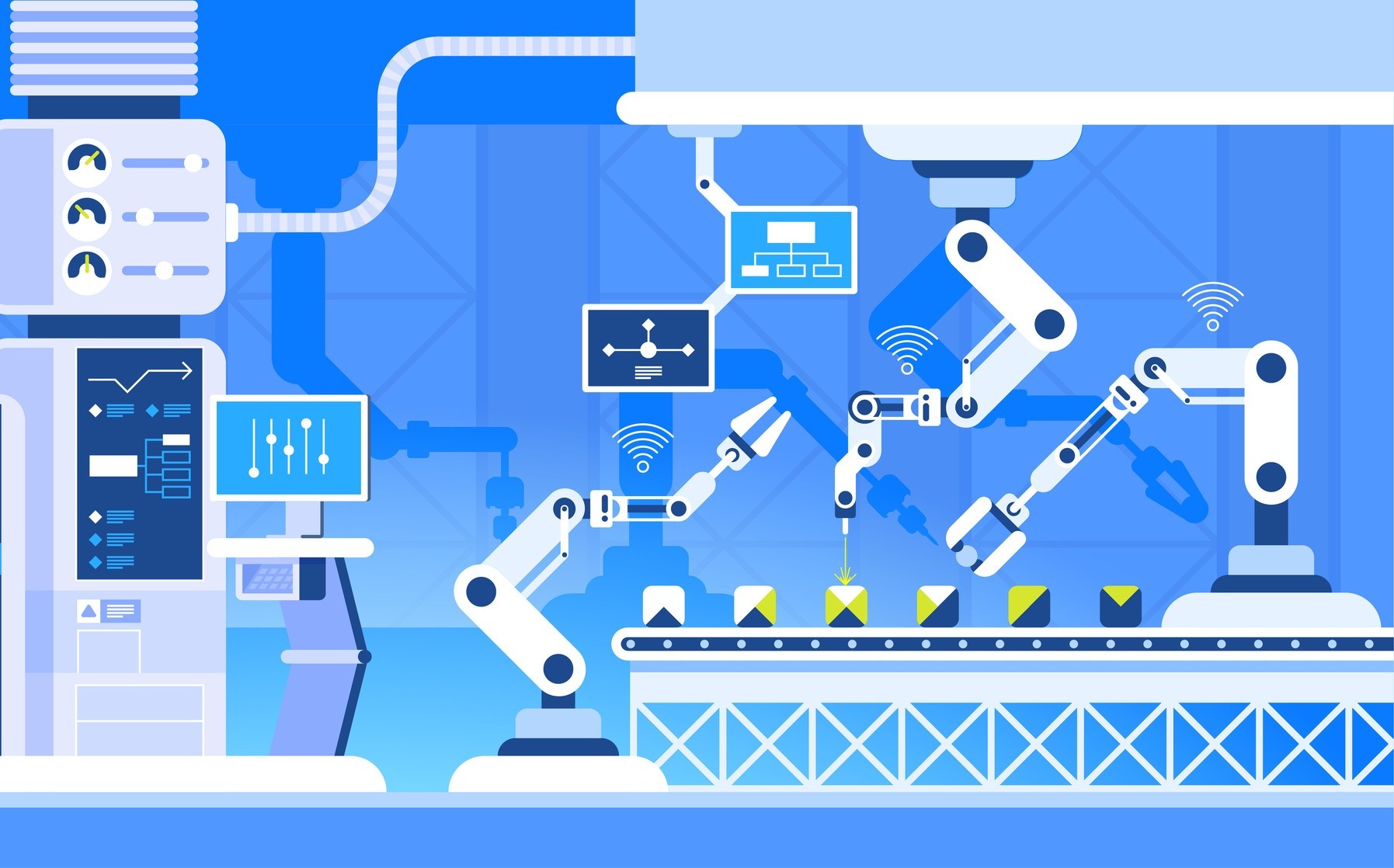
Flexible Assembly Systems: Integrating Vision and Robotics for Smarter Automation
Introduction
As manufacturing continues to evolve toward high-mix, low-volume production, traditional rigid automation is quickly becoming a bottleneck. Companies need systems that can adapt, scale, and handle variation without constant retooling.
That’s where flexible assembly systems come in.
By combining vision systems, robotics, and intelligent part feeding, flexible assembly allows manufacturers to automate complex processes that were once considered too variable or unpredictable.
In this article, we’ll break down what flexible assembly systems are, how they work, and why they’re becoming essential for modern automation strategies.
What Is a Flexible Assembly System?
A flexible assembly system is an automated setup designed to handle multiple part types, configurations, or processes without requiring extensive mechanical changeover.
Instead of relying on fixed tooling, these systems use:
- Vision-guided robotics
- Adaptive part feeding
- Software-driven adjustments
This allows a single system to assemble different products—or variations of the same product—with minimal downtime.
Core Components of a Flexible Assembly System
Vision systems act as the “eyes” of the operation. They:
- Identify part orientation
- Detect part presence and quality
- Guide robotic movement in real time
Modern vision systems use high-resolution cameras and AI-driven software to make fast, accurate decisions—even with randomly oriented parts.
- Industrial Robots
Robots provide the motion and precision needed for assembly tasks such as:
- Picking and placing components
- Fastening or inserting parts
- Performing repetitive assembly steps
When paired with vision systems, robots can adjust dynamically instead of following fixed paths.
A flexible assembly system is only as good as its ability to present parts correctly.
That’s why Flexible feeder systems (conceptually speaking) are critical—they:
- Handle multiple part geometries
- Eliminate the need for dedicated bowl tooling
- Work seamlessly with vision-guided robots
Unlike traditional systems, flexible feeders allow manufacturers to switch between parts without mechanical reconfiguration.
- Control Software & Integration
Software ties everything together:
- Coordinates robot motion and vision input
- Adjusts parameters for different SKUs
- Enables quick changeovers
Advanced systems can even store multiple “recipes” for different products, making transitions nearly instantaneous.
How Flexible Assembly Systems Work
A typical workflow looks like this:
- Parts are introduced via a flexible feeder or bulk feeding system
- Vision systems identify part position and orientation
- Robots pick and place components based on real-time data
- Assembly operations are completed
- Quality checks verify accuracy
This closed-loop system ensures consistent performance—even when inputs vary.
Benefits of Flexible Assembly Systems
- Reduced Changeover Time
Traditional assembly lines require:
- Tooling swaps
- Manual adjustments
- Downtime between runs
Flexible systems eliminate most of that. Switching products can be as simple as selecting a new program.
- Increased Production Agility
Manufacturers can:
- Run smaller batch sizes profitably
- Respond quickly to demand changes
- Introduce new products faster
This is especially valuable in industries like:
- Medical devices
- Electronics
- Automotive components
- Lower Long-Term Costs
While the upfront investment may be higher, flexible systems reduce:
- Tooling costs
- Labor requirements
- Downtime losses
Over time, this leads to a significantly lower total cost of ownership.
- Improved Quality and Consistency
Vision-guided systems ensure:
- Correct part orientation
- Accurate placement
- Real-time defect detection
This reduces scrap and improves overall product quality.
Flexible Assembly vs Traditional Automation
| Feature | Traditional Automation | Flexible Assembly |
| Tooling | Fixed | Minimal or none |
| Changeover | Time-consuming | Fast, software-driven |
| Part Variation | Limited | High |
| Scalability | Low | High |
| ROI (long-term) | Moderate | High |
When Should You Use a Flexible Assembly System?
Flexible assembly is ideal when:
You Have Multiple Part Variations
If your product line includes variations in size, shape, or configuration, flexibility is essential.
You Need Frequent Changeovers
High-mix production environments benefit the most from quick transitions.
You’re Struggling With Labor Shortages
Automation reduces reliance on manual assembly while maintaining output.
You Want to Future-Proof Your Operation
Flexible systems allow you to adapt as your business grows or changes.
The Role of Vision in Flexible Assembly
Vision systems are what make flexible assembly truly “flexible.”
Without vision:
- Parts must be precisely pre-oriented
- Robots follow fixed paths
- Variation causes errors
With vision:
- Parts can be randomly presented
- Robots adjust in real time
- Systems become far more adaptable
This is why vision-guided automation is a cornerstone of modern manufacturing.
Integrating Flexible Feeding and Robotics
One of the most powerful combinations in automation is:
Flexible feeding + vision + robotics
This integration allows:
- Random bulk parts to be sorted and picked
- Robots to operate without fixed tooling
- Entire assembly processes to adapt dynamically
If you’re exploring robotic feeding solutions, this combination is often the most efficient path forward.
Common Applications of Flexible Assembly Systems
Flexible assembly is widely used in:
Medical Device Manufacturing
- Small, precise components
- Frequent product changes
- Strict quality requirements
Electronics Assembly
- High variability
- Delicate parts
- Fast production cycles
Automotive Components
- Multiple SKUs
- Complex assemblies
- Demand for scalability
Consumer Products
- Rapid product turnover
- Customization
- Seasonal demand shifts
Challenges to Consider
While flexible assembly systems offer major advantages, there are a few considerations:
Initial Investment
These systems require a higher upfront cost compared to simple automation setups.
System Integration Complexity
Proper integration of vision, robotics, and feeding systems is critical for success.
Programming and Setup
Advanced systems require skilled setup and programming to maximize performance.
How to Get Started with Flexible Assembly
If you’re considering a flexible assembly system, start with:
- Evaluating your product mix
- Identifying bottlenecks in current processes
- Determining required throughput and flexibility
- Partnering with an experienced automation provider
The right partner will help design a system tailored to your specific needs.
Conclusion
Flexible assembly systems represent the future of manufacturing automation.
By integrating vision systems, robotics, and adaptive feeding technologies, manufacturers can:
- Increase efficiency
- Reduce downtime
- Improve product quality
- Stay competitive in a rapidly changing market
If your operation demands adaptability and scalability, flexible assembly isn’t just an option—it’s a strategic advantage.