
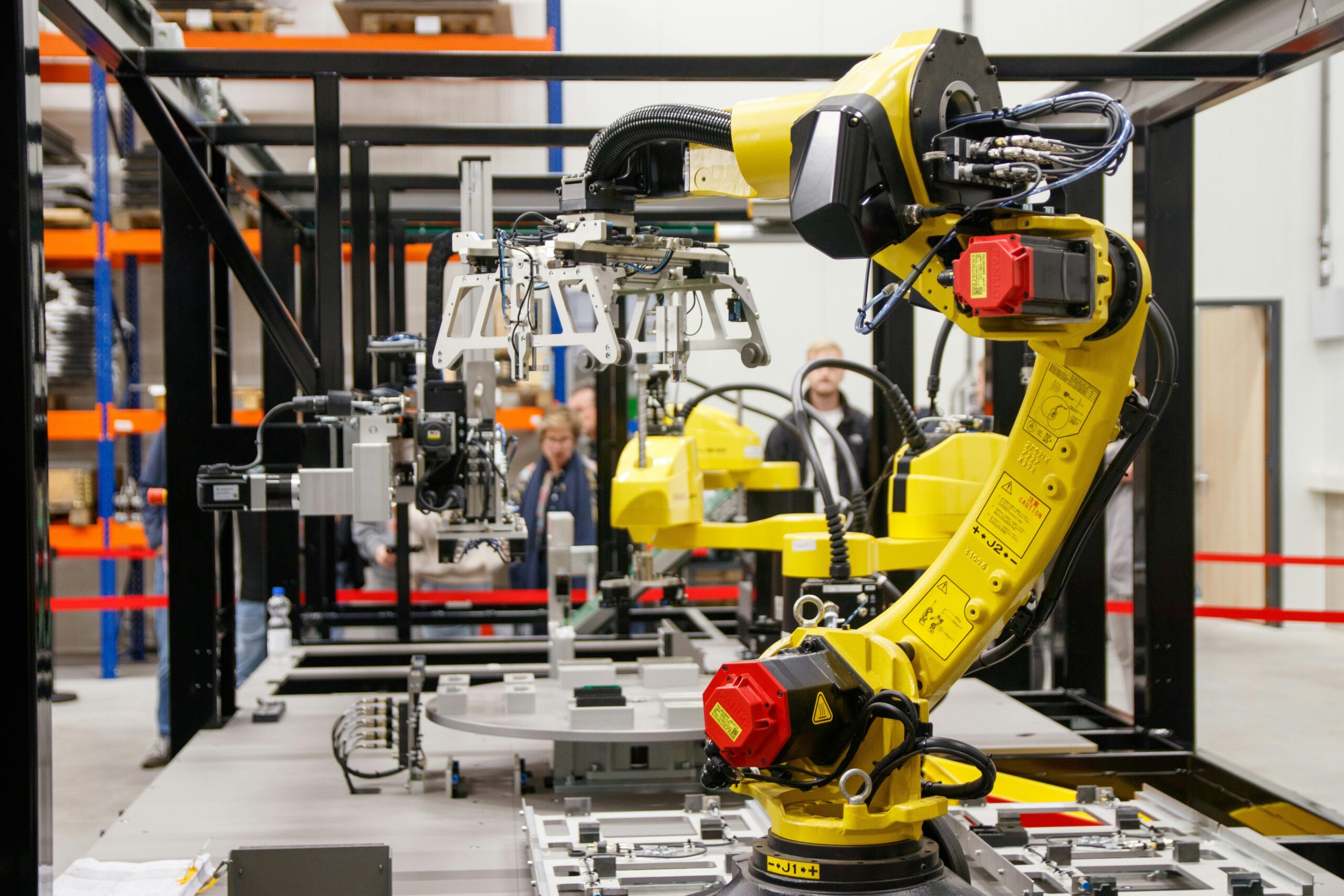
Robotic Part Feeding: The Foundation of Flexible Automation Cells
Manufacturing is undergoing a fundamental transformation. Where once efficiency was defined by long production runs and dedicated machinery, today’s success depends on adaptability. High-mix, low-volume production has become the norm, and manufacturers are under pressure to respond quickly to changing customer demands.
At the center of this shift is robotic part feeding—a technology that enables truly flexible automation cells.
The Limitations of Traditional Feeding Systems
For decades, vibratory bowl feeders and linear feeding systems dominated part handling. These systems are highly effective—but only when producing a single part at high volumes.
The problem arises when:
- Product designs change frequently
- Multiple SKUs must run on the same line
- Lead times for new tooling become unacceptable
Each new part requires a new bowl, tooling, and setup process. This rigidity leads to increased costs, downtime, and inefficiency.
Enter Robotic Part Feeding
Robotic part feeding replaces mechanical orientation with intelligence.
Instead of forcing parts into a specific orientation, flexible feeders present parts randomly. A vision system identifies each part’s position and orientation, and a robot picks it accordingly.
This shift—from mechanical precision to digital adaptability—is what makes flexible automation possible.
Engineering a Flexible Automation Cell
Designing a robotic feeding system is not just about adding a robot. It requires a systems-level approach.
System Architecture
A typical flexible cell includes:
- Bulk supply (bin or hopper)
- Flexible feeder (e.g., step feeder or conveyor plate)
- Vision system (2D or 3D cameras)
- Robot (6-axis or SCARA)
- End-of-arm tooling
- Integration with downstream equipment
Each component must be selected and configured with flexibility in mind.
Vision System as the “Brain”
The vision system is arguably the most critical component. It determines:
- Whether a part is pickable
- Its exact position and orientation
- Whether it meets quality standards
Advanced systems use AI-driven algorithms to improve detection accuracy over time.
Gripper Design Challenges
One of the biggest challenges in flexible systems is gripper design. Engineers must balance:
- Versatility (handling multiple parts)
- Precision (secure gripping)
- Speed (fast cycle times)
Solutions often include modular grippers, vacuum systems, or adaptive gripping technologies.
Balancing Flexibility and Throughput
A common misconception is that flexible systems are inherently slower. While it’s true that robotic feeding may not always match the speed of dedicated systems, modern advancements have significantly closed the gap.
Optimization strategies include:
- Parallel processing (multiple pick zones)
- High-speed vision processing
- Efficient part presentation techniques
The result is a system that offers both flexibility and competitive throughput.
Cost Considerations
While robotic systems may have higher upfront costs, they often deliver a stronger ROI over time due to:
- Reduced tooling expenses
- Lower labor costs
- Faster changeovers
- Increased uptime
When evaluating cost, it’s essential to consider the total lifecycle—not just initial investment.
Industry Trends Driving Adoption
Several trends are accelerating the adoption of robotic part feeding:
Mass Customization
Consumers expect personalized products, forcing manufacturers to handle more variation.
Labor Shortages
Automation helps fill gaps in skilled labor and reduces reliance on manual processes.
Digital Transformation
Smart factories rely on data-driven systems that can adapt in real time.
Shorter Product Lifecycles
Products are updated more frequently, making rigid automation obsolete.
Implementation Best Practices
To successfully deploy a robotic part feeding system:
- Start with a detailed application analysis
- Test parts in real-world conditions
- Design for future scalability
- Work with experienced integration partners
- Prioritize user-friendly controls and interfaces
Conclusion
Robotic part feeding is more than a technological upgrade—it’s a strategic shift in how manufacturers approach automation.
By enabling flexible automation cells, this technology allows companies to:
- Respond faster to market changes
- Reduce operational inefficiencies
- Maintain a competitive edge
As manufacturing continues to evolve, those who invest in flexibility today will be best positioned for tomorrow.