
Flex Feeding Explained: Flexible Feeder Systems for Smarter Automation
In today’s manufacturing environment, flexibility is no longer a luxury—it’s a requirement. Product variation, shorter production runs, and increasing labor challenges have forced manufacturers to rethink how parts are fed into automation systems.
That’s where flex feeding comes in.
Flex feeding—short for flexible feeding—is rapidly becoming the go-to solution for companies looking to future-proof their automation investments. But what exactly is it, how does it work, and when should you use it?
Let’s break it down.
What Is Flex Feeding?
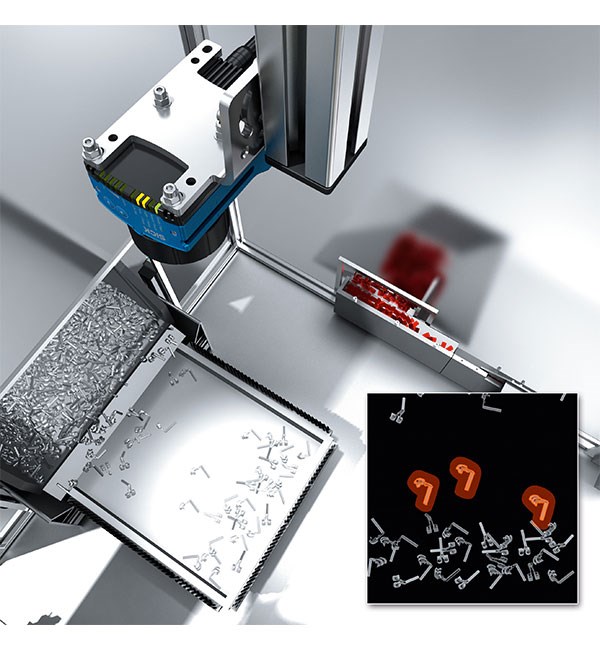
Flex feeding is an automated part feeding method that uses a combination of:
- A flexible feeder (typically a vibration-driven platform)
- Vision systems
- Robotic picking
to orient and deliver parts without the need for dedicated tooling.
Unlike traditional feeding systems—like vibratory bowl feeders—flex feeding is designed to handle multiple part types with minimal changeover.
In simple terms:
Instead of forcing parts into a specific orientation using custom tooling, flex feeding:
- Spreads parts across a surface
- Uses cameras to identify position and orientation
- Directs a robot to pick the correct parts
How Flexible Feeder Systems Work
A typical flex feeding system operates in a continuous loop:
1. Bulk Part Supply
Parts are delivered into the system via a hopper or conveyor.
2. Part Distribution
The flexible feeder gently vibrates to spread parts across its surface.
3. Vision Inspection
A camera captures an image and identifies:
- Part location
- Orientation
- Pickable vs non-pickable positions
4. Robotic Picking
A robot receives coordinates and picks the correctly oriented parts.
5. Recirculation
Unusable parts are redistributed for the next cycle.
This process happens quickly and continuously, enabling high throughput without the rigidity of traditional systems.
Why Flex Feeding Is Gaining Popularity
Flex feeding isn’t just a trend—it’s a response to real manufacturing challenges.
1. High Mix, Low Volume Production
Modern manufacturing often involves:
- Frequent product changes
- Shorter runs
- Multiple SKUs
Traditional systems struggle here because they require dedicated tooling for each part.
Flex feeding eliminates that constraint.
2. Reduced Changeover Time
With a flexible feeder system:
- Switching parts often requires only recipe changes in software
- Minimal or no mechanical adjustments are needed
This dramatically reduces downtime.
3. Lower Long-Term Costs
While flex feeding systems can have a higher upfront cost, they:
- Eliminate tooling expenses
- Reduce engineering time
- Adapt to future products
Over time, they often deliver a lower total cost of ownership.
4. Improved Automation Flexibility
Flex feeding integrates seamlessly with:
- Robotic cells
- Vision systems
- Assembly automation
This makes it ideal for scalable, modular production environments.
Flex Feeding vs Traditional Feeding Systems
Understanding when to use flex feeding starts with comparing it to traditional solutions.
Vibratory Bowl Feeders
Best for:
- High-volume, single-part production
- Stable product lines
Limitations:
- Requires custom tooling
- Long lead times
- Difficult to adapt to new parts
Flex Feeding Systems
Best for:
- Multiple part types
- Frequent changeovers
- Future-proof automation
Advantages:
- Minimal tooling
- Faster deployment
- Easy reconfiguration
Key Takeaway
If your production is static, traditional systems still work well.
If your production is dynamic, flex feeding is the smarter choice.
When Should You Use Flex Feeding?
Flex feeding is not always the right solution—but in the right scenario, it’s unmatched.
Ideal Use Cases:
1. Multiple Part Variants
If you’re handling several similar parts, flex feeding allows you to switch between them quickly.
2. Frequent Product Changes
Perfect for manufacturers with evolving product lines.
3. Complex Part Geometry
Vision-guided picking handles irregular shapes better than mechanical orientation.
4. Labor Shortages
Automating part feeding reduces reliance on manual loading.
When NOT to Use Flex Feeding
Flex feeding may not be ideal if:
- You run extremely high volumes of a single part
- Your parts are simple and consistent
- You already have optimized bowl feeder tooling
In these cases, traditional systems can still be more cost-effective.
Key Components of a Flex Feeding System
To fully understand flex feeding, it helps to break down its core components.
Flexible Feeder Platform
- Uses vibration or motion to distribute parts
- Designed for gentle handling
Vision System
- Identifies part position and orientation
- Determines pick feasibility
Robot
- Executes pick-and-place operations
- Integrates with vision data
Control Software
- Coordinates all components
- Stores recipes for different parts
Common Industries Using Flex Feeding
Flex feeding is widely adopted across industries that demand flexibility and precision:
- Medical devices – high mix, strict quality requirements
- Electronics – small, delicate components
- Automotive – increasing product variation
- Consumer goods – rapid product cycles
Flex Feeding and the Future of Automation
Manufacturing is moving toward:
- Customization
- Shorter product lifecycles
- Smarter automation systems
Flex feeding aligns perfectly with these trends.
Instead of building rigid systems that quickly become obsolete, manufacturers are investing in adaptable automation platforms—and flex feeding is a critical piece of that puzzle.
How to Choose the Right Flex Feeding Solution
Not all flexible feeder systems are created equal.
When evaluating options, consider:
1. Part Characteristics
- Size
- Shape
- Material
2. Throughput Requirements
- Cycle time
- Required output
3. Integration Needs
- Existing robots
- Vision systems
- Line layout
4. Scalability
- Future product expansion
- System adaptability
Why Work with Feedall?
At Feedall, we specialize in designing custom flex feeding solutions tailored to your production needs.
Our systems are built to:
- Maximize efficiency
- Minimize downtime
- Adapt to your future products
Whether you’re upgrading from traditional feeders or building a new automation cell, we help you implement the right strategy from day one.
👉 Contact Feedall today to explore how flex feeding can transform your operation.