
Introduction
In today’s fast-moving manufacturing environment, flexibility is no longer optional—it is a competitive requirement. As product lifecycles shrink and customization increases, manufacturers are under pressure to adapt quickly without sacrificing efficiency or precision. This is where the flexible feeding system has emerged as a game-changing solution.
Unlike traditional feeding methods that rely on fixed tooling and rigid setups, flexible feeding systems use a combination of vibration, vision technology, and robotics to deliver parts dynamically. This modern approach allows manufacturers to handle multiple part types, reduce downtime, and future-proof their automation investments.
What Is a Flexible Feeding System?
A flexible feeding system is an automated solution designed to present parts for robotic picking without the need for dedicated mechanical orientation. Instead of forcing parts into a specific position through tooling, the system identifies pickable parts using advanced vision systems.
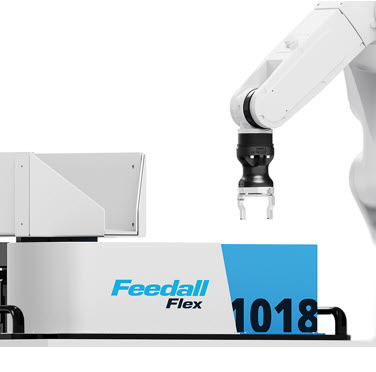
A typical flexible feeding system includes:
– A flexible feeder surface that uses controlled vibration
– A vision system (camera and lighting) to detect part position and orientation
– A robot for pick-and-place operations
– Integrated software to coordinate the process
This combination allows for intelligent, adaptable part feeding that works across a wide range of components.
How Flexible Feeding Works
Flexible feeding systems operate through a continuous cycle designed for efficiency and repeatability:
1. Bulk parts are loaded onto the feeder surface.
2. The feeder vibrates to spread parts into a randomized but visible layout.
3. The vision system scans the surface and identifies pickable parts.
4. The robot selects a part based on positional data.
5. The process repeats in a continuous loop.
What makes this process powerful is its adaptability. If a part is not in a pickable orientation, the system simply continues vibrating and scanning until a suitable position is found.
Why Flexible Feeding Is Replacing Traditional Feeding
Faster Changeovers
One of the biggest advantages of a flexible feeding system is the ability to switch between part types with minimal effort. Traditional bowl feeders often require custom tooling and mechanical adjustments, which can take hours or even days. In contrast, flexible systems can often be reprogrammed in minutes.
Robotics-First Design
Flexible feeding systems are built specifically for robotic automation. Rather than adapting legacy equipment to modern robots, these systems are designed from the ground up to integrate seamlessly with robotic cells, improving efficiency and reducing complexity.
Lower Long-Term Tooling Costs
Traditional feeding systems often require custom tooling for each part. As product designs evolve, this leads to ongoing costs and delays. Flexible feeding eliminates most of this tooling, reducing long-term expenses and improving ROI.
Improved Scalability
As production needs grow or change, flexible feeding systems can scale more easily than traditional systems. New parts can be introduced without major hardware changes, making it easier to expand operations.
Flexible Feeding vs. Bowl Feeding
While flexible feeding systems offer clear advantages, traditional bowl feeders still have a place in manufacturing. Bowl feeders are highly efficient for high-volume, single-part production where changeovers are rare.
However, for manufacturers dealing with multiple SKUs, frequent design updates, or shorter production runs, flexible feeding systems provide a more adaptable and cost-effective solution.
The key difference lies in flexibility versus specialization:
– Bowl feeders excel in dedicated, high-volume environments.
– Flexible feeding systems excel in dynamic, multi-product environments.
Common Applications
Flexible feeding systems are used across a wide range of industries, including:
Automotive
Handling clips, fasteners, connectors, and small assemblies.
Electronics
Feeding delicate components such as connectors, housings, and micro-parts.
Medical Devices
Managing precision components that require careful handling and traceability.
Packaging
Presenting caps, closures, and custom packaging components.
Consumer Products
Supporting high-mix production of small parts and assemblies.
How to Choose the Right Flexible Feeding System
Selecting the right system requires careful evaluation of several factors:
Part Geometry
Complex shapes, reflective surfaces, or transparent materials may require advanced vision capabilities.
Production Rate
Throughput requirements will determine feeder size, vibration patterns, and robot speed.
Changeover Needs
If frequent changeovers are expected, software flexibility and ease of programming become critical.
Vision Requirements
Lighting, camera resolution, and software capabilities must match the complexity of the parts.
Robot Selection
Choosing the right robot (SCARA, delta, or articulated) impacts system performance and footprint.
FAQ
What types of parts work best with flexible feeding systems?
Flexible feeding systems are ideal for small-to-medium parts that can be picked using vacuum or mechanical grippers. Parts with simple geometries tend to be easier, but advanced systems can handle more complex shapes as well.
Do flexible feeding systems require vision?
Yes. Vision is a core component of flexible feeding. It allows the system to identify part position and orientation without mechanical tooling.
Are flexible feeding systems suitable for high-volume production?
They can be, but the best use case is high-mix, medium-to-high volume production where flexibility is essential.
How long does it take to implement a flexible feeding system?
Implementation time varies depending on complexity, but many systems can be deployed faster than traditional custom tooling solutions.
Final Thoughts
A flexible feeding system represents a shift toward smarter, more adaptable automation. By combining vision, robotics, and intelligent software, manufacturers can reduce downtime, lower costs, and respond quickly to changing production demands.
For companies looking to stay competitive in an increasingly dynamic market, flexible feeding is not just an upgrade—it is a strategic investment in the future of manufacturing.
Feedall specializes in designing and integrating flexible feeding solutions tailored to modern production environments. Whether you are automating a new line or upgrading an existing process, the right system can transform your efficiency and scalability.