
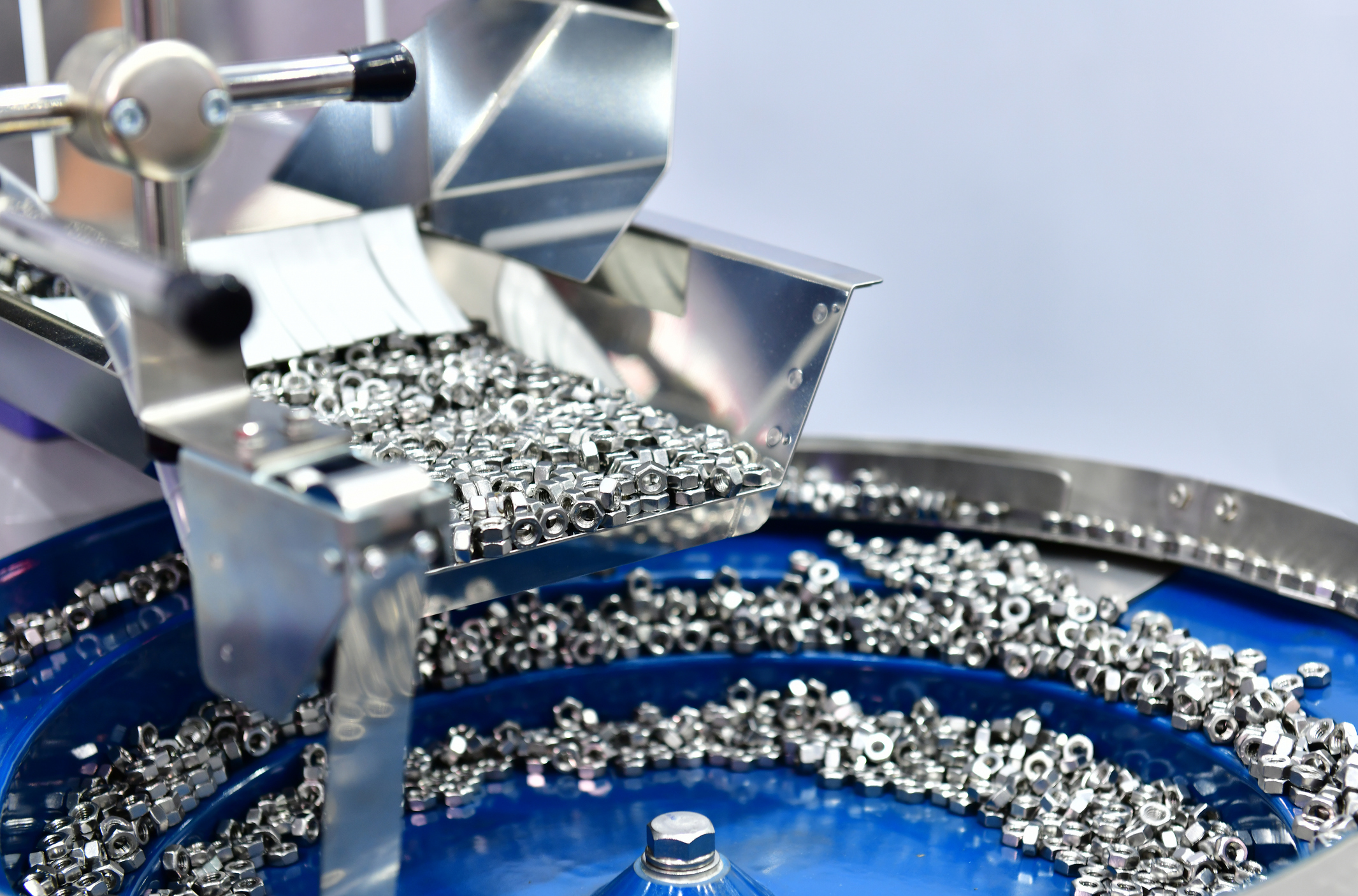
Vibratory Conveyor vs Vibratory Bowl Feeder: Key Differences in Automation
Introduction
When comparing vibratory conveyor vs vibratory bowl feeder, it’s important to understand that while both systems use vibration to move parts, they serve very different roles in automation. Choosing the wrong solution can result in inefficiencies, poor part presentation, or unnecessary system complexity.
In modern manufacturing environments—whether automotive, medical device, consumer goods, or electronics—part handling precision is critical. Vibratory bowl feeders and vibratory conveyors are both essential technologies, but they solve different problems.
This article breaks down how each system works, their core differences, and how to determine which solution best fits your automation needs.
What Is a Vibratory Bowl Feeder?
A vibratory bowl feeder is a specialized part feeding system designed to orient and present parts in a consistent, repeatable position for downstream automation processes such as:
Robotic pick-and-place
Assembly operations
Packaging systems
Inspection stations
How It Works
A vibratory bowl feeder consists of:
A bowl mounted on a base drive
A spiral track inside the bowl
Tooling features along the track to orient parts
A vibration drive that moves parts upward along the spiral
As vibration is applied, parts move up the track. Along the way, mechanical tooling removes incorrectly oriented parts, allowing only properly aligned components to reach the discharge point.
Key Characteristics
Designed for orientation
Custom tooled for specific part geometries
High-speed feeding capability
Ideal for repeatable, high-volume production
Vibratory bowl feeders are commonly integrated into complete part feeding systems where orientation accuracy is critical.
What Is a Vibratory Conveyor?
A vibratory conveyor is designed primarily to transfer bulk materials or parts from one location to another without orienting them.
How It Works
Instead of a spiral bowl, vibratory conveyors use:
A flat or trough-shaped conveying surface
Linear vibration to move materials forward
Controlled amplitude and frequency for consistent motion
The vibration causes parts to move in small controlled hops, propelling them forward along the conveyor trough.
Key Characteristics
Designed for movement and transfer
No part orientation
Ideal for bulk material handling
Can handle fragile or irregular parts
Often used between production stages
Vibratory conveyors are frequently used for:
Moving parts from molding machines
Transferring stamped components
Feeding parts into accumulation bins
Product cooling or drying processes
Vibratory Conveyor vs Vibratory Bowl Feeder: Key Differences
Understanding the difference between vibratory conveyor vs vibratory bowl feeder comes down to three primary factors:
1. Orientation vs Transfer
Vibratory Bowl Feeder
Orients parts into a specific position
Delivers parts ready for assembly or robotic pick-up
Vibratory Conveyor
Moves parts in bulk
Does not control part orientation
If your automation requires consistent part presentation, a bowl feeder is necessary. If you simply need to move parts between stations, a conveyor is likely sufficient.
2. Application Focus
Bowl Feeders
Assembly lines
Robotics integration
Precision part placement
Automated packaging
Vibratory Conveyors
Material handling
Process-to-process transfer
Sorting and accumulation
Cooling or drying lines
3. Customization Level
Bowl feeders require custom tooling based on part shape, size, weight, and orientation requirements.
Vibratory conveyors are generally less complex and can often handle multiple part types with minimal modification.
4. Speed and Precision
Bowl feeders provide:
High feeding speeds
Precise part spacing
Controlled discharge
Conveyors provide:
Steady bulk movement
Lower orientation precision
Flexible throughput control
5. System Integration
In many advanced automation systems, both technologies are used together.
For example:
A vibratory conveyor transfers parts from a stamping press.
Parts move into a vibratory bowl feeder.
The bowl feeder orients and presents parts to a robot.
This combined approach maximizes efficiency and precision.
When to Choose a Vibratory Bowl Feeder
Choose a bowl feeder when:
Parts must be presented in a specific orientation
You need high-speed assembly feeding
Robotics require consistent pick positions
Precision and repeatability are critical
You are integrating into a fully automated assembly system
Industries that frequently use bowl feeders include:
Automotive
Medical device manufacturing
Consumer electronics
Fastener production
When to Choose a Vibratory Conveyor
Choose a vibratory conveyor when:
You need to move bulk parts
Orientation is not required
You need gentle handling of delicate components
You are transferring materials between processes
You require accumulation or buffering
Industries commonly using vibratory conveyors include:
Food processing
Packaging
Foundries
Plastics molding
Material processing
Cost Considerations
While pricing varies significantly by application:
Vibratory bowl feeders tend to have higher upfront costs due to custom tooling and integration complexity.
Vibratory conveyors are often more cost-effective for simple transfer applications.
However, using a conveyor where orientation is required may result in downstream inefficiencies, increasing overall system cost.
Selecting the correct technology at the design stage prevents costly retrofits.
Automation Trends Impacting Both Technologies
Modern automation is shifting toward:
Flexible feeder systems
Vision-guided robotics
Quick-change tooling
Modular feeding systems
While traditional vibratory bowl feeders remain highly effective for dedicated, high-volume production, flexible feeder systems are gaining popularity for manufacturers requiring multi-part adaptability.
Still, in high-speed single-part production, vibratory bowl feeders remain one of the most reliable and cost-effective solutions available.
Frequently Asked Questions (FAQ)
What is the main difference between a vibratory conveyor vs vibratory bowl feeder?
The main difference is function: a vibratory bowl feeder orients parts into a consistent position, while a vibratory conveyor simply transfers parts without controlling orientation.
Can a vibratory conveyor replace a bowl feeder?
No. If orientation is required for assembly or robotic pick-up, a vibratory conveyor alone cannot perform that function.
Are vibratory bowl feeders customizable?
Yes. Bowl feeders are custom engineered based on part geometry, material, weight, and orientation requirements.
Do vibratory conveyors damage parts?
Vibratory conveyors are designed to provide controlled motion and can be tuned for gentle handling, making them suitable for delicate components.
Can both systems be used together?
Yes. Many automated systems combine vibratory conveyors for transfer and vibratory bowl feeders for orientation.
Conclusion
Understanding the difference between vibratory conveyor vs vibratory bowl feeder is essential when designing an efficient automation system.
If you need precision orientation and consistent part presentation, choose a vibratory bowl feeder.
If you need bulk movement and process transfer, a vibratory conveyor is the right solution.
Both technologies play critical roles in modern automation, and selecting the right system ensures improved efficiency, reduced downtime, and optimized production flow.
If you’re evaluating part feeding solutions or designing a new automation system, contact Feedall to discuss the best solution for your application.