
Smarter Part Feeding: How Simulation, 3D Printing & Flex Feeders Are Changing Automation
For decades, industrial part feeding was largely a mechanical engineering exercise: take a part, develop tooling around it, test the feeder, make adjustments, and continue tuning until the system reliably delivered the required orientation and feed rate.
That process is changing.
Today, engineers can simulate how parts will behave before a feeder is built, manufacture increasingly complex bowl tooling using 3D printing, and use vision-guided flex feeders to reduce or eliminate dedicated mechanical orientation tooling.
Together, these technologies are creating a new generation of smarter part feeding.
At Feedall Automation, we see three technologies having an especially significant impact:
Simulation. Additive manufacturing. Flexible feeding.
What’s particularly interesting is that these technologies aren’t necessarily replacing conventional feeding. Instead, they’re making both conventional and flexible feeding more capable—and giving manufacturers more options for selecting the right feeding architecture for each application.
1. Simulation: Predict Part Behavior Before Building the Feeder
One of the biggest challenges in part feeding has always been predicting how a component will behave once hundreds or thousands of those components are introduced into a feeding system.
Parts can:
- Nest inside one another
- Overlap
- Interlock
- Stack
- Flip unexpectedly
- Become unstable at certain speeds
- Jam at tooling transitions
- Prefer an orientation different from what engineers initially expected
Historically, feeder builders relied heavily on experience combined with physical testing to solve these problems.
That expertise remains extremely important.
But increasingly, engineers have another tool available: simulation.
From Build-and-Test to Simulate-and-Validate
Modern simulation technology can create a digital representation of the feeder and evaluate how parts are likely to behave before the final equipment is manufactured.
RNA Automation is taking this concept particularly far with its Digital Bowl Feeder technology, combining digital twins, multiphysics simulation, AI, and 3D Geometric Deep Learning to model feeder and part behavior.
Instead of the traditional process:
Design → Fabricate → Test → Modify → Test → Modify
Feeder development can increasingly move toward:
Part CAD → Simulate → Optimize → Manufacture → Validate
Engineers can evaluate orientation, separation, accumulation, part movement and other feeding characteristics digitally.
Simulation can also help engineers identify potential trouble areas earlier in the process.
For example:
Will these two components nest together?
Will the part naturally settle into the desired orientation?
Where should incorrect orientations be rejected?
Could parts accumulate at a particular transition?
What feed rate can the system realistically achieve?
Discovering those issues before manufacturing begins can reduce physical trial and error while providing engineers with better information when designing the actual feeding system.
That’s a significant change for an industry that has historically depended heavily on physical prototyping and feeder-builder experience.
2. 3D Printing: Changing How Bowl Feeders Are Manufactured
Simulation improves how feeding systems are designed.
Additive manufacturing is changing how some of that tooling can be built.
Traditional vibratory bowl tooling is an impressive combination of engineering, fabrication, machining, welding and craftsmanship.
But conventional fabrication also creates limitations on the geometries that can practically be manufactured.
3D printing changes some of those constraints.
RNA, for example, can manufacture feeder tooling using both CNC machining and additive manufacturing, including applications incorporating complete 3D-printed bowl structures.
That creates several interesting possibilities.
More Complex Feeding Geometry
Additive manufacturing allows engineers to create geometries that could be extremely difficult—or simply impractical—to manufacture using traditional fabrication methods.
That can give feeder designers more freedom when developing:
- Sorting features
- Part rejection features
- Tracks
- Transitions
- Orientation tooling
- Part-control surfaces
Instead of designing only around what can easily be fabricated, engineers can increasingly design around how the part actually needs to move.
Better Reproducibility
Traditional bowl feeders often contain a significant amount of hand-built tooling.
That craftsmanship is valuable, but it can make duplicating the exact feeder geometry more difficult.
Digitally manufactured components provide another approach.
Once a geometry has been developed and validated digitally, the same design can potentially be reproduced for another machine or manufacturing location.
For companies operating identical production lines across multiple plants, that repeatability can become very valuable.
Faster Engineering Iterations
There is another important advantage.
When simulation and additive manufacturing are combined, the digital engineering loop becomes much shorter.
Simulate the part.
Optimize the geometry.
Print the tooling.
Test the actual system.
Refine the digital design if necessary.
That’s a very different engineering workflow from building extensive conventional tooling and then physically modifying it until the desired performance is achieved.
3. Flex Feeders: Changing How We Think About Part Orientation
Simulation and 3D printing are making conventional feeding smarter.
Flexible feeding approaches the problem from another direction.
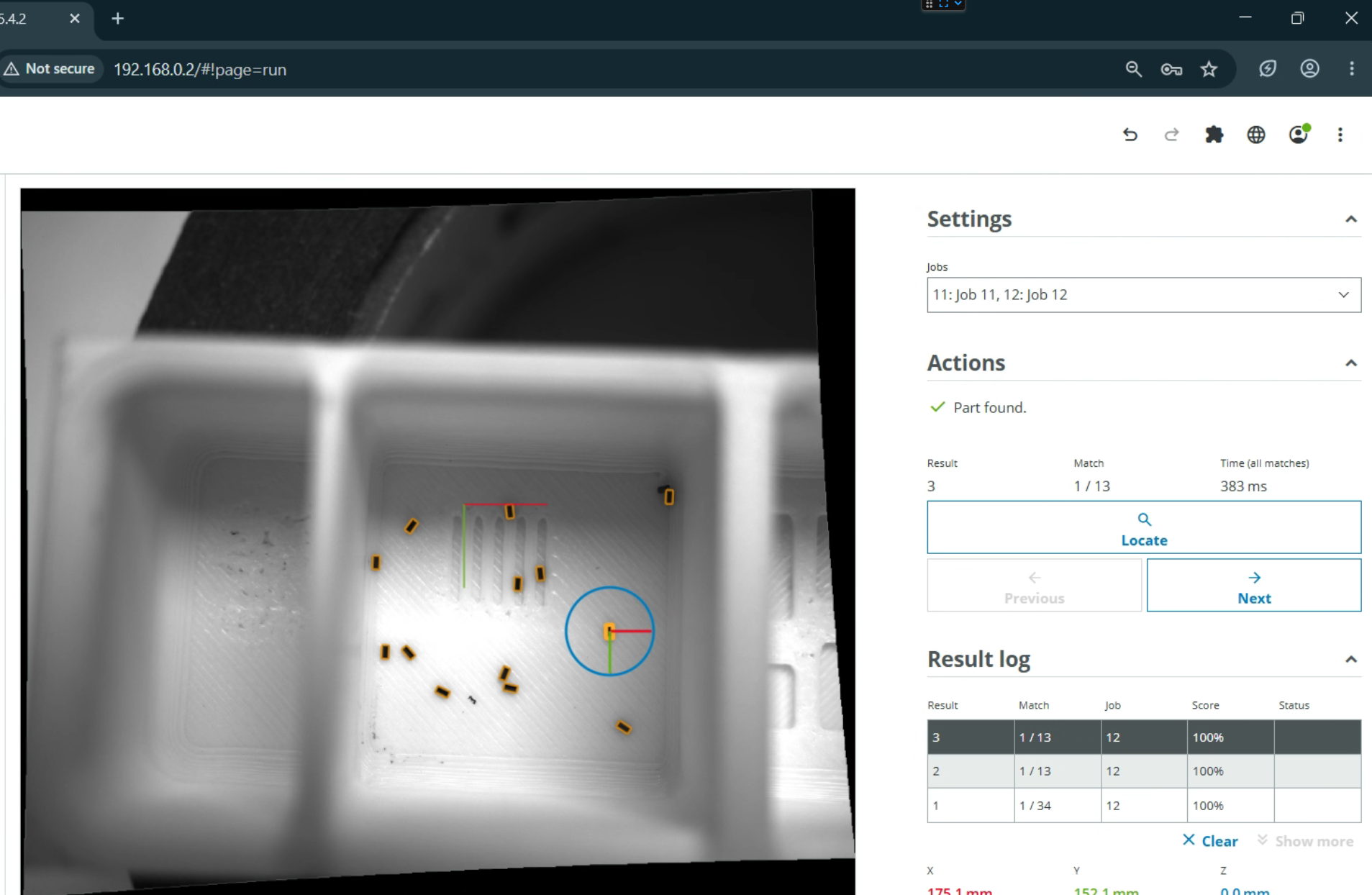
Instead of mechanically forcing every component into one predetermined orientation, a flex feeder attempts to separate and present parts so a vision system can identify components available for robotic picking.
The architecture typically looks like:
Bulk Parts → Flex Feeder → Vision → Robot → Process
This changes the engineering problem.
With a conventional bowl feeder, much of the intelligence is contained in the mechanical tooling.
With flexible feeding, much of that intelligence moves into software, vision and robotics.
That’s an important distinction.
Why Flex Feeding Is Growing
Manufacturing has changed significantly.
Product life cycles are getting shorter. Manufacturers are producing more variants. Automation needs to accommodate more SKUs. And companies increasingly want equipment that can be repurposed when the next product arrives.
That environment favors flexible automation.
A Feedall Flex Feeder can be particularly attractive when an application involves:
- Multiple part numbers
- Frequent product changeovers
- High-mix manufacturing
- Difficult-to-orient components
- Future products that haven’t yet been designed
- Robotic assembly or machine tending
- Applications where dedicated mechanical tooling creates excessive complexity
Instead of completely retooling the feeder for a different component, manufacturers may be able to change the vision recipe, robot program, feeder parameters and modular feeding surface.
That can significantly change the lifecycle economics of the feeding system.
Vision Is Becoming Part of the Feeding System
One of the biggest changes we’re seeing is that vision is no longer simply an inspection device located downstream from the feeder.
It can become part of the feeding strategy itself.
Feedall’s flex feeding platform incorporates our strategic partnership with SICK Sensor Intelligence, including technologies such as PLOC2D and the SIM ecosystem.
Vision identifies the location and orientation of individual components presented on the feeder surface and communicates that information to the robot.
The robot then becomes part of the orientation process.
Instead of requiring mechanical tooling to deliver every component in exactly the same orientation, the system can recognize multiple orientations and determine which components are available for picking.
That’s fundamentally different from conventional feeding.
Even the Feeder Surface Is Becoming Engineered
Flexible feeding doesn’t mean simply shaking parts around until the robot finds one.
Controlling how parts behave on the feeding surface remains extremely important.
Different components respond differently depending on:
- Geometry
- Weight
- Center of gravity
- Material
- Surface finish
- Friction
- Contact area
That’s why Feedall developed modular surface kits for our Flex Feeders.
Through our partnership with Mink Bürsten, Feedall incorporates specialized fiber materials into customized feeder surfaces designed around the characteristics of the actual component.
The objective is simple:
Don’t just move the parts. Control how they move.
Better part separation and presentation can create more successful robot picks and ultimately faster cycle times.
In that respect, flexible feeding and conventional feeding share something important.
Understanding part behavior still matters.
The technology used to control that behavior is simply changing.
Does Smarter Technology Mean Vibratory Bowls Are Going Away?
Absolutely not.
In fact, technologies such as simulation and 3D printing may make conventional vibratory feeding more competitive, not less.
Consider an application producing millions of identical components every year with little expectation that the product will change.
A high-speed vibratory bowl feeder may still be the best solution.
It can offer:
- Extremely high throughput
- Continuous part presentation
- Multiple feeding lanes
- Excellent repeatability
- Simple downstream automation
- Proven industrial reliability
Now consider a manufacturer producing ten different components with regular product changes.
The economics can shift quickly toward flexible feeding.
The important question isn’t:
“Which technology is better?”
It’s:
“Which technology is better for this application?”
The Future Is About Selecting the Right Feeding Architecture
This is where we believe part feeding is headed.
There will continue to be applications where conventional vibratory feeding is the obvious answer.
There will be applications where vision-guided flexible feeding is clearly superior.
And increasingly, there will be applications where manufacturers need an experienced feeding partner capable of evaluating both approaches.
That’s important because the feeding decision shouldn’t start with the equipment.
It should start with the application.
We look at:
Part geometry. Production volume. Required feed rate. Product mix. Changeover frequency. Robot cycle time. Future product changes. Overall lifecycle cost.
Then we determine the best way to feed the part.
Smarter Part Feeding Isn’t One Technology
Perhaps the biggest misconception about the future of part feeding is that one technology will eventually replace everything that came before it.
We don’t believe that’s where the industry is headed.
Instead, multiple technologies are advancing simultaneously.
Simulation allows engineers to better understand part behavior before equipment is manufactured.
3D printing allows increasingly sophisticated feeding geometry to move directly from digital engineering into physical tooling.
Flex feeding allows vision, software and robotics to replace some of the dedicated mechanical orientation traditionally required.
Put those developments together and something interesting happens:
Part feeding becomes less about the limitations of the equipment and more about selecting the best technology for the manufacturing problem.
For manufacturers, that’s a very good thing.
At Feedall Automation, our goal isn’t simply to sell a particular type of feeder.
It’s to answer a much more important question:
What’s the smartest way to feed your part?
Whether that answer is a modern vibratory bowl feeder, Feedall Flex Feeder, bulk feeding system, vision-guided robotic solution, or a combination of technologies, the objective remains the same:
Reliable part presentation. Higher uptime. Better automation.
Continue Learning
- When a Vibratory Bowl Feeder Is Still the Best Choice
- Why Flexible Parts Feeding Is Replacing Traditional Vibratory Bowls
- How to Choose the Right Flex Feeder for Your Application
- Feedall Flex Feeder vs. FlexiBowl: Capabilities That Matter
- Feedall vs. Asyril: Which Flex Feeding System Fits Your Application?
- Choosing the Right Feeder Surface for Robotic Part Feeding