
Vibratory Bowl Feeder Guide: How They Work and When to Use One
Manufacturers have relied on vibratory bowl feeders for decades to automate part handling and streamline production. Despite the rise of flexible feeding technologies and advanced robotic systems, vibratory bowl feeders remain one of the most widely used solutions for high-speed part orientation and presentation.
When properly designed and applied, a vibratory bowl feeder can deliver exceptional throughput, consistent part orientation, and reliable performance for years. However, they are not the ideal solution for every application.
In this guide, we’ll explain how vibratory bowl feeders work, their advantages and limitations, and when manufacturers should choose them over alternative feeding technologies.
What Is a Vibratory Bowl Feeder?
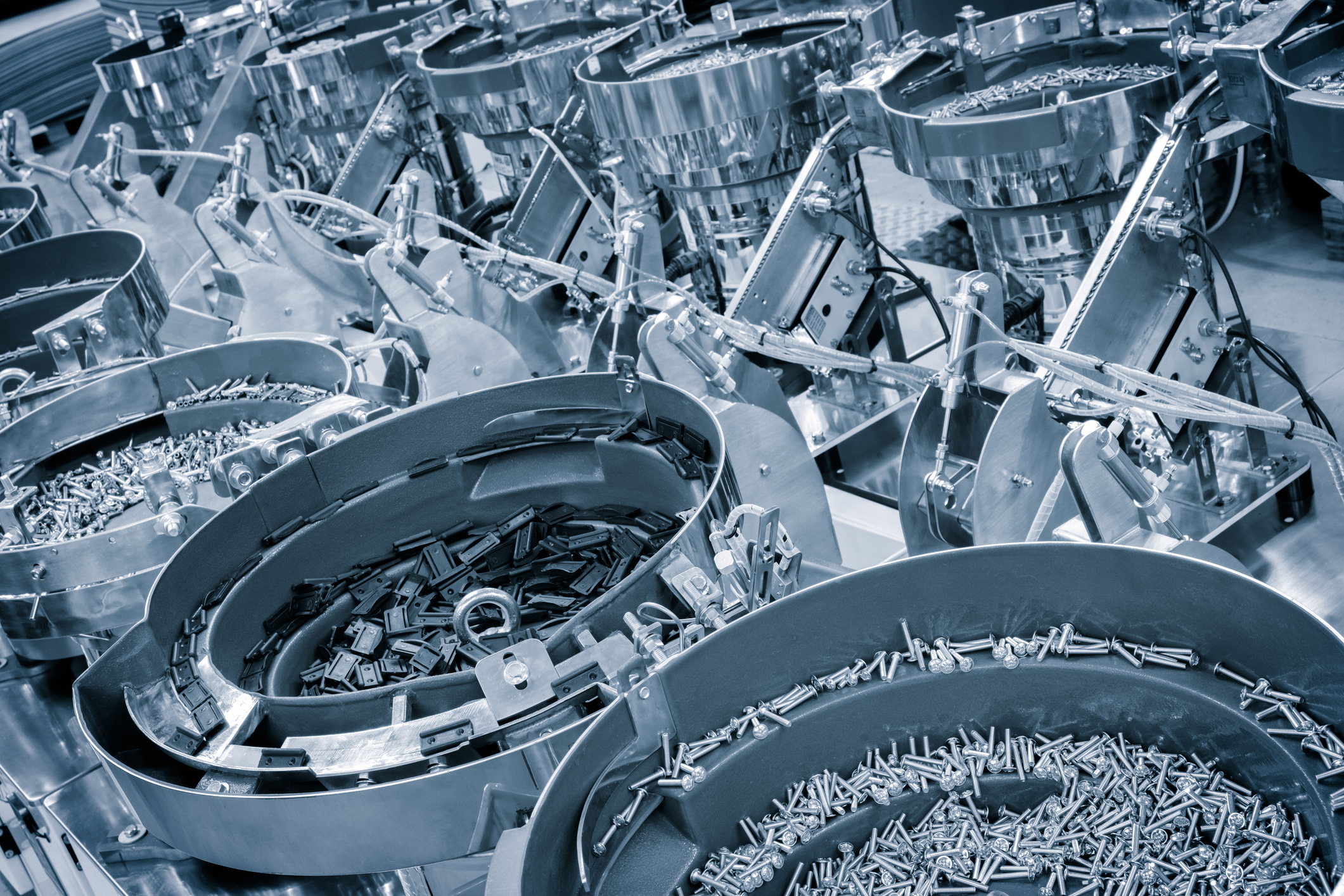
A vibratory bowl feeder is an automated feeding system designed to orient and deliver parts in a consistent position for downstream manufacturing processes.
The system uses controlled vibration to move bulk parts from a storage bowl along a spiral track. As parts travel up the track, tooling features orient them into the desired position while rejecting incorrectly positioned parts back into the bowl.
By the time parts reach the discharge point, they are presented uniformly and ready for assembly, inspection, packaging, machining, or robotic handling.
Vibratory bowl feeders are commonly used in industries such as:
- Automotive manufacturing
- Medical device production
- Electronics assembly
- Consumer products
- Aerospace manufacturing
- Fastener production
- Packaging operations
Their ability to handle large quantities of small components makes them a foundational technology in industrial automation.
How Does a Vibratory Bowl Feeder Work?
At its core, a vibratory bowl feeder uses vibration to create controlled movement.
The system consists of several key components:
1. The Bowl
The bowl serves as the storage container for bulk parts.
Components are loaded into the bowl manually or through an automatic refill system. The bowl includes a spiral track that guides parts upward toward the exit.
2. The Drive Unit
The drive unit generates vibration through electromagnetic coils and springs.
These vibrations create tiny directional movements that cause parts to advance along the track. While the movement may appear simple, the vibration frequency and amplitude are carefully controlled to achieve smooth, predictable part flow.
3. The Tooling
Tooling is what transforms a bowl feeder from a simple transport device into an orientation system.
Along the track, custom tooling features:
- Separate parts
- Remove overlaps
- Reject incorrectly oriented components
- Guide correctly oriented parts forward
Every tooling design is specific to the geometry of the part being fed.
4. The Controller
Modern vibratory feeders use electronic controllers to regulate vibration levels.
The controller allows operators to:
- Adjust feed rates
- Improve stability
- Optimize throughput
- Reduce jams
- Match downstream process requirements
5. The Exit Track
Once parts are correctly oriented, they move onto a linear feeder or discharge track.
The track delivers parts to:
- Assembly stations
- Robotic pick points
- Inspection systems
- Packaging equipment
- Machining centers
The result is a continuous stream of consistently oriented components.
Benefits of Vibratory Bowl Feeders
Vibratory bowl feeders remain popular because they provide several important advantages.
High Throughput
One of the biggest benefits is speed.
Well-designed bowl feeders can process hundreds of parts per minute, making them ideal for high-volume production environments.
For manufacturers producing millions of identical parts annually, bowl feeders often deliver unmatched efficiency.
Reliable Part Orientation
Because the tooling is specifically engineered around a component’s geometry, bowl feeders can achieve extremely high orientation accuracy.
This consistency reduces downstream errors and improves overall production quality.
Proven Technology
Vibratory bowl feeders have been used for decades.
The technology is well understood, highly refined, and supported by extensive engineering expertise throughout the automation industry.
Long Service Life
When properly maintained, bowl feeding systems can remain in operation for many years.
Many manufacturers continue using bowl feeders that have been running reliably for decades with periodic refurbishment and tooling updates.
Low Operating Costs
After installation, operating expenses are generally low.
The systems require minimal energy, limited operator involvement, and relatively simple maintenance procedures.
Limitations of Vibratory Bowl Feeders
While bowl feeders offer many benefits, they also have important limitations that manufacturers should consider.
Dedicated to One Part
Traditional bowl feeders are designed around a specific component.
If part dimensions, shapes, or product designs change significantly, the feeder often requires:
- Retooling
- Modification
- Complete replacement
This can become costly in high-mix manufacturing environments.
Longer Engineering Lead Times
Custom tooling development requires design, testing, and validation.
New bowl feeder projects often involve longer lead times than flexible feeding systems that rely on software and vision-guided robotics.
Changeovers Can Be Difficult
Manufacturers producing multiple products frequently may struggle with bowl feeder changeovers.
Unlike flexible feeding technologies, switching between part types often requires mechanical adjustments or entirely separate feeder systems.
Complex Parts Can Be Challenging
Parts with unusual geometries, delicate surfaces, or highly variable shapes may be difficult to orient consistently within a vibratory bowl.
In these situations, flexible feeders often provide a better solution.
Noise and Vibration
Although modern systems are significantly quieter than older designs, vibratory feeders still generate noise and mechanical vibration that may require mitigation in certain environments.
When Should You Use a Vibratory Bowl Feeder?
Vibratory bowl feeders are typically the best choice when:
Production Volumes Are High
If you’re producing large quantities of the same component, a bowl feeder can provide outstanding return on investment.
The higher the production volume, the easier it becomes to justify custom tooling costs.
Part Designs Are Stable
Bowl feeders work best when part geometry remains unchanged for extended periods.
Manufacturers running long product life cycles often benefit from the consistency and reliability of dedicated feeding systems.
Fast Cycle Times Are Required
Applications requiring extremely high feed rates often favor vibratory bowl feeders.
Many assembly operations depend on the rapid and continuous flow of components that bowl feeders provide.
Orientation Requirements Are Strict
When components must arrive in a precise position every time, bowl feeders deliver highly repeatable results.
This is particularly important in medical, automotive, and electronics manufacturing.
When a Flexible Feeder May Be Better
Modern manufacturers increasingly face shorter product life cycles and growing SKU counts.
In these environments, flexible feeding systems often offer significant advantages.
Flexible feeders use programmable motion, machine vision, and robotics to handle multiple part types without custom tooling.
They are particularly valuable when:
- Product mixes change frequently
- New components are introduced regularly
- Changeover speed matters
- Future flexibility is a priority
- Production volumes are moderate rather than extremely high
For many manufacturers, the decision is no longer bowl feeder versus no automation—it is bowl feeder versus flexible feeding.
Choosing the Right Feeding Solution
Selecting the right feeding system depends on several factors:
- Production volume
- Part geometry
- Orientation complexity
- Number of SKUs
- Future product plans
- Changeover frequency
- Available floor space
- Budget considerations
While vibratory bowl feeders remain one of the most effective solutions for dedicated high-volume applications, flexible feeding systems continue gaining popularity for manufacturers seeking greater adaptability.
The best approach is to evaluate both current requirements and future production goals before making a decision.
Conclusion
Vibratory bowl feeders continue to play a critical role in industrial automation because they deliver reliable, high-speed part orientation for dedicated production environments.
Their proven performance, high throughput, and exceptional orientation accuracy make them an excellent choice for manufacturers producing large quantities of identical components.
However, as manufacturing becomes more flexible and product variations increase, many companies are also exploring flexible feeding technologies that can adapt to changing production needs.
Understanding the strengths and limitations of vibratory bowl feeders allows manufacturers to select the feeding solution that delivers the greatest long-term value, productivity, and return on investment.