
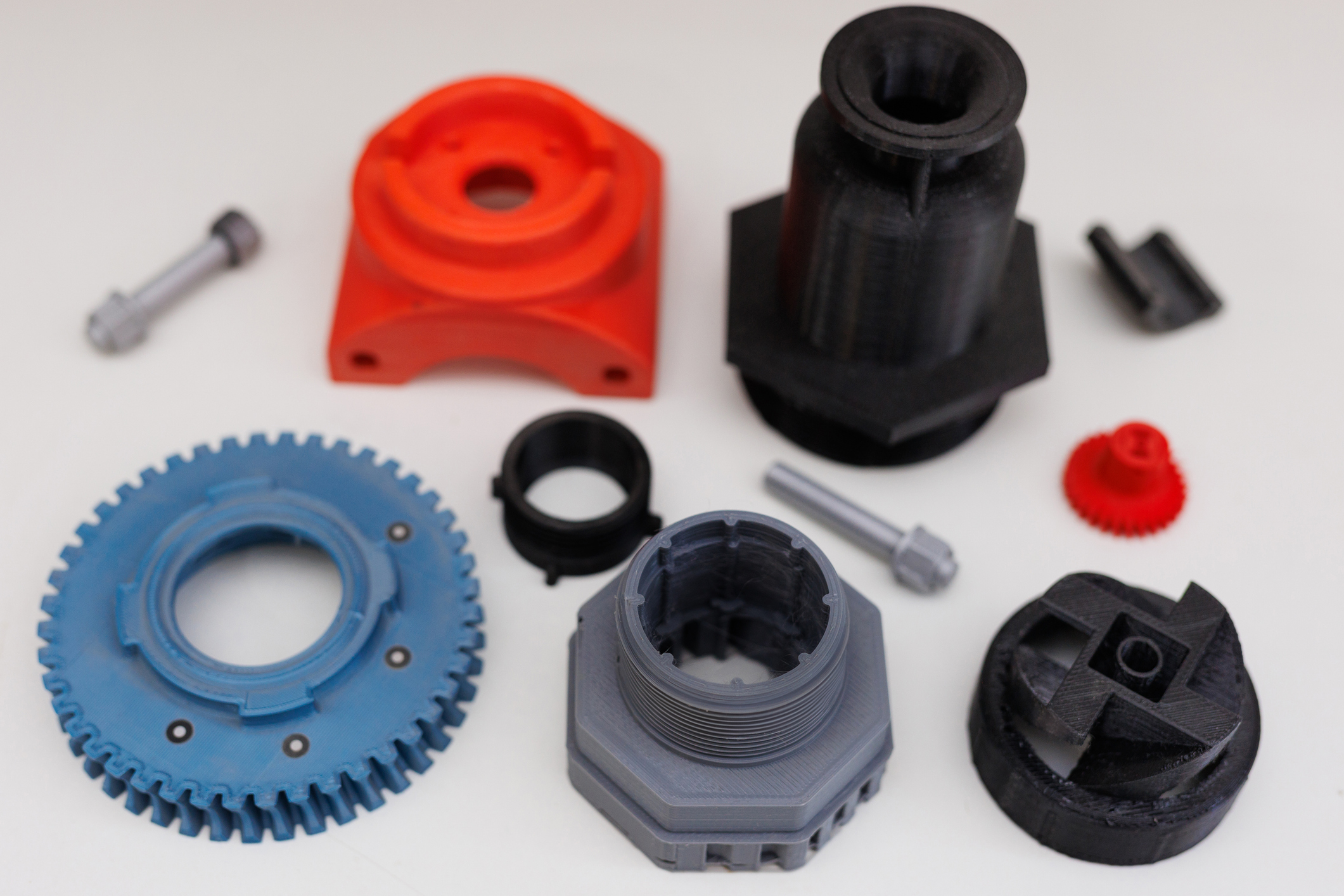
Multi-Feed: The Next Evolution in Flexible Feeding
Manufacturers Don’t Need More Feeders. They Need Feeders That Can Feed More Parts.
Manufacturing has changed dramatically over the past decade.
Customers expect shorter lead times. Product variations continue to grow. Batch sizes are getting smaller, and engineering revisions happen more frequently than ever.
The result is a common challenge across nearly every industry:
How do you automate production when you’re constantly changing parts?
The answer isn’t another dedicated bowl feeder.
It’s Multi-Feed.
Multi-Feed is one of the biggest advantages of modern flexible feeding systems because it allows a single feeder to run multiple different part numbers without dedicated tooling. For manufacturers producing multiple SKUs, that flexibility can significantly reduce capital costs, setup time, and production downtime.
What Is Multi-Feed?
Multi-Feed is the ability for a single flexible feeder to reliably present multiple different parts for robotic picking using the same hardware.
Instead of designing a feeder around one specific component, Multi-Feed uses:
- Controlled vibration
- Intelligent part movement
- Machine vision
- Robot guidance
- Software recipes
to feed an entire family of parts from one standardized platform.
Rather than changing mechanical tooling, operators simply select a different recipe and begin feeding a new component.
That’s something traditional bowl feeders were never designed to do.
Why Traditional Bowl Feeders Cannot Multi-Feed
Vibratory bowl feeders remain an outstanding solution for long production runs of a single part.
The reason they’re so reliable is also their biggest limitation.
Each bowl feeder is mechanically tooled specifically for one component.
The bowl geometry…
The track…
The escapement…
Every feature is designed around a single part.
When that part changes, the tooling often has to change as well.
That means:
- New bowls
- New tracks
- New escapements
- Engineering time
- Setup labor
- Additional inventory
For manufacturers running dozens of SKUs, dedicated tooling quickly becomes expensive.
Why Multi-Feed Matters
Imagine a manufacturer producing:
- Six sizes of hydraulic fittings
- Four versions of a stamped bracket
- Eight different fasteners
- Multiple left- and right-hand components
A traditional approach might require several dedicated feeding systems.
With Multi-Feed, one flexible feeder can often handle the entire product family through software recipe changes rather than hardware replacement.
That means:
- Faster changeovers
- Less equipment
- Lower tooling costs
- Higher equipment utilization
- Greater manufacturing flexibility
The Perfect Solution for Multi-SKU Manufacturing
The rise of Multi-SKU manufacturing has made flexibility one of the most valuable assets in automation.
Manufacturers today frequently produce:
- Customer-specific products
- Multiple product variants
- Small production runs
- Service parts
- Replacement components
Instead of buying another feeder every time a new product launches, manufacturers can leverage Multi-Feed to maximize the utilization of existing automation.
As product variety increases, so does the value of a flexible feeding system.
Five Benefits of Multi-Feed
1. Reduce Changeover Time
Changing from one product to another often requires nothing more than loading a new recipe.
Instead of hours of mechanical adjustments, changeovers can often be completed in minutes.
2. Lower Capital Investment
Rather than purchasing multiple dedicated feeders, manufacturers can automate entire product families using one standardized flexible feeding platform.
3. Eliminate Dedicated Tooling
Every dedicated bowl represents additional inventory, maintenance, storage, and replacement costs.
Multi-Feed dramatically reduces that burden.
4. Adapt to Engineering Changes
Product revisions happen.
Flexible feeders allow manufacturers to accommodate many design changes through software and vision updates instead of replacing mechanical tooling.
5. Future-Proof Your Automation
No manufacturer knows what products they’ll be building five years from now.
Investing in Multi-Feed gives manufacturers confidence that today’s automation can support tomorrow’s production requirements.
Multi-Feed Supports Lean Manufacturing
Lean manufacturing is built around eliminating waste.
Multi-Feed helps reduce:
- Waiting during changeovers
- Excess tooling inventory
- Equipment duplication
- Floor space
- Operator setup time
By improving equipment utilization, manufacturers can produce more products using fewer assets.
Why Feedall Believes Multi-Feed Is the Future
At Feedall, we’ve spent decades solving complex part feeding challenges.
As manufacturing continues moving toward higher product variety and shorter production runs, we believe Multi-Feed will become one of the defining advantages of flexible feeding technology.
Our standard Flex Feeders are designed to help manufacturers automate more parts—not just automate one part better.
Because the future of automation isn’t about building another dedicated feeder.
It’s about building one feeder that can do much more.
Final Thoughts
Manufacturers no longer compete by producing a single product more efficiently.
They compete by adapting faster than everyone else.
Multi-Feed gives manufacturers the flexibility to automate multiple SKUs, respond quickly to customer demand, and maximize the return on every automation investment.
If your production schedule includes frequent product changes, engineering revisions, or growing product families, it may be time to think beyond dedicated tooling.
It may be time to think Multi-Feed.