
Future of Part Feeders: Why Flexibility Is the Competitive Advantage
Primary Keyword: parts feeders of the future
Meta Title: Future of Part Feeders: Why Flexibility Is the Competitive Advantage
Meta Description: Discover why flexible feeding systems are becoming the foundation of modern automation and how manufacturers are gaining a competitive advantage through adaptability, faster changeovers, and smarter production.
The Manufacturing Landscape Is Changing
For decades, manufacturers optimized production around long runs of identical parts. Dedicated automation, including traditional vibratory bowl feeders, delivered exceptional efficiency when products rarely changed.
Today, that environment looks very different.
Manufacturers are facing shorter product lifecycles, increasing SKU counts, labor shortages, and growing pressure to respond quickly to customer demand. Production lines that once ran the same component for months may now switch between multiple products in a single shift.
As a result, the conversation around automation is changing. The question is no longer simply, “How fast can a feeder run?” Instead, manufacturers are asking, “How quickly can our automation adapt?”
The answer is driving the future of part feeders—and flexibility has become the defining competitive advantage.
Why Traditional Feeding Systems Face New Challenges
Conventional feeding systems remain highly effective for dedicated, high-volume applications. However, they are often engineered around a specific part geometry and orientation.
When products change, manufacturers may encounter:
- Extensive tooling modifications
- New bowl designs
- Longer setup times
- Additional engineering costs
- Production downtime during changeovers
These limitations become increasingly costly as production environments become more dynamic.
Manufacturers that rely heavily on dedicated feeding equipment may find themselves struggling to keep pace with market demands that require greater agility.
The Rise of Flexible Feeding Systems
Flexible feeding systems are designed specifically to address these challenges.
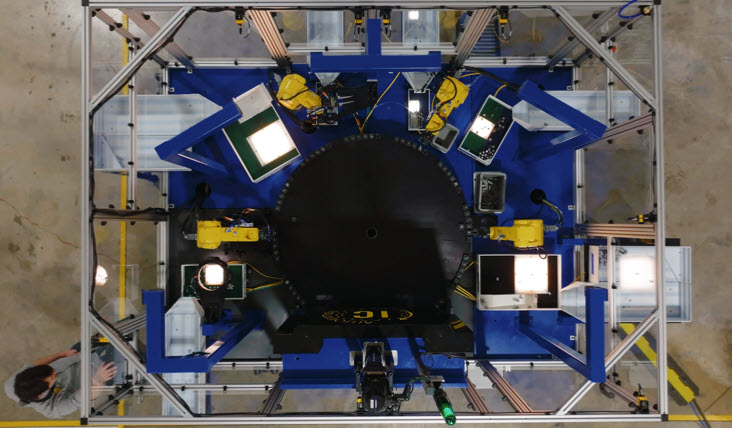
Unlike traditional feeders that rely on custom tooling, flexible feeders use programmable motion, integrated vision systems, and robotic guidance to present and orient a wide variety of parts without extensive mechanical modifications.
This approach allows manufacturers to automate multiple products using a single feeding platform.
The result is a feeding solution that can evolve alongside production requirements rather than becoming obsolete when product designs change.
Key Benefits of Flexible Feeding Systems
1. Faster Changeovers
One of the most significant advantages of flexible feeding is reduced changeover time.
Instead of replacing bowls, tracks, and tooling, operators can often switch products through software adjustments and recipe changes.
Benefits include:
- Reduced downtime
- Faster production transitions
- Improved equipment utilization
- Greater scheduling flexibility
For manufacturers producing multiple product variations, these savings can be substantial.
2. Support for High-Mix Manufacturing
High-mix, low-volume manufacturing is becoming increasingly common across industries including:
- Medical devices
- Electronics
- Consumer products
- Automotive components
- Aerospace assemblies
Flexible feeding systems allow manufacturers to run multiple part types through a single automation cell, making them ideal for facilities managing diverse product portfolios.
3. Improved Scalability
Production requirements rarely remain static.
A feeding system selected today must often support future products, evolving customer demands, and changing production volumes.
Flexible feeding technology provides scalability by allowing manufacturers to:
- Introduce new parts faster
- Adapt to product redesigns
- Support future automation initiatives
- Extend equipment lifespan
Instead of replacing feeding equipment every time requirements change, manufacturers can continue leveraging existing automation investments.
4. Better Integration with Robotics
Modern automation increasingly relies on robotics and vision-guided systems.
Flexible feeders are specifically designed to work alongside:
- Collaborative robots (cobots)
- Industrial robots
- Vision inspection systems
- Smart manufacturing platforms
This integration creates a more intelligent and adaptable production environment where automation can respond dynamically to changing conditions.
The Competitive Advantage of Flexibility
The future of manufacturing belongs to companies that can adapt quickly.
When market conditions shift, customer requirements change, or new products launch, manufacturers need automation systems that support agility rather than restrict it.
Flexible feeding systems create competitive advantages by enabling:
Faster Time-to-Market
New products can move into production faster when feeding systems require minimal retooling.
Lower Total Cost of Ownership
While flexible systems may require a larger initial investment than some dedicated solutions, they often reduce long-term costs associated with engineering changes, tooling replacement, and downtime.
Increased Production Capacity
Reduced setup times mean more productive hours and better equipment utilization.
Greater Manufacturing Resilience
Facilities equipped with adaptable automation can respond more effectively to supply chain disruptions, customer changes, and evolving market opportunities.
Where Traditional Feeders Still Make Sense
The future of part feeders does not mean traditional systems are disappearing.
For applications involving:
- Extremely high volumes
- Stable product designs
- Long production runs
- Minimal changeover requirements
Vibratory bowl feeders and dedicated feeding systems can still provide excellent performance.
The key is selecting the right feeding strategy for your production environment.
Many manufacturers are adopting hybrid approaches that combine traditional feeding solutions with flexible feeding technologies depending on application requirements.
What the Future Looks Like
Several trends are shaping the next generation of feeding technology:
Increased Use of Vision Systems
Advanced cameras and AI-driven inspection systems continue to improve part identification and orientation capabilities.
Greater Software Control
Recipe-based operation and digital configuration are reducing reliance on mechanical adjustments.
More Connected Automation
Feeding systems are becoming integrated components of Industry 4.0 environments, sharing data across production systems.
Expanded Robotic Integration
Robots and feeders are increasingly designed as unified systems rather than separate pieces of equipment.
Together, these developments are moving manufacturing toward more adaptable, intelligent automation.
Choosing the Right Feeding Strategy
When evaluating feeding solutions, manufacturers should consider:
- Product variety
- Changeover frequency
- Future product plans
- Production volume requirements
- Automation goals
- Long-term scalability
The best feeding solution is not necessarily the fastest system today—it is the system that continues delivering value as production requirements evolve.
Conclusion
The future of part feeders is defined by adaptability.
As manufacturers face increasing product complexity, shorter production runs, and growing demands for agility, flexibility is becoming one of the most valuable capabilities in modern automation.
Flexible feeding systems help manufacturers reduce changeover time, support multi-SKU production, improve scalability, and integrate more effectively with robotic automation.
While traditional feeding systems remain important for many applications, the companies that gain a lasting competitive advantage will be those that invest in automation capable of evolving alongside their business.
At Feedall, we help manufacturers evaluate and implement feeding solutions that support both current production needs and future growth. Whether you’re exploring flexible feeding systems, vibratory feeders, or a hybrid automation strategy, choosing the right solution today can create a significant competitive advantage tomorrow.
Ready to future-proof your automation? Contact Feedall to discuss the best feeding solution for your operation.