
Bin Picking vs Flexible Feeding: Which Automation Strategy Delivers Real Efficiency?
Automation is no longer optional in manufacturing—it’s a competitive necessity. As labor shortages persist and production demands increase, companies are turning to advanced solutions like bin picking automation and flexible feeder systems to streamline operations.
But choosing between them isn’t straightforward.
Both technologies aim to solve the same problem—automating part handling—but they approach it from completely different angles. Understanding their differences is key to making the right investment.
Understanding the Core Difference
At a high level, the distinction is simple:
- Bin picking automation retrieves parts from a random pile
- Flexible feeding systems organize parts before picking
This difference has a major impact on efficiency, reliability, and long-term performance.
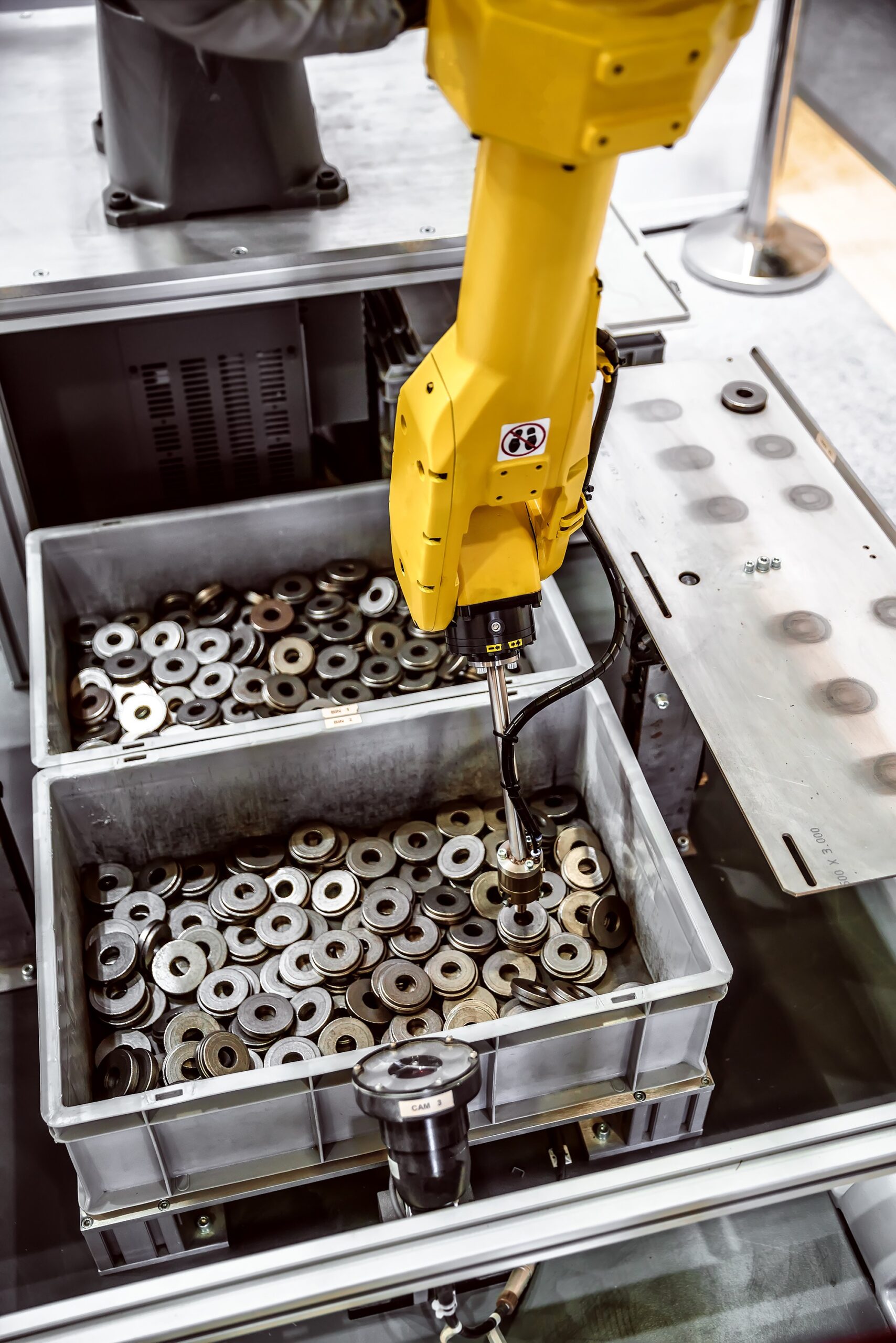
How Bin Picking Automation Works in Practice
A bin picking system typically includes:
- A robotic arm
- A 3D vision system
- AI or rule-based recognition software
The robot scans a bin of randomly placed parts, identifies viable pick points, and attempts to extract one item at a time.
While this sounds efficient, real-world challenges arise:
- Parts overlap or obstruct each other
- Lighting conditions affect vision accuracy
- Some parts are difficult to grip
Each of these factors can slow down cycle time or reduce pick success rates.
How Flexible Feeding Systems Improve Control
Flexible feeder systems take a different approach by removing randomness.
Parts are:
- Loaded onto a vibrating surface
- Spread out into a single layer
- Identified by a vision system
- Picked in a controlled orientation
This structured process dramatically improves consistency.
Instead of searching for parts, the robot simply executes known movements—reducing complexity and increasing speed.
Breaking Down Efficiency Beyond Speed
Many manufacturers initially focus on cycle time—but true efficiency includes several dimensions:
1. Uptime
Flexible feeding systems typically achieve higher uptime because they avoid common bin picking issues like mispicks or jams.
2. Error Rates
Bin picking systems are more prone to failed picks, especially with irregular or reflective parts.
3. Maintenance Requirements
Complex vision systems in bin picking setups often require more tuning and maintenance.
4. Scalability
Flexible feeding systems adapt more easily to new part types, making them better suited for evolving production lines.
Industry Use Cases
Where Bin Picking Excels
- Automotive components
- Cast or machined metal parts
- Low-mix, low-speed environments
Where Flexible Feeding Wins
- Electronics and small components
- Medical device manufacturing
- High-mix, high-speed production
Cost vs Value: A Critical Consideration
While bin picking automation may seem appealing for eliminating preprocessing, the hidden costs can add up:
- Longer integration time
- Higher failure rates
- Increased downtime
Flexible feeder systems often provide a faster return on investment due to:
- Predictable performance
- Easier integration
- Lower operational risk
Integration with Robotic Feeding Systems
Modern manufacturing relies heavily on robotic feeding for seamless automation.
Flexible feeding systems integrate naturally into these environments, providing consistent part presentation that robots can rely on.
Bin picking systems, by contrast, require more advanced programming and error handling.
Future Trends in Automation
As AI and vision technology improve, bin picking automation will continue to evolve.
However, the demand for speed, reliability, and flexibility is pushing more manufacturers toward structured solutions like flexible feeding.
The trend is clear: controlled processes outperform unpredictable ones in high-efficiency environments.
Conclusion
Choosing between bin picking automation and flexible feeding systems isn’t about which technology is better—it’s about which one aligns with your production needs.
If your priority is handling large, randomly oriented parts with minimal preprocessing, bin picking automation may be the right fit.
But if you’re aiming for maximum efficiency, consistency, and scalability, flexible feeding systems are typically the superior choice.
In today’s fast-paced manufacturing landscape, the most efficient solution is the one that delivers reliable, repeatable performance—day in and day out.