
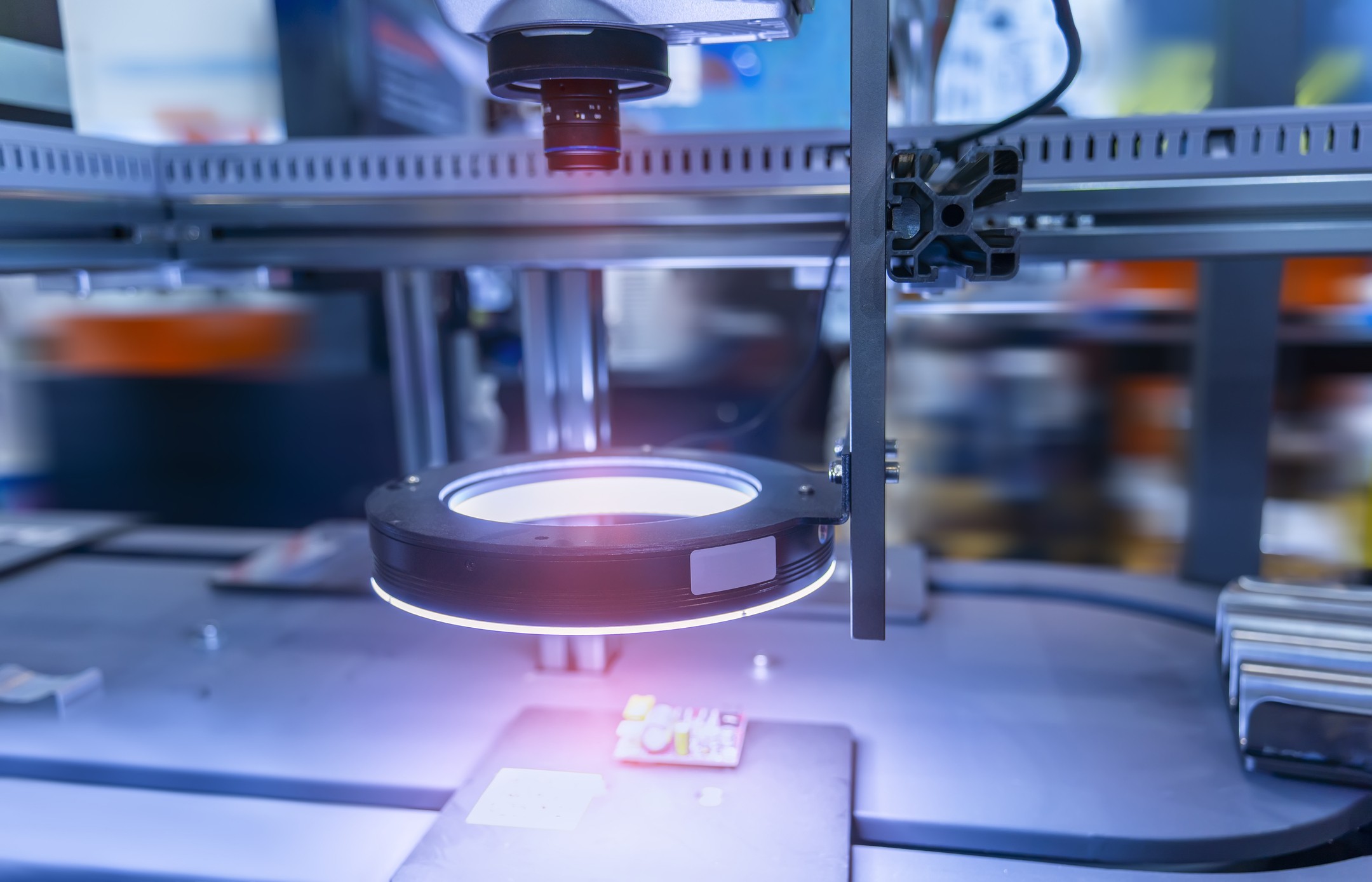
Vision-Guided Feeding Systems Explained
Modern manufacturing demands more flexibility, speed, and precision than ever before. Traditional automation systems still play an important role in high-volume production, but many manufacturers are now producing more product variations, smaller batch sizes, and increasingly complex parts. As a result, automated feeding systems must evolve beyond fixed tooling and rigid mechanical orientation.
That’s where vision-guided feeding systems come in.
Vision-guided feeding systems combine intelligent machine vision technology with robotic automation and flexible feeding platforms to locate, identify, and orient parts automatically. Instead of relying solely on mechanical tooling to orient components, these systems use cameras, software, and robotics to dynamically guide parts into the correct position for assembly, packaging, inspection, or machining.
For manufacturers looking to improve flexibility while reducing downtime and labor dependency, vision-guided feeding systems are becoming one of the most valuable automation investments available.
In this article, we’ll explain how vision-guided feeding systems work, their key components, their advantages over traditional feeding systems, and the industries where they provide the greatest value.
What Is a Vision-Guided Feeding System?
A vision-guided feeding system is an automated part feeding solution that uses cameras and machine vision software to identify the location and orientation of parts before a robot picks them.
Unlike traditional vibratory bowl feeders that mechanically orient parts into a single fixed position, vision-guided systems allow parts to move more freely while the camera system determines how the robot should interact with them.
The system typically consists of:
- A flexible feeder or conveyor platform
- An industrial camera or vision system
- Vision processing software
- A robotic pick-and-place system
- Intelligent controls and integration software
Together, these components create a highly adaptable feeding system capable of handling multiple part types with minimal mechanical changeover.
How Vision-Guided Feeding Systems Work
Although system designs vary depending on the application, most vision-guided feeding systems follow the same basic process.
1. Parts Enter the Feeding System
Bulk parts are loaded into a hopper, bin, or flexible feeder. The system distributes the components across a feeding surface where parts become separated enough for machine vision to identify them.
This process is especially important for complex geometries or mixed-orientation parts that would otherwise require custom mechanical tooling.
2. The Vision System Captures an Image
Industrial cameras positioned above the feeding surface capture high-resolution images of the parts.
Machine vision software analyzes:
- Part location
- Orientation
- Shape
- Edge profiles
- Surface characteristics
- Pick accessibility
Advanced systems can also detect defective or improperly positioned parts before robotic handling occurs.
3. The Robot Receives Pick Coordinates
Once the software identifies a valid part, it calculates the exact X, Y, and rotational coordinates needed for robotic picking.
These coordinates are transmitted directly to the robot controller.
The robot then adjusts its movement path dynamically rather than following a fixed mechanical sequence.
4. Robotic Picking and Placement Occurs
The robot picks the identified part using a gripper, vacuum tool, or specialized end-of-arm tooling.
The part is then transferred to:
- Assembly stations
- Packaging equipment
- CNC machines
- Inspection systems
- Secondary processing operations
The cycle repeats continuously with minimal operator involvement.
Key Components of a Vision-Guided Feeding System
Successful vision-guided automation depends on several integrated technologies working together.
Flexible Feeding Platform
Flexible feeders are commonly used in vision-guided systems because they allow parts to spread across a surface without requiring fixed mechanical orientation.
These feeders use controlled vibration, indexing, or motion to separate and present parts for imaging.
Flexible feeding platforms are ideal for:
- Multiple part families
- Frequent changeovers
- Delicate components
- Complex geometries
- Mixed-production environments
Industrial Vision Cameras
Industrial-grade cameras capture precise images used for robotic guidance.
Depending on the application, systems may use:
- 2D vision
- 3D vision
- Smart cameras
- High-speed cameras
- Structured light imaging
Camera selection depends on:
- Part size
- Surface reflectivity
- Speed requirements
- Precision tolerance
- Environmental conditions
Vision Software
Machine vision software processes captured images and determines the correct robotic actions.
Modern vision software can:
- Identify multiple part types
- Distinguish overlapping components
- Detect orientation errors
- Filter defective parts
- Optimize pick locations
- Improve robotic efficiency
AI-enhanced vision systems are also becoming more common in advanced manufacturing environments.
Robotic Integration
Robots provide the motion control required to pick and place parts accurately.
Vision-guided systems often integrate with:
- SCARA robots
- Six-axis robots
- Delta robots
- Collaborative robots (cobots)
The choice depends on speed, reach, payload, and precision requirements.
Advantages of Vision-Guided Feeding Systems
Vision-guided feeding systems offer several major advantages compared to traditional fixed feeding methods.
Increased Flexibility
One of the biggest benefits is the ability to handle multiple part types without major mechanical retooling.
Manufacturers can switch products faster and reduce downtime associated with changeovers.
This flexibility is especially valuable in:
- High-mix manufacturing
- Contract manufacturing
- Consumer products
- Medical device production
- Electronics assembly
Reduced Tooling Requirements
Traditional bowl feeders often require dedicated tooling and custom track designs for every individual part.
Vision-guided systems reduce dependency on complex mechanical orientation tooling because the robot adjusts dynamically using camera feedback.
This can significantly reduce:
- Engineering costs
- Lead times
- Maintenance requirements
- Mechanical wear
Improved Automation Scalability
Vision-guided systems are easier to scale and modify as production requirements evolve.
Manufacturers can add:
- Additional robots
- New part recipes
- Software updates
- Expanded inspection capabilities
without completely redesigning the feeding system.
Better Handling of Complex Parts
Irregular, delicate, reflective, or asymmetrical parts are often difficult to orient mechanically.
Machine vision allows robots to identify usable pick positions even when parts appear randomly distributed.
This improves handling reliability for components that would otherwise require expensive custom automation.
Enhanced Quality Control
Vision systems can simultaneously inspect parts during feeding.
This enables manufacturers to identify:
- Missing features
- Damaged components
- Orientation defects
- Surface issues
- Incorrect parts
before downstream operations occur.
Vision-Guided Feeding vs Traditional Bowl Feeding
Traditional vibratory bowl feeders remain highly effective for certain applications, especially when manufacturers process high volumes of identical parts.
However, vision-guided systems offer significant advantages in flexible production environments.
| Feature | Traditional Bowl Feeding | Vision-Guided Feeding |
|---|---|---|
| Part Flexibility | Low | High |
| Changeover Time | Longer | Faster |
| Tooling Requirements | High | Lower |
| Multi-Part Capability | Limited | Excellent |
| Scalability | Moderate | High |
| Complex Part Handling | Difficult | Strong |
| Software Adaptability | Limited | Advanced |
In many modern automation cells, manufacturers combine vibratory feeding technology with machine vision to achieve the best balance between throughput and flexibility.
Industries Using Vision-Guided Feeding Systems
Vision-guided automation is widely used across multiple industries.
Automotive Manufacturing
Automotive suppliers use vision-guided feeding systems for:
- Fastener feeding
- Connector assembly
- Sensor handling
- Electrical component placement
- Precision robotic assembly
Medical Device Manufacturing
Medical manufacturers benefit from vision-guided automation because of strict quality requirements and small component sizes.
Applications include:
- Surgical device assembly
- Syringe component feeding
- Implant manufacturing
- Pharmaceutical packaging
Electronics Assembly
Electronics production often requires extremely precise robotic handling.
Vision-guided systems help automate:
- PCB assembly
- Connector insertion
- Semiconductor handling
- Small component orientation
Consumer Products
Consumer goods manufacturers use flexible vision-guided systems to support rapid product changes and seasonal production demands.
Applications include:
- Packaging automation
- Cosmetic product assembly
- Appliance component feeding
- Small-part sorting
When Should Manufacturers Upgrade to Vision-Guided Feeding?
A vision-guided feeding system may be the right solution when manufacturers experience:
- Frequent product changeovers
- Rising labor costs
- Increased SKU counts
- Difficulty orienting parts mechanically
- Excessive bowl feeder tooling costs
- Downtime from manual feeding
- Quality issues caused by inconsistent part presentation
Manufacturers moving toward Industry 4.0 initiatives also benefit from the data visibility and intelligent automation capabilities these systems provide.
The Future of Vision-Guided Automation
As machine vision technology continues to advance, vision-guided feeding systems are becoming faster, smarter, and more capable.
Emerging trends include:
- AI-driven vision processing
- Real-time adaptive robotics
- Smarter defect detection
- Digital twin simulation
- Integrated production analytics
- Collaborative robotic feeding cells
These innovations will continue improving manufacturing flexibility while reducing operational complexity.
For manufacturers competing in increasingly dynamic production environments, vision-guided automation is quickly becoming a strategic advantage rather than an optional upgrade.
Why Feedall Supports Vision-Guided Feeding Solutions
At Feedall, we help manufacturers implement feeding systems designed for long-term flexibility, reliability, and automation performance.
Our solutions support:
- Flexible feeding systems
- Vibratory feeding systems
- Robotic integration
- Vision-guided automation
- Custom automation solutions
Whether your application requires high-speed precision handling or flexible multi-part feeding, our team can help design a system that improves throughput, reduces downtime, and supports future production growth.
Final Thoughts
Vision-guided feeding systems are transforming how manufacturers approach automation.
By combining machine vision, robotics, and flexible feeding technology, these systems provide a smarter way to handle increasingly complex manufacturing demands.
Compared to traditional fixed feeding methods, vision-guided systems offer greater flexibility, faster changeovers, improved quality control, and better long-term scalability.
As manufacturing continues evolving toward smarter automation and high-mix production, vision-guided feeding systems will play an increasingly important role in helping companies stay competitive.
If your operation is exploring more flexible automation solutions, Feedall can help you evaluate the right feeding strategy for your application.
Need a flexible automation solution for your production line? Contact Feedall to learn how vision-guided feeding systems can improve throughput, reduce downtime, and support smarter manufacturing.